Facility Ratings
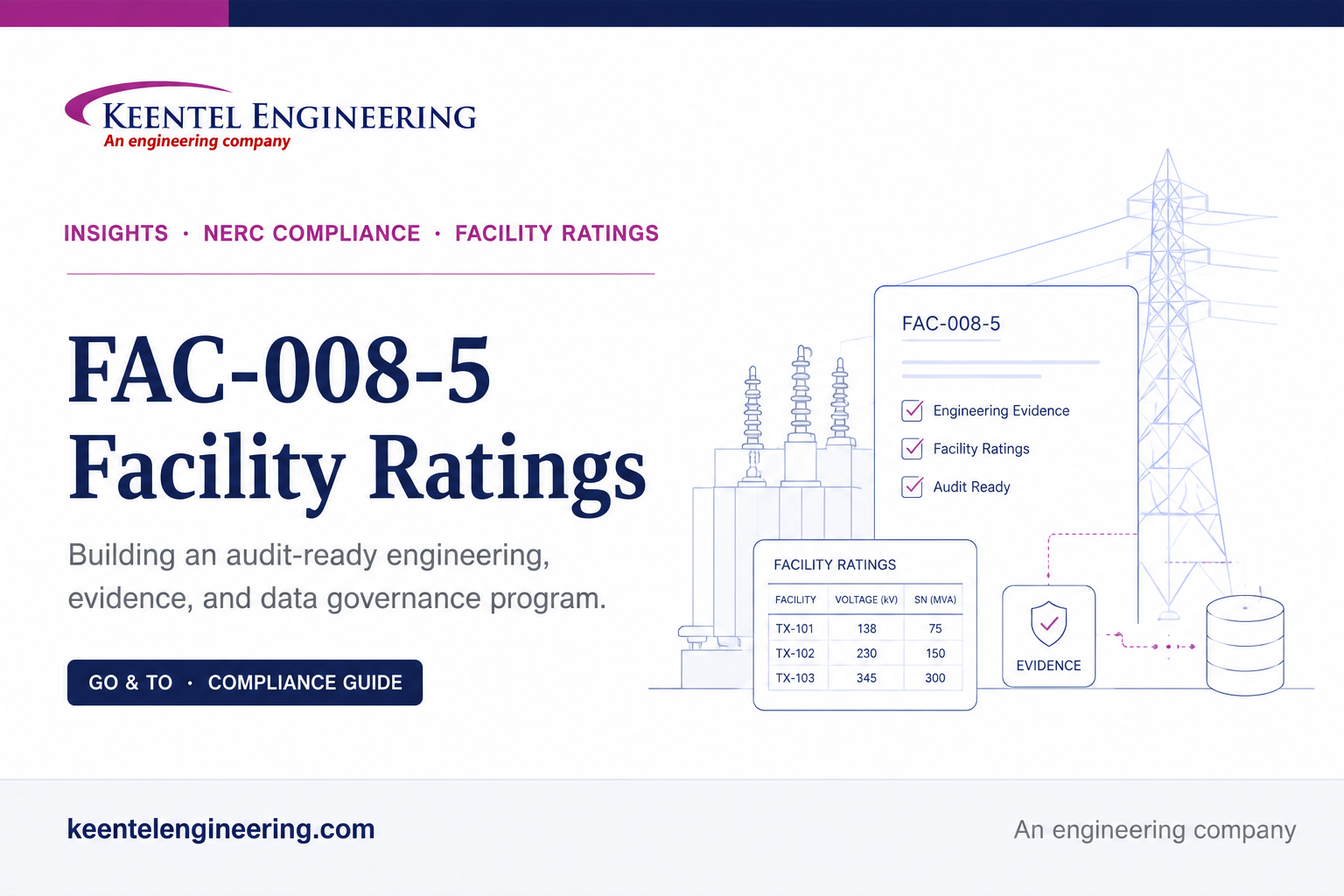
FAC-008 methodologies, field-verified equipment ratings and most-limiting-element databases for lines, transformers, buses, breakers, switches and terminal equipment.

Your Trusted Partner in Electrical Engineering and Power Systems
At Keentel Engineering, we deliver electrical power engineering services built on 30 years of experience and a commitment to excellence. Our clients include utilities, developers, EPCs, and public agencies across the U.S.
Unlike firms that sacrifice technical depth to chase billable hours, we prioritize precision, compliance, and value engineering. From transmission services and relay modeling to winterization and SCADA planning, we never compromise on quality.

At Keentel Engineering, we take pride in being the go-to electrical power engineering firm for power and utility system planning, substation design, protection, control, and power system analysis. The following attributes distinguish our team in utility-grade substation engineering and compliance-driven project delivery.
With three decades of hands-on project delivery, we bring unmatched expertise in substation layout design, substation electrical and civil engineering, relay protection, and grid-tie solutions. Our experience includes projects in complex terrain, urban retrofit environments, and utility-scale renewable integrations.
Our engineering process applies AutoCAD 3D, BIM modeling, and system-level substation design practices to ensure accurate planning, reduced errors, and efficient coordination across all project stakeholders.
Our workflow includes 3D substation design, enabling clash-free coordination between structural, electrical, and civil disciplines.
From grounding grid studies to relay protection settings, we engineer every detail to improve system reliability, performance, and operational safety. Our rigorous QA/QC process ensures compliance with IEEE, NFPA, and ISO/TSO interconnection standards.
Among leading electrical substation design companies, Keentel Engineering stands out for 30+ years of proven high-voltage and utility-grade project delivery.




First name, email and what you're interested in are all we need to get moving. Everything else, including drawings or an RFP, is optional.
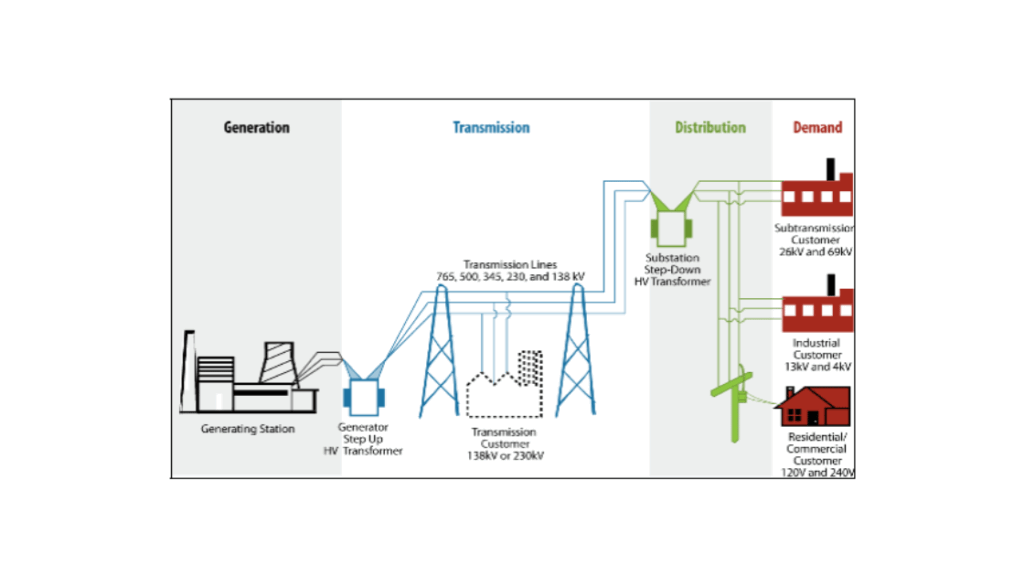
The Transmission Owner (TO) owns and maintains transmission Facilities. Its obligations center on the equipment: how Facilities are rated, how protection is set, coordinated and maintained, how disturbances are recorded, how vegetation is managed and how others may connect.
The Transmission Operator (TOP) is responsible for the reliability of its local transmission system and operates or directs its operation. Its obligations center on operations: operating plans and analyses, real-time monitoring, System Operating Limits, voltage control, communications, emergency operations, restoration and certified, trained operators.
The Transmission Service Provider (TSP) administers the transmission tariff and provides transmission service to customers under applicable agreements. Its direct O&P obligations are comparatively limited and are closely tied to transmission service and data provision.
Many utilities hold all three functions. Others split them — for example, a TO whose facilities are operated by another entity’s TOP, or a merchant or generator-owned transmission line registered as TO with operation delegated. Each split changes who must produce which evidence.
Applicability depends on your facilities, voltage levels, region and what your Planning Coordinator and Reliability Coordinator identify. Several standards apply only to specific elements or where you own specific equipment. Confirm current versions, effective dates and applicability for your registration.
| Standard | What it addresses | Typical engineering evidence |
|---|---|---|
| FAC-001 | Facility interconnection requirements for generation, transmission and end-user Facilities | Documented, current interconnection requirements and how they are made available |
| FAC-002 | Coordination on studies for new or materially modified Facilities | Study coordination correspondence and data provided to the PC and TP |
| FAC-003 | Transmission vegetation management for applicable lines | Vegetation management program, inspection records, work plans and clearance documentation |
| FAC-008 | Facility Ratings methodology and ratings | Ratings methodology, equipment-level ratings database, most-limiting-element determinations |
| PRC-002 | Disturbance monitoring and reporting at identified BES buses and elements | Bus selection, monitoring inventory, recording capability, time synchronization and data retention |
| PRC-004 | Review of Protection System Misoperations and Corrective Action Plans | Operation reviews, misoperation identification, CAPs and completion records |
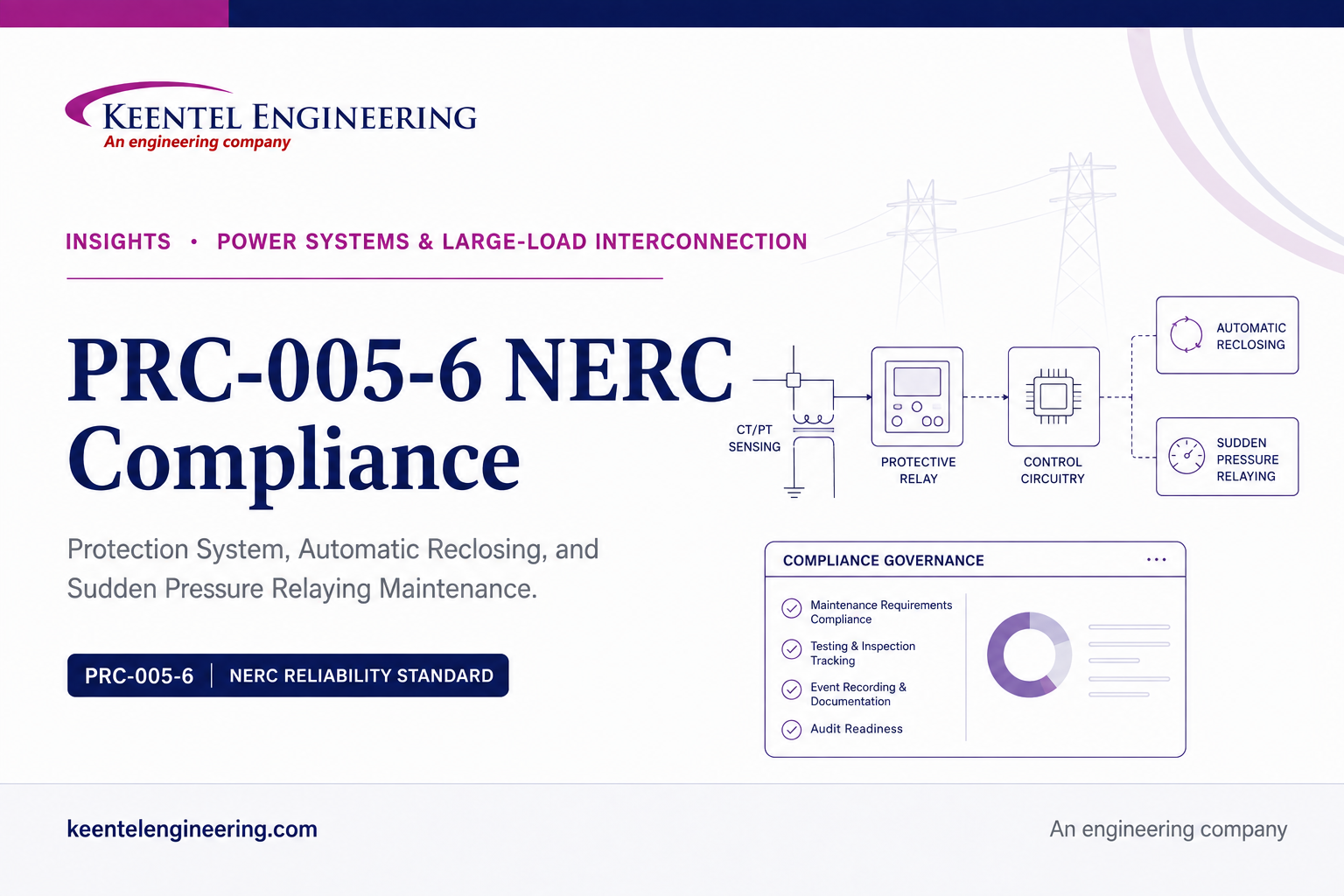
| PRC-005 | Protection System, Automatic Reclosing and Sudden Pressure Relaying maintenance | Component inventory, maintenance intervals, test records and Unresolved Maintenance Issue tracking |
| PRC-006 (as applicable) | Underfrequency load shedding implemented per the Planning Coordinator’s program | UFLS relay settings, load-shed amounts and data provided to the PC |
| PRC-012 (as applicable) | Remedial Action Schemes owned by the TO | RAS design documentation, evaluations, functional tests and misoperation reviews |
| PRC-023 | Transmission relay loadability | Loadability calculations for load-responsive phase protective relays against the standard’s criteria |
| PRC-026 | Relay performance during stable power swings on elements identified by the PC | Evaluation of load-responsive relays against identified swing conditions and any corrective actions |
| PRC-027 | Coordination of Protection Systems for faults | Coordination process, short-circuit studies and periodic review records |
| TPL-007 | Thermal impact assessments for applicable power transformers under geomagnetic disturbance | Transformer thermal impact assessments using effective GIC flows supplied by the planner |
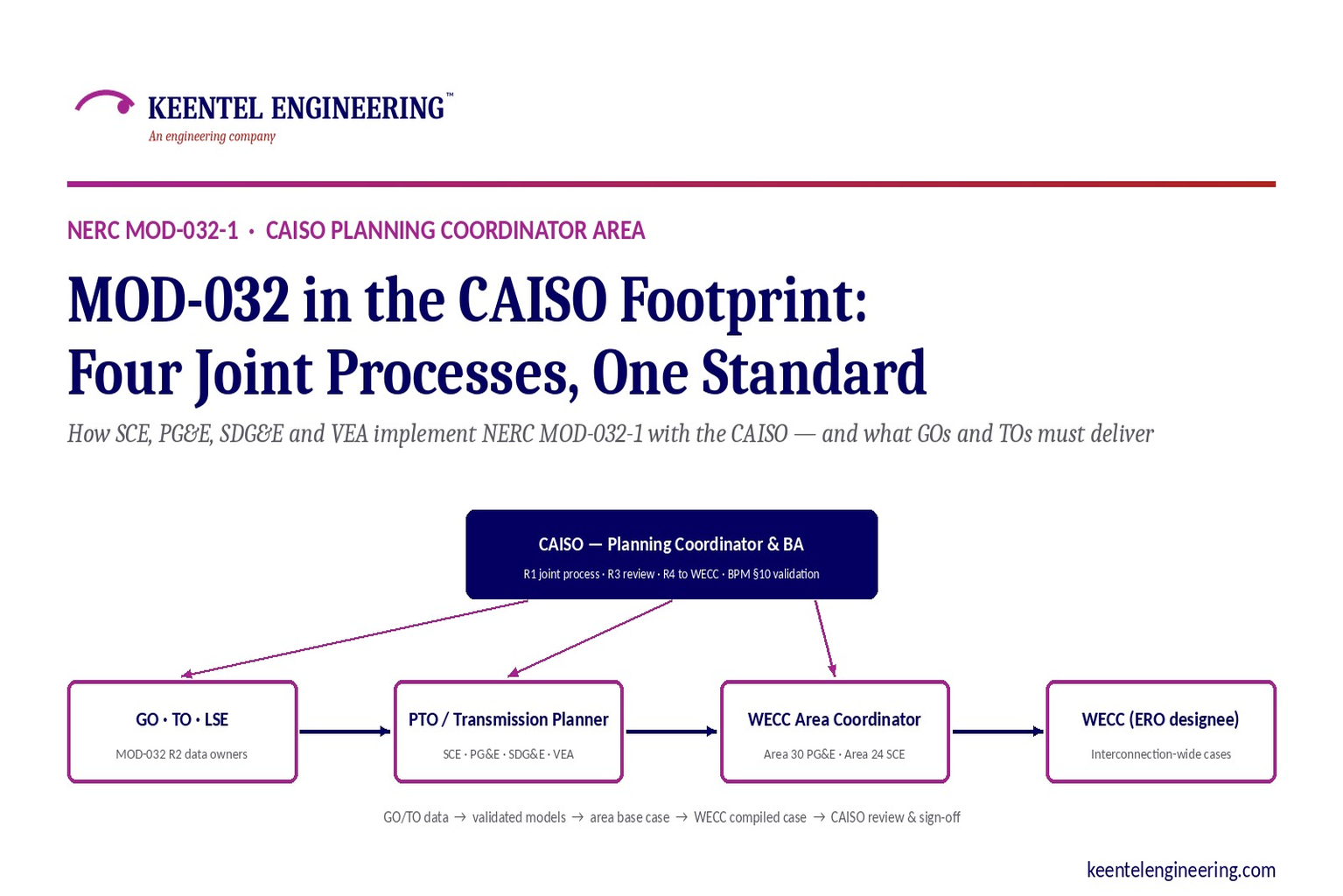
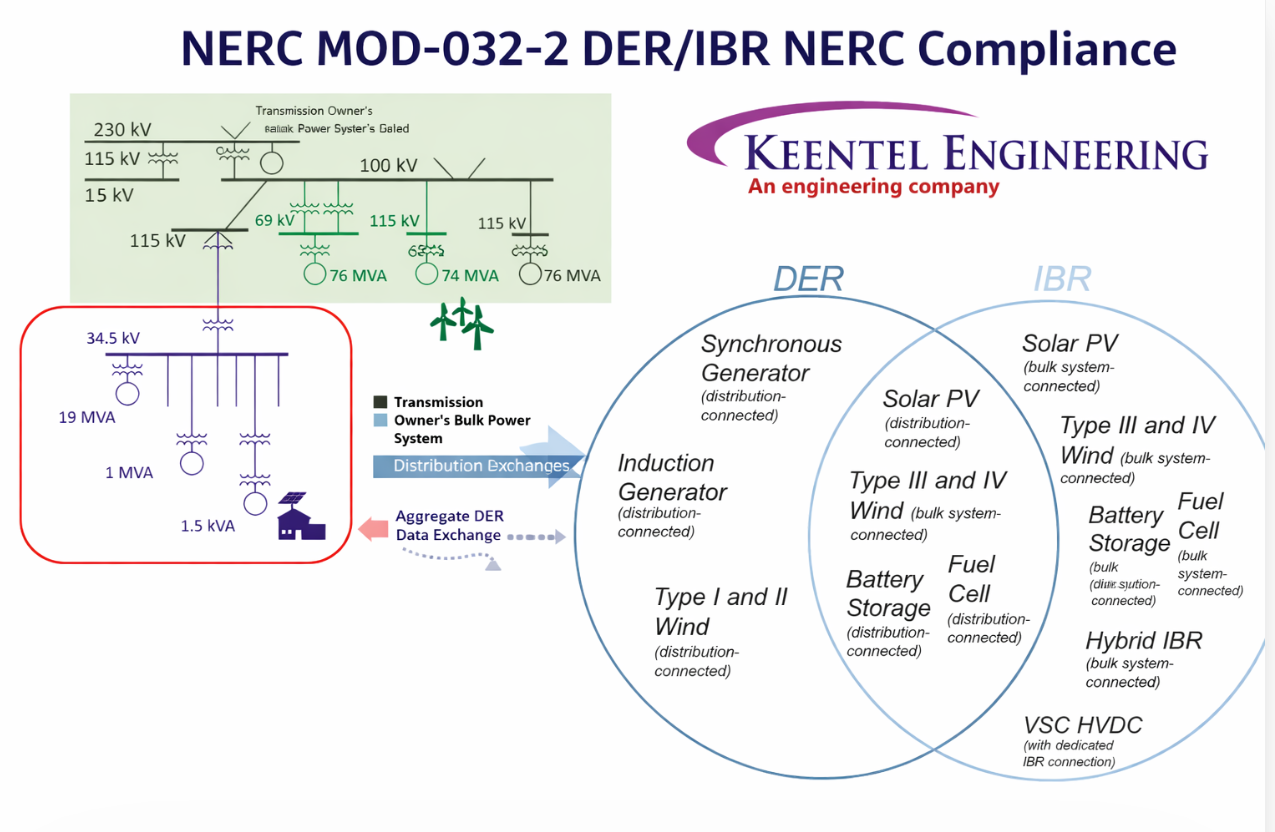
| MOD-032 | Modeling data for planning provided to the PC and TP | Data submissions meeting each PC and TP’s published requirements |
| EOP-004 | Event reporting | Event reporting operating plan, annual test or review records and submitted reports |
| EOP-005 | TO roles identified in the TOP’s restoration plan | Restoration roles, training and coordination records |
| TOP-003 / IRO-010 | Providing data per TOP and RC data specifications | Data specification responses and delivery records |
| PER-005 (as applicable) | Training for field switching personnel performing unique tasks | Task identification and training records |
TOP obligations are primarily operational. Keentel supports them with procedures, studies, data specifications and evidence organization — the real-time actions remain with your certified operators.
| Standard | What it addresses | Typical evidence Keentel helps build |
|---|---|---|
| TOP-001 | Transmission operations: acting to maintain reliability, Operating Instructions, monitoring and SOL exceedance response | Operating procedures, monitoring coverage documentation and response logs |
| TOP-002 | Operations planning: next-day analyses and Operating Plans | Operational planning analysis methodology, case assumptions and Operating Plans |
| TOP-003 | Data specification for operational planning and real-time monitoring | Documented data specification, distribution records and data-conflict resolution |
| TOP-010 | Real-time monitoring and analysis capabilities, including data quality and alarm processes | Data-quality and alarm-process documentation and operator indications |
| FAC-011 / FAC-014 | SOL methodology (RC) and establishing SOLs consistent with it (TOP) | SOLs established per the RC methodology, supporting studies and communication records |
| VAR-001 | Voltage and reactive control, including voltage schedules for generators | Voltage schedules, reactive resource studies and notifications to GOPs |
| IRO-001 / IRO-010 | Complying with RC Operating Instructions; providing data per the RC data specification | Procedures, logs and data delivery records |
| COM-001 | Interpersonal communication capability and alternatives | Communication capability and test records |
| COM-002 | Communication protocols for Operating Instructions | Three-part communication procedures, training, assessments and recordings |
| EOP-004 | Event reporting | Event reporting operating plan and submitted reports |
| EOP-005 | System restoration from Blackstart Resources | Restoration plan, supporting studies, training, drills and Blackstart Resource testing coordination |
| EOP-008 | Loss of control center functionality | Backup capability operating plan, tests and updates |
| EOP-011 | Emergency operations, including Operating Plans for extreme weather and load shed | Operating Plan, supporting studies and RC review records |
| PER-003 / PER-005 | Certified system operators and systematic training | Certification records, task lists and training program documentation |
TSP obligations under the O&P standards are narrower than TO or TOP obligations, and several legacy transmission-service standards have been retired as the related business practices moved to other frameworks. What remains typically involves providing data to planners — for example under MOD-032 — and coordinating with the TP, PC and TOP on the information used in planning and service evaluation.
Because TSP applicability has changed over time, we start every TSP engagement by confirming exactly which currently enforceable requirements apply and which obligations sit in tariff or business-practice documents rather than Reliability Standards.
Keentel does not operate transmission systems, staff control rooms or issue Operating Instructions. We provide the engineering and documentation that operators, asset owners and compliance staff rely on: ratings, settings, studies, data specifications, procedures and requirement-indexed evidence. CIP cybersecurity is a separate discipline and outside our scope.
FAC-008 methodologies, field-verified equipment ratings and most-limiting-element databases for lines, transformers, buses, breakers, switches and terminal equipment.
PRC-023 loadability, PRC-026 power-swing evaluations, PRC-027 coordination studies and settings reviews performed by our protection engineers.
PRC-005 inventories, interval selection and test-record review; PRC-004 misoperation review support.
PRC-002 bus selection support, recorder and DFR coverage, clock synchronization and data retention.
FAC-001 requirements documents and FAC-002 study support drawn from our POI interconnection and substation design work.
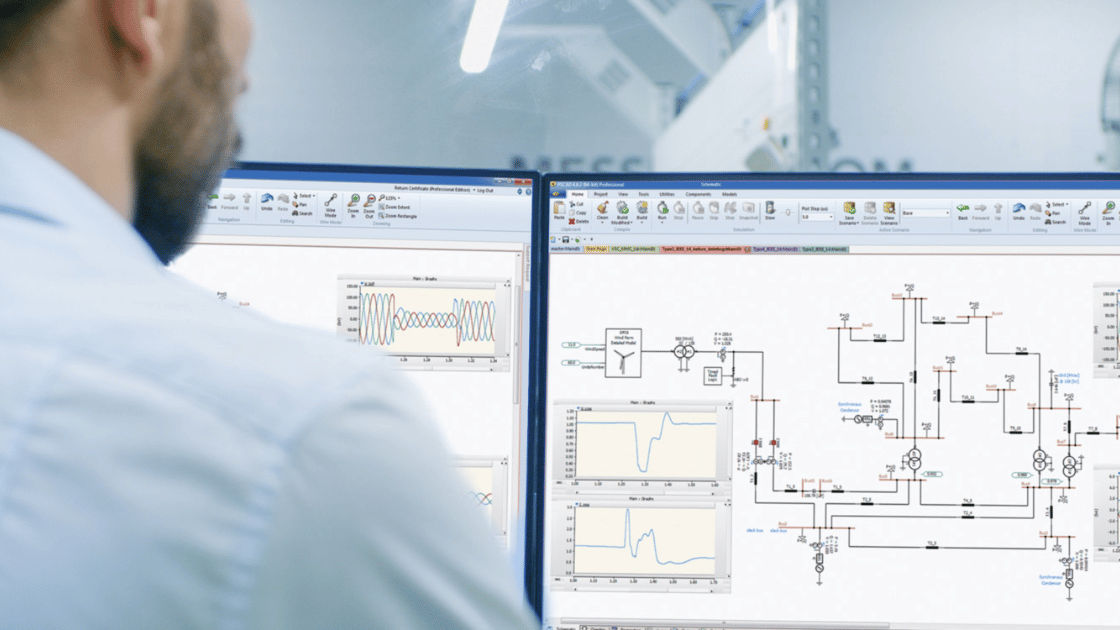
PSS®E, PSLF and PSCAD™ studies supporting SOLs, restoration plans, UFLS and TPL-007 transformer thermal impact assessments.
Operating procedures, TOP-003 data specifications, EOP-005 and EOP-011 plan support and COM-002 protocols.
Requirement-indexed evidence, RSAW narratives and audit-week support.
We confirm which entity holds TO, TOP and TSP for each asset, the Regional Entity, and every applicable requirement with its effective date.
One-lines, relay settings, ratings data, maintenance records, study cases, operating procedures and agreements with neighboring entities.
Our engineers check that ratings, settings and studies reflect installed equipment and the current system — not legacy assumptions.
We perform missing rating calculations, loadability and coordination studies, assessments and procedure updates.
Procedures, data specifications and plans are checked against the requirements and against what operators actually do.
Evidence is indexed by requirement and kept current through a compliance calendar and change-management triggers.
| Deliverable | Purpose |
|---|---|
| TO/TOP/TSP applicability matrix | Every applicable requirement by function and facility, with effective dates and basis |
| Facility Ratings methodology and database | FAC-008 methodology and equipment-level ratings with most-limiting-element results |
| Protection studies and evaluations | PRC-023, PRC-026 and PRC-027 calculations and conclusions signed by the responsible engineer |
| Maintenance program documentation | PRC-005 inventory, intervals and evidence mapping |
| Study reports | SOL, restoration, UFLS and GMD thermal assessment support studies |
| Procedures and data specifications | TOP-003 data specifications, COM-002 protocols, EOP plan support and interconnection requirements |
| Requirement-indexed evidence binder | Evidence and narratives organized for audits, spot checks and self-certifications |
| Gap | Why it matters |
|---|---|
| Ratings not updated after equipment changes | Replaced CTs, jumpers, wave traps or switches can change the most-limiting element without the rating being revised. |
| Ratings methodology and ratings disagree | FAC-008 evidence fails when calculated ratings do not follow the documented methodology. |
| Loadability evaluated once, never revisited | Setting changes and new elements require PRC-023 and PRC-026 evaluations to be refreshed. |
| Incomplete PRC-005 inventories | DC supply, communications, auxiliary relays and sudden pressure relays are often missed. |
| Interconnection requirements out of date | FAC-001 documents that do not reflect current practice or IBR requirements invite questions. |
| Procedures that do not match practice | TOP and COM-002 evidence is weak when written procedures differ from what operators actually do. |
| Unclear TO/TOP split | Where one entity owns and another operates, data, restoration and event-reporting obligations fall between the two. |
The 2026 ERO Enterprise CMEP Implementation Plan names the following O&P requirements under risk elements that commonly touch TO and TOP registrations. Requirement numbers are quoted as listed in the plan; not every listed requirement applies to every entity, so confirm applicability for your functions and facilities.
| Risk element | Standards & requirements named | What it means for TO/TOP |
|---|---|---|
| Facility Ratings | FAC-008-5 R6 | TO ratings consistent with the documented methodology — the core of the Facility Ratings risk element |
| Grid Transformation | FAC-001-4 R1, R2; FAC-002-4 R1, R2 | Current interconnection requirements, including for inverter-based resources, and study coordination |
| Grid Transformation | PRC-005-6 R3, R5; PRC-027-1 R1–R3 | Maintenance program execution, Unresolved Maintenance Issues and fault coordination evidence |
| Grid Transformation | MOD-025-2 R1–R3; MOD-032-1 R1–R4 | Planning data from TOs; MOD-025 capability verification where the TO owns applicable equipment such as synchronous condensers |
| Grid Transformation | TPL-001-5.1 R1–R7 | Primarily TP and PC obligations — see our TP/PC/RP page if you hold planning functions |
| Extreme Weather Response | EOP-011-4 R1, R2, R3, R6; FAC-003-5 R6; EOP-012-3 R1, R3–R7 | TOP emergency Operating Plans; vegetation inspections on applicable lines; EOP-012 applies to generator owners and operators |
| Communication Protocols | COM-002-4 R1, R4, R5, R7; IRO-001-4 R1 | TOP communication protocols, assessments and use in Operating Instructions; RC direct action and Operating Instructions that TOPs must follow |
Facility Ratings remain a standing risk element. If you only refresh one TO evidence set this year, make it FAC-008.
Substation and transmission design, protection and POI interconnection engineering from 4 kV to 765 kV give us practical insight into ratings and settings evidence.
PSS®E, PSLF and PSCAD™ studies performed by our own engineers under the direction of Sandip R. Patel, P.E., with 30+ years of experience.
Former NERC audit-team leadership and subject-matter experts help us build evidence the way a Regional Entity reviews it.
We support entities across MRO, NPCC, ReliabilityFirst, SERC, Texas RE and WECC.
Tell us your functions, facilities and Regional Entity. Keentel will confirm applicability, verify the ratings, settings and studies, and organize evidence your auditors can follow.
Serving utilities, EPCs, developers, and infrastructure organizations supporting critical power systems nationwide.