

Keentel Engineering Deals with Various Industries.

At Keentel Engineering and its Consultants, our mission is to establish a sustainable business that delivers top-notch technical services to meet the unique needs of our valued clients.

A young girl in a yellow dress sits on a grassy hill, holding a bright red balloon against a clear blue sky.

Investor-Owned Utilities

Investor-Owned Utilities or IOUs are monopoly and private utilities that strive to distribute and generate power to you, the electric customer and over their defined service territory. In general, electricity from IOUs comes from a combination of producing their own power or purchasing electricity from private and public markets.


The IOU-owned power plants can include nuclear, coal, wind farms, solar arrays, and hydroelectric dams. Here it is important to understand that policies and laws on power purchased from regulated markets and private generators are variable from state to state.

At Keentel Engineering, we have helped clients on various projects, including new substation designs, testing, programming, distribution, system studies and cost of services. We help them with all. We have worked with numerous IOUs and their contractor partners to make the outcome of IOU projects a success.

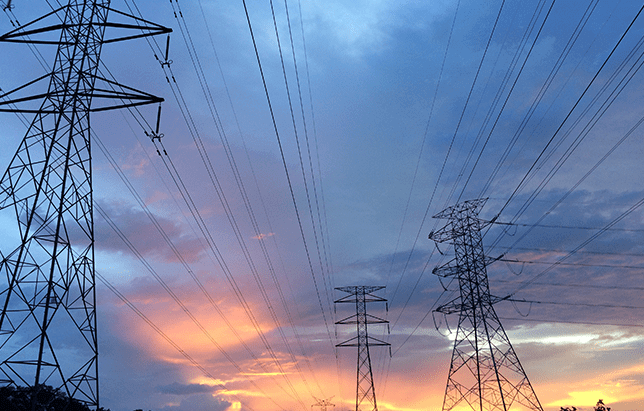
Three electrical transmission towers under a dramatic, colorful sunset sky with intersecting power lines.

Municipal Utilities

From electric departments to city halls, we work with municipal utilities to provide them with the best power engineering solutions for their T&D assets.


We have helped clients on projects to include new substation designs, programming, load shedding studies, cost of services, NERC services and system studies.

Renewable Power Plants

In the U.S., the fastest growing energy source is renewable energy. It has increased inextremely high rate from 2017 to 2022. In fact, the consumption of renewables is likely to grow extremely high in the next five years.


This rate is much higher than the overall growth rate in energy consumption. From wind farms to solar and BESS -battery storage, we provide clients with forward-thinking, reliable, compliant profitable solutions for engineering services needs.

Services include:

  • Technical and economic feasibility studies
  • Energy production and performance modeling
  • Site resource characterization analysis.
  • Interconnection application support and coordination
  • Power system integration studies
  • Detailed design and specifications
  • SCADA integration
  • NERC services during development phase

BESS Owners

As the number of distributed energy resources increase, the need for reliable, resilient and effective management and operation has become crucial too.


Energy storage technologies help independent users and power producers to identify and address the needs by balancing supply and demand and continuous supply during intermittent wind and solar resources.

At Keentel Engineering, we provide a rich experience in offering comprehensive battery energy storage solutions, such as:

  • Technical and economic feasibility studies
  • Performance modeling and cycle optimization
  • Power system integration studies
  • Program management
  • Detailed design and specifications
  • SCADA integration

Let’s Connect

Fill in the form below with the relevant information, and we’ll connect with you ASAP to discuss your project requirements.

Blog and Updates

Substation grounding design with IEEE Std 80 earthing grid schematic.
By SANDIP R PATEL July 31, 2026
Learn substation grounding design using IEEE Std 80, CDEGS, soil resistivity modeling, touch and step voltage analysis, GPR, and earthing best practices.
Capacitor Banks & Power Factor Correction Design Guide
By SANDIP R PATEL July 29, 2026
Learn capacitor bank sizing, power factor correction, NEC Article 460 requirements, harmonic mitigation, protection, and installation for industrial power systems.
On-Load vs Off-Circuit Transformer Tap Changer comparison showing OLTC and OCTC voltage regulation p
By SANDIP R PATEL July 29, 2026
Learn the differences between On-Load and Off-Circuit Tap Changers, including OLTC vs OCTC operation, voltage regulation, IEEE standards, maintenance, and transformer selection.
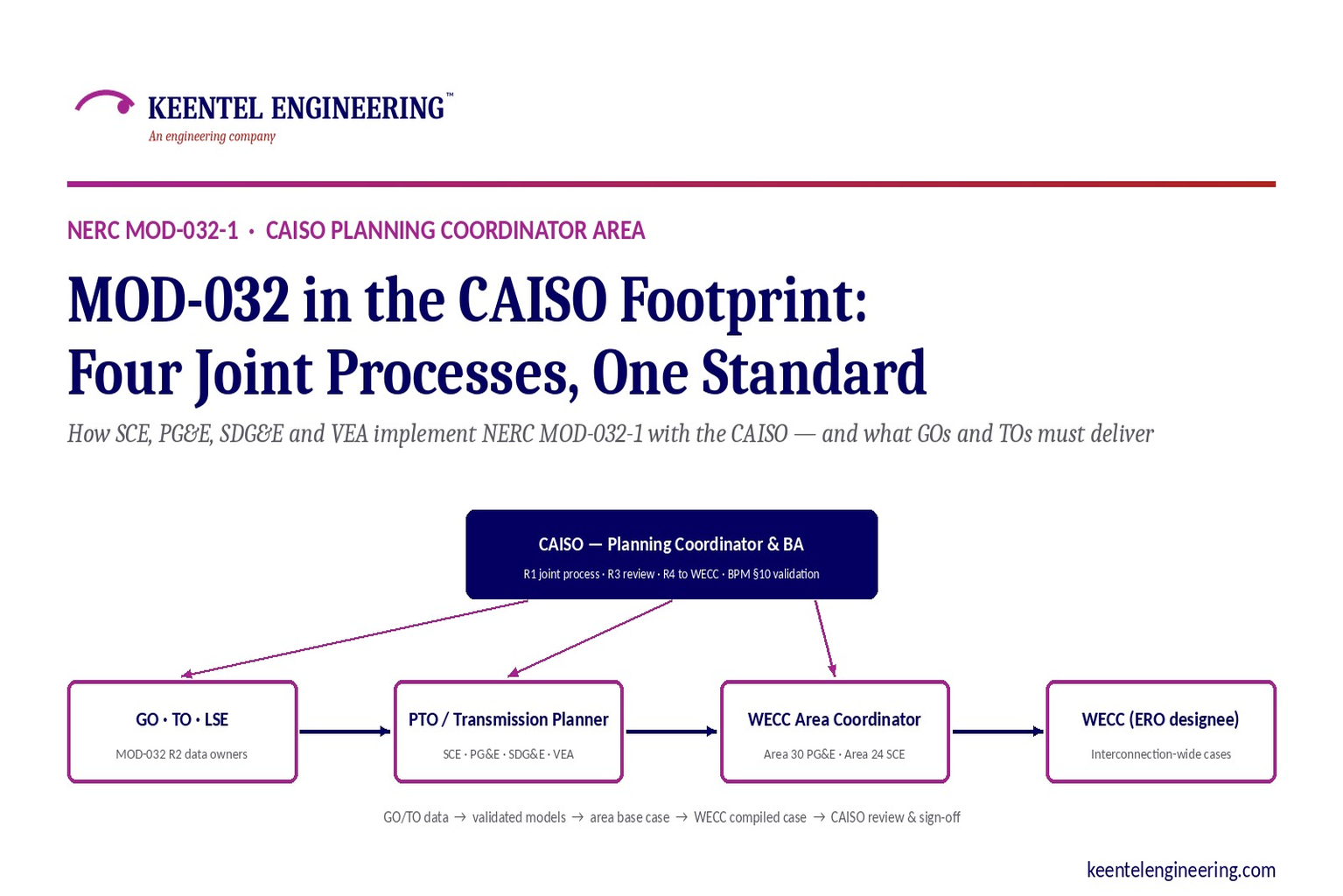
ERCOT Form W and PUCT Part A & Part B filing guide for large load interconnection
By SANDIP R PATEL July 28, 2026
Learn the differences between the PUCT Generating Capacity Report and ERCOT Form W, including Part A vs Part B, PCLR, WLPUN, BYOG projects, and Batch Zero compliance.
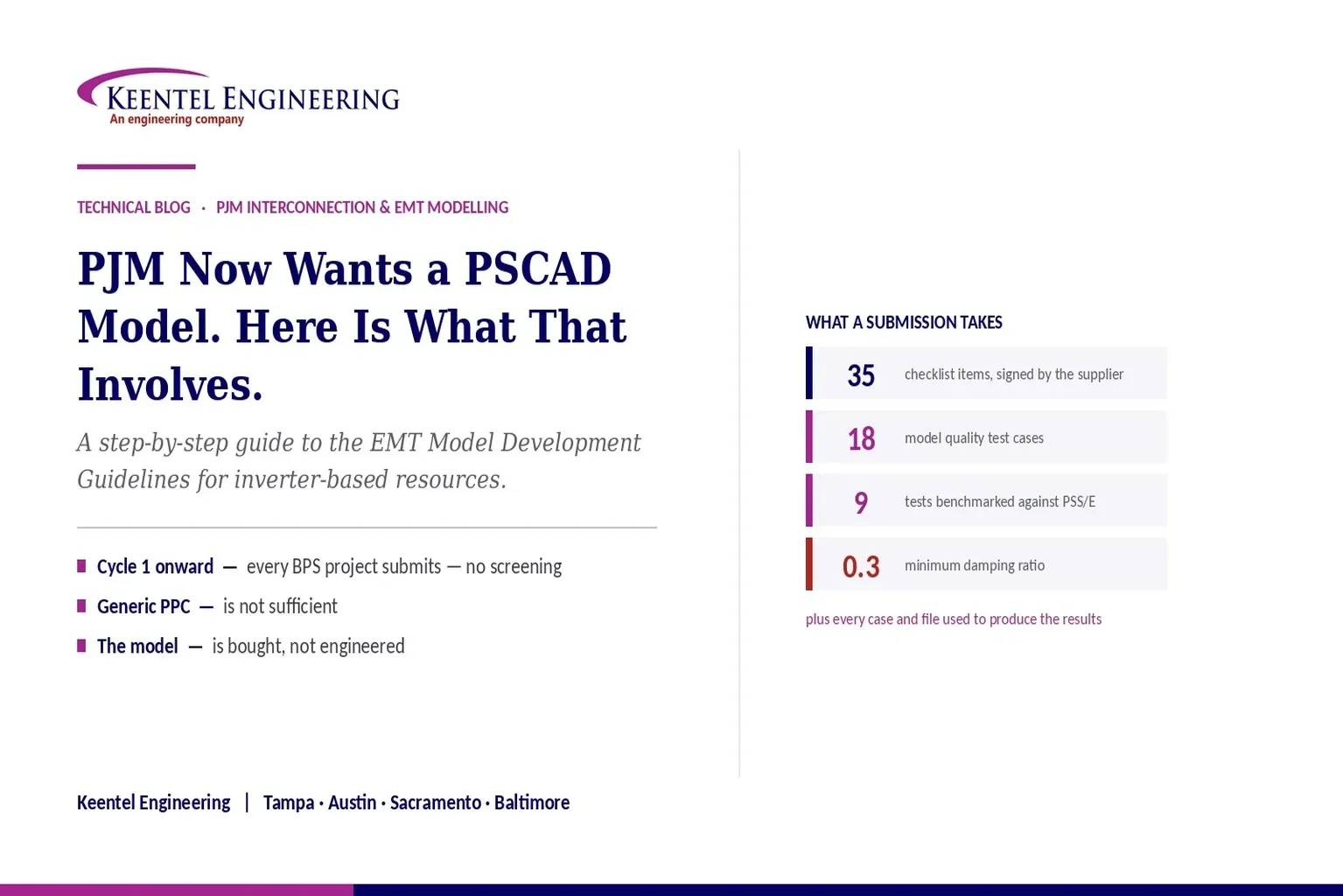
PGRR144 Batch Zero and Batch 1 ERCOT grid interconnection guide with Texas transmission modeling
By SANDIP R PATEL July 28, 2026
Learn how PGRR144, Batch Zero, and Batch 1 affect ERCOT large-load interconnections, dynamic model requirements, MQT testing, PERC1, and project readiness.
ERCOT PCLR pathway showing LPC-to-MPC power access, SCED bid-cap control, large-load curtailment, an
By SANDIP R PATEL July 28, 2026
ERCOT PCLR Batch Zero large-load interconnection pathway
Delta-Star Transformer Earth Fault & Zero-Sequence Guide
By SANDIP R PATEL July 27, 2026
Learn why LV earth-fault current cannot cross a Delta-Star transformer, how zero-sequence current behaves, and what it means for protection design.
138 kV gas-insulated substation (GIS) design for compact high-voltage power systems.
By SANDIP R PATEL July 27, 2026
Learn how gas-insulated substations (GIS) improve safety, reliability, and space efficiency with 138 kV design, protection, insulation coordination, and real-world case studies.
Nuclear power plant electrical safety systems and Class I–IV power distribution architecture
By SANDIP R PATEL July 25, 2026
Learn how Class I–IV electrical systems, defence-in-depth, standby and emergency power, DC systems, protection, and load transfer ensure nuclear power plant safety.