

Category 2 NERC Compliance Services for Inverter Based Resources (IBRs)

Expert Registration, Compliance, and Engineering Support for Solar, Wind, BESS, and Hybrid Asset Owners

Keentel Engineering helps generator owners and operators navigate the new Category 2 IBR registration requirements with confidence. We provide practical, engineering-driven compliance support from applicability determination to CMEP readiness so your assets remain reliable, compliant, and audit-ready.

A person in a white lab coat using a pipette to transfer liquid into a clear glass vial in a laboratory setting.
A black and white close-up shows a human eye, focusing intensely on the iris with distinct, radial patterns.
An aerial view of a white, heart-shaped island surrounded by a calm, turquoise ocean.
A golden-brown, crispy fried chicken breast fillet sandwich on a toasted bun with pickles and sauce.

About Keentel Engineering

Your Trusted Partner in Electrical Engineering and Power Systems

At Keentel Engineering, we deliver electrical power engineering services built on 30 years of experience and a commitment to excellence. Our clients include utilities, developers, EPCs, and public agencies across the U.S.

Unlike firms that sacrifice technical depth to chase billable hours, we prioritize precision, compliance, and value engineering. From transmission services and relay modeling to winterization and SCADA planning, we never compromise on quality.
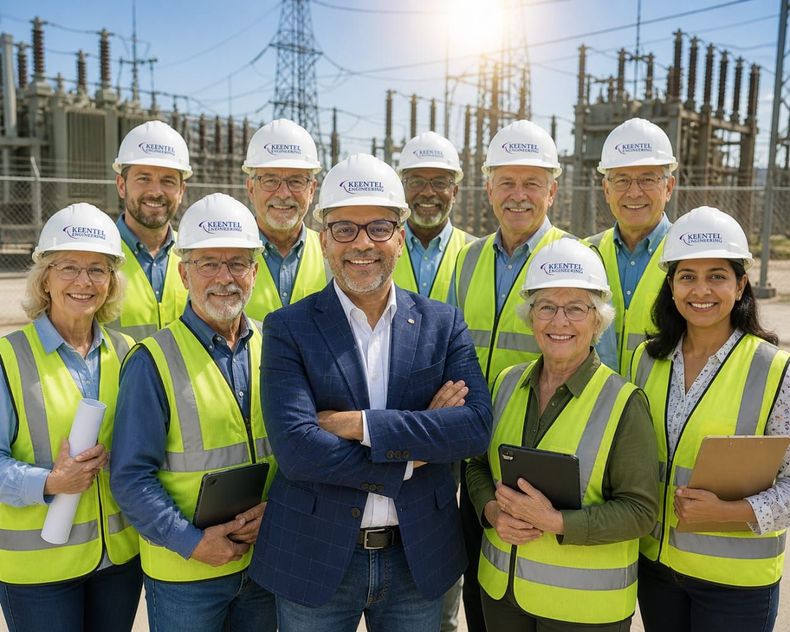
Keentel Engineering team of electrical engineers in hard hats and safety vests at a high-voltage substation site

Why Choose Keentel Engineering?

Client-Focused Work Approach

At Keentel Engineering, we take pride in being the go-to electrical power engineering firm for power and utility system planning, substation design, protection, control, and power system analysis. The following attributes distinguish our team in utility-grade substation engineering and compliance-driven project delivery.

30 Years of Experience

With three decades of hands-on project delivery, we bring unmatched expertise in substation layout design, substation electrical and civil engineering, relay protection, and grid-tie solutions. Our experience includes projects in complex terrain, urban retrofit environments, and utility-scale renewable integrations.

Quality with Innovation

Our engineering process applies AutoCAD 3D, BIM modeling, and system-level substation design practices to ensure accurate planning, reduced errors, and efficient coordination across all project stakeholders.

Our workflow includes 3D substation design, enabling clash-free coordination between structural, electrical, and civil disciplines.

Attention to Detail

From grounding grid studies to relay protection settings, we engineer every detail to improve system reliability, performance, and operational safety. Our rigorous QA/QC process ensures compliance with IEEE, NFPA, and ISO/TSO interconnection standards.

Among leading electrical substation design companies, Keentel Engineering stands out for 30+ years of proven high-voltage and utility-grade project delivery.

Keentel Engineering video

Accreditations and memberships

NSPE, National Society of Professional Engineers
D-U-N-S Registered
IEEE Senior Member
BBB Accredited Business, A plus rating

Contact details

Tell Us About Your Project

1 business day reply

First name, email and what you're interested in are all we need to get moving. Everything else, including drawings or an RFP, is optional.

We reply within one business day. Sending this does not create a contract or an engineer and client relationship.
Category 2 NERC Compliance 

A Critical Shift in Grid Reliability 

The rapid growth of inverter-based resources (IBRs)—including solar PV, wind, battery energy storage systems (BESS), and hybrid generation—has fundamentally changed how reliability is managed on the North American bulk power system (BPS). In response, the Federal Energy Regulatory Commission (FERC) and the North American Electric Reliability Corporation (NERC) have closed a long-standing regulatory gap by requiring registration and compliance for a new class of bulk power system–connected resources known as Category 2 Inverter-Based Resources.

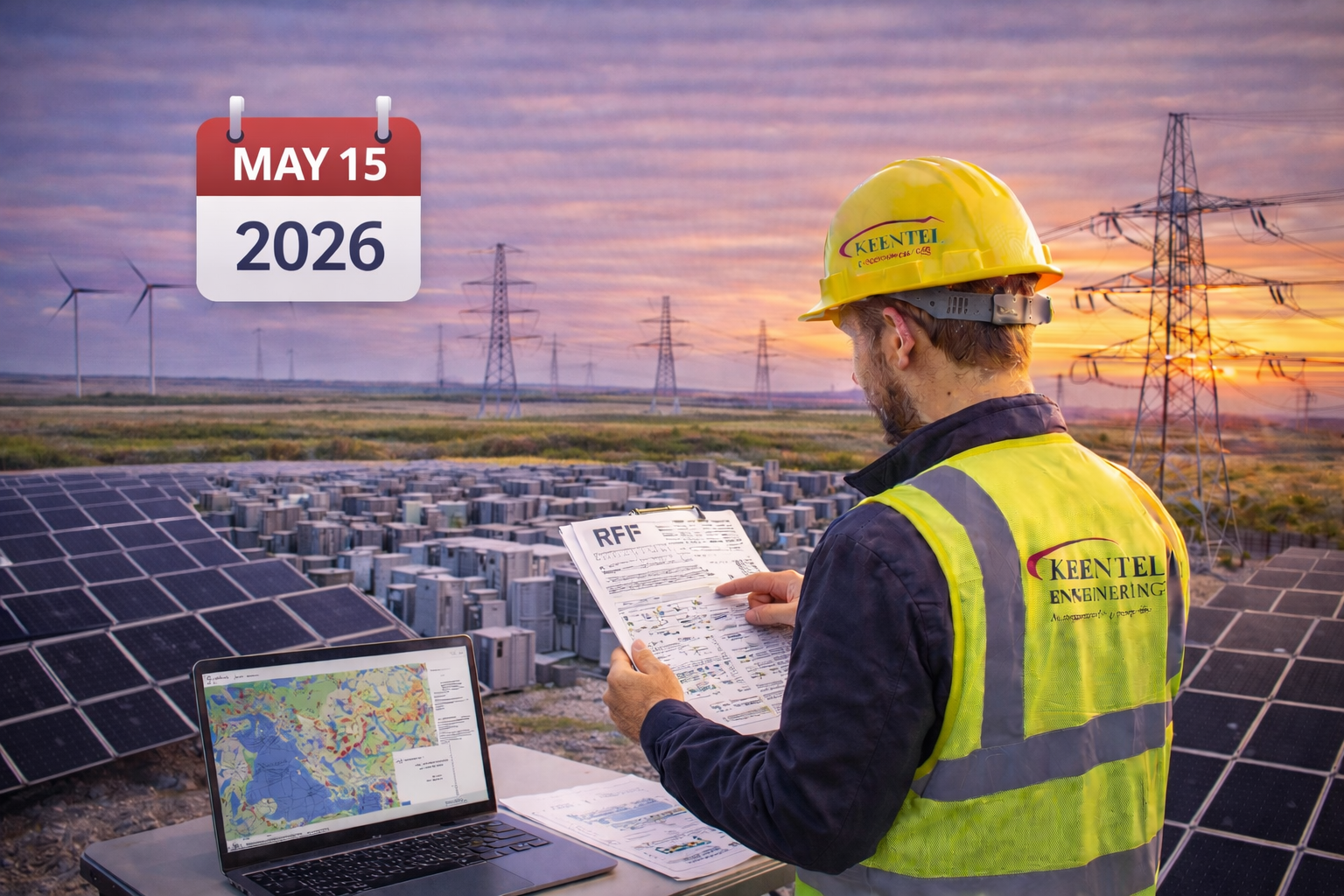
Beginning May 15, 2026, qualifying Category 2 Generator Owners (GO) and Generator Operators (GOP) will be subject to mandatory NERC Reliability Standards and CMEP enforcement, many for the first time.

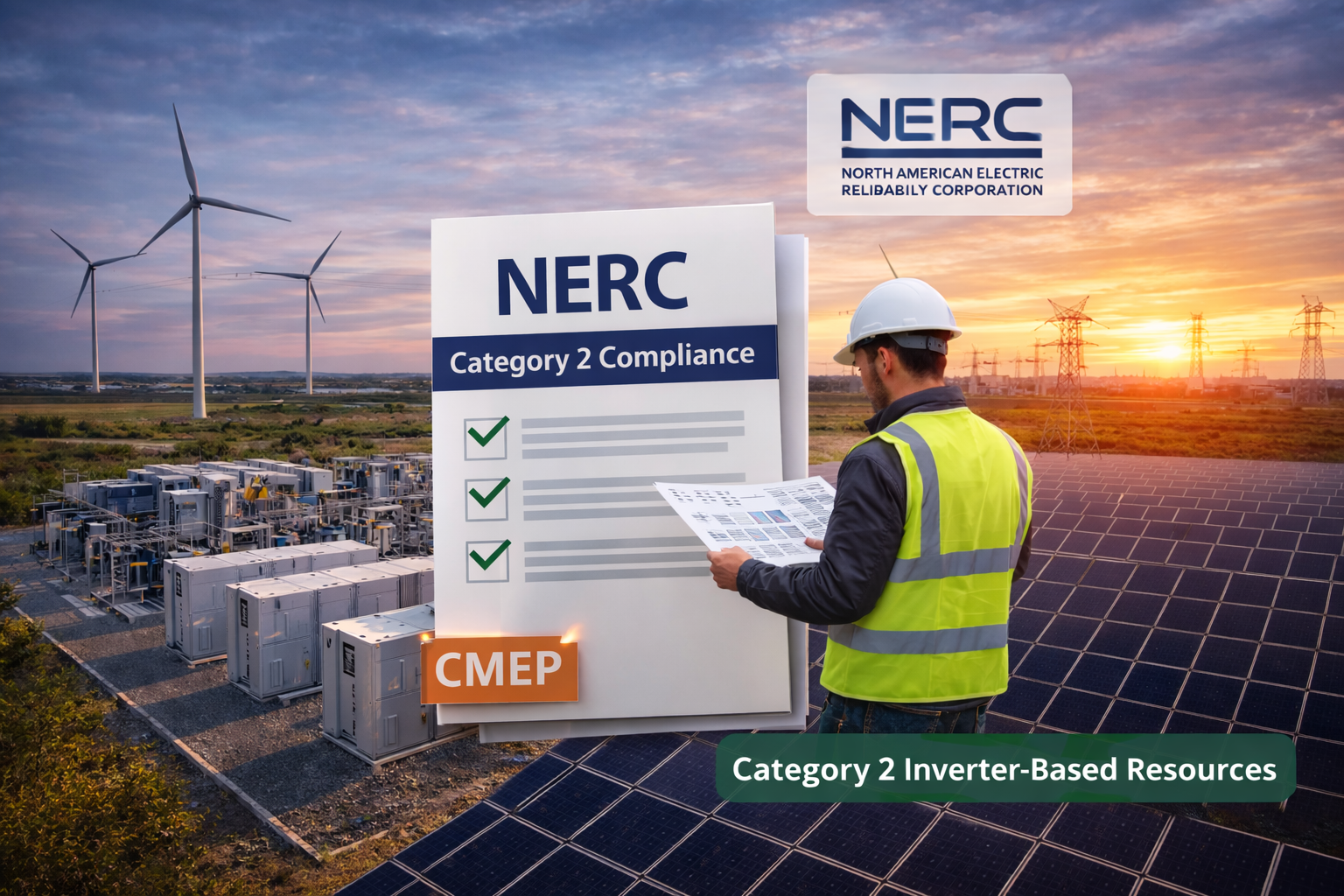
A worker reviews NERC compliance documentation at a solar and wind energy site, highlighting Category 2 resource standards.

Keentel Engineering provides end-to-end Category 2 NERC compliance services, combining regulatory expertise, power system engineering, and audit-ready documentation to help asset owners and operators register correctly, comply efficiently, and reduce enforcement risk.

What Is a Category 2 Inverter-Based Resource?

Our POI interconnection engineering support is designed for projects where utility acceptance, schedule certainty, and compliance matter.

This service is best suited for utility-scale and complex interconnections, not template-driven or low-risk projects.

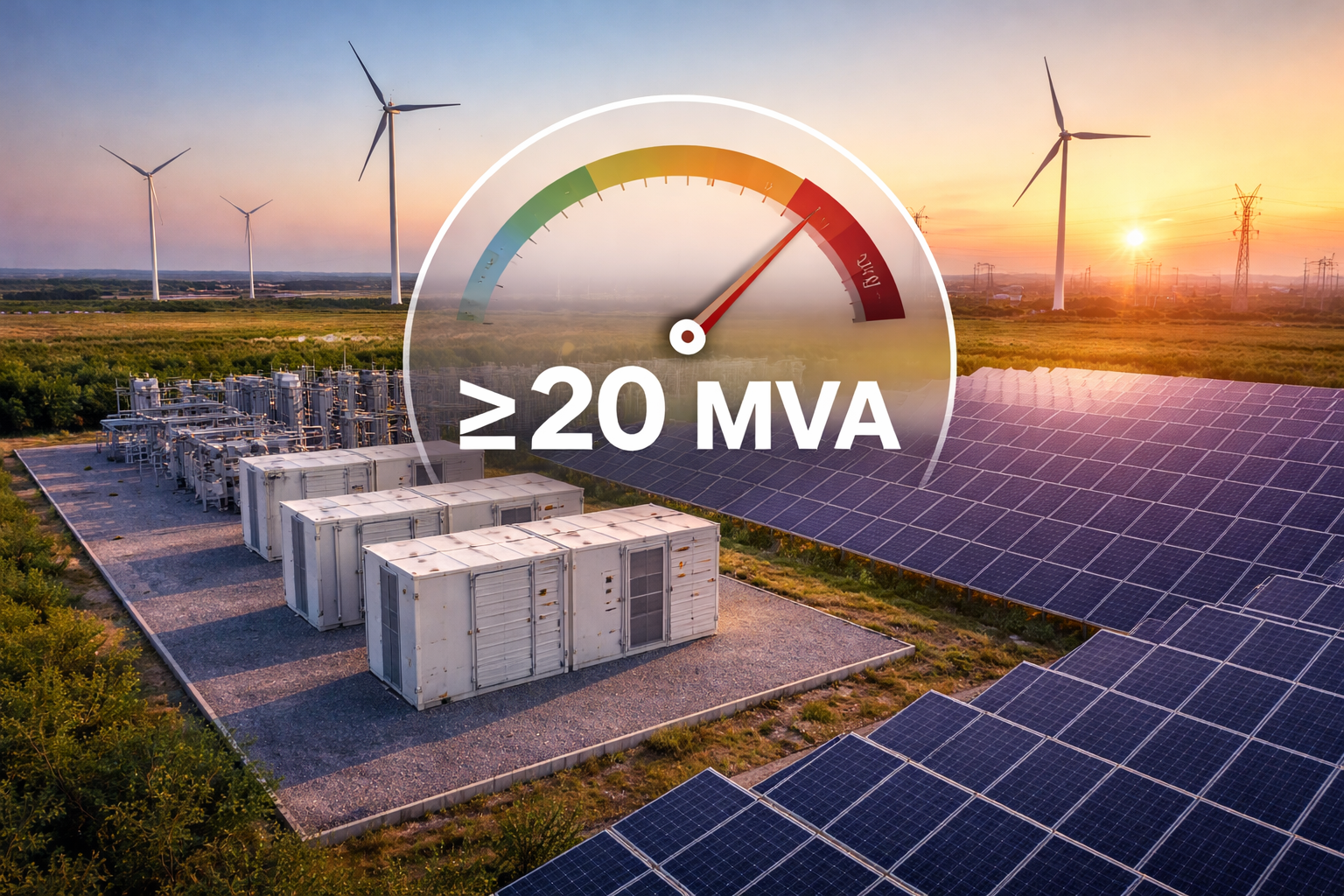
Solar panels and wind turbines at a sunset power plant with a gauge graphic reading

Has or contributes to ≥ 20 MVA aggregate gross nameplate capacity

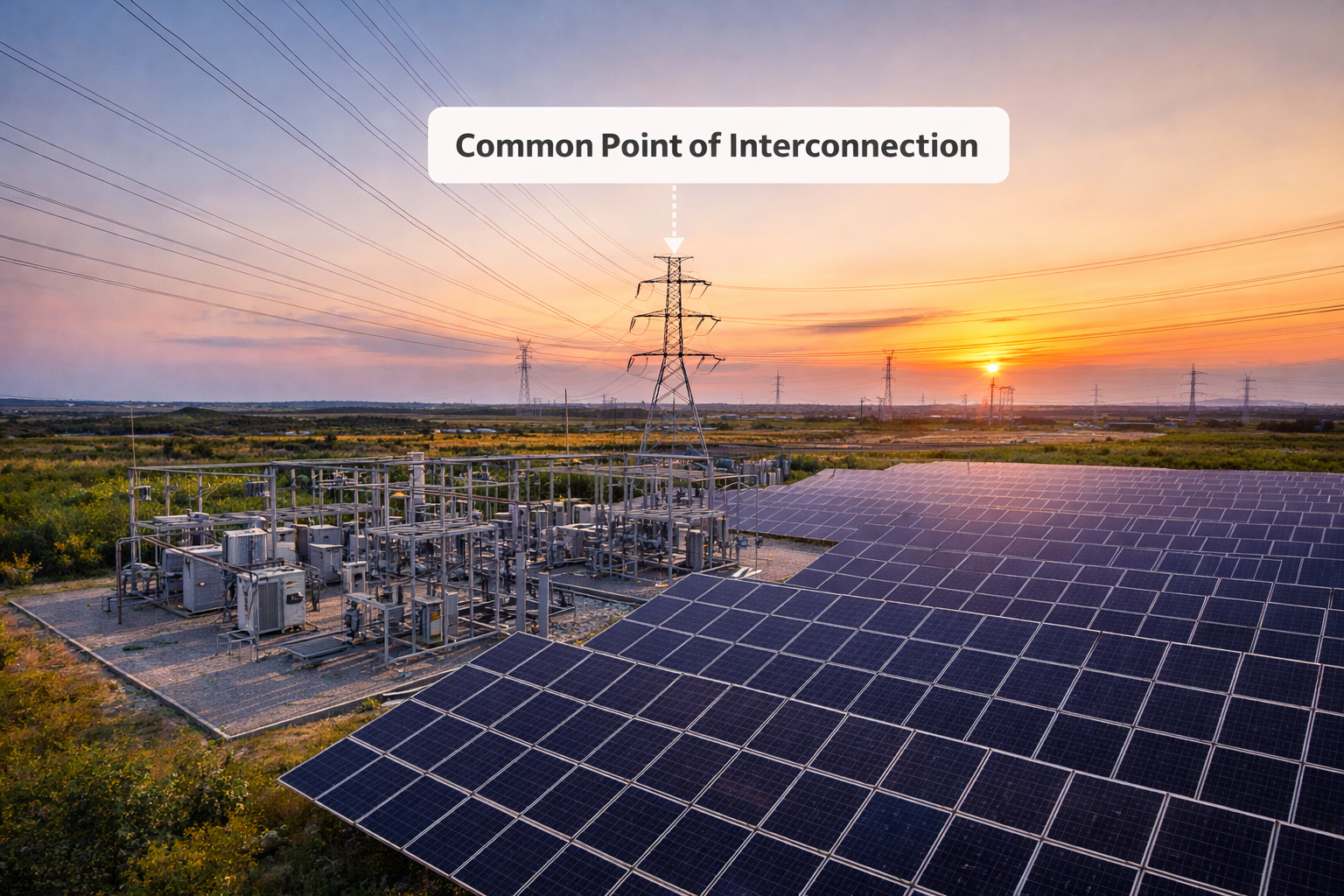
Solar panels and a power substation at sunset, labeled as the Common Point of Interconnection with the electrical grid.

Is connected through a system designed to deliver power to a common point of interconnection

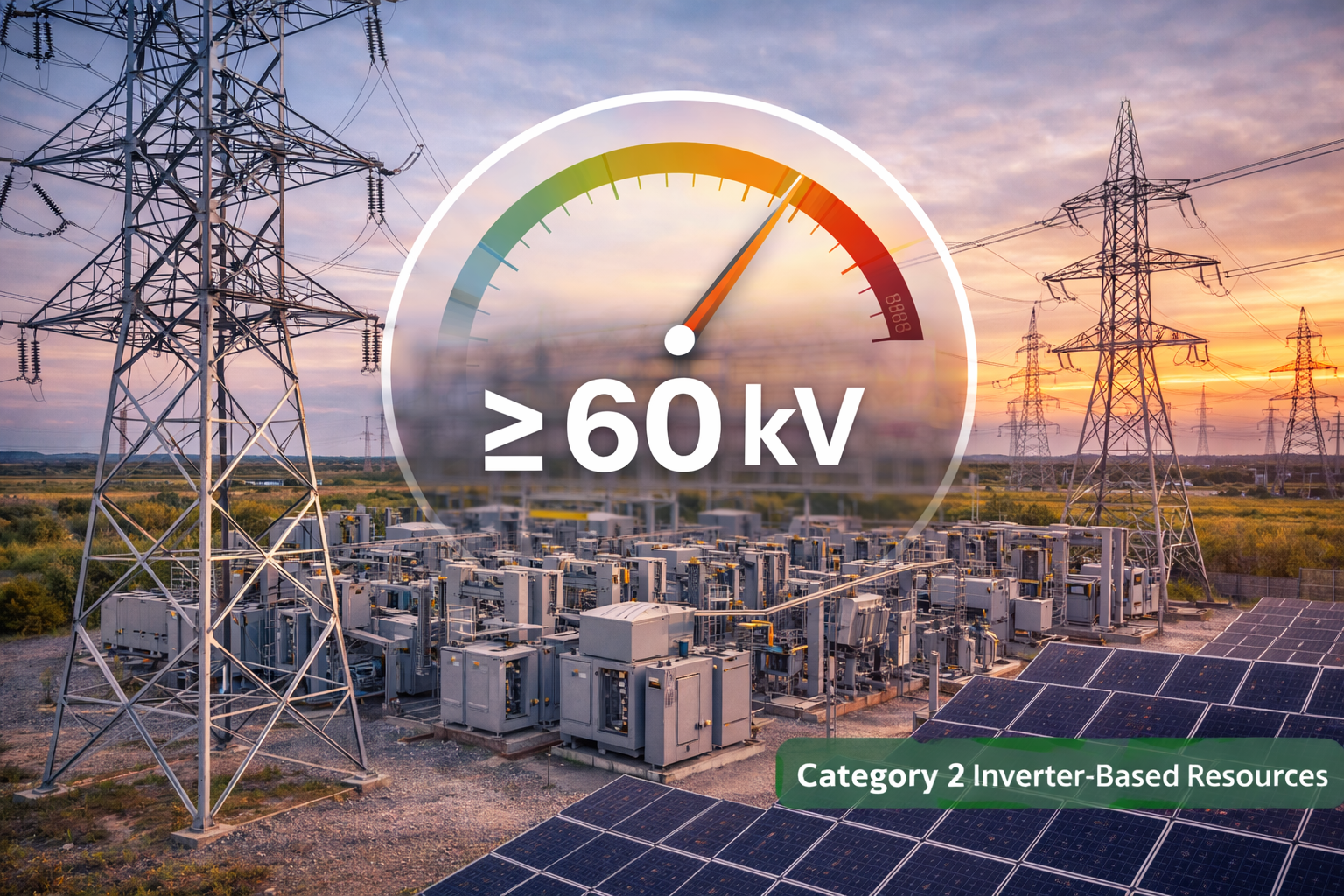
Solar panels and electrical infrastructure with a gauge graphic reading

Is interconnected at ≥ 60 kV

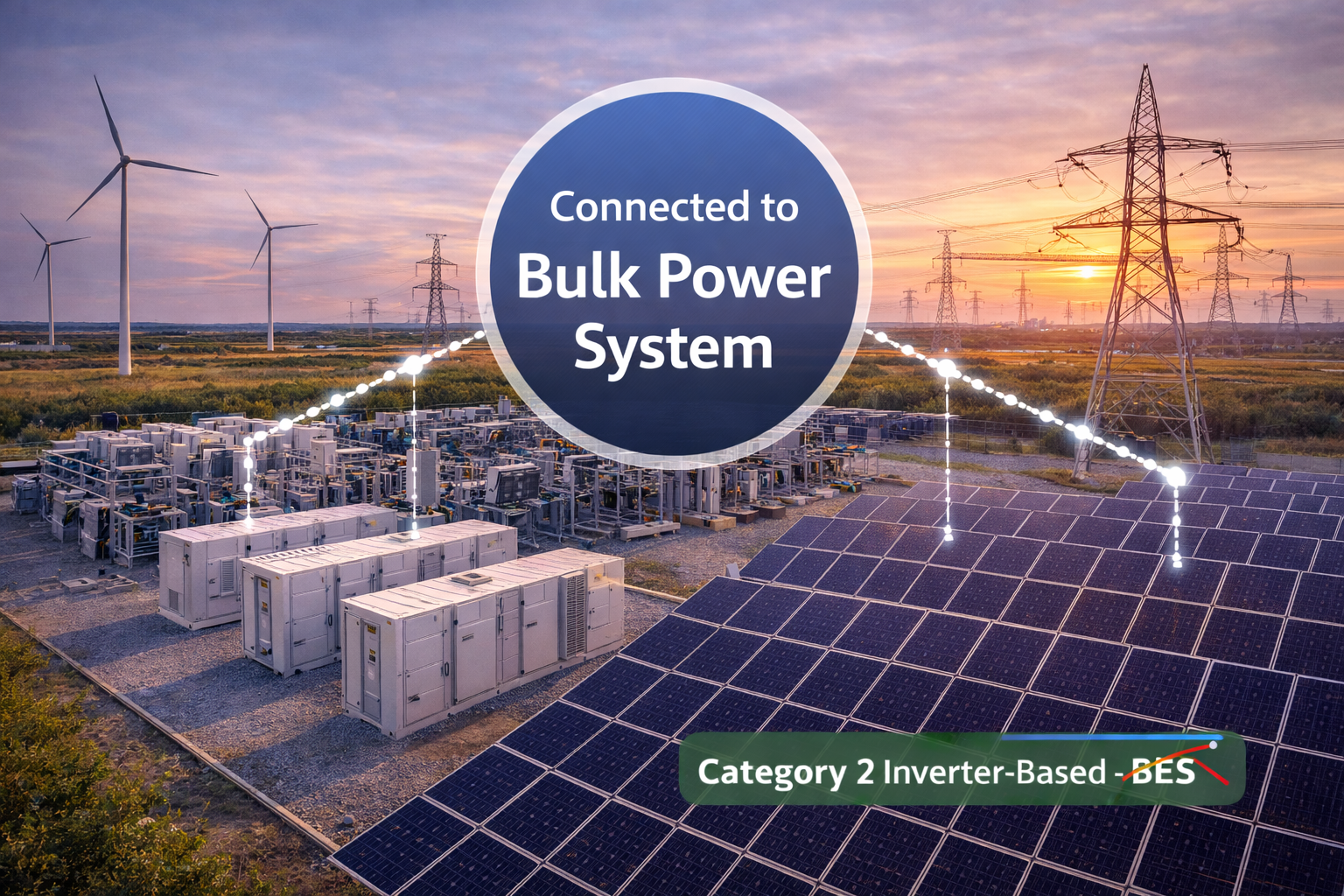
A solar and battery storage facility at sunset, connected to the bulk power grid, labeled Category 2 Inverter-Based BES.

Is connected to the Bulk Power System, even if not BES-classified

Why Category 2 Registration and Compliance Matters

Once registered, Category 2 entities are legally subject to:

Mandatory NERC Reliability Standards

Compliance Monitoring and Enforcement Program (CMEP) oversight

Audits, spot checks, self-certifications, and enforcement actions

Failure to register correctly—or failure to comply after registration—can result in penalties, mitigation plans, audit findings, and reputational risk.

Keentel Engineering helps clients avoid common pitfalls by addressing registration accuracy, technical readiness, and compliance documentation from day one.

Keentel Engineering Category 2 NERC Compliance Services

POI Interconnection Engineering Support
A row of electrical transmission towers silhouetted against a vibrant orange and purple sunset sky.

Our skilled and knowledgeable engineering team has a rich history in designing, developing and commissioning various substation and interconnection engineering support projects.

LEARN MORE
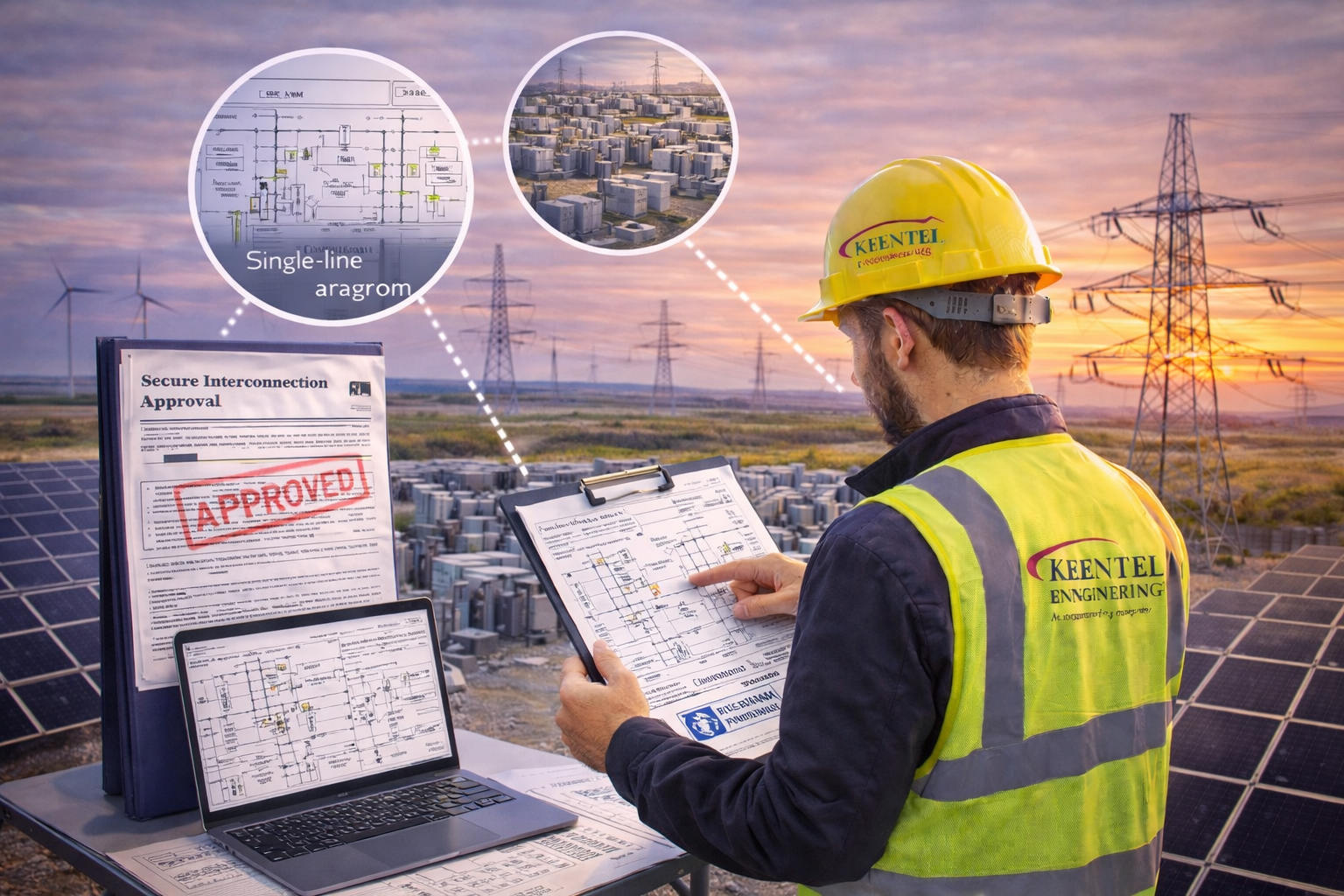
A worker in a yellow hard hat and safety vest reviews technical plans at a solar and wind energy site at sunset.

Category 2 Applicability & Threshold Determination

Keentel Engineering helps clients confirm whether assets qualify as Category 2 IBRs under NERC criteria.
Our services include:

  • Aggregate MVA threshold analysis
  • Hybrid and co-located resource evaluation
  • Aggregation boundary determination
  • BES vs non-BES screening

Outcome: Clear, defensible determination of Category 2 applicability.

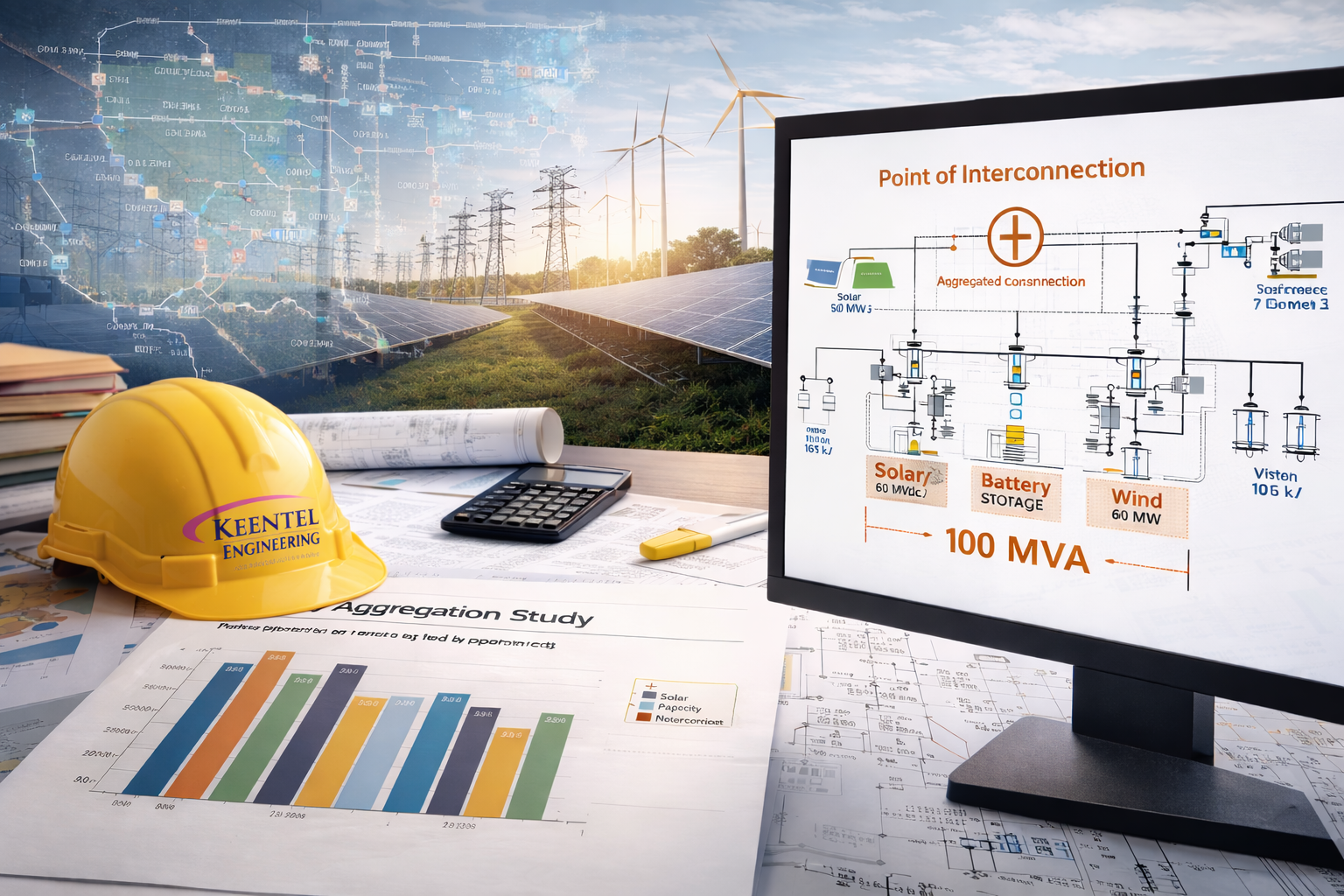
A monitor displays an electrical grid diagram next to a hard hat and data charts on a desk with a solar farm background.

Capacity Aggregation & POI Qualification

We evaluate system configurations to support accurate Category 2 threshold decisions.

Our services include:

  • Detailed capacity aggregation studies
  • Point-of-interconnection evaluation
  • System configuration assessment
  • Interconnection boundary verification

Outcome: Accurate and technically supported qualification decisions.

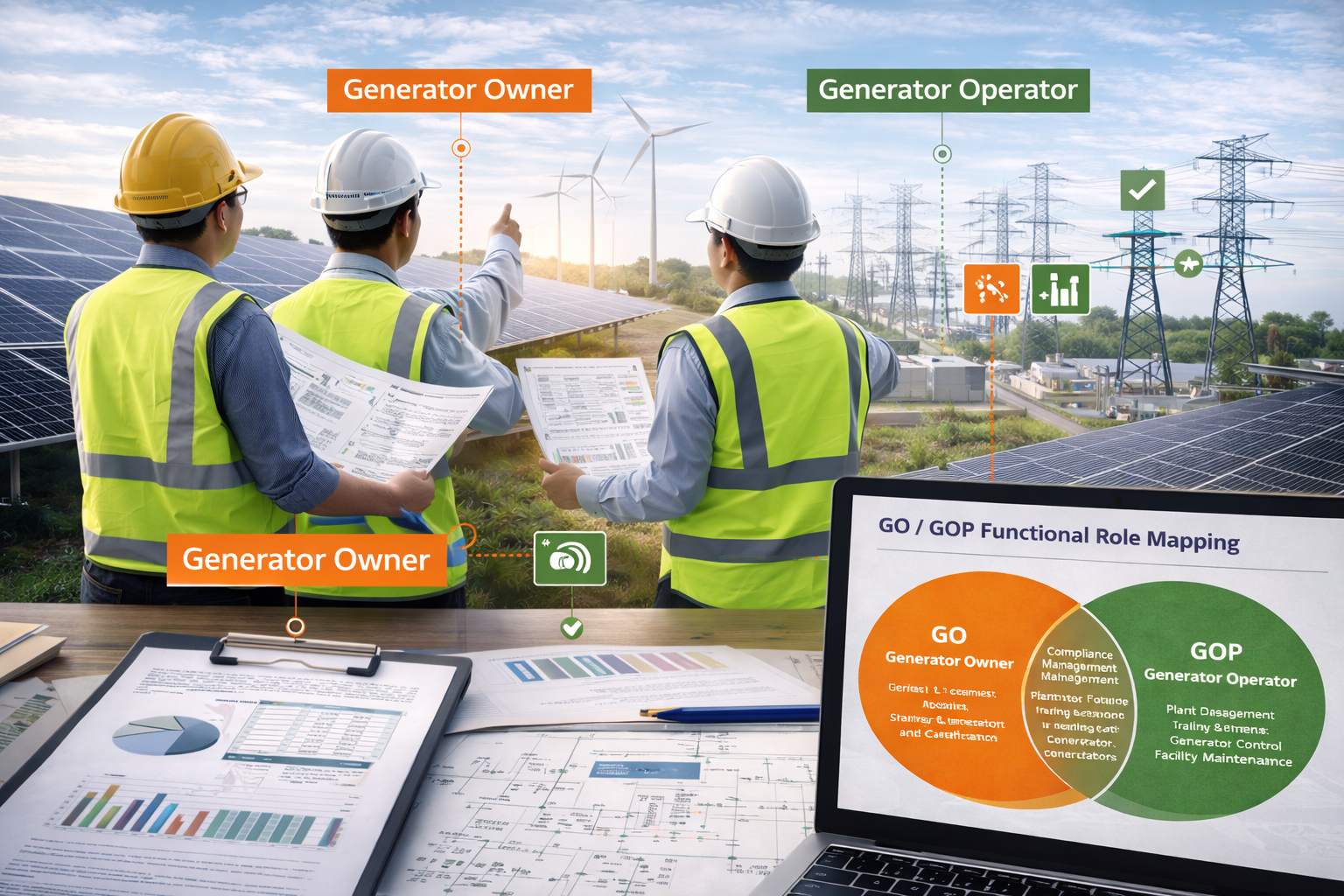
Three engineers in hard hats and vests review project plans at a solar and wind farm with a digital role-mapping chart.

GO / GOP Functional Role Mapping

Keentel Engineering ensures proper identification of Generator Owner and Operator responsibilities.

Our services include:

  • GO vs GOP role analysis
  • Multi-owner evaluation
  • Third-party operator alignment
  • Documentation of functional responsibilities

Outcome: Correct registration scope and reduced audit exposure.

POI Interconnection Engineering Support

A row of electrical transmission towers silhouetted against a vibrant orange and purple sunset sky.

Our skilled and knowledgeable engineering team has a rich history in designing, developing and commissioning various substation and interconnection engineering support projects.
LEARN MORE
Two engineers in hard hats work together at a desk with two computer monitors and a laptop displaying data and a US map.

Registration Strategy & Regional Entity Coordination

We manage complete registration process and interactions with Regional Entities.
Our services include:

  • Registration strategy development
  • Asset verification support
  • RFI response coordination
  • Evidence package preparation

Outcome: Smooth, organized, and defensible registration execution.

A professional in a high-visibility vest reviews solar and power infrastructure plans against a background of solar panels.

CMEP-Ready Technical Documentation

We prepares technical artifacts required for registration and compliance audits.

Our services include:

  • CMEP-ready single-line diagrams
  • Interconnection technical review
  • Facility configuration validation
  • Documentation quality assurance

Outcome: Documentation that withstands regulatory scrutiny.

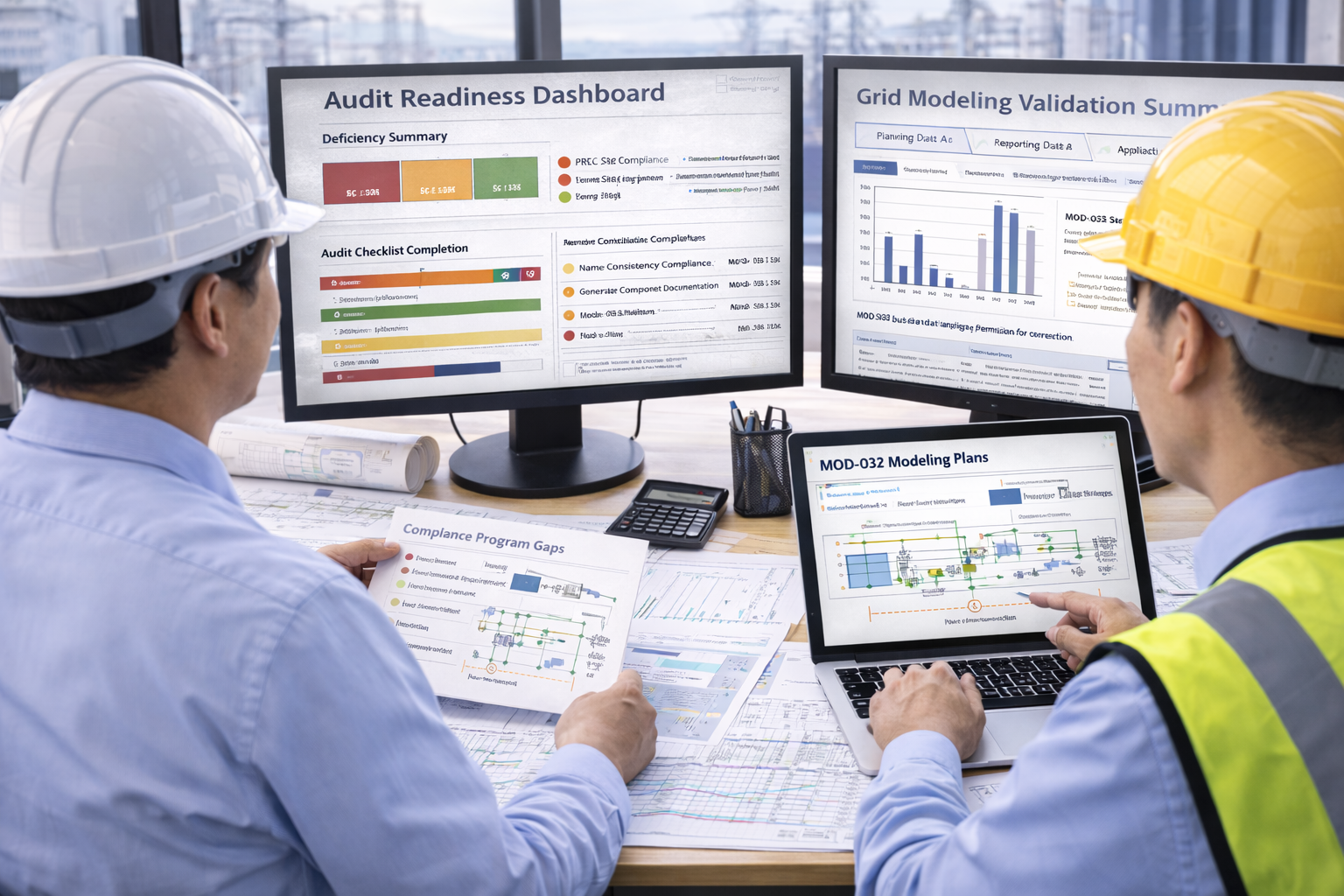
Two engineers in hard hats review data on monitors and paper documents in an office setting.

Reliability Standards & CMEP Readiness

We help clients prepare for enforceable standards and regulatory audits.

Our services include:

  • Assess reliability standard rules
  • Analyze compliance program gaps
  • Support regulatory audit readiness
  • Validate MOD-032 modeling plans

Outcome: Confidence entering audits and technically defensible compliance programs.

A row of electrical transmission towers silhouetted against a vibrant orange and purple sunset sky.

Prepare Now for May 15, 2026

Category 2 NERC compliance is a program, not a checkbox. Early preparation reduces cost, risk, and disruption.

Contact Keentel Engineering to discuss your Category 2 IBR registration and compliance strategy.

A technician in safety gear reviews documents and a laptop at a solar power plant under electrical transmission towers.

Who We've Served

Serving utilities, EPCs, developers, and infrastructure organizations supporting critical power systems nationwide.
Category 2 NERC Compliance Services (FAQs)

1. What does “Category 2” mean under NERC registration rules? ▼

Category 2 refers to a class of inverter-based resources that are connected to the Bulk Power System but do not meet the Bulk Electric System (BES) definition. These resources were historically unregistered, yet NERC and FERC determined they can materially impact grid reliability. Category 2 registration brings these assets under mandatory NERC oversight without classifying them as BES facilities.

2. Who must comply with Category 2 NERC requirements? ▼

Any Generator Owner (GO) or Generator Operator (GOP) that owns or operates a qualifying Category 2 inverter-based resource must comply. This includes solar, wind, battery energy storage systems (BESS), and hybrid facilities that meet the aggregate capacity and voltage thresholds, regardless of commercial arrangements or operating limits.

3. What are the key thresholds that trigger Category 2 registration? ▼

Registration is triggered when a non-BES inverter-based resource has an aggregate gross nameplate capacity of 20 MVA or greater and is connected at 60 kV or higher to the Bulk Power System. Aggregation rules apply across electrically common configurations, making accurate boundary analysis critical.

4. Does ownership structure affect Category 2 applicability? ▼

No. Ownership structure does not exempt a facility from registration. Each qualifying owner must register as a Category 2 Generator Owner, and each operator must register as a Category 2 Generator Operator, unless operational responsibility is formally delegated and documented.

5. When does Category 2 compliance become enforceable? ▼

Category 2 registration and initial compliance obligations become enforceable on May 15, 2026. From this date forward, registered entities are subject to CMEP audits, spot checks, and enforcement actions for applicable Reliability Standards.

6. Which NERC Reliability Standards apply first to Category 2 entities? ▼

Eight Reliability Standards apply without modification starting May 15, 2026, including BAL-001-TRE-2, IRO-010-5, MOD-032-1, PRC-012-2, PRC-017-1, TOP-003-6.1, VAR-001-5, and VAR-002-4.1. These standards form the minimum compliance baseline.

7. Will additional Reliability Standards apply in the future? ▼

Yes. As NERC revises existing standards and develops new ones—particularly under FERC Order No. 901—additional planning, modeling, and operational requirements will become applicable to Category 2 entities over time.

8. What is CMEP and why is it important for Category 2 entities? ▼

The Compliance Monitoring and Enforcement Program (CMEP) is the framework NERC and Regional Entities use to assess compliance. CMEP governs audits, self-certifications, data requests, enforcement actions, and penalties. Once registered, Category 2 entities are fully subject to CMEP.

9. Are new registrants given a grace period under CMEP? ▼

No informal grace period exists. While NERC provides outreach and onboarding support, compliance expectations are enforceable as of the published compliance dates. Entities are expected to use the implementation period to prepare.

10. Why are single-line diagrams so critical for Category 2 compliance? ▼

Single-line diagrams are used by Regional Entities to determine aggregation boundaries, functional responsibilities, and applicability of standards. Inaccurate or incomplete diagrams can result in misregistration, expanded compliance scope, or audit findings.

11. How does Keentel Engineering help with Category 2 registration? ▼

Keentel Engineering manages the registration process end-to-end, including applicability analysis, role mapping, documentation preparation, coordination with Regional Entities, and response to registration RFIs.

12. What is GO/GOP functional role mapping and why does it matter? ▼

Registration is based on functional responsibility, not contracts. Incorrectly assigning GO or GOP roles is a common audit risk. Keentel ensures responsibilities are correctly identified, documented, and defensible.

13. How do hybrid plants affect Category 2 applicability? ▼

Hybrid configurations (e.g., solar + BESS) are evaluated based on aggregate inverter-based capability and electrical configuration. Keentel analyzes these configurations using NERC-approved aggregation diagrams and CMEP guidance.

14. What modeling requirements apply to Category 2 IBRs? ▼

Category 2 entities must provide accurate modeling data under MOD-032-1 and be prepared for expanded validation and EMT modeling requirements under FERC Order No. 901.

15. What is FERC Order No. 901 and why does it matter? ▼

Order No. 901 mandates improved IBR model validation, data accuracy, and study practices. It significantly raises technical expectations for inverter-based resources and drives future Reliability Standards development.

16. Are EMT models required for all Category 2 IBRs? ▼

Not universally. However, EMT studies may be required where inverter interactions, protection misoperations, or control performance issues are identified. Category 2 resources may be included individually or through aggregation.

17. What compliance risks do Category 2 entities face? ▼

Risks include registration errors, audit findings, penalties, mitigation plans, and increased regulatory scrutiny. Early preparation substantially reduces these risks.

18. How does Keentel support CMEP audit readiness? ▼

Keentel develops compliance documentation frameworks, evidence repositories, self-certification support, and audit response strategies tailored to Category 2 entities.

19. Can Category 2 compliance obligations change over time? ▼

Yes. As standards evolve and new requirements become effective, compliance obligations will expand. Keentel helps clients track and prepare for these changes proactively.

20. Why should asset owners prepare now rather than wait? ▼

Early preparation minimizes cost, avoids rushed compliance efforts, reduces audit exposure, and positions organizations for smoother interconnection and planning interactions.

21. How is Keentel Engineering different from compliance-only consultants? ▼

Keentel combines NERC compliance expertise with deep power system engineering capabilities, allowing us to address regulatory, technical, and modeling challenges holistically.

22. Do Category 2 requirements apply outside the United States? ▼

NERC Reliability Standards apply across most of Canada as well. Applicability depends on jurisdiction and Regional Entity rules, which Keentel evaluates case by case.

23. What documentation should Category 2 entities prioritize? ▼

Key documentation includes single-line diagrams, modeling data, protection maintenance records, operating procedures, voltage control capabilities, and evidence supporting compliance with applicable standards.

24. Can Keentel support first-time NERC registrants? ▼

Yes. Keentel has extensive experience supporting entities new to NERC, guiding them through registration, compliance program development, and audit readiness.

25. How do we get started with Keentel Engineering? ▼

The first step is a Category 2 applicability and readiness assessment. Keentel then develops a tailored registration and compliance roadmap aligned with your assets, operations, and risk profile.

Blog and Updates

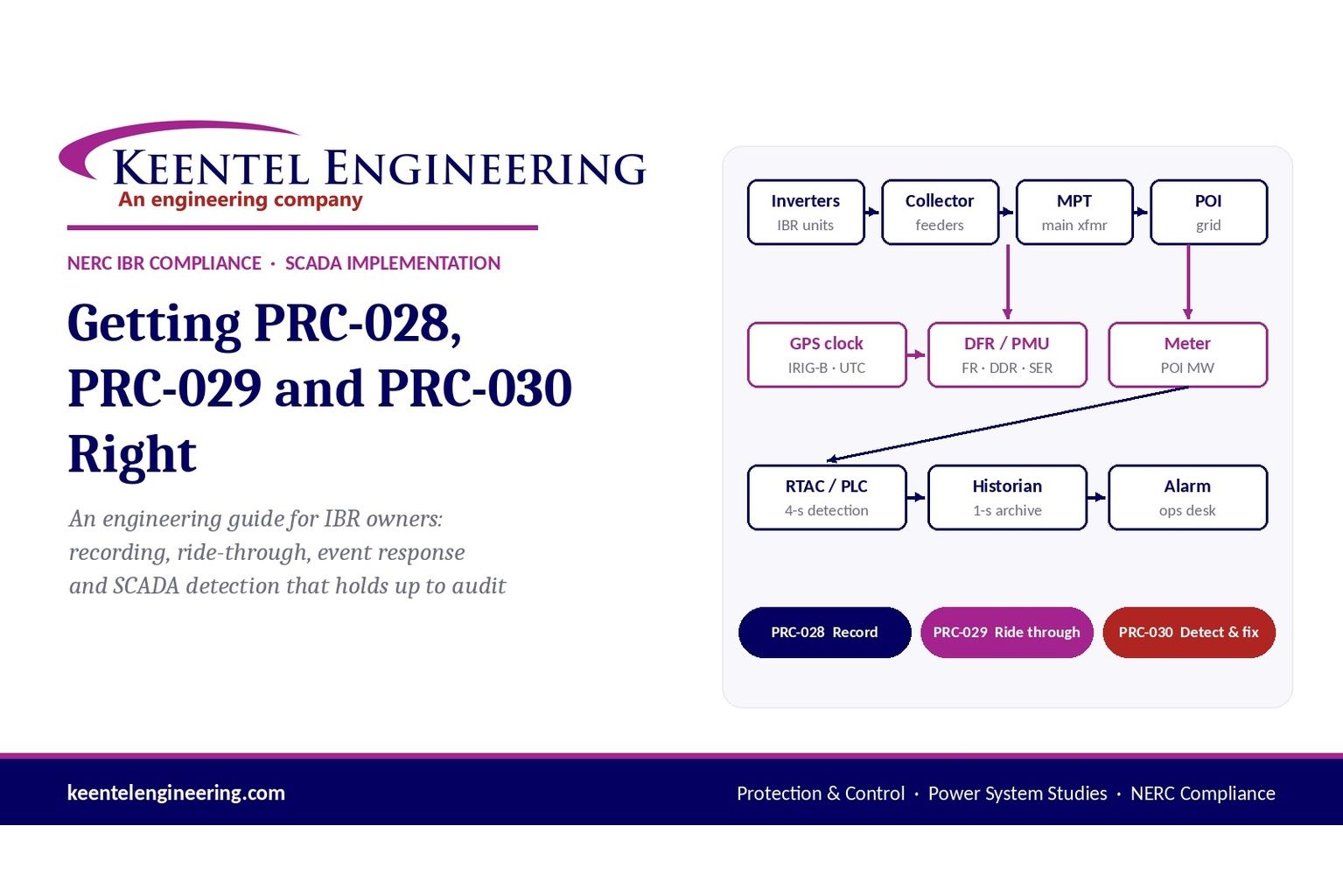
PRC-028 PRC-029 and PRC-030 NERC IBR compliance guide
By SANDIP R PATEL • October 3, 2026
Engineering guide to PRC-028 disturbance recording, PRC-029 ride-through and PRC-030 event detection for inverter-based resources.
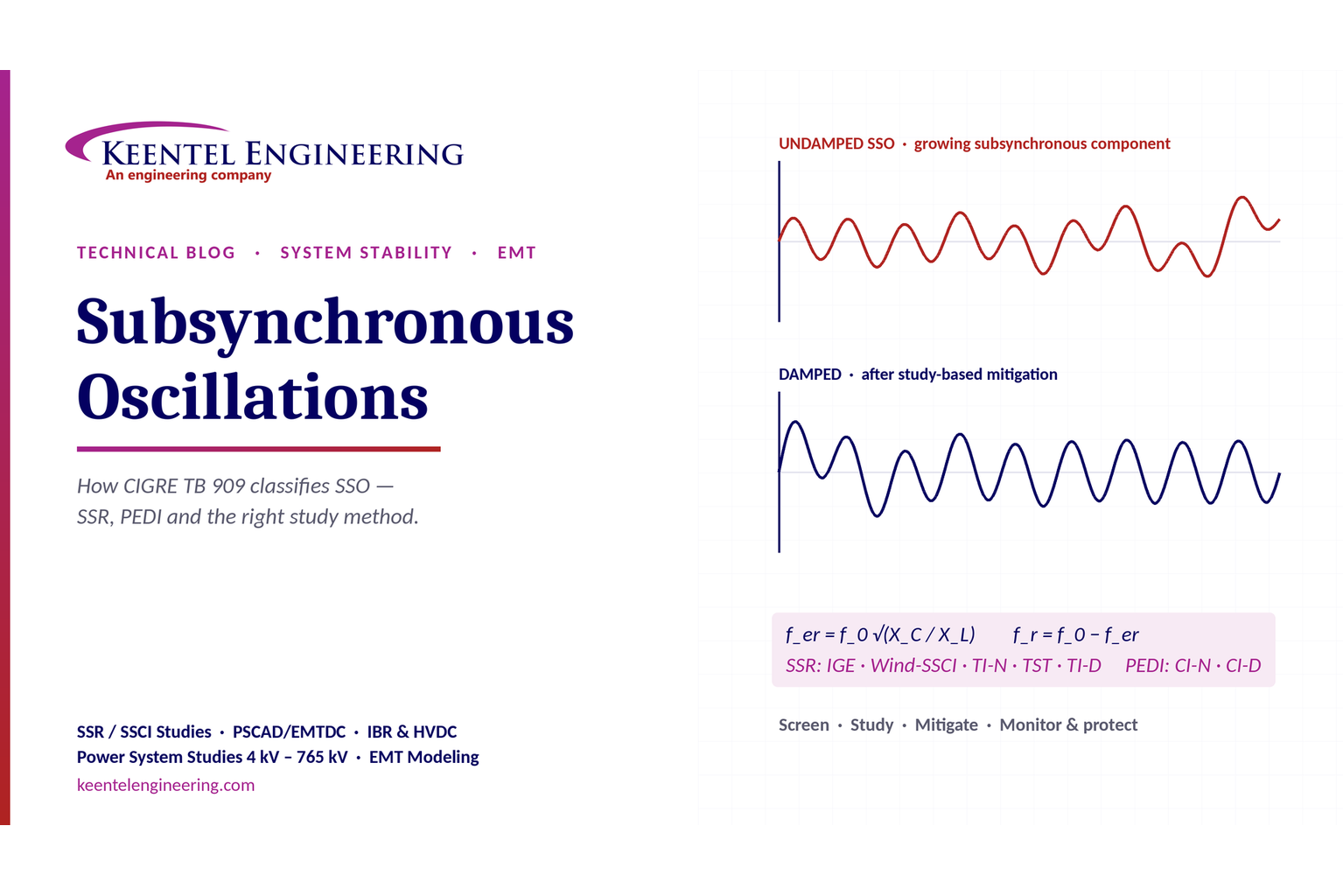
Keentel Engineering graphic showing damped and undamped subsynchronous oscillations.
By SANDIP R PATEL • October 3, 2026
A practical guide to SSO classification, SSR, PEDI, Wind-SSCI, EMT analysis, mitigation and protection based on CIGRE TB 909.
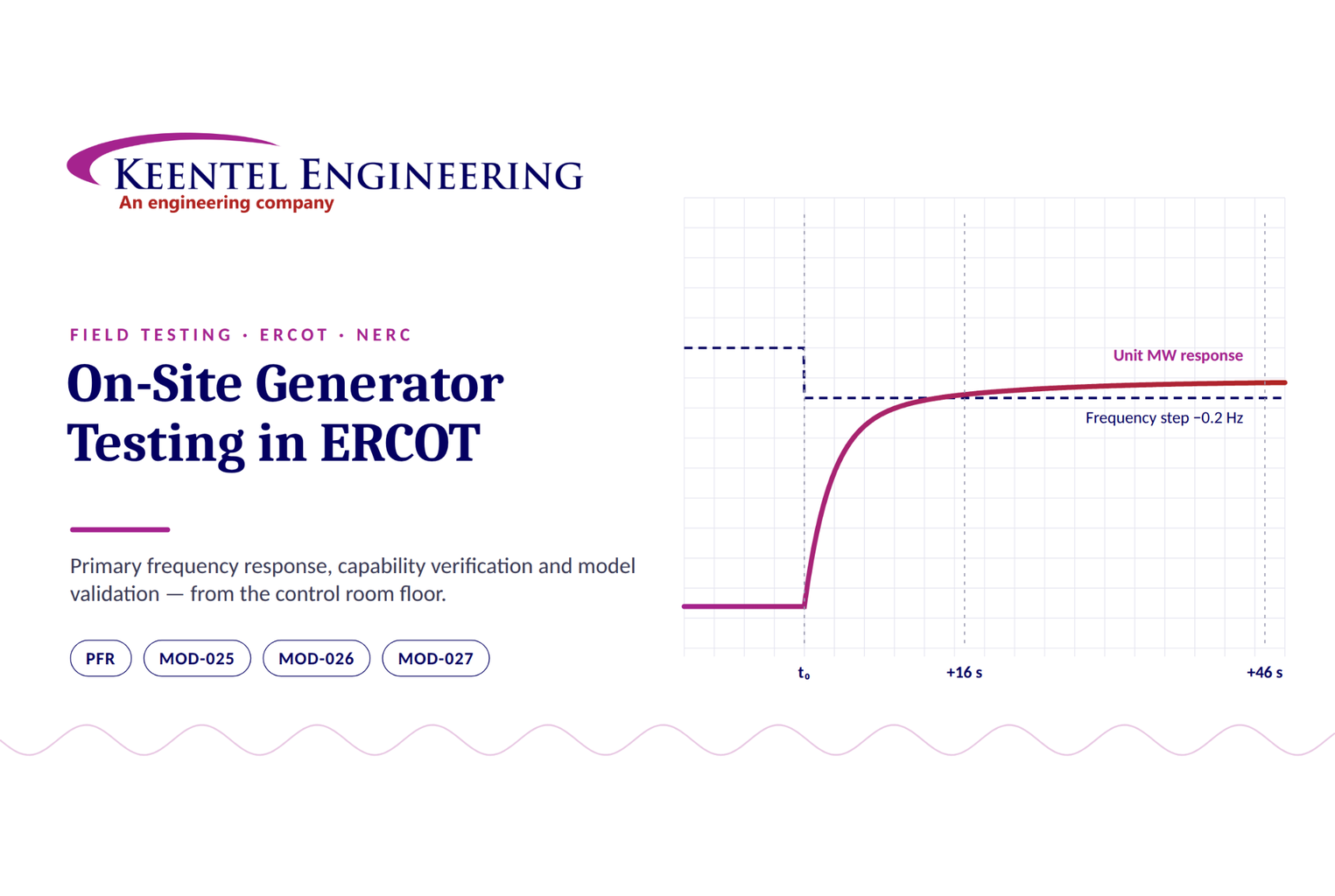
On-site generator testing in ERCOT
By SANDIP R PATEL • October 6, 2026
Learn ERCOT generator testing for PFR, MOD-025 and MOD-026/027, including staged tests, capability verification, dynamic models and field testing.
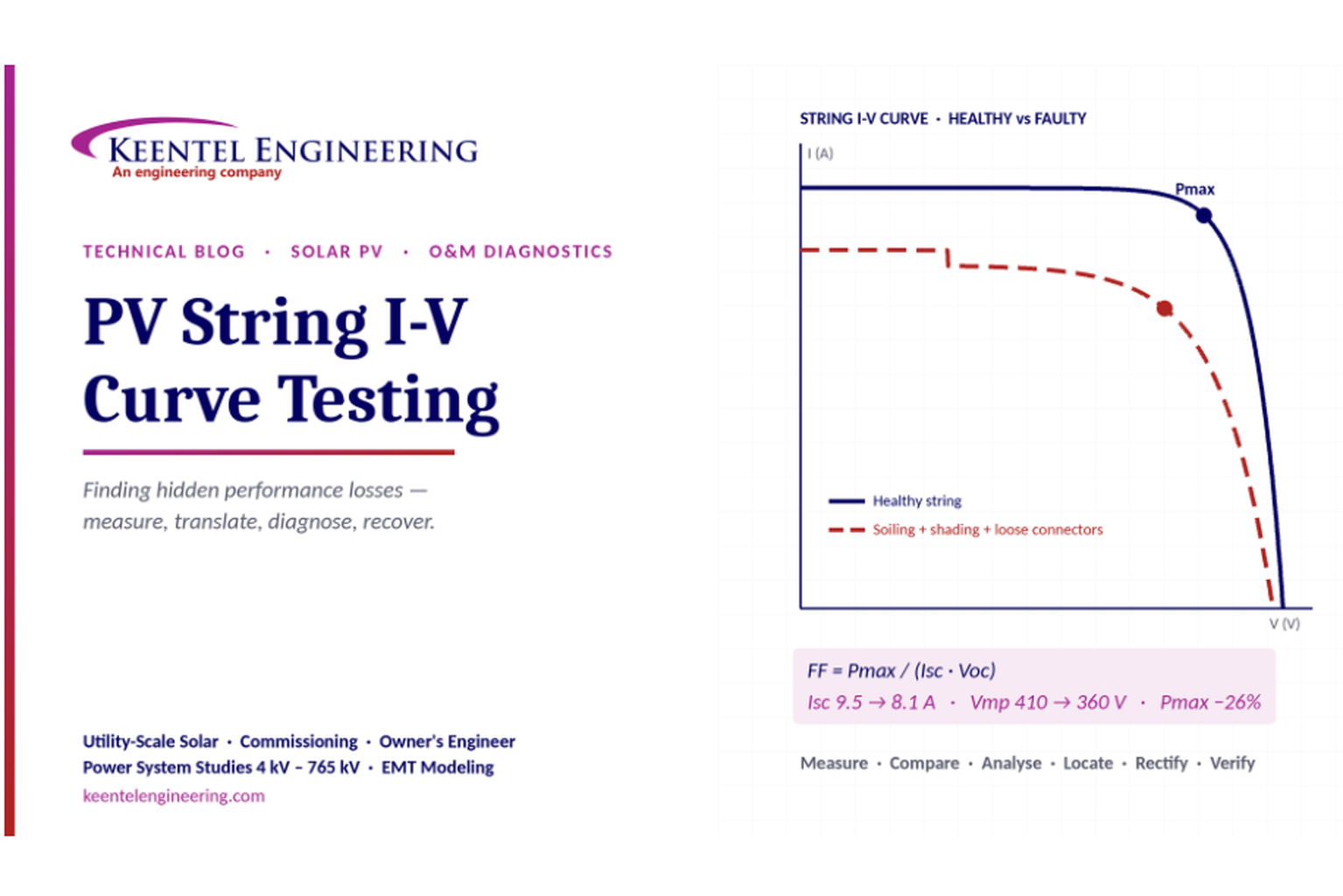
PV String I-V Curve Testing for Solar Performance Loss
By SANDIP R PATEL • October 3, 2026
Learn how PV string I-V curve testing identifies hidden solar performance losses, including soiling, shading, mismatch, degradation, and wiring faults.
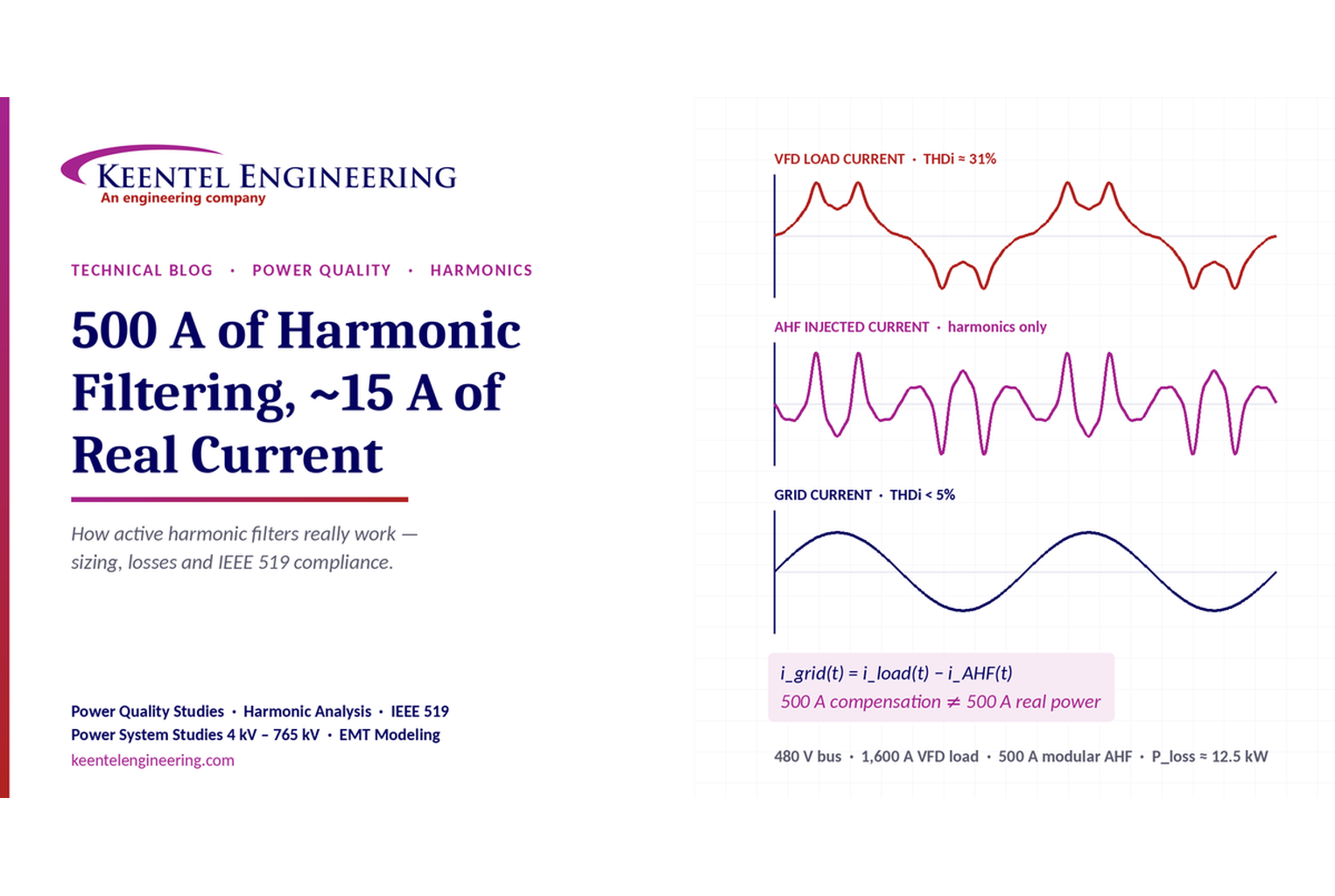
Active harmonic filter reducing VFD current harmonics and grid THDi.
By SANDIP R PATEL • October 3, 2026
Learn how active harmonic filters work, how to size AHF systems, reduce VFD harmonics, calculate losses, and meet IEEE 519 TDD limits at the PCC.
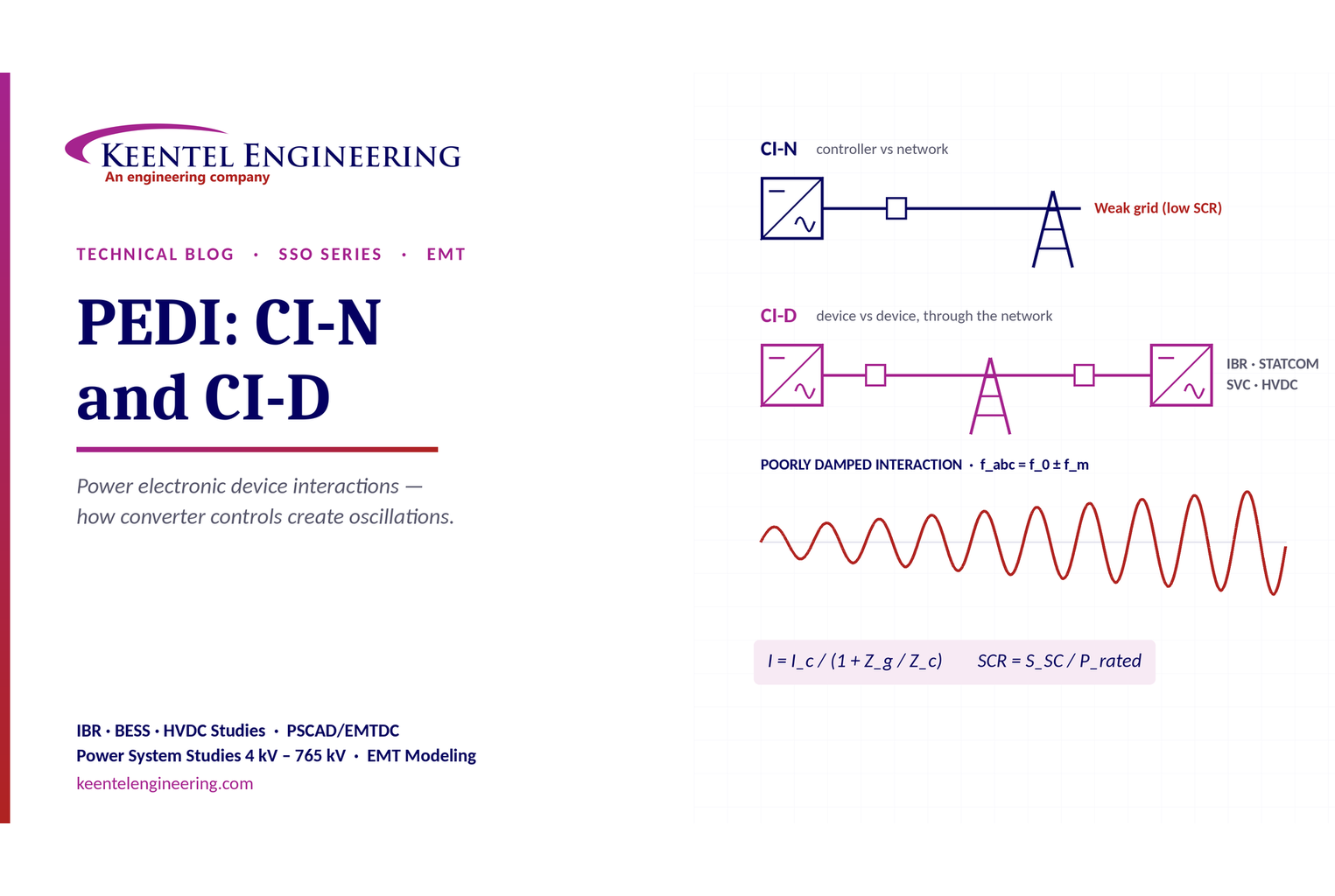
PEDI CI-N and CI-D power system interaction diagram
By SANDIP R PATEL • October 3, 2026
Learn power electronic device interactions (PEDI), including CI-N and CI-D, weak-grid stability, SCR, EMT studies, impedance analysis and mitigation for IBRs.
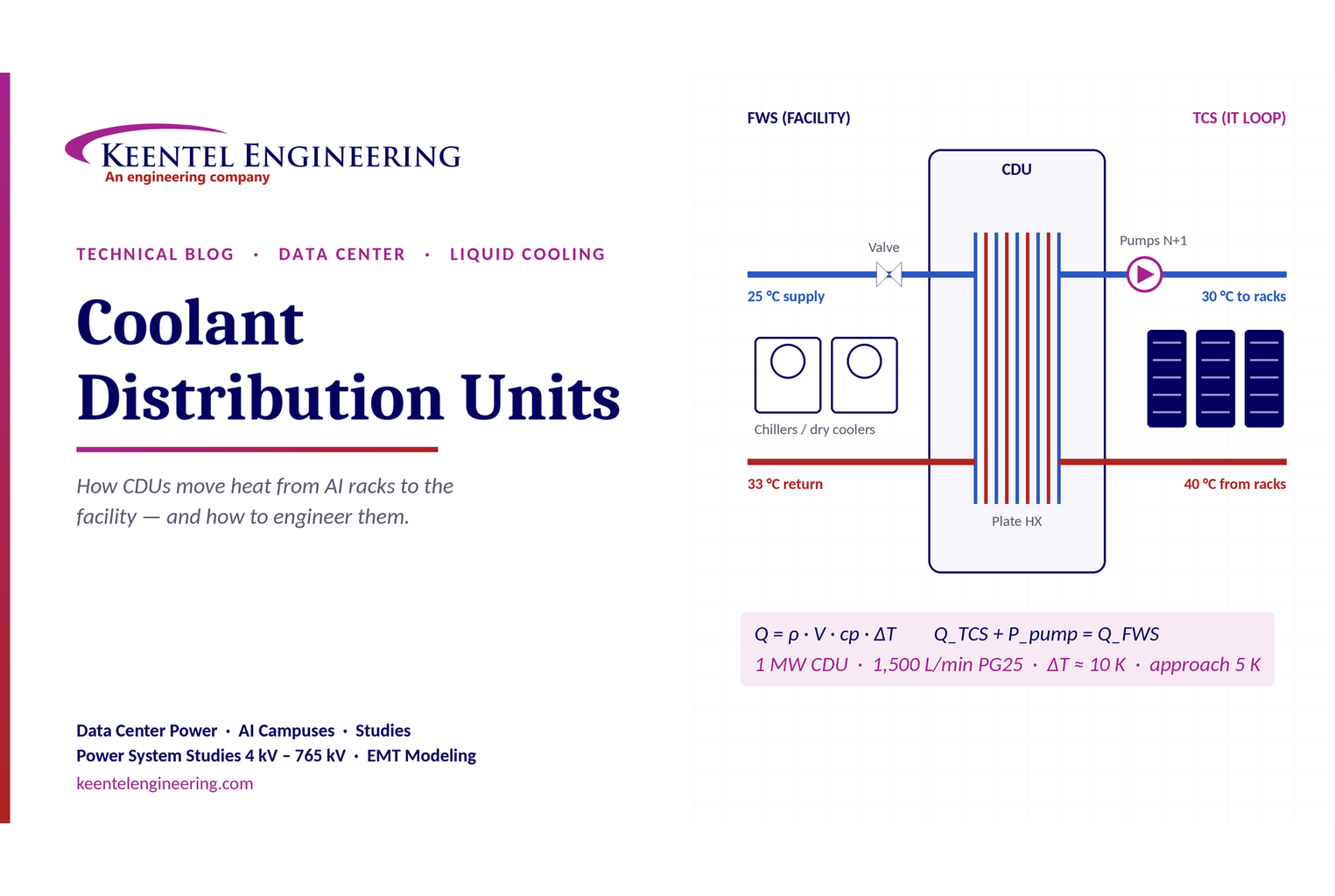
Coolant distribution unit for data center cooling
By SANDIP R PATEL • October 3, 2026
Learn how data center coolant distribution units (CDUs) work, including FWS and TCS loops, heat transfer, sizing, redundancy and liquid cooling for AI data centers.
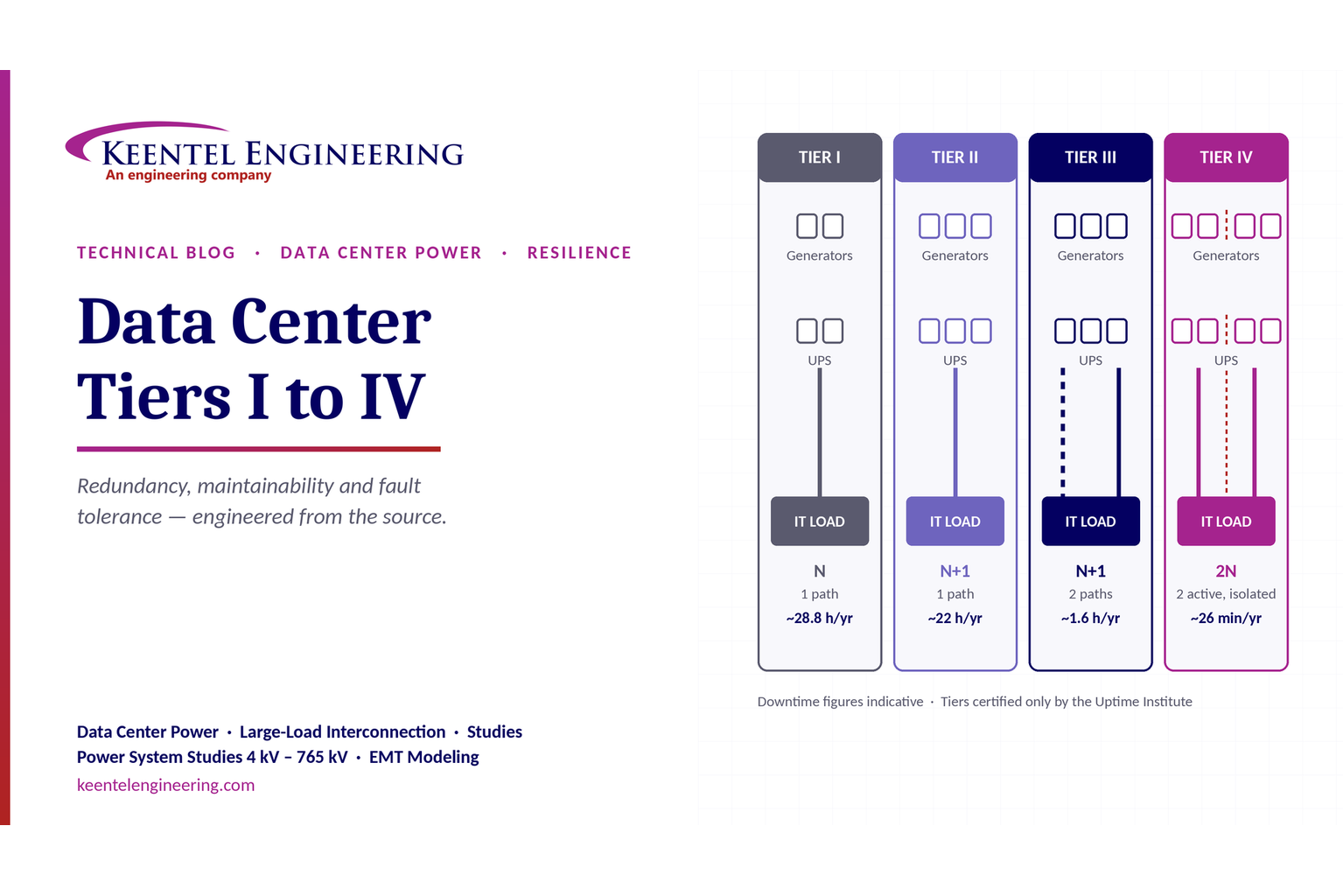
Data Center Tiers I to IV: An Electrical Engineer's Guide to Redundancy, Maintainability and Fault T
By SANDIP R PATEL • October 3, 2026
Compare Data Center Tiers I–IV, including redundancy, uptime, Tier III concurrent maintainability, Tier IV fault tolerance, UPS, generators and power design.
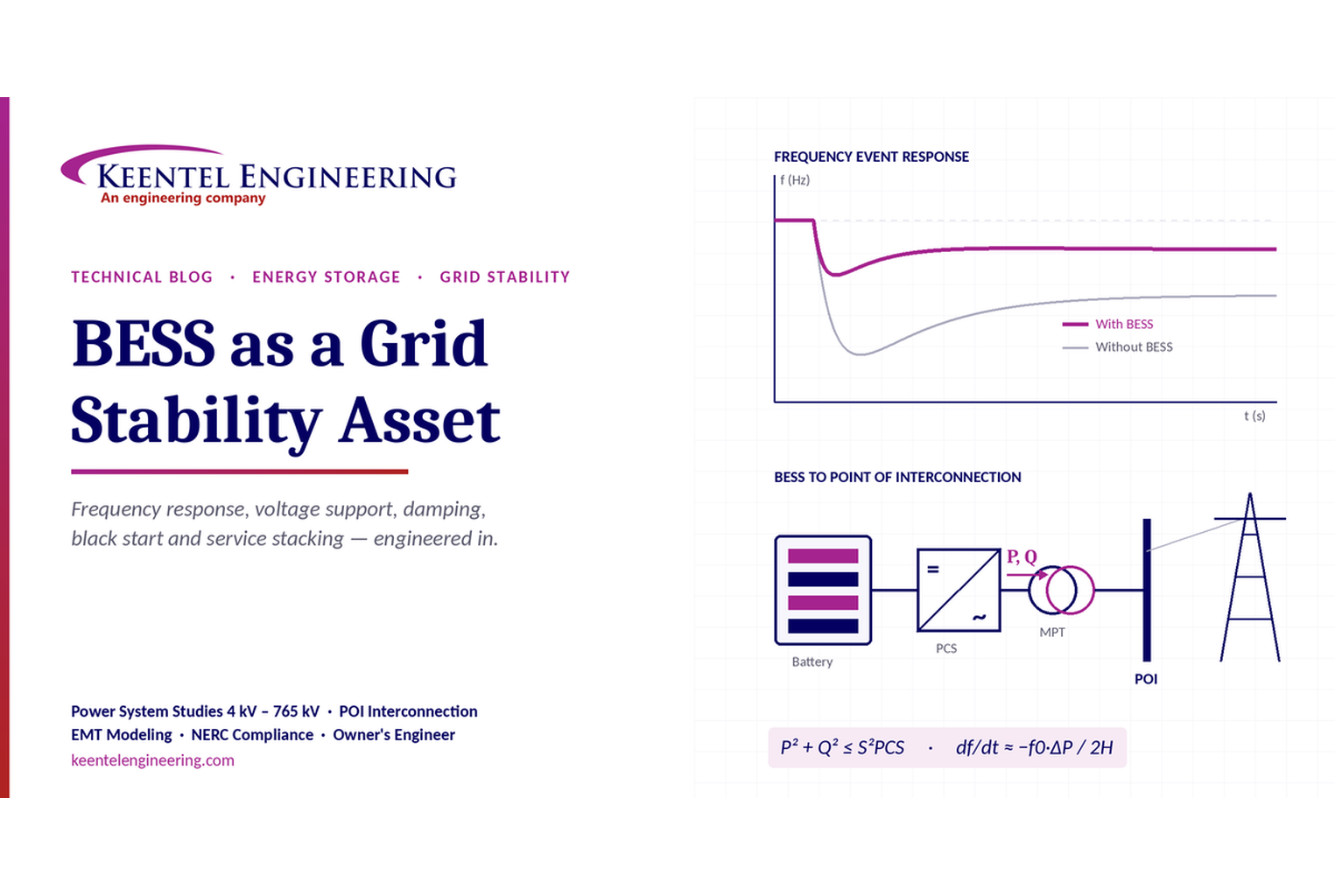
BESS grid stability with frequency response and POI interconnection.
By SANDIP R PATEL • October 3, 2026
Learn how BESS supports grid stability through fast frequency response, voltage support, oscillation damping, black start, grid-forming controls and EMT studies.
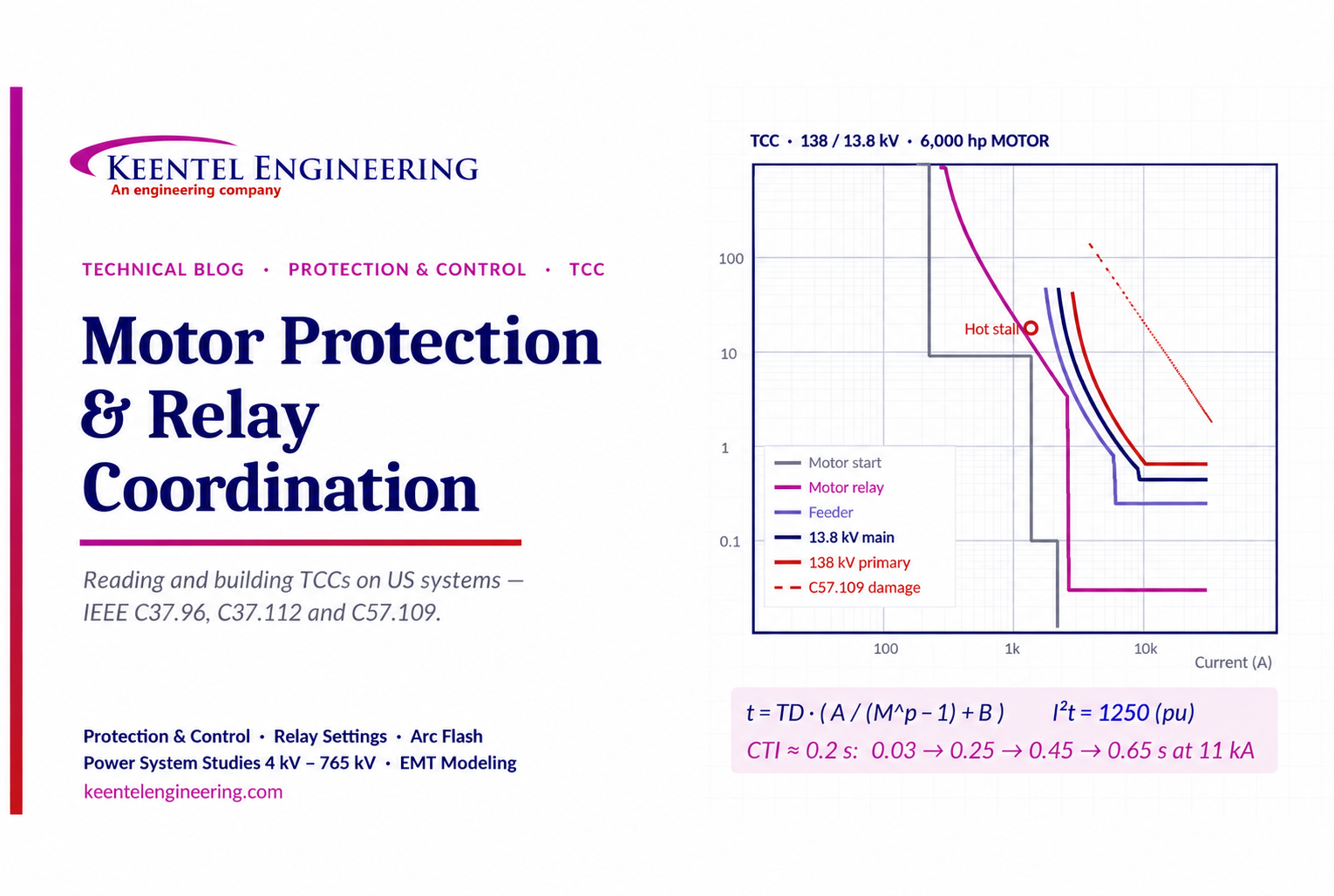
Motor Protection & Relay Coordination TCC Guide
By SANDIP R PATEL • October 3, 2026
Learn motor protection and relay coordination using TCC curves, IEEE standards, transformer damage limits, CTI settings and a 138/13.8 kV example.
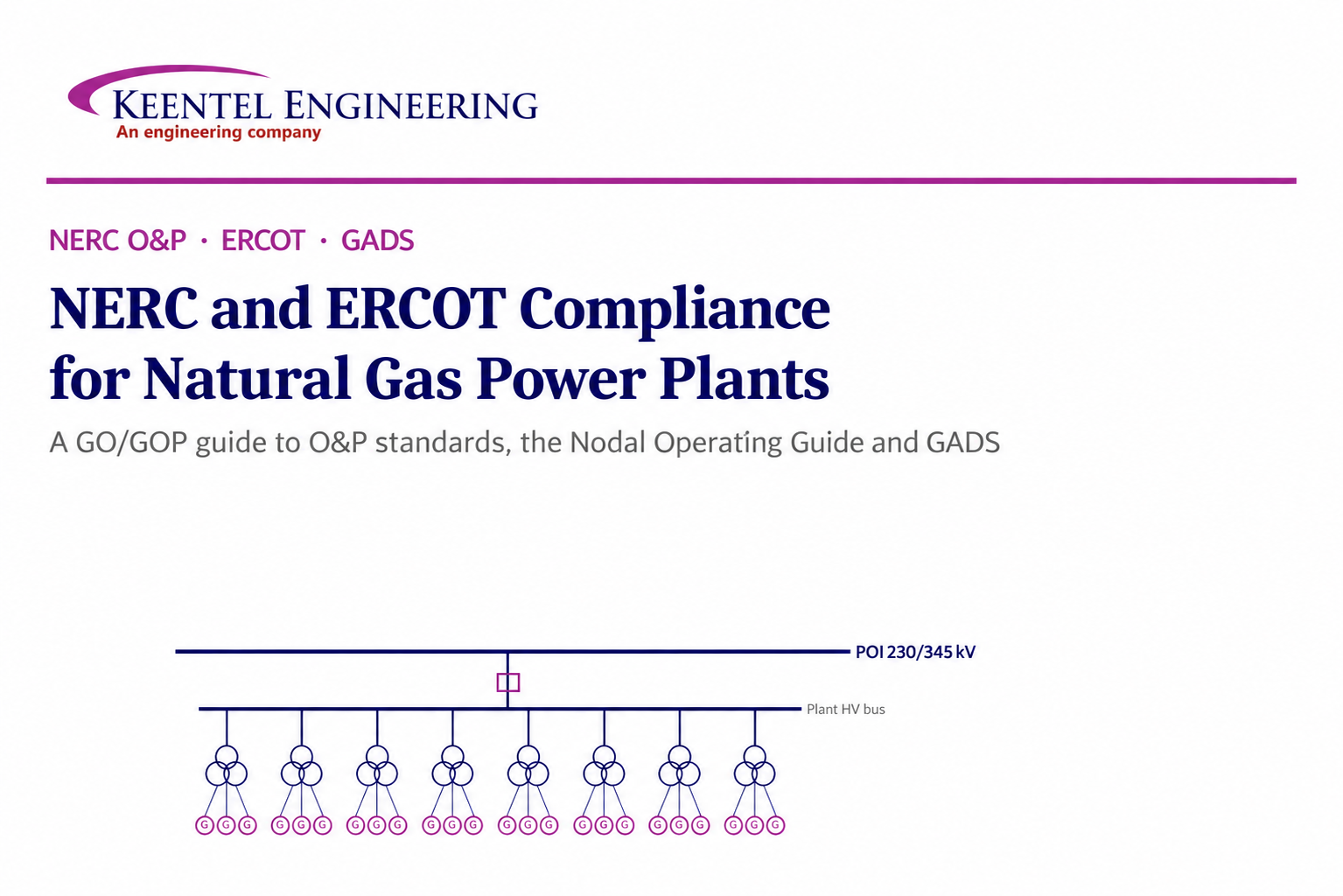
NERC and ERCOT compliance guide for natural gas power plants showing power system diagram and grid c
By SANDIP R PATEL • September 30, 2026
Learn NERC and ERCOT compliance requirements for natural gas power plants, including GO/GOP obligations, O&P standards, GADS reporting, and audits.
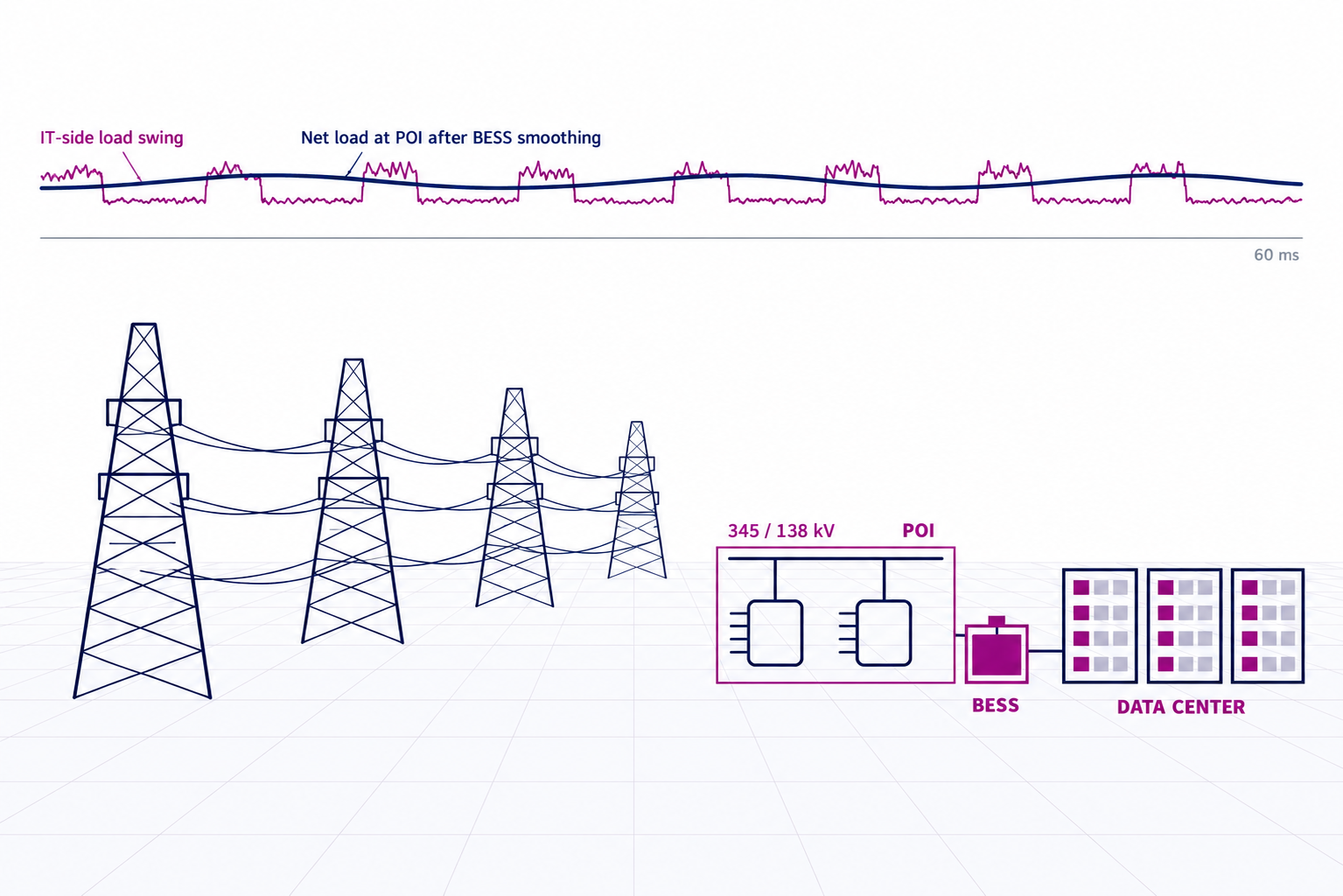
Data center and high-voltage transmission grid illustrating a large-load interconnection application
By SANDIP R PATEL • September 26, 2026
Learn how to prepare a MISO large-load interconnection package, including PSS®E models, BESS smoothing, harmonic data and transmission-owner requirements.