



Interconnection & Site Intelligence

Know the Grid Before You Commit

Site Screening · Interconnection Cost · Grid Headroom · Queue Due Diligence

Site and market screening, generation interconnection cost screening, large-load headroom analysis and queue due diligence for solar, wind, BESS, hybrid, data center and industrial projects nationwide, modeled by power system engineers and reviewed by a P.E.

4 Screening Services Under One Accountable Scope
Nationwide All U.S. RTOs / ISOs and Non-RTO Regions
4–765 kV Voltage Range Our Engineers Study and Seal
30+ Years Across Generation, Transmission, Distribution & Renewables

About Keentel Engineering

Your Trusted Partner in Electrical Engineering and Power Systems

At Keentel Engineering, we deliver electrical power engineering services built on 30 years of experience and a commitment to excellence. Our clients include utilities, developers, EPCs, and public agencies across the U.S.

Unlike firms that sacrifice technical depth to chase billable hours, we prioritize precision, compliance, and value engineering. From transmission services and relay modeling to winterization and SCADA planning, we never compromise on quality.

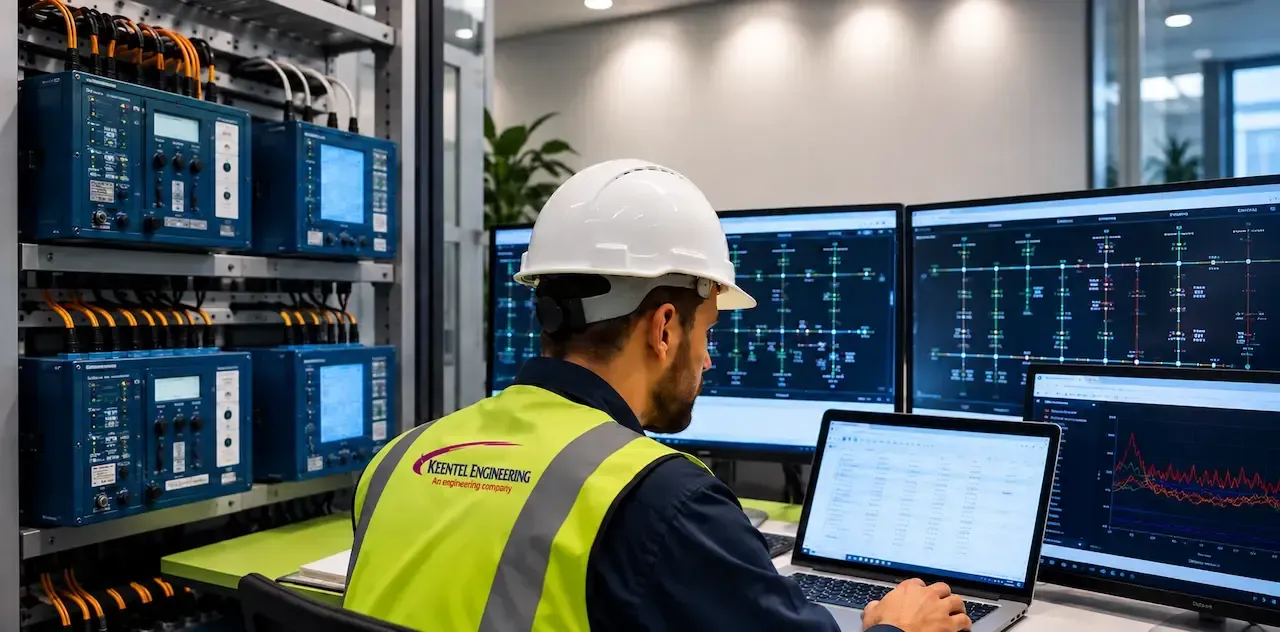
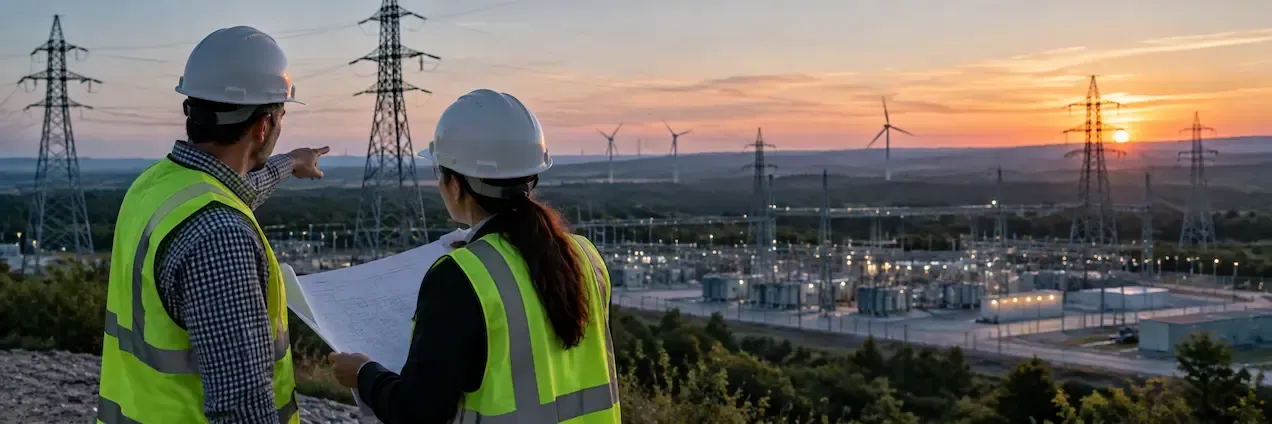
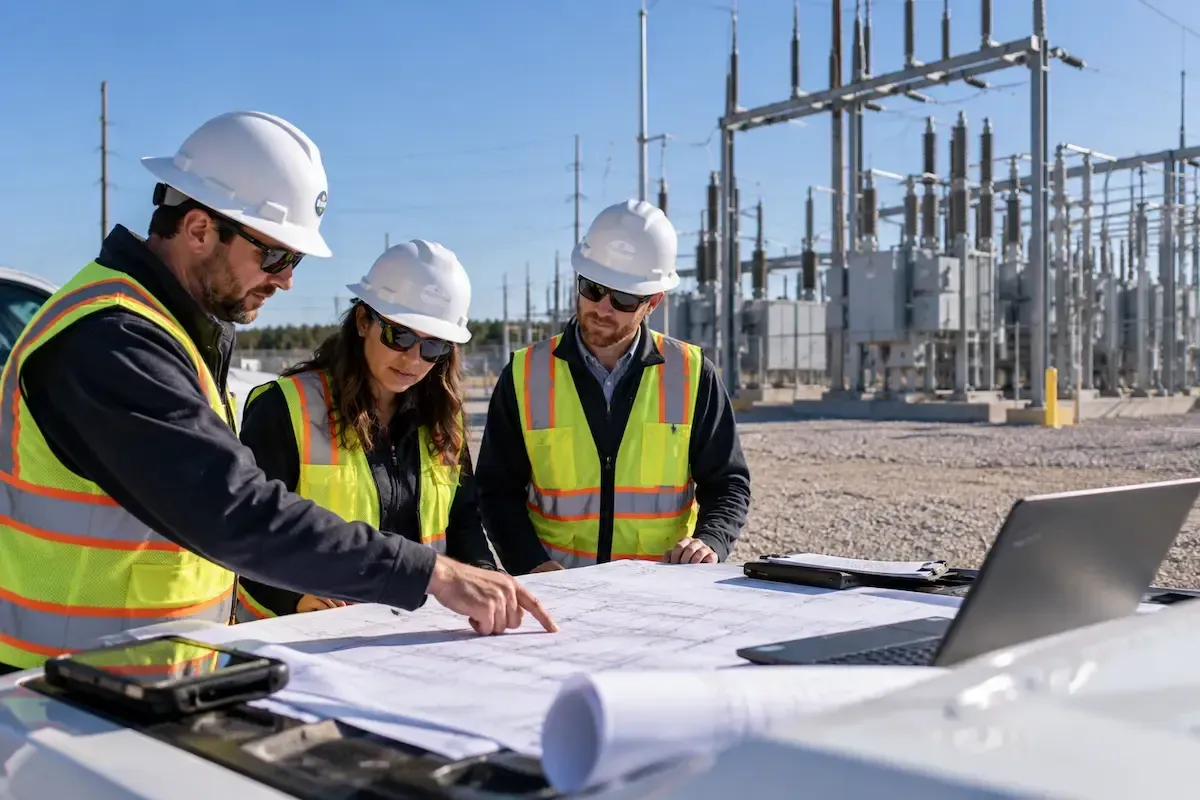
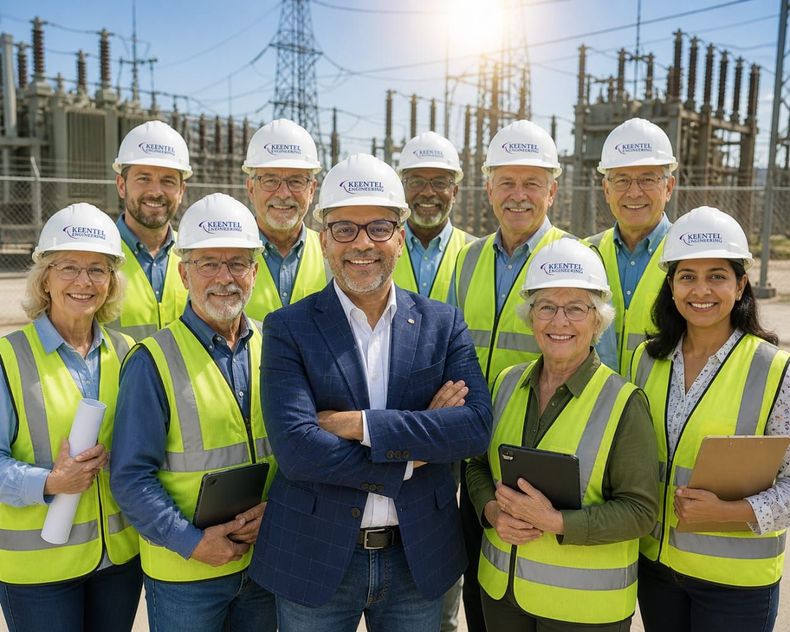
Keentel Engineering team of electrical engineers in hard hats and safety vests at a high-voltage substation site

Why Choose Keentel Engineering?

Client-Focused Work Approach

At Keentel Engineering, we take pride in being the go-to electrical power engineering firm for power and utility system planning, substation design, protection, control, and power system analysis. The following attributes distinguish our team in utility-grade substation engineering and compliance-driven project delivery.

30 Years of Experience

With three decades of hands-on project delivery, we bring unmatched expertise in substation layout design, substation electrical and civil engineering, relay protection, and grid-tie solutions. Our experience includes projects in complex terrain, urban retrofit environments, and utility-scale renewable integrations.

Quality with Innovation

Our engineering process applies AutoCAD 3D, BIM modeling, and system-level substation design practices to ensure accurate planning, reduced errors, and efficient coordination across all project stakeholders.

Our workflow includes 3D substation design, enabling clash-free coordination between structural, electrical, and civil disciplines.

Attention to Detail

From grounding grid studies to relay protection settings, we engineer every detail to improve system reliability, performance, and operational safety. Our rigorous QA/QC process ensures compliance with IEEE, NFPA, and ISO/TSO interconnection standards.

Among leading electrical substation design companies, Keentel Engineering stands out for 30+ years of proven high-voltage and utility-grade project delivery.

Keentel Engineering video

Accreditations and memberships

NSPE, National Society of Professional Engineers
D-U-N-S Registered
IEEE Senior Member
BBB Accredited Business, A plus rating

Contact details

Tell Us About Your Project

1 business day reply

First name, email and what you're interested in are all we need to get moving. Everything else, including drawings or an RFP, is optional.

We reply within one business day. Sending this does not create a contract or an engineer and client relationship.

Most Stranded Projects Were Not Bad Projects.

They were good projects on the wrong bus, filed into the wrong cluster, or priced before anyone checked the upgrades.

Keentel Engineering screens candidate sites, points of interconnection and queue positions before the land, deposits and study fees are committed. We use advanced interconnection modeling and market analytics, then apply the judgment of engineers who perform system impact, EMT, protection and substation work every day. You get a ranked, defensible answer in days, and one firm to carry the winning site from screen to energization.

01

Where to Build

Nodal price, congestion, nearby competing projects, regional load growth and distance to viable POIs, ranked site by site.

02

What It Will Cost to Connect

Network upgrades, cost allocation, constraint drivers and attrition scenarios for generation in every U.S. RTO and ISO.

03

Whether the Grid Can Serve the Load

Withdrawal headroom, upgrade exposure and phased-ramp scenarios for data center and large-load sites.

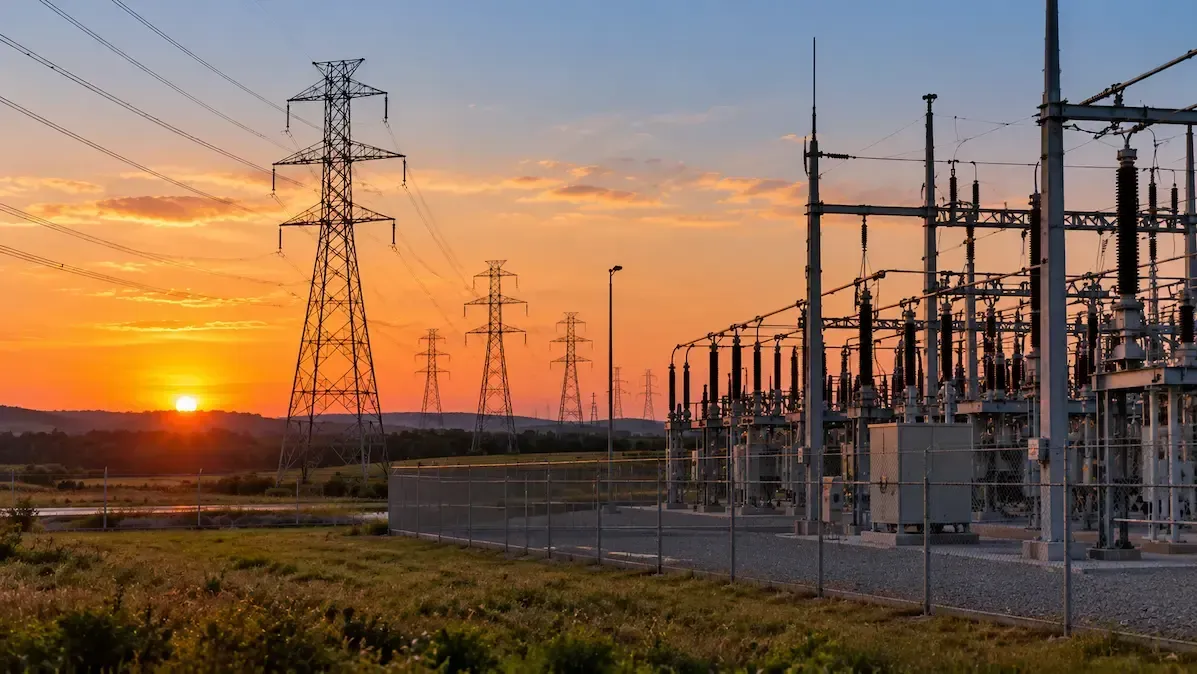
High-voltage electrical transmission infrastructure
Start a Screen

Send your candidate sites or queue position, project type and MW. We return a scoped fee and schedule, usually within a few business days.

Site & Market Screening and Generation Cost Screening

Where a project should go and what the interconnection will likely cost, answered before the application, the deposit or the land option.

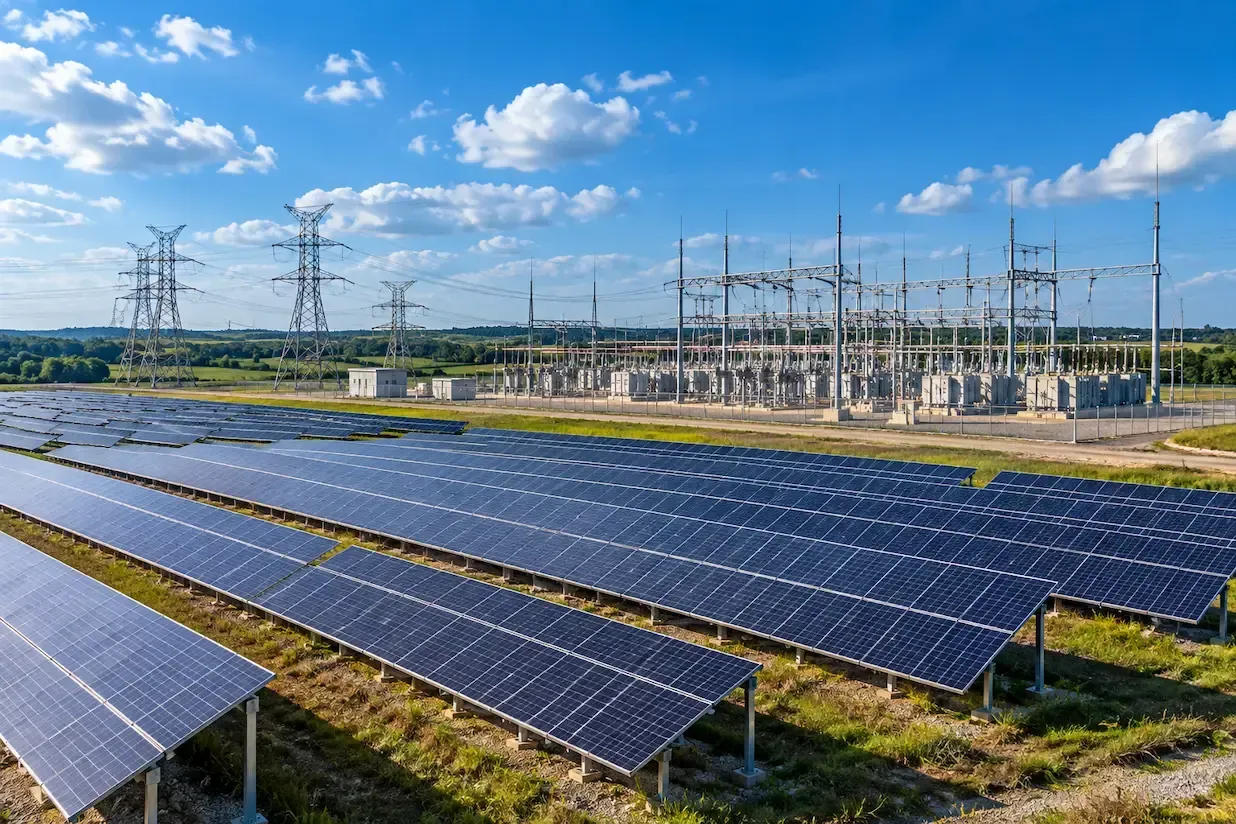
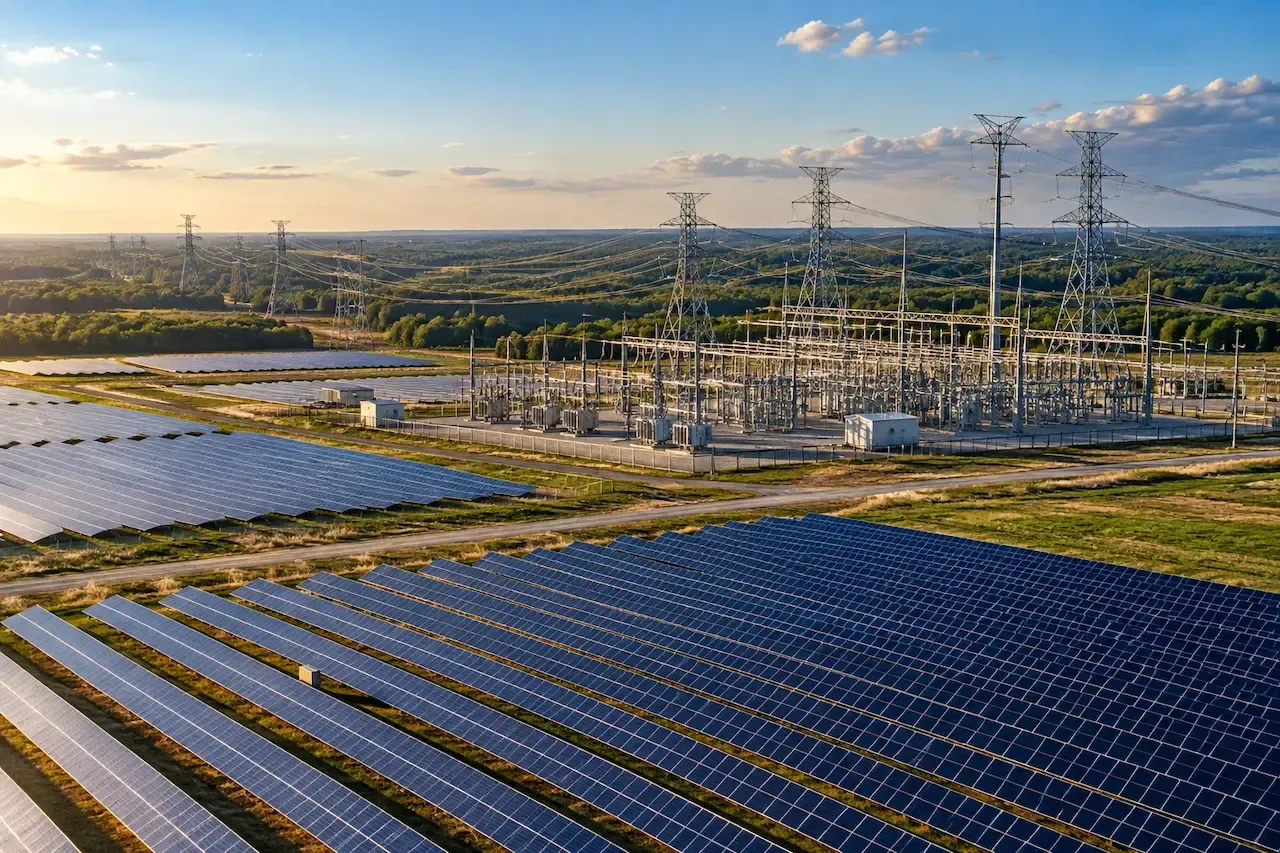
Renewable energy project site
01

Site & Market Screening

A candidate site is only as good as the node it settles at and the bus it connects to. We screen sites against the market and grid conditions that decide revenue and risk, then rank them on one consistent basis.

Nodal price profile. Historical price level, shape and volatility at the settlement node, by hour and season, and how the site compares with nearby hubs.
Congestion exposure. Monthly and annual congestion patterns, binding constraints near the site and the direction of basis risk.
Competing development. Projects in the queue or under construction nearby, their size, technology and stage, and what they mean for headroom and cost sharing.
Load growth. Regional demand trends and where new large loads are landing, which shapes future pricing and upgrade need.
Transmission access. Distance to candidate substations and lines, voltage class, and whether a tap, a new switching station or a radial line is realistic.
Engineering flags. Short-circuit strength, weak-grid indicators, right-of-way constraints and anything our study engineers expect to drive cost later.
Outcome A ranked shortlist with a one-page summary per site: price and congestion context, POI options, competing projects and the red flags to check before land control.
Best for: early-stage developers, land and origination teams, data center site selectors, portfolio planners.
Transmission grid infrastructure
02

Generation Interconnection Cost Screening

ALL U.S. RTOs
For solar, wind, storage and hybrid projects, we model the RTO cluster study process to estimate the network upgrades a project is likely to trigger and the share it is likely to carry.

Upgrade identification. Thermal and voltage constraints the project is likely to trigger or worsen under the applicable study criteria.
Estimated upgrade cost. Planning-level cost of the upgrades, using the RTO's cost basis and our own substation and line experience.
Cost allocation. The project's likely share of each upgrade, based on its contribution to the constraint.
Attrition scenarios. How cost and allocation move as other projects in the cluster withdraw, so you can see best case, expected and worst case.
POI and size sensitivity. Alternate buses, MW sizes and technology mixes to find the configuration with the lowest exposure.
Stay-or-withdraw support. For projects already in a cluster, a view of exposure ahead of the next decision point and deposit.
Outcome An upgrade and cost-allocation summary with the constraints driving it, attrition cases, recommended POI and size, and the questions to raise in the RTO scoping meeting.
Best for: developers preparing applications, projects in active clusters, teams facing a withdrawal or deposit milestone.
Applies To

Utility-scale solar · Onshore wind · Standalone and co-located BESS · Hybrid plants · Repowering and capacity additions · Portfolio origination

Large-Load Headroom Screening and Queue Due Diligence

Whether the grid can actually serve the load, and whether a queue position is worth what someone is asking for it.

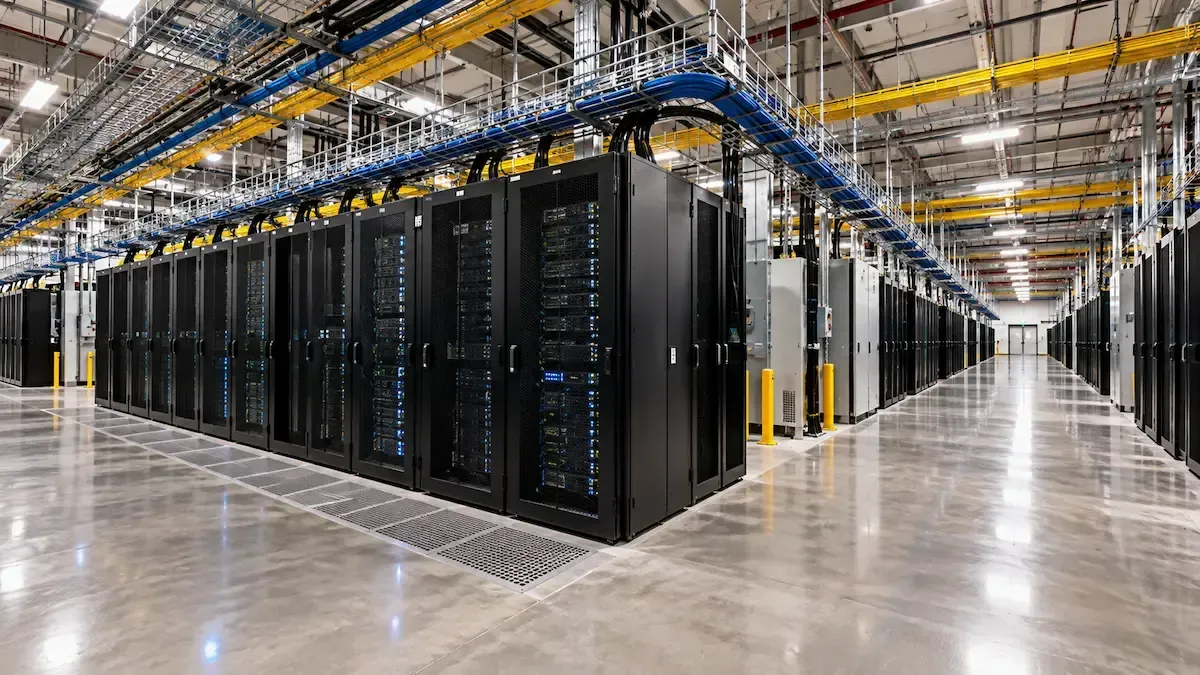
Data center infrastructure
03

Large-Load & Data Center Headroom Screening

For data centers, industrial expansions, hydrogen and electrification projects, power availability is the schedule. We screen candidate sites for how much load the grid can take today and what it would take to serve the rest.

Withdrawal headroom. Load the grid can serve at candidate substations and buses without triggering upgrades, under normal and contingency conditions.
Upgrade exposure. Planning-level upgrades and cost to serve the full requested load where headroom falls short.
Multi-site comparison. Candidate sites and markets ranked on headroom, cost and timeline on one consistent basis.
Phased ramp scenarios. Initial, interim and full build-out loads, so energization can start before the last upgrade is in service.
Co-location and on-site generation. How on-site generation, storage or a co-located plant changes the net withdrawal and the upgrade picture.
Utility engagement prep. The load profile, single-line concept and questions to bring to the utility's load interconnection process.
Outcome A headroom map of candidate sites, upgrade exposure for the full load, a phased ramp recommendation and a package ready for the first utility meeting.
Best for: hyperscale and colocation developers, powered-land developers, industrial and manufacturing expansions.
Professional engineering due diligence
04

Queue Due Diligence

Before you buy, finance or sell a project, you need an independent view of the interconnection position, which is often the largest unknown in the valuation.

Position review. Queue number, cluster, study phase, milestones met and milestones still ahead.
Study document review. Feasibility, system impact and facilities study results read by engineers who write those studies.
Cost exposure. Current upgrade allocation, sensitivity to attrition and the realistic range still ahead.
Schedule risk. Remaining study phases, upgrade in-service dates and their effect on the commercial operation date.
Technical red flags. Model gaps, ride-through or EMT issues, POI configuration problems and anything likely to come back in review.
Buy-side and sell-side. Independent reports for acquirers, lenders and tax equity, or pre-sale packages for sellers.
Outcome A due diligence memo with a risk-rated summary, cost and schedule ranges, red flags and recommended conditions or next steps.
Best for: investors, IPPs, lenders, tax equity and M&A teams, and developers preparing a project sale.
Applies To

Hyperscale and colocation data centers · Powered land · Industrial and manufacturing · Hydrogen and electrification · Project acquisitions, financings and sales

Screening That Feeds the Real Study

A screen is only useful if the next engineer can build on it. Ours are run by the same team that performs the formal studies and designs, so nothing is thrown away.

What Happens After Each Finding

Screening Finding
Decision It Supports
Keentel Service That Carries It Forward
Best site identified
Land control and POI selection
POI interconnection engineering, one-line concept, application package
Upgrade cost looks acceptable
File the interconnection application
Model build and QC, system impact study support, RTO comment response
Weak-grid or low-SCR flag
Confirm plant can meet ride-through
EMT model build, weak-grid and SSCI studies, IEEE 2800 compliance
POI needs a new switching station
Budget and schedule the substation
Substation and transmission line design, 30/60/90/IFC packages
Large load exceeds headroom
Phase the ramp, engage the utility
Load interconnection studies, campus MV design, harmonics and PQ
Queue position under review
Close, re-price or walk away
Owner's engineer, restudy review, facilities study review
Project advances to COD
Energize and stay compliant
Protection and relay settings, NERC PRC/MOD, commissioning support
Screen to Study

The screening work carries forward into formal studies, engineering and design.

What a Screen Tells You

Relative ranking.

Which sites, POIs and sizes carry the least risk, on one consistent basis.

Planning-level cost range.

The likely order of magnitude of upgrades and your share of them.

The drivers.
Which constraints, contingencies and nearby projects are behind the number.

Where to look harder.

The questions to take into the RTO or utility scoping meeting.

What a Screen Does Not Replace

The formal study.

RTO, transmission owner and utility studies set the final requirements and costs.
A guarantee.

Results are engineering estimates. Queue changes, model updates and new projects move them.

Detailed design.

Final upgrade scope and cost come from facilities studies and engineering design.

Plant-level compliance.

EMT, ride-through and protection studies still follow for the selected project.

One Team, One Model Lineage

The engineer who flags a weak-grid bus in the screen is on the team that later builds the EMT model for it. Assumptions, POI choices and red flags are documented once and carried forward, not rediscovered.

How the Work Runs

A defined question, a fixed scope and a report built for the decision in front of you, usually delivered within days, not months.

01

Define

Project type, MW, technology, candidate sites or queue position, and the decision date.

02

Data

Site coordinates, POI options, load profile or plant configuration. We can start from partial data.

03

Screen

Market, capacity and interconnection cost analysis on a consistent basis across all options.

04

P.E. Review

A licensed engineer checks results against utility and RTO practice and flags anomalies.

05

Report

Ranked findings, cost ranges, drivers, red flags and a recommended pathway.

06

Advance

Walkthrough call, then Keentel carries the selected site into studies and design.

WHAT YOU RECEIVE

Executive summary with site, POI or project rankings
Estimated upgrade requirements, costs and allocation share
Constraint and contingency drivers behind each result
Withdrawal headroom and phased-load findings for large loads
Nodal price and congestion context for each site
Competing projects near each site and their stage
Attrition, size and POI sensitivity cases
Risk register with red flags and recommended mitigations
Recommended next steps and study pathway
P.E. review of findings and documented assumptions
Walkthrough call with the engineering team
High-voltage transmission infrastructure supporting grid interconnection engineering
Grid Interconnection

WHY CLIENTS BRING THIS TO US

01

The Answer Arrives Before the Commitment

Screening happens while land, deposits and study fees are still decisions, not sunk costs.

02

Engineers Read the Results

Numbers are reviewed by people who run system impact, EMT and protection studies, so anomalies get caught.

03

Built for One Client

Every screen is run for one client only and never resold or reused for another.

04

No Handoff Gap

The team that screens the site designs the interconnection, so assumptions carry straight through.

Screen the Grid Before You Commit

Send your candidate sites or queue position, project type and MW. We return a scoped fee and schedule, usually within a few business days.

Engagement Models

01

Single Screen

One site, POI or queue position. Fixed scope, fixed fee, a focused report for one decision.

02

Portfolio Screen

Multiple sites or markets ranked on one basis, for origination, land and siting programs.

03

Retained Advisor

Ongoing screening and queue monitoring across a pipeline, with a named engineering lead.

What a Project Usually Needs

A starting point, not a menu. The screen is shaped around the decision you need to make and the market you are in.

Typical Screen by Client and Decision

Client
Question
Screen
Primary Output
Early-stage developer
Where should we build?
Site & market screening
Ranked shortlist, POI options
Developer, pre-filing
Which POI and size should we file?
Generation cost screening
Upgrade and allocation estimate
Project in a cluster
Stay in, resize or withdraw?
Attrition and sensitivity cases
Exposure range by scenario
Data center developer
Where can we get power, and when?
Large-load headroom screening
Headroom map, ramp plan
Powered-land developer
Which parcels can be marketed as powered?
Headroom and site screening
Site ranking, capacity basis
Investor, lender or seller
Is the queue position worth the price?
Queue due diligence
Risk-rated DD memo

Market Coverage

Generation Interconnection Cost Screening

Nationwide, all RTOs/ISOs: PJM · MISO · SPP · ERCOT · CAISO · NYISO · ISO-NE. Cluster-based upgrade and cost-allocation screening for solar, wind, storage and hybrid projects.

Site, Market and Large-Load Screening

Nationwide: PJM · MISO · SPP · ERCOT · CAISO · NYISO · ISO-NE, plus the Southeast and West non-RTO utilities. Tell us the location, utility or balancing area.

Common Reasons a Site Disappoints

Chosen for land, not the grid. Cheap acreage next to a congested or weak bus.
Load ramp assumed, not studied. Full load planned for day one when headroom supports a phase.
Nearby projects ignored. Competing queue positions share, or claim, the same headroom.
Price risk missed. Congestion and basis that erode revenue after COD.
Single-scenario cost. Upgrade estimates that assume no one else withdraws, or everyone does.
No path to the formal study. A screen that cannot be carried into the application package.

When to Screen

Before Land Control

Rank parcels before options and leases are signed.

Before Filing

Pick the POI and size with the lowest upgrade exposure.

Before Each Decision Point

Re-check exposure ahead of deposits and withdrawal windows.

Before Close

Price the queue position before an acquisition or financing.

Scoping Inputs

Site coordinates or queue number · Project type and MW · POI options if known · Load profile or ramp plan for large loads · Decision date

Where the Screening Lands

The same screening discipline serves developers deciding where to build, data center teams chasing power, and investors pricing a queue position.

Three Things and We Can Scope It

1

The Sites

Coordinates, parcels or a region to search, or the queue number for an existing position.

2

The Project

Technology, MW or load size, target COD or energization date, and any POI already in mind.

3

The Decision

What you need to decide and by when: land, filing, withdrawal, acquisition or utility request.

Keentel Engineering electrical infrastructure and engineering services

WHY KEENTEL ENGINEERING

Engineers, not just analysts.

Our team performs interconnection, EMT, protection and substation work, so screening reflects how projects are actually studied and built.

4 kV to 765 kV.

Study and design experience from distribution through extra-high voltage transmission.

Screen to stamped design.

One accountable firm from first site screen to P.E.-sealed deliverables.

Florida-registered engineering firm.

Reg. No. 36853 with multi-state P.E. licensure and four U.S. offices.

Independent and confidential.

One client per screen, no reuse, no conflicts.

ASKED AT KICKOFF

Electrical transmission grid

Yes. Most screens start that way. We tell you what additional data would sharpen the result and what it would change.

No. It is an engineering estimate built to support your decision. The RTO or utility study sets final requirements and costs, and we can support you through it.

Most single screens are delivered within days. Portfolio screens depend on the number of sites and markets.

Yes. Each screen is performed for one client only, under confidentiality, and is never reused for another client.

Nationwide: PJM · MISO · SPP · ERCOT · CAISO · NYISO · ISO-NE, and the non-RTO utilities of the Southeast and West, for both generation and large-load screening.

Interconnection & Site Intelligence

Send your candidate sites or queue position, project type and MW. We return a scoped fee and schedule, usually within a few business days.

Tampa — HQ

400 N Ashley Dr, Ste 2600
Tampa, FL 33602
813-389-7871

Austin

5900 Balcones Dr, Ste 100
Austin, TX 78731
512-591-0752

Sacramento

1401 21st St, Ste R
Sacramento, CA 95811
916-913-4524

Baltimore

306 W Redwood St, Ste 200
Baltimore, MD 21201
410-225-2181

NSPE · D-U-N-S REGISTERED · IEEE SENIOR MEMBER · BBB ACCREDITED A+

Who We've Served

Serving utilities, EPCs, developers, and infrastructure organizations supporting critical power systems nationwide.

Interconnection & Site Intelligence Videos

Technical guidance from Keentel Engineering covering injection and withdrawal studies, 8760-hour grid analysis, BESS sizing, large-load interconnection, and SPP HILL/HILLGA requirements for informed site and interconnection decisions.

Subscribe on YouTube

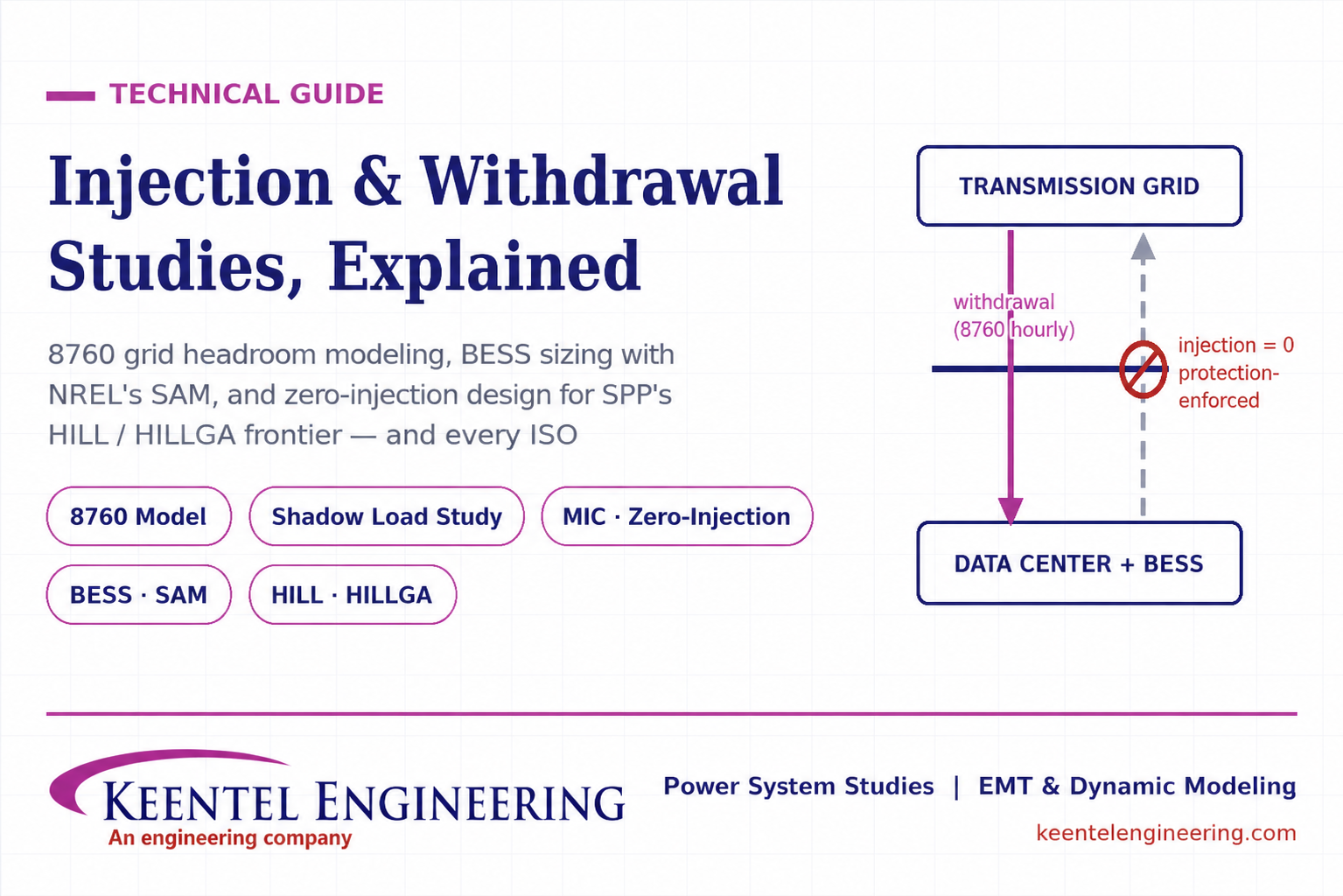
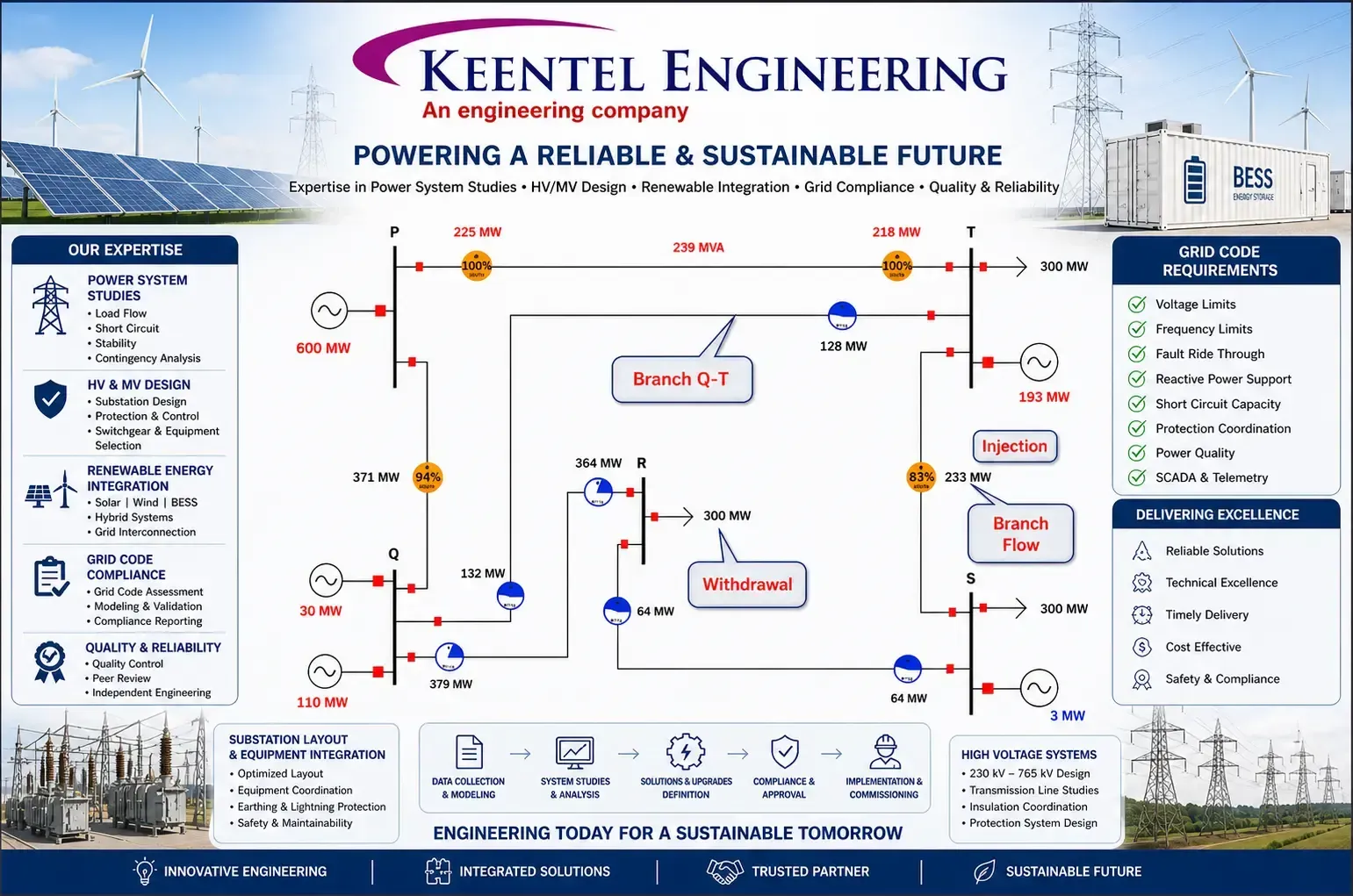
Injection & Withdrawal Studies

Understand how generation injection and large-load withdrawal studies evaluate grid capacity, power-flow impacts, transmission constraints, and interconnection feasibility.

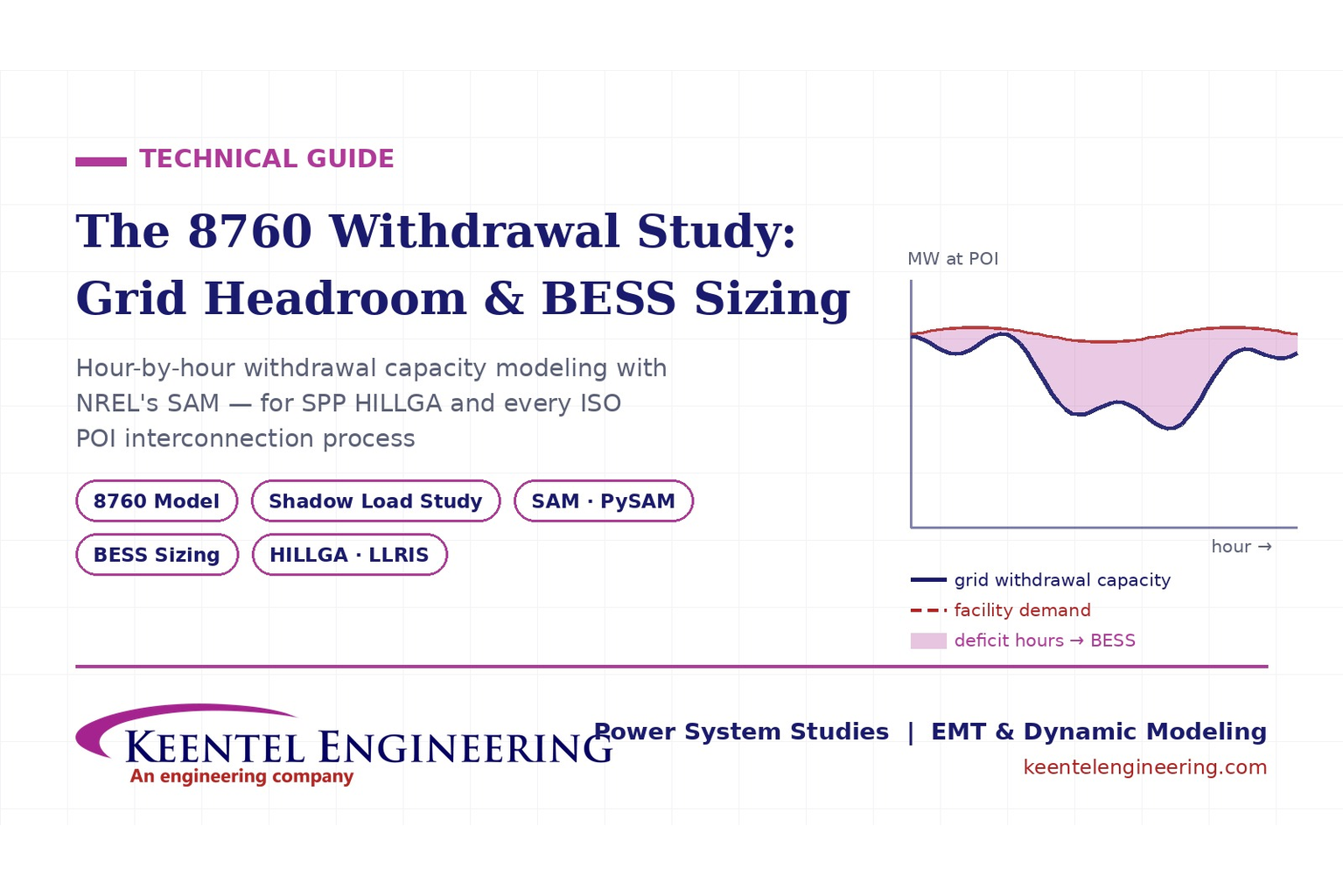
8760 Withdrawal Study & BESS Sizing

Explore 8760-hour withdrawal analysis for identifying available grid headroom, evaluating hourly constraints, and supporting data-driven BESS sizing and large-load planning.

SPP HILL / HILLGA Process

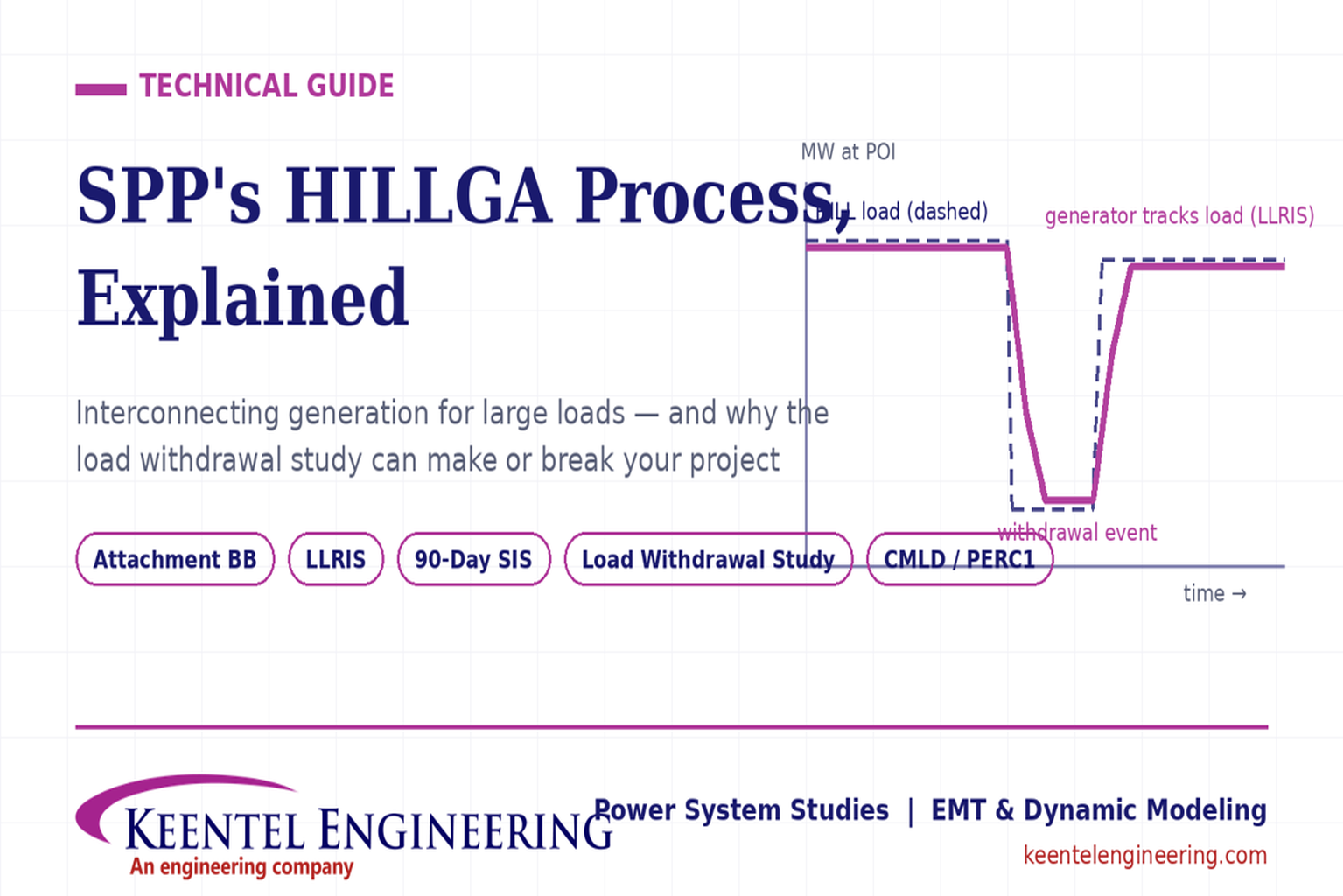
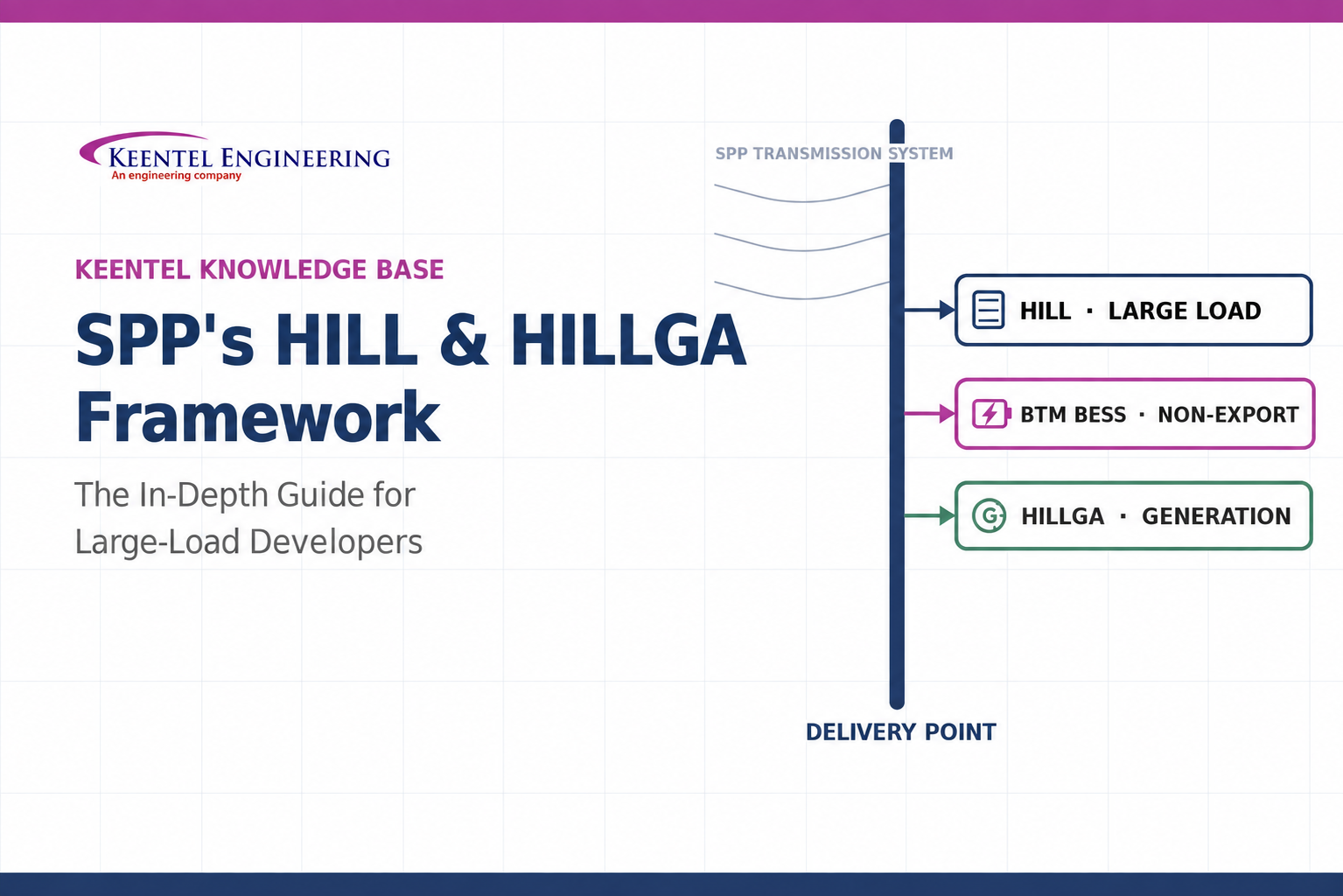
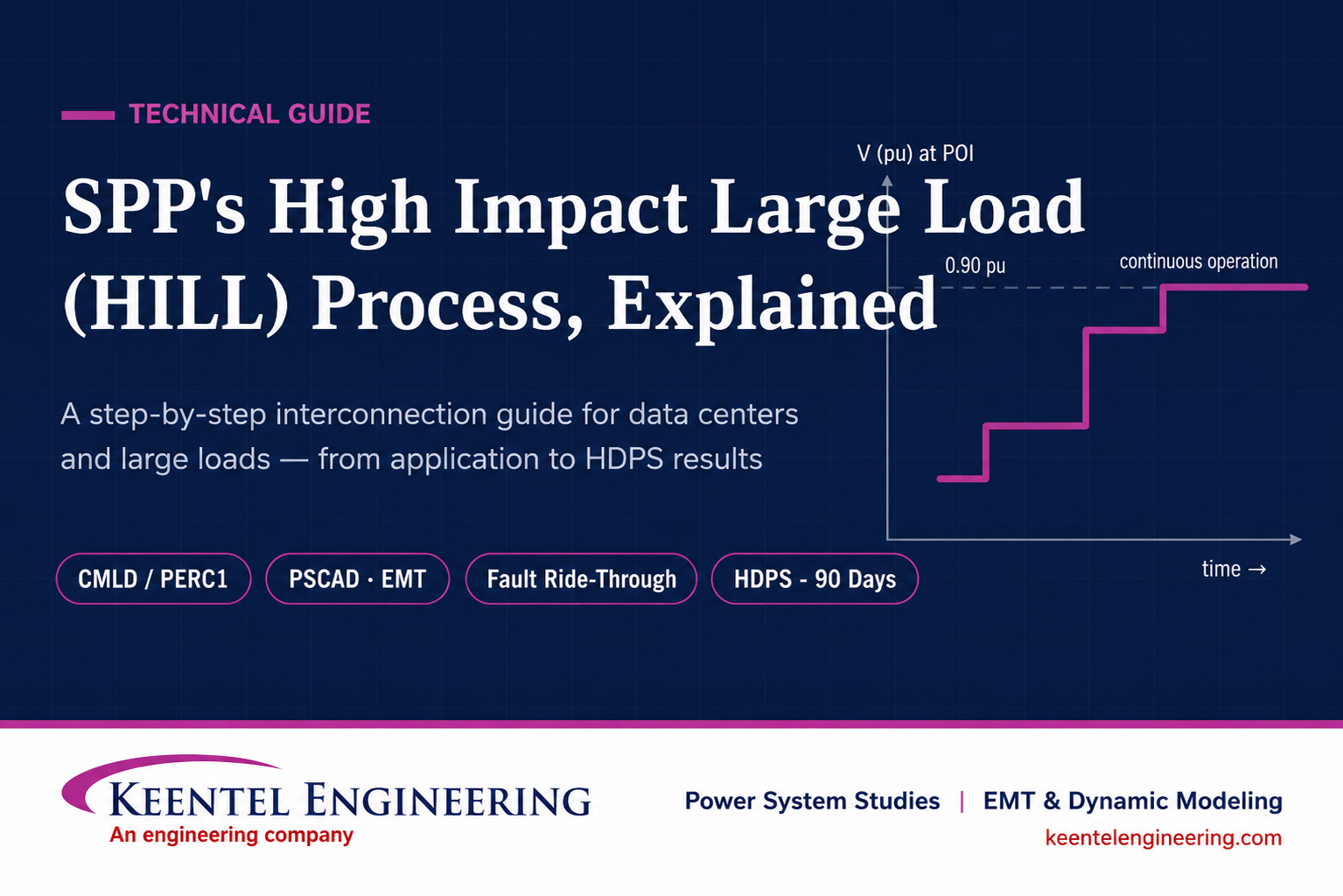
Learn how SPP's HILL and HILLGA framework addresses high-impact large loads, grid assessment requirements, interconnection planning, and project development.