

A Coordinated Electric System Interconnection Review—the utility’s deep-dive on technical and cost impacts of your project.

Challenge: Frequent false tripping using conventional electromechanical relays
Solution: SEL-487E integration with multi-terminal differential protection and dynamic inrush restraint
Result: 90% reduction in false trips, saving over $250,000 in downtime

Enhancing Grid Resilience: Inside NERC’s PRC-029-1 Ride-Through Standard for Inverter-Based Resources

Calendar icon. D

June 20, 2025 | Blog

Solar panels, wind turbines, and power lines on a sunny day, showcasing renewable energy sources.

Introduction

The evolving nature of the electric power system has brought both challenges and opportunities—especially in maintaining grid reliability amid rising integration of inverter-based resources (IBRs). As synchronous generators retire, IBRs like solar PV, wind turbines, and battery energy storage systems are increasingly connecting to the Bulk Power System (BPS). In response, the North American Electric Reliability Corporation (NERC) developed PRC-029-1, a new reliability standard to address shortcomings in PRC-024-3 by providing specific, modernized frequency and voltage ride-through requirements.


This blog reviews the PRC-029-1 Technical Rationale, detailing key performance expectations, IEEE 2800 alignment, FERC Order No. 901 directives, and compliance implications for generator owners and planners.


The Need for PRC-029-1

A New Paradigm in Generation

Unlike synchronous generators, inverter-based resources rely on fast-switching power electronics governed by software controls—not mechanical inertia. Their different response to disturbances has led to variable and often inadequate ride-through behavior.

Grid Reliability Challenges

Numerous disturbance events have exposed weaknesses in IBR performance. PRC-024-3 lacked clarity for IBR operations during transients. PRC-029-1 resolves this by introducing explicit requirements for voltage and frequency ride-through, momentary cessation prevention, and grid support during events.


Foundation and Regulatory Backdrop

FERC Order No. 901: The Catalyst

FERC Order No. 901 initiated the need for revised standards. It directs NERC to:


  • Ensure IBRs ride through voltage and frequency events
  • Ban momentary cessation in must ride-through zones
  • Require current injection and resynchronization
  • Allow exemptions under strict documentation protocols


The PRC-029-1 Technical Rationale aligns with IEEE Std 2800-2022 while maintaining regulatory consistency.


Explore NERC Order No. 901 Compliance


Key Ride-Through Requirements of PRC-029-1

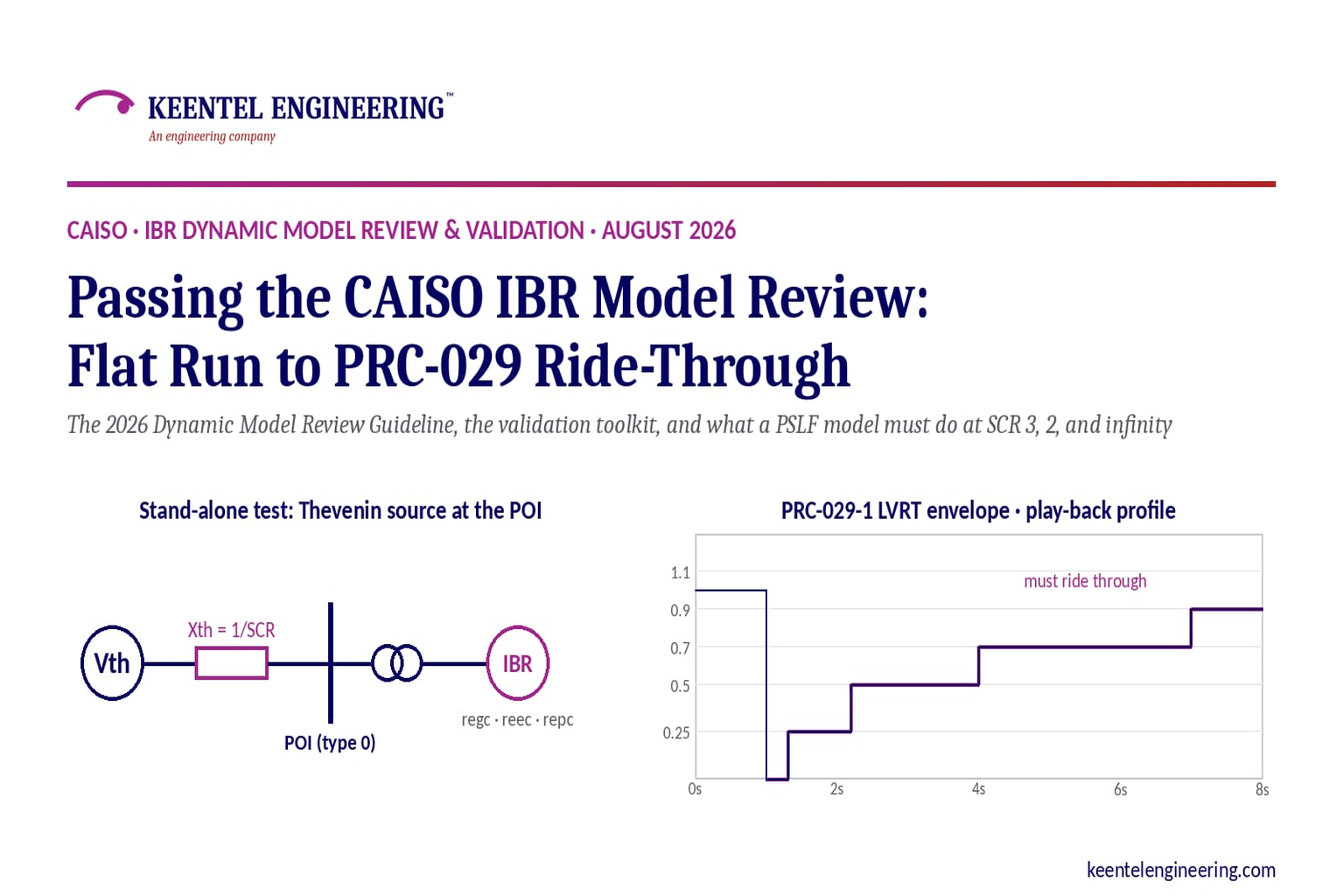
Requirement R1: Voltage Ride-Through

IBRs must stay connected and exchange current during voltage events. Key elements include:


  • Defined must ride-through zones (per IEEE 2800)
  • PLL synchronization under rapid phase shifts
  • Loss-of-synchronism protection deactivation
  • Tolerance for 25 electrical degrees of phase angle jump

Requirement R2: Voltage Performance Criteria

R2 specifies response by region:


  • R2.1: Return to pre-disturbance active power
  • R2.2: Reactive current injection in the mandatory zone
  • R2.3: Current blocking in the permissive zone; recovery in ≤5 cycles
  • R2.4: Controlled post-fault recovery
  • R2.5: Resume full operation unless otherwise instructed

Requirement R3: Frequency Ride-Through

Requires 6 seconds of continuous operation during 56–64 Hz frequency swings. Adds:


  • ROCOF trip only if >5 Hz/sec
  • ROCOF must be disabled during faults

Averaging ≥0.1 seconds for ROCOF calculations


See PRC-029-1 Compliance Guide

Requirement R4: Legacy Exemptions

Legacy IBRs unable to meet R1 or R2 can apply for exemptions if:


  • Clearly documented and justified
  • Affected voltage ranges specified
  • Shared with Planning Coordinator, Transmission Planner, and Reliability Coordinator

Design Philosophy: Event-Based Compliance

PRC-029-1 prioritizes field performance over theoretical simulations. Compliance is measured by IBR behavior during actual grid events, although dynamic modeling still supports planning.


Implementation and Stakeholder Responsibilities

For Generator Owners and Operators (GOs)

GOs and TOs (for VSC-HVDC) must:


  • Configure inverters and controls for compliance
  • Meet frequency/voltage thresholds
  • Disable incompatible protection settings

For Planning and Transmission Coordinators

PCs and TPs must:


  • Model exemptions
  • Validate AVR tuning and reactive current injection
  • Coordinate with IBR operators

Industry Impact and Future Outlook

PRC-029-1 enhances grid reliability through:


  • Precise frequency/voltage expectations
  • Flexibility for legacy equipment
  • Real-world compliance auditing


As implementation progresses to 2030, stakeholders must:


  • Audit existing IBR fleets
  • Update control and modeling parameters
  • Prepare for enforcement

Conclusion

NERC PRC-029-1 is a foundational shift in how inverter-based resources are regulated. It supports the transition to a low-inertia, decarbonized grid while demanding higher ride-through performance. With field-based compliance and FERC Order No. 901 directives, IBR owners must take proactive steps to meet evolving expectations.

For full compliance support, modeling services, and simulation consulting, visit: Nerc Compliance Service.


FAQ: PRC-029-1 Ride-Through Compliance for Inverter-Based Resources (IBRs)

  • 1. What is NERC PRC-029-1?

    PRC-029-1 is a NERC Reliability Standard that defines mandatory voltage and frequency ride-through requirements for inverter-based resources (IBRs) like solar, wind, and battery systems during grid disturbances.

  • 2. Why did NERC create PRC-029-1 instead of just updating PRC-024-3?

    PRC-024-3 lacked clarity for IBR behavior. PRC-029-1 fills this gap by introducing performance-based ride-through rules specifically tailored to fast-switching IBRs.

  • 3. How is PRC-029-1 related to IEEE 2800?

    The standard aligns with IEEE 2800-2022 for ride-through zones and voltage thresholds but goes further with stricter frequency ride-through times and ROCOF trip settings.

  • 4. What are “must ride-through” zones under PRC-029-1?

    These are defined voltage and frequency ranges where IBRs must stay online and actively support the grid—momentary cessation is not allowed.

  • 5. What is NERC's requirement for ROCOF ride-through?

    IBRs must tolerate a Rate of Change of Frequency (ROCOF) up to 5 Hz/sec. They may trip only above this rate and not during faults.

  • 7. Can legacy IBRs be exempt from PRC-029-1?

    Only for voltage ride-through—under strict conditions documented under Requirement R4. Frequency ride-through is not exempt.

  • 8. Is frequency ride-through mandatory for all IBRs?

    Yes. All IBRs must withstand frequency excursions between 56.0–64.0 Hz for at least 6 seconds, with no exemption under R3.

  • 9. Why does PRC-029-1 require 6-second frequency ride-through?

    To handle disturbances in low-inertia systems with high ROCOF, ensuring IBRs stay connected during critical grid events.

  • 10. What are the main directives from FERC Order 901?

    FERC Order 901 requires mandatory ride-through, bans momentary cessation in must-ride-through zones, and supports current injection and event-based performance tracking.

  • 11. What is momentary cessation and why is it banned?

    It’s when IBRs stop injecting current during voltage dips. This is now prohibited, as it reduces system support when it's needed most.

  • 12. Which IBRs must comply with PRC-029-1?

    Any inverter-based resource registered under NERC and connected to the Bulk Power System (BPS) must comply.

  • 13. Where should voltage be measured for PRC-029-1 compliance?

    Voltage must be measured on the high side of the Main Power Transformer (MPT), following IEEE 2800 practices.

  • 14. Can IBRs block current during low-voltage events?

    Yes, but only in the permissive ride-through zone under R2.3, and they must resume injection within five cycles.

  • 15. What is PLL loss-of-synchronism protection?

    This protection trips inverters during phase angle shifts. PRC-029-1 recommends disabling it to avoid unnecessary outages.

  • 16. How should AVR be configured after disturbances?

    AVR (Automatic Voltage Regulator) must restore voltage without overshoot or instability, and stay within standard tolerances.

  • 17. What is the purpose of the AVR k-factor?

    The k-factor controls AVR response speed. Lowering it helps prevent overvoltage but should be used only when necessary.

  • 18. Who is responsible for PRC-029-1 compliance?

    Generator Owners (GOs) and Transmission Owners (TOs) for HVDC-connected IBRs, along with Planners and Coordinators.

  • 19. What happens if an IBR fails to ride through a disturbance?

    It’s deemed non-compliant. Corrective action plans must be submitted to ensure future ride-through capability.

  • 20. Is PRC-029-1 already in effect?

    The standard will be implemented in phases leading up to 2030. Affected stakeholders should begin model updates and audits now.


Man in a blazer and open shirt, looking at the camera, against a blurred background.

About the Author:

Sonny Patel P.E. EC

IEEE Senior Member

In 1995, Sandip (Sonny) R. Patel earned his Electrical Engineering degree from the University of Illinois, specializing in Electrical Engineering . But degrees don’t build legacies—action does. For three decades, he’s been shaping the future of engineering, not just as a licensed Professional Engineer across multiple states (Florida, California, New York, West Virginia, and Minnesota), but as a doer. A builder. A leader. Not just an engineer. A Licensed Electrical Contractor in Florida with an Unlimited EC license. Not just an executive. The founder and CEO of KEENTEL LLC—where expertise meets execution. Three decades. Multiple states. Endless impact.

Four workers in safety vests and helmets stand with arms crossed near wind turbines.

Let's Discuss Your Project

Let's book a call to discuss your electrical engineering project that we can help you with.

Man in a blazer and open shirt, looking at the camera, against a blurred background.

About the Author:

Sonny Patel P.E. EC

IEEE Senior Member

In 1995, Sandip (Sonny) R. Patel earned his Electrical Engineering degree from the University of Illinois, specializing in Electrical Engineering . But degrees don’t build legacies—action does. For three decades, he’s been shaping the future of engineering, not just as a licensed Professional Engineer across multiple states (Florida, California, New York, West Virginia, and Minnesota), but as a doer. A builder. A leader. Not just an engineer. A Licensed Electrical Contractor in Florida with an Unlimited EC license. Not just an executive. The founder and CEO of KEENTEL LLC—where expertise meets execution. Three decades. Multiple states. Endless impact.

Leave a Comment

Related Posts

Keentel Engineering transmission infrastructure project with utility truck, construction loader.
By SANDIP R PATEL March 13, 2026
FERC Order 1920-B introduces long-term regional transmission planning reforms in the U.S. Learn how the rule affects utilities, renewable integration, and grid infrastructure development.
High voltage electrical substation construction with transmission equipment and switchgear infrastru
By SANDIP R PATEL March 11, 2026
Discover best practices for high-voltage substation construction, including engineering planning, labor productivity benchmarking, equipment installation, and project control strategies.
Large baseload power plant cooling towers connected to high-voltage transmission grid infrastructure
By SANDIP R PATEL March 11, 2026
Engineering guide to grid integration of large baseload power plants covering system stability, substation design, transformer configuration, and reliability requirements.
IEC 61439 low oltage switchgear and controlgear assembly panel
By SANDIP R PATEL March 11, 2026
Learn how IEC 61439 governs low-voltage switchgear assemblies, including design verification, safety requirements, temperature rise limits, and engineering practices for compliant power distribution systems.
Protection relay testing equipment (Omicron CMC 356) used in power plant commissioning and electrica
By SANDIP R PATEL March 11, 2026
Learn the hidden problems in power plant commissioning and how engineering testing, relay verification, and system validation prevent failures.
High-voltage electrical substation with transmission towers, power lines, and switching equipment il
By SANDIP R PATEL March 8, 2026
Explore advanced power system protection and relaying used in modern substations, including SCADA integration, relay coordination, fault detection, and digital protection technologies.
NERC PRC-012-2 compliance for solar, wind, and battery energy storage systems.
By SANDIP R PATEL March 7, 2026
Guide to NERC PRC-012-2 compliance for solar plants, wind farms, and BESS. Understand RAS requirements, generator owner obligations, and testing rules.
NERC TPL-008-1 Extreme Temperature Planning Standard infographic explaining technical requirements
By SANDIP R PATEL March 7, 2026
Understand TPL-008-1 transmission planning requirements, extreme temperature assessments, compliance timeline, and grid reliability planning strategies.
Engineer monitoring SCADA system displays in a control room illustrating modern
By SANDIP R PATEL March 7, 2026
High-voltage electrical substation with transmission towers, power lines, and switching equipment illustrating advanced power system protection and relaying in modern substation design.