

A Coordinated Electric System Interconnection Review—the utility’s deep-dive on technical and cost impacts of your project.

Keentel Engineering Insights: NERC Identifies New Grid Vulnerabilities – May 2025 Newsletter

Calendar icon. D

May 9, 2025 | Blog

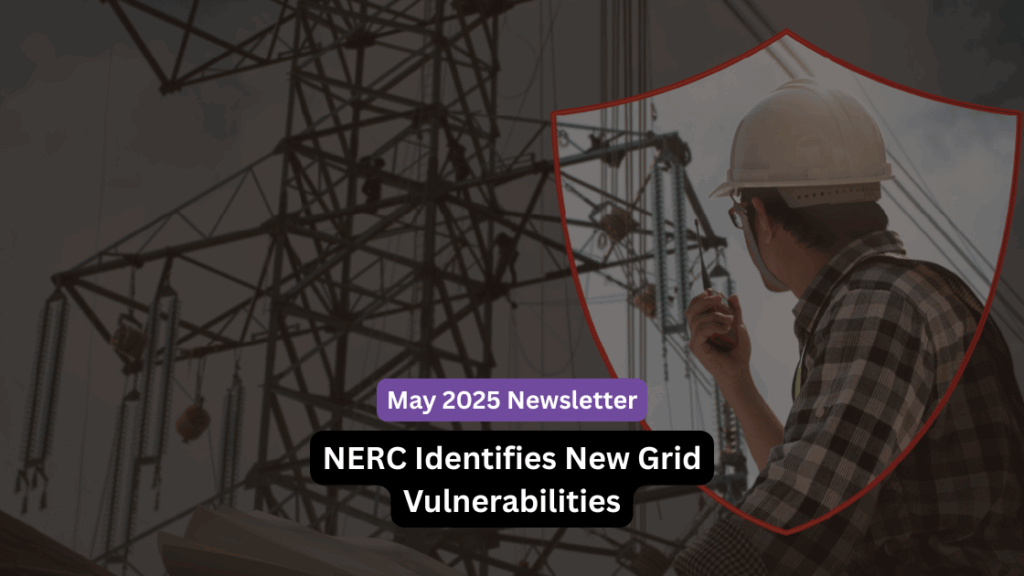
Engineer in a hard hat inspecting power lines, with a shield graphic and text

By: Keentel Communications Team
Newsletter: May 2025

NERC Issues Critical Grid Vulnerability Alert in Latest Canadian Transmission Assessment

Keentel Engineering is closely tracking the latest developments from the North American Electric Reliability Corporation (NERC), which recently released the Canadian segment of its Interregional Transfer Capability Study (ITCS). The April 29 announcement underscores a growing vulnerability in Canada’s electric grid, highlighting both the strain of extreme weather and the limited interprovincial transfer capacity.

The ITCS Canadian Analysis builds upon last year’s U.S.-focused assessment to provide a comprehensive, continent-wide picture of grid resilience and interdependence. According to NERC’s CEO Jim Robb, the findings reflect “an unprecedented and vital assessment” with a focus on the need for strengthened cross-border and cross-provincial transmission infrastructure.

“This analysis shows where targeted improvements to transmission infrastructure could further leverage Canada’s significant generation resources to support reliability and resilience across the North American bulk power system.”

John Moura, Director of Reliability Assessments, NER

Key Findings of the Canadian Analysis

Increased Vulnerability

Every one of the 12 weather years analyzed indicated potential for energy inadequacy, especially under extreme conditions.

Insufficient Interprovincial Transfer Capability

Higher transfer capability exists between Canada and the U.S. than between Canadian provinces.

Need for Infrastructure Investment

Enhancing transfer interfaces by 12–14 GW could help reduce risk during grid stress events.

Regional Customization Required

Solutions must be tailored to provincial needs, considering weather variability, local risks, and energy policies.

Strategic Grid Planning Emphasized

NERC calls for interregional collaboration and long-term planning amid ongoing electrification trends.

These findings reinforce the urgent need for resilient grid architecture that can handle rising energy demands from sectors like transportation, data centers, and industry, especially as the climate changes.

New Standards, Compliance, and Enforcement Updates: May 2025 Highlights

In parallel, NERC released its Standards, Compliance, and Enforcement Bulletin for the week of May 5–11, 2025, providing vital information on standards activity that could affect generator operators, transmission planners, and system reliability stakeholders.

Active Ballots and Comment Periods

  • Project 2024-01 – Rules of Procedure Definitions Alignment (GO and GOP)
    Ballot ends: May 7, 2025
    Focuses on aligning terms used by Generator Owners and Operators.
  • Project 2020-06 – Verification of Models and Data for Generators
    Ballot ends: May 12, 2025
    Enhances standards surrounding model/data validation critical for system simulations.
  • Project 2022-02 & 2021-01 – Inverter-Based Resource (IBR) Framework and Model Validation
    Aimed at improving the performance and integration of IBRs.

New Initiatives

  • Project 2023-09 explores risk management for third-party cloud services.
  • Project 2023-08 is currently accepting nominations for drafting team members focusing on MOD-031 updates for energy and demand data.

System Maintenance Alert

Planned downtime for the Align system is scheduled for May 10–11, affecting compliance reporting access.

Implications for Keentel and the Broader Industry

These updates are especially relevant as Keentel Engineering continues to support utilities and infrastructure developers with state-of-the-art compliance solutions, engineering design, and resilience planning. The insights from NERC underscore both the technical and policy challenges that lie ahead—and the opportunity for forward-looking firms to lead.

As industry expectations shift toward integrated, cross-border grid strategies and robust compliance systems, Keentel is committed to aligning with the latest standards and contributing to a secure energy future.

Frequently Asked Questions (FAQ)

1. What is the NERC ITCS Canadian Analysis?

The Interregional Transfer Capability Study (ITCS) Canadian Analysis, released by NERC on April 29, 2025, assesses the ability of Canadian power systems to transfer electricity across provincial and international borders. It highlights vulnerabilities in Canada’s grid under extreme weather and recommends enhancing transmission infrastructure to support resilience.

2. Why is this study important to grid reliability?

The study shows that Canada’s bulk power system is increasingly vulnerable due to limited interprovincial transmission capacity and growing extreme weather events. Improved transfer capability could reduce the likelihood of power deficits during grid stress events.

3. What does this mean for the U.S.-Canada electric relationship?

It reinforces that the U.S. and Canadian grids are highly interdependent. Strengthening transmission infrastructure between regions can boost shared reliability and support load balancing during high-demand or emergency scenarios.

TECHNICAL FINDINGS

4. What are the key findings from the Canadian Analysis?

  • High U.S.-Canada transfer potential, but low interprovincial connectivity.
  • 12–14 GW of additional capacity could mitigate extreme weather-related risks.
  • Regional weather drives localized vulnerability.
  • Ontario and Québec show resource growth aligning with forecasted demand.
  • A mix of local generation, storage, and demand-side solutions is needed.

5. What role do weather and demand forecasting play?

Regional weather greatly influences risk. Updated long-term reliability forecasts (especially in Ontario and Québec) have narrowed the gap between supply and demand. However, ongoing updates are essential as electrification expands.

STANDARDS AND COMPLIANCE UPDATES

6. What new NERC standards activities are underway?

Several projects are active, including:

  • 2024-01: Rules of Procedure Definitions Alignment (GO/GOP)
  • 2020-06: Verification of Generator Models/Data
  • 2022-02 & 2021-01: IBR framework and model validation

Ballot and comment periods run throughout May 2025.

7. What is Project 2023-09 and why is it notable?

Project 2023-09 addresses risk management for third-party cloud services, a growing concern as utilities digitize operations. It introduces standards for secure cloud infrastructure in the power sector.

 8. Are there changes to upcoming standards enforcement dates?

Yes. New and revised standards will take effect through 2027. Notable examples:

  • IRO-010-5 and TOP-003-6.1 – July 1, 2025
  • CIP-003-9 (Cybersecurity) – April 1, 2026
  • TPL-008-1 (Extreme Temperature Planning) – April 1, 2026

U.S. Effective Dates for Reliability Standards

U.S. Effective Date Standard(s) Phased-In (Y/N)
July 1, 2025 IRO-010-5-Reliability Coordinator Data and information Specification and Collection | Implementation Plan No
July 1, 2025 TOP-003-6.1-Transmission Operator and Balancing Authority Data and Information Specification and Collection Implementation Plan No
October 1, 2025 TOP-002-5-Operations Planning | Implementation Plan No
April 1, 2026 CIP-003-9- Cyber Security Security Management Controls | Implementation Plan No
April 1, 2026 TPL-008-1-Transmission System Planning Performance Requirements for Extreme Temperature Events | Implementation Plan Yes
July 1, 2026 CIP-012-2-Cyber Security-Communications between Control Centers | Implementation Pian No
October 1. 2026 TOP-003-7-Transmission Operator and Balancing Authority Data and Information Specification and Collection Implementation Plan No
April 1, 2027 BAL-007-1-Near-term Energy Reliability Assessments | Implementation Plan No

MPLICATIONS FOR STAKEHOLDERS

9. What does this mean for utilities and operators?

Organizations must prepare for both climate-driven reliability risks and increasing compliance complexity. Enhanced modeling, planning, and resource diversity are critical to meet evolving reliability requirements.

10. How is Keentel Engineering responding?

Keentel is proactively adapting to these insights by:

  • Supporting clients with enhanced modeling and forecasting services.
  • Preparing for new compliance enforcement timelines.
  • Advising on interregional planning and infrastructure strategies.

LOOKING AHEAD

11. What’s next on the regulatory horizon?

More grid planning and compliance activities are expected in response to:

  • Extreme weather preparedness
  • Electrification trends
  • Cybersecurity risk (CIP standards)
  • Infrastructure modernization (IBR, cloud risk, etc.)

12. Where can I get more information?

For full reports and project details:

You can also contact Keentel’s compliance team for tailored guidance.


For detailed guidance on integrating these insights into your projects, contact our compliance team at contact@keentelengineering.com or visit our NERC compliance page.


A smiling man with glasses and a beard wearing a blue blazer stands in front of server racks in a data center.

About the Author:

Sandip "Sonny" R. Patel, P.E.

IEEE Senior Member · Founder & CEO, Keentel Engineering

In 1995, Sonny Patel earned his Electrical Engineering degree from the University of Illinois. But degrees don't build legacies — action does.

For three decades, he has worked the power industry from every side of the table: 16 years as a utility engineer at Exelon/Commonwealth Edison; generation leadership across hydroelectric, industrial steam turbine, and a 9 GW renewable fleet; NERC Regional Entity Senior Compliance Engineer and Audit Team Lead, auditing some of the nation's largest utilities; and testing and commissioning lead on equipment up to 765 kV — the very top of the North American grid.

Utility. Generator. Regulator. Consultant. Few engineers have seen all four seats. Fewer still have sat in them.His experience spans nuclear, hydro, conventional generation, renewables, oil and gas, mining — and today's data centers, where he is authoring a three-book series on data center design. He is a Licensed Professional Engineer in six states and a Licensed Electrical Contractor in Florida (Unlimited EC) — he doesn't just design the work; he's qualified to stand behind its execution.Today, as Founder and CEO of Keentel Engineering, Sonny leads 51 engineers delivering substation design, power system studies, NERC compliance, and commissioning — done right, coast to coast.Three decades. Every side of the table. One standard: accountable engineering

Four workers in safety vests and helmets stand with arms crossed near wind turbines.

Let's Discuss Your Project

Let's book a call to discuss your electrical engineering project that we can help you with.

Man in a blazer and open shirt, looking at the camera, against a blurred background.

About the Author:

Sandip "Sonny" R. Patel, P.E.

IEEE Senior Member · Founder & CEO, Keentel Engineering

In 1995, Sonny Patel earned his Electrical Engineering degree from the University of Illinois. But degrees don't build legacies — action does.

For three decades, he has worked the power industry from every side of the table: 16 years as a utility engineer at Exelon/Commonwealth Edison; generation leadership across hydroelectric, industrial steam turbine, and a 9 GW renewable fleet; NERC Regional Entity Senior Compliance Engineer and Audit Team Lead, auditing some of the nation's largest utilities; and testing and commissioning lead on equipment up to 765 kV — the very top of the North American grid.Utility. Generator. Regulator. Consultant. Few engineers have seen all four seats. Fewer still have sat in them.His experience spans nuclear, hydro, conventional generation, renewables, oil and gas, mining — and today's data centers, where he is authoring a three-book series on data center design. He is a Licensed Professional Engineer in six states and a Licensed Electrical Contractor in Florida (Unlimited EC) — he doesn't just design the work; he's qualified to stand behind its execution.Today, as Founder and CEO of Keentel Engineering, Sonny leads 51 engineers delivering substation design, power system studies, NERC compliance, and commissioning — done right, coast to coast.Three decades. Every side of the table. One standard: accountable engineering

Leave a Comment

Related Posts

12.47 kV pole-mounted distribution transformer assembly designed for U.S. IEEE and NESC utility stan
By SANDIP R PATEL August 20, 2026
Learn U.S. pole-mounted transformer design requirements, including IEEE, ANSI, and NESC standards, voltage classes, grounding, protection, and DER considerations.
PRC-023-6 BESS relay loadability compliance guide
By SANDIP R PATEL August 19, 2026
Understand PRC-023-6 for utility-scale BESS: applicability, the 39-month rule, relay loadability, setting criteria, Category 2 IBRs, and audit evidence.
PRC-029-1 voltage ride-through envelope for inverter-based resources.
By SANDIP R PATEL August 18, 2026
Learn PRC-029-1 compliance requirements for inverter-based resources, including voltage and frequency ride-through, EMT studies, protection settings, and testing.
Solar plant electrical testing and commissioning for utility-scale PV systems
By SANDIP R PATEL August 17, 2026
A technical guide to solar plant electrical testing, commissioning, I-V curves, thermography, insulation testing, cable tests and performance acceptance.
Alt Text: Gas-insulated substation engineering guide covering GIS safety, reliability, VFTO, partial
By SANDIP R PATEL August 16, 2026
Explore GIS substation engineering, including design, SF6 safety, VFTO, grounding, commissioning, testing, GIS vs AIS, and IEEE/IEC standards.
Cable testing before energization engineering guide
By SANDIP R PATEL August 16, 2026
Learn the correct cable testing sequence before energization, including VLF, AC/DC withstand, sheath testing, partial discharge, tan delta, and standards.
substation drawing sets
By SANDIP R PATEL August 16, 2026
Explore how substation drawing sets are developed, reviewed and controlled through engineering studies, design milestones, QA/QC and final construction release.
Grid-forming vs grid-following BESS inverters
By SANDIP R PATEL August 15, 2026
Compare grid-forming vs grid-following BESS inverters, control loops, weak-grid stability, protection, compliance, and interconnection study impacts.
MOD-025 and MOD-026 post-COD verification testing with PSS E and PSCAD dynamic model validation
By SANDIP R PATEL August 15, 2026
Learn MOD-025 and MOD-026 post-COD requirements for generator capability verification, PSS®E and PSCAD model validation, IBR testing, and NERC compliance.