

A Coordinated Electric System Interconnection Review—the utility’s deep-dive on technical and cost impacts of your project.

Navigating TPL-008-1: A Strategic Transmission Planning Guide for Extreme Temperatures

Calendar icon. D

May 14, 2025 | Blog

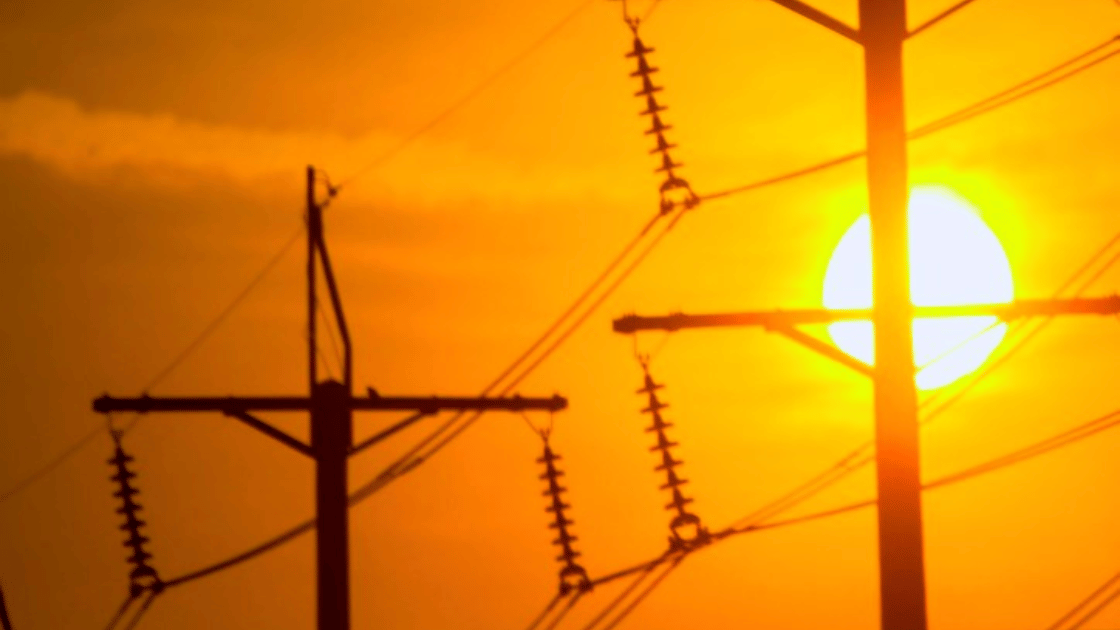
Silhouette of power lines against a vibrant orange sunset.

Introduction: Why TPL-008-1 Matters

As extreme weather events become more frequent and intense, the need for robust transmission planning grows. In response to FERC Order No. 896, the North American Electric Reliability Corporation (NERC) has developed a new transmission planning standard: TPL-008-1. This standard provides a structured framework for evaluating and mitigating risks from extreme heat and cold events on the Bulk Electric System (BES). Keentel Engineering explores the rationale behind TPL-008-1 compliance and how utilities can align with its requirements.


Understanding TPL-008-1: Scope and Purpose

TPL-008-1 focuses specifically on extreme temperature transmission planning, filling a critical gap left by TPL-001-5.1. While the previous standard addressed general planning, it lacked clarity on benchmark planning cases, transient stability analysis, and corrective action plans (CAPs) specific to extreme weather events.

This new standard mandates the development of Extreme Temperature Assessments (ETAs) across the grid to improve grid reliability, system resilience, and regional coordination.


Key TPL-008-1 Requirements and What They Mean

🔹 R1: Role Definition and Coordination

Planning Coordinators (PCs) and Transmission Planners (TPs) must define roles, methods, and criteria for performing Extreme Temperature Assessments.

🔹 R2: Benchmark Event Selection

Entities must use credible weather data to select at least one extreme heat and one extreme cold case—supporting both regional customization and nationwide consistency.

🔹 R3: Wide-Area Coordination

TPL-008-1 emphasizes interconnection-wide collaboration, requiring PCs to coordinate benchmark model development with adjacent entities.

🔹 R4: Data Consistency via MOD-032

All modeling must incorporate temperature-dependent adjustments in load, generation, and transfers, per MOD-032 standards.

🔹 R5–R6: Define Performance Criteria

Utilities must establish criteria for voltage limits, thermal thresholds, and signs of instability, separation, or cascading failures during TPL-008-1 transmission studies.

🔹 R7: Contingency Events

Only key planning events (P0, P1, P2, P4, P7) are required—simplifying the study scope by excluding P3, P5, and P6.

🔹 R8: Assessment Frequency & Case Types

Entities must complete TPL-008-1 assessments every five years, including:

  • 2 benchmark planning cases (heat & cold)
  • 2 sensitivity cases varying generation, load, or transfers
  • Each study must include steady-state and transient stability analysis

🔹 R9–R10: Corrective Action Plans (CAPs)

CAPs are mandatory for P0 and P1 if performance is non-compliant. For P2, P4, and P7, evaluation and documentation are sufficient.

🔹 R11: Transparency and Results Sharing

Results must be shared with reliability stakeholders to support transparency and cross-entity coordination.


Strategic Implications for Utilities

TPL-008-1 introduces a data-driven, regionally flexible approach to extreme temperature transmission planning. With its emphasis on benchmark and sensitivity studies, utilities gain tools to proactively mitigate heatwave or cold snap impacts.

Keentel Engineering recommends incorporating corrective action plan TPL-008 workflows directly into long-term system assessments to align with NERC reliability standards.


Why Keentel Engineering?

Keentel Engineering provides utilities with end-to-end support for TPL-008-1 compliance, including:

  • Benchmark model development
  • CAP formulation
  • Grid simulation
  • NERC data validation

Our proven engineering workflows ensure your utility meets both technical and regulatory planning obligations under TPL-008-1.


Frequently Asked Questions

  • 1. What is TPL-008-1?

    A new NERC standard focusing on transmission planning for extreme temperature events (heat and cold).

  • 2. Why was TPL-008-1 developed?

    Scenarios based on real or projected extreme weather events, used to evaluate system performance.

  • 4. How often must the Extreme Temperature Assessment be completed?

    Once every five calendar years, at a minimum.

  • 5. What are the minimum study case requirements?

    Two benchmark cases (heat and cold) and two sensitivity cases with variations in load, generation, or transfer.

  • 6. What types of analyses are required?

    Both steady-state and transient (stability) analyses.

  • 7. Are Corrective Action Plans (CAPs) mandatory?

    Yes, but only for P0 and P1 Contingencies if standards are not met.

  • 8. What Contingency types are excluded?

    P3, P5, and P6 due to their complexity and reduced likelihood.

  • 9. Can load shedding be used as a CAP?

    Only for P1 Contingencies, and it must be justified with documented alternatives.

  • 10. What is a sensitivity case?

    A variation of the benchmark planning case to assess impacts of changes in load, generation, or transfers.

  • 11. Who selects the benchmark events?

    NERC maintains a library, but responsible entities propose and apply regionally suitable events.

  • 12. What is the role of MOD-032?

    It ensures consistency in modeling data used in the benchmark cases.

  • 13. How is coordination ensured across entities?

    R3 requires processes for coordination within the same Interconnection.

  • 14. What’s the rationale for excluding P5 events?

    Due to the intensive protection/control analysis required and low added value.

  • 15. Is sharing study results mandatory?

    Yes, entities must share with stakeholders who have reliability-related needs.

  • 16. What happens if generation is inadequate in a case?

    Entities may revise the model with projections or load curtailment assumptions.

  • 17. How does TPL-008-1 handle wide-area impacts?

    By ensuring coordination and evaluation beyond individual planning zones.

  • 18. What if responsible entities want to do more frequent assessments?

    They are permitted, but the standard mandates a five-year minimum.

  • 19. Are TPL-008-1 requirements enforceable?

    Yes, unlike this technical rationale document, the actual standard is mandatory.

  • 20. How can Keentel Engineering assist with compliance?

    Through tailored modeling, simulation, and documentation services for TPL-008-1 implementation.


Ensure grid reliability under extreme weather conditions.

Keentel Engineering helps utilities meet TPL-008-1 compliance through benchmark modeling, stability analysis, and CAP development.

Contact us to safeguard your BES against temperature extremes.


A smiling man with glasses and a beard wearing a blue blazer stands in front of server racks in a data center.

About the Author:

Sandip "Sonny" R. Patel, P.E.

IEEE Senior Member · Founder & CEO, Keentel Engineering

In 1995, Sonny Patel earned his Electrical Engineering degree from the University of Illinois. But degrees don't build legacies — action does.

For three decades, he has worked the power industry from every side of the table: 16 years as a utility engineer at Exelon/Commonwealth Edison; generation leadership across hydroelectric, industrial steam turbine, and a 9 GW renewable fleet; NERC Regional Entity Senior Compliance Engineer and Audit Team Lead, auditing some of the nation's largest utilities; and testing and commissioning lead on equipment up to 765 kV — the very top of the North American grid.

Utility. Generator. Regulator. Consultant. Few engineers have seen all four seats. Fewer still have sat in them.His experience spans nuclear, hydro, conventional generation, renewables, oil and gas, mining — and today's data centers, where he is authoring a three-book series on data center design. He is a Licensed Professional Engineer in six states and a Licensed Electrical Contractor in Florida (Unlimited EC) — he doesn't just design the work; he's qualified to stand behind its execution.Today, as Founder and CEO of Keentel Engineering, Sonny leads 51 engineers delivering substation design, power system studies, NERC compliance, and commissioning — done right, coast to coast.Three decades. Every side of the table. One standard: accountable engineering

Four workers in safety vests and helmets stand with arms crossed near wind turbines.

Let's Discuss Your Project

Let's book a call to discuss your electrical engineering project that we can help you with.

Man in a blazer and open shirt, looking at the camera, against a blurred background.

About the Author:

Sandip "Sonny" R. Patel, P.E.

IEEE Senior Member · Founder & CEO, Keentel Engineering

In 1995, Sonny Patel earned his Electrical Engineering degree from the University of Illinois. But degrees don't build legacies — action does.

For three decades, he has worked the power industry from every side of the table: 16 years as a utility engineer at Exelon/Commonwealth Edison; generation leadership across hydroelectric, industrial steam turbine, and a 9 GW renewable fleet; NERC Regional Entity Senior Compliance Engineer and Audit Team Lead, auditing some of the nation's largest utilities; and testing and commissioning lead on equipment up to 765 kV — the very top of the North American grid.Utility. Generator. Regulator. Consultant. Few engineers have seen all four seats. Fewer still have sat in them.His experience spans nuclear, hydro, conventional generation, renewables, oil and gas, mining — and today's data centers, where he is authoring a three-book series on data center design. He is a Licensed Professional Engineer in six states and a Licensed Electrical Contractor in Florida (Unlimited EC) — he doesn't just design the work; he's qualified to stand behind its execution.Today, as Founder and CEO of Keentel Engineering, Sonny leads 51 engineers delivering substation design, power system studies, NERC compliance, and commissioning — done right, coast to coast.Three decades. Every side of the table. One standard: accountable engineering

Leave a Comment

Related Posts

12.47 kV pole-mounted distribution transformer assembly designed for U.S. IEEE and NESC utility stan
By SANDIP R PATEL August 20, 2026
Learn U.S. pole-mounted transformer design requirements, including IEEE, ANSI, and NESC standards, voltage classes, grounding, protection, and DER considerations.
PRC-023-6 BESS relay loadability compliance guide
By SANDIP R PATEL August 19, 2026
Understand PRC-023-6 for utility-scale BESS: applicability, the 39-month rule, relay loadability, setting criteria, Category 2 IBRs, and audit evidence.
PRC-029-1 voltage ride-through envelope for inverter-based resources.
By SANDIP R PATEL August 18, 2026
Learn PRC-029-1 compliance requirements for inverter-based resources, including voltage and frequency ride-through, EMT studies, protection settings, and testing.
Solar plant electrical testing and commissioning for utility-scale PV systems
By SANDIP R PATEL August 17, 2026
A technical guide to solar plant electrical testing, commissioning, I-V curves, thermography, insulation testing, cable tests and performance acceptance.
Alt Text: Gas-insulated substation engineering guide covering GIS safety, reliability, VFTO, partial
By SANDIP R PATEL August 16, 2026
Explore GIS substation engineering, including design, SF6 safety, VFTO, grounding, commissioning, testing, GIS vs AIS, and IEEE/IEC standards.
Cable testing before energization engineering guide
By SANDIP R PATEL August 16, 2026
Learn the correct cable testing sequence before energization, including VLF, AC/DC withstand, sheath testing, partial discharge, tan delta, and standards.
substation drawing sets
By SANDIP R PATEL August 16, 2026
Explore how substation drawing sets are developed, reviewed and controlled through engineering studies, design milestones, QA/QC and final construction release.
Grid-forming vs grid-following BESS inverters
By SANDIP R PATEL August 15, 2026
Compare grid-forming vs grid-following BESS inverters, control loops, weak-grid stability, protection, compliance, and interconnection study impacts.
MOD-025 and MOD-026 post-COD verification testing with PSS E and PSCAD dynamic model validation
By SANDIP R PATEL August 15, 2026
Learn MOD-025 and MOD-026 post-COD requirements for generator capability verification, PSS®E and PSCAD model validation, IBR testing, and NERC compliance.