

A Coordinated Electric System Interconnection Review—the utility’s deep-dive on technical and cost impacts of your project.

NERC Alert: Ensuring Reliability in Inverter-Based Resource (IBR) Model Quality

Calendar icon. D

May 14, 2025 | Blog

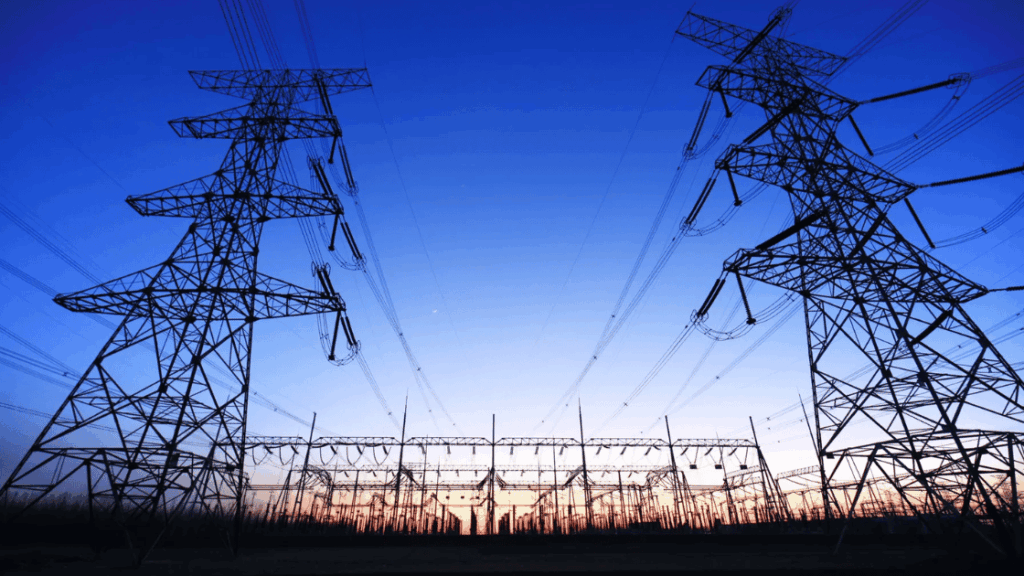
Silhouetted power lines and towers against a blue twilight sky.

Introduction

As solar, wind, and battery-based Inverter-Based Resources (IBRs) rapidly expand across the Bulk Power System (BPS), NERC has identified reliability risks due to poor model quality. On June 4, 2024, the North American Electric Reliability Corporation (NERC) issued a Level 2 Industry Recommendation Alert addressing widespread IBR dynamic modeling deficiencies.

At Keentel Engineering, we help Generator Owners (GOs), Transmission Planners (TPs), and Planning Coordinators (PCs) align with these NERC recommendations, supporting compliance, planning accuracy, and system stability across all interconnection and reliability study phases.


The Issue: Real Events Trigger Real Concerns

Between 2016 and 2024, over 15,000 MW of IBR generation was lost during disturbances—10,000 MW of which occurred in just the last four years. Investigations revealed that modeling inaccuracies and poor validation were major contributing factors.

This NERC alert urges all responsible entities to improve their dynamic models to avoid large-scale grid failures.


Who Is Impacted by the NERC IBR Alert?

  • Generator Owners (GOs) of BPS-connected IBRs: PV, wind, BESS, hybrids
  • Transmission Planners (TPs) and Planning Coordinators (PCs)
  • Inverter manufacturers, plant controller vendors, and consultants

NERC Alert: Key Recommendations

1. Accurate and Validated Models

  • Models must match as-built configurations and behavior
  • Validate both inverter and plant-level models
  • Maintain benchmarking proof of accuracy

2. Standard PSPD Models: Base Case Only

  • Use only for system-wide base cases
  • Do not use for local studies without verification

3. Use Equipment-Specific Models

  • Required for local studies and interconnection requests
  • Must include validation reports and  .dll  files

4–5. Model Submission & QA

  • TPs/PCs should define submission standards
  • Must accept PSPD and EMT validated models

6–8. GO Responsibilities

  • Work with manufacturers on model accuracy
  • Keep models up to date with lifecycle changes
  • Ensure models are ready for TP/PC submissions

Proof of model accuracy (e.g., benchmarking reports) must be maintained.


NERC Compliance Deadlines

Requirement Due Date
Acknowledgment Submission June 11, 2024
Full Report Submission September 2, 2024

Additional notes:

  • Each GO must submit a Data Submission Worksheet
  • TPs/PCs must respond to modeling practice questions

Why Model Quality Matters

Inaccurate models impair planners’ ability to simulate grid response accurately. Even small mismatches can cause cascading outages. NERC’s alert emphasizes that reliability starts with high-fidelity models reflecting real-world performance.


How Keentel Engineering Supports Compliance

Keentel Engineering offers complete technical support for NERC alert response:

  • PSPD and EMT model validation
  • Manufacturer coordination for conformance
  • Benchmarking report preparation
  • Submission worksheet completion
  • NERC documentation and review assistance

FAQs on NERC IBR Modeling Alert

  • What is the alert about?

    To address systemic inaccuracies in dynamic IBR models.

  • Who must respond?

    GOs, TPs, and PCs with BPS-connected IBRs.

  • What models are required?

    PSPD, EMT, and standard library (case-dependent).

  • What are equipment-specific models?

    Custom, validated inverter models matching site behavior.

  • Why are standard models not enough?

    They lack customization and dynamic fidelity.

  • How are models validated?

    Through benchmarking and performance comparison.

  • What’s in a benchmarking report?

    Comparisons of model types vs. real equipment behavior.

  • When must models be updated?

    After any hardware/firmware/control change.

  • What are ‘qualified changes’?

    Changes impacting behavior per FAC-002-4.

  • Impact on interconnection studies?

    Only validated models are accepted near study zones.

  • Is EMT always required?

    No, only for EMT-driven studies.

  • TP/PC responsibilities?

    Define requirements, verify submissions.

  • Can vendors help?

    Yes, they should provide validated parameters and models.

  • Is the alert enforceable?

    Yes under NERC’s Rules of Procedure (non-compliance may be flagged).

  • How can Keentel help?

    We provide end-to-end validation, worksheet support, and model integration for compliance.


Compliance Starts with Accuracy – Let’s Talk

Is your organization ready to respond by the September 2 deadline?

Keentel Engineering can manage the full model validation and submission lifecycle, giving you clarity and confidence under NERC scrutiny.


A smiling man with glasses and a beard wearing a blue blazer stands in front of server racks in a data center.

About the Author:

Sonny Patel P.E. EC

IEEE Senior Member

In 1995, Sandip (Sonny) R. Patel earned his Electrical Engineering degree from the University of Illinois, specializing in Electrical Engineering . But degrees don’t build legacies—action does. For three decades, he’s been shaping the future of engineering, not just as a licensed Professional Engineer across multiple states (Florida, California, New York, West Virginia, and Minnesota), but as a doer. A builder. A leader. Not just an engineer. A Licensed Electrical Contractor in Florida with an Unlimited EC license. Not just an executive. The founder and CEO of KEENTEL LLC—where expertise meets execution. Three decades. Multiple states. Endless impact.

Four workers in safety vests and helmets stand with arms crossed near wind turbines.

Let's Discuss Your Project

Let's book a call to discuss your electrical engineering project that we can help you with.

Man in a blazer and open shirt, looking at the camera, against a blurred background.

About the Author:

Sonny Patel P.E. EC

IEEE Senior Member

In 1995, Sandip (Sonny) R. Patel earned his Electrical Engineering degree from the University of Illinois, specializing in Electrical Engineering . But degrees don’t build legacies—action does. For three decades, he’s been shaping the future of engineering, not just as a licensed Professional Engineer across multiple states (Florida, California, New York, West Virginia, and Minnesota), but as a doer. A builder. A leader. Not just an engineer. A Licensed Electrical Contractor in Florida with an Unlimited EC license. Not just an executive. The founder and CEO of KEENTEL LLC—where expertise meets execution. Three decades. Multiple states. Endless impact.

Leave a Comment

Related Posts

Substation grounding design with IEEE Std 80 earthing grid schematic.
By SANDIP R PATEL July 31, 2026
Learn substation grounding design using IEEE Std 80, CDEGS, soil resistivity modeling, touch and step voltage analysis, GPR, and earthing best practices.
Capacitor Banks & Power Factor Correction Design Guide
By SANDIP R PATEL July 29, 2026
Learn capacitor bank sizing, power factor correction, NEC Article 460 requirements, harmonic mitigation, protection, and installation for industrial power systems.
On-Load vs Off-Circuit Transformer Tap Changer comparison showing OLTC and OCTC voltage regulation p
By SANDIP R PATEL July 29, 2026
Learn the differences between On-Load and Off-Circuit Tap Changers, including OLTC vs OCTC operation, voltage regulation, IEEE standards, maintenance, and transformer selection.
ERCOT Form W and PUCT Part A & Part B filing guide for large load interconnection
By SANDIP R PATEL July 28, 2026
Learn the differences between the PUCT Generating Capacity Report and ERCOT Form W, including Part A vs Part B, PCLR, WLPUN, BYOG projects, and Batch Zero compliance.
PGRR144 Batch Zero and Batch 1 ERCOT grid interconnection guide with Texas transmission modeling
By SANDIP R PATEL July 28, 2026
Learn how PGRR144, Batch Zero, and Batch 1 affect ERCOT large-load interconnections, dynamic model requirements, MQT testing, PERC1, and project readiness.
ERCOT PCLR pathway showing LPC-to-MPC power access, SCED bid-cap control, large-load curtailment, an
By SANDIP R PATEL July 28, 2026
ERCOT PCLR Batch Zero large-load interconnection pathway
Delta-Star Transformer Earth Fault & Zero-Sequence Guide
By SANDIP R PATEL July 27, 2026
Learn why LV earth-fault current cannot cross a Delta-Star transformer, how zero-sequence current behaves, and what it means for protection design.
138 kV gas-insulated substation (GIS) design for compact high-voltage power systems.
By SANDIP R PATEL July 27, 2026
Learn how gas-insulated substations (GIS) improve safety, reliability, and space efficiency with 138 kV design, protection, insulation coordination, and real-world case studies.
Nuclear power plant electrical safety systems and Class I–IV power distribution architecture
By SANDIP R PATEL July 25, 2026
Learn how Class I–IV electrical systems, defence-in-depth, standby and emergency power, DC systems, protection, and load transfer ensure nuclear power plant safety.