TPL-001 Planning Assessments
Near-Term and Long-Term steady-state, stability and short-circuit studies, contingency development, spare-equipment and protection-system-failure events, and Corrective Action Plans.

Your Trusted Partner in Electrical Engineering and Power Systems
At Keentel Engineering, we deliver electrical power engineering services built on 30 years of experience and a commitment to excellence. Our clients include utilities, developers, EPCs, and public agencies across the U.S.
Unlike firms that sacrifice technical depth to chase billable hours, we prioritize precision, compliance, and value engineering. From transmission services and relay modeling to winterization and SCADA planning, we never compromise on quality.

At Keentel Engineering, we take pride in being the go-to electrical power engineering firm for power and utility system planning, substation design, protection, control, and power system analysis. The following attributes distinguish our team in utility-grade substation engineering and compliance-driven project delivery.
With three decades of hands-on project delivery, we bring unmatched expertise in substation layout design, substation electrical and civil engineering, relay protection, and grid-tie solutions. Our experience includes projects in complex terrain, urban retrofit environments, and utility-scale renewable integrations.
Our engineering process applies AutoCAD 3D, BIM modeling, and system-level substation design practices to ensure accurate planning, reduced errors, and efficient coordination across all project stakeholders.
Our workflow includes 3D substation design, enabling clash-free coordination between structural, electrical, and civil disciplines.
From grounding grid studies to relay protection settings, we engineer every detail to improve system reliability, performance, and operational safety. Our rigorous QA/QC process ensures compliance with IEEE, NFPA, and ISO/TSO interconnection standards.
Among leading electrical substation design companies, Keentel Engineering stands out for 30+ years of proven high-voltage and utility-grade project delivery.




First name, email and what you're interested in are all we need to get moving. Everything else, including drawings or an RFP, is optional.
The NERC Functional Model separates long-range planning into three registered functions. They often sit inside the same organization, but the Reliability Standards assign them different obligations, and an auditor will expect evidence that each obligation was met by the function it belongs to.
The Planning Coordinator (PC) is responsible for the planning area as a whole. It coordinates and integrates the plans of the Transmission Planners within that area, sets area-wide methods and criteria, owns programs such as the underfrequency load shedding (UFLS) design, and identifies elements that other entities must act on. In organized markets the ISO or RTO commonly holds this role.

The Transmission Planner (TP) develops the long-term plan for the reliability of the interconnected transmission systems within its portion of the planning area. It builds and studies the models, performs the Planning Assessment, and develops Corrective Action Plans where performance requirements are not met. Many transmission-owning utilities, co-ops and municipals are registered TPs.
The Resource Planner (RP) develops a long-term plan for the resource adequacy of specific loads within a planning area. Relatively few Reliability Standard requirements apply directly to the RP, mainly data obligations; resource adequacy itself is largely governed by state, regional and market processes. The RP’s importance is growing, however, as the ERO Enterprise flags resource adequacy as a risk.
| Function | Planning scope | Typical compliance outputs | Who commonly registers |
|---|---|---|---|
| Planning Coordinator | The whole planning area; integrates TP plans and coordinates with neighboring PCs | Area-wide criteria and data requirements, UFLS program, identified element lists, model validation process, coordination records | ISOs and RTOs; some large vertically integrated utilities |
| Transmission Planner | Its portion of the planning area | Annual Planning Assessment, Corrective Action Plans, contingency lists, model builds, interconnection studies | Transmission-owning utilities, co-ops, municipals and G&Ts |
| Resource Planner | Resource adequacy for specific loads | Demand, energy and resource data submitted on request | Load-serving utilities and co-ops, depending on regional practice |
Responsibilities between a PC and its TPs are often divided by agreement or tariff. TPL-001 expects the PC and TPs to determine and identify each entity’s individual and joint responsibilities, so that division itself needs to be documented.
Standard IDs are shown without version suffixes. Applicability differs by requirement, not just by standard, and regional standards or variances may add obligations. Confirm the version in effect and Section 4 (Applicability) of each standard for your registration and audit period.
| Standard | Planning role (per requirement) | Typical evidence |
|---|---|---|
| TPL-001 | PC, TP — models, annual Planning Assessment, performance criteria, CAPs, coordination and distribution of results | Model basis and case list, contingency definitions, steady-state, stability and short-circuit results, Corrective Action Plans, distribution and comment-response records |
| TPL-007 | PC, TP — GMD models and benchmark and supplemental vulnerability assessments (TOs and GOs perform transformer thermal assessments) | GIC system model, geoelectric field assumptions, vulnerability assessments, CAPs, thermal impact assessment coordination |
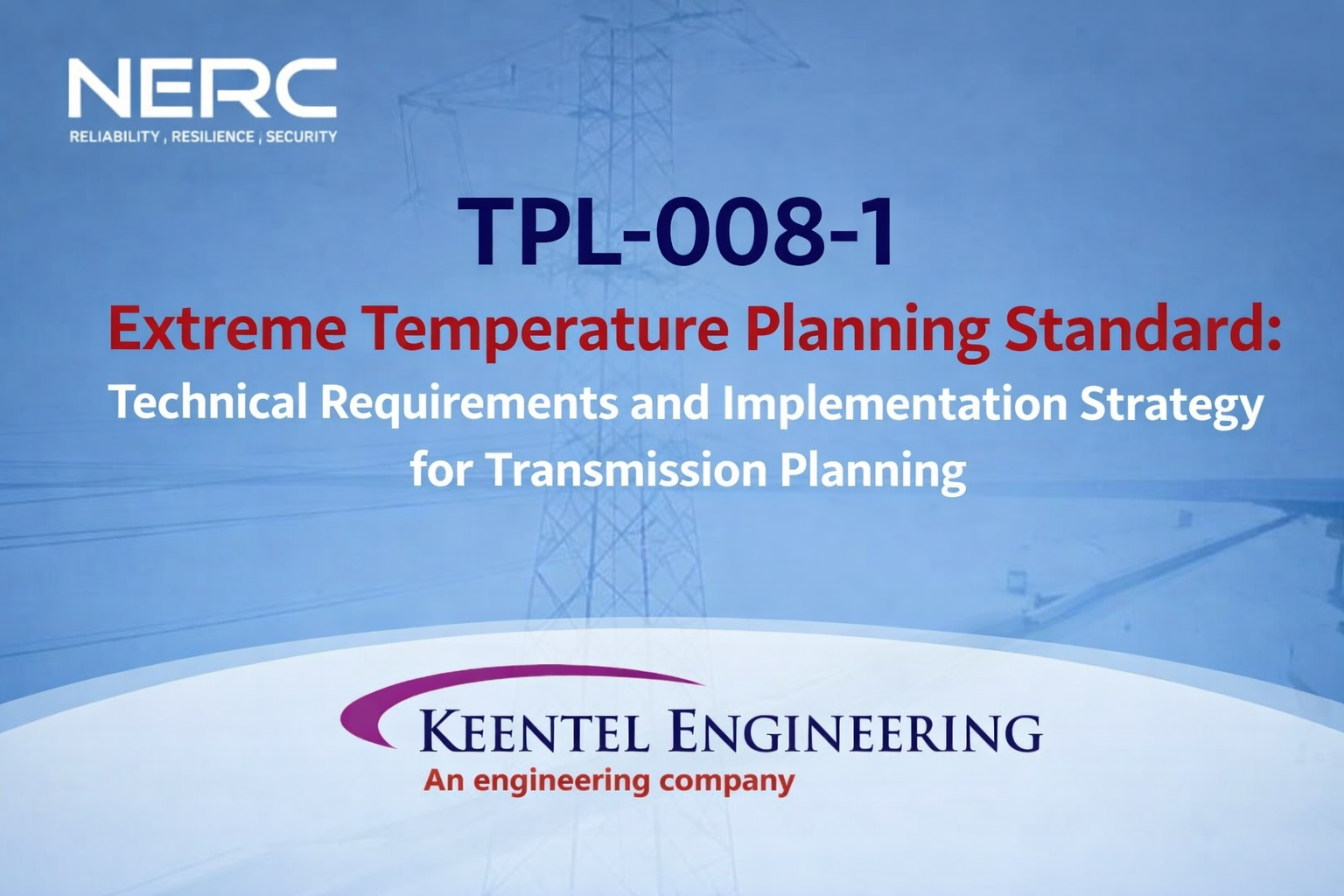
| TPL-008 | PC, TP — benchmark extreme heat and extreme cold event assessments, phasing in under its implementation plan | Benchmark case development, event assumptions, assessment results and Corrective Action Plans or evaluations of options |
| MOD-031 | PC and BA (data requests); TP, RP, DP and others provide data | Documented data request, distribution records, compiled demand and energy data and dated submissions |
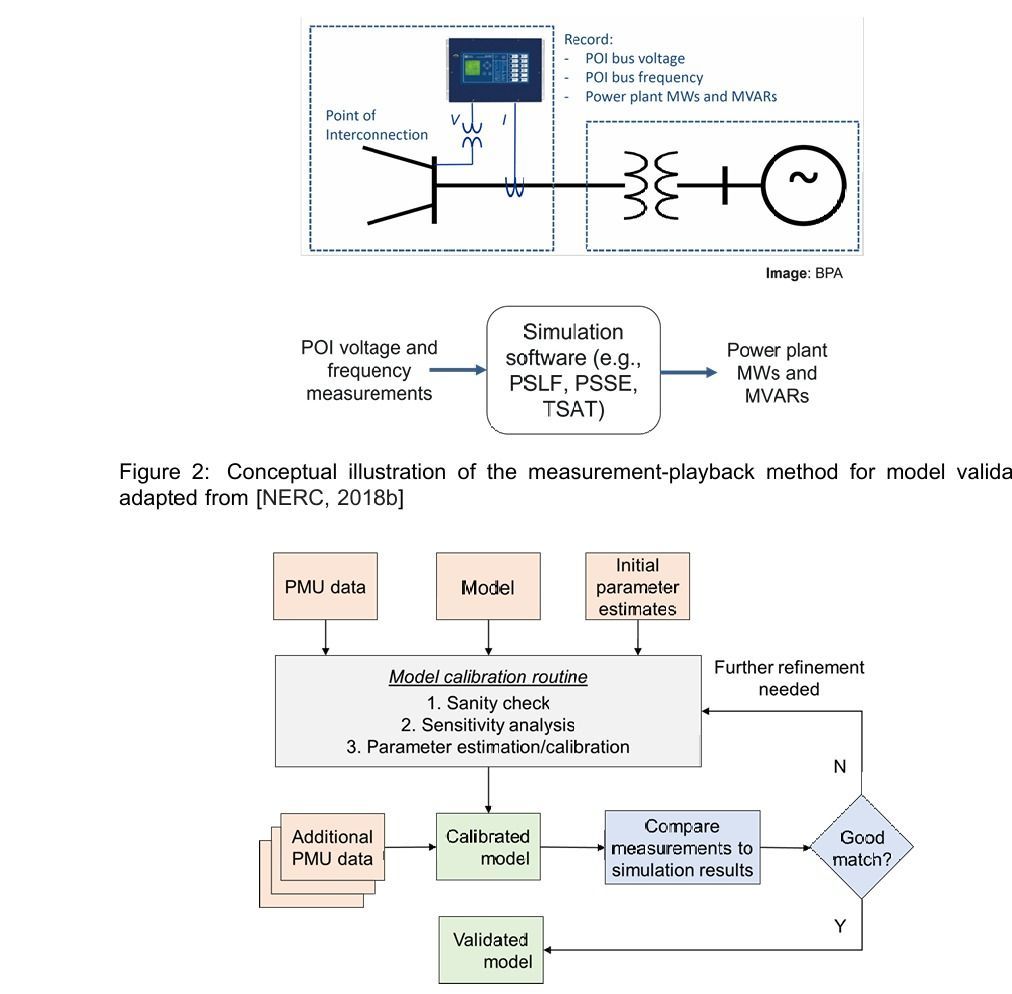
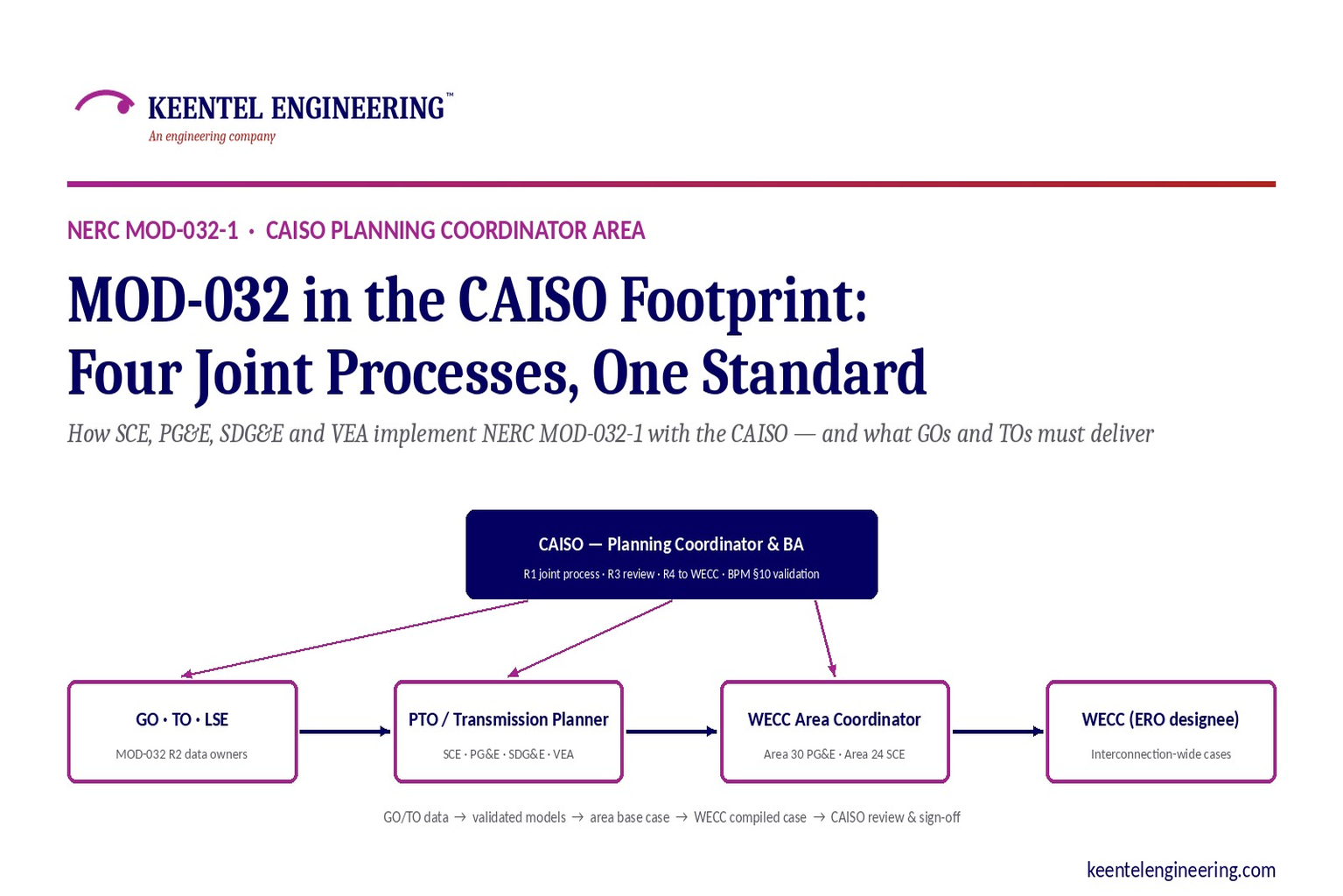
| MOD-032 | PC and TP — joint modeling data requirements and reporting procedures; data owners submit to them | Published data requirements, submittal tracking, technical-concern notices and interconnection-wide model submissions |
| MOD-033 | PC — documented model validation process (RC and TOP provide actual system data) | Validation procedure, event comparisons of simulated and actual behavior, resolution of discrepancies |
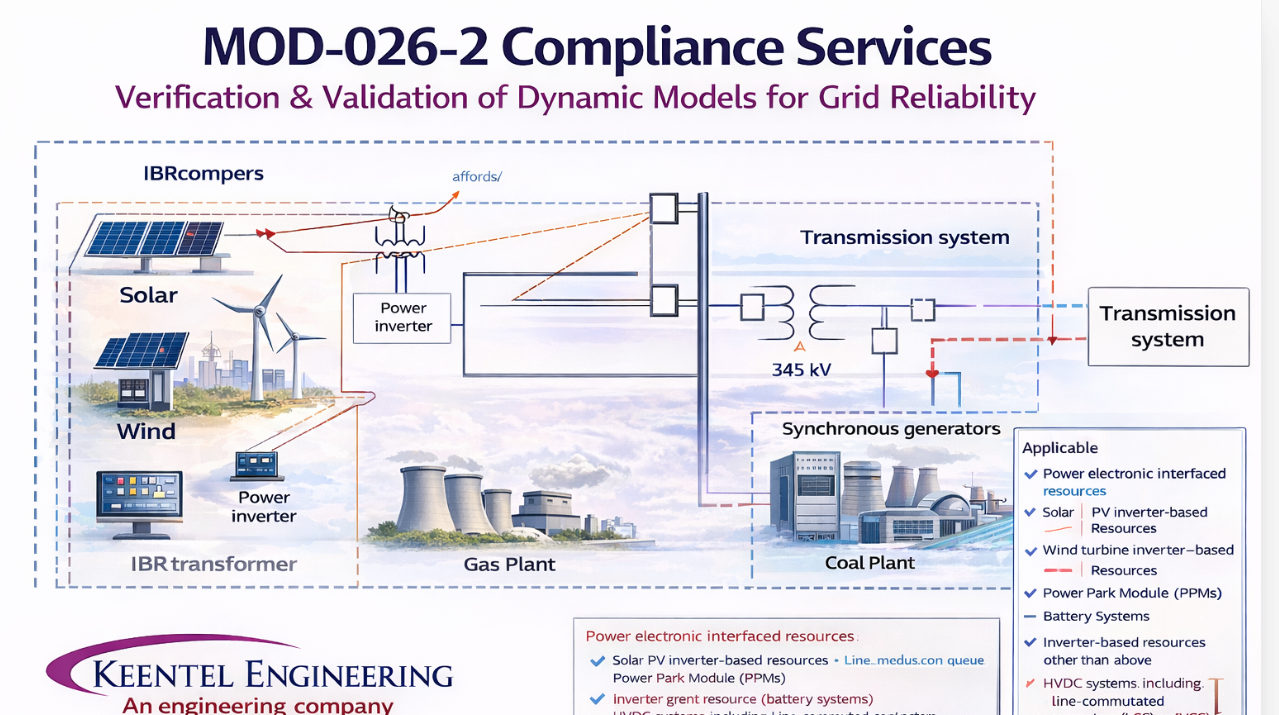
| MOD-026 / MOD-027 | TP — provides requirements to Generator Owners and reviews verified models | TP instructions, received model verification reports and correspondence on model usability |
| FAC-002 | PC, TP — studies of new or materially modified Facilities; coordination with GOs, TOs and DPs | Study reports covering the required elements, coordination correspondence and study-scope records |
| FAC-014 (with the RC’s FAC-011 methodology) | PC, TP — planning-horizon limits and criteria consistent with the RC’s SOL methodology, and related communications | Documented consistency of planning criteria, communications of instability-related limits where required |
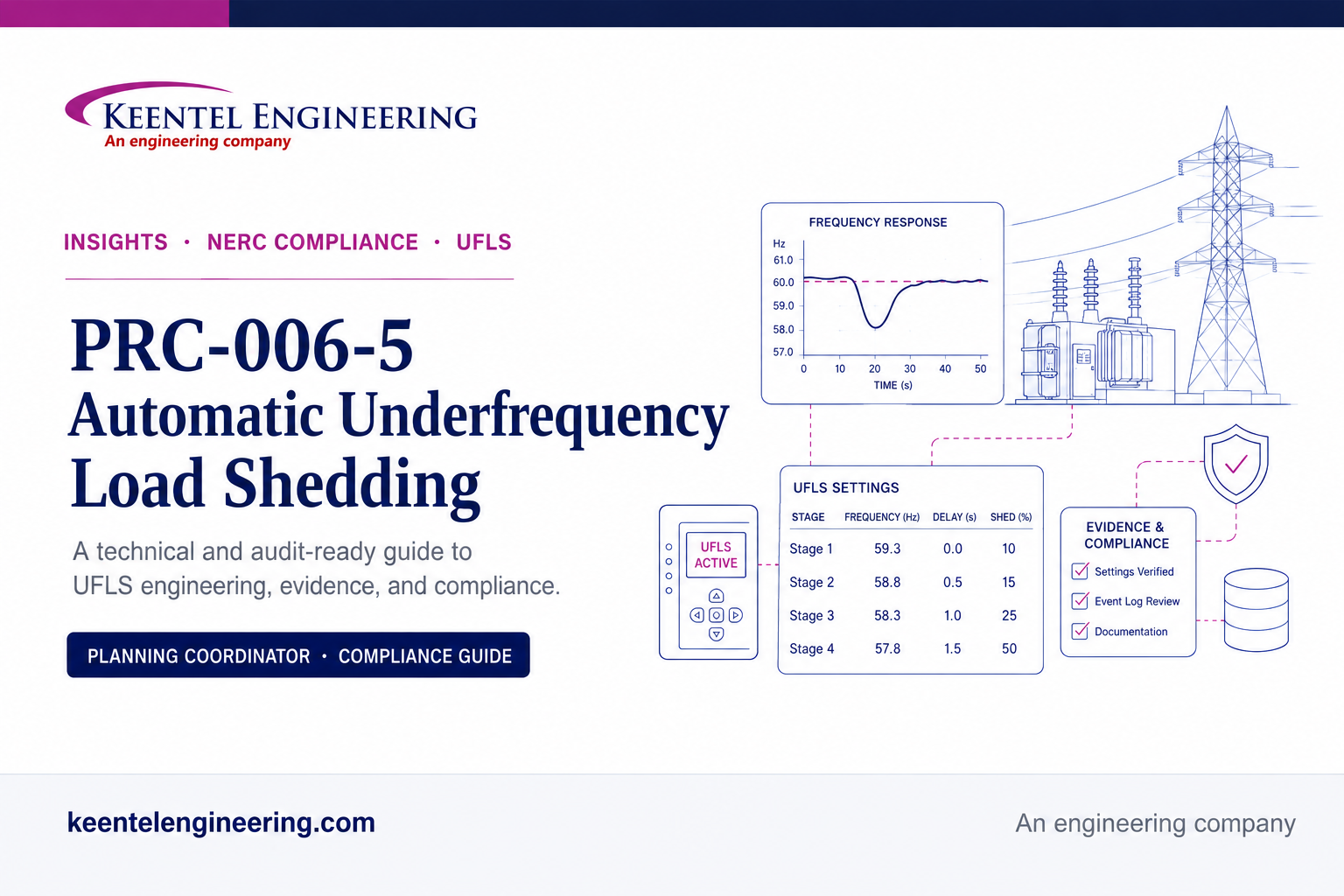
| PRC-006 | PC — UFLS criteria, island identification, program design, periodic design assessment and database | UFLS program document, island studies, dynamic simulation results, database and notices to UFLS entities |
| PRC-010 | PC, TP — where a UVLS program exists in the area | UVLS program evaluation and data exchange records |
| PRC-012 | PC — periodic evaluation of Remedial Action Schemes in its area | RAS evaluation studies, findings and notifications to RAS-entities |
| PRC-023 | PC — determines which 100–200 kV circuits are subject to the standard and provides the list | Annual critical-circuit study and dated notifications to TOs, GOs and DPs |
| PRC-026 | PC — identifies elements that meet the standard’s power-swing criteria and notifies owners | Annual identification study and dated notifications to GOs and TOs |
| PRC-002 | Responsible Entity role (as the standard defines it) for identifying dynamic disturbance recording locations | Location methodology, identified element list and notifications to owners |
Resource Planners should confirm which data requirements under MOD-031 and MOD-032 apply to them in their region, and whether any regional resource adequacy obligations sit alongside the NERC standards.

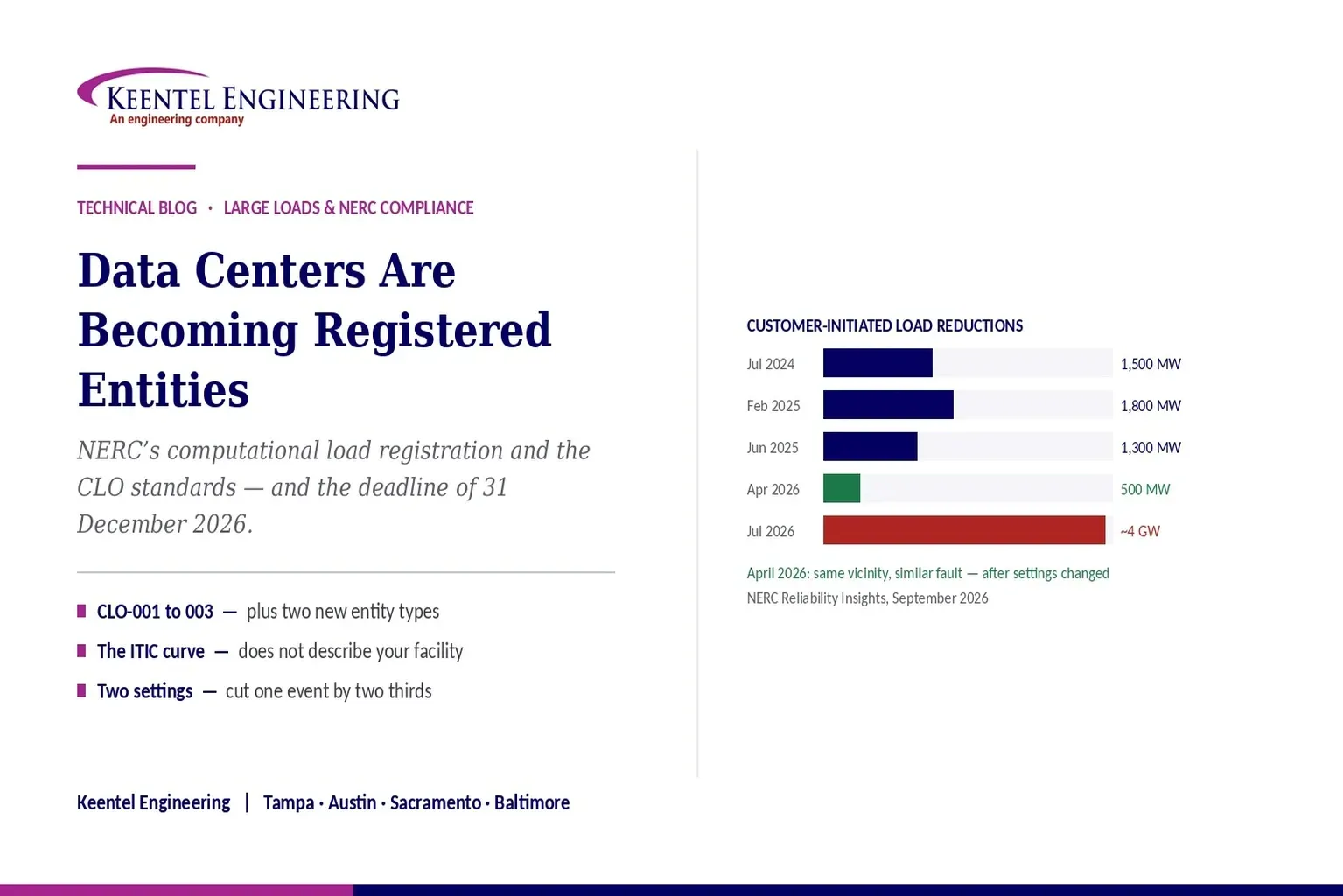
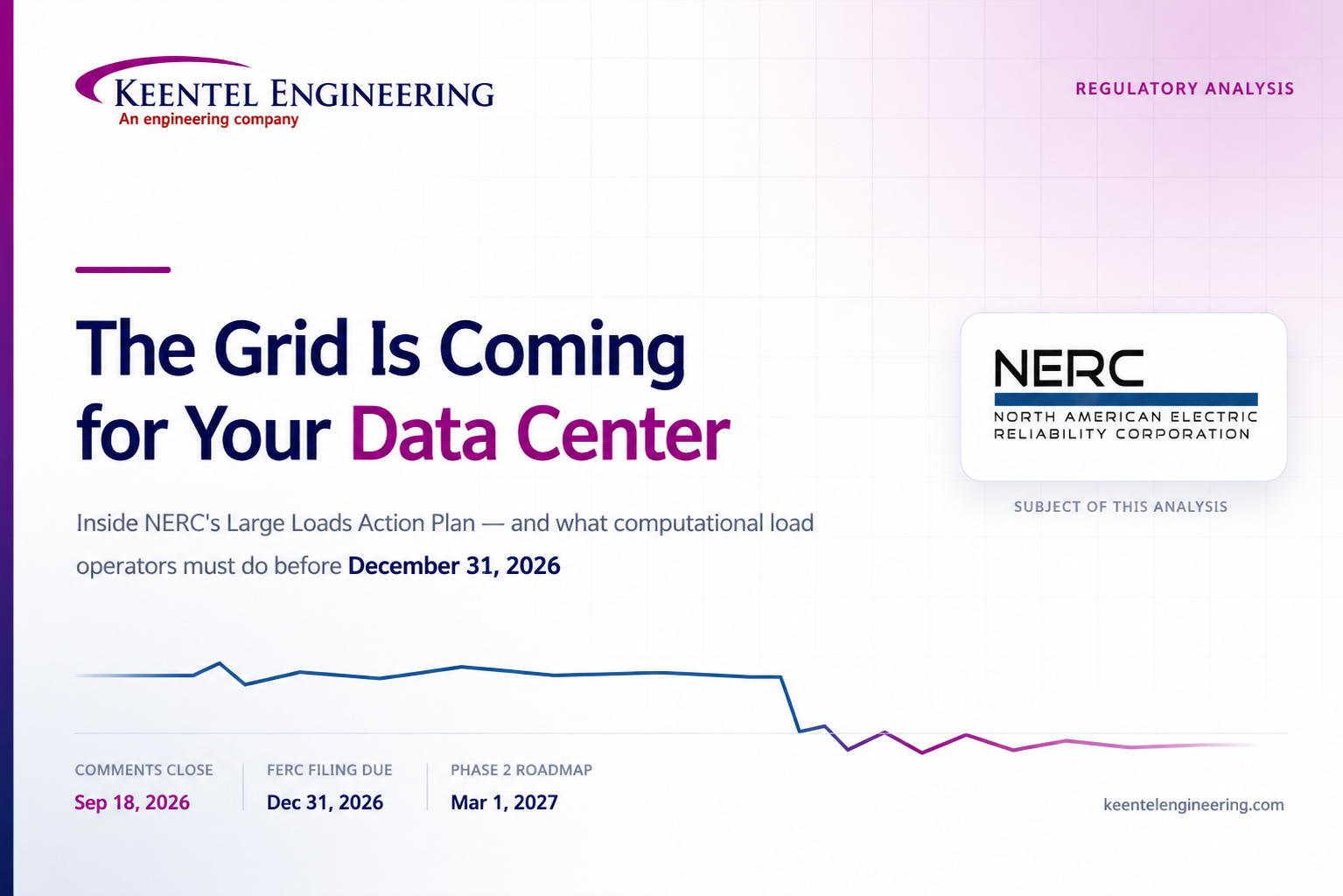
Planning obligations have not changed much in structure, but the inputs have changed dramatically. Data centers and other large computational loads are arriving faster and larger than traditional load forecasts assumed, and their power electronics and ride-through behavior make them a modeling problem as well as a forecasting one.
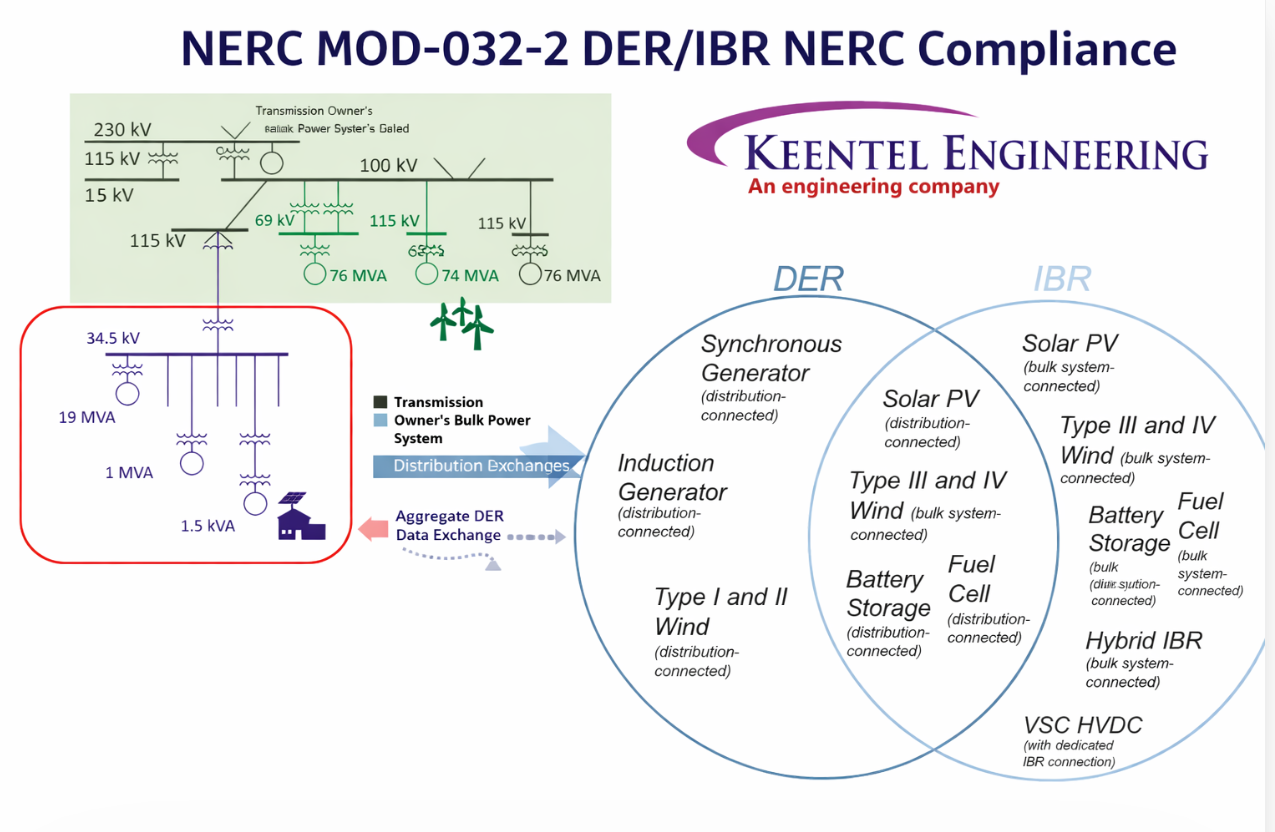
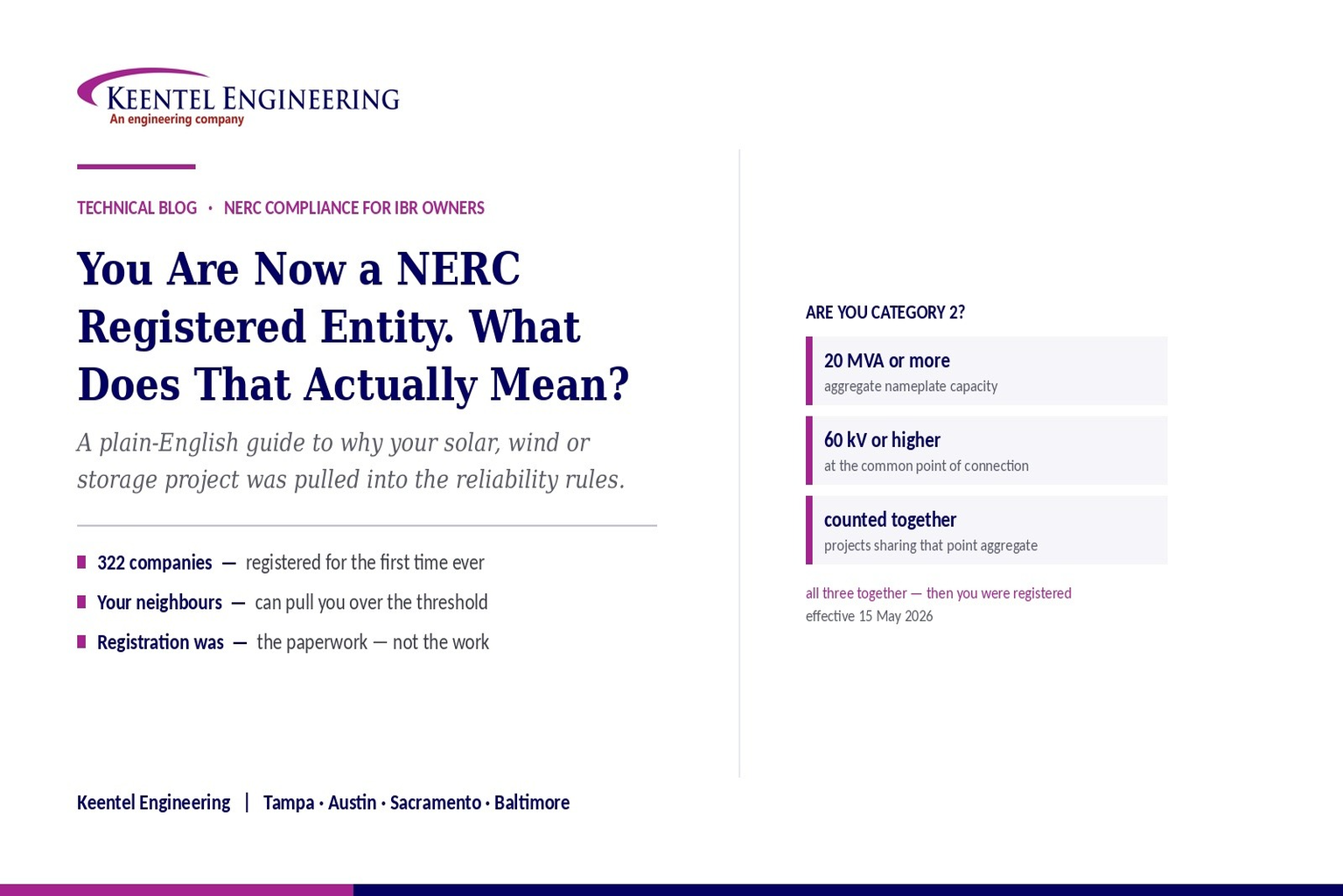
At the same time, inverter-based resources are replacing synchronous generation, Category 2 IBRs are entering MOD-032 data flows, and the 2026 ERO CMEP Implementation Plan identifies resource adequacy as a concern because studies that consider too narrow a range of conditions can understate capacity needs at peak.
Keentel Engineering does not act as your Planning Coordinator, Transmission Planner or Resource Planner — those registrations and accountabilities remain yours. We perform the studies, build the models and prepare the documentation your registered function relies on.
Near-Term and Long-Term steady-state, stability and short-circuit studies, contingency development, spare-equipment and protection-system-failure events, and Corrective Action Plans.
GIC modeling and GMD vulnerability assessments, transformer thermal assessment coordination, and extreme heat and cold benchmark case development and assessment.
MOD-032 data requirements and reporting procedures, case building, data-owner follow-up and technical-concern tracking, including IBR and EMT model review.
MOD-033 validation procedures and event comparisons that show how simulated behavior matched — or did not match — actual system response.
FAC-002 system impact and facility studies for generation, transmission and large-load interconnections, with the required study elements documented.
PRC-006 island identification, UFLS program design and dynamic design assessments; PRC-010 UVLS evaluations where a program exists.
Annual PRC-023 critical-circuit and PRC-026 power-swing identification studies, PRC-012 RAS evaluations and PRC-002 DDR location support.
Written methodologies, PC–TP responsibility documents, distribution and notification records and RSAW narratives that tie each requirement to its evidence.
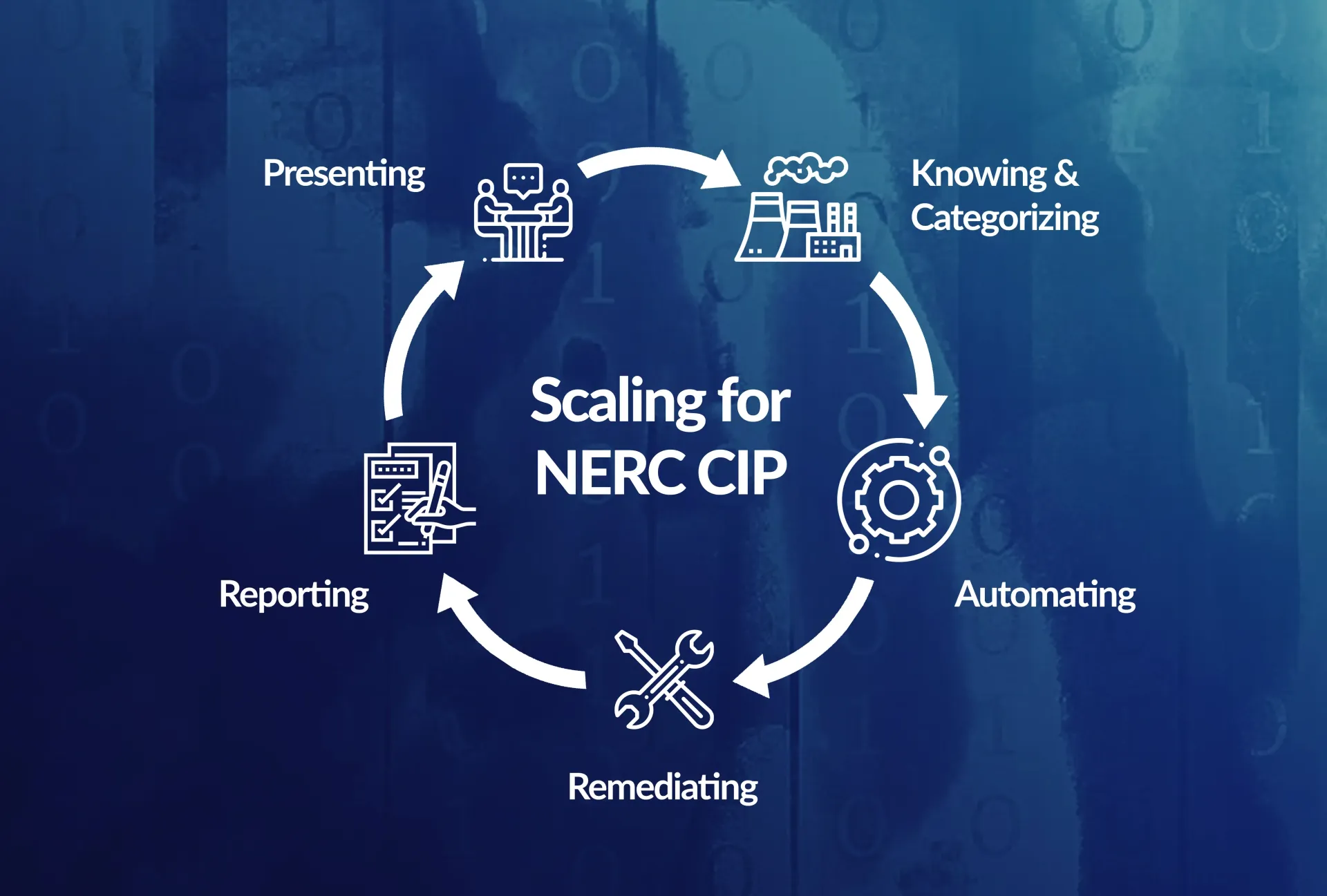
Map your PC, TP and RP registrations, the PC–TP division of responsibilities and the requirements that apply to each, with effective dates.
Assess the base cases, MOD-032 data requirements, data-owner submittals and validation history that every downstream study depends on.
Schedule TPL-001, TPL-007, TPL-008, PRC-023, PRC-026, PRC-006 and PRC-012 work so recurring deadlines never collide.
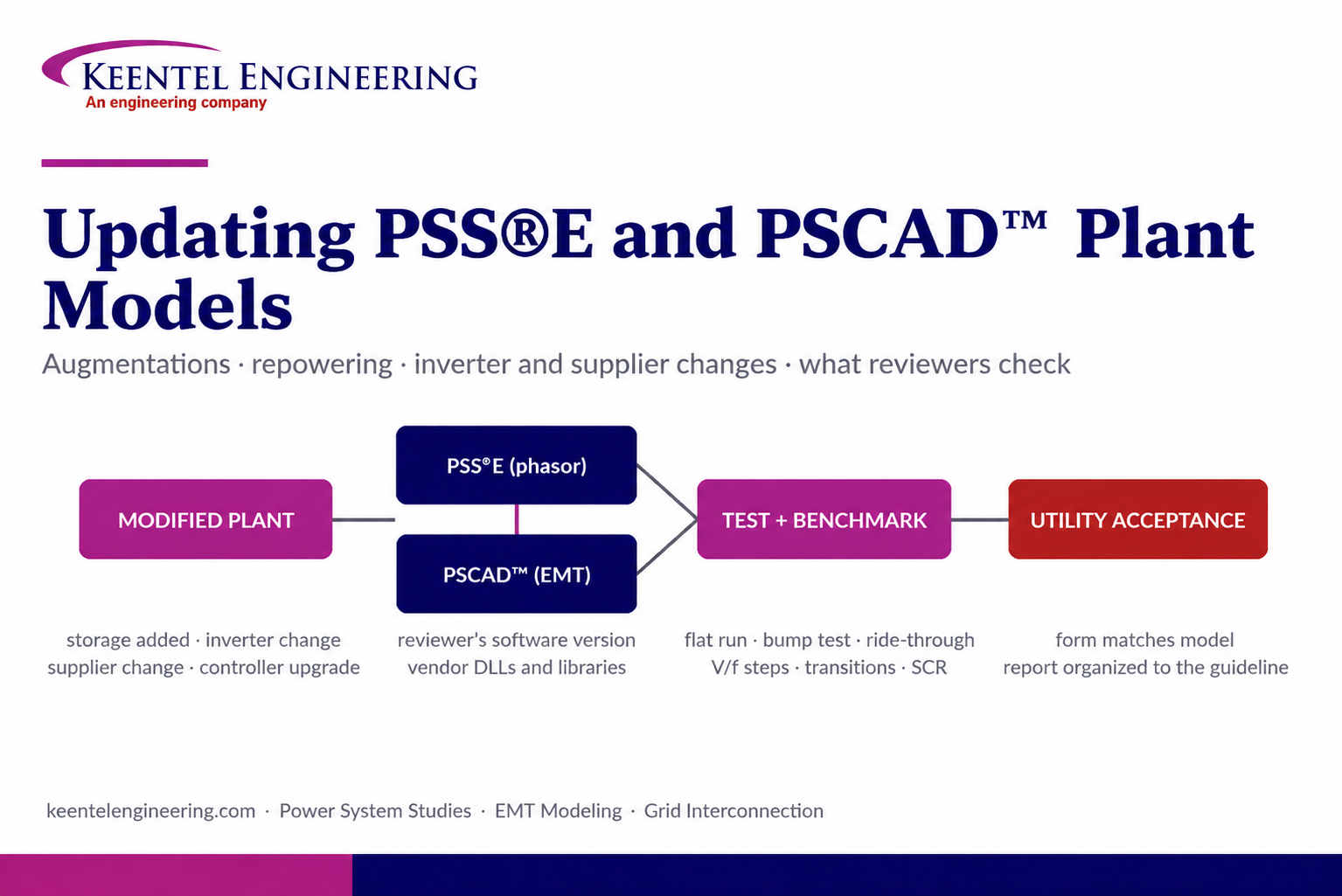
Run and document steady-state, dynamic, short-circuit, GIC and EMT analyses in PSS®E, PSLF or PSCAD™ to the stated criteria.
Prepare assessments, Corrective Action Plans, element lists and notifications, and record distribution and responses.
Organize every study, notice and methodology by requirement, with RSAW-ready narratives, so an audit or spot check becomes a retrieval exercise.
| Deliverable | What it contains | Requirement it supports |
|---|---|---|
| Annual Planning Assessment report | Study scope, models, contingencies, criteria, results and Corrective Action Plans | TPL-001 |
| GMD and extreme temperature assessments | GIC models, benchmark and supplemental results; extreme heat and cold benchmark cases and results | TPL-007, TPL-008 |
| Modeling data requirements and case documentation | Published data requirements, submittal tracker, case build notes and technical-concern log | MOD-032 |
| Model validation report | Validation method, event comparisons and resolution of discrepancies | MOD-033 |
| Interconnection study reports | System impact and facility study results with required elements addressed | FAC-002 |
| UFLS program and design assessment | Island identification, program parameters, dynamic simulation results and database | PRC-006 |
| Identified-element studies and notices | Critical-circuit, power-swing and RAS evaluation results with dated notifications | PRC-023, PRC-026, PRC-012 |
| Planning compliance evidence binder | Requirement-by-requirement index, narratives and responsibility documentation | Audits, spot checks and self-certifications |
| Gap | Why it matters |
|---|---|
| Undocumented PC–TP division of responsibilities | When two entities share planning work informally, neither may be able to show that a requirement was performed — or by whom. |
| Planning Assessment that does not trace to the requirements | Studies may be sound engineering, but if the report does not show how each required category, horizon and sensitivity was covered, the auditor has to reconstruct it. |
| Stale or unvalidated models | Old equipment data, generic IBR models and unvalidated dynamics weaken every study built on them and invite MOD-032 and MOD-033 findings. |
| Missing distribution and response records | Sharing results with neighbors and responding to comments is part of the obligation; email trails that cannot be found count for little. |
| Annual identification studies not repeated | PRC-023 and PRC-026 identifications recur; a list carried forward without a new study and new notices is a common finding. |
| UFLS design not reassessed after system change | Load growth, large loads, retirements and IBR additions can change island behavior well before the next scheduled assessment. |
| Corrective Action Plans without follow-through | CAPs need to be tracked, revised when circumstances change, and reflected in the next assessment. |
The 2026 ERO Enterprise CMEP Implementation Plan names the requirements below under its risk elements. Those most relevant to planning functions are listed here with the version identifiers used in the plan. Confirm which requirements apply to your registration.
| Risk element | Requirements named in the 2026 plan | What it means for PCs, TPs and RPs |
|---|---|---|
| Grid Transformation | TPL-001-5.1 R1–R7 | The core of the Planning Assessment — models, studies, criteria, CAPs and PC–TP coordination — is squarely in focus. |
| Grid Transformation | MOD-032-1 R1–R4 (Category 2 IBRs from May 15, 2026) | Data requirements and reporting procedures need to cover newly registered Category 2 IBRs, and models received from them need review. |
| Grid Transformation | MOD-031-3 R1, R2 | Demand and energy data requests and responses — directly relevant to the plan’s resource adequacy concern. |
| Grid Transformation | FAC-002-4 R1, R2 | Interconnection studies and coordination for new and materially modified Facilities, including the pace of large-load and IBR requests. |
| Grid Transformation | MOD-026-1 R2, R6; MOD-027-1 R5 | Primarily Generator Owner obligations, but the verified models flow to the Transmission Planner and feed its studies. |
| Facility Ratings | FAC-008-5 R6 | An owner obligation; ratings inconsistencies propagate directly into planning cases and study results. |
The plan also names Extreme Weather Response requirements. TPL-008 is not among them, but extreme-temperature planning addresses the same risk and is worth scheduling now. See our Grid Transformation focus area page for the full requirement list.
Our founder, Sandip R. Patel, P.E., brings more than 30 years of power-system experience from 4 kV to 765 kV, and our studies are performed by engineers who run the cases themselves.
Former NERC audit-team leadership and subject-matter experience help us write assessments and narratives the way a Regional Entity reviewer reads them.
PSS®E, PSLF and PSCAD™ capability lets us address conventional planning, IBR dynamics and GIC analysis within one team.
We support planning entities across MRO, NPCC, ReliabilityFirst, SERC, Texas RE and WECC, accounting for regional criteria and variances.
Tell us which planning functions you hold and when your next assessment is due. Keentel will scope the studies, models and documentation that let your planning work product serve as your compliance evidence.
Serving utilities, EPCs, developers, and infrastructure organizations supporting critical power systems nationwide.