A Coordinated Electric System Interconnection Review—the utility’s deep-dive on technical and cost impacts of your project.
Challenge: Frequent false tripping using conventional electromechanical relays
Solution: SEL-487E integration with multi-terminal differential protection and dynamic inrush restraint
Result: 90% reduction in false trips, saving over $250,000 in downtime
| Category | Metric |
|---|---|
| VPP capacity (Lunar Energy) | 650 MW |
| Lunar funding raised | US$232 million |
| Data center BESS example | 31 MW / 62 MWh |
| ERCOT grid-scale batteries | 15+ GW |
| LDES tenders (H1 2026) | Up to 9.3 GW |
| Lithium-ion share of LDES by 2030 | 77% |
| FEOC initial threshold | 55% |
| BESS tariff rate (2026) | ~55% |
| Capacity gain from analytics | 5–15% |
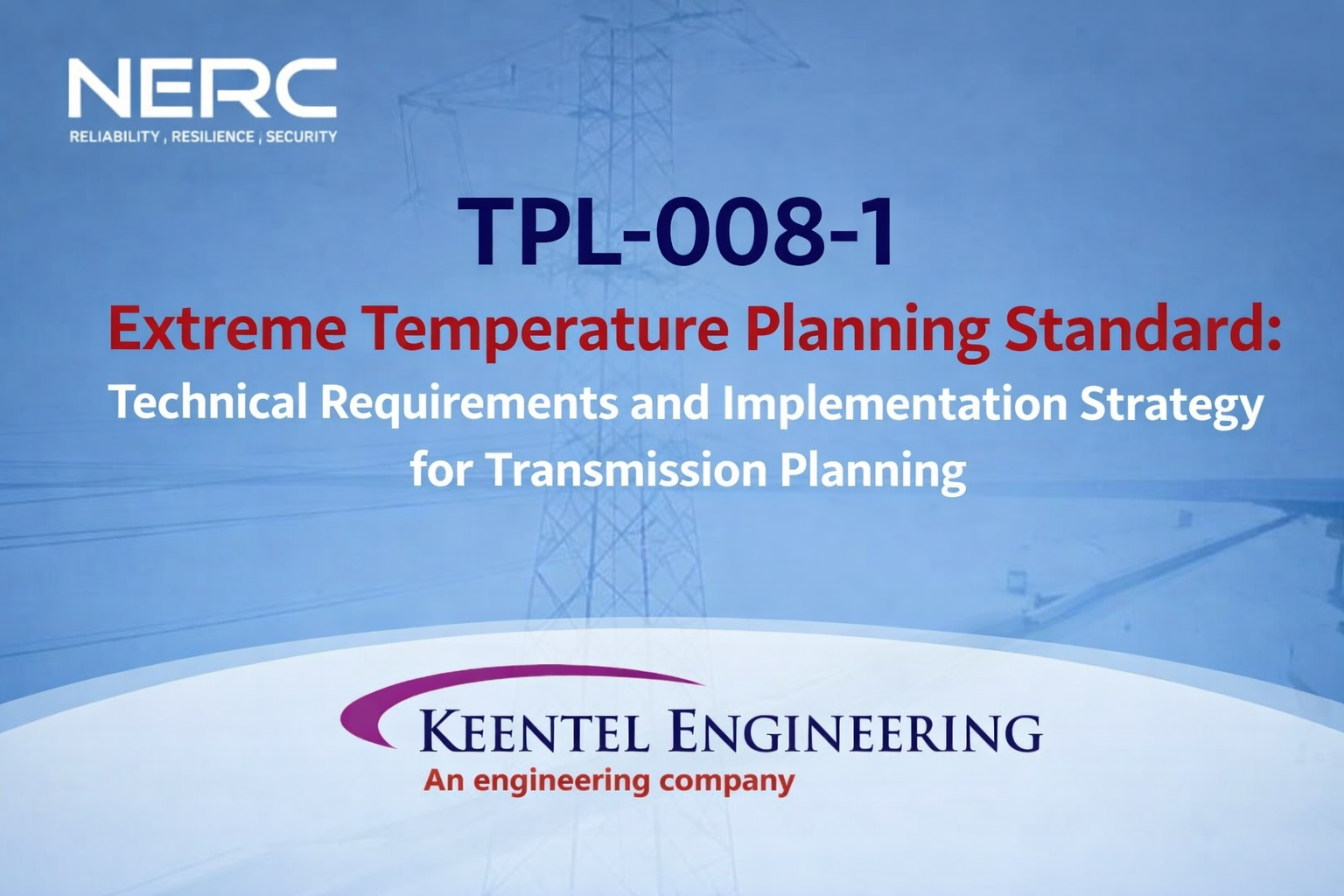
TPL-008-1 Extreme Temperature Planning Standard: Technical Requirements and Implementation Strategy for Transmission Planning
Mar 7, 2026 | blog
The reliability of the North American Bulk Power System is increasingly influenced by extreme weather conditions, particularly prolonged heat waves and severe cold events. These events can simultaneously affect electricity demand, generation availability, and transmission system performance. To address this growing reliability risk, the electric reliability framework introduced TPL-008-1 – Transmission System Planning Performance Requirements for Extreme Temperature Events.
This standard requires Planning Coordinators and Transmission Planners to perform structured assessments of how the transmission system performs under extreme temperature conditions, including both extreme heat and extreme cold scenarios.
The standard becomes effective April 1, 2026, and introduces a multi-phase implementation schedule that gradually transitions the industry toward full compliance. For utilities, transmission operators, renewable developers, and grid planners, this standard represents a major shift in long-term planning practices.
At Keentel Engineering, we support utilities and developers with advanced transmission planning studies, extreme weather reliability assessments, and compliance-driven planning analysis aligned with emerging reliability standards such as TPL-008-1.
Why Extreme Temperature Planning Is Necessary
Historically, transmission planning focused on contingencies such as equipment outages, generation trips, and transmission line failures. However, recent grid events have demonstrated that extreme weather conditions can simultaneously stress multiple elements of the power system.
Extreme temperatures affect power systems in several ways:
- Increased electricity demand during heat waves or cold snaps
- Reduced generation availability due to fuel supply or equipment limits
- Transmission equipment operating closer to thermal limits
- Reduced transmission capacity caused by conductor sag or cooling limitations
- Increased probability of cascading outages during stressed conditions
Extreme weather events can therefore create conditions where traditional planning assumptions are no longer adequate.
TPL-008-1 addresses this challenge by requiring planners to evaluate transmission system performance under statistically significant extreme temperature events derived from historical climate data.
Key Technical Requirements of TPL-008-1
The standard establishes eleven planning requirements that define how entities must conduct Extreme Temperature Assessments. These requirements collectively define governance responsibilities, case development processes, study methodologies, and corrective action planning.
Requirement R1 – Responsibility and Governance Framework
Planning Coordinators must identify the specific responsibilities of all Transmission Planners and participating entities responsible for completing the Extreme Temperature Assessment.
These responsibilities include:
- Developing study assumptions
- Coordinating benchmark temperature events
- Creating planning cases
- Performing analysis studies
- Identifying system deficiencies
- Developing corrective action plans
The assessment must be completed at least once every five years.
For planning organizations, this requirement ensures that extreme temperature assessments become a formal and repeatable planning activity rather than a one-time study.
Requirement R2 – Extreme Temperature Benchmark Events
Planning Coordinators must identify extreme heat and extreme cold events using historical climate data. These benchmark events must be derived from at least 40 years of temperature data.
The selected events must represent one of the 20 most extreme temperature conditions observed in the region.
These events are defined based on:
- Three-day rolling average of maximum temperature for extreme heat
- Three-day rolling average of minimum temperature for extreme cold
Benchmark events are coordinated across regional planning zones to ensure consistent planning assumptions among neighboring planning entities.
Requirement R3 – Development of Planning Cases
Planning Coordinators must develop a structured process for creating:
- Benchmark planning cases
- Sensitivity planning cases
These planning cases must reflect temperature-dependent impacts on the power system, including:
- Changes in load demand
- Generation availability and deratings
- Transmission system limits
- Power transfers between regions
Sensitivity cases must test system performance under variations in key conditions such as generation output, load levels, and transfer patterns.
Requirement R4 – Required Study Cases
Transmission planners must develop four primary planning cases:
- Extreme heat benchmark case
- Extreme cold benchmark case
- Extreme heat sensitivity case
- Extreme cold sensitivity case
These cases represent realistic extreme weather operating conditions that stress the transmission system.
The benchmark cases represent expected extreme conditions, while sensitivity cases explore variations in system performance.
Requirement R5 – Voltage Performance Criteria
Each responsible entity must define acceptable voltage performance limits for the extreme temperature assessment.
This includes:
- Acceptable steady-state voltage ranges
- Post-contingency voltage deviation limits
These criteria ensure that voltage levels remain within acceptable reliability limits even during severe temperature conditions.
Requirement R6 – Stability and Cascading Criteria
Transmission planners must define criteria or methodologies used to determine whether system conditions could result in:
- Instability
- Uncontrolled separation
- Cascading outages
These criteria provide a consistent framework for evaluating the dynamic performance of the power system during extreme temperature events.
Requirement R7 – Identification of Severe Contingencies
Transmission planners must perform both steady-state power flow analysis and transient stability simulations for the benchmark and sensitivity cases.
These analyses evaluate:
Thermal loading on transmission equipment
Voltage stability
Dynamic system response following disturbances
System recovery after faults
The goal is to verify that the transmission system remains stable and reliable under extreme temperature conditions.
Planning entities must identify contingencies that could produce the most severe impacts on the Bulk Electric System.
Typical contingencies evaluated include:
- Generator outages
- Transmission circuit outages
- Transformer outages
- Reactive device failures
- Common-structure transmission outages
The rationale for selecting specific contingencies must be documented.
Requirement R8 – Steady-State and Transient Stability Analysis
Transmission planners must perform both steady-state power flow analysis and transient stability simulations for the benchmark and sensitivity cases.
These analyses evaluate:
- Thermal loading on transmission equipment
- Voltage stability
- Dynamic system response following disturbances
- System recovery after faults
The goal is to verify that the transmission system remains stable and reliable under extreme temperature conditions.
Requirement R9 – Corrective Action Plans
If benchmark case analysis reveals violations of system performance criteria, responsible entities must develop Corrective Action Plans.
Possible corrective actions include:
- Transmission system upgrades
- Generation redispatch strategies
- Operational procedures
- Protection system improvements
- Transmission reinforcements
Corrective action plans must be shared with applicable regulatory authorities and updated as necessary.
Requirement R10 – Mitigation of Cascading Risks
If studies reveal potential instability or cascading outages during extreme events, planners must evaluate mitigation options to reduce these risks.
Possible mitigation actions include:
- Transmission upgrades
- Stability controls
- Special protection systems
- Grid topology adjustments
These evaluations ensure that potential large-scale reliability risks are addressed proactively.
Requirement R11 – Sharing Study Results
Extreme Temperature Assessment results must be shared with other reliability entities upon request.
These results provide valuable information for:
- Regional planning coordination
- Interconnection-wide reliability analysis
- Operational planning improvements
Implementation Timeline for TPL-008-1
The standard includes a phased implementation schedule that allows planning entities time to develop the required processes and studies.
With an effective date of April 1, 2026, the timeline is approximately:
April 1, 2026
Requirement R1 becomes effective.
April 1, 2028
Requirements R2 through R6 become enforceable.
April 1, 2030
Requirements R7 through R11 become enforceable.
The first Extreme Temperature Assessment must be completed by April 1, 2030.
After the first assessment, future assessments must be completed every five years.
How TPL-008-1 Impacts Transmission Planning
The standard significantly expands the scope of long-term transmission planning.
Transmission planners must now incorporate:
- Extreme weather modeling
- Climate data analysis
- Temperature-dependent equipment ratings
- Large-scale regional coordination
This represents a major evolution in planning methodologies, requiring enhanced data integration and advanced simulation capabilities.
Keentel Engineering Planning Services
Keentel Engineering provides specialized planning services that help utilities and developers meet the technical requirements of emerging reliability standards.
Our services include:
- Extreme temperature transmission planning studies
- Power flow and transient stability analysis
- Transmission reliability assessments
- Renewable interconnection studies
- Grid reliability compliance support
- Planning model validation and improvement
- Long-term transmission planning analysis
Our engineering team combines advanced simulation tools with deep expertise in transmission planning to help clients ensure compliance with reliability standards while maintaining grid stability.
Frequently Asked Questions (FAQ)
What is the purpose of the TPL-008-1 standard?
TPL-008-1 establishes planning requirements for evaluating the reliability of the transmission system during extreme temperature events. The goal is to ensure that the power system remains stable and reliable during extreme heat or cold conditions.
Who must comply with TPL-008-1?
The standard applies primarily to:
- Planning Coordinators
- Transmission Planners
These entities are responsible for performing the Extreme Temperature Assessment and ensuring system reliability during extreme weather conditions.
What is an Extreme Temperature Assessment?
An Extreme Temperature Assessment is a structured transmission planning study that evaluates how the power system performs during extreme heat and extreme cold events. The study analyzes system behavior under severe weather conditions using benchmark and sensitivity planning cases.
Why does the standard require 40 years of temperature data?
Using at least 40 years of historical data ensures that benchmark events represent statistically significant extreme weather conditions. This approach helps planners capture rare but realistic events that could threaten system reliability.
What are benchmark planning cases?
Benchmark planning cases represent the most severe historical extreme temperature events. These cases simulate realistic system conditions during extreme heat or cold scenarios.
What are sensitivity cases?
Sensitivity cases explore variations in system conditions that could occur during extreme events. These cases test how the power system responds to changes in generation availability, load demand, and transmission transfers.
What types of studies are required under TPL-008-1?
Required studies include:
- Steady-state power flow analysis
- Transient stability simulations
- Voltage performance analysis
- Contingency analysis
These studies evaluate system reliability under extreme temperature conditions.
What happens if violations are found during the assessment?
If reliability criteria are violated during the benchmark case analysis, planners must develop corrective action plans that address the identified deficiencies.
How often must the Extreme Temperature Assessment be performed?
The assessment must be completed at least once every five years.
How does extreme weather affect transmission systems?
Extreme weather can increase electricity demand, reduce generation availability, and push transmission equipment closer to thermal limits. These conditions increase the risk of system instability and cascading outages

About the Author:
Sandip "Sonny" R. Patel, P.E.
IEEE Senior Member · Founder & CEO, Keentel Engineering
In 1995, Sonny Patel earned his Electrical Engineering degree from the University of Illinois. But degrees don't build legacies — action does.
For three decades, he has worked the power industry from every side of the table: 16 years as a utility engineer at Exelon/Commonwealth Edison; generation leadership across hydroelectric, industrial steam turbine, and a 9 GW renewable fleet; NERC Regional Entity Senior Compliance Engineer and Audit Team Lead, auditing some of the nation's largest utilities; and testing and commissioning lead on equipment up to 765 kV — the very top of the North American grid.Utility. Generator. Regulator. Consultant. Few engineers have seen all four seats. Fewer still have sat in them.
His experience spans nuclear, hydro, conventional generation, renewables, oil and gas, mining — and today's data centers, where he is authoring a three-book series on data center design. He is a Licensed Professional Engineer in six states and a Licensed Electrical Contractor in Florida (Unlimited EC) — he doesn't just design the work; he's qualified to stand behind its execution.Today, as Founder and CEO of Keentel Engineering, Sonny leads a nationwide team of engineers delivering substation design, power system studies, NERC compliance, and commissioning — done right, coast to coast.Three decades. Every side of the table. One standard: accountable engineering.
Services

Let's Discuss Your Project
Let's book a call to discuss your electrical engineering project that we can help you with.
About the Author:
Sandip "Sonny" R. Patel, P.E.
IEEE Senior Member · Founder & CEO, Keentel Engineering
In 1995, Sonny Patel earned his Electrical Engineering degree from the University of Illinois. But degrees don't build legacies — action does.
For three decades, he has worked the power industry from every side of the table: 16 years as a utility engineer at Exelon/Commonwealth Edison; generation leadership across hydroelectric, industrial steam turbine, and a 9 GW renewable fleet; NERC Regional Entity Senior Compliance Engineer and Audit Team Lead, auditing some of the nation's largest utilities; and testing and commissioning lead on equipment up to 765 kV — the very top of the North American grid.
Utility. Generator. Regulator. Consultant. Few engineers have seen all four seats. Fewer still have sat in them.
His experience spans nuclear, hydro, conventional generation, renewables, oil and gas, mining — and today's data centers, where he is authoring a three-book series on data center design. He is a Licensed Professional Engineer in six states and a Licensed Electrical Contractor in Florida (Unlimited EC) — he doesn't just design the work; he's qualified to stand behind its execution.
Today, as Founder and CEO of Keentel Engineering, Sonny leads a nationwide team of engineers delivering substation design, power system studies, NERC compliance, and commissioning — done right, coast to coast.Three decades. Every side of the table. One standard: accountable engineering.
Leave a Comment
Thank you for contacting us.
We will get back to you as soon as possible.
We will get back to you as soon as possible.
Oops, there was an error sending your message.
Please try again later.
Please try again later.
Related Posts
By SANDIP R PATEL
•
October 24, 2026
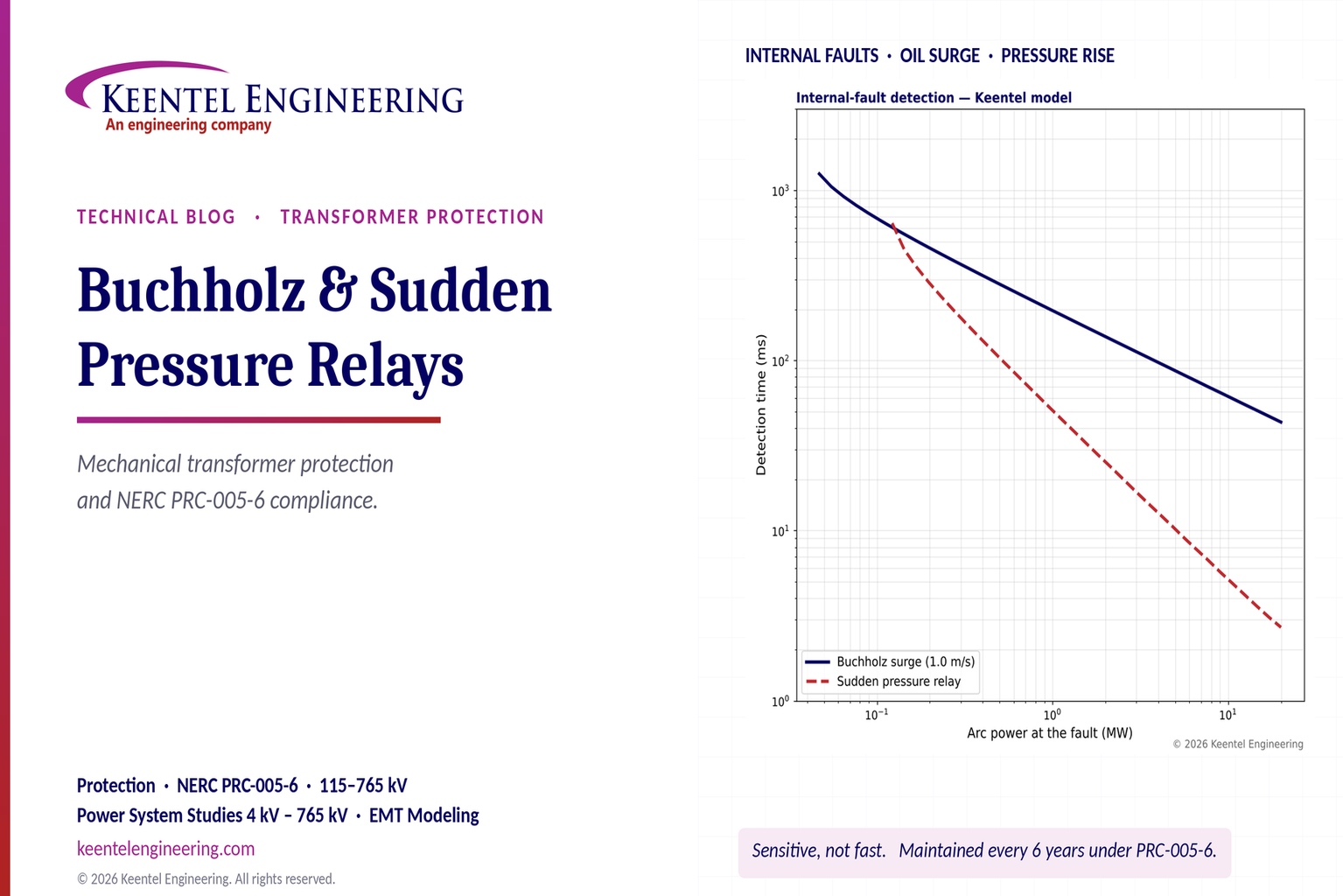
Learn how Buchholz and sudden pressure relays protect transformers, detect internal faults, and meet NERC PRC-005-6 maintenance requirements.
By Team 2 Dexora
•
October 24, 2026
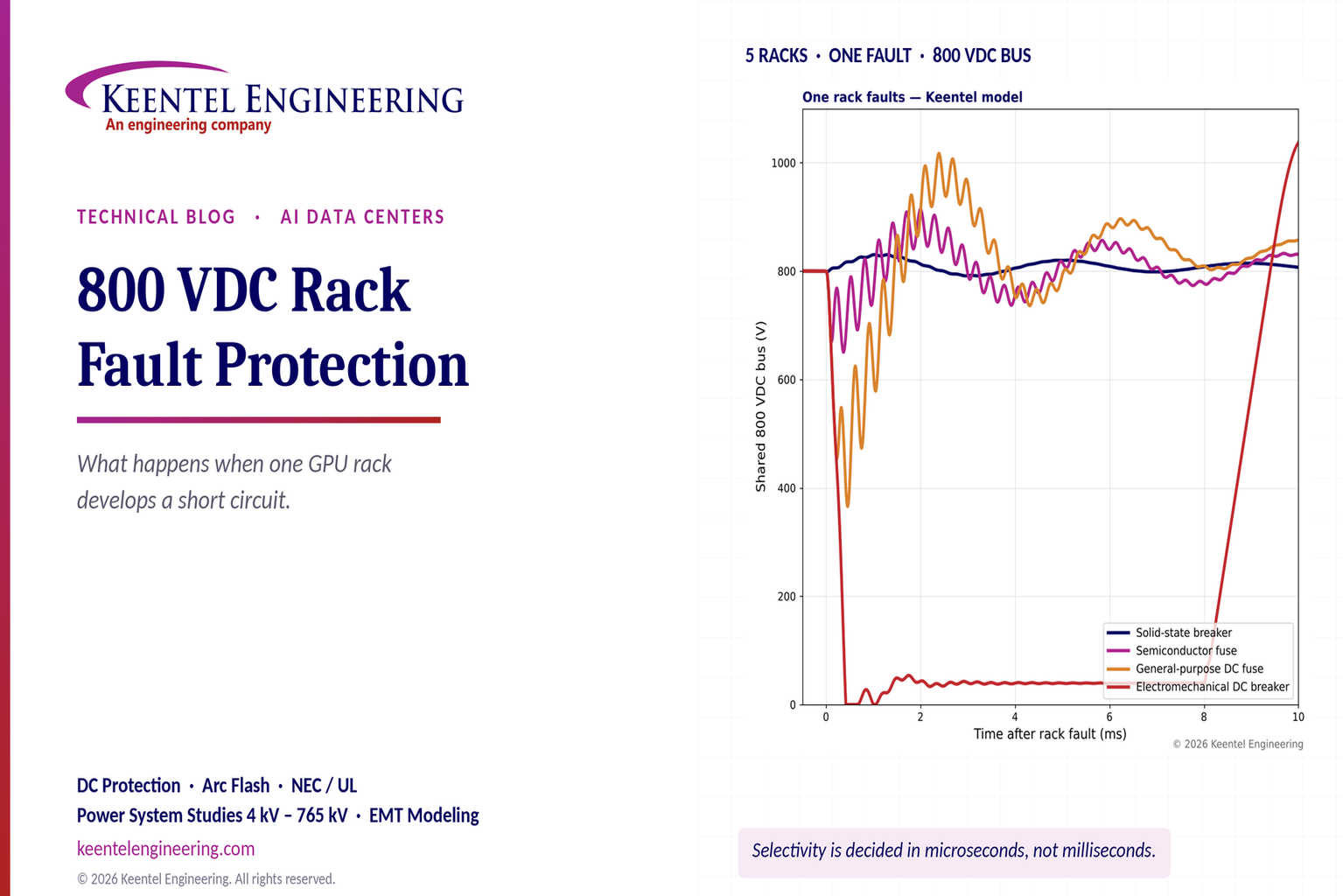
Explore 800 VDC rack fault protection for AI data centers, including solid-state breakers, DC short circuits, selectivity, arc flash, and NEC/UL standards.
October 24, 2026
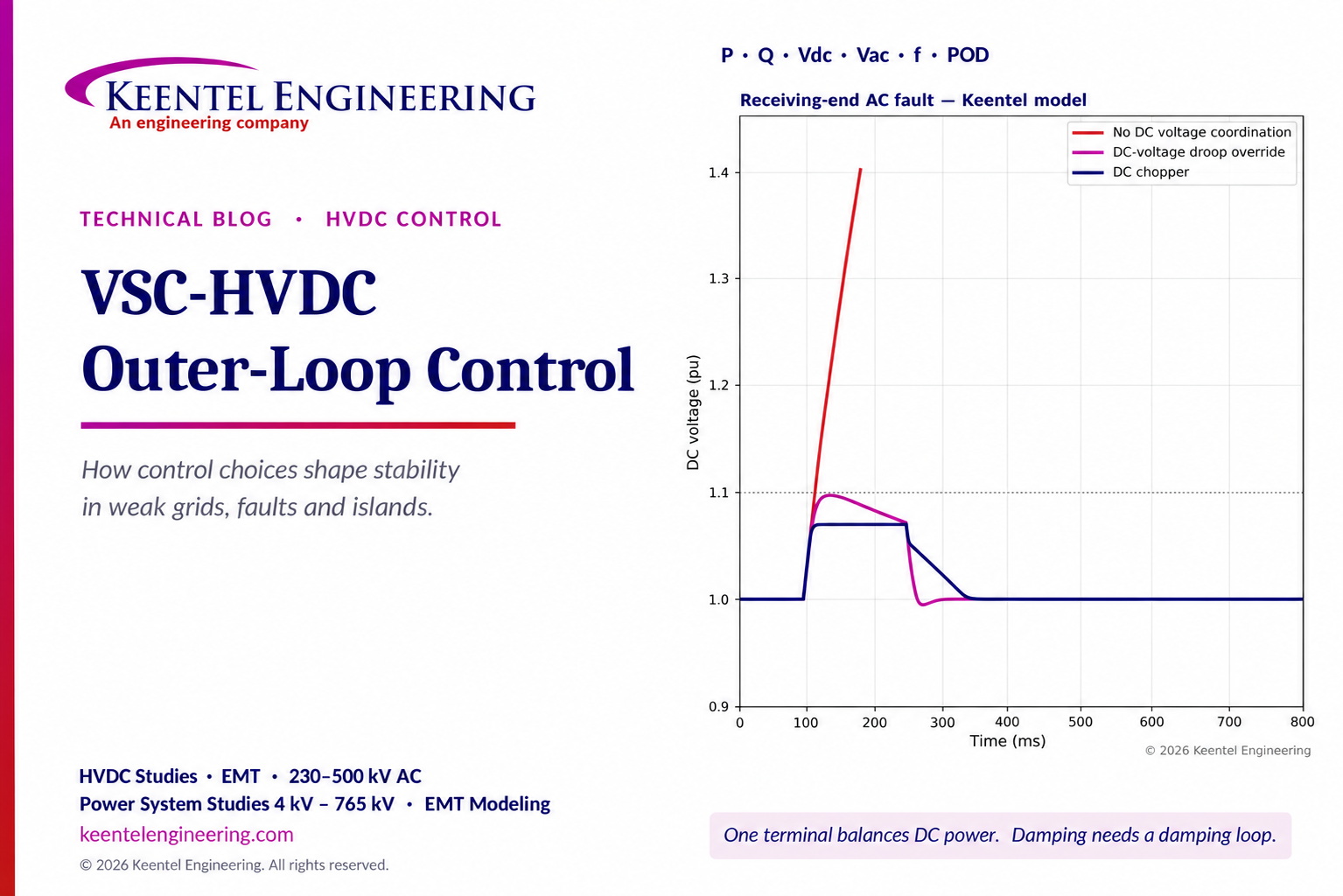
Explore VSC-HVDC outer-loop control for P, Q, DC voltage, weak-grid stability, fault ride-through and power oscillation damping with engineering models.
By SANDIP R PATEL
•
October 23, 2026
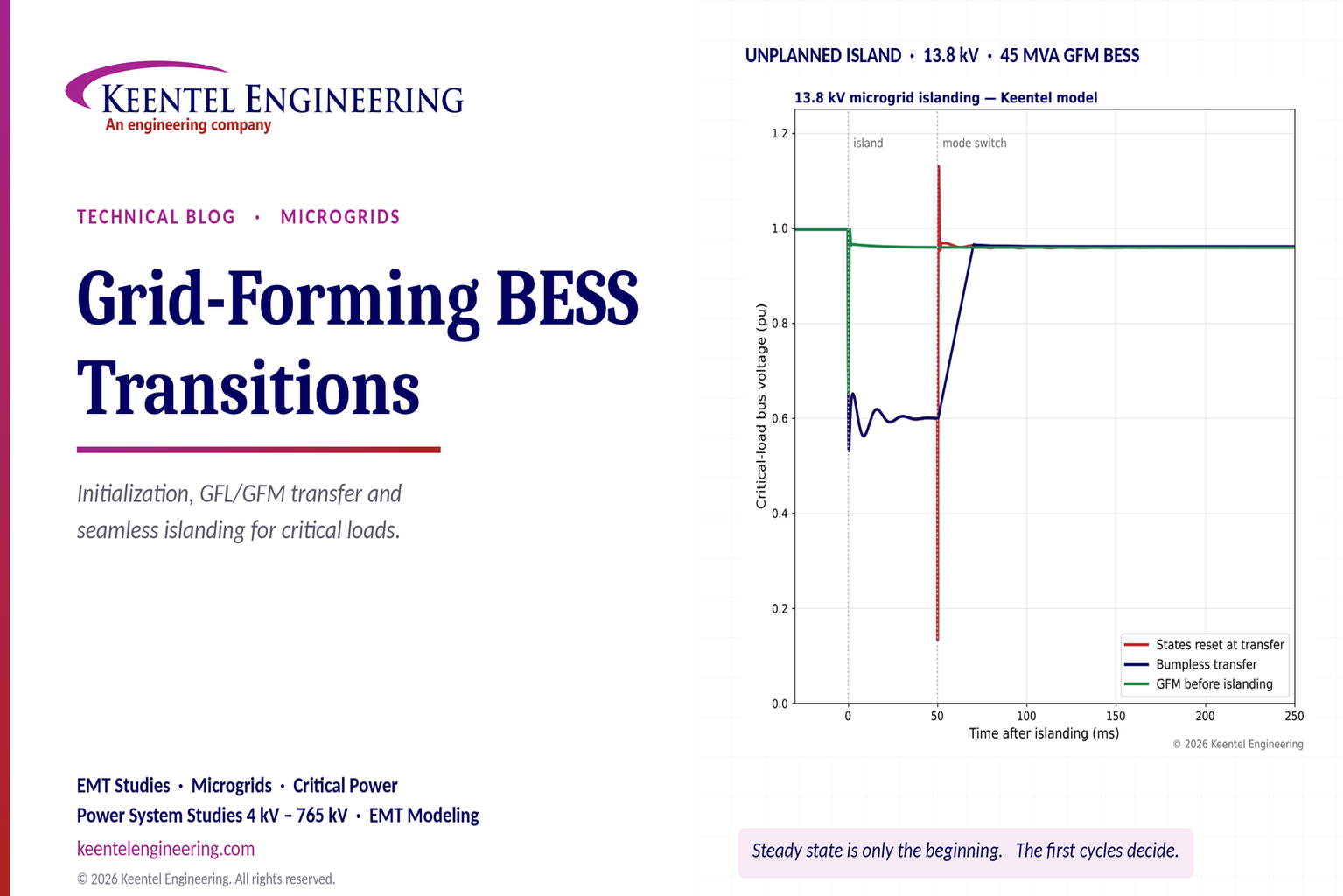
Explore grid-forming BESS initialization, GFL-to-GFM transitions, seamless islanding, EMT simulations, current limiting and microgrid protection.
By SANDIP R PATEL
•
October 23, 2026
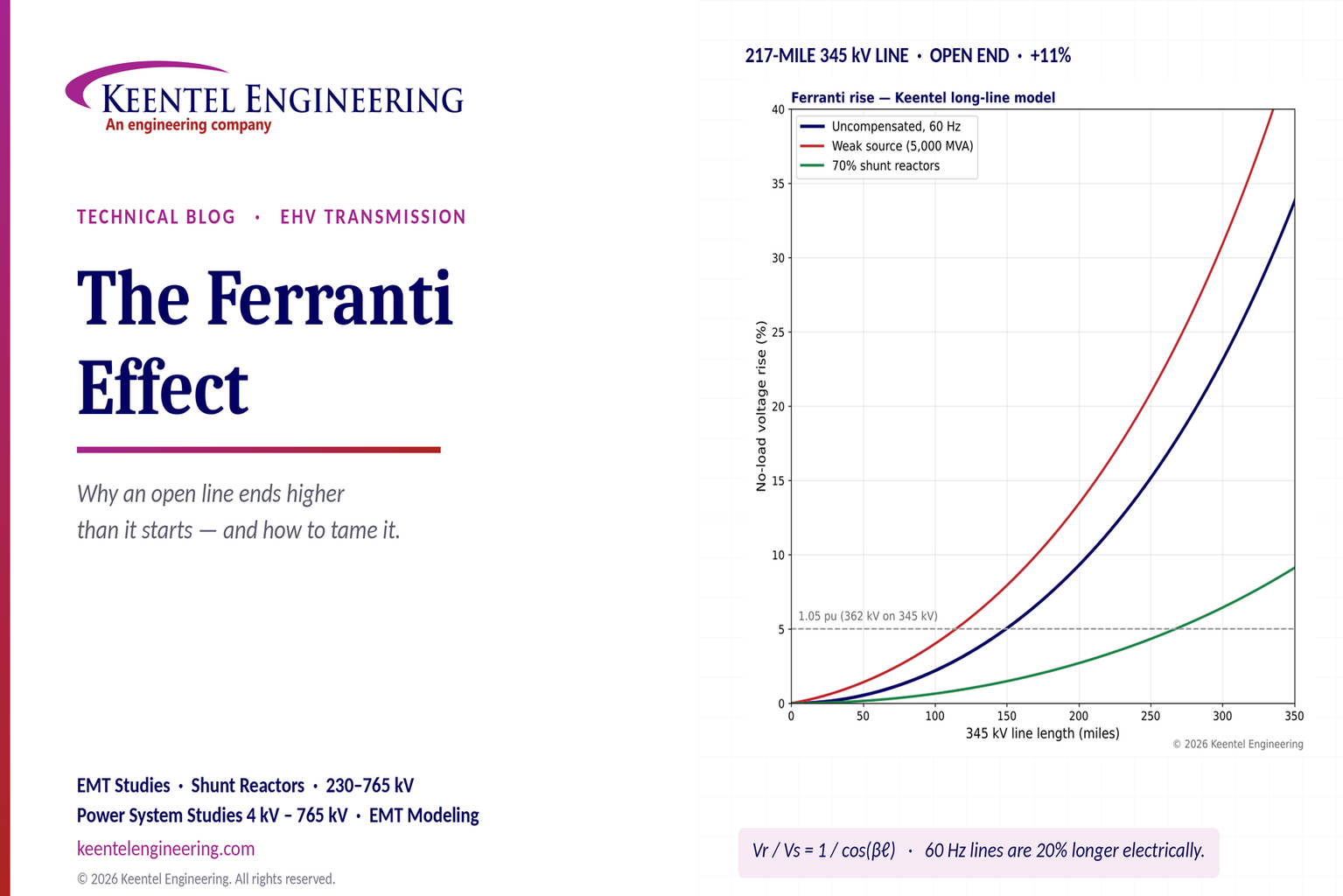
Explore the Ferranti effect in EHV transmission lines: voltage rise, 345 kV examples, switching overvoltages, shunt reactor sizing and mitigation.
By SANDIP R PATEL
•
October 23, 2026
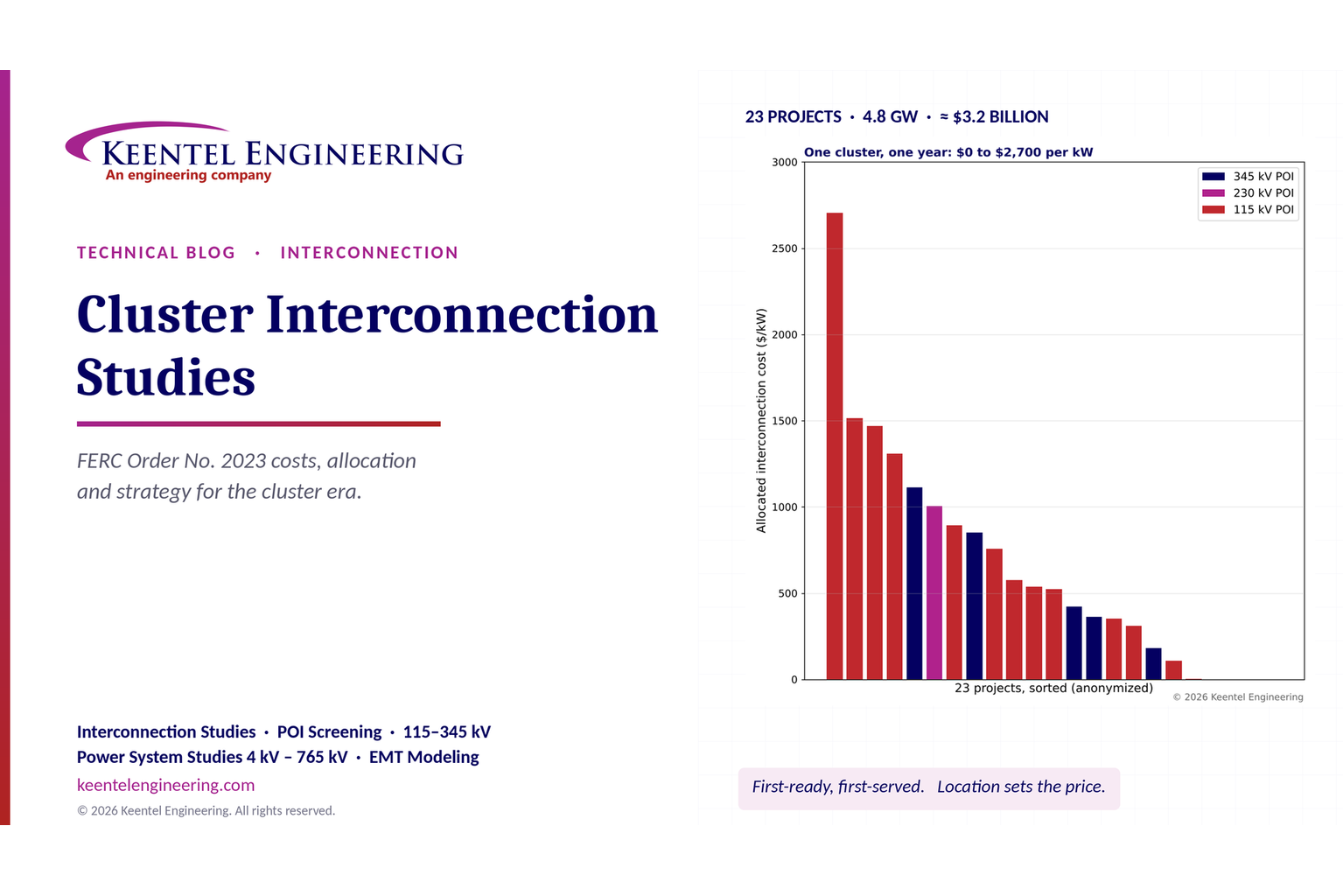
Explore cluster interconnection studies under FERC Order 2023, including network upgrades, cost allocation, withdrawal penalties and developer strategy.
By SANDIP R PATEL
•
October 21, 2026
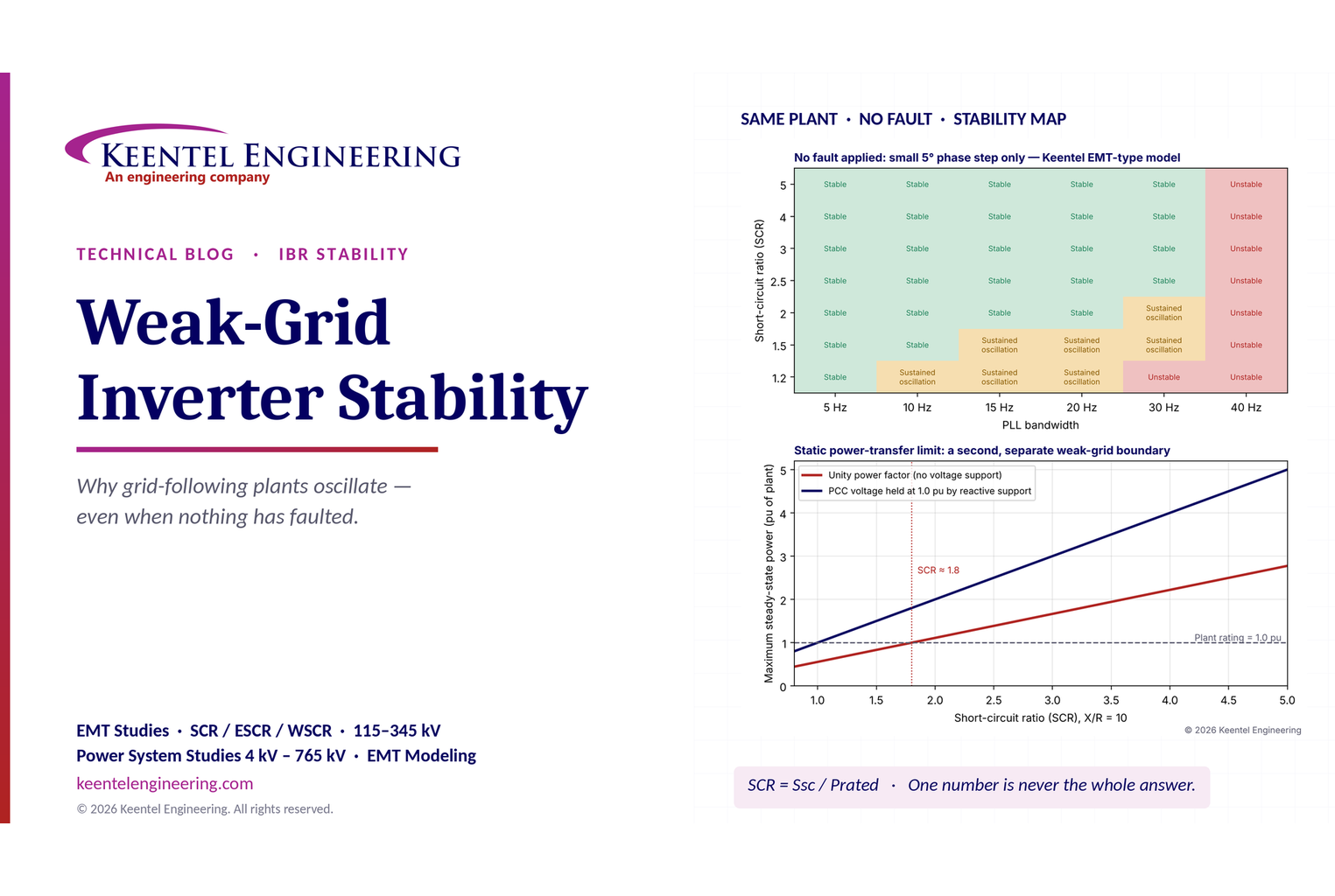
Learn why grid-following inverters become unstable without grid faults. Explore SCR, PLL interactions, EMT studies, grid strength, and mitigation.
By SANDIP R PATEL
•
October 21, 2026
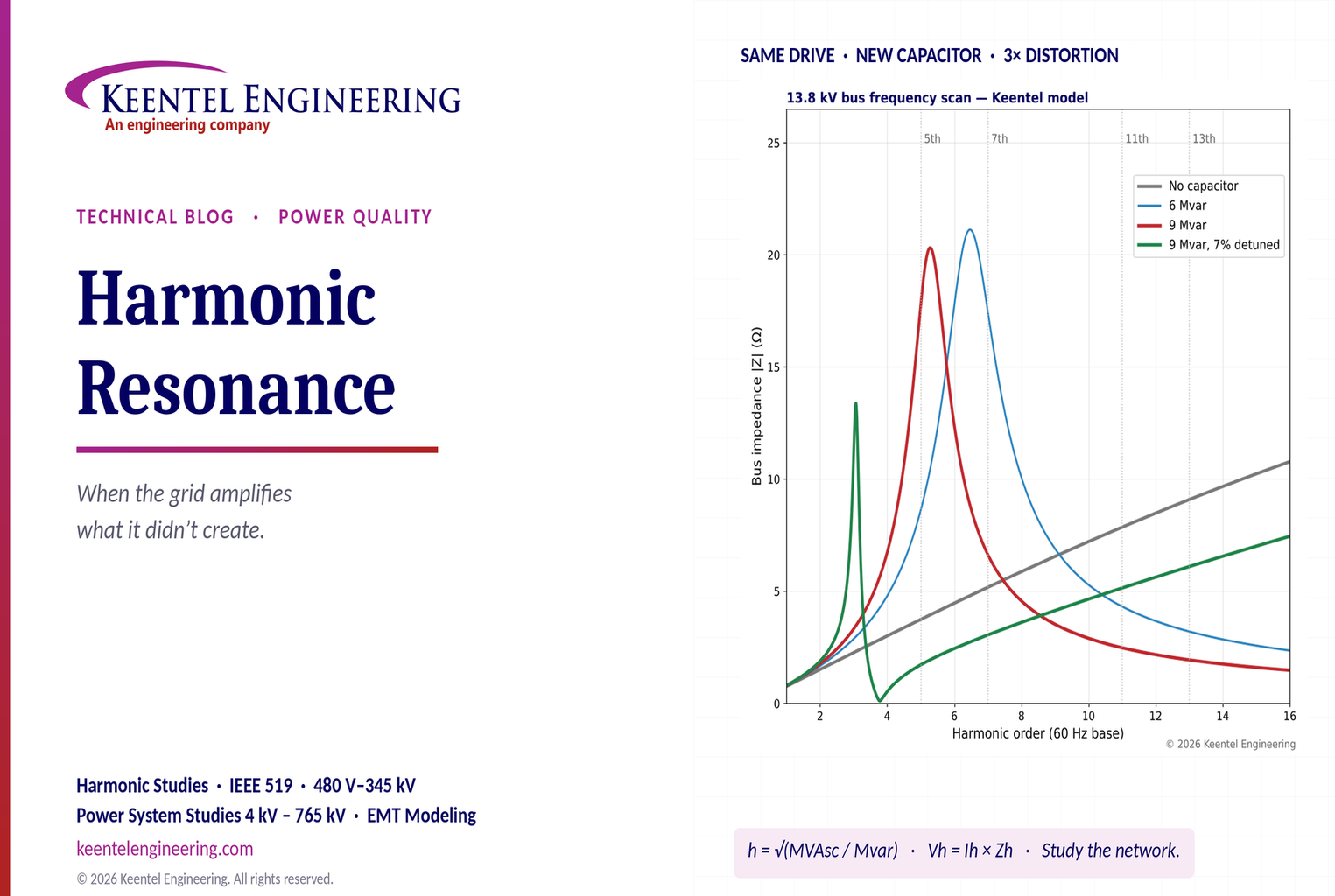
Learn how harmonic resonance amplifies distortion in power systems. Explore capacitor banks, detuned reactors, frequency scans, and IEEE 519 solutions.
By SANDIP R PATEL
•
October 20, 2026
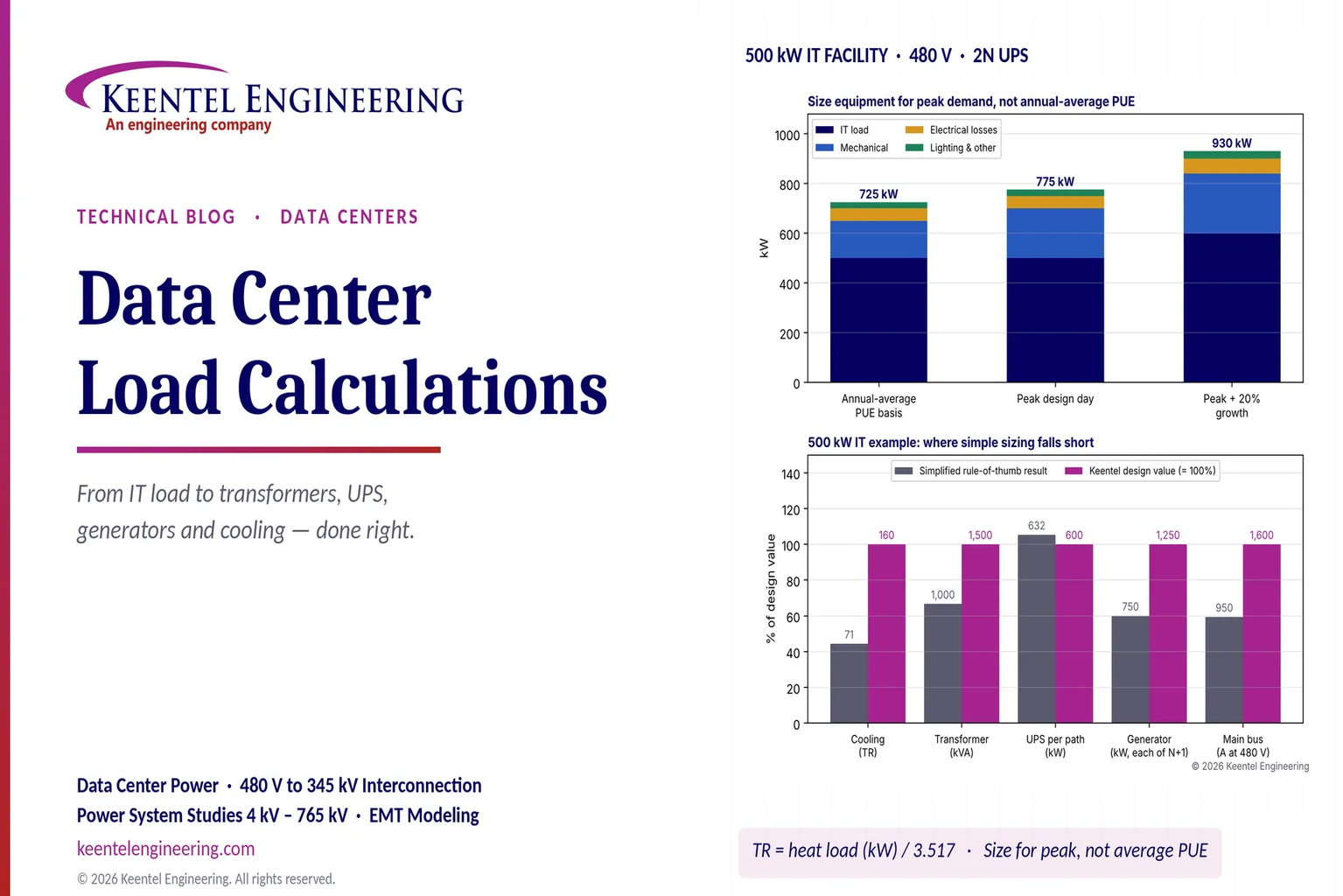
Learn data center electrical load calculations, including IT demand, PUE, UPS and generator sizing, cooling loads, redundancy, and worked US examples.