Governance and accountability
A compliance policy or charter, a designated senior manager, reporting lines to leadership and a defined escalation path for potential noncompliance.

Your Trusted Partner in Electrical Engineering and Power Systems
At Keentel Engineering, we deliver electrical power engineering services built on 30 years of experience and a commitment to excellence. Our clients include utilities, developers, EPCs, and public agencies across the U.S.
Unlike firms that sacrifice technical depth to chase billable hours, we prioritize precision, compliance, and value engineering. From transmission services and relay modeling to winterization and SCADA planning, we never compromise on quality.

At Keentel Engineering, we take pride in being the go-to electrical power engineering firm for power and utility system planning, substation design, protection, control, and power system analysis. The following attributes distinguish our team in utility-grade substation engineering and compliance-driven project delivery.
With three decades of hands-on project delivery, we bring unmatched expertise in substation layout design, substation electrical and civil engineering, relay protection, and grid-tie solutions. Our experience includes projects in complex terrain, urban retrofit environments, and utility-scale renewable integrations.
Our engineering process applies AutoCAD 3D, BIM modeling, and system-level substation design practices to ensure accurate planning, reduced errors, and efficient coordination across all project stakeholders.
Our workflow includes 3D substation design, enabling clash-free coordination between structural, electrical, and civil disciplines.
From grounding grid studies to relay protection settings, we engineer every detail to improve system reliability, performance, and operational safety. Our rigorous QA/QC process ensures compliance with IEEE, NFPA, and ISO/TSO interconnection standards.
Among leading electrical substation design companies, Keentel Engineering stands out for 30+ years of proven high-voltage and utility-grade project delivery.



First name, email and what you're interested in are all we need to get moving. Everything else, including drawings or an RFP, is optional.
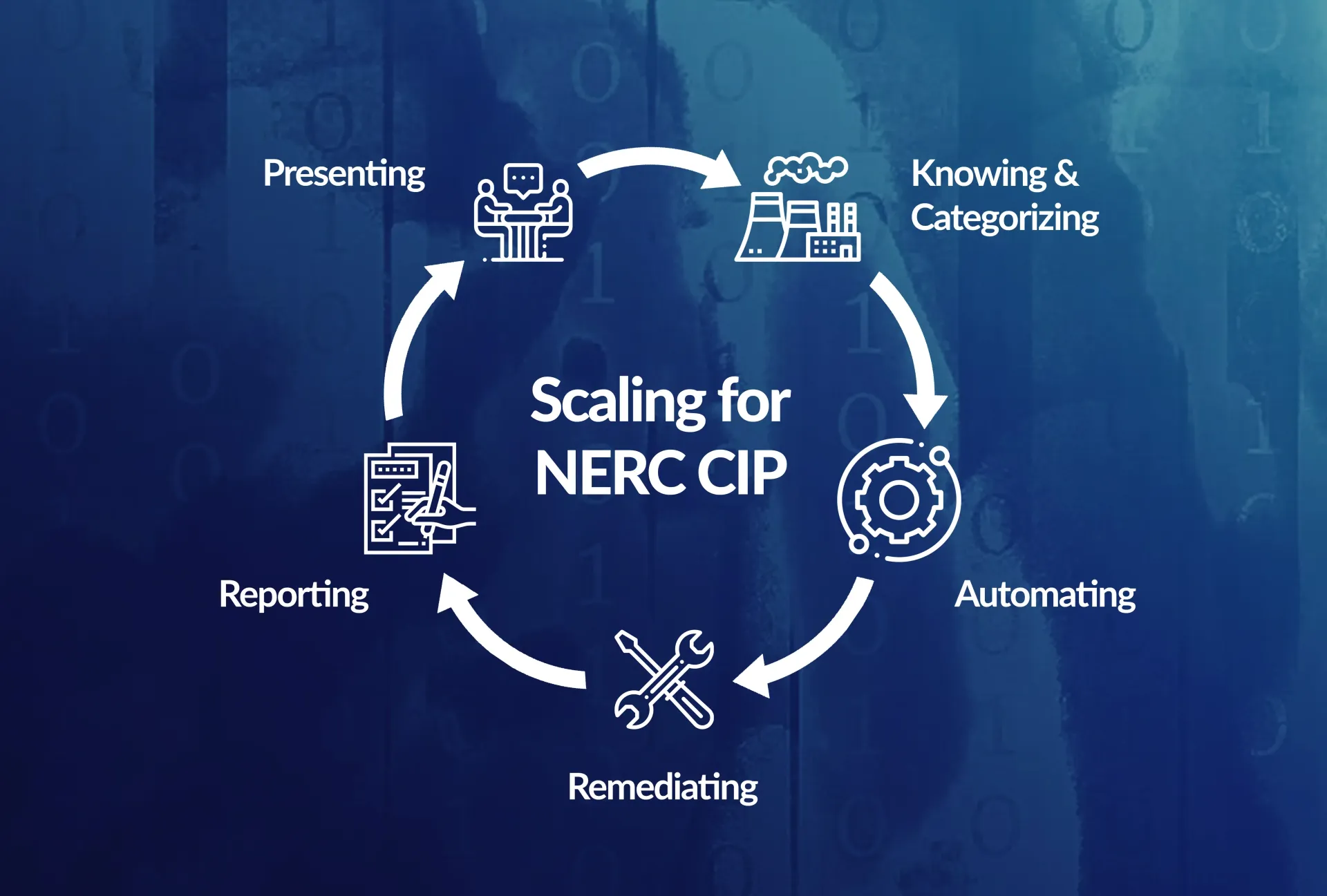
NERC compliance is judged across an entire audit period. A requirement performed on time in the month before an audit but missed two years earlier is still a potential noncompliance. That makes compliance a continuous operating discipline, not a document exercise.
A NERC compliance program is the structure that makes that discipline repeatable: clear ownership, written procedures, defined evidence, a calendar of recurring obligations, a way to manage change, and internal controls that catch problems before they become violations.

For Operations & Planning standards, that structure must reach beyond the compliance office. Relay technicians, protection engineers, plant operators, planners and outside contractors all produce compliance evidence. A program that does not reach them does not work.
A compliance policy or charter, a designated senior manager, reporting lines to leadership and a defined escalation path for potential noncompliance.
Named owners for every applicable requirement, with backups, and clear division of responsibility with contractors, affiliates and joint registrants.
Step-by-step procedures for each applicable requirement: triggers, timing, responsible roles, tools and the evidence each step produces.
Defined evidence for each requirement, storage locations, naming conventions, retention periods consistent with each standard’s evidence retention section, and retrieval tests.
Triggers that require compliance review when equipment, settings, ratings, models, personnel, contracts or standards change.
Every periodic and event-driven obligation, with owner, due date, lead time and escalation.
A process to monitor new, revised and retiring standards and plan implementation before effective dates.
Role-based training on the procedures each person executes and the evidence they must create.
Preventive, detective and corrective controls around the requirements that carry the most reliability and compliance risk.
Periodic internal reviews, metrics and management reporting so the program improves between audits.
A clear document hierarchy prevents contradictions, keeps procedures maintainable and lets an audit team trace any requirement from policy down to the evidence record.
| Level | Document | Purpose | Owner / review |
|---|---|---|---|
| 1 | Compliance Policy / Charter | States leadership commitment, program authority, senior-manager accountability and expectations for reporting potential noncompliance | Executive leadership; periodic review |
| 2 | Compliance Program Manual | Describes program structure, roles, calendar, change management, evidence practices, controls and internal review | Compliance manager; annual review |
| 3 | Standard / Requirement Procedures | Describes how each applicable requirement is performed and evidenced, with references to the applicability matrix | Requirement owner; review on change and periodically |
| 4 | Work Instructions & Desktop Guides | Task-level instructions for technicians, engineers and operators — for example, relay test steps or data submission steps | Functional lead; review on change |
| 5 | Forms, Checklists & Templates | Standardized records that capture required evidence consistently | Functional lead; controlled versions |
| 6 | Evidence Records | Completed forms, studies, test reports, logs, submittals and correspondence retained as proof of compliance | Record owner; retained per standard |
An internal control is a process, activity or safeguard that provides reasonable assurance a requirement will be met — or that a failure will be detected and corrected quickly. Well-designed controls reduce both reliability risk and compliance risk, and they are one of the clearest signals of a mature program.
Stop a failure before it happens.
Identify a failure quickly after it happens.
Contain, fix and learn from a failure.
We design controls in proportion to risk. High-risk requirements receive layered controls; low-risk administrative requirements receive simple, efficient ones. Each control is documented with its objective, owner, frequency, the requirement it supports and the evidence that shows it operated.
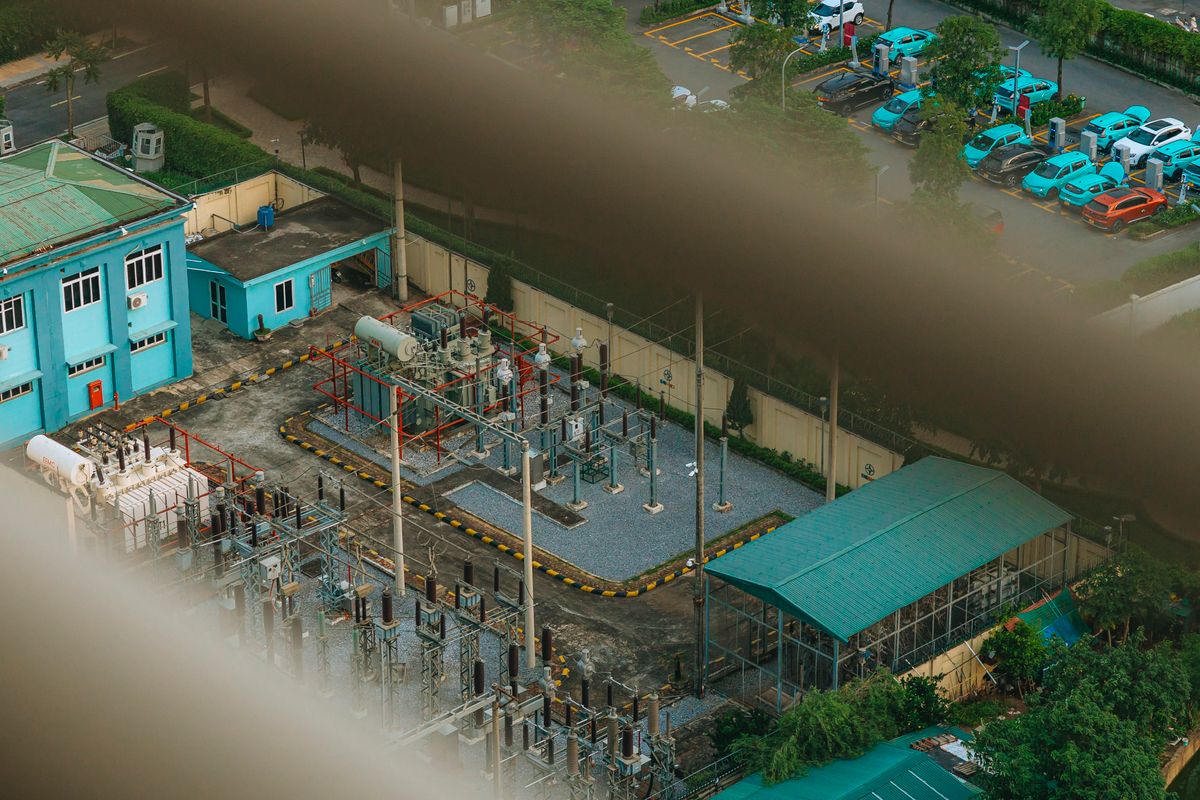
Under the ERO Enterprise’s risk-based Compliance Monitoring and Enforcement Program (CMEP), your Regional Entity performs an Inherent Risk Assessment (IRA) and develops a Compliance Oversight Plan (COP) that sets the focus, type and frequency of monitoring for your organization.
Regional Entities consider internal controls as part of their monitoring activities. During an audit or other monitoring engagement, they may review how your controls are designed and whether they are operating for requirements within scope. What they learn can inform their understanding of your risk and future oversight decisions. Effective controls can also be relevant when a potential noncompliance is being assessed.
Controls are not a substitute for compliance, and no control framework guarantees a particular monitoring outcome. What they do is give your organization — and your Regional Entity — a documented reason to have confidence that requirements are being met consistently.
A RACI matrix (Responsible, Accountable, Consulted, Informed) removes ambiguity about who performs each requirement and who owns the outcome. The example below shows a typical Generator Owner/Generator Operator structure; we tailor it to your organization and contractors.
| Activity | Compliance Mgr | Protection / Eng. | Plant Ops / O&M | Senior Manager |
|---|---|---|---|---|
| PRC-005 maintenance and testing | A | C | R | I |
| PRC-019 / PRC-024 / PRC-025 setting reviews | A | R | C | I |
| FAC-008 ratings development and updates | A | R | C | I |
| MOD-025 / MOD-026 / MOD-027 verification | A | R | C | I |
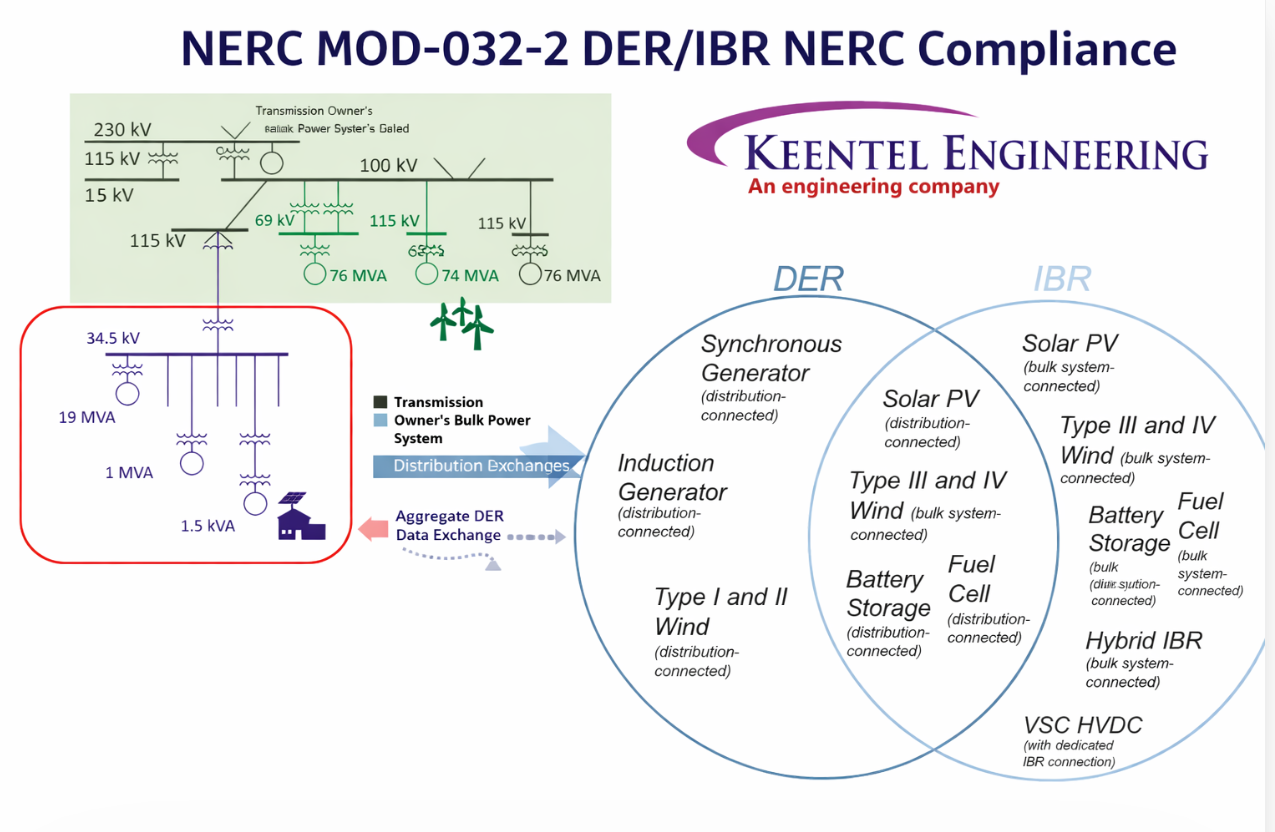
| MOD-032 data submittals | A | R | C | I |
| EOP-012 cold weather plan and training | A | C | R | I |
| VAR-002 voltage schedule and notifications | A | C | R | I |
| Potential noncompliance evaluation | R | C | C | A |
Where a contractor performs work, the registered entity remains accountable. The RACI and the contract should both say what the contractor produces, when, and in what form.
We start from your applicability matrix and any recent gap analysis to confirm which requirements, facilities and functions the program must cover.
We define the compliance policy, senior-manager accountability, reporting lines and the escalation path for potential noncompliance.
We assign an owner and backup for every applicable requirement and define responsibilities for contractors and affiliates.
We write requirement-level procedures and work instructions with your subject-matter experts, so they reflect how the work is actually done.
We define evidence for each requirement, set retention and naming conventions, and load every recurring obligation into a compliance calendar.
We design risk-based preventive, detective and corrective controls, and document how each will be tested.
We train owners on their procedures and controls, then perform a first internal review to confirm the program is operating as designed.
| Deliverable | What it contains | How you use it |
|---|---|---|
| Compliance Policy / Charter | Leadership commitment, program authority and accountability | Top-level governance document for the program |
| Compliance Program Manual | Program structure, roles, calendar, evidence, change management, controls and internal review | The operating manual for your compliance function |
| Requirement-Level Procedures | Procedures for each applicable requirement, cross-referenced to the applicability matrix | Day-to-day execution and audit narrative |
| RACI Matrix | Responsibility assignments by requirement, including contractors | Clear ownership and onboarding of new staff |
| Evidence Retention Plan | Evidence definitions, storage locations, naming and retention by requirement | Consistent, retrievable audit evidence |
| Compliance Calendar | All periodic and event-driven obligations with owners and lead times | Preventing missed intervals and deadlines |
| Internal Controls Register | Each control’s objective, type, owner, frequency, linked requirement and test method | Demonstrating control design and operation |
| Change Management Procedure | Triggers and workflow for compliance review of equipment, setting, personnel and standards changes | Keeping evidence current as the facility changes |
Our power-system engineers write procedures for protection, ratings, modeling and planning requirements that reflect how the technical work is really performed.
Former NERC audit-team leadership and subject-matter experts help us design procedures and controls that audit teams can follow and test.
A single solar or BESS site does not need the program of a large transmission utility. We scale governance and controls to your risk and resources.
We can hand the finished program to your staff, or operate it for you through our Managed NERC Compliance Services.
Tell us your registered functions and facilities. Keentel will design the governance, procedures, evidence practices and internal controls your organization needs to demonstrate compliance every day of the audit period.
Serving utilities, EPCs, developers, and infrastructure organizations supporting critical power systems nationwide.