Interconnection requirements documents
New or updated FAC-001 documents for TOs and applicable GOs, with IBR and large-load provisions and a dated revision history.

Your Trusted Partner in Electrical Engineering and Power Systems
At Keentel Engineering, we deliver electrical power engineering services built on 30 years of experience and a commitment to excellence. Our clients include utilities, developers, EPCs, and public agencies across the U.S.
Unlike firms that sacrifice technical depth to chase billable hours, we prioritize precision, compliance, and value engineering. From transmission services and relay modeling to winterization and SCADA planning, we never compromise on quality.

At Keentel Engineering, we take pride in being the go-to electrical power engineering firm for power and utility system planning, substation design, protection, control, and power system analysis. The following attributes distinguish our team in utility-grade substation engineering and compliance-driven project delivery.
With three decades of hands-on project delivery, we bring unmatched expertise in substation layout design, substation electrical and civil engineering, relay protection, and grid-tie solutions. Our experience includes projects in complex terrain, urban retrofit environments, and utility-scale renewable integrations.
Our engineering process applies AutoCAD 3D, BIM modeling, and system-level substation design practices to ensure accurate planning, reduced errors, and efficient coordination across all project stakeholders.
Our workflow includes 3D substation design, enabling clash-free coordination between structural, electrical, and civil disciplines.
From grounding grid studies to relay protection settings, we engineer every detail to improve system reliability, performance, and operational safety. Our rigorous QA/QC process ensures compliance with IEEE, NFPA, and ISO/TSO interconnection standards.
Among leading electrical substation design companies, Keentel Engineering stands out for 30+ years of proven high-voltage and utility-grade project delivery.




First name, email and what you're interested in are all we need to get moving. Everything else, including drawings or an RFP, is optional.
FAC-001 and FAC-002 are companion standards. One sets the rules for connecting; the other requires the study that shows a specific connection meets them without degrading reliability. Confirm the versions in effect for your registered functions before scoping work.
The practical sequence is simple: the interconnecting customer designs to the FAC-001 requirements, the planner studies the connection under FAC-002, and the study findings feed back into the facilities, protection and operating arrangements. What auditors test is whether each step is documented and whether the study covered what the standard requires.

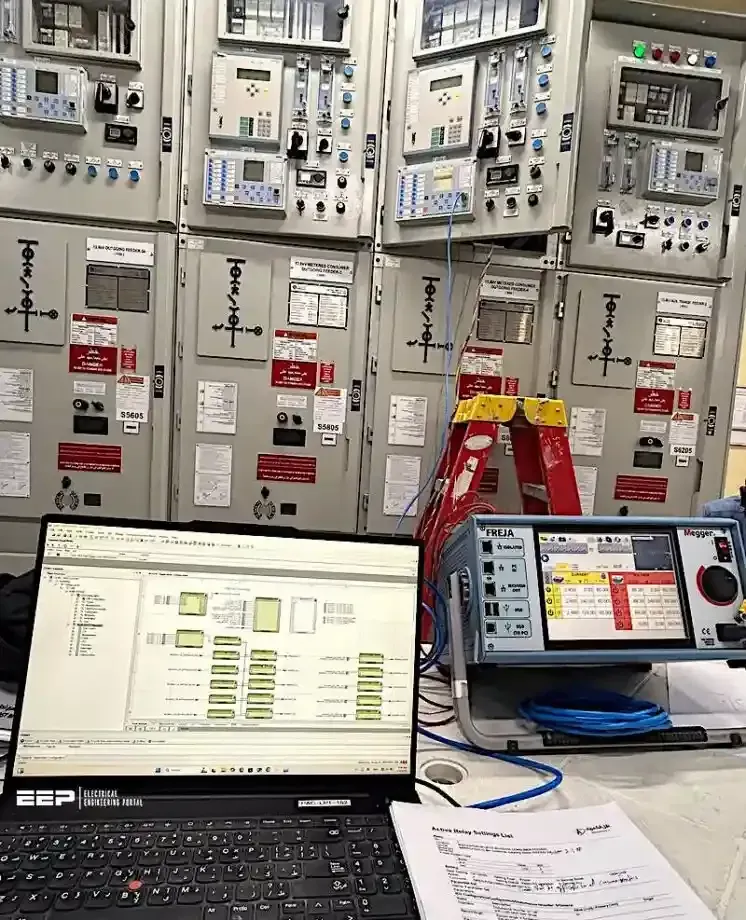
FAC-001 applies to Transmission Owners for generation, transmission and end-user Facilities connecting to their systems. It also applies to a Generator Owner that has a fully executed agreement to study the connection of a third-party Facility to the GO’s existing interconnection facilities — for example, a new project sharing a generator tie line or collector substation.
The requirements must address the procedures for coordinated studies of new or materially modified Facilities, for notifying the entities responsible for reliability of affected systems, and for confirming metering and Balancing Authority Area boundaries, as the standard specifies. In practice, a useful requirements document goes further and sets the technical basis customers design to.
A requirements document written before inverter-based resources and large loads became common often has gaps that customers exploit or planners work around. We maintain a revision history, date each published version and record why it changed, so an auditor can see which version applied to each interconnection.
FAC-002 spreads responsibility across several functions. Compliance breaks down most often at the hand-offs between them.
| Function | FAC-002 role (general) | Evidence we help produce |
|---|---|---|
| Planning Coordinator / Transmission Planner | Study the reliability impact of new and materially modified Facilities, including steady-state, short-circuit and dynamic performance, and document the results; define what counts as a qualified change for existing generation | Study scope, study report, qualified-change definition, distribution of results |
| Transmission Owner | Coordinate with the planners and provide data for studies of Facilities connecting to or modifying its system | Data submittals, coordination correspondence, facilities study inputs |
| Generator Owner | Coordinate studies for new generation and for qualified changes to existing generation; provide model and equipment data | Change notifications, model and data packages, coordination records |
| Applicable Generator Owner (third-party connection) | Coordinate studies where a third party connects to the GO’s existing interconnection facilities | Agreement, study coordination record, results |
| Distribution Provider | Coordinate studies where end-user or distribution Facilities connect to or materially change their connection to the BES | Load data, coordination records, study participation |
Send us your interconnection requirements, study reports or planned plant modifications. Keentel will check them against FAC-001 and FAC-002, fill the gaps with real engineering and hand you a documented record for each interconnection.
Most new generation and many large loads are studied through an ISO/RTO or utility tariff process — feasibility studies, system impact studies, facilities studies and, increasingly, cluster studies. These studies usually cover much of what FAC-002 requires. They do not automatically document compliance for every entity involved.
We map each tariff study to the FAC-002 elements it covers, identify anything missing, and close the gap with a supplemental study or a documented coordination record.

Inverter-based resources change more than conventional plants. Many of those changes alter short-circuit contribution, control response or ride-through behavior, which is why the qualified-change concept exists. Whether a specific change qualifies depends on the planner’s definition.
| Change | Why it can matter | What to prepare |
|---|---|---|
| Repowering or capacity increase | Changes injection, reactive capability and fault current at the POI | Updated one-line, capability curve, models and study request |
| Inverter replacement or new inverter model | Different controls, fault response and ride-through characteristics | OEM data, positive-sequence and EMT models, settings comparison |
| Adding battery storage to an existing plant | New charging load, new operating modes and shared interconnection capacity | Hybrid plant controls description, operating limits, models |
| Inverter or plant controller firmware changes | Can alter ride-through, current limits and voltage control without any hardware change | Firmware release notes, parameter comparison, model update or justification |
| Plant controller retuning | Changes voltage and reactive control, oscillation damping and weak-grid behavior | Revised settings, model verification data |
| Collector system or main transformer changes | Changes impedance, grounding and fault contribution | Equipment data and short-circuit model update |
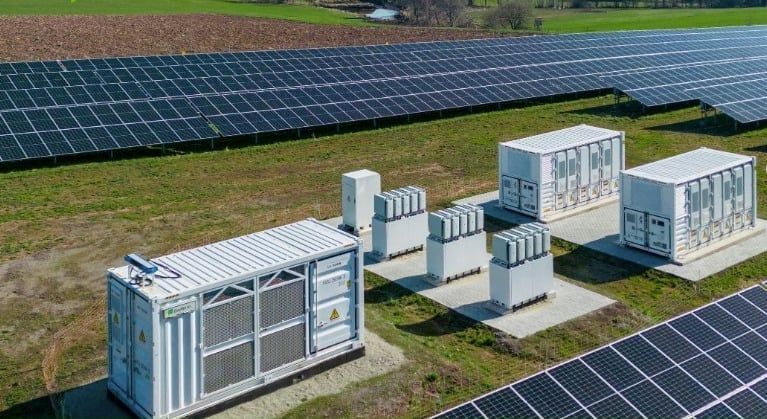
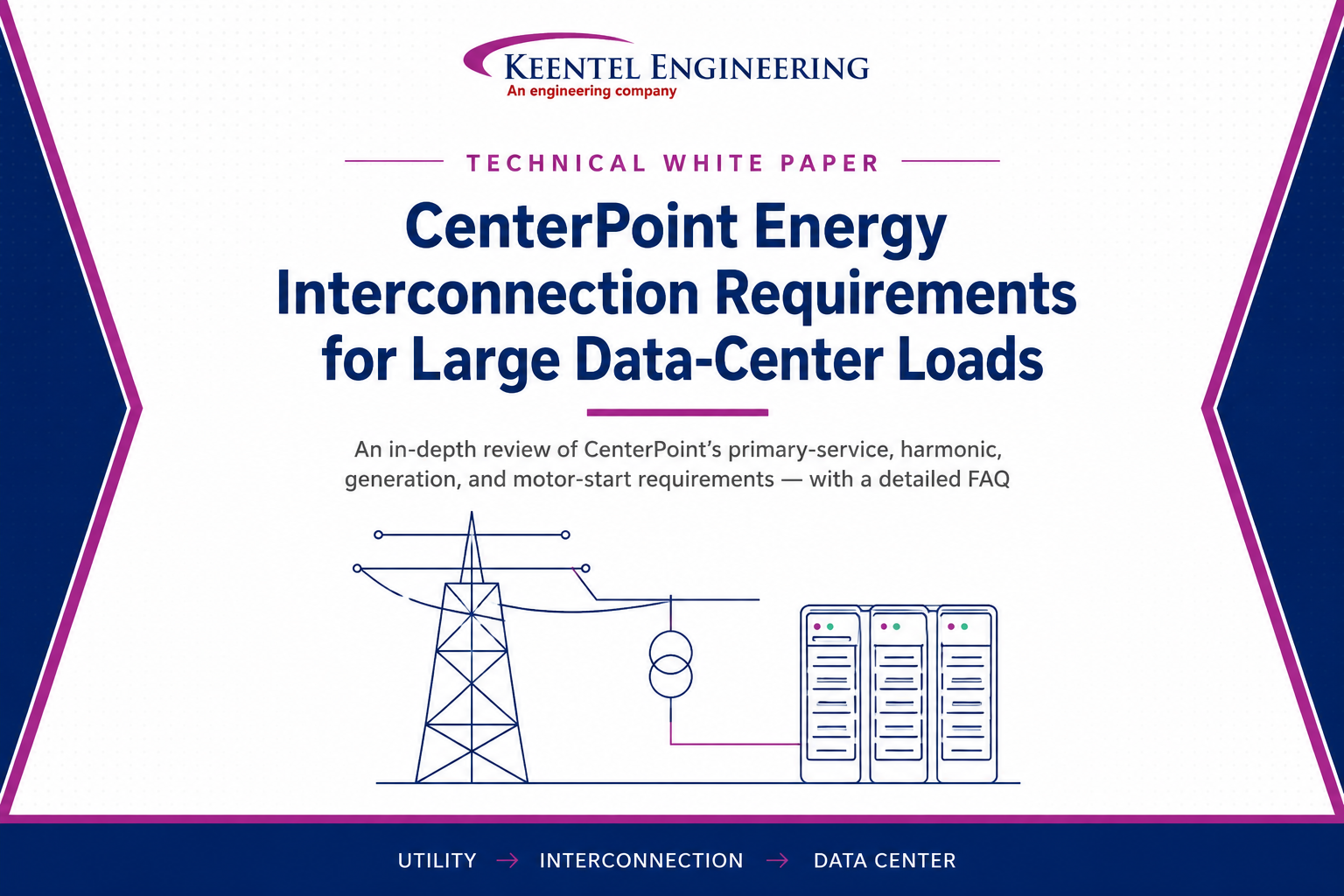
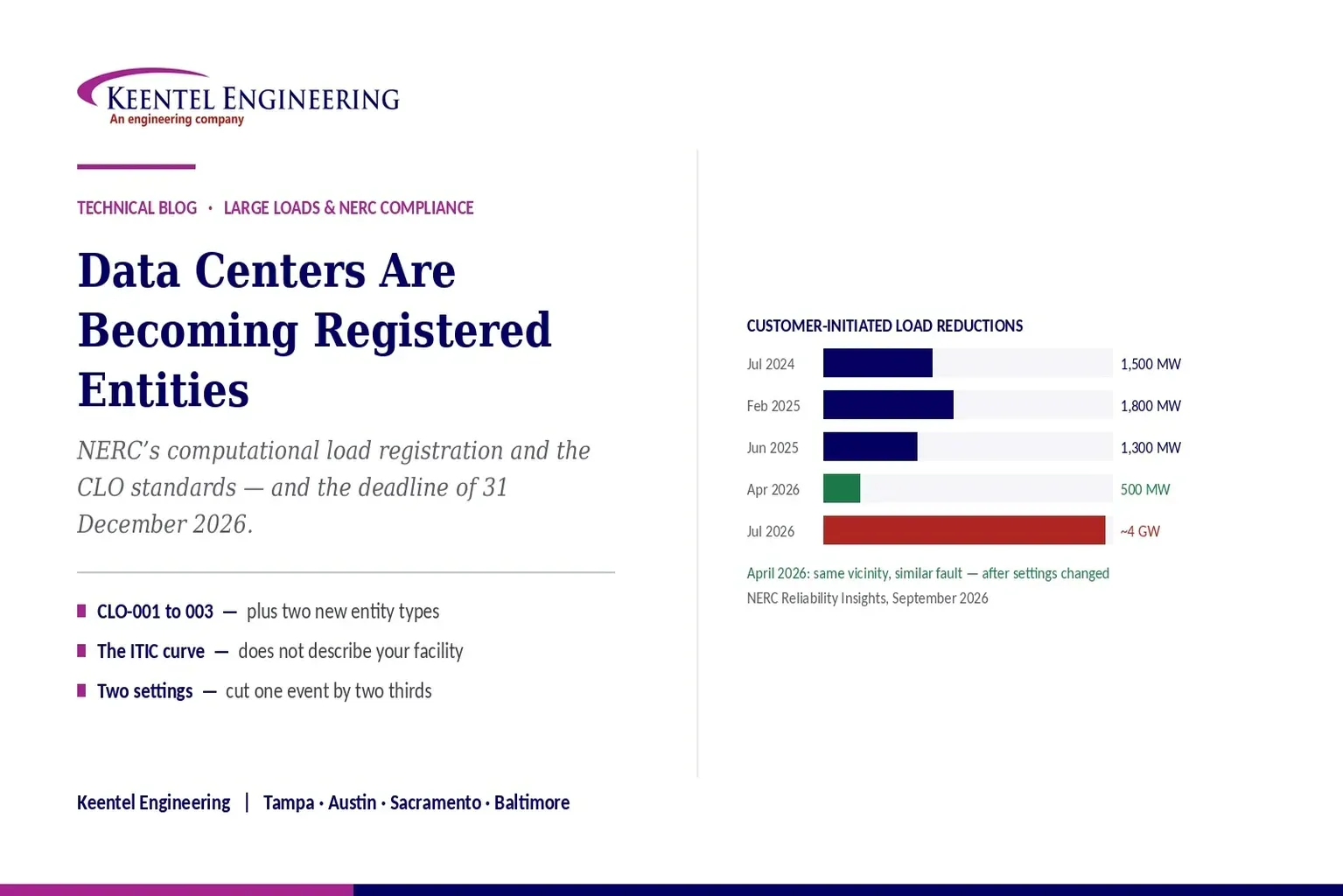
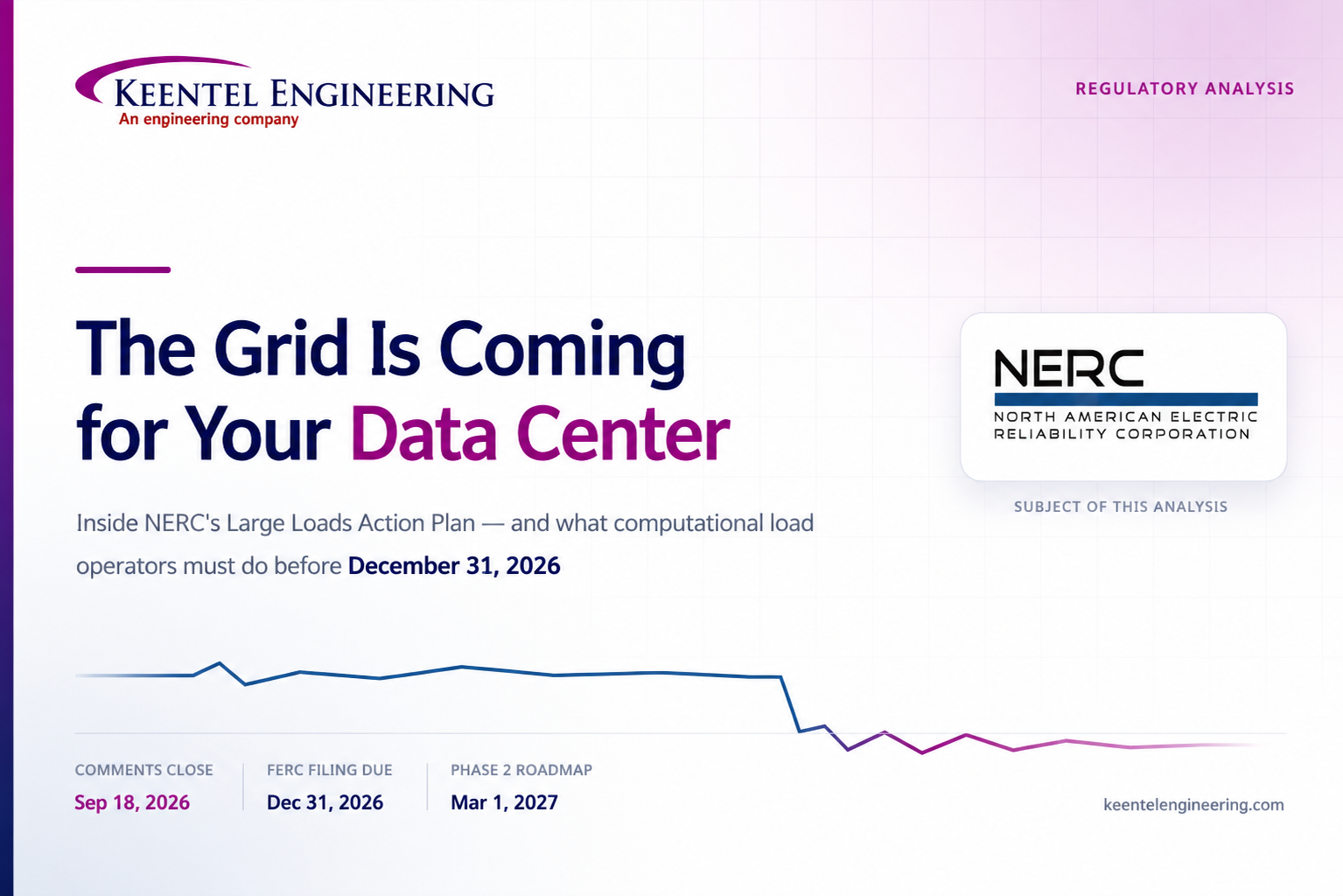
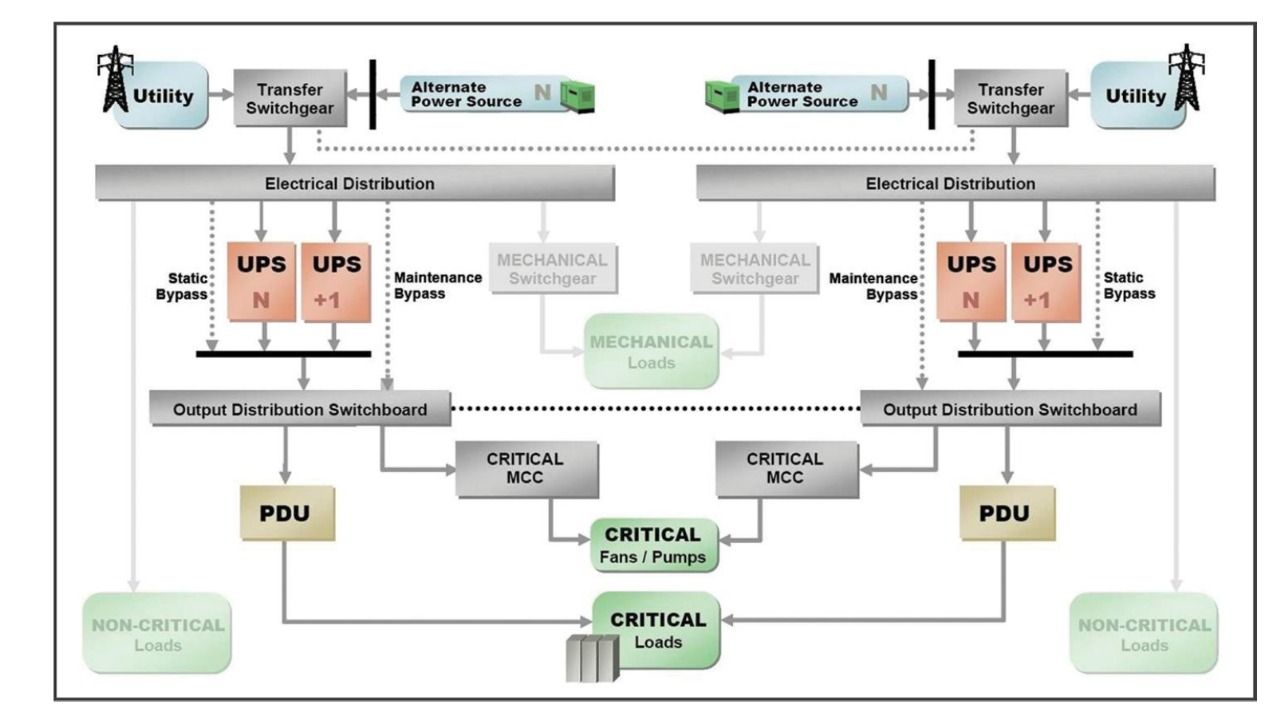
Large data centers, hydrogen production, crypto-mining and industrial loads are now connecting at transmission voltage in sizes comparable to power plants. Their power-electronic front ends, UPS systems and backup generation can respond to disturbances in ways traditional load models do not capture, including sudden load reduction during voltage dips.
FAC-001 requirements cover end-user Facilities, and FAC-002 studies apply to their connection. We help Transmission Owners write large-load provisions into their requirements, and help planners and developers prepare the load models, ride-through data and studies needed to connect safely.
New or updated FAC-001 documents for TOs and applicable GOs, with IBR and large-load provisions and a dated revision history.
Technical criteria planners can apply consistently to inverter, storage, firmware and controller changes at existing plants.
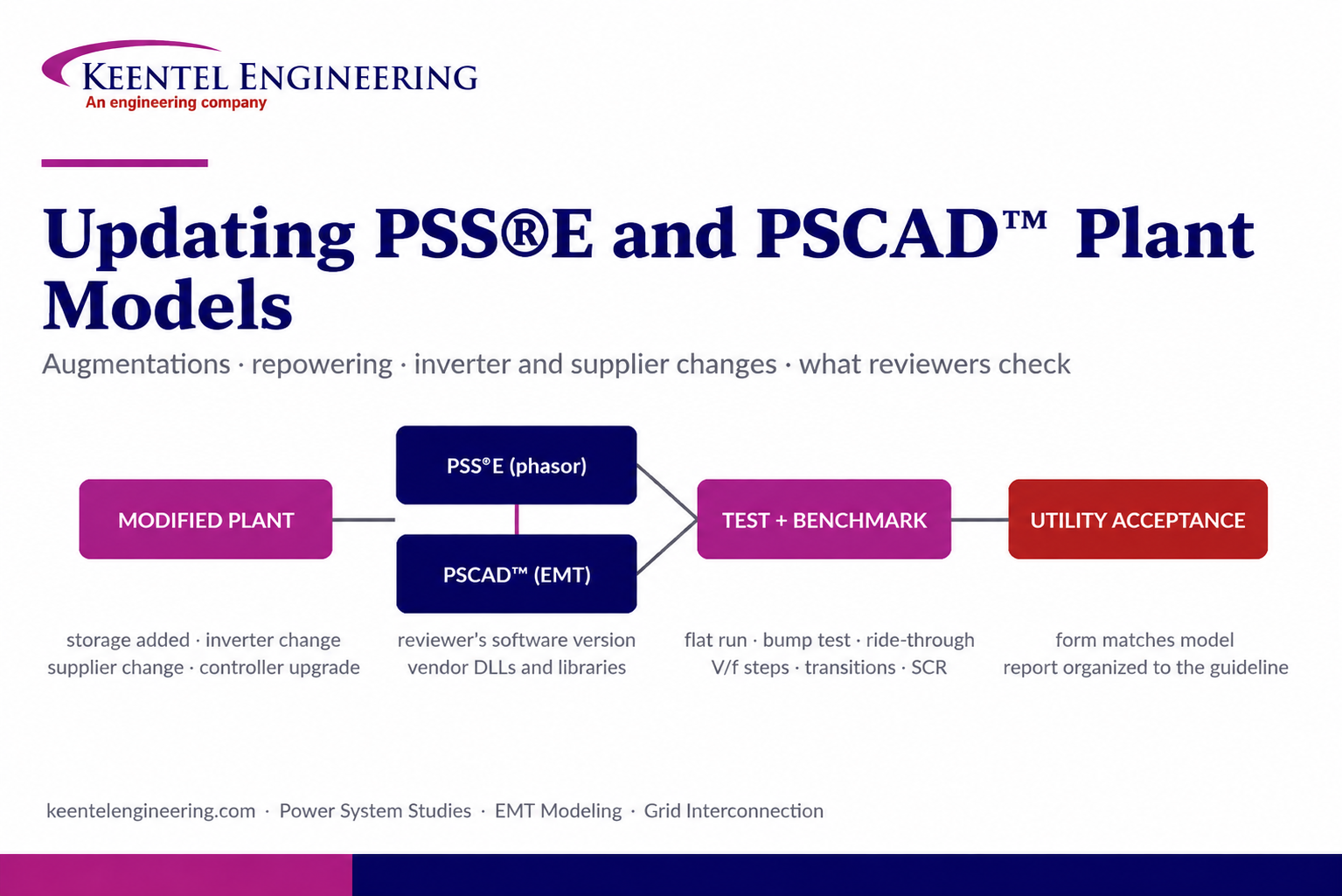
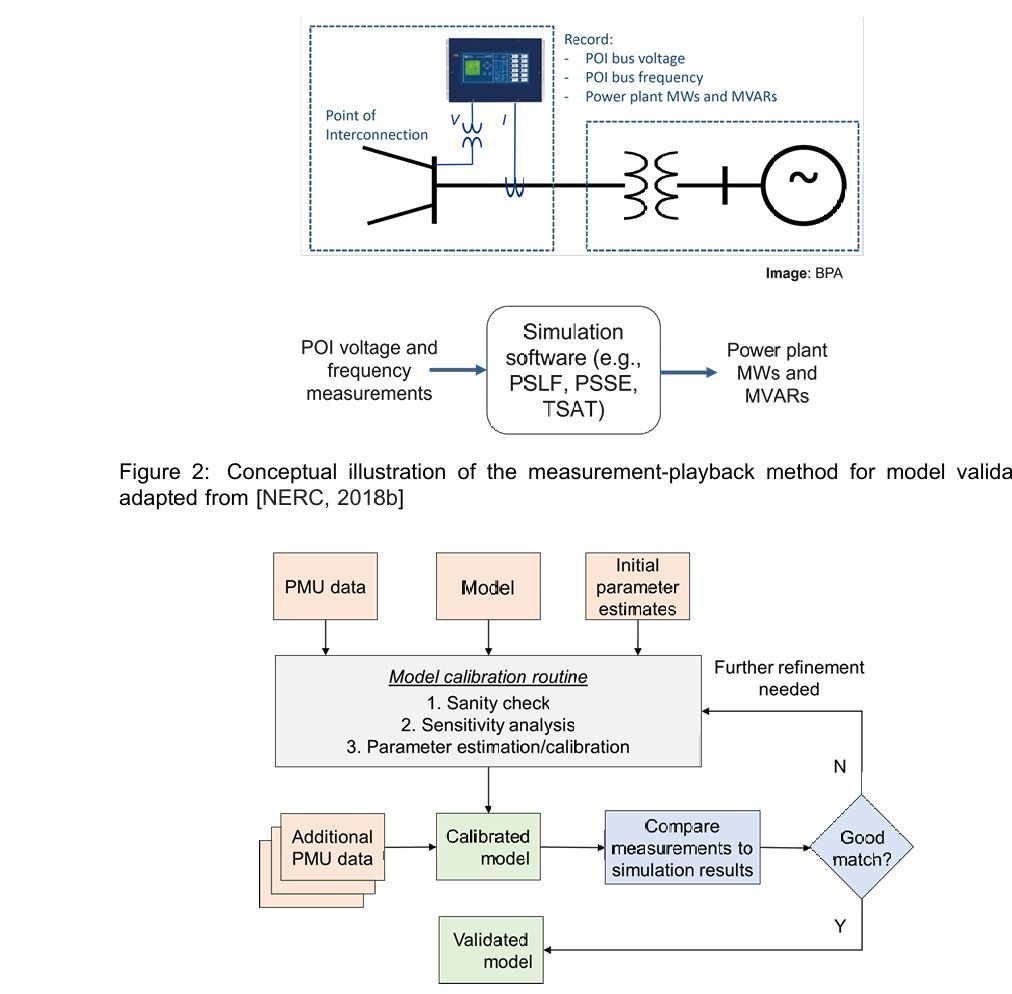
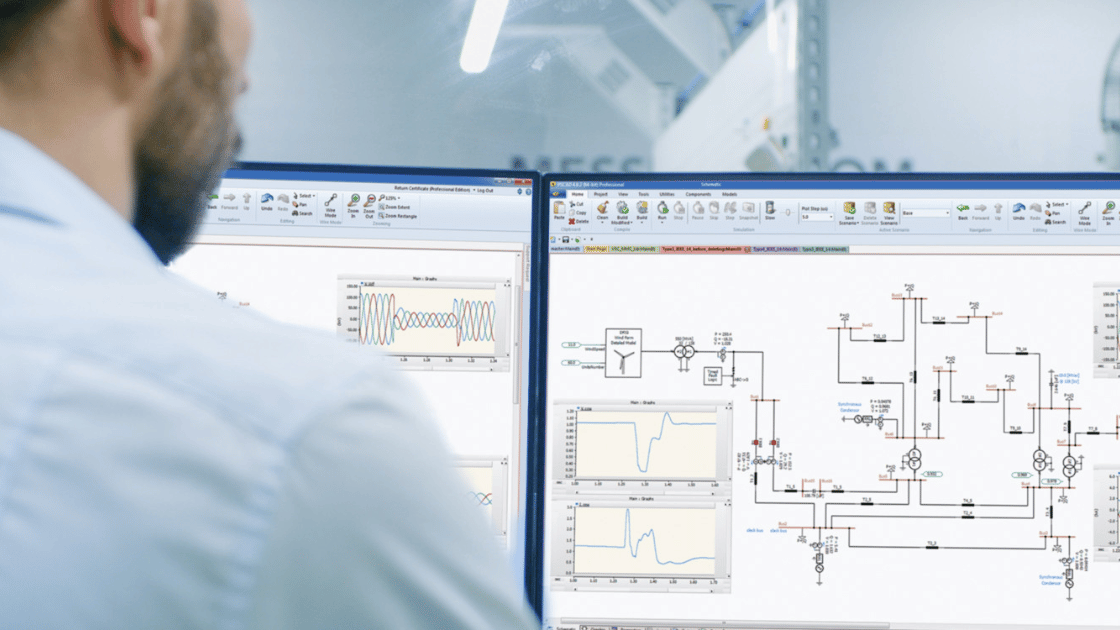
Steady-state, contingency, short-circuit, transient stability and EMT studies in PSS®E and PSCAD™ for new and modified Facilities.
Mapping of feasibility, system impact, facilities and cluster studies to FAC-002 elements, with supplemental work where needed.
Model packages, data submittals and study review for GOs, TOs and developers participating in planner-led studies.
Correspondence logs, data transmittals and results distribution showing each entity met its coordination role.
Identify which functions apply to you, the versions in effect and the Facilities or changes in scope.
Assess the current FAC-001 document or the requirements your project must meet, and flag gaps for IBRs and large loads.
Set the study elements, cases, contingencies and models so the scope visibly covers what FAC-002 requires.
Run steady-state, short-circuit, stability and EMT analysis, or review a tariff study against the same checklist.
Assemble correspondence, data transmittals and results distribution into a single record per interconnection.
Tie study findings to design, protection and operating arrangements, and update the requirements document when lessons emerge.
| Deliverable | Evidence it supports |
|---|---|
| Interconnection requirements document | FAC-001 requirements for generation, transmission and end-user Facilities, with published version history |
| Qualified-change definition | Planner criteria for when changes to existing generation require study |
| Study scope document | Demonstrates the study was designed to address the elements FAC-002 requires |
| Interconnection study report | Steady-state, short-circuit, stability and EMT results with conclusions and required mitigation |
| Tariff-study mapping memo | Shows which FAC-002 elements an ISO/RTO study covered and how gaps were closed |
| Coordination record | Correspondence, data transmittals and results distribution among PC, TP, TO, GO and DP |

Our POI interconnection engineering and system impact studies are the same work FAC-002 requires, so compliance documentation comes from real studies.
We support Transmission Owners writing requirements and developers designing to them, so we know where documents are unclear.
EMT modeling, ride-through analysis and data center interconnection experience for the changes planners worry about most.
Former NERC audit-team leadership and SMEs know how requirements versions, study scopes and coordination records are examined.
Send us your interconnection requirements, study reports or planned plant modifications. Keentel will check them against FAC-001 and FAC-002, fill the gaps with real engineering and hand you a documented record for each interconnection.
Serving utilities, EPCs, developers, and infrastructure organizations supporting critical power systems nationwide.