BAL – Resource & Demand Balancing Compliance

Balancing, frequency response and energy adequacy compliance — built on the control-performance data, governor settings and assessments that prove it.

The Resource and Demand Balancing (BAL) family keeps load and generation in balance and interconnection frequency within limits. Most BAL requirements fall on the Balancing Authority, but the evidence depends on how generators actually respond. Keentel Engineering supports both sides: the Balancing Authority’s programs and calculations, and the generator settings and performance data that sit underneath them.

  • BAL-003 frequency response measurement, Frequency Bias Setting support and event-data review
  • BAL-001-TRE primary frequency response evidence for generators in the ERCOT Interconnection
  • BAL-007 near-term energy reliability assessment processes, scenarios and operating plans
  • Governor, plant-controller droop and deadband settings review for synchronous and inverter-based generation
7 BAL standards covered on this page
BA · GO · GOP Core applicable functions
Sync + IBR Frequency response technologies
All 6 Regional Entities supported

About Keentel Engineering

Your Trusted Partner in Electrical Engineering and Power Systems

At Keentel Engineering, we deliver electrical power engineering services built on 30 years of experience and a commitment to excellence. Our clients include utilities, developers, EPCs, and public agencies across the U.S.

Unlike firms that sacrifice technical depth to chase billable hours, we prioritize precision, compliance, and value engineering. From transmission services and relay modeling to winterization and SCADA planning, we never compromise on quality.

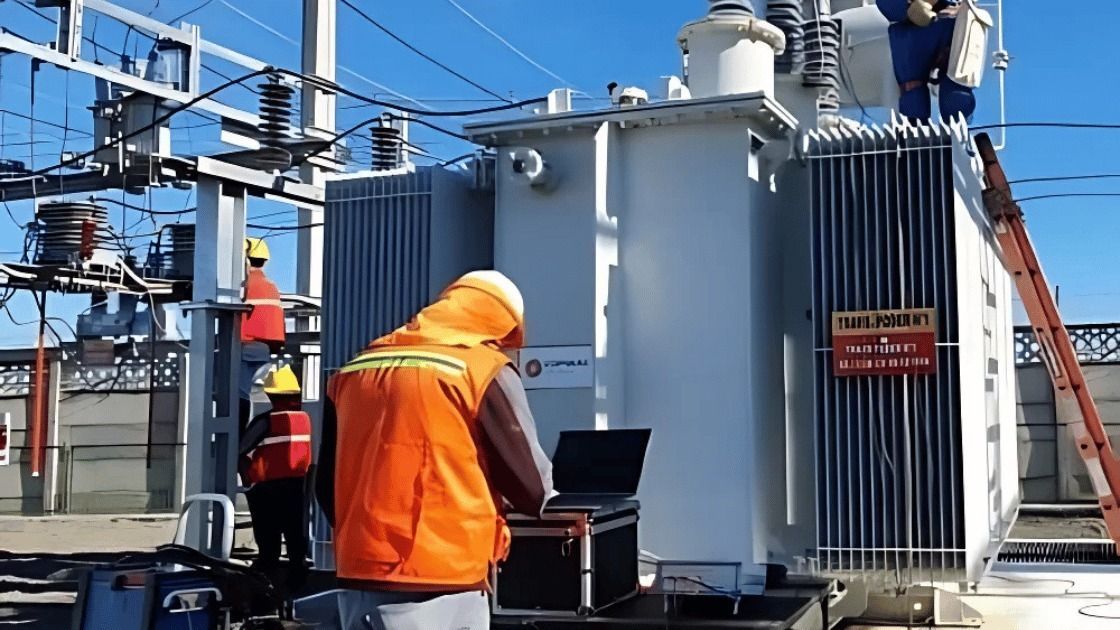
Keentel Engineering team of electrical engineers in hard hats and safety vests at a high-voltage substation site

Why Choose Keentel Engineering?

Client-Focused Work Approach

At Keentel Engineering, we take pride in being the go-to electrical power engineering firm for power and utility system planning, substation design, protection, control, and power system analysis. The following attributes distinguish our team in utility-grade substation engineering and compliance-driven project delivery.

30 Years of Experience

With three decades of hands-on project delivery, we bring unmatched expertise in substation layout design, substation electrical and civil engineering, relay protection, and grid-tie solutions. Our experience includes projects in complex terrain, urban retrofit environments, and utility-scale renewable integrations.

Quality with Innovation

Our engineering process applies AutoCAD 3D, BIM modeling, and system-level substation design practices to ensure accurate planning, reduced errors, and efficient coordination across all project stakeholders.

Our workflow includes 3D substation design, enabling clash-free coordination between structural, electrical, and civil disciplines.

Attention to Detail

From grounding grid studies to relay protection settings, we engineer every detail to improve system reliability, performance, and operational safety. Our rigorous QA/QC process ensures compliance with IEEE, NFPA, and ISO/TSO interconnection standards.

Among leading electrical substation design companies, Keentel Engineering stands out for 30+ years of proven high-voltage and utility-grade project delivery.

Keentel Engineering video

Accreditations and memberships

NSPE, National Society of Professional Engineers
D-U-N-S Registered
IEEE Senior Member
BBB Accredited Business, A plus rating

Contact details

Tell Us About Your Project

1 business day reply

First name, email and what you're interested in are all we need to get moving. Everything else, including drawings or an RFP, is optional.

Balancing Is a Measured Obligation

The BAL standards are among the most data-driven in the NERC Operations & Planning set. Area Control Error (ACE), control performance measures, contingency reserve recovery and frequency response are all calculated from operating data. An auditor does not ask whether the Balancing Authority tried to balance — the auditor asks to see the calculation, the data behind it and the record showing it was reported correctly.

Frequency response is where the family reaches beyond the control room. A Balancing Authority’s measured response to a frequency event is the sum of how its generators, loads and controls behaved in the first seconds after the disturbance. Governor deadbands, droop settings, plant-controller frequency functions and operating headroom all show up in the numbers.

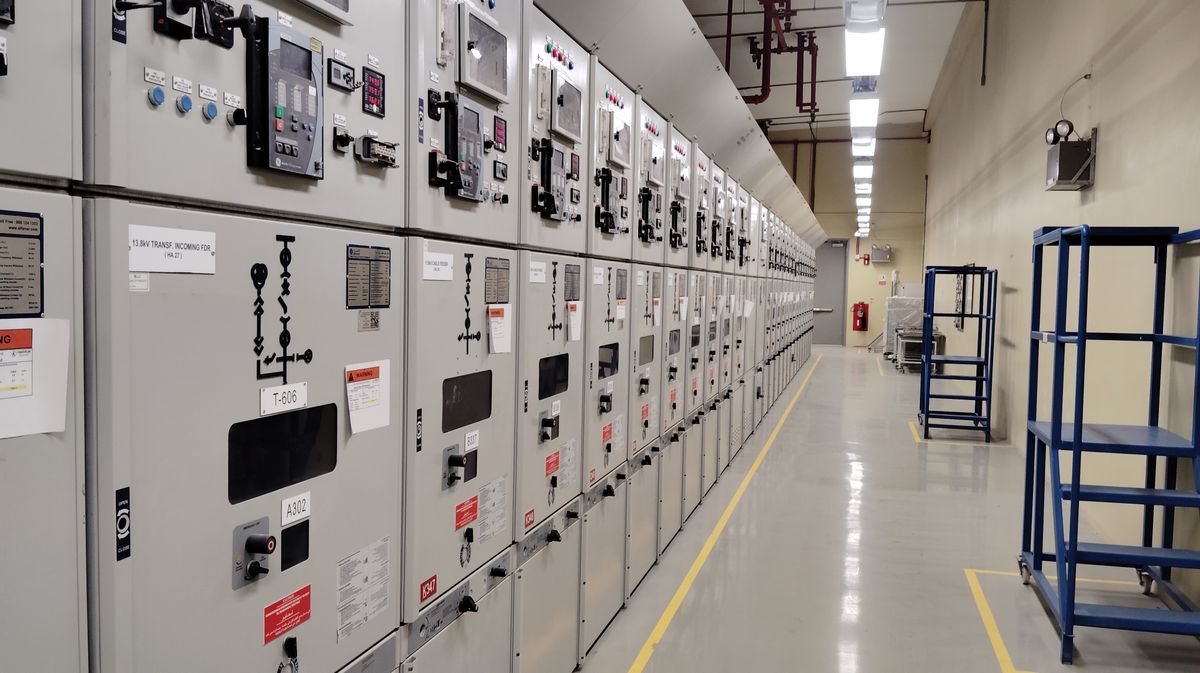
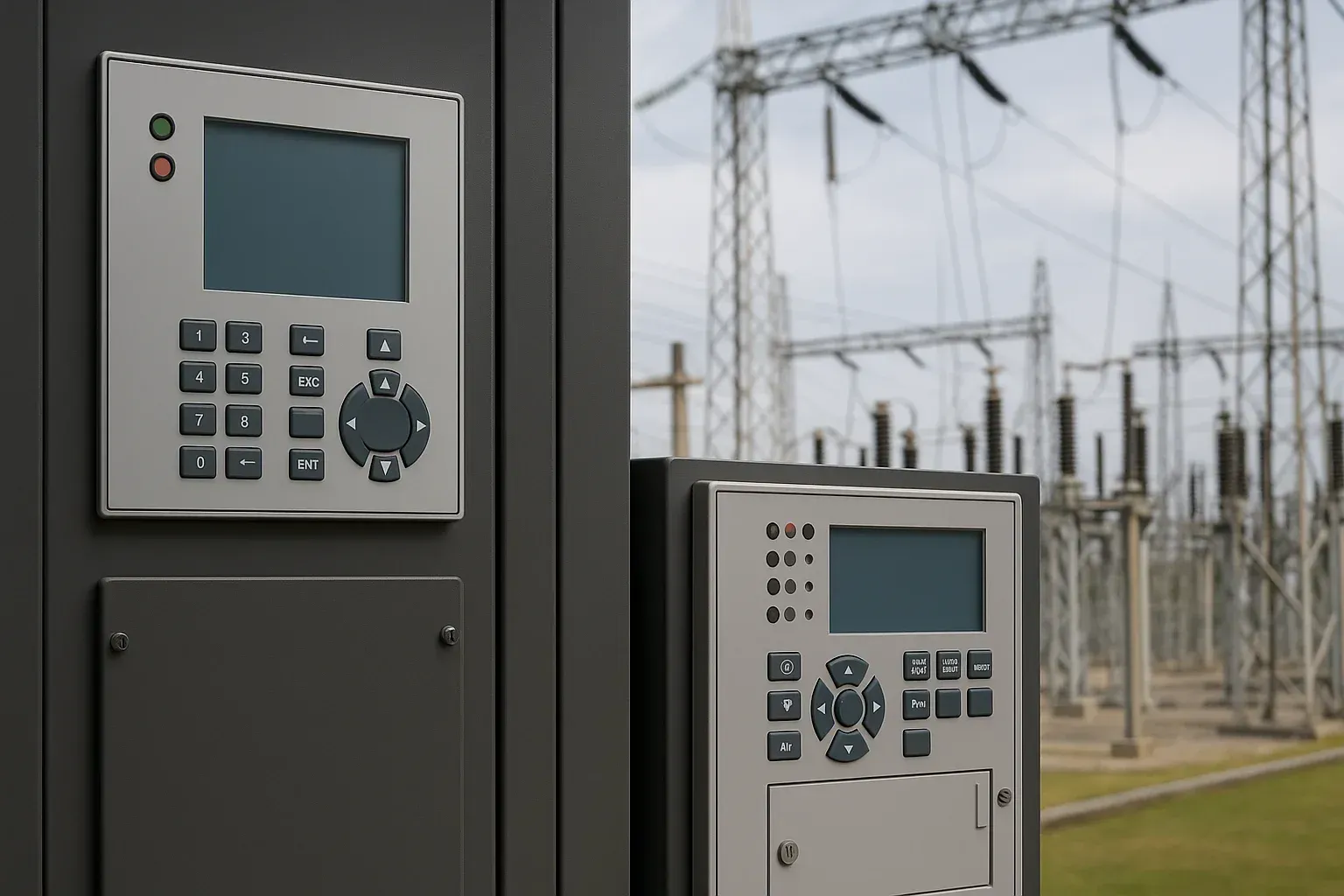
Row of electrical control panels where Balancing Authority ACE and control performance data are monitored

The newest member of the family, BAL-007, moves the focus from seconds to days and weeks: it asks Balancing Authorities to assess whether enough energy — not just capacity — will be available over the near term, and to have operating plans ready if it is not.

BAL evidence is operating data plus the engineering that explains it. Keentel connects the Balancing Authority’s measured performance to the generator settings and models that produced it.

BAL Standards and the Evidence Behind Them

The table lists the continent-wide and regional BAL standards Keentel supports. Always confirm the version in effect for your facility and audit period — BAL standards have been revised several times, and regional variants apply only within their Regional Entity footprint.

Standard Title Applicable functions Engineering & compliance evidence
BAL-001 Real Power Balancing Control Performance Balancing Authority; Regulation Reserve Sharing Group Control performance calculations (CPS1, BAAL), ACE data quality, frequency-bias inputs, monthly reporting records
BAL-001-TRE Primary Frequency Response in the ERCOT Region Balancing Authority, Generator Owner, Generator Operator (Texas RE) Governor and plant-controller settings, deadband and droop documentation, primary frequency response performance for qualifying events, settings change records
BAL-002 Disturbance Control Standard – Contingency Reserve for Recovery from a Balancing Contingency Event Balancing Authority; Reserve Sharing Group Reportable event identification, ACE recovery analysis, contingency reserve policy and reporting records
BAL-002-WECC Contingency Reserve Balancing Authority; Reserve Sharing Group (WECC) Contingency reserve calculations, reserve composition and deployment records under the WECC regional criteria
BAL-003 Frequency Response and Frequency Bias Setting Balancing Authority; Frequency Response Sharing Group Frequency response measurement from selected events, FRS Form data, Frequency Bias Setting calculation and implementation records
BAL-005 Balancing Authority Control Balancing Authority ACE calculation design, metering and data-availability documentation, Pseudo-Tie and dynamic schedule treatment, alarm records
BAL-007 Near-Term Energy Reliability Assessments Balancing Authority Documented assessment process, scenarios, operating plans for forecast energy emergencies, assessment records and periodic reviews

BAL-007 was approved by FERC in 2025 and phases in under its implementation plan. Confirm your effective date before building evidence to it.

Registered Functions Under the BAL Family

Balancing Authorities

Carry the core obligations of BAL-001, BAL-002, BAL-003, BAL-005 and BAL-007: control performance, contingency recovery, frequency response, ACE calculation and energy assessments.

Reserve and response sharing groups

Regulation Reserve Sharing Groups, Reserve Sharing Groups and Frequency Response Sharing Groups can assume certain BAL obligations on behalf of their members.

Generator Owners and Operators in ERCOT

BAL-001-TRE places primary frequency response obligations directly on GOs and GOPs in the Texas RE footprint, including governor settings and measured performance.

Generators everywhere else

Outside ERCOT, GOs are not directly applicable to BAL-003, but their governor and plant-controller behavior drives the Balancing Authority’s measured frequency response — and interconnection agreements often require primary frequency response capability.
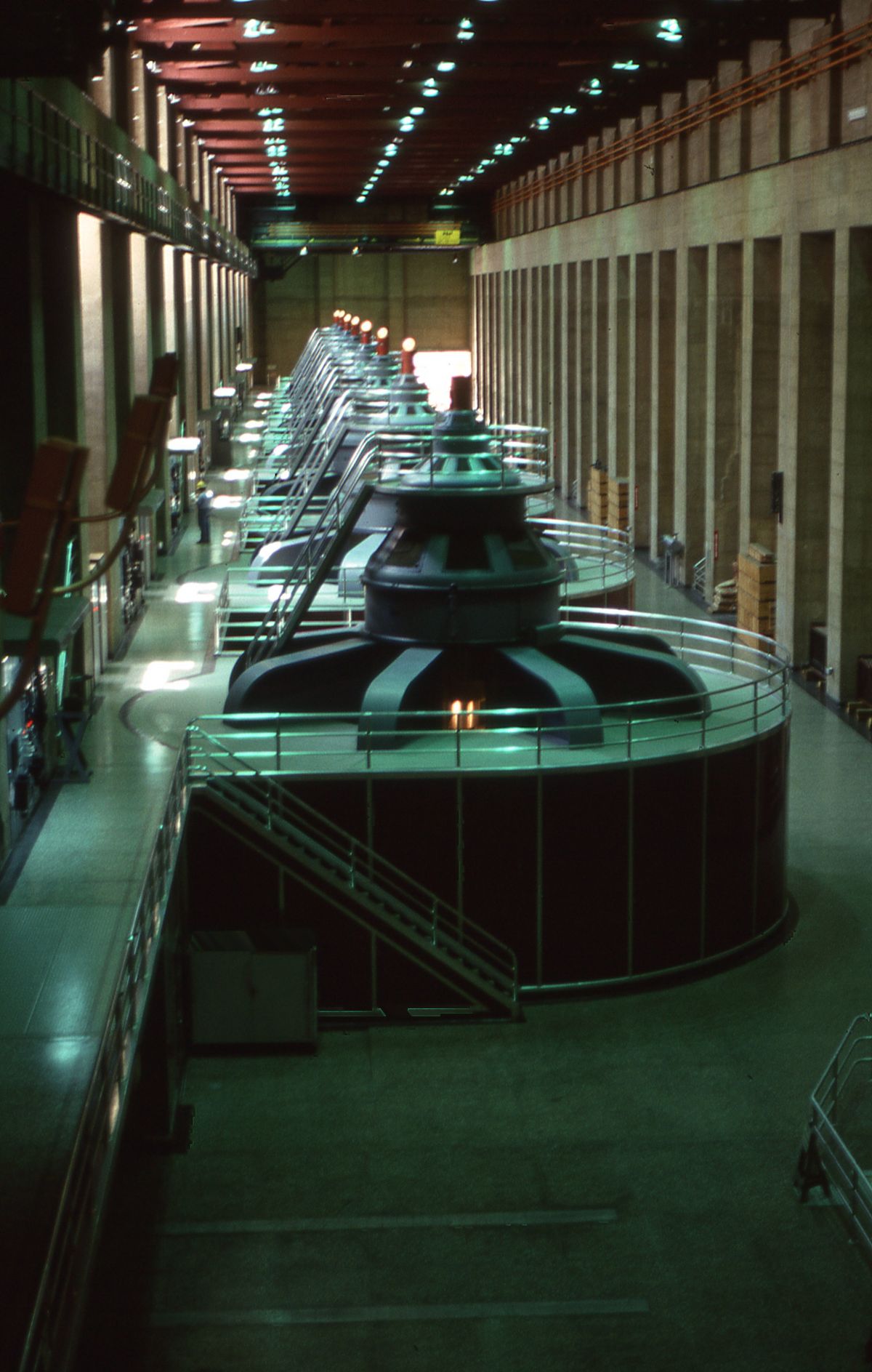
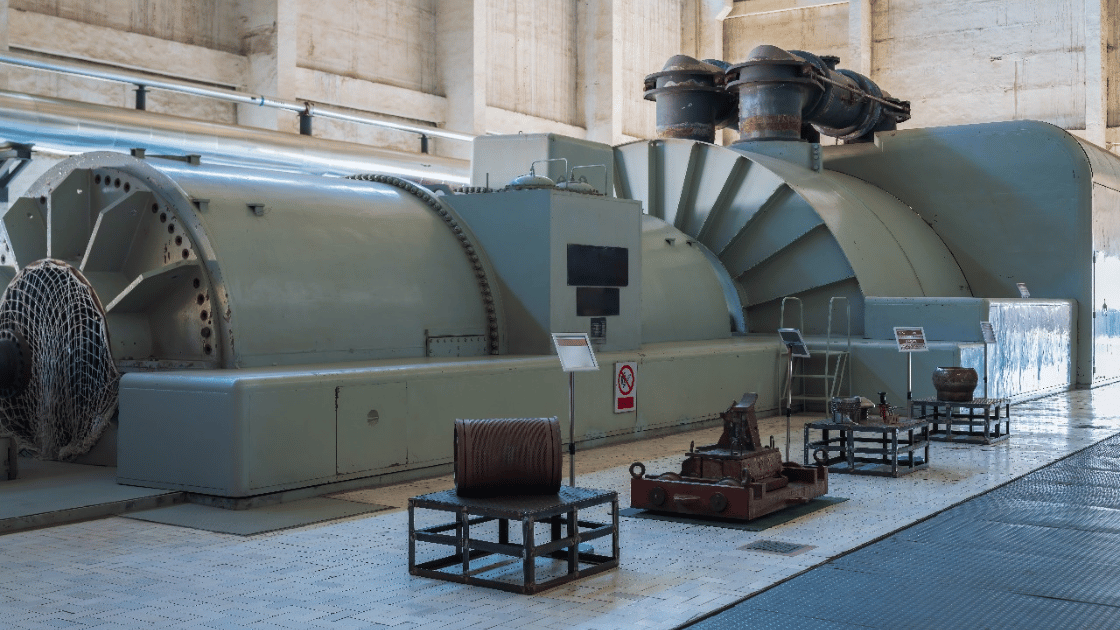
Hydro turbine-generator units inside a power station, where governor settings set primary frequency response

Frequency Response Starts at the Plant

Synchronous generation

For thermal, hydro and combustion-turbine units, primary frequency response comes from the governor. Deadband, droop, load limits, outer-loop plant controls that withdraw the governor response and operating at or near maximum output all reduce what the unit actually delivers. Keentel reviews governor and plant-control settings, compares them with event data and documents the result.

Inverter-based resources (solar, wind, BESS)

For inverter-based resources, frequency response is a plant-controller function. Whether a solar, wind or battery plant responds to low or high frequency depends on its power plant controller settings, its available headroom and its ride-through behavior during the event itself. Batteries can deliver fast, controllable response; solar and wind typically respond to over-frequency and, if curtailed, to under-frequency. We recover the settings from the OEM or EPC, confirm they match the interconnection requirements and document how the plant is expected to respond.

Why it matters for compliance

In ERCOT, BAL-001-TRE makes this generator evidence directly auditable. Elsewhere, the same settings feed the Balancing Authority’s BAL-003 performance, the dynamic models submitted under MOD-026 and MOD-027, and the ride-through obligations of PRC-024 and PRC-029. One well-documented set of settings supports all of them.

What We Do for BAL Compliance

Frequency response analysis

Event selection support, measured frequency response calculations and comparison against the Balancing Authority’s obligation under BAL-003.

Frequency Bias Setting support

Review of the data, method and implementation record for the Frequency Bias Setting used in the ACE equation.

BAL-001-TRE generator evidence

Governor and plant-controller settings documentation, event-performance review and corrective actions for ERCOT generators.

Governor and PPC settings review

Deadband, droop, frequency-response enable logic and outer-loop controls for synchronous and inverter-based plants.

BAL-007 program development

Near-term energy reliability assessment process, scenario definitions, data inputs and operating plans for energy emergencies.

ACE and control performance review

BAL-001 and BAL-005 calculation documentation, metering and data-availability records, and reporting procedures.

Contingency reserve procedures

BAL-002 and BAL-002-WECC event identification, recovery analysis and reserve-sharing documentation.

Requirement-mapped evidence

RSAW-aligned narratives and evidence indexes that tie each BAL requirement to the data that proves it.

Our BAL Compliance Process

01

Confirm applicability

Identify which BAL standards and requirements apply to each registered function, sharing-group arrangement and Regional Entity footprint.

02

Collect operating and settings data

ACE and frequency data, event records, reporting forms, governor and plant-controller settings, interconnection requirements and existing procedures.

03

Analyze performance

Recalculate measures, review frequency response events and compare generator behavior with documented settings.

04

Close gaps

Recommend procedure, calculation or settings changes and coordinate with operations, plant staff and OEMs to implement them.

05

Document the evidence

Prepare requirement-mapped narratives, calculation records and settings justifications a reviewer can follow.

06

Keep it current

Refresh evidence after settings changes, new resources, sharing-group changes or standard revisions.

Deliverables

Deliverable Purpose
BAL applicability matrix Requirement-level applicability for each registered function and region
Frequency response analysis report Event-by-event measured response and supporting calculations for BAL-003
Governor / plant-controller settings report Documented settings, basis and expected response for BAL-001-TRE and interconnection requirements
BAL-007 process, scenarios and operating plans The documented framework the Balancing Authority performs and reviews its energy assessments against
Procedures and calculation records ACE, control performance and contingency reserve documentation for BAL-001, BAL-002 and BAL-005
Requirement-mapped evidence index Each BAL requirement linked to the specific data, records and pages that prove it

Common BAL Compliance Gaps

Gap Why it matters
Governor settings not documented Without recorded deadband and droop settings, a generator cannot show its response was consistent with requirements.
Frequency response withdrawn by plant controls Outer-loop or plant-level controls can pull units back to their setpoint and erase the governor response the event data should show.
IBR frequency functions disabled or unknown Plant-controller frequency response settings often sit with the OEM and are never verified by the owner.
Calculations that cannot be reproduced Control performance and frequency response values need data and methods an auditor can follow to the same result.
Sharing-group responsibilities unclear When obligations move to a reserve or response sharing group, the agreement and evidence must show who is accountable for what.
BAL-007 treated as a one-time study Energy assessments are an ongoing process with documented scenarios, operating plans and periodic reviews.
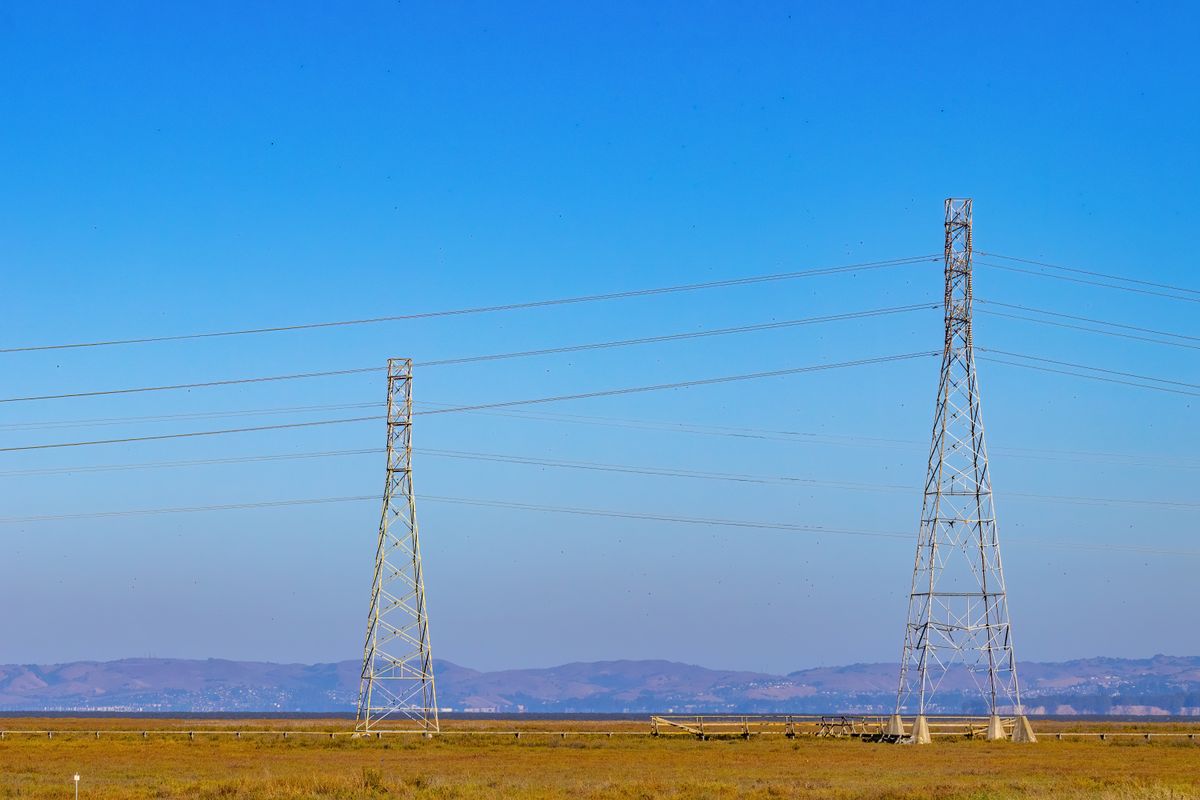
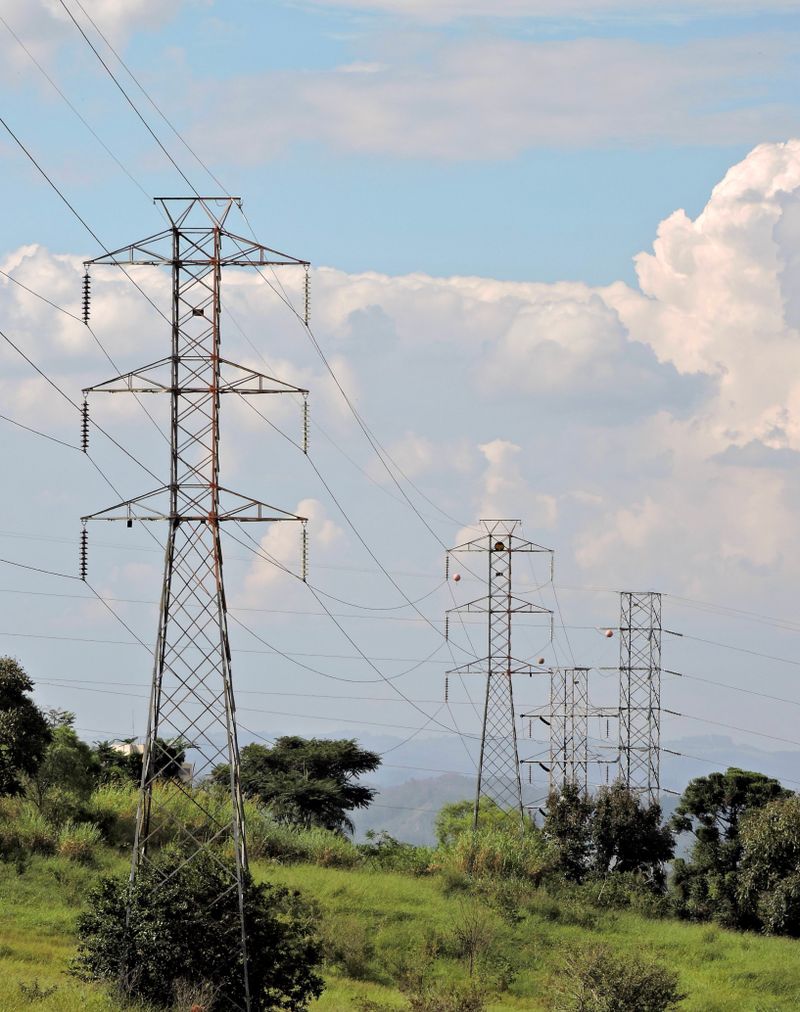
High-voltage transmission towers and power lines carrying interchange between Balancing Authority Areas

How BAL Connects to the Rest of Your Program

  • MOD — governor and plant-controller models verified under MOD-026 and MOD-027 should match the settings behind your frequency response evidence.
  • PRC — generator frequency protection (PRC-024) and IBR ride-through (PRC-029) determine whether a unit stays online long enough to respond; PRC-006 underfrequency load shedding is the backstop when response is insufficient.
  • EOP — BAL-007 energy emergency operating plans connect to EOP-011 emergency operations and EOP-012 cold weather preparedness.
  • INT — Interchange schedules and dynamic transfers feed the ACE calculation that BAL-001 and BAL-005 depend on.
  • TOP / IRO — Balancing Authority actions are coordinated with Transmission Operators and Reliability Coordinators under the operations standards.

BAL – Resource & Demand Balancing Compliance — FAQs

The BAL family covers resource and demand balancing. It includes BAL-001 (control performance), BAL-001-TRE (primary frequency response in ERCOT), BAL-002 and BAL-002-WECC (contingency reserve), BAL-003 (frequency response and Frequency Bias Setting), BAL-005 (Balancing Authority control) and BAL-007 (near-term energy reliability assessments). Always confirm the version in effect for your facility and audit period.
No. BAL-003 applies to Balancing Authorities and Frequency Response Sharing Groups. However, the Balancing Authority’s measured frequency response depends heavily on how generators respond, so generator governor and plant-controller settings are central to BAL-003 performance.
BAL-001-TRE is a regional standard for the ERCOT Interconnection that sets primary frequency response requirements for Balancing Authorities, Generator Owners and Generator Operators in the Texas RE footprint, including governor settings and measured performance during frequency events.
BAL-007 requires Balancing Authorities to document a process and scenarios for near-term energy reliability assessments, perform those assessments, maintain operating plans for forecast energy emergencies and periodically review the process. It addresses energy sufficiency over the near term rather than instantaneous balancing.
They can. Frequency response from solar, wind and battery plants is a power plant controller function and depends on the settings and available headroom. Battery storage can respond in both directions; solar and wind typically respond to over-frequency and, if operating below available output, to under-frequency.
Typically the governor or plant-controller settings in service, documentation that they meet the standard’s criteria, records of settings changes and performance results for qualifying frequency events, with corrective actions where performance fell short.
It is the value a Balancing Authority uses in its ACE equation to represent how its area responds to frequency deviations. BAL-003 sets out how it is determined and implemented, and the evidence includes the supporting data and the record of implementation.
Yes. We review governor, turbine-control and plant-controller settings for deadband, droop and response logic, compare them with event data where available and document the basis for the settings in service.
The same settings that determine frequency response are represented in the dynamic models verified under MOD-026 and MOD-027 and affect ride-through under PRC-024 and PRC-029. Keeping one documented set of settings avoids contradictions between those evidence packages.
No. Keentel’s NERC services cover Operations & Planning standards. CIP cybersecurity is a separate discipline.

Prove Your Frequency Response With Engineering Evidence

Send us your event data, governor or plant-controller settings and current BAL procedures. Keentel will show you where the evidence holds, where it breaks and what it takes to close the gap.

Who We've Served

Serving utilities, EPCs, developers, and infrastructure organizations supporting critical power systems nationwide.
NERC BAL – Resource & Demand Balancing Videos

Technical guidance from Keentel Engineering covering frequency support, dynamic resource response, inverter-based resource behavior, voltage-frequency performance and system-stability considerations relevant to balancing operations.

Grid-Forming vs Grid-Following BESS

BESS control behavior directly affects dynamic response and voltage-frequency performance, making this highly relevant to fast-response resources supporting system balancing.

Grid-Forming Inverters

Grid-forming inverter behavior demonstrates how modern resources can contribute to voltage and frequency support while interacting with overall system strength and stability.

Capacitor Banks & Power Factor Correction

Reactive-power compensation and voltage support affect system performance and operating margins, providing useful engineering context for reliable resource and demand balancing.

 Blogs

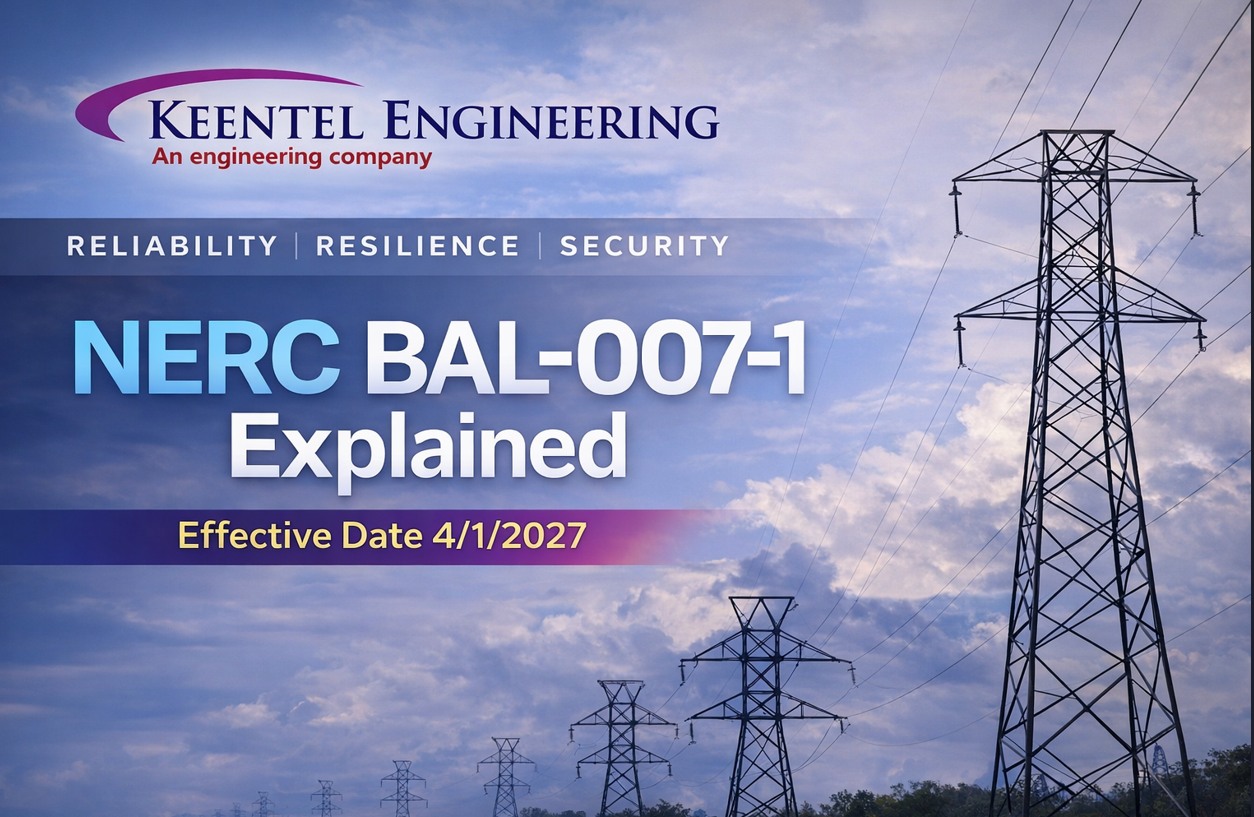
NERC BAL-007-1 Explained: Near-Term Energy Reliability Assessments (ERA) and What It Means for Grid Operators & Developers
By SANDIP R PATEL • April 3, 2026
Learn how NERC BAL-007-1 ensures energy adequacy, ERA methods, and proactive grid reliability strategies for utilities, developers & BAs.
Read More →
NERC Standards 2026–2029: BAL-007 IBR & CIP Compliance
By SANDIP R PATEL • April 1, 2026
Explore upcoming NERC Reliability Standards (2026–2029), including BAL-007 energy assessments, IBR ride-through rules, cybersecurity (CIP-003-9), and extreme weather planning. Learn compliance strategies, risks, and real-world case studies.
Read More →
ERCOT NERC Compliance Services: Ensuring Grid Reliability Through Expert Compliance Management
By SANDIP R PATEL • May 8, 2025
Master ERCOT’s unique NERC reliability requirements with Keentel Engineering’s tailored CIP, O&P, and RSAW support—risk assessments, mock audits, training, and real-time monitoring.
Read More →
How to Ensure Compliance with NERC O&P Standards
By SANDIP R PATEL • January 29, 2025
Learn how to ensure compliance with NERC O&P standards. Discover key requirements and best practices to maintain reliability in power system operations
Read More →
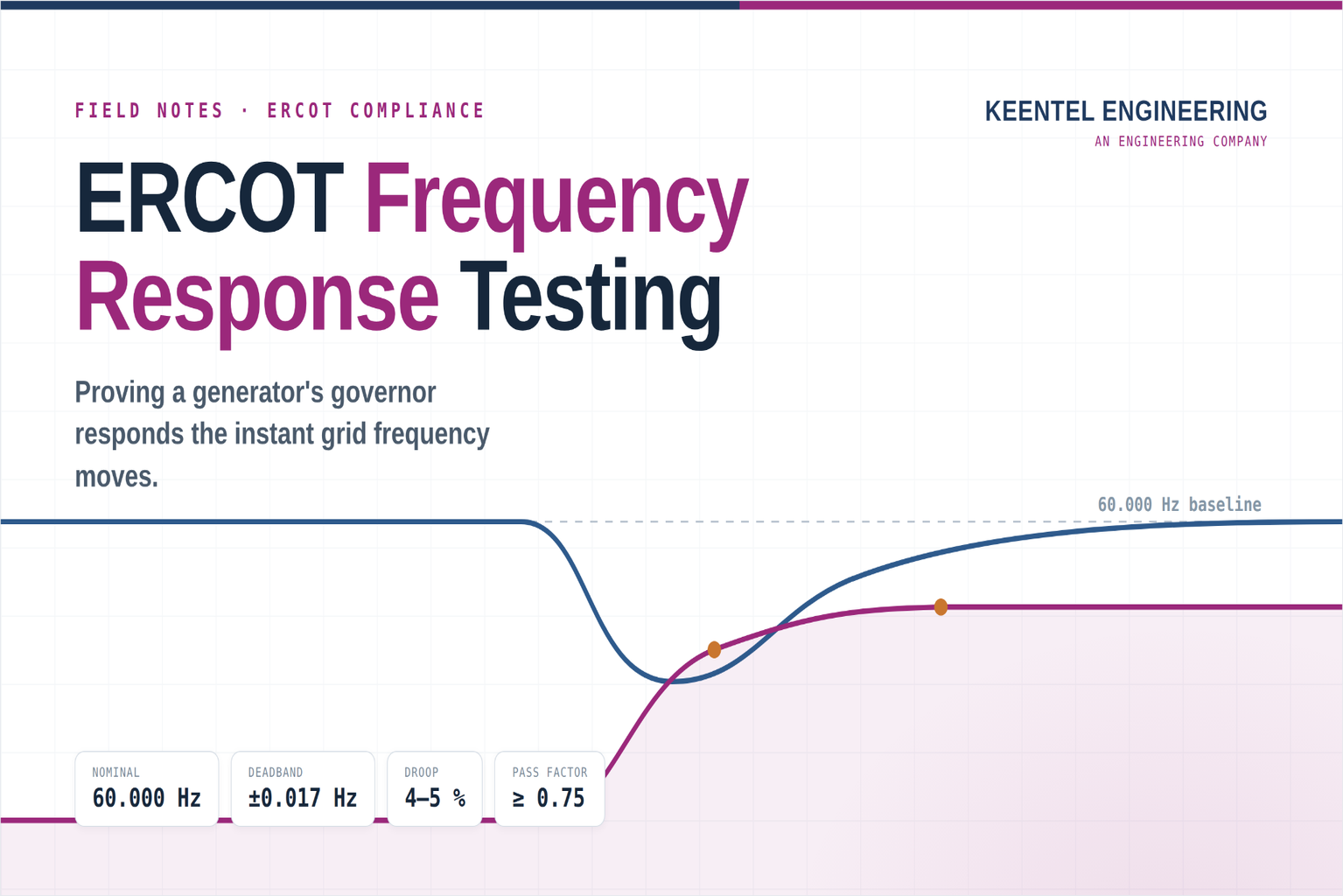
ERCOT Frequency Response Testing: Generator Field Guide
By SANDIP R PATEL • September 3, 2026
Understand ERCOT frequency response testing, from droop and deadband requirements to staged test procedures, data analysis, and compliance reporting.
Read More →
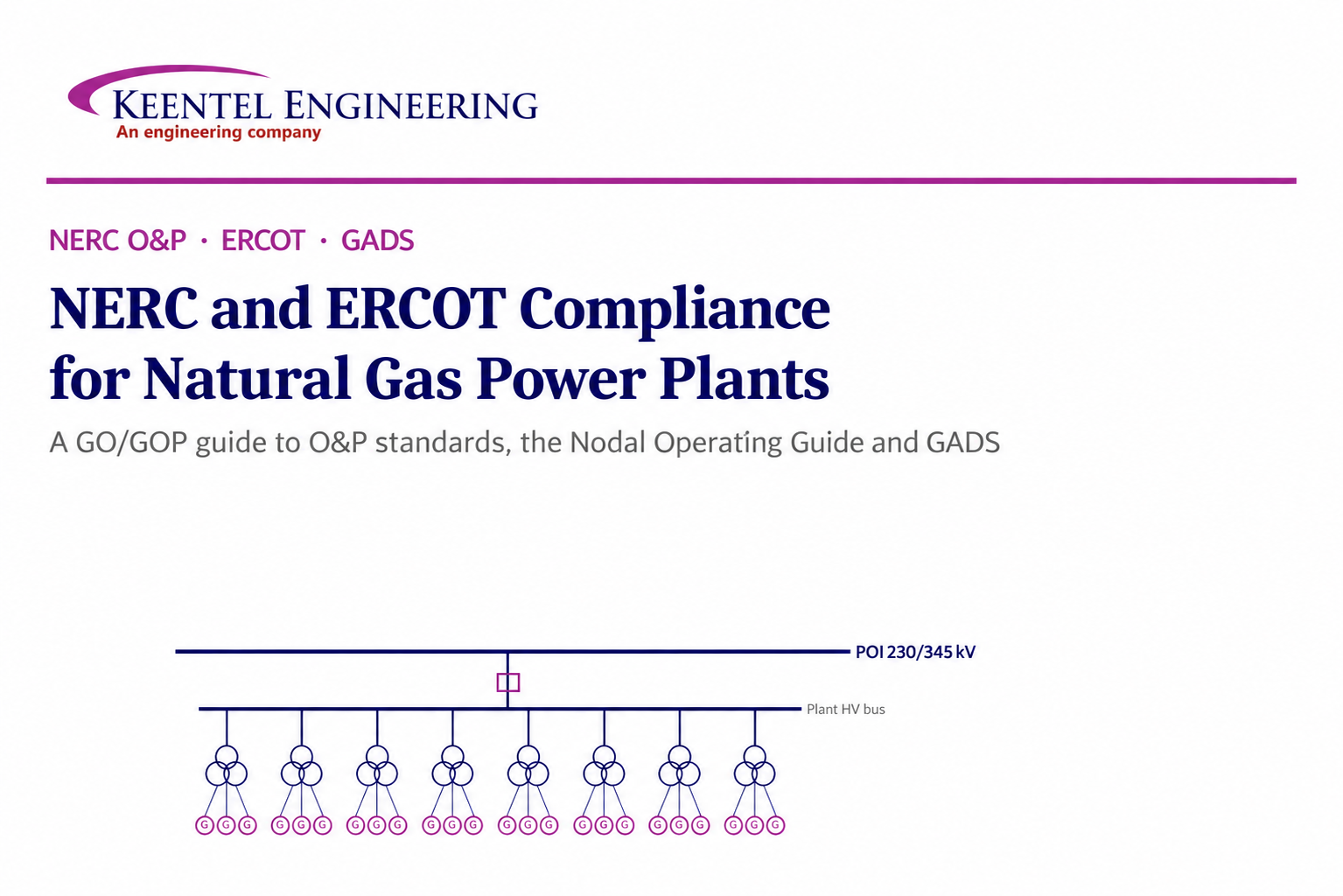
NERC and ERCOT Compliance for Natural Gas Power Plants
By SANDIP R PATEL • September 30, 2026
Learn NERC and ERCOT compliance requirements for natural gas power plants, including GO/GOP obligations, O&P standards, GADS reporting, and audits.
Read More →
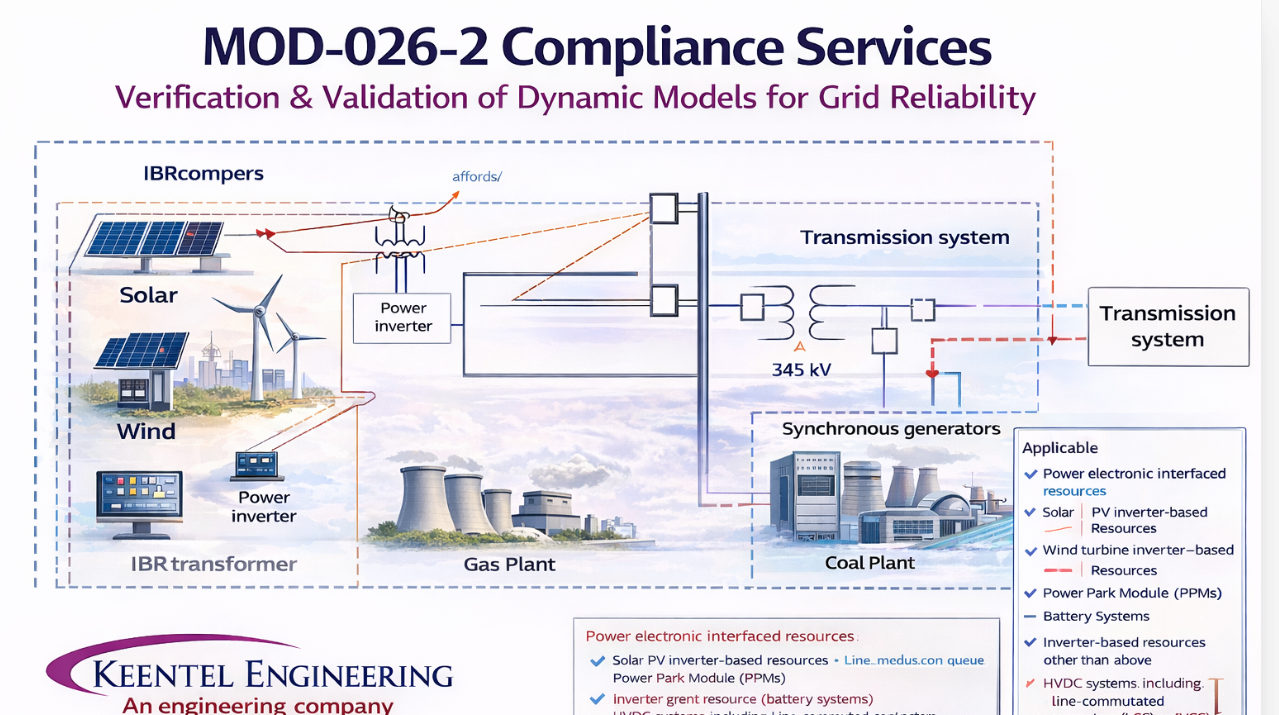
MOD-026-2 Compliance Services: Verification & Validation of Dynamic Models for Grid Reliability
By SANDIP R PATEL • April 7, 2026
Learn MOD-026-2 compliance requirements for dynamic model verification and validation of inverter-based resources, ensuring power system reliability and NERC compliance.
Read More →
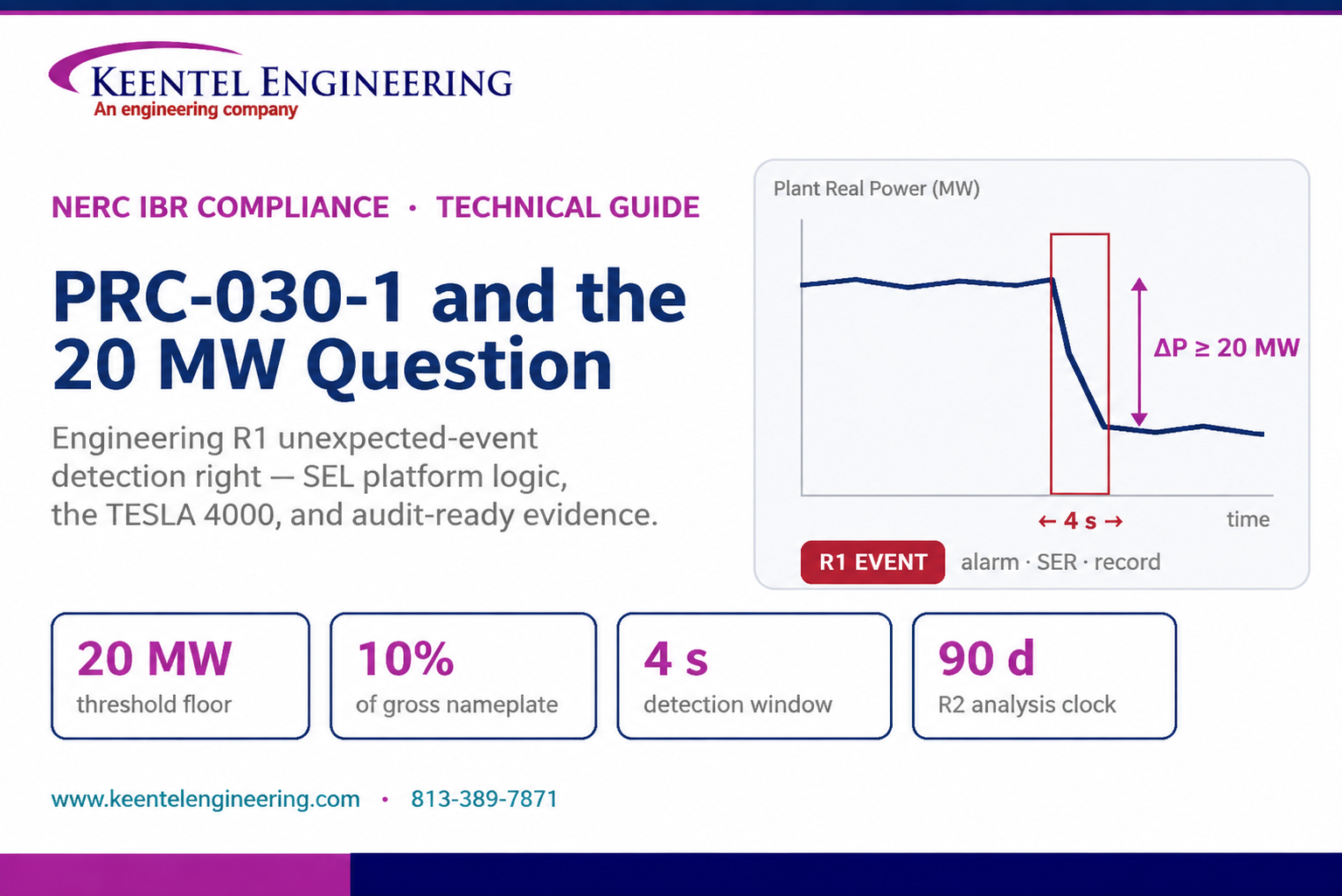
PRC-030-1 R1 Event Detection Guide for IBR Owners
By SANDIP R PATEL • September 22, 2026
Learn PRC-030-1 R1 event detection requirements for inverter-based resources, SEL platforms, disturbance monitoring, and audit-ready compliance.
Read More →
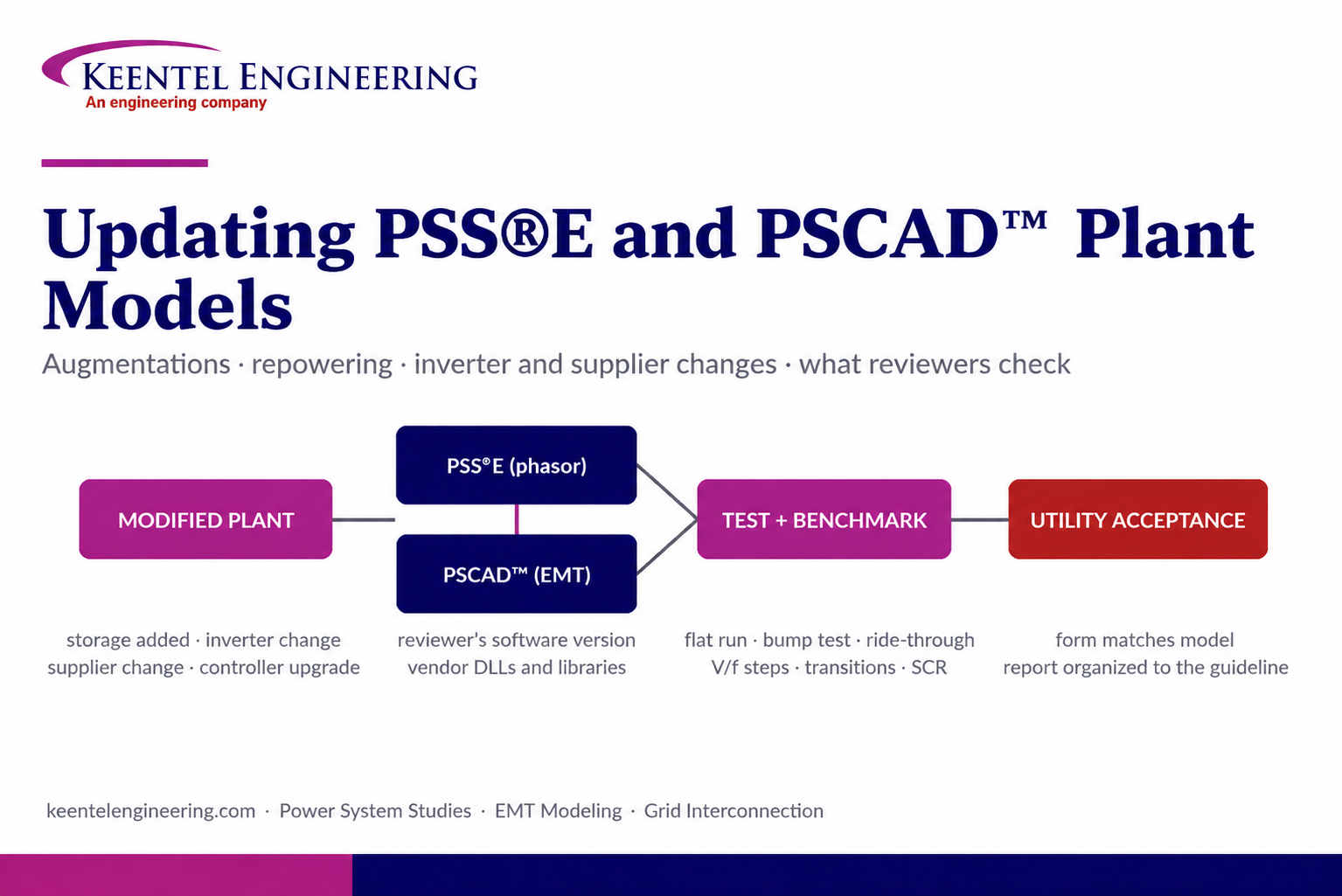
PSS®E and PSCAD™ Model Updates for Power Plants
By SANDIP R PATEL • September 22, 2026
Learn how PSS®E and PSCAD™ model updates support plant augmentations, repowering, equipment changes, testing, benchmarking, and grid compliance.

Read More →
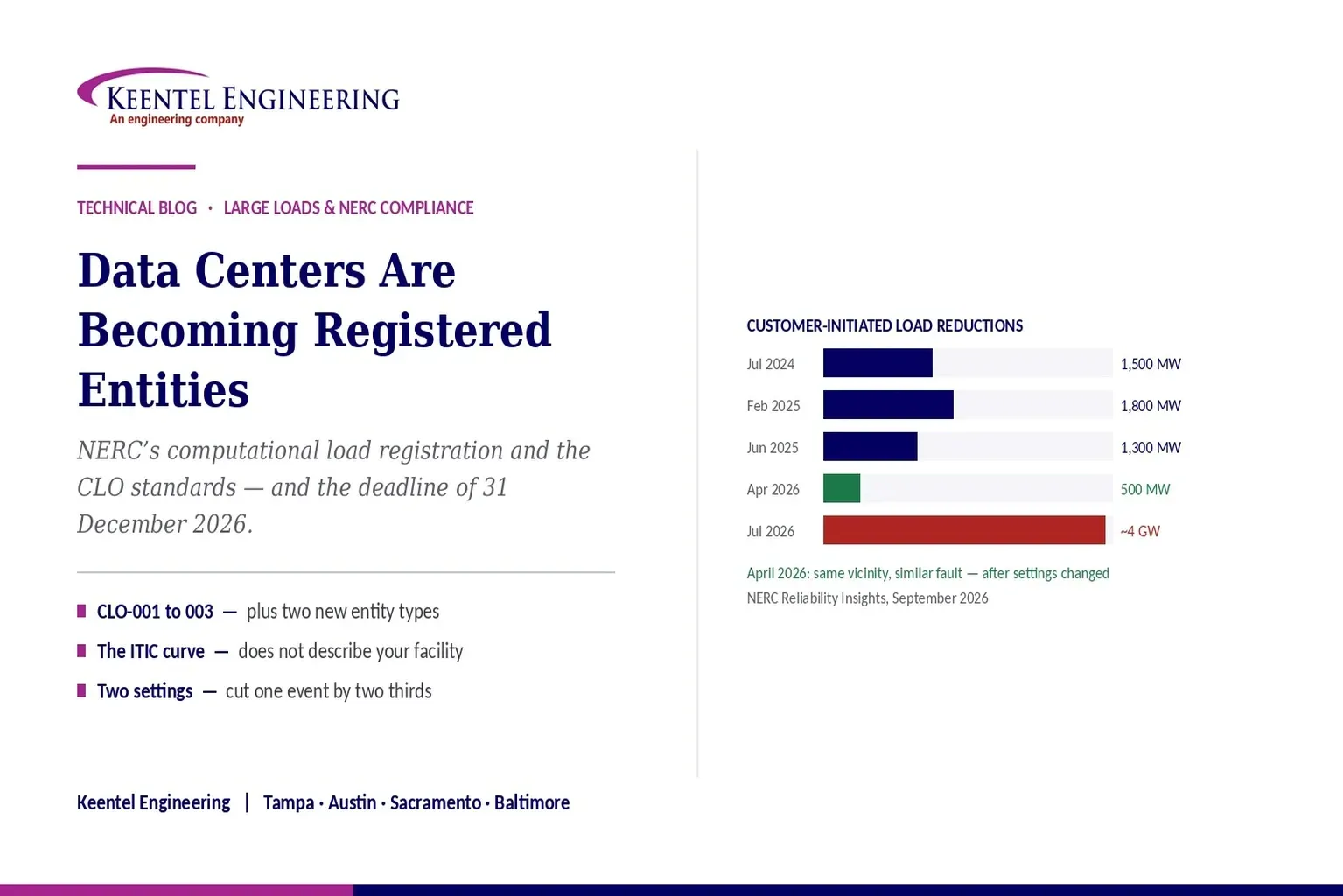
NERC Large Load Registration: Data Center CLO Standards Guide
By SANDIP R PATEL • September 9, 2026
Learn how NERC computational load registration impacts data centers, CLO standards, ride-through requirements, modeling, and grid reliability compliance.

Read More →
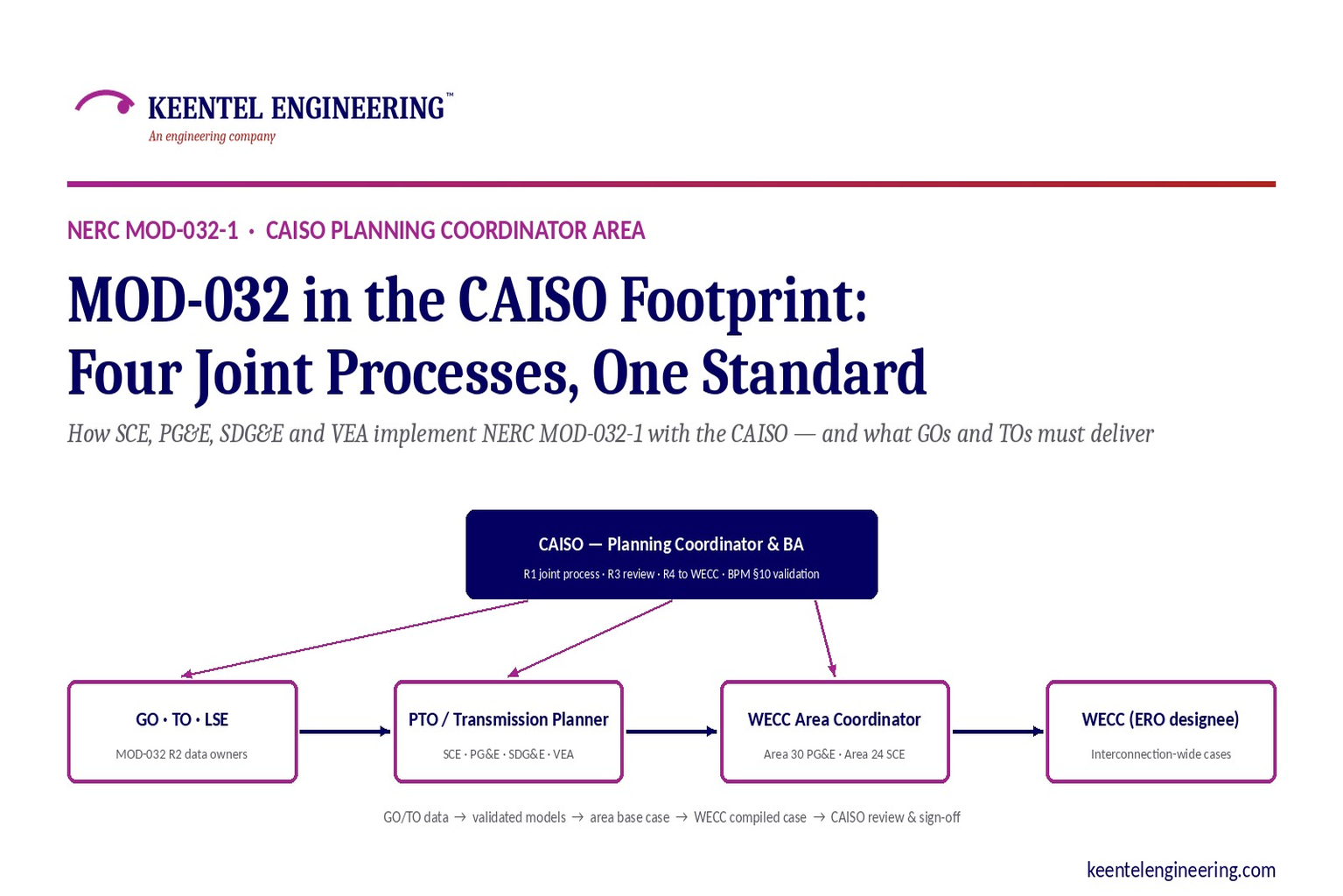
NERC MOD-032-1 Compliance: CAISO Generator Data Guide
By SANDIP R PATEL • September 6, 2026
Learn how NERC MOD-032-1 applies across CAISO, SCE, PG&E, VEA and SDG&E, including generator data, PSLF models, EMT requirements and WECC submissions.
Read More →
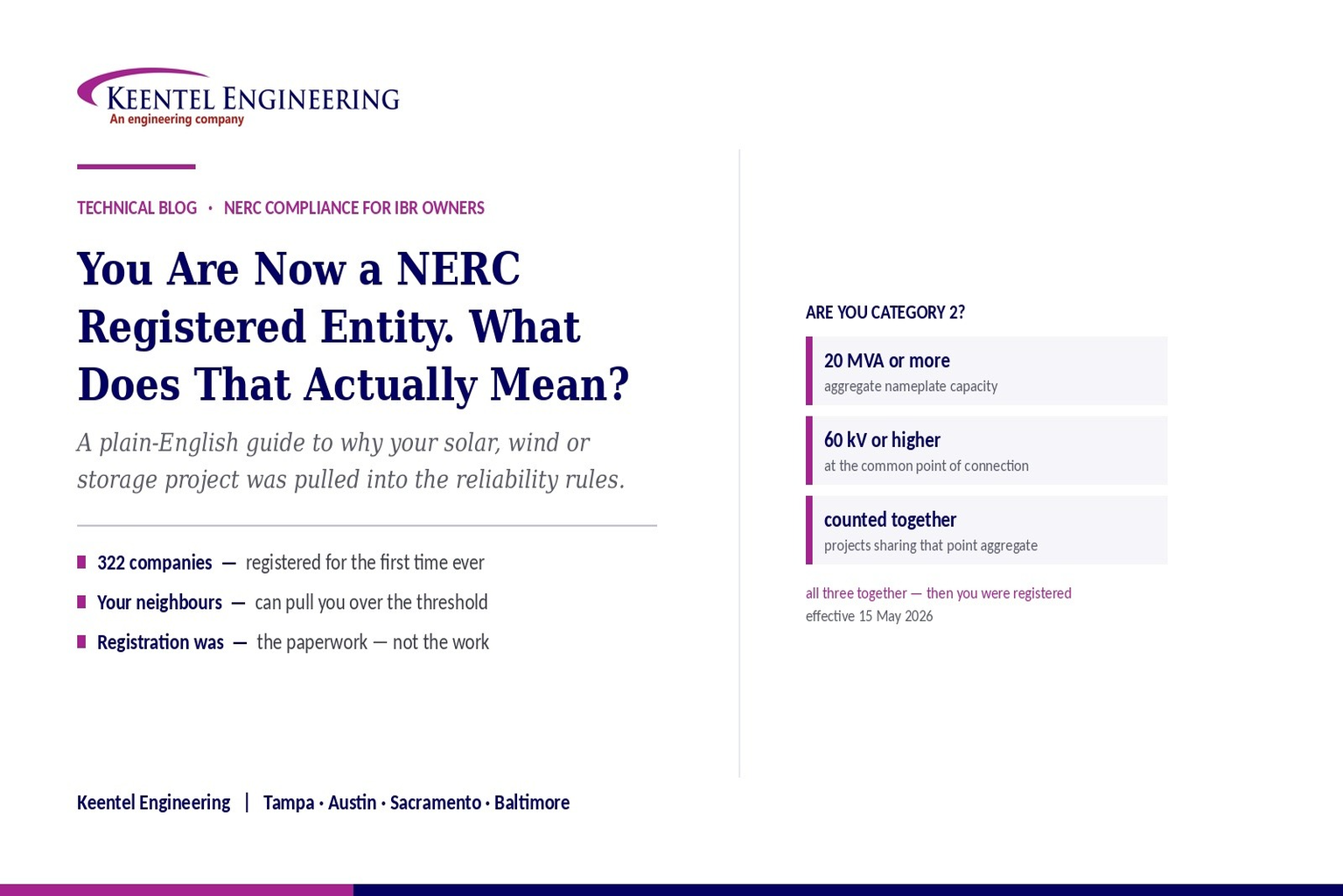
NERC IBR Registration: Compliance Guide for Generator Owners
By SANDIP R PATEL • September 5, 2026
Understand NERC IBR registration requirements, Category 2 obligations, compliance programmes, modelling, verification, ride-through, and owner responsibilities.
Read More →
NERC Data Center Rules
By SANDIP R PATEL • August 22, 2026
Learn how NERC's new data center rules affect registration, modeling, protection, compliance, and what computational load operators should do now.
Read More →
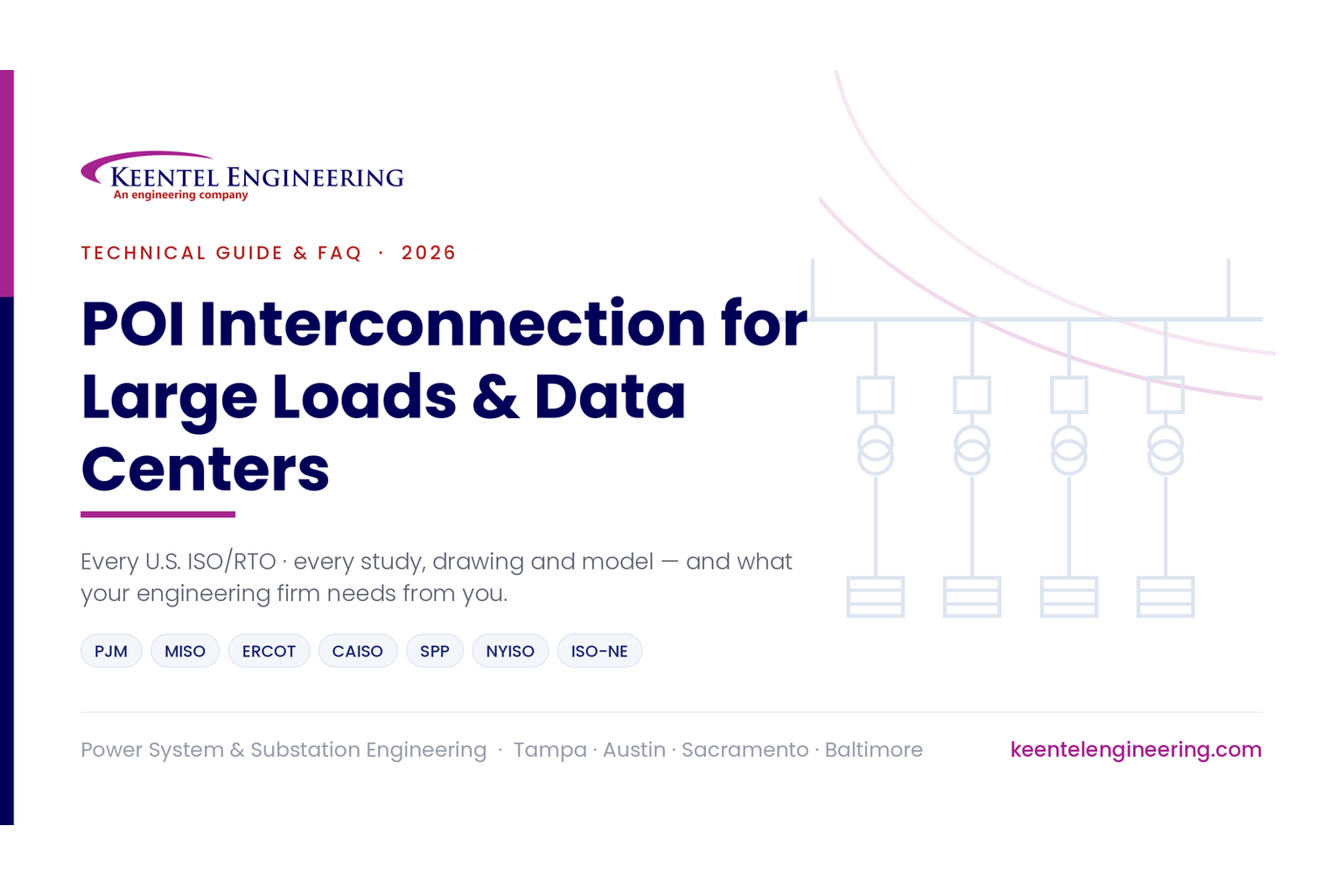
POI Interconnection for Data Centers & Large Loads | 2026 Guide
By SANDIP R PATEL • August 20, 2026
2026 guide to POI interconnection for data centers and large loads. Explore ISO/RTO requirements, grid studies, PSCAD modeling, costs, timelines and NERC rules.
Read More →
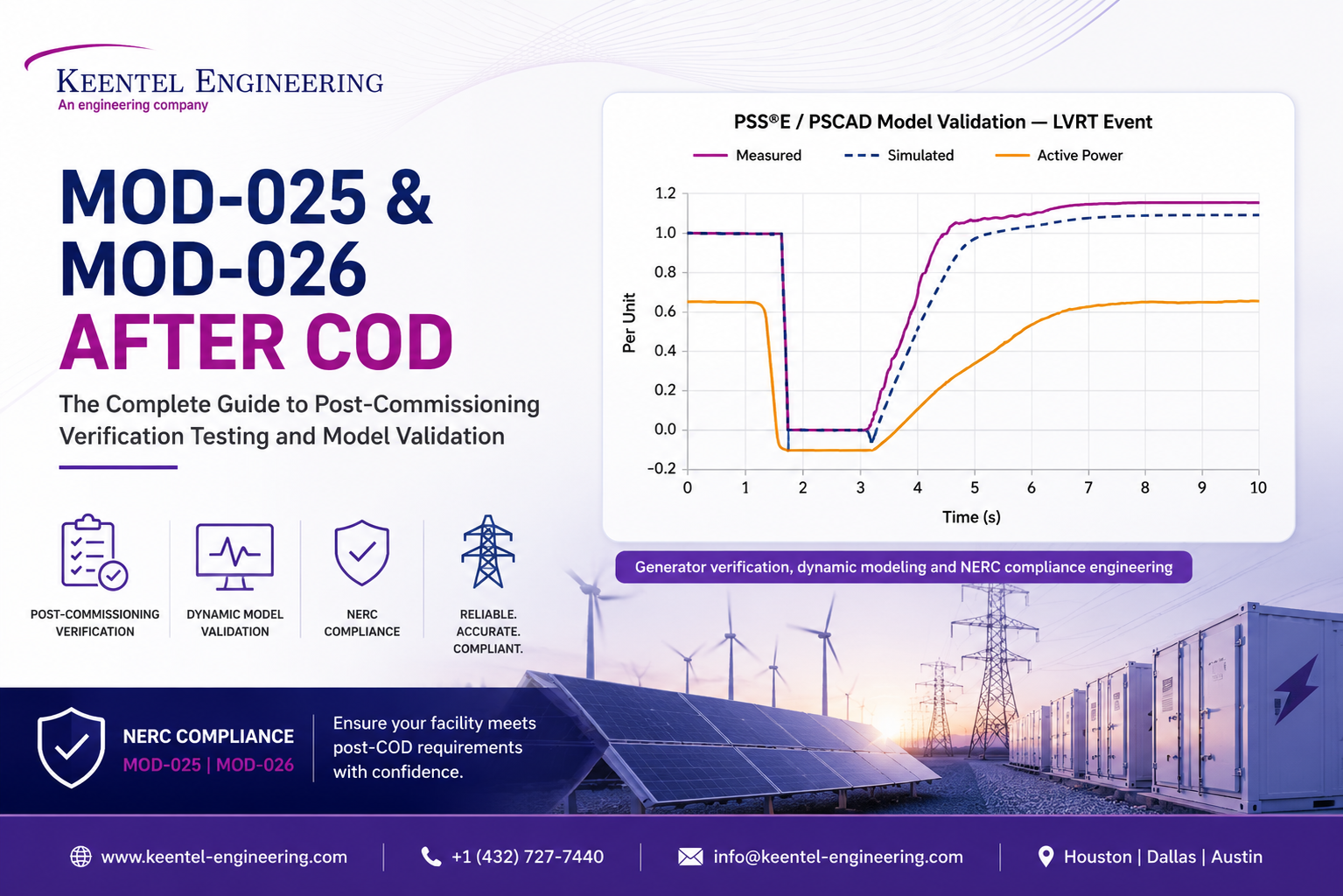
MOD-025 & MOD-026 After COD: Verification & Model Validation Guide
By SANDIP R PATEL • August 15, 2026
Learn MOD-025 and MOD-026 post-COD requirements for generator capability verification, PSS®E and PSCAD model validation, IBR testing, and NERC compliance.
Read More →
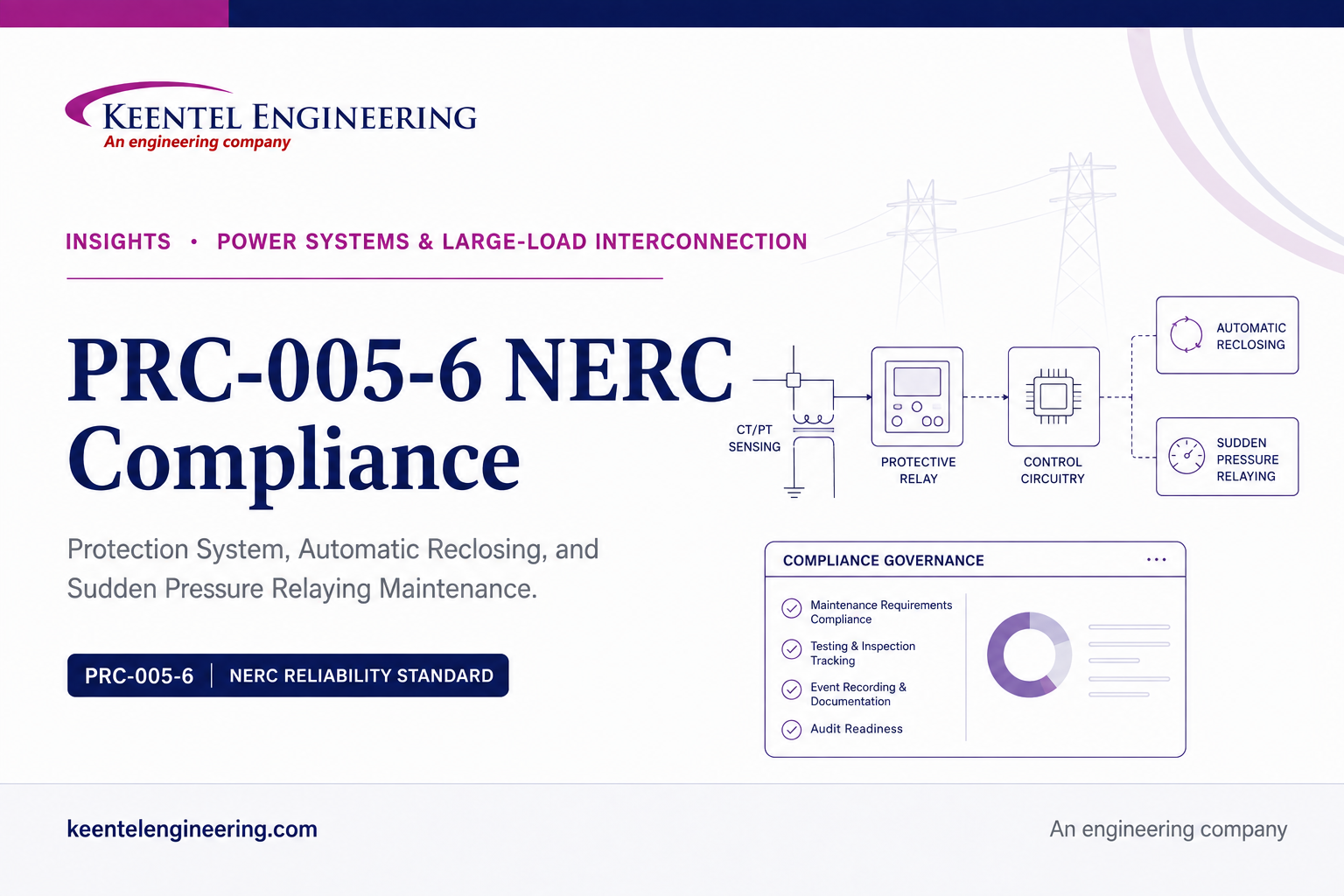
PRC-005-6 NERC Compliance Guide | Protection System Maintenance
By SANDIP R PATEL • August 12, 2026
Learn PRC-005-6 NERC compliance requirements for Protection System maintenance, Automatic Reclosing, Sudden Pressure Relaying, PBM, audit readiness, and compliance software.
Read More →
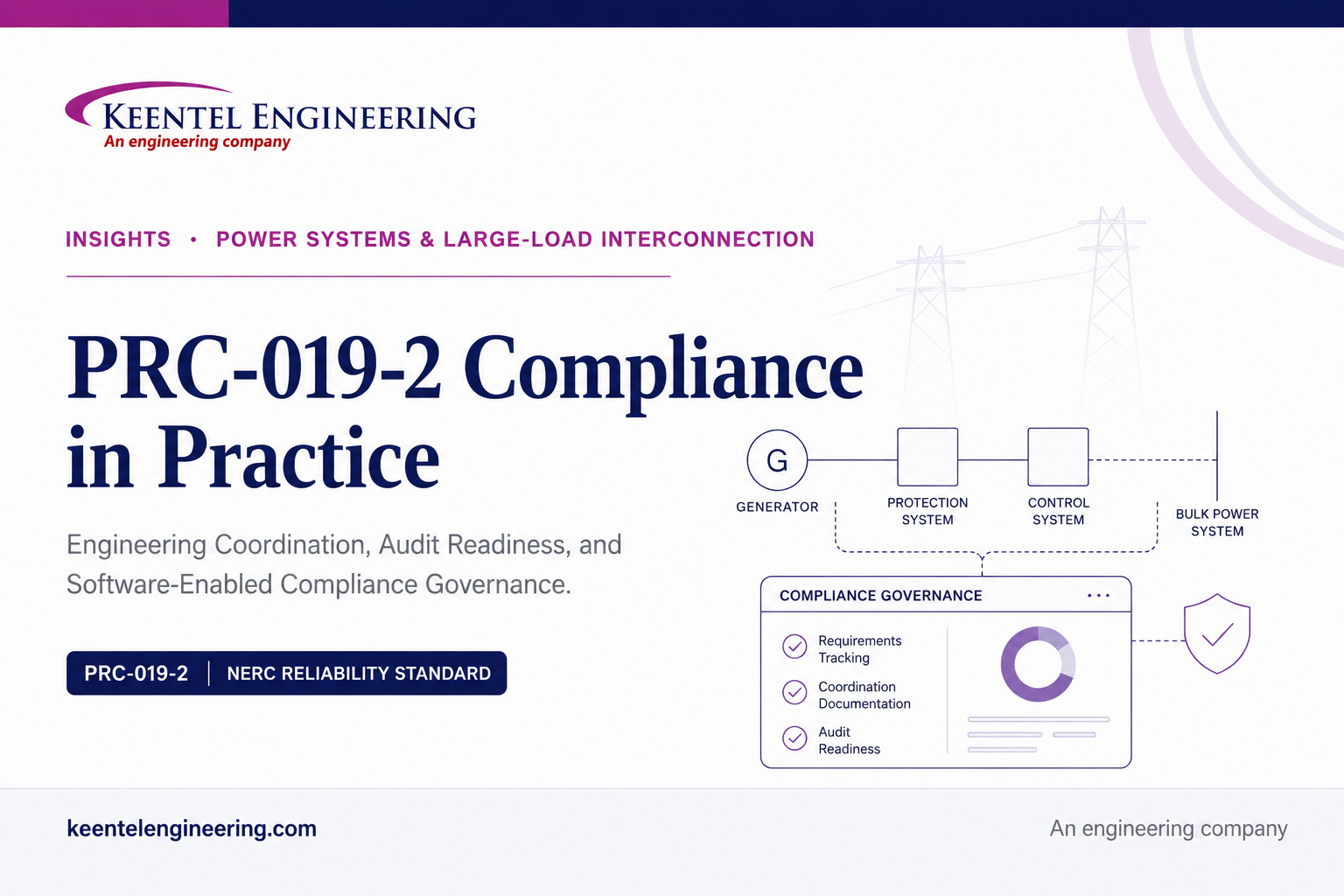
PRC-019-2 Compliance Guide | Keentel Engineering
By SANDIP R PATEL • August 12, 2026
Learn how to manage NERC PRC-019-2 generator voltage control coordination, R1 and R2 evidence, audit readiness, inverter-based resources, and compliance software workflows.
Read More →
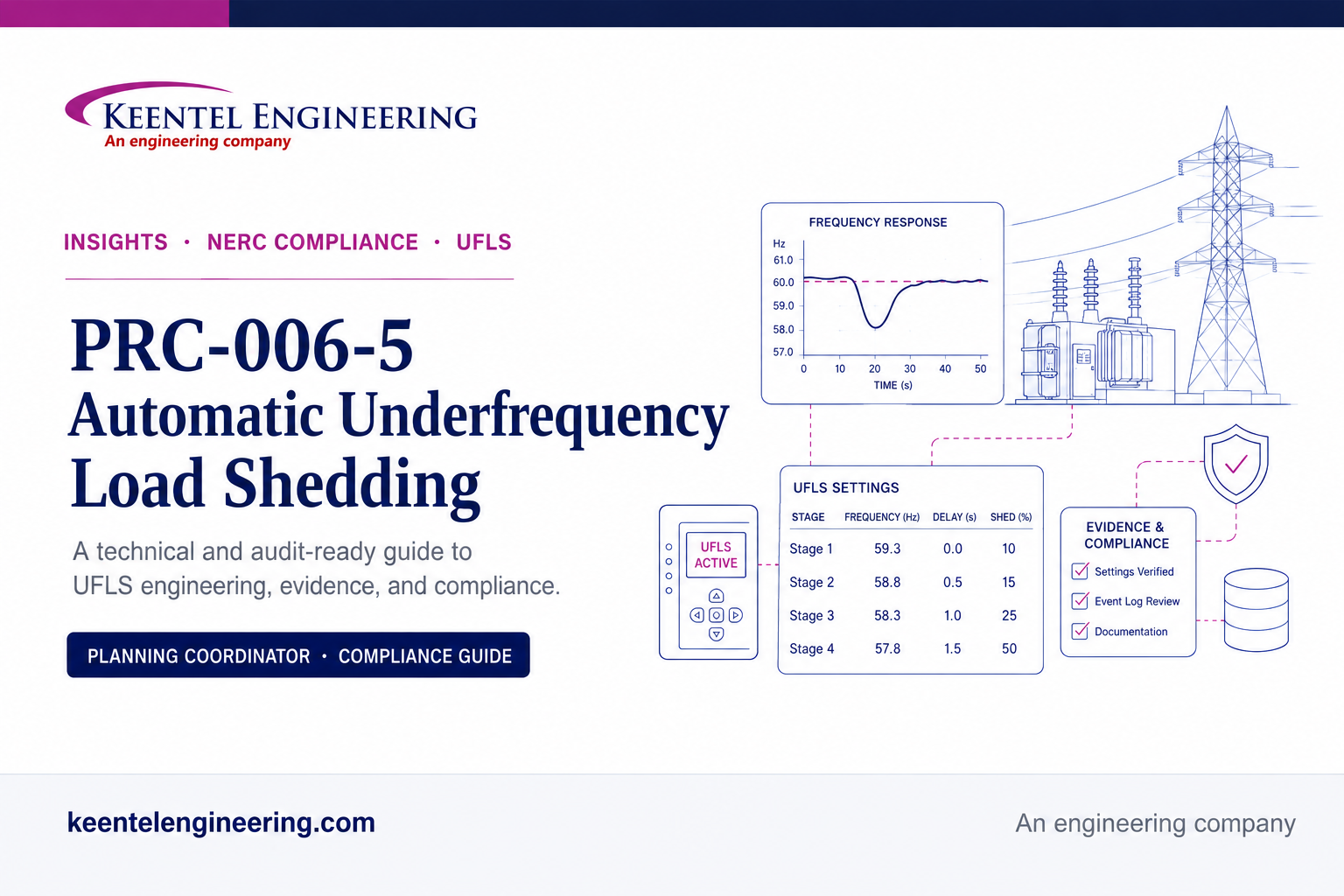
PRC-006-5 NERC Compliance & UFLS Guide | Keentel Engineering
By SANDIP R PATEL • August 11, 2026
Complete PRC-006-5 NERC compliance guide covering UFLS requirements, dynamic studies, audit readiness, evidence management, event assessment, and CAPs.
Read More →
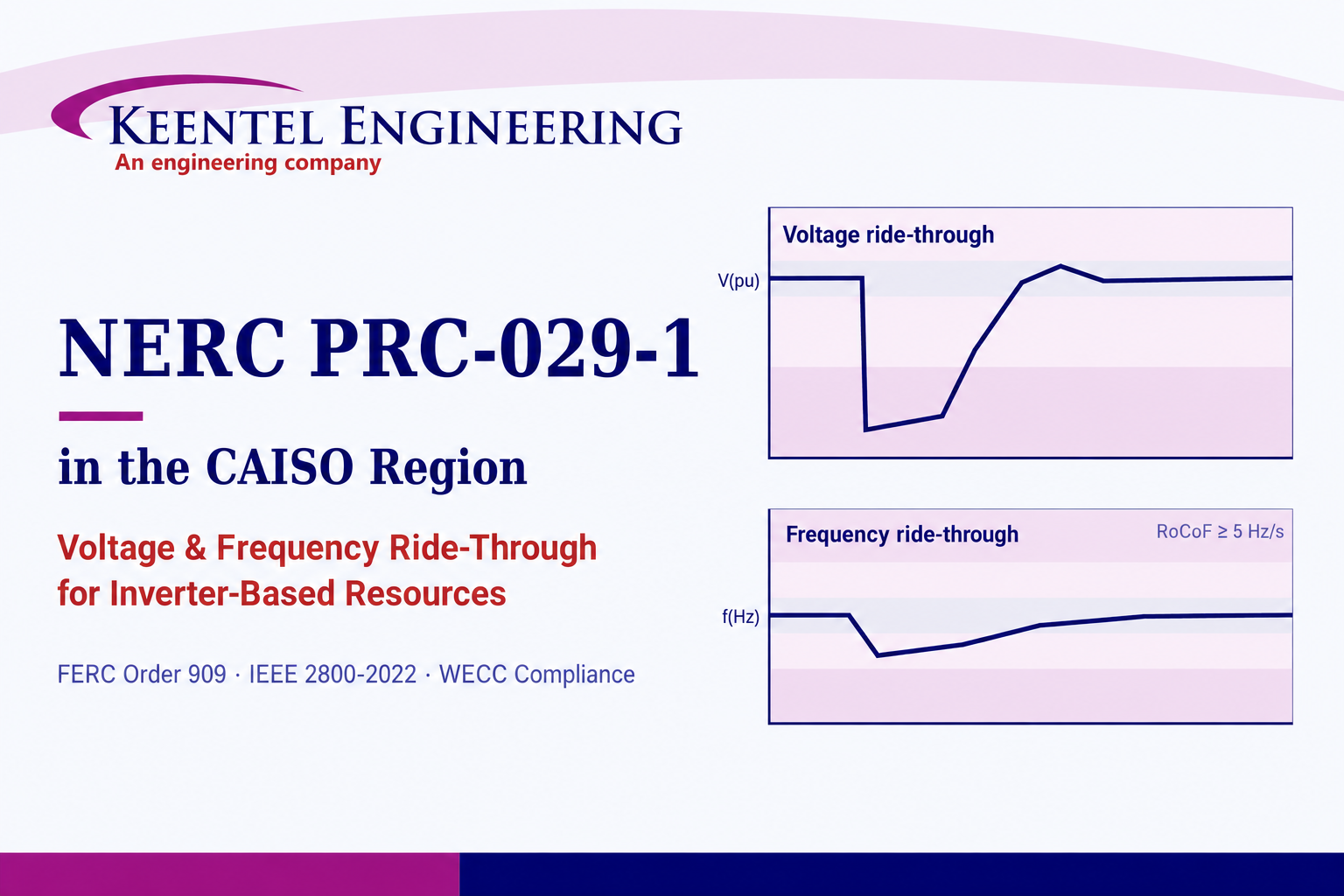
PRC-029-1 CAISO Compliance Guide
By SANDIP R PATEL • August 7, 2026
Understand NERC PRC-029-1 ride-through requirements for IBRs in the CAISO region — voltage/frequency curves, key dates, EMT modeling, and compliance steps.
Read More →
SEL RTAC Protection Monitoring for NERC PRC-005
By SANDIP R PATEL • July 18, 2026
Learn how SEL RTAC protection monitoring supports NERC PRC-005 compliance, predictive maintenance alarms, automated reporting, and relay verification.
Read More →
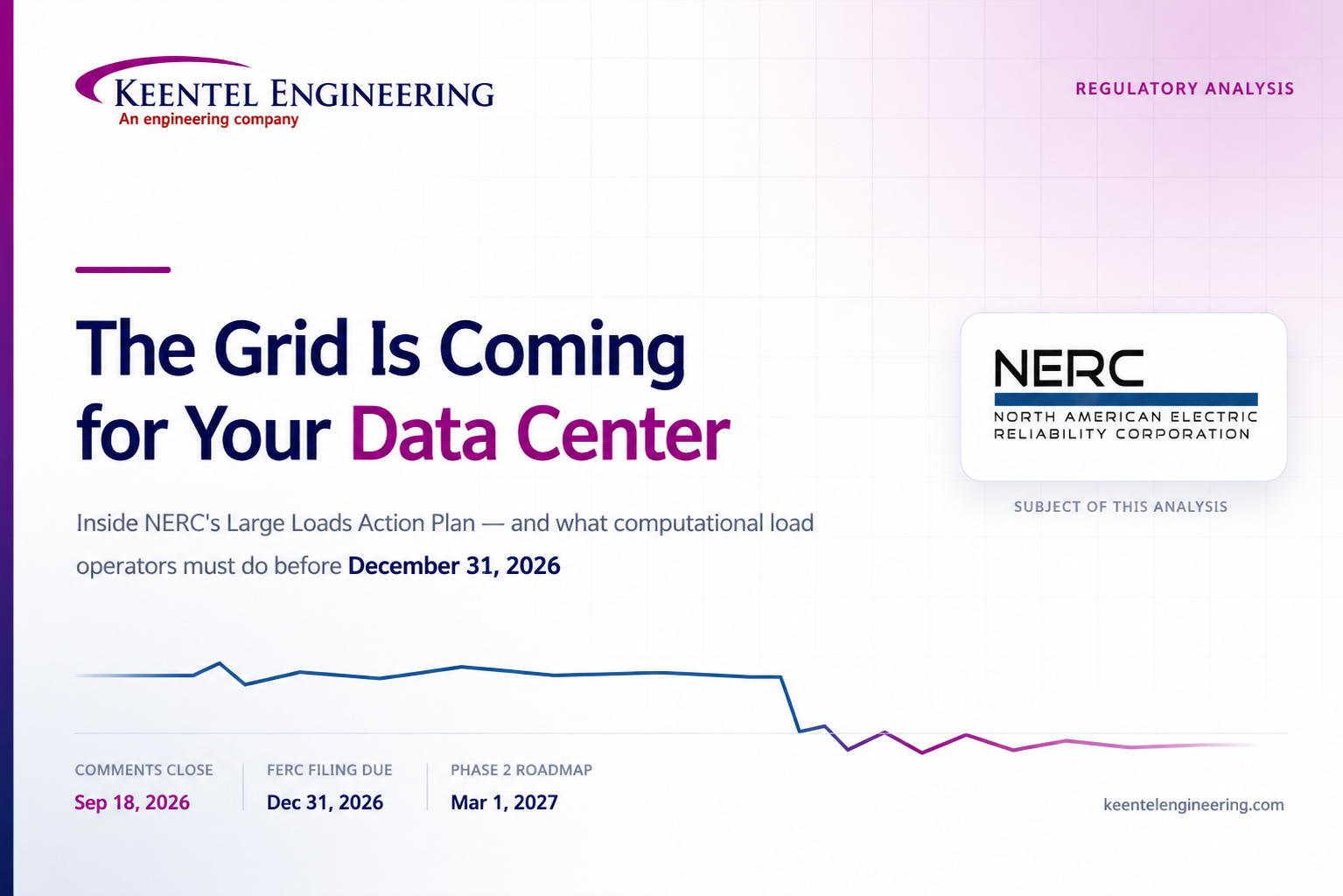
NERC Large Loads Action Plan (LLAP) Guide for AI Data Centers
By SANDIP R PATEL • July 8, 2026
Learn how NERC's Large Loads Action Plan impacts AI data centers, grid interconnection, compliance, modeling, and power system reliability in 2026.
Read More →
CCPP Electrical Design Engineering | 30%, 60%, 90% & IFC
By SANDIP R PATEL • July 7, 2026
Learn the complete CCPP electrical design process, from 30% through IFC, including interconnection, power system studies, protection, grounding, and NERC compliance.
Read More →
Synchronous Condenser Protection: Complete Guide 2026
By SANDIP R PATEL • June 20, 2026
Learn synchronous condenser protection, loss of field settings, NERC PRC compliance, and protection philosophy. Discover expert engineering guidance.
Read More →
NERC Compliance for Generator Owners | Audit-Ready Guide
By SANDIP R PATEL • June 11, 2026
NERC compliance guide for Generator Owners and Operators covering audits, CIP cybersecurity, IBR standards, and managed compliance. Learn more.
Read More →
NERC Large Loads: Grid Reliability Risks Explained
By SANDIP R PATEL • June 7, 2026
Learn how NERC large loads affect grid reliability, data centers, power electronic loads, and interconnection planning. Discover key risks now.
Read More →
NERC Large Loads: 2026 Interconnection Guide
By SANDIP R PATEL • May 25, 2026
Explore NERC 2026 large load guidelines, interconnection requirements, and grid reliability insights. Learn how to comply and optimize large industrial loads.
Read More →
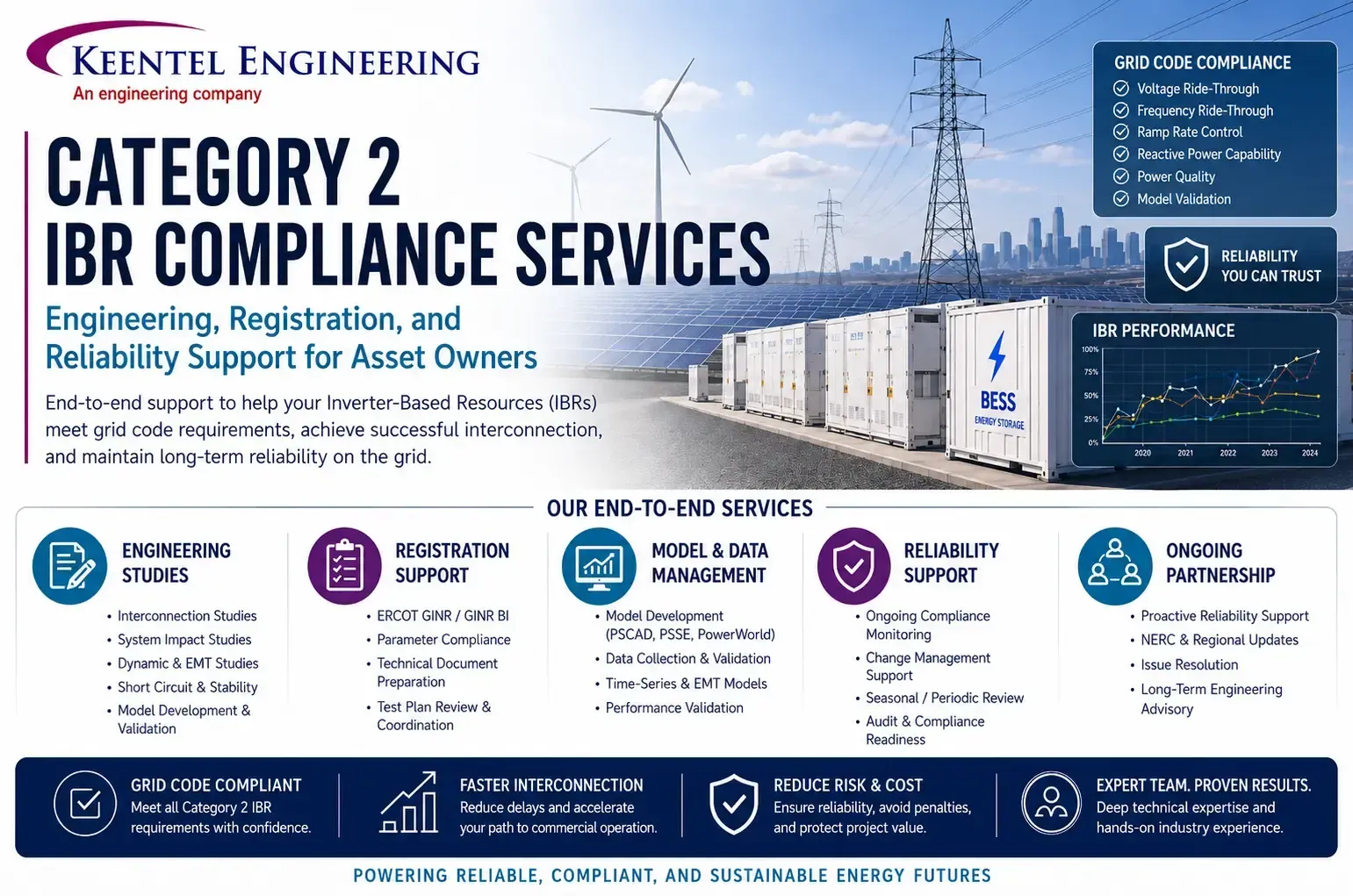
Category 2 IBR Compliance Services for Solar, Wind & BESS
By SANDIP R PATEL • May 16, 2026
Category 2 IBR compliance services for solar, wind, and BESS projects. Learn NERC registration, EMT modeling, and PRC readiness today.
Read More →
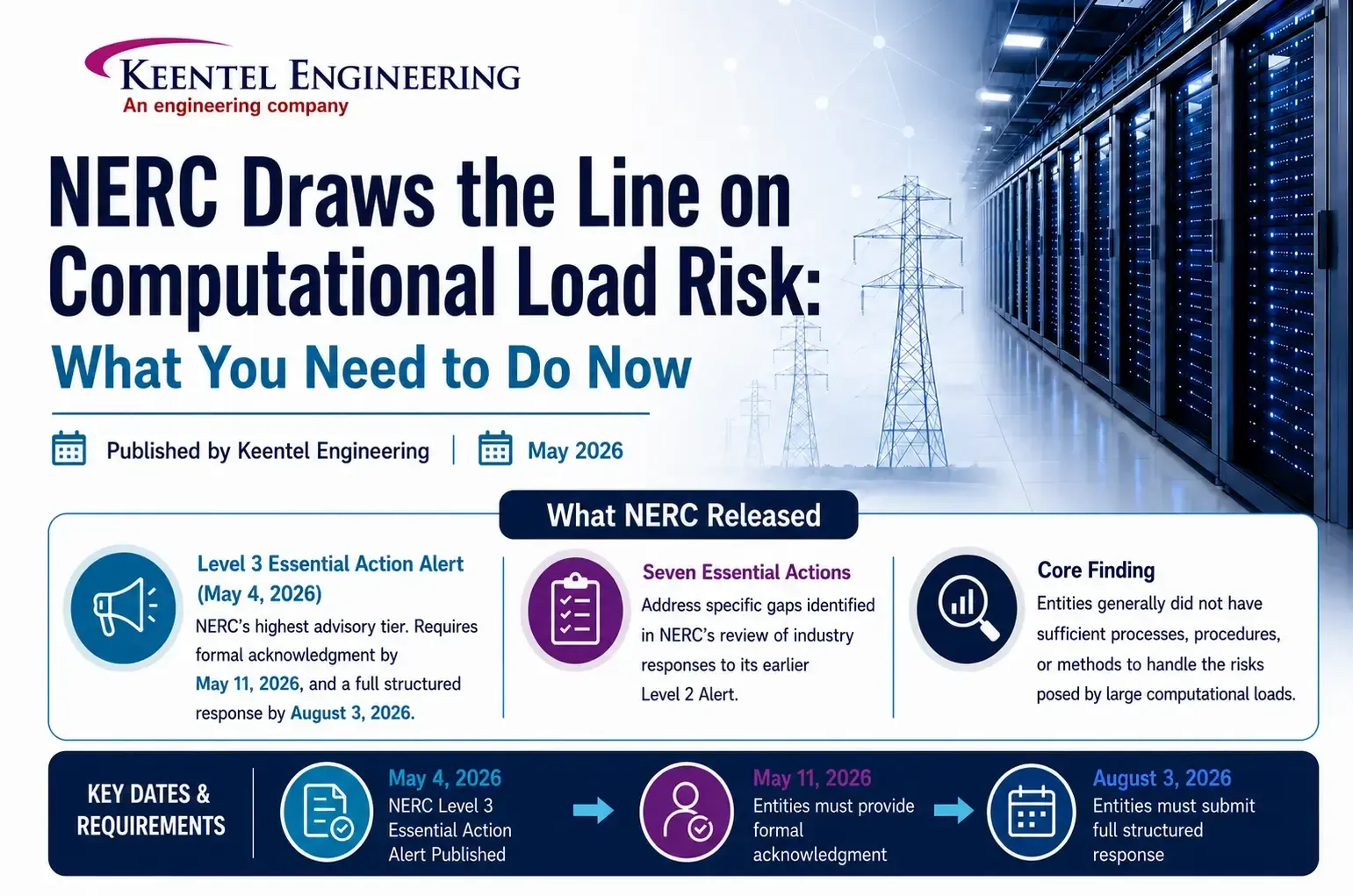
NERC Draws the Line on Computational Load Risk: What You Need to Do Now
By SANDIP R PATEL • May 8, 2026
Understand NERC large load compliance, EMT studies, and computational load modeling for AI data center reliability.
Read More →
The Complete Lifecycle of a Power Substation Project: From Design to Commissioning (A Keentel Engineering Technical Guide) Source Reference
By SANDIP R PATEL • April 19, 2026
Explore the full lifecycle of a power substation project with Keentel Engineering, covering design, construction, and commissioning. Learn more about AIS, GIS, and NERC compliance.
Read More →
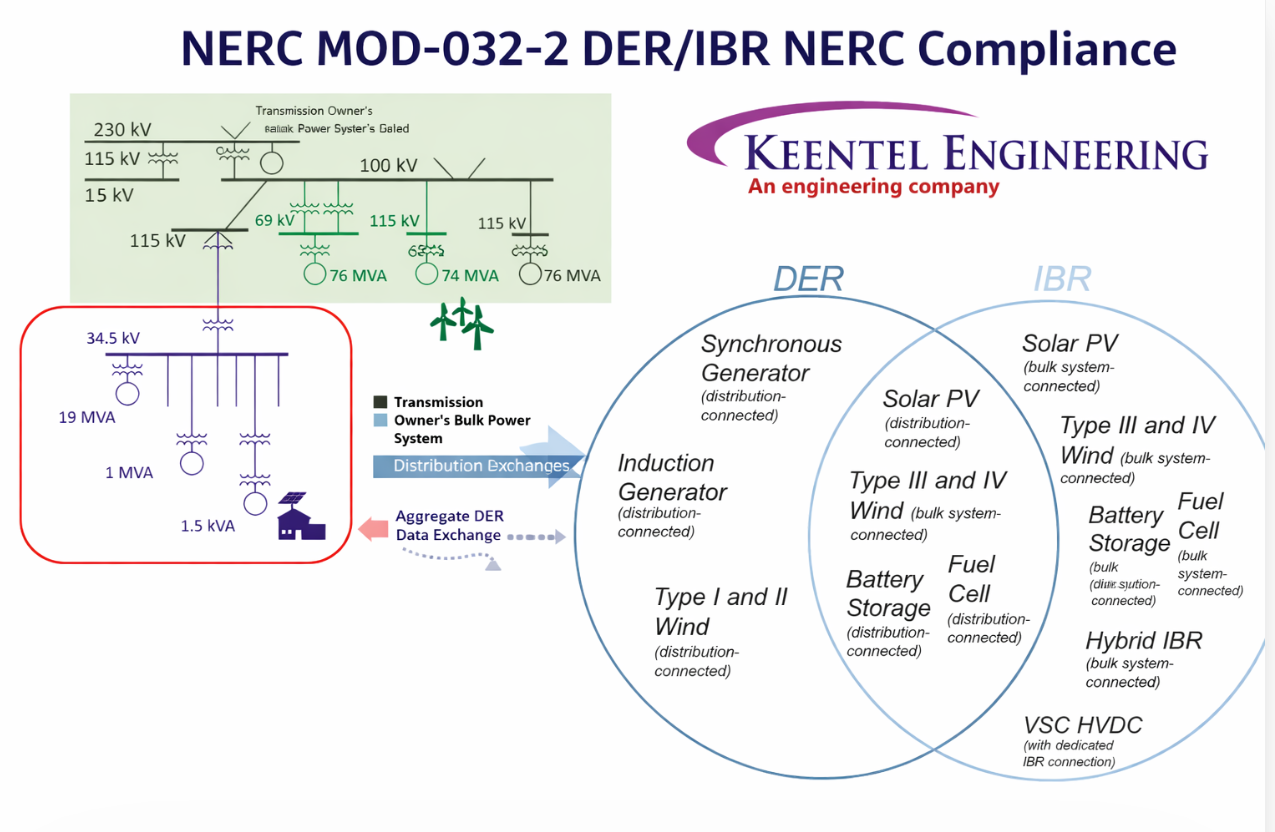
NERC MOD-032-2, IBR & DER Modeling: What It Means for Grid Reliability—and How Keentel Engineering Leads Compliance
By SANDIP R PATEL • April 18, 2026
Discover Keentel Engineering's expert solutions for NERC MOD-032-2 compliance, IBR & DER modeling. Get your power systems future-ready with our engineering excellence.
Read More →
End-to-End Substation Equipment Validation: From Design Verification to Field Commissioning (FAT to SAT) | Keentel Engineering
By SANDIP R PATEL • March 31, 2026
Learn the complete substation testing lifecycle including Type Testing, FAT, and SAT. Discover how to reduce risks, improve reliability, and ensure NERC compliance.
Read More →
NERC PRC-012-2 Compliance for Solar, Wind, and Battery Energy Storage Systems (BESS): What Generator Owners Must Know
By SANDIP R PATEL • March 7, 2026
Guide to NERC PRC-012-2 compliance for solar plants, wind farms, and BESS. Understand RAS requirements, generator owner obligations, and testing rules.
Read More →
FAC-008-5 Facility Ratings: NERC Compliance Services – Engineering Support for Reliable Bulk Power Systems | Keentel Engineering
By SANDIP R PATEL • March 5, 2026
Learn how FAC-008-5 defines Facility Ratings for BES equipment. Discover rating methodologies, compliance requirements, and engineering practices for NERC reliability standards.
Read More →
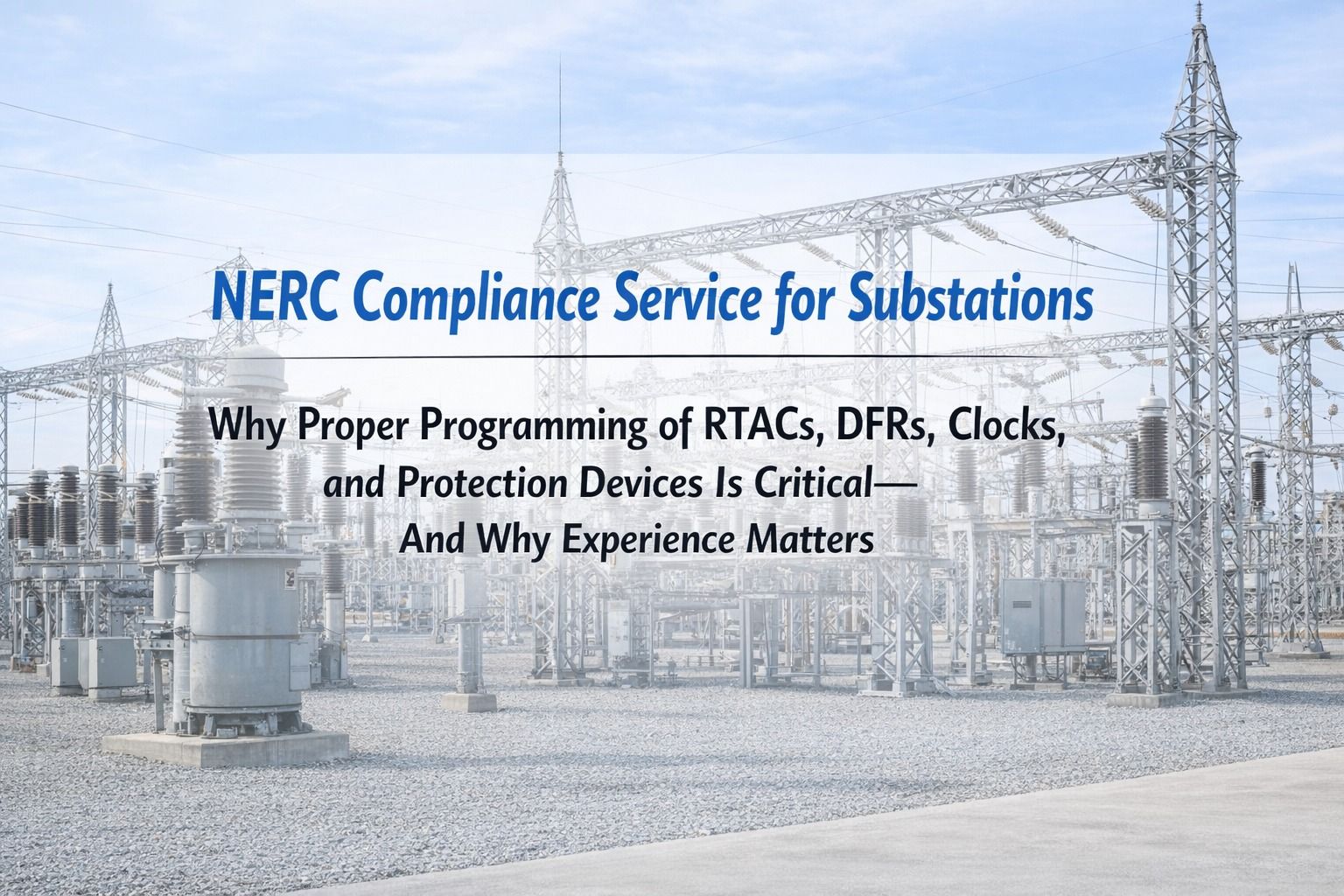
NERC Compliance Service for Substations
By SANDIP R PATEL • February 26, 2026
Ensure NERC compliance with proper programming of RTACs, DFRs, clocks, and protection devices. Learn how Keentel Engineering can help you meet PRC-028-1 standards for disturbance monitoring and reporting
Read More →
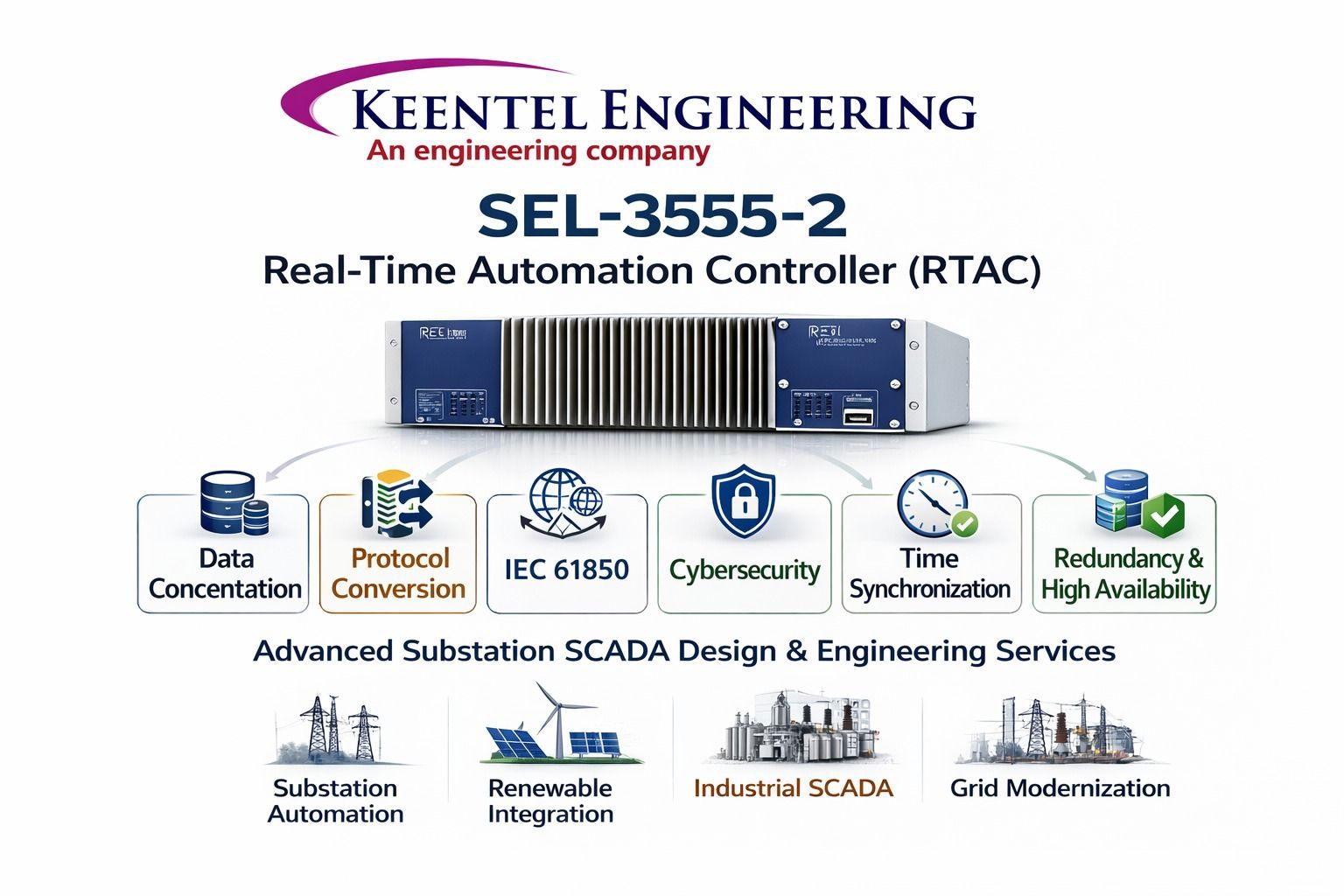
Advanced Substation SCADA Design Using the SEL-3555-2 RTAC How Keentel Engineering Delivers Secure, High-Performance, Standards-Compliant Automation Architectures
By SANDIP R PATEL • February 23, 2026
Explore advanced substation SCADA design using the SEL-3555-2 RTAC. Secure, IEC 61850-compliant, NERC-ready automation by Keentel Engineering.
Read More →
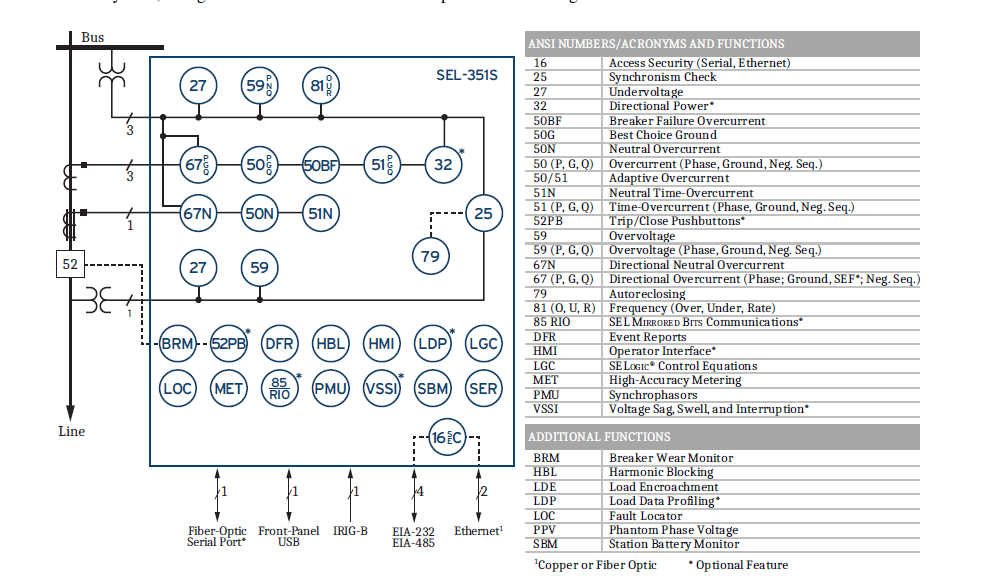
NERC Compliance and PRC Alignment with SEL-351S Feeder Protection Applications
By SANDIP R PATEL • February 20, 2026
Learn how SEL-351S feeder protection relays support NERC PRC compliance including PRC-005, PRC-023, PRC-024, PRC-027, and PRC-029. Discover protection coordination, ride-through validation, maintenance programs, and audit-ready documentation for reliable power system protection.
Read More →
February 2026 NERC Event Calendar: Statistical & Strategic Breakdown
By SANDIP R PATEL • February 11, 2026
Explore the February 2026 NERC event calendar with insights on CIP cybersecurity, IBR reliability, Order 901 studies, cloud risk, and large load integration.
Read More →
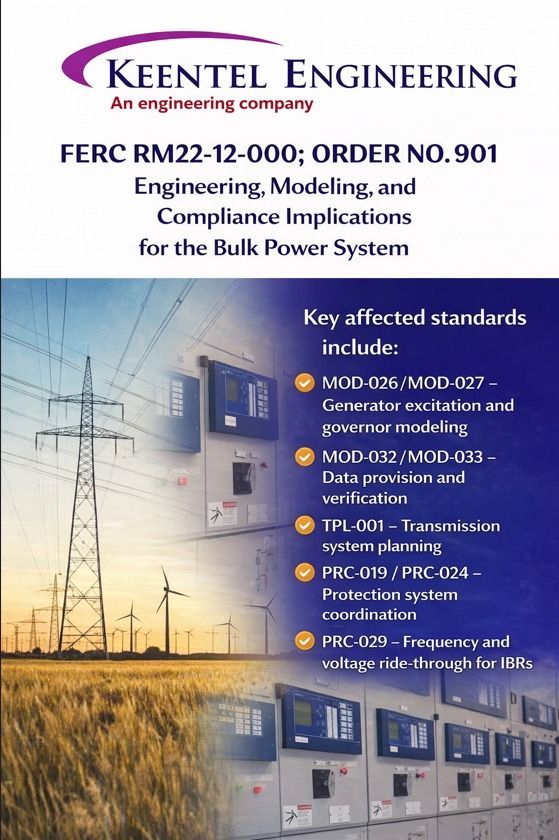
FERC RM22-12-000; ORDER NO. 901 Explained: Engineering, Modeling, and Compliance Implications for the Bulk Power System
By SANDIP R PATEL • February 1, 2026
Understand FERC RM22-12-000 Order 901 and its impact on power system modeling, NERC compliance, generator data, and protection standards.
Read More →
Inverter-Based Resource (IBR) Registration Initiative
By SANDIP R PATEL • January 31, 2026
Learn what the IBR Registration Initiative means for Category 2 Generator Owners and Operators, key deadlines through May 2026, required documentation, and how Keentel Engineering supports NERC compliance readiness.
Read More →
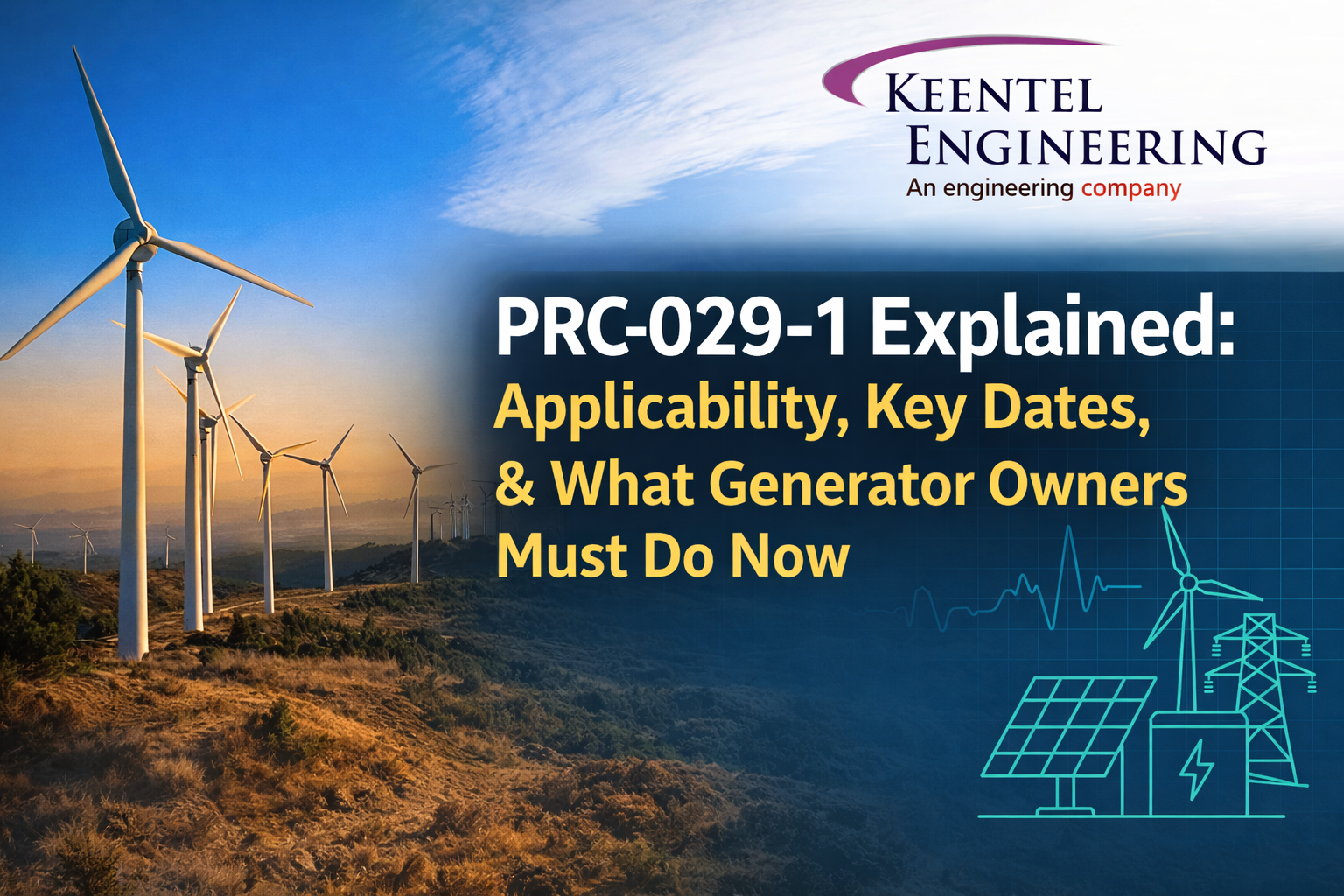
PRC-029-1 Explained: Applicability, Key Dates, and What Generator Owners Must Do Now
By SANDIP R PATEL • January 31, 2026
Understand NERC PRC-029-1 ride-through requirements for IBRs, key compliance dates through 2026, applicability to BES and non-BES assets, and what Generator Owners must do now.
Read More →
Category 2 Inverter-Based Resource (IBR) Registration & Compliance
By SANDIP R PATEL • January 31, 2026
Complete guide to Category 2 IBR registration and compliance, including NERC requirements, FERC Order 901, CMEP enforcement, applicable standards, and preparation steps.
Read More →
2025–2026 Winter Reliability Assessment: What It Means for Grid Reliability, Compliance, and Engineering Strategy
By SANDIP R PATEL • January 29, 2026
The 2025–2026 Winter Reliability Assessment highlights rising winter demand, resource mix shifts, and NERC compliance changes, impacting grid reliability and engineering.
Read More →
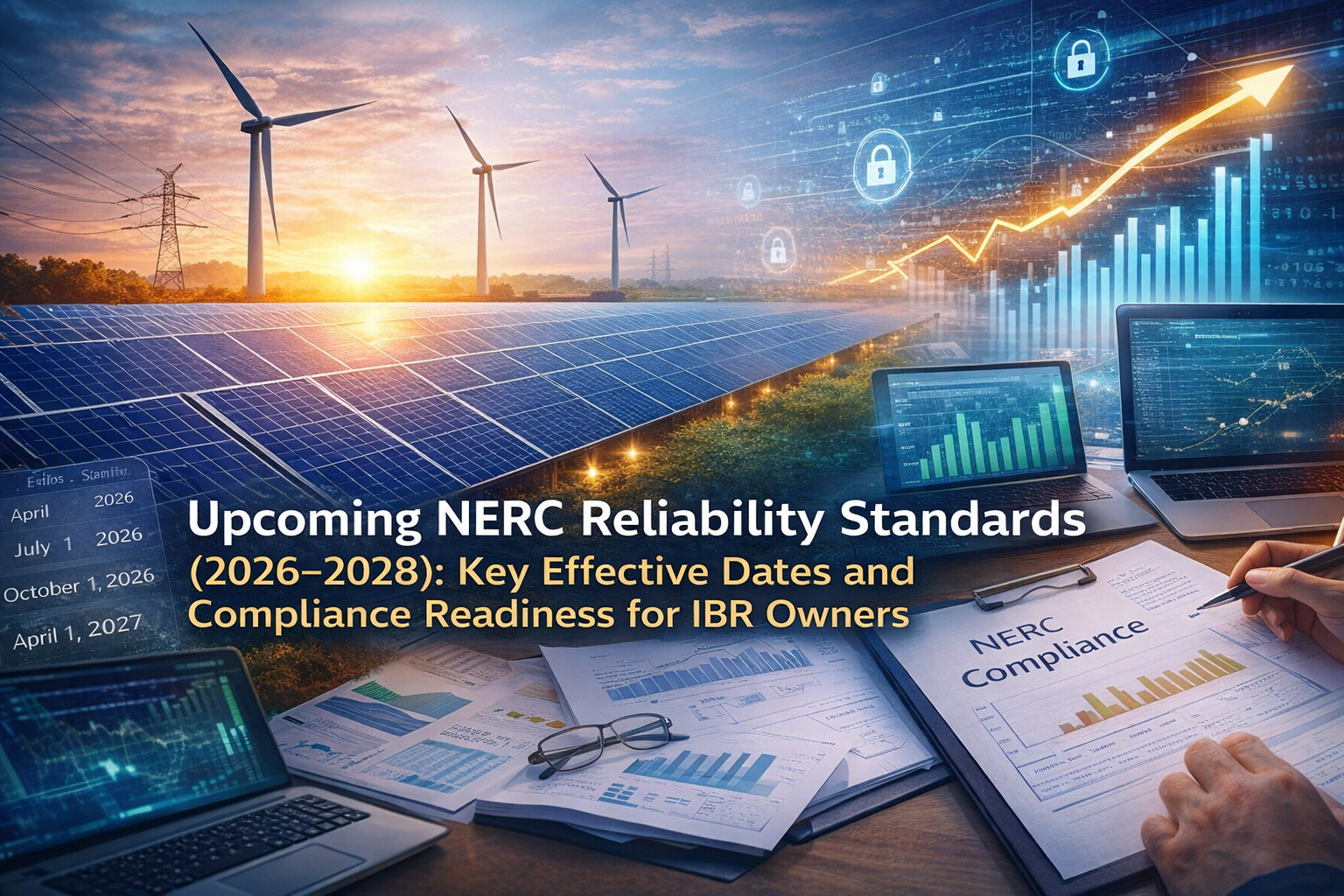
Upcoming NERC Reliability Standards (2026–2028) | IBR Compliance Guide
By SANDIP R PATEL • December 29, 2025
A practical guide to upcoming NERC Reliability Standards (2026–2028), key effective dates, and compliance readiness for inverter-based resource owners.
Read More →
Navigating NERC PRC-029-1: A Practical Guide for Inverter-Based Resource Owners
December 19, 2025
A practical guide to NERC PRC-029-1 for inverter-based resource owners. Learn ride-through requirements, compliance timelines, exemptions, and how Keentel Engineering supports PRC-029-1 readiness.
Read More →
NERC Compliance Services: The Complete Guide to PRC-004-6 Misoperations & MIDAS Reporting
By SANDIP R PATEL • November 26, 2025
Learn how to stay compliant with NERC PRC-004-6 and MIDAS reporting. Keentel Engineering provides misoperation analysis, CAP support, and audit-ready documentation.
Read More →
NERC Compliance Services: The Complete Guide to PRC-004-6 Misoperations & MIDAS Reporting (Keentel Engineering)
By SANDIP R PATEL • November 15, 2025
Learn how PRC-004-6 misoperations and MIDAS reporting work. A complete NERC compliance guide from Keentel Engineering for utilities and power entities.
Read More →
PJM MOD-032 Data Submission Process for Generator and Transmission Owners | Keentel Engineering
By SANDIP R PATEL • October 30, 2025
Learn how Generator and Transmission Owners meet PJM MOD-032 data submission requirements using Gen Model, Model on Demand, and ASPEN tools for NERC compliance.
Read More →
Understanding Simultaneous Voltage-Sensitive Load Reductions Amid Industrial Electrification, Data Center Expansion, and the Rise of Cryptocurrency Mining Facilities
By SANDIP R PATEL • October 19, 2025
Explore NERC’s 2025 review on simultaneous voltage-sensitive load reductions amid industrial electrification, data center growth, and crypto mining.
Read More →
Advancing Power System Design Practices with IEEE PES TR 126
By SANDIP R PATEL • September 25, 2025
Discover how IEEE PES TR 126 modernizes power system design practices. Keentel Engineering explains reliability, resilience, and NERC compliance for future-ready grids.
Read More →
NERC MOD-033-1 Steady-State & Dynamic Model Validation
By SANDIP R PATEL • September 13, 2025
Validate power-flow & dynamic models per MOD-033-1 using real-world data. Improve study accuracy, reliability, and compliance. Partner with Keentel.
Read More →
Excited to Connect at RE+ Las Vegas – Booth #1423- Keentel Engineering
By SANDIP R PATEL • August 30, 2025
Join Keentel Engineering at RE+ 2025 in Las Vegas (Booth #1423), Sept 8–11. Explore renewable energy, BESS, substation design, NERC compliance, and advanced power system studies.
Read More →
Verification of Generator Models: NERC MOD-026-2 & MOD-027 Reliability Standards
By SANDIP R PATEL • August 25, 2025
Explore NERC MOD-026-2 & MOD-027 requirements for generator model verification, EMT simulations, and compliance. Insights from Keentel Engineering.
Read More →
Mastering Synchronous Generator Modeling for Grid Stability: Insights from IEEE 1110-2019 and Keentel Engineering
By SANDIP R PATEL • August 22, 2025
Learn how IEEE 1110-2019 improves synchronous generator modeling for power system stability, validation, and NERC compliance in modern grids.
Read More →
Data Center Grid Readiness & Engineering Solutions
By SANDIP R PATEL • August 15, 2025
Discover how Keentel Engineering tackles data center growth challenges with advanced grid readiness solutions—covering load forecasting, interconnection, NERC compliance, and AI-driven demand response.
Read More →
Navigating PRC-029-1- Enhancing Grid Reliability Through Inverter-Based Ride-Through Requirements
By SANDIP R PATEL • July 31, 2025
Understand PRC-029-1 ride-through rules for IBRs. Stay NERC-compliant with this expert guide on voltage, frequency, ROCOF, and protection updates.
Read More →
NERC PRC-019 Compliance Guide
By SANDIP R PATEL • July 28, 2025
Ensure grid reliability and avoid unnecessary trips with Keentel’s complete PRC-019 compliance services. Engineering support for synchronous and DER systems.
Read More →
NERC Alert 3: IBR Performance & Modeling Requirements
By SANDIP R PATEL • July 4, 2025
Explore essential NERC Alert 3 actions for IBRs. Learn how TOs, TPs, PCs & GOs must respond with updated models, criteria, and compliance strategies.
Read More →
Keentel Engineering – July 2025 Newsletter
By SANDIP R PATEL • July 1, 2025
Explore July 2025 grid reliability trends, IBR registration mandates, and NERC compliance updates. Stay ahead with Keentel’s future-ready engineering insights.
Read More →
PLX82-MNET-61850 Gateway for NERC-Compliant Substations
By SANDIP R PATEL • June 26, 2025
Enable seamless Modbus to IEC 61850 integration with the PLX82-MNET-61850 gateway. Achieve NERC compliance with audit-ready substation communication.
Read More →
Enhancing Grid Resilience: NERC PRC-029-1 Ride-Through Requirements for Inverter-Based Resources
By SANDIP R PATEL • June 20, 2025
Explore NERC PRC-029-1 ride-through requirements for inverter-based resources (IBRs). Learn how it enhances grid reliability with FERC Order No. 901 support.
Read More →
Empowering NERC PRC-028 Compliance with TESLA 4000: A Keentel Engineering Perspective
By SANDIP R PATEL • June 19, 2025
Ensure NERC PRC-028 compliance with TESLA 4000 and Keentel Engineering’s expert integration, monitoring, and audit support services for utilities and GOs.
Read More →
PRC-026 Compliance Guide for Transmission Relay Performance During Stable Power Swings
By SANDIP R PATEL • June 13, 2025
Ensure your relays don’t trip during stable power swings. Learn how PRC-026 compliance works, what relays it applies to, and how to automate your evaluations.
Read More →
NERC.com Modernization: What Engineers and Grid Operators Need to Know
By SANDIP R PATEL • May 30, 2025
Explore the latest updates from NERC.com and what modernization means for power engineers and grid operators across the U.S.
Read More →
Design Stability & NERC Deadlines in Power Projects | Keentel
By SANDIP R PATEL • May 30, 2025
Explore best practices to ensure design stability in power systems and stay ahead of NERC reporting requirements in upcoming compliance cycles.
Read More →
NERC Level 3 Alert Compliance Checklist for IBRs
By SANDIP R PATEL • May 23, 2025
Get your compliance checklist for NERC Level 3 alerts. Essential reading for IBR generator owners navigating updated NERC requirements.
Read More →
System Impact Study for Confidential 230 kV Transmission Interconnection
By SANDIP R PATEL • May 21, 2025
Explore a detailed System Impact Study for a 230 kV interconnection project, ensuring NERC compliance and reliable grid integration.
Read More →
Industry NERC News – May 2025 Update
By SANDIP R PATEL • May 19, 2025
Stay ahead of critical NERC compliance updates for May 2025, including cold weather reporting, IBR modeling deficiencies, active standards ballots, and upcoming reliability standards affecting the Bulk Power System.
Read More →
GIC Mitigation and Transformer Thermal Assessment Services by Keentel Engineering
By SANDIP R PATEL • May 15, 2025
Protect your grid from GMD threats with expert GIC modeling & transformer thermal assessments by Keentel. Ensure NERC TPL-007-1 compliance today.
Read More →
NERC Alert: Ensuring Reliability in Inverter-Based Resource (IBR) Model Quality
By SANDIP R PATEL • May 14, 2025
Learn how to respond to NERC’s IBR model alert. Discover key steps for PSPD, EMT validation, deadlines, and Keentel’s role in grid reliability compliance support.
Read More →
Navigating TPL-008-1: A Strategic Transmission Planning Guide for Extreme Temperatures
By SANDIP R PATEL • May 14, 2025
Understand TPL-008-1 transmission planning for heat & cold events. Keentel helps utilities ensure NERC compliance with benchmark studies & CAP support.
Read More →
Navigating the IBR Transformation: Our Perspective on NERC’s IBR Activities
By SANDIP R PATEL • May 12, 2025
Explore Keentel Engineering’s in-depth take on NERC’s IBR transformation guide, disturbance reports, compliance standards, and integration strategies to ensure bulk power system reliability.
Read More →
Generating Unit Winter Weather Readiness: Ensuring Resilience Through Cold Fronts
By SANDIP R PATEL • May 10, 2025
Ensure cold-weather resilience with Keentel’s NERC-aligned winter readiness programs for generators and IBRs. Prevent outages, improve grid reliability.
Read More →
White Paper: Enhancing Power System Design & Analysis with PSCAD & Keentel Engineering
By SANDIP R PATEL • May 9, 2025
Learn what PSCAD is, how it’s used for EMT simulation, and how Keentel provides PSCAD modeling, consultancy, and NERC-compliant engineering services.
Read More →
Keentel Engineering Insights: NERC Identifies New Grid Vulnerabilities – May 2025 Newsletter
By SANDIP R PATEL • May 9, 2025
Stay informed on NERC’s ITCS Canadian Analysis, key grid vulnerabilities, and May 2025 standards activities (PRC, MOD, CIP). Learn how Keentel Engineering’s planning and compliance services support resilient, interregional grid strategies.
Read More →
Difference Between OSHA, NEC, NFPA, and NERC Compliance in Electrical Engineering
By SANDIP R PATEL • May 9, 2025
Discover the key differences between OSHA, NEC (NFPA 70), NFPA, and NERC standards—and learn how Keentel Engineering ensures full regulatory compliance across your electrical engineering projects.
Read More →
What Do PRC-002-5 and PRC-028-1 Mean for Generator Owners & Transmission Owners?
By SANDIP R PATEL • May 9, 2025
Discover how NERC PRC-002-5 & PRC-028-1 impact Generator Owners and Transmission Owners. Keentel Engineering delivers turnkey disturbance monitoring, DME design, and audit-ready compliance support.
Read More →
NERC Compliance Service – Empowering Grid Reliability with FERC Order 901 & Latest NERC Standards
By SANDIP R PATEL • May 9, 2025
Stay ahead with Keentel's NERC compliance modeling, FERC Order 901 support, MOD-032-2 validation, and MOD-026-2 compliance services for IBRs and transmission owners.
Read More →
NERC PRC-029-1 Compliance for Inverter-Based Resources
By SANDIP R PATEL • May 8, 2025
Ensure your solar, wind & BESS projects meet NERC PRC-029-1 ride-through standards with model tuning, relay coordination, disturbance analysis & audit-ready documentation.
Read More →
Distribution vs Sub-Transmission vs Bulk Electric System: An Interconnection Guide
By SANDIP R PATEL • May 1, 2025
Learn how IEEE 1547/2800, NERC “bright-line” rules, and the DOE i2X initiative shape distribution, sub-transmission, and Bulk Electric System classification—plus practical case studies from Keentel Engineering.
Read More →
NERC PRC-029-1 & PRC-024-4 Compliance for Inverter-Based & Synchronous Resources
By SANDIP R PATEL • May 1, 2025
Ensure NERC PRC-029-1 and PRC-024-4 compliance with Keentel Engineering's relay tuning, modeling support, and ride-through requirements for IBRs and synchronous generators.
Read More →
Power-System Modeling Services at Keentel Engineering
By SANDIP R PATEL • April 28, 2025
Expert power system modeling services using PSCAD, PSSE, and ETAP. Get accurate simulations, dynamic studies, and NERC-compliant engineering solutions.
Read More →
GIC Mitigation and Transformer Thermal Assessment Expertise at Keentel Engineering
By SANDIP R PATEL • April 26, 2025
Protect your grid assets with Keentel Engineering’s expert GIC mitigation and transformer thermal assessment services. Ensure NERC TPL-007-1 compliance today.
Read More →
PSCAD Modeling Services for Grid & Substations
By SANDIP R PATEL • April 25, 2025
Explore how Keentel Engineering uses PSCAD™ to model substations, inverters, protection schemes, and BESS systems. Ensure NERC & IEEE compliance today.
Read More →
Ensuring Grid Reliability with EMT Modeling Compliance – CAISO Requirements
By SANDIP R PATEL • April 23, 2025
Discover how Keentel Engineering helps energy developers meet CAISO EMT modeling compliance for inverter-based resources, BESS, and synchronous generators. PSCAD-based, NERC-aligned, and ready for submission.
Read More →
Ensuring NERC PRC-029-1 Compliance for Inverter-Based Resources (IBRs)
By SANDIP R PATEL • April 15, 2025
Ensure PRC-029-1 compliance for inverter-based resources. Keentel provides ride-through studies, system modeling, and NERC audit support. Contact Us!
Read More →
Why NERC Compliance Consultants Are Critical for Safety
By SANDIP R PATEL • January 30, 2025
Discover why NERC compliance consultants are essential for safety. Learn how they help ensure regulatory adherence and protect power system reliability
Read More →
What Is the Difference Between FERC and NERC?
By SANDIP R PATEL • November 23, 2024
Learn the key differences between FERC and NERC: FERC regulates energy markets, while NERC ensures the reliability of the electric grid.
Read More →
How Many NERC Standards Are There?
By SANDIP R PATEL • November 10, 2024
Discover the current number of NERC standards and their importance in ensuring electric grid reliability and security across North America
Read More →
Ensuring Grid Reliability: How NERC O&P 693 Compliance Services Benefit the Energy Sector
By SANDIP R PATEL • March 18, 2024
Ensure grid stability with Keentel's NERC compliance services. Contact us today for tailored solutions and a resilient energy future.
Read More →
Essential Steps for Commissioning Circuit Breakers
By SANDIP R PATEL • April 1, 2023
Learn the essential steps for commissioning circuit breakers, from wiring checks to high-voltage testing. Ensure safety, reliability & NERC compliance readiness.
Read More →
Gap Analysis Explained: NERC CIP Risk Assessment & Cybersecurity Compliance
By SANDIP R PATEL • January 17, 2022
Learn how NERC CIP gap analysis identifies cybersecurity risks, ensures compliance, and protects bulk power systems. Schedule your risk assessment
Read More →