01
Settings calculations
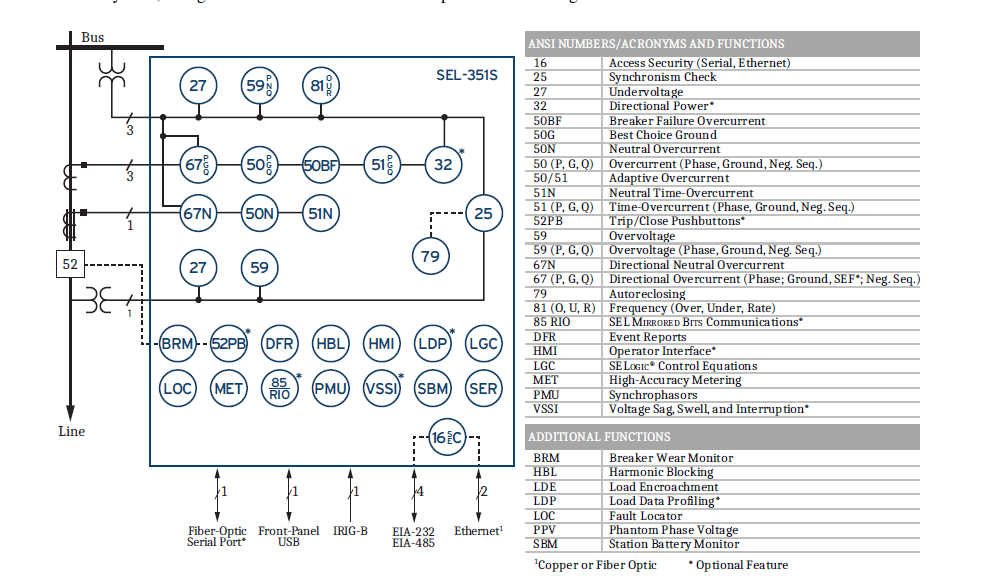
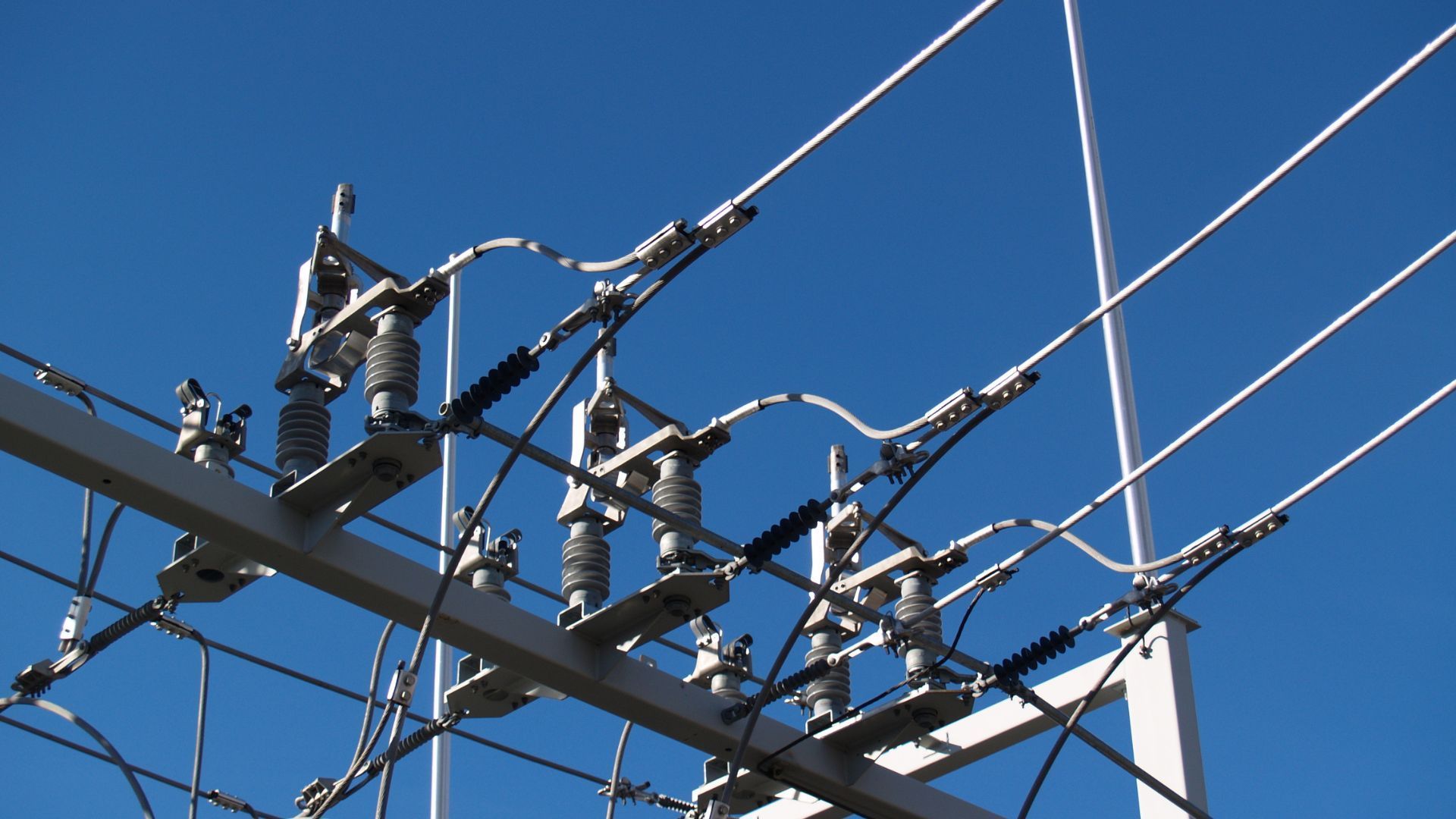
Complete relay settings for generators, GSUs, main power transformers, lines, buses, feeders and collector systems - SEL, GE, Siemens, ABB/Hitachi and other platforms.

Your Trusted Partner in Electrical Engineering and Power Systems
At Keentel Engineering, we deliver electrical power engineering services built on 30 years of experience and a commitment to excellence. Our clients include utilities, developers, EPCs, and public agencies across the U.S.
Unlike firms that sacrifice technical depth to chase billable hours, we prioritize precision, compliance, and value engineering. From transmission services and relay modeling to winterization and SCADA planning, we never compromise on quality.

At Keentel Engineering, we take pride in being the go-to electrical power engineering firm for power and utility system planning, substation design, protection, control, and power system analysis. The following attributes distinguish our team in utility-grade substation engineering and compliance-driven project delivery.
With three decades of hands-on project delivery, we bring unmatched expertise in substation layout design, substation electrical and civil engineering, relay protection, and grid-tie solutions. Our experience includes projects in complex terrain, urban retrofit environments, and utility-scale renewable integrations.
Our engineering process applies AutoCAD 3D, BIM modeling, and system-level substation design practices to ensure accurate planning, reduced errors, and efficient coordination across all project stakeholders.
Our workflow includes 3D substation design, enabling clash-free coordination between structural, electrical, and civil disciplines.
From grounding grid studies to relay protection settings, we engineer every detail to improve system reliability, performance, and operational safety. Our rigorous QA/QC process ensures compliance with IEEE, NFPA, and ISO/TSO interconnection standards.
Among leading electrical substation design companies, Keentel Engineering stands out for 30+ years of proven high-voltage and utility-grade project delivery.




First name, email and what you're interested in are all we need to get moving. Everything else, including drawings or an RFP, is optional.
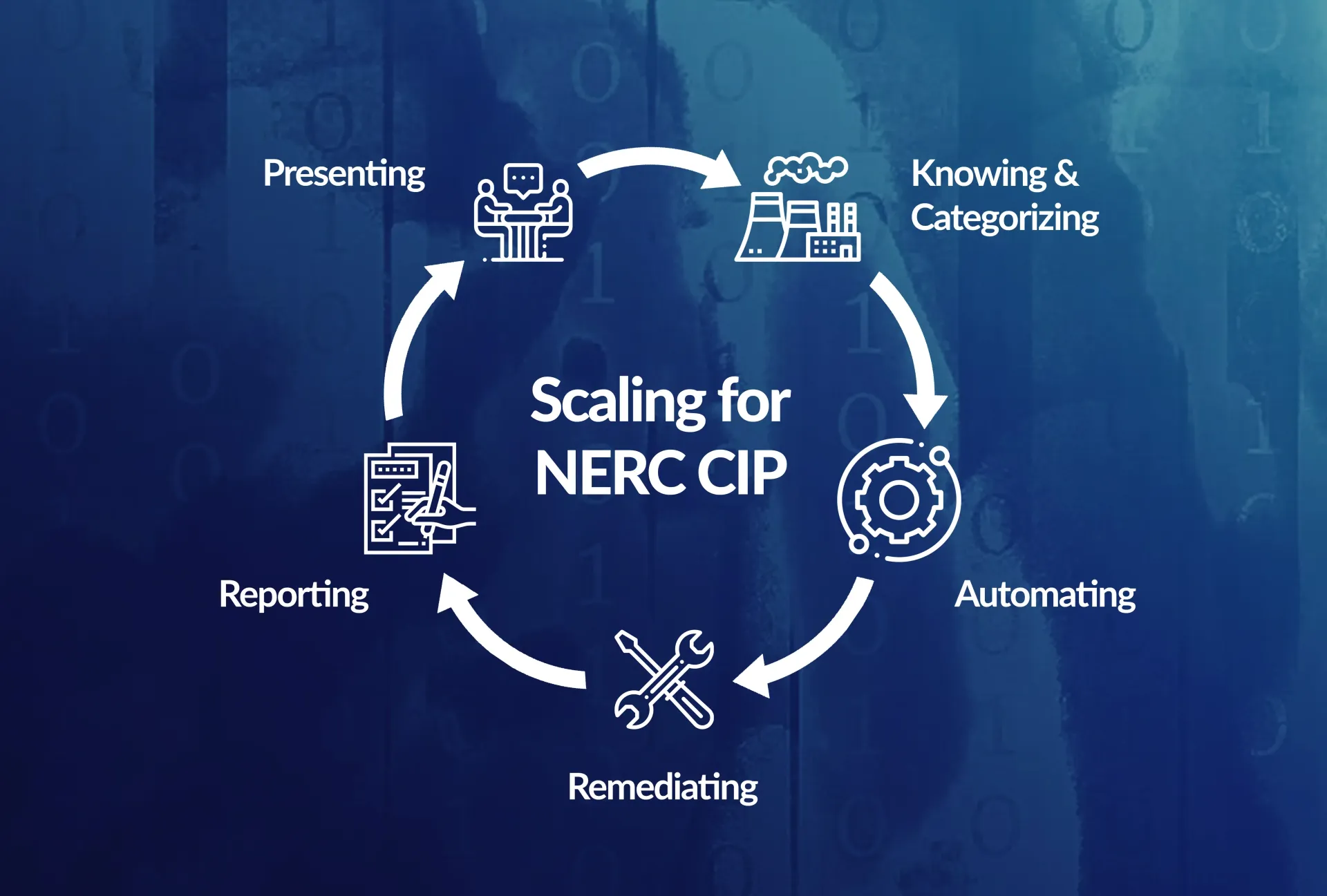
The Protection and Control (PRC) family is the largest engineering-driven family in the NERC Operations & Planning standards. Almost every PRC requirement ends in the same place: a protective relay, a control system limit or a test result that has to be shown to an auditor with a technical basis.
That means the evidence for PRC compliance is protection engineering work product - settings files, coordination plots, loadability calculations, capability curves, test reports and event analyses. When that work is done well but never documented against the requirement, the entity is exposed. When the documentation exists but the engineering behind it is thin, the entity is exposed in a different way.
Keentel produces protection engineering the way it will be audited: every setting traceable to a calculation, every calculation traceable to equipment data, and every result mapped to the PRC requirement it proves.
If you cannot explain why a setting is what it is, you cannot prove it is compliant. Setting justification is the single most common gap we find in PRC evidence.

Each standard below has - or will have - its own dedicated Keentel page. This table shows the engineering work that typically sits under each one. Always work to the version in effect for your facility and audit period.
| Standard | What it addresses | Engineering evidence we produce |
|---|---|---|
| PRC-002 / PRC-028 | Disturbance monitoring and recording at BES buses, generators and inverter-based resources | Monitoring-location selection, DME/DFR design and settings, triggers, time synchronization, data retention architecture |
| PRC-004 | Identifying, investigating and correcting Protection System Misoperations | Event reconstruction from relay and DFR records, root-cause analysis, corrective action plans, MIDAS reporting support |
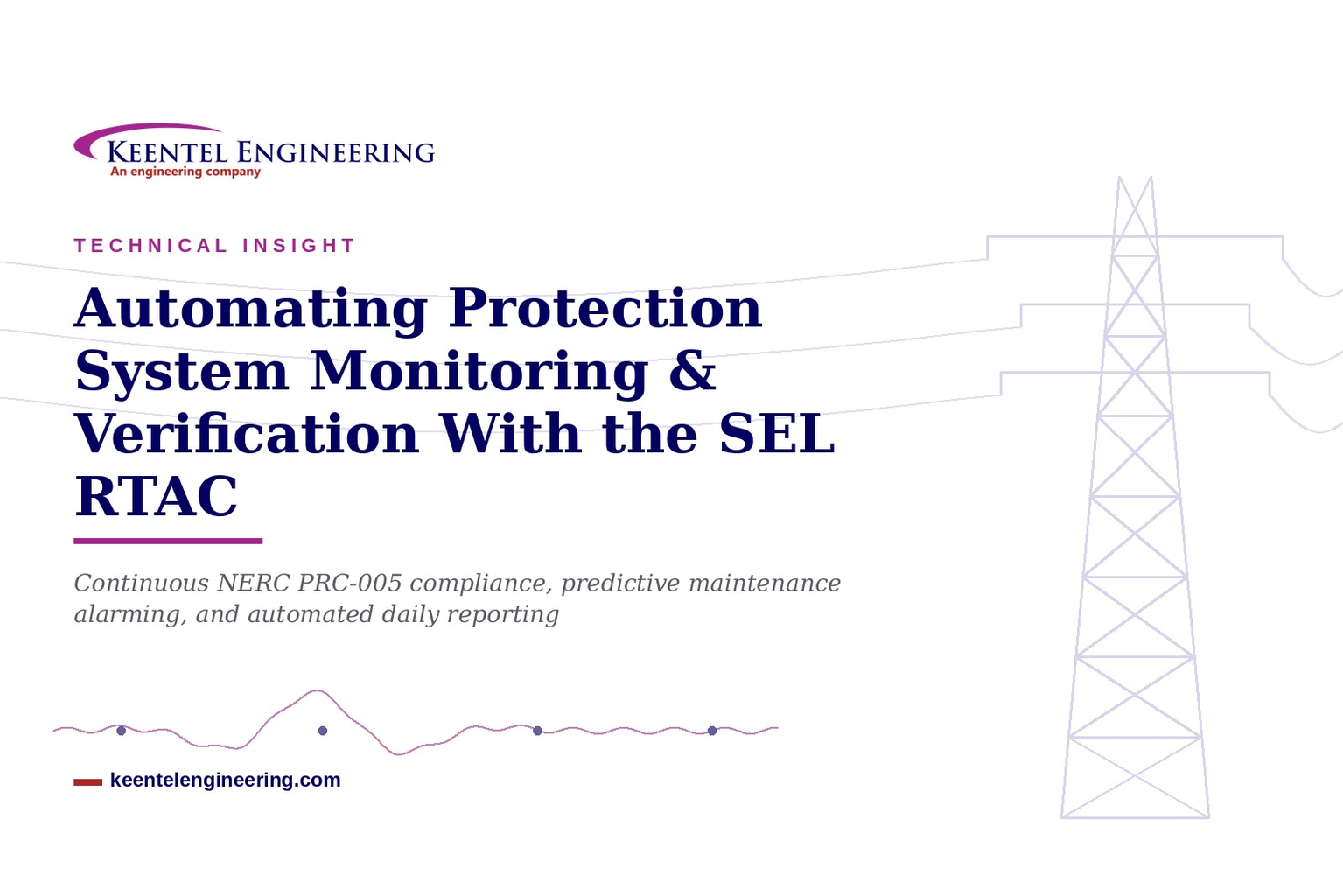
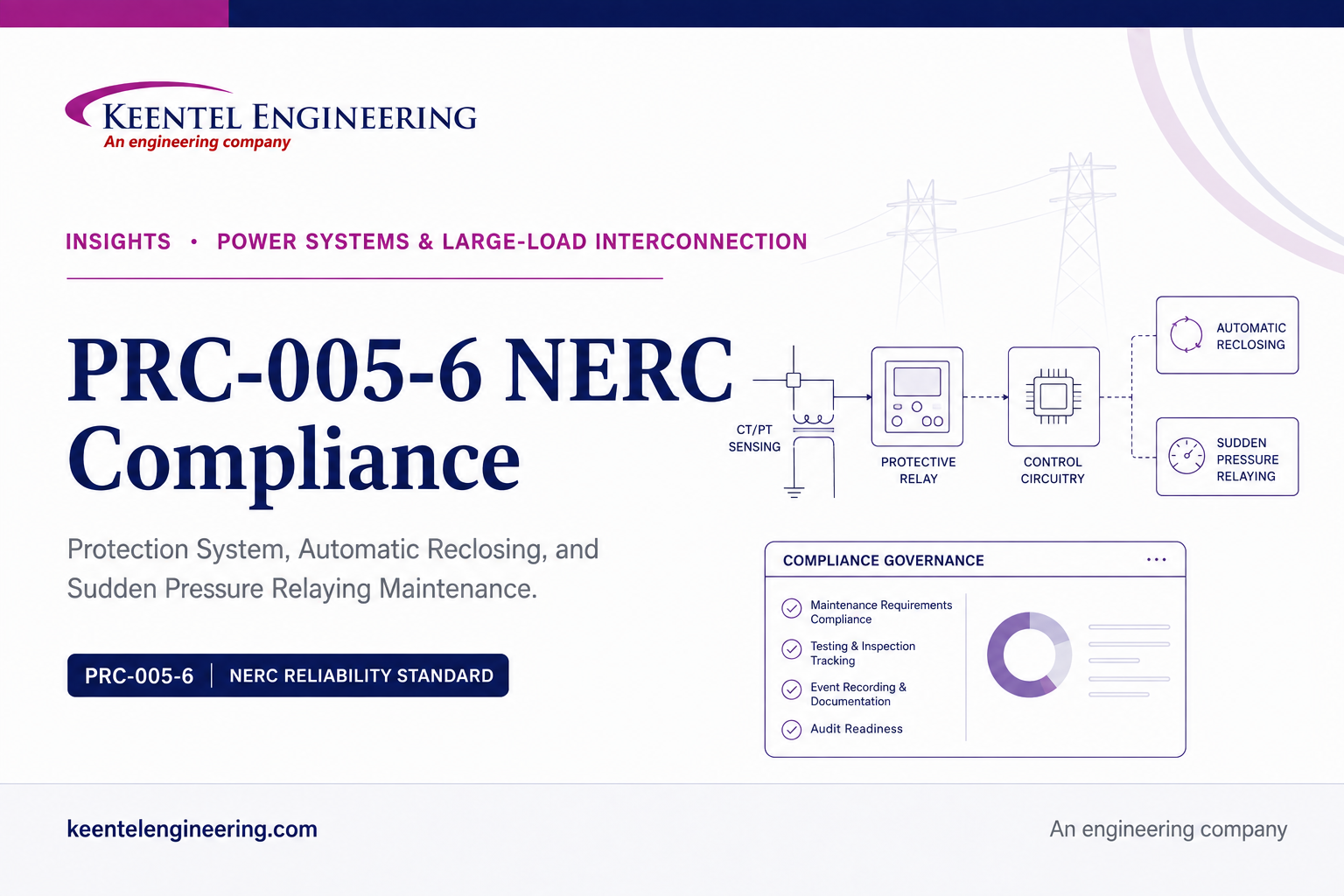
| PRC-005 | Protection System, Automatic Reclosing and Sudden Pressure Relaying maintenance | Component inventory, maintenance program basis (time-, performance- or condition-based), interval tracking, test-record review |
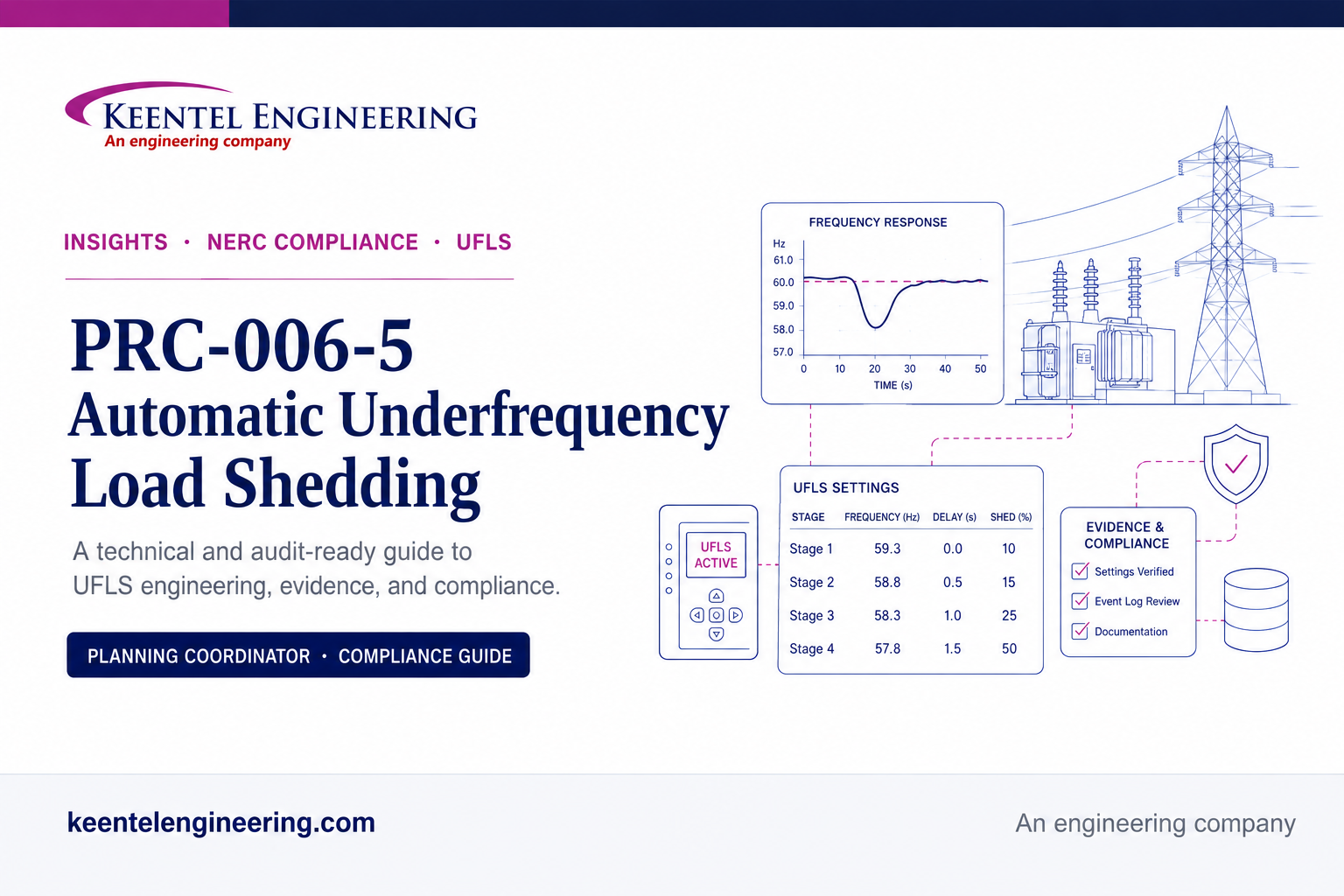
| PRC-006 | Underfrequency load shedding programs | UFLS relay settings, load-block verification, dynamic study support to the Planning Coordinator |
| PRC-012 | Remedial Action Schemes | RAS design review, logic and settings verification, functional testing and periodic evaluation support |
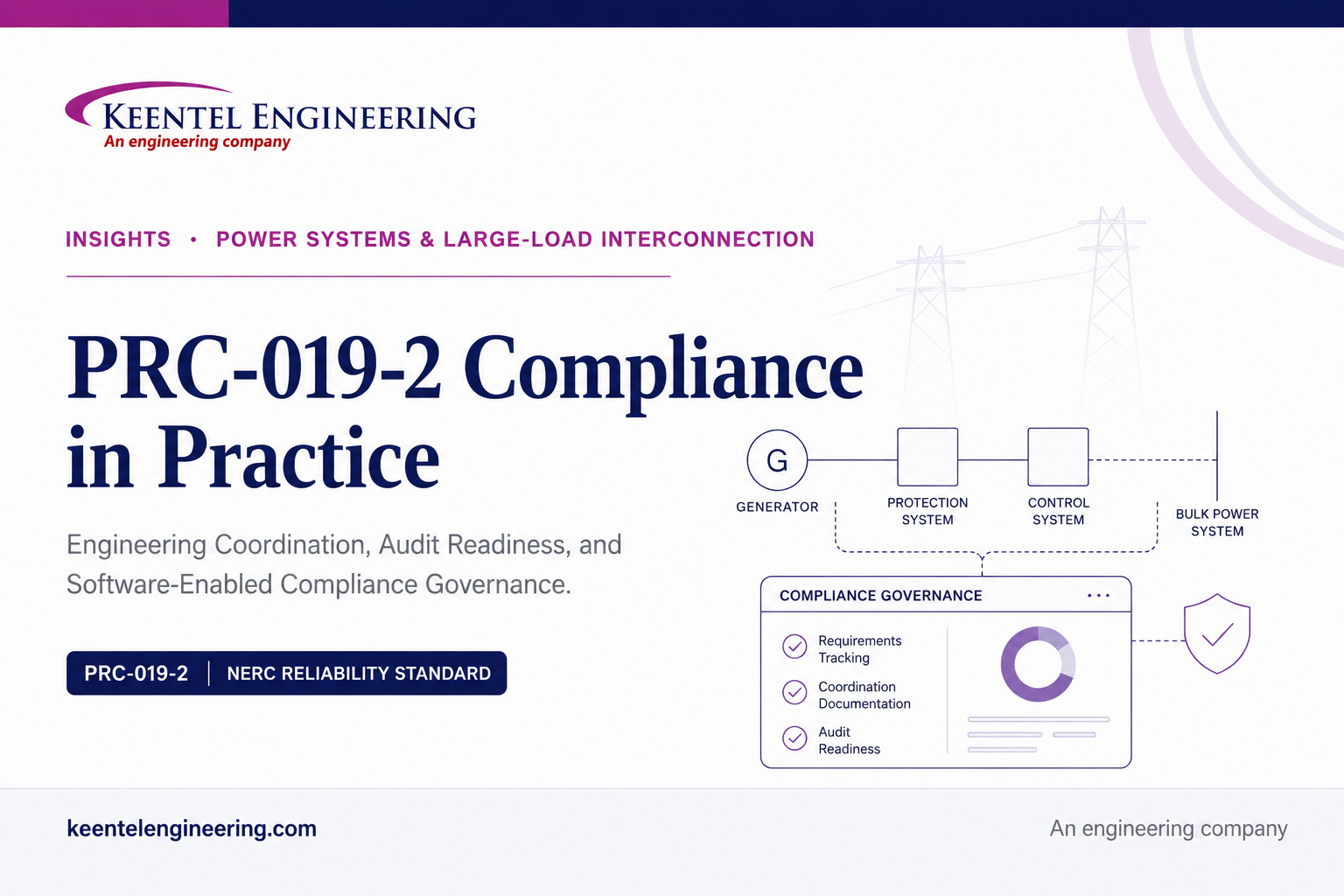
| PRC-019 | Coordination of generator voltage regulating controls, limiters and protection with equipment capability | Coordination studies with capability curves, excitation limiter and V/Hz settings, overlay plots |
| PRC-023 | Transmission relay loadability | Load-responsive relay reach and pickup calculations against the standard’s loadability criteria |
| PRC-024 | Generator frequency and voltage protective relay settings | Setting evaluation against the no-trip zones, documented exceptions and supporting calculations |
| PRC-025 | Generator relay loadability | Load-responsive relay settings evaluated against the options in the standard’s attachment |
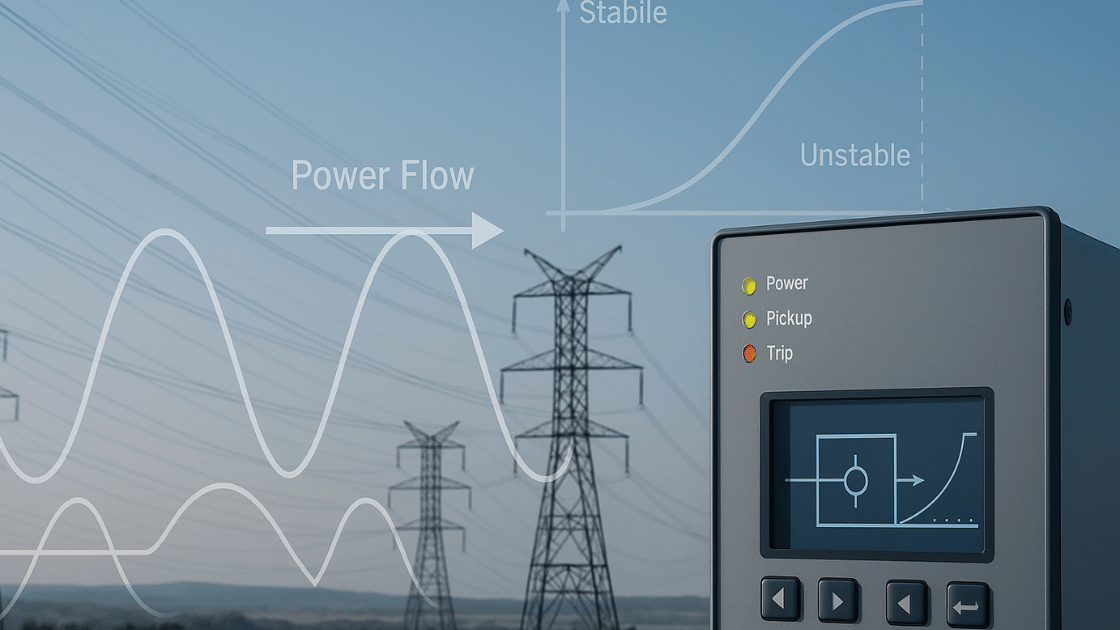
| PRC-026 | Relay performance during stable power swings | Evaluation of identified elements, impedance-trajectory analysis, power-swing blocking review |
| PRC-027 | Coordination of Protection Systems for faults | Coordination process documentation, short-circuit and coordination studies, periodic review records |
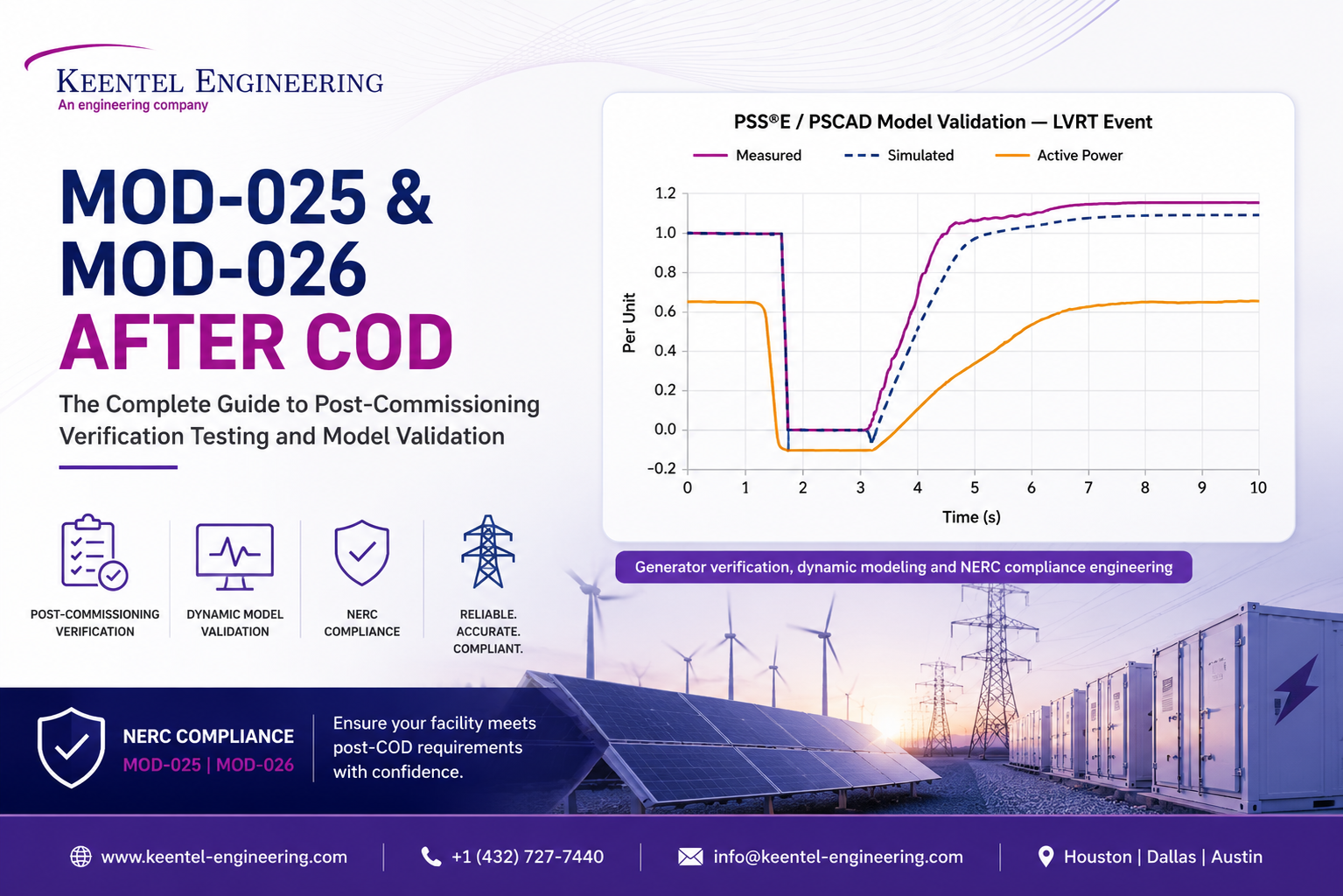
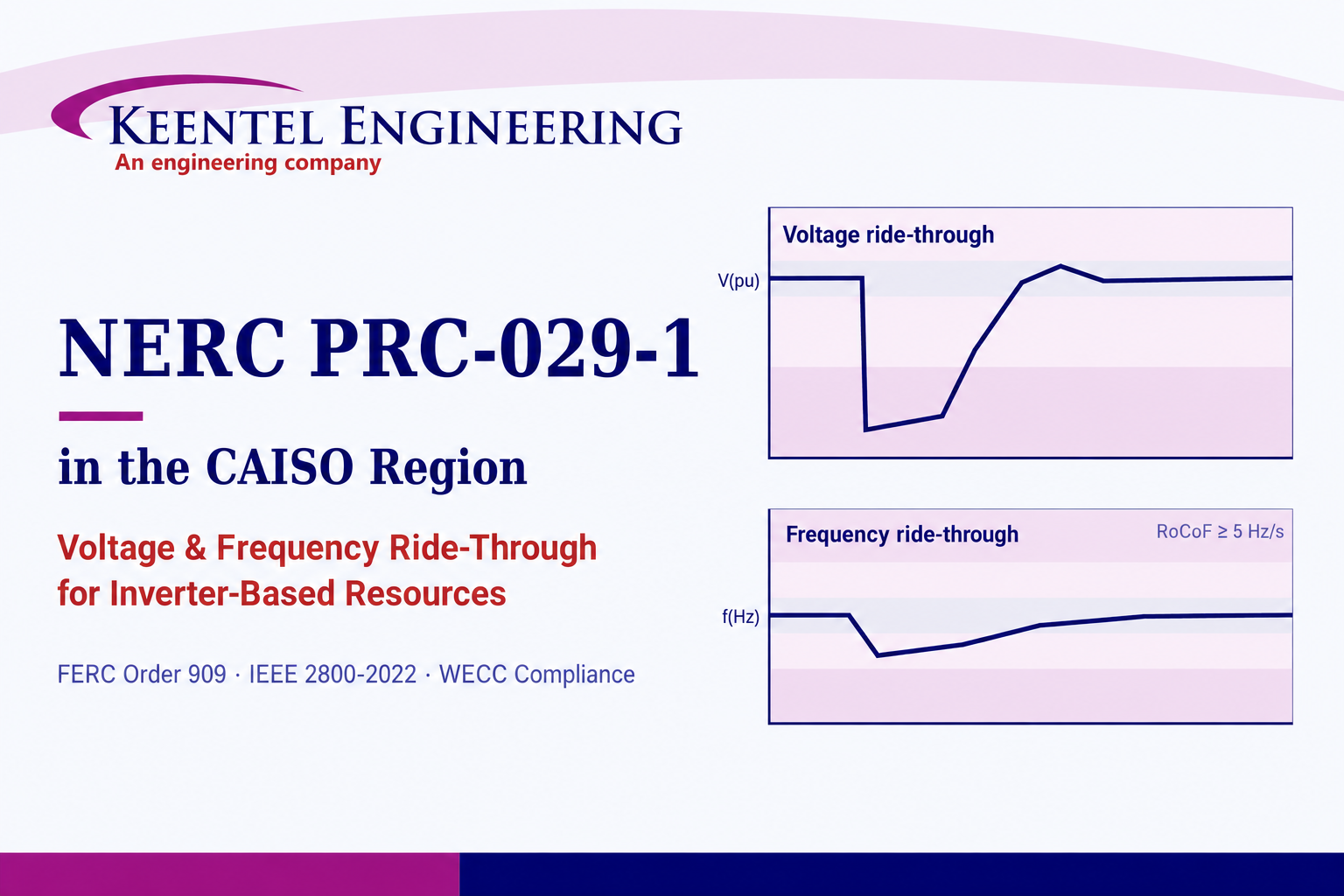
| PRC-029 | Frequency and voltage ride-through for inverter-based resources | Ride-through capability assessment, inverter and plant-controller settings review, EMT simulation, exemption documentation |
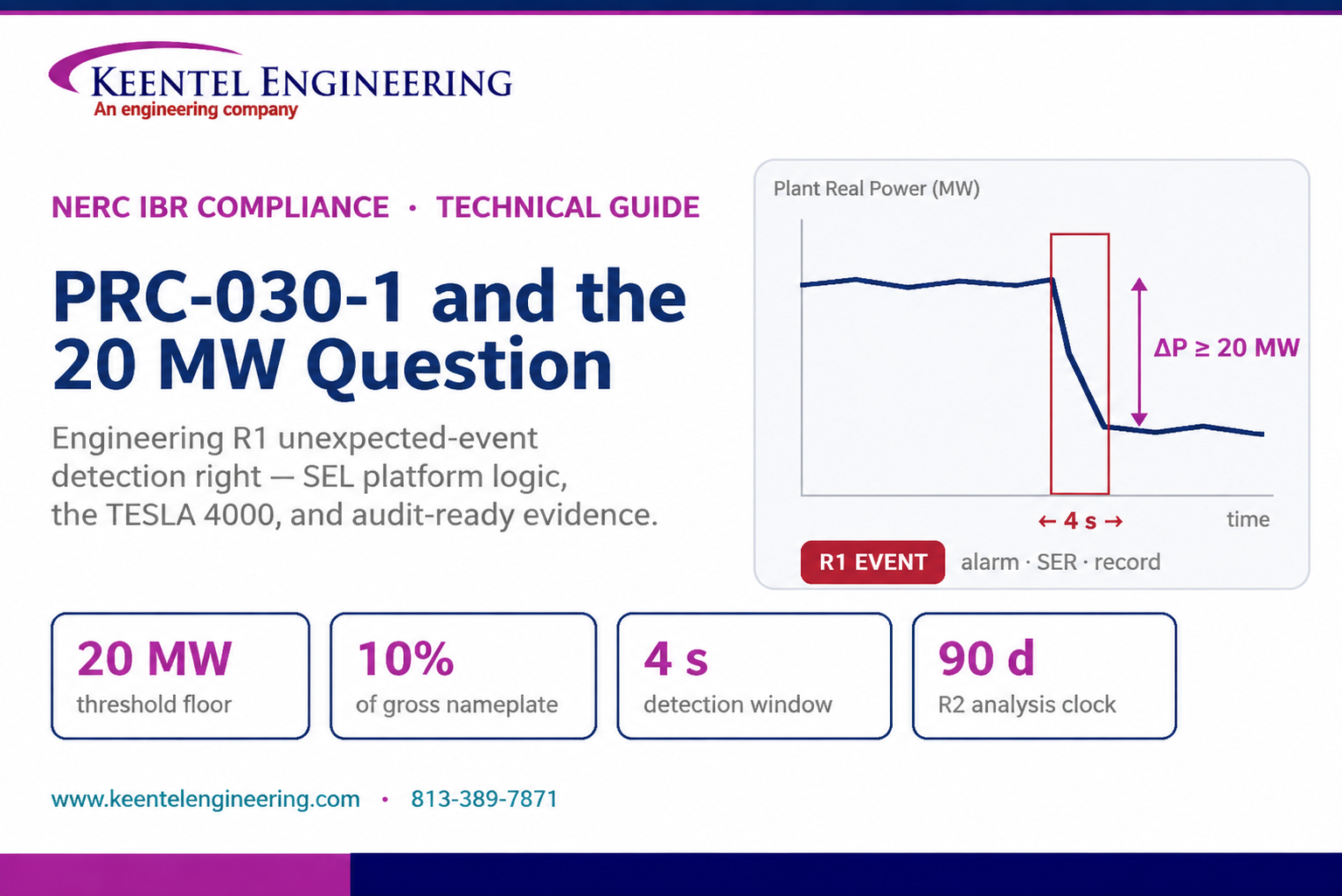
| PRC-030 | Unexpected inverter-based resource event mitigation | Event detection, performance review against expected behavior, corrective action plans |
Complete relay settings for generators, GSUs, main power transformers, lines, buses, feeders and collector systems - SEL, GE, Siemens, ABB/Hitachi and other platforms.
A written basis for each compliance-relevant setting: the equipment data, calculation, margin and requirement it satisfies.
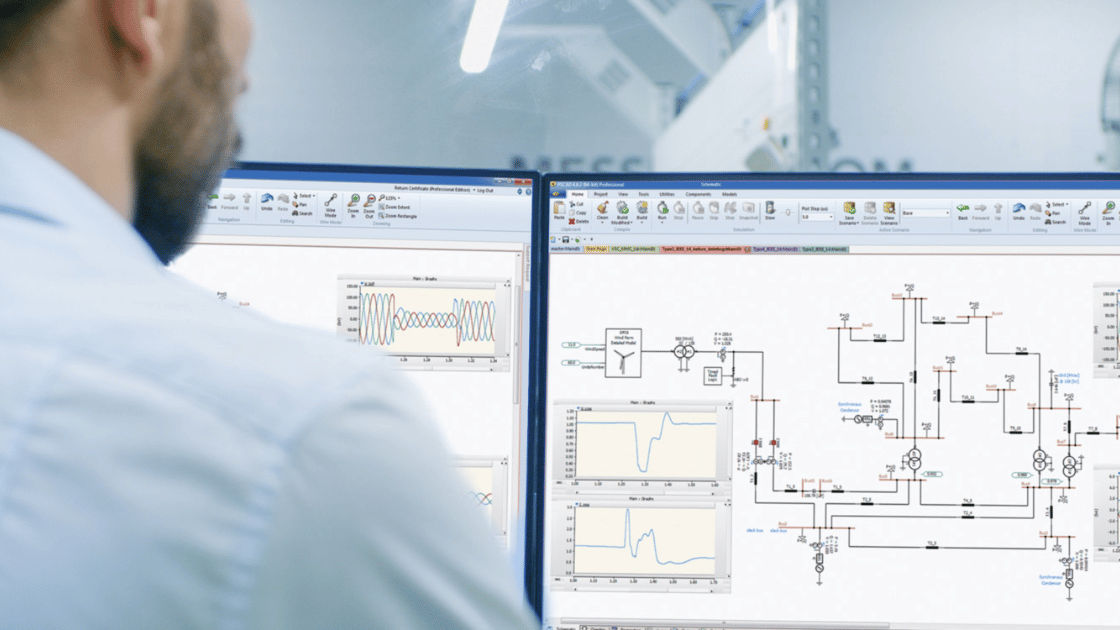
ASPEN, CAPE, ETAP and PSS®E-based fault studies and time-current coordination for PRC-027 and general protection reliability.
PRC-023 and PRC-025 calculations for load-responsive distance, overcurrent and out-of-step elements.
PRC-019 capability-curve overlays for synchronous machines and plant-level coordination for inverter-based resources.
PRC-024 and PRC-029 evaluations of protective and control settings against voltage and frequency ride-through requirements.
PRC-005 program design, component inventories, interval tracking and review of test records for completeness.
Relay and DFR record analysis, PRC-004 investigations, corrective action plans and PRC-030 event reviews.
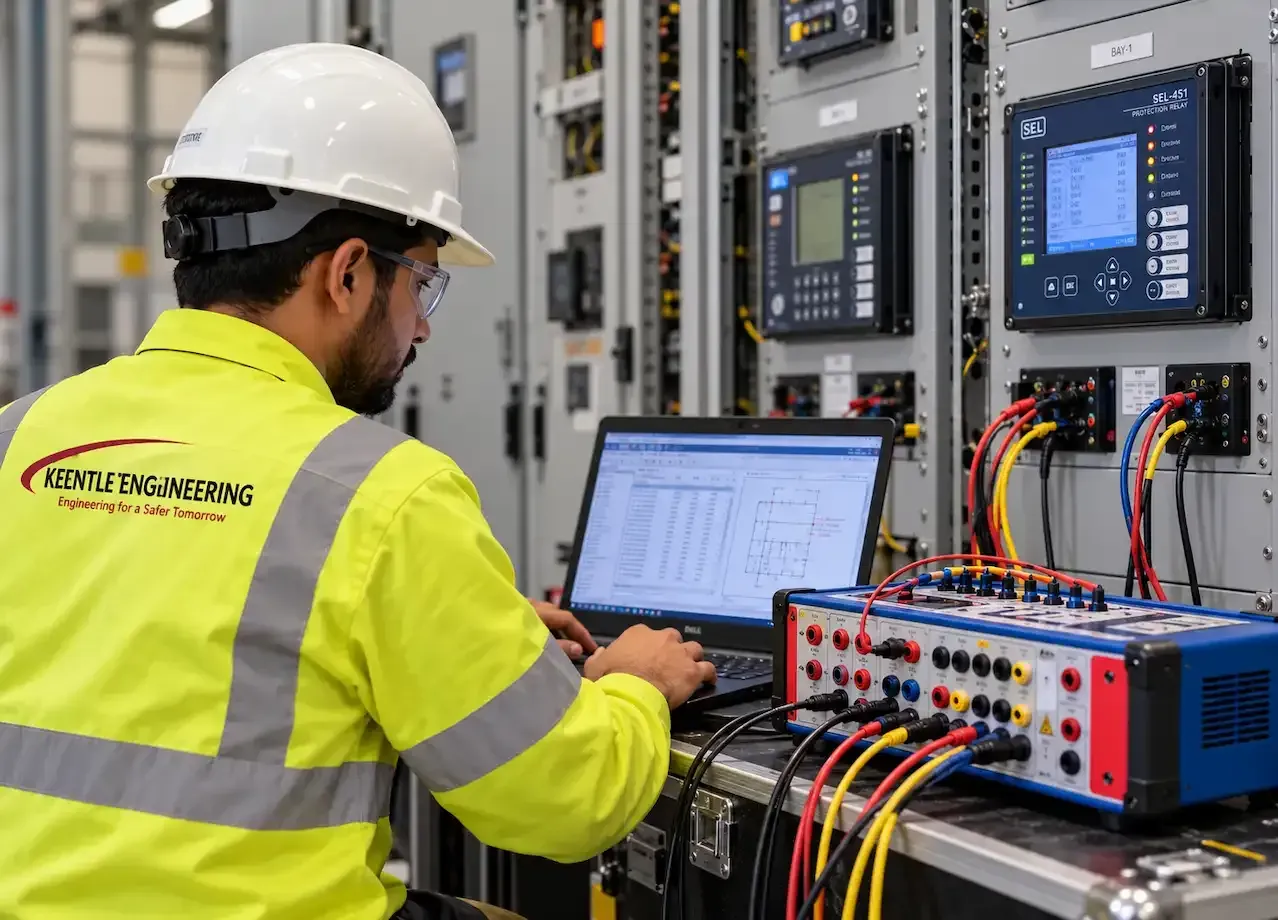
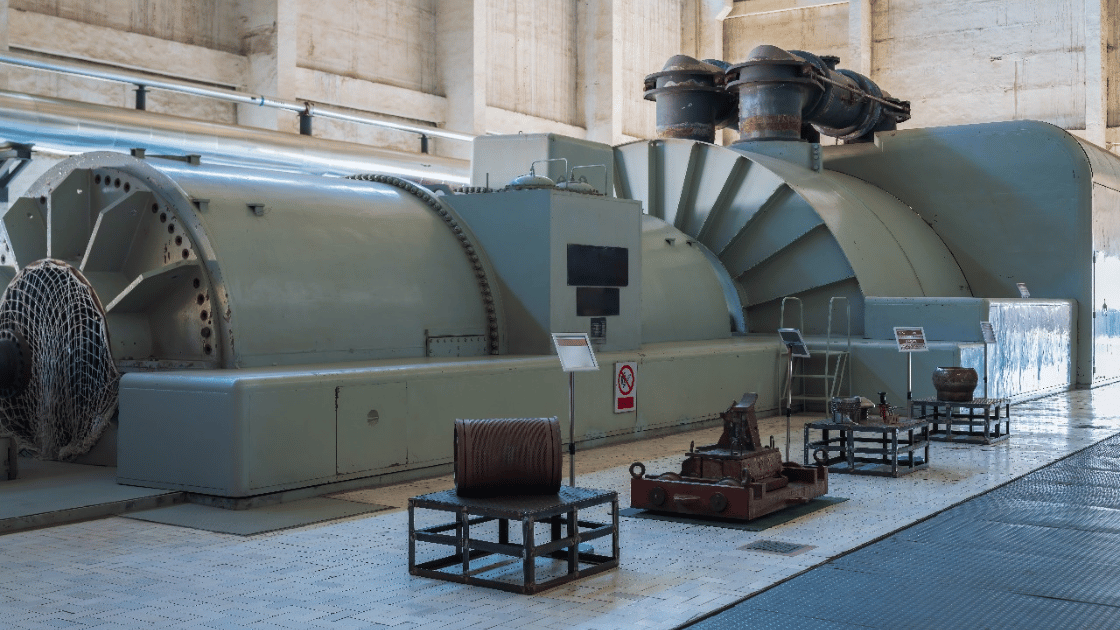
For thermal, hydro and combustion-turbine units, the core evidence is a coordinated set of generator, excitation and transformer protection: loss-of-field, over-excitation (V/Hz), stator and rotor protection, backup distance and overcurrent, and the excitation limiters that must coordinate with them. PRC-019, PRC-024 and PRC-025 are evaluated together because the same devices appear in all three.
For IBRs, protection behavior is split between the plant’s protective relays and the inverter and power plant controller settings. Ride-through performance under PRC-029, disturbance monitoring under PRC-028 and event review under PRC-030 depend on settings that often sit in OEM firmware rather than a relay file. We recover those settings from OEMs and EPCs, evaluate them against the requirement and document the result.
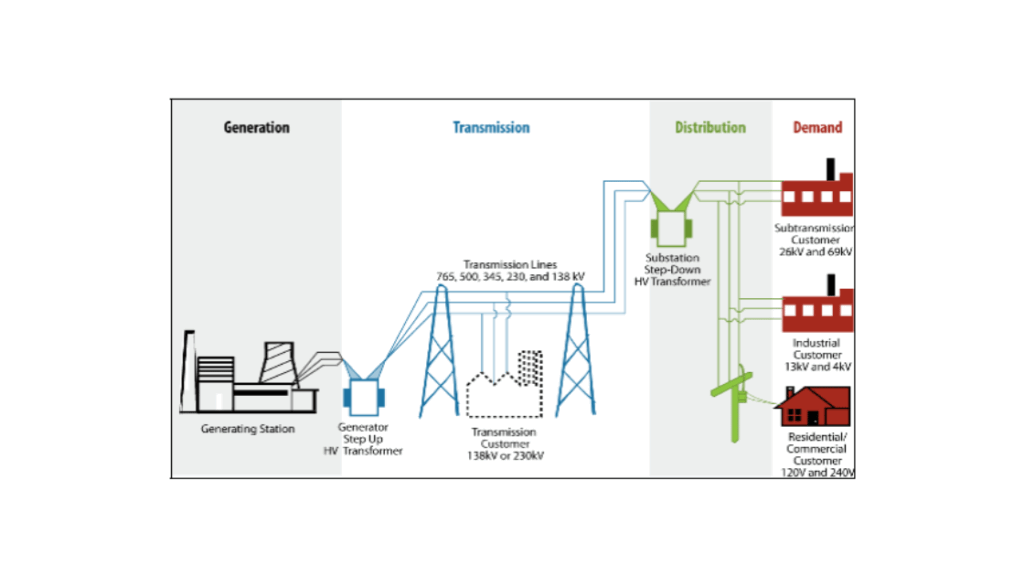
For transmission owners, the key evidence is loadability (PRC-023), stable power-swing evaluation (PRC-026), fault coordination (PRC-027) and maintenance (PRC-005) - tied to accurate short-circuit models and current equipment data.
Relay settings files, one-lines, three-lines, CT/PT ratios, equipment nameplates, capability curves, OEM settings and previous studies.
Confirm short-circuit models, equipment ratings and settings files match what is actually installed in the field.
Perform the settings, loadability, coordination and ride-through calculations each applicable requirement needs.
Recommend setting changes, coordinate with the entity’s protection group or OEM, and re-evaluate after implementation.
Produce setting-by-setting justification and a requirement-mapped evidence summary a reviewer can follow.
Update the evidence after any setting, equipment or system change so the record never drifts from the field.
The same engineers who calculate settings and run coordination studies write the compliance evidence.
Former audit-team leadership helps us present protection evidence the way a Regional Entity reviewer expects to read it.
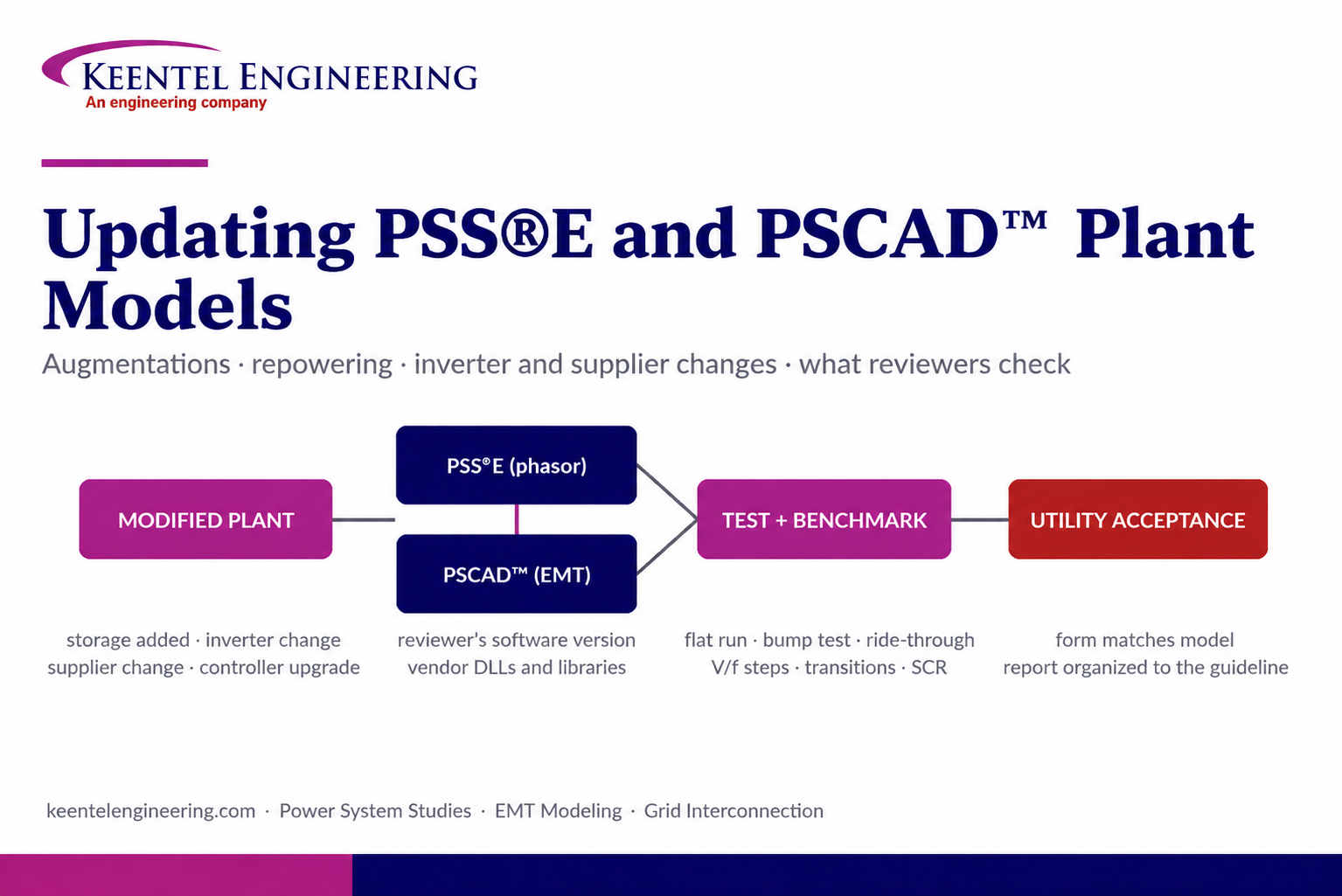
SEL, GE, Siemens, ABB/Hitachi relays; ASPEN, CAPE, ETAP, PSS®E and PSCAD™ studies.
Our substation and protection design work means new settings are compliance-ready from the day they are issued.
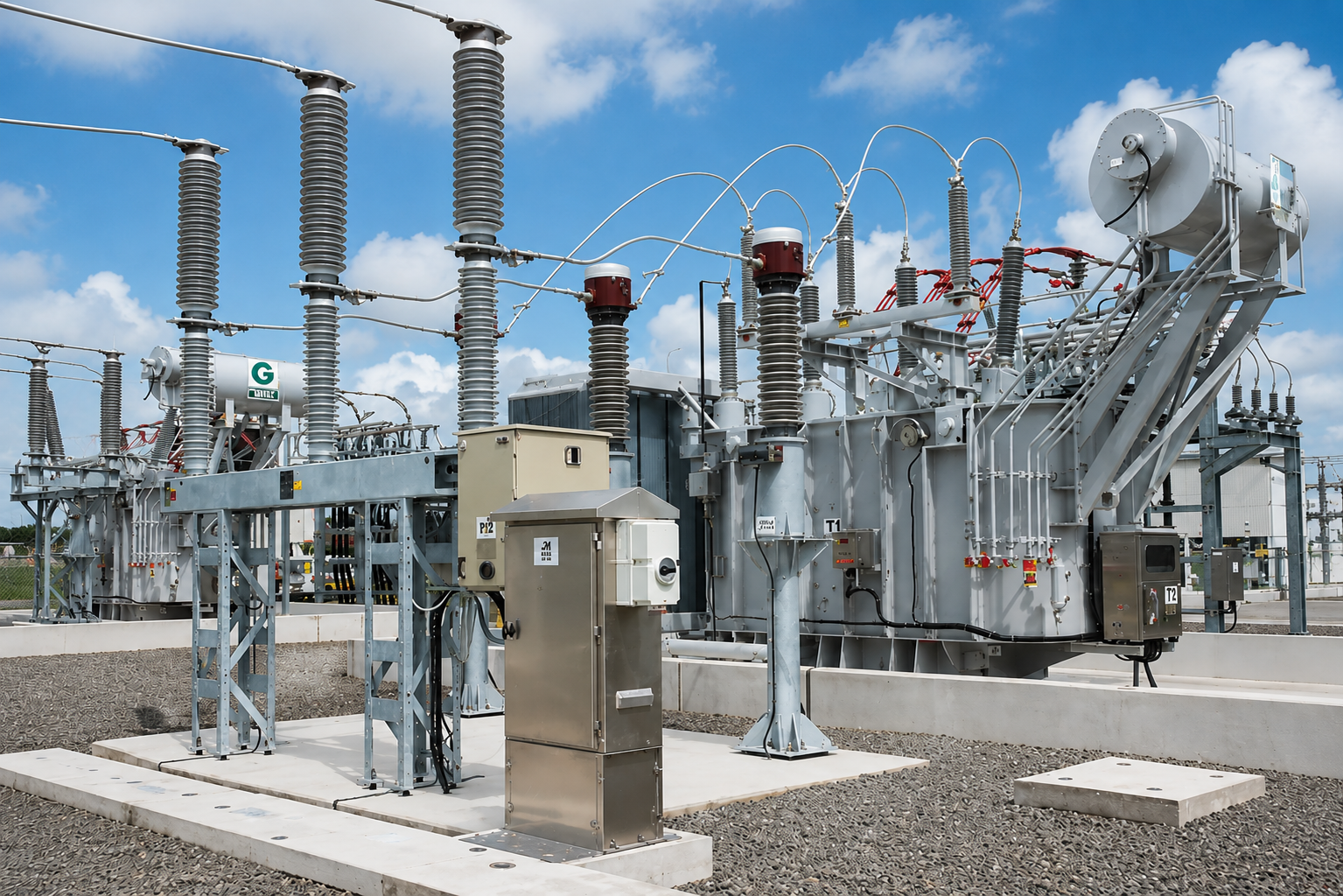
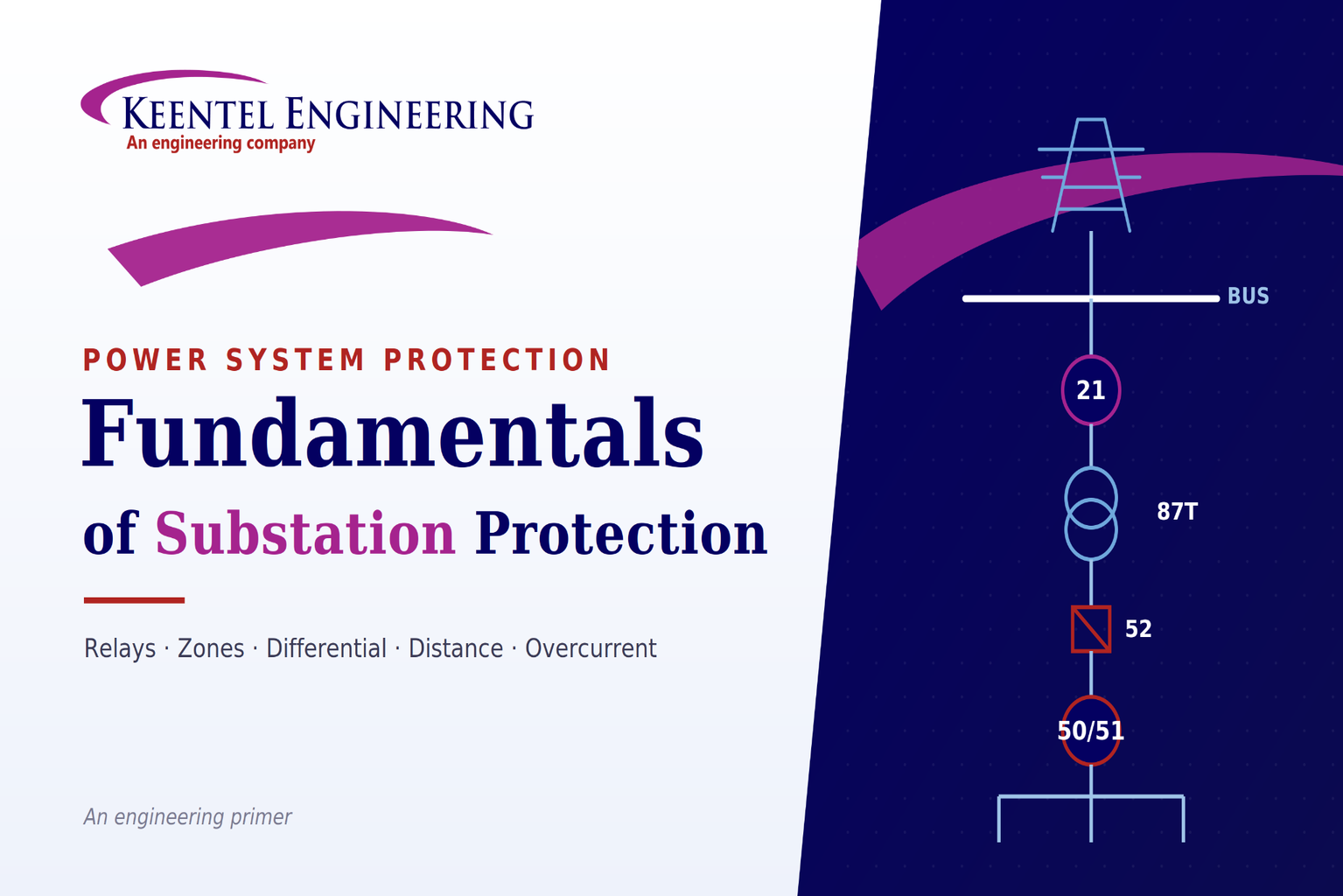

Send us your settings files and one-lines. Keentel will tell you which PRC requirements they support, where the justification is missing, and what it takes to close the gap before your next audit.
Serving utilities, EPCs, developers, and infrastructure organizations supporting critical power systems nationwide.