EOP-012 - calculations
Determine the Extreme Cold Weather Temperature for each unit from historical data using the standard’s method, with data sources and method documented.

Your Trusted Partner in Electrical Engineering and Power Systems
At Keentel Engineering, we deliver electrical power engineering services built on 30 years of experience and a commitment to excellence. Our clients include utilities, developers, EPCs, and public agencies across the U.S.
Unlike firms that sacrifice technical depth to chase billable hours, we prioritize precision, compliance, and value engineering. From transmission services and relay modeling to winterization and SCADA planning, we never compromise on quality.

At Keentel Engineering, we take pride in being the go-to electrical power engineering firm for power and utility system planning, substation design, protection, control, and power system analysis. The following attributes distinguish our team in utility-grade substation engineering and compliance-driven project delivery.
With three decades of hands-on project delivery, we bring unmatched expertise in substation layout design, substation electrical and civil engineering, relay protection, and grid-tie solutions. Our experience includes projects in complex terrain, urban retrofit environments, and utility-scale renewable integrations.
Our engineering process applies AutoCAD 3D, BIM modeling, and system-level substation design practices to ensure accurate planning, reduced errors, and efficient coordination across all project stakeholders.
Our workflow includes 3D substation design, enabling clash-free coordination between structural, electrical, and civil disciplines.
From grounding grid studies to relay protection settings, we engineer every detail to improve system reliability, performance, and operational safety. Our rigorous QA/QC process ensures compliance with IEEE, NFPA, and ISO/TSO interconnection standards.
Among leading electrical substation design companies, Keentel Engineering stands out for 30+ years of proven high-voltage and utility-grade project delivery.




First name, email and what you're interested in are all we need to get moving. Everything else, including drawings or an RFP, is optional.
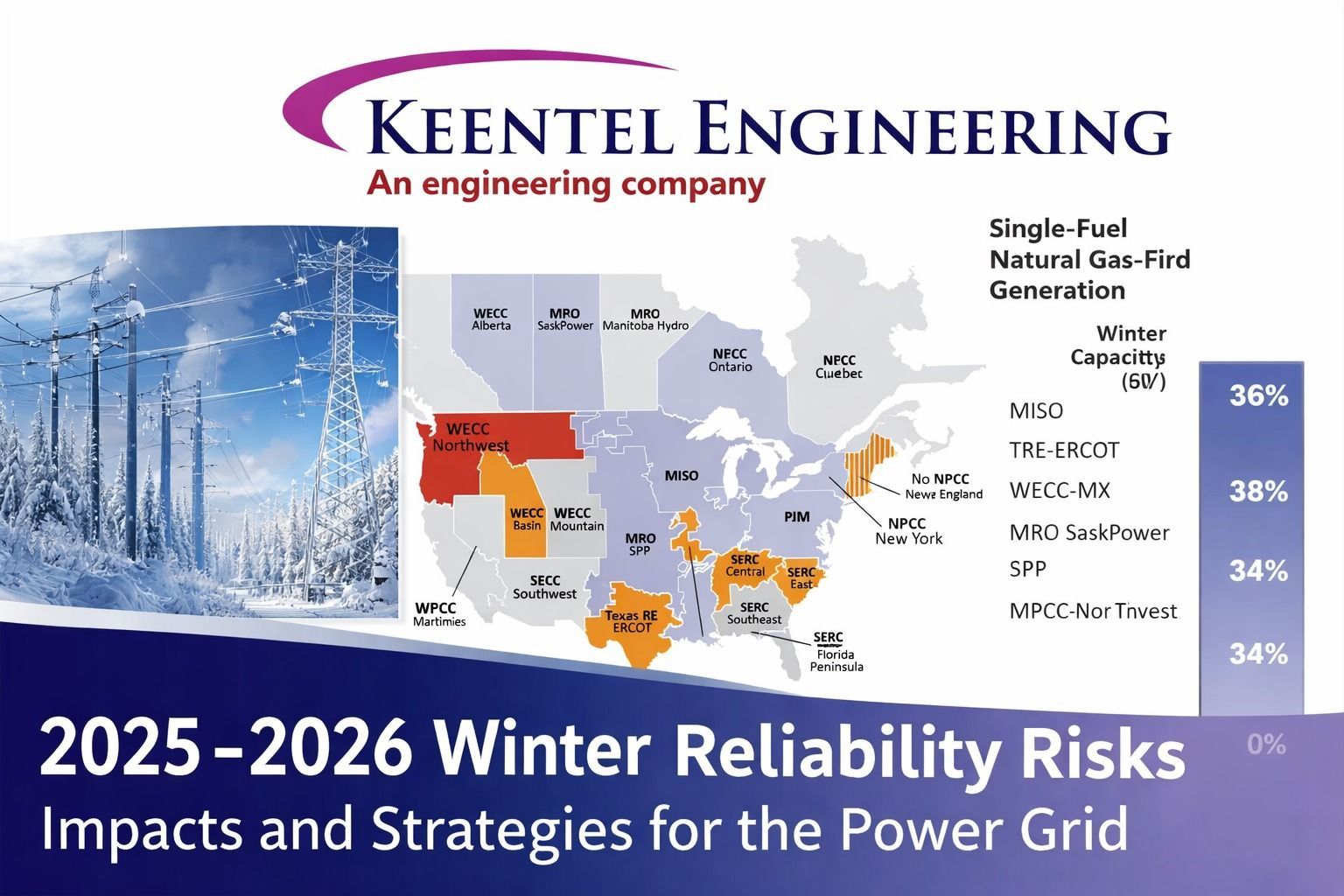
The 2026 CMEP Implementation Plan cites events such as Hurricane Helene to make the point that extreme natural events challenge the grid through their location, intensity, duration and frequency. It also points to historically atypical events, longer-term temperature trends and supply chain disruptions that slow recovery.
The plan’s areas of focus are specific: Transmission Operators and Balancing Authorities developing plans to mitigate operating emergencies; Generator Owners developing and implementing extreme cold weather mitigation plans; Transmission Owners and Generator Owners performing vegetation inspections; and wildfire risk to equipment, where the plan says industry should consider pre-emptive actions such as de-energizing equipment.
Weather plans are only as good as the engineering behind them. A cold-weather plan without unit-specific calculations, or an operating plan without realistic constraints, will not hold up in the event - or in the audit.
| Standard & requirements | Who | Evidence we review or produce |
|---|---|---|
| EOP-011-4 R1, R2, R3, R6 | Transmission Operators, Balancing Authorities, Reliability Coordinators; TOs and DPs identified in TOP plans | Operating Plans for mitigating emergencies, their review and approval, and the provisions that address weather-related operating constraints |
| EOP-012-3 R1, R3, R4, R5, R6, R7 | Generator Owners (and Generator Operators as applicable) | Extreme Cold Weather Temperature calculations, freeze-protection measures, cold weather preparedness plans, training and Corrective Action Plans after cold-weather events |
| FAC-003-5 R6 | Transmission Owners and applicable Generator Owners | Vegetation inspection records for applicable lines, completed at the frequency the standard requires |
Confirm the version in effect for each facility and date; EOP-012 in particular has been revised several times.
Determine the Extreme Cold Weather Temperature for each unit from historical data using the standard’s method, with data sources and method documented.
Assess heat tracing, insulation, enclosures, windbreaks and critical components against the calculated temperature, component by component.
Build or review the cold weather preparedness plan, training records, constraint documentation and Corrective Action Plans after cold-weather events.
Support TOPs and BAs with the studies and constraint data behind emergency operating plans, including weather-driven load and generation assumptions.
Review vegetation inspection programs and records for applicable lines and generator interconnection facilities, and check coverage and timing.
Engineering support for protection settings, reclosing practices and de-energization considerations where wildfire risk affects operations.
EOP-012 carries the largest share of the requirements named for this focus area. The most common weaknesses are not missing plans; they are plans that cannot be tied to engineering.
See our dedicated EOP-012 Extreme Cold Weather Preparedness page (Inner Page 67) for the full engineering approach.
Identify which units, lines and functions fall under each named requirement and which versions apply.
Operating plans, cold weather plans, calculations, freeze-protection records, training records and vegetation inspection records.
Reproduce temperature calculations, check freeze-protection coverage and confirm operating-plan constraints reflect real capability.
Complete missing calculations, assessments, plan content and CAP documentation.
Organize by requirement with narratives a reviewer can follow.
Align evidence refresh with pre-winter readiness so compliance and operations work from the same record.
| Deliverable | Purpose |
|---|---|
| Focus-area applicability matrix | Each named requirement mapped to your units, lines and functions |
| ECWT calculation package | Unit-specific temperature calculations with data and method |
| Freeze-protection assessment | Component-level review against the calculated temperature |
| Cold weather plan and CAP review | Plan content, constraints and corrective actions checked against the standard |
| Vegetation inspection evidence review | Coverage and timing of FAC-003 inspections |
| Readiness scorecard and management briefing | Status of each requirement and open actions |
Electrical, controls and freeze-protection design experience across thermal, solar, wind and storage plants.
Planning and operating studies that support emergency operating plans and weather-driven constraints.
Former audit-team leadership helps us present weather evidence the way a Regional Entity reviews it.
We align compliance evidence with the pre-winter work your plants already do.
Send us your cold weather plans, operating plans and inspection records. Keentel will test them against the 2026 focus requirements and close the engineering gaps before the season.
Serving utilities, EPCs, developers, and infrastructure organizations supporting critical power systems nationwide.