Large Loads Are Now
studied like generation

LARGE LOAD INTERCONNECTION · CAMPUS POWER · RIDE-THROUGH · MODELING

Interconnection, campus electrical design and the modeling that gets a hyperscale or AI campus energized – for powered land developers, operators, EPCs and the utilities on the other side of the point of interconnection.

30+ YEARS ACROSS TRANSMISSION, SUBSTATIONS & INTERCONNECTION
1 GW ERCOT HYPERSCALE INTERCONNECTION DELIVERED
1.35 GW ELECTRICAL DESIGN ACROSS THREE ERCOT CAMPUSES
4 ISOS WITH DELIVERED LARGE-LOAD DYNAMIC MODELING

About Keentel Engineering

Your Trusted Partner in Electrical Engineering and Power Systems

At Keentel Engineering, we deliver electrical power engineering services built on 30 years of experience and a commitment to excellence. Our clients include utilities, developers, EPCs, and public agencies across the U.S.

Unlike firms that sacrifice technical depth to chase billable hours, we prioritize precision, compliance, and value engineering. From transmission services and relay modeling to winterization and SCADA planning, we never compromise on quality.

Keentel Engineering team of electrical engineers in hard hats and safety vests at a high-voltage substation site

Why Choose Keentel Engineering?

Client-Focused Work Approach

At Keentel Engineering, we take pride in being the go-to electrical power engineering firm for power and utility system planning, substation design, protection, control, and power system analysis. The following attributes distinguish our team in utility-grade substation engineering and compliance-driven project delivery.

30 Years of Experience

With three decades of hands-on project delivery, we bring unmatched expertise in substation layout design, substation electrical and civil engineering, relay protection, and grid-tie solutions. Our experience includes projects in complex terrain, urban retrofit environments, and utility-scale renewable integrations.

Quality with Innovation

Our engineering process applies AutoCAD 3D, BIM modeling, and system-level substation design practices to ensure accurate planning, reduced errors, and efficient coordination across all project stakeholders.

Our workflow includes 3D substation design, enabling clash-free coordination between structural, electrical, and civil disciplines.

Attention to Detail

From grounding grid studies to relay protection settings, we engineer every detail to improve system reliability, performance, and operational safety. Our rigorous QA/QC process ensures compliance with IEEE, NFPA, and ISO/TSO interconnection standards.

Among leading electrical substation design companies, Keentel Engineering stands out for 30+ years of proven high-voltage and utility-grade project delivery.

Keentel Engineering video

Accreditations and memberships

NSPE, National Society of Professional Engineers
D-U-N-S Registered
IEEE Senior Member
BBB Accredited Business, A plus rating

Contact details

Tell Us About Your Project

1 business day reply

First name, email and what you're interested in are all we need to get moving. Everything else, including drawings or an RFP, is optional.

We reply within one business day. Sending this does not create a contract or an engineer and client relationship.

Large Loads Are Now Studied Like Generation

Interconnection, campus electrical design and the modeling that gets a hyperscale or AI campus energized, for powered land developers, operators, EPCs and the utilities on the other side of the point of interconnection.

In two years the industry went from plugging in a load to defending it, with a dynamic model, a ride-through case and a curtailment commitment.

Every major market has now built, or is building, a study process for large loads. The engineering that used to sit inside a building is now on the transmission planner's desk.

Keentel electrical engineering field professional reviewing utility power infrastructure
01

Site Screening

What a site can actually take, from which substation, and on what date.

02

Interconnection

Study process entry, forms, allocation, and the utility relationship behind it.

03

Modeling

Positive-sequence and EMT models, ride-through cases, harmonic spectra and ramp characterisation.

04

Campus Design

POI substation, MV distribution, redundancy architecture, protection and metering.

05

Flexibility

Curtailable service, on-site generation and storage, and what they buy you in the queue.

06

Energization

Commissioning sequence, witness testing and the operating obligations that follow.

What Changed, and Why It Changes Your Schedule

A large load used to be a service request. It is now a studied facility with a model, a performance obligation and, in most markets, a curtailment condition attached.

The Four Things That Moved

  • A study process now exists. ERCOT, SPP, PJM and MISO have developed large-load processes.
  • The load has to be modeled. Positive-sequence and EMT models, protection settings, ramp rates and harmonic spectra.
  • The load has to ride through. Voltage and frequency disturbance behavior is now a critical engineering consideration.
  • Flexibility buys speed. Curtailment and on-site generation can affect project scheduling and service arrangements.
Keentel engineering professionals reviewing power grid modeling and compliance

Approved Is Not Energized

ERCOT reported 8,926 MW of large load approved to energize as of its June 2026 operational overview, against an observed non-simultaneous large-load peak of 3,966 MW in the same month.

How Large Loads Actually Connect

Interconnection requirements vary by market, utility, project configuration and requested capacity.

Market Engineering Focus Project Considerations
ERCOT Large-load interconnection studies, dynamic modeling and electrical performance. Utility study coordination, transmission capacity and operating requirements.
SPP Transmission planning, large-load integration and system studies. Transmission service and project interconnection requirements.
PJM Large-load planning and transmission system reliability. Capacity, network impacts and utility coordination.
MISO Transmission system planning and load modeling. Regional and utility-specific study processes.
CAISO Transmission planning and large-load integration. Grid capability, utility requirements and reliability.

Plan Your Data Center Interconnection With Keentel Engineering

FERC, Co-Location and the Rules Being Written Now

Co-location of data center loads with generation introduces transmission, reliability and operational considerations.

The electrical relationship between generation, the transmission network and large-load facilities must be evaluated against applicable service arrangements and regulatory requirements.

Transmission Service

Applicable tariff and service arrangements.

Co-Location

Electrical arrangements between load and generation.

Reliability

System impacts, controls and protection.

Regulatory Review

Applicable proceedings and effective requirements.

Keentel Engineering electrical engineers reviewing FERC co-location and transmission planning

NERC Is Writing Standards for Your Facility

Large computational load is becoming a registered function with its own reliability standards.

Computational Load

Facility characteristics and load behavior that can affect bulk power system reliability.

Dynamic Models

Electrical models that represent load response during system disturbances.

Ride-Through

Voltage and frequency disturbance performance requirements.

Technical Evidence

Engineering data, studies and documentation supporting reliability assessments.

The approval and effective status of individual NERC requirements must be checked against the exact dated references in the client flyer.

Data Centers Are Disconnecting Too Early

A remote fault clears normally in a few cycles. Hundreds of megawatts of load transfers to backup and vanishes from the grid.

UPS systems, transfer equipment and protection controls determine how the facility responds to grid disturbances.

  • Voltage ride-through engineering
  • Frequency response analysis
  • UPS and static transfer operation
  • Protection and control settings
  • Dynamic load modeling
  • Load restoration behavior
Electrical field engineers working on power system equipment

The Model Is the Submission

Large-load interconnection depends on an accurate representation of the facility's electrical behavior.

01

Positive-Sequence

Dynamic system models for transmission-level studies.

02

EMT Modeling

Detailed electromagnetic transient representation.

03

Equipment Data

Manufacturer data, controls and electrical characteristics.

04

Model Validation

Technical checks and coordination with study requirements.

What Makes Land Actually Powered

A parcel is not powered because there is a transmission line nearby. The question is whether the electrical system can deliver the required capacity on the required date.

Early diligence connects land acquisition, utility planning, substation capability, transmission capacity and realistic energization schedules.

  • Available transmission and distribution infrastructure
  • Substation capacity and expansion requirements
  • Voltage and connection alternatives
  • Utility coordination
  • Electrical development constraints
  • Interconnection study milestones
Electrical infrastructure planning for powered land development

Campus Substation and Distribution

From the point of interconnection to the medium-voltage bus feeding each hall, the part of a data center that is a substation, designed by people who design substations.

Campus power systems require coordinated engineering across transformers, switchgear, protection, controls and distribution.

POI Substation

High-voltage interconnection engineering.

MV Distribution

Switchgear, feeders and campus power systems.

Protection

Relay settings and protection coordination.

Grounding

Grounding system design and safety analysis.
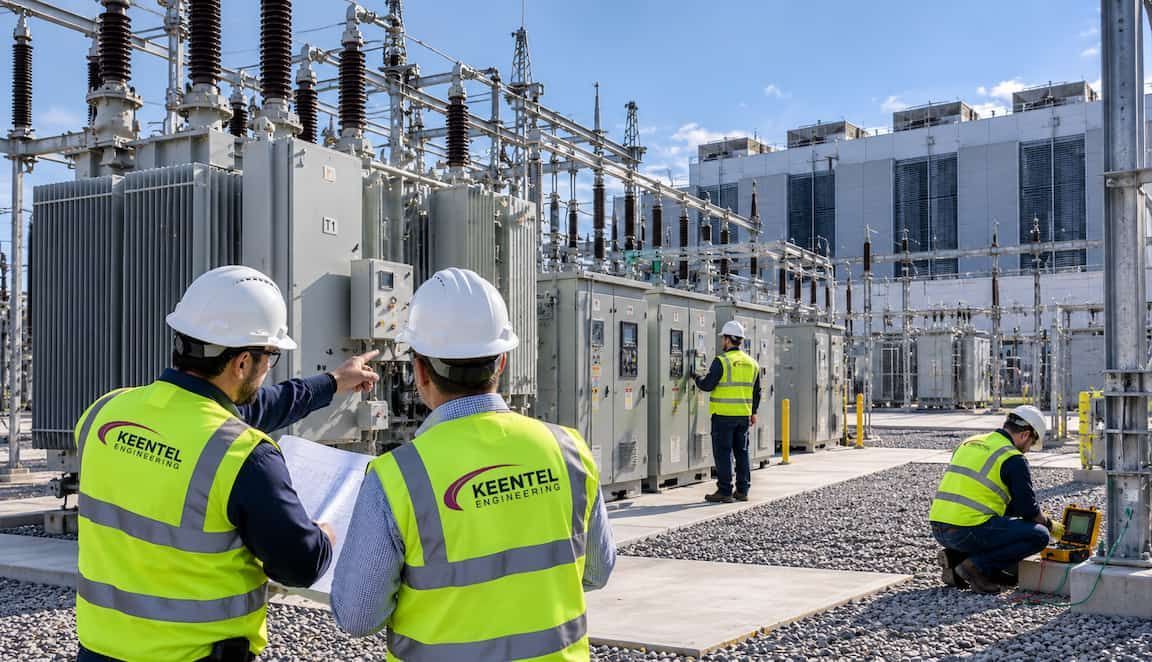
Keentel Engineering campus substation and medium-voltage distribution

Explore Our Data Center Power Engineering Capabilities

Flexibility, On-Site Generation and Storage

Large-load projects can combine utility supply, curtailment arrangements, generation and battery energy storage.

Load Flexibility

Operating arrangements and response to utility or system conditions.

On-Site Generation

Generator integration, controls, protection and operation.

Energy Storage

BESS electrical integration and operating characteristics.

System Studies

Electrical and dynamic studies across operating configurations.

Transformers Decide Your Energization Date

On most campuses the binding constraint is not engineering hours or even the interconnection study. It is a manufacturing slot.

Transformer procurement must align with electrical specifications, utility requirements, construction and energization milestones.
  • Electrical ratings and impedance
  • Voltage requirements
  • Equipment specifications
  • Manufacturing lead times
  • Transportation and installation
  • Testing and commissioning
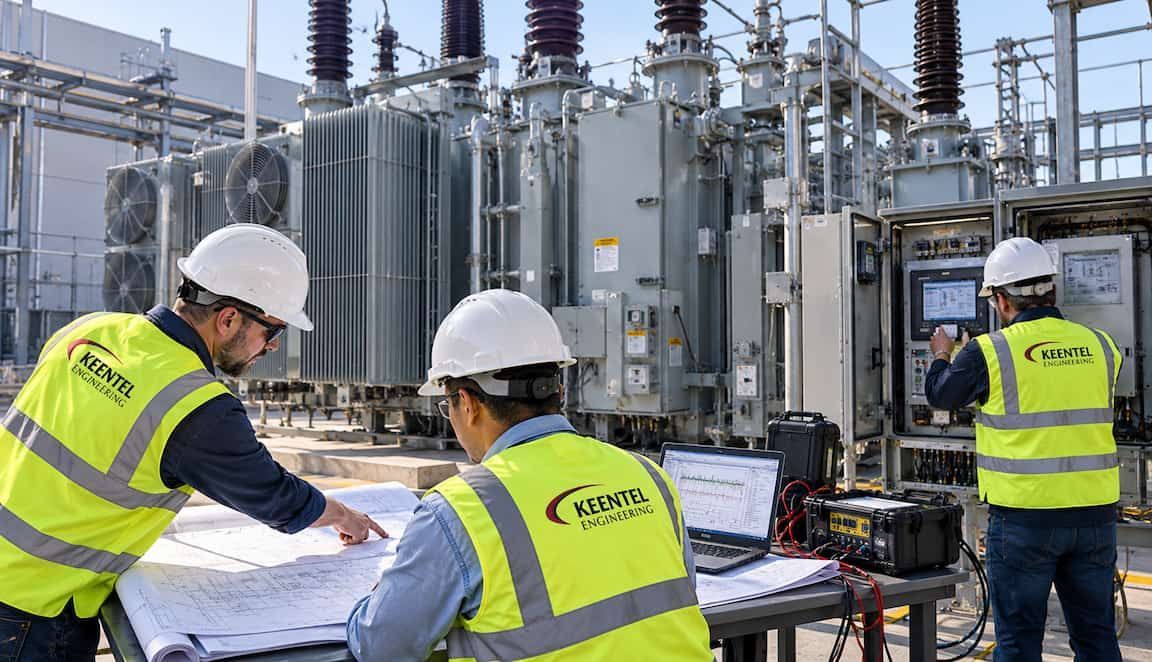
Keentel Engineering transformer procurement and electrical equipment planning

Rules, Standards and Where They Bind

Large-load engineering requires coordination between regional market processes, utility requirements and reliability standards.

Authority Engineering Subject Application
FERC Federal transmission and interconnection matters. Applicable tariffs, proceedings and orders.
NERC Bulk power system reliability. Applicable reliability requirements.
ERCOT Texas large-load interconnection. Applicable protocols and study processes.
SPP / PJM / MISO / CAISO Regional large-load integration. Market and utility-specific requirements.
IEEE Electrical engineering practices. Relevant technical and equipment standards.

Engagement & Capability

Engineering support from early electrical diligence and interconnection through detailed campus design and energization.

01

Site Screening

Early technical diligence and utility infrastructure review.

02

Interconnection

Engineering support for studies, models and utility coordination.

03

Campus Engineering

Substation, protection and distribution engineering.

04

Dynamic Modeling

Positive-sequence, EMT and facility performance analysis.

05

Equipment Integration

Transformer, switchgear and protection coordination.

06

Energization Support

Technical coordination and commissioning engineering.

Four Things and We Can Scope It

Tell us the site, the MW, the market and the date you need power.

The Site

Location and available utility information.

The MW

Requested capacity and expected load profile.

The Market

Applicable utility and regional system.

The Date

Target energization and project milestones.

Discuss Your Data Center Power Engineering Project

Contact Keentel Engineering to discuss your project and required engineering scope.

Keentel Engineering – Software FAQ
PSS®E PSS®E
ETAP ETAP
PSCAD PSCAD
PowerWorld PowerWorld
SKM PTW SKM PTW
General FAQs
01 What is PSS®E software?
PSS®E (Power System Simulator for Engineering) is a power system simulation software developed by Siemens for analyzing and planning electrical transmission networks. It allows engineers to model large-scale power systems and perform detailed studies related to grid reliability and system performance.
02 What is PSS®E used for in power system studies?
PSS®E is used for transmission planning, interconnection studies, contingency analysis, stability simulations, and grid expansion planning. Utilities and consultants use the software to evaluate how electrical networks behave under different operating conditions.
03 Who uses PSS®E software?
PSS®E is used by electric utilities, transmission planners, system operators, renewable energy developers, engineering consulting firms, and research institutions involved in power system planning and reliability analysis.
04 Can PSS®E be used for renewable energy integration?
Yes. PSS®E supports modeling of inverter-based resources such as solar plants, wind farms, and battery energy storage systems to analyze their impact on grid stability and transmission system performance.
05 Why is PSS®E widely used in transmission planning?
PSS®E is widely used because it supports very large power system models, advanced dynamic simulations, and automated analysis workflows, making it suitable for complex transmission network planning studies.
Technical FAQs
01 How does PSS®E perform contingency analysis?
PSS®E evaluates system reliability by simulating outage scenarios such as transmission line failures, generator trips, or transformer outages and identifying voltage violations or thermal overloads.
02 What types of dynamic simulations can be performed in PSS®E?
PSS®E supports transient stability analysis, generator dynamics simulation, renewable inverter modeling, and disturbance response studies.
03 What is PV and QV analysis in PSS®E?
PV and QV analysis are used to evaluate voltage stability margins and determine the system's ability to maintain acceptable voltage levels under increasing load conditions.
04 How does PSS®E support large power system models?
PSS®E uses optimized numerical algorithms and sparse matrix techniques that allow engineers to simulate electrical networks with up to 200,000 buses.
05 Can PSS®E simulations be automated?
Yes. PSS®E provides extensive Python APIs that allow engineers to automate contingency studies, batch simulations, and large-scale grid analysis workflows.
General FAQs
01 What is ETAP software?
ETAP is an electrical power system engineering software platform used for designing, simulating, analyzing, and operating electrical networks across industrial, utility, and commercial systems.
02 What types of studies can be performed in ETAP?
ETAP supports power flow analysis, short circuit studies, arc flash analysis, protection coordination studies, harmonic analysis, and dynamic stability simulations.
03 What industries use ETAP software?
ETAP is used by electric utilities, renewable energy plants, data centers, oil and gas facilities, industrial manufacturing plants, and infrastructure projects.
04 What is the ETAP Electrical Digital Twin?
The ETAP Electrical Digital Twin is a virtual representation of a real electrical network that enables engineers to simulate and monitor system performance before implementing changes in the physical system.
05 Why is ETAP widely used for electrical engineering studies?
ETAP provides an integrated platform for design, simulation, monitoring, and optimization of electrical systems, allowing engineers to analyze system behavior and improve operational reliability.
Technical FAQs
01 How does ETAP perform short circuit analysis?
ETAP calculates fault currents using international standards such as ANSI/IEEE C37 and IEC 60909 to evaluate equipment ratings and protection system requirements.
02 What is ETAP arc flash analysis?
Arc flash analysis calculates incident energy levels and safety boundaries based on standards such as IEEE 1584 and NFPA 70E to improve electrical safety.
03 How does ETAP perform protection coordination studies?
ETAP uses Time-Current Characteristic (TCC) curves to evaluate the coordination between relays, breakers, and fuses to ensure selective protection during faults.
04 Can ETAP simulate renewable energy systems?
Yes. ETAP allows engineers to model solar PV systems, wind generators, battery energy storage systems, and microgrids.
05 What dynamic simulations can be performed in ETAP?
ETAP dynamic simulations evaluate system behavior during disturbances such as generator trips, faults, motor starting events, and switching operations.
General FAQs
01 What is PSCAD software?
PSCAD is an electromagnetic transient (EMT) simulation software used to analyze fast electrical and electromagnetic phenomena in power systems.
02 What is PSCAD used for?
PSCAD is used for HVDC studies, converter modeling, renewable inverter simulations, lightning surge analysis, and electromagnetic transient studies.
03 Who typically uses PSCAD?
PSCAD is used by utilities, renewable developers, equipment manufacturers, engineering consulting firms, and research institutions.
04 Why is PSCAD important for renewable energy studies?
PSCAD allows engineers to simulate inverter-based resources and analyze complex electromagnetic interactions within modern power systems.
05 What types of systems can PSCAD model?
PSCAD can model transmission networks, HVDC systems, renewable plants, power electronic converters, and protection systems.
Technical FAQs
01 What is electromagnetic transient simulation?
EMT simulation analyzes high-frequency electrical phenomena that occur in power systems during switching events, lightning strikes, and converter operations.
02 How does PSCAD model transmission lines?
PSCAD models transmission lines using distributed parameter models that capture traveling wave behavior and electromagnetic interactions.
03 What simulation time steps are used in PSCAD?
Typical EMT simulations use time steps ranging from microseconds to tens of microseconds depending on system complexity.
04 Can PSCAD simulate HVDC systems?
Yes. PSCAD provides detailed models for line-commutated converters (LCC) and voltage source converter (VSC) HVDC systems.
05 How does PSCAD simulate inverter-based resources?
PSCAD uses detailed converter control models to simulate grid-forming and grid-following inverter behavior.
General FAQs
01 What is PowerWorld software?
PowerWorld is a power system simulation and visualization software used to analyze electrical transmission networks.
02 What is PowerWorld Simulator?
PowerWorld Simulator is an interactive tool used to perform power flow analysis, contingency analysis, and voltage stability studies.
03 Who uses PowerWorld software?
PowerWorld is used by utilities, transmission planners, power system operators, consultants, and universities.
04 What types of studies can be performed in PowerWorld?
PowerWorld supports power flow analysis, contingency analysis, optimal power flow studies, voltage stability analysis, and fault analysis.
05 What makes PowerWorld unique?
PowerWorld provides interactive visualization tools such as animated one-line diagrams and geographic system displays.
Technical FAQs
01 How does PowerWorld perform contingency analysis?
PowerWorld simulates outage scenarios and identifies violations such as overloaded lines or low voltage conditions.
02 What numerical methods are used for power flow analysis?
PowerWorld typically uses Newton-Raphson algorithms to solve large power system models efficiently.
03 What is PV and QV analysis in PowerWorld?
PV and QV curves evaluate voltage stability limits and identify potential voltage collapse scenarios.
04 What is Optimal Power Flow (OPF)?
OPF determines the optimal generation dispatch while maintaining system constraints and minimizing operating costs.
05 How large of a system can PowerWorld simulate?
PowerWorld can simulate electrical networks with up to approximately 250,000 buses.
General FAQs
01 What is SKM PowerTools software?
SKM PowerTools is an electrical engineering software platform used for power system design, analysis, and safety evaluation.
02 What types of studies can SKM perform?
SKM supports load flow analysis, short circuit studies, arc flash analysis, protection coordination, harmonic analysis, and grounding system studies.
03 What industries use SKM PowerTools?
SKM is widely used in utilities, industrial plants, data centers, oil and gas facilities, and commercial electrical infrastructure projects.
04 What is SKM CAPTOR used for?
CAPTOR is SKM's protective device coordination module used to analyze relay, breaker, and fuse coordination using time-current curves.
05 Why is SKM widely used for electrical system analysis?
SKM provides integrated modules that allow engineers to perform multiple electrical studies within a single software platform.
Technical FAQs
01 How does SKM perform short circuit analysis?
SKM calculates fault currents using ANSI and IEC standards and evaluates symmetrical and asymmetrical fault conditions.
02 What is arc flash analysis in SKM?
Arc flash analysis determines incident energy levels and hazard boundaries to improve electrical safety and comply with standards such as IEEE 1584.
03 How does SKM perform load flow analysis?
Load flow analysis calculates voltage levels, power flows, and system losses within electrical networks.
04 Can SKM simulate harmonic distortion?
Yes. The HI_WAVE module evaluates harmonic distortion caused by non-linear loads and power electronic devices.
05 How does SKM evaluate protection coordination?
SKM analyzes protective device operation using time-current curves to ensure proper fault isolation.
Keentel – Software Capabilities FAQ

Our Software Capabilities

PSS®E PSS®E
ETAP ETAP
PSCAD PSCAD
PowerWorld PowerWorld
SKM SKM PTW
AutoCAD Electrical AutoCAD Elec.
ASPEN ASPEN
General FAQs
What is PSS®E software?
PSS®E (Power System Simulator for Engineering) is a power system simulation software developed by Siemens for analyzing and planning electrical transmission networks. It allows engineers to model large-scale power systems and perform detailed studies related to grid reliability and system performance.
What is PSS®E used for in power system studies?
PSS®E is used for transmission planning, interconnection studies, contingency analysis, stability simulations, and grid expansion planning.
Who uses PSS®E software?
Electric utilities, transmission planners, system operators, renewable energy developers, consulting firms, and research institutions.
Can PSS®E be used for renewable energy integration?
Yes. PSS®E supports modeling of inverter‑based resources such as solar plants, wind farms, and battery storage.
Why is PSS®E widely used in transmission planning?
It supports very large power system models (up to 200,000 buses), advanced dynamic simulations, and automated workflows.
Technical FAQs
How does PSS®E perform contingency analysis?
Simulates outage scenarios (line/generator/transformer failures) and identifies voltage or thermal violations.
What dynamic simulations can be performed?
Transient stability, generator dynamics, renewable inverter response, and disturbance ride‑through.
What is PV / QV analysis?
Evaluates voltage stability margins and determines the system's ability to maintain voltage under increasing load.
How does PSS®E support large models?
Optimized numerical algorithms and sparse matrix techniques allow simulation of networks with up to 200,000 buses.
Can PSS®E simulations be automated?
Yes, via extensive Python APIs for contingency automation, batch simulations, and custom workflows.
General FAQs
What is ETAP software?
ETAP is an electrical power system engineering platform for design, simulation, analysis, and operation of industrial and utility networks.
What studies can ETAP perform?
Power flow, short circuit, arc flash, protection coordination, harmonic, and dynamic stability.
What industries use ETAP?
Utilities, renewable plants, data centers, oil & gas, industrial manufacturing, and infrastructure.
What is ETAP Electrical Digital Twin?
A virtual model that mirrors the physical network for predictive simulation and real‑time monitoring.
Why is ETAP widely used?
Integrated design, simulation, monitoring, and optimization in one platform.
Technical FAQs
How does ETAP perform short circuit analysis?
Uses ANSI/IEEE C37 and IEC 60909 standards to evaluate fault currents and equipment ratings.
What is ETAP arc flash analysis?
Calculates incident energy and safety boundaries per IEEE 1584 and NFPA 70E.
How does ETAP perform protection coordination?
Uses TCC curves to evaluate relay/breaker/fuse coordination for selective fault isolation.
Can ETAP simulate renewables?
Yes – solar PV, wind generators, battery storage, and microgrids.
What dynamic simulations are available?
Generator trips, faults, motor starting, switching events, and transient stability.
General FAQs
What is PSCAD?
Electromagnetic transient (EMT) simulation software for fast electrical phenomena in power systems.
What is PSCAD used for?
HVDC studies, converter modeling, inverter simulations, lightning surge analysis, and EMT studies.
Who uses PSCAD?
Utilities, renewable developers, manufacturers, consultants, and research institutions.
Why is PSCAD important for renewables?
Simulates inverter‑based resources and complex electromagnetic interactions.
What systems can PSCAD model?
Transmission networks, HVDC, renewable plants, power electronics, and protection systems.
Technical FAQs
What is EMT simulation?
High‑frequency analysis of switching, lightning, and converter transients.
How does PSCAD model transmission lines?
Distributed parameter models capture traveling wave behavior.
What time steps are used?
Microseconds to tens of microseconds, depending on system complexity.
Can PSCAD simulate HVDC?
Yes, detailed models for LCC and VSC HVDC systems.
How does PSCAD simulate inverters?
Uses detailed converter control models for grid‑forming/following behavior.
General FAQs
What is PowerWorld?
Power system visualization and simulation software for transmission networks.
What is PowerWorld Simulator?
Interactive tool for power flow, contingency analysis, and voltage stability.
Who uses PowerWorld?
Utilities, transmission planners, operators, consultants, universities.
What studies can be performed?
Power flow, contingency, OPF, voltage stability, fault analysis.
What makes PowerWorld unique?
Interactive animated one‑line diagrams and geographic displays.
Technical FAQs
How does contingency analysis work?
Simulates outage scenarios and flags overloads or voltage violations.
What numerical method is used?
Newton‑Raphson for efficient large‑system power flow.
What is PV/QV analysis?
Determines voltage stability margins and collapse points.
What is OPF?
Optimal Power Flow – minimizes cost while respecting constraints.
How large a system can it handle?
Up to approximately 250,000 buses.
General FAQs
What is SKM PowerTools?
Electrical engineering platform for power system design, analysis, and safety.
What studies can SKM perform?
Load flow, short circuit, arc flash, coordination, harmonics, grounding.
What industries use SKM?
Utilities, industrial plants, data centers, oil & gas, commercial buildings.
What is SKM CAPTOR?
Protective device coordination module using TCC curves.
Why is SKM widely used?
Integrated modules allow multiple studies in one platform.
Technical FAQs
How does SKM perform short circuit analysis?
Uses ANSI/IEC standards, calculates symmetrical/asymmetrical fault currents.
What is arc flash analysis in SKM?
Incident energy and boundaries per IEEE 1584 / NFPA 70E.
How does SKM perform load flow?
Calculates voltage levels, power flows, and system losses.
Can SKM simulate harmonics?
Yes, HI_WAVE module evaluates distortion from non‑linear loads.
How does SKM evaluate protection coordination?
Analyzes TCC curves to ensure selective fault isolation.
General FAQs
Difference between AutoCAD and AutoCAD Electrical?
AutoCAD Electrical provides intelligent automation: wire numbering, component tagging, error checking.
Suitable for substation design?
Yes – protection schematics, relay panels, AC/DC diagrams.
NERC compliance?
Supports traceable documentation, tagging, and QA/QC processes.
Relay protection design?
Create relay logic, trip/close circuits, CT/PT connections, custom vendor symbols.
How does it improve productivity?
Automated wire numbering, component tagging, report generation, error checking.
Technical FAQs
Automatic BOM generation?
Yes, extracts real‑time data for BOM, panel schedules, cable lists.
Useful for industrial control?
Widely used for PLC, MCC, SCADA, and factory automation.
Multi‑user collaboration?
Yes, shared project databases + Autodesk Vault integration.
Supports IEC / ANSI standards?
Built‑in symbol libraries for IEC, ANSI, JIC; switchable standards.
Which industries use it?
Power utilities, renewables, oil & gas, manufacturing, infrastructure.
General FAQs
What makes ASPEN OneLiner essential for protection engineers?
ASPEN OneLiner provides advanced short circuit analysis and relay coordination capabilities, enabling engineers to simulate faults, validate protection schemes, and ensure compliance with ANSI, IEC, and NERC standards.
How does ASPEN Power Flow support transmission planning?
It allows engineers to analyze voltage profiles, system losses, and contingency conditions, helping utilities plan system expansions and ensure operational reliability.
Why is phase-domain modeling important in DistriView?
Phase-domain modeling captures unbalanced conditions in distribution systems, providing more accurate results compared to traditional sequence-based methods.
How does the Breaker Rating Module ensure equipment safety?
It simulates worst-case faults, calculates adjusted currents using X/R ratios, and compares them against breaker ratings per ANSI/IEC standards.
What role does the Line Database play in system studies?
It provides highly accurate impedance and capacitance parameters, which are critical inputs for fault and load flow calculations.
Technical FAQs
How does Power Flow handle voltage control?
It uses automatic algorithms for generators, LTC transformers, shunts, and phase shifters.
What is the importance of X/R ratio in breaker studies?
It affects the asymmetrical current and determines the actual interrupting duty on breakers.
How does DistriView perform harmonic analysis?
It includes frequency scan and harmonic load flow capabilities to evaluate system distortion.
What is the advantage of ASPEN’s relay modeling?
It supports detailed manufacturer-specific relay logic, improving study accuracy.
How does ASPEN support renewable integration?
It models inverter-based resources such as solar, wind, and BESS systems.

Who We've Served

Serving utilities, EPCs, developers, and infrastructure organizations supporting critical power systems nationwide.

Technical FAQs

  • 1) Why is electrical reliability critical for data centers?

    Because downtime can cause data loss and major financial impacts.

  • 2) What is N+1 redundancy?

    A system design that includes an additional backup component beyond what is required.

  • 3) Why are harmonic studies important for data centers?

    Because power electronics can introduce harmonic distortion.

  • 4) What backup power systems are used in data centers?

    Generators and uninterruptible power supplies (UPS).

  • 5) How does Keentel Engineering support data center design?

    By performing electrical system studies, reliability assessments, and power quality analysis.

  • 6) What is data center power system engineering?

    Data center power system engineering involves designing reliable electrical infrastructure to support high-density computing loads and ensure continuous operation.

  • 7) Why is electrical power system design critical for data centers?

    It ensures system reliability, prevents downtime, and supports backup power and redundancy strategies.

  • 8) What is data center electrical infrastructure engineering?

    It includes designing power distribution systems, backup power, and power quality solutions for data center operations.

Blog and Updates

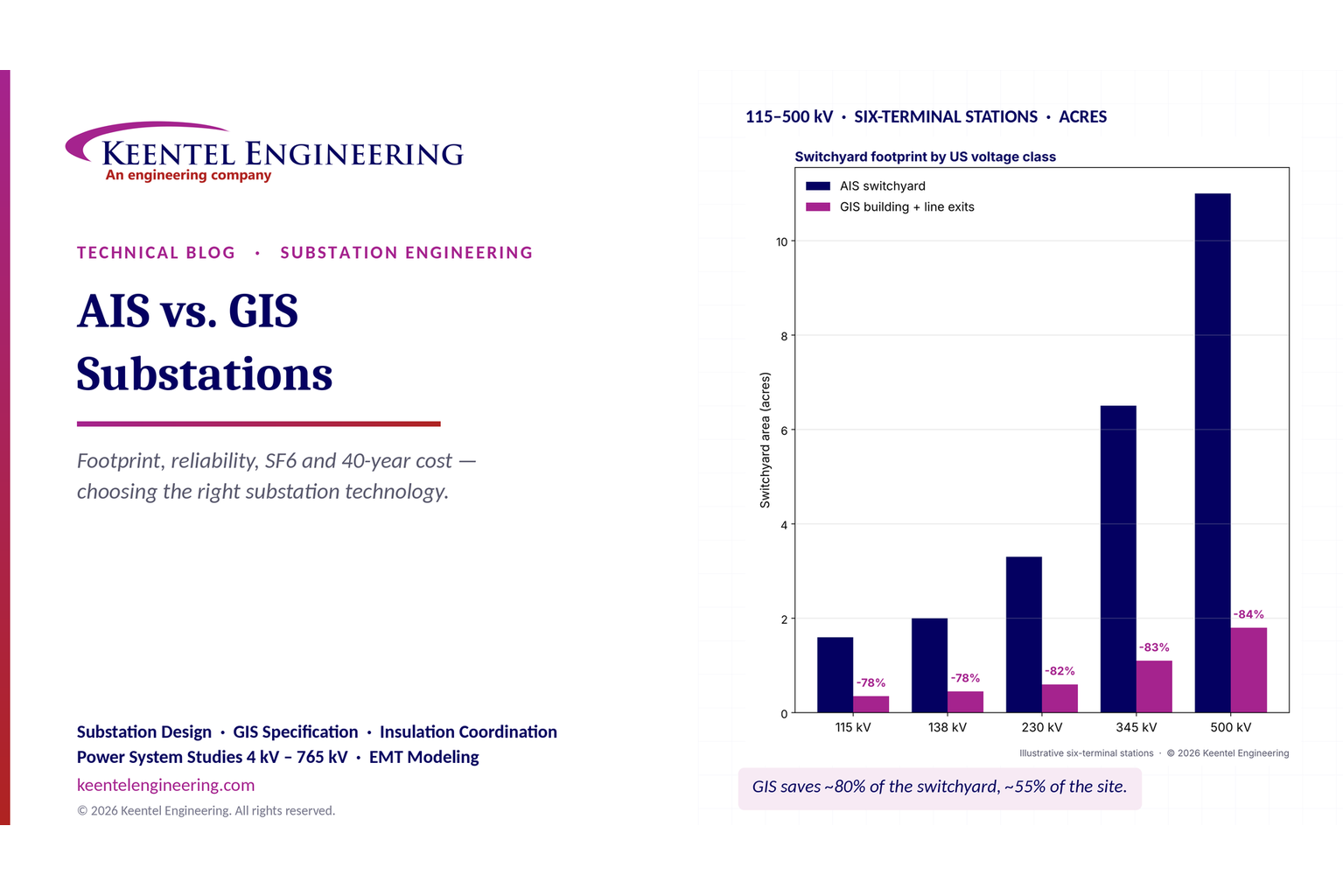
AIS vs GIS Substations: Differences, Cost & Reliability
By SANDIP R PATEL • October 31, 2026
Compare AIS vs GIS substations by cost, footprint, reliability, maintenance and SF6 impact. Explore design differences and life-cycle costs for US substations.
By SANDIP R PATEL • October 30, 2026
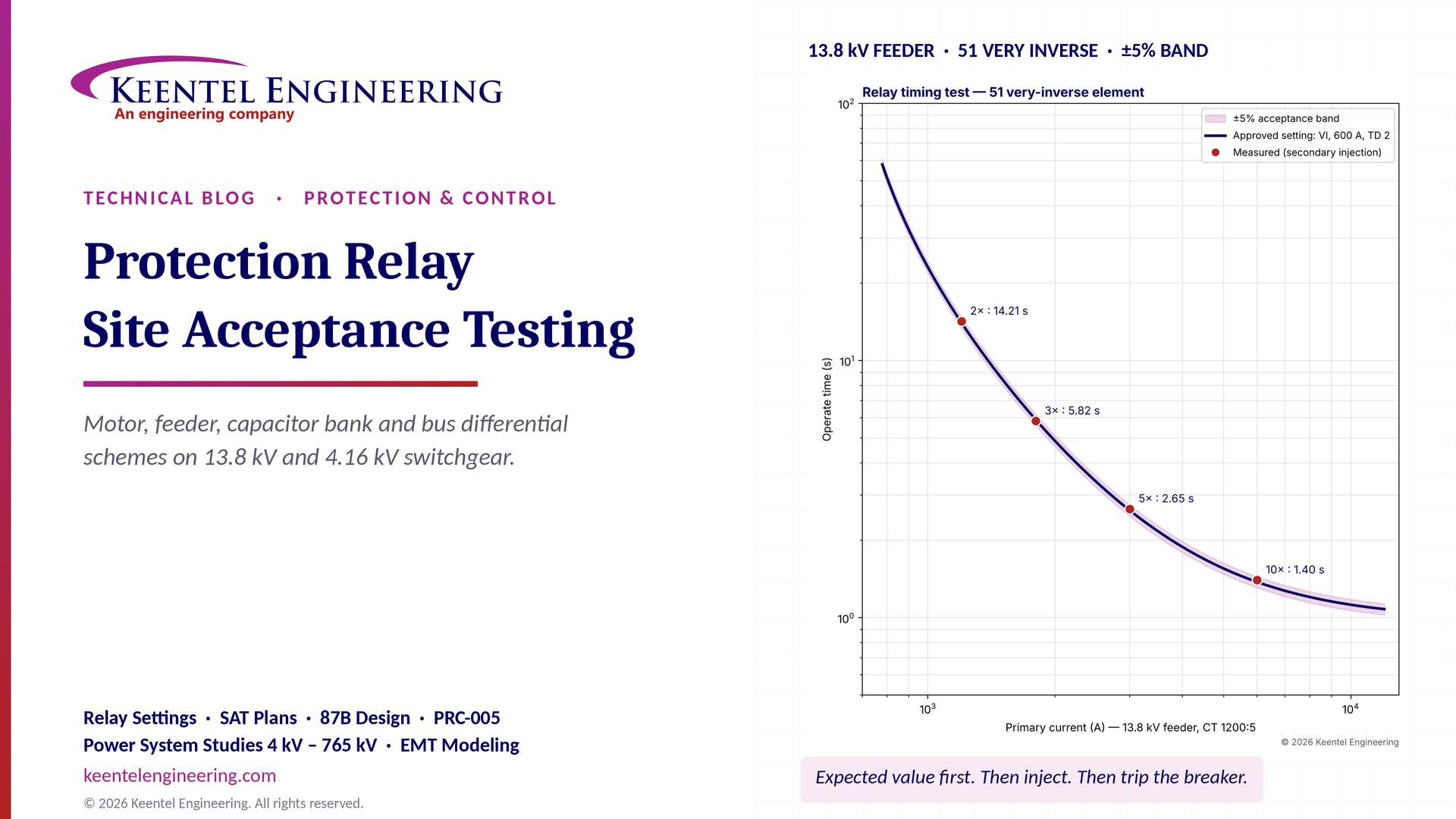
Protection relay site acceptance testing (SAT) guide covering CT/VT checks, secondary injection, motor relays, 87B bus differential and IEEE/NETA standards.
 SPP HILL requirements, HDPS interconnection studies
By SANDIP R PATEL • October 30, 2026
Understand SPP HILL requirements, HDPS interconnection studies, voltage and frequency ride-through, EMT modeling, weak-grid screening, and compliance.

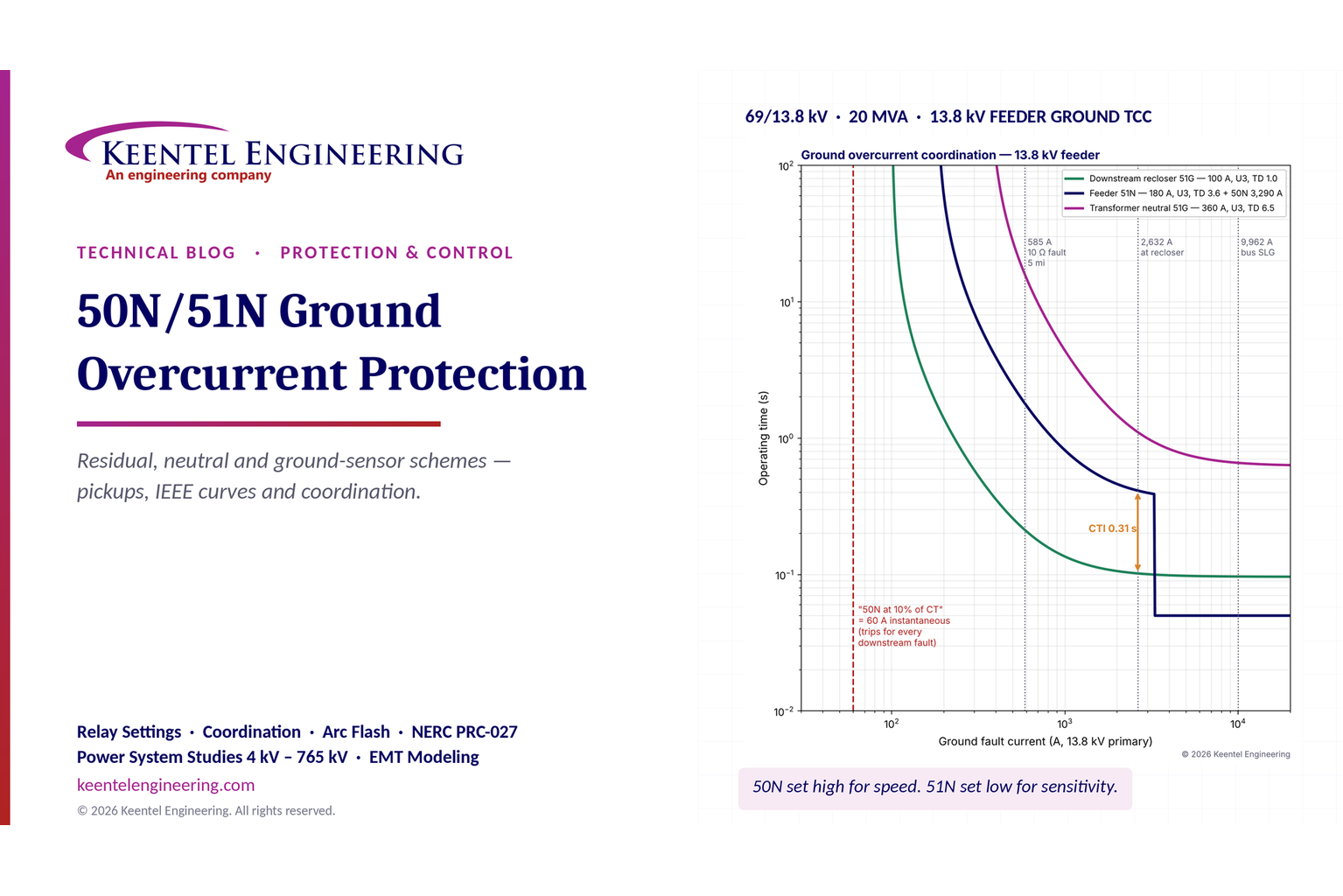
50N/51N ground overcurrent protection TCC coordination for a 13.8 kV feeder
By SANDIP R PATEL • October 29, 2026
Learn 50N/51N ground overcurrent protection, relay settings, CT connections, IEEE curves, TCC coordination and ground fault protection for substations.
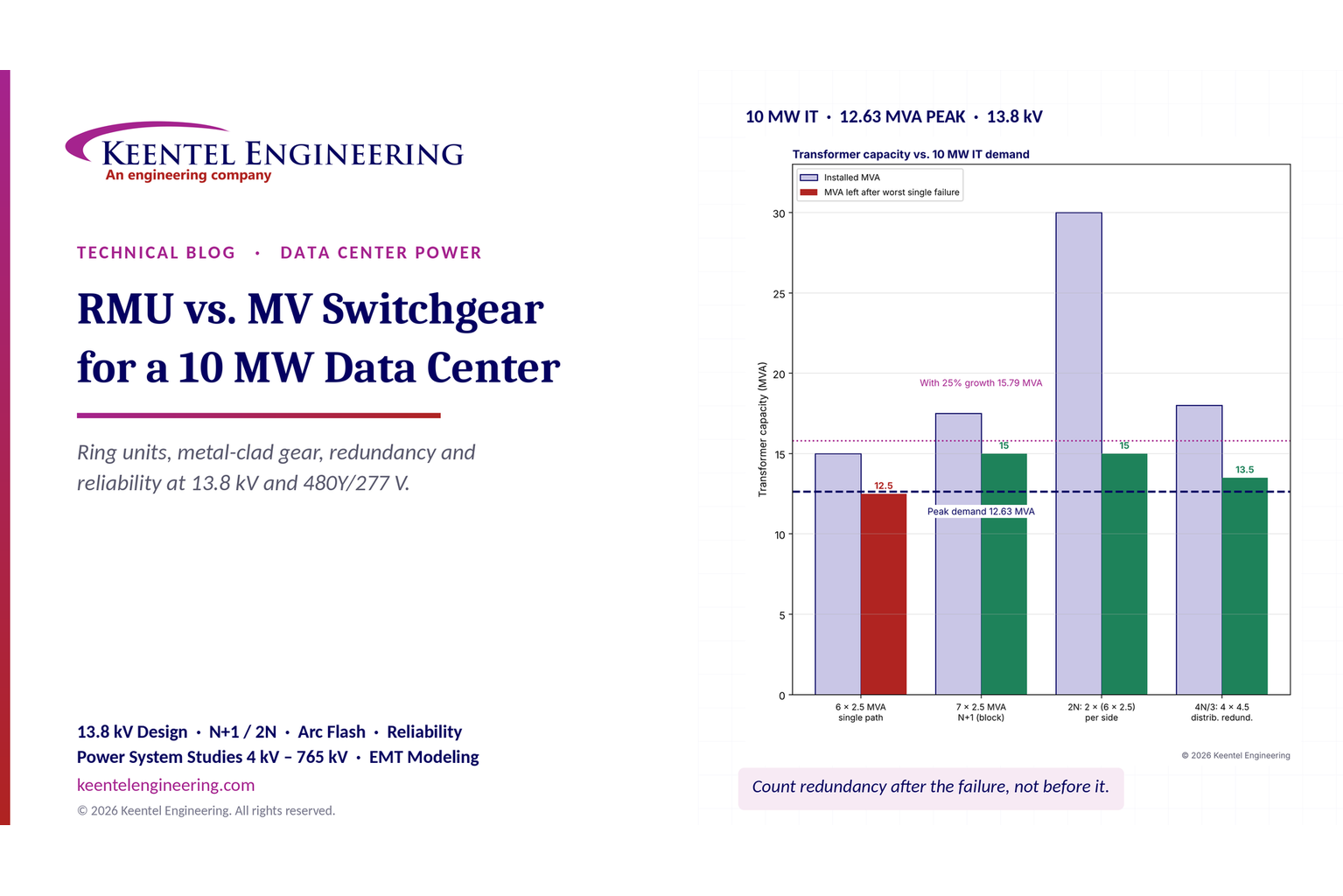
RMU vs MV switchgear for a 10 MW data center showing transformer capacity and redundancy
By SANDIP R PATEL • October 29, 2026
Compare RMU vs. MV switchgear for a 10 MW data center. Explore 13.8 kV design, transformer sizing, N+1/2N redundancy, arc flash and reliability.
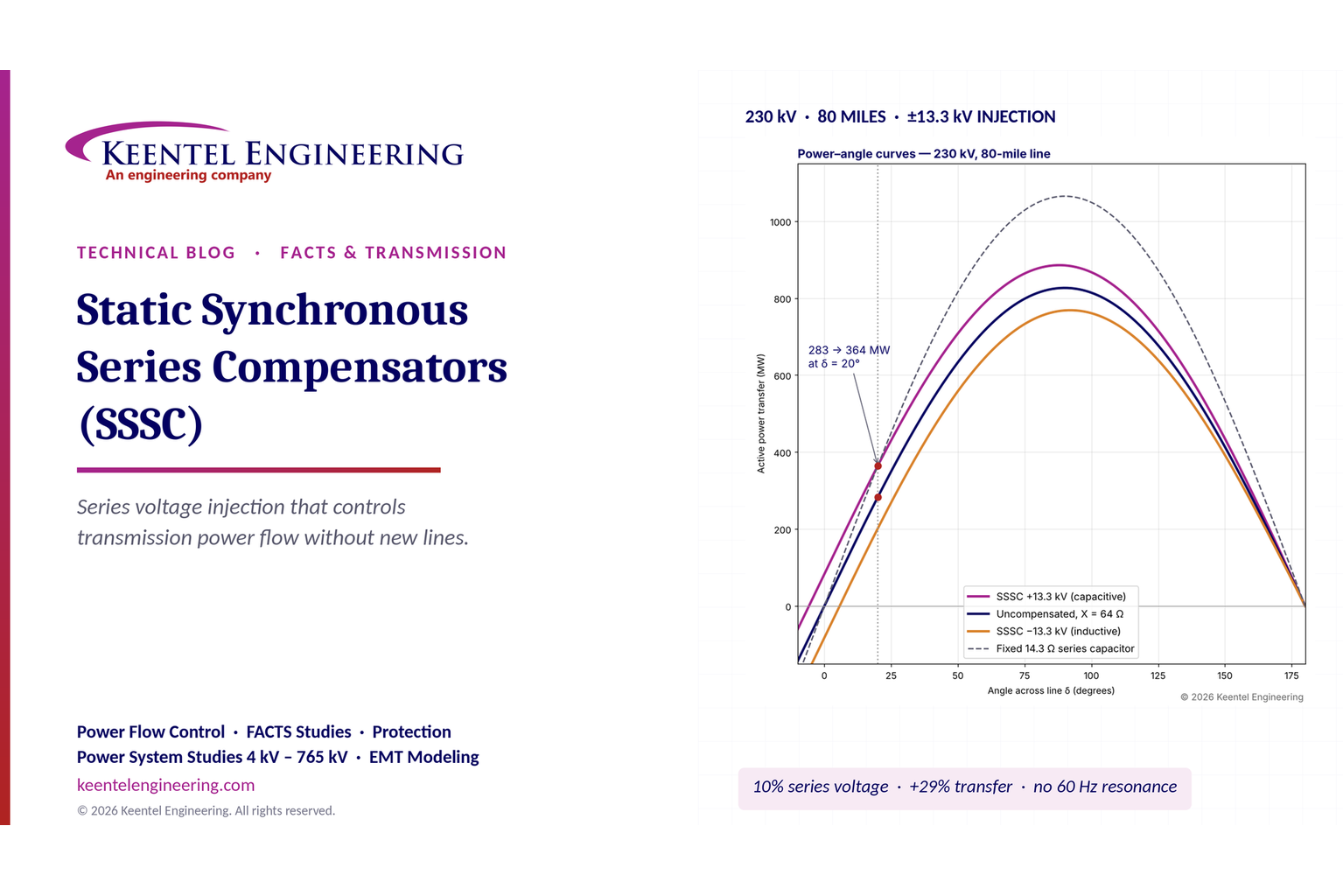
Static synchronous series compensator SSSC power angle curve for 230 kV transmission line
By SANDIP R PATEL • October 29, 2026
Learn how static synchronous series compensators (SSSC) control transmission power flow, improve grid stability and support FACTS applications, with examples.
Data center rack power density comparison with 208V and 415V feed capacity
By SANDIP R PATEL • October 28, 2026
Explore what's inside a data center rack, from servers and switches to PDU sizing, UPS, A/B redundancy, cooling and power design for high-density AI racks.
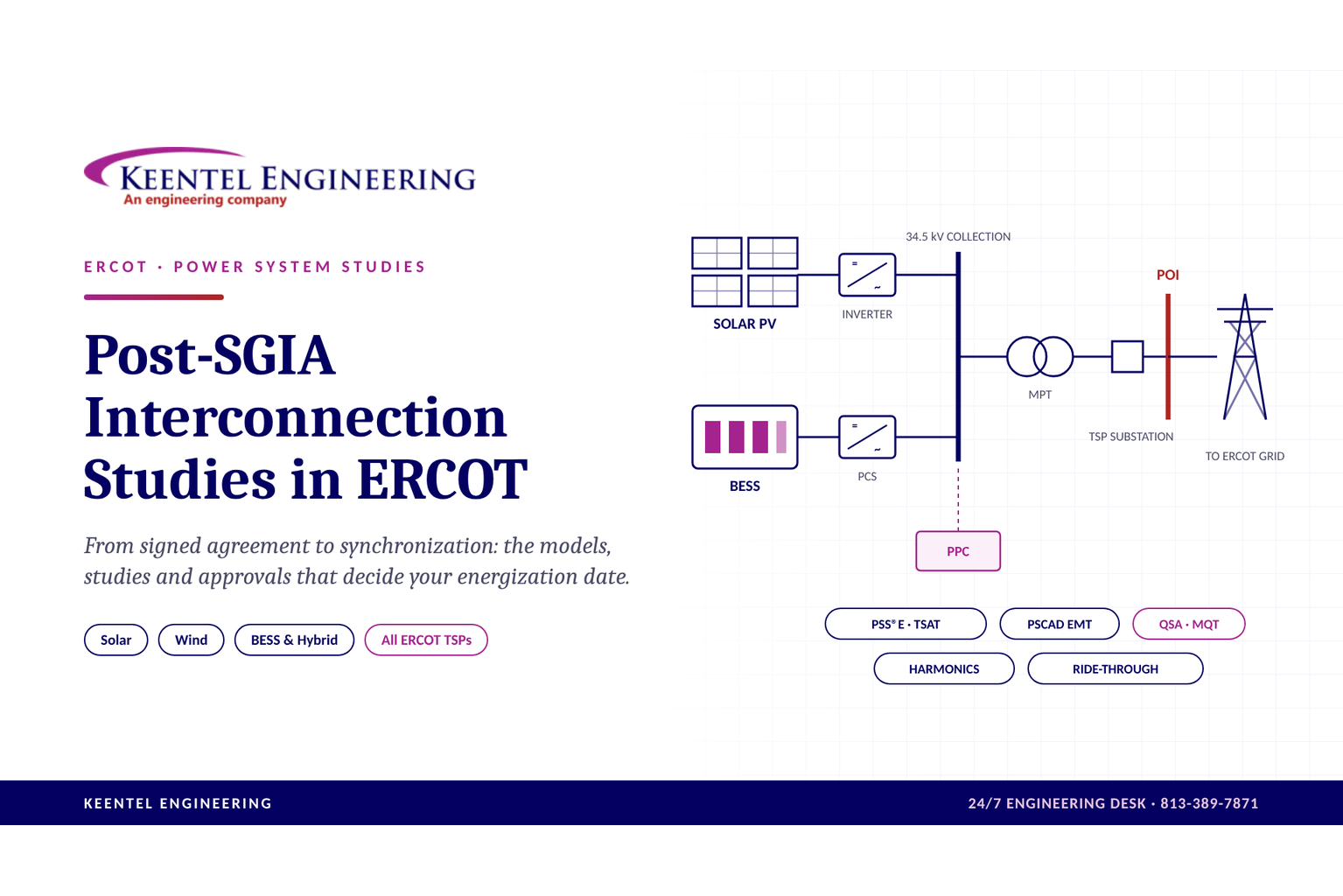
Post-SGIA interconnection studies in ERCOT showing solar PV BESS and grid connection
By SANDIP R PATEL • October 28, 2026
Explore post-SGIA interconnection studies in ERCOT, including PSCAD, PSS/E, QSA, model validation, TSP approvals and solar, wind and BESS commissioning.
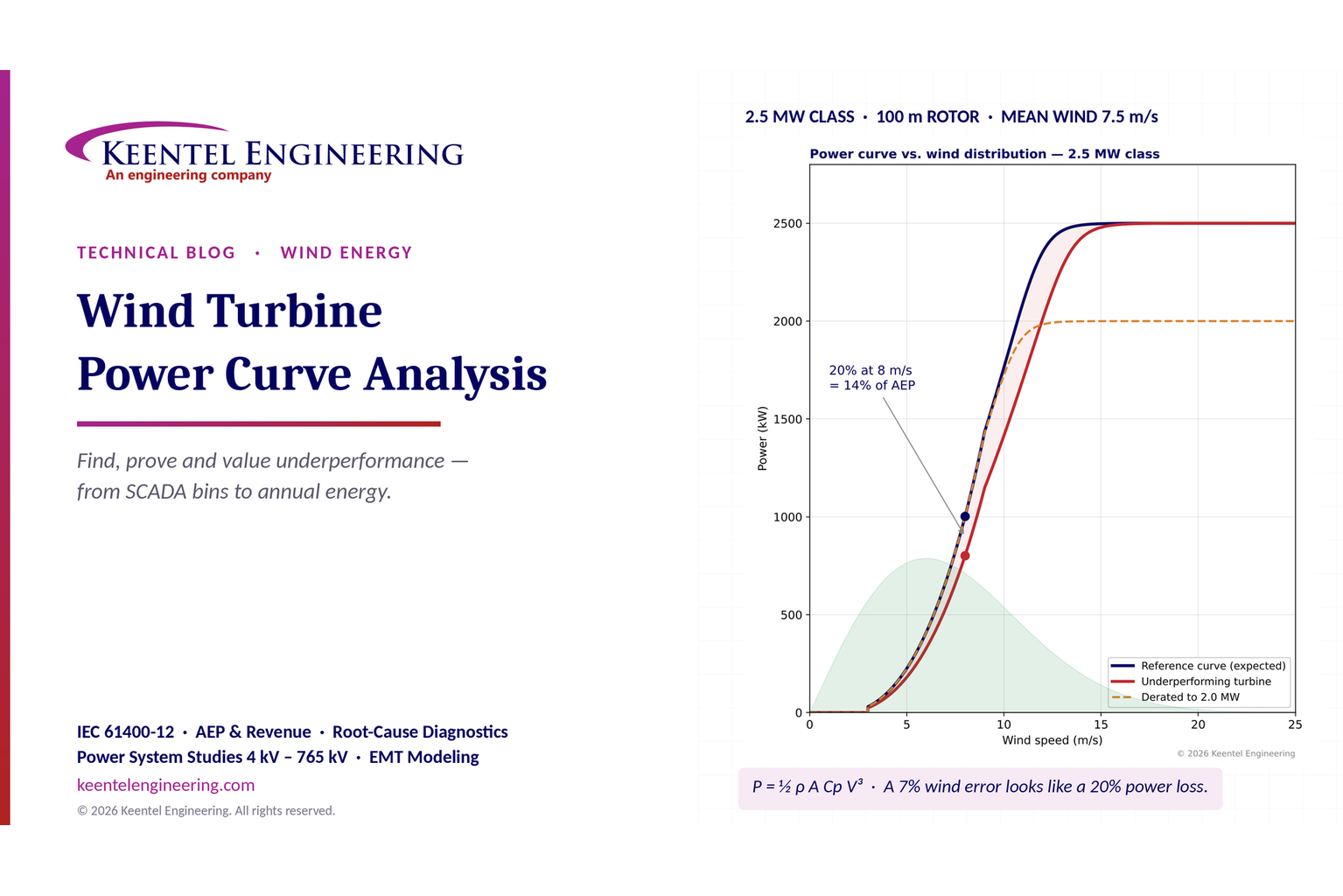
Wind turbine power curve analysis showing expected and underperforming turbine output
By SANDIP R PATEL • October 27, 2026
Learn wind turbine power curve analysis using SCADA data, IEC 61400-12, AEP calculations and diagnostics to identify underperformance and energy losses.
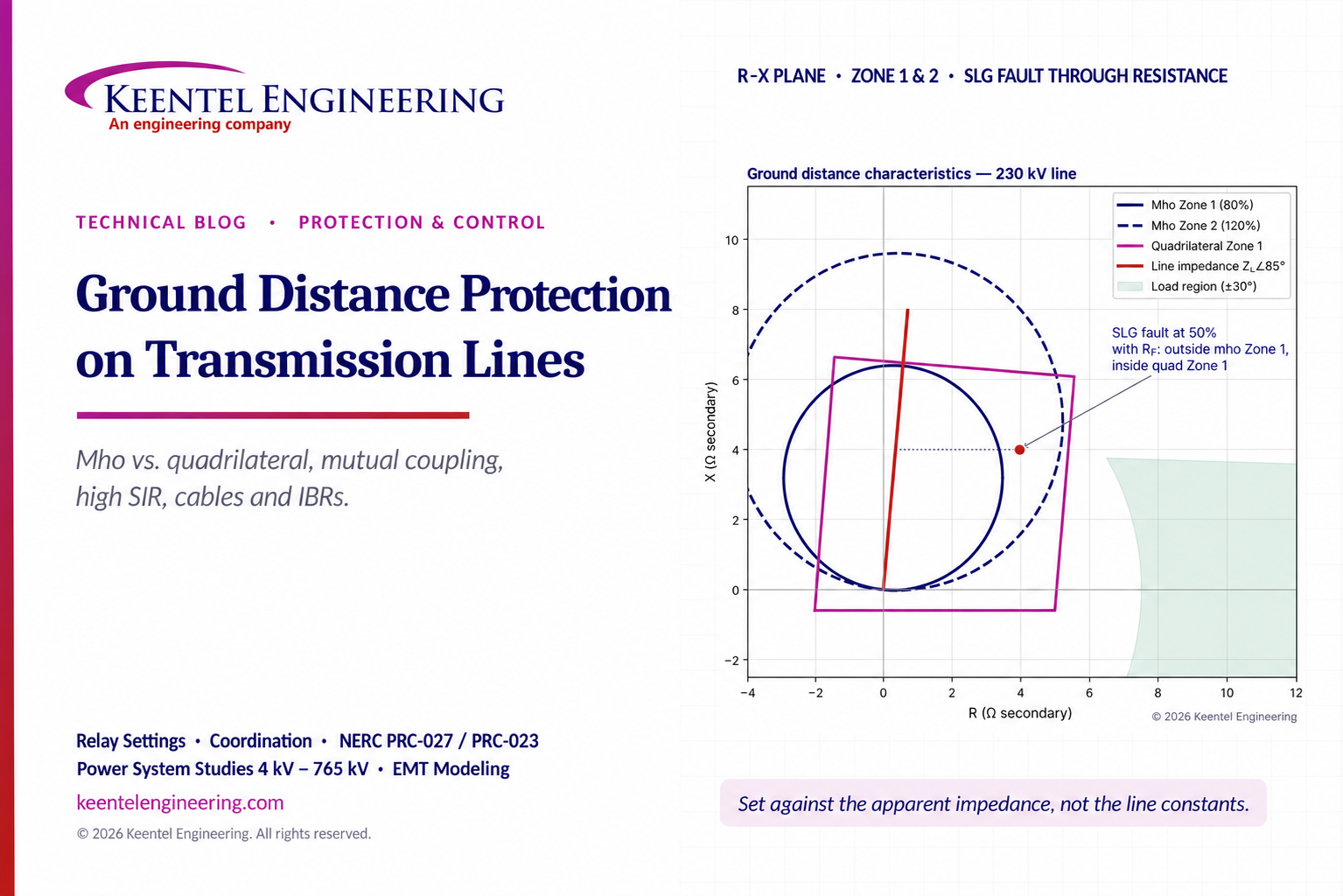
Ground distance protection mho and quadrilateral relay characteristics
By SANDIP R PATEL • October 27, 2026
Ground distance protection guide comparing mho vs quadrilateral relays, mutual coupling, high SIR, CVT transients, IBRs and transmission line settings.
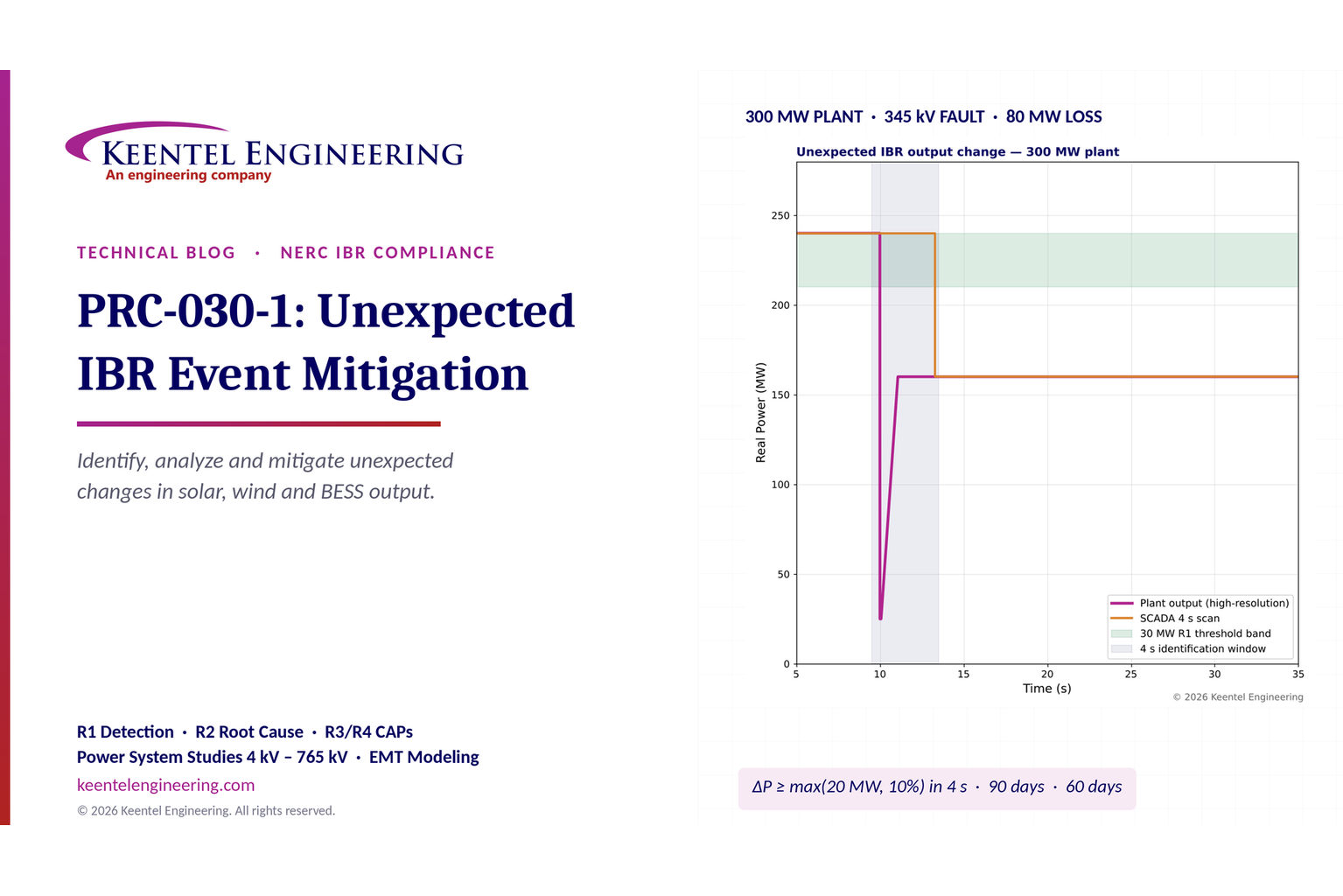
PRC-030-1 compliance guide for solar, wind and BESS owners.
By SANDIP R PATEL • October 27, 2026
PRC-030-1 compliance guide for solar, wind and BESS owners. Learn R1-R4 requirements, 4-second event detection, root-cause analysis and CAP deadlines.
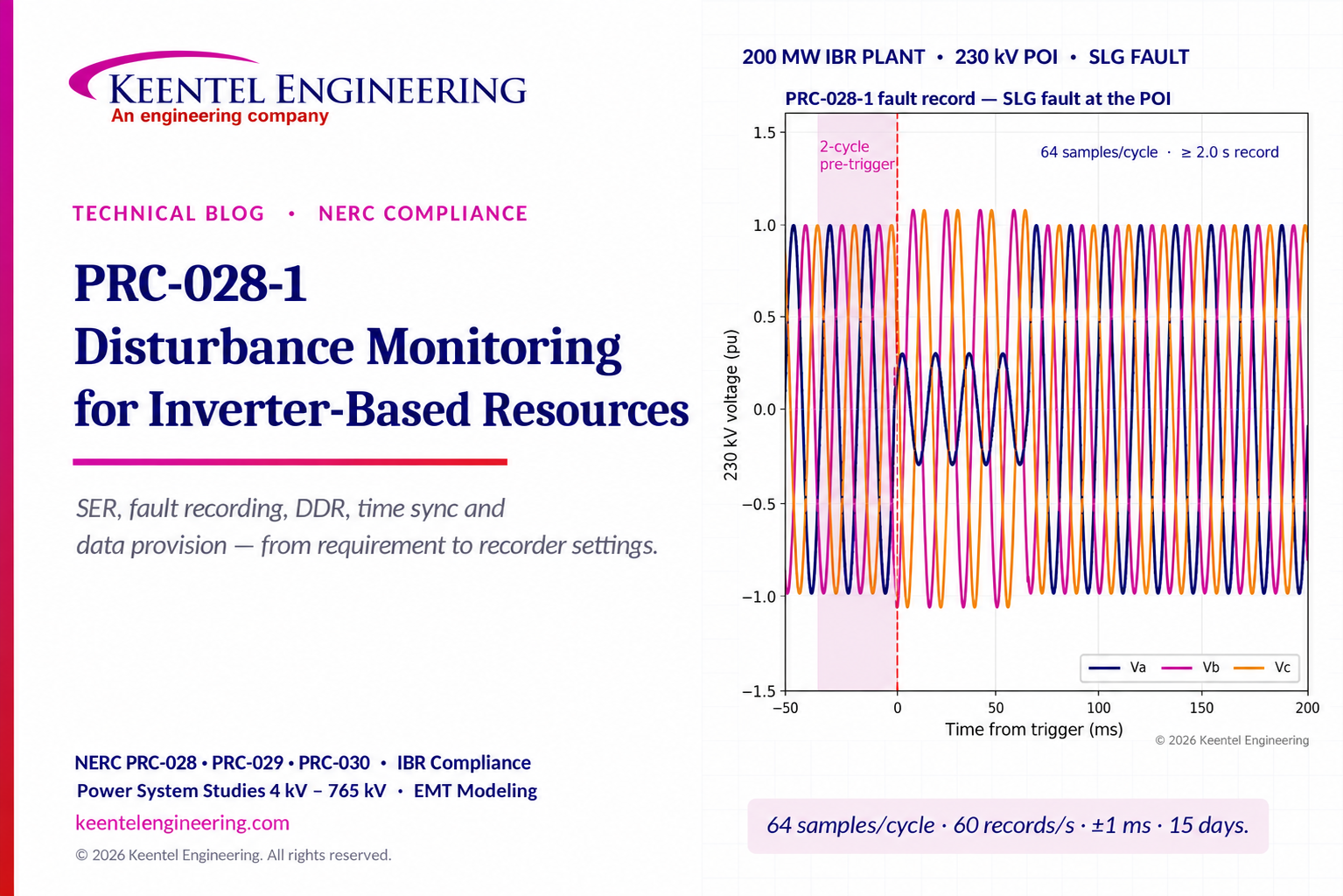
PRC-028-1 disturbance monitoring showing three-phase voltage during a 230 kV fault
By SANDIP R PATEL • October 27, 2026
Explore NERC PRC-028-1 requirements for IBR disturbance monitoring, fault recording, SER, DDR, time synchronization, compliance deadlines and audit readiness.