A Coordinated Electric System Interconnection Review—the utility’s deep-dive on technical and cost impacts of your project.
Challenge: Frequent false tripping using conventional electromechanical relays
Solution: SEL-487E integration with multi-terminal differential protection and dynamic inrush restraint
Result: 90% reduction in false trips, saving over $250,000 in downtime
ERCOT enforces all of the above through simulation, which means your model is your compliance case. The bar is now high:
- Whole-facility scope. The model must represent everything the IT load, the UPS and power conversion, the cooling plant, the protection and control systems in formats compatible with ERCOT's study platforms (PSS/E, PSCAD, TSAT).
- Real control loops, not approximations. Generic textbook representations are unacceptable. The model must capture the actual inner control behavior of your power electronics.
- Hardware-validated converter models. For electronic loads, the PSCAD model must be benchmarked against actual hardware testing including voltage ride-through and subsynchronous response. A model assembled from standard PSCAD library blocks fails by definition, because a generic block has never been tested against your vendor's hardware. The good news: validation is a hardware-type test, so results for a given converter product are reusable across every facility that uses it.
- Format migration. Facilities that previously submitted the older composite load model (CMLD) format must transition to EPRI's PERC1 format.
- Three checkpoints. Models are reviewed before the stability study begins (no model, no study), before each quarterly stability assessment, and for electronic loads one final time before energization, when you must submit as-built models with a documented comparison against the previously studied data and a sworn attestation that the model matches actual field settings. ERCOT's review takes 10 business days, extendable by 20 put it on your critical path.
- A living obligation. Change your technology, controls, or relay settings in a way that affects ride-through including converting a crypto mining site to an AI data center — and you've triggered a new interconnection study, even if your megawatts don't change.
| Parameter | Detail |
|---|---|
| System | 230 kV / 138 kV transmission corridors, wind and wet-snow icing exposure |
| Data basis | 15 years of minute-resolution forced-outage records + regional weather observations |
| Core methods | Event grouping, MVA performance curves, time-to-95%-restore, area outage rate curves, fragility modeling, rerun-history benefits, exceedance and log-domain risk metrics |
| Headline result | ≈85% of maximum resilience benefit at 60% of original capital; worst-event restoration window cut from 11 days to 5 in rerun-history terms |
| Decision supported | Capital portfolio selection; resilience plan filing; post-investment verification framework |
| System / Topic | Governing Standard(s) | What It Controls |
|---|---|---|
| Overall plant electrical distribution | IEEE 141 (Red Book); IEEE 666 | Distribution architecture, voltage selection, design of generating station auxiliary service systems |
| Power system studies | IEEE 399 (Brown Book); IEEE 551 | Load flow, symmetrical/asymmetrical short circuit, motor starting methodologies down to the lowest LV panelboard |
| Protection & coordination | IEEE 242 (Buff Book); IEEE 3004.5; IEEE C37 series | Generator relaying (21, 59N, 87G), time-current coordination, selective clearing between LV and MV tiers |
| GSU / UAT / SST transformers | IEEE C57.12.00 and C57 family | Transformer ratings, impedance, testing, loading |
| HV switchyard breakers | IEEE C37.06 | AC high-voltage circuit breaker preferred ratings |
| MV switchgear (13.8 kV) | IEEE C37.20.2; IEEE C37.20.7 | Metal-clad construction, compartmentalization, vacuum breakers; arc-resistant design with plenum venting |
| MV cable | UL 1072; ICEA S-93-639 (NEMA WC 74) | Type MV-105 shielded cable, 133% insulation level for HRG systems |
| LV switchgear (480 V) | IEEE C37.13; UL 1558 | Metal-enclosed LV power circuit breaker switchgear to 635 V, draw-out ACBs with electronic trip units |
| Motor control centers | UL 845; NEMA ICS 18 | LV-MCC construction, MCCB/MCP protection for motors under ~200 HP |
| Motors | NEMA MG-1 | Motor performance, starting characteristics, service factors |
| DC & battery systems | IEEE 485; IEEE 946 | Lead-acid battery sizing (125/250 VDC), DC auxiliary system design |
| Grounding | IEEE 80; IEEE 142 (Green Book) | Ground grid step/touch potential limits; system grounding including high-resistance grounding |
| Lightning protection | IEEE 998 | Direct-stroke shielding of switchyard and outdoor generator structures |
| Arc flash & electrical safety | IEEE 1584; NFPA 70E | Incident energy calculation; worker safety boundaries and PPE |
| Fire protection | NFPA 850 | Fire protection and risk management for combustion turbine generating plants |
| Installation code | NEC (NFPA 70); NESC | Wiring methods inside the plant fence; overhead/outdoor clearances at the switchyard |
| Interconnection & compliance | FERC LGIP; NERC MOD-025/026/027, PRC-019/024/029, FAC-008 | Interconnection process, model validation, protection/ride-through coordination, facility ratings |
| IFC / Construction Deliverable | Purpose |
|---|---|
| Stamped IFC packages | Legal basis for construction; P.E. responsible charge |
| Final relay settings & TCCs | Protection as-installed matches the coordination study |
| Calculation archive | Owner records; NERC audit evidence trail |
| Commissioning procedures | Safe, sequenced energization; MOD field testing |
| Construction support | RFIs, field changes, FAT/SAT witness |
| As-builts & model handoff | Operating baseline; future study currency |
| Metric | Outcome |
|---|---|
| Defects found pre-occupancy | Three topology defects and one settings-mismatch family corrected before load migration; the shared-switchboard defect alone would have invalidated the concurrently-maintainable claim on day one |
| IST findings | Fourteen additional discrepancies surfaced under scenario testing (control logic, alarm mapping, one generator sequencing fault) — all closed before handover instead of during operations |
| Black-building test | Passed on second execution; the first attempt exposed the generator sequencing fault under true block load, exactly the failure the compressed plan would never have found |
| Handover quality | Operations team certified on the actual failure scenarios; corrected EOPs and settings documentation delivered as controlled documents |
| Business outcome | Occupancy proceeded three weeks behind the original date — against an independent estimate that the uncorrected sequencing fault carried a high probability of a full facility outage within the first year |
Part 2 — Frequently Asked Questions: Large Load Interconnection
| Contact | Details |
|---|---|
| Headquarters | 400 N Ashley Dr STE 2600, Tampa, FL 33602 |
| Phone | (813) 389-7871 |
| contact@keentelengineering.com | |
| Florida Firm Registration | No. 36853 |
| Additional Offices | Austin, TX • Sacramento, CA • Baltimore, MD |
| Who | Acronym | Plain-English Role |
|---|---|---|
| ERCOT | — | The grid's air traffic controller. It doesn't own power lines or plants; it directs the flow of electricity across most of Texas and referees the admission process for new generators. |
| Interconnecting Entity | IE | You — the developer or owner trying to connect a new plant (or significantly modify an existing one). You file the application and drive the process. |
| Resource Entity | RE | The registered owner/operator of the generator once it becomes an official market participant. Often the same company as the IE, wearing a different hat. |
| Qualified Scheduling Entity | QSE | Your plant's voice on the grid. The QSE handles round-the-clock communications with ERCOT — telemetry, schedules, dispatch instructions. Every generator must have one. |
| Transmission Service Provider | TSP | The utility that owns the wires and substation you'll connect to. The TSP runs your detailed study, builds the connection facilities, and signs your interconnection contract. |
| RIOO-IS | — | ERCOT's online portal where the whole process lives — applications, documents, status tracking, and checklists all flow through it. |
| Who | Acronym | Plain-English Role |
|---|---|---|
| ERCOT | — | The grid's air traffic controller. It doesn't own power lines or plants; it directs the flow of electricity across most of Texas and referees the admission process for new generators. |
| Interconnecting Entity | IE | You — the developer or owner trying to connect a new plant (or significantly modify an existing one). You file the application and drive the process. |
| Resource Entity | RE | The registered owner/operator of the generator once it becomes an official market participant. Often the same company as the IE, wearing a different hat. |
| Qualified Scheduling Entity | QSE | Your plant's voice on the grid. The QSE handles round-the-clock communications with ERCOT — telemetry, schedules, dispatch instructions. Every generator must have one. |
| Transmission Service Provider | TSP | The utility that owns the wires and substation you'll connect to. The TSP runs your detailed study, builds the connection facilities, and signs your interconnection contract. |
| RIOO-IS | — | ERCOT's online portal where the whole process lives — applications, documents, status tracking, and checklists all flow through it. |
| Who | Acronym | Plain-English Role |
|---|---|---|
| ERCOT | — | The grid's air traffic controller. It doesn't own power lines or plants; it directs the flow of electricity across most of Texas and referees the admission process for new generators. |
| Interconnecting Entity | IE | You — the developer or owner trying to connect a new plant (or significantly modify an existing one). You file the application and drive the process. |
| Resource Entity | RE | The registered owner/operator of the generator once it becomes an official market participant. Often the same company as the IE, wearing a different hat. |
| Qualified Scheduling Entity | QSE | Your plant's voice on the grid. The QSE handles round-the-clock communications with ERCOT — telemetry, schedules, dispatch instructions. Every generator must have one. |
| Transmission Service Provider | TSP | The utility that owns the wires and substation you'll connect to. The TSP runs your detailed study, builds the connection facilities, and signs your interconnection contract. |
| RIOO-IS | — | ERCOT's online portal where the whole process lives — applications, documents, status tracking, and checklists all flow through it. |
| Who | Acronym | Plain-English Role |
|---|---|---|
| ERCOT | — | The grid's air traffic controller. It doesn't own power lines or plants; it directs the flow of electricity across most of Texas and referees the admission process for new generators. |
| Interconnecting Entity | IE | You — the developer or owner trying to connect a new plant (or significantly modify an existing one). You file the application and drive the process. |
| Resource Entity | RE | The registered owner/operator of the generator once it becomes an official market participant. Often the same company as the IE, wearing a different hat. |
| Qualified Scheduling Entity | QSE | Your plant's voice on the grid. The QSE handles round-the-clock communications with ERCOT — telemetry, schedules, dispatch instructions. Every generator must have one. |
| Transmission Service Provider | TSP | The utility that owns the wires and substation you'll connect to. The TSP runs your detailed study, builds the connection facilities, and signs your interconnection contract. |
| RIOO-IS | — | ERCOT's online portal where the whole process lives — applications, documents, status tracking, and checklists all flow through it. |
| Who | Acronym | Plain-English Role |
|---|---|---|
| ERCOT | — | The grid's air traffic controller. It doesn't own power lines or plants; it directs the flow of electricity across most of Texas and referees the admission process for new generators. |
| Interconnecting Entity | IE | You — the developer or owner trying to connect a new plant (or significantly modify an existing one). You file the application and drive the process. |
| Resource Entity | RE | The registered owner/operator of the generator once it becomes an official market participant. Often the same company as the IE, wearing a different hat. |
| Qualified Scheduling Entity | QSE | Your plant's voice on the grid. The QSE handles round-the-clock communications with ERCOT — telemetry, schedules, dispatch instructions. Every generator must have one. |
| Transmission Service Provider | TSP | The utility that owns the wires and substation you'll connect to. The TSP runs your detailed study, builds the connection facilities, and signs your interconnection contract. |
| RIOO-IS | — | ERCOT's online portal where the whole process lives — applications, documents, status tracking, and checklists all flow through it. |
| Who | Acronym | Plain-English Role |
|---|---|---|
| ERCOT | — | The grid's air traffic controller. It doesn't own power lines or plants; it directs the flow of electricity across most of Texas and referees the admission process for new generators. |
| Interconnecting Entity | IE | You — the developer or owner trying to connect a new plant (or significantly modify an existing one). You file the application and drive the process. |
| Resource Entity | RE | The registered owner/operator of the generator once it becomes an official market participant. Often the same company as the IE, wearing a different hat. |
| Qualified Scheduling Entity | QSE | Your plant's voice on the grid. The QSE handles round-the-clock communications with ERCOT — telemetry, schedules, dispatch instructions. Every generator must have one. |
| Transmission Service Provider | TSP | The utility that owns the wires and substation you'll connect to. The TSP runs your detailed study, builds the connection facilities, and signs your interconnection contract. |
| RIOO-IS | — | ERCOT's online portal where the whole process lives — applications, documents, status tracking, and checklists all flow through it. |
| Who | Acronym | Plain-English Role |
|---|---|---|
| ERCOT | — | The grid's air traffic controller. It doesn't own power lines or plants; it directs the flow of electricity across most of Texas and referees the admission process for new generators. |
| Interconnecting Entity | IE | You — the developer or owner trying to connect a new plant (or significantly modify an existing one). You file the application and drive the process. |
| Resource Entity | RE | The registered owner/operator of the generator once it becomes an official market participant. Often the same company as the IE, wearing a different hat. |
| Qualified Scheduling Entity | QSE | Your plant's voice on the grid. The QSE handles round-the-clock communications with ERCOT — telemetry, schedules, dispatch instructions. Every generator must have one. |
| Transmission Service Provider | TSP | The utility that owns the wires and substation you'll connect to. The TSP runs your detailed study, builds the connection facilities, and signs your interconnection contract. |
| RIOO-IS | — | ERCOT's online portal where the whole process lives — applications, documents, status tracking, and checklists all flow through it. |
Protection Design
Case Studies
Florida Large LoadGrid Requirements
Aug 10, 2026 | Blog
What data center and 50 MW+ load developers must know before energizing in Florida — and how to keep a project on schedule under the state's toughest-yet interconnection rules.
The short version
Florida has moved decisively to make large electricity users — data centers and industrial loads with a monthly peak demand of 50 MW or more — pay the true, full cost of connecting to the grid. Senate Bill 484, effective July 1, 2026, requires all four of the state's investor-owned utilities to file dedicated large-load tariffs with the Florida Public Service Commission (FPSC) by October 1, 2026. These tariffs shift the cost of grid connection, incremental generation, and transmission upgrades onto the large-load customer rather than everyday ratepayers, and they bar service to loads tied to certain prohibited foreign entities. In parallel, federal regulators at FERC are pushing every organized power market toward similar reforms. For developers, the message is simple: the era of cheap, fast, someone-else-pays interconnection is over. Early, rigorous engineering and a well-built application are now the difference between energizing on schedule and waiting years.
Why Florida Rewrote the Rules for Large Loads
The artificial-intelligence build-out has turned electricity into the scarcest input in the data center industry. Hyperscale campuses that once drew tens of megawatts now request hundreds, and they want power in 18 to 36 months rather than the five-to-seven-year horizon utilities traditionally plan around. Florida — with its warm climate, connectivity, tax posture, and rapidly growing population — sits squarely in the path of that demand. The result is a wave of interconnection requests large enough to reshape the state's grid.
That surge collided with a political reality: Florida households have watched their electric bills climb sharply, with the average residential bill up roughly 20% since 2021. State leaders were unwilling to let ordinary customers subsidize the grid expansions needed to serve some of the largest and best-capitalized companies in the world. When Governor Ron DeSantis signed SB 484 in May 2026, he framed it bluntly: Floridians should not have to subsidize “some of the wealthiest companies in the history of humanity.”
For developers, this is not a reason to avoid Florida — it is a reason to plan differently. The projects that will succeed here are the ones that arrive with credible load forecasts, defensible cost estimates, and an engineering strategy that anticipates what the utility and the Commission will demand. This guide walks through the requirements as they stand, the live utility proceedings that will define how the rules are applied, the federal backdrop at FERC, and the practical steps that keep a large-load project moving.
Senate Bill 484: The Framework in Detail
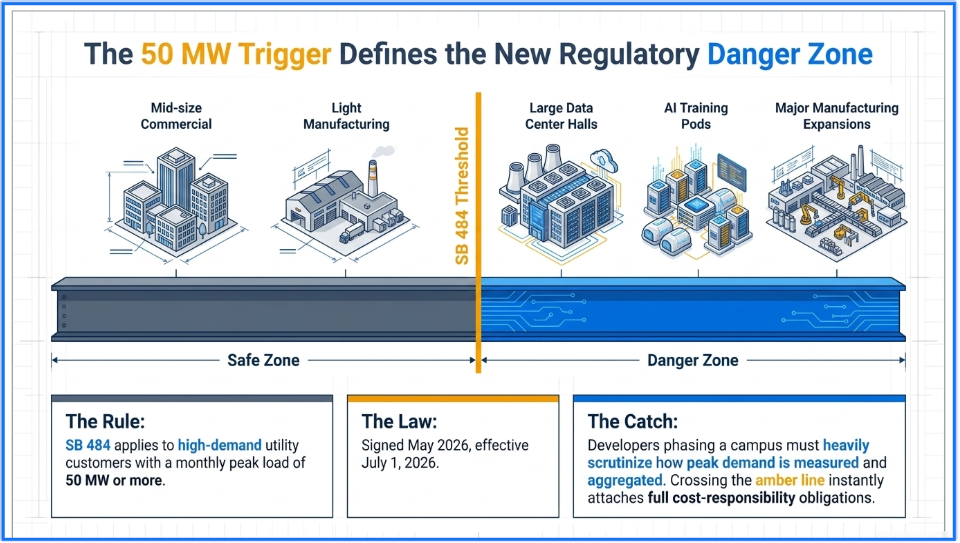
SB 484 is the centerpiece of Florida's large-load framework. It establishes who is covered, what they must pay for, how utilities must structure service, and which customers are prohibited outright. The following breaks down each pillar.
Who is covered: the 50 MW threshold
The law applies to high-demand utility customers — principally data centers and large industrial or commercial operations — whose monthly peak load reaches or exceeds 50 MW. This is the trigger that pulls a project into the large-load regime. It is a meaningful line: a single large data center hall, a cluster of AI training pods, or a major manufacturing expansion can easily cross it, while a mid-size commercial facility will not. Developers phasing a campus should pay close attention to how peak demand is measured and aggregated, because the threshold is where full cost-responsibility obligations attach.
What you pay for: full cost responsibility
The defining principle of SB 484 is that large-load customers bear the direct and incremental costs their demand imposes on the system, without shifting those costs to residential or general commercial ratepayers. In practice, that responsibility spans three broad categories:
- Direct grid-connection costs — the substations, interconnection facilities, metering, and dedicated lines required to physically connect the load.
- Incremental generation costs — the cost of the additional generating capacity needed to reliably serve the new demand, so that adding your load does not degrade reliability or raise costs for everyone else.
- Associated infrastructure and transmission upgrades — the network reinforcements (upgraded and new substations, transmission lines, and related facilities) triggered by the load.
The policy intent is a clean allocation of causation: the customer that causes the cost pays the cost. For a developer, this reframes the interconnection cost estimate from a background line item into one of the most important numbers in the entire project pro forma. Getting it wrong — or being surprised by it late — can undermine the economics of an otherwise sound site.
Why the cost estimate is now a core engineering deliverable
Because the applicant absorbs connection, generation, and upgrade costs, the accuracy and defensibility of the underlying studies directly drive project viability. A load-flow, short-circuit, and stability study that identifies the least-cost compliant path — including whether grid-enhancing technologies can substitute for expensive new lines — can move millions of dollars and many months. This is precisely where independent engineering pays for itself.
Who is prohibited: foreign-entity restrictions
SB 484 also carries a national-security dimension. It prohibits electric utilities from supplying power to large-load operations that are tied to specified prohibited foreign entities. Developers should treat ownership, financing, and control-structure diligence as a compliance prerequisite, not an afterthought — a load that cannot lawfully be served is a project that cannot be built, regardless of how strong the site or the engineering is.
How service is structured: mandatory large-load tariffs
SB 484 does not leave the terms of large-load service to negotiation. It requires all four of Florida's investor-owned utilities — including Florida Power & Light (FPL) and Duke Energy Florida — to file formal large-load tariffs with the FPSC by October 1, 2026. These tariffs are the rulebook that will govern how large interconnections are studied, priced, and contracted. Until each utility's tariff is approved, the exact terms a developer will face remain a moving target, which is why the current proceedings (discussed below) matter so much.
SB 484 at a glance
| Element | Requirement |
|---|---|
| Effective date | July 1, 2026 (signed by Gov. DeSantis, May 2026) |
| Who it covers | Data centers / large industrial loads with monthly peak load ≥ 50 MW |
| Cost responsibility | Applicant pays grid connection, incremental generation, and infrastructure/transmission upgrades — no cost-shifting to residential or general commercial ratepayers |
| Utility obligation | All four investor-owned utilities must file large-load tariffs with the FPSC by October 1, 2026 |
| Security restriction | Utilities barred from serving large loads tied to prohibited foreign entities |
| Regulator | Florida Public Service Commission (FPSC) |
What SB 484 Means in Practice for Your Application
Translating the statute into a project plan means understanding the mechanics of a large-load application. While each utility's approved tariff will control the specifics, the following elements are already visible in the filings before the Commission and in the direction of the law.
A specialized tariff filing, not a standard service request
Large loads are being pulled out of the ordinary rate classes and given their own tariff structures. That means the application, the study process, the cost-recovery mechanism, and the contract terms are all purpose-built for 50 MW+ customers. Developers should expect to engage with the utility through this specialized pathway rather than the standard commercial interconnection process.
Long-term commitments and minimum service terms
Utilities are seeking long commitment periods to justify the capital they must build. Duke Energy Florida's proposed framework, for example, would apply to customers with demand of at least 50 MW at a single location and impose a 20-year minimum service term. A commitment of that length reshapes a developer's financing and offtake strategy, and it makes early load-forecast accuracy essential: you are contracting to a demand profile for two decades.
Protection against stranded-cost exposure
A central concern for regulators is what happens if a utility builds infrastructure for a data center that never energizes or ramps far below its projected load. The tariffs and cost-recovery agreements are being designed so that the applicant — not other customers — stands behind those commitments. Developers should expect financial assurances, deposits, or take-or-pay-style provisions tied to the capacity they reserve. Structuring these terms favorably, and phasing reserved capacity to match realistic ramp, is an area where engineering and commercial strategy intersect.
The Tariffs Taking Shape: Duke, FPL, and the First Test of SB 484
The statute sets the principles; the utility tariff proceedings are where those principles become concrete rules. As of mid-2026, the Duke Energy Florida filing has become the closely watched first test of what SB 484 actually requires.
Duke Energy Florida under scrutiny
Duke — which serves more than two million customers in Florida — submitted its large-load tariff application in April 2026 (FPSC Docket No. 02327-2026), ahead of the bill becoming law, and argued that its proposal “strikes the right balance” between existing ratepayers and new large-load customers. But at the FPSC's July 7, 2026 meeting, the Commission split over whether Duke's approach actually complies with the new law.
The core objection: rather than proposing a genuinely new tariff designed for large loads, Duke would allow new large-load customers to take service under its existing rates for now, deferring a custom-built large-load tariff until its next rate case (paired with a rate freeze). The Public Counsel, Walter Trierweiler — who represents ratepayers — moved (with the advocacy group Florida Rising) to dismiss Duke's bid, arguing it “facially violates Florida law with a regulatory scheme that ignores both the text and spirit of the freshly signed SB 484.” Duke opposed the motion, maintaining that its approach, coupled with the rate freeze, meshes with the law.
Commissioners voiced open skepticism. Commissioner Mike La Rosa dissented, saying, “I don’t believe that the overall customer protections are there the way the legislature drafted it.” Commissioner Gary Clark warned a Duke representative, “you’re on sticky ground if you ask me.” Ultimately, the panel voted 4–1 to let the application advance — but Chair Gabriella Passidomo Smith stressed the vote was procedural: “This has nothing to do with actual merits of the case, just whether we should flesh it out to a hearing or not.” The matter proceeds to a formal, two-day hearing on August 25–26, 2026.
Why the Duke case matters to you
The Duke hearing will establish how strictly the FPSC reads SB 484's cost-protection requirements. If the Commission demands a purpose-built large-load tariff with robust anti-cost-shifting provisions, every utility's framework — and every developer's cost exposure — will be shaped accordingly. Track this docket; it is the bellwether for the rules you will operate under.
Florida Power & Light: cost scrutiny and the transmission question
FPL, a subsidiary of NextEra Energy, is Florida's largest electric utility, serving about 12 million customers across most of the state's coastal counties. It, too, must file a large-load tariff under SB 484. But FPL is also at the center of a related fight over how transmission costs get scrutinized before customers pay — a fight that directly implicates data center load growth.
In 2026 the FPSC approved FPL's $782 million Andytown–Oasis transmission project, one of the most expensive local transmission projects ever proposed in Florida, to serve Miami-Dade County. The Environmental Defense Fund (EDF) intervened and has asked the Florida Supreme Court to review the Commission's approval, arguing the project was approved without the rigorous scrutiny a project of that size warrants.
For developers, one thread of EDF's challenge is especially notable: EDF's experts argued that FPL's load forecasting inappropriately attributed speculative data center growth to Miami-Dade County, helping justify the build. In other words, data center demand is increasingly being cited as the reason for expensive infrastructure — which makes the credibility of your own load forecast a matter of public record and scrutiny, not just an internal planning number.
The regional-planning and non-wires debate
EDF's broader argument is that Florida builds transmission one project at a time, based on isolated local reliability assessments, rather than evaluating whether regional planning or advanced technologies could meet the same needs at lower cost. Because investor-owned utilities earn a regulated return on the assets they build, critics argue their incentive points toward the most capital-intensive solution. EDF contends FPL never seriously evaluated lower-cost, faster-to-deploy “non-wires” alternatives, including:
- Grid-Enhancing Technologies (GETs) such as dynamic line rating and advanced power flow control, which add capacity to existing lines quickly;
- Transmission-tied battery storage; and
- Generation re-dispatch to relieve congestion and maximize existing capacity.
This debate is not academic for developers. Under SB 484, you may bear the cost of the upgrades triggered by your load. If a lower-cost GET or non-wires solution can serve your interconnection, identifying it can materially reduce your cost responsibility and shorten your schedule. The regulatory momentum — at both the state and federal level — is increasingly toward requiring these alternatives to be studied, which strengthens a developer's position in pushing for them.
The affordability backdrop
The average Florida household electric bill is up about 20% since 2021, and the return utilities are allowed to earn is among the highest in the country. That combination is exactly why SB 484 exists and why regulators are scrutinizing who pays for growth. Developers who show up with a credible, least-cost plan are aligned with — not fighting against — the political and regulatory current.
The Federal Backdrop: FERC's Section 206 Large-Load Reforms
Florida's state framework does not exist in a vacuum. In June 2026, the Federal Energy Regulatory Commission (FERC) took its most significant action yet to integrate large loads onto the grid — and while the mechanics differ from Florida's, the policy goals are strikingly aligned: connect large loads quickly, protect other customers from the costs those loads cause, and preserve reliability.
What FERC did
Acting under Section 206 of the Federal Power Act, FERC issued “show cause” orders to each of the six Regional Transmission Organizations (RTOs) and Independent System Operators (ISOs) and the transmission owners in their regions. Each grid operator must justify how its existing rates, rules, and practices adequately account for the interconnection of large and co-located loads — or propose revised terms that are just, reasonable, and not unduly discriminatory. Rather than launch a single nationwide rulemaking, FERC chose a bottom-up approach, letting each market propose region-specific solutions. The effective refund date for the proceedings is June 24, 2026.
The action traces back to an October 2025 U.S. Department of Energy directive (under Section 403 of the DOE Organization Act) instructing FERC to issue an Advance Notice of Proposed Rulemaking on large-load interconnection. FERC then addressed the issue case by case — including a December 2025 order directing PJM to adopt clear co-located-load rules and a January 2026 approval of SPP's High Impact Large Load initiative — before issuing the targeted June 2026 show cause orders. Together, the orders cover roughly two-thirds of the load subject to FERC-jurisdictional rates.
The six show cause orders
| RTO / ISO | Docket No. |
|---|---|
| PJM Interconnection, L.L.C. | EL26-67-000 |
| Midcontinent ISO (MISO) | EL26-70-000 |
| Southwest Power Pool (SPP) | EL26-68-000 |
| California ISO (CAISO) | EL26-71-000 |
| ISO New England (ISO-NE) | EL26-72-000 |
| New York ISO (NYISO) | EL26-69-000 |
The five reform categories FERC is demanding
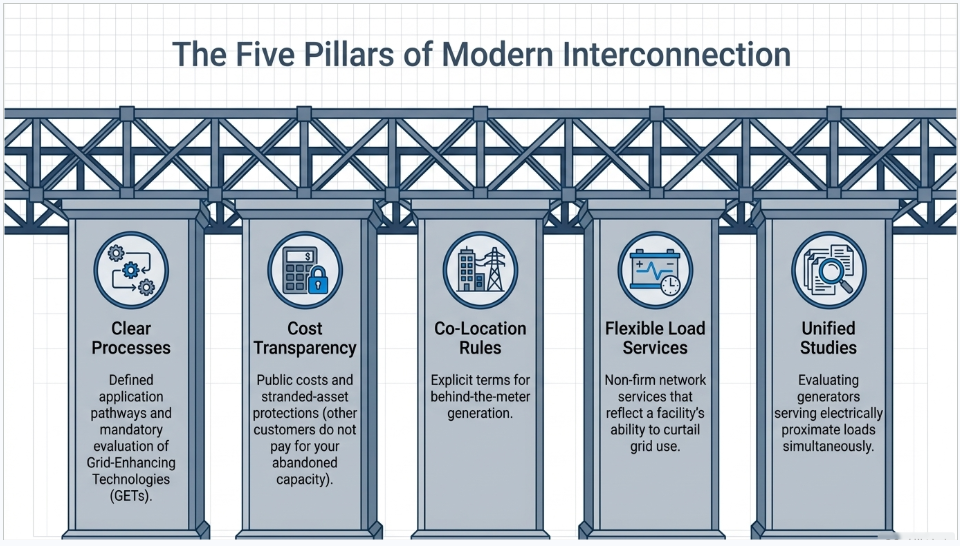
Each grid operator must show it already employs — or will adopt — measures in five areas. These are a useful checklist for any large-load developer, because they define what “best practice” interconnection looks like:
- Clear application and study processes — defined application, study, and operational procedures for large loads, including evaluation of grid-enhancing technologies (dynamic line ratings, advanced power flow control). If GETs are not used, the operator must explain why.
- Cost transparency and anti-cost-shifting — public, clear costs for connecting large loads, plus pro forma cost-recovery agreements so that if infrastructure is built for a data center that never comes online, other customers are not stuck with the stranded costs.
- Co-location and behind-the-meter rules — clear terms for co-location arrangements and loads served by behind-the-meter generation.
- New services for flexible large loads — an interim, non-firm network service available while upgrades are built, and permanent firm and non-firm contract-demand service that reflects a load's ability to limit its grid use.
- Studying load and generation together — study pathways that evaluate generation serving “electrically proximate” large loads together with those loads, to avoid unnecessary build-out (SPP's rule, for example, requires the generator and load be no more than two substations apart).
FERC also directed each operator to explain how it will ensure adequate generation is available to serve existing and new large loads — the resource-adequacy question that sits underneath every interconnection request.
How this affects a Florida project
Here is the nuance that matters for Florida developers: most of Florida is not part of an RTO or ISO. FPL and Duke Energy Florida operate in the Southeast largely outside the organized markets FERC targeted, so these six show cause orders do not bind them directly. But the direction of travel is unmistakable, and it converges with SB 484 on the same principles: cost transparency, anti-cost-shifting, pro forma cost-recovery for stranded assets, flexible-load service options, and mandatory consideration of grid-enhancing technologies.
Notably, FERC Chairman Laura V. Swett said she is “under no illusion that the challenges … are somehow unique to the RTO/ISO regions,” and encouraged transmission providers outside those regions to make their own filings to address the same issues. Commissioner Lindsay S. See noted that real-world experience may reveal whether future action is needed on cost shifts. For a developer, the practical takeaway is that the same set of best practices — well-documented load forecasts, least-cost solution analysis, GET evaluation, and flexible-service structuring — will serve you whether your load lands in Florida's state-regulated system or in a federally regulated market elsewhere in your portfolio.
Key FERC deadlines (Section 206 proceedings)
| Milestone | Deadline (2026) |
|---|---|
| Deadline to intervene in the proceedings | July 9 |
| RTO/ISO informational report on resource adequacy | July 20 |
| Deadline to request abeyance (up to 90 days) | August 3 |
| RTO/ISO responses to the show cause orders | August 17 |
| Stakeholder comments on RTO/ISO responses | September 16 |
These federal dates run in near-parallel with Florida's own timeline — the Duke hearing on August 25–26 and the October 1 tariff-filing deadline — making the late summer and fall of 2026 the decisive window for large-load policy at both levels.
Frequently Asked Questions: Florida Large Load Grid Requirements
Senate Bill 484 is Florida's law governing large electricity loads. Governor Ron DeSantis signed it in May 2026, and it took effect on July 1, 2026. Its purpose is to ensure that large new energy users — principally data centers and large industrial loads — pay the full cost of connecting to and being served by the grid, rather than shifting those costs onto residential and general commercial ratepayers. It also directs all four of Florida's investor-owned utilities to file dedicated large-load tariffs with the Florida Public Service Commission.
The framework applies to customers whose monthly peak load reaches or exceeds 50 MW. This threshold is what pulls a data center or large industrial facility into the specialized large-load tariff and cost-responsibility regime. Projects approaching this level should carefully evaluate how peak demand is measured and aggregated across phases, since crossing the threshold changes both the process and the cost exposure.
Under SB 484's full-cost-responsibility principle, a large-load customer bears the direct grid-connection costs (substations, interconnection facilities, dedicated lines, metering), the incremental generation costs needed to reliably serve the new demand, and the associated transmission and infrastructure upgrades triggered by the load. The intent is that the customer causing the cost pays the cost, with no subsidy from other ratepayers. This makes the interconnection cost estimate one of the most consequential numbers in your project's financial model.
All four of Florida's investor-owned utilities must file large-load tariffs with the FPSC by October 1, 2026. This includes Florida Power & Light (FPL) and Duke Energy Florida. Until each utility's tariff is reviewed and approved, the precise terms, study procedures, and cost-recovery mechanisms remain subject to change, so the current proceedings are worth tracking closely.
Duke Energy Florida filed its large-load tariff application in April 2026 (FPSC Docket No. 02327-2026). At the Commission's July 7, 2026 meeting, several commissioners questioned whether Duke's proposal complies with SB 484, because Duke would let large-load customers take service under existing rates for now and defer a purpose-built tariff to its next rate case. The Public Counsel and Florida Rising moved to dismiss the application; Duke opposed. The Commission voted 4–1 to advance the application to a formal two-day hearing on August 25–26, 2026, while emphasizing the vote was procedural rather than a ruling on the merits. It is widely viewed as the first real test of how strictly SB 484 will be enforced.
Expect long-term commitments. Duke's proposed framework, for instance, would apply to loads of at least 50 MW at a single location and impose a 20-year minimum service term. Utilities seek these terms to justify the capital they must invest. A commitment of that length has major implications for financing and offtake, and it raises the stakes on getting your load forecast right at the outset.
This “stranded cost” scenario is a primary regulatory concern. Tariffs and cost-recovery agreements are being designed so that the applicant — not other customers — stands behind the infrastructure built for its load. In practice, expect financial assurances such as deposits, guarantees, or take-or-pay-style provisions tied to reserved capacity. Phasing your reserved capacity to match a realistic ramp, and negotiating these terms carefully, can significantly limit your exposure. FERC is pushing the same concept federally through required pro forma cost-recovery agreements.
Yes. SB 484 prohibits electric utilities from supplying power to large-load operations tied to specified prohibited foreign entities. Ownership, financing, and control-structure diligence should be treated as a compliance prerequisite, because a load that cannot lawfully be served cannot be built regardless of its technical or commercial merits.
Potentially, yes — and the regulatory environment increasingly expects them to be considered. Grid-enhancing technologies (such as dynamic line rating and advanced power flow control), transmission-tied battery storage, and generation re-dispatch can add or free up capacity faster and more cheaply than building new lines. Because a large-load customer may bear the cost of triggered upgrades, identifying a viable lower-cost alternative can reduce your cost responsibility and shorten your schedule. Both the FPSC debate (through the EDF/Andytown–Oasis appeal) and FERC's reforms are pushing utilities to study these options.
In June 2026, FERC issued Section 206 “show cause” orders to the six RTOs/ISOs, requiring them to justify or reform how they handle large-load and co-located-load interconnection across five areas: clear application/study processes, cost transparency and anti-cost-shifting, co-location and behind-the-meter rules, new flexible-load services, and studying load and generation together. Most of Florida is not
in an RTO/ISO, so these orders do not bind FPL or Duke Florida directly. However, the principles closely mirror SB 484, and FERC's chairman has encouraged providers outside the organized markets to adopt similar reforms. For developers, the same best practices apply in both worlds.
Florida's average household electric bill is up roughly 20% since 2021, and large infrastructure projects are increasingly justified by projected data center demand. In the EDF appeal of FPL's $782 million Andytown–Oasis project, experts argued FPL's forecasting inappropriately attributed speculative data center growth to Miami-Dade County to help justify the build. The result is that data center load forecasts are now subject to public scrutiny — which is precisely why a credible, well-documented forecast strengthens both your application and your public standing.
Start with feasibility and capacity screening before committing to a site, so you understand your likely interconnection point, the upgrades your load would trigger, and your resulting cost exposure. From there, commission the power system studies (load-flow, short-circuit, stability) that underpin a defensible cost estimate, evaluate least-cost and non-wires alternatives, and build a substantiated load forecast to support your application and long-term service term. Given the October 1 tariff deadline and the August Duke hearing, engaging engineering support now lets you shape your cost exposure before the rules harden. Keentel Engineering can help with each of these steps — reach us at keentelengineering.com.

About the Author:
Sandip "Sonny" R. Patel, P.E.
IEEE Senior Member · Founder & CEO, Keentel Engineering
In 1995, Sonny Patel earned his Electrical Engineering degree from the University of Illinois. But degrees don't build legacies — action does.
For three decades, he has worked the power industry from every side of the table: 16 years as a utility engineer at Exelon/Commonwealth Edison; generation leadership across hydroelectric, industrial steam turbine, and a 9 GW renewable fleet; NERC Regional Entity Senior Compliance Engineer and Audit Team Lead, auditing some of the nation's largest utilities; and testing and commissioning lead on equipment up to 765 kV — the very top of the North American grid.Utility. Generator. Regulator. Consultant. Few engineers have seen all four seats. Fewer still have sat in them.
His experience spans nuclear, hydro, conventional generation, renewables, oil and gas, mining — and today's data centers, where he is authoring a three-book series on data center design. He is a Licensed Professional Engineer in six states and a Licensed Electrical Contractor in Florida (Unlimited EC) — he doesn't just design the work; he's qualified to stand behind its execution.Today, as Founder and CEO of Keentel Engineering, Sonny leads a nationwide team of engineers delivering substation design, power system studies, NERC compliance, and commissioning — done right, coast to coast.Three decades. Every side of the table. One standard: accountable engineering.
Services

Let's Discuss Your Project
Let's book a call to discuss your electrical engineering project that we can help you with.
About the Author:
Sandip "Sonny" R. Patel, P.E.
IEEE Senior Member · Founder & CEO, Keentel Engineering
In 1995, Sonny Patel earned his Electrical Engineering degree from the University of Illinois. But degrees don't build legacies — action does.
For three decades, he has worked the power industry from every side of the table: 16 years as a utility engineer at Exelon/Commonwealth Edison; generation leadership across hydroelectric, industrial steam turbine, and a 9 GW renewable fleet; NERC Regional Entity Senior Compliance Engineer and Audit Team Lead, auditing some of the nation's largest utilities; and testing and commissioning lead on equipment up to 765 kV — the very top of the North American grid.
Utility. Generator. Regulator. Consultant. Few engineers have seen all four seats. Fewer still have sat in them.
His experience spans nuclear, hydro, conventional generation, renewables, oil and gas, mining — and today's data centers, where he is authoring a three-book series on data center design. He is a Licensed Professional Engineer in six states and a Licensed Electrical Contractor in Florida (Unlimited EC) — he doesn't just design the work; he's qualified to stand behind its execution.
Today, as Founder and CEO of Keentel Engineering, Sonny leads a nationwide team of engineers delivering substation design, power system studies, NERC compliance, and commissioning — done right, coast to coast.Three decades. Every side of the table. One standard: accountable engineering.
Leave a Comment
Thank you for contacting us.
We will get back to you as soon as possible.
We will get back to you as soon as possible.
Oops, there was an error sending your message.
Please try again later.
Please try again later.
Related Posts
By SANDIP R PATEL
•
September 24, 2026
Learn why continuing technical training matters in power engineering, including standards, software skills, PDH requirements, and career growth.
By SANDIP R PATEL
•
September 22, 2026
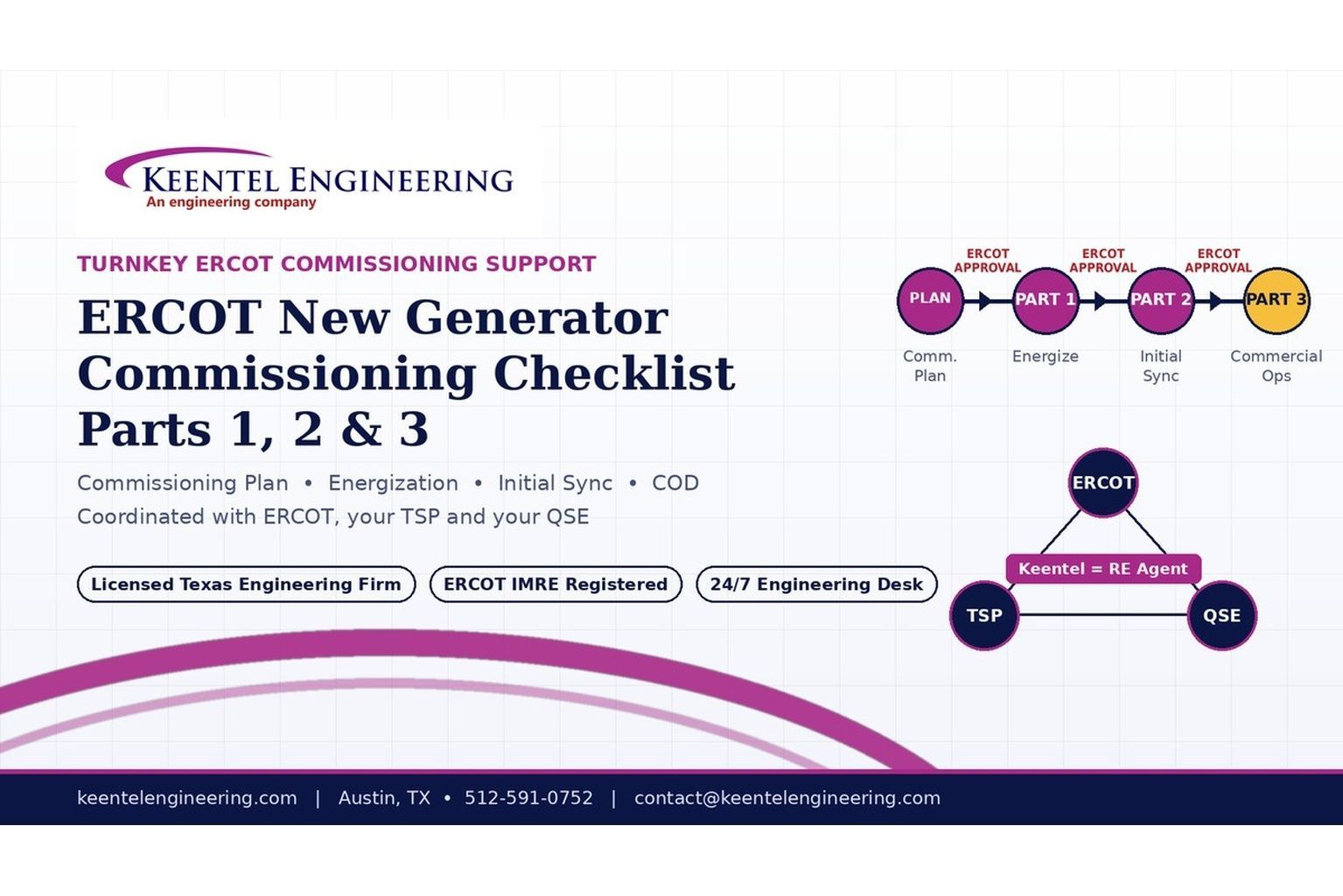
2026 ERCOT commissioning guide covering the Commissioning Plan, Checklist Parts 1–3, BESS requirements, TSP/QSE coordination, field testing and COD.
By SANDIP R PATEL
•
September 22, 2026
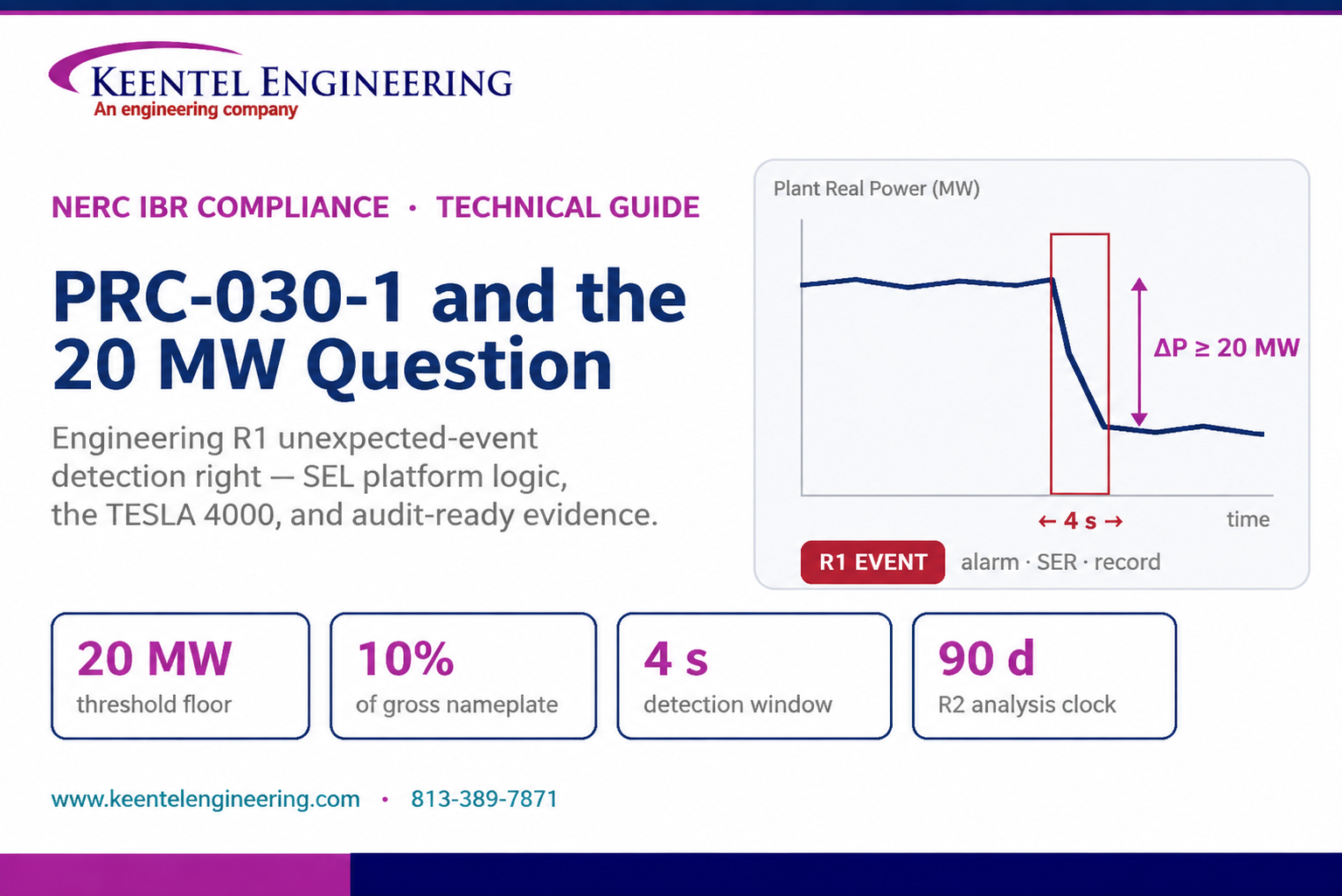
Learn PRC-030-1 R1 event detection requirements for inverter-based resources, SEL platforms, disturbance monitoring, and audit-ready compliance.
By SANDIP R PATEL
•
September 22, 2026
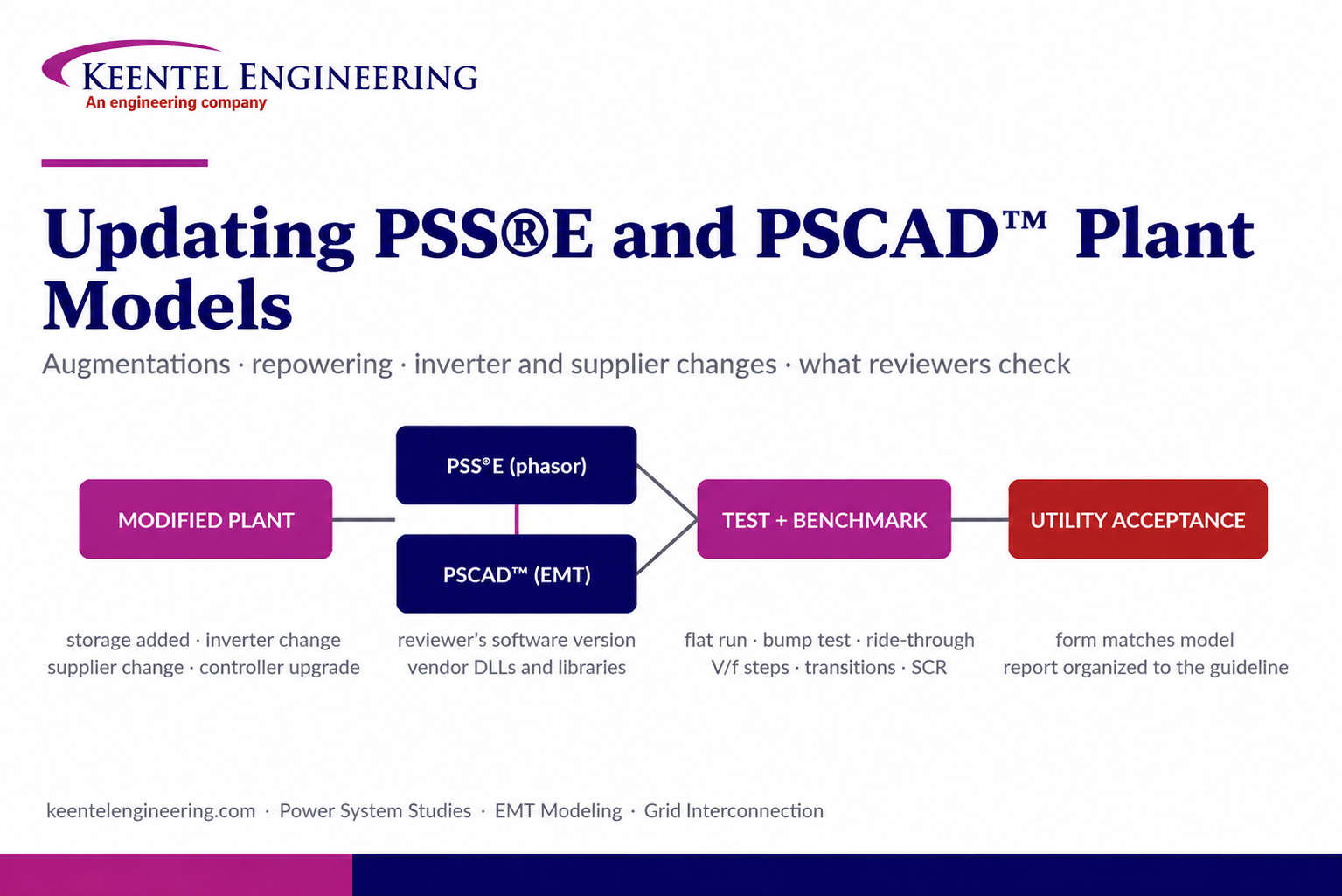
Learn how PSS®E and PSCAD™ model updates support plant augmentations, repowering, equipment changes, testing, benchmarking, and grid compliance.
By SANDIP R PATEL
•
September 20, 2026
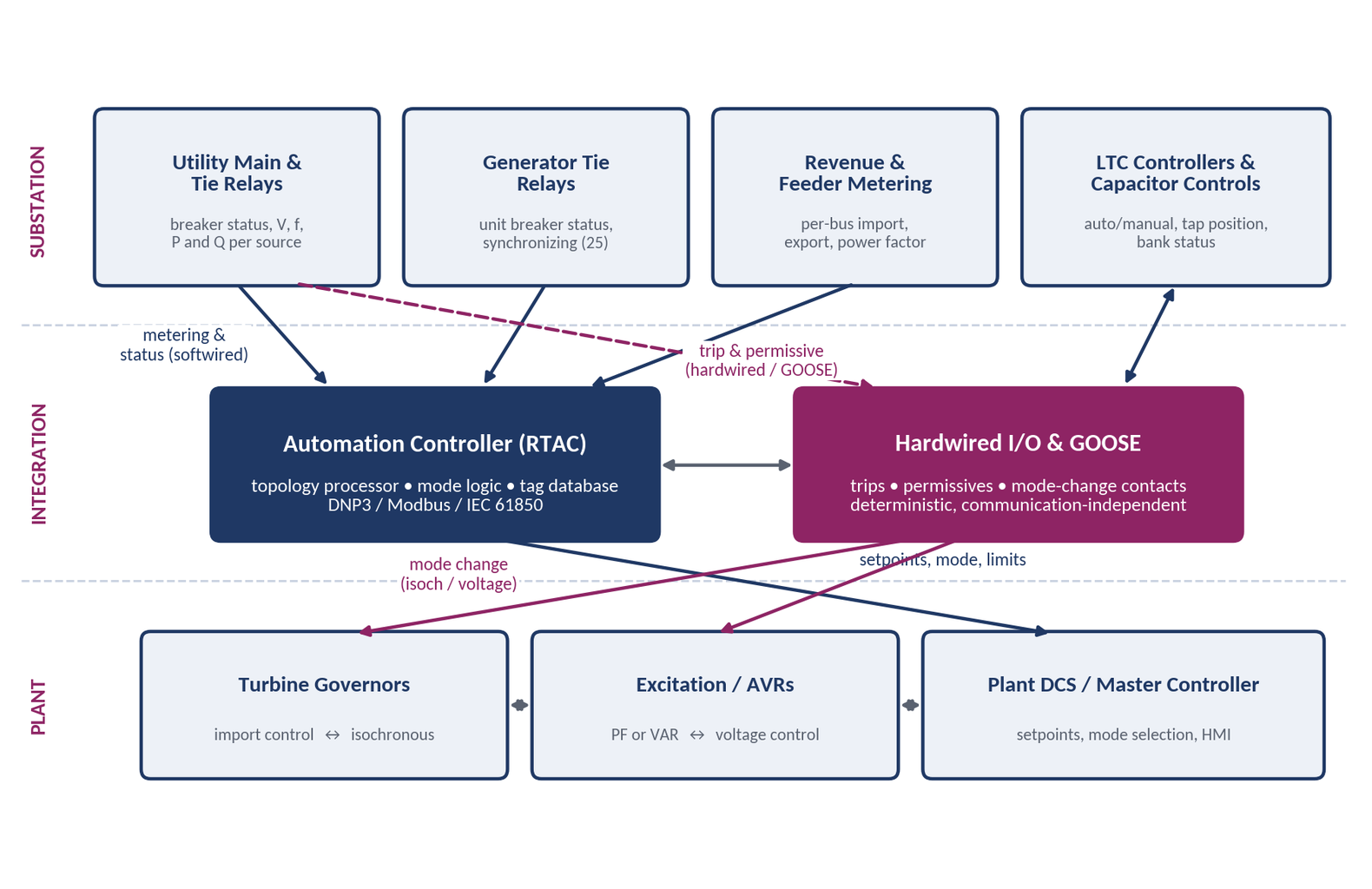
Learn CHP load following and island detection engineering for campus plants, including protection, controls, power studies, and grid transition design.
By SANDIP R PATEL
•
September 20, 2026
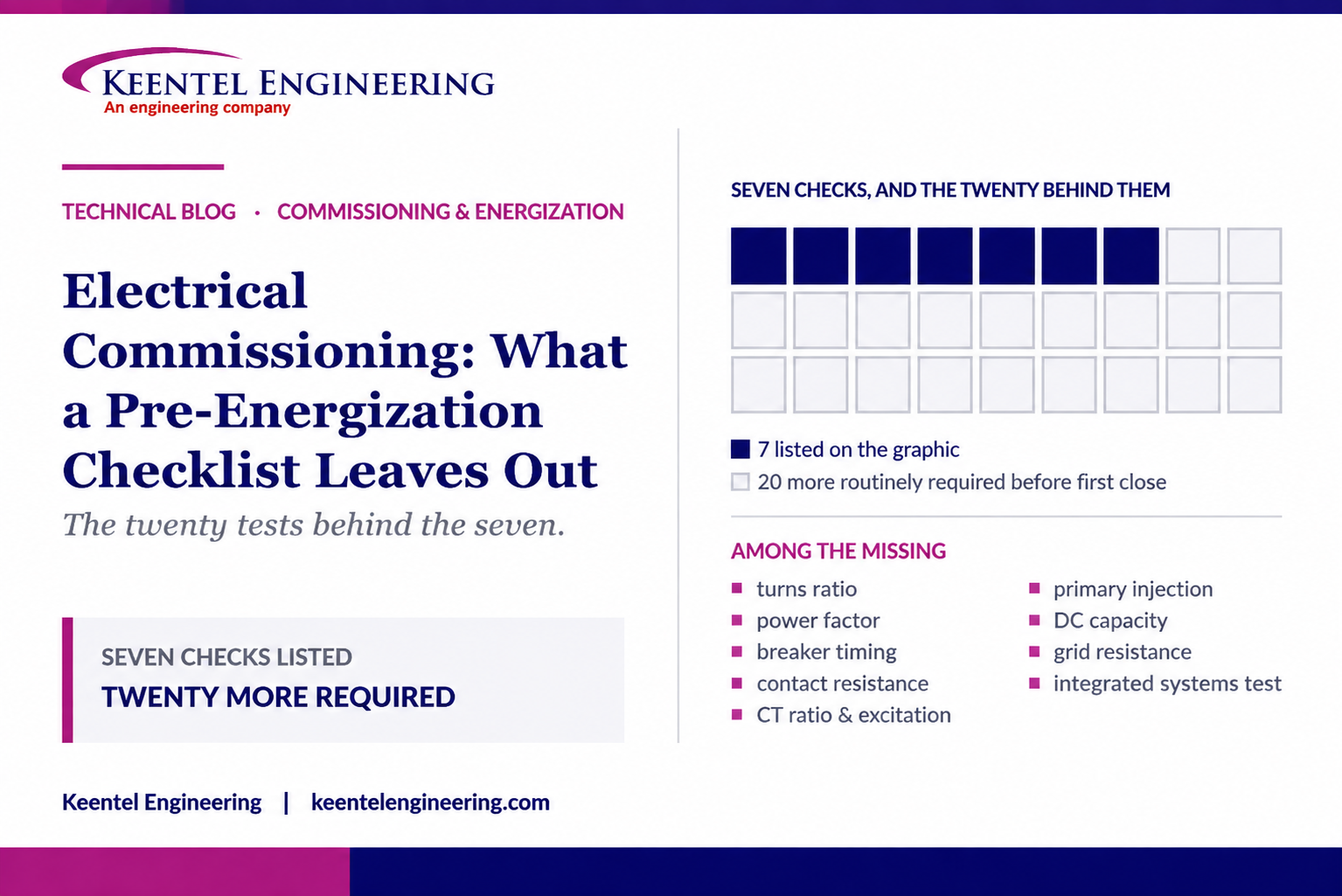
Learn what a pre-energization checklist misses, including electrical testing, protection checks, commissioning steps, and safe energization practices.
By SANDIP R PATEL
•
September 20, 2026
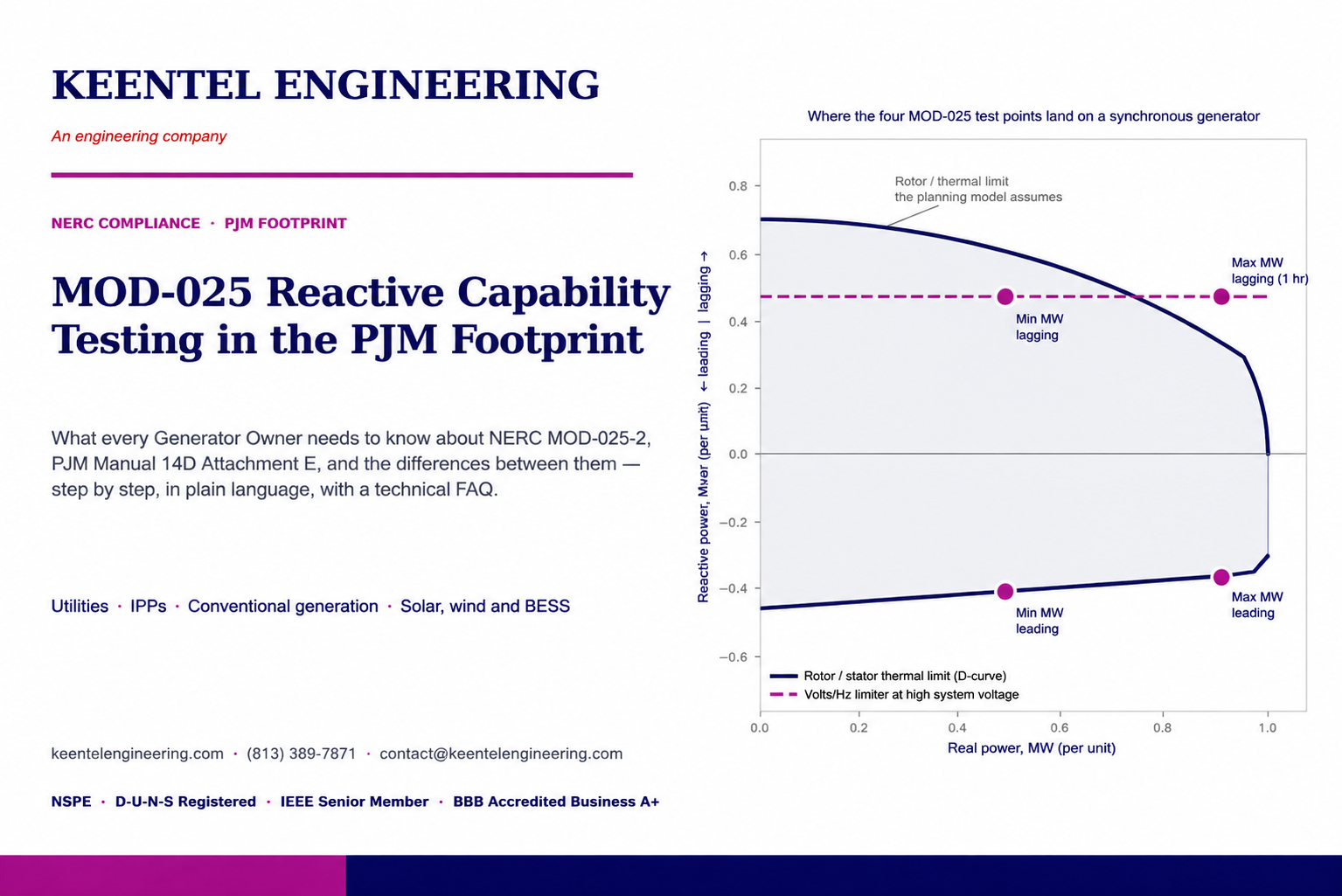
NERC MOD-025-2 Generator Owners, MOD-025-2 reactive power testing, generator capability verification, NERC Attachment 1, MOD-025 compliance testing
By SANDIP R PATEL
•
September 20, 2026
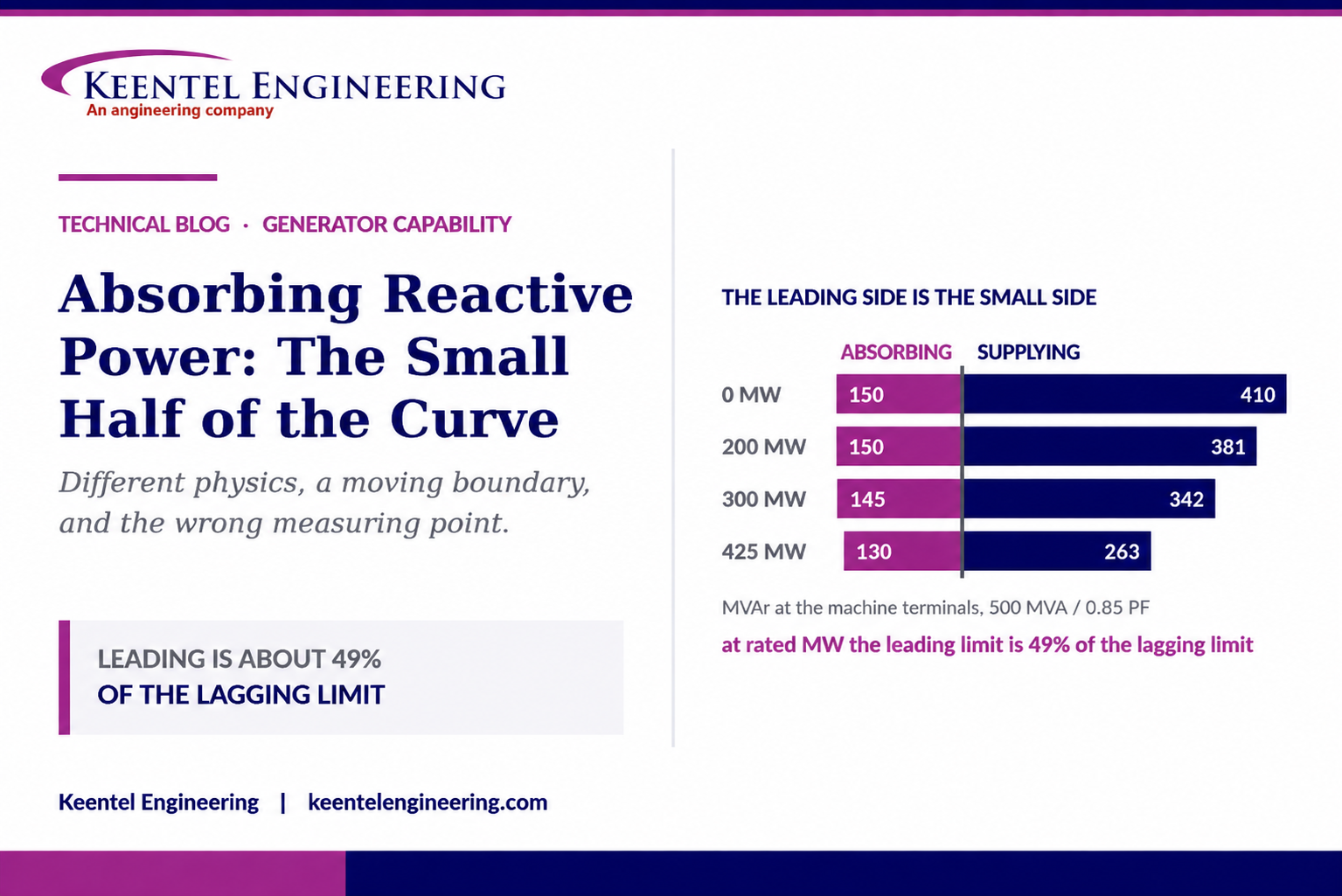
Understand generator capability curves, reactive power absorption, MVAr limits, MOD-025 verification, protection coordination, and grid requirements.
By SANDIP R PATEL
•
September 20, 2026
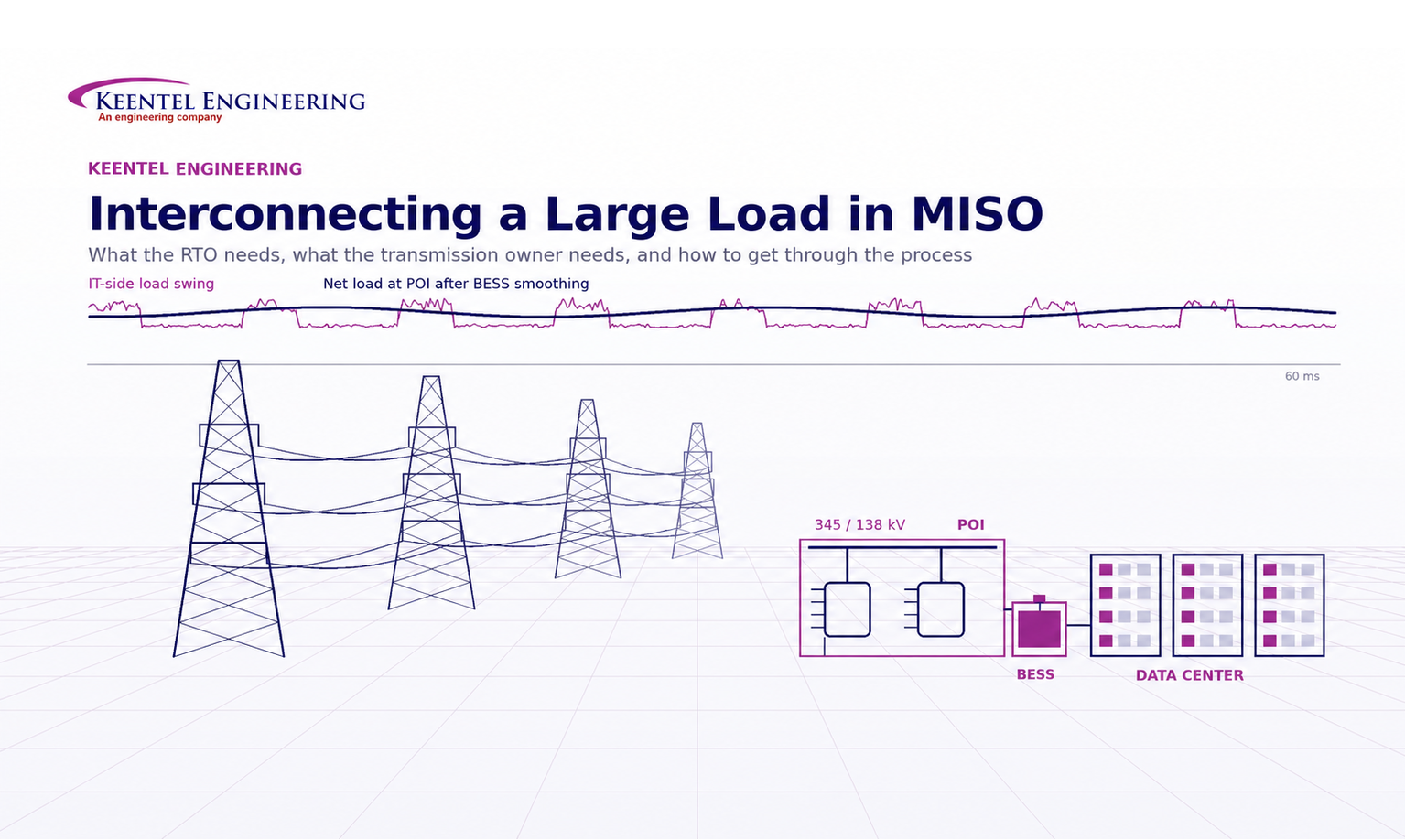
Understand MISO large load interconnection requirements for data centers, including TO data, PSS®E models, ride-through, harmonics, BESS and EPR.