A Coordinated Electric System Interconnection Review—the utility’s deep-dive on technical and cost impacts of your project.
Challenge: Frequent false tripping using conventional electromechanical relays
Solution: SEL-487E integration with multi-terminal differential protection and dynamic inrush restraint
Result: 90% reduction in false trips, saving over $250,000 in downtime
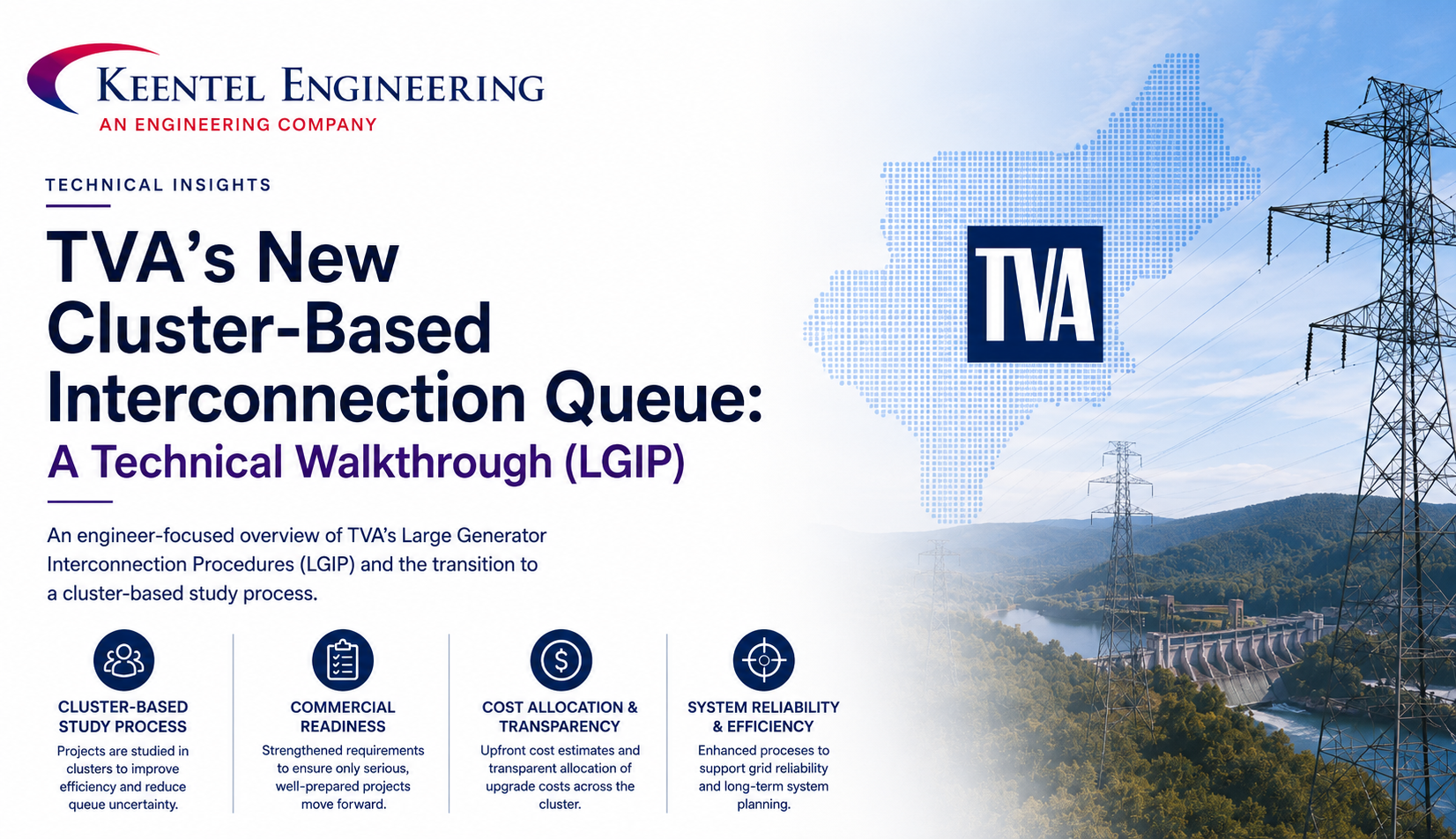
TVA's New Cluster-Based Interconnection Queue: A Technical Walkthrough LGIP
jun 7, 2026 | Blog
If you're a developer, EPC firm, or asset owner planning to connect a generating facility larger than 20 MW anywhere in the Tennessee Valley Authority's footprint, the rules changed. TVA's revised Standard Large Generator Interconnection Procedures (LGIP) — posted October 1, 2024, replace the old serial, first-come-first-served queue with a cluster study process. This is TVA's implementation of the reforms FERC set out in Order No. 2023, and it touches almost every commercial and engineering decision you'll make about a project's timeline, deposits, and exposure to cost risk.
This post walks through the mechanics that actually matter when you're scoping a project: how the annual window works, what it costs to get in the door, how studies are sequenced, how network upgrade costs get allocated across a cluster, and — critically — what it costs to get out if your project doesn't pencil.
From serial to cluster: why the model changed
Under a serial queue, each interconnection request is studied in order, one behind the next, with each project's upgrade costs evaluated against everything ahead of it. The well-documented failure mode is the cascade: a higher-queued project withdraws, every downstream study has to be reworked, and the whole line stalls. Speculative requests with no real site control or financing clog the queue and inflate study timelines for serious projects.
The cluster model attacks this directly. Instead of a continuous queue, TVA now opens a defined annual window, gathers all the requests that arrive during it, and studies them together as one group against a common base case. Every project validated in a single window is treated as equally queued — there is no jockeying for an earlier timestamp within a cluster. Projects in an earlier annual cluster hold a higher queue position than those in a later one, but inside a given cluster, position is flat.
The trade-off is structural: you give up the ability to jump the line by filing early, and in exchange you get a study process designed to be more predictable, with cost-sharing across the group and financial commitments that screen out projects that aren't real.
The annual window and what "equally queued" means in practice
TVA accepts interconnection requests during a 45-calendar-day Cluster Request Window. After the initial transition window, successive windows open every January 15. Requests submitted outside the window are not considered — there's no rolling intake anymore. If you miss January, you wait a year.
Because every validated request in the window shares the same queue position, the competitive dynamic shifts away from speed and toward readiness. The differentiators become:
do you have site control, do you have a credible point of interconnection, and can you post the required security. That's a deliberate design choice — the queue is no longer a land grab on timestamps.
What it costs to enter: deposits and the commercial-readiness screen
This is where the new rules bite first. To submit a valid request you need to assemble a fairly substantial package up front:
A non-refundable application fee of $25,000, plus a refundable study deposit scaled to project size:
- $150,000 for requests under 75 MW
- $200,000 for requests from 75 MW up to (but not including) 200 MW
- $300,000 for requests of 200 MW or more
On top of the study deposit, you must post a Commercial Readiness Deposit equal to twice the study deposit — so a 250 MW project is looking at a $300,000 study deposit plus a $600,000 commercial readiness deposit, in cash or another security form TVA accepts. This deposit is the financial backbone of the new withdrawal-penalty regime (more on that below), and it's refundable per the withdrawal rules.
You also need to demonstrate 100% site control at submission — the exclusive land right to develop, construct, operate, and maintain the facility over its expected operating life. There's a narrow carve-out: if site control is genuinely unobtainable because of a defined regulatory limitation, you can substitute a deposit in lieu of site control of $10,000/MW, subject to a $500,000 floor and a $2,000,000 ceiling — but you still have to show you're actively pursuing the approvals, and you must reach full site control within 180 calendar days of the LGIA's effective date.
The design intent here is unambiguous: raise the cost of speculative entry so that the cluster is populated by projects with real land, real money, and real intent. If you've been treating an
interconnection request as a cheap option on a site, that approach no longer works in TVA territory.
The full sequence, window to agreement
The Cluster Study Process runs as a defined sequence with hard timeframes attached to most steps. Here's the path a request travels:
1. Cluster Request Window (45 days).
Submit the complete package. TVA acknowledges receipt within 5 business days. If your request is deficient, TVA notifies you within 5 business days, and you have 10 business days to cure — but never past the close of the window.
2. Customer Engagement Window (60 days).
Opens when the request window closes. TVA holds a Scoping Meeting with all interested customers, posts an anonymized list of the cluster's requests to OASIS (capacity, county/state, interconnecting station or line, projected in-service date, service type, and fuel/facility type — no identities), and provides a non-binding cost-and-timeframe estimate plus a Cluster Study Agreement. You must execute that agreement before the window closes, or your request is deemed withdrawn, your application fee is forfeit, and your deposits are returned.
3. Cluster Study (150 days).
TVA evaluates the whole cluster together with power flow, stability, and short-circuit analyses against the base case, plus higher-queued pending requests and executed-LGIA projects. The single Cluster Study Report identifies the required interconnection facilities and network upgrades, non-binding cost estimates, and — importantly — each customer's estimated allocated share of those costs. Notably, the study must also evaluate a defined set of alternative transmission technologies (static VAR compensators, advanced power flow control, synchronous condensers, voltage source converters, advanced conductors, tower lifting, transmission switching, and more) and explain the results for each in the report. A Cluster Study Report Meeting follows within 10 business days.
4. Restudy gate.
Within 20 days of the report meeting, you must demonstrate continued site control and top up your Commercial Readiness Deposit to 5% of your allocated network upgrade cost (rounded up to the nearest $10,000). If anyone withdraws, TVA decides within 30 days whether a Cluster Restudy is needed; restudies run on the same 150-day clock and follow the same scope.
5. Interconnection Facilities Study (180 days).
Once no further restudy is required, this study is done individually, not clustered — it's the detailed engineering of the switching configuration, transformer, switchgear, metering, and the construction cost and schedule to physically connect you. Executing the agreement requires topping the Commercial Readiness Deposit up to 10% of your allocated network upgrade cost. You get a draft report, 30 days to comment, and a final report 15 business days after comments.
6. LGIA.
TVA tenders the Standard Large Generator Interconnection Agreement, and you proceed toward construction and commercial operation.
Add it up and you're looking at a multi-year path even when everything runs on schedule, which is why the deposit and milestone structure is built to weed out projects before they consume study resources.
How network upgrade costs get allocated
This is the part that determines whether a project is viable, and the methodology is specific.
Substation Network Upgrades
(including switching stations) are allocated per capita — first across the interconnection facilities connecting to the substation at the same voltage level, then per capita across each generating facility sharing the interconnection facility. Per capita means per generating facility, not pro-rata by megawatts.
System Network Upgrades
(anything required beyond the point-of-interconnection substation) are allocated by proportional impact — each facility's share is based on how much it contributes to the need for that specific upgrade. TVA posts the detailed methodology on OASIS, broken out by category: system protection, lines and transformers, voltage support, short-circuit upgrades, stability upgrades, system strength upgrades, and so on.
Interconnection Facilities
(the direct connection equipment) are directly assigned to the customers using them, shared per capita where customers agree to share.
Customers who fund network upgrades are entitled to transmission credits under the LGIA. The key engineering takeaway: because system upgrade costs follow proportional impact, the marginal cost of your project depends heavily on what else is in your cluster and where it connects. Two identical facilities can carry very different cost allocations depending on cluster composition.
Early in the process a developer must choose the type of interconnection service. This single choice shapes how the project is studied, what upgrades it triggers, and what it is allowed to do in the capacity market.
The withdrawal penalty: the sharpest edge in the new rules
Here's the mechanism that changes the risk calculus most. Under the cluster model, when a project leaves, it can force restudies and shift costs onto everyone who stayed. The withdrawal penalty exists to internalize that cost.
You are not penalized if you withdraw before the initial Cluster Study commences. After that, the penalty escalates with how far you've progressed:
- During the Cluster Study or after the Cluster Study Report (before restudy or facilities study): the greater of 2× your study deposit, or 2× your study deposit. (At this stage the floor is 2× the study deposit.)
- During the Cluster Restudy (before the facilities study): the greater of 2× study deposit or 5% of estimated allocated network upgrade costs.
- During the Interconnection Facilities Study, or after its report but before executing the LGIA (with milestones met): the greater of 2× study deposit or 10% of estimated allocated network upgrade costs.
- After executing the LGIA, or if the facility otherwise never reaches commercial operation: 20% of estimated allocated network upgrade costs.
There are important exemptions that protect you from runaway cost estimates: no penalty if you withdraw before LGIA execution and your exit doesn't materially affect cost or timing for others in the cluster; no penalty if your network upgrade costs jumped more than 25% in your latest Cluster Restudy Report versus the prior report; and no penalty if costs rose more than 100% in your Interconnection Facilities Study Report versus the Cluster Study or Restudy figure. In other words, if TVA's own restudies blow up your number beyond those thresholds, you can walk without paying the penalty.
Penalty funds don't just disappear into TVA. For a given cluster, TVA holds all penalty funds until every project has either withdrawn or executed an LGIA, then applies them first to fund studies for the customers who stayed and executed LGIAs, and next to offset the net cost increases those remaining customers absorbed because a co-funding project left. The balance held is posted quarterly on OASIS. It's a genuine risk-sharing pool, not a fine.
What this means for your project planning
A few practical implications worth internalizing:
Treat the January window as a hard annual deadline.
There's no rolling queue to slip into. Missing the window costs you a full year.
Front-load your readiness.
Site control and the deposit stack are now gating items, not paperwork you tidy up later. Budget the application fee, study deposit, and 2× commercial readiness deposit as a cost of entry.
Model your withdrawal exposure as a real line item.
Once the cluster study starts, exiting costs money — and the further you go, the more it costs. But also model the exemption thresholds: the 25% and 100% cost-increase off-ramps are your protection against committing to a project whose economics the studies have quietly destroyed.
Your costs are coupled to your neighbors.
Proportional-impact allocation for system upgrades and per-capita allocation for substation upgrades mean your number moves with cluster composition. Watch the anonymized OASIS posting to understand what you're clustered with.
Storage and partial-service requests have real flexibility.
TVA will study storage-inclusive facilities using your proposed charging assumptions (e.g., not charging at peak), and will study interconnection service below full facility capacity using injection-limiting equipment — both of which can reduce required upgrades, subject to good utility practice and reliability standards.
The cluster model trades the old queue's illusion of speed for a more disciplined, more predictable, and more capital-intensive process. For
serious projects
with site control and financing, that's mostly good news. For everyone else, the new deposits and penalties are exactly the filter they were designed to be.
FAQ: TVA's Cluster-Based LGIP
Q: What is the LGIP and when did the new version take effect?
The Standard Large Generator Interconnection Procedures (LGIP) are TVA's rules for connecting generating facilities larger than 20 MW to its transmission system. The revised version was posted October 1, 2024 and took effect November 1, 2024. It replaces the old serial, first-come-first-served queue with a cluster study process, consistent with FERC Order No. 2023 reforms.
Q: What size project does the LGIP apply to?
Generating facilities that exceed 20 MW. Facilities of 20 MW or less are "Small Generating Facilities" handled under separate procedures.
Q: What's the difference between a serial queue and a cluster study?
A serial queue studies each request in order, one behind the next, so a single withdrawal can force costly downstream restudies and stall the line. The cluster process gathers all requests filed during an annual window and studies them together against a common base case. Everyone in a window is "equally queued," and network upgrade costs are shared across the group.
Q: When can I submit an interconnection request?
Only during the 45-calendar-day Cluster Request Window. After the transition period, a new window opens every January 15. Requests submitted outside the window are not considered.
Q: What does it cost to submit a request?
A non-refundable $25,000 application fee, plus a refundable study deposit based on size: $150,000 (under 75 MW), $200,000 (75 to under 200 MW), or $300,000 (200 MW and above). You must also post a Commercial Readiness Deposit equal to twice the study deposit.
Q: Do I need site control to apply?
Yes — 100% site control at submission. If site control is unobtainable due to a defined regulatory limitation, you can post a deposit in lieu of site control of $10,000/MW (minimum $500,000, maximum $2,000,000), while actively pursuing approvals, and must reach full site control within 180 calendar days of the LGIA's effective date.
Q: How is "queue position" determined now?
All requests validated in a single Cluster Request Window are equally queued — there's no advantage to filing earlier within a window. A cluster from an earlier annual window holds a higher position than a later cluster, but within a cluster, position is flat.
Q: What are the main steps and how long do they take?
Cluster Request Window (45 days) → Customer Engagement Window with Scoping Meeting (60 days) → Cluster Study (150 days) → any Cluster Restudy (150 days each) → Interconnection Facilities Study (180 days) → LGIA. Even on schedule, this is a multi-year process.
Q: What's evaluated in the Cluster Study?
Power flow, stability, and short-circuit analyses against the base case, plus higher-queued pending requests and executed-LGIA projects. The single Cluster Study Report identifies required facilities and network upgrades, non-binding cost estimates, and each customer's estimated allocated cost share. TVA must also evaluate a defined list of alternative transmission technologies (e.g., SVCs, synchronous condensers, advanced power flow control, advanced conductors) and explain the results.
Q: How are network upgrade costs allocated?
Substation Network Upgrades (including switching stations) are allocated per capita — per generating facility — first across same-voltage interconnection facilities, then across facilities sharing the interconnection facility. System Network Upgrades (beyond the substation) are allocated by proportional impact on the need for each specific upgrade. Direct interconnection facilities are assigned to the customers using them. Funding customers earn transmission credits under the LGIA.
Q: How much do my deposits grow as I progress?
The Commercial Readiness Deposit starts at 2× the study deposit, then must be topped up to 5% of your allocated network upgrade cost before restudy, and to 10% before the Interconnection Facilities Study (each rounded up to the nearest $10,000).
Q: What is the withdrawal penalty?
A charge that escalates with progress. No penalty before the Cluster Study starts. During/after the Cluster Study: 2× study deposit (floor). During the Cluster Restudy: the greater of 2× study deposit or 5% of allocated upgrade costs. During/after the Facilities Study but before LGIA: the greater of 2× study deposit or 10%. After executing the LGIA (or never reaching commercial operation): 20% of allocated upgrade costs.
Q: Are there exceptions to the withdrawal penalty?
Yes. No penalty if you withdraw before LGIA execution and your exit doesn't materially affect others' cost or timing; if your costs rose more than 25% in your latest Cluster Restudy Report versus the prior report; or if costs rose more than 100% in your Facilities Study Report versus the Cluster Study/Restudy figure. These thresholds protect you when TVA's own studies sharply increase your number.
Q: Where do withdrawal penalty funds go?
Into a per-cluster pool. TVA holds them until every project in the cluster has withdrawn or executed an LGIA, then applies them first to fund studies for remaining LGIA-executing customers, and next to offset the cost increases those customers absorbed from a co-funding project leaving. The undispersed balance is posted quarterly on OASIS.
Q: How are storage resources studied?
TVA studies storage-inclusive facilities using your proposed operating (charging) assumptions — for example, that the facility won't charge at peak load — unless good utility practice or reliability standards require different assumptions. You describe the control technologies that will enforce those assumptions.
Q: Can I request interconnection service below my facility's full capacity?
Yes. TVA has a process to study service below full generating capacity using TVA-approved injection-limiting equipment, which can reduce required upgrades. Studies for safety and reliability may still be run at full capacity, at your cost.
Q: What counts as a Material Modification?
A change with a material impact on the cost or timing of any interconnection request with an equal or later queue position. Certain changes are pre-approved — e.g., before returning the executed Cluster Study Agreement, up to a 60% decrease in output, and certain technical/configuration changes. Any unapproved change to the point of interconnection is a Material Modification.
Q: Can I transfer my queue position?
Only if the acquiring entity takes over the specific generating facility in the request, the point of interconnection doesn't change, you're in full compliance with the LGIP (and LGIA, if applicable), and you've notified TVA.
Q: What's the difference between Energy Resource and Network Resource Interconnection Service?
Energy Resource Interconnection Service (ERIS) lets you connect and deliver output on an "as available" basis using existing transmission capacity. Network Resource Interconnection Service (NRIS) studies and builds upgrades to integrate your facility comparably to how TVA integrates its own resources to serve native load, allowing designation as a Network Resource up to full output. Neither, by itself, conveys a right to deliver to a specific customer.
Q: Did existing queue projects get grandfathered?
There's a transition process. Projects with a queue position as of 30 days after the LGIP posting generally retain it subject to transition requirements; those that had already received a draft Interconnection Facilities Study Report were tendered an LGIA and skipped the transition. Projects deemed withdrawn during the transition were not assessed a withdrawal penalty.

About the Author:
Sandip "Sonny" R. Patel, P.E.
IEEE Senior Member · Founder & CEO, Keentel Engineering
In 1995, Sonny Patel earned his Electrical Engineering degree from the University of Illinois. But degrees don't build legacies — action does.
For three decades, he has worked the power industry from every side of the table: 16 years as a utility engineer at Exelon/Commonwealth Edison; generation leadership across hydroelectric, industrial steam turbine, and a 9 GW renewable fleet; NERC Regional Entity Senior Compliance Engineer and Audit Team Lead, auditing some of the nation's largest utilities; and testing and commissioning lead on equipment up to 765 kV — the very top of the North American grid.Utility. Generator. Regulator. Consultant. Few engineers have seen all four seats. Fewer still have sat in them.
His experience spans nuclear, hydro, conventional generation, renewables, oil and gas, mining — and today's data centers, where he is authoring a three-book series on data center design. He is a Licensed Professional Engineer in six states and a Licensed Electrical Contractor in Florida (Unlimited EC) — he doesn't just design the work; he's qualified to stand behind its execution.Today, as Founder and CEO of Keentel Engineering, Sonny leads a nationwide team of engineers delivering substation design, power system studies, NERC compliance, and commissioning — done right, coast to coast.Three decades. Every side of the table. One standard: accountable engineering.
Services

Let's Discuss Your Project
Let's book a call to discuss your electrical engineering project that we can help you with.
About the Author:
Sandip "Sonny" R. Patel, P.E.
IEEE Senior Member · Founder & CEO, Keentel Engineering
In 1995, Sonny Patel earned his Electrical Engineering degree from the University of Illinois. But degrees don't build legacies — action does.
For three decades, he has worked the power industry from every side of the table: 16 years as a utility engineer at Exelon/Commonwealth Edison; generation leadership across hydroelectric, industrial steam turbine, and a 9 GW renewable fleet; NERC Regional Entity Senior Compliance Engineer and Audit Team Lead, auditing some of the nation's largest utilities; and testing and commissioning lead on equipment up to 765 kV — the very top of the North American grid.
Utility. Generator. Regulator. Consultant. Few engineers have seen all four seats. Fewer still have sat in them.
His experience spans nuclear, hydro, conventional generation, renewables, oil and gas, mining — and today's data centers, where he is authoring a three-book series on data center design. He is a Licensed Professional Engineer in six states and a Licensed Electrical Contractor in Florida (Unlimited EC) — he doesn't just design the work; he's qualified to stand behind its execution.
Today, as Founder and CEO of Keentel Engineering, Sonny leads a nationwide team of engineers delivering substation design, power system studies, NERC compliance, and commissioning — done right, coast to coast.Three decades. Every side of the table. One standard: accountable engineering.
Leave a Comment
Thank you for contacting us.
We will get back to you as soon as possible.
We will get back to you as soon as possible.
Oops, there was an error sending your message.
Please try again later.
Please try again later.
Related Posts
By Team 2 Dexora
•
October 20, 2026
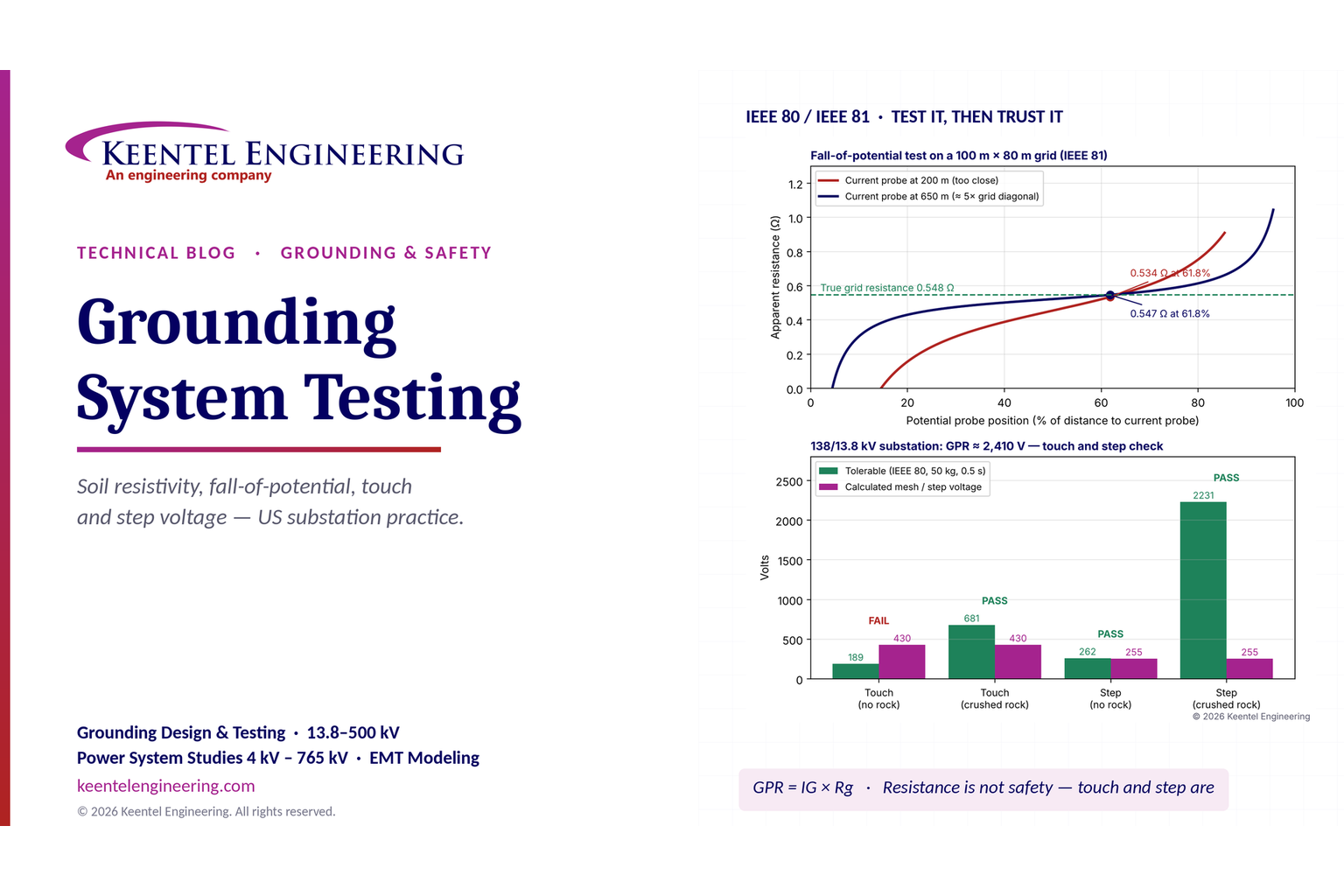
Explore grounding system testing with Keentel Engineering. Learn IEEE 80/81 methods, soil resistivity, ground resistance, and touch and step voltage safety.
By SANDIP R PATEL
•
October 13, 2026
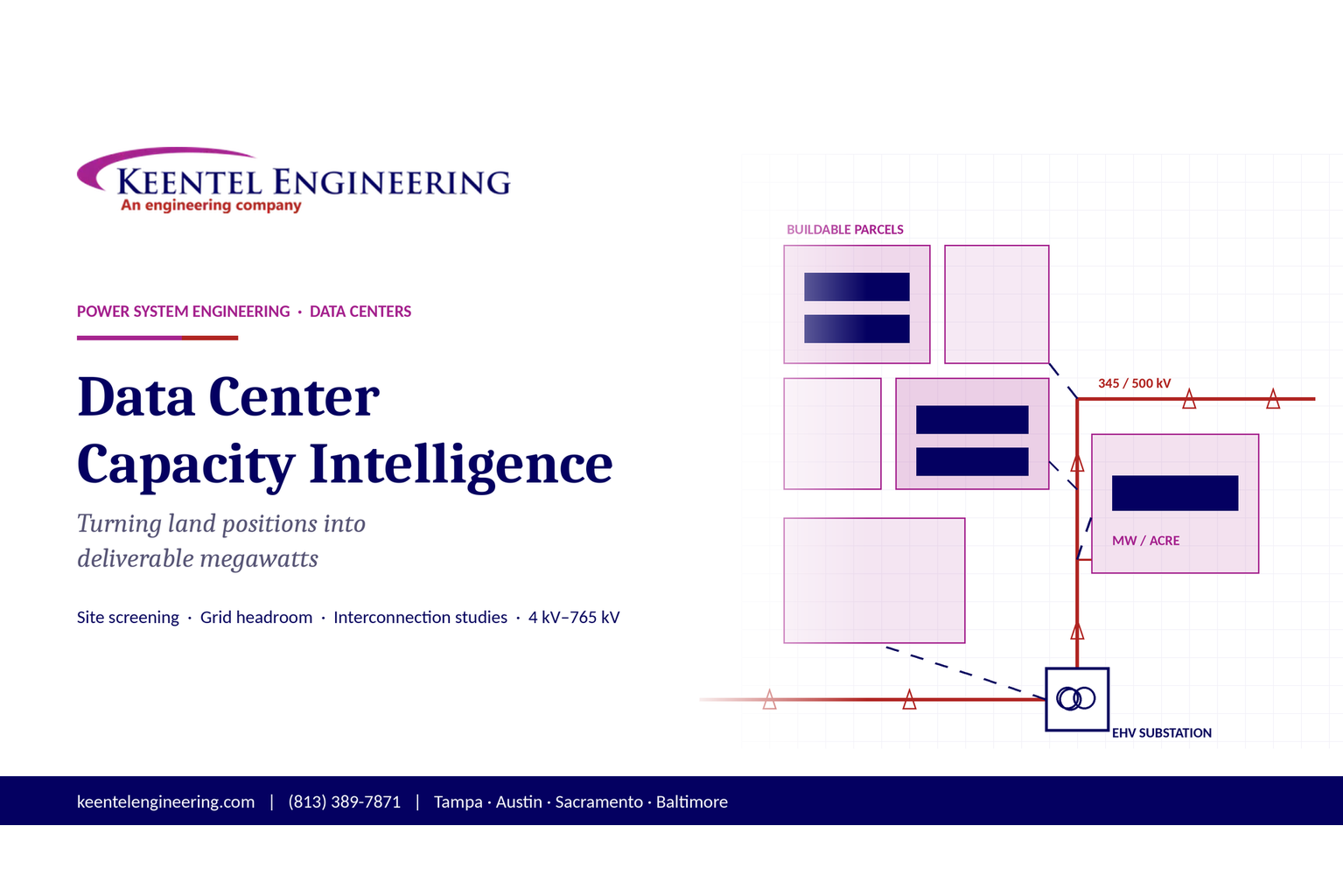
Plan data center capacity with land screening, MW-per-acre estimates, grid power availability and interconnection feasibility studies from Keentel Engineering.
By SANDIP R PATEL
•
October 11, 2026
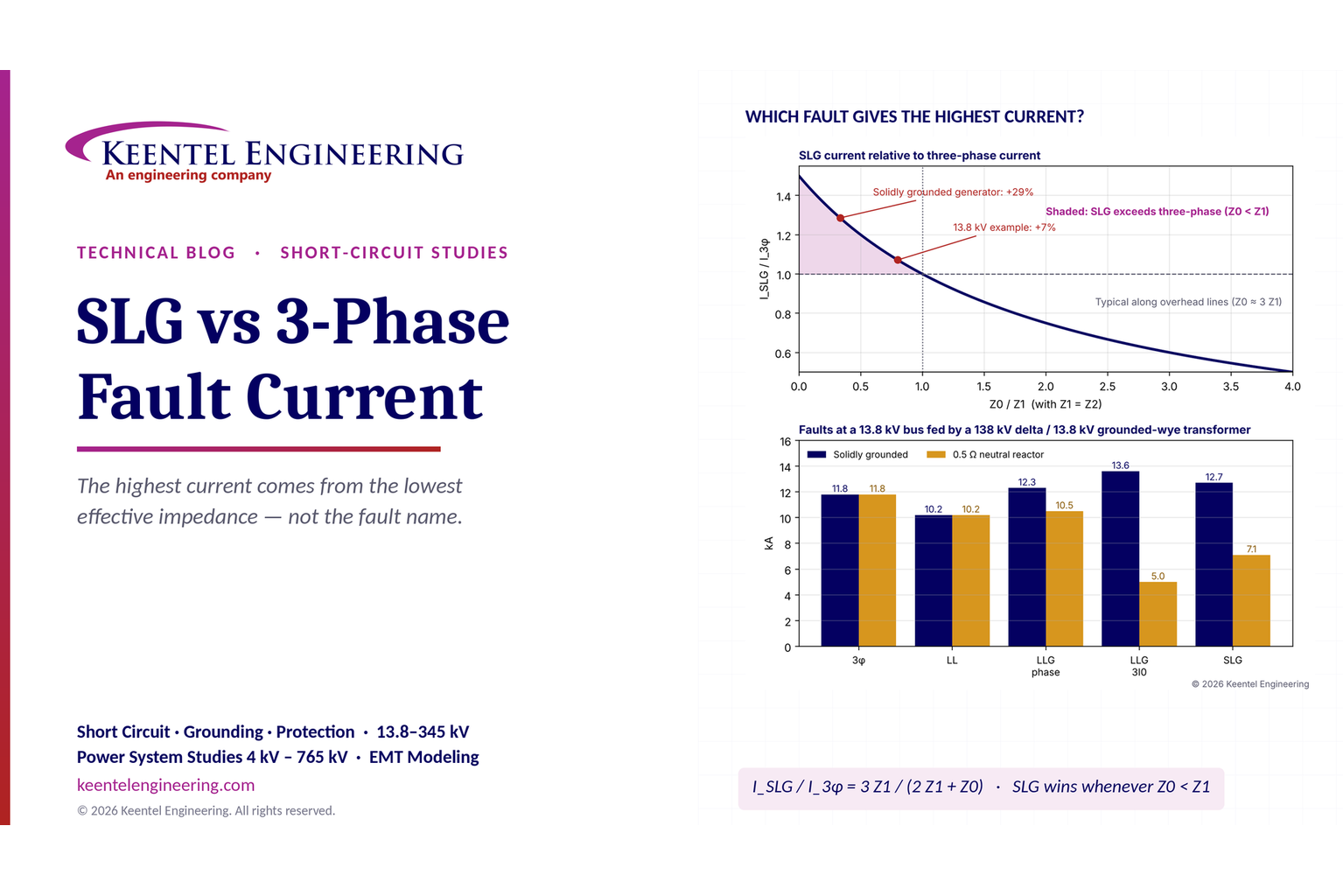
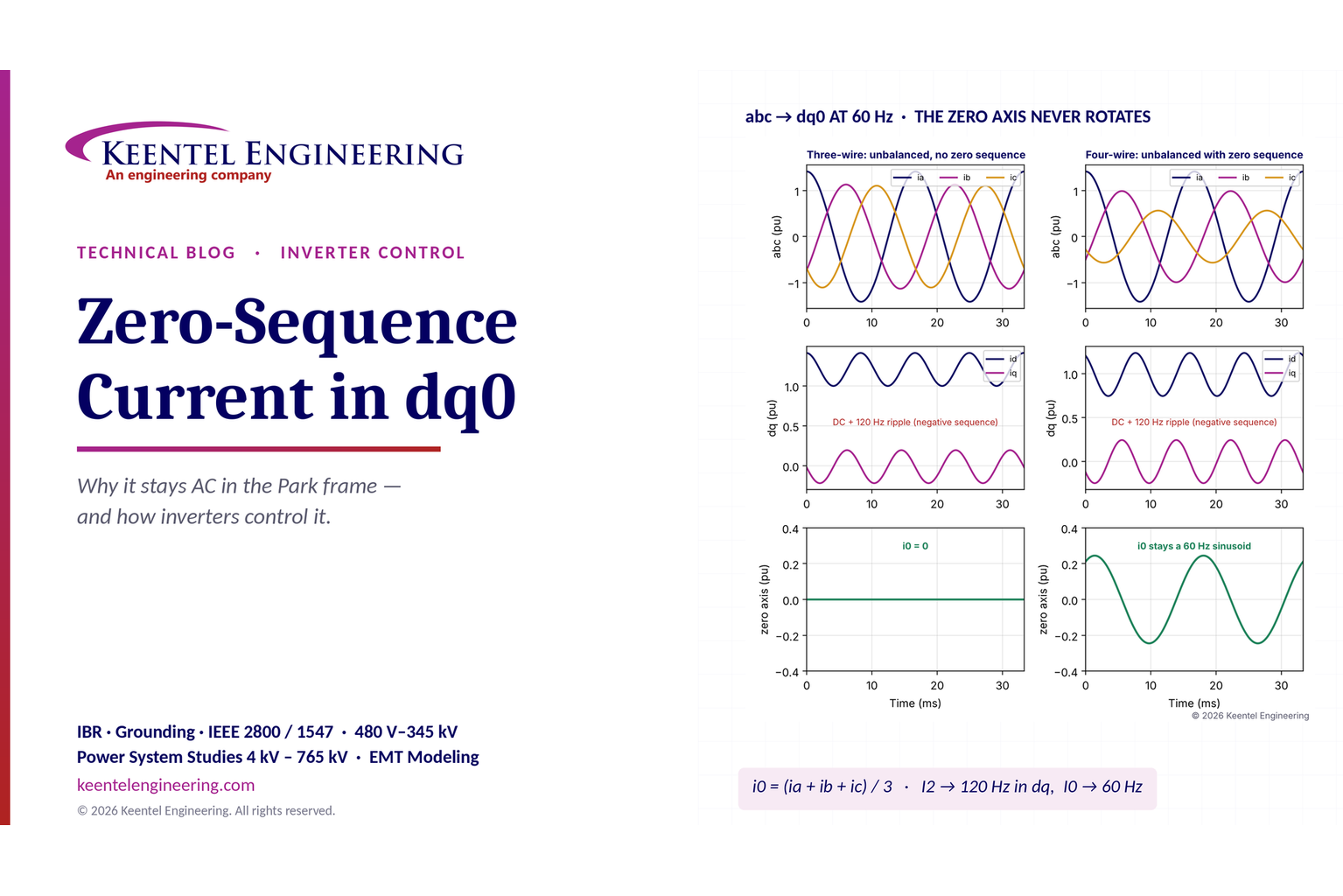
Learn which fault produces the highest current at a bus, why SLG faults can exceed three-phase faults, and how symmetrical components determine fault duty.
By SANDIP R PATEL
•
October 11, 2026
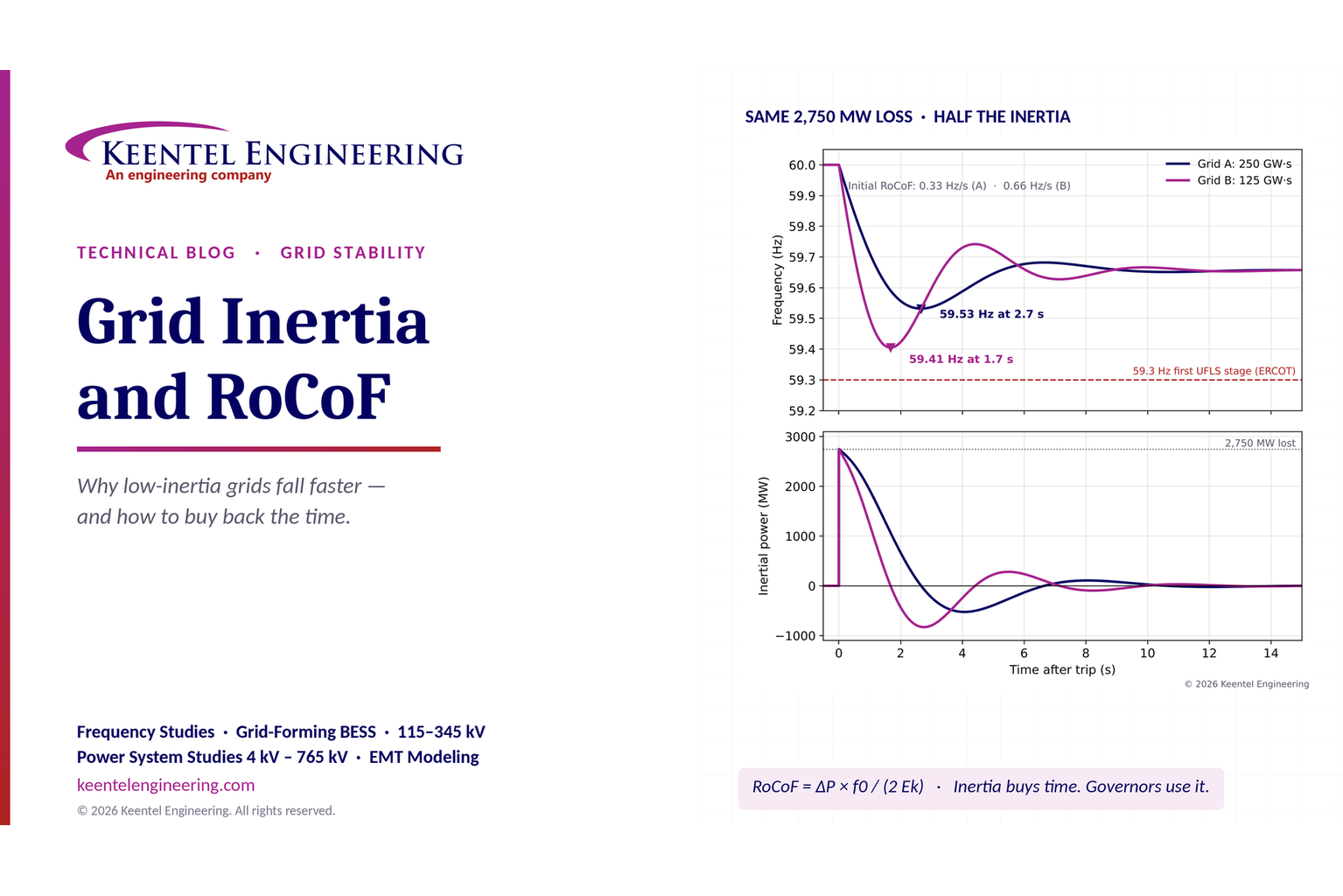
Learn why zero-sequence current pulsates in the dq0 frame, how Park's transformation works, and how inverter controls handle unbalance and ground faults.
By SANDIP R PATEL
•
October 11, 2026
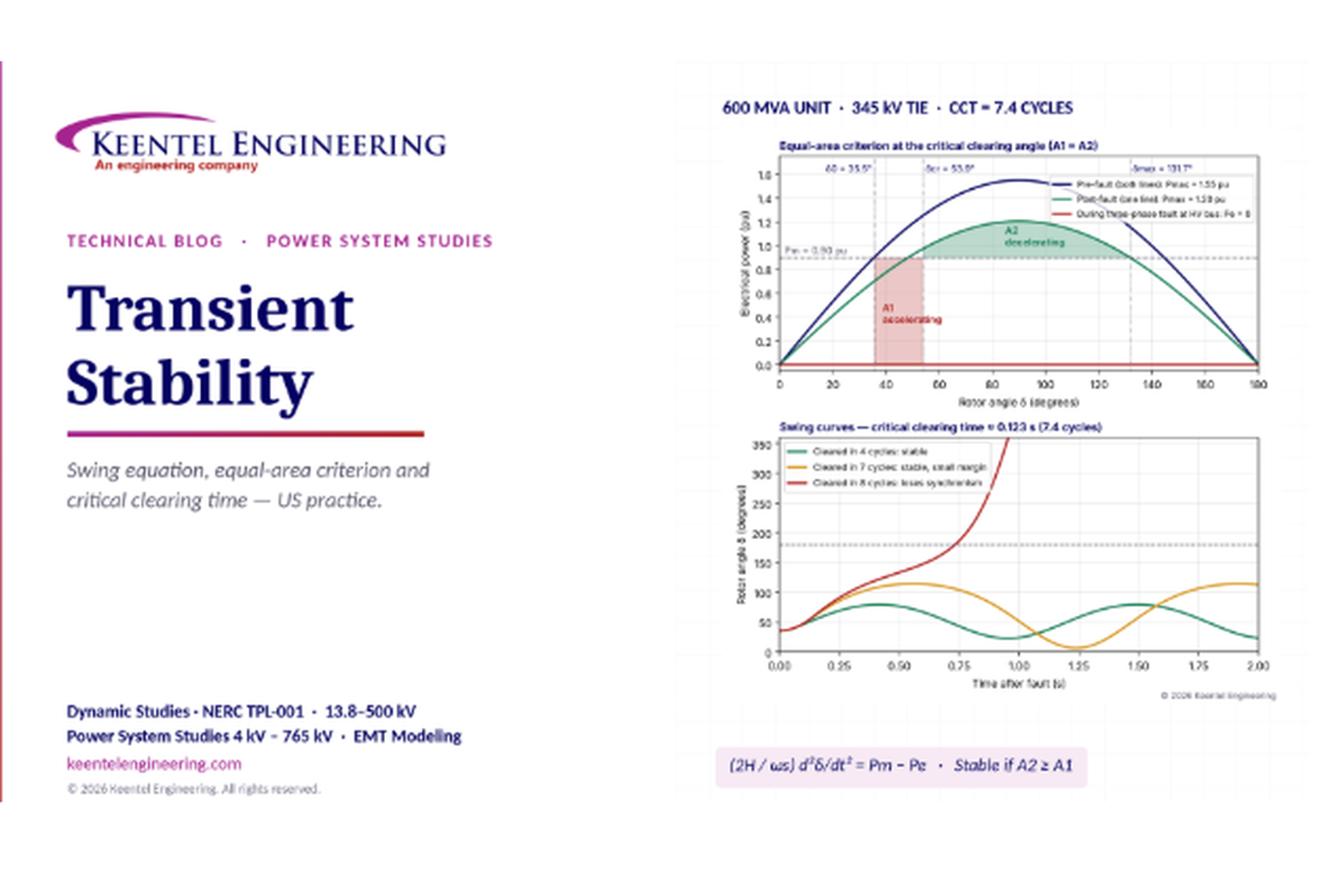
Explore grid inertia, RoCoF and frequency response, with swing equation calculations, frequency nadir analysis and US power system simulation examples.
By SANDIP R PATEL
•
October 11, 2026
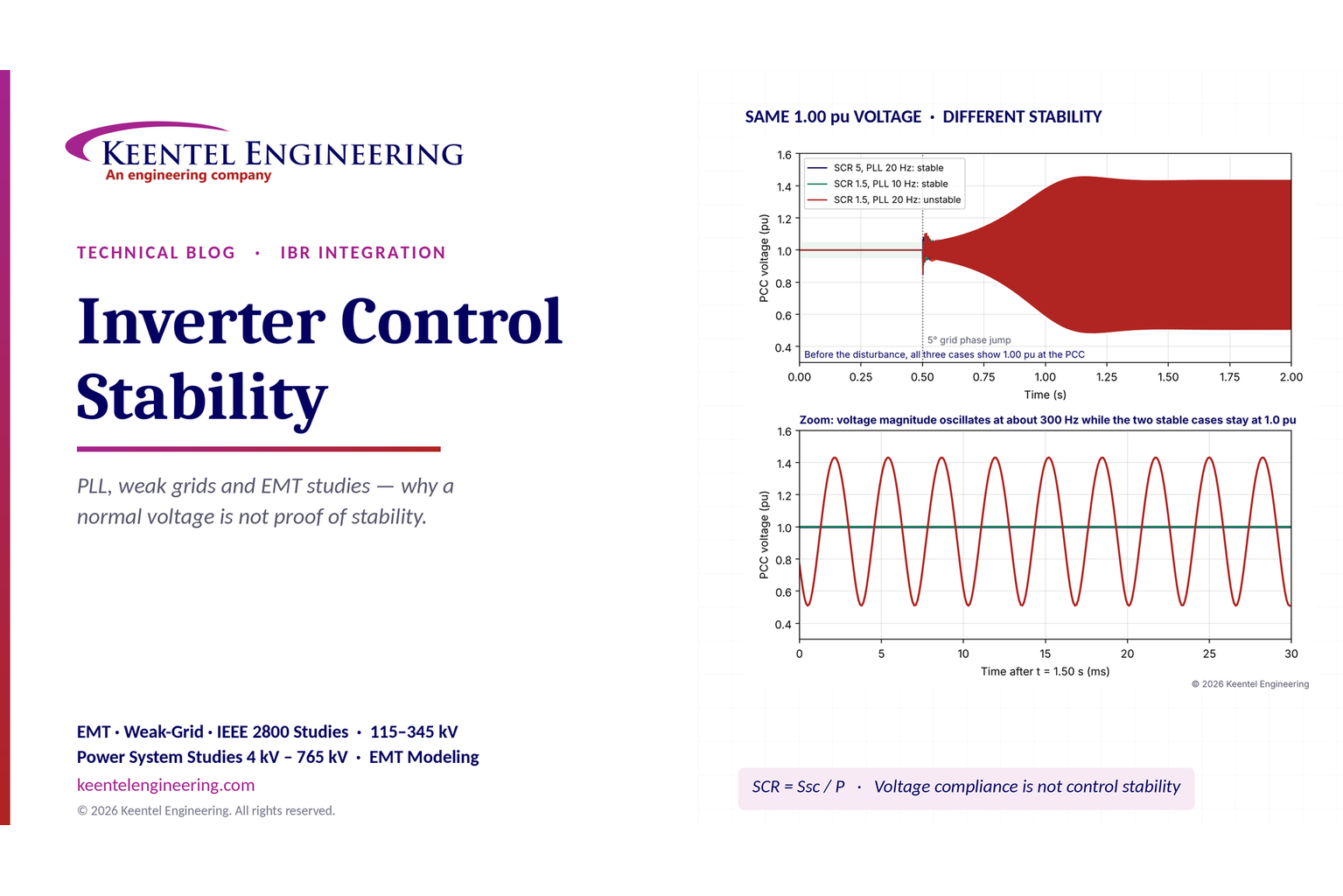
Learn transient stability analysis, swing equation, equal-area criterion and critical clearing time with a 345 kV worked example and NERC TPL-001 guidance.
By SANDIP R PATEL
•
October 11, 2026
Learn why inverter controls become unstable in weak grids, how PLL bandwidth and SCR affect stability, and how PSCAD EMT studies identify and mitigate oscillations.
By SANDIP R PATEL
•
October 11, 2026
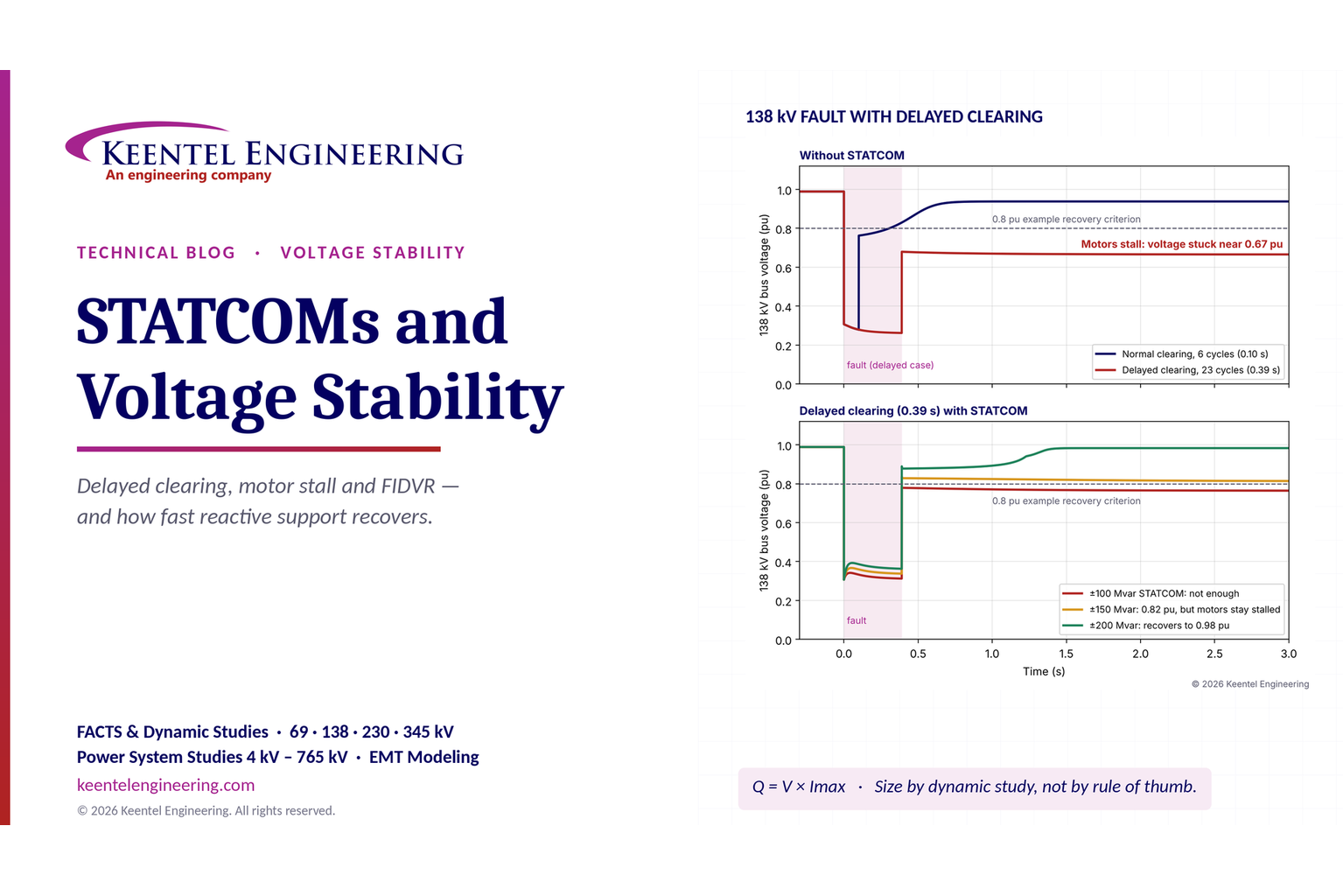
Learn how STATCOMs improve voltage stability and prevent FIDVR. Explore reactive power sizing, delayed fault clearing, NERC criteria and 138 kV simulation results.
By SANDIP R PATEL
•
October 10, 2026
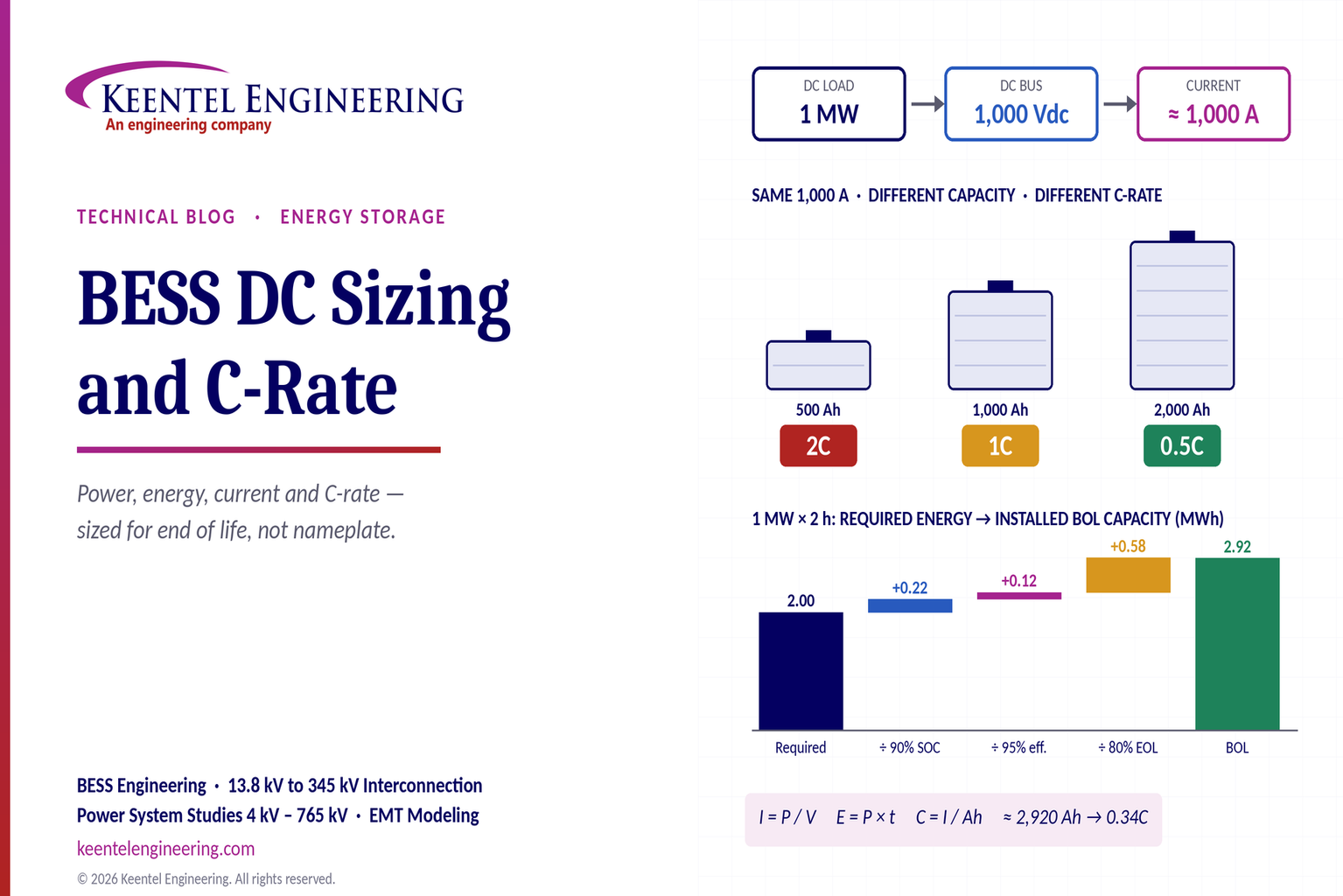
Learn BESS DC sizing with power, energy, current and C-rate calculations, battery losses, degradation and a 100 MW/400 MWh utility-scale example.