

A Coordinated Electric System Interconnection Review—the utility’s deep-dive on technical and cost impacts of your project.

What is Smart Grid Technology? Benefits, Use Cases & Utility Impact

Calendar icon. D

January 17, 2022 | Blog

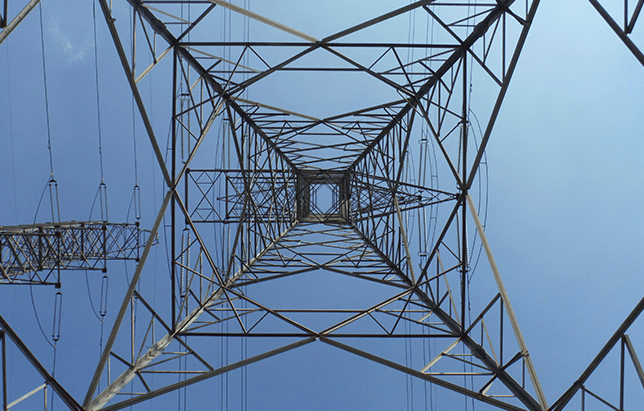
View looking up a metal electrical tower against a blue sky, power lines visible.

What is Smart Grid Technology?

Utility companies across the U.S. are under constant pressure to optimize aging infrastructure, cut operational costs, and enhance power reliability. Traditional electric grids often fall short, especially under the demands of distributed energy resources, rising consumption, and extreme weather.

Enter smart grid technology—a digital transformation that’s helping utilities modernize systems, improve grid performance, and meet regulatory compliance.


Definition: What is a Smart Grid?

A smart grid is a modern power distribution network that supports two-way communication of electricity and data. Unlike traditional grids, it allows real-time monitoring, automation, self-healing capabilities, and active consumer participation.

Key Features of a Smart Grid:

  • Supports renewable energy integration (solar, wind, hydro)
  • Delivers real-time consumption data to consumers
  • Enables utilities to detect and respond to faults instantly
  • Integrates substation automation and smart meters
  • Enhances cybersecurity and data-driven grid planning

How Smart Grid Technology Helps Utilities

1. Remote Asset Optimization & Cost Savings

Smart grid systems enable utilities to monitor, diagnose, and control equipment remotely, reducing truck rolls, downtime, and unexpected failures.

By deploying sensors and control systems at low and medium-voltage substations, companies gain predictive maintenance capabilities, improved power quality, and lower operating expenses (OPEX).

2. Boost Return on Smart Meter Investment

Smart meters play a crucial role in the grid modernization journey. These meters communicate with data aggregation points in substations, allowing utilities to:

  • Monitor load flow in real time
  • Track consumption patterns
  • Prevent overloads and service disruptions

The data analytics captured from smart meters improves grid reliability and strengthens the return on capital investments in smart infrastructure.

3. Reduce Service Interruptions & Improve Reliability

Even brief outages can disrupt businesses and endanger safety. Smart grids mitigate this by:

  • Locating and isolating faults automatically
  • Rerouting power around affected areas
  • Allowing faster restoration times

Underground smart grids, in particular, experience fewer interruptions from weather-related issues (e.g., storms, falling trees) than overhead lines.

Real-World Impact of Smart Grids

Smart grids also:

  • Improve grid resilience during natural disasters
  • Enable dynamic pricing and demand-response programs
  • Enhance NERC reliability standard compliance
  • Facilitate integration of Battery Energy Storage Systems (BESS)

Why Choose Keentel Engineering for Smart Grid Engineering?

With decades of experience in electrical system design, NERC compliance, and substation automation, Keentel Engineering helps utilities:

  • Modernize infrastructure cost-effectively
  • Integrate DERs and smart devices into transmission networks
  • Conduct Load Flow, Arc Flash, and Transient Stability studies

We bring technical depth and industry compliance expertise to your next smart grid deployment.

📞 Contact Us for engineering support or a consultation.


FAQ: Smart Grid Technology

  • Q1: What’s the difference between a smart grid and a traditional grid?

    Smart grids enable two-way data communication, automation, and real-time control. Traditional grids only deliver one-way power with limited feedback or intelligence.

  • Q2: Is a smart grid required for solar integration?

    While not required, smart grids greatly enhance the efficiency and reliability of solar and other renewable energy integration by balancing load and improving power quality.

  • Q3: What role do substations play in a smart grid?

    Substations serve as control and aggregation points. Medium-voltage substations collect data from smart meters, automate switching, and manage voltage levels in real time.


Final Thoughts

Smart grid technology is more than just an upgrade—it’s the future of efficient, data-driven, and reliable energy distribution. Whether you're integrating renewables, deploying smart meters, or enhancing NERC compliance, Keentel Engineering can guide your smart grid journey with proven expertise.


A smiling man with glasses and a beard wearing a blue blazer stands in front of server racks in a data center.

About the Author:

Sonny Patel P.E. EC

IEEE Senior Member

In 1995, Sandip (Sonny) R. Patel earned his Electrical Engineering degree from the University of Illinois, specializing in Electrical Engineering . But degrees don’t build legacies—action does. For three decades, he’s been shaping the future of engineering, not just as a licensed Professional Engineer across multiple states (Florida, California, New York, West Virginia, and Minnesota), but as a doer. A builder. A leader. Not just an engineer. A Licensed Electrical Contractor in Florida with an Unlimited EC license. Not just an executive. The founder and CEO of KEENTEL LLC—where expertise meets execution. Three decades. Multiple states. Endless impact.

Four workers in safety vests and helmets stand with arms crossed near wind turbines.

Let's Discuss Your Project

Let's book a call to discuss your electrical engineering project that we can help you with.

Man in a blazer and open shirt, looking at the camera, against a blurred background.

About the Author:

Sonny Patel P.E. EC

IEEE Senior Member

In 1995, Sandip (Sonny) R. Patel earned his Electrical Engineering degree from the University of Illinois, specializing in Electrical Engineering . But degrees don’t build legacies—action does. For three decades, he’s been shaping the future of engineering, not just as a licensed Professional Engineer across multiple states (Florida, California, New York, West Virginia, and Minnesota), but as a doer. A builder. A leader. Not just an engineer. A Licensed Electrical Contractor in Florida with an Unlimited EC license. Not just an executive. The founder and CEO of KEENTEL LLC—where expertise meets execution. Three decades. Multiple states. Endless impact.

Leave a Comment

Related Posts

PJM's Expedited Interconnection Track (EIT) — What 250 MW+ Developers Must Know
By SANDIP R PATEL June 21, 2026
FERC accepted PJM's Expedited Interconnection Track on June 9, 2026. Learn the eligibility rules, financial requirements, state siting commitment, and engineering checklist for the 10-month fast lane to a signed GIA.
Grid interconnection feasibility and transmission planning
By SANDIP R PATEL June 21, 2026
Estimate interconnection costs before entering the queue. Learn how network upgrade costs, POI costs, and feasibility studies impact project success.
Power system resilience performance metrics
By SANDIP R PATEL June 20, 2026
Learn how power system resilience metrics measure grid performance during extreme events. Discover resilience assessment methods and practical applications.
Synchronous condenser protection and control diagram
By SANDIP R PATEL June 20, 2026
Learn synchronous condenser protection, loss of field settings, NERC PRC compliance, and protection philosophy. Discover expert engineering guidance.
PSCAD black-box EMT model development workflow
By SANDIP R PATEL June 20, 2026
Learn how PSCAD Black Box and Independent C Code protect EMT models, secure control IP, and support interconnection-grade studies. Discover more.
PSCAD transmission line modeling diagram
By SANDIP R PATEL June 20, 2026
Learn transmission line modeling in PSCAD, compare Bergeron and frequency-dependent models, validate the Ferranti effect, and improve EMT studies.
Data center power and cooling infrastructure
By SANDIP R PATEL June 18, 2026
Learn how data centers work, from electrical systems and cooling infrastructure to redundancy, uptime, and grid interconnection planning.
Data center substation and power infrastructure
By SANDIP R PATEL June 18, 2026
Learn how data center electrical design, UPS systems, redundancy architecture, and interconnection planning ensure reliable power delivery.
Industrial chilled water system supporting thermal management in a high-density data center
By SANDIP R PATEL June 18, 2026
Learn how data center cooling design, hot aisle containment, and chilled water systems improve efficiency, reliability, and power planning. Discover more.