A Coordinated Electric System Interconnection Review—the utility’s deep-dive on technical and cost impacts of your project.
Challenge: Frequent false tripping using conventional electromechanical relays
Solution: SEL-487E integration with multi-terminal differential protection and dynamic inrush restraint
Result: 90% reduction in false trips, saving over $250,000 in downtime
ERCOT enforces all of the above through simulation, which means your model is your compliance case. The bar is now high:
- Whole-facility scope. The model must represent everything the IT load, the UPS and power conversion, the cooling plant, the protection and control systems in formats compatible with ERCOT's study platforms (PSS/E, PSCAD, TSAT).
- Real control loops, not approximations. Generic textbook representations are unacceptable. The model must capture the actual inner control behavior of your power electronics.
- Hardware-validated converter models. For electronic loads, the PSCAD model must be benchmarked against actual hardware testing including voltage ride-through and subsynchronous response. A model assembled from standard PSCAD library blocks fails by definition, because a generic block has never been tested against your vendor's hardware. The good news: validation is a hardware-type test, so results for a given converter product are reusable across every facility that uses it.
- Format migration. Facilities that previously submitted the older composite load model (CMLD) format must transition to EPRI's PERC1 format.
- Three checkpoints. Models are reviewed before the stability study begins (no model, no study), before each quarterly stability assessment, and for electronic loads one final time before energization, when you must submit as-built models with a documented comparison against the previously studied data and a sworn attestation that the model matches actual field settings. ERCOT's review takes 10 business days, extendable by 20 put it on your critical path.
- A living obligation. Change your technology, controls, or relay settings in a way that affects ride-through including converting a crypto mining site to an AI data center — and you've triggered a new interconnection study, even if your megawatts don't change.
| Parameter | Detail |
|---|---|
| System | 230 kV / 138 kV transmission corridors, wind and wet-snow icing exposure |
| Data basis | 15 years of minute-resolution forced-outage records + regional weather observations |
| Core methods | Event grouping, MVA performance curves, time-to-95%-restore, area outage rate curves, fragility modeling, rerun-history benefits, exceedance and log-domain risk metrics |
| Headline result | ≈85% of maximum resilience benefit at 60% of original capital; worst-event restoration window cut from 11 days to 5 in rerun-history terms |
| Decision supported | Capital portfolio selection; resilience plan filing; post-investment verification framework |
| System / Topic | Governing Standard(s) | What It Controls |
|---|---|---|
| Overall plant electrical distribution | IEEE 141 (Red Book); IEEE 666 | Distribution architecture, voltage selection, design of generating station auxiliary service systems |
| Power system studies | IEEE 399 (Brown Book); IEEE 551 | Load flow, symmetrical/asymmetrical short circuit, motor starting methodologies down to the lowest LV panelboard |
| Protection & coordination | IEEE 242 (Buff Book); IEEE 3004.5; IEEE C37 series | Generator relaying (21, 59N, 87G), time-current coordination, selective clearing between LV and MV tiers |
| GSU / UAT / SST transformers | IEEE C57.12.00 and C57 family | Transformer ratings, impedance, testing, loading |
| HV switchyard breakers | IEEE C37.06 | AC high-voltage circuit breaker preferred ratings |
| MV switchgear (13.8 kV) | IEEE C37.20.2; IEEE C37.20.7 | Metal-clad construction, compartmentalization, vacuum breakers; arc-resistant design with plenum venting |
| MV cable | UL 1072; ICEA S-93-639 (NEMA WC 74) | Type MV-105 shielded cable, 133% insulation level for HRG systems |
| LV switchgear (480 V) | IEEE C37.13; UL 1558 | Metal-enclosed LV power circuit breaker switchgear to 635 V, draw-out ACBs with electronic trip units |
| Motor control centers | UL 845; NEMA ICS 18 | LV-MCC construction, MCCB/MCP protection for motors under ~200 HP |
| Motors | NEMA MG-1 | Motor performance, starting characteristics, service factors |
| DC & battery systems | IEEE 485; IEEE 946 | Lead-acid battery sizing (125/250 VDC), DC auxiliary system design |
| Grounding | IEEE 80; IEEE 142 (Green Book) | Ground grid step/touch potential limits; system grounding including high-resistance grounding |
| Lightning protection | IEEE 998 | Direct-stroke shielding of switchyard and outdoor generator structures |
| Arc flash & electrical safety | IEEE 1584; NFPA 70E | Incident energy calculation; worker safety boundaries and PPE |
| Fire protection | NFPA 850 | Fire protection and risk management for combustion turbine generating plants |
| Installation code | NEC (NFPA 70); NESC | Wiring methods inside the plant fence; overhead/outdoor clearances at the switchyard |
| Interconnection & compliance | FERC LGIP; NERC MOD-025/026/027, PRC-019/024/029, FAC-008 | Interconnection process, model validation, protection/ride-through coordination, facility ratings |
| IFC / Construction Deliverable | Purpose |
|---|---|
| Stamped IFC packages | Legal basis for construction; P.E. responsible charge |
| Final relay settings & TCCs | Protection as-installed matches the coordination study |
| Calculation archive | Owner records; NERC audit evidence trail |
| Commissioning procedures | Safe, sequenced energization; MOD field testing |
| Construction support | RFIs, field changes, FAT/SAT witness |
| As-builts & model handoff | Operating baseline; future study currency |
| Metric | Outcome |
|---|---|
| Defects found pre-occupancy | Three topology defects and one settings-mismatch family corrected before load migration; the shared-switchboard defect alone would have invalidated the concurrently-maintainable claim on day one |
| IST findings | Fourteen additional discrepancies surfaced under scenario testing (control logic, alarm mapping, one generator sequencing fault) — all closed before handover instead of during operations |
| Black-building test | Passed on second execution; the first attempt exposed the generator sequencing fault under true block load, exactly the failure the compressed plan would never have found |
| Handover quality | Operations team certified on the actual failure scenarios; corrected EOPs and settings documentation delivered as controlled documents |
| Business outcome | Occupancy proceeded three weeks behind the original date — against an independent estimate that the uncorrected sequencing fault carried a high probability of a full facility outage within the first year |
Part 2 — Frequently Asked Questions: Large Load Interconnection
| Contact | Details |
|---|---|
| Headquarters | 400 N Ashley Dr STE 2600, Tampa, FL 33602 |
| Phone | (813) 389-7871 |
| contact@keentelengineering.com | |
| Florida Firm Registration | No. 36853 |
| Additional Offices | Austin, TX • Sacramento, CA • Baltimore, MD |
| Who | Acronym | Plain-English Role |
|---|---|---|
| ERCOT | — | The grid's air traffic controller. It doesn't own power lines or plants; it directs the flow of electricity across most of Texas and referees the admission process for new generators. |
| Interconnecting Entity | IE | You — the developer or owner trying to connect a new plant (or significantly modify an existing one). You file the application and drive the process. |
| Resource Entity | RE | The registered owner/operator of the generator once it becomes an official market participant. Often the same company as the IE, wearing a different hat. |
| Qualified Scheduling Entity | QSE | Your plant's voice on the grid. The QSE handles round-the-clock communications with ERCOT — telemetry, schedules, dispatch instructions. Every generator must have one. |
| Transmission Service Provider | TSP | The utility that owns the wires and substation you'll connect to. The TSP runs your detailed study, builds the connection facilities, and signs your interconnection contract. |
| RIOO-IS | — | ERCOT's online portal where the whole process lives — applications, documents, status tracking, and checklists all flow through it. |
| Who | Acronym | Plain-English Role |
|---|---|---|
| ERCOT | — | The grid's air traffic controller. It doesn't own power lines or plants; it directs the flow of electricity across most of Texas and referees the admission process for new generators. |
| Interconnecting Entity | IE | You — the developer or owner trying to connect a new plant (or significantly modify an existing one). You file the application and drive the process. |
| Resource Entity | RE | The registered owner/operator of the generator once it becomes an official market participant. Often the same company as the IE, wearing a different hat. |
| Qualified Scheduling Entity | QSE | Your plant's voice on the grid. The QSE handles round-the-clock communications with ERCOT — telemetry, schedules, dispatch instructions. Every generator must have one. |
| Transmission Service Provider | TSP | The utility that owns the wires and substation you'll connect to. The TSP runs your detailed study, builds the connection facilities, and signs your interconnection contract. |
| RIOO-IS | — | ERCOT's online portal where the whole process lives — applications, documents, status tracking, and checklists all flow through it. |
| Who | Acronym | Plain-English Role |
|---|---|---|
| ERCOT | — | The grid's air traffic controller. It doesn't own power lines or plants; it directs the flow of electricity across most of Texas and referees the admission process for new generators. |
| Interconnecting Entity | IE | You — the developer or owner trying to connect a new plant (or significantly modify an existing one). You file the application and drive the process. |
| Resource Entity | RE | The registered owner/operator of the generator once it becomes an official market participant. Often the same company as the IE, wearing a different hat. |
| Qualified Scheduling Entity | QSE | Your plant's voice on the grid. The QSE handles round-the-clock communications with ERCOT — telemetry, schedules, dispatch instructions. Every generator must have one. |
| Transmission Service Provider | TSP | The utility that owns the wires and substation you'll connect to. The TSP runs your detailed study, builds the connection facilities, and signs your interconnection contract. |
| RIOO-IS | — | ERCOT's online portal where the whole process lives — applications, documents, status tracking, and checklists all flow through it. |
| Who | Acronym | Plain-English Role |
|---|---|---|
| ERCOT | — | The grid's air traffic controller. It doesn't own power lines or plants; it directs the flow of electricity across most of Texas and referees the admission process for new generators. |
| Interconnecting Entity | IE | You — the developer or owner trying to connect a new plant (or significantly modify an existing one). You file the application and drive the process. |
| Resource Entity | RE | The registered owner/operator of the generator once it becomes an official market participant. Often the same company as the IE, wearing a different hat. |
| Qualified Scheduling Entity | QSE | Your plant's voice on the grid. The QSE handles round-the-clock communications with ERCOT — telemetry, schedules, dispatch instructions. Every generator must have one. |
| Transmission Service Provider | TSP | The utility that owns the wires and substation you'll connect to. The TSP runs your detailed study, builds the connection facilities, and signs your interconnection contract. |
| RIOO-IS | — | ERCOT's online portal where the whole process lives — applications, documents, status tracking, and checklists all flow through it. |
| Who | Acronym | Plain-English Role |
|---|---|---|
| ERCOT | — | The grid's air traffic controller. It doesn't own power lines or plants; it directs the flow of electricity across most of Texas and referees the admission process for new generators. |
| Interconnecting Entity | IE | You — the developer or owner trying to connect a new plant (or significantly modify an existing one). You file the application and drive the process. |
| Resource Entity | RE | The registered owner/operator of the generator once it becomes an official market participant. Often the same company as the IE, wearing a different hat. |
| Qualified Scheduling Entity | QSE | Your plant's voice on the grid. The QSE handles round-the-clock communications with ERCOT — telemetry, schedules, dispatch instructions. Every generator must have one. |
| Transmission Service Provider | TSP | The utility that owns the wires and substation you'll connect to. The TSP runs your detailed study, builds the connection facilities, and signs your interconnection contract. |
| RIOO-IS | — | ERCOT's online portal where the whole process lives — applications, documents, status tracking, and checklists all flow through it. |
| Who | Acronym | Plain-English Role |
|---|---|---|
| ERCOT | — | The grid's air traffic controller. It doesn't own power lines or plants; it directs the flow of electricity across most of Texas and referees the admission process for new generators. |
| Interconnecting Entity | IE | You — the developer or owner trying to connect a new plant (or significantly modify an existing one). You file the application and drive the process. |
| Resource Entity | RE | The registered owner/operator of the generator once it becomes an official market participant. Often the same company as the IE, wearing a different hat. |
| Qualified Scheduling Entity | QSE | Your plant's voice on the grid. The QSE handles round-the-clock communications with ERCOT — telemetry, schedules, dispatch instructions. Every generator must have one. |
| Transmission Service Provider | TSP | The utility that owns the wires and substation you'll connect to. The TSP runs your detailed study, builds the connection facilities, and signs your interconnection contract. |
| RIOO-IS | — | ERCOT's online portal where the whole process lives — applications, documents, status tracking, and checklists all flow through it. |
| Who | Acronym | Plain-English Role |
|---|---|---|
| ERCOT | — | The grid's air traffic controller. It doesn't own power lines or plants; it directs the flow of electricity across most of Texas and referees the admission process for new generators. |
| Interconnecting Entity | IE | You — the developer or owner trying to connect a new plant (or significantly modify an existing one). You file the application and drive the process. |
| Resource Entity | RE | The registered owner/operator of the generator once it becomes an official market participant. Often the same company as the IE, wearing a different hat. |
| Qualified Scheduling Entity | QSE | Your plant's voice on the grid. The QSE handles round-the-clock communications with ERCOT — telemetry, schedules, dispatch instructions. Every generator must have one. |
| Transmission Service Provider | TSP | The utility that owns the wires and substation you'll connect to. The TSP runs your detailed study, builds the connection facilities, and signs your interconnection contract. |
| RIOO-IS | — | ERCOT's online portal where the whole process lives — applications, documents, status tracking, and checklists all flow through it. |
Protection Design
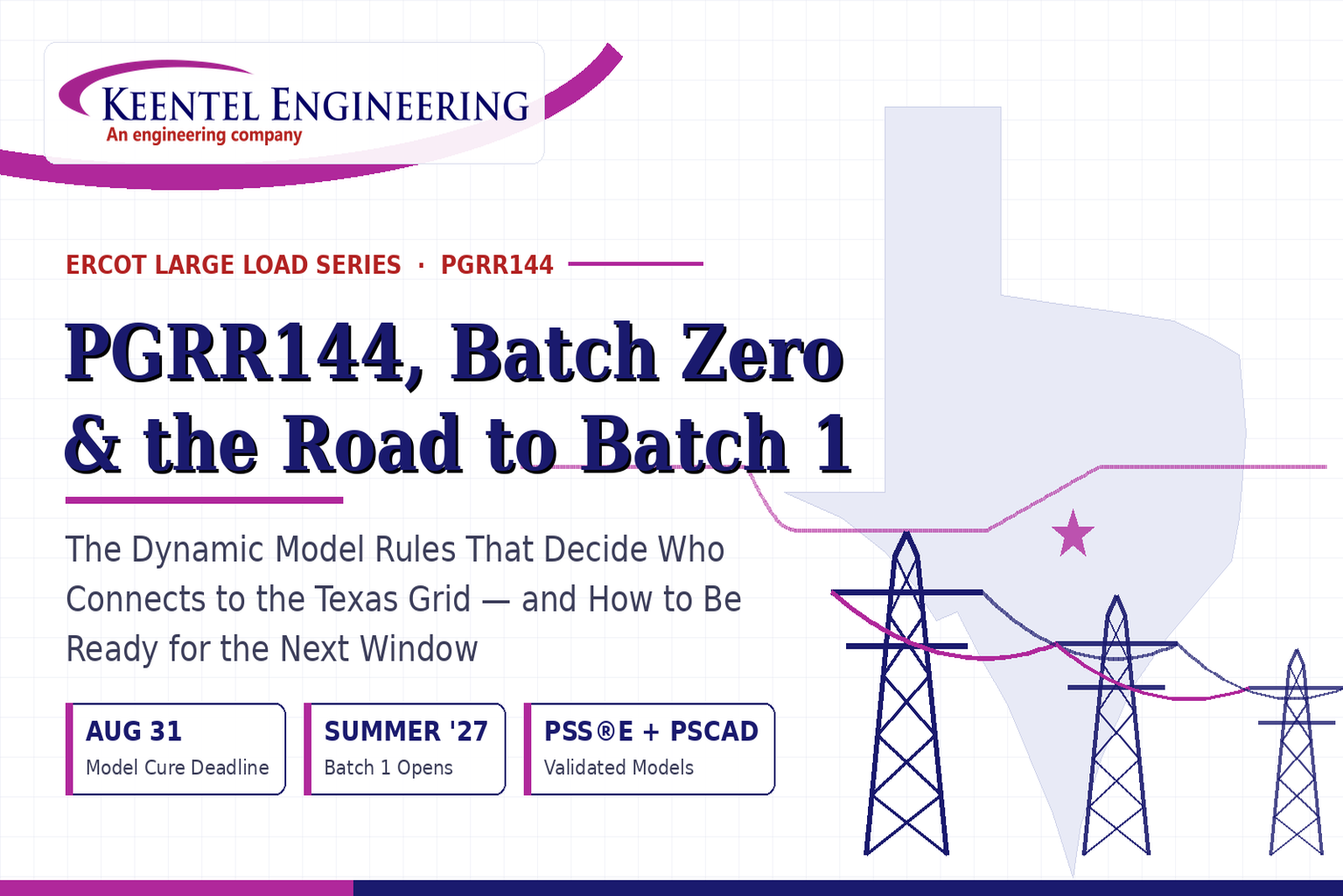
PGRR144, Batch Zero, and the Road to Batch 1: The Dynamic Model Rules That Decide Who Connects to the Texas Grid
Jul 28, 2026 | Blog
Three regulatory stories are converging on every large electricity user in Texas right now.
The first is Batch Zero — ERCOT's one-time, system-wide sorting of the largest interconnection queue in American history, now past its submission deadlines and heading toward classification notices and a statewide transmission plan.
The second is PGRR144 — the dynamic model rule that quietly determines whether your project's paperwork means anything, because in the new ERCOT, your computer model is your compliance case.
The third is Batch 1 — the next window, now officially expected to open in Summer 2027, whose winners are being determined by the preparation decisions developers make today.
This article covers all three in depth: what happened in Batch Zero and where the process stands, what PGRR144 actually requires of your models, and how to position a project for Batch 1. A detailed FAQ follows at the end.
Part One: Batch Zero What Happened and Where We Are
For years, ERCOT studied large load connection requests one project at a time. Then the queue exploded: by mid-2026, ERCOT was tracking more than 438,000 MW of large load requests — nearly 90% from data centers — against an all-time peak demand record of 85,508 MW. Each new project invalidated its neighbors' studies, triggering costly restudies and endless delays. The one-at-a-time model didn't just slow down; it structurally failed.
The replacement, approved by the PUCT on June 18, 2026 through PGRR145 and NPRR1325, studies all qualifying projects together: one system-wide analysis, a fair allocation of what the grid can support, and a single coordinated transmission plan. ERCOT is the first grid operator in the nation to do this. Every tracked project 75 MW and larger was sorted into three classifications:
Base Load — projects whose prior work (completed studies, executed agreements, purchased transformers and breakers, construction underway) earned preservation of their capacity without re-evaluation.
Studied Load — committed projects (site control, financial security, notarized attestations) whose year-by-year megawatt allocations will be determined by the system-wide study. A studied load may receive its full request, a partial allocation, or wait for a subsequent batch if the grid can't accommodate it yet.
Excluded — projects that missed the deadlines or criteria, deferred to a future batch.
Where the process stands now (July 2026): the July 10 developer submission deadline and July 24 utility package deadline have passed. ERCOT issues classification and deficiency notices on August 7, and identified deficiencies must be cured by August 31 — with a critical limitation ERCOT's own FAQ makes explicit: the cure window covers dynamic model deficiencies and administrative corrections only. Missing eligibility items — security not posted, attestations not signed — cannot be added after July 10. Study allocations are expected in Spring 2027, the developer commitment milestone follows in Q2 2027, and the final transmission plan is expected in Fall 2027.
Two optional pathways sweeten the framework for flexible projects: WLPUN (bring your own generation — on-site generation offsets the transmission capacity you need) and PCLR (let ERCOT curtail your consumption during local constraints in exchange for accessing capacity ahead of the transmission buildout — what ERCOT calls a "reliability partnership").
Notice what runs through every classification, deadline, and pathway: the
dynamic model. Projects without required models by July 10 were excluded outright. Model deficiencies are the main thing the cure window exists to fix. And the models submitted now follow the project through every future checkpoint. Which brings us to the rule that governs them.
Part Two: PGRR144 — The Dynamic Model Rule in Depth
PGRR144 — "Dynamic Model Submission and Review Requirements for Large Loads, including Large Electronic Loads" — extends to large loads the modeling discipline ERCOT spent a decade building for wind, solar, and battery plants. The premise is simple: ERCOT cannot fault-test the real grid, so simulation is the only laboratory — and a simulation is only as trustworthy as the model inside it.
One status note before the details: as of ERCOT's July 1 FAQ, PGRR144 was still progressing through the stakeholder process and not yet effective — but Batch Zero's own submission requirements already enforce its core concepts, and ERCOT's Dynamics Working Group (DWG) Procedure Manual already defines the testing regime. Treat PGRR144's requirements as the operative engineering standard even while the rule text finalizes.
The whole facility, not just the meter
The dynamic data must represent the entire facility — and the rule names names: computer-based loads, cooling equipment, protection equipment, and control systems. A data center's chiller plant is a major motor load with its own disturbance behavior; its protective relays and transfer switches are precisely the components whose settings caused the large-load trip events ERCOT has documented since 2022. All of it goes in the model, in formats compatible with ERCOT's study platforms — PSS®E for system-wide planning dynamics, PSCAD for electromagnetic-transient (EMT) analysis, TSAT for operations studies — per the software versions in the DWG Procedure Manual (PSS®E Version 35 for Batch Zero submissions).
The Model Quality Test battery
Before ERCOT trusts a model in its studies, the model must pass a battery of standardized simulation tests — the Model Quality Tests (MQT) defined in the DWG Procedure Manual. These are computer simulations, not field tests: the engineer applies defined disturbances to the model in software and documents that the response is stable, physically reasonable, and consistent. The battery includes a flat start test (the model must initialize cleanly and sit still when nothing happens), voltage and frequency step changes, full voltage ride-through tests (both high- and low-voltage), short circuit ratio tests, and — on the PSCAD side — items like phase angle jump tests. When models are submitted in multiple platforms, the MQT report must overlay the PSS®E, PSCAD, and TSAT responses on the same plots, proving the digital twin behaves identically regardless of which software ERCOT runs it in.
Hardware validation the heavy lift
For large electronic/computational loads, PGRR144 adds the requirement with no shortcut: converter models must be benchmarked against actual hardware testing, covering at minimum voltage ride-through and subsynchronous response. This is why a model assembled from standard PSCAD library blocks fails by definition — a generic library block represents a textbook converter that has never been tested against your vendor's hardware. Two features soften the burden: validation is a hardware-type test (proving the model of a given UPS or power-supply product matches the physical product on a bench, not a site test), and results for a specific converter model are reusable across every facility deploying it. The practical consequence lands on procurement: validated models become something you demand from your UPS and power-conversion vendors, ideally as a contract deliverable.
The PERC1 transition
Large loads were historically represented with the composite load model (CMLD) — built for traditional mixes of motors, lighting, and resistive equipment. CMLD cannot capture the fast control dynamics of a converter-dominated facility, so electronic loads that previously submitted CMLDs must transition to PERC1, EPRI's purpose-built model format for power-electronic loads. This is a re-derivation of parameters, not a file conversion.
Three checkpoints and one gate
PGRR144's architecture inspects the model at three moments, and each has teeth:
1. Before the stability study the lead utility may not initiate the dynamic stability study until sufficient model data is received. Model deficiencies stop the clock; in the Batch Zero context, they stopped projects at the door.
2. Before each Quarterly Stability Assessment (QSA) ERCOT's rolling quarterly study of everything connecting in the upcoming window, with fixed prerequisite deadlines (August 1, November 1, February 1, May 1). A load missing prerequisites — including confirmation its model is still valid — is ineligible to energize that quarter.
3. Before energization (electronic loads only) the as-built gate: as-built models, a written statement of every difference from the studied data, overlaid test results comparing as-built against studied responses, and a sworn attestation that the model reflects actual field settings. ERCOT reviews within 10 business days, extendable by 20 — a 2–6 week window that belongs on every commissioning schedule.
The material-change trigger
The provision most likely to surprise operators: a modification that materially changes an electronic load's dynamic characteristics or ride-through behavior triggers a new interconnection study even with zero change in megawatts. The rule's own examples are pointed — converting a cryptocurrency mining facility to a data center, or changing protection schemes and relay settings. Technology conversions are now regulatory events. So, remarkably, is routine protection engineering, if it touches ride-through behavior. And the obligation never ends: facility modifications that invalidate a submitted model require updated models through the utility to ERCOT for the life of the facility.
Part Three: Batch 1 — The Next Window Is Already Open (For Preparation)
ERCOT has now stated officially, in both its June 18 news release and its public explainer:
applications for Batch 1 are expected to open in Summer 2027. The ongoing batch process that governs it will be established through a future rule, built on Batch Zero's principles — and ERCOT has committed to developing a comprehensive transmission planning process on the same foundation later this year.
Here is the strategic reality for any project that missed Batch Zero, was excluded, or is arriving new: everything Batch 1 will demand is knowable today, and most of it has long lead times. Batch Zero rewarded projects whose commitments predated the window — completed studies, executed agreements, posted security, purchased transformers, validated models. There is no reason to expect Batch 1 to reward anything different. The projects that clear it will be the ones that spent 2026–2027 becoming un-excludable:
1. Site control instruments executed (deed or long-term lease) and affiliate structures documented.
2. Financial security capacity arranged — Batch Zero required security on the order of $100,000 per MW, with guarantors needing ratings from S&P, Fitch, or Moody's.
3. Long-lead equipment ordered — Batch Zero's eligibility gates required equipment with 18-month-plus lead times to be ordered by the deadline. High-voltage transformers and breakers are eligibility currency; order books for 2028–2029 delivery are filling now.
4. Dynamic models built and validated — the PGRR144 workstream above takes months when vendor cooperation is smooth and longer when it isn't. A project that walks into Batch 1 with a PERC1-format, MQT-passing, hardware-validated model set has removed its single most common failure mode.
5. Ride-through-compliant design — specify UPS, power conversion, and protection to the NOGRR282 envelopes now (and to the stricter post-January 2028 voltage standard), because retrofitting ride-through into installed equipment is vastly more expensive than procuring it.
6. A regulatory watch function — the Batch 1 rule, the final PGRR144 text, the DWG Procedure Manual, and ERCOT's FAQ will all evolve between now and the window. Assign an owner.
One more data point for planning: ERCOT reports that the majority of Batch Zero projects expect to be operational by 2030. The 2027–2030 period will be the most congested compliance window in ERCOT history — models, QSAs, as-built packages, and commissioning validations all competing for the same engineering resources. Early movers will not just clear eligibility; they'll beat the queue for the expertise.
Frequently Asked Questions
1. What is PGRR144 in one sentence?
It's the ERCOT rule that requires large loads to submit power-plant-grade dynamic models — representing the whole facility, tested through a standardized simulation battery, and (for electronic loads) validated against real hardware — at every stage from first study to energization and beyond.
2. Is PGRR144 final?
As of ERCOT's July 2026 FAQ, it was still moving through the stakeholder process. But its substance is already operative: Batch Zero's submission requirements and the DWG Procedure Manual enforce the same modeling standards today. Design to it now; verify the final text when it posts.
3. What's the difference between Batch Zero and Batch 1?
Batch Zero is the one-time transitional sorting of the existing queue — its deadlines have passed and its study is underway. Batch 1 is the first window of the ongoing batch process, expected to open in Summer 2027 under a rule ERCOT will establish. New projects and projects excluded from Batch Zero enter through Batch 1.
4. My project missed Batch Zero. How bad is it?
You wait for Batch 1 — roughly a year. Use it well: Batch Zero's eligibility gates (site control, security, ordered equipment, valid models) preview Batch 1's, and every one of them has a lead time. Projects that treat the wait as preparation time routinely come out ahead of projects that scrambled into Batch Zero underprepared.
5. What are the Model Quality Tests — is that field testing?
No. The MQT battery is a set of computer simulation tests run on your dynamic model — flat start, voltage and frequency steps, ride-through profiles, short circuit ratio tests, and more, per the DWG Procedure Manual. It's desk engineering: model files in, simulation campaign, evidence reports out. Physical testing enters only through vendor hardware benchmarking (done by the equipment manufacturer on the product type) and, much later, commissioning validation.
6. Why won't ERCOT accept a model built from standard PSCAD library blocks?
Because a library block is a textbook converter that has never been benchmarked against your vendor's actual hardware. The validation requirement exists precisely to close the gap between generic models and real equipment behavior — a gap that caused years of painful surprises on the generation side.
7. What is PERC1 and do I need it?
PERC1 is EPRI's dynamic model format for power-electronic loads, replacing the older composite load model (CMLD) for electronic/computational facilities. If your facility is converter-dominated and previously submitted a CMLD, plan on a PERC1 conversion — and note it's a parameter re-derivation, not a reformatting exercise.
8. Who actually builds and submits these models?
The developer (ILLE) is responsible. Dynamic models go to both ERCOT and the interconnecting utility — the one part of the submission package the developer sends to ERCOT directly. The inputs come from your equipment vendors (UPS, power supplies, cooling, protection), which is why vendor model deliverables belong in procurement contracts.
9. What happens if my model fails a test?
During Batch Zero's cure window, model deficiencies were fixable until August 31, 2026. Going forward, a failing model stops whatever gate it's in front of — study initiation, quarterly assessment eligibility, or energization approval — until remediated. The schedule cost depends entirely on how fast the fix and re-verification happen, which is why experienced modeling support matters most under deadline pressure.
10. What's the as-built model requirement?
Before an electronic load energizes, it must submit models reflecting the facility as actually built, document every difference from the previously studied data, overlay the test results, and swear the model matches real field settings. ERCOT reviews in 10–30 business days. If the as-built diverged enough from the studied configuration, a new stability study can be required — a schedule risk measured in months, best avoided by keeping a live parameter register from day one.
11. I'm converting a crypto mining site to AI hosting. Same megawatts — do the rules care?
Yes, emphatically. Crypto-to-data-center conversion is PGRR144's own named example of a material change requiring a new interconnection study. Mining rigs and AI clusters are entirely different electrical animals during disturbances. Treat the conversion as a regulatory event with its own timeline, and get the new equipment's models in order before you file.
12. How do the ride-through rules (NOGRR282) connect to all this?
NOGRR282 sets the performance standard — stay connected and keep consuming through defined voltage and frequency disturbances. PGRR144's models are how you prove the standard is met, since ERCOT enforces ride-through prospectively through simulation. Per ERCOT's FAQ: ride-through compliance is separate from Batch Zero eligibility, but a non-exempt computational load will need ride-through-compliant models to pass the quarterly assessment that stands between its allocation and its energization.
13. When should a Batch 1 candidate start its modeling work?
Now. The realistic path — vendor engagement, data collection, model development, PERC1 parameterization, MQT campaign, remediation — runs months even with cooperative vendors, and vendor model negotiations are routinely the long pole. Walking into the Summer 2027 window with a finished, validated model set converts your biggest exclusion risk into a competitive advantage.
14. What software must the models work in?
The platforms specified in the current DWG Procedure Manual — PSS®E (Version 35 for Batch Zero-era submissions), PSCAD for EMT analysis, and TSAT — with multi-platform consistency demonstrated through overlaid MQT results.
15. What will Batch 1's eligibility criteria be?
The rule isn't written yet, so nobody knows precisely — but Batch Zero's gates are the obvious template: site control, financial security, binding commitments, ordered long-lead equipment, and complete valid models. Track the ongoing-batch rulemaking as it develops; we'll be covering it as it moves.
How Keentel Engineering Can Help
Keentel Engineering works at exactly the intersection this article describes: ERCOT-compliant dynamic model development (PSS®E, PSCAD, TSAT), PERC1 development and CMLD conversion, the full MQT battery with study reports, hardware-validation coordination with equipment vendors, NOGRR282 ride-through compliance assessment, DWG survey preparation, quarterly assessment support, and pre-energization as-built packages. We supported clients through the Batch Zero window, and we're already preparing projects for Batch 1.
Whether you're curing a Batch Zero deficiency this month or positioning for Summer 2027, the engineering starts with a conversation.

About the Author:
Sonny Patel P.E. EC
IEEE Senior Member
In 1995, Sandip (Sonny) R. Patel earned his Electrical Engineering degree from the University of Illinois, specializing in Electrical Engineering . But degrees don’t build legacies—action does. For three decades, he’s been shaping the future of engineering, not just as a licensed Professional Engineer across multiple states (Florida, California, New York, West Virginia, and Minnesota), but as a doer. A builder. A leader. Not just an engineer. A Licensed Electrical Contractor in Florida with an Unlimited EC license. Not just an executive. The founder and CEO of KEENTEL LLC—where expertise meets execution. Three decades. Multiple states. Endless impact.
Services

Let's Discuss Your Project
Let's book a call to discuss your electrical engineering project that we can help you with.
About the Author:
Sonny Patel P.E. EC
IEEE Senior Member
In 1995, Sandip (Sonny) R. Patel earned his Electrical Engineering degree from the University of Illinois, specializing in Electrical Engineering . But degrees don’t build legacies—action does. For three decades, he’s been shaping the future of engineering, not just as a licensed Professional Engineer across multiple states (Florida, California, New York, West Virginia, and Minnesota), but as a doer. A builder. A leader. Not just an engineer. A Licensed Electrical Contractor in Florida with an Unlimited EC license. Not just an executive. The founder and CEO of KEENTEL LLC—where expertise meets execution. Three decades. Multiple states. Endless impact.
Leave a Comment
Thank you for contacting us.
We will get back to you as soon as possible.
We will get back to you as soon as possible.
Oops, there was an error sending your message.
Please try again later.
Please try again later.
Related Posts
By SANDIP R PATEL
•
July 28, 2026
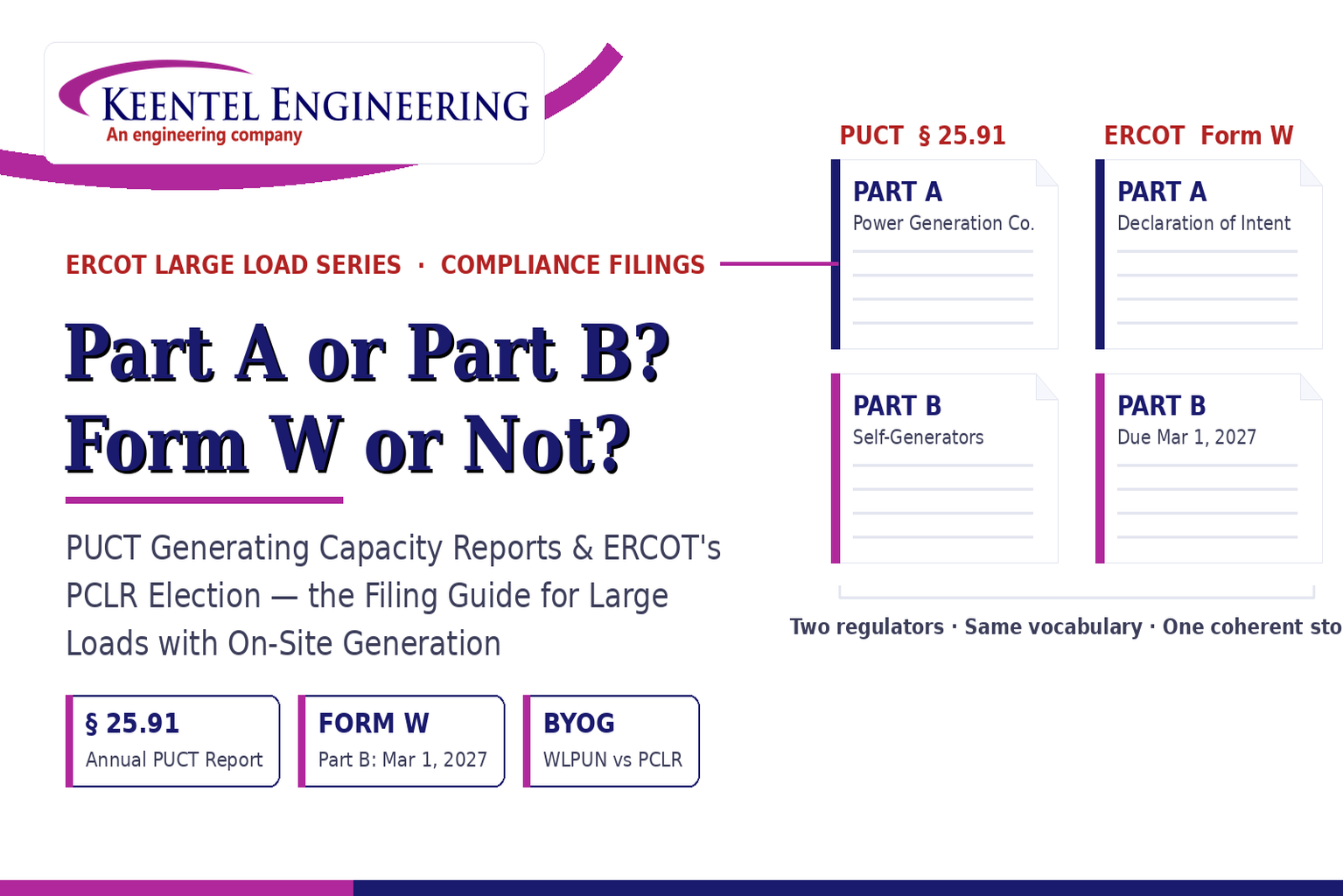
Learn the differences between the PUCT Generating Capacity Report and ERCOT Form W, including Part A vs Part B, PCLR, WLPUN, BYOG projects, and Batch Zero compliance.
By SANDIP R PATEL
•
July 28, 2026
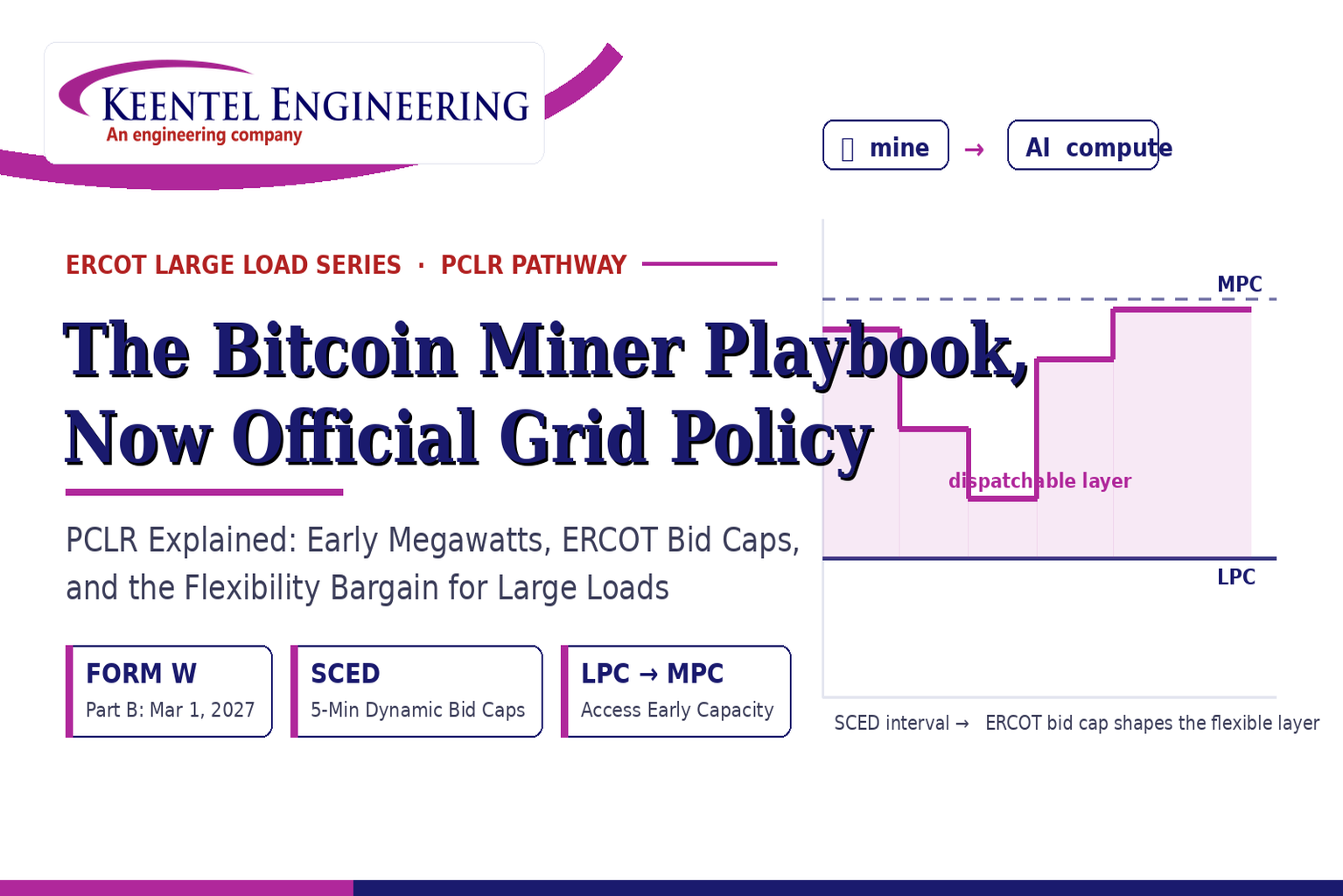
ERCOT PCLR Batch Zero large-load interconnection pathway
By SANDIP R PATEL
•
July 27, 2026
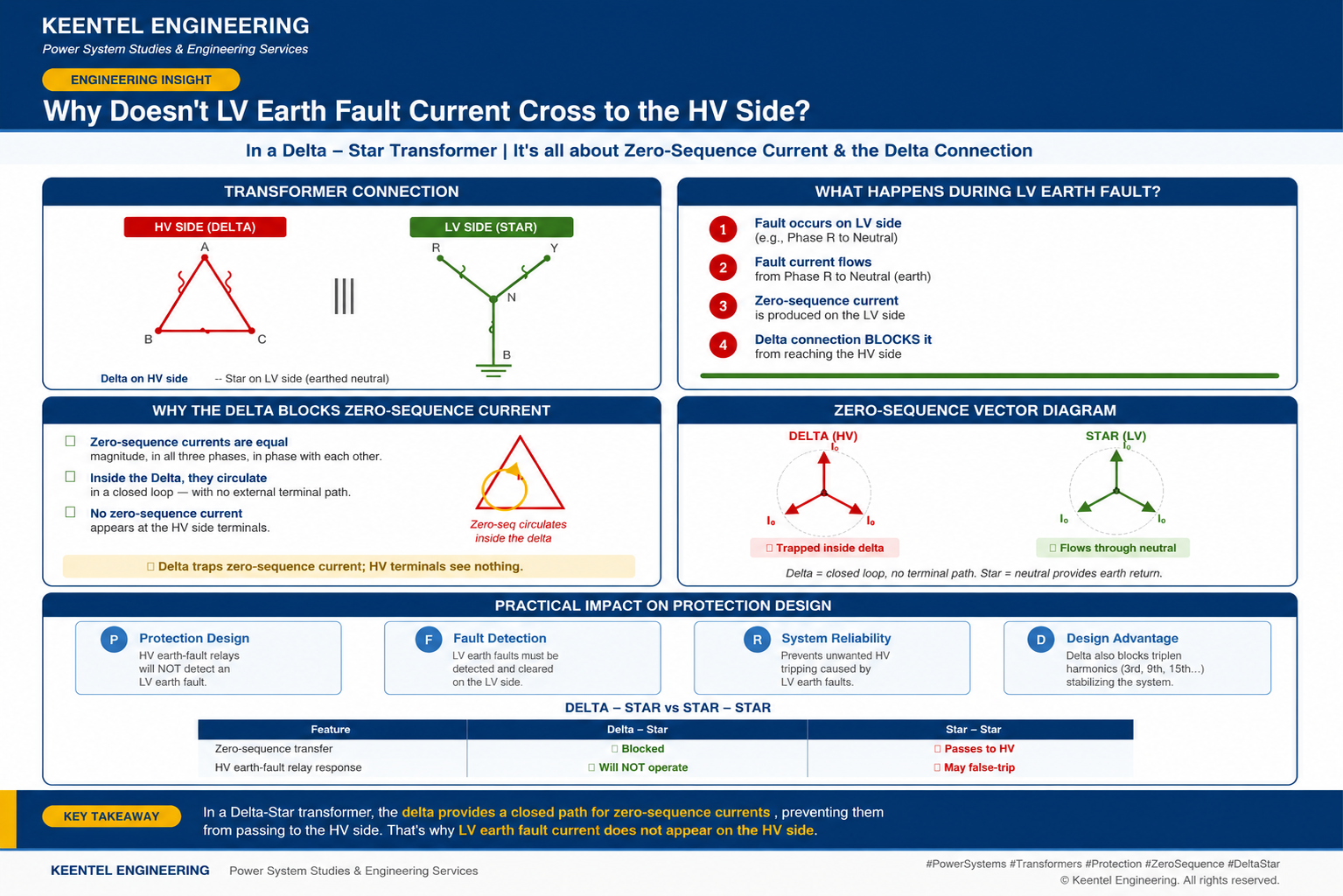
Learn why LV earth-fault current cannot cross a Delta-Star transformer, how zero-sequence current behaves, and what it means for protection design.
By SANDIP R PATEL
•
July 27, 2026
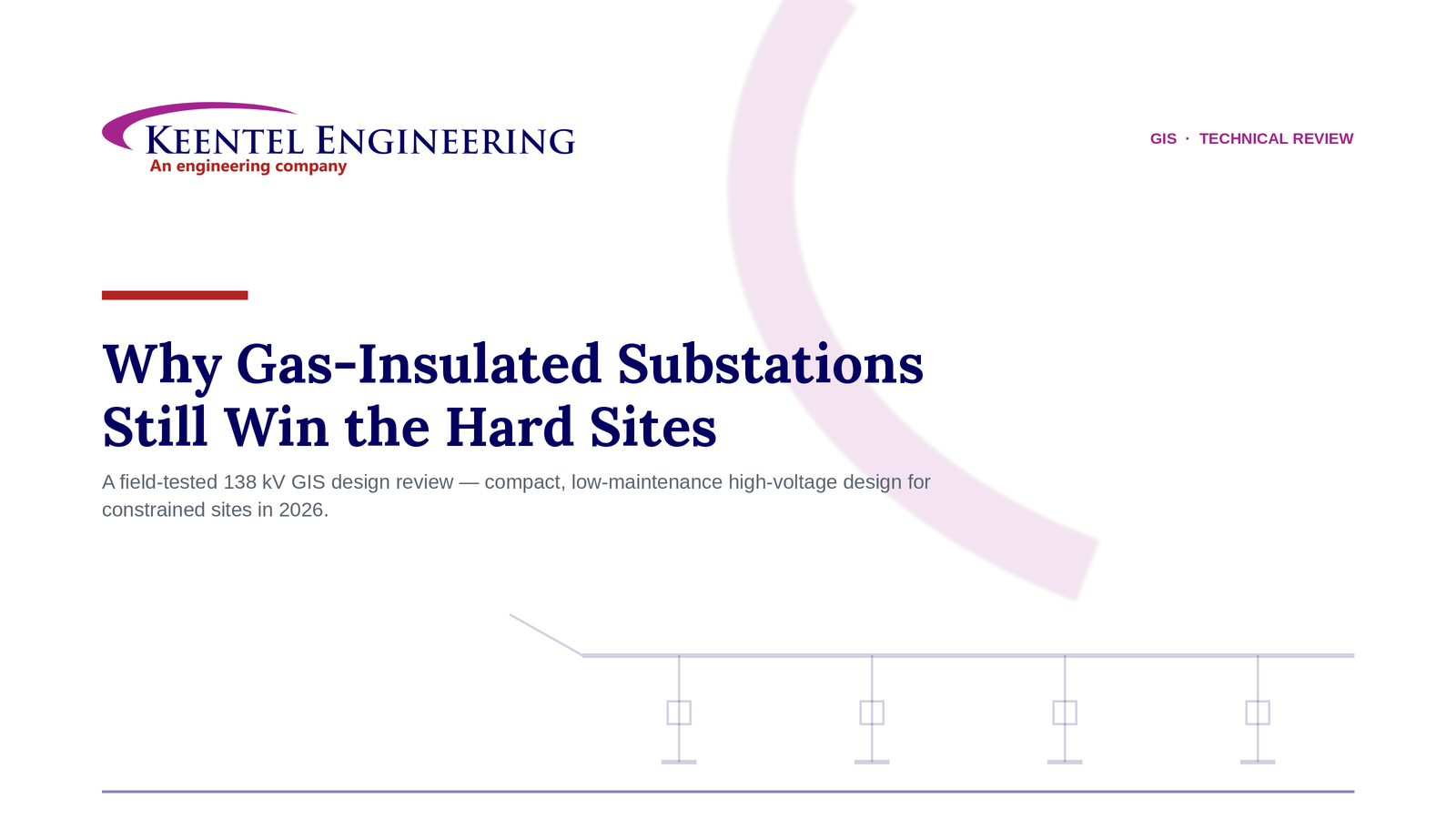
Learn how gas-insulated substations (GIS) improve safety, reliability, and space efficiency with 138 kV design, protection, insulation coordination, and real-world case studies.
By SANDIP R PATEL
•
July 25, 2026
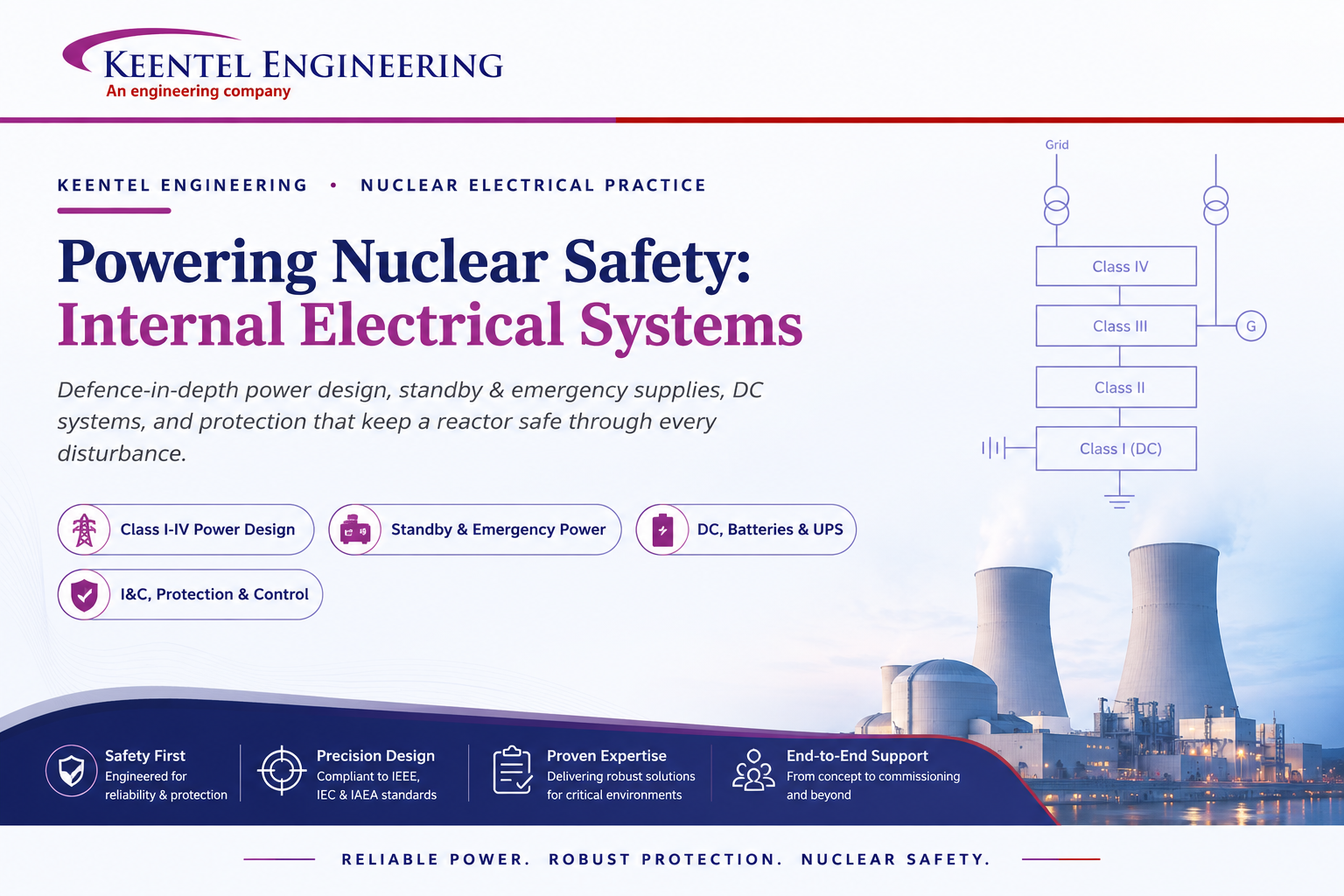
Learn how Class I–IV electrical systems, defence-in-depth, standby and emergency power, DC systems, protection, and load transfer ensure nuclear power plant safety.
By SANDIP R PATEL
•
July 24, 2026
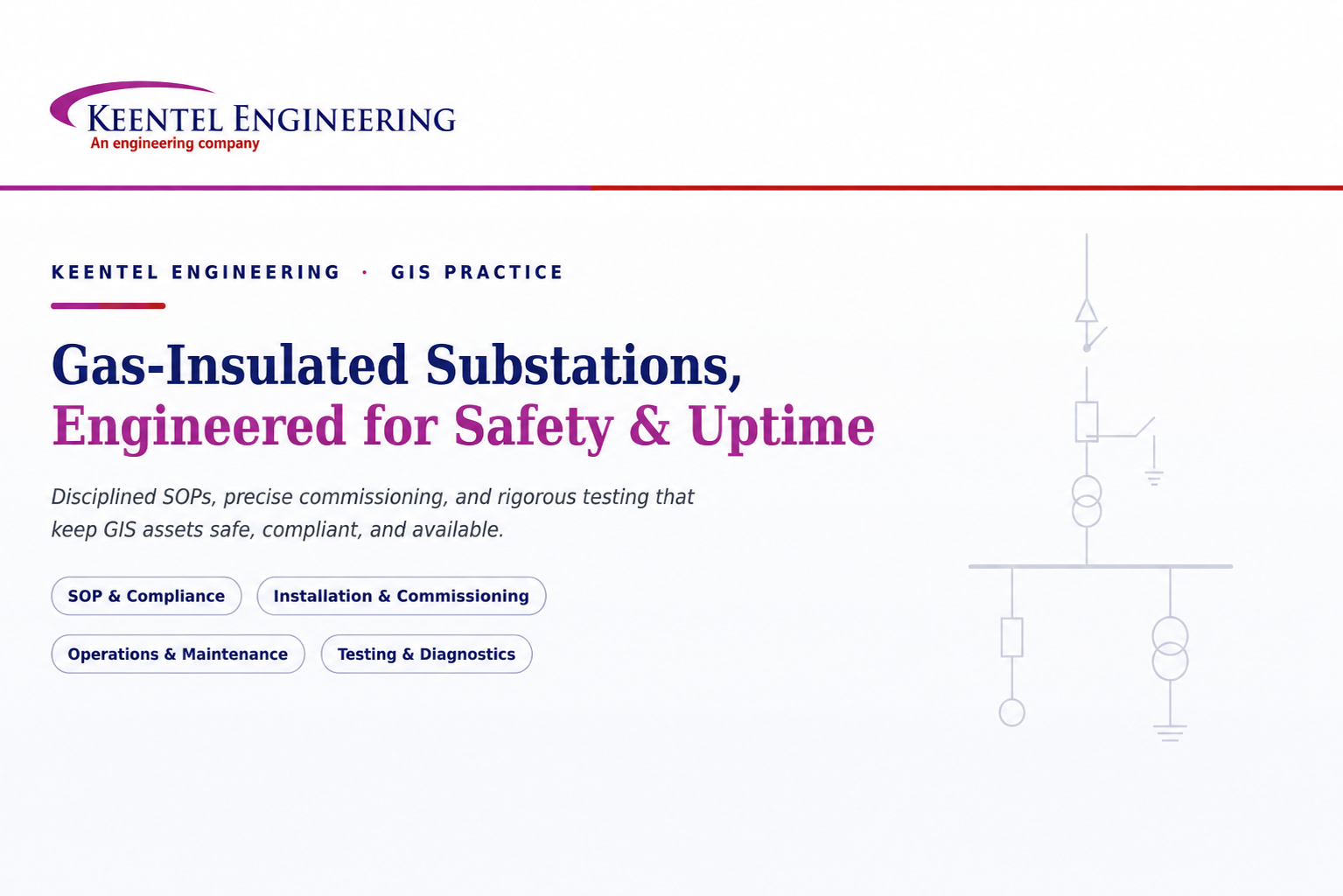
Learn GIS substation safety best practices, SOPs, commissioning, maintenance, interlocking, earthing, and testing to improve grid reliability and uptime.
By SANDIP R PATEL
•
July 23, 2026
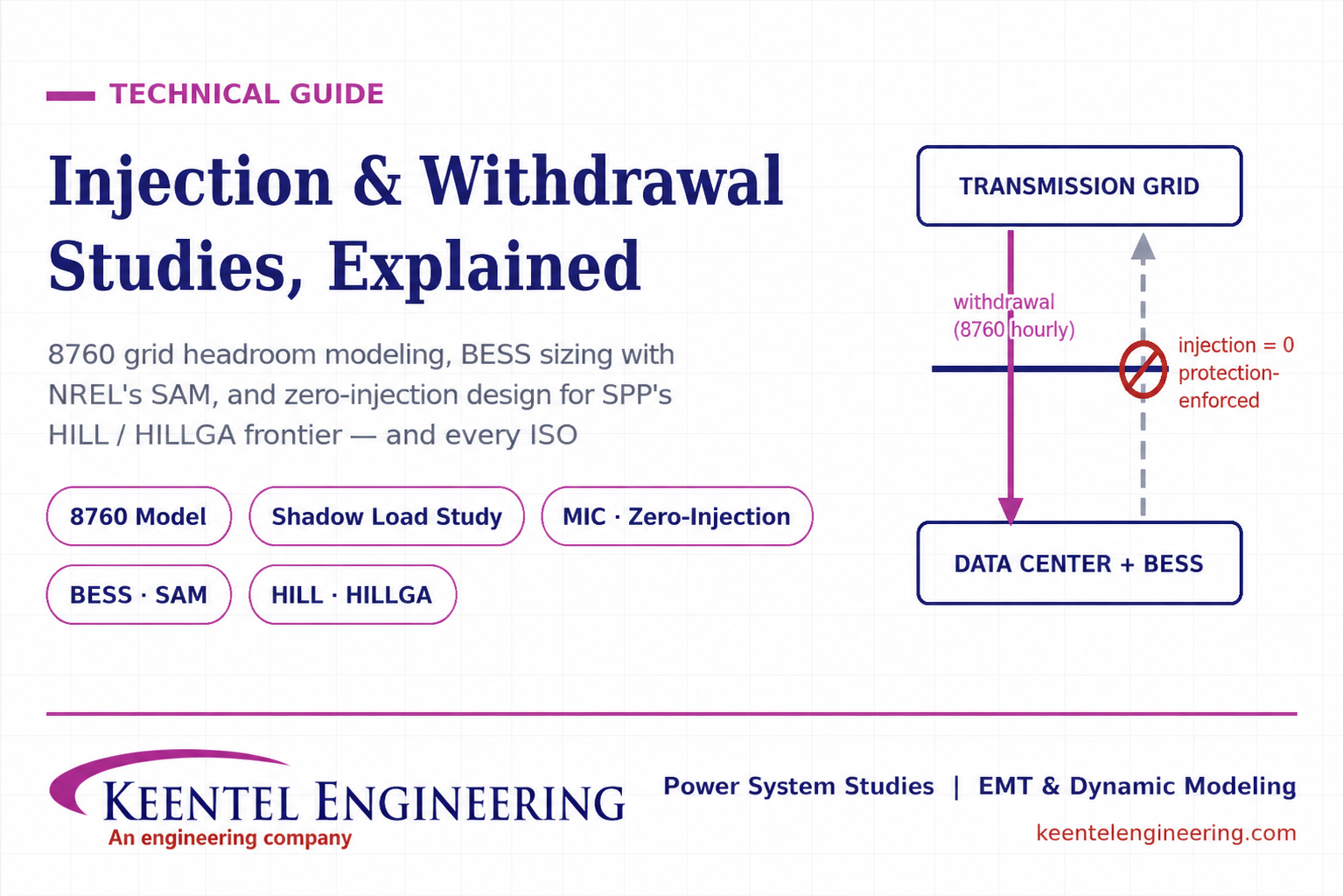
Learn how injection and withdrawal studies, 8760 headroom modeling, zero-injection engineering, and SPP HILLGA improve large load grid interconnections
By SANDIP R PATEL
•
July 21, 2026
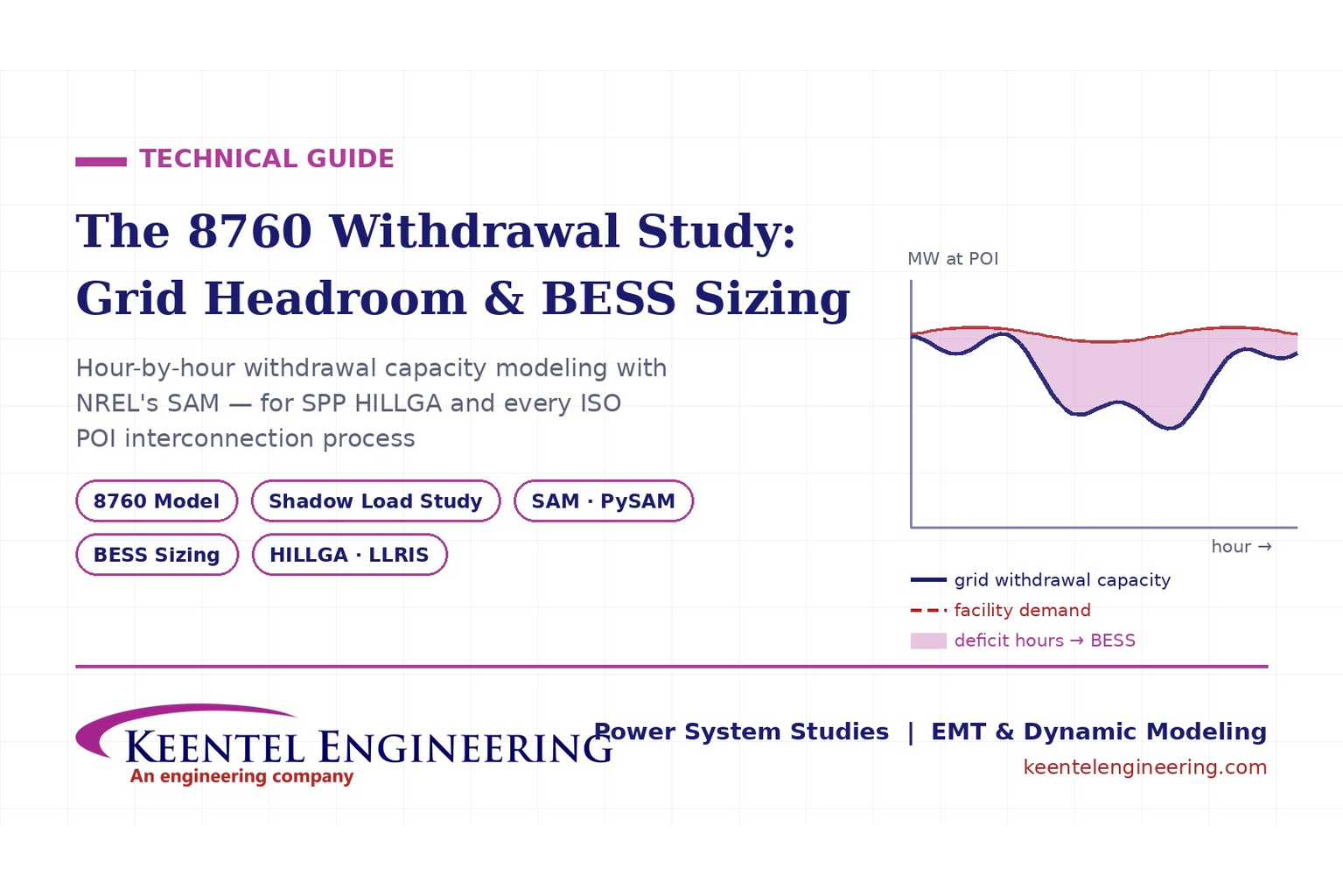
Learn how an 8760 withdrawal study models hourly grid headroom and uses SAM-based BESS sizing for large-load interconnection projects.
By SANDIP R PATEL
•
July 21, 2026
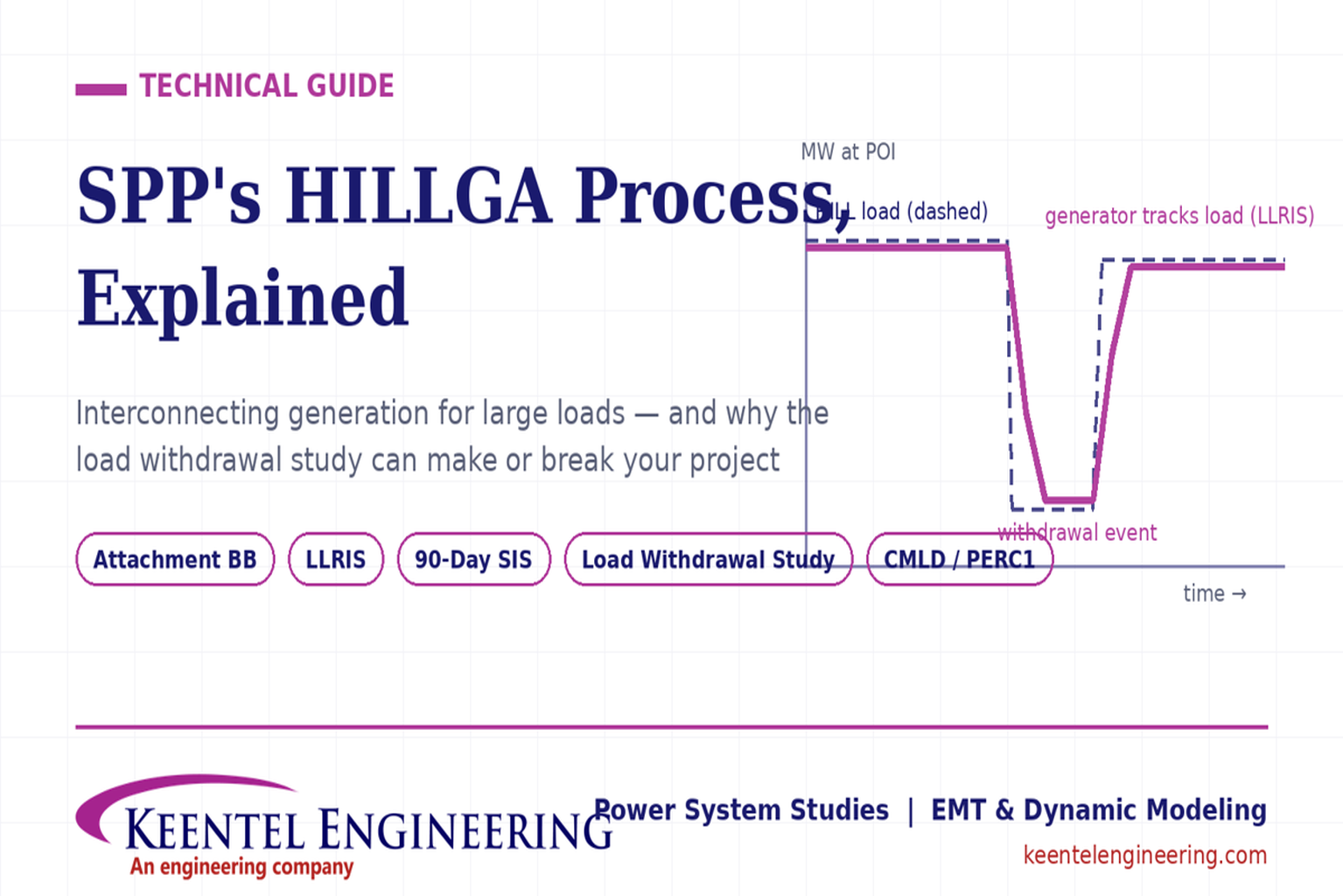
Learn how the SPP HILLGA process supports data center generation interconnection and why an 8760 withdrawal study can determine project success.