

A Coordinated Electric System Interconnection Review—the utility’s deep-dive on technical and cost impacts of your project.

Challenge: Frequent false tripping using conventional electromechanical relays
Solution: SEL-487E integration with multi-terminal differential protection and dynamic inrush restraint
Result: 90% reduction in false trips, saving over $250,000 in downtime

Category Metric
VPP capacity (Lunar Energy) 650 MW
Lunar funding raised US$232 million
Data center BESS example 31 MW / 62 MWh
ERCOT grid-scale batteries 15+ GW
LDES tenders (H1 2026) Up to 9.3 GW
Lithium-ion share of LDES by 2030 77%
FEOC initial threshold 55%
BESS tariff rate (2026) ~55%
Capacity gain from analytics 5–15%

What is T&D Co-Simulation?

Confusing Physical Connections with Logical Nodes in IEC 61850

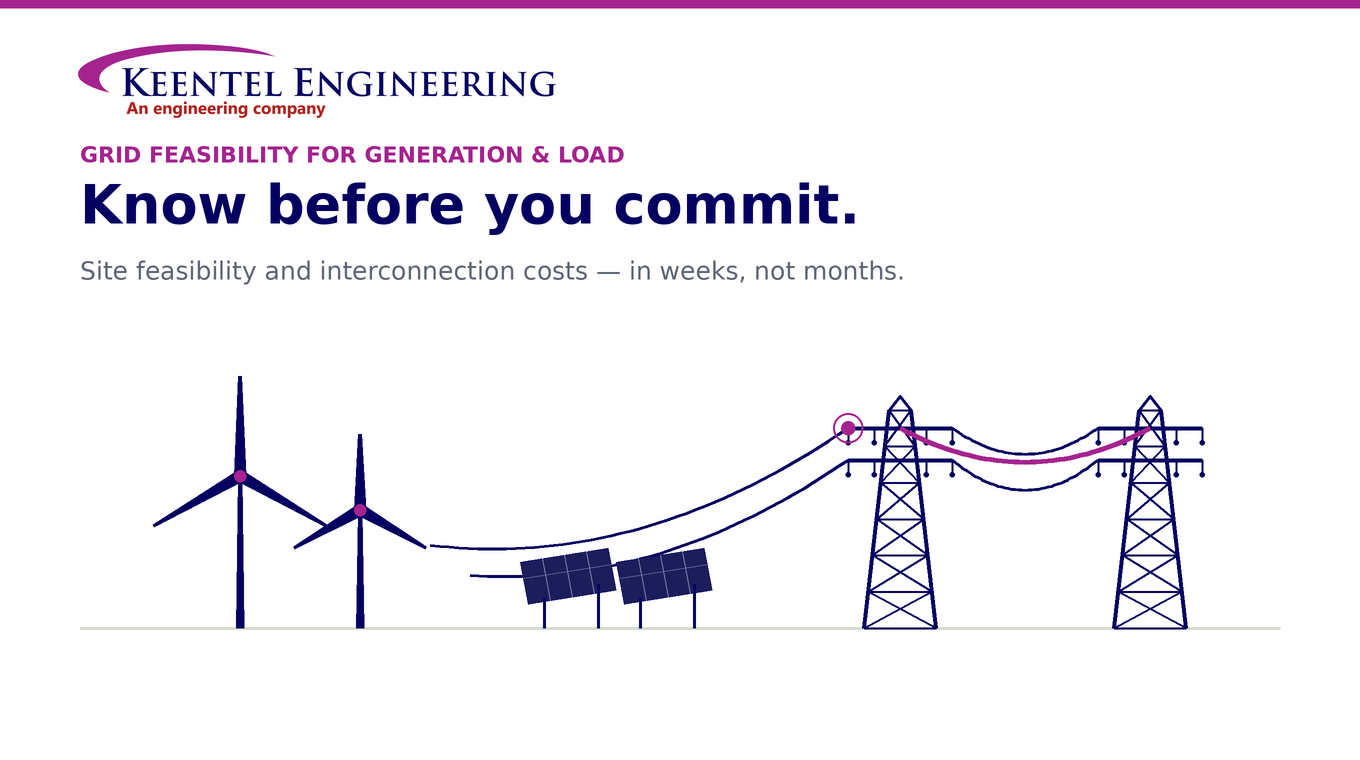
Know Before You Commit: How Keentel Engineering De-Risks Power Siting Decisions

Keentel Engineering grid feasibility study for generation and load projects.
Calendar icon. D

 Apr 17, 2026 | blog

Turning months of grid uncertainty into a feasibility answer in weeks — for generation, load, and everything in between


Every large power decision starts with the same unanswered question.

A developer eyeing a 200 MW data center wants to know whether the grid at that location can actually carry the load.

A renewable developer scouting a parcel wants to know whether there's room left on the bus before competitors lock it up.

An industrial site selector wants to know what it will cost to connect — before committing capital, not eighteen months into a queue.


For most teams, getting to those answers means a dozen browser tabs, calls to multiple utilities, and weeks of waiting on studies that arrive too late to influence the decision.

By the time the numbers come back, the opportunity has often already moved.


At Keentel Engineering, we've rebuilt that entire front end of the process.

Our analysts can come to a business-development conversation already knowing whether a site is viable, what the grid can absorb today, and what an interconnection is likely to cost — in a matter of weeks rather than the months a traditional study takes.


1. First-Pass Feasibility in Weeks — Not Months

The Question We Answer


Is this site even worth pursuing?


Before anyone files anything or commissions a formal study, our team produces a first-pass feasibility assessment on virtually any site in the country.


We bring together the factors that actually determine whether a location works :


  • Nearby transmission infrastructure and available capacity
  • Substation headroom for both injection and withdrawal
  • Land ownership around the parcel
  • Existing and queued generation projects
  • Natural gas pipeline flows for gas-dependent projects
  • Long-range energy price forecasts through 2045


We can load this analysis directly from a coordinate set, KMZ file, or shapefile your team already has.


What used to take months of utility outreach and fragmented research can now be completed in weeks.


Why It Matters


Instead of pursuing every opportunity equally, your team can:


  • Rank sites quickly
  • Eliminate non-viable locations early
  • Focus capital on projects with a realistic path forward
  • Enter development discussions with confidence


You walk into the room already knowing whether the grid can support your project — and what it may take to get there.


2. Know the Interconnection Cost Before You File

The Question We Answer


What will it actually cost to connect?


A feasibility assessment tells you a site deserves further evaluation.

The next question is often the most important:


What will interconnection cost, and will the project still make financial sense?


Keentel Engineering estimates network upgrade costs before an interconnection application is filed.

That means clients aren't discovering deal-breaking numbers after investing months of time and significant development capital.


For Generation Projects


Siting new generation means planning around an interconnection queue that is constantly changing.


Our engineers build customized scenarios that account for:


  • Potential queue withdrawals
  • Competing project sizes
  • Different technology types
  • Market-specific development trends


This creates a realistic view of what the queue may look like when your project reaches the next study phase.


The result is a more defensible cost estimate than a standard off-the-shelf analysis.


For Load Projects


Data centers, industrial facilities, and large manufacturing projects face a different challenge.

These clients need to know what the grid can support today.

They are not looking for broad ranges of hypothetical outcomes.

They need a current-state answer that supports a real investment decision.


Keentel delivers a focused assessment of:


  • Available capacity at the target bus
  • Potential upgrade requirements
  • Expected interconnection challenges
  • Current grid limitations


When hundreds of millions of dollars depend on a location decision, precision matters.


Built on Operator-Grade Accuracy

Our workflows use the same class of power-flow software employed by regional transmission operators during formal interconnection studies.


The result is engineering analysis grounded in the same methodology used by the organizations ultimately evaluating the project.


In validation exercises against actual operator outcomes, our modeling has achieved better than 99% agreement with grid-operator results.


That level of accuracy provides confidence for:


  • Site-selection committees
  • Executive leadership teams
  • Investors and lenders
  • Development partners

Why the Software Isn't the Story — The Engineering Is

Powerful software can generate data.


It cannot generate judgment.


What clients actually buy from Keentel Engineering is the engineering expertise behind the analysis.


Our engineers know:


  • Which assumptions matter
  • Which scenarios are realistic
  • Which results deserve confidence
  • How to translate technical outputs into actionable business decisions


Anyone can run a study.


Far fewer can tell you what the queue may realistically look like eighteen months from now, which projects are likely to drop, or whether available substation headroom will still exist when you need it.


That is the difference between receiving data and receiving an answer.


Ready to Find Out If Your Site Works?

If you're evaluating a location for:


  • Utility-scale generation
  • Battery energy storage
  • Data centers
  • Manufacturing facilities
  • Large industrial loads

Talk with Keentel Engineering before committing capital.


We'll help you understand site feasibility, available capacity, and interconnection costs before you enter the queue.


Technology and Innovation: AI in the Interconnection Process

Contact Keentel Engineering today to scope a feasibility assessment for your next project.


A smiling man with glasses and a beard wearing a blue blazer stands in front of server racks in a data center.

About the Author:

Sandip "Sonny" R. Patel, P.E.

IEEE Senior Member · Founder & CEO, Keentel Engineering

In 1995, Sonny Patel earned his Electrical Engineering degree from the University of Illinois. But degrees don't build legacies — action does.

For three decades, he has worked the power industry from every side of the table: 16 years as a utility engineer at Exelon/Commonwealth Edison; generation leadership across hydroelectric, industrial steam turbine, and a 9 GW renewable fleet; NERC Regional Entity Senior Compliance Engineer and Audit Team Lead, auditing some of the nation's largest utilities; and testing and commissioning lead on equipment up to 765 kV — the very top of the North American grid.Utility. Generator. Regulator. Consultant. Few engineers have seen all four seats. Fewer still have sat in them.

His experience spans nuclear, hydro, conventional generation, renewables, oil and gas, mining — and today's data centers, where he is authoring a three-book series on data center design. He is a Licensed Professional Engineer in six states and a Licensed Electrical Contractor in Florida (Unlimited EC) — he doesn't just design the work; he's qualified to stand behind its execution.Today, as Founder and CEO of Keentel Engineering, Sonny leads a nationwide team of engineers delivering substation design, power system studies, NERC compliance, and commissioning — done right, coast to coast.Three decades. Every side of the table. One standard: accountable engineering.

Four workers in safety vests and helmets stand with arms crossed near wind turbines.

Let's Discuss Your Project

Let's book a call to discuss your electrical engineering project that we can help you with.

Man in a blazer and open shirt, looking at the camera, against a blurred background.

About the Author:

Sandip "Sonny" R. Patel, P.E.

IEEE Senior Member · Founder & CEO, Keentel Engineering

In 1995, Sonny Patel earned his Electrical Engineering degree from the University of Illinois. But degrees don't build legacies — action does.

For three decades, he has worked the power industry from every side of the table: 16 years as a utility engineer at Exelon/Commonwealth Edison; generation leadership across hydroelectric, industrial steam turbine, and a 9 GW renewable fleet; NERC Regional Entity Senior Compliance Engineer and Audit Team Lead, auditing some of the nation's largest utilities; and testing and commissioning lead on equipment up to 765 kV — the very top of the North American grid.

Utility. Generator. Regulator. Consultant. Few engineers have seen all four seats. Fewer still have sat in them.

His experience spans nuclear, hydro, conventional generation, renewables, oil and gas, mining — and today's data centers, where he is authoring a three-book series on data center design. He is a Licensed Professional Engineer in six states and a Licensed Electrical Contractor in Florida (Unlimited EC) — he doesn't just design the work; he's qualified to stand behind its execution.

Today, as Founder and CEO of Keentel Engineering, Sonny leads a nationwide team of engineers delivering substation design, power system studies, NERC compliance, and commissioning — done right, coast to coast.Three decades. Every side of the table. One standard: accountable engineering.

Leave a Comment

Related Posts

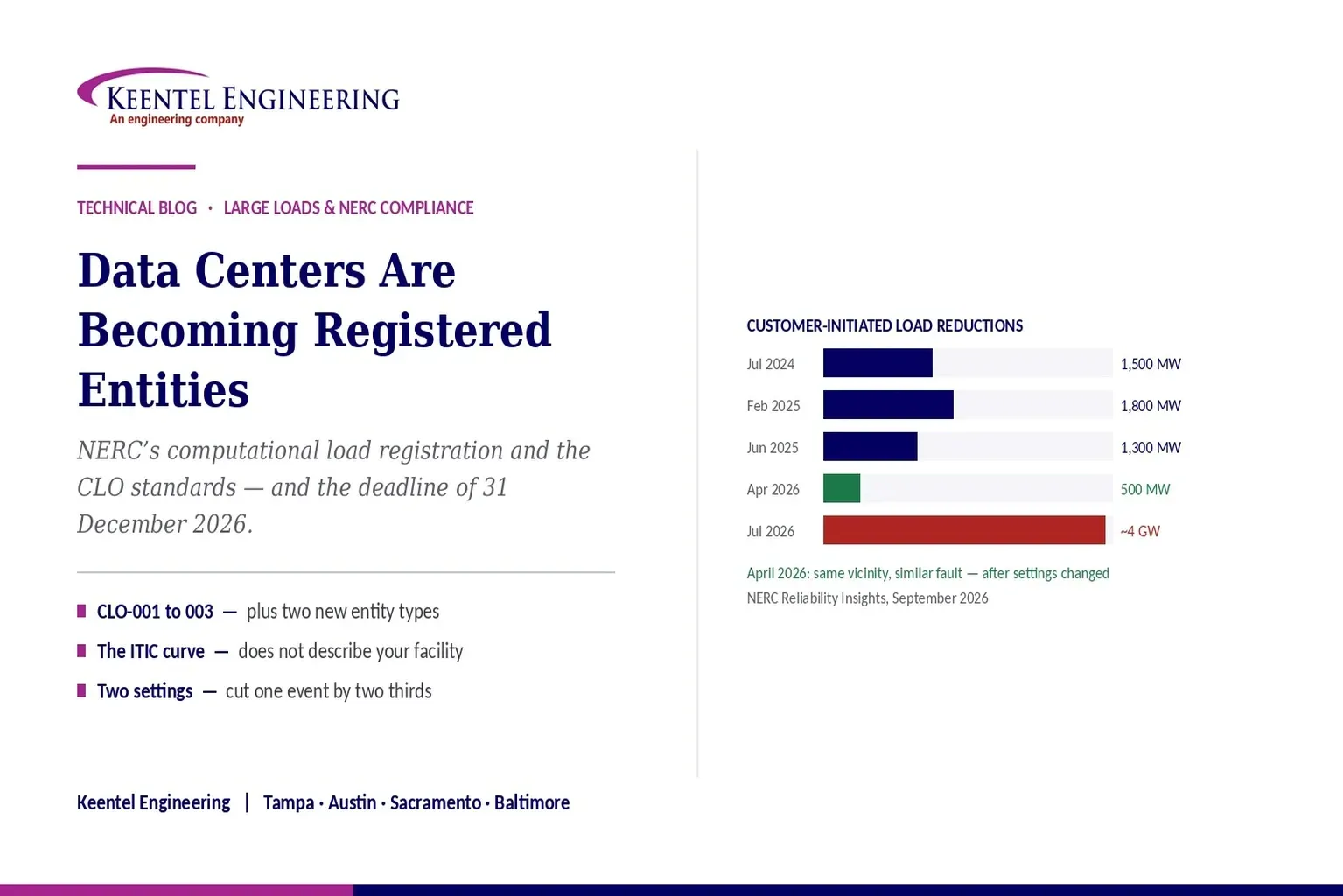
NERC large load registration guide showing data center grid reliability and computational load compl
By SANDIP R PATEL September 9, 2026
Learn how NERC computational load registration impacts data centers, CLO standards, ride-through requirements, modeling, and grid reliability compliance.
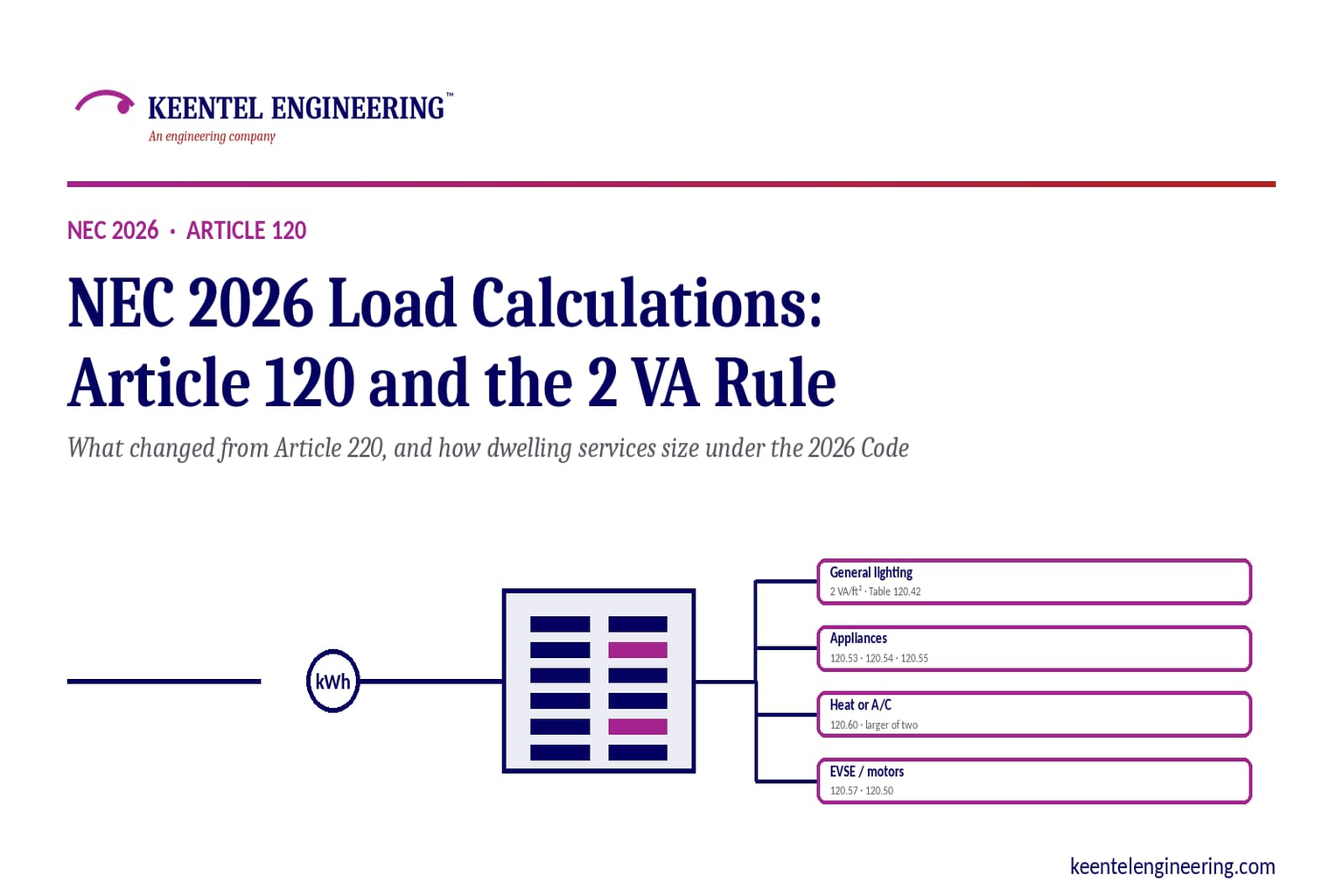
NEC 2026 load calculation guide showing Article 120 rules, 2 VA changes, EV charging and service siz
By SANDIP R PATEL September 7, 2026
Learn NEC 2026 load calculations, Article 120 changes, the 2 VA rule, EV charging requirements, service sizing, and dwelling calculation methods.
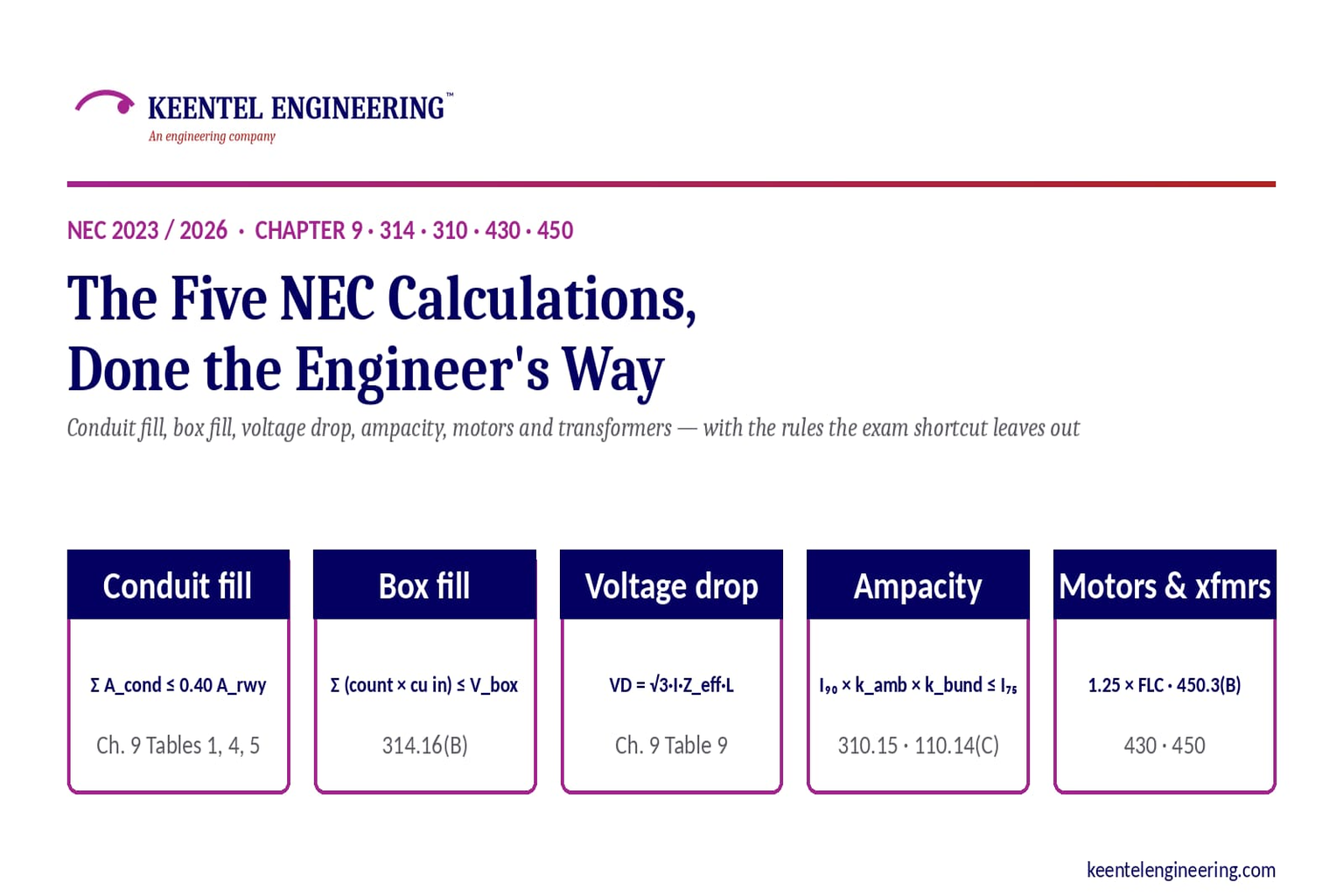
NEC calculations guide showing conduit fill, voltage drop, ampacity, motor circuits and transformer
By SANDIP R PATEL September 7, 2026
Learn five essential NEC calculations covering conduit fill, voltage drop, ampacity, motor circuits, and transformer protection with engineering examples.
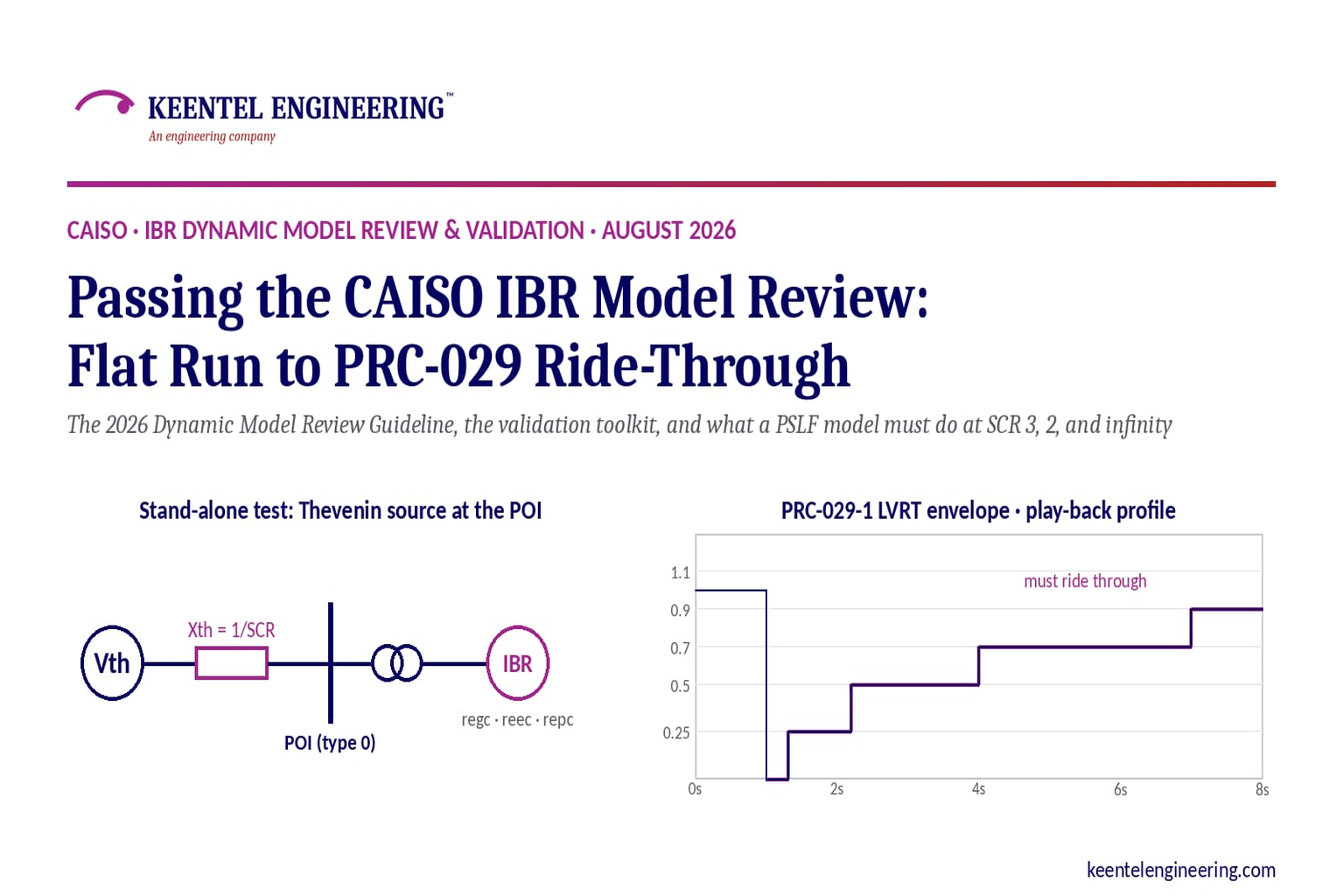
CAISO IBR model review showing inverter-based resource validation and PRC-029-1 ride-through complia
By SANDIP R PATEL September 7, 2026
Learn how CAISO reviews IBR models using PSLF validation, PRC-029-1 ride-through requirements, WECC models, and inverter resource compliance testing.
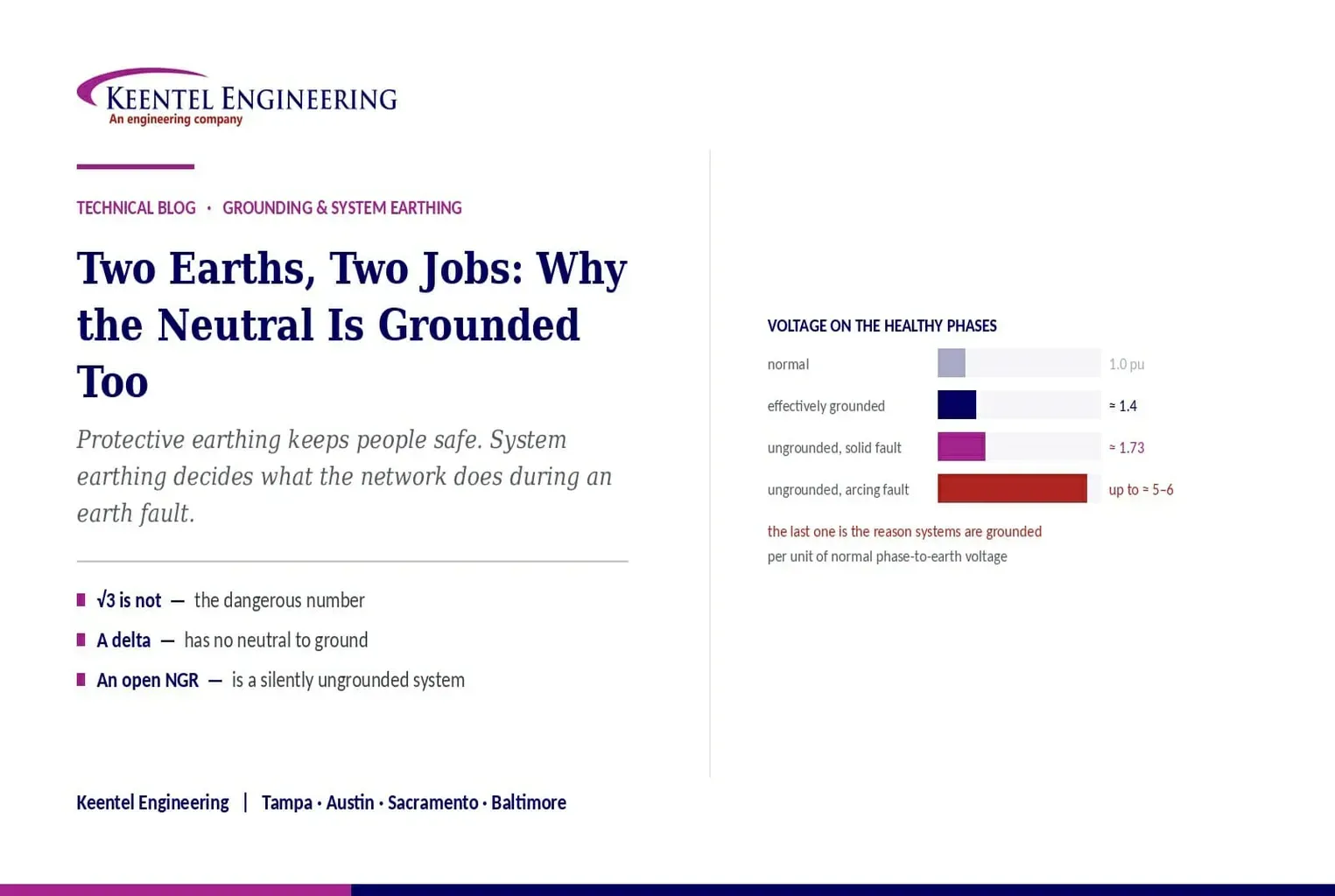
Protective earthing and system grounding during earth faults
By SANDIP R PATEL September 7, 2026
Understand system earthing and protective earthing, neutral grounding methods, effective grounding, ground grids, and insulation coordination for power systems
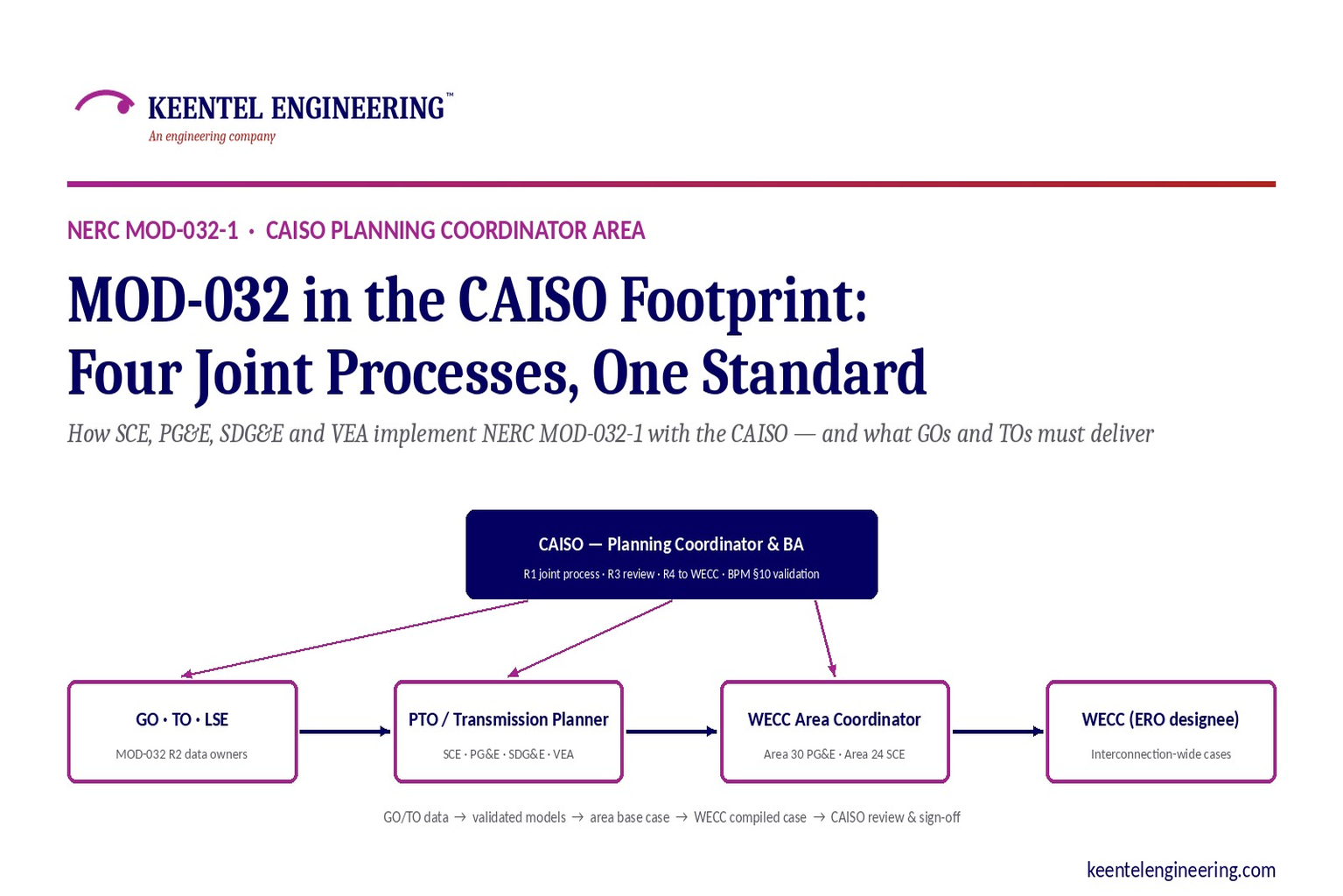
NERC MOD-032-1 CAISO generator data modeling and WECC compliance requirements
By SANDIP R PATEL September 6, 2026
Learn how NERC MOD-032-1 applies across CAISO, SCE, PG&E, VEA and SDG&E, including generator data, PSLF models, EMT requirements and WECC submissions.
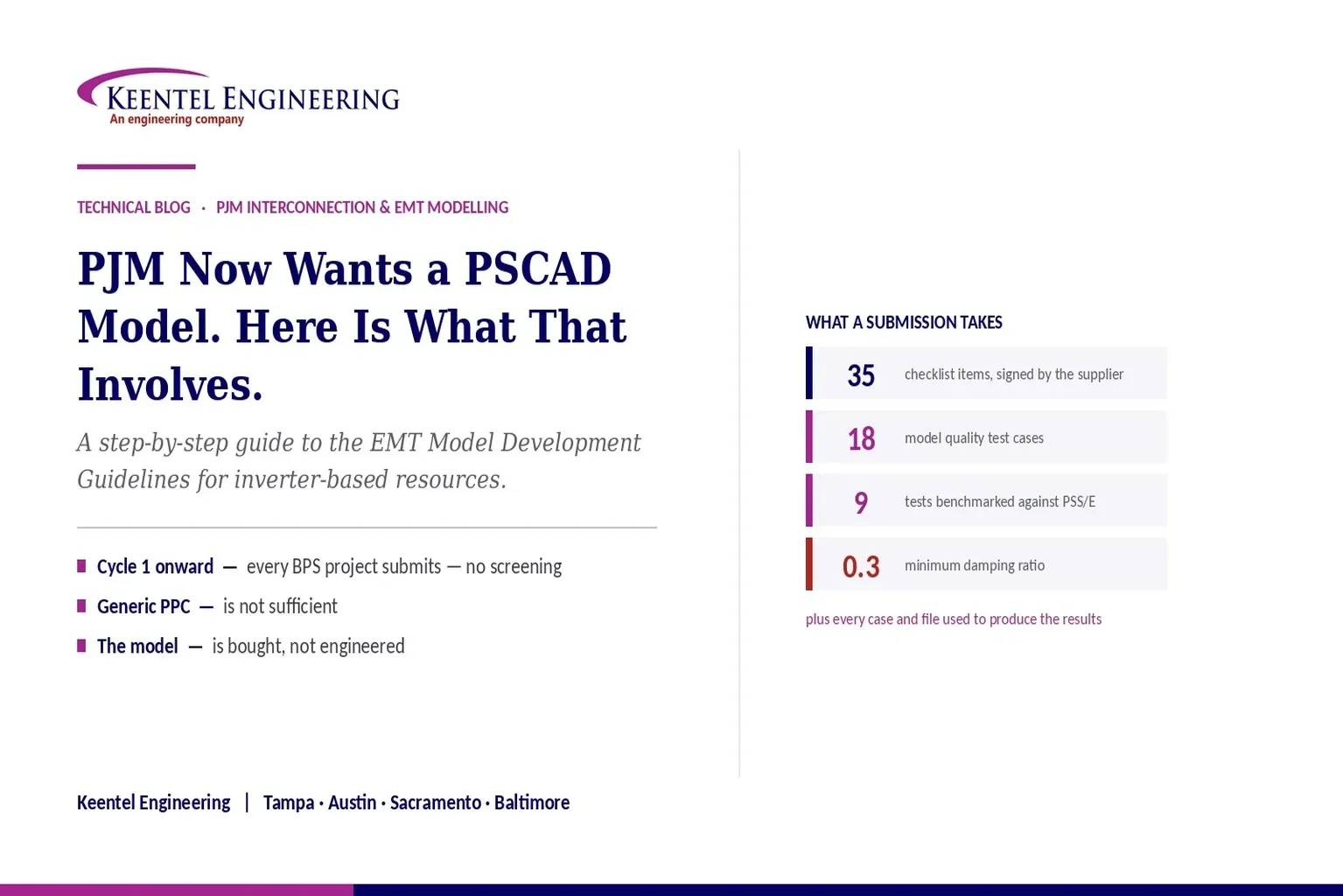
PJM PSCAD model submission requirements for EMT model development
By SANDIP R PATEL September 6, 2026
Learn PJM PSCAD model requirements for inverter-based resources, EMT testing, PSS/E benchmarking, ride-through studies, and compliance submissions
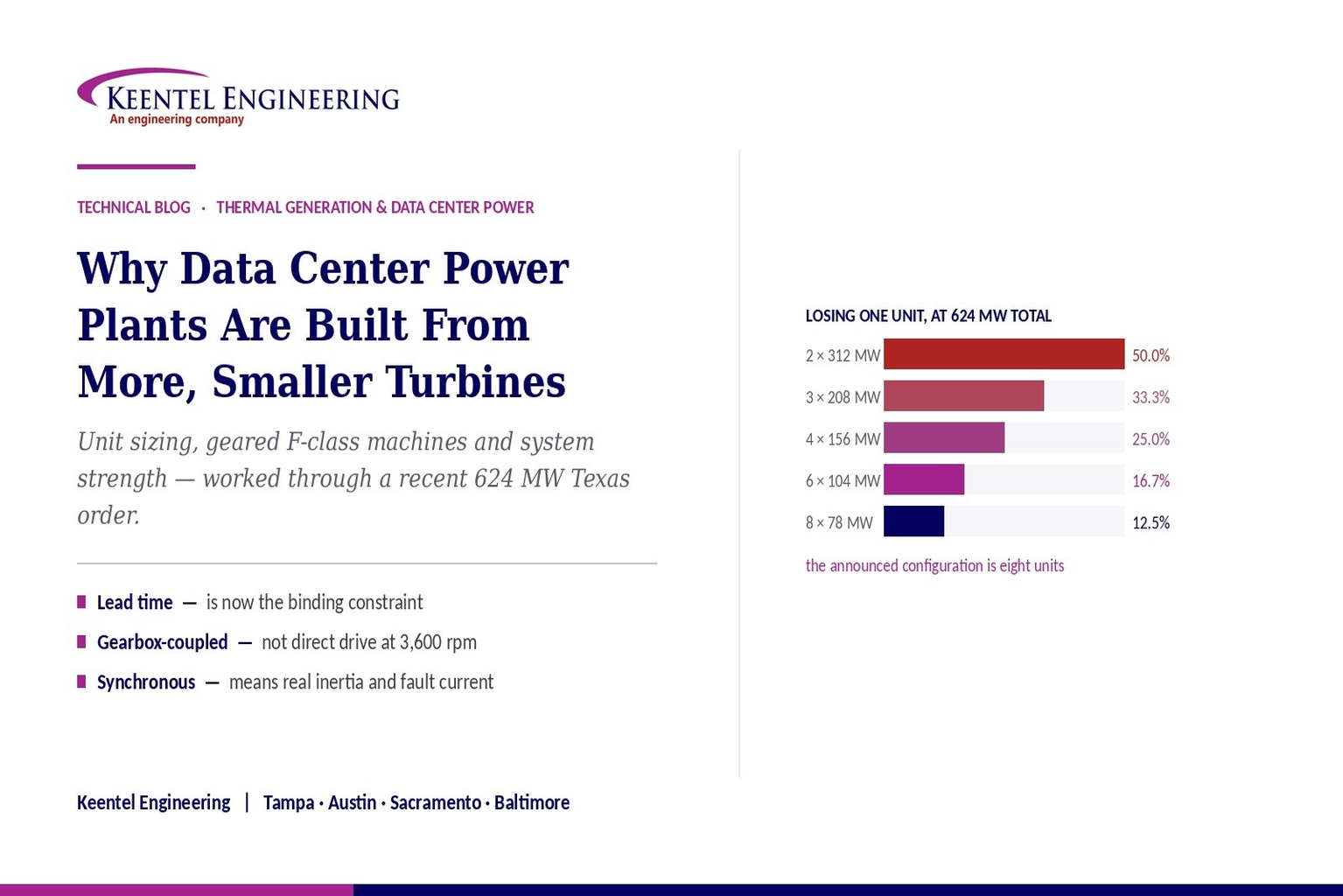
Data center power plant turbine sizing and unit configuration comparison.
By SANDIP R PATEL September 6, 2026
Learn why data center power plants use multiple smaller gas turbines, covering 624 MW capacity, redundancy, grid connection, system strength, and engineering.
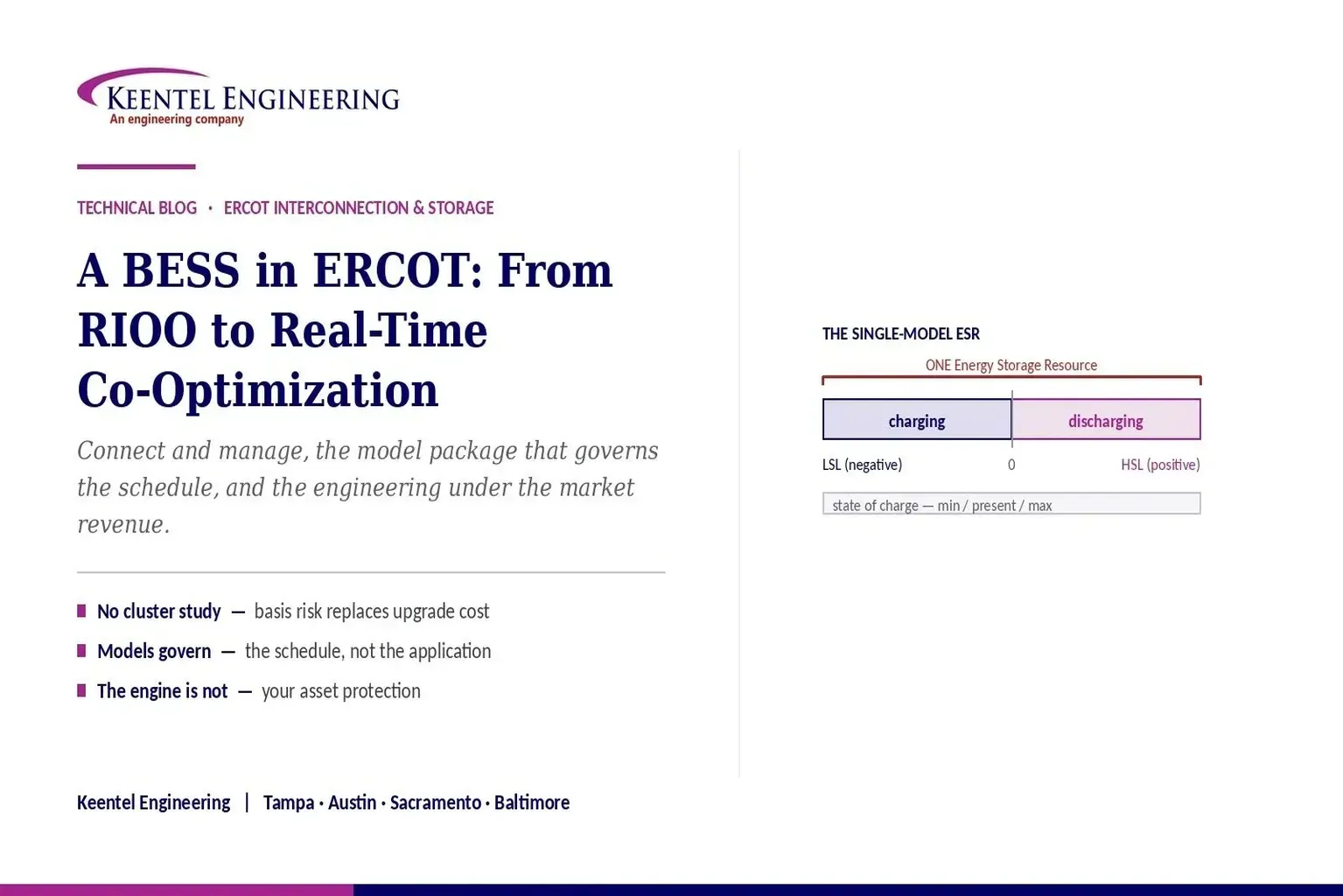
Station battery sizing design for substation DC auxiliary power system
By SANDIP R PATEL September 5, 2026
Understand ERCOT BESS interconnection requirements, including model packages, EMT studies, ride-through compliance, telemetry, and real-time co-optimization.