A Coordinated Electric System Interconnection Review—the utility’s deep-dive on technical and cost impacts of your project.
Challenge: Frequent false tripping using conventional electromechanical relays
Solution: SEL-487E integration with multi-terminal differential protection and dynamic inrush restraint
Result: 90% reduction in false trips, saving over $250,000 in downtime
Why Most Interconnection Projects Never Get Built and How to Know Your Number Before You File
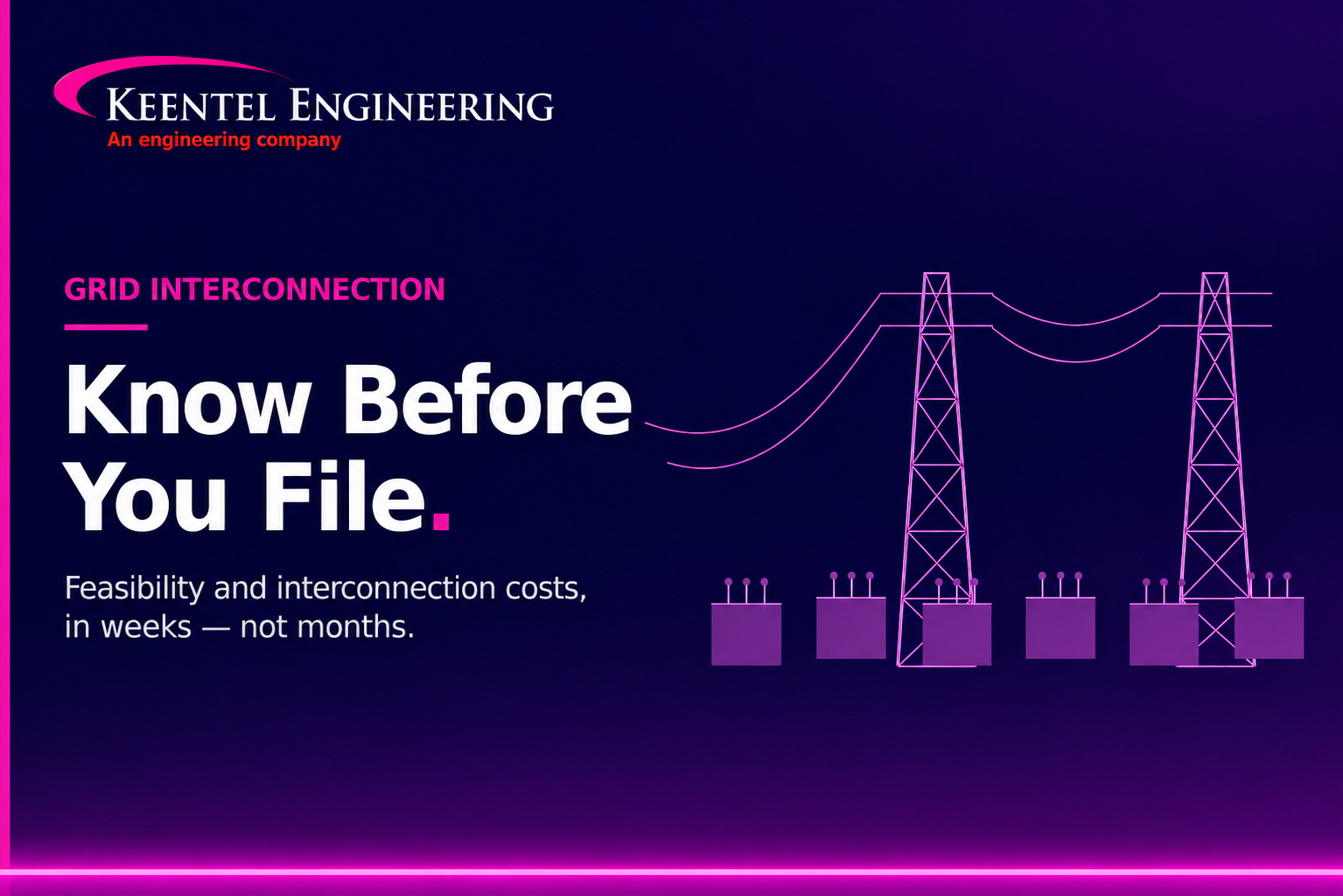
May 21, 2026 | Blog
New federal research shows interconnection costs are rising, opaque, and the single biggest reason projects walk away from the queue. Here's what the data says — and how Keentel Engineering helps developers understand their cost exposure in weeks, not months.
If you develop generation, storage, or large new loads like data centers, you already know the hardest question in the business isn't "can we build it?" It's "what will it cost to connect it — and will we find out in time to do anything about it?"
A recent research effort funded by the U.S. Department of Energy (DOE) put hard numbers to that problem. The researchers manually assembled more than 2,100 project-level interconnection cost estimates across five non-ISO balancing authorities — Bonneville Power Administration (BPA), PacifiCorp (PAC), and the three Duke utilities (Carolinas, Progress, and Florida). The picture it paints is one every developer should take seriously: interconnection has become a slow, expensive process of
cost discovery, and the projects that survive it are increasingly the ones that understood their numbers early.
Below, we summarize what the research found, what it means for your project economics, and how Keentel Engineering's feasibility and pre-application cost services are built to address exactly these pressures.
The queues are exploding and almost nothing makes it through
Interest in building is at record highs. Across the five balancing authorities studied, the active interconnection queue tripled between 2020 and 2024, reaching roughly 229 gigawatts of capacity actively seeking a connection by the end of 2024. In some regions the growth is staggering — BPA's active queue grew nearly nine-fold compared to 2017. Put differently, the capacity lined up to interconnect is about four times the combined peak load of those regions.
Yet very little of it gets built. Of the projects that requested interconnection between 2000 and 2019, only about 15% had reached commercial operation by the end of 2024. The rest stalled, suspended, or — most commonly — withdrew. In the cost sample itself, withdrawn requests outnumbered every other category.
The reason matters enormously: most projects withdraw
after they receive their cost estimates. The queue, in other words, is functioning less like a construction pipeline and more like an expensive way to find out a project doesn't pencil out.
Costs are rising and network upgrades are the reason
Interconnection costs have climbed substantially since the early 2000s. But the most important finding is which projects carry the highest costs.
Among recent (2018–2024) projects, the data show a striking spread by outcome:
- Projects that completed all studies averaged about $194/kW.
- Active projects (still in the process) averaged about $294/kW.
- Withdrawn projects averaged about $671/kW — more than three times the cost of completed ones.
That pattern is the whole story in miniature. High costs don't just correlate with withdrawal; they cause it. And the driver behind the high end is network upgrade costs — the broader transmission reinforcements triggered when a new generator creates reliability or stability problems on the grid. Across all projects, network upgrades grew from roughly 35% of total interconnection costs in the 2000s to about 85% in 2018–2024. Point-of-interconnection (POI) costs — the substation and line work right at the connection — are real, but they are no longer the part that kills deals.
The financial weight is easy to underestimate. The study notes that an interconnection cost of $500/kW translates to roughly $50 million for a 100 MW project. Even where a developer can eventually be credited back for network upgrades over time (as is common in non-ISO territories, sometimes over a period as long as 20 years), the up-front capital and carrying cost still have to be financed first.
Where you connect, what you build, and how you connect all move the number
The research breaks cost down across several dimensions, and each one is directly relevant to siting strategy:
Market structure
Recent interconnection costs in the non-ISO balancing authorities studied were higher than in the major ISOs — for completed projects, more than double. Network upgrade costs explain most of that gap.
Fuel type
Among all recent requests, natural gas projects were cheapest to interconnect (about $150/kW), while solar ($509/kW), wind ($504/kW), and storage (~$437/kW) were considerably higher — largely because they tend to sit at more remote points on the grid with weaker network capacity. Notably, the gap narrows sharply for projects that actually complete studies (solar ~$216/kW, wind ~$103/kW, storage ~$151/kW), which tells you that careful siting separates the viable projects from the ones that withdraw.
Project size
Bigger projects enjoy real economies of scale. Costs fell from about $763/kW for small (1–50 MW) projects to roughly $244/kW for very large (750+ MW) ones, driven mostly by proportional declines in network upgrade costs.
Service type
Firmer "network resource" service (NRIS) carried higher network upgrade costs than "energy resource" service (ERIS) — about $467/kW vs. $353/kW across all recent requests. Choosing the right service level for your commercial goals is a cost lever in its own right.
Location
High network upgrade costs cluster geographically — projects strung along the same constrained transmission corridors tend to share the same painful bills. Two sites a short distance apart can have radically different interconnection economics.
The real problem: you can't see any of this before you commit
Tie all of this together and a single theme emerges, one the researchers state plainly: developers usually don't have a clear sense of expected interconnection costs before they enter the queue. They use the interconnection study process itself as the way to discover those costs — a process that is slow, carries rising milestone payments, and frequently ends in withdrawal once the number finally lands.
The data transparency simply isn't there yet. The researchers describe having to hand-extract cost figures from study PDFs at an average of 20 minutes per project — roughly 700 hours of manual work — precisely because this information isn't published in any accessible, machine-readable form. If a national lab has to do that to see the picture, an individual developer staring at a single site has almost nothing to go on at the moment the decision matters most.
That is the gap Keentel Engineering exists to close.
How Keentel helps: see the number before you spend the money
Keentel Engineering's services are built around a simple principle that this research validates: the projects that succeed are the ones that understand their feasibility and cost exposure before they file an interconnection request or commit capital. We deliver that understanding up front, typically in a matter of weeks rather than the months a formal study process takes.
First-pass site feasibility screening
Before you commit to a site, our engineers assemble the factors that actually determine whether it works — nearby transmission infrastructure and its capacity, substation headroom on both the injection and withdrawal side, land ownership, competing generators already in or entering the queue, natural gas pipeline flows where relevant, and long-range energy price forecasts — onto a single, location-specific picture. Instead of chasing every lead with equal effort, you can rank sites, rule out the non-starters, and concentrate capital where there's a genuine path. Given how sharply costs cluster by location, this screening is often the difference between a $103/kW outcome and a $671/kW one.
Pre-application interconnection cost estimation
This is the heart of it. We quote likely network upgrade and POI costs before the application is filed — turning the queue from a tool of cost discovery into a decision you make with the number already in hand.
- For generation projects, our analysis is fully configurable. Our engineers set their own queue-withdrawal assumptions, adjust competing project sizes, and model different fuel types to build a realistic, defensible view of what the queue will look like when your project reaches its first phase — rather than the generic output of a standard study.
- For load projects data centers, industrial facilities, large-scale manufacturing we deliver a current-state read on exactly what the grid can absorb at a given bus today. When a site-selection decision hinges on hundreds of millions of dollars, that precision is the point.ceter
Operator-grade credibility
Our modeling runs on the same class of power-flow methodology that grid operators use for their own interconnection studies, so the cost estimates you take into a financing conversation or a site committee carry real weight.
Service-type and sizing strategy
Because the research shows NRIS/ERIS choice, project size, and location all move the cost number materially, our engineers don't just hand you a figure — we help you understand the levers, so you can structure the project to improve its odds before you're locked into a queue position.
The bottom line
The DOE-funded research is, in effect, a national-scale confirmation of what experienced developers feel intuitively: interconnection cost uncertainty is the chokepoint, and the cost of finding out too late is measured in millions of dollars and years of lost time. At a moment of unprecedented load growth and queue congestion, the advantage goes to whoever can see the grid clearly before they commit.
That's what we do. If you're evaluating a site for generation, storage, a
data center, or an industrial facility, talk to Keentel Engineering before you file — and find out whether your site works, and what it will cost to connect, in weeks rather than months.
Frequently Asked Questions
What are "interconnection costs," exactly?
They're the costs a new generator or large load must cover to connect to the transmission grid, established through a sequence of interconnection studies. They fall into two broad buckets: point-of-interconnection (POI) costs — the substation and line work right at the connection point — and network upgrade costs, which are the broader transmission reinforcements needed elsewhere on the system to accommodate your project. In recent years, network upgrades have become the dominant share of the total.
Why do so many interconnection projects withdraw?
Because cost surprises arrive late. Most developers enter the queue without a clear estimate of what interconnection will cost, then receive a figure partway through the study process. When that figure is high — and for withdrawn projects it has averaged around $671/kW in recent non-ISO data — the project no longer pencils out, and the developer walks away after having already spent time and milestone fees. DOE-funded research found only about 15% of projects requesting interconnection from 2000–2019 were operating by the end of 2024.
What's driving interconnection costs higher?
Network upgrade costs, overwhelmingly. Their share of total interconnection costs rose from roughly 35% in the 2000s to about 85% in 2018–2024. POI costs still matter, especially for smaller projects, but the swings that determine whether a deal survives are almost always on the network side.
Are costs really higher outside the big ISOs?
In the non-ISO regions covered by the research, yes. Recent costs in these balancing authorities ran higher than in comparable ISOs across every request status — more than double for completed projects — with network upgrade costs explaining most of the difference. The study also notes developers in these regions appear to have a higher willingness to pay, partly because of how network upgrade costs are reimbursed over time.
Does my fuel type affect interconnection cost?
It does. Among all recent requests, natural gas was cheapest to interconnect (~$150/kW), while solar, wind, and storage were higher (roughly $437–$509/kW), largely because renewables and storage often sit at more remote, weaker points on the grid. Importantly, the gap narrows a lot for projects that complete the process — which underscores how much careful siting matters
What's the difference between NRIS and ERIS — and why does it matter for cost?
Network Resource Interconnection Service (NRIS) gives your project firmer, deliverability-style access comparable to existing resources, and it can trigger more transmission upgrades. Energy Resource Interconnection Service (ERIS) lets you deliver energy on an "as-available" basis using existing capacity, generally at lower network upgrade cost. In recent non-ISO data, NRIS network costs ran higher than ERIS (about $467/kW vs. $353/kW across all requests). The right choice depends on your commercial goals — and it's a genuine cost lever worth evaluating before you file.
Do bigger projects cost more to interconnect?
More in absolute dollars, but less per kilowatt. Costs fell from about $763/kW for small (1–50 MW) projects to roughly $244/kW for very large (750+ MW) ones — economies of scale driven mostly by network upgrade costs spreading across more capacity.
If network upgrade costs can be refunded later, why worry about them?
Because you still have to finance them up front. In non-ISO territories, upgrade costs that provide system-wide benefits are often credited back over time — sometimes over as long as 20 years, with interest — but only after the project reaches commercial operation. A $500/kW cost on a 100 MW project is about $50 million you must carry before any reimbursement begins, and the interest you earn back may not cover your capital carrying costs.
Can interconnection costs actually be estimated before I file?
Yes — that's precisely what Keentel Engineering provides. We produce a pre-application estimate of likely POI and network upgrade costs, configured to your project's specifics and the realistic state of the queue, before you enter the formal process. The DOE-funded research shows this information generally isn't available to developers today; our service is built to close that gap.
How is Keentel's estimate different from a formal interconnection study?
A formal study is the official, milestone-gated process run through the transmission provider — accurate, but slow, costly, and only available once you're committed and in the queue. Keentel's pre-application estimate is a fast, decision-support analysis you can use beforehand to decide whether a site is worth pursuing and how to structure the request. It runs on the same class of power-flow methodology grid operators use, so it's credible enough to bring into financing and site-selection discussions.
How long does Keentel's analysis take?
Typically weeks, not months. A first-pass feasibility read can rank and screen candidate sites quickly; a defensible pre-application cost estimate follows when you're ready to go deeper on a chosen site.
What types of projects does Keentel work with?
Generation and storage developers, and large-load developers — data centers, industrial facilities, and large-scale manufacturing — anyone who needs to understand grid feasibility and interconnection cost exposure before committing capital or filing an interconnection request.
Ready to find out if your site works?
Contact Keentel Engineering to scope a feasibility screen or a pre-application cost estimate for your next site — and know your number before you file.
Q. How does Keentel protect client confidentiality in published work?
Every public deliverable is written in our own voice with client names, locations, service territories, and proprietary data removed or generalized. The case studies in this paper are representative and anonymized — they describe our engineering approach, not any identifiable client program.

About the Author:
Sandip "Sonny" R. Patel, P.E.
IEEE Senior Member · Founder & CEO, Keentel Engineering
In 1995, Sonny Patel earned his Electrical Engineering degree from the University of Illinois. But degrees don't build legacies — action does.
For three decades, he has worked the power industry from every side of the table: 16 years as a utility engineer at Exelon/Commonwealth Edison; generation leadership across hydroelectric, industrial steam turbine, and a 9 GW renewable fleet; NERC Regional Entity Senior Compliance Engineer and Audit Team Lead, auditing some of the nation's largest utilities; and testing and commissioning lead on equipment up to 765 kV — the very top of the North American grid.Utility. Generator. Regulator. Consultant. Few engineers have seen all four seats. Fewer still have sat in them.
His experience spans nuclear, hydro, conventional generation, renewables, oil and gas, mining — and today's data centers, where he is authoring a three-book series on data center design. He is a Licensed Professional Engineer in six states and a Licensed Electrical Contractor in Florida (Unlimited EC) — he doesn't just design the work; he's qualified to stand behind its execution.Today, as Founder and CEO of Keentel Engineering, Sonny leads a nationwide team of engineers delivering substation design, power system studies, NERC compliance, and commissioning — done right, coast to coast.Three decades. Every side of the table. One standard: accountable engineering.
Services

Let's Discuss Your Project
Let's book a call to discuss your electrical engineering project that we can help you with.
About the Author:
Sandip "Sonny" R. Patel, P.E.
IEEE Senior Member · Founder & CEO, Keentel Engineering
In 1995, Sonny Patel earned his Electrical Engineering degree from the University of Illinois. But degrees don't build legacies — action does.
For three decades, he has worked the power industry from every side of the table: 16 years as a utility engineer at Exelon/Commonwealth Edison; generation leadership across hydroelectric, industrial steam turbine, and a 9 GW renewable fleet; NERC Regional Entity Senior Compliance Engineer and Audit Team Lead, auditing some of the nation's largest utilities; and testing and commissioning lead on equipment up to 765 kV — the very top of the North American grid.
Utility. Generator. Regulator. Consultant. Few engineers have seen all four seats. Fewer still have sat in them.
His experience spans nuclear, hydro, conventional generation, renewables, oil and gas, mining — and today's data centers, where he is authoring a three-book series on data center design. He is a Licensed Professional Engineer in six states and a Licensed Electrical Contractor in Florida (Unlimited EC) — he doesn't just design the work; he's qualified to stand behind its execution.
Today, as Founder and CEO of Keentel Engineering, Sonny leads a nationwide team of engineers delivering substation design, power system studies, NERC compliance, and commissioning — done right, coast to coast.Three decades. Every side of the table. One standard: accountable engineering.
Leave a Comment
Thank you for contacting us.
We will get back to you as soon as possible.
We will get back to you as soon as possible.
Oops, there was an error sending your message.
Please try again later.
Please try again later.
Related Posts
By SANDIP R PATEL
•
September 18, 2026
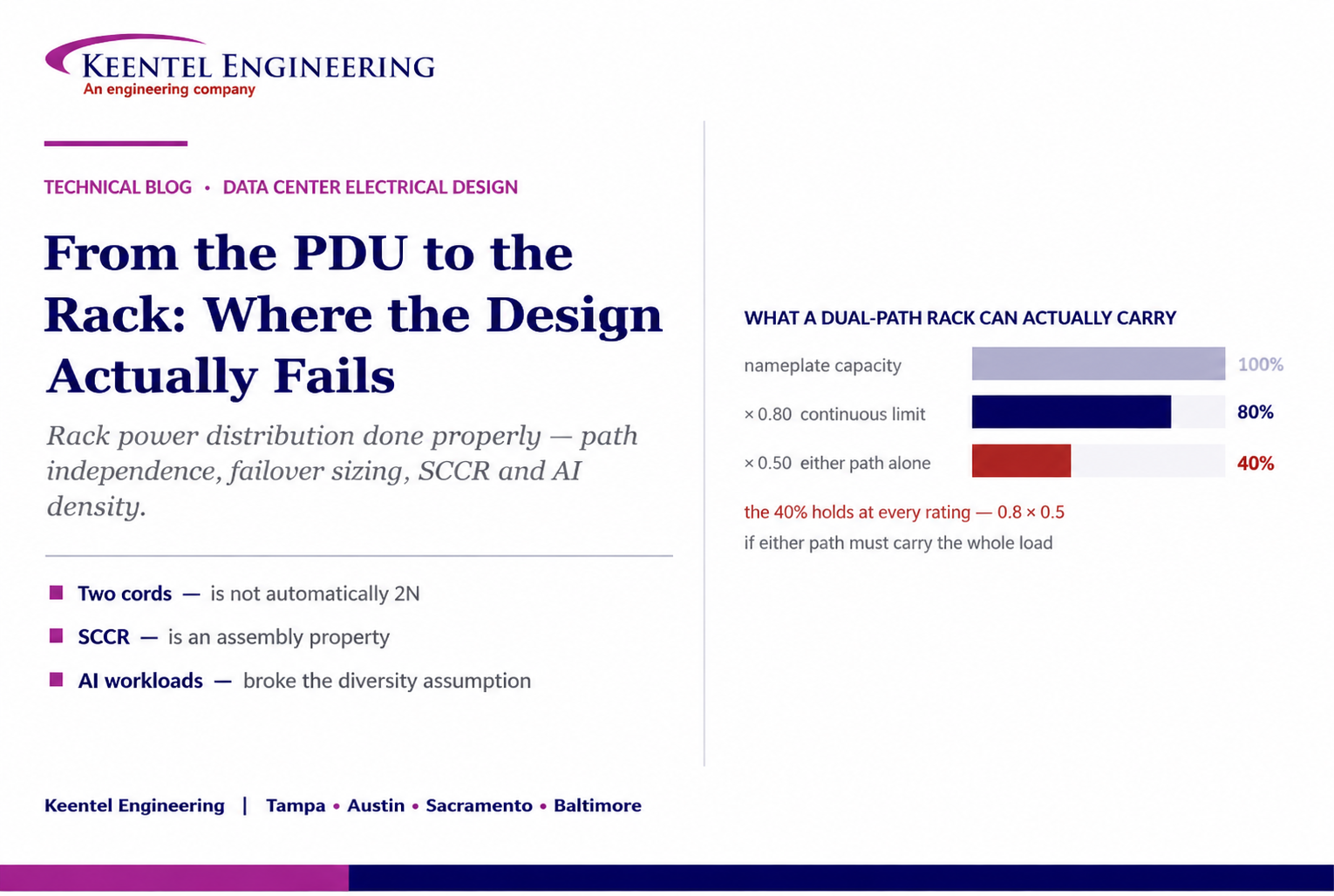
Learn how to size rack power distribution, PDU and RPP systems for continuous loads, A/B redundancy, failover capacity, SCCR and high-density AI data centers.
By team gusto
•
September 18, 2026
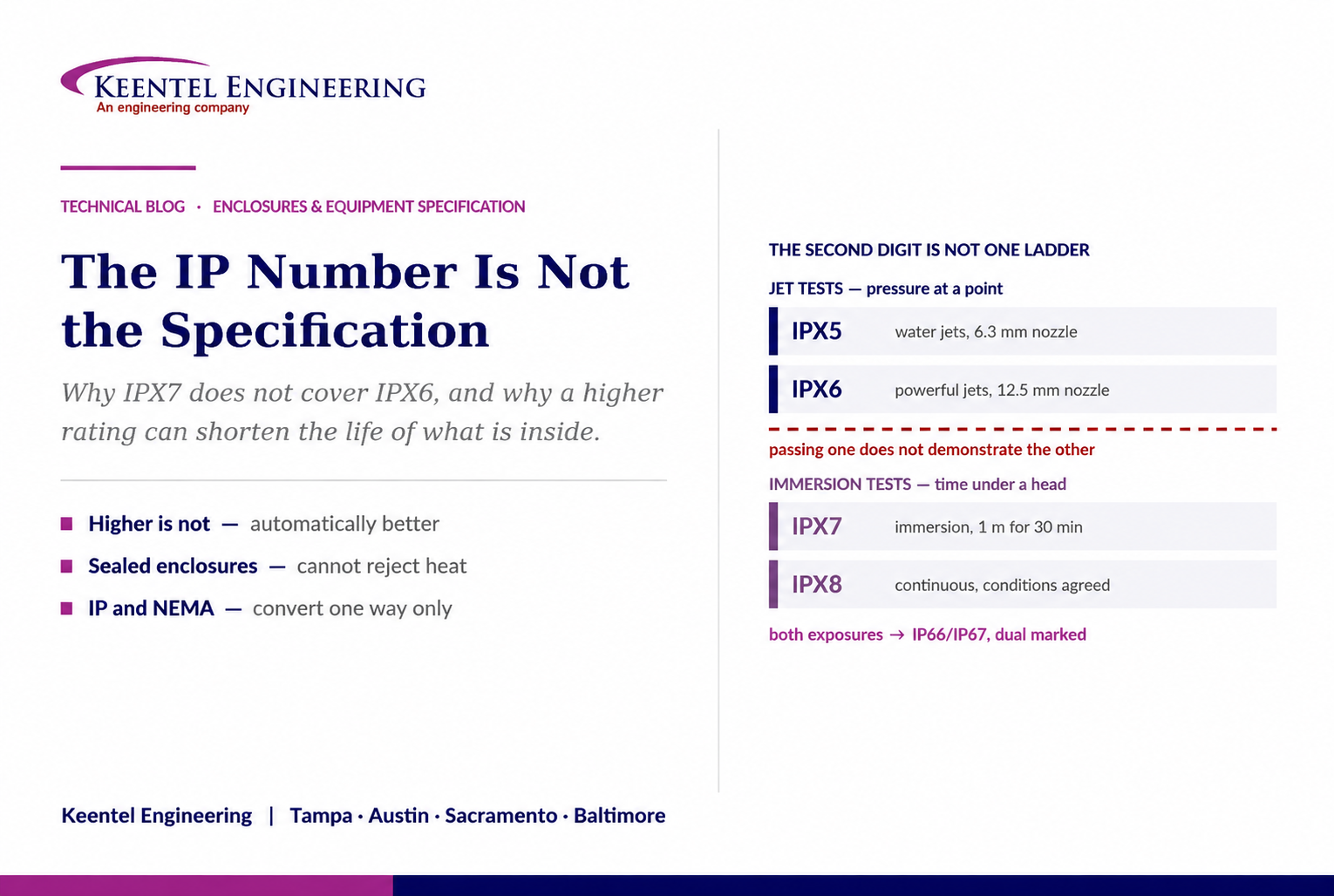
Learn why IP ratings like IP66, IP67, and IP68 do not tell the full story. Understand enclosure selection, NEMA differences, heat, corrosion, and protection.
By SANDIP R PATEL
•
September 9, 2026
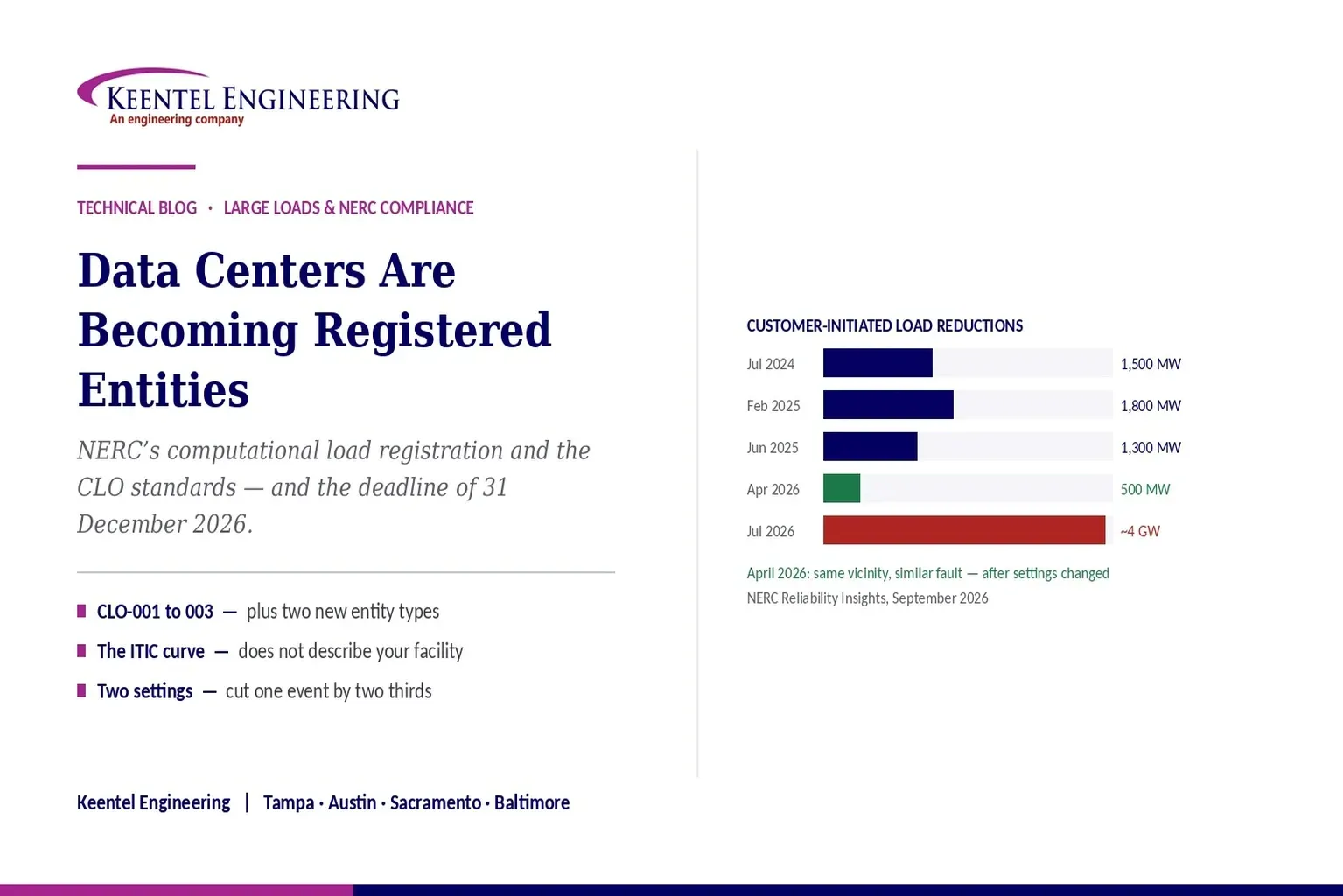
Learn how NERC computational load registration impacts data centers, CLO standards, ride-through requirements, modeling, and grid reliability compliance.
By SANDIP R PATEL
•
September 7, 2026
Learn NEC 2026 load calculations, Article 120 changes, the 2 VA rule, EV charging requirements, service sizing, and dwelling calculation methods.
By SANDIP R PATEL
•
September 7, 2026
Learn five essential NEC calculations covering conduit fill, voltage drop, ampacity, motor circuits, and transformer protection with engineering examples.
By SANDIP R PATEL
•
September 7, 2026
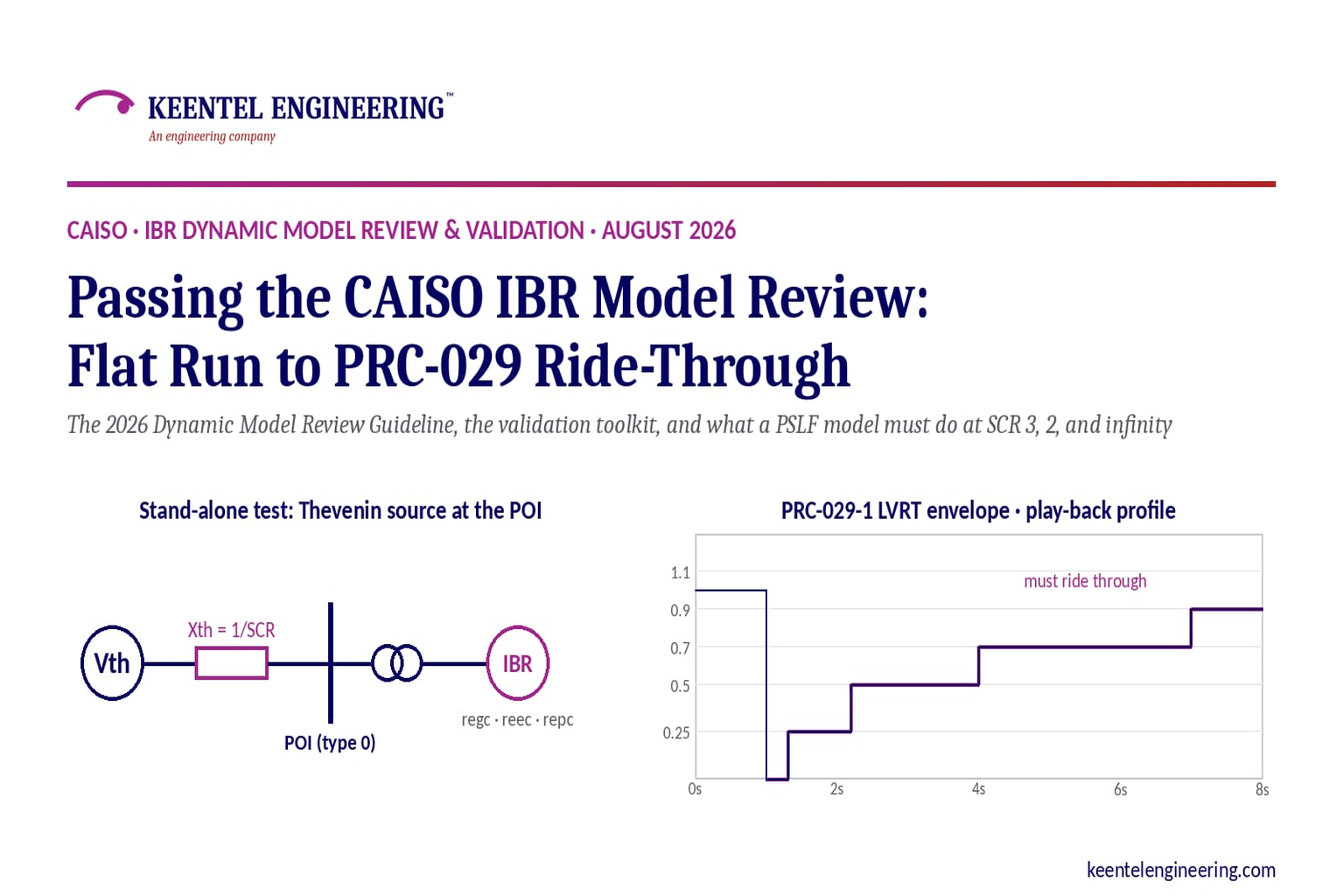
Learn how CAISO reviews IBR models using PSLF validation, PRC-029-1 ride-through requirements, WECC models, and inverter resource compliance testing.
By SANDIP R PATEL
•
September 7, 2026
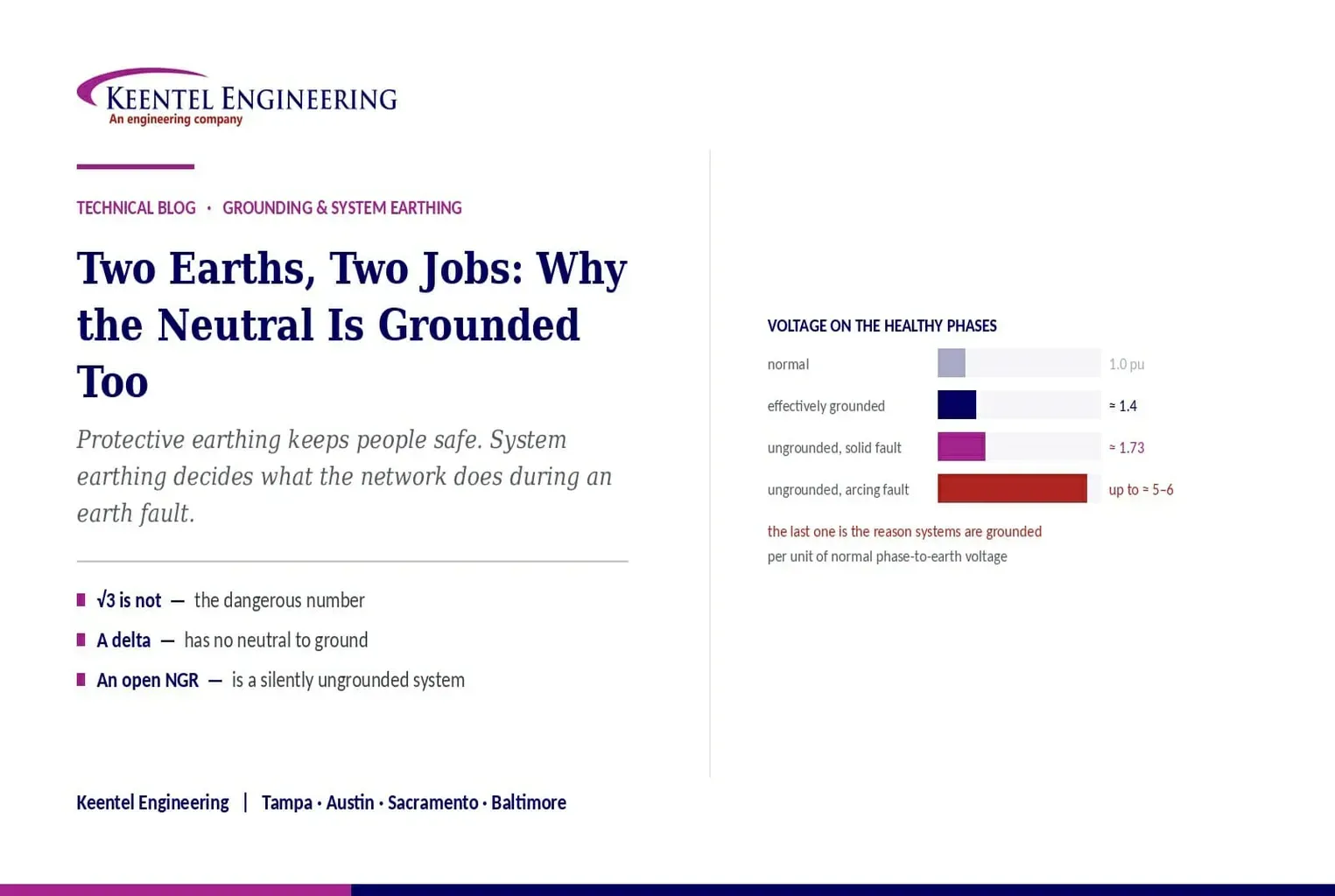
Understand system earthing and protective earthing, neutral grounding methods, effective grounding, ground grids, and insulation coordination for power systems
By SANDIP R PATEL
•
September 6, 2026
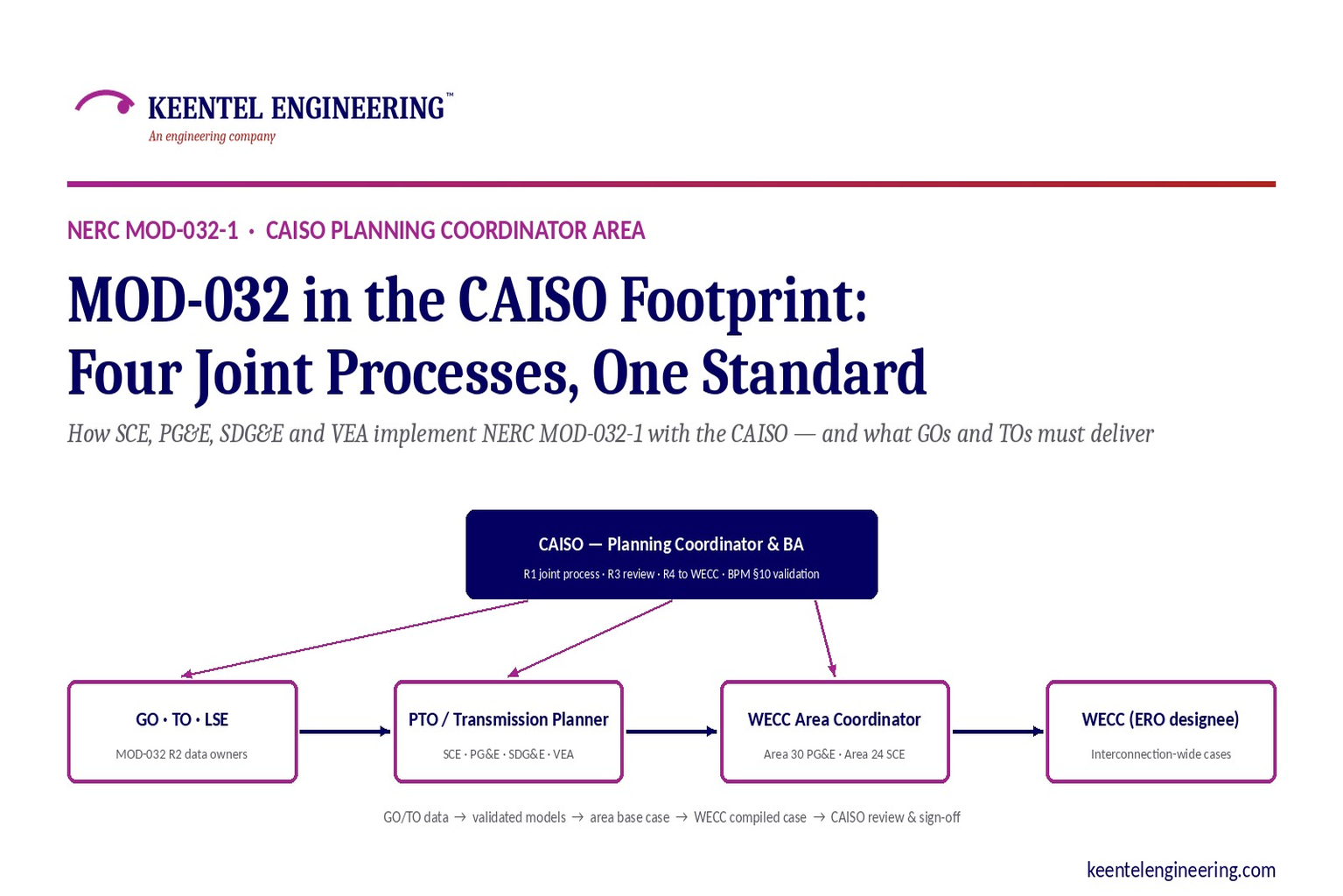
Learn how NERC MOD-032-1 applies across CAISO, SCE, PG&E, VEA and SDG&E, including generator data, PSLF models, EMT requirements and WECC submissions.
By SANDIP R PATEL
•
September 6, 2026
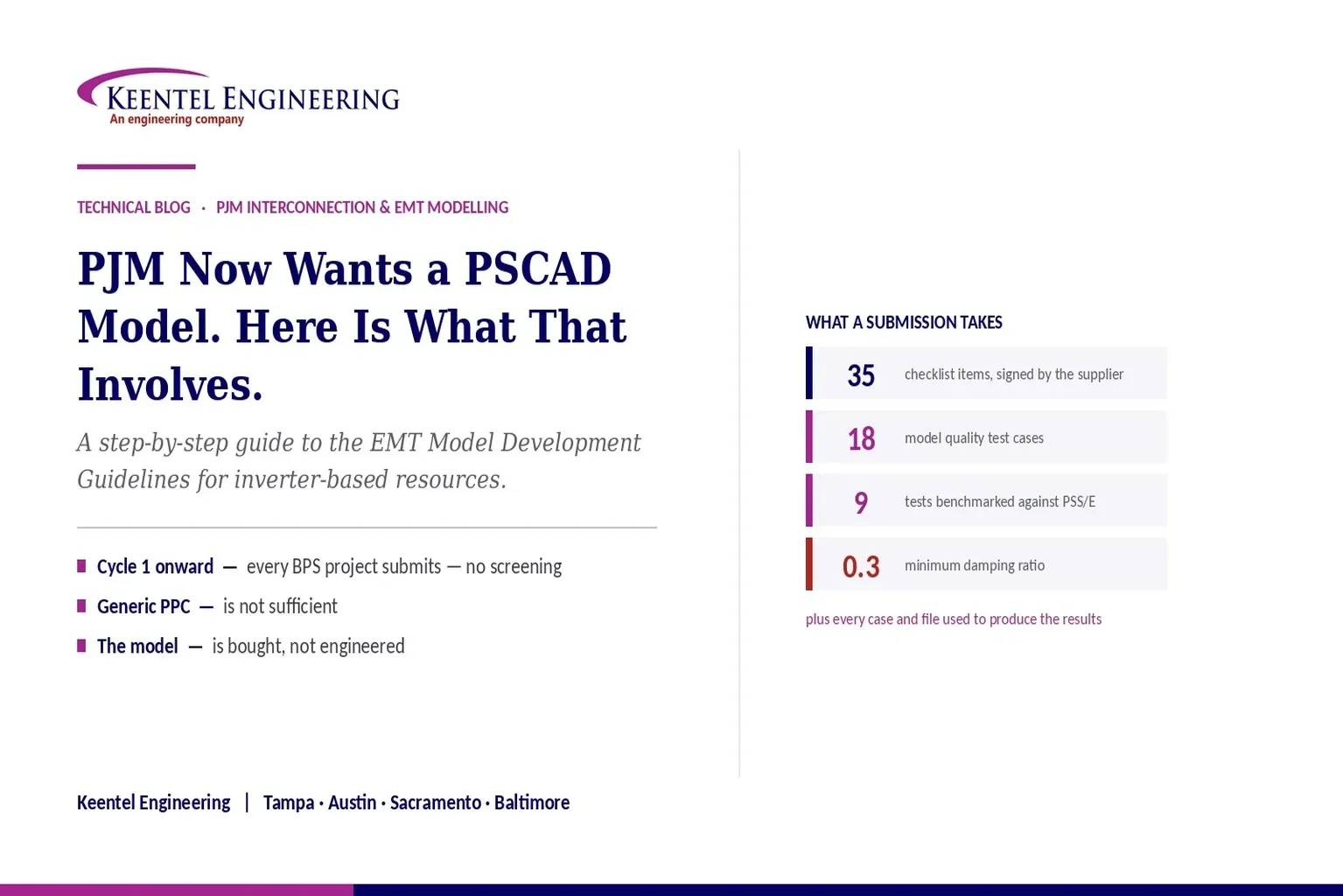
Learn PJM PSCAD model requirements for inverter-based resources, EMT testing, PSS/E benchmarking, ride-through studies, and compliance submissions