A Coordinated Electric System Interconnection Review—the utility’s deep-dive on technical and cost impacts of your project.
Challenge: Frequent false tripping using conventional electromechanical relays
Solution: SEL-487E integration with multi-terminal differential protection and dynamic inrush restraint
Result: 90% reduction in false trips, saving over $250,000 in downtime
Electromagnetic Transient (EMT) Analysis in Power System Operations: A Technical Deep Dive by Keentel Engineering
August 26, 2025 | Blog
Introduction
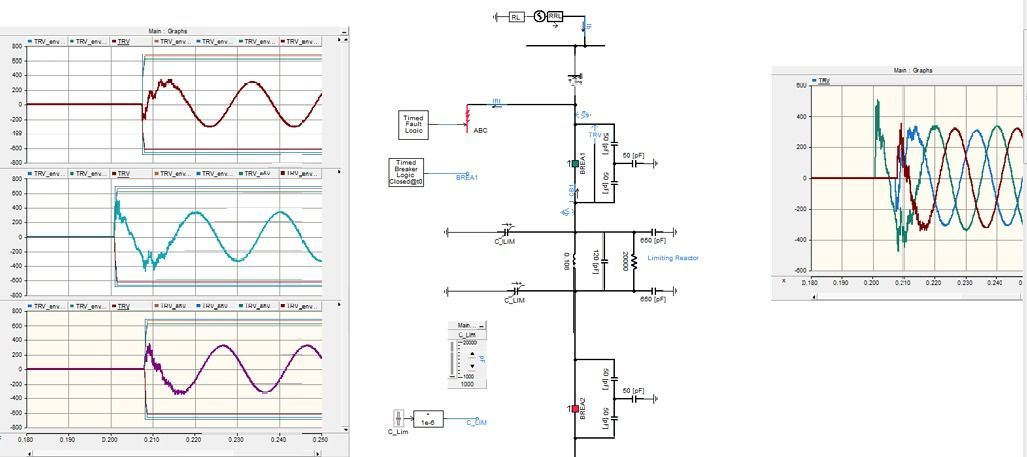
Electromagnetic transient (EMT) analysis has evolved from being a niche tool in system planning to becoming a critical enabler of reliable operations in modern grids.
With the rise of inverter-based resources (IBRs) — such as solar PV, wind, and battery energy storage systems (BESS) — the grid now faces dynamic behaviors that traditional phasor-domain (RMS) simulations cannot fully capture. This blog explores EMT analysis in operational planning and control, drawing insights from recent industry practices and advanced modeling methodologies.
At Keentel Engineering, we align our methodologies with evolving standards such as IEEE Std 2842-2022 to ensure reliable and future-ready EMT analysis in power system operations.
1. Why EMT Analysis is Needed in Modern Power Systems
- Traditional vs. Modern Systems
Historically, synchronous generators dominated power systems, allowing RMS tools to be sufficient. Today, IBRs introduce fast dynamics (sub-cycle responses, harmonics, and control interactions) that require EMT-level resolution. - Limitations of RMS Studies
RMS cannot capture high-frequency switching, converter protection sequences, and sub-synchronous interactions. - Operational Risks without EMT
- Hidden instabilities in weak grids
- Fault recovery issues in IBR-dominated systems
- Misoperation of protection schemes
Learn about: NERC PRC-002-5 and PRC-028-1 event analysis
These operational requirements are also supported by frameworks like IEEE 2842-2022, which emphasize advanced modeling and system reliability in modern grids.
2. Core Concepts of EMT Analysis
- Time Resolution: EMT simulations capture waveforms at microsecond resolution.
- Control Interaction Modeling: Accurately simulates converter controllers, PLLs, and protection systems.
- Scenarios Studied:
- Fault ride-through of IBRs
- HVDC and FACTS device interactions
- Protection relay performance
- Black-start and restoration
3. EMT Tools and Platforms
Real-time EMT: Hardware-in-the-loop (HIL) enables system operators to validate control and protection strategies under realistic time constraints. Utilities increasingly rely on focused EMT model validation services to verify inverter and controller performance. These platforms also support full-system evaluations where solar, wind, and HVDC IBRs are simulated together in one real-time environment to study potential interaction risks before commissioning.
See our
POI Interconnection Support Services for modeling across utility tie-ins and transmission planning.
4. EMT Analysis in Grid Operations
Traditionally used in planning; now embedded into real-time operations for IBR-heavy grids. Operators depend on EMT analysis to assess fast converter dynamics and protection margins during critical system events. The increased reliance on EMT reflects a broader integration of these studies into operational workflows as grids transition toward higher levels of inverter-based resources.
EMT analysis plays a critical role in modern grid operations by enabling operators to detect fast transient issues that are not visible in traditional simulation approaches.
To implement these advanced operational studies, explore our
power system
studies services
5. EMT Modeling of Inverter-Based Resources
Detailed EMT models include vendor-provided black-box models or user-defined models with switching-level detail. These models are now incorporated into structured EMT model validation services to ensure controller behavior aligns with field measurements. This modeling approach also enables combined studies involving solar, wind, and HVDC assets within a single EMT environment, improving the accuracy of interaction assessments.
Developing an accurate inverter-based resource EMT model is essential for capturing fast control dynamics and ensuring stable system performance under transient conditions.
Detailed EMT Models: Vendor-provided black-box models or user-defined models with switching-level detail.
Challenges:
- Confidentiality of control algorithms
- Computational burden of large-scale systems
Solutions:
- Reduced-order EMT models for system-level studies
- Model validation against field measurements
Need help with generator model validation? Explore our MOD-026 & MOD-027 support services
6. Case Studies and Applications
Weak Grid Integration: EMT simulations reveal voltage instability risks undetected in RMS.
System Protection: EMT shows relay misoperations under IBR-induced harmonics.
Black-Start with BESS: EMT validates BESS response to energizing a dead bus, capturing inverter controls accurately.
HVDC/FACTS Integration: EMT ensures coordination between multiple converter-based technologies.
7. Challenges and Future Trends
Scalability: EMT simulations remain computationally heavy for large systems.
Hybrid Cloud Platforms: Cloud-based EMT simulations are emerging.
AI/ML in EMT: Machine learning techniques help reduce computational burden and predict transient responses.
Standardization: IEEE and NERC are drafting guidelines for EMT usage in operations.
Case Study 1: Anonymous Renewable Integration Project
A large renewable developer sought to integrate 1.2 GW of wind and solar capacity into a weak grid region. RMS studies suggested stability, but EMT analysis revealed:
- Phase-locked loop (PLL) oscillations under low SCR conditions.
- Inverter tripping during three-phase faults.
- Harmonic resonance at the 7th harmonic.
Keentel’s EMT Approach:
- Developed reduced-order EMT models validated with vendor data.
- Performed contingency studies including low-voltage ride-through.
- Proposed tuning of inverter PLL bandwidth and installation of harmonic filters.
Result: The project successfully achieved grid code compliance and avoided costly redesigns.
Case Study 2: Confidential Utility Project – HVDC and FACTS Integration
A North American utility planned to expand its HVDC tie-lines and install multiple STATCOMs for grid support. RMS simulations underestimated interaction risks. EMT revealed:
- Commutation failures in HVDC under certain contingencies.
- Controller instability when two STATCOMs operated in parallel.
Keentel’s EMT Approach:
- Co-simulation between PSS®E (RMS) and PSCAD (EMT).
- Verified HVDC restart sequences and STATCOM damping controls.
- Conducted HIL testing of actual controller firmware.
Result: The utility optimized control settings and ensured system stability across multiple HVDC/FACTS installations.
Case Study 3: Anonymous Battery Energy Storage Black-Start Project
A transmission operator evaluated a 200 MW BESS system for black-start capability. EMT was required to validate:
- Energization transients of the dead bus.
- Frequency stability during load pickup.
- Converter overcurrent protection timing.
Keentel’s EMT Approach:
- Modeled grid-forming inverters in PSCAD.
- Validated response against manufacturer’s test data.
- Coordinated inverter controls with system restoration sequence.
Result: The EMT study provided operational assurance, and the BESS was certified for black-start capability.
Case Study 4: Confidential Distribution-Level Microgrid
A commercial-industrial customer developed a microgrid with solar PV, diesel backup, and BESS. EMT analysis revealed:
- Harmonic interactions between PV and BESS in islanded mode.
- False trips of feeder protection relays due to fast inverter dynamics.
Keentel’s EMT Approach:
- Simulated microgrid transitions (grid-to-island, island-to-grid).
- Validated relay coordination in EMT domain.
- Proposed inverter control tuning and relay setting adjustments.
Result: The microgrid operated seamlessly in both grid-connected and islanded conditions.
Conclusions
Electromagnetic transient (EMT) analysis is no longer optional — it is foundational for maintaining grid stability, reliability, and compliance in the era of renewable energy integration. As the power grid rapidly evolves with the addition of inverter-based resources (IBRs) such as solar PV, wind turbines, and battery energy storage systems (BESS), traditional simulation methods fall short in capturing the dynamic, high-frequency behaviors of these assets.
At Keentel Engineering, we leverage advanced EMT methodologies and industry-leading platforms like PSCAD, RTDS, and EMTP-RV to support utilities, independent system operators (ISOs), and renewable developers. Our team ensures that your planning, protection, and operational strategies are validated under real-world transient conditions—improving resilience, supporting black-start scenarios, and ensuring NERC compliance even in the most challenging grid environments.
Explore our full suite of NERC Compliance Engineering Services to see how we can help your facility remain audit-ready, technically sound, and operationally reliable.
Frequently Asked Questions – EMT Analysis
1. What is the difference between EMT and RMS simulation?
RMS assumes sinusoidal steady-state behavior and captures dynamics in cycles. EMT resolves instantaneous voltages and currents at microsecond levels, making it essential for IBRs, HVDC, and fast protection systems.
2. Why is EMT analysis critical for inverter-based resources?
IBRs operate with power electronic converters whose fast switching and control dynamics cannot be represented in RMS simulations. EMT is required to assess fault ride-through, grid-following vs. grid-forming controls, and harmonic interactions.
3. How does EMT modeling help in weak grids?
EMT reveals oscillations, voltage collapse risks, and PLL instabilities in weak grids, which RMS tools often mask.
4. What role does EMT play in protection studies?
EMT simulates relay operation during fast transients, verifying that schemes like distance, differential, or overcurrent relays operate correctly under IBR influence.
5. How are EMT models validated?
Through field measurement comparison, HIL testing, and benchmarked vendor-supplied data.
6. Can EMT be used in real-time operations?
Yes. Real-time digital simulators (RTDS, Hypersim) allow control rooms to test contingencies within operational timelines.
7. What are reduced-order EMT models?
Simplified representations of converters that retain essential control dynamics while reducing computational load.
8. What is the role of HIL in EMT studies?
Hardware-in-the-loop testing integrates real controllers with simulated networks, ensuring accurate validation of equipment responses.
9. What is EMT co-simulation?
A hybrid approach where RMS covers the bulk system and EMT covers critical subsystems (e.g., an HVDC terminal).
10. How do EMT studies support black-start planning?
EMT captures inverter synchronization, energization transients, and control recovery, which RMS cannot.
11. What are the computational challenges of EMT?
EMT requires very small time steps (10–50 µs), making large-scale system simulations computationally intensive.
12. How do IBR controls impact EMT studies?
Controls like PLL, droop, and current limiters introduce nonlinearities that only EMT captures.
13. What is the difference between grid-forming and grid-following in EMT?
Grid-following inverters rely on PLL-based synchronization, while grid-forming inverters establish voltage/frequency reference — EMT shows their stability limits.
14. Why are EMT studies important for HVDC integration?
EMT verifies commutation failures, control interactions, and fault recovery that RMS overlooks.
15. Can EMT support remedial action schemes (RAS)?
Yes. EMT validates fast-switching RAS logic under real-world transients.
16. How does EMT handle harmonics?
EMT captures harmonic distortion caused by converters, validating compliance with IEEE 519 and grid codes.
17. What standards guide EMT use?
IEEE Std 2800™-2022, NERC PRC standards, and evolving ISO/TSO EMT guidelines.
18. What are typical EMT tools?
PSCAD, EMTP-RV, RTDS, Hypersim, MATLAB/Simulink.
19. How do EMT studies integrate with EMS?
Advanced EMS platforms include EMT co-simulation for operator situational awareness.
20. What future trends exist for EMT in operations?
Cloud-enabled EMT, AI-enhanced transient analysis, and standardized vendor EMT model libraries.
Master EMT Analysis with Keentel Engineering’s Advanced Simulation Expertise
As inverter-based resources (IBRs) like solar, wind, and battery energy storage systems reshape the grid, electromagnetic transient (EMT) analysis has become essential for real-time operational reliability. Traditional RMS tools alone can’t capture the fast-switching dynamics, harmonics, and control interactions introduced by modern power electronics. Utilities, system operators, and developers now require EMT simulations to prevent misoperations, ensure protection coordination, and validate ride-through performance.
Keentel Engineering supports utilities and developers with end-to-end EMT solutions:
- Development of detailed EMT models for solar, wind, BESS, and HVDC systems
- Co-simulation with RMS tools like PSS®E, DIgSILENT, and PSCAD for full-spectrum coverage
- Real-time simulation and hardware-in-the-loop (HIL) testing for protection and control validation
- System-wide studies to mitigate hidden risks in weak grids, black-start scenarios, and FACTS integration
Explore how we help future-proof your system planning and operations with expert modeling, simulation, and testing support.

About the Author:
Sandip "Sonny" R. Patel, P.E.
IEEE Senior Member · Founder & CEO, Keentel Engineering
In 1995, Sonny Patel earned his Electrical Engineering degree from the University of Illinois. But degrees don't build legacies — action does.
For three decades, he has worked the power industry from every side of the table: 16 years as a utility engineer at Exelon/Commonwealth Edison; generation leadership across hydroelectric, industrial steam turbine, and a 9 GW renewable fleet; NERC Regional Entity Senior Compliance Engineer and Audit Team Lead, auditing some of the nation's largest utilities; and testing and commissioning lead on equipment up to 765 kV — the very top of the North American grid.Utility. Generator. Regulator. Consultant. Few engineers have seen all four seats. Fewer still have sat in them.
His experience spans nuclear, hydro, conventional generation, renewables, oil and gas, mining — and today's data centers, where he is authoring a three-book series on data center design. He is a Licensed Professional Engineer in six states and a Licensed Electrical Contractor in Florida (Unlimited EC) — he doesn't just design the work; he's qualified to stand behind its execution.Today, as Founder and CEO of Keentel Engineering, Sonny leads a nationwide team of engineers delivering substation design, power system studies, NERC compliance, and commissioning — done right, coast to coast.Three decades. Every side of the table. One standard: accountable engineering.
Services

Let's Discuss Your Project
Let's book a call to discuss your electrical engineering project that we can help you with.
About the Author:
Sandip "Sonny" R. Patel, P.E.
IEEE Senior Member · Founder & CEO, Keentel Engineering
In 1995, Sonny Patel earned his Electrical Engineering degree from the University of Illinois. But degrees don't build legacies — action does.
For three decades, he has worked the power industry from every side of the table: 16 years as a utility engineer at Exelon/Commonwealth Edison; generation leadership across hydroelectric, industrial steam turbine, and a 9 GW renewable fleet; NERC Regional Entity Senior Compliance Engineer and Audit Team Lead, auditing some of the nation's largest utilities; and testing and commissioning lead on equipment up to 765 kV — the very top of the North American grid.
Utility. Generator. Regulator. Consultant. Few engineers have seen all four seats. Fewer still have sat in them.
His experience spans nuclear, hydro, conventional generation, renewables, oil and gas, mining — and today's data centers, where he is authoring a three-book series on data center design. He is a Licensed Professional Engineer in six states and a Licensed Electrical Contractor in Florida (Unlimited EC) — he doesn't just design the work; he's qualified to stand behind its execution.
Today, as Founder and CEO of Keentel Engineering, Sonny leads a nationwide team of engineers delivering substation design, power system studies, NERC compliance, and commissioning — done right, coast to coast.Three decades. Every side of the table. One standard: accountable engineering.
Leave a Comment
Thank you for contacting us.
We will get back to you as soon as possible.
We will get back to you as soon as possible.
Oops, there was an error sending your message.
Please try again later.
Please try again later.
Related Posts
By SANDIP R PATEL
•
October 3, 2026
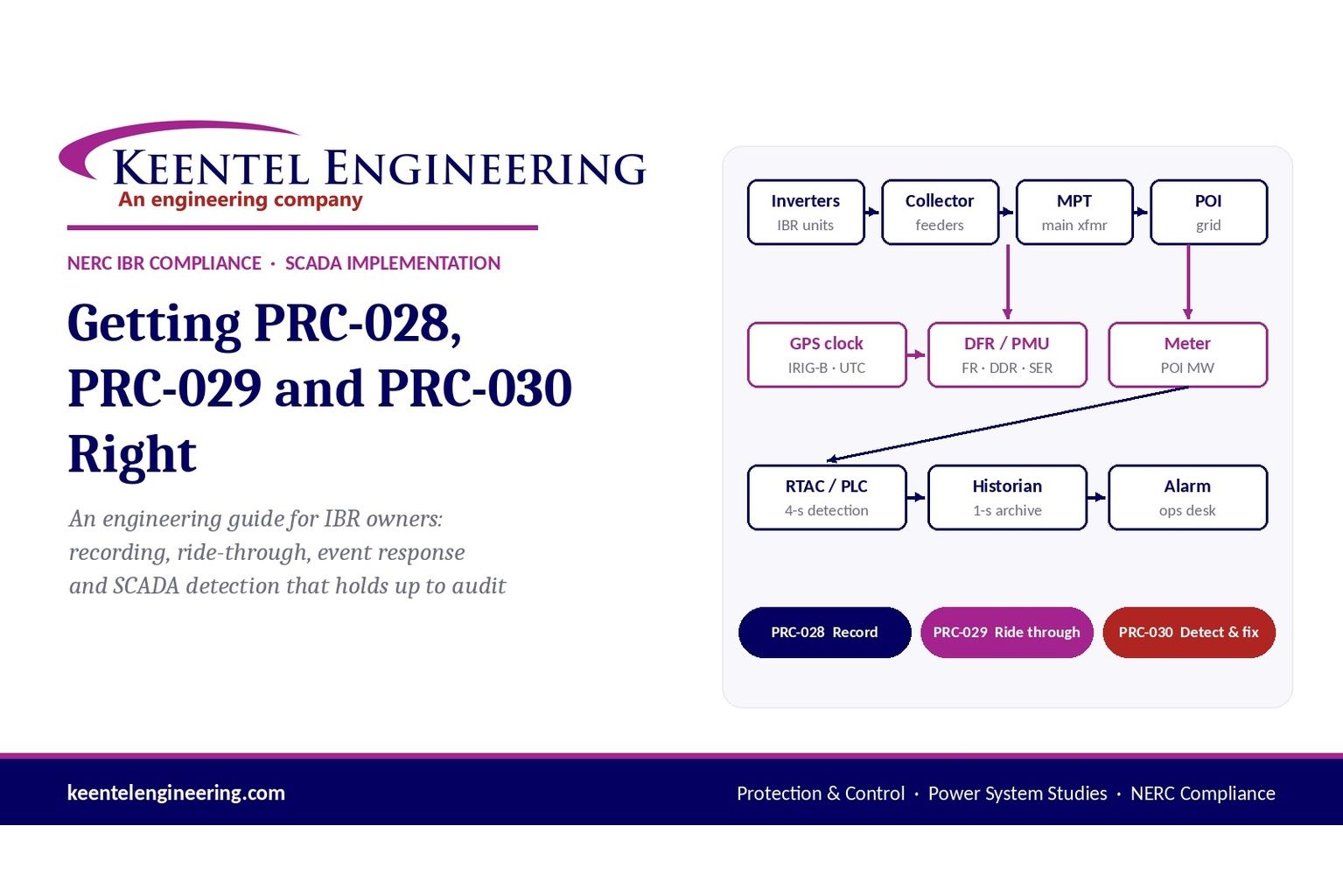
Engineering guide to PRC-028 disturbance recording, PRC-029 ride-through and PRC-030 event detection for inverter-based resources.
By SANDIP R PATEL
•
October 3, 2026
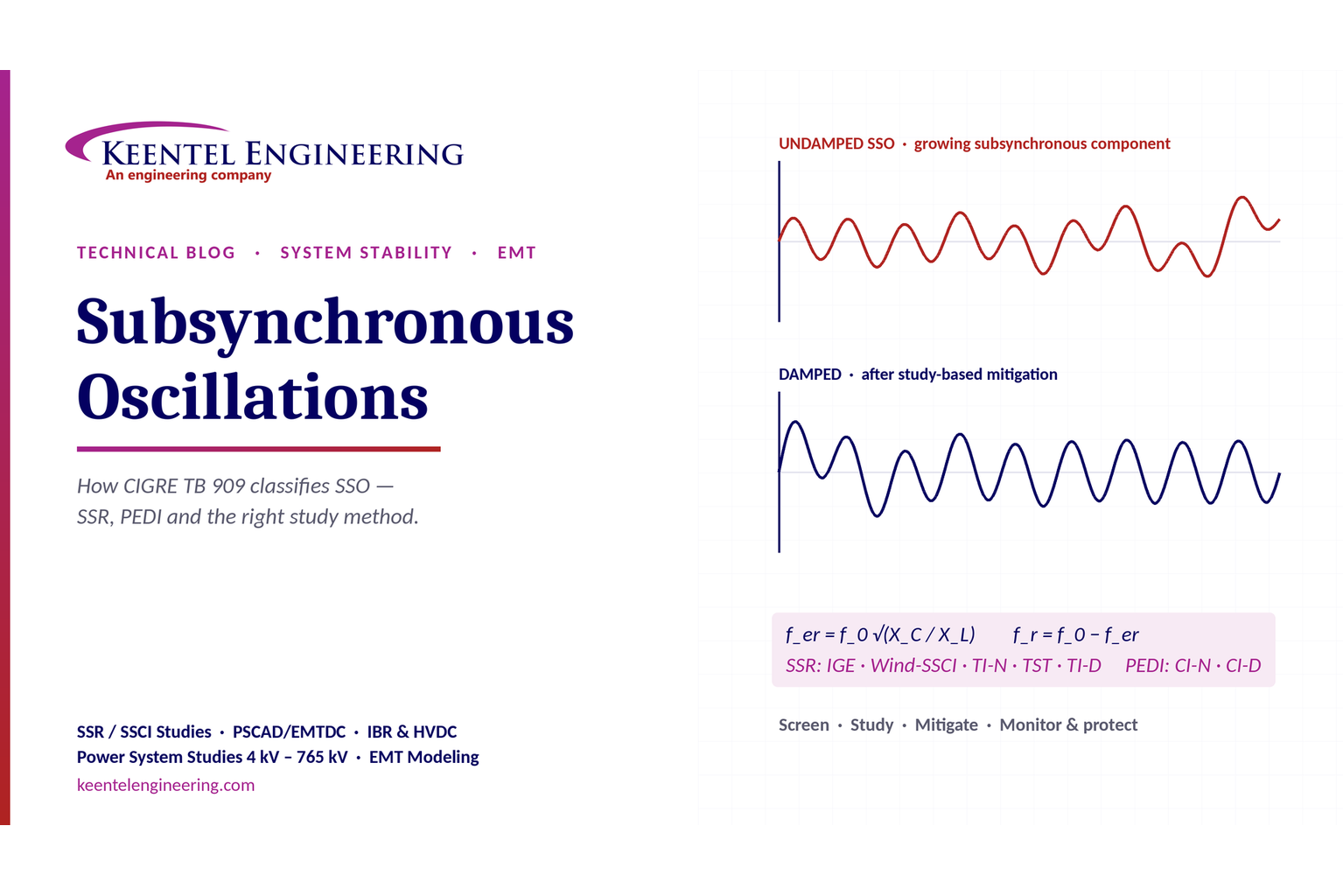
A practical guide to SSO classification, SSR, PEDI, Wind-SSCI, EMT analysis, mitigation and protection based on CIGRE TB 909.
By SANDIP R PATEL
•
October 3, 2026
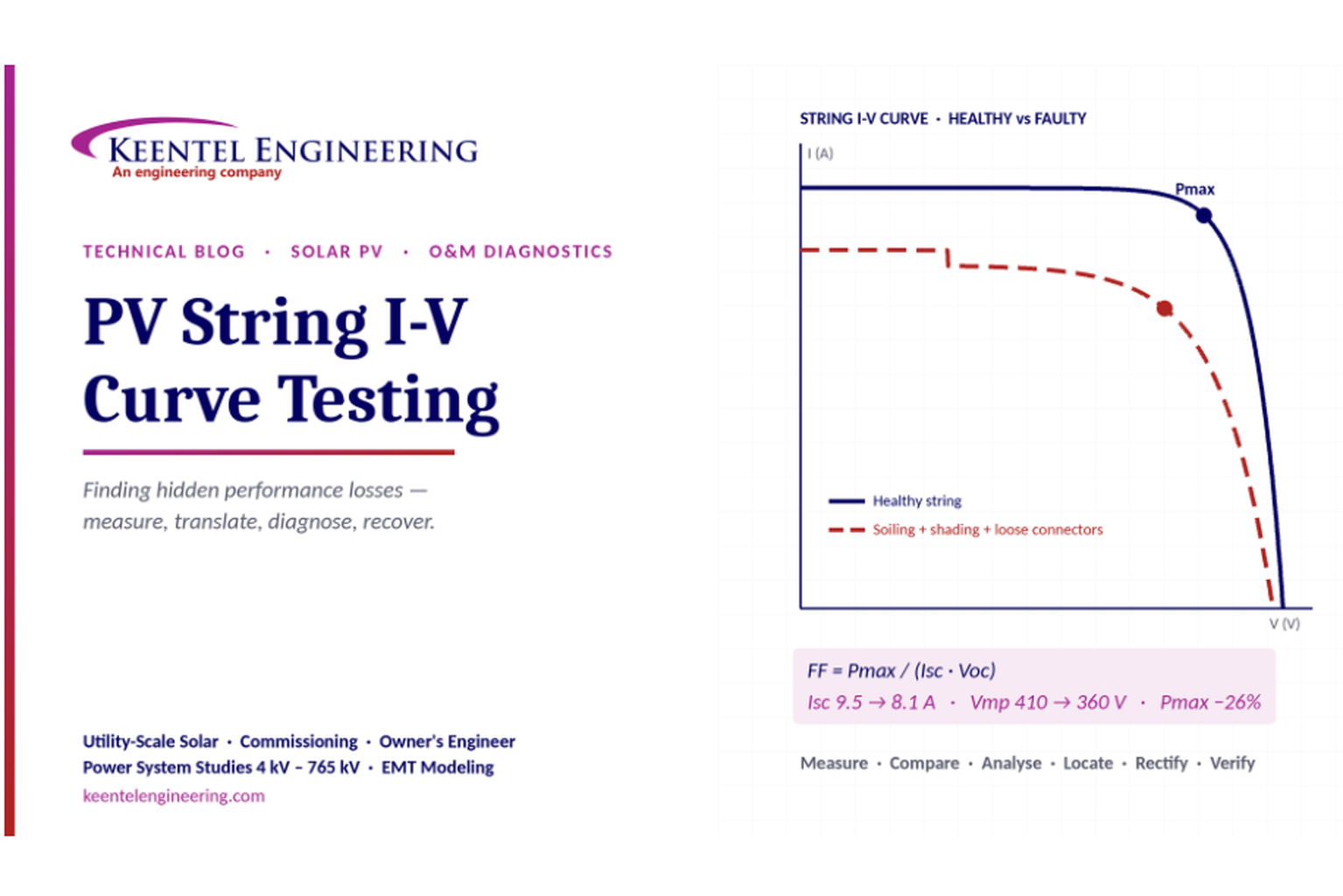
Learn how PV string I-V curve testing identifies hidden solar performance losses, including soiling, shading, mismatch, degradation, and wiring faults.
By SANDIP R PATEL
•
October 3, 2026
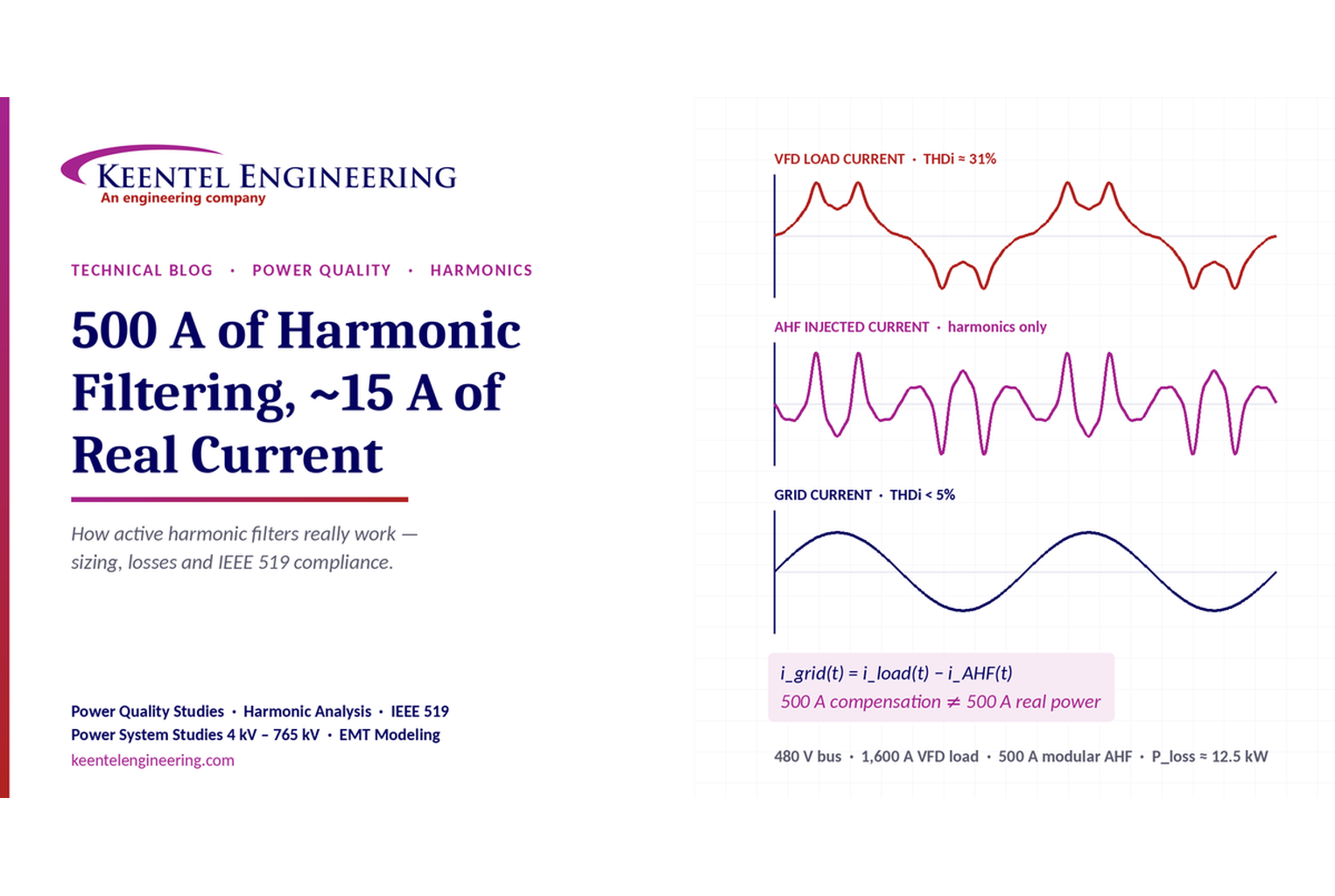
Learn how active harmonic filters work, how to size AHF systems, reduce VFD harmonics, calculate losses, and meet IEEE 519 TDD limits at the PCC.
By SANDIP R PATEL
•
October 3, 2026
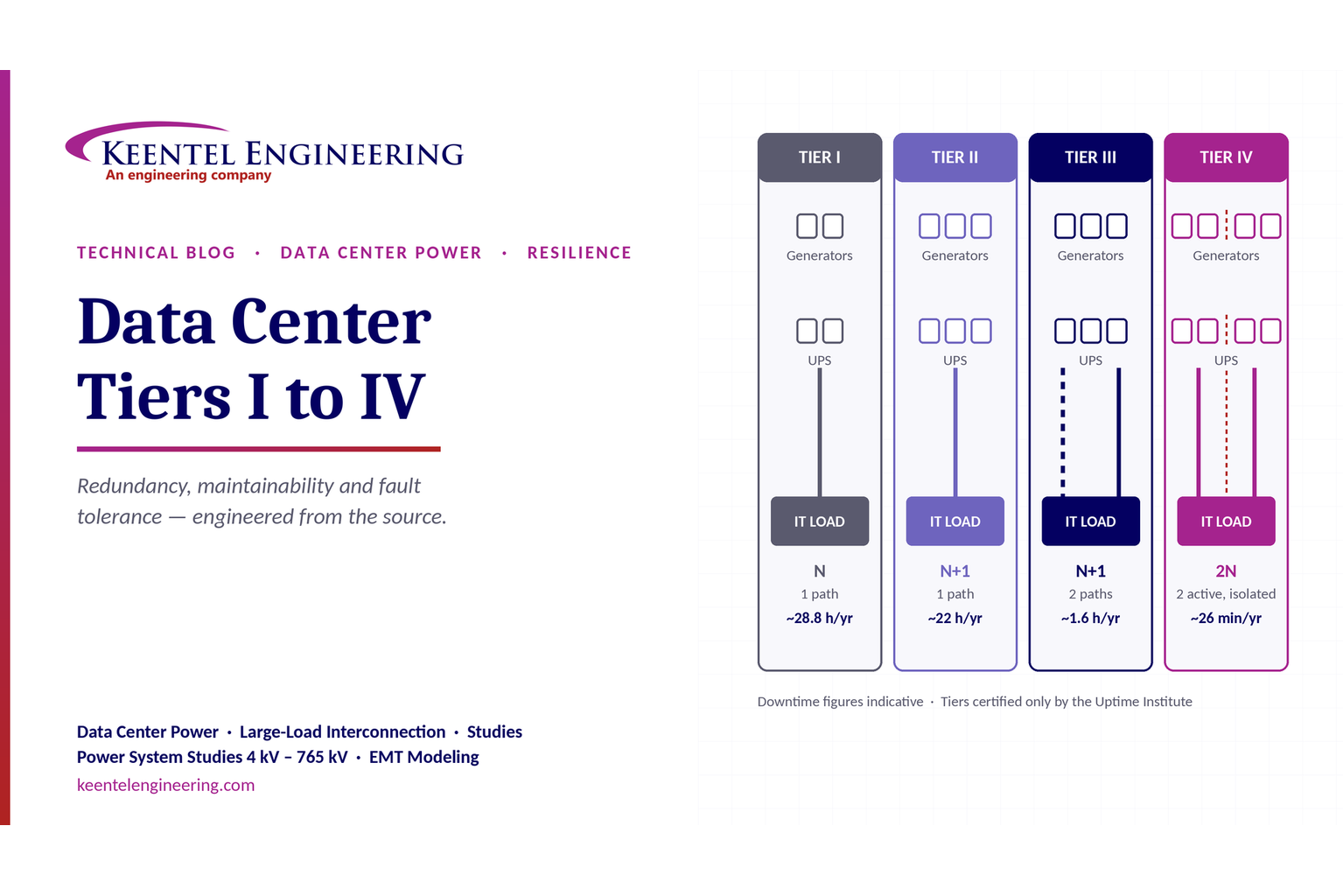
Compare Data Center Tiers I–IV, including redundancy, uptime, Tier III concurrent maintainability, Tier IV fault tolerance, UPS, generators and power design.
By SANDIP R PATEL
•
October 3, 2026
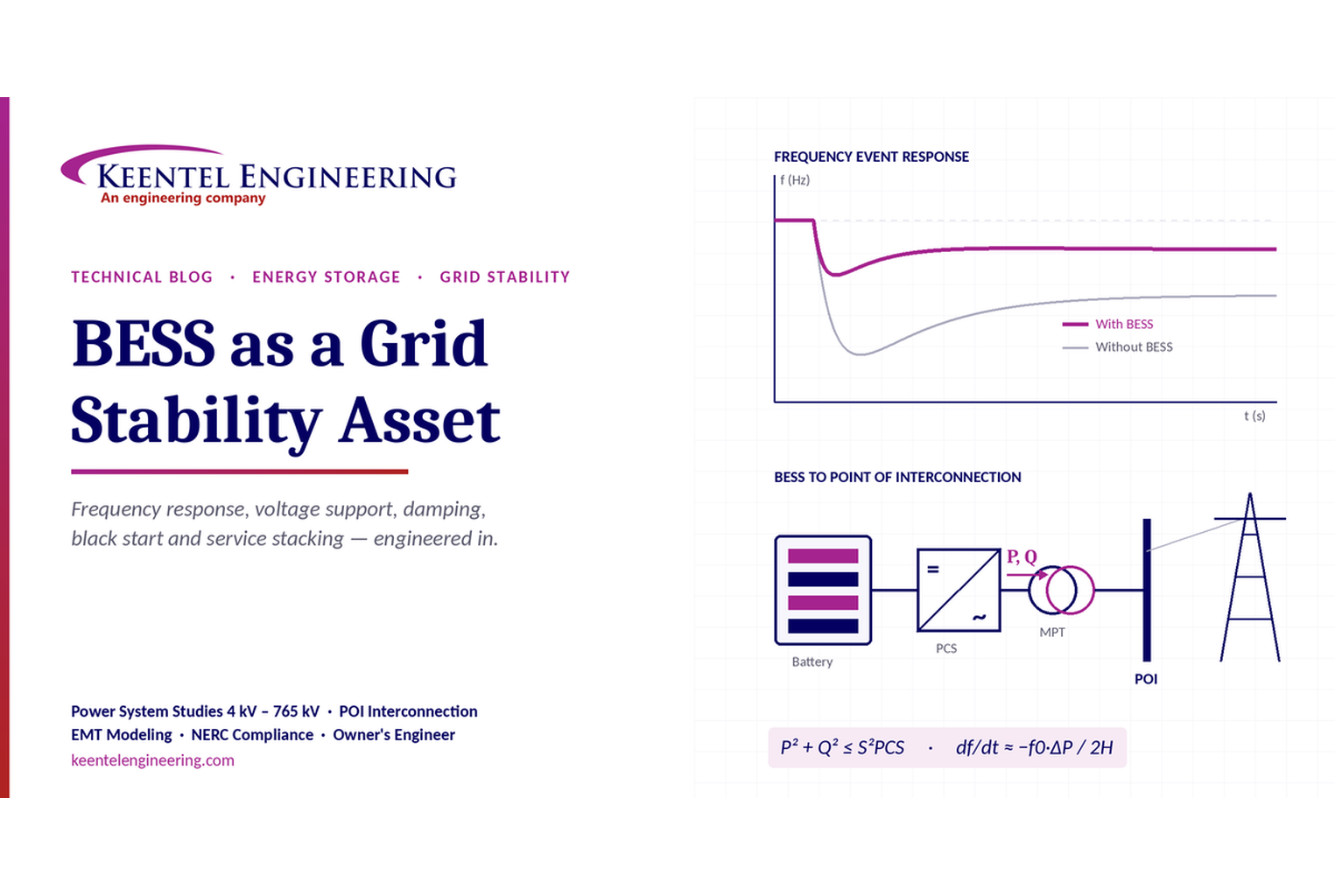
Learn how BESS supports grid stability through fast frequency response, voltage support, oscillation damping, black start, grid-forming controls and EMT studies.
By SANDIP R PATEL
•
October 3, 2026
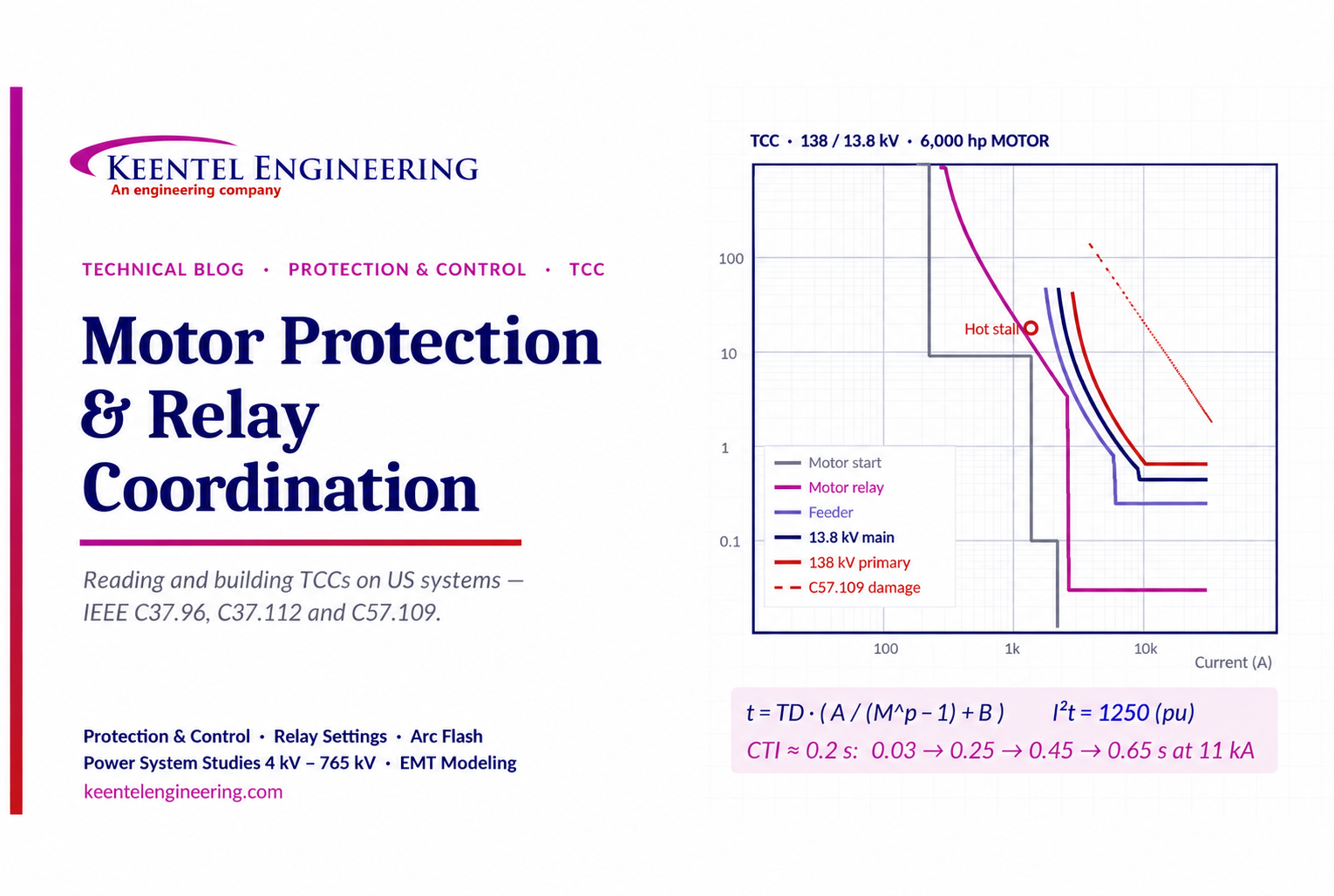
Learn motor protection and relay coordination using TCC curves, IEEE standards, transformer damage limits, CTI settings and a 138/13.8 kV example.
By SANDIP R PATEL
•
September 30, 2026
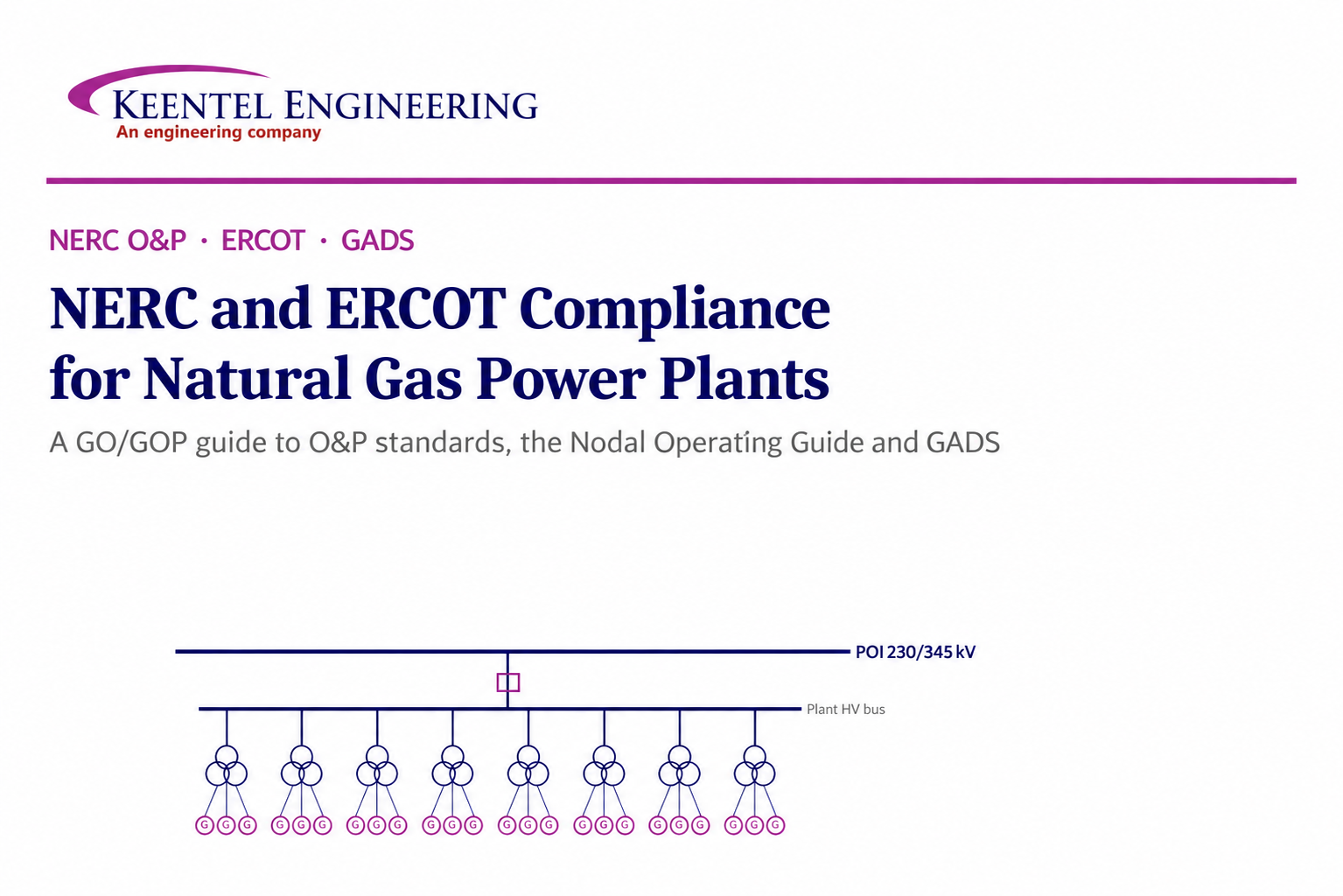
Learn NERC and ERCOT compliance requirements for natural gas power plants, including GO/GOP obligations, O&P standards, GADS reporting, and audits.
By SANDIP R PATEL
•
September 26, 2026
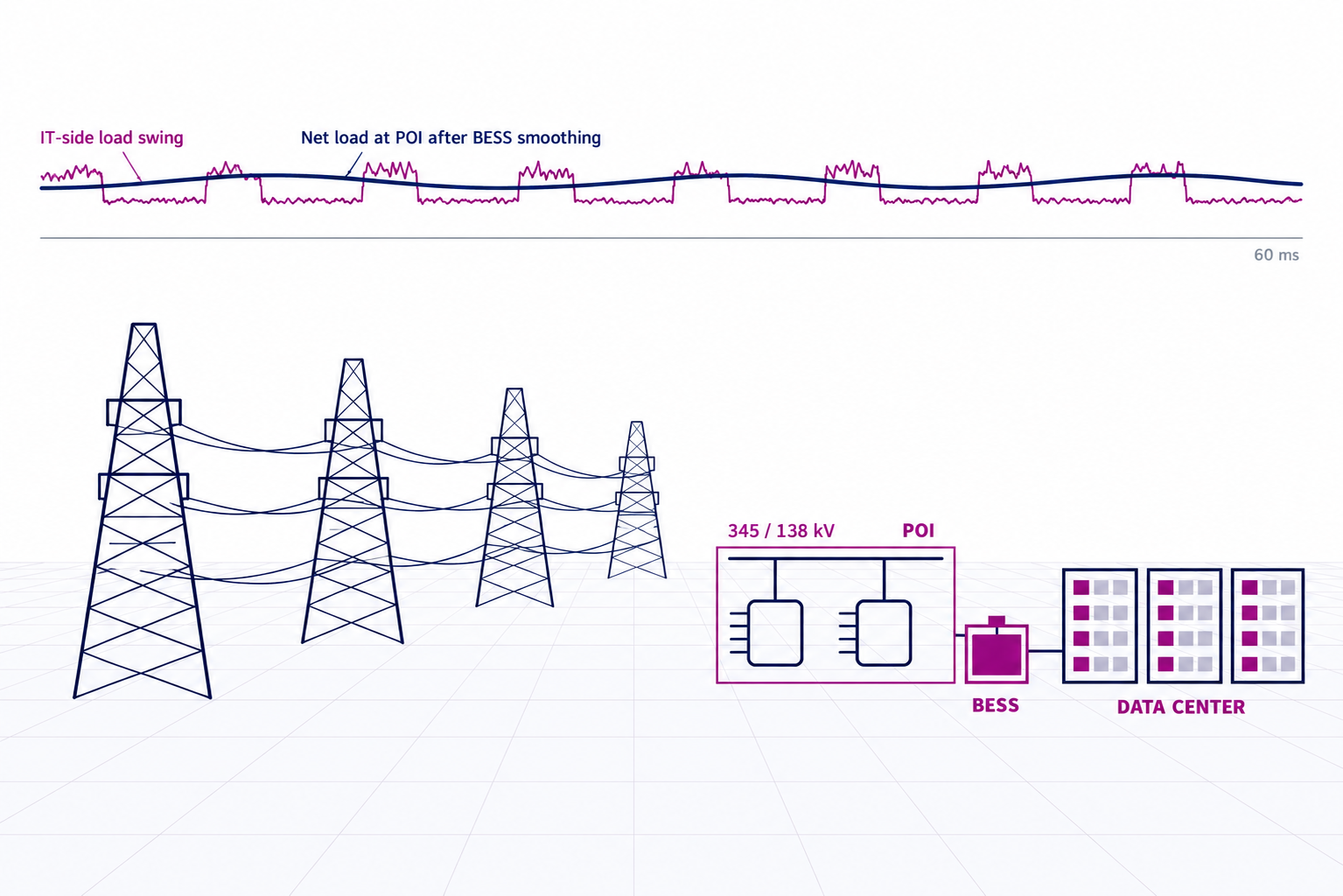
Learn how to prepare a MISO large-load interconnection package, including PSS®E models, BESS smoothing, harmonic data and transmission-owner requirements.