A Coordinated Electric System Interconnection Review—the utility’s deep-dive on technical and cost impacts of your project.
Challenge: Frequent false tripping using conventional electromechanical relays
Solution: SEL-487E integration with multi-terminal differential protection and dynamic inrush restraint
Result: 90% reduction in false trips, saving over $250,000 in downtime
| Category | Metric |
|---|---|
| VPP capacity (Lunar Energy) | 650 MW |
| Lunar funding raised | US$232 million |
| Data center BESS example | 31 MW / 62 MWh |
| ERCOT grid-scale batteries | 15+ GW |
| LDES tenders (H1 2026) | Up to 9.3 GW |
| Lithium-ion share of LDES by 2030 | 77% |
| FEOC initial threshold | 55% |
| BESS tariff rate (2026) | ~55% |
| Capacity gain from analytics | 5–15% |
What is T&D Co-Simulation?
Confusing Physical Connections with Logical Nodes in IEC 61850
Owner’s Engineer for Utility-Scale BESS and HV Substations
Jun 11, 2026 | blog
Executive Summary
Utility-scale battery energy storage systems (BESS) coupled to high-voltage (HV) substations and short generator tie-lines have become central to grid reliability, capacity, and renewable integration. These projects combine fast-moving power-electronics technology with conventional high-voltage engineering, compressed schedules, and significant capital at risk. The Owner's Engineer (OE) exists to manage that risk: an independent, multi-disciplinary engineering team that verifies the design and construction delivered by an EPC contractor conform to the owner's contracts, the interconnection requirements, applicable codes and standards, and good engineering practice.
This paper describes the role of the Owner's Engineer across the project lifecycle — from staged design review (typically at the 30%, 60%, 90%, and Issued-for-Construction milestones) through construction monitoring, commissioning support, and as-built record review. It outlines the disciplines an OE covers, the technical risk areas that most warrant independent scrutiny in storage-plus-substation projects, the governing standards landscape, and the commercial and bankability value the function delivers. A detailed Frequently Asked Questions section follows.
Audience: project developers, independent power producers, asset owners, lenders, and EPC partners evaluating how and when to deploy an Owner's Engineer on energy-storage and substation projects.
1. Why Owner's Engineering Matters Now
Energy storage has shifted from pilot-scale to portfolio-scale. Projects routinely pair tens to hundreds of megawatts of power conversion with multi-hour energy capacity, a step-up substation interconnecting at transmission voltage, and a tie-line to the point of interconnection. The engineering touches battery and power-electronics technology that evolves on annual cycles, alongside transformer, switchgear, protection, grounding, and structural work governed by decades-old standards. Few owners maintain in-house teams spanning all of these disciplines.
At the same time, the cost of a design error grows sharply as a project advances. A comment resolved at the 30% design stage may cost hours; the same issue discovered during construction can drive change orders, schedule delays, and interconnection setbacks costing orders of magnitude more. Independent technical review early and continuously is therefore among the highest-leverage risk controls available to an owner.
The Owner's Engineer is the mechanism that delivers this control. Acting solely in the owner's interest — distinct from the EPC contractor's engineer of record — the OE confirms that what is being designed and built is what the owner contracted for, what the grid operator requires, and what the codes demand.
2. What an Owner's Engineer Is — and Is Not
An Owner's Engineer is an independent engineering consultant retained by the project owner (or the owner's representative) to provide technical oversight throughout development, design, construction, and commissioning. The OE reviews the EPC contractor's work products for conformance with the project's requirements and reports findings to the owner.
2.1 The OE's Defining Characteristics
- Independent. The OE does not design the plant and is not the engineer of record. Its value is precisely its separation from the party producing the work being reviewed.
- Multi-disciplinary. A storage-plus-substation project demands electrical, power-systems, protection and controls, civil, structural/geotechnical, and SCADA/communications expertise under one coordinated review.
- Owner-aligned. The OE's obligation runs to the owner's contracts, financing requirements, and long-term asset performance — not to the contractor's schedule or margin.
- Lifecycle-spanning. The same team carries context from design basis through commissioning and as-built closeout, avoiding the knowledge loss that occurs when reviews are fragmented.
2.2 What the OE Is Not
The OE does not replace the EPC contractor's engineer of record, who retains design responsibility and professional liability for the work. Nor does the OE supplant the Authority Having Jurisdiction (AHJ), the interconnecting utility, or the independent system operator. Rather, the OE confirms — independently and on the owner's behalf — that the contractor's deliverables will satisfy all of those parties before money and schedule are committed to them.
3. The OE Scope Across the Project Lifecycle
A complete Owner's Engineer engagement typically follows the project from design review through commissioning. The phases below reflect a conventional structure; individual engagements may include or exclude optional phases based on the owner's needs and internal capabilities.
3.1 Scope-of-Work and Code Review
Before detailed review begins, the OE examines the scope-of-work documents that define technical requirements, compliance standards, and quality expectations, together with the selected equipment, auxiliary power scheme, and fire-suppression and protective systems. The objective is to surface gaps or non-conformances early and to recommend corrective action while changes are inexpensive.
3.2 Staged Design Review (30% / 60% / 90% / IFC)
The core of most engagements is milestone-based design review. The OE reviews each submittal, issues consolidated comments through a shared comment log, attends a page-turn comment-resolution meeting, and back-checks the contractor's responses. Unresolved or design-affecting items carry forward into the next milestone. A common convention is one review round per submittal phase plus one response-review round per phase.
| Milestone | What the Design Conveys | OE Review Emphasis |
|---|---|---|
| 30% | Design basis, general arrangement, single-line diagrams, major equipment selection, preliminary grading and foundations | Confirm design basis and equipment ratings; check conformance to contract and interconnection; flag early gaps |
| 60% | Detailed drawings, the bulk of electrical and substation studies, collection system, structural calculations | Full comment log; verify studies against drawings; coordination and protection checks |
| 90% | Near-final drawings, study closure, specifications, SCADA and telecom | Confirm comment resolution; assess residual risk; specification conformance |
| IFC | Issued-for-construction package | Confirm closeout and conformance; issue open-items register before construction commitment |
Design review is organized by discipline. A typical storage-plus-substation engagement covers the BESS and power-conversion electrical design; the medium-voltage AC collection system; the high-voltage substation and main power transformer; the generator tie-line; auxiliary power; civil works and drainage; structural and foundation design; the operations-and-maintenance building; and the SCADA and communications architecture.
3.3 Engineering Studies Review
Independent desktop review of the project's engineering studies confirms that analysis supports the drawings and meets the review requirements. Studies commonly reviewed include load flow and voltage regulation; short-circuit and protective-device coordination; arc-flash (AC and DC); grounding; insulation coordination and surge protection; harmonic and transient analysis; reactive-power and temporary-overvoltage studies; cable ampacity and voltage drop; thermal analysis; battery and charger (DC system) sizing; and loss evaluation.
3.4 Construction Monitoring and Commissioning Support (Optional)
During construction, the OE provides as-needed monitoring — on-site presence to witness key activities and milestones, verification of progress against the design, and review of RFIs, technical submittals, and change orders. During commissioning, the OE reviews and witnesses the commissioning program: the commissioning plan, safety and lock-out/tag-out protocols, test procedures and reports, energization procedures, hot-commissioning and operational testing, and SCADA configuration, along with medium- and high-voltage testing reports. Site visits commonly extend through mechanical completion and substantial completion, including review of performance-test results and turnover documentation.
3.5 As-Built Record Review (Optional)
After construction, the OE performs a desktop review of as-built redline drawings for final compliance with the design criteria, typically one round per discipline. This closes the loop between what was designed, what was approved, and what was ultimately built — an important record for operations, future augmentation, and asset transactions.
4. Technical Focus Areas in Storage-Plus-Substation Projects
Certain subsystems concentrate risk and reward independent scrutiny. The areas below are where OE review most often adds value on energy-storage projects interconnecting through an HV substation.
4.1 Battery and Power-Conversion Systems
Container-based battery systems paired with power-conversion stations and medium-voltage step-up transformers form the heart of the plant. Review attention centers on power and energy ratings and their relationship (C-rate and backup duration), round-trip efficiency and auxiliary (parasitic) loads, thermal management and HVAC sizing, DC architecture and protection, and the plan for capacity augmentation over the asset's life as cells fade. Because supplier drawings often mature later than balance-of-plant design, the OE tracks where design is provisional and confirms that interfaces and ratings remain consistent as vendor data is finalized.
4.2 Medium-Voltage AC Collection
Underground medium-voltage circuits aggregate the power-conversion blocks to the collector bus. Key review items include cable ampacity and derating for installation conditions, conductor and conduit sizing, voltage drop, grounding and shielding, and protection coordination across the collection feeders.
4.3 Main Power Transformer and HV Substation
The step-up substation typically centers on a multi-winding main power transformer with on-load tap changing and staged cooling, feeding a transmission-voltage bus through HV circuit breakers, disconnect switches, and instrument transformers. Review emphasis includes transformer ratings, impedance and vector group, insulation coordination and basic insulation level (BIL), short-circuit duty, bus continuous-current ratings, and revenue/interconnection metering arrangements. Point-to-point review of substation electrical drawings confirms wiring, schematics, and protection schemes batch by batch.
4.4 Protection, Grounding, and Safety
Protection and coordination — relay schemes, current- and voltage-transformer ratios and accuracy, CT saturation, and device coordination — determine how faults are detected and cleared. Grounding design (including step- and touch-potential safety) and lightning/surge protection are reviewed against the relevant standards. Arc-flash analysis informs labeling and worker safety on both AC and DC systems.
4.5 Generator Tie-Line
Where the plant interconnects through a short tie-line, the OE reviews conductor and hardware selection, structural loading, clearances, and the line model. Even a short single-span line carries interconnection and conformance requirements that must be verified.
4.6 SCADA, Controls, and Communications
Plant controls, the power-plant controller (where applicable), SCADA architecture, and the communications/fiber backbone are reviewed for conformance with the owner's technical requirements and the interconnection's telemetry and control obligations. Controls increasingly determine whether a plant can deliver its contracted grid services.
4.7 Civil, Structural, and Geotechnical
Grading and drainage, erosion and sediment control, stormwater management, access roads, foundations, and equipment structures are reviewed against geotechnical findings, hydrology, permits, and structural standards. Foundation calculation packages, concrete mix designs, and shop drawings receive particular attention because they are difficult and costly to correct after placement.
5. The Governing Standards Landscape
OE reviews assess conformance with the owner's contracts and a broad set of codes and standards. While the controlling documents vary by jurisdiction and interconnection, the families below are typically in scope:
- Energy storage and fire safety: NFPA 855 (stationary energy storage systems), UL 9540 and UL 9540A (system listing and fire-propagation testing), UL 1973 (batteries), and IEC 62933, alongside the requirements of the local fire authority.
- Electrical: the National Electrical Code (NFPA 70), the National Electrical Safety Code (IEEE C2), and IEEE standards for grounding (IEEE 80), arc-flash (IEEE 1584), interconnection (IEEE 1547 where applicable), and transformers (IEEE C57 series).
- Structural and civil: the International Building Code, ASCE 7 for loads, ACI 318 for concrete, and AISC for steel, together with local permitting and stormwater requirements.
- Interconnection and commercial: the generator interconnection agreement, the independent system operator's / utility's technical requirements, and the performance obligations of the power-purchase or offtake agreement.
A frequent early-stage check is confirming that the design references the correct interconnection authority and standards for the project's location — a mismatch here propagates into metering, protection, and telemetry design if not caught at the design-basis stage.
6. The Value Proposition: Risk, Cost, and Bankability
The Owner's Engineer function pays for itself through risk avoidance. Its principal benefits include:
- Early error detection. Catching conformance and coordination issues at 30% or 60% avoids change orders, rework, and schedule slippage during construction.
- Contract enforcement. Independent verification that EPC deliverables meet the agreed specifications protects the owner's commercial position.
- Interconnection assurance. Confirming conformance with grid-operator requirements reduces the risk of energization and commercial-operation delays.
- Bankability. Lenders and investors increasingly expect independent engineering oversight; a documented OE review supports financing, diligence, and asset transactions.
- Operational readiness. Commissioning support and as-built review leave the owner with a plant that performs as designed and a documentation set that supports long-term operations and augmentation.
Because design-change cost rises steeply with project maturity, the return on independent review is greatest when the OE is engaged early and retained continuously rather than brought in to troubleshoot after problems surface.
7. How Keentel Approaches Owner's Engineering
Keentel Engineering structures its OE engagements around disciplined, milestone-aligned review and transparent comment management:
- Milestone-aligned reviews synchronized to the contractor's submittal calendar, with defined turnaround windows.
- Shared comment logs with unique identifiers, severity, discipline, reference, and status — tracked to closure and reported at each milestone.
- Independent senior check of every discipline review before issue, with principal-level QA oversight and a clear escalation path for significant findings.
- Single accountable team carrying context from design basis through commissioning and as-built closeout.
This approach keeps the owner informed, keeps the contractor accountable, and keeps the project moving — without compromising independence.
8. Conclusion
Energy-storage projects interconnecting through high-voltage substations sit at the intersection of fast-evolving power electronics and established high-voltage engineering, under schedule and capital pressure. The Owner's Engineer is the independent, multi-disciplinary function that protects the owner's interests across this complexity — verifying that the design and the constructed plant conform to contracts, interconnection requirements, and codes, and doing so early enough that issues are inexpensive to resolve. Engaged from design basis through commissioning, a capable OE reduces risk, supports bankability, and helps deliver an asset that performs as intended for its full operating life.
Frequently Asked Questions
Q. What exactly does an Owner's Engineer do?
An Owner's Engineer is an independent engineering consultant retained by the project owner to provide technical oversight throughout design, construction, and commissioning. The OE reviews the EPC contractor's drawings, studies, and work for conformance with the owner's contracts, the interconnection requirements, applicable codes and standards, and good engineering practice — and reports findings to the owner so issues are resolved before they become costly.
Q. How is the OE different from the EPC contractor's engineer?
The contractor's engineer of record designs the plant and carries professional responsibility and liability for that design. The OE does not design the plant; it independently reviews the contractor's work on the owner's behalf. The separation is the point: an independent reviewer with no stake in the contractor's schedule or margin provides objective assurance the owner can rely on.
Q. When should an owner engage an OE?
As early as possible — ideally at or before the design-basis stage. The cost of correcting a design issue rises steeply as the project matures, so the earlier the OE is involved, the greater the value. Engaging the OE before the 30% review allows the design basis and equipment selections to be checked while changes are inexpensive.
Q. What happens at each design milestone (30/60/90/IFC)?
At 30%, the OE confirms the design basis, major equipment ratings, and overall conformance, flagging early gaps. At 60%, the bulk of detailed drawings and studies are reviewed in depth, with a full comment log. At 90%, the OE confirms comment resolution and assesses residual risk. At Issued-for-Construction (IFC), the OE confirms closeout and conformance and issues an open-items register before construction is committed. Each phase typically includes one review round plus a back-check of the contractor's responses.
Q. Which standards and codes govern these projects?
Typical families in scope include NFPA 855 and UL 9540 / 9540A for energy storage and fire safety; the National Electrical Code (NFPA 70) and National Electrical Safety Code (IEEE C2); IEEE standards for grounding, arc-flash, interconnection, and transformers; and IBC / ASCE 7 / ACI / AISC for civil and structural work. Overlaying these are the generator interconnection agreement, the system operator's technical requirements, and the offtake agreement. The controlling set depends on the project's jurisdiction and interconnection.
Q. What are the biggest technical risk areas?
Common high-risk areas include battery and power-conversion ratings and interfaces (which often mature late as vendor data is finalized); protection and coordination, including CT sizing and saturation; grounding and arc-flash safety; medium-voltage collection cable ampacity and derating; main-transformer ratings and insulation coordination; foundations and concrete (costly to correct after placement); and SCADA/controls conformance with interconnection telemetry and control obligations.
Q. How does the OE support commissioning?
The OE reviews and, where engaged, witnesses the commissioning program — the commissioning plan, safety and lock-out/tag-out protocols, test procedures and reports, energization procedures, hot-commissioning and operational testing, and SCADA configuration — along with medium- and high-voltage testing reports. Site visits commonly extend through mechanical and substantial completion, including review of performance-test results and turnover documentation.
Q. What deliverables does an OE provide?
Typical deliverables include a code/compliance matrix with gap analysis; discipline comment logs at each milestone with tracked contractor responses; study-review memoranda; milestone review summaries and an open-items register; an IFC conformance memorandum; and — for optional phases — construction-monitoring and commissioning observation records and as-built review comments.
Q. How are OE services typically priced?
Owner's Engineer services are commonly provided on a time-and-material basis against a published rate schedule, with not-to-exceed budgets per task that are not exceeded without prior written authorization. This structure matches effort to the actual flow of contractor submittals while giving the owner cost certainty through the NTE caps.
Q. Does the OE replace the Engineer of Record or the AHJ?
No. The engineer of record retains design responsibility and liability, and the Authority Having Jurisdiction, interconnecting utility, and system operator retain their approval roles. The OE independently confirms, on the owner's behalf, that the contractor's deliverables will satisfy all of those parties before the owner commits schedule and capital.
Q. How does an OE support project financing and bankability?
Lenders and investors increasingly expect independent engineering oversight as a condition of financing and as part of technical diligence. A documented, independent OE review demonstrates that the design and construction conform to requirements, which supports financing, reduces perceived technical risk, and strengthens the asset's position in future transactions.
Q. Can an OE engagement be scaled to an owner's in-house capabilities?
Yes. Engagements are commonly structured with a required design-review scope and optional construction-monitoring, commissioning, and as-built phases, so owners with strong internal teams can take a focused OE scope while owners needing fuller coverage can extend it across the lifecycle.

About the Author:
Sandip "Sonny" R. Patel, P.E.
IEEE Senior Member · Founder & CEO, Keentel Engineering
In 1995, Sonny Patel earned his Electrical Engineering degree from the University of Illinois. But degrees don't build legacies — action does.
For three decades, he has worked the power industry from every side of the table: 16 years as a utility engineer at Exelon/Commonwealth Edison; generation leadership across hydroelectric, industrial steam turbine, and a 9 GW renewable fleet; NERC Regional Entity Senior Compliance Engineer and Audit Team Lead, auditing some of the nation's largest utilities; and testing and commissioning lead on equipment up to 765 kV — the very top of the North American grid.Utility. Generator. Regulator. Consultant. Few engineers have seen all four seats. Fewer still have sat in them.
His experience spans nuclear, hydro, conventional generation, renewables, oil and gas, mining — and today's data centers, where he is authoring a three-book series on data center design. He is a Licensed Professional Engineer in six states and a Licensed Electrical Contractor in Florida (Unlimited EC) — he doesn't just design the work; he's qualified to stand behind its execution.Today, as Founder and CEO of Keentel Engineering, Sonny leads a nationwide team of engineers delivering substation design, power system studies, NERC compliance, and commissioning — done right, coast to coast.Three decades. Every side of the table. One standard: accountable engineering.
Services

Let's Discuss Your Project
Let's book a call to discuss your electrical engineering project that we can help you with.
About the Author:
Sandip "Sonny" R. Patel, P.E.
IEEE Senior Member · Founder & CEO, Keentel Engineering
In 1995, Sonny Patel earned his Electrical Engineering degree from the University of Illinois. But degrees don't build legacies — action does.
For three decades, he has worked the power industry from every side of the table: 16 years as a utility engineer at Exelon/Commonwealth Edison; generation leadership across hydroelectric, industrial steam turbine, and a 9 GW renewable fleet; NERC Regional Entity Senior Compliance Engineer and Audit Team Lead, auditing some of the nation's largest utilities; and testing and commissioning lead on equipment up to 765 kV — the very top of the North American grid.
Utility. Generator. Regulator. Consultant. Few engineers have seen all four seats. Fewer still have sat in them.
His experience spans nuclear, hydro, conventional generation, renewables, oil and gas, mining — and today's data centers, where he is authoring a three-book series on data center design. He is a Licensed Professional Engineer in six states and a Licensed Electrical Contractor in Florida (Unlimited EC) — he doesn't just design the work; he's qualified to stand behind its execution.
Today, as Founder and CEO of Keentel Engineering, Sonny leads a nationwide team of engineers delivering substation design, power system studies, NERC compliance, and commissioning — done right, coast to coast.Three decades. Every side of the table. One standard: accountable engineering.
Leave a Comment
Thank you for contacting us.
We will get back to you as soon as possible.
We will get back to you as soon as possible.
Oops, there was an error sending your message.
Please try again later.
Please try again later.
Related Posts
By SANDIP R PATEL
•
October 23, 2026
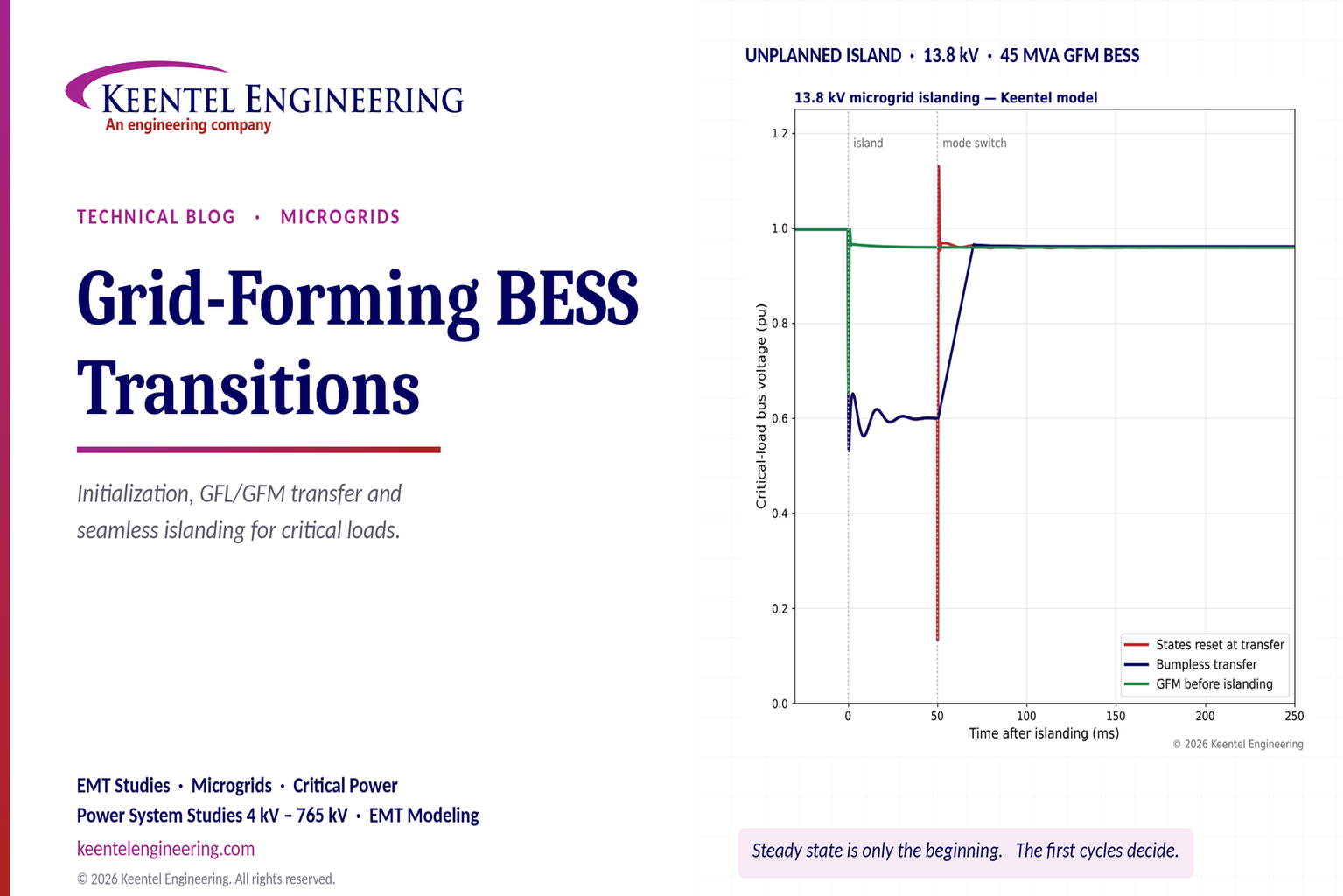
Explore grid-forming BESS initialization, GFL-to-GFM transitions, seamless islanding, EMT simulations, current limiting and microgrid protection.
By SANDIP R PATEL
•
October 23, 2026
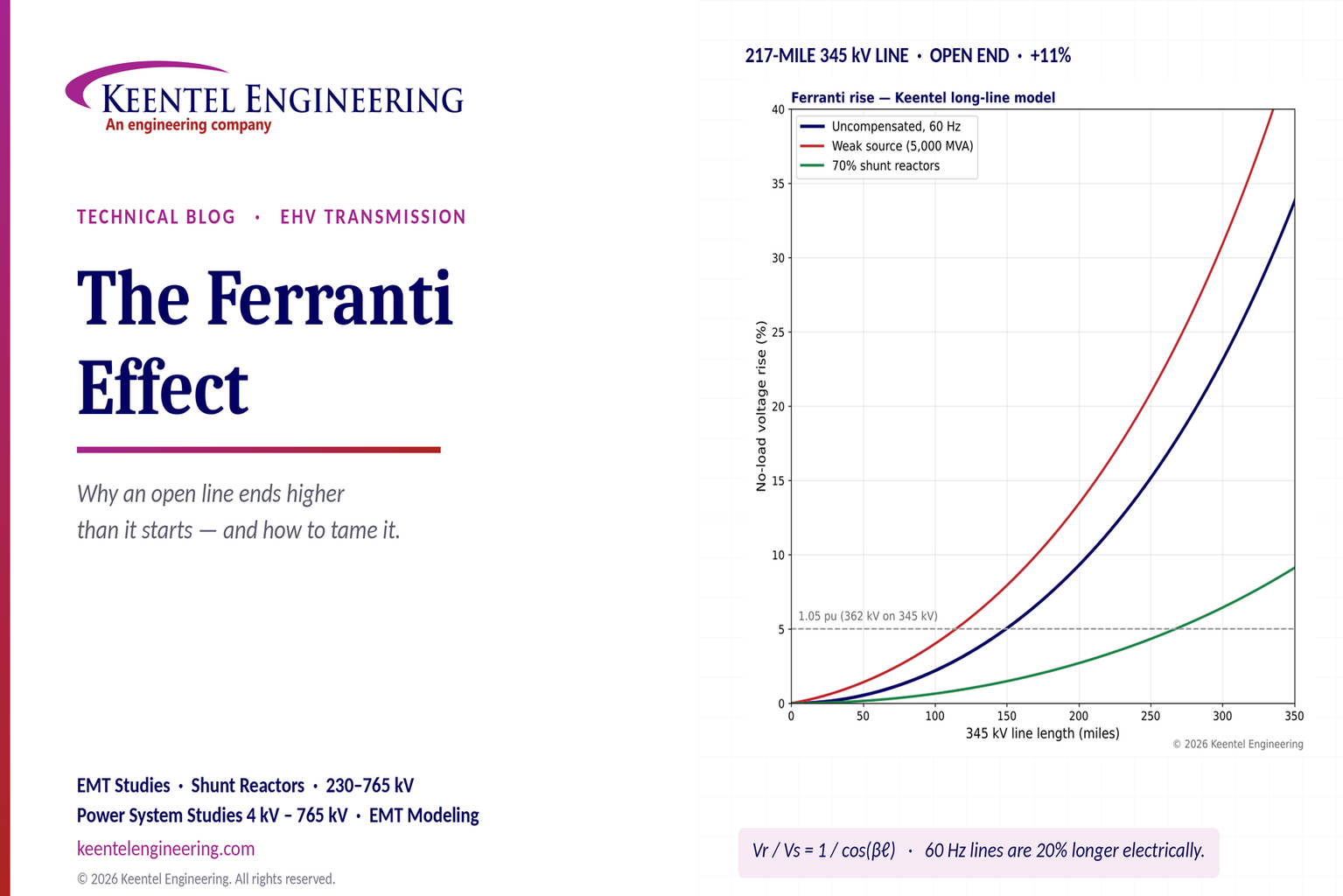
Explore the Ferranti effect in EHV transmission lines: voltage rise, 345 kV examples, switching overvoltages, shunt reactor sizing and mitigation.
By SANDIP R PATEL
•
October 23, 2026
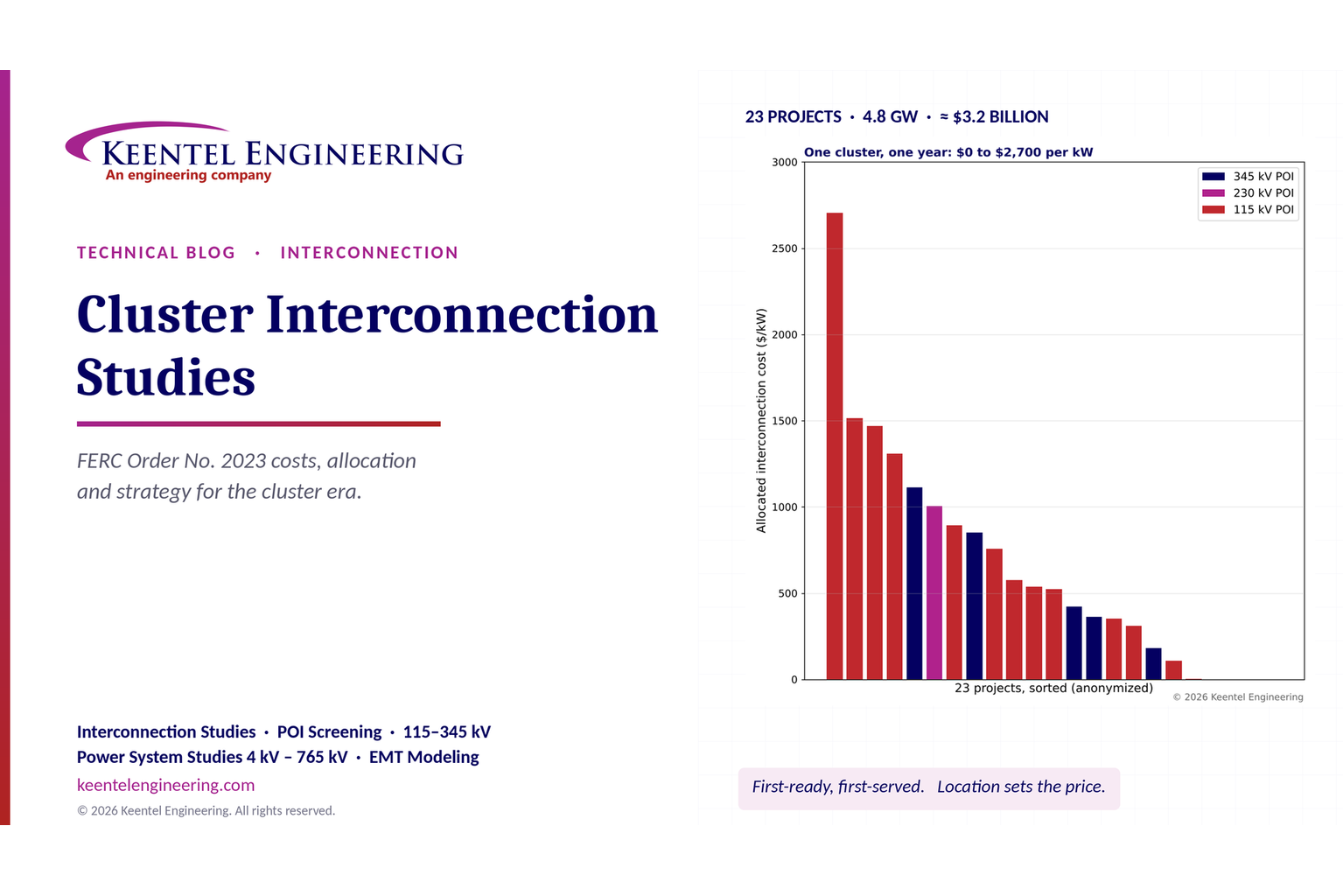
Explore cluster interconnection studies under FERC Order 2023, including network upgrades, cost allocation, withdrawal penalties and developer strategy.
By SANDIP R PATEL
•
October 21, 2026
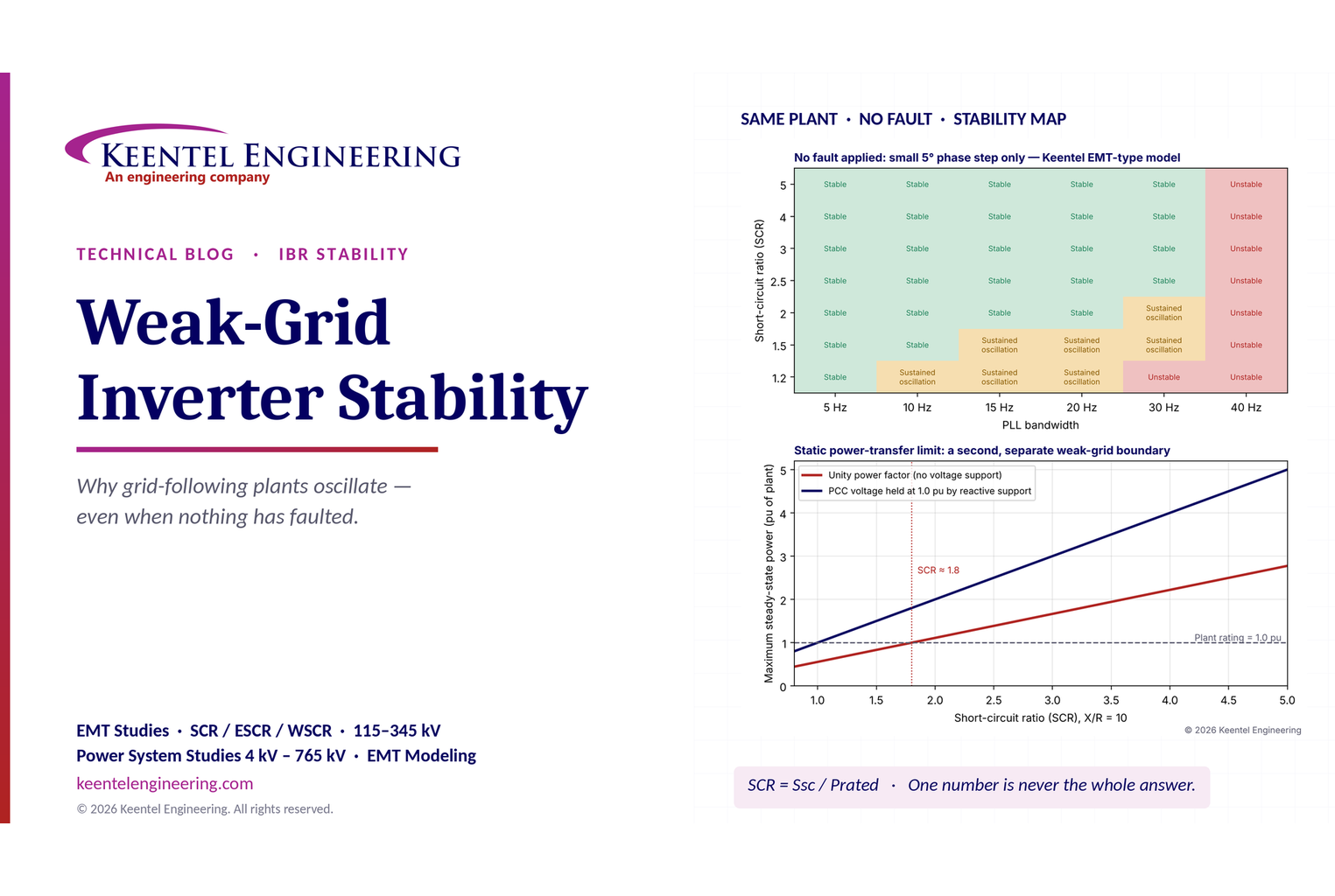
Learn why grid-following inverters become unstable without grid faults. Explore SCR, PLL interactions, EMT studies, grid strength, and mitigation.
By SANDIP R PATEL
•
October 21, 2026
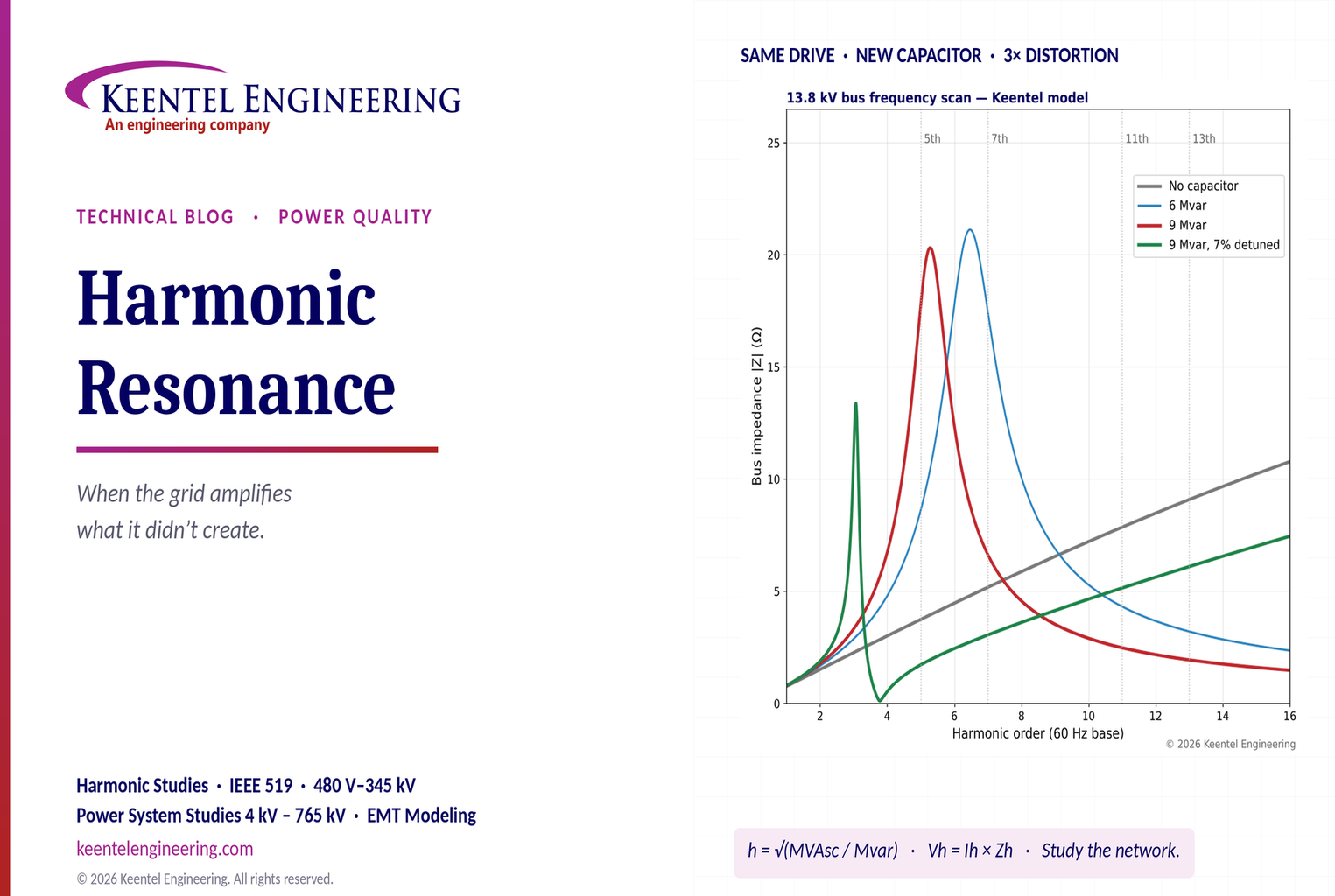
Learn how harmonic resonance amplifies distortion in power systems. Explore capacitor banks, detuned reactors, frequency scans, and IEEE 519 solutions.
By SANDIP R PATEL
•
October 20, 2026
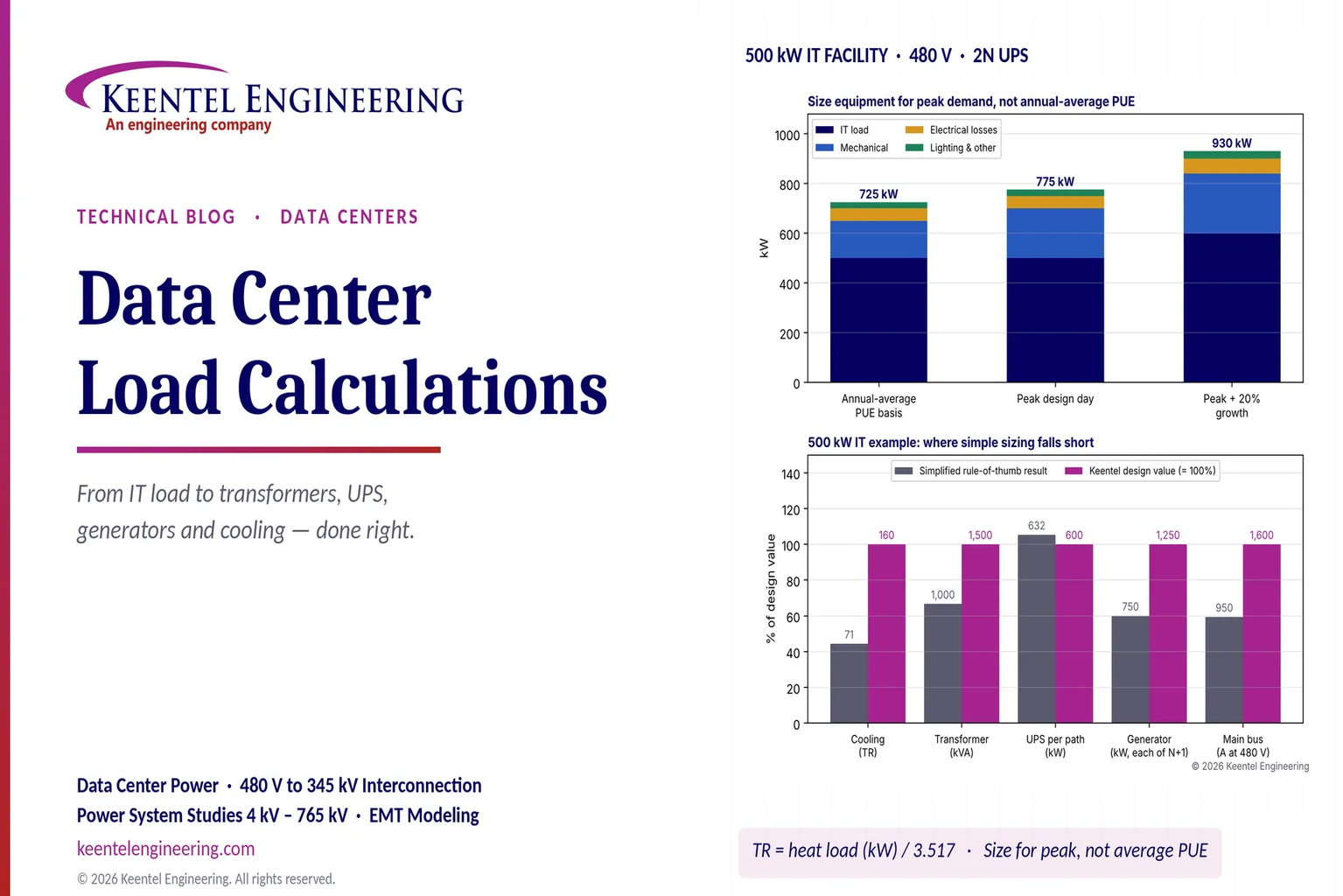
Learn data center electrical load calculations, including IT demand, PUE, UPS and generator sizing, cooling loads, redundancy, and worked US examples.
By SANDIP R PATEL
•
October 20, 2026
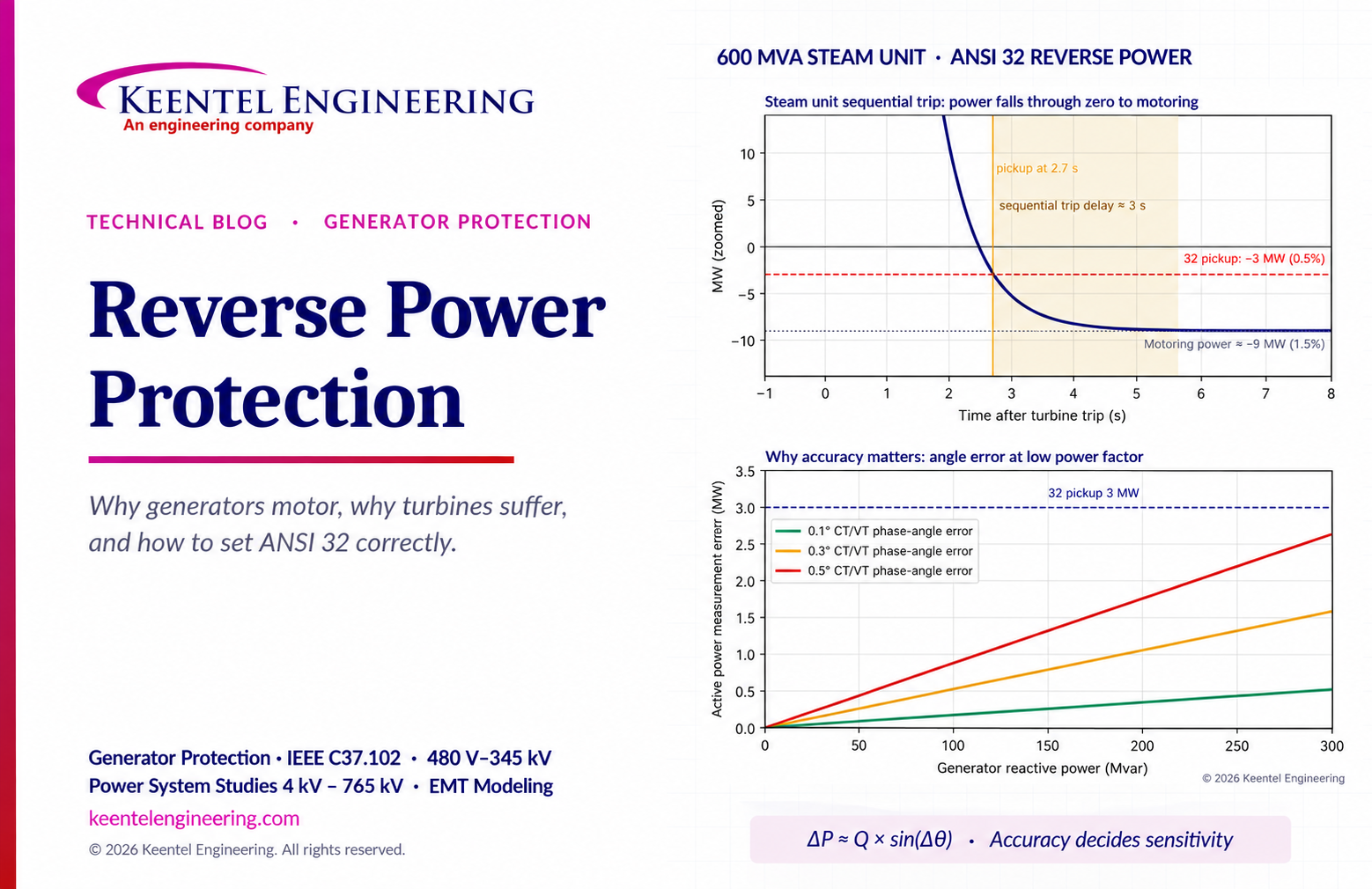
Learn reverse power protection (ANSI 32), generator motoring, relay pickup settings, time delays, sequential tripping and testing for US power plants.
By Team 2 Dexora
•
October 20, 2026
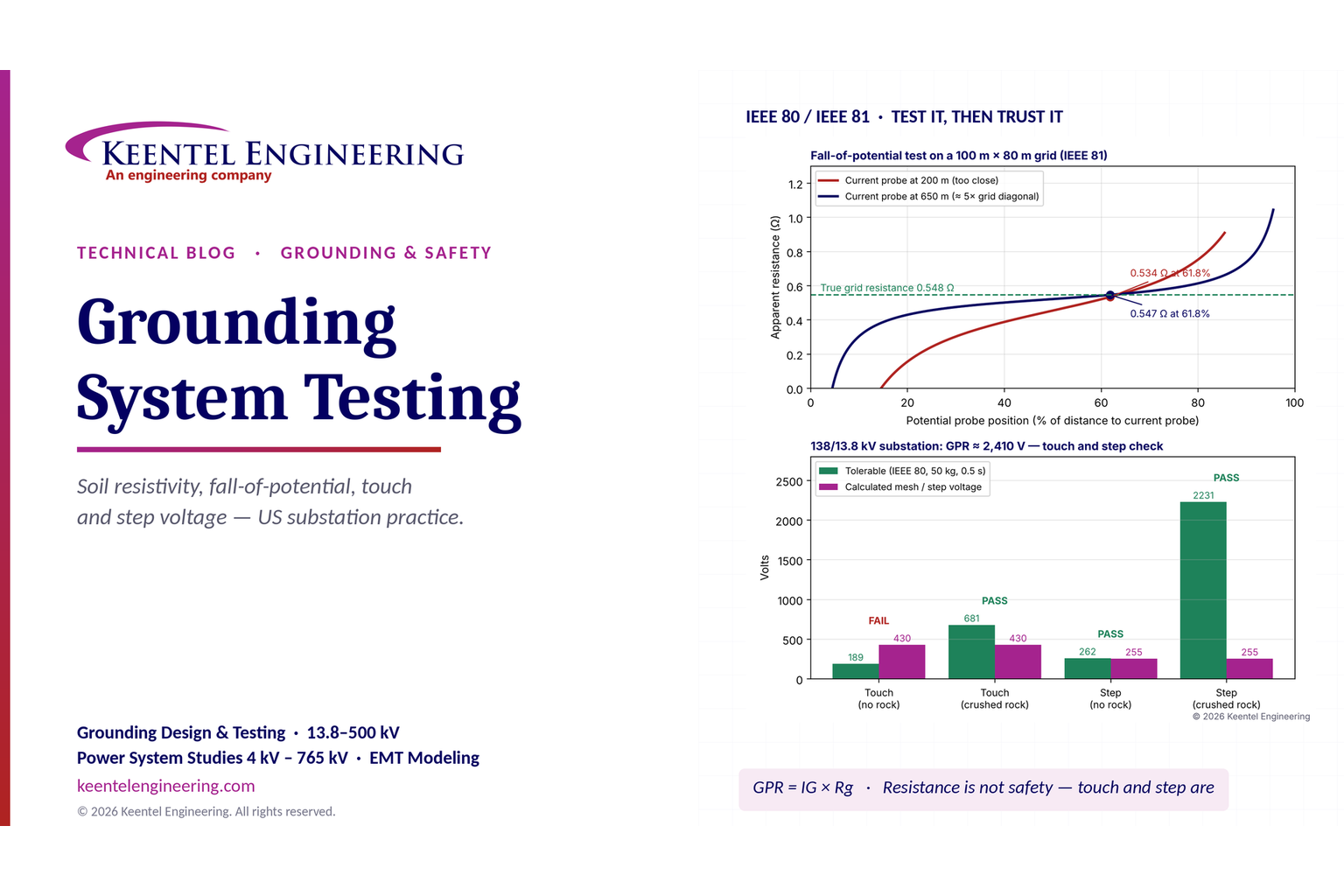
Explore grounding system testing with Keentel Engineering. Learn IEEE 80/81 methods, soil resistivity, ground resistance, and touch and step voltage safety.
By SANDIP R PATEL
•
October 13, 2026
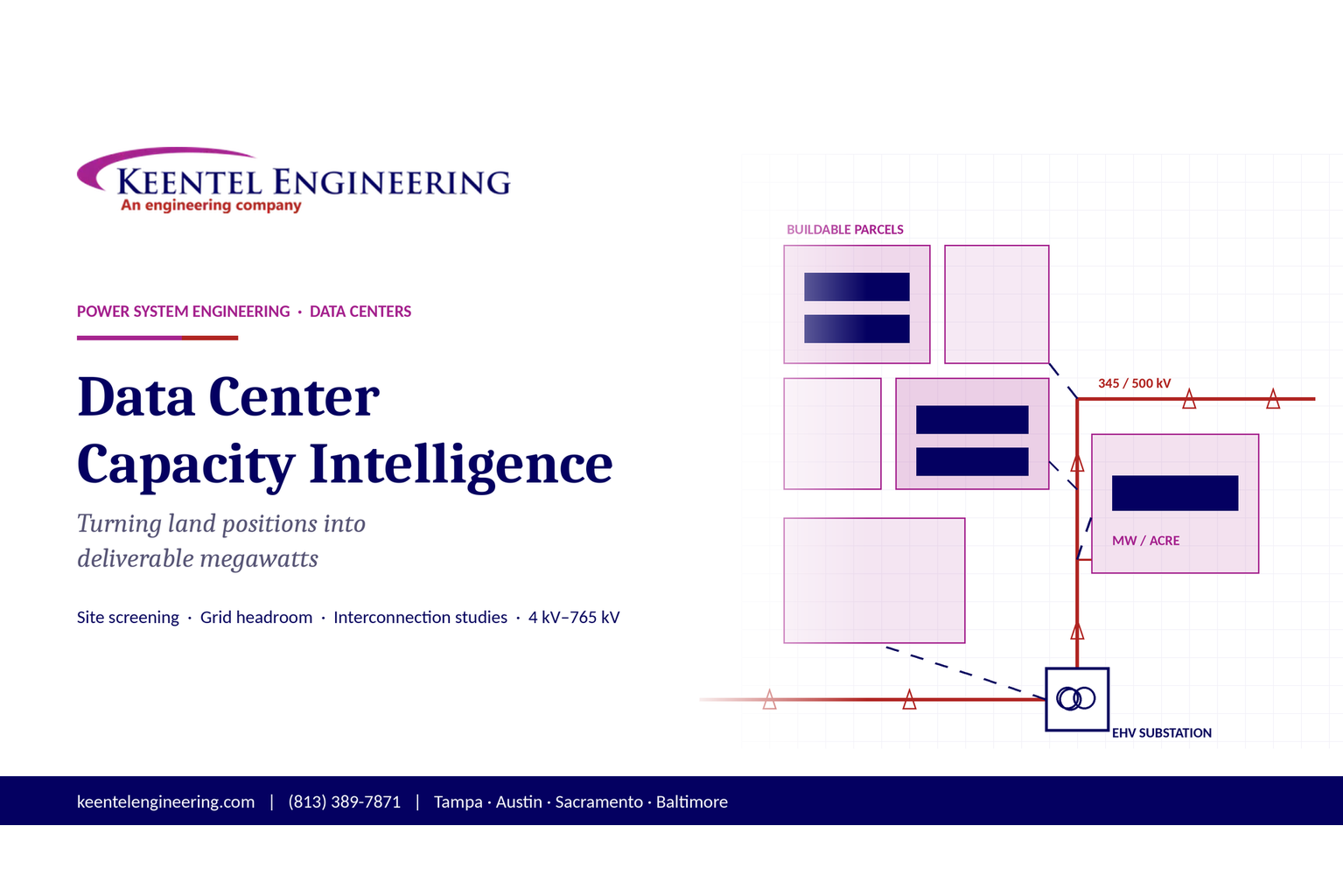
Plan data center capacity with land screening, MW-per-acre estimates, grid power availability and interconnection feasibility studies from Keentel Engineering.