A Coordinated Electric System Interconnection Review—the utility’s deep-dive on technical and cost impacts of your project.
Challenge: Frequent false tripping using conventional electromechanical relays
Solution: SEL-487E integration with multi-terminal differential protection and dynamic inrush restraint
Result: 90% reduction in false trips, saving over $250,000 in downtime
Meeting US Grid Code Requirements through Droop and Fast Frequency Response (FFR) Control A Practical Engineering Guide for BESS,Solar and Wind Interconnections in the United States
May 2, 2026 | Blog
Introduction
The U.S. power grid is undergoing a fundamental transformation. With the rapid penetration of inverter-based resources (IBRs)—including solar PV, wind, and Battery Energy Storage Systems (BESS)—traditional synchronous generator behavior can no longer be assumed.
To maintain system reliability modern grid codes anchored by IEEE 2800-2022—require IBRs to actively participate in frequency control through:
- Primary Frequency Response (PFR) using droop control
- Fast Frequency Response (FFR) using high-speed autonomous control
This article provides a deep technical breakdown of how droop and FFR controls enable compliance with U.S. grid codes, along with practical implementation insights for engineers and developers.
1. Understanding Frequency Control in Modern Power Systems
Frequency stability reflects the real-time balance between generation and load:
- Under-frequency → Generation deficit
- Over-frequency → Generation surplus
Historically, synchronous machines provided this response naturally through inertia and governors. Today, IBRs must replicate and enhance this behavior through control systems.
2. Droop Control: The Foundation of Grid Compliance
Mathematical Representation
P=1/R(fnom-f)
Where:
- R= droop (pu or %)
- fnom= nominal frequency (60 Hz)
- f= measured frequency
How Droop Control Works
Droop control provides proportional active power adjustment based on frequency deviation:
- Under-frequency → increase active power
- Over-frequency → decrease active power
Key IEEE 2800 Requirements:
- Fixed droop characteristic (linear response)
- Separate settings for:
- Under-frequency (kUF)
- Over-frequency (kOF)
- Adjustable within defined ranges
Typical Droop Settings
| Parameter | Typical Value |
|---|---|
| Droop (PFR) | 5% |
| Deadband | ~0.036 Hz |
| Response type | Linear |
Critical Engineering Insight
Droop is not just a tuning parameter it is a compliance parameter.
Poor droop design can lead to:
- Non-compliance during interconnection studies
- Instability (oscillations)
- Failed commissioning tests
3. Deadband and Activation Logic
Droop response is not continuous:
- A deadband exists around nominal frequency
- Control activates only when frequency exceeds thresholds
This prevents:
- Control chatter
- Unnecessary power oscillations
4. Physical Constraints in BESS-Based Droop Control
Unlike synchronous generators, BESS has energy constraints:
Under-Frequency Limit:
- Limited by available headroom (SOC margin)
Over-Frequency Limit:
- Limited by charging capability
This makes energy management + control coordination essential
5. Dynamic Performance Requirements (IEEE 2800)
| Parameter | Typical Requirement |
|---|---|
| Reaction time | ~0.5 sec |
| Rise time | ~4 sec |
| Settling time | ~10 sec |
| Damping ratio | ≥ 0.3 |
Key Rule:
- Stability is more important than speed
- This is often misunderstood in project design.
6. Fast Frequency Response (FFR): The Next Evolution
FFR Control Representation
PFFR=Ppre+ftrigger-f/kFFR
What is FFR?
FFR is:
A rapid, autonomous injection of active power during the frequency arresting period (first few seconds of a disturbance).
Key IEEE 2800 Requirements
- Autonomous (no operator command)
- Triggered by frequency deviation
- Response time:
- ≤ 1 second to reach ~90% output
- Highly damped response
Typical FFR Characteristics
| Parameter | Typical Value |
|---|---|
| Droop (FFR) | ~1% |
| Response time | < 1 sec |
| Control type | Aggressive |
Key Difference: PFR vs FFR
| Feature | PFR (Droop) | FFR |
|---|---|---|
| Speed | Moderate | Ultra-fast |
| Droop | ~5% | ~1% |
| Duration | Sustained | Short-term |
| Activation | Deadband-based | Trigger-based |
7. Why BESS is Ideal for FFR
BESS systems have unique advantages:
- No mechanical inertia limitations
- Bidirectional power capability
- Fast inverter response
- Precise control
IEEE explicitly allows smaller droop (more aggressive response) for BESS
8. Advanced Control: Beyond Frequency (Future Grid Codes)
Modern implementations may include:
- ROCOF-based triggering
- Hybrid PFR + FFR control
- Adaptive droop curves
This is where grid-forming controls are heading
9. Real-World Engineering Challenges
Common Mistakes
- Over-aggressive droop → oscillations
- Ignoring SOC constraints
- Poor coordination with plant controller
- Incorrect deadband settings
Best Practices
- Validate with dynamic simulations (PSSE, PSCAD)
- Coordinate EMS + PPC + inverter controls
- Tune for damping, not just speed
10. Conclusion
Droop and FFR controls are no longer optional they are core compliance requirements for IBRs in the U.S.
The future grid demands:
- Faster response
- Smarter controls
- Higher stability margins
And BESS sits at the center of this transformation.
U.S. ISO Grid Code Comparison: ERCOT vs PJM vs CAISO
While IEEE 2800 provides the foundational standard, actual implementation is driven by regional ISOs. Each ISO interprets and enforces frequency response requirements differently—especially for droop settings, FFR, and
performance expectations .
1. Primary Frequency Response (Droop Control) Requirements
| Parameter | ERCOT | PJM | CAISO |
|---|---|---|---|
| Requirement Type | Mandatory | Mandatory | Mandatory |
| Standard Reference | ERCOT Protocols + NPRRs | PJM Manuals (M14G, M11) | CAISO Tariff + BPM |
| Typical Droop Range | 3% – 5% | ~5% | 4% – 5% |
| Deadband | Very small (~±0.017 Hz typical) | ~±0.036 Hz | ~±0.036 Hz |
| Under/Over Frequency Response | Required | Required | Required |
| Asymmetric Droop Allowed | Yes | Limited | Yes |
| Headroom Requirement | Strongly enforced | Required for PFR participation | Required via dispatch |
| Testing Requirement | Real-time + model validation | Simulation + field testing | Detailed WECC-style testing |
2. Fast Frequency Response (FFR) Requirements
| Parameter | ERCOT | PJM | CAISO |
|---|---|---|---|
| FFR Requirement | Explicit and critical | Emerging / limited | Required for some resources |
| Response Time | < 0.5 – 1 sec | Not strictly defined | ~1 sec (aligned with IEEE) |
| Trigger Type | Frequency + ROCOF | Frequency-based | Frequency-based |
| Typical FFR Size | 10% – 30% of capacity | Case-dependent | Case-dependent |
| Mandatory vs Optional | Often required for BESS | Optional | Project-dependent |
| Market Participation | Fast Frequency Response Service | Frequency Regulation Market | Ancillary Services (Reg Up/Down) |
| Headroom Requirement | Strongly enforced | Required for PFR participation | Required via dispatch |
| Testing Requirement | Real-time + model validation | Simulation + field testing | Detailed WECC-style testing |
3. Dynamic Performance Expectations
| Parameter | ERCOT | PJM | CAISO |
|---|---|---|---|
| Reaction Time | Very aggressive (<0.5 sec expected) | Moderate | Moderate |
| Damping Requirement | High (strict) | IEEE-aligned | WECC-aligned |
| Oscillation Tolerance | Very low | Moderate | Very low |
| Stability Priority | High | High | Very high |
| Model Validation | PSSE + TSAT mandatory | PSSE required | PSSE + PSLF required |
4. BESS-Specific Expectations
| Parameter | ERCOT | PJM | CAISO |
|---|---|---|---|
| SOC Headroom Enforcement | Strict (critical for compliance) | Required | Required |
| Continuous Availability | Required | Required | Required |
| Charging During Over-Frequency | Strongly utilized | Allowed | Required in some cases |
| Hybrid Plant Coordination | Required | Required | Required |
| PPC/Plant Controller Role | Critical | Critical | PSSE + PSLF required |
5. Key Differences That Matter in Real Projects
ERCOT (Most Aggressive)
- Strongest requirements for:
- FFR
- ROCOF response
- Fast dynamics
- BESS must:
- Respond almost instantly
- Maintain strict headroom
- Most challenging for developers
PJM (Balanced & Structured)
- Focus on:
- Stable droop response
- Market participation (Reg D / Reg A)
- Less aggressive than ERCOT on FFR
- More emphasis on:
- Modeling accuracy
- Operational reliability
CAISO (WECC-Driven Stability Focus)
- Strong emphasis on:
- System stability
- WECC performance standards
- Requires:
- Detailed dynamic studies
- Conservative tuning
- Less aggressive than ERCOT, but stricter on:
- Oscillations
- voltage-frequency interaction
Case Studies (Anonymous)
Case Study 1: 200 MW BESS
Challenge:
- Meet aggressive FFR requirements
Solution:
- Implemented 1% droop FFR
- Coordinated EMS + PPC + inverter
Result:
- Passed dynamic testing
- Achieved <0.8 sec response
Case Study 2: 150 MW Solar
Challenge:
- Combined droop + SOC constraints
Solution:
- Dynamic headroom allocation
- Adaptive droop control
Result:
- Stable response under multiple contingencies
- Improved grid support
Case Study 3: 300 MW Wind + BESS Hybrid
Challenge:
- Oscillation during frequency events
Solution:
- Increased damping ratio
- Reduced control gain
Result:
- Eliminated oscillations
- Achieved compliance
20 Technical FAQs
1. What is droop control in IBRs?
Droop control is a proportional control mechanism that adjusts active power output based on frequency deviation. It mimics synchronous generator governor response and is mandatory under IEEE 2800.
2. Why is 5% droop commonly used?
A 5% droop ensures stable and coordinated response among multiple generators without excessive sensitivity.
3. What is deadband in frequency control?
Deadband is a frequency range around nominal where no response occurs, preventing unnecessary control action.
4. How is droop different for BESS vs generators?
BESS can use smaller droop due to faster response and lack of mechanical constraints.
5. What limits BESS response during under-frequency?
Available energy and SOC determine the maximum upward response.
6. What is Fast Frequency Response (FFR)?
FFR is a rapid power injection within ~1 second to arrest frequency decline.
7. Is FFR mandatory?
Not always—depends on system operator requirements.
8. What is typical FFR droop?
Around 1%, significantly more aggressive than PFR.
9. What is ROCOF?
Rate of Change of Frequency, used for advanced triggering.
10. Why is damping important?
Poor damping leads to oscillations and instability.
11. What is settling time?
Time required for system to stabilize after disturbance.
12. Can droop be nonlinear?
IEEE prefers linear, but operators may allow variations.
13. What is headroom in BESS?
Reserved capacity to respond to frequency events.
14. How is droop implemented?
Through inverter control and plant controller.
15. What is primary vs secondary response?
Primary is immediate (droop), secondary is AGC-based.
16. Can BESS absorb power for over-frequency?
Yes, by charging.
17. What is Pmin?
Minimum active power output (can be negative for BESS).
18. What happens if droop is too low?
System becomes overly sensitive and unstable.
19. What software is used for validation?
PSSE, PSCAD, PowerFactory, TSAT.
20. What is the biggest compliance risk?
Poor tuning leading to instability or failed testing.

About the Author:
Sandip "Sonny" R. Patel, P.E.
IEEE Senior Member · Founder & CEO, Keentel Engineering
In 1995, Sonny Patel earned his Electrical Engineering degree from the University of Illinois. But degrees don't build legacies — action does.
For three decades, he has worked the power industry from every side of the table: 16 years as a utility engineer at Exelon/Commonwealth Edison; generation leadership across hydroelectric, industrial steam turbine, and a 9 GW renewable fleet; NERC Regional Entity Senior Compliance Engineer and Audit Team Lead, auditing some of the nation's largest utilities; and testing and commissioning lead on equipment up to 765 kV — the very top of the North American grid.Utility. Generator. Regulator. Consultant. Few engineers have seen all four seats. Fewer still have sat in them.
His experience spans nuclear, hydro, conventional generation, renewables, oil and gas, mining — and today's data centers, where he is authoring a three-book series on data center design. He is a Licensed Professional Engineer in six states and a Licensed Electrical Contractor in Florida (Unlimited EC) — he doesn't just design the work; he's qualified to stand behind its execution.Today, as Founder and CEO of Keentel Engineering, Sonny leads a nationwide team of engineers delivering substation design, power system studies, NERC compliance, and commissioning — done right, coast to coast.Three decades. Every side of the table. One standard: accountable engineering.
Services

Let's Discuss Your Project
Let's book a call to discuss your electrical engineering project that we can help you with.
About the Author:
Sandip "Sonny" R. Patel, P.E.
IEEE Senior Member · Founder & CEO, Keentel Engineering
In 1995, Sonny Patel earned his Electrical Engineering degree from the University of Illinois. But degrees don't build legacies — action does.
For three decades, he has worked the power industry from every side of the table: 16 years as a utility engineer at Exelon/Commonwealth Edison; generation leadership across hydroelectric, industrial steam turbine, and a 9 GW renewable fleet; NERC Regional Entity Senior Compliance Engineer and Audit Team Lead, auditing some of the nation's largest utilities; and testing and commissioning lead on equipment up to 765 kV — the very top of the North American grid.
Utility. Generator. Regulator. Consultant. Few engineers have seen all four seats. Fewer still have sat in them.
His experience spans nuclear, hydro, conventional generation, renewables, oil and gas, mining — and today's data centers, where he is authoring a three-book series on data center design. He is a Licensed Professional Engineer in six states and a Licensed Electrical Contractor in Florida (Unlimited EC) — he doesn't just design the work; he's qualified to stand behind its execution.
Today, as Founder and CEO of Keentel Engineering, Sonny leads a nationwide team of engineers delivering substation design, power system studies, NERC compliance, and commissioning — done right, coast to coast.Three decades. Every side of the table. One standard: accountable engineering.
Leave a Comment
Thank you for contacting us.
We will get back to you as soon as possible.
We will get back to you as soon as possible.
Oops, there was an error sending your message.
Please try again later.
Please try again later.
Related Posts
By SANDIP R PATEL
•
September 9, 2026
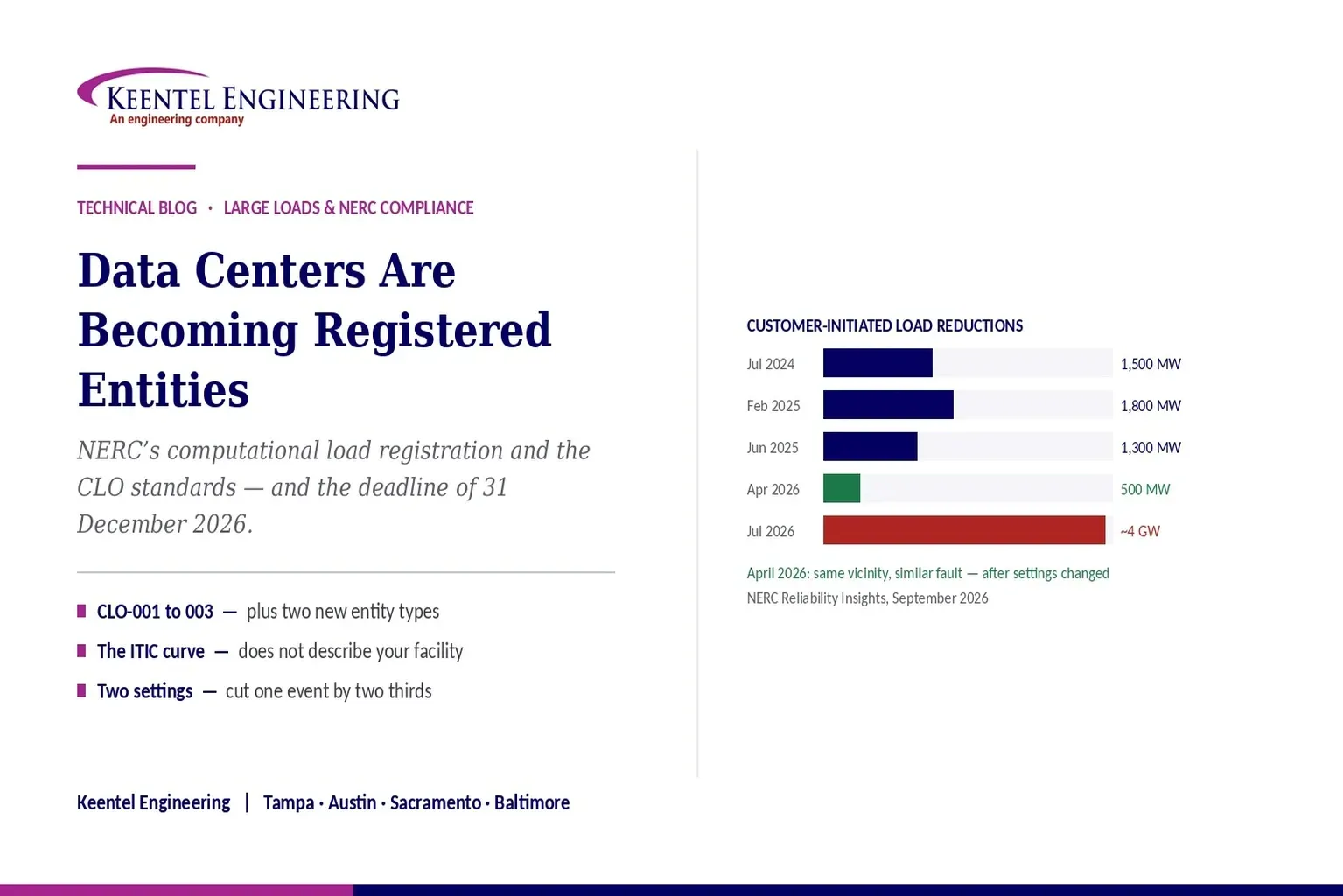
Learn how NERC computational load registration impacts data centers, CLO standards, ride-through requirements, modeling, and grid reliability compliance.
By SANDIP R PATEL
•
September 7, 2026
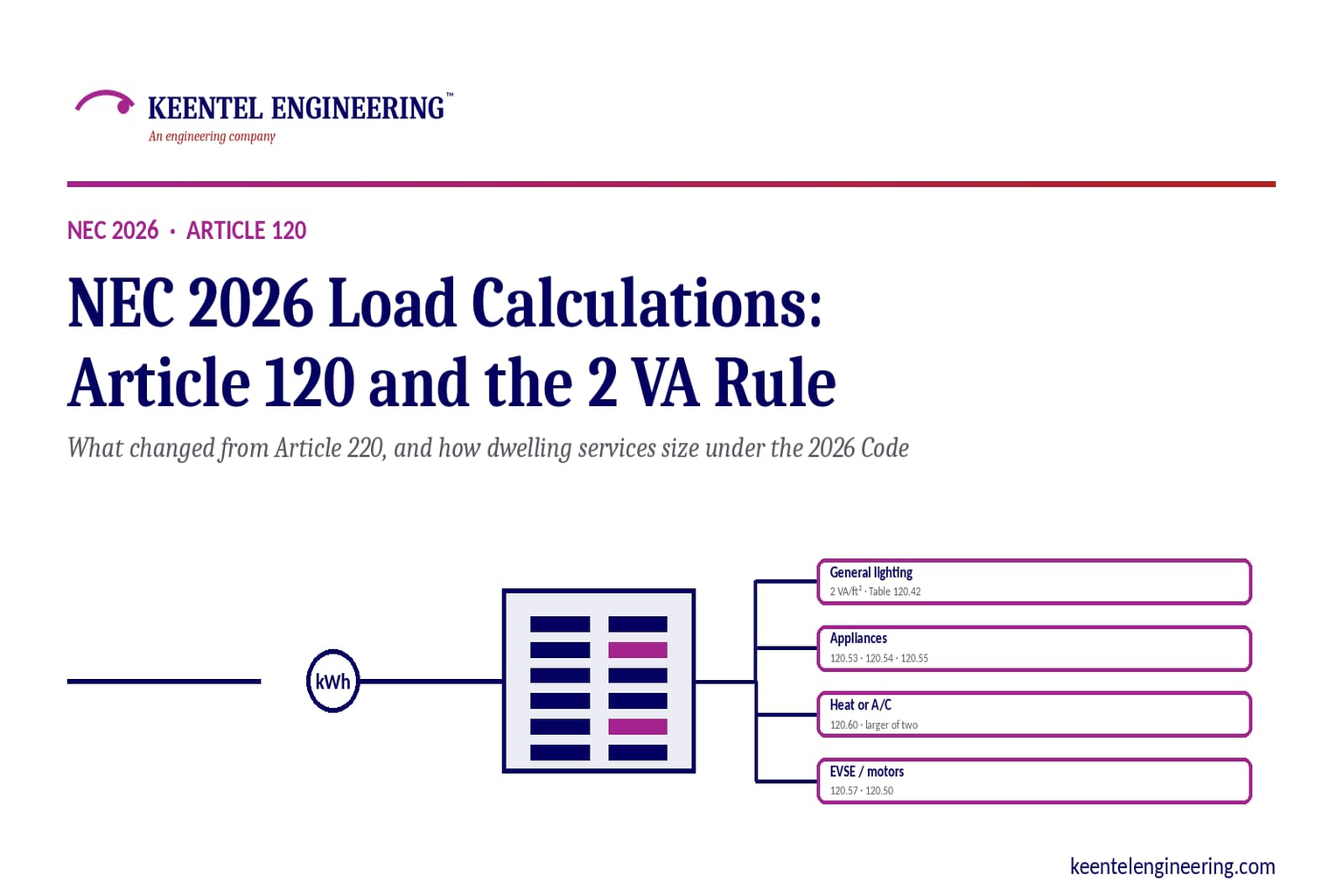
Learn NEC 2026 load calculations, Article 120 changes, the 2 VA rule, EV charging requirements, service sizing, and dwelling calculation methods.
By SANDIP R PATEL
•
September 7, 2026
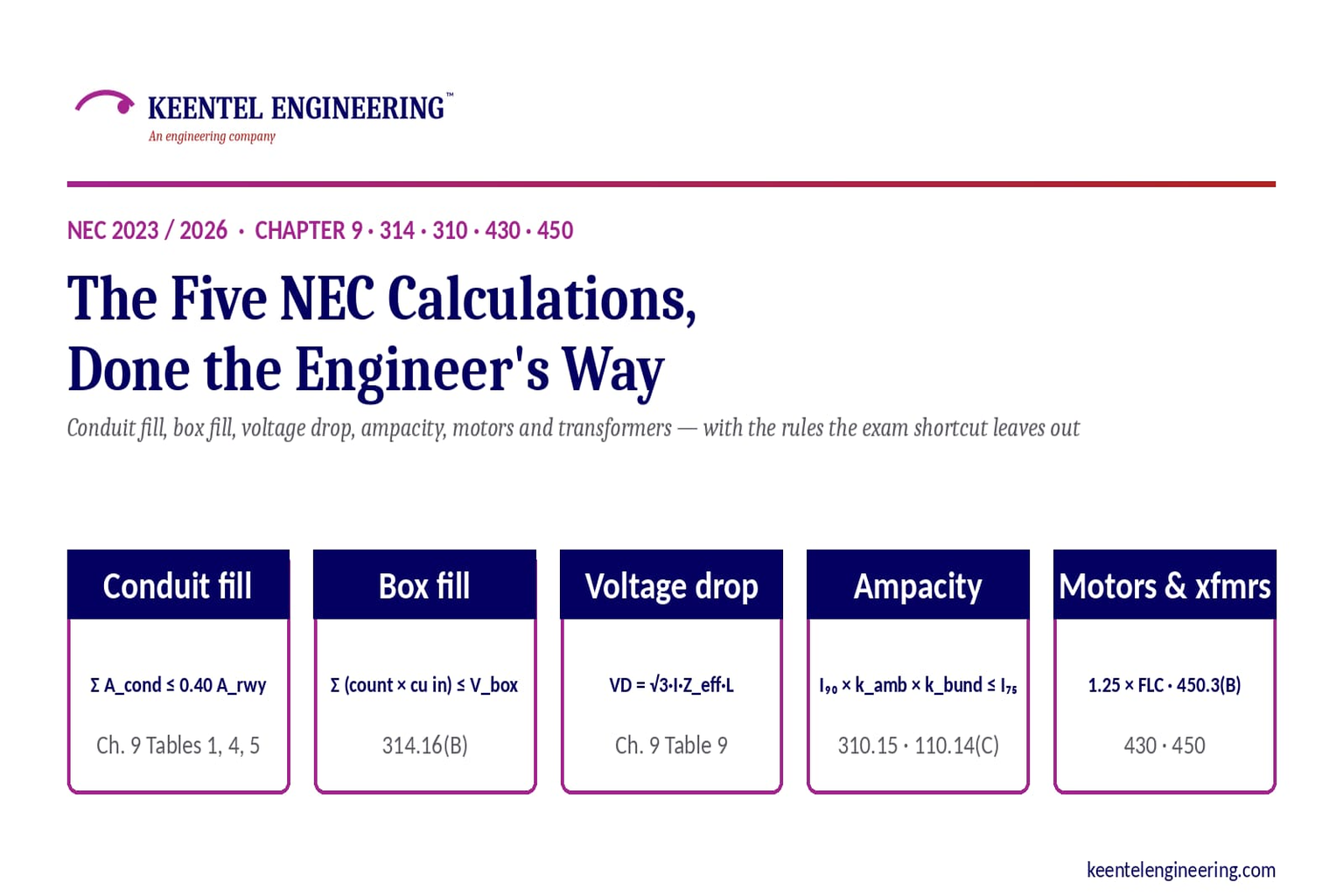
Learn five essential NEC calculations covering conduit fill, voltage drop, ampacity, motor circuits, and transformer protection with engineering examples.
By SANDIP R PATEL
•
September 7, 2026
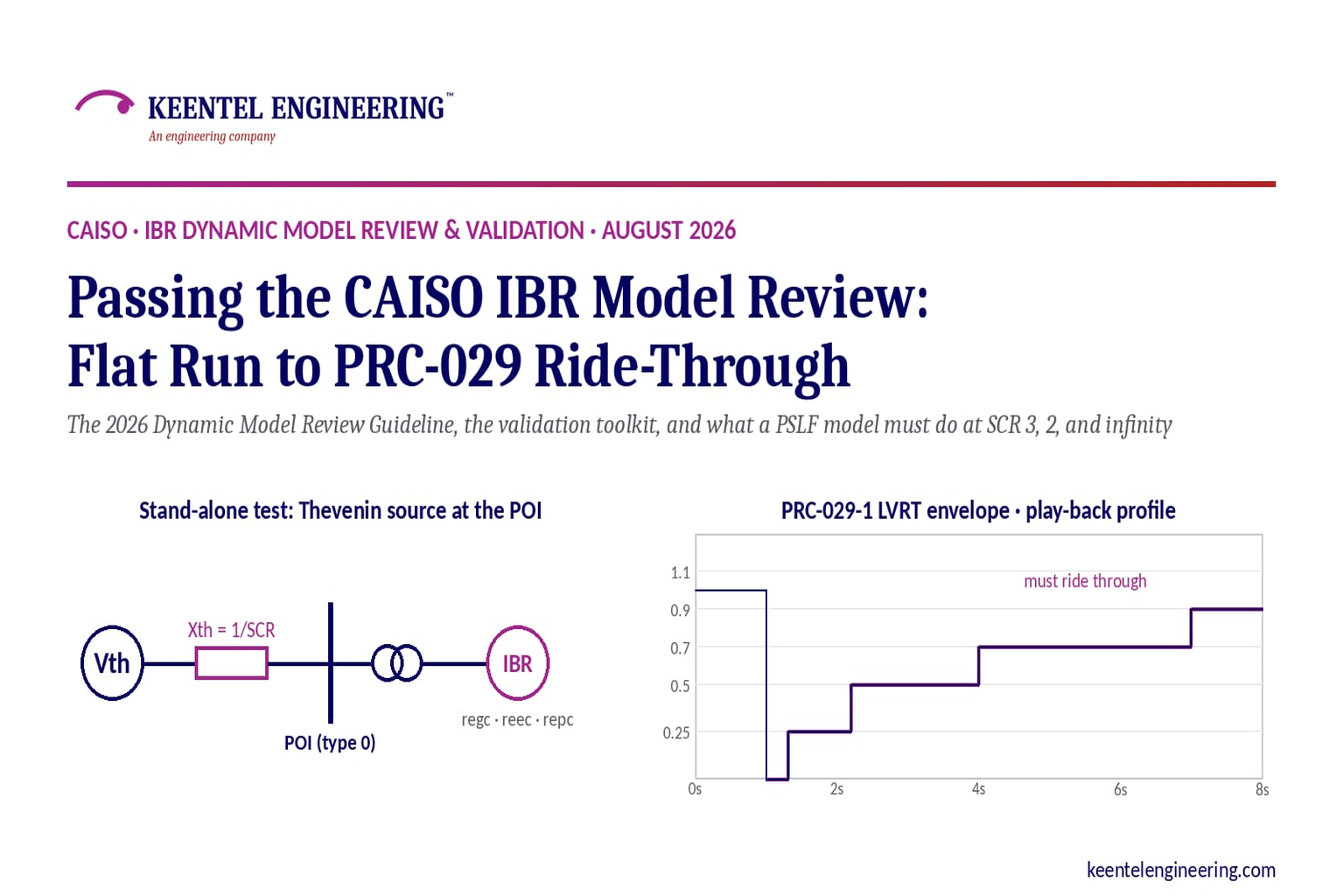
Learn how CAISO reviews IBR models using PSLF validation, PRC-029-1 ride-through requirements, WECC models, and inverter resource compliance testing.
By SANDIP R PATEL
•
September 7, 2026
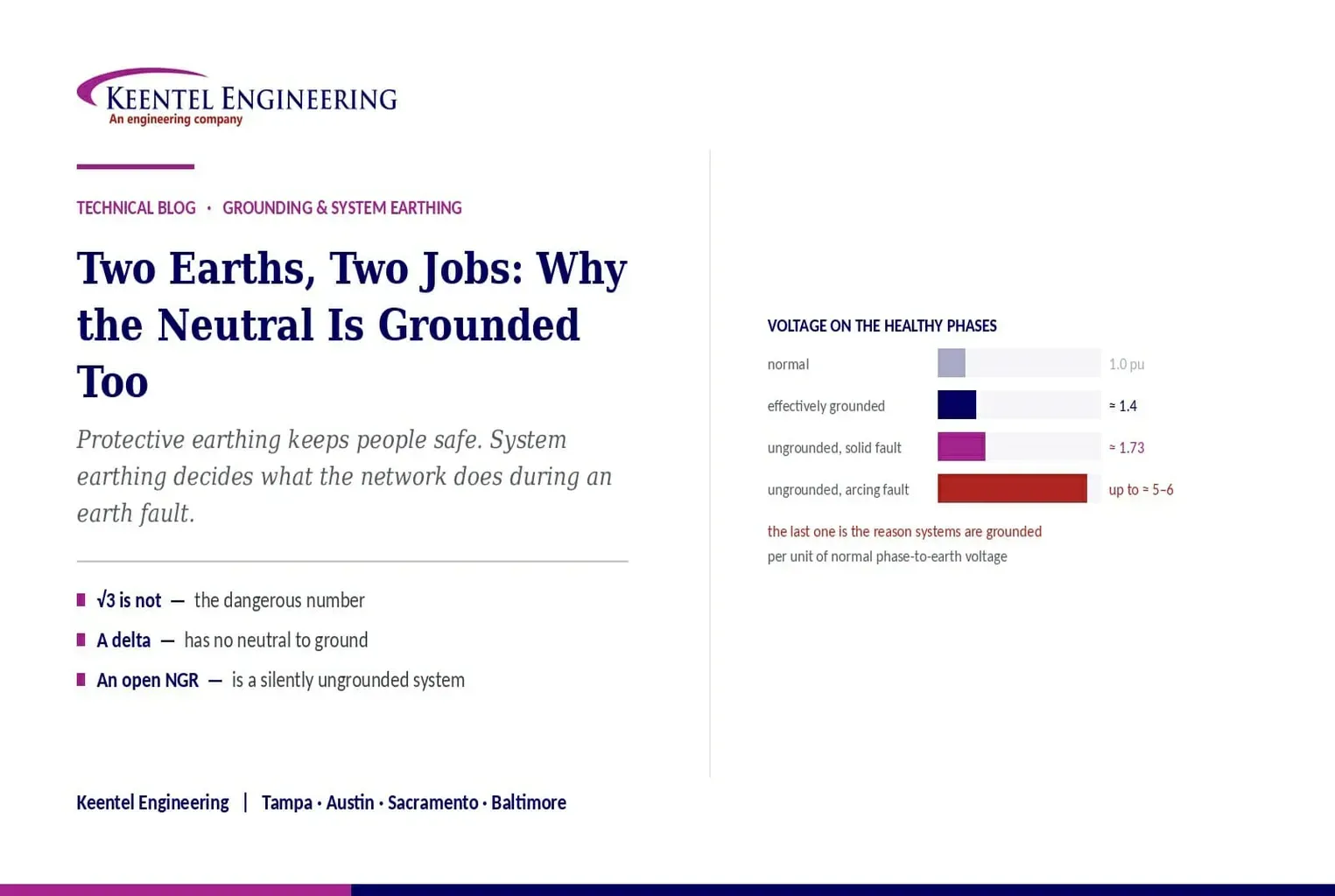
Understand system earthing and protective earthing, neutral grounding methods, effective grounding, ground grids, and insulation coordination for power systems
By SANDIP R PATEL
•
September 6, 2026
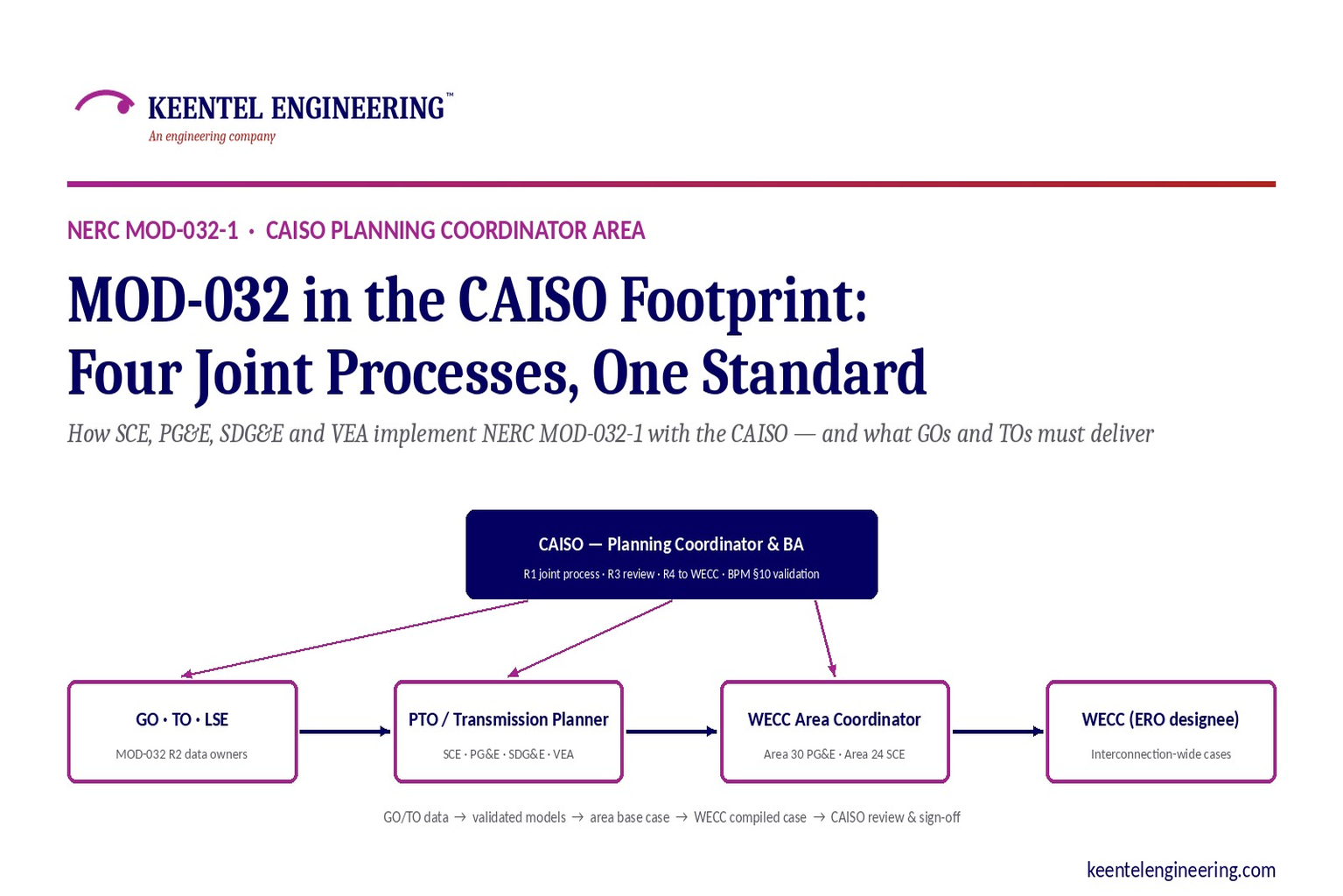
Learn how NERC MOD-032-1 applies across CAISO, SCE, PG&E, VEA and SDG&E, including generator data, PSLF models, EMT requirements and WECC submissions.
By SANDIP R PATEL
•
September 6, 2026
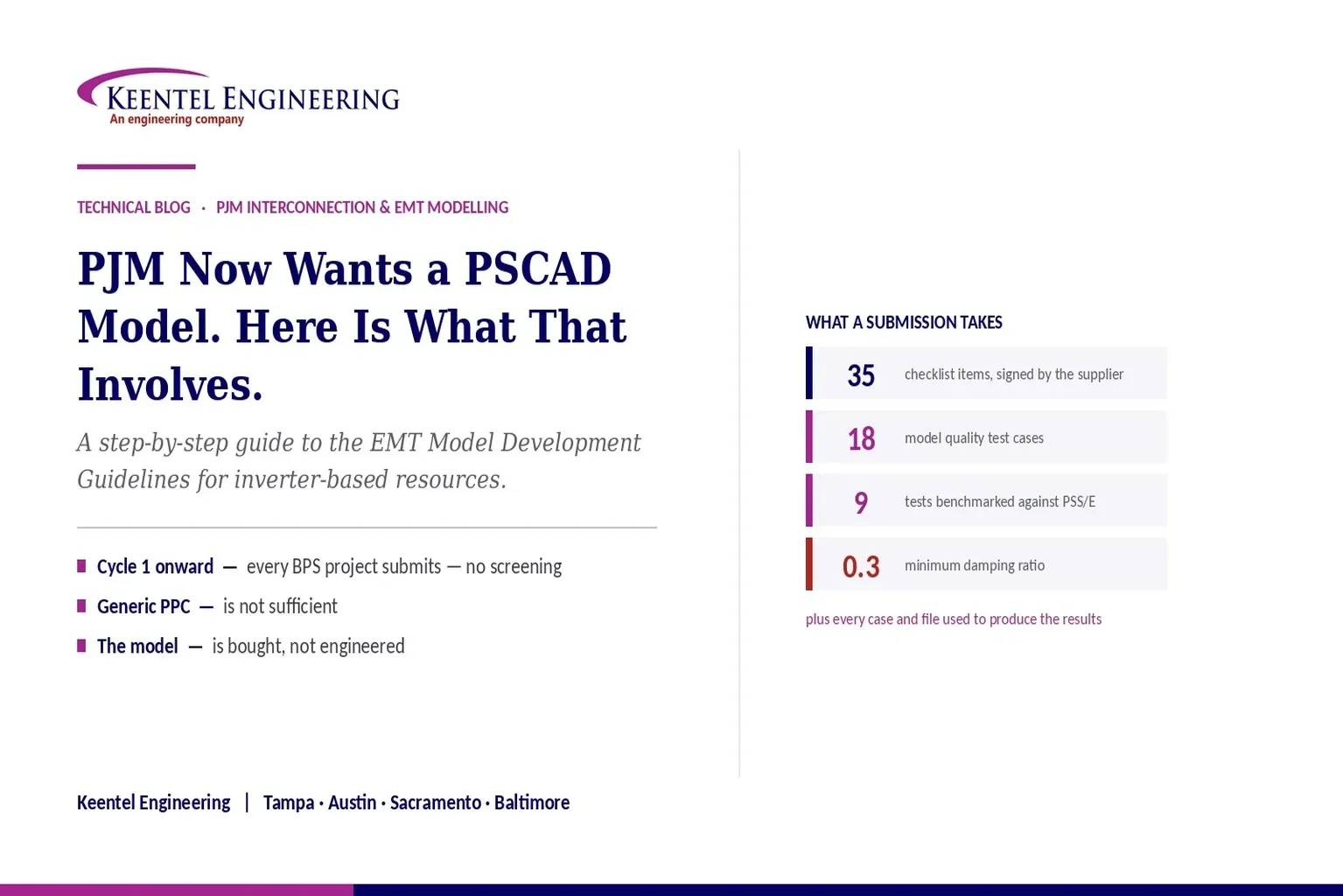
Learn PJM PSCAD model requirements for inverter-based resources, EMT testing, PSS/E benchmarking, ride-through studies, and compliance submissions
By SANDIP R PATEL
•
September 6, 2026
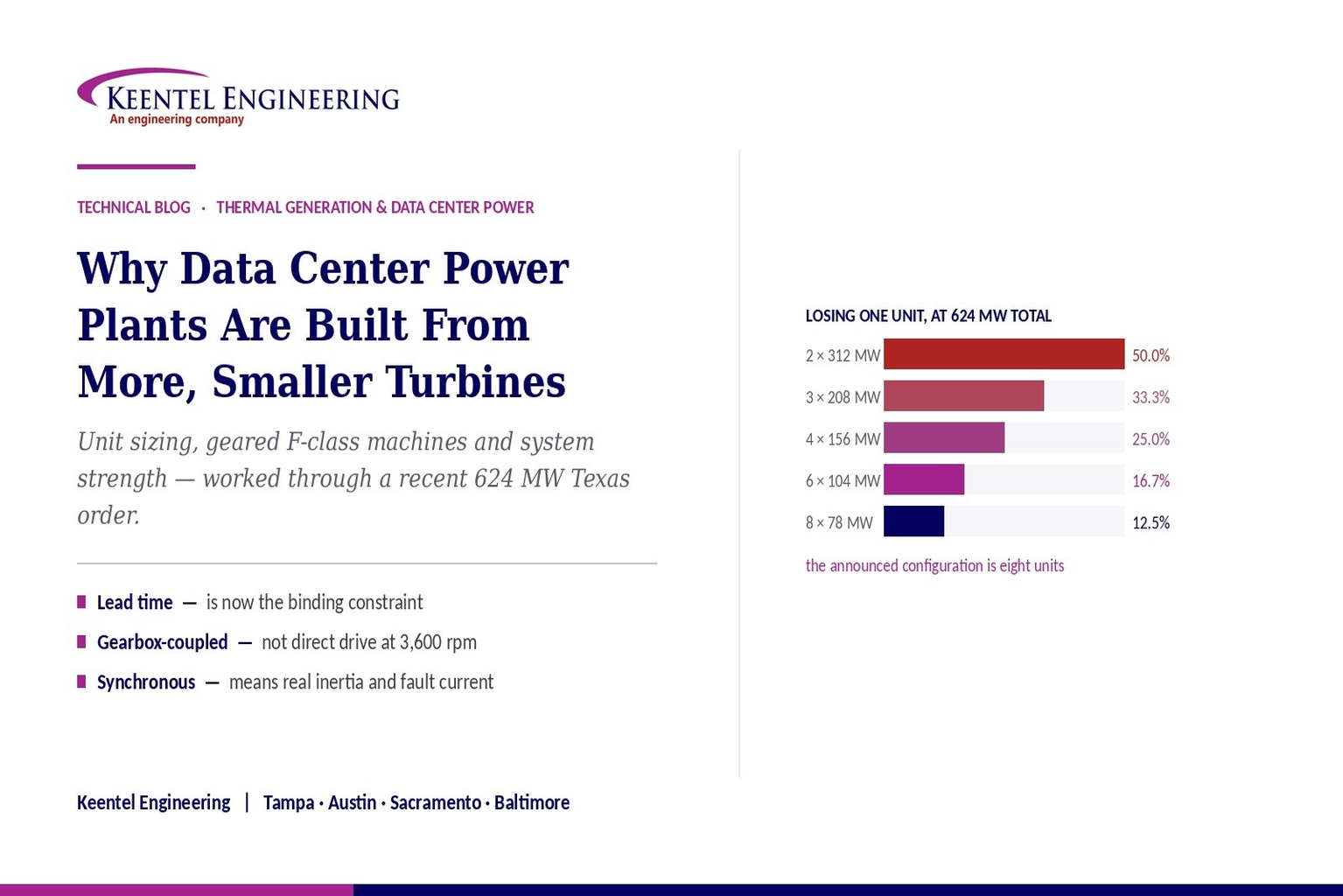
Learn why data center power plants use multiple smaller gas turbines, covering 624 MW capacity, redundancy, grid connection, system strength, and engineering.
By SANDIP R PATEL
•
September 5, 2026
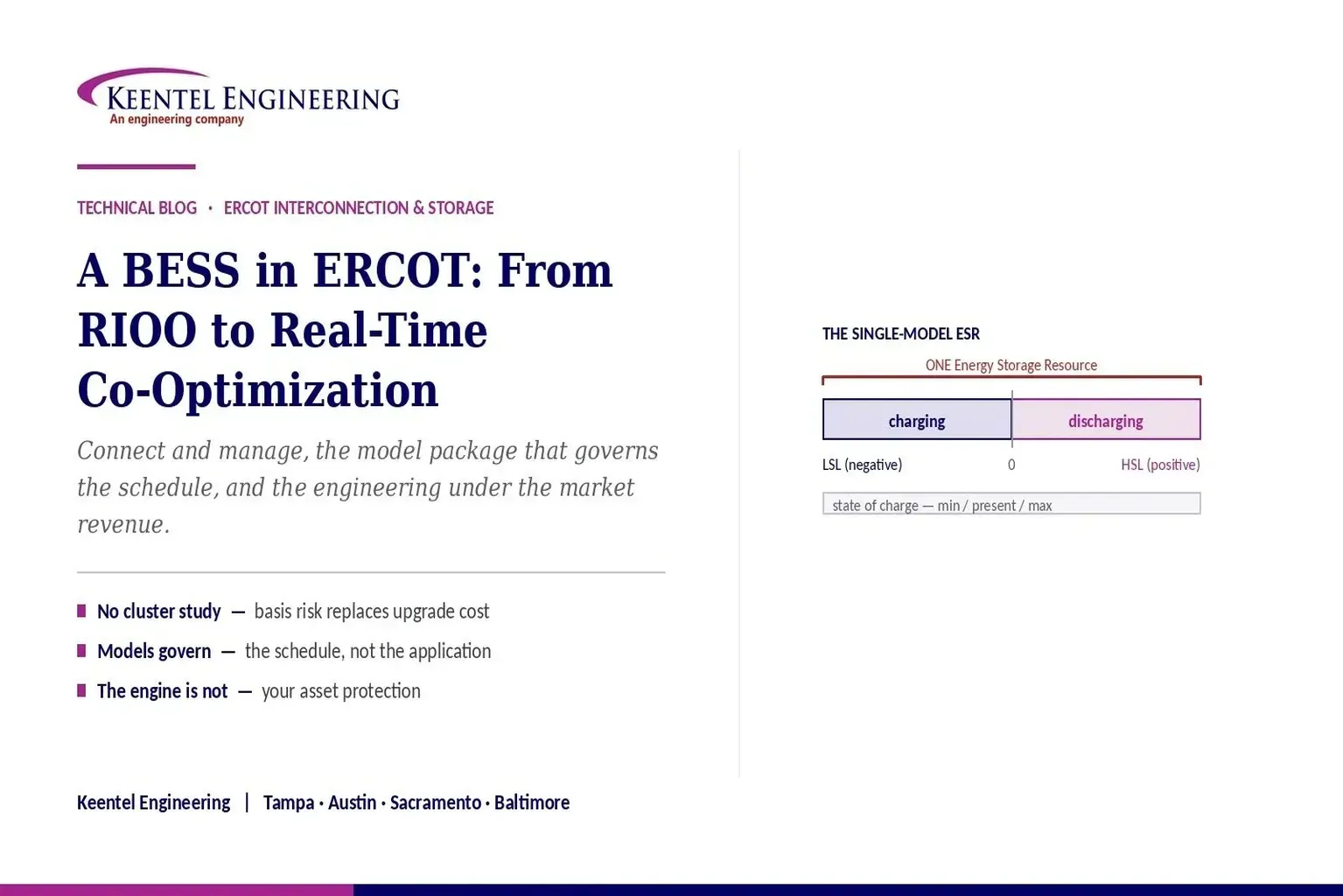
Understand ERCOT BESS interconnection requirements, including model packages, EMT studies, ride-through compliance, telemetry, and real-time co-optimization.