A Coordinated Electric System Interconnection Review—the utility’s deep-dive on technical and cost impacts of your project.
Challenge: Frequent false tripping using conventional electromechanical relays
Solution: SEL-487E integration with multi-terminal differential protection and dynamic inrush restraint
Result: 90% reduction in false trips, saving over $250,000 in downtime
AP1000 Supply Chain: Grid Interconnection & Licensing Guide
Jun 29, 2026 | Blog
An engineering and interconnection perspective on the federal supply-chain loan program for large light-water reactors, the bird-in-hand value of existing combined operating licenses, and what it takes to connect new nuclear units to the bulk power system.
Executive Summary
The federal government has signaled, for the first time in a generation, a willingness to underwrite the rebuilding of America’s large-reactor manufacturing base. A conditional commitment under a new supply-chain loan program would finance the long-lead equipment for ten large-scale light-water reactors organized as five projects of two units each with the explicit goal of shortening deployment timelines by up to three years. The reactor at the center of the program is the only large Generation III+ design currently licensed and operating in the United States.
For developers and utilities weighing participation, the financing is only half the equation. The other half is physical: where can two 1,100-megawatt units actually be built, licensed, and connected to the grid quickly enough to justify the equity? This paper argues that the answer is written largely in the existing license landscape and that the projects with the clearest path forward are those that can reuse a site, a switchyard, and a transmission corridor that the bulk power system was already studied to accommodate.
Key takeaways
Ten units at roughly 1.1 GW each represent on the order of 11 GW of new firm capacity seeking interconnection over the 2030s a scale that will reshape transmission planning in several regions.
Sites with an existing or recently held combined operating license (COL) for the chosen reactor type are a “bird in hand”: the licensing basis, point of interconnection, and transmission studies are partially or fully complete.
The interconnection scope switchyard, generator step-up transformers, line additions, dynamic and electromagnetic-transient modeling, protection coordination, and NERC compliance is a critical-path workstream that should begin in parallel with equipment procurement, not after it.
The Supply-Chain Loan Program: What Was Announced
The program issues a conditional loan commitment to finance the purchase of long-lead equipment needed to restart the domestic nuclear supply chain. As structured, it would back up to five projects, each pairing the reactor vendor with a utility or energy-company partner, and each delivering two large reactors at a single site. The combined facility size of the program is ten units. A separate, much smaller construction-loan facility sits alongside the equipment program.
The financing is a commitment, not a disbursement. Before funds flow, the parties must satisfy technical, legal, environmental, and financial conditions and execute definitive agreements. Each project also carries a substantial upfront equity requirement understood to be on the order of half a billion dollars from each of the two project owners before loan funds can be drawn which keeps real capital at risk and tests the seriousness of every prospective partner.
The vendor has reportedly signed letters of intent with several potential partners, each with an identified site, though none of the partners or sites have been named publicly. That secrecy is itself instructive: publicly traded utilities know they will face hard questions from boards and shareholders about whether a new large-reactor commitment meets the “prudent investor” standard, given the recent history of cost and schedule performance on this reactor class in the United States.
Why Long-Lead Equipment Is the Critical Path
Large reactors are gated by a handful of components that simply cannot be produced quickly. Reactor pressure vessels, steam-supply equipment, primary coolant pumps, and main turbine-generator sets each require specialized heavy-forging and fabrication capacity, and many of these items take three years or more to manufacture and deliver. A meaningful share of this capacity sits with heavy-industry firms in Japan and South Korea, because domestic capability atrophied during the long gap in new construction.
This is the strategic logic of financing equipment first. By aggregating bulk orders across multiple projects at a fixed price, the program aims to lower per-component cost, create supply-chain efficiencies, and critically compress schedule by getting forgings into the queue before sites are even finalized. For an engineering team, the implication is direct: the procurement clock and the interconnection clock should start together. A reactor vessel ordered today is of little value if the point of interconnection is still years from an executed agreement.
Putting the Numbers in Perspective
Recent international benchmarks for new large pressurized-water reactors point to an overnight cost in the range of $9,000 per kilowatt. Applied to a single large unit, that implies a capital cost approaching $10 billion; a two-unit project, with some economy of scale, lands in the high-teens of billions; and a full ten-unit build-out sits in the neighborhood of $90 billion in current dollars.
Against that backdrop, the headline incentive package on the order of $17 to $18 billion across the equipment and construction facilities represents roughly one-fifth of the total expected capital cost of building all ten units. That is a material de-risking of the long-lead procurement, but it is not a turnkey subsidy. The remaining four-fifths must still be financed by project owners who carry the construction, schedule, and market risk.
The figures at a glance
- Benchmark overnight cost: ~$9,000/kW for a large PWR.
- Single large unit: just under $10 billion.
- Two-unit project: roughly $18–19 billion.
- Ten-unit program: on the order of $90 billion in current dollars.
- Federal incentive package: ~20% of total expected capital cost.
- Per-project owner equity: substantial, committed upfront before loan draws.
The Lessons That Shape Every Boardroom Decision
No serious discussion of new large reactors in the United States happens without reference to the two most recent attempts. The completed two-unit project in Georgia delivered working reactors, but only after roughly fifteen years of construction and a final cost in the mid-$30-billion range well above original estimates. A parallel two-unit project in South Carolina fared worse: it was abandoned in 2017 amid management failures across the utility, the vendor, and the contractors, leaving ratepayers with billions in stranded debt, pushing the vendor into bankruptcy, and resulting in fraud convictions and prison terms for several executives.
The South Carolina site has since attracted a new owner the private-equity firm that now controls the reactor vendor with a plan to complete the two partially built units. A final investment decision is not expected before 2028, and because the original licenses were terminated, the project would require new licensing. Industry-wide, that completion effort is the bellwether: its cost and schedule outcome will heavily influence whether any utility commits to entirely new units, with or without federal incentives.
“Bird in Hand”: Why the Existing License Landscape Decides the Short List
The single most useful question a developer can ask is not “where would we like to build?” but “where is the licensing and interconnection groundwork already done?” A site that already holds or recently held a combined operating license for the chosen reactor type carries an enormous head start. The environmental review, the safety basis, the site characterization, and the point of interconnection have all been examined once already. A site licensed for a different reactor type, by contrast, would have to repeat much of that effort and expense to accommodate a new design.
The table below organizes the U.S. sites whose licensing history makes them logical candidates for new large light-water units. Sites already associated with the program’s reactor type are the strongest matches; sites licensed for other designs are listed because the underlying site, switchyard, and transmission position retain value even when the reactor type would change.
| License Holder | Reactor | Utility |
|---|---|---|
| Levy Nuclear Plant Unit 1 — COL Terminated (4/26/2018) | AP1000 | Duke |
| Levy Nuclear Plant Unit 2 — COL Terminated (4/26/2018) | AP1000 | Duke |
| William States Lee III Nuclear Station Unit 1 | AP1000 | Duke |
| William States Lee III Nuclear Station Unit 2 | AP1000 | Duke |
| Shearon Harris 3 | AP1000 | Duke |
| Shearon Harris 4 | AP1000 | Duke |
| Turkey Point Unit 6 | AP1000 | FP&L |
| Turkey Point Unit 7 | AP1000 | FP&L |
| V.C. Summer Unit 2 — COL Terminated (3/6/2019) | AP1000 | n/a |
| V.C. Summer Unit 3 — COL Terminated (3/6/2019) | AP1000 | n/a |
| South Texas Project Unit 3 — COL Terminated (7/12/2018) | BWR | STP |
| South Texas Project Unit 4 — COL Terminated (7/12/2018) | BWR | STP |
| Fermi 3 | ESBWR | DTE |
| North Anna Plant Unit 3 | ESBWR | Dominion |
Reading the Short List Site by Site
Duke the deepest bench
One utility carries six large-reactor licenses across three sites that were never built, including two units acquired through a corporate combination and two more that came off the active list when demand growth slowed and low natural-gas prices undercut the economics. None were pursued to construction which is precisely what makes them attractive now: the licensing and interconnection work exists, but the steel does not, leaving full flexibility on timing.
Turkey Point licensed but stalled on cost recovery
Two licensed units in Florida were suspended indefinitely after a state regulatory decision declined to let the utility recover construction costs during the build and found that the applicant had not demonstrated a realistic and practical intent to break ground in the near term. The license remains a real asset; the obstacle has been regulatory cost-recovery rather than engineering feasibility.
V.C. Summer a partially built site with terminated licenses
The two abandoned units retain enormous latent value as physical infrastructure, but because the licenses were terminated, completion would require fresh licensing. This is the project the rest of the industry is watching.
South Texas Project, Fermi 3, and North Anna 3 right sites, different reactors
These carry licenses for boiling-water or other designs rather than the program’s reactor type. The terminated boiling-water units in Texas faced strong ratepayer opposition from municipal participants two decades ago and are unlikely to revive in their original form; the other two were shelved chiefly over local demand. In each case the site and grid position remain valuable, but a reactor-type change would reopen licensing.
Sites With Withdrawn Applications
A second group of sites once pursued licenses but withdrew their applications, typically for other reactor designs. These represent thinner head starts the regulatory record is incomplete but the underlying sites, several with prior environmental and siting work, can still shorten a greenfield timeline.
| License Holder | Reactor / Status |
|---|---|
| Victoria Station 1 and 2 (withdrawn) | Early Site Permit only |
| River Bend 3 (withdrawn) | ESBWR |
| Nine Mile Point 3 (withdrawn) | ESBWR |
| Grand Gulf 3 (withdrawn) | ESBWR |
| Calvert Cliffs 3 (withdrawn) | EPR |
| Callaway 2 (withdrawn) | EPR |
The Interconnection Reality: 11 GW Looking for a Home
Ten units at roughly 1.1 GW apiece is on the order of 11 gigawatts of new firm, dispatchable capacity enough to power millions of households entering the interconnection process over the 2030s. Whether a project succeeds or stalls often comes down to how cleanly that capacity can be absorbed by the surrounding transmission network. This is where the existing-license advantage becomes an engineering advantage, not merely a regulatory one.
A brownfield nuclear site typically comes with a high-voltage switchyard, established transmission corridors, and a transmission system that was once studied (and in many cases physically built) to export large blocks of generation. Reusing that interconnection position can save years of study time and hundreds of millions of dollars in network upgrades relative to a greenfield site that must be added to an interconnection cluster from scratch. The same logic increasingly applies to retiring coal sites and other large generators, where surplus interconnection service and generator-replacement provisions can let new capacity inherit an existing point of interconnection.
Why a brownfield interconnection position is worth so much
- An existing point of interconnection and switchyard footprint reduces new right-of-way and permitting risk.
- Prior system-impact and facilities studies narrow the unknowns in network-upgrade scope and cost.
- Transmission that already moved large generation lowers the odds of deep, schedule-killing network upgrades.
- Generator-replacement and surplus-interconnection pathways can preserve queue position and in-service dates.
Substation, Switchyard, and Transmission Scope
Connecting a two-unit station of this size is a major substation and transmission undertaking in its own right. Each unit needs generator step-up transformers sized for its full output, a high-voltage switchyard arranged for reliability (commonly a breaker-and-a-half or ring-bus configuration), and station-service and backup power that meet the stringent reliability requirements of a nuclear facility. Delivering two gigawatts-plus from a single site frequently requires new or reconductored extra-high-voltage lines, expanded terminal stations, and reactive-power resources to hold voltage within limits across a range of system conditions.
These are not afterthoughts to the reactor island; they are long-lead, permit-heavy scopes that belong on the critical path next to the reactor procurement. An owner’s engineer who can carry interconnection, substation, and transmission design alongside the nuclear scope keeps the grid connection from becoming the constraint that idles a finished plant.
Modeling, Studies, and NERC Compliance
Large synchronous reactors bring real strengths to the grid inertia, fault current, and voltage support but they must still earn their interconnection through rigorous study. That work spans steady-state power-flow and short-circuit analysis, dynamic stability simulation in tools such as PSS/E, and electromagnetic-transient studies in tools such as PSCAD for fast phenomena, weak-grid behavior, and transient recovery voltage on switchyard breakers. Protection coordination, relaying, and ride-through performance round out the package.
Layered on top is a thick stack of mandatory reliability obligations. Modeling and data standards, facility-rating and interconnection requirements, protection-system standards, and transmission-planning standards all apply, and each
generator interconnection agreement carries its own testing and validation commitments.
Getting the studies right the first time is one of the most effective schedule-protection measures available to a new-build project, because re-study and dispute are among the most common causes of interconnection delay.
Global Context: A Broader New-Build Wave
The domestic supply-chain push is one front in a wider movement. Several developments underscore how much momentum is building behind both large reactors and small modular reactors, and why supply-chain capacity is now a strategic concern worldwide:
- A federal program is separately exploring whether nearly twenty metric tons of surplus plutonium could be converted into advanced reactor fuel, with several developers in active negotiation a potential bridge between waste liability and domestic fuel supply.
- A U.S.-based supplier and a European state utility have jointly proposed up to four small modular reactors at a former coal site in the United Kingdom, building on a completed national design-assessment milestone, while the supplier’s first-of-a-kind twin units advance under regulatory review in the United States.
- A major engineering firm has filed a notice of intent with the U.S. regulator to begin licensing a long-established heavy-water reactor platform, aiming at large industrial and data-center demand.
- Canada has issued its first national nuclear strategy, targeting up to ten new large reactors domestically, expanded uranium output, and export of its reactor technology.
- In Poland, a developer has agreed terms with a host city for a small modular reactor station, part of a multi-site program referencing a Canadian build already under construction.
- In India, a large private conglomerate has announced plans to enter nuclear generation with an ambition of up to ten gigawatts of capacity by the mid-2030s, following the opening of the sector to private firms.
The common thread is demand data centers, artificial-intelligence compute, advanced manufacturing, and broad electrification colliding with a global shortage of heavy-reactor manufacturing capacity. Whoever can secure long-lead equipment and clean interconnection positions first will set the pace.
What This Means for Developers and Owners
- Treat the license landscape as a procurement input. The strongest candidate sites are those whose licensing, point of interconnection, and transmission studies are partially or fully complete. Screen the portfolio against this filter before committing equity.
- Start interconnection in parallel with equipment orders. Reactor forgings and the generator interconnection agreement are both multi-year items. Sequencing them in series wastes the schedule advantage the financing is designed to create.
- Quantify the network-upgrade exposure early. A feasibility-level interconnection screen — power flow, short-circuit, and a first cut at stability — can reveal whether a site is a clean connection or a deep-upgrade problem long before a formal study queue position is taken.
- Plan the studies to NERC standards from day one. Modeling, facility ratings, protection, and transmission-planning compliance are not paperwork at the end; they shape the design and the in-service date.
- Consider brownfield and generator-replacement pathways. Retiring thermal sites and previously licensed nuclear sites can offer an inherited interconnection position that materially de-risks schedule and cost.
How Keentel Engineering Supports New Nuclear Interconnection
Keentel Engineering is a power-systems and grid-interconnection consultancy built around exactly the workstreams that determine whether a large new generator reaches commercial operation on schedule. For nuclear and other large interconnecting projects, Keentel supports owners and developers across the full interconnection lifecycle:
- Point-of-interconnection engineering and interconnection studies — feasibility, system-impact, and facilities-level analysis.
- Substation and switchyard design, including generator step-up arrangements and high-voltage bus configurations.
- Transmission-line design and network-upgrade scoping.
- Dynamic and electromagnetic-transient modeling using PSS/E and PSCAD, including stability, short-circuit, and protection studies.
- Owner’s engineer services that integrate the interconnection scope with the balance of plant.
- NERC operations-and-planning compliance support across the applicable reliability standards.
Talk to Keentel
If your
team is evaluating a site against the new-build financing program or weighing a brownfield interconnection position Keentel can run an early-stage interconnection screen and frame the substation and transmission scope before you commit capital.
Sources & References
This paper is grounded in publicly available program announcements and licensing records, interpreted through Keentel Engineering’s own engineering analysis. Primary references include:
- U.S. Department of Energy program announcements describing the supply-chain and construction loan facilities and their structure.
- U.S. Nuclear Regulatory Commission licensing records for combined operating licenses, including issued, terminated, and withdrawn applications (basis for Tables 1 and 2).
- Publicly reported international cost benchmarks for large pressurized-water reactors.
- Public statements and announcements regarding international new-build and small-modular-reactor programs referenced in the global-context section.
All interconnection, substation, transmission, modeling, and NERC-compliance analysis and recommendations represent the independent professional perspective of
Keentel Engineering.
Frequently Asked Questions
What is the supply-chain loan program in plain terms?
It is a conditional federal commitment to finance the long-lead equipment needed to build a set of large light-water reactors organized as five projects of two units each, ten units in total. The goal is to restart domestic manufacturing capacity and shorten deployment by up to three years by ordering critical components in bulk and early.
How much money is involved, and what does it cover?
The headline incentive package is on the order of $17–18 billion across equipment and a smaller construction-loan facility. That is roughly one-fifth of the estimated ~$90 billion needed to build all ten units, so it de-risks procurement rather than fully funding the program. Owners must still finance the remaining capital and commit substantial equity upfront before drawing loan funds.
What reactor is at the center of the program?
A large Generation III+ pressurized-water design — the only large reactor of its generation currently licensed and operating in the United States. Each unit is rated at roughly 1.1 GW, so a two-unit site produces more than 2 GW.
Why focus on “long-lead” equipment?
Components such as reactor pressure vessels, steam-supply systems, primary coolant pumps, and turbine-generators can take three or more years to fabricate, and much of the heavy-forging capacity sits overseas. Ordering them early, in bulk, and at fixed prices is the single biggest lever on both cost and schedule.
What is a combined operating license (COL), and why does it matter so much?
A COL is the regulatory authorization to build and operate a reactor at a specific site. A site that holds — or recently held — a COL for the chosen reactor type has already completed much of the environmental, safety, siting, and interconnection groundwork, which is why such sites form the logical short list for fast deployment.
What is the difference between a “terminated” and a “withdrawn” license?
A terminated COL was issued and later cancelled; the regulatory record exists but the authorization no longer does, so a new build generally needs fresh licensing. A withdrawn application never reached a final license at all. Both leave behind useful site and interconnection work, but a previously issued license is the stronger head start.
Which sites have the clearest path forward?
Sites already licensed for the program’s reactor type — several held by a single large utility, plus two units in Florida — are the strongest matches because the reactor design and the licensing basis align. Sites licensed for other designs retain value through their location and grid position, but a reactor-type change would reopen licensing.
How much new capacity is this, and why is interconnection a big deal?
Ten units at ~1.1 GW each is roughly 11 GW of new firm capacity. Adding that much generation to the grid requires extensive transmission planning and study. Whether a project moves quickly often depends on how cleanly the surrounding network can absorb its output — which is an interconnection-engineering question, not just a financing one.
Why is a brownfield (existing) site such an interconnection advantage?
An existing nuclear or large-generation site usually comes with a high-voltage switchyard, transmission corridors, and a network once studied to export large blocks of power. Reusing that point of interconnection can save years of study and substantial network-upgrade cost compared with adding a greenfield project to an interconnection cluster from scratch.
What interconnection studies does a project like this require?
At minimum: steady-state power-flow and short-circuit analysis, dynamic stability simulation (commonly in PSS/E), electromagnetic-transient studies (commonly in PSCAD) for fast phenomena and breaker transient recovery voltage, plus protection coordination and ride-through evaluation. These feed the formal feasibility, system-impact, and facilities studies.
What does the substation and transmission scope involve?
Generator step-up transformers sized to full unit output, a high-voltage switchyard arranged for reliability (often breaker-and-a-half or ring bus), nuclear-grade station and backup power, and frequently new or upgraded extra-high-voltage lines and reactive-power resources to move 2 GW-plus from a single site within voltage limits.
Which NERC standards typically apply?
A new large generator interconnection generally touches modeling and data standards, facility-rating and interconnection requirements, protection-system standards, and transmission-planning standards, among others, with testing and validation obligations carried in the interconnection agreement. Getting these right early is one of the strongest schedule-protection measures available.
How does this connect to small modular reactors and other designs?
The same interconnection disciplines apply to SMRs, heavy-water reactors, and boiling-water designs now advancing in the U.S., U.K., Canada, Poland, and elsewhere. Capacity, configuration, and study scope differ, but the need for sound point-of-interconnection engineering, modeling, and NERC compliance is universal.
How can Keentel Engineering help?
Keentel supports owners and developers across point-of-interconnection engineering and interconnection studies, substation and switchyard design, transmission-line design, PSS/E and PSCAD modeling, owner’s-engineer services, and NERC operations-and-planning compliance. Contact contact@keentelengineering.com or 813-389-7871.

About the Author:
Sandip "Sonny" R. Patel, P.E.
IEEE Senior Member · Founder & CEO, Keentel Engineering
In 1995, Sonny Patel earned his Electrical Engineering degree from the University of Illinois. But degrees don't build legacies — action does.
For three decades, he has worked the power industry from every side of the table: 16 years as a utility engineer at Exelon/Commonwealth Edison; generation leadership across hydroelectric, industrial steam turbine, and a 9 GW renewable fleet; NERC Regional Entity Senior Compliance Engineer and Audit Team Lead, auditing some of the nation's largest utilities; and testing and commissioning lead on equipment up to 765 kV — the very top of the North American grid.Utility. Generator. Regulator. Consultant. Few engineers have seen all four seats. Fewer still have sat in them.
His experience spans nuclear, hydro, conventional generation, renewables, oil and gas, mining — and today's data centers, where he is authoring a three-book series on data center design. He is a Licensed Professional Engineer in six states and a Licensed Electrical Contractor in Florida (Unlimited EC) — he doesn't just design the work; he's qualified to stand behind its execution.Today, as Founder and CEO of Keentel Engineering, Sonny leads a nationwide team of engineers delivering substation design, power system studies, NERC compliance, and commissioning — done right, coast to coast.Three decades. Every side of the table. One standard: accountable engineering.
Services

Let's Discuss Your Project
Let's book a call to discuss your electrical engineering project that we can help you with.
About the Author:
Sandip "Sonny" R. Patel, P.E.
IEEE Senior Member · Founder & CEO, Keentel Engineering
In 1995, Sonny Patel earned his Electrical Engineering degree from the University of Illinois. But degrees don't build legacies — action does.
For three decades, he has worked the power industry from every side of the table: 16 years as a utility engineer at Exelon/Commonwealth Edison; generation leadership across hydroelectric, industrial steam turbine, and a 9 GW renewable fleet; NERC Regional Entity Senior Compliance Engineer and Audit Team Lead, auditing some of the nation's largest utilities; and testing and commissioning lead on equipment up to 765 kV — the very top of the North American grid.
Utility. Generator. Regulator. Consultant. Few engineers have seen all four seats. Fewer still have sat in them.
His experience spans nuclear, hydro, conventional generation, renewables, oil and gas, mining — and today's data centers, where he is authoring a three-book series on data center design. He is a Licensed Professional Engineer in six states and a Licensed Electrical Contractor in Florida (Unlimited EC) — he doesn't just design the work; he's qualified to stand behind its execution.
Today, as Founder and CEO of Keentel Engineering, Sonny leads a nationwide team of engineers delivering substation design, power system studies, NERC compliance, and commissioning — done right, coast to coast.Three decades. Every side of the table. One standard: accountable engineering.
Leave a Comment
Thank you for contacting us.
We will get back to you as soon as possible.
We will get back to you as soon as possible.
Oops, there was an error sending your message.
Please try again later.
Please try again later.
Related Posts
By SANDIP R PATEL
•
September 26, 2026
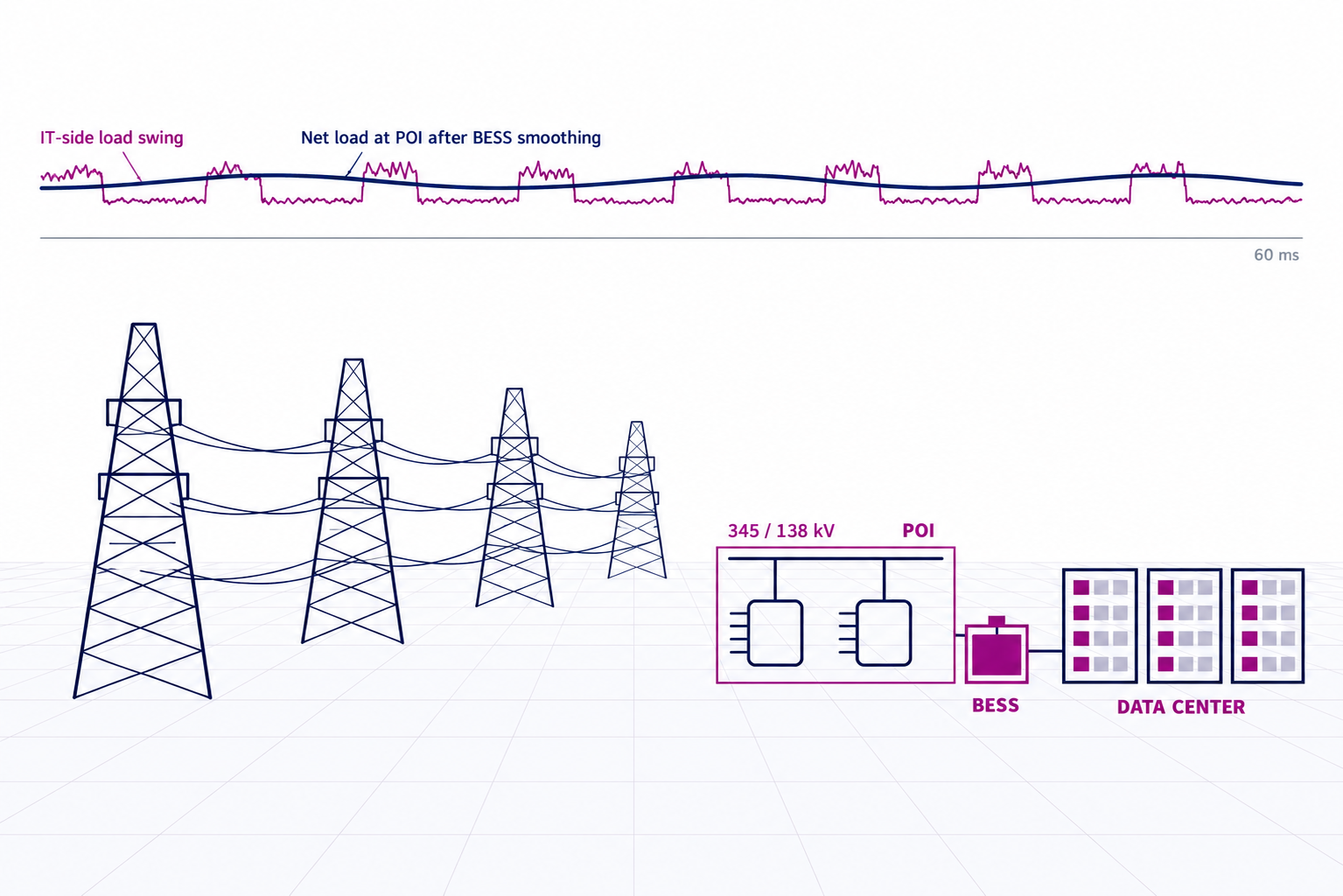
Learn how to prepare a MISO large-load interconnection package, including PSS®E models, BESS smoothing, harmonic data and transmission-owner requirements.
By SANDIP R PATEL
•
September 25, 2026
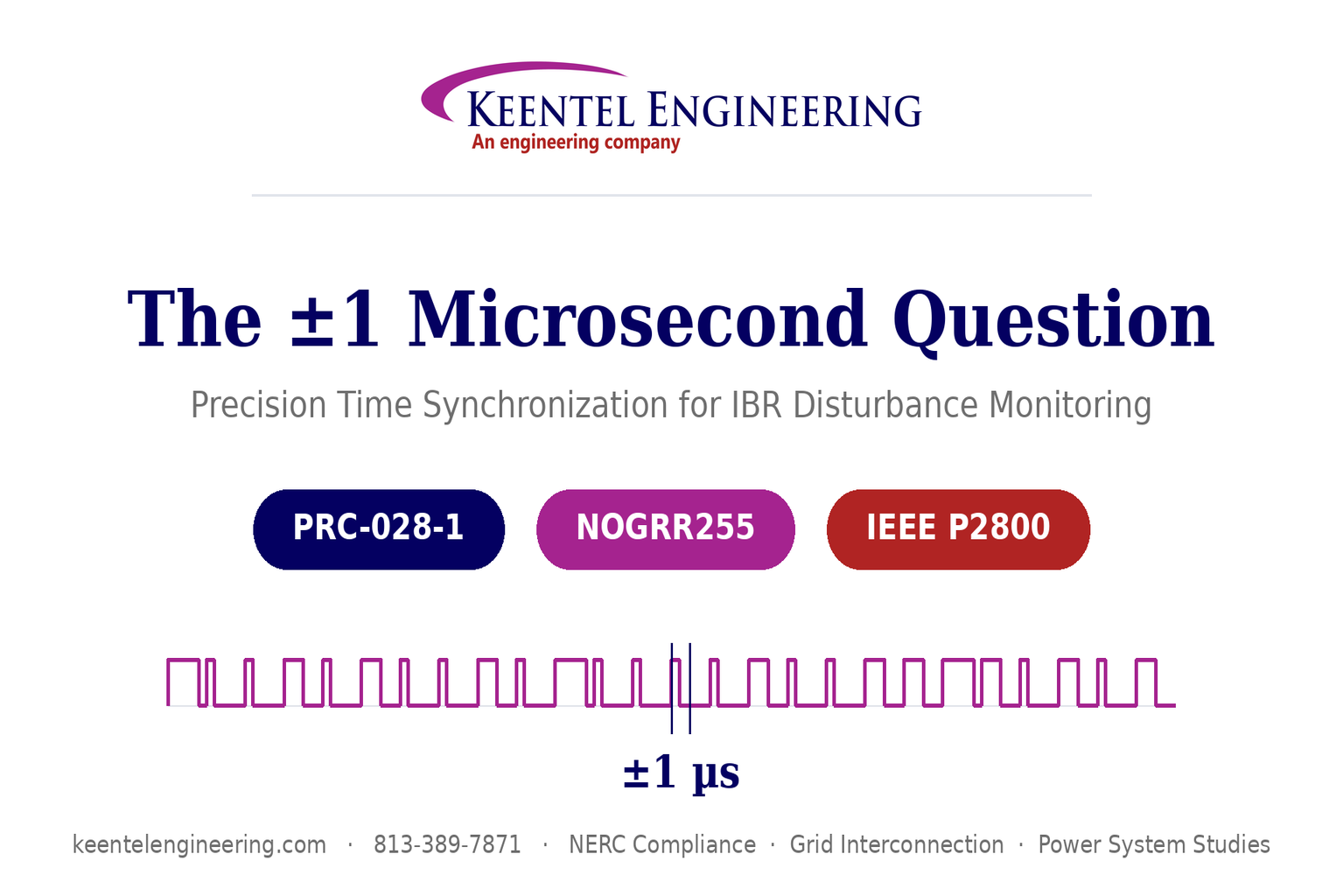
Learn how IBR time synchronization, IEEE 2800, IRIG-B verification, and PTP solutions help meet disturbance monitoring compliance requirements.
By SANDIP R PATEL
•
September 24, 2026
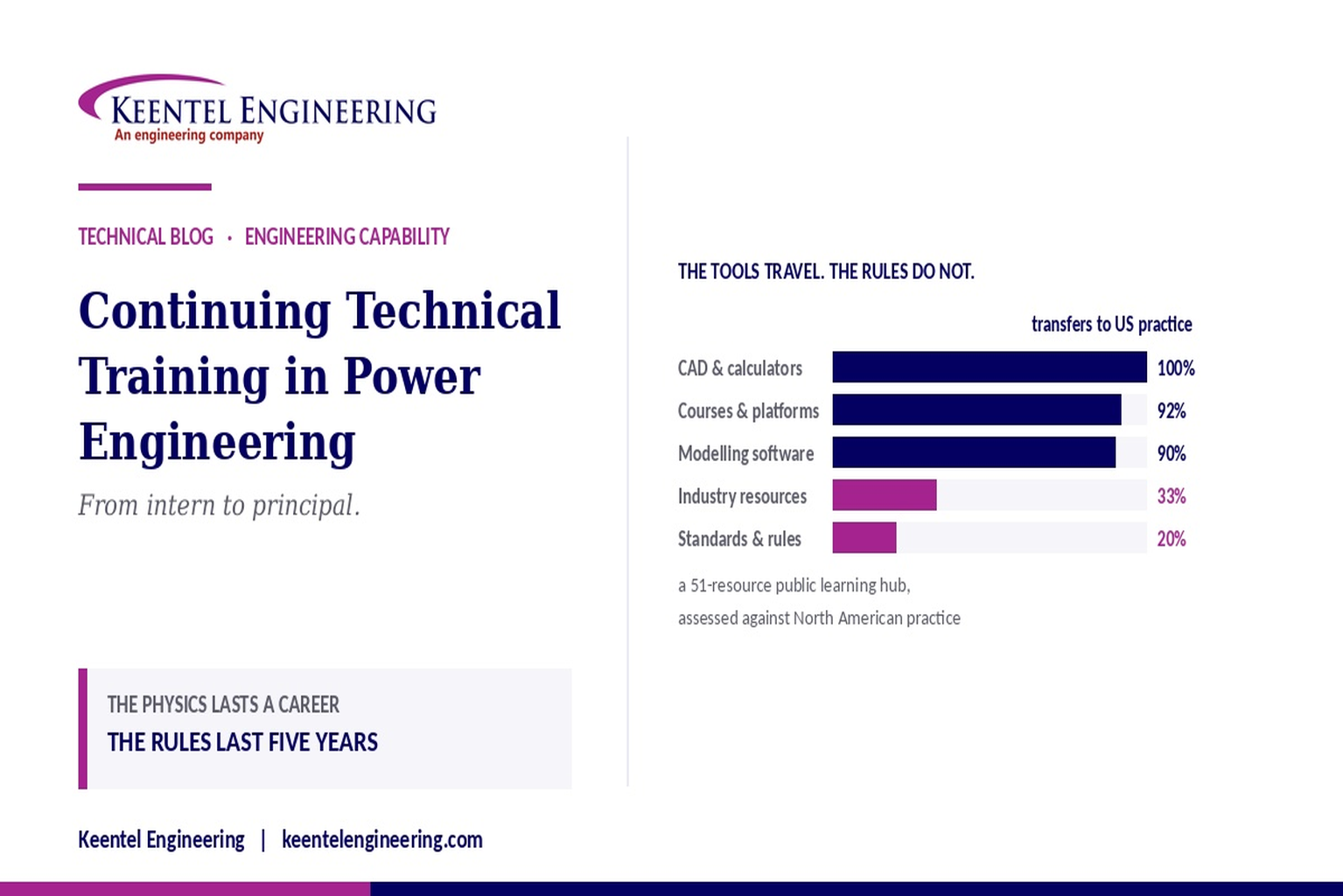
Learn why continuing technical training matters in power engineering, including standards, software skills, PDH requirements, and career growth.
By SANDIP R PATEL
•
September 22, 2026
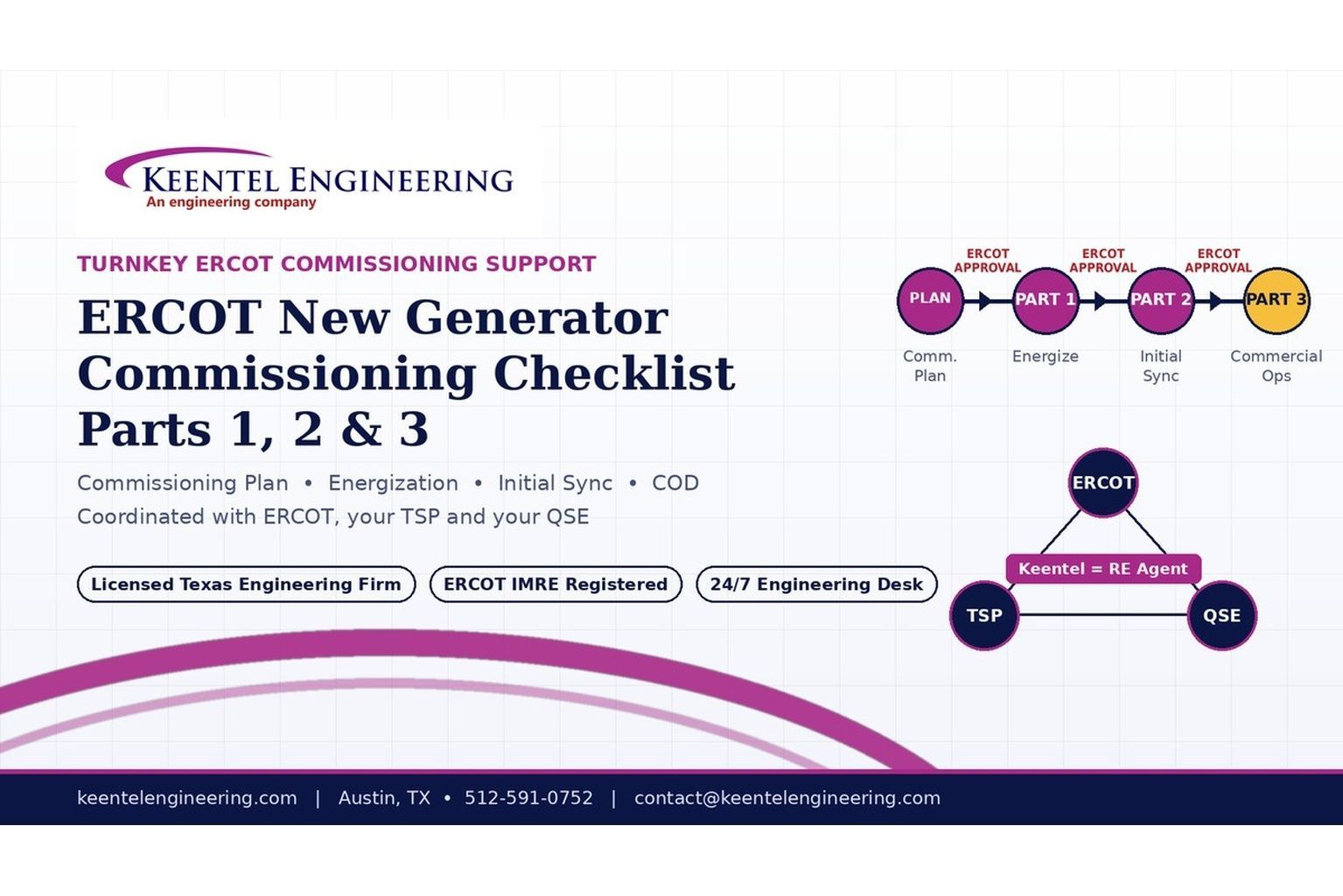
2026 ERCOT commissioning guide covering the Commissioning Plan, Checklist Parts 1–3, BESS requirements, TSP/QSE coordination, field testing and COD.
By SANDIP R PATEL
•
September 22, 2026
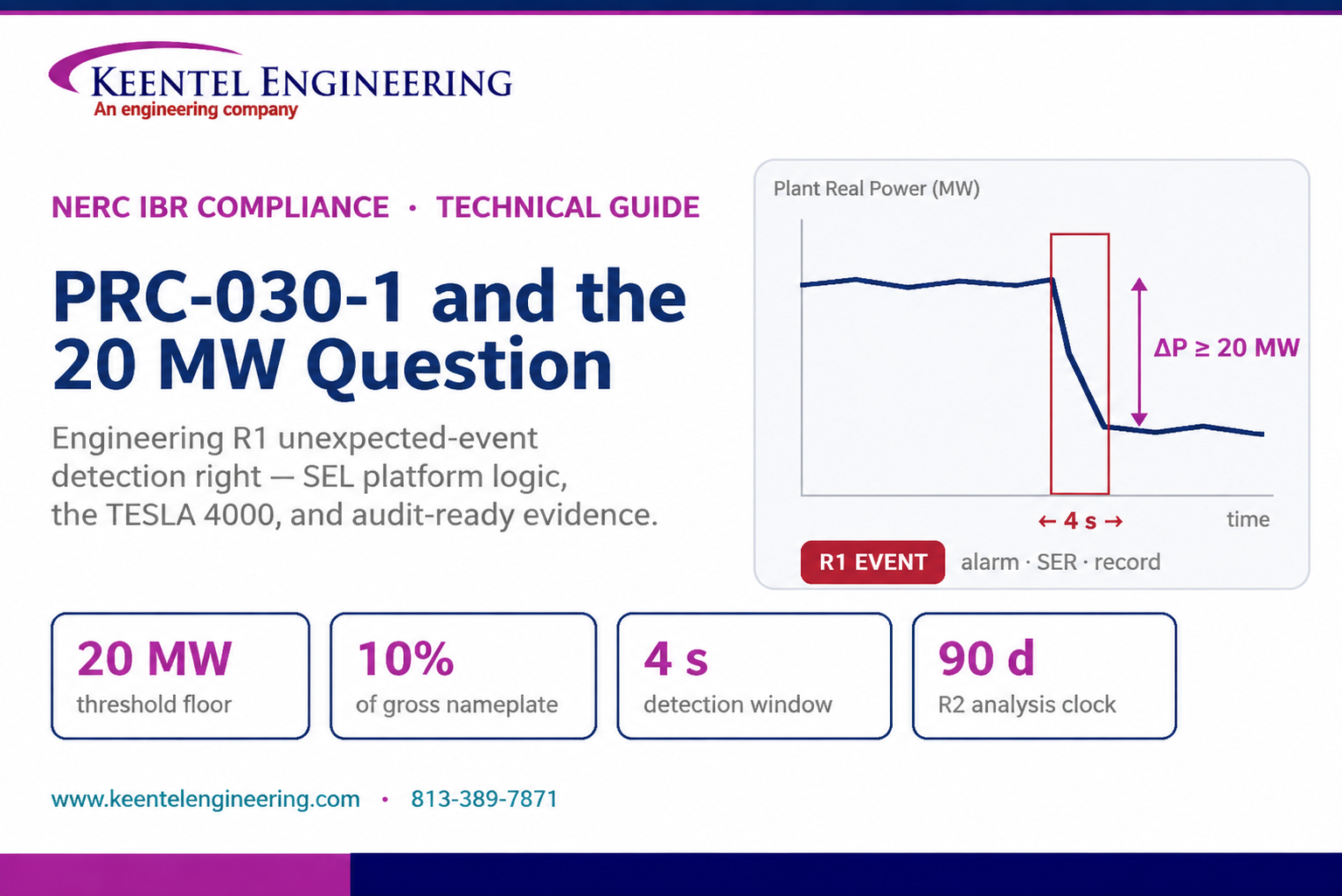
Learn PRC-030-1 R1 event detection requirements for inverter-based resources, SEL platforms, disturbance monitoring, and audit-ready compliance.
By SANDIP R PATEL
•
September 22, 2026
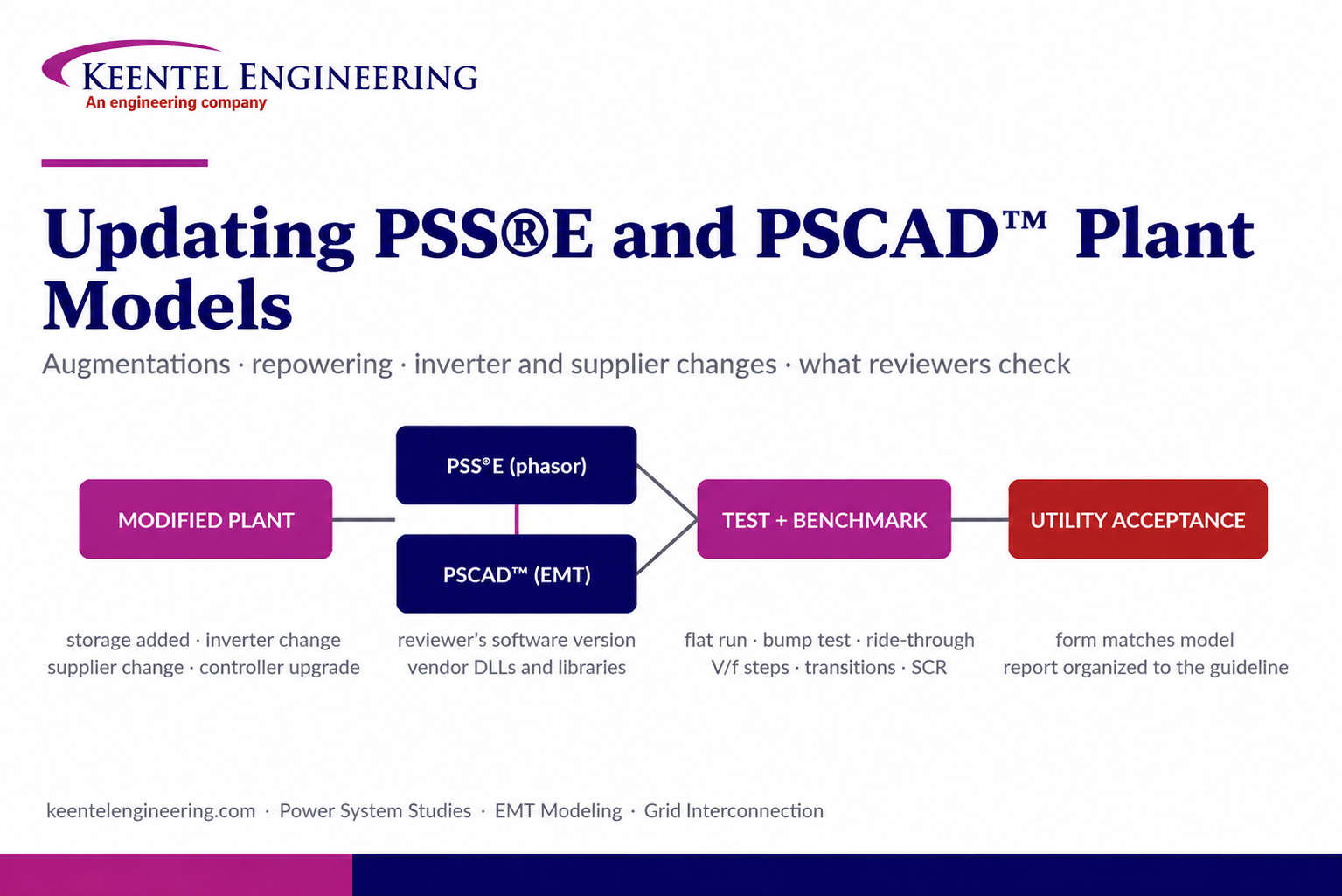
Learn how PSS®E and PSCAD™ model updates support plant augmentations, repowering, equipment changes, testing, benchmarking, and grid compliance.
By SANDIP R PATEL
•
September 20, 2026
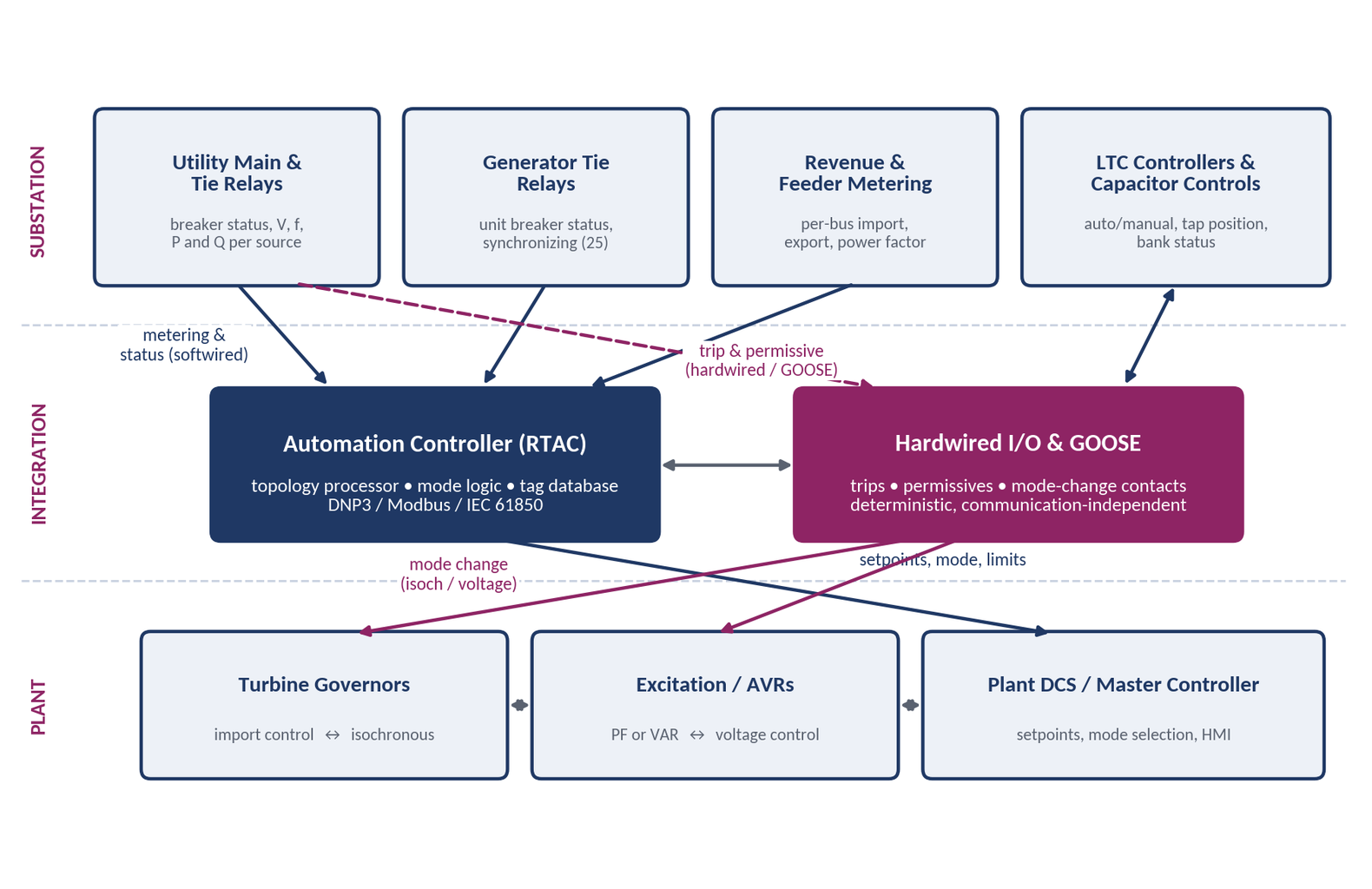
Learn CHP load following and island detection engineering for campus plants, including protection, controls, power studies, and grid transition design.
By SANDIP R PATEL
•
September 20, 2026
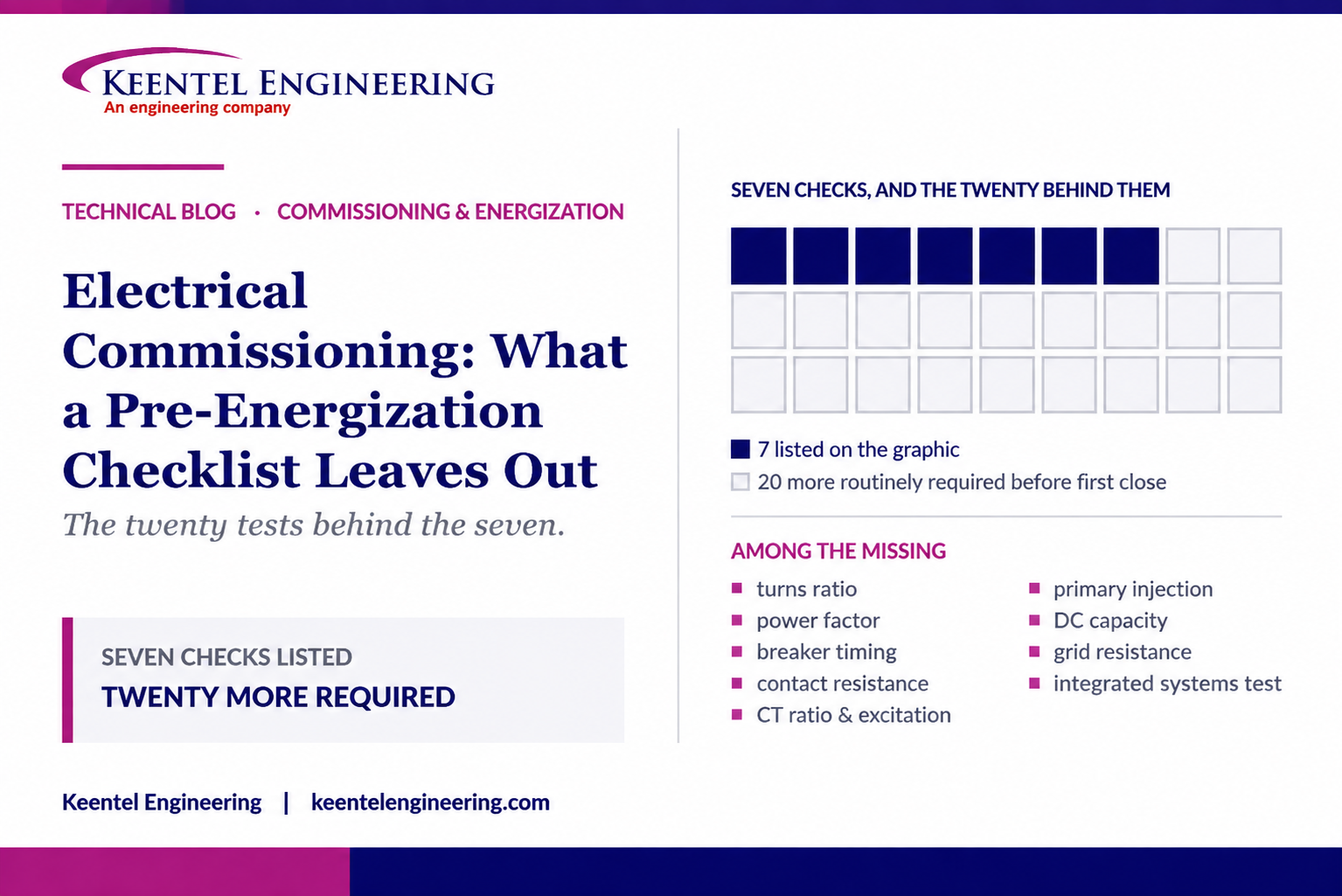
Learn what a pre-energization checklist misses, including electrical testing, protection checks, commissioning steps, and safe energization practices.
By SANDIP R PATEL
•
September 20, 2026
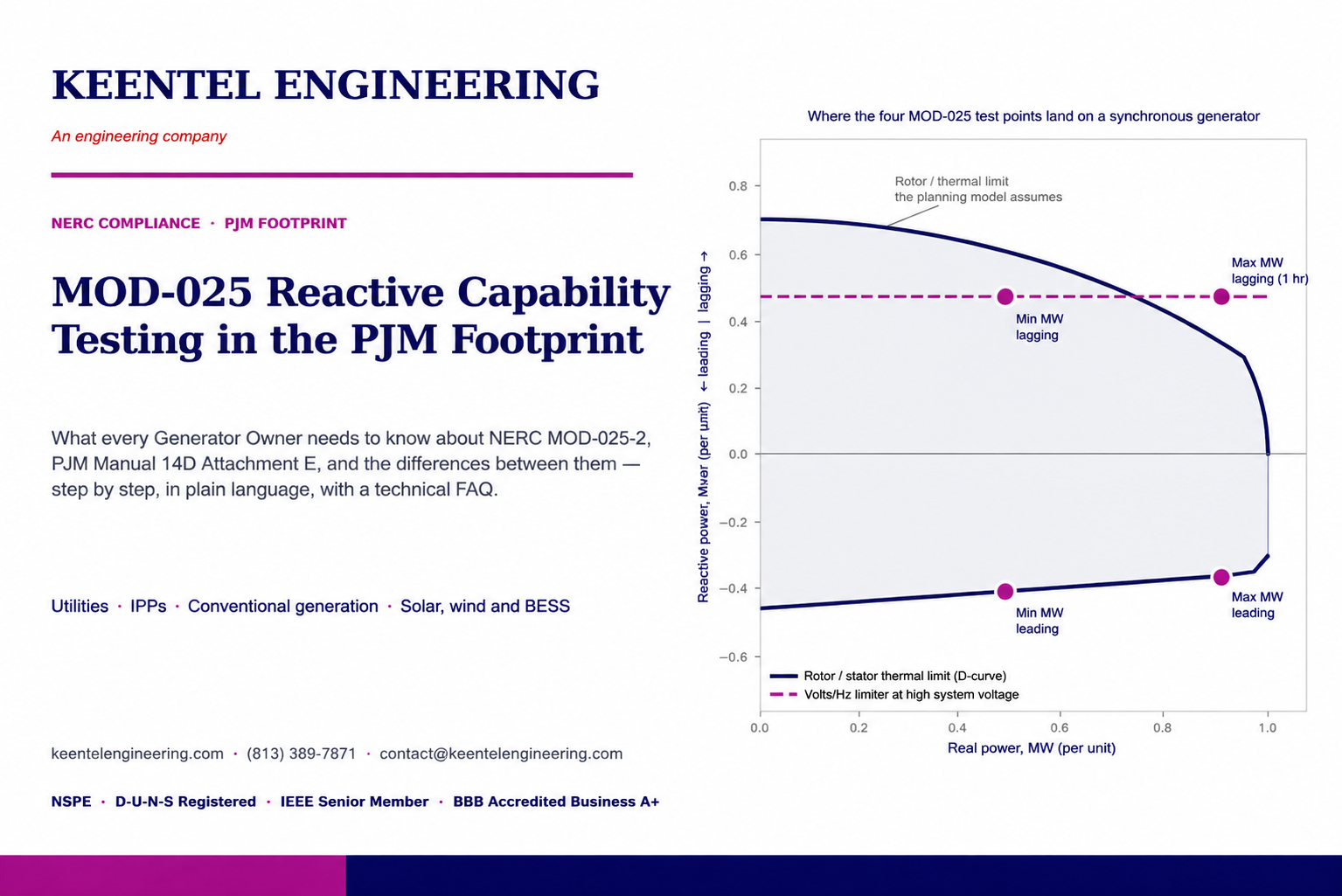
NERC MOD-025-2 Generator Owners, MOD-025-2 reactive power testing, generator capability verification, NERC Attachment 1, MOD-025 compliance testing