A Coordinated Electric System Interconnection Review—the utility’s deep-dive on technical and cost impacts of your project.
Challenge: Frequent false tripping using conventional electromechanical relays
Solution: SEL-487E integration with multi-terminal differential protection and dynamic inrush restraint
Result: 90% reduction in false trips, saving over $250,000 in downtime
| Category | Metric |
|---|---|
| VPP capacity (Lunar Energy) | 650 MW |
| Lunar funding raised | US$232 million |
| Data center BESS example | 31 MW / 62 MWh |
| ERCOT grid-scale batteries | 15+ GW |
| LDES tenders (H1 2026) | Up to 9.3 GW |
| Lithium-ion share of LDES by 2030 | 77% |
| FEOC initial threshold | 55% |
| BESS tariff rate (2026) | ~55% |
| Capacity gain from analytics | 5–15% |
FERC Order 1920-B: Transforming Long-Term Regional Transmission Planning in the United States

March 13, 2026 | blog
Introduction
The U.S. electric grid is undergoing one of the most significant transitions in its history. The rapid growth of renewable energy, electrification of transportation and industry, and increasing extreme weather events are placing unprecedented demands on transmission infrastructure.
To address these challenges, the Federal Energy Regulatory Commission (FERC) issued Order No. 1920, followed by Order No. 1920-A and Order No. 1920-B, establishing sweeping reforms to regional transmission planning and cost allocation across the United States.
These reforms require transmission providers to perform long-term regional transmission planning that anticipates grid needs decades into the future, ensuring that transmission expansion is efficient, cost-effective, and aligned with evolving energy policies.
For utilities, developers, and grid operators, understanding these reforms is critical. Engineering firms like Keentel Engineering play an essential role in helping stakeholders navigate these regulatory changes through power system studies, transmission planning, and compliance support.
Why FERC Order 1920 Was Needed
Historically, transmission planning processes focused primarily on near-term reliability needs rather than long-term system evolution.
FERC determined that existing planning frameworks were insufficient because they did not:
- Conduct sufficiently long-term assessments of transmission needs
- Consider future resource mix changes
- Evaluate broader benefits of regional transmission projects
- Provide adequate mechanisms for cost allocation across regions
These shortcomings created barriers to building the large-scale transmission infrastructure needed to integrate renewable generation and maintain grid reliability.
Core Objective of Order 1920
The fundamental goal of Order 1920 is to ensure that transmission providers conduct long-term regional transmission planning capable of identifying and developing cost-effective transmission solutions.
FERC requires that regional planning processes:
- Identify Long-Term Transmission Needs
- Evaluate regional transmission solutions
- Quantify system benefits
- Select projects based on cost-effectiveness
- Allocate project costs fairly across beneficiaries
Long-Term Regional Transmission Planning
Planning Horizon
A key feature of the new rule is the requirement for long-term planning horizons, typically covering 20 years or more.
Transmission providers must evaluate how system conditions may evolve due to:
- Load growth
- Resource retirements
- Renewable generation expansion
- public policy changes
- electrification trends
- reliability risks
This approach ensures that transmission infrastructure is designed for the future grid, not just current conditions.
Scenario-Based Planning
Order 1920 requires transmission planners to develop multiple plausible future scenarios when assessing transmission needs.
Each planning region must evaluate at least three diverse long-term scenarios, incorporating key drivers of grid transformation.
These scenarios must consider factors such as:
- Resource mix changes
- Load growth
- electrification
- fuel price uncertainty
- policy mandates
- extreme weather impacts
Scenario analysis enables planners to identify transmission investments that remain valuable across multiple future outcomes.
Long-Term Transmission Needs
A central concept introduced by the rule is Long-Term Transmission Needs, which represent system requirements identified through forward-looking planning.
These needs may arise from:
- Generation shifts toward renewable energy
- interconnection of large energy resources
- reliability constraints
- congestion management
- resilience improvements
Transmission facilities selected through this process are known as Long-Term Regional Transmission Facilities.
Regional Transmission Cost Allocation
Cost allocation has historically been one of the most contentious issues in transmission planning.
Order 1920 introduces reforms to ensure that costs are assigned based on beneficiary-pays principles.
Transmission providers must develop ex-ante cost allocation methods that determine how costs are distributed before projects are selected.
This improves transparency and reduces disputes during project development.
Role of State Regulators
One of the most significant reforms in Order 1920 is the expanded role of states.
State regulatory bodies called Relevant State Entities play a critical role in:
- negotiating cost allocation approaches
- participating in planning processes
- ensuring alignment with state energy policies
Transmission providers must engage with these entities during a six-month engagement period, allowing states to propose cost allocation methodologies.
This collaboration ensures that transmission planning reflects both regional grid needs and state policy objectives.
Coordination with Non-Jurisdictional Utilities
The rule clarifies how transmission planning should address the needs of non-jurisdictional utilities such as municipal utilities and cooperatives.
Transmission providers are not required to plan for these entities unless they participate in the regional planning process and agree to cost allocation rules.
However, voluntary participation arrangements remain possible if they comply with cost-causation principles.
Implications for the U.S. Grid
FERC Order 1920 represents a fundamental shift toward proactive transmission expansion.
Key expected outcomes include:
1. Faster Transmission Development
Better planning reduces project delays and improves interregional coordination.
2. Renewable Integration
The rule facilitates transmission development needed to connect large renewable resources.
3. Grid Reliability
Forward-looking planning helps address extreme weather risks and resource adequacy.
4. Economic Efficiency
Regional projects may reduce congestion costs and lower electricity prices.
Role of Engineering Firms in Order 1920 Implementation
The complexity of long-term planning and regulatory compliance creates a strong demand for specialized engineering expertise.
Consulting firms like Keentel Engineering support utilities and developers through services including:
- Transmission planning studies
- Production cost modeling
- Power flow and contingency analysis
- Dynamic stability analysis
- Renewable integration studies
- Interconnection studies
- NERC compliance assessments
- regulatory compliance support
Advanced modeling tools commonly used include:
- PSSE
- PSCAD
- TSAT
- PowerFactory
- PLEXOS
- MATLAB/Simulink
These tools enable accurate modeling of future grid conditions under the long-term scenarios required by Order 1920.
How Keentel Engineering Supports Utilities
Keentel Engineering provides comprehensive services to support compliance with modern grid planning regulations.
These services include:
Transmission Planning Studies
Long-term scenario modeling aligned with FERC Order 1920 requirements.
Power System Modeling
High-fidelity dynamic and steady-state modeling.
Cost-Benefit Analysis
Evaluation of transmission alternatives and benefit metrics.
Interconnection and Integration Studies
Assessment of renewable and inverter-based resource impacts.
Regulatory Advisory
Technical support for regulatory filings and compliance.
Conclusion
FERC Order 1920-B represents one of the most consequential reforms in U.S. transmission policy in decades. By requiring long-term regional transmission planning and improved cost allocation processes, the rule aims to modernize grid planning and accelerate the development of transmission infrastructure needed for the future energy system.
As utilities and grid operators implement these reforms, engineering expertise will be essential to navigate planning requirements, conduct complex studies, and support regulatory compliance.
Firms like Keentel Engineering provide the
technical expertise necessary to help utilities, developers, and system operators successfully adapt to this evolving regulatory landscape.
FAQ – FERC Order 1920 and Transmission Planning
1. What is FERC Order 1920?
FERC Order 1920 establishes new requirements for long-term regional transmission planning and cost allocation across the United States.
2. Why did FERC issue Order 1920?
FERC determined that existing transmission planning processes did not adequately identify long-term transmission needs or evaluate the broader benefits of regional transmission projects.
3. What are Long-Term Transmission Needs?
These are system requirements identified through long-term planning scenarios that reflect future grid conditions.
4. What is Long-Term Regional Transmission Planning?
It is a planning process designed to identify transmission solutions over long time horizons using forward-looking analysis.
5. How many planning scenarios are required?
Transmission providers must evaluate at least three diverse long-term scenarios to assess potential future grid conditions.
6. What are Long-Term Regional Transmission Facilities?
These are transmission projects identified through long-term planning processes that address future transmission needs.
7. What role do states play in Order 1920?
States participate through Relevant State Entities, which can help develop cost allocation methodologies.
8. What is the Engagement Period?
A six-month negotiation period where states and transmission providers collaborate on cost allocation frameworks.
9. Does Order 1920 require planning for non-jurisdictional utilities?
No. Transmission providers are not required to plan for those utilities unless they enroll in the regional planning process.
10. What is cost causation in transmission planning?
It is the principle that entities benefiting from transmission projects should share the project costs.
11. How does Order 1920 affect renewable integration?
It supports the development of transmission infrastructure needed to integrate large renewable energy resources.
12. What studies are required to support transmission planning?
Typical studies include power flow, stability analysis, production cost modeling, and scenario planning.
13. Which power system tools are commonly used?
Common tools include PSSE, PSCAD, PowerFactory, and PLEXOS.
14. What industries are affected by Order 1920?
Utilities, ISOs/RTOs, renewable developers, transmission developers, and regulators.
15. How can engineering consultants assist with compliance?
Engineering firms perform planning studies, modeling, regulatory analysis, and technical documentation required for compliance.

About the Author:
Sandip "Sonny" R. Patel, P.E.
IEEE Senior Member · Founder & CEO, Keentel Engineering
In 1995, Sonny Patel earned his Electrical Engineering degree from the University of Illinois. But degrees don't build legacies — action does.
For three decades, he has worked the power industry from every side of the table: 16 years as a utility engineer at Exelon/Commonwealth Edison; generation leadership across hydroelectric, industrial steam turbine, and a 9 GW renewable fleet; NERC Regional Entity Senior Compliance Engineer and Audit Team Lead, auditing some of the nation's largest utilities; and testing and commissioning lead on equipment up to 765 kV — the very top of the North American grid.Utility. Generator. Regulator. Consultant. Few engineers have seen all four seats. Fewer still have sat in them.
His experience spans nuclear, hydro, conventional generation, renewables, oil and gas, mining — and today's data centers, where he is authoring a three-book series on data center design. He is a Licensed Professional Engineer in six states and a Licensed Electrical Contractor in Florida (Unlimited EC) — he doesn't just design the work; he's qualified to stand behind its execution.Today, as Founder and CEO of Keentel Engineering, Sonny leads a nationwide team of engineers delivering substation design, power system studies, NERC compliance, and commissioning — done right, coast to coast.Three decades. Every side of the table. One standard: accountable engineering.
Services

Let's Discuss Your Project
Let's book a call to discuss your electrical engineering project that we can help you with.
About the Author:
Sandip "Sonny" R. Patel, P.E.
IEEE Senior Member · Founder & CEO, Keentel Engineering
In 1995, Sonny Patel earned his Electrical Engineering degree from the University of Illinois. But degrees don't build legacies — action does.
For three decades, he has worked the power industry from every side of the table: 16 years as a utility engineer at Exelon/Commonwealth Edison; generation leadership across hydroelectric, industrial steam turbine, and a 9 GW renewable fleet; NERC Regional Entity Senior Compliance Engineer and Audit Team Lead, auditing some of the nation's largest utilities; and testing and commissioning lead on equipment up to 765 kV — the very top of the North American grid.
Utility. Generator. Regulator. Consultant. Few engineers have seen all four seats. Fewer still have sat in them.
His experience spans nuclear, hydro, conventional generation, renewables, oil and gas, mining — and today's data centers, where he is authoring a three-book series on data center design. He is a Licensed Professional Engineer in six states and a Licensed Electrical Contractor in Florida (Unlimited EC) — he doesn't just design the work; he's qualified to stand behind its execution.
Today, as Founder and CEO of Keentel Engineering, Sonny leads a nationwide team of engineers delivering substation design, power system studies, NERC compliance, and commissioning — done right, coast to coast.Three decades. Every side of the table. One standard: accountable engineering.
Leave a Comment
Thank you for contacting us.
We will get back to you as soon as possible.
We will get back to you as soon as possible.
Oops, there was an error sending your message.
Please try again later.
Please try again later.
Related Posts
By SANDIP R PATEL
•
October 24, 2026
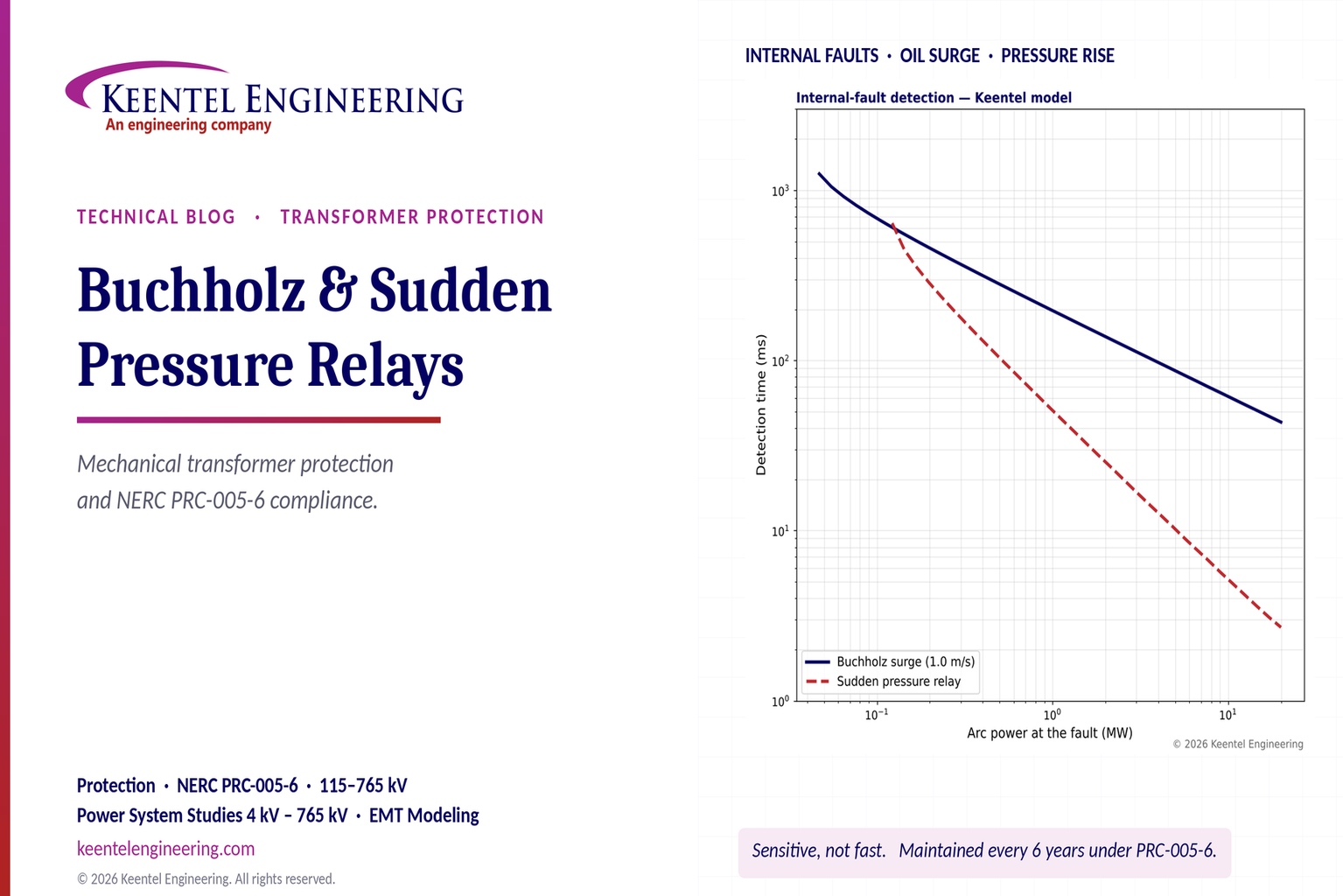
Learn how Buchholz and sudden pressure relays protect transformers, detect internal faults, and meet NERC PRC-005-6 maintenance requirements.
October 24, 2026
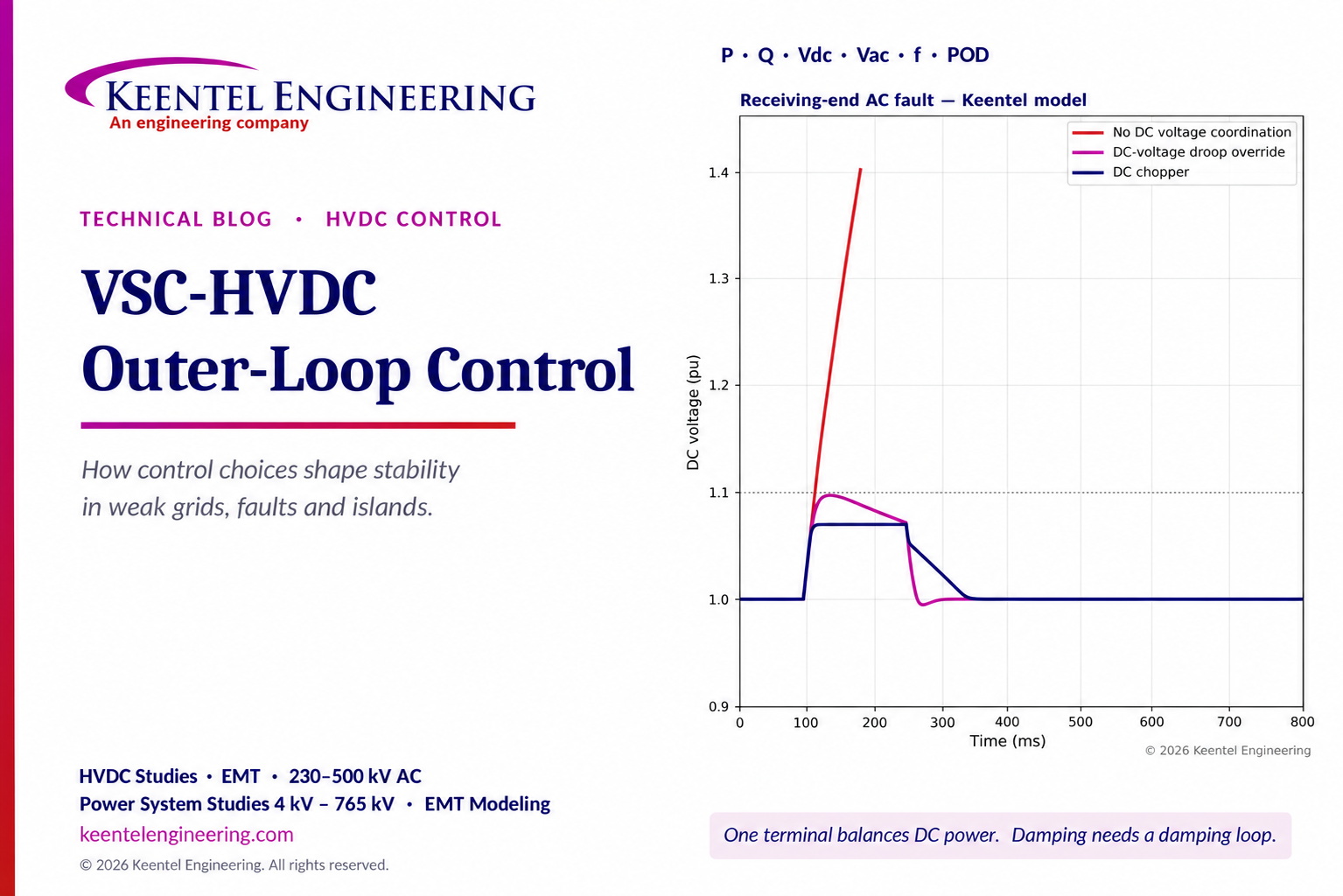
Explore VSC-HVDC outer-loop control for P, Q, DC voltage, weak-grid stability, fault ride-through and power oscillation damping with engineering models.
By SANDIP R PATEL
•
October 23, 2026
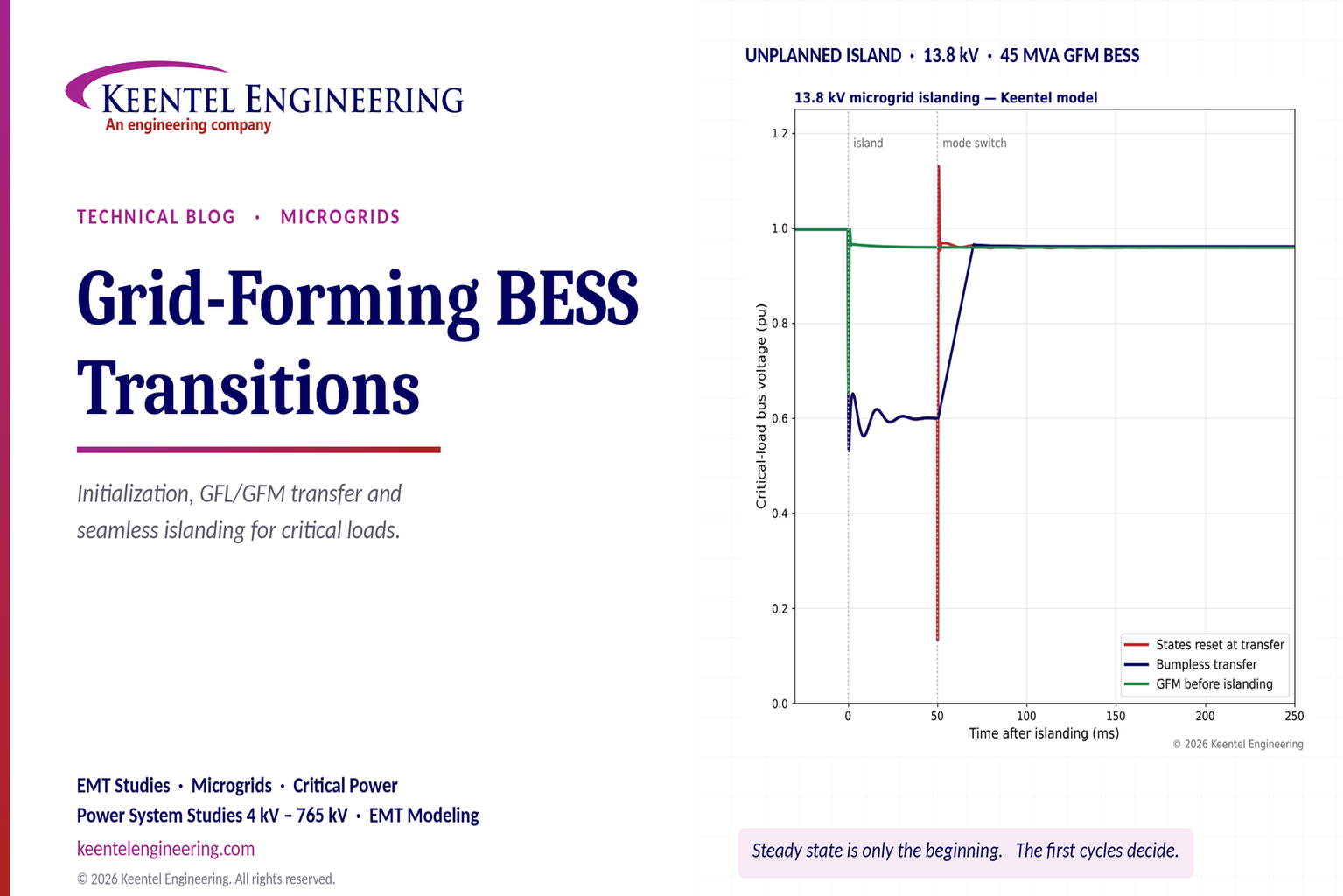
Explore grid-forming BESS initialization, GFL-to-GFM transitions, seamless islanding, EMT simulations, current limiting and microgrid protection.
By SANDIP R PATEL
•
October 23, 2026
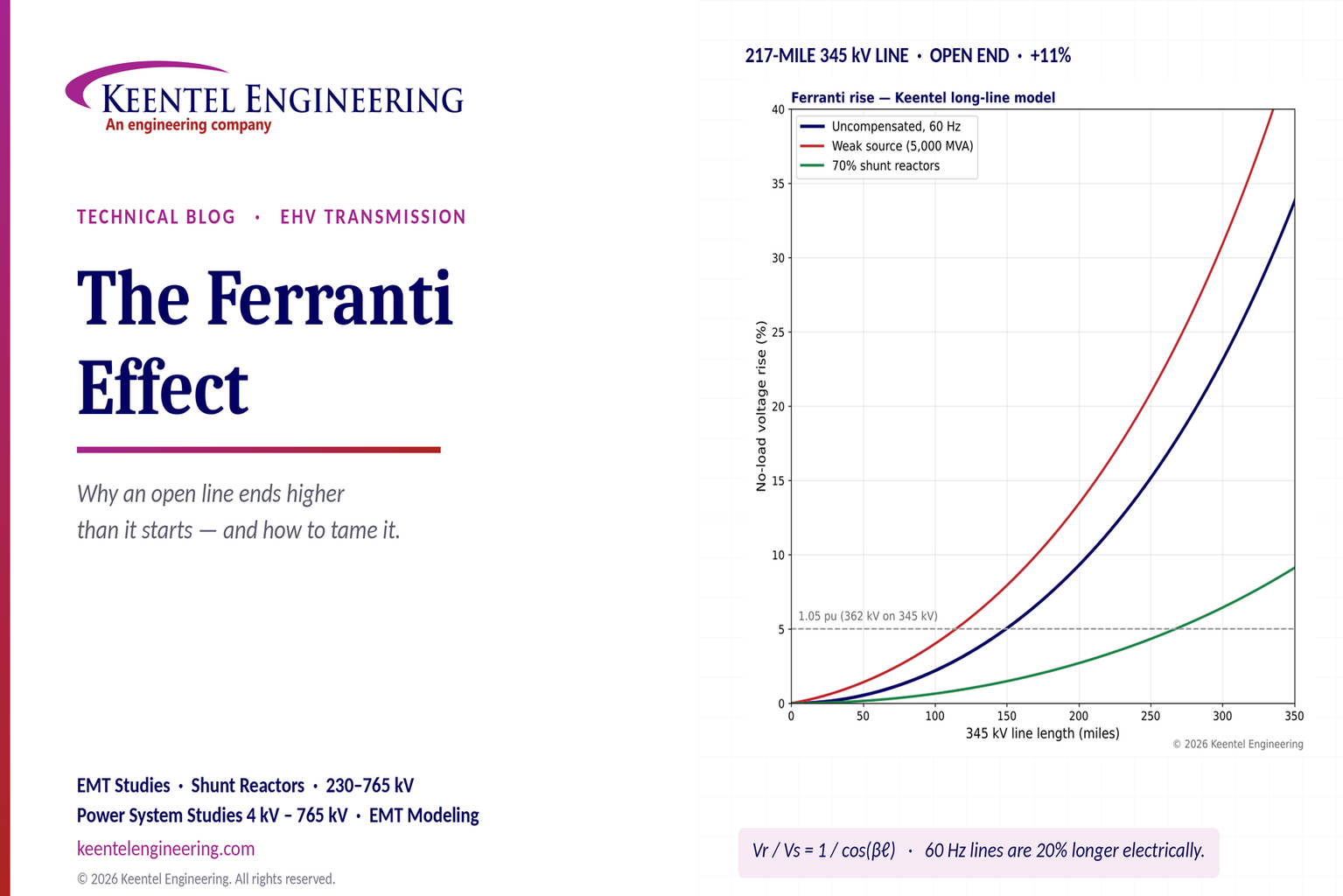
Explore the Ferranti effect in EHV transmission lines: voltage rise, 345 kV examples, switching overvoltages, shunt reactor sizing and mitigation.
By SANDIP R PATEL
•
October 23, 2026
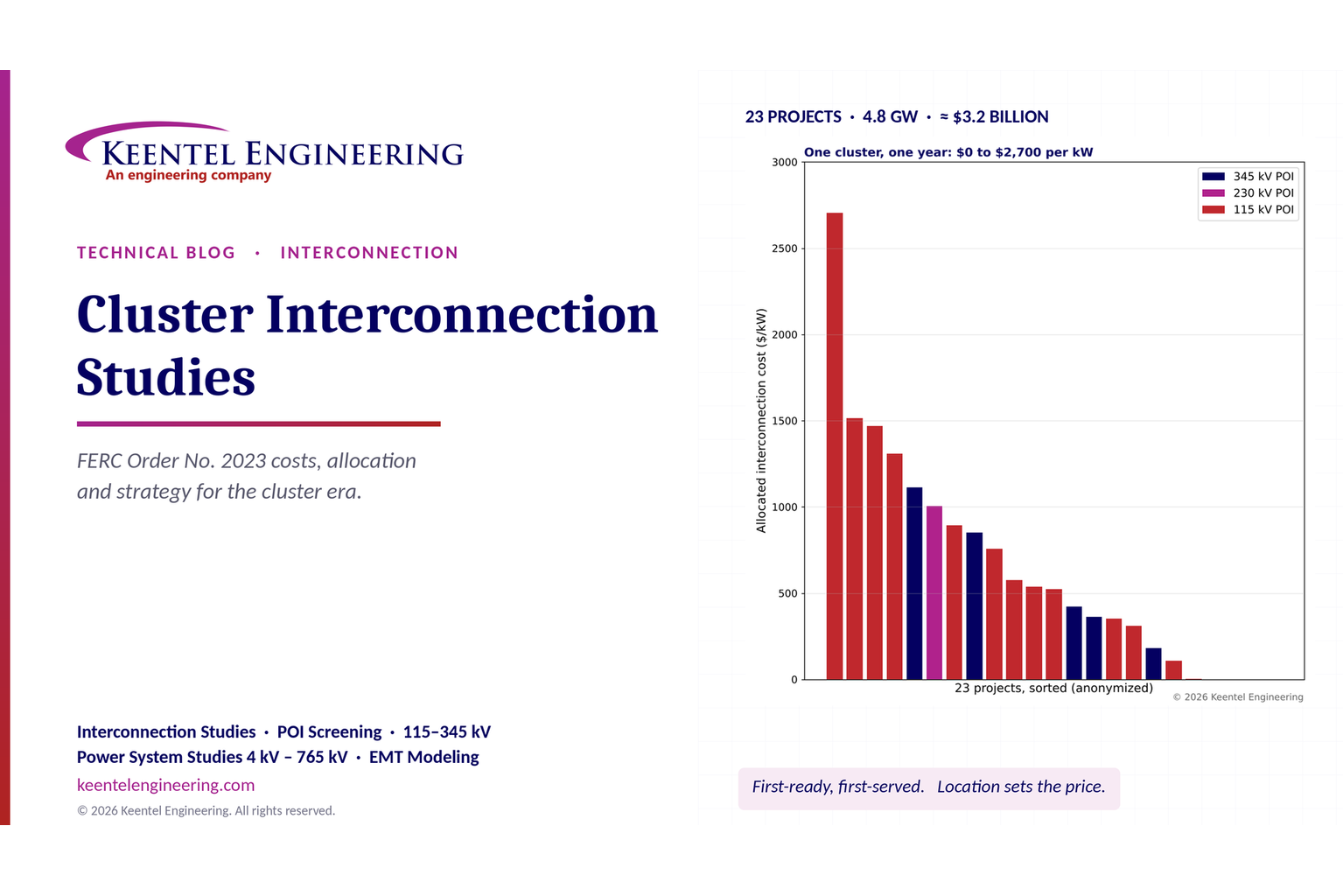
Explore cluster interconnection studies under FERC Order 2023, including network upgrades, cost allocation, withdrawal penalties and developer strategy.
By SANDIP R PATEL
•
October 21, 2026
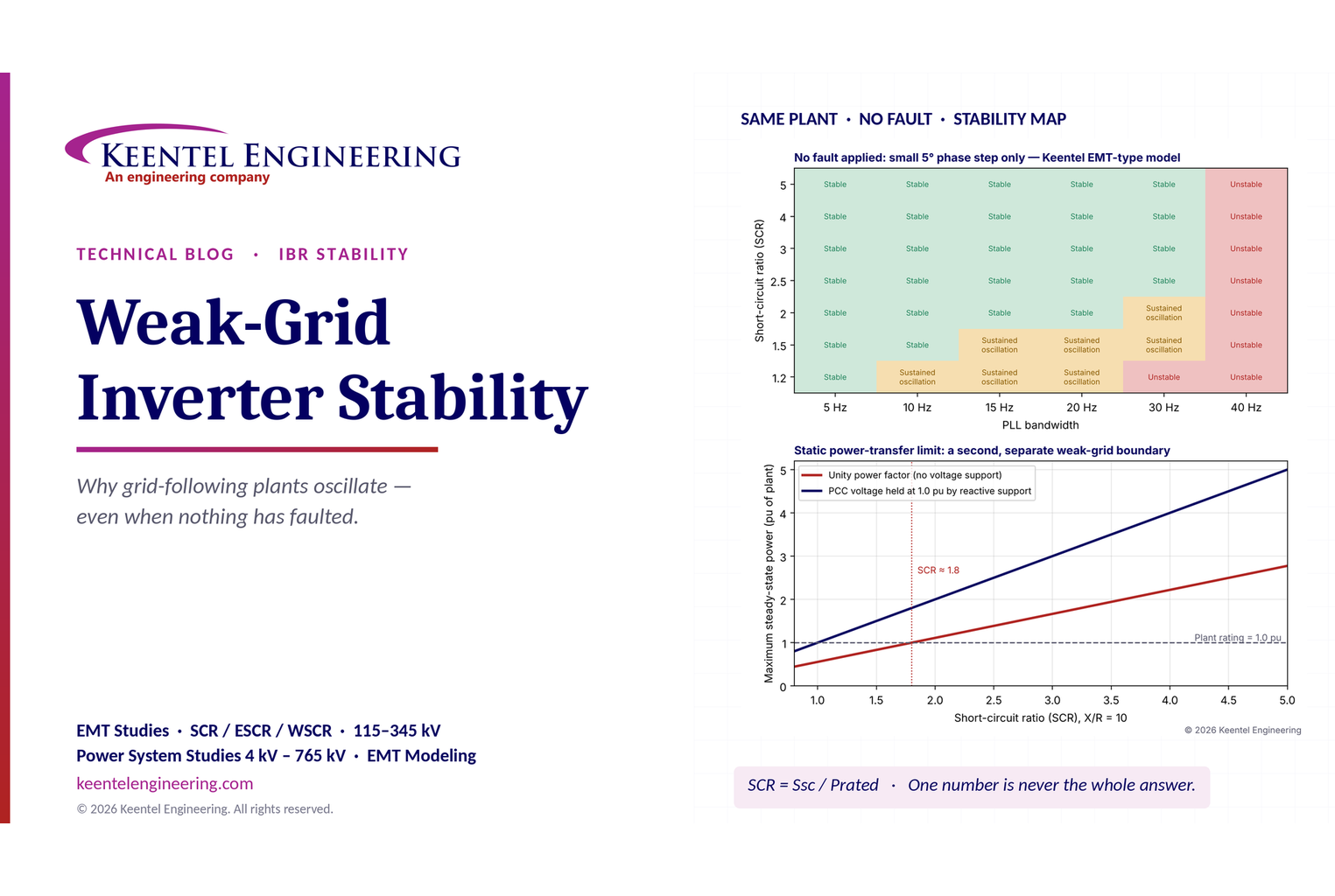
Learn why grid-following inverters become unstable without grid faults. Explore SCR, PLL interactions, EMT studies, grid strength, and mitigation.
By SANDIP R PATEL
•
October 21, 2026
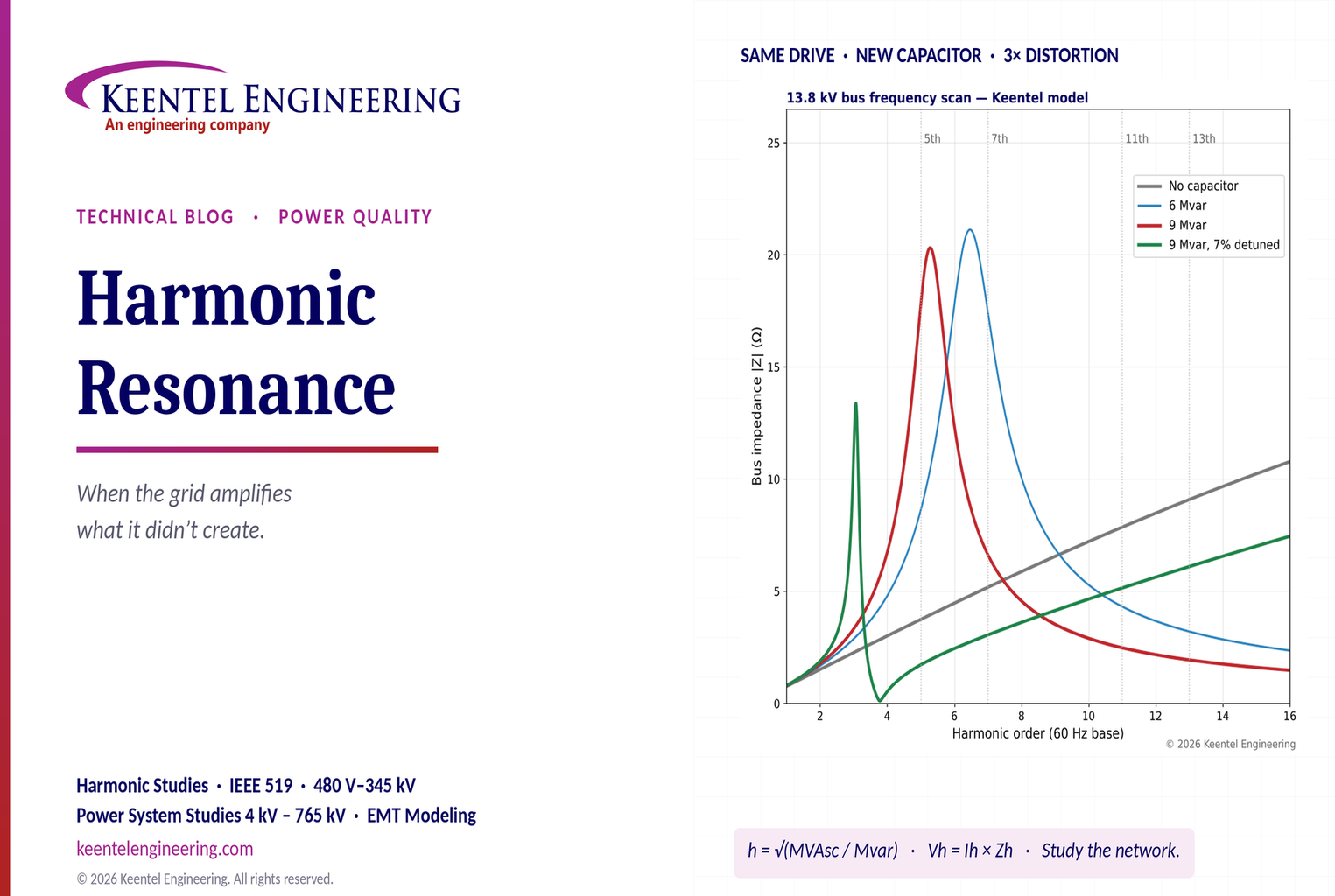
Learn how harmonic resonance amplifies distortion in power systems. Explore capacitor banks, detuned reactors, frequency scans, and IEEE 519 solutions.
By SANDIP R PATEL
•
October 20, 2026
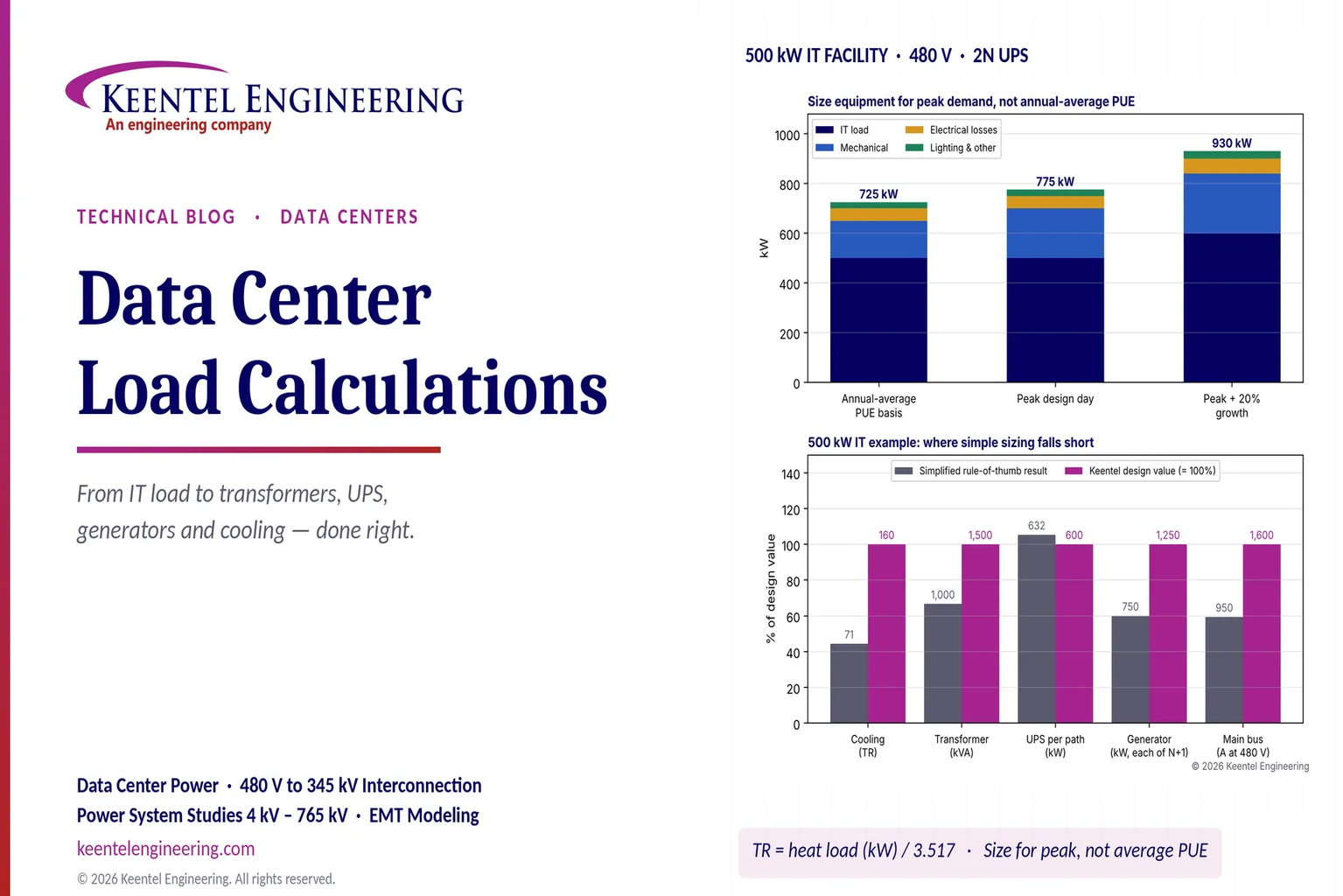
Learn data center electrical load calculations, including IT demand, PUE, UPS and generator sizing, cooling loads, redundancy, and worked US examples.
By SANDIP R PATEL
•
October 20, 2026
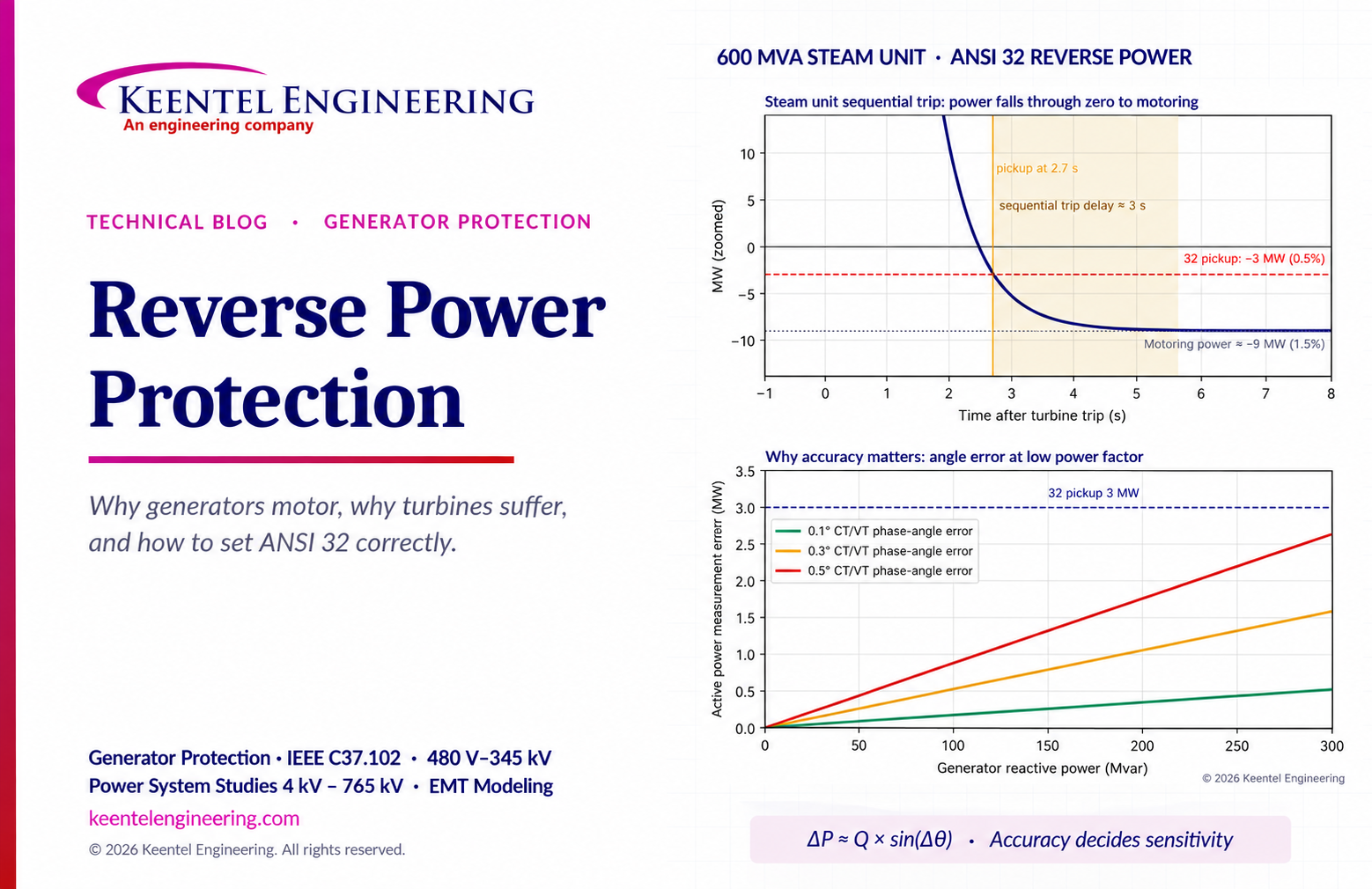
Learn reverse power protection (ANSI 32), generator motoring, relay pickup settings, time delays, sequential tripping and testing for US power plants.