

A Coordinated Electric System Interconnection Review—the utility’s deep-dive on technical and cost impacts of your project.

Challenge: Frequent false tripping using conventional electromechanical relays
Solution: SEL-487E integration with multi-terminal differential protection and dynamic inrush restraint
Result: 90% reduction in false trips, saving over $250,000 in downtime

Advanced Dynamic Modeling for ERCOT Compliance

Calendar icon. D

April 16, 2025 | Blog

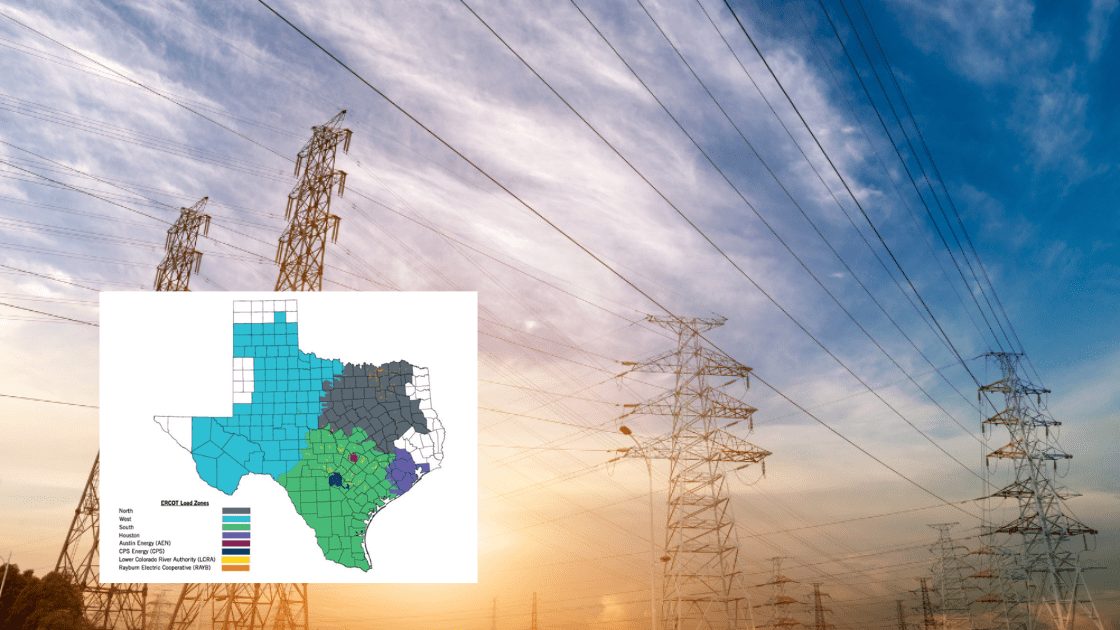
Power lines against a cloudy sky with an inset map of Texas, color-coded for some grid-related information.

Trusted by Utilities and Developers – Delivered by Keentel Engineering

At Keentel Engineering, we specialize in delivering advanced dynamic modeling and simulation services in compliance with the Electric Reliability Council of Texas (ERCOT) standards. With over 30 years of experience in high-voltage (HV) and extra-high-voltage (EHV) power systems, Keentel Engineering is your trusted partner for managing the complexities of dynamic data and model validation, especially when it comes to the ERCOT Dynamics Working Group (DWG) requirements.

ERCOT’s dynamic modeling standards are strict—and rightfully so. They ensure the grid remains secure during disturbances, especially with increasing inverter-based resources (IBRs) like solar, wind, and battery storage. Our team is at the forefront of ERCOT modeling compliance, leveraging tools like PSS®E, TSAT, and PSCAD to provide:


  • Flat start model development
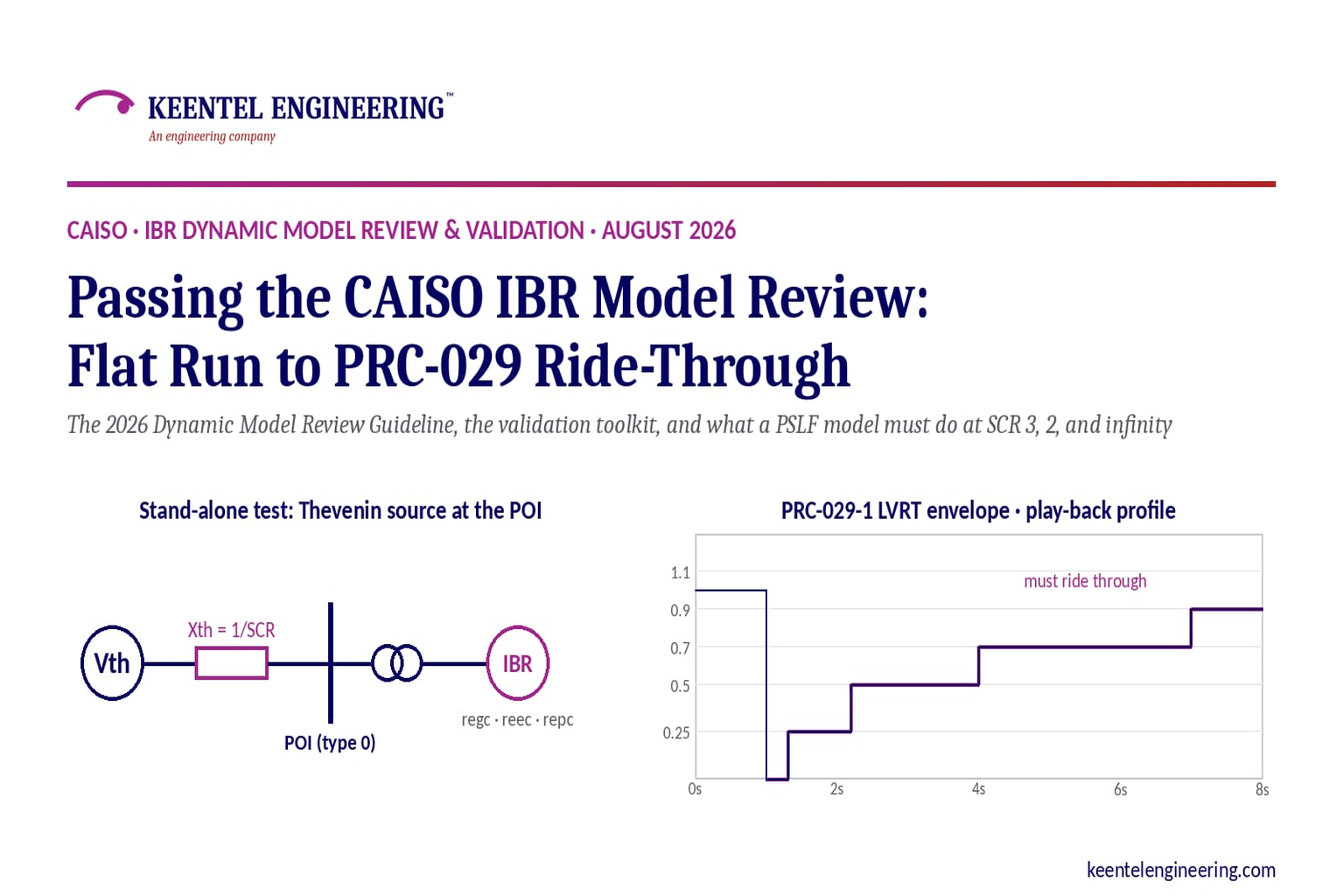
  • Dynamic model quality testing (MQT)
  • Ride-through performance evaluation (LVRT/HVRT)
  • Short-circuit ratio (SCR) sensitivity testing
  • Frequency response validation
  • System strength and event simulation studies
  • PSCAD model setup and validation

We don’t just check a box—we simulate your actual plant behavior under stress conditions and help you pass ERCOT’s strict screening requirements with confidence.


Why Choose Keentel?

  • 30+ years of industry experience in HV and MV system studies
  • Experts in PSCADPSS®ETSAT, and NERC MOD-032/033 compliance
  • Seamless support from model development to ERCOT submission
  • Custom validation for IBRs, synchronous machinesSTATCOMsSVCs, and more
  • Flat start-ready simulation files:  .dyr .dll .obj .lib .py .idv

Whether you’re commissioning new generation assets or updating models post-modification, our engineers help you meet ERCOT and NERC reliability standards with zero hassle.


Contact Us

Contact Keentel Engineering at contact@keentelengineering.com or (813) 389-9781 to get started on your ERCOT compliance journey.

Looking for broader grid compliance services? Explore our full NERC Compliance Services.


Frequently Asked Questions (FAQ)

  • What is ERCOT Dynamic Modeling?

    ERCOT requires all resource entities and transmission providers to submit accurate dynamic models of their equipment. These models simulate how the grid responds to disturbances like faults or frequency drops.

  • What tools does Keentel use for dynamic model development?

    We use:


    • PSS®E for standard dynamic simulations and .dyr file creation
    • TSAT for transient security assessments
    • PSCAD for detailed electromagnetic transient studies of inverter-based resources (IBRs)
  • What are “Flat Start” Cases?

    Flat start cases are dynamic simulation baselines where all model variables begin from steady-state conditions. ERCOT uses these to assess system stability. Keentel prepares and validates these as part of your compliance submission.

  • What is Model Quality Testing (MQT)?

    MQT ensures your models behave correctly in various scenarios—voltage dips, frequency swings, SCR variations, etc. Keentel performs these tests and delivers simulation plots and reports required by ERCOT.

  • Do I need PSCAD models?

    Yes. For all IBRs (solar, wind, battery) installed after January 2015, ERCOT mandates PSCAD models, especially for STATCOMs, SVCs, and inverter-based equipment.

  • What is Low Voltage Ride Through (LVRT) and High Voltage Ride Through (HVRT)?

    These simulations verify whether your plant remains online during voltage dips or surges. ERCOT defines response times and reactive support requirements, which Keentel validates through simulation.

  • What if my existing model is marked “unacceptable”?

    ERCOT maintains a list of unacceptable dynamic models. If your current model appears on that list, Keentel can help you revise, replace, and resubmit an updated, compliant version.

  • What’s included in Keentel’s Dynamic Modeling Service?

    • Model setup and simulation
    • Test case development
    • Full ERCOT-compatible file packages
    • Submission-ready documentation
    • Coordination with your Transmission Service Provider (TSP) and ERCOT.


A smiling man with glasses and a beard wearing a blue blazer stands in front of server racks in a data center.

About the Author:

Sonny Patel P.E. EC

IEEE Senior Member

In 1995, Sandip (Sonny) R. Patel earned his Electrical Engineering degree from the University of Illinois, specializing in Electrical Engineering . But degrees don’t build legacies—action does. For three decades, he’s been shaping the future of engineering, not just as a licensed Professional Engineer across multiple states (Florida, California, New York, West Virginia, and Minnesota), but as a doer. A builder. A leader. Not just an engineer. A Licensed Electrical Contractor in Florida with an Unlimited EC license. Not just an executive. The founder and CEO of KEENTEL LLC—where expertise meets execution. Three decades. Multiple states. Endless impact.

Four workers in safety vests and helmets stand with arms crossed near wind turbines.

Let's Discuss Your Project

Let's book a call to discuss your electrical engineering project that we can help you with.

Man in a blazer and open shirt, looking at the camera, against a blurred background.

About the Author:

Sonny Patel P.E. EC

IEEE Senior Member

In 1995, Sandip (Sonny) R. Patel earned his Electrical Engineering degree from the University of Illinois, specializing in Electrical Engineering . But degrees don’t build legacies—action does. For three decades, he’s been shaping the future of engineering, not just as a licensed Professional Engineer across multiple states (Florida, California, New York, West Virginia, and Minnesota), but as a doer. A builder. A leader. Not just an engineer. A Licensed Electrical Contractor in Florida with an Unlimited EC license. Not just an executive. The founder and CEO of KEENTEL LLC—where expertise meets execution. Three decades. Multiple states. Endless impact.

Leave a Comment

Related Posts

PJM's Expedited Interconnection Track (EIT) — What 250 MW+ Developers Must Know
By SANDIP R PATEL June 21, 2026
FERC accepted PJM's Expedited Interconnection Track on June 9, 2026. Learn the eligibility rules, financial requirements, state siting commitment, and engineering checklist for the 10-month fast lane to a signed GIA.
Grid interconnection feasibility and transmission planning
By SANDIP R PATEL June 21, 2026
Estimate interconnection costs before entering the queue. Learn how network upgrade costs, POI costs, and feasibility studies impact project success.
Power system resilience performance metrics
By SANDIP R PATEL June 20, 2026
Learn how power system resilience metrics measure grid performance during extreme events. Discover resilience assessment methods and practical applications.
Synchronous condenser protection and control diagram
By SANDIP R PATEL June 20, 2026
Learn synchronous condenser protection, loss of field settings, NERC PRC compliance, and protection philosophy. Discover expert engineering guidance.
PSCAD black-box EMT model development workflow
By SANDIP R PATEL June 20, 2026
Learn how PSCAD Black Box and Independent C Code protect EMT models, secure control IP, and support interconnection-grade studies. Discover more.
PSCAD transmission line modeling diagram
By SANDIP R PATEL June 20, 2026
Learn transmission line modeling in PSCAD, compare Bergeron and frequency-dependent models, validate the Ferranti effect, and improve EMT studies.
Data center power and cooling infrastructure
By SANDIP R PATEL June 18, 2026
Learn how data centers work, from electrical systems and cooling infrastructure to redundancy, uptime, and grid interconnection planning.
Data center substation and power infrastructure
By SANDIP R PATEL June 18, 2026
Learn how data center electrical design, UPS systems, redundancy architecture, and interconnection planning ensure reliable power delivery.
Industrial chilled water system supporting thermal management in a high-density data center
By SANDIP R PATEL June 18, 2026
Learn how data center cooling design, hot aisle containment, and chilled water systems improve efficiency, reliability, and power planning. Discover more.