A Coordinated Electric System Interconnection Review—the utility’s deep-dive on technical and cost impacts of your project.
Challenge: Frequent false tripping using conventional electromechanical relays
Solution: SEL-487E integration with multi-terminal differential protection and dynamic inrush restraint
Result: 90% reduction in false trips, saving over $250,000 in downtime
| Category | Metric |
|---|---|
| VPP capacity (Lunar Energy) | 650 MW |
| Lunar funding raised | US$232 million |
| Data center BESS example | 31 MW / 62 MWh |
| ERCOT grid-scale batteries | 15+ GW |
| LDES tenders (H1 2026) | Up to 9.3 GW |
| Lithium-ion share of LDES by 2030 | 77% |
| FEOC initial threshold | 55% |
| BESS tariff rate (2026) | ~55% |
| Capacity gain from analytics | 5–15% |
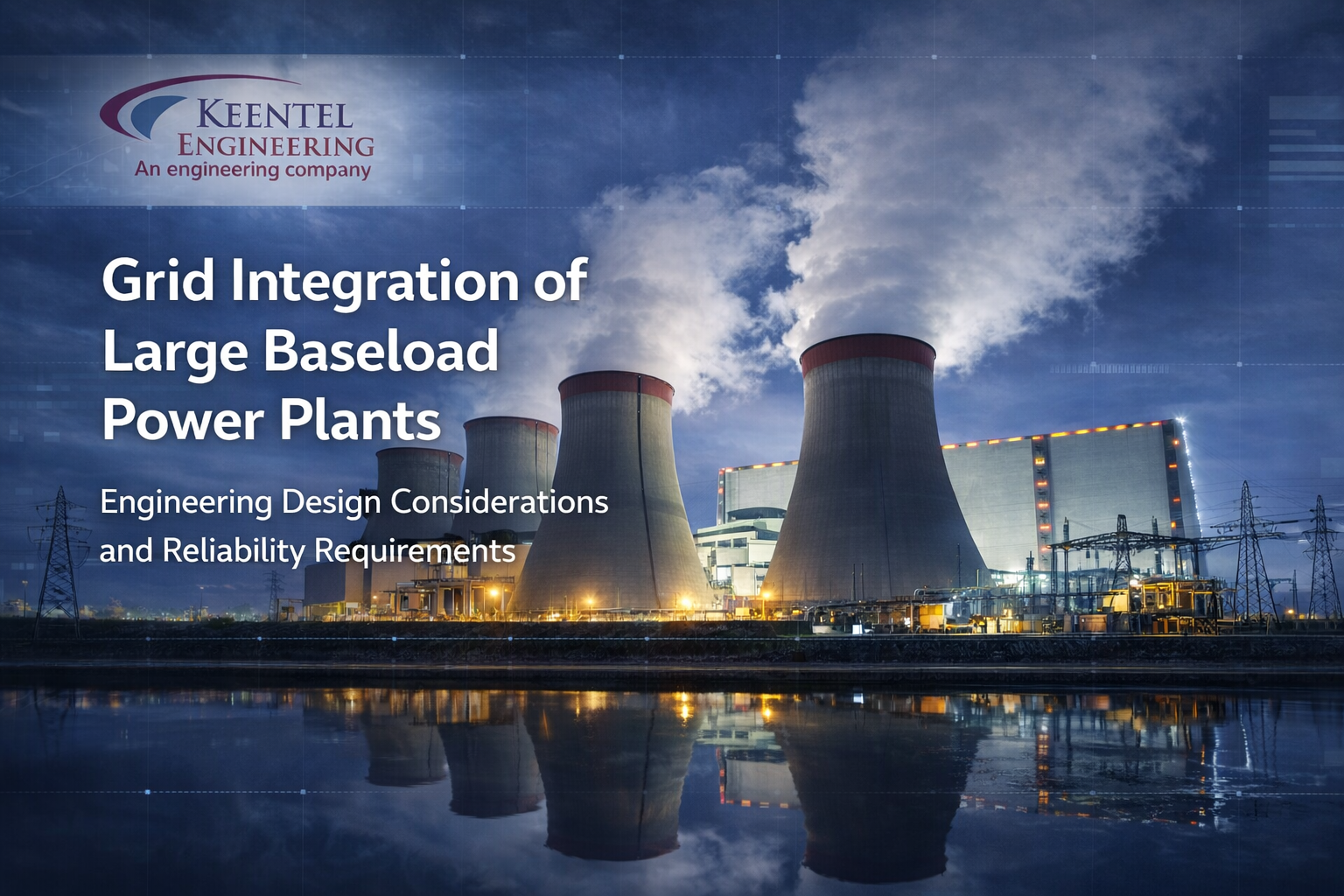
Grid Integration of Large Baseload Power Plants: Engineering Design Considerations and Reliability Requirements
March 11, 2026 | blog
Introduction
Integrating a large baseload power generation facility into a national transmission network is one of the most complex challenges in power system engineering. Large synchronous generating stations introduce significant generation capacity that must operate reliably under varying grid conditions while maintaining system stability, reliability, and safety.
For such facilities to operate efficiently, the electrical grid must have sufficient capacity not only to export generated power but also to provide a reliable electrical supply to plant auxiliaries during startup, shutdown, and emergency scenarios.
At Keentel Engineering, our power system engineers specialize in designing and evaluating grid interconnection solutions for large generating facilities, ensuring compliance with grid reliability requirements, transmission operator standards, and system stability criteria.
This article explains the engineering challenges and design principles involved in connecting large baseload generating facilities to the transmission grid, including:
- Grid stability requirements
- Reliability of off-site power supply
- Transformer and substation design considerations
- Generator performance requirements
- Auxiliary power system design
Importance of Grid Integration Planning
Before any large generating facility is constructed, extensive coordination must occur between:
- Transmission system operators
- Power plant developers
- Grid planning engineers
- Protection and control specialists
- Regulatory authorities
Large generating units can significantly influence grid operation because their size impacts:
- Power flow patterns
- System frequency stability
- Voltage regulation
- Short-circuit current levels
- System inertia
When a large generating plant connects to the transmission system, significant upgrades or reinforcements to existing transmission infrastructure may be required to support new power flows and maintain reliability.
Engineering studies conducted during planning stages typically include:
- Power flow analysis
- Short circuit studies
- Dynamic stability simulations
- Transient stability assessments
- Protection coordination studies
These analyses determine whether the existing grid infrastructure can safely accommodate the new generation source.
Transmission System Operational Requirements
Transmission system operators establish technical requirements that large generating units must meet to ensure reliable system operation.
Generating units must be capable of operating continuously within acceptable voltage and frequency limits.
In most transmission systems, generators must remain stable within approximately:
- ±5% voltage variation
- ±1% frequency variation
During abnormal grid conditions, generators must also remain operational temporarily under wider voltage and frequency deviations without tripping offline.
Other operational capabilities include:
Fault Ride-Through Capability
Large generating units must remain connected during transmission disturbances such as:
- Transmission line faults
- Voltage dips
- Lightning strikes
- Short circuits
This capability prevents cascading generator outages that could destabilize the entire power system.
Reactive Power Support
Generators must supply or absorb reactive power to support voltage regulation throughout the transmission network. Reactive power capability is essential for maintaining voltage stability during heavy loading conditions.
Frequency Control and Load Following
Generating units must also support system frequency regulation through governor response and automatic generation control. These functions help maintain the balance between generation and load across the grid.
Reliability of Off-Site Power Supply
A critical reliability consideration for large generating facilities is the availability of off-site power supply.
Off-site power provides electricity to plant auxiliary systems such as:
- Cooling systems
- Control and instrumentation equipment
- Protection systems
- Pumps and motors
- Safety and monitoring equipment
Loss of external grid supply is commonly referred to as Loss of Off-Site Power (LOOP).
Engineering studies must evaluate both the probability and duration of these events.
Causes of Off-Site Power Loss
Off-site power interruptions may occur due to:
- Severe weather conditions
- Lightning strikes
- Transmission line faults
- Substation equipment failures
- Protection system malfunction
- Human operational errors
- Environmental contamination of insulators
Assessing these risks requires historical grid reliability data and probabilistic reliability modeling.
Requirement for Multiple Independent Grid Connections
Large generating facilities typically require two independent connections to the transmission grid to ensure a reliable supply to plant auxiliary equipment.
The two primary grid connections typically include:
- Generator transformer connection
- Station transformer connection
The generator transformer exports electrical power from the generator to the transmission grid.
The station transformer provides backup electrical supply to plant auxiliaries when the generator is offline or disconnected.
These connections must be designed so that a single failure cannot disable both power sources.
Common design strategies include:
- Connecting transformers to different substations
- Using independent transmission lines
- Physically separating equipment within substations
- Installing redundant control and battery systems
These measures significantly reduce the risk of common-cause failures.
Substation Design and Grid Connection Architecture
The high-voltage substation serving a large generating facility must be designed with high reliability and fault tolerance.
Typical substation design considerations include:
- Double busbar configurations
- Multiple circuit breakers
- Physical separation between transformer bays
- Independent protection and control systems
Additional protective design features may include:
- Blast-resistant walls between circuit breaker bays
- Separate grounding systems
- Independent battery backup systems
These design measures prevent equipment failures from propagating across the entire substation.
Generator Transformer Design Considerations
The generator transformer is responsible for transmitting electrical power from the generator to the transmission grid.
Key design considerations include:
Transformer Rating
The transformer rating must match the generator output while allowing for potential future increases in plant capacity.
Transformer Impedance
Proper transformer impedance selection balances two important objectives:
- Limiting short-circuit currents
- Maintaining acceptable voltage stability
Tap Changer Configuration
Generator transformers may include either:
- Off-load tap changers
- On-load tap changers
Tap changers help maintain appropriate voltage levels and reactive power balance between the generator and the transmission system.
Unit Transformer Design and Auxiliary Supply
Unit transformers supply electrical power to plant auxiliary systems during normal operation.
Auxiliary loads in large generating facilities typically represent 5–8% of the total generating capacity.
These loads include:
- Cooling pumps
- Feedwater pumps
- HVAC systems
- Control systems
- Battery charging systems
Design engineers must ensure that unit transformers can handle:
- Continuous auxiliary load
- High motor starting currents
- Voltage fluctuations
Short-circuit studies and transient simulations are typically performed to verify transformer performance under various operating scenarios.
Station Transformer Design
Station transformers provide backup power from the transmission grid when the generator is not operating.
During normal operation, these transformers are typically energized but may carry minimal load.
Important design considerations include:
- Voltage regulation capability
- Tap changer configuration
- Compatibility with grid voltage variations
- Ability to start large auxiliary motors
Station transformers are essential for plant startup and emergency power supply.
Generator Design and Stability Considerations
Generator design must account for both real and reactive power requirements imposed by transmission operators.
Key factors include:
Reactive Power Capability
Generators must operate across a wide range of power factors to support voltage regulation across the transmission network.
Excitation System Performance
Automatic voltage regulators must respond rapidly to stabilize system voltage following disturbances.
Over-Voltage Protection
During sudden load rejection events, generator voltage may rise significantly. Protective systems must be designed to prevent equipment damage under such transient conditions.
Engineering Studies Required for Grid Integration
Successful grid integration projects require comprehensive power system studies including:
- Load flow analysis
- Short-circuit calculations
- Transient stability analysis
- Dynamic simulation studies
- Protection coordination studies
- Electromagnetic transient analysis
- Grid code compliance evaluation
These studies help engineers evaluate system performance under both normal operating conditions and contingency events.
Why Professional Engineering Design Is Critical
Large generation facilities represent major infrastructure investments and operate under strict reliability and safety requirements.
Improper grid integration can lead to:
- System instability
- Widespread power outages
- Equipment damage
- Regulatory compliance violations
- Significant financial losses
Professional engineering design ensures that all aspects of generation, transmission, and protection systems operate safely and efficiently.
Keentel Engineering provides comprehensive services including:
- Grid interconnection studies
- Substation design
- Power system modeling and simulation
- Protection and control design
- Transformer specification and system integration
- Compliance support for regional grid standards
Conclusion
Connecting large baseload generating facilities to the transmission network requires careful planning, advanced engineering studies, and strict adherence to grid reliability standards.
Key considerations include:
- Transmission system operational requirements
- Reliability of off-site power supply
- Redundant grid connections
- Robust substation architecture
- Proper transformer sizing and impedance design
- Generator dynamic performance
Through advanced power system engineering and detailed planning, utilities and developers can ensure safe, reliable, and stable operation of large generating facilities.
Keentel Engineering delivers expert electrical engineering services to support complex generation interconnection and grid infrastructure projects worldwide.
Technical FAQ
1. Why do large generating plants require two independent grid connections?
Two independent connections ensure that auxiliary systems remain powered even if the primary generator connection fails. This redundancy significantly improves plant reliability and operational safety.
2. What is Loss of Off-Site Power (LOOP)?
Loss of Off-Site Power refers to the loss of electrical supply from the transmission grid to the generating facility’s auxiliary systems.
3. Why is fault ride-through capability important?
Fault ride-through capability ensures generators remain connected during temporary grid disturbances, preventing cascading outages.
4. Why must generators provide reactive power support?
Reactive power helps maintain voltage stability across the transmission network and prevents voltage collapse during heavy load conditions.
5. Why is transformer impedance important in generator transformer design?
Transformer impedance helps limit short-circuit currents while maintaining voltage stability within the transmission system.
6. How much power do auxiliary systems consume in large generating plants?
Auxiliary systems typically consume between 5% and 8% of the plant’s total generation capacity.
7. What studies are required before connecting a generator to the grid?
Typical studies include load flow analysis, short-circuit analysis, transient stability studies, protection coordination, and dynamic simulations.
8. Why is voltage regulation important for generators?
Voltage regulation ensures that electrical equipment operates within safe limits and maintains stable power delivery across the grid.

About the Author:
Sandip "Sonny" R. Patel, P.E.
IEEE Senior Member · Founder & CEO, Keentel Engineering
In 1995, Sonny Patel earned his Electrical Engineering degree from the University of Illinois. But degrees don't build legacies — action does.
For three decades, he has worked the power industry from every side of the table: 16 years as a utility engineer at Exelon/Commonwealth Edison; generation leadership across hydroelectric, industrial steam turbine, and a 9 GW renewable fleet; NERC Regional Entity Senior Compliance Engineer and Audit Team Lead, auditing some of the nation's largest utilities; and testing and commissioning lead on equipment up to 765 kV — the very top of the North American grid.Utility. Generator. Regulator. Consultant. Few engineers have seen all four seats. Fewer still have sat in them.
His experience spans nuclear, hydro, conventional generation, renewables, oil and gas, mining — and today's data centers, where he is authoring a three-book series on data center design. He is a Licensed Professional Engineer in six states and a Licensed Electrical Contractor in Florida (Unlimited EC) — he doesn't just design the work; he's qualified to stand behind its execution.Today, as Founder and CEO of Keentel Engineering, Sonny leads a nationwide team of engineers delivering substation design, power system studies, NERC compliance, and commissioning — done right, coast to coast.Three decades. Every side of the table. One standard: accountable engineering.
Services

Let's Discuss Your Project
Let's book a call to discuss your electrical engineering project that we can help you with.
About the Author:
Sandip "Sonny" R. Patel, P.E.
IEEE Senior Member · Founder & CEO, Keentel Engineering
In 1995, Sonny Patel earned his Electrical Engineering degree from the University of Illinois. But degrees don't build legacies — action does.
For three decades, he has worked the power industry from every side of the table: 16 years as a utility engineer at Exelon/Commonwealth Edison; generation leadership across hydroelectric, industrial steam turbine, and a 9 GW renewable fleet; NERC Regional Entity Senior Compliance Engineer and Audit Team Lead, auditing some of the nation's largest utilities; and testing and commissioning lead on equipment up to 765 kV — the very top of the North American grid.
Utility. Generator. Regulator. Consultant. Few engineers have seen all four seats. Fewer still have sat in them.
His experience spans nuclear, hydro, conventional generation, renewables, oil and gas, mining — and today's data centers, where he is authoring a three-book series on data center design. He is a Licensed Professional Engineer in six states and a Licensed Electrical Contractor in Florida (Unlimited EC) — he doesn't just design the work; he's qualified to stand behind its execution.
Today, as Founder and CEO of Keentel Engineering, Sonny leads a nationwide team of engineers delivering substation design, power system studies, NERC compliance, and commissioning — done right, coast to coast.Three decades. Every side of the table. One standard: accountable engineering.
Leave a Comment
Thank you for contacting us.
We will get back to you as soon as possible.
We will get back to you as soon as possible.
Oops, there was an error sending your message.
Please try again later.
Please try again later.
Related Posts
By SANDIP R PATEL
•
October 21, 2026
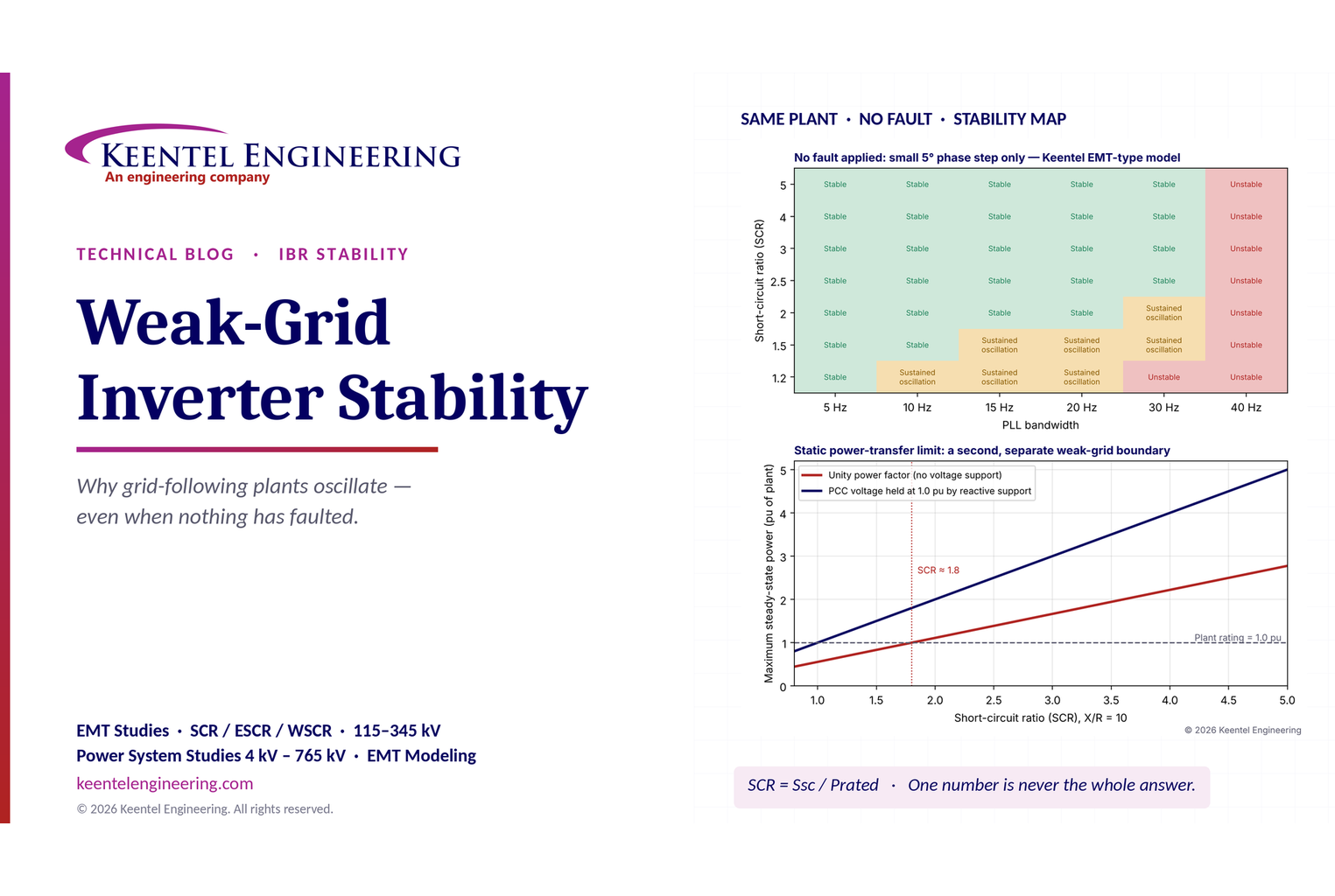
Learn why grid-following inverters become unstable without grid faults. Explore SCR, PLL interactions, EMT studies, grid strength, and mitigation.
By SANDIP R PATEL
•
October 20, 2026
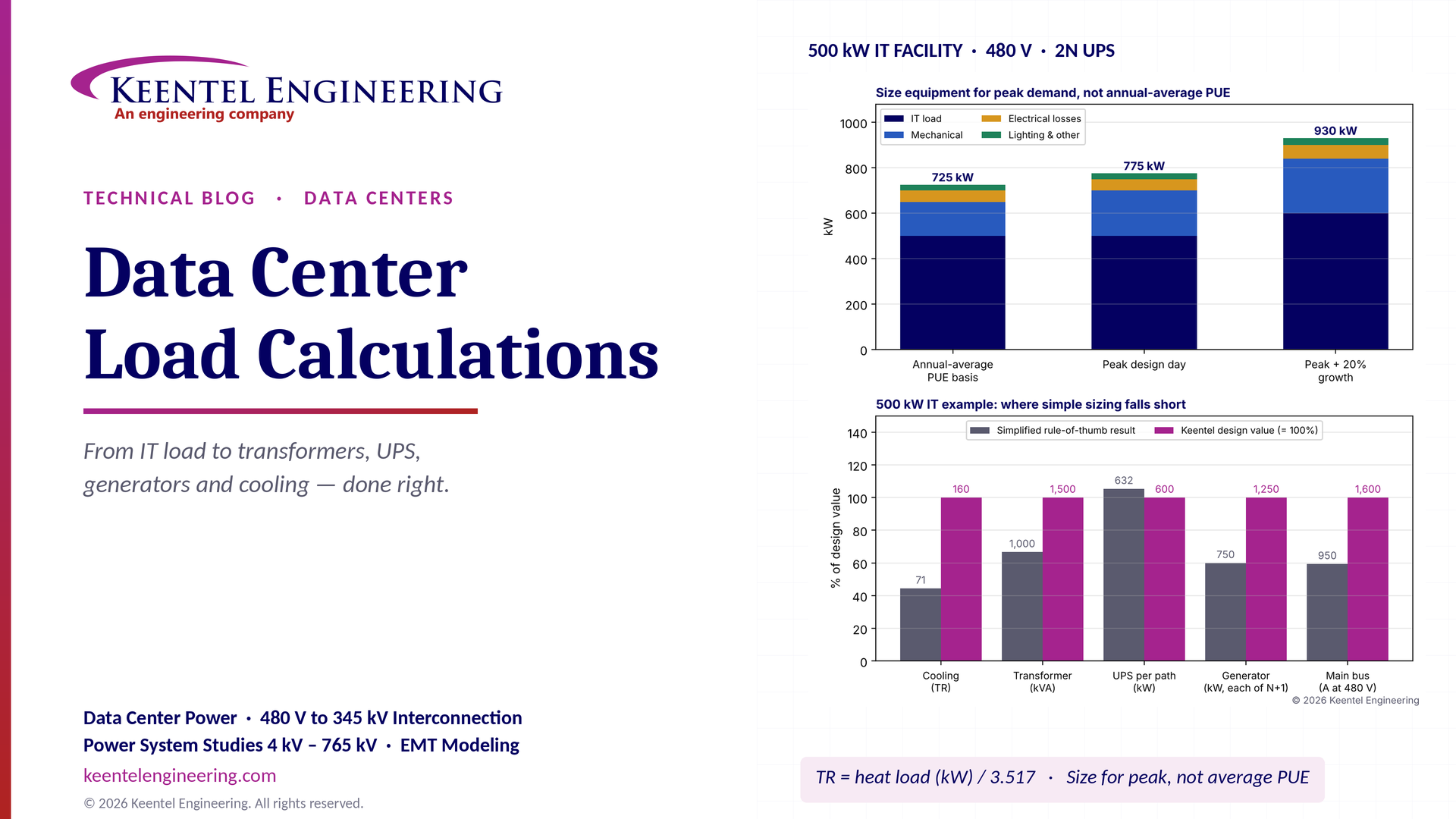
Learn data center electrical load calculations, including IT demand, PUE, UPS and generator sizing, cooling loads, redundancy, and worked US examples.
By SANDIP R PATEL
•
October 20, 2026
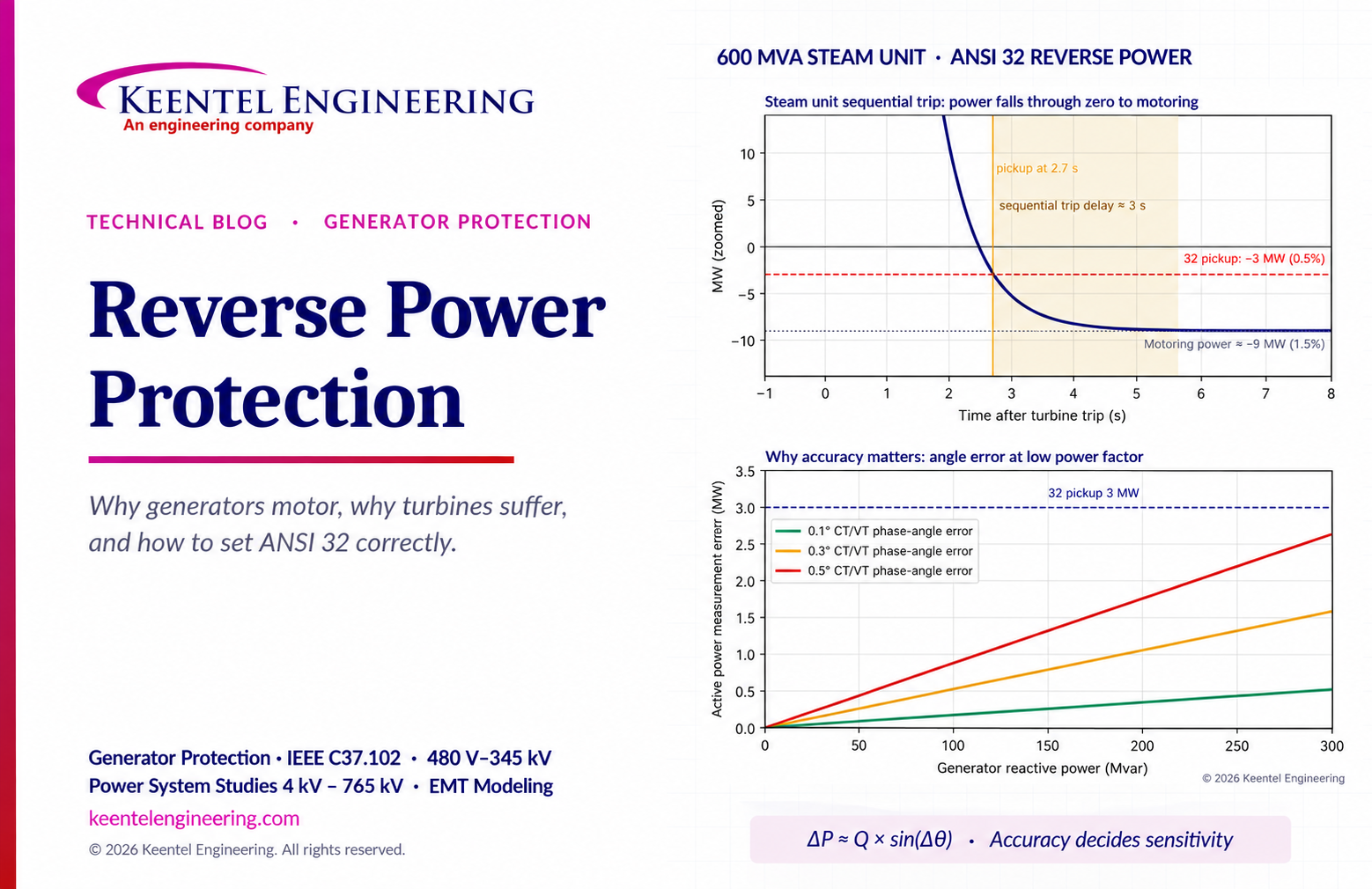
Learn reverse power protection (ANSI 32), generator motoring, relay pickup settings, time delays, sequential tripping and testing for US power plants.
Copy
By Team 2 Dexora
•
October 20, 2026
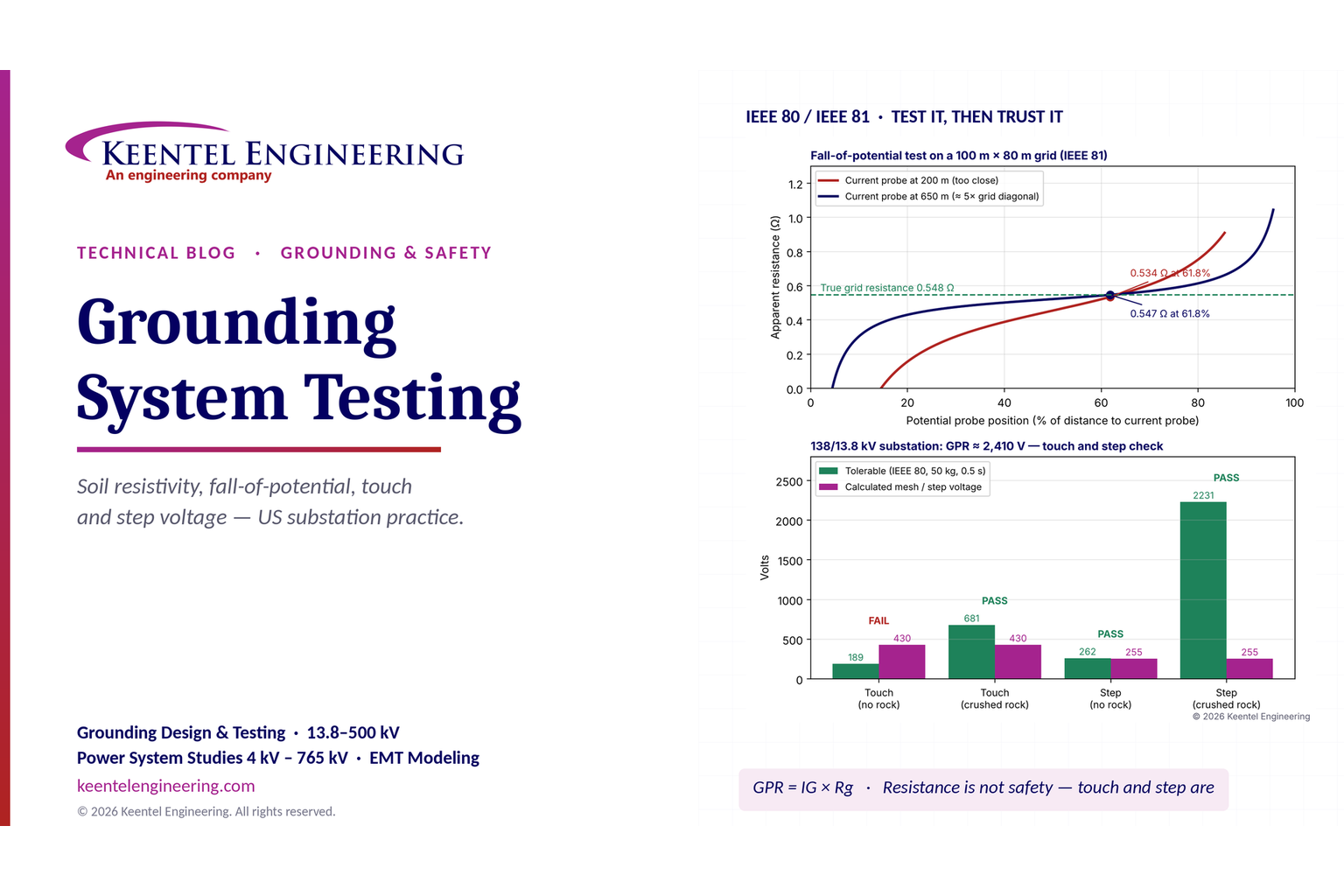
Explore grounding system testing with Keentel Engineering. Learn IEEE 80/81 methods, soil resistivity, ground resistance, and touch and step voltage safety.
By SANDIP R PATEL
•
October 13, 2026
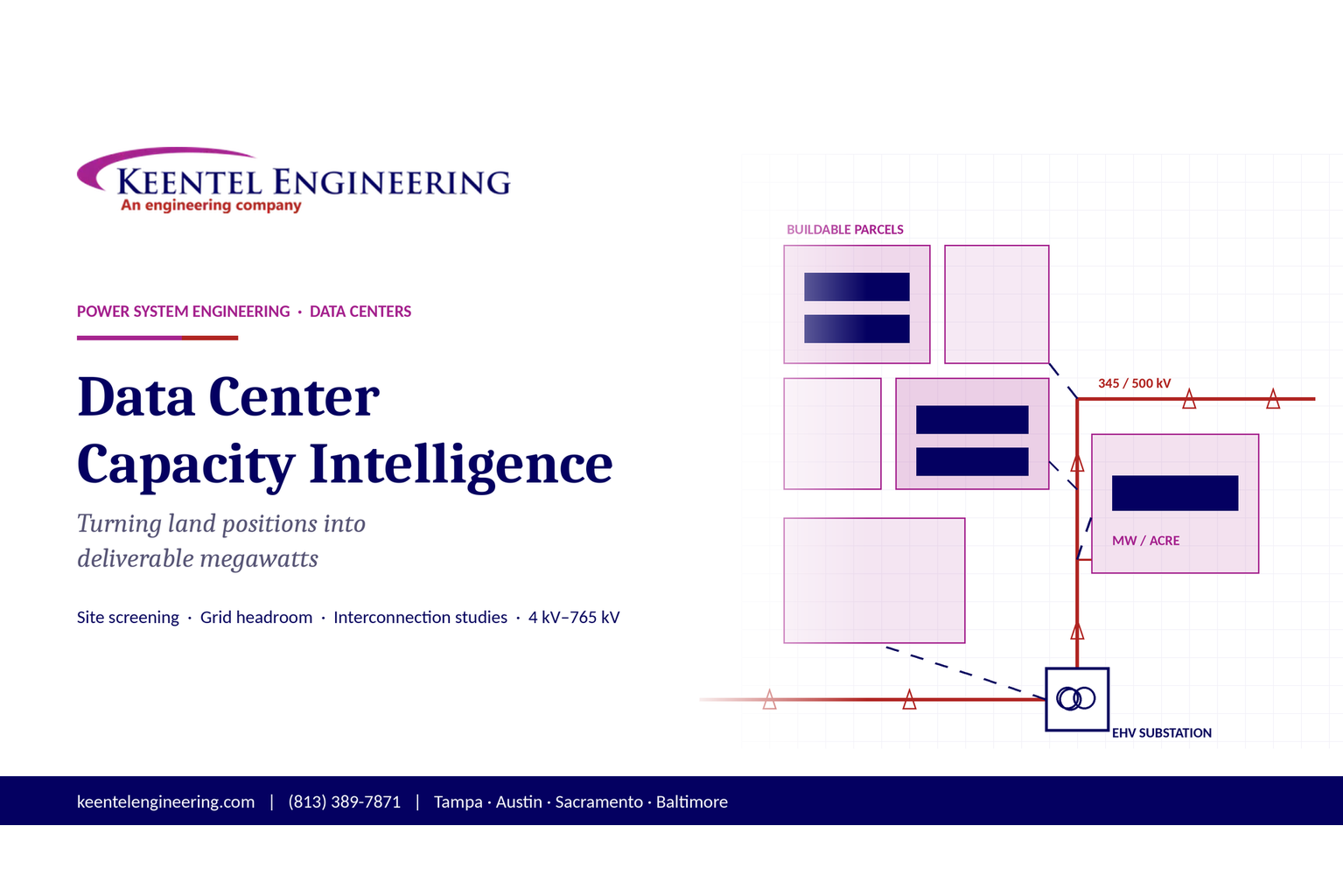
Plan data center capacity with land screening, MW-per-acre estimates, grid power availability and interconnection feasibility studies from Keentel Engineering.
By SANDIP R PATEL
•
October 11, 2026
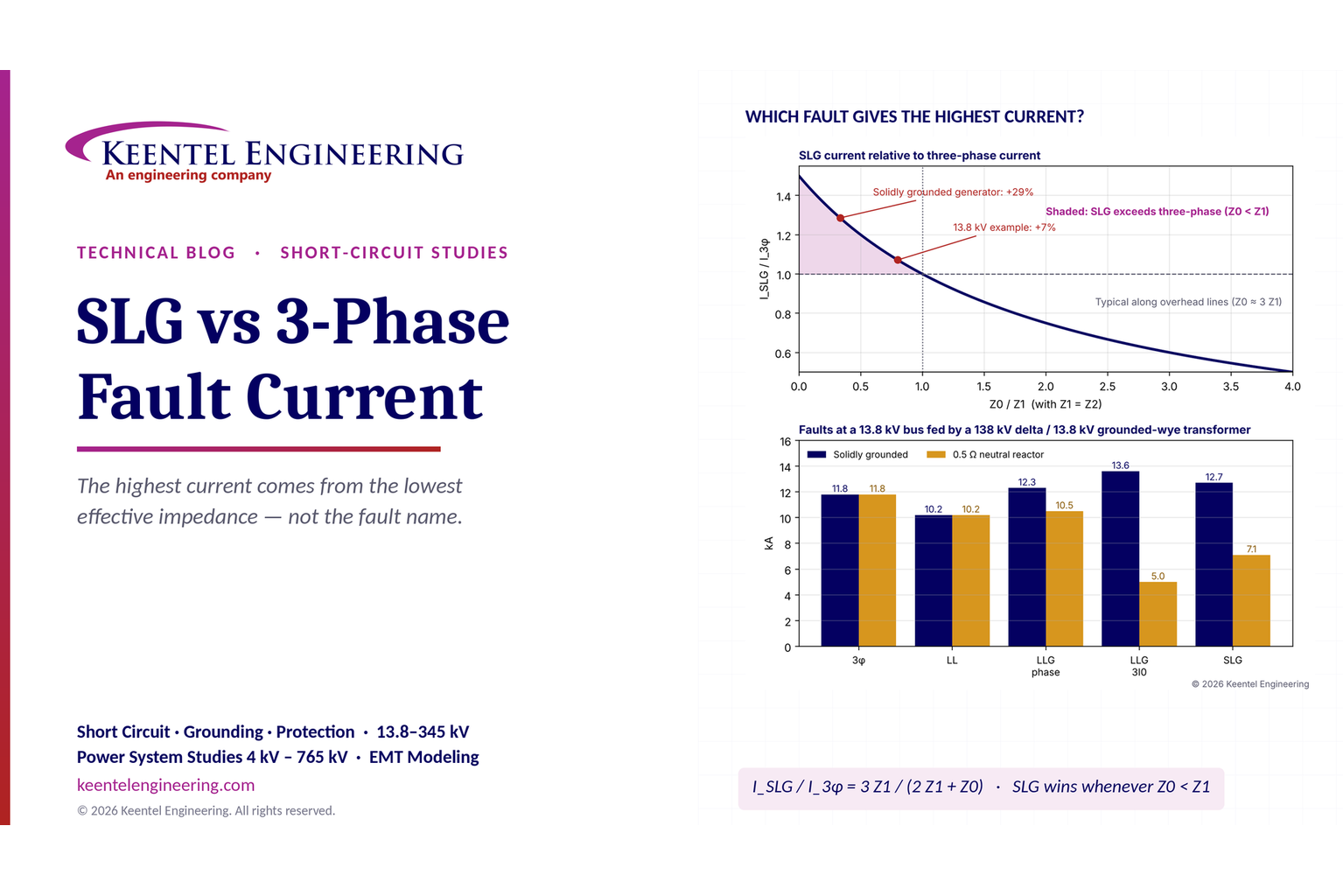
Learn which fault produces the highest current at a bus, why SLG faults can exceed three-phase faults, and how symmetrical components determine fault duty.
By SANDIP R PATEL
•
October 11, 2026
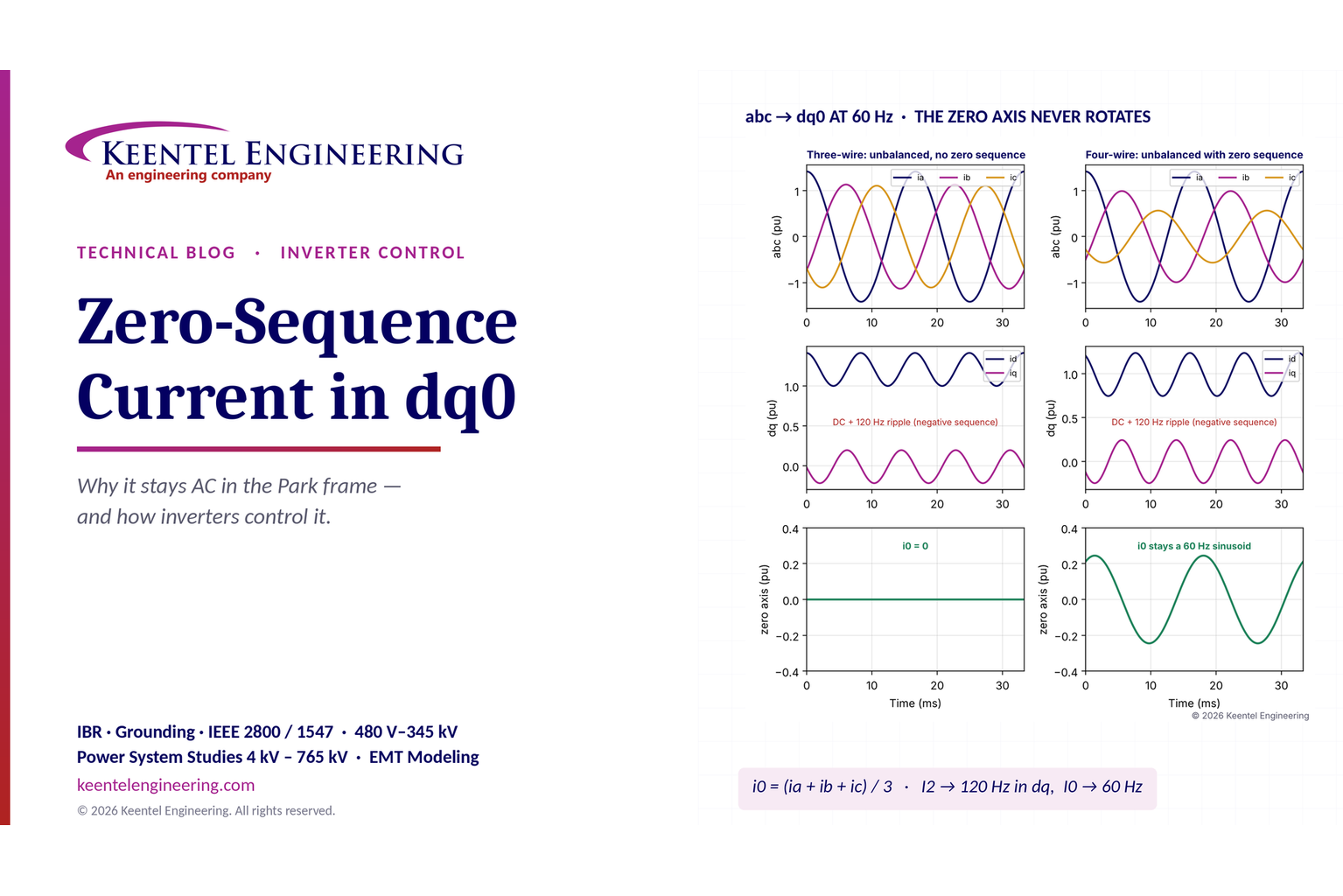
Learn why zero-sequence current pulsates in the dq0 frame, how Park's transformation works, and how inverter controls handle unbalance and ground faults.
By SANDIP R PATEL
•
October 11, 2026
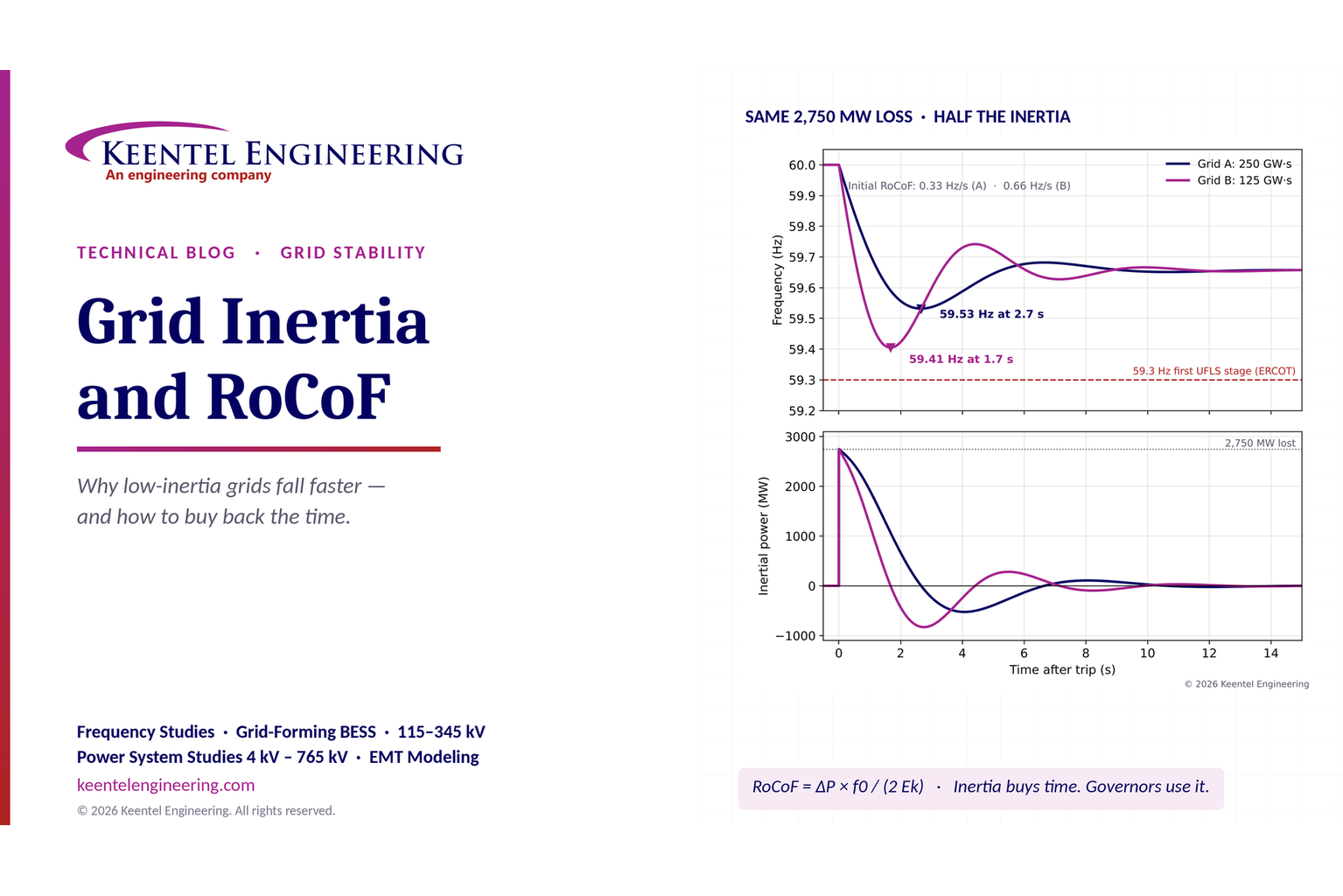
Explore grid inertia, RoCoF and frequency response, with swing equation calculations, frequency nadir analysis and US power system simulation examples.
By SANDIP R PATEL
•
October 11, 2026
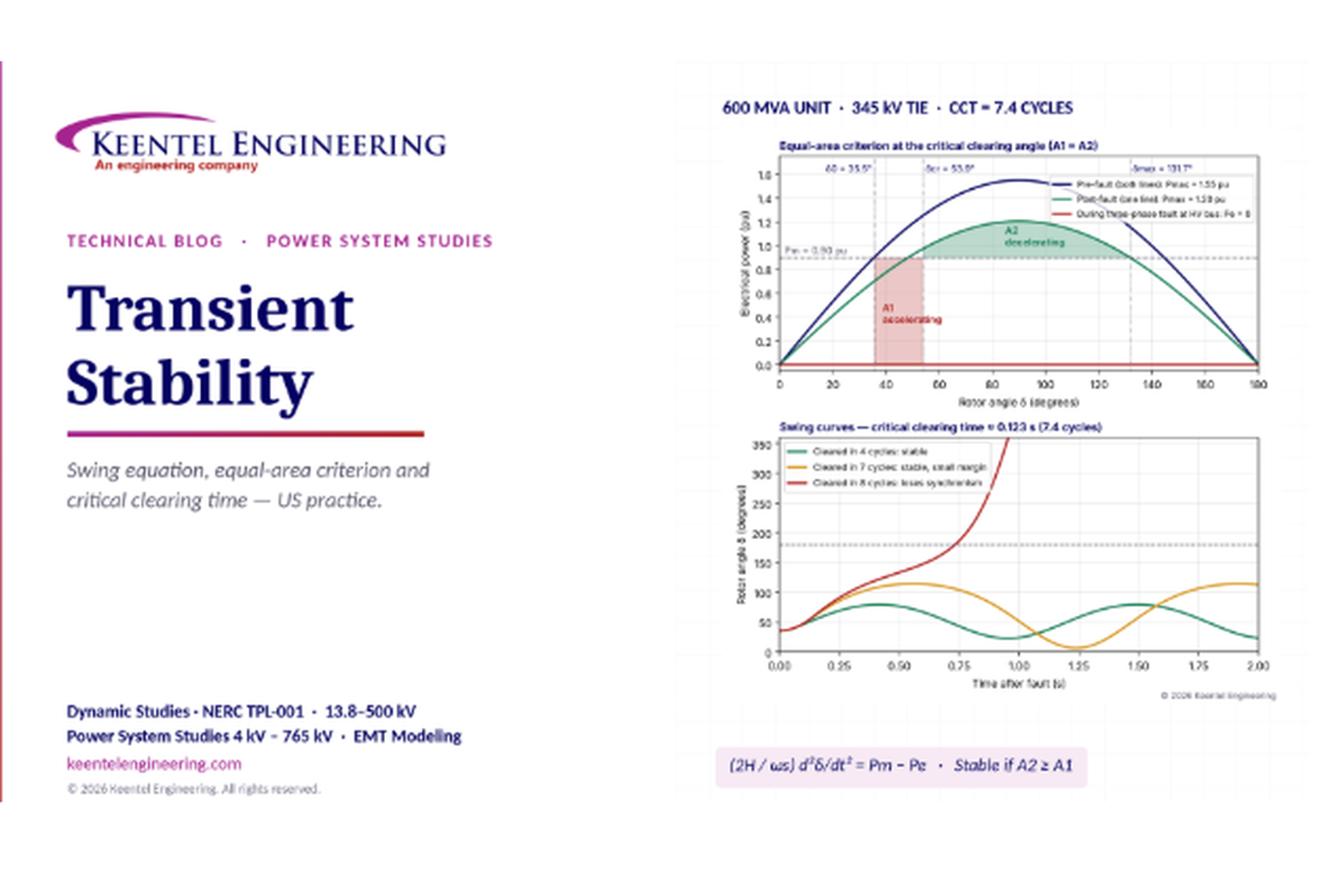
Learn transient stability analysis, swing equation, equal-area criterion and critical clearing time with a 345 kV worked example and NERC TPL-001 guidance.