

A Coordinated Electric System Interconnection Review—the utility’s deep-dive on technical and cost impacts of your project.

Challenge: Frequent false tripping using conventional electromechanical relays
Solution: SEL-487E integration with multi-terminal differential protection and dynamic inrush restraint
Result: 90% reduction in false trips, saving over $250,000 in downtime

Category Metric
VPP capacity (Lunar Energy) 650 MW
Lunar funding raised US$232 million
Data center BESS example 31 MW / 62 MWh
ERCOT grid-scale batteries 15+ GW
LDES tenders (H1 2026) Up to 9.3 GW
Lithium-ion share of LDES by 2030 77%
FEOC initial threshold 55%
BESS tariff rate (2026) ~55%
Capacity gain from analytics 5–15%

Centralized Substation Protection and Control (CPC): The Future of Smart Grid Reliability

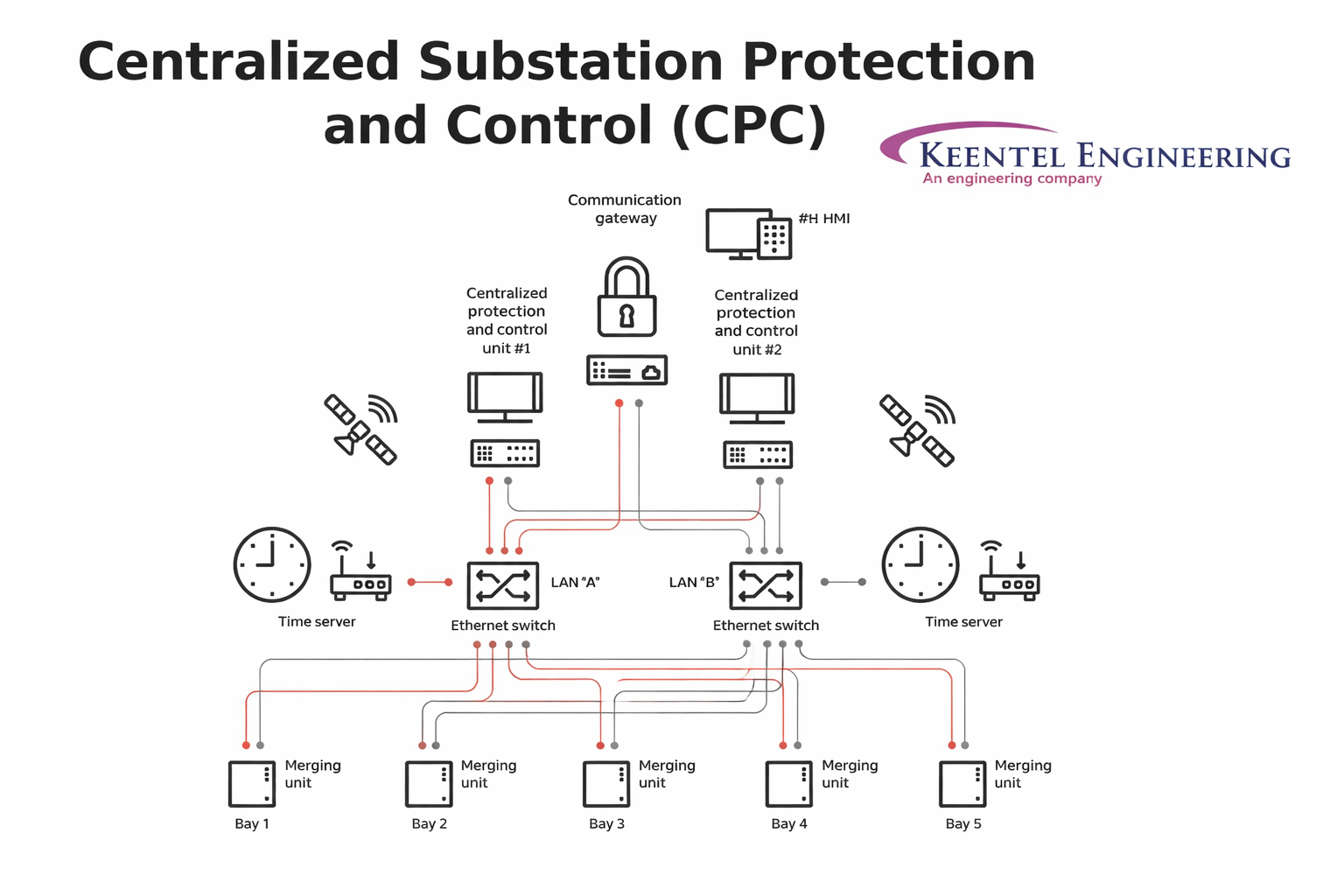
Centralized substation protection and control (CPC) system with LAN network, Ethernet switches.
Calendar icon. D

Apr 6, 2026  | blog

Introduction: A Paradigm Shift in Power System Protection

The modern power grid is undergoing a fundamental transformation. With the rapid integration of renewable energy, distributed energy resources (DERs), microgrids, and advanced automation, traditional protection and control methods are no longer sufficient.


Centralized Protection and Control (CPC) represents a next-generation engineering approach that leverages high-performance computing, real-time data, and advanced communication systems to enhance grid reliability, efficiency, and intelligence.


According to the IEEE working group report, CPC systems are designed to integrate protection, control, monitoring, communication, and asset management into a unified platform, significantly improving system performance and operational visibility .


At Keentel Engineering  we specialize in designing and implementing such advanced systems aligned with NERC, IEEE, IEC 61850, and utility-specific requirements.


Evolution of Substation Protection: From Relays to Intelligent Systems

1. Traditional Protection Systems

Historically, protection evolved through three major stages:


  • Electromechanical relays (1900s–1960s) 
  • Static/solid-state relays (1960s–1980s) 
  • Microprocessor-based relays (1980s–present) 


Modern systems use Intelligent Electronic Devices (IEDs) that combine:


  • Protection 
  • Control 
  • Automation 
  • Communication (IEC 61850, DNP3, GOOSE) 


However, these systems are still distributed and device-centric, leading to:


  • Complex maintenance 
  • Higher costs 
  • Increased cybersecurity exposure 

 What is Centralized Protection and Control (CPC)?

  • CPC is defined as:


A system that uses a high-performance computing platform to perform protection, control, monitoring, and asset management using time-synchronized  high-speed data across a substation.


  • Key Concept:


Instead of multiple relays per bay → One centralized system manages the entire substation


Why CPC is Critical for the Modern Grid

1. Integration of Renewables & DERs

  • Solar, wind, and BESS introduce dynamic behavior 
  • Traditional relays struggle with variability 
  • CPC enables real-time adaptive protection 

2. Smart Grid & Microgrid Evolution

  • Substations are becoming control hubs 
  • CPC supports distributed intelligence and automation 

3. Increased Need for Reliability

  • Faster fault detection (< 10 ms communication requirements) 
  • Reduced outage impact 
  • Enhanced resiliency 

CPC Architecture: How It Works

Core Components

1. Merging Units (MU)


  • Convert analog CT/PT signals into digital data 
  • Provide synchronized measurements (IEC 61850-9-2) 


2. Communication Network


  • High-speed Ethernet 
  • Protocols: 


  • IEC 61850 (GOOSE, SV) 
  • PRP / HSR (zero packet loss redundancy) 


3. Central Computing Platform


  • Industrial servers 
  • Executes: 


  • Protection algorithms 
  • Control logic 
  • Monitoring functions 


4. Time Synchronization


  • GPS + IEEE 1588 (PTP) 
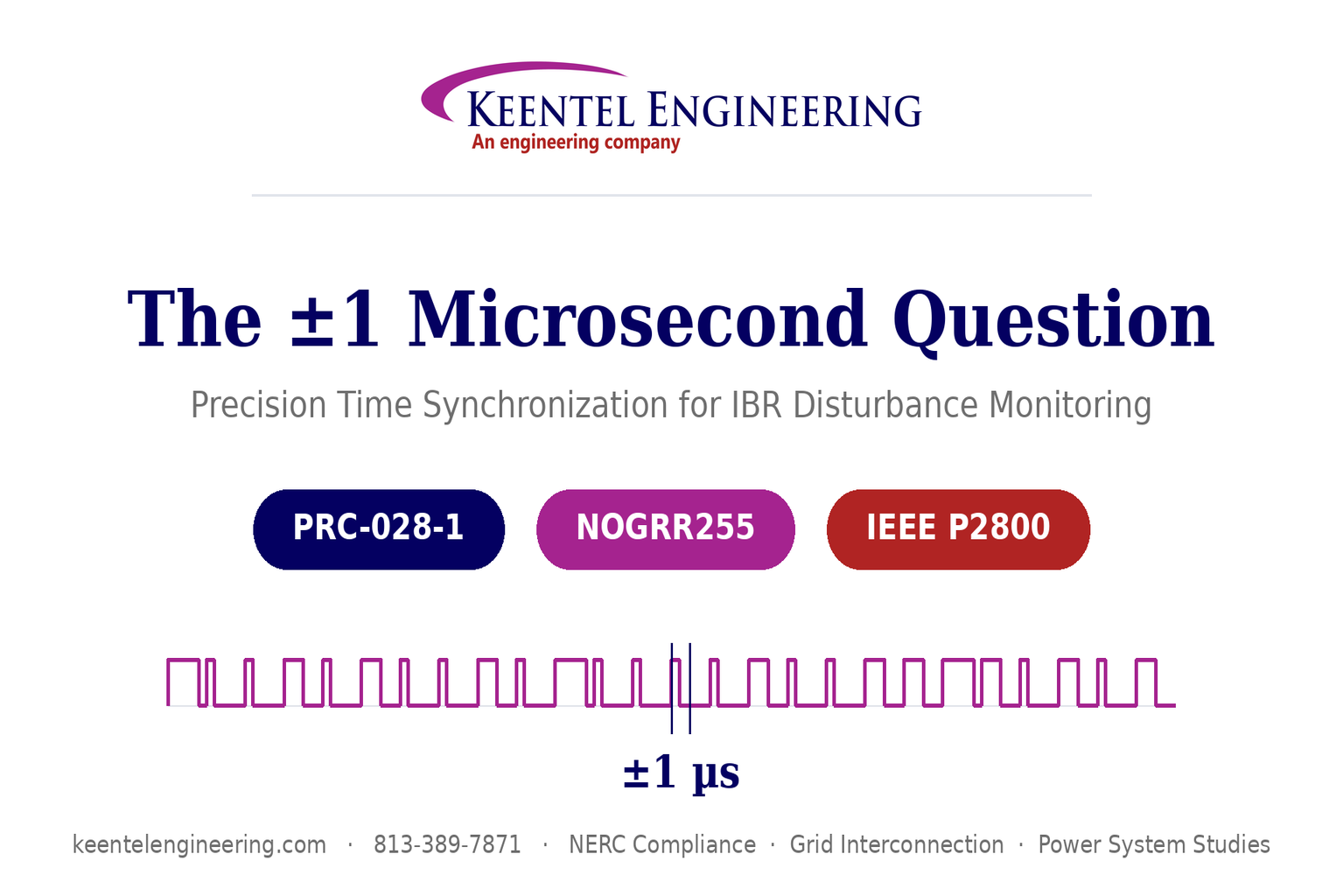
  • Accuracy: ~1 microsecond

CPC vs Traditional Protection: Key Advantages

Feature Traditional System CPC System
Devices Many IEDs Fewer centralized systems
Maintenance High Reduced
Cybersecurity Raw data Intelligent processed data
Scalability Limited Hill

CPC significantly reduces CAPEX and OPEX while improving system intelligence.


Advanced Capabilities Enabled by CPC

1. Real-Time Analytics

  • Fault prediction 
  • Equipment health monitoring 

2. Wide Area Protection

  • Integration with PMUs and synchrophasors 

3. Dynamic State Estimation

  • Adaptive protection based on system conditions 

4. Asset Management

  • Predictive maintenance 
  • Lifecycle optimization 

CPC Architectures (Engineering Approaches)

The report identifies multiple CPC architectures:


Architecture 1:


  • Traditional IEDs + CPC backup 


Architecture 2:


  • Direct integration with merging units 


Architecture 3:


  • Fully centralized (IEDs replaced) 


Architecture 4 & 5:


  • Ethernet-based process bus with redundancy 


Each architecture varies based on:


  • Reliability requirements 
  • Budget constraints 
  • Retrofit vs new design 

Communication & Reliability Requirements

CPC systems demand:


  • <15 ms communication recovery time 
  • Zero packet loss (critical protection signals) 
  • Redundant networks (PRP/HSR) 


This ensures:


  • No missed faults 
  • Continuous operation even during failures 

Challenges in CPC Implementation

Despite advantages, CPC requires:


1. Engineering Mindset Shift


  • From device-based → system-based design 


2. Skilled Workforce


  • Expertise in: 


  • IEC 61850 
  • Networking 
  • Protection engineering 


3. System-Level Testing


  • Integration testing is more complex than relay-level testing 

Keentel Engineering Expertise in CPC Solutions

At Keentel Engineering we provide:


Engineering Services


  • Substation Protection & Control Design 
  • IEC 61850 System Architecture 
  • CPC System Implementation 
  • Relay Coordination & Studies 


Compliance & Standards


  • NERC PRC Compliance 
  • IEEE & IEC Standards 
  • Utility Grid Code Compliance


Advanced Studies


  • Dynamic modeling (PSSE, PSCAD) 
  • EMT studies 
  • TSAT validation 


Turnkey Solutions


  • Concept → Design → Commissioning 

Conclusion

Centralized Protection and Control is not just an upgrade it is a transformational shift in power system engineering.


It delivers:


  • Higher reliability 
  • Lower lifecycle cost 
  • Future-ready infrastructure 


Utilities adopting CPC today are positioning themselves for:


  • Smart grids 
  • Renewable integration 
  • Digital substations 

 25 Detailed FAQs (SEO Optimized)

General CPC Concepts

  • 1. What is centralized protection and control (CPC)?

    CPC is a system that centralizes protection, control, and monitoring functions using a high-performance computing platform.

  • 2. How is CPC different from traditional relay systems?

    Traditional systems use multiple relays per bay, while CPC consolidates functions into a centralized system.


  • 3. Why is CPC important for modern power systems?

    It supports renewable integration, improves reliability, and enables real-time decision-making.


Technical Questions

  • 4. What standards are used in CPC systems?

    • IEC 61850 
    • IEEE C37 series 
    • IEEE 1588 (PTP) 

  • 5. What is a merging unit in CPC?

    A device that converts analog signals into digital sampled values for communication over a network.


  • 6. What is GOOSE messaging?

    A high-speed communication protocol used for protection signaling in IEC 61850 systems.


  • 7. What is process bus architecture?

    A digital communication system replacing copper wiring between primary equipment and protection systems.


  • 8. What is PRP and HSR?

    Redundant communication protocols ensuring zero packet loss and high availability.


Performance & Reliability

  • 9. How fast must CPC systems operate?

    Protection signals must propagate within 5–10 ms for effective fault clearing 


  • 10. How does CPC improve reliability?

    By reducing device count and enabling real-time analytics and redundancy.


  • 11. What happens if communication fails?

    Backup protection (e.g., IMU-based) ensures system safety.


Engineering & Design

  • 12. Can CPC be implemented in existing substations?

    Yes, CPC can coexist with traditional systems for retrofit applications.


  • 13. What skills are required for CPC engineering?

    • Protection engineering 
    • Networking 
    • IEC 61850 expertise 

  • 14. What is time synchronization in CPC?

    Aligning measurements using GPS/PTP to ensure accurate system operation.


Cost & Business Value

  • 15. Does CPC reduce costs?

    Yes, it reduces:

    • Wiring costs 
    • Maintenance costs 
    • Equipment costs 

  • 16. What is the ROI of CPC?

    Higher reliability and reduced downtime lead to significant long-term savings.


  • 14. What is time synchronization in CPC?

    Aligning measurements using GPS/PTP to ensure accurate system operation.


Advanced Applications

  • 17. Can CPC support AI-based protection?

    Yes, CPC platforms enable advanced analytics and pattern recognition.


  • 18. What is dynamic state estimation?

    Real-time system modeling used for adaptive protection.


  • 19. How does CPC support asset management?

    By providing continuous monitoring and predictive maintenance insights.


Keentel Engineering Services

  • 20. Does Keentel provide CPC design services?

    Yes, including full engineering, modeling, and compliance support.


  • 21. Can Keentel help with IEC 61850 implementation?

    Absolutely, including architecture design and configuration.


  • 22. Does Keentel support NERC compliance?

    Yes, including PRC standards and modeling requirements.


Future Outlook

  • 23. Is CPC the future of substations?

    Yes, CPC is a core component of digital substations and smart grids.


  • 24. Will CPC replace traditional relays completely?

    Eventually, yes—especially in new substations.


  • 25. What industries benefit from CPC?

    • Utilities 
    • Renewable developers 
    • Industrial facilities 
    • Grid operator


Man in a blazer and open shirt, looking at the camera, against a blurred background.

About the Author:

Sonny Patel P.E. EC

IEEE Senior Member

In 1995, Sandip (Sonny) R. Patel earned his Electrical Engineering degree from the University of Illinois, specializing in Electrical Engineering . But degrees don’t build legacies—action does. For three decades, he’s been shaping the future of engineering, not just as a licensed Professional Engineer across multiple states (Florida, California, New York, West Virginia, and Minnesota), but as a doer. A builder. A leader. Not just an engineer. A Licensed Electrical Contractor in Florida with an Unlimited EC license. Not just an executive. The founder and CEO of KEENTEL LLC—where expertise meets execution. Three decades. Multiple states. Endless impact.

Four workers in safety vests and helmets stand with arms crossed near wind turbines.

Let's Discuss Your Project

Let's book a call to discuss your electrical engineering project that we can help you with.

Man in a blazer and open shirt, looking at the camera, against a blurred background.

About the Author:

Sonny Patel P.E. EC

IEEE Senior Member

In 1995, Sandip (Sonny) R. Patel earned his Electrical Engineering degree from the University of Illinois, specializing in Electrical Engineering . But degrees don’t build legacies—action does. For three decades, he’s been shaping the future of engineering, not just as a licensed Professional Engineer across multiple states (Florida, California, New York, West Virginia, and Minnesota), but as a doer. A builder. A leader. Not just an engineer. A Licensed Electrical Contractor in Florida with an Unlimited EC license. Not just an executive. The founder and CEO of KEENTEL LLC—where expertise meets execution. Three decades. Multiple states. Endless impact.

Leave a Comment

Related Posts

PJM First Use rule elimination for DER interconnection under FERC Order 2222
By SANDIP R PATEL April 7, 2026
Explore PJM’s First Use rule reform, DER interconnection changes, and FERC Order 2222 impacts on solar, BESS, and distribution-level grid integration.
Advanced PSSE and PSCAD modeling services for solid-state transformers in data center power systems
By SANDIP R PATEL April 7, 2026
Advanced PSSE and PSCAD modeling for solid-state transformers in data centers. Ensure grid compliance, stability, and high-performance power systems.
FlexGEB smart building with solar, HVAC, battery storage, and grid-connected energy systems.
By SANDIP R PATEL April 6, 2026
Explore FlexGEB smart buildings using solar, storage, HVAC, and IoT to boost energy efficiency, demand flexibility, and grid resilience.
Keentel Engineering data center design services banner highlighting uptime, grid reliability
By SANDIP R PATEL April 6, 2026
Keentel Engineering delivers data center electrical design for uptime, grid stability, AI workloads, and utility-ready interconnection planning.
Digital substation with switchyard, relay room, and grid control for smart grid infrastructure.
By SANDIP R PATEL April 6, 2026
Explore the hidden challenges of digital substations including IEC 61850 interoperability, cybersecurity risks network overload, and timing failures. Learn how expert engineering ensures reliable future ready power systems.
NERC BAL-007-1 Explained banner with power lines and April 1, 2027 effective date.
By SANDIP R PATEL April 3, 2026
Learn how NERC BAL-007-1 ensures energy adequacy, ERA methods, and proactive grid reliability strategies for utilities, developers & BAs.
Future NERC reliability standards for power grid and cybersecurity by Keentel Engineering
By SANDIP R PATEL April 1, 2026
Explore upcoming NERC Reliability Standards (2026–2029), including BAL-007 energy assessments, IBR ride-through rules, cybersecurity (CIP-003-9), and extreme weather planning. Learn compliance strategies, risks, and real-world case studies.
Substation equipment testing and validation process with electrical panels and FAT inspection
By SANDIP R PATEL March 31, 2026
Learn the complete substation testing lifecycle including Type Testing, FAT, and SAT. Discover how to reduce risks, improve reliability, and ensure NERC compliance.
Internal inspection engineers identifying root causes in industrial equipment at Keentel Engineering
By SANDIP R PATEL March 31, 2026
Explore advanced transformer failure analysis methods, diagnostics, and prevention strategies used by power system engineers.