A Coordinated Electric System Interconnection Review—the utility’s deep-dive on technical and cost impacts of your project.
Challenge: Frequent false tripping using conventional electromechanical relays
Solution: SEL-487E integration with multi-terminal differential protection and dynamic inrush restraint
Result: 90% reduction in false trips, saving over $250,000 in downtime
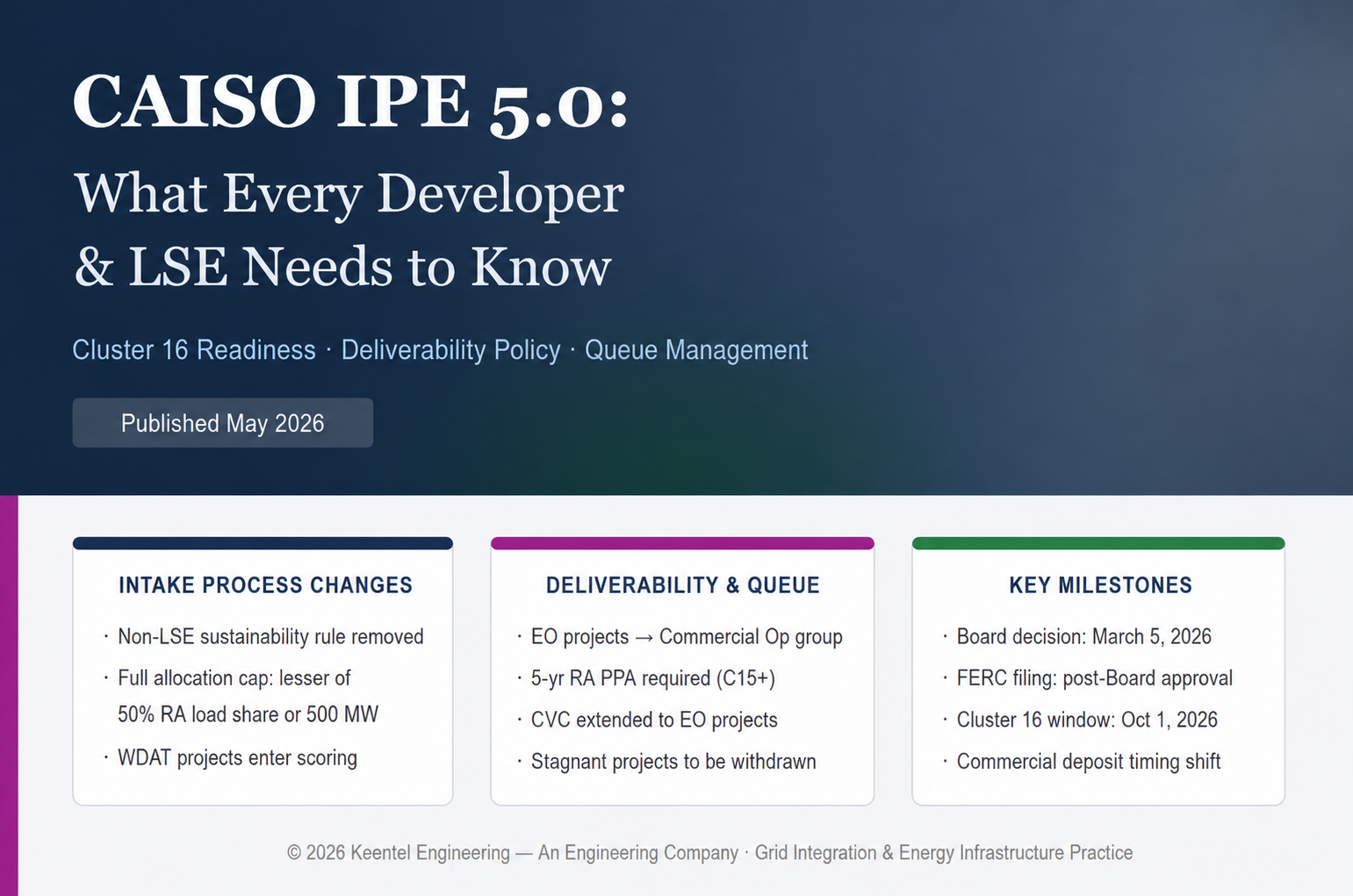
CAISO Interconnection Process Enhancements 5.0: What Every Developer and LSE Needs to Know
May 2, 2026 | Blog
Introduction
The California Independent System Operator (CAISO) has finalized its Interconnection Process Enhancements 5.0 (IPE 5.0) initiative, with a Board of Governors decision targeted for March 5, 2026. This initiative builds upon the sweeping reforms introduced in IPE 2023 and is specifically designed to refine the interconnection process ahead of the opening of Cluster 16 in October 2026.
At Keentel Engineering, we work closely with developers, load-serving entities (LSEs), and transmission stakeholders navigating the California interconnection landscape. This blog provides a thorough, technical breakdown of every key policy change in IPE 5.0 and what it means for your projects.
Background: Why IPE 5.0 Exists
IPE 2023 made foundational changes to CAISO's interconnection procedures, all of which were approved by the Federal Energy Regulatory Commission (FERC) without modification or dissent. The Track 2 enhancements implemented in 2024 and 2025 dramatically reduced Cluster 15 to a more manageable volume, scaled to the expected resource needs over the next 15 years.
However, CAISO committed to monitoring the reformed process and returning to address any friction points. IPE 5.0 is that follow-through — informed by the Summary of Cluster 15 Scoring Intake Results (posted June 12, 2025) and a formal Informational Report filed with FERC on July 29, 2025.
The overarching goal of IPE 5.0 is narrow but critical: remove friction, accelerate viable resource onboarding, and ensure the process is ready for Cluster 16.
Section 1: Changes to the Interconnection Request Intake Process
1.1 Non-LSE Commercial Interest Process
What changed:
Under the existing rules, an interconnection request earns a fixed 25-point award when a developer submits an ISO-prescribed affidavit from a verifiable corporate, industrial, or financial off-taker that is not a load-serving entity (non-LSE). Previously, that affidavit was required to attest that the non-LSE was supporting the project in furtherance of its **corporate sustainability goals**.
IPE 5.0 removes the sustainability attestation requirement. Going forward, the non-LSE affidavit simply needs to attest to the **value of the project** to the non-LSE — without specifying the motivation as sustainability-related.
What stays the same:
- The 25-point fixed award remains unchanged.
- The one-project-per-cluster limit for any single non-LSE remains in place.
- CAISO will continue rigorous scrutiny of every non-LSE affidavit to verify legitimacy, confirm the non-LSE is procuring capacity in a meaningful way, and confirm there is no affiliation with the interconnection customer.
Why it matters for developers:
This change recognizes the reality of today's market. Data center operators, industrial manufacturers, and financial institutions may have compelling economic or operational reasons — beyond sustainability mandates — to support clean energy projects. The prior requirement created an unnecessary barrier for non-LSEs whose procurement was motivated by load growth, energy security, or cost management rather than formal sustainability policy.
1.2 Cap on the Full Allocation Election
Background:
When an LSE's point allocation is insufficient to support a single large project of interest, the LSE may elect to direct all of its allocated commercial interest capacity to that project — the "full allocation election." Previously, the cap on this election was set at 125% of the LSE's allocated commercial interest capacity.
The new methodology:
IPE 5.0 revises the cap to the lesser of:
- 50% of the LSE's forecasted RA load share, based on the CEC's Coincident Peak Demand and Load Ratio Share Forecasts, OR
- 500 MW
Why 500 MW?
CAISO analyzed the interconnection service capacity of all projects that have reached commercial operation and set the 500 MW threshold at the **95th percentile**. The largest project ever to reach commercial operation was 850 MW (100th percentile). The 500 MW cap is designed to prevent large LSEs from using their disproportionate load shares to dominate the scoring and ranking process.
Practical impact:
- For small LSEs: The 50% of RA load share criterion effectively nearly doubles the project size they can select compared to the previous methodology a meaningful improvement for municipal utilities and CCAs that historically struggled to accumulate enough points for large single projects.
- For large LSEs (e.g., SCE, PG&E, SDG&E): The 500 MW ceiling limits the full allocation election to a level that covers the overwhelming majority of real-world projects. Importantly, this cap only activates when the LSE's total point allocation is unusually low meaning in a typical cluster cycle, large LSEs would not be constrained by this at all.
- - The cap applies only to FCDS and PCDS projects. Energy Only projects of any size may still proceed through the non-reimbursable option without a full allocation cap.
1.3 Distribution System Interconnection Projects in Intake Scoring and the 150% Study Limit
Background:
Distribution-level interconnection requests that seek to provide wholesale energy are governed by the Participating Transmission Owner's (PTO's) Wholesale Distribution Access Tariff (WDAT). CAISO performs the deliverability studies and allocates Transmission Plan Deliverability (TPD) to allow WDAT projects to participate in the Resource Adequacy (RA) process.
Historically, WDAT projects seeking deliverability were not required to compete in the cluster intake scoring process — creating a structural inconsistency with
transmission-level projects.
The IPE 5.0 proposal:
Beginning with Cluster 16, any distributed project seeking to participate in ISO markets with deliverability must:
1. Submit project intake scores through the same GRIP application process used by transmission-level interconnection customers during the cluster's open window period.
2. Be validated by CAISO in coordination with the interconnecting utility to confirm the project is active in the utility's interconnection process and eligible to seek FCDS or PCDS under the PTO's WDAT or applicable tariff.
3. Be confirmed as seeking to interconnect at a point of delivery where available TPD exists. If no TPD is available at the point of delivery, the project will not proceed in the ISO study process and will be treated as Energy Only for all future ISO RIS considerations.
4. Compete in the same scoring and ranking process as transmission-level projects for inclusion in cluster studies.
5. If included in studies based on score ranking, have its RA-eligible capacity **reduce the remaining available delivery capacity** for subsequent projects within the 150% capacity limit at its point of delivery.
Tie-breaker and auction process:
WDAT projects will be included in the existing DFAX tie-breaker process. If ties persist after the DFAX analysis, WDAT projects will be required to participate in the auction process under the financial requirements described in ISO Tariff Appendix KK, Section 4.1.2.
What is NOT changing:
- Distributed resources that already have deliverability, or are currently being studied in Cluster 15, are unaffected.
- CAISO will not be adding additional TPD capacity to the study limit to accommodate WDAT participation. The 150% study limit is based on actual available TPD.
- WDAT projects remain ineligible for the Merchant Option.
- Eligibility for WDAT projects to seek FCDS continues to be determined by the applicable PTO's FERC-jurisdictional tariff — CAISO is not imposing any blanket eligibility rules.
Keentel Engineering perspective:
This is a structurally important change. Distributed developers who have historically accessed deliverability through a less competitive pathway now face the same intake scoring rigor as transmission-connected projects. Developers of WDAT projects should begin now to develop competitive scoring strategies, secure LSE commercial interest letters where available, and engage their interconnecting utility early to confirm eligibility before the Cluster 16 window opens.
Section 2: Changes to Deliverability Allocation Practices
2.1 Allowing Operational Energy Only Projects to Seek Deliverability
Background:
IPE 2023 Track 2 created a specific pathway for Energy Only resources to enter the queue. However, the ISO tariff previously prohibited Energy Only projects — those that entered the queue as energy only — from ever obtaining deliverability "including without limitation through transfers, modifications, or the TP Deliverability allocation process."
Multiple stakeholders, including CalCCA, ACP-California, CalWEA, Clearway, EDF, and Invenergy, advocated for a pathway to allow operational Energy Only projects to seek TPD, citing emerging RA supply gaps projected for the 2029–2030 timeframe.
The IPE 5.0 proposal:
CAISO proposes to allow Energy Only projects from **Cluster 15 and later** that have completed the interconnection process and reached **commercial operation** to seek TPD through the **Commercial Operation allocation group** — the same group created in IPE 2023 Track 3, previously limited to Cluster 14 and earlier projects.
Eligibility requirements for Cluster 15 and later projects:
To qualify, the project must:
1. Be in commercial operation at the time of the affidavit submission (or by the affidavit due date).
2. Demonstrate a **procurement agreement with an LSE** that has a Resource Adequacy obligation.
3. The contract must require the project to **seek TPD**.
4. The contract must procure the project's RA-eligible capacity for **five or more years**.
Key clarifications from the January 2026 stakeholder call:
- Cluster 14 and earlier projects may participate in the 2027 TPD allocation cycle **without a PPA** as a one-time exception (since those Track 3 rules have not yet been filed with FERC). Beginning in 2028, all projects — including Cluster 14 and earlier — must demonstrate a qualifying procurement agreement.
- For phased projects, only the capacity already in commercial operation may seek TPD. Queued capacity not yet operational is ineligible.
- The non-transferability rule: Any TPD obtained through the Commercial Operation allocation group can only be transferred to **another operational project** — not to a project still in the interconnection queue.
- Similarly, allocations obtained through the Conditional allocation group (created in IPE 2023) are also non-transferable — a clarification CAISO added after observing unexpected behavior in the field.
- LSE-owned projects (self-builds): CAISO indicated at the January 2026 stakeholder call that LSE-owned projects should not be required to execute a PPA with themselves, and that BPM clarifications will be made to accommodate this.
Why this pathway was chosen over re-queuing:
CAISO considered two options: (1) allowing Energy Only projects to re-enter the interconnection queue for a full RIS study — adding roughly three years to the process — or (2) allowing access to the Commercial Operation group, which is much faster. Given the urgency of near-term RA needs, the Commercial Operation group pathway was selected as the more practical solution.
The constraint concern:
CAISO noted that if an Energy Only project is located behind a local deliverability constraint, it will not be eligible for a TPD allocation through this pathway, because a Local Delivery Network Upgrade (LDNU) would be required, and the Commercial Operation group does not provide a mechanism to trigger or fund LDNUs. This remains a significant limitation for distributed or behind-constraint projects.
Section 3: Queue Management and Other Process Changes
3.1 Managing the Accumulation of Stagnant Projects
The problem:
CAISO has long been concerned about older, seemingly stagnant projects lingering in the interconnection queue well past the point where they should have either secured commercial arrangements and proceeded to construction, or withdrawn. Lingering projects create duplicative network upgrade assumptions and impose ongoing administrative burdens on both developers and ratepayers.
IPE 5.0 proposal two components:
Component 1: Extend Commercial Viability Criteria (CVC) to Energy Only projects*
Currently, CVC requirements — including having an executed PPA that matches the project's deliverability status — apply only to deliverable projects seeking COD extensions beyond 7 years. IPE 5.0 proposes to apply these same CVC requirements to all projects, including Energy Only projects, when seeking COD extensions beyond 7 years.
Projects that cannot demonstrate CVC will be withdrawn. A one-year exception remains available for projects that meet all CVC criteria except the PPA — but per the final proposal, this exception may only be used once per interconnection request.
Component 2: Withdrawal instead of conversion to Energy Only
An important clarification made explicit at the January 2026 stakeholder call: Going forward, CAISO will **no longer convert FCDS or PCDS projects that fail CVC to Energy Only status**. Instead, projects that fail CVC will be **withdrawn from the queue entirely**. This eliminates the "halfway house" status of conversion to energy only as a way to remain in queue indefinitely.
What was NOT adopted:
The three-year cumulative COD extension limit proposed in the Draft Final Proposal was **removed** from the Final Proposal following significant stakeholder pushback. The final policy is purely IC-driven CVC requirements are triggered only when the interconnection customer itself requests a COD extension, not on any automatic schedule.
Important carve-outs:
- CVC requirements do not apply where ISO study results or PTO construction delays necessitate longer timelines. Those circumstances do not require a modification request.
- COD extension clock-outs caused by PTO-issued COD Update Reports do not count against the interconnection customer's milestones.
WDAT projects: CAISO does not directly administer CVC requirements for WDAT projects. However, CAISO expects PTOs to implement consistent policy under their own WDAT tariffs.
3.3 Commercial Readiness Deposit Timing
Background
Under ISO Tariff Appendix KK, Section 3.5.1(xi), the commercial readiness deposit (equal to two times the study deposit) was required by the **close of the interconnection request window** for a request to be deemed complete. This created significant coordination burdens between developers and PTOs during Cluster 15.
IPE 5.0 proposal:
The commercial readiness deposit will now only be required for projects that have **successfully completed the scoring and ranking steps** and are proceeding to interconnection request validation. The deposit must be completed by the **close of the cluster customer engagement window**.
Templates for each Participating TO's preferred deposit instruments are posted on the CAISO website.
Developer impact:
This is a practical improvement. Under the old rule, projects that would never proceed to study — because they ranked out in the scoring process — were still required to post significant deposits by the close of the intake window. The new timing aligns the deposit obligation with actual study progression, reducing unnecessary cost and administrative burden for projects that ultimately do not advance.
3.4 Discontinuation of the Pre-Application Process
Background:
ISO Tariff Appendix KK, Section 1.3 allowed small generating facilities of 20 MW or less to request a pre-application report for a $300 non-refundable fee. Between 2017 and 2023, CAISO processed 163 pre-application requests. Analysis revealed:
- The vast majority of requests were from projects **larger than the 20 MW eligibility limit**.
- At most 11% of pre-application requests resulted in an actual interconnection request for a project of 20 MW or less — and possibly none at all, given naming inconsistencies.
- A significant number of requests in certain years came from a single entity, suggesting the process was exploited.
IPE 5.0 proposal:
CAISO proposes to remove Section 1.3 Pre-Application from ISO Tariff Appendix KK entirely.
The replacement:
With Cluster 15, CAISO began publishing substantially more useful pre-cluster information, including:
- Heatmaps showing available TPD by zone
- Redacted cluster study reports
- Constraint mapping workbooks
CAISO also committed at the January 2026 stakeholder call to explore working with PTOs to publish POI-level substation capacity information (e.g., open bus positions, expansion feasibility) prior to the cluster window acknowledging this as a legitimate informational gap that the pre-application process had partially filled.
3.5 Modifications to the GIDAP Executive Dispute Committee
Background:
Projects deemed withdrawn may appeal to the GIDAP Executive Dispute Committee, which consists of specified CAISO Vice Presidents and has only five business days to resolve a dispute. The strict definition of committee membership created operational problems when a named VP was unavailable during a dispute.
IPE 5.0 proposal:
Named VPs on the committee may appoint another ISO Vice President as a **delegate** if they are unavailable. The delegation must be to a VP-level officer — direct reports below the VP level are not eligible as delegates, following internal legal review that concluded the VP-level responsibility is an important structural safeguard for the integrity of the appeals process.
Section 4: Topics Removed from IPE 5.0 Scope
CAISO explicitly removed the following items from IPE 5.0, either because no changes are warranted or because they require a future initiative:
| Topic | Simple Explanation |
|---|---|
| LSE commercial interest point allocation transparency | CAISO will not change the current process. The CPUC is already monitoring it, so no additional action was considered necessary. |
| How commercial interest points are awarded based on requested ISC | CAISO decided the benefit would be too small because only 14 active projects would gain from the change, while the implementation would add significant complexity. |
| Long lead-time resource eligibility for system need points | No new updates were made because this issue was already handled in the earlier IPE 2023 Track 3 initiative. |
| Allowing long lead-time resources to defer deliverability | CAISO did not move forward because stakeholders could not reach agreement on the proposal. |
| Deliverability reservations for projects waiting on long lead-time upgrades | No additional changes were included since this topic was previously addressed in Track 3. |
| Timing of GIA execution compared to TPD allocation completion | CAISO rejected delaying GIA execution, stating that delays would conflict with the goals of FERC Order 2023, which aims to speed up interconnection processing. |
| Searchable and consolidated network upgrade data | CAISO will improve data access administratively but will not make formal tariff changes at this time. |
| Energy Only project caps based on short circuit duty headroom | CAISO acknowledged the idea has value, especially SCE’s proposal, but said it needs a larger stakeholder process and may be considered in a future IPE phase. |
Section 5: Governing Body and Next Steps
therefore fall outside the primary authority of the Western Energy Markets (WEM) Governing Body. The Board of Governors decision is scheduled for March 5, 2026.
Following Board approval, CAISO intends to file the IPE 5.0 tariff changes with FERC, with an implementation target ahead of the Cluster 16 application window opening October 1, 2026.
Keentel Engineering's Recommendations
Based on our technical analysis of the IPE 5.0 Draft Final Proposal and the January 7, 2026 Final Proposal Stakeholder Call,
Keentel Engineering recommends the following actions for clients:
For transmission-level developers in Cluster 16:
- Begin scoring strategy development now, incorporating system need points, long lead-time resource eligibility (as confirmed in the 2025-2026 TPP), and LSE commercial interest engagement.
- Note that the full allocation election methodology change means LSEs — particularly smaller ones may now be able to support larger individual projects. Identify LSEs whose load share and forecasted RA needs align with your project's size.
For WDAT/distribution-level developers:
- Immediately assess whether your project's point of delivery to the ISO-controlled grid has available TPD. This is a binary gate — no TPD, no path to deliverability.
- Engage your PTO now to confirm WDAT eligibility for FCDS under the applicable tariff.
- Develop a competitive intake scoring strategy. You are now competing with transmission-level projects on equal footing.
For Cluster 14 and earlier Energy Only project owners:
- If you intend to seek TPD in the 2027 allocation cycle, confirm commercial operation status and timing relative to the annual affidavit due date.
- If your COD target is 2028 or later, begin executing or confirming RA procurement agreements now, as the five-year PPA requirement takes effect for the 2028 allocation cycle.
For LSEs:
- Review your RA portfolio gaps in the 2029–2030 timeframe. The new Commercial Operation allocation group pathway for Cluster 15+ Energy Only projects could provide an additional source of deliverable capacity, provided you have qualifying procurement agreements in place.
- Engage early with your preferred projects on the FCDS procurement agreement language the contract must require the project to seek TPD and must procure RA capacity for five or more years.
Technical FAQ: IPE 5.0
Prepared by Keentel Engineering for clients and stakeholders navigating the reformed CAISO interconnection process.
Q1: My project entered Cluster 15 as Energy Only. Can it now seek deliverability?
Yes — but only after reaching commercial operation, and only through the Commercial Operation allocation group. To qualify, your project must be fully in commercial operation at the time of the annual TPD affidavit due date, and you must demonstrate an executed procurement agreement with an RA-obligated LSE requiring the project to seek TPD and procuring RA capacity for five or more years. Critically, if your project is located behind a local deliverability constraint, it will not be eligible for TPD through this pathway, as no LDNUs can be triggered through the Commercial Operation group.
Q2: My Energy Only project has a COD beyond 7 years in queue. Will it be automatically withdrawn under the new CVC rules?
No. Projects with a COD already beyond 7 years will retain that COD. The new CVC requirements apply only when the interconnection customer **requests a future COD extension**. At that point, the project must demonstrate commercial viability including an executed PPA matching the project's status. If the project cannot meet CVC, it will be withdrawn — not converted to Energy Only.
Q3: We're an LSE with a relatively small point allocation for the upcoming cluster. How does the revised full allocation election cap affect our strategy?
The new cap gives smaller LSEs more flexibility than before. Under the new methodology, if your RA load share is small, the 50% of forecasted RA load share criterion will likely be the binding constraint — and it will allow you to select a project meaningfully larger than your raw point allocation. If your 50% figure exceeds 500 MW, the 500 MW ceiling applies instead. In practice, most small-to-mid LSEs will benefit; large LSEs are capped at 500 MW, which covers the vast majority of projects ever to reach commercial operation in California.
Q4: We're developing a WDAT (distribution-connected) project that intends to seek deliverability in Cluster 16. What do we need to do differently starting now?
Several things. First, confirm with your interconnecting PTO that your project is eligible to seek FCDS under the applicable WDAT tariff — CAISO will rely on the PTO's determination. Second, prepare to submit your project intake scores through CAISO's GRIP application during the Cluster 16 open window. Third, review the available TPD at your point of delivery to the ISO-controlled grid before committing resources — if no TPD is available at your delivery point, your project will not proceed into the study process and will be treated as Energy Only. Fourth, ensure you have a scoring strategy competitive with transmission-level projects, since you will compete in the same ranking process.
Q5: How does the new commercial readiness deposit timing affect our project planning for Cluster 16?
Under IPE 5.0, you will not need to have your commercial readiness deposit ready by the close of the interconnection request window. The deposit is now due by the close of the **customer engagement window** — but only if your project has successfully advanced through the scoring and ranking process. This means you have more time to coordinate with your PTO on the deposit instrument, and projects that rank out of the study process will not incur unnecessary deposit costs.
Q6: Can a Cluster 14 or earlier Energy Only project seek a TPD allocation in the 2027 cycle without a PPA?
Yes — as a one-time transitional accommodation. Because the IPE 2023 Track 3 rules have not yet been filed with FERC, CAISO will allow Cluster 14 and earlier projects to participate in the 2027 TPD allocation cycle without demonstrating a qualifying procurement agreement. Beginning in 2028, all projects — including Cluster 14 and earlier — must demonstrate a five-year RA procurement agreement to be eligible for the Commercial Operation allocation group.
Q7: Our project received a COD extension due to PTO construction delays. Does this trigger CVC requirements?
No — provided the extension was issued through a PTO-generated COD Update Report (formerly COD Change Report). Extensions attributable solely to PTO or ISO study delays and infrastructure construction timelines that are formally documented through the COD update process do not require the interconnection customer to submit a modification request and do not trigger CVC. However, if your project requires a customer-initiated modification request to extend its COD — even partly in response to PTO delays — the CVC requirements will apply.
Q8: We are a non-LSE (industrial offtaker) interested in supporting a project in Cluster 16. Do we still need to reference sustainability in our affidavit?
No. IPE 5.0 removes the requirement that non-LSE affidavits attest to supporting the project in furtherance of corporate sustainability goals. Your affidavit must still attest to the value of the project to your organization — but the nature of that value (economic, operational, energy security, etc.) is no longer restricted to sustainability. All other requirements remain: CAISO will verify your organization is legitimate, that you are procuring capacity in a meaningful way, and that you have no affiliation with the interconnection customer or its holding company.
Q9: How does IPE 5.0 address the need for short-term RA supply flexibility in the market?
It does so only indirectly. Several stakeholders (notably LSA/Phoenix Consulting) raised the concern that by requiring five-year RA contracts for the Commercial Operation allocation group, CAISO may reduce the pool of operational resources available to provide short-term or substitute RA — a product that developers and LSEs need for RAIM compliance, planned outage coverage, and other short-duration procurement needs. CAISO acknowledged the concern but did not modify the five-year requirement, emphasizing that the pathway was designed in direct response to LSE requests. This tension between long-term contract requirements and short-term market liquidity is likely to resurface in future IPE initiatives.
Q10: What is the WEM Governing Body's role in IPE 5.0?
None. CAISO determined that all proposed tariff changes in IPE 5.0 apply exclusively to the CAISO-controlled grid and the CAISO balancing authority area — not to WEIM/EDAM entities or participants in that capacity. Accordingly, the WEM Governing Body has neither primary authority nor an advisory role in this initiative. The decision rests solely with the CAISO Board of Governors.
Conclusion
IPE 5.0 is a focused, targeted refinement of a process that is fundamentally working as designed. CAISO has addressed the most significant friction points identified in Cluster 15 without reopening the broader architecture of the reformed interconnection process. For developers and LSEs operating in California's grid interconnection environment, the key takeaways are:
- Distribution-connected projects seeking deliverability now face the same competitive intake process as transmission-level projects a change that requires immediate strategic adjustment.
- Operational Energy Only projects from Cluster 15 and later have a new, faster pathway to deliverability through the Commercial Operation group, subject to meaningful commercial viability requirements.
- Queue management is tightening: stagnant Energy Only projects will face the same CVC requirements as deliverable projects, and projects failing CVC will be withdrawn — not converted.
- The commercial readiness deposit timing change reduces upfront cost and coordination burden for projects that may not advance through scoring.

About the Author:
Sandip "Sonny" R. Patel, P.E.
IEEE Senior Member · Founder & CEO, Keentel Engineering
In 1995, Sonny Patel earned his Electrical Engineering degree from the University of Illinois. But degrees don't build legacies — action does.
For three decades, he has worked the power industry from every side of the table: 16 years as a utility engineer at Exelon/Commonwealth Edison; generation leadership across hydroelectric, industrial steam turbine, and a 9 GW renewable fleet; NERC Regional Entity Senior Compliance Engineer and Audit Team Lead, auditing some of the nation's largest utilities; and testing and commissioning lead on equipment up to 765 kV — the very top of the North American grid.Utility. Generator. Regulator. Consultant. Few engineers have seen all four seats. Fewer still have sat in them.
His experience spans nuclear, hydro, conventional generation, renewables, oil and gas, mining — and today's data centers, where he is authoring a three-book series on data center design. He is a Licensed Professional Engineer in six states and a Licensed Electrical Contractor in Florida (Unlimited EC) — he doesn't just design the work; he's qualified to stand behind its execution.Today, as Founder and CEO of Keentel Engineering, Sonny leads a nationwide team of engineers delivering substation design, power system studies, NERC compliance, and commissioning — done right, coast to coast.Three decades. Every side of the table. One standard: accountable engineering.
Services

Let's Discuss Your Project
Let's book a call to discuss your electrical engineering project that we can help you with.
About the Author:
Sandip "Sonny" R. Patel, P.E.
IEEE Senior Member · Founder & CEO, Keentel Engineering
In 1995, Sonny Patel earned his Electrical Engineering degree from the University of Illinois. But degrees don't build legacies — action does.
For three decades, he has worked the power industry from every side of the table: 16 years as a utility engineer at Exelon/Commonwealth Edison; generation leadership across hydroelectric, industrial steam turbine, and a 9 GW renewable fleet; NERC Regional Entity Senior Compliance Engineer and Audit Team Lead, auditing some of the nation's largest utilities; and testing and commissioning lead on equipment up to 765 kV — the very top of the North American grid.
Utility. Generator. Regulator. Consultant. Few engineers have seen all four seats. Fewer still have sat in them.
His experience spans nuclear, hydro, conventional generation, renewables, oil and gas, mining — and today's data centers, where he is authoring a three-book series on data center design. He is a Licensed Professional Engineer in six states and a Licensed Electrical Contractor in Florida (Unlimited EC) — he doesn't just design the work; he's qualified to stand behind its execution.
Today, as Founder and CEO of Keentel Engineering, Sonny leads a nationwide team of engineers delivering substation design, power system studies, NERC compliance, and commissioning — done right, coast to coast.Three decades. Every side of the table. One standard: accountable engineering.
Leave a Comment
Thank you for contacting us.
We will get back to you as soon as possible.
We will get back to you as soon as possible.
Oops, there was an error sending your message.
Please try again later.
Please try again later.
Related Posts
By SANDIP R PATEL
•
September 9, 2026
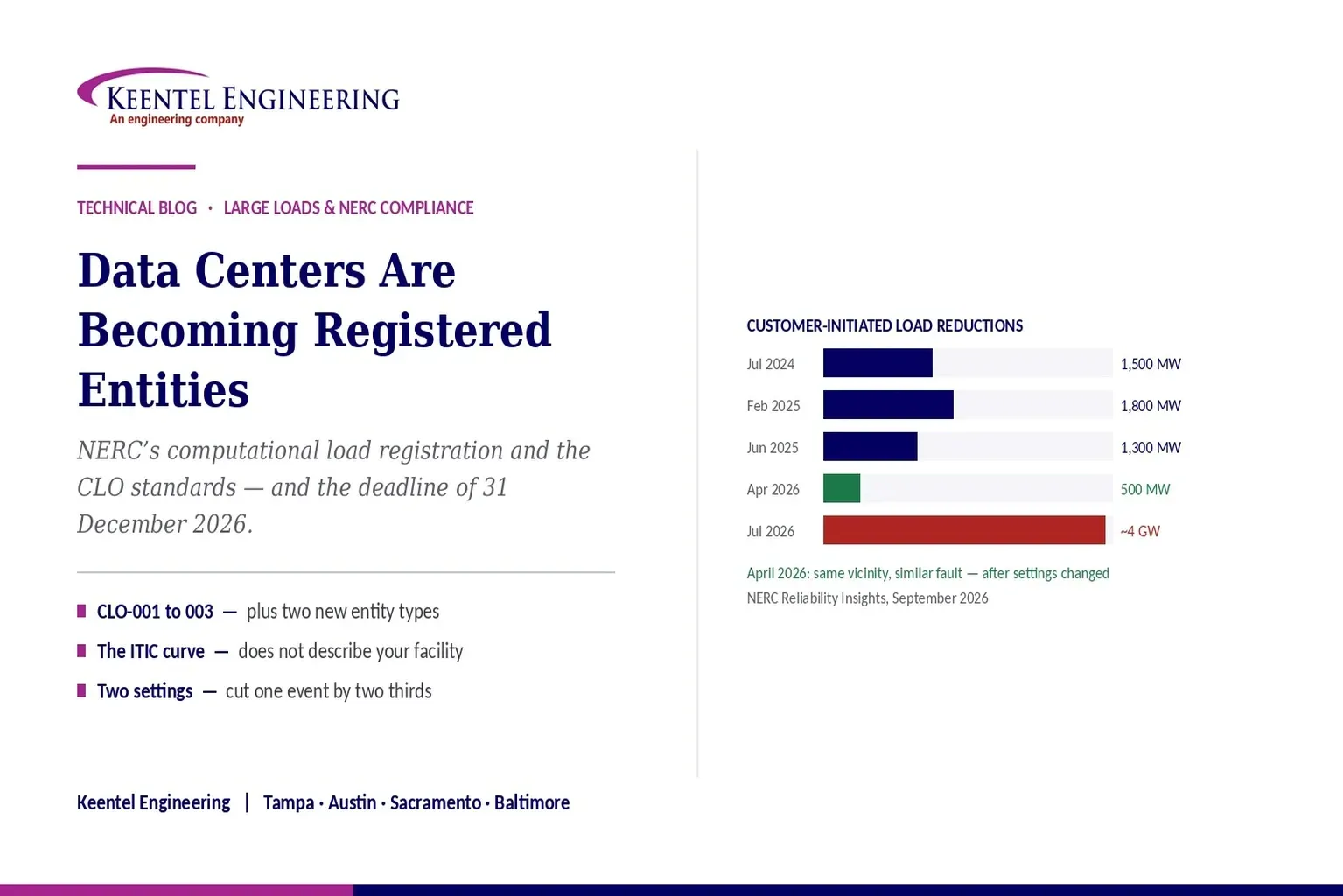
Learn how NERC computational load registration impacts data centers, CLO standards, ride-through requirements, modeling, and grid reliability compliance.
By SANDIP R PATEL
•
September 7, 2026
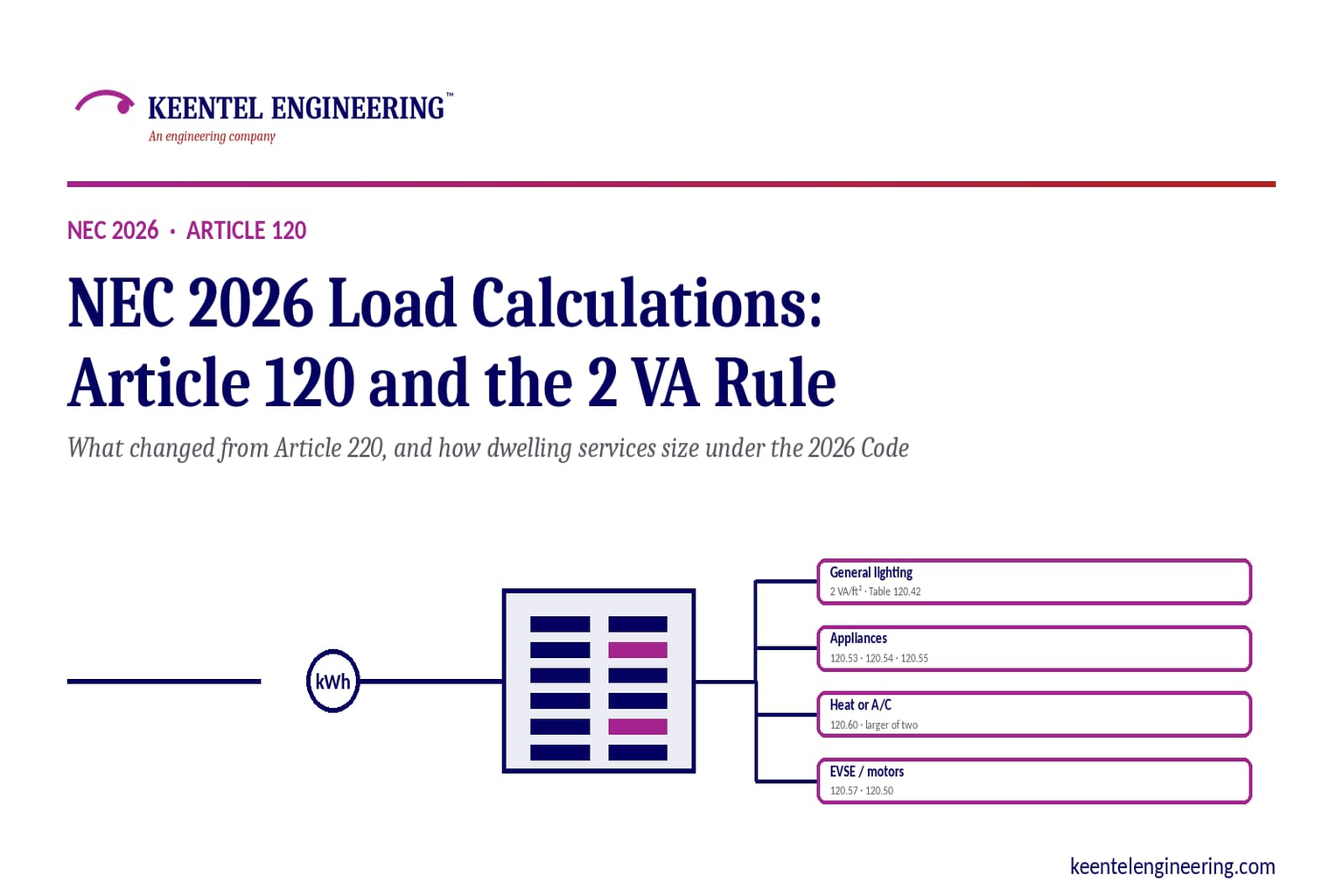
Learn NEC 2026 load calculations, Article 120 changes, the 2 VA rule, EV charging requirements, service sizing, and dwelling calculation methods.
By SANDIP R PATEL
•
September 7, 2026
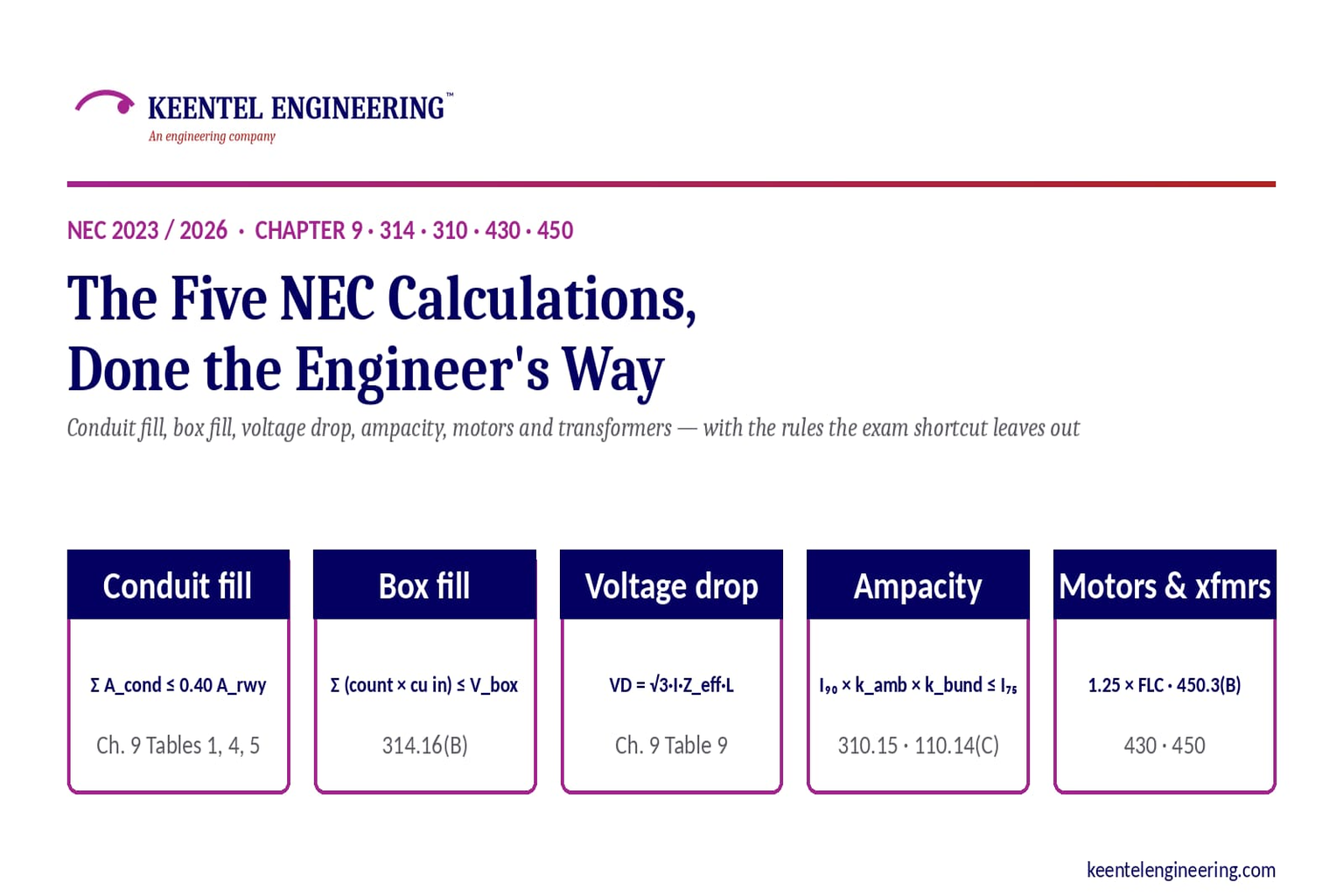
Learn five essential NEC calculations covering conduit fill, voltage drop, ampacity, motor circuits, and transformer protection with engineering examples.
By SANDIP R PATEL
•
September 7, 2026
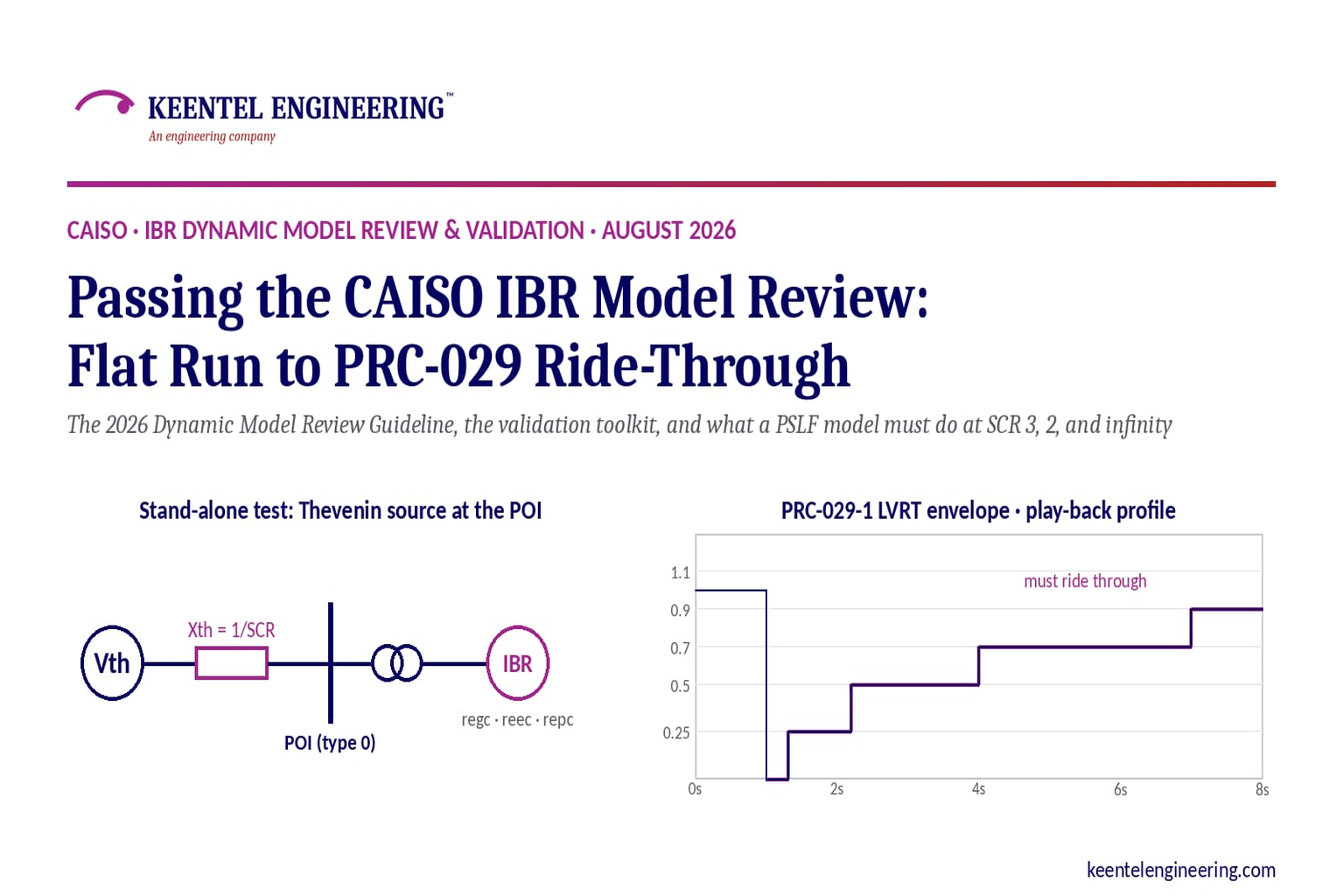
Learn how CAISO reviews IBR models using PSLF validation, PRC-029-1 ride-through requirements, WECC models, and inverter resource compliance testing.
By SANDIP R PATEL
•
September 7, 2026
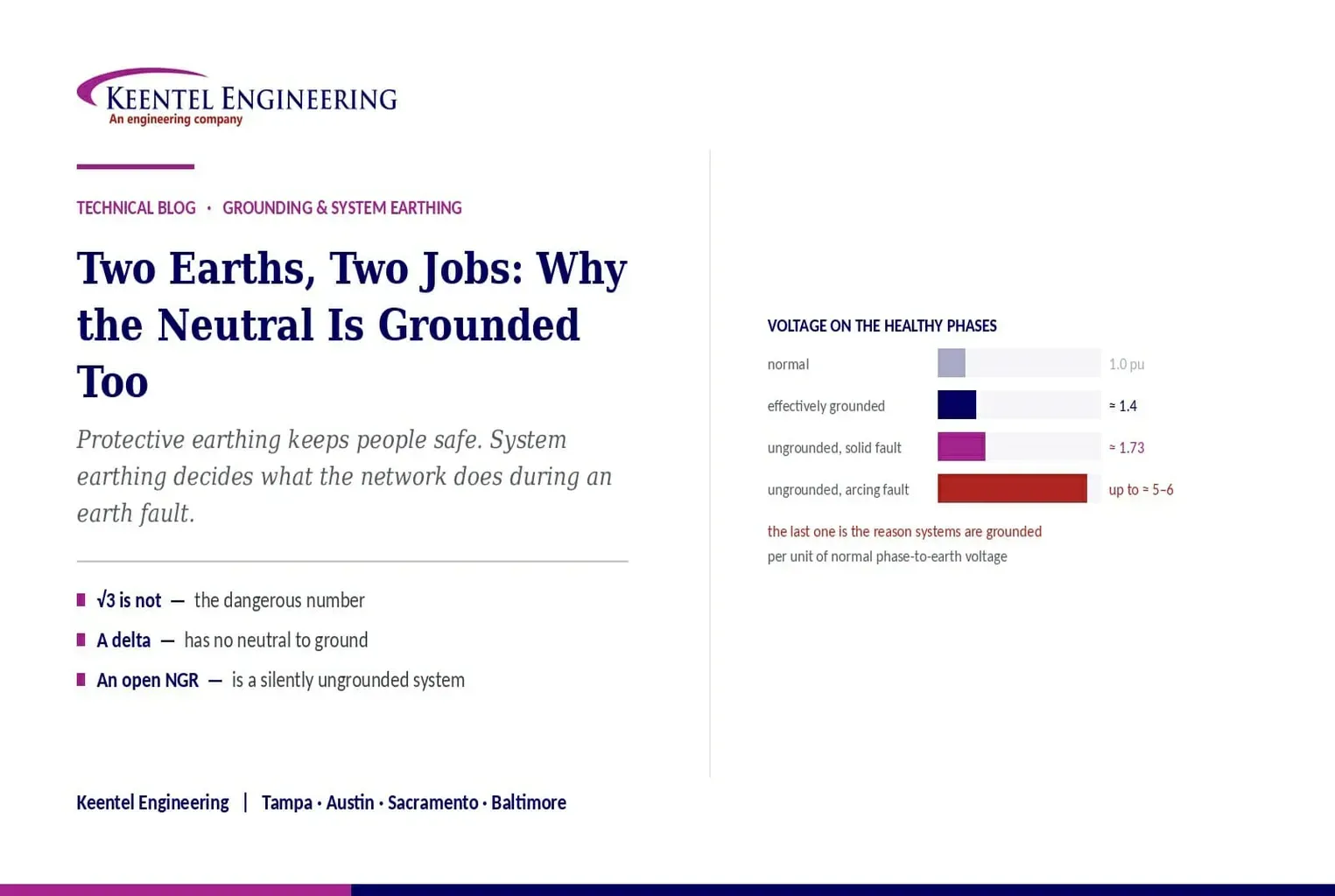
Understand system earthing and protective earthing, neutral grounding methods, effective grounding, ground grids, and insulation coordination for power systems
By SANDIP R PATEL
•
September 6, 2026
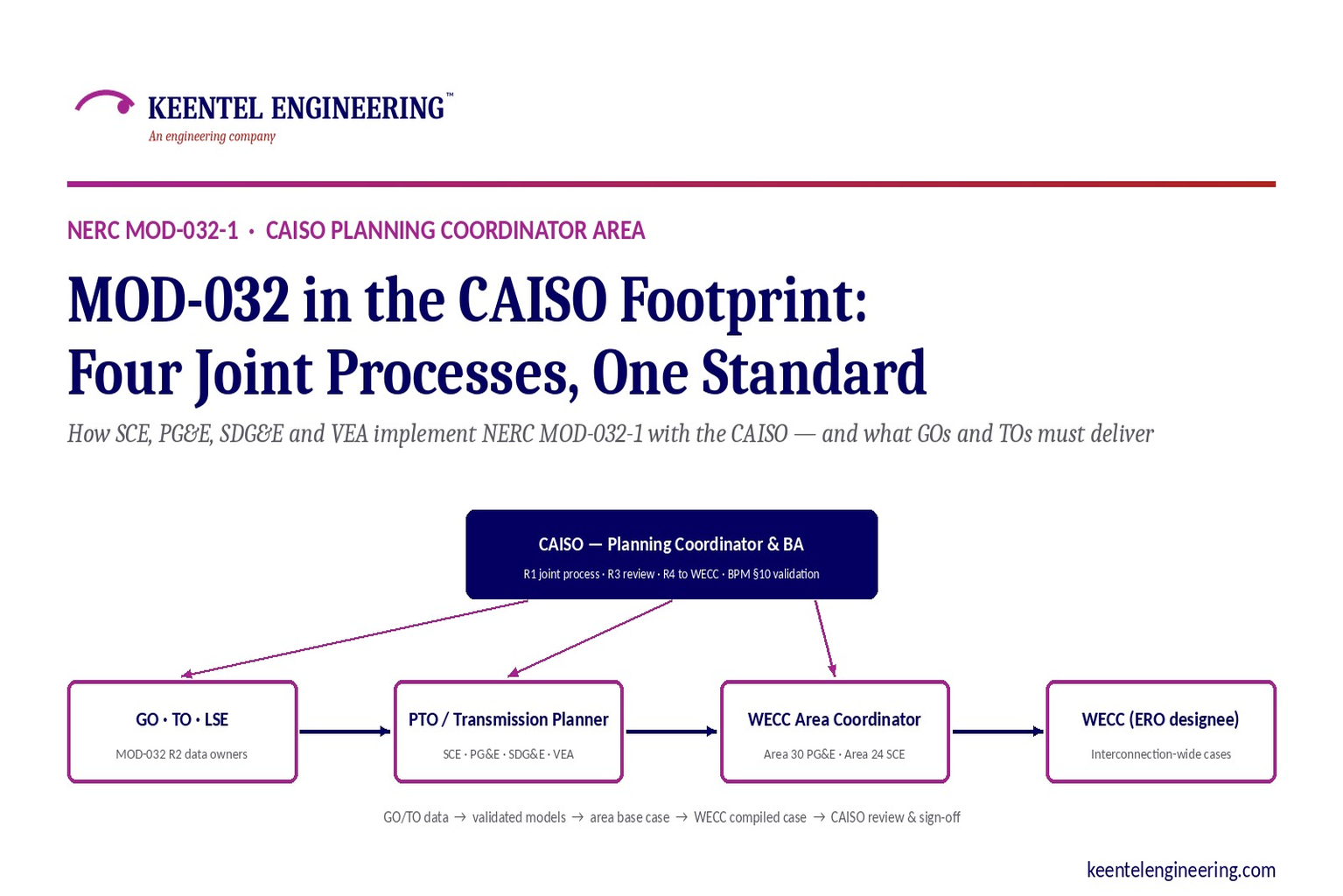
Learn how NERC MOD-032-1 applies across CAISO, SCE, PG&E, VEA and SDG&E, including generator data, PSLF models, EMT requirements and WECC submissions.
By SANDIP R PATEL
•
September 6, 2026
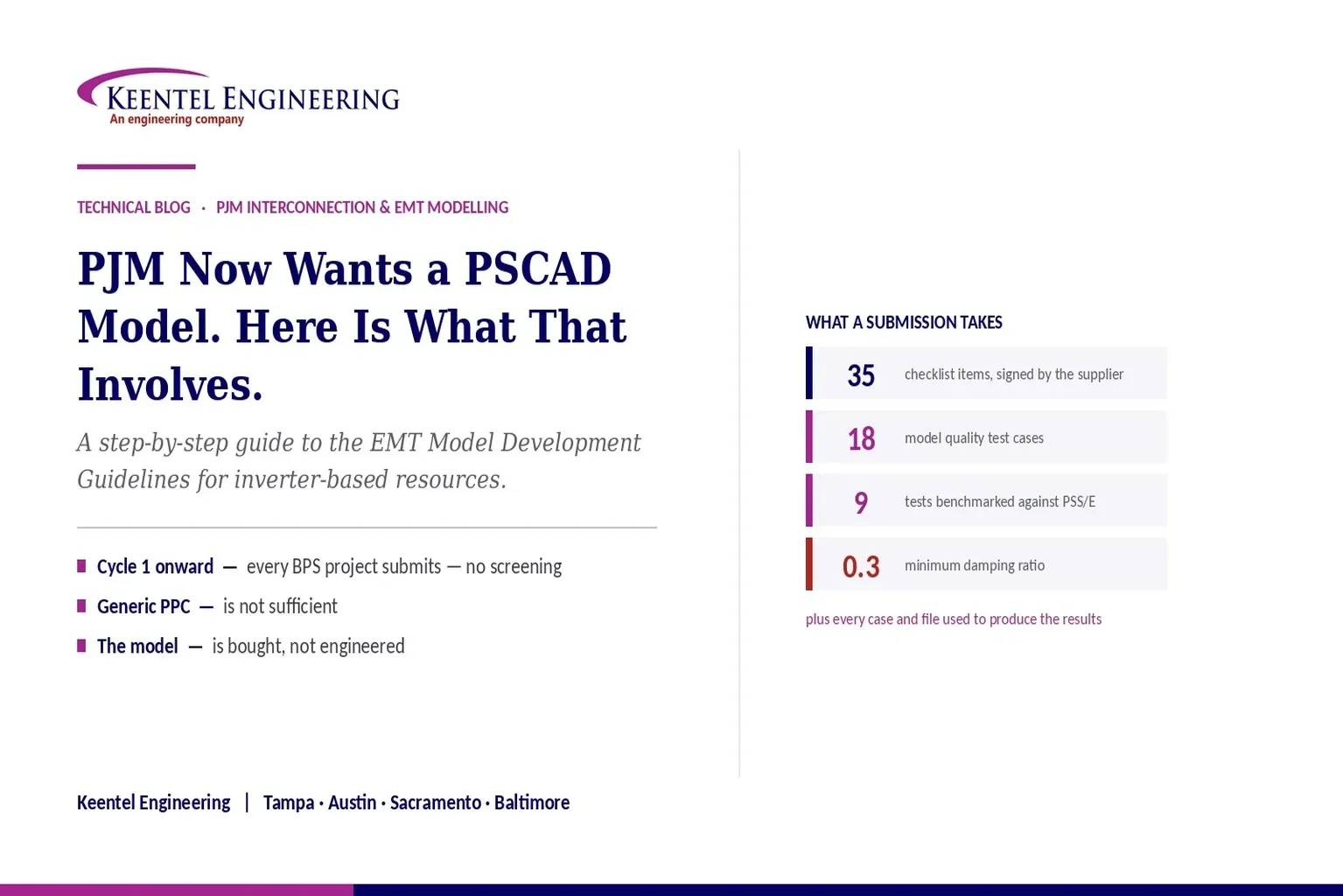
Learn PJM PSCAD model requirements for inverter-based resources, EMT testing, PSS/E benchmarking, ride-through studies, and compliance submissions
By SANDIP R PATEL
•
September 6, 2026
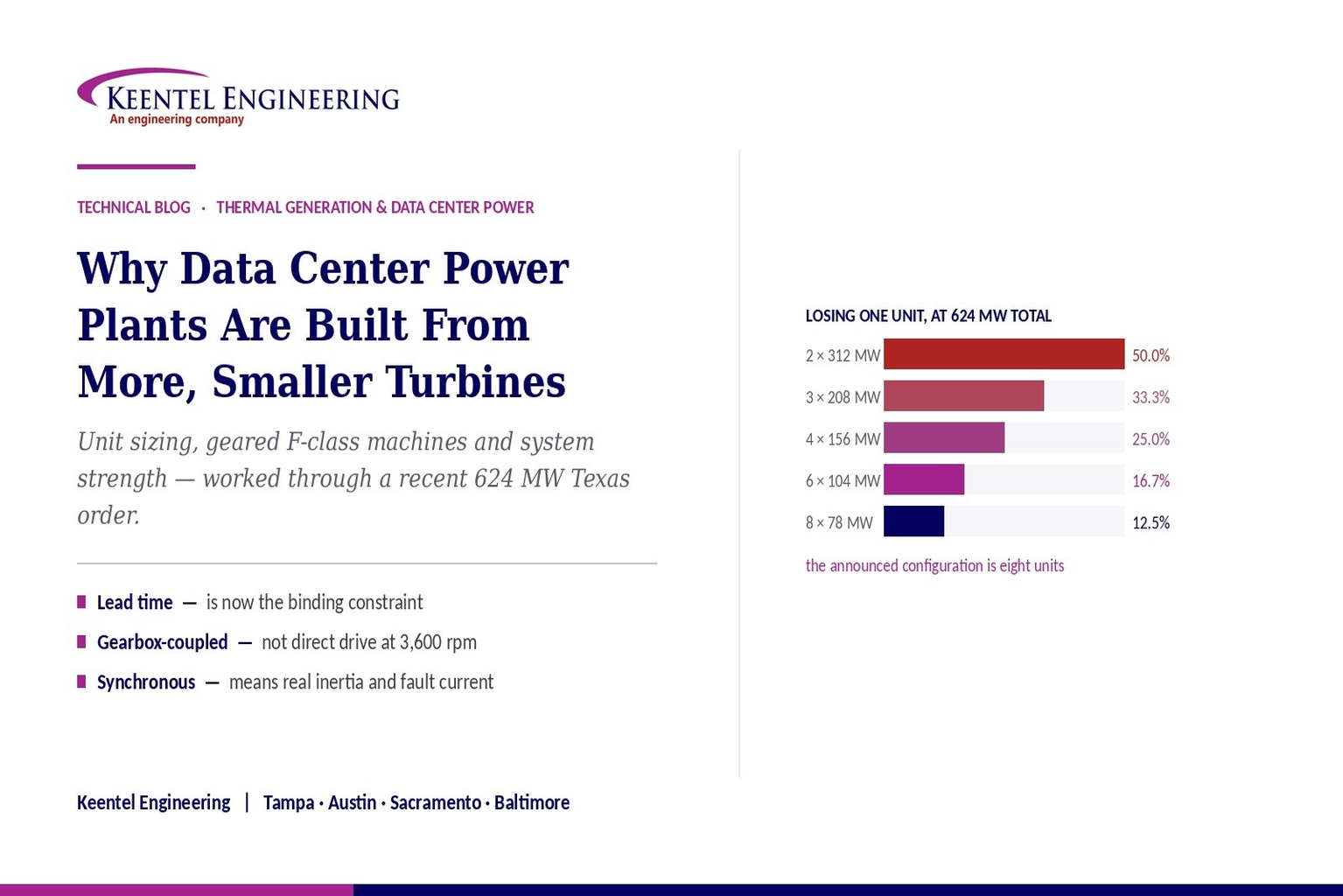
Learn why data center power plants use multiple smaller gas turbines, covering 624 MW capacity, redundancy, grid connection, system strength, and engineering.
By SANDIP R PATEL
•
September 5, 2026
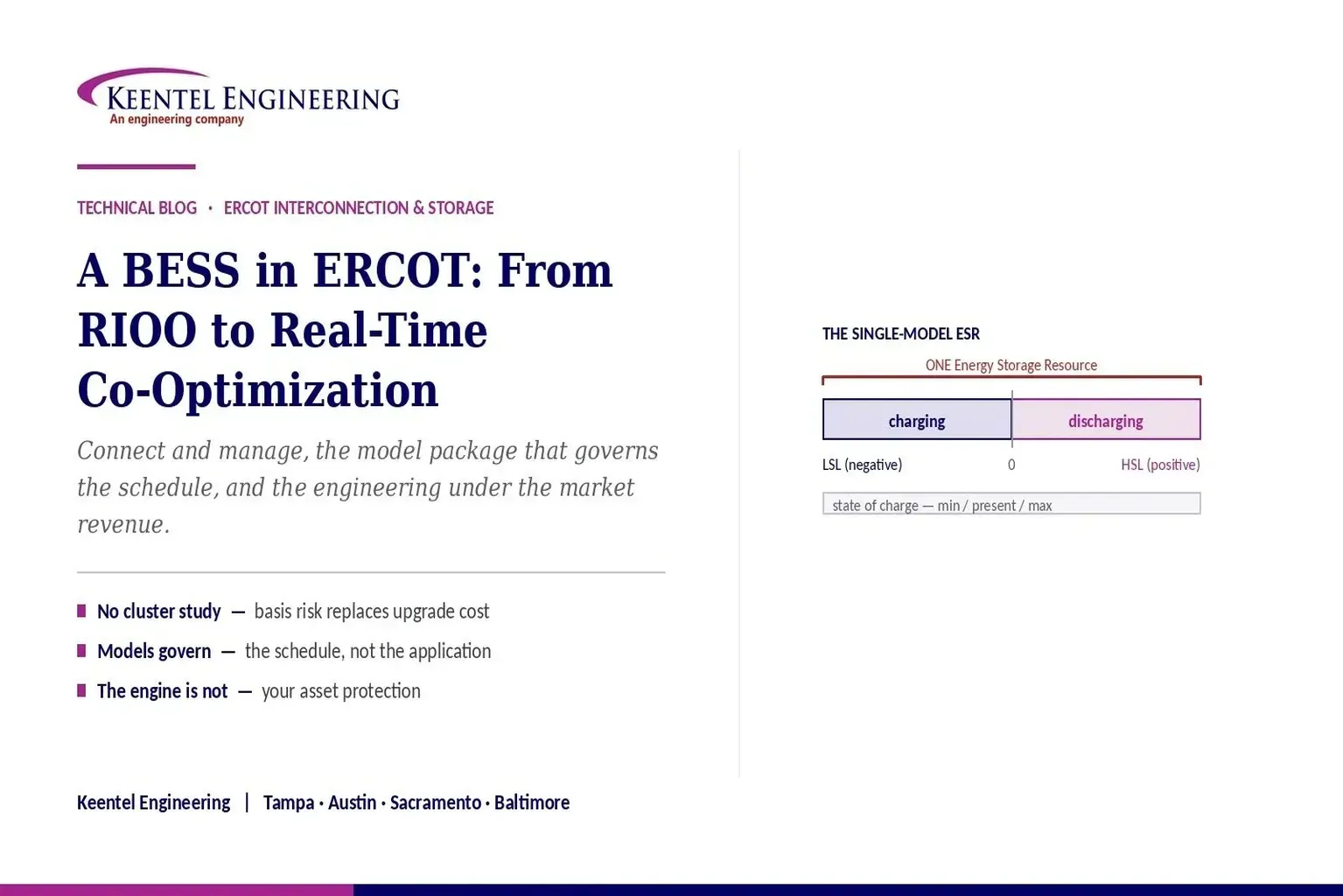
Understand ERCOT BESS interconnection requirements, including model packages, EMT studies, ride-through compliance, telemetry, and real-time co-optimization.