

A Coordinated Electric System Interconnection Review—the utility’s deep-dive on technical and cost impacts of your project.
Challenge: Frequent false tripping using conventional electromechanical relays
Solution: SEL-487E integration with multi-terminal differential protection and dynamic inrush restraint
Result: 90% reduction in false trips, saving over $250,000 in downtime
| Category | Metric |
|---|---|
| VPP capacity (Lunar Energy) | 650 MW |
| Lunar funding raised | US$232 million |
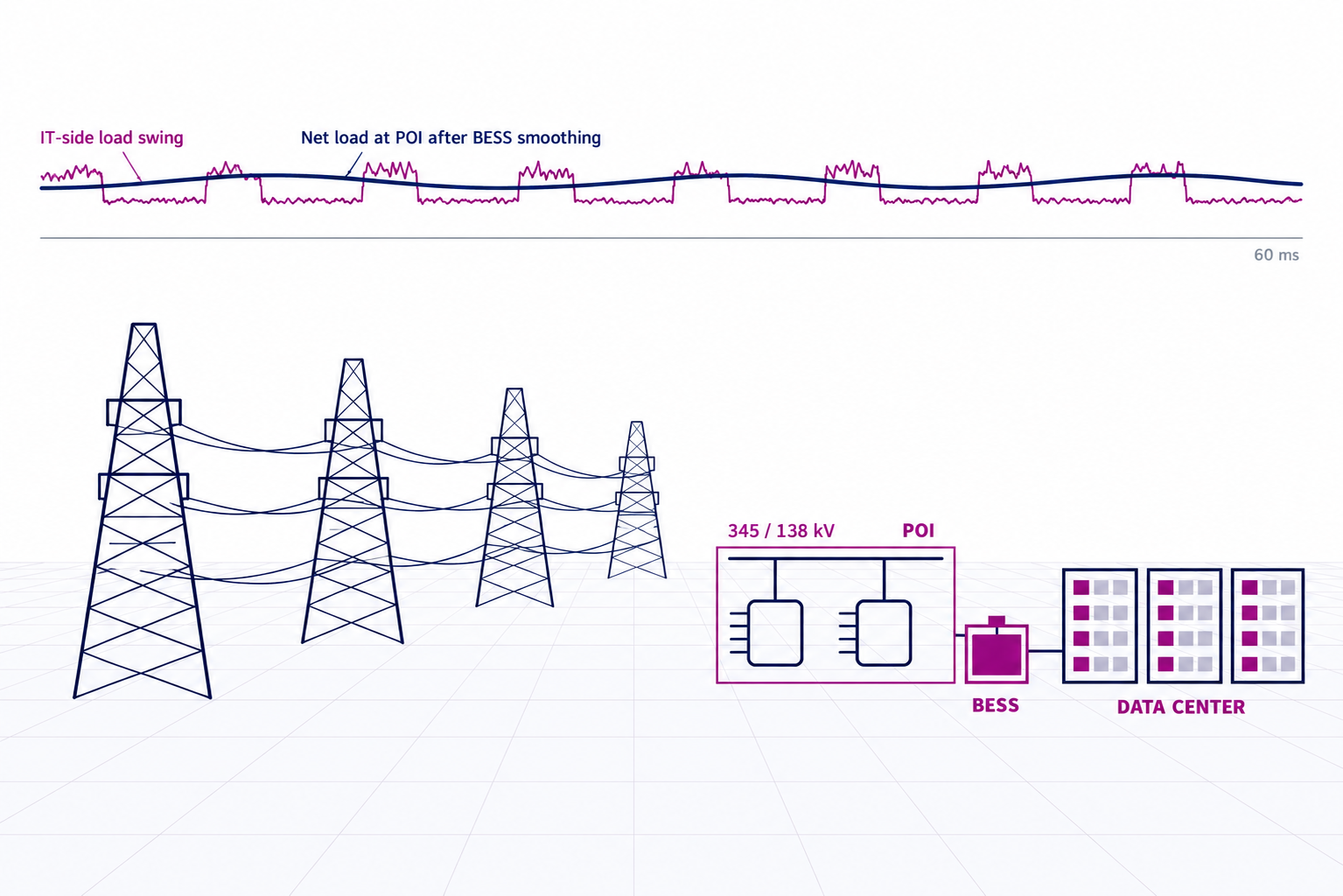
| Data center BESS example | 31 MW / 62 MWh |
| ERCOT grid-scale batteries | 15+ GW |
| LDES tenders (H1 2026) | Up to 9.3 GW |
| Lithium-ion share of LDES by 2030 | 77% |
| FEOC initial threshold | 55% |
| BESS tariff rate (2026) | ~55% |
| Capacity gain from analytics | 5–15% |
Advanced Transformer Failure Analysis: Engineering Methods to Identify Root Causes and Prevent Recurrence
Mar 31, 2026 | blog
Power transformers are among the most critical assets in any electrical power system. When they fail, the consequences extend far beyond equipment damage impacting grid reliability, industrial operations, and even regional economies.
A structured, engineering-driven approach to failure investigation is essential not only to restore service but to prevent future failures.
This article provides a comprehensive, field-proven methodology for diagnosing transformer failures, based on real-world engineering practices and failure patterns.
Why Transformer Failure Analysis Matters
Transformers serve as the backbone of transmission and distribution systems. Any failure can lead to:
- Widespread outages
- Equipment damage cascade
- Safety hazards including fire and explosion
- Significant financial losses
A key takeaway from the reviewed material is that multiple visible damages may exist, but not all are root causes. Engineers must distinguish between
symptoms and
true causes.
Primary Sources of Transformer Failure
Transformer failures typically originate from five major components:
1. Bushings
- Insulation deterioration
- Mechanical damage
- Short circuits
2. On-Load Tap Changer (OLTC)
- Internal arcing
- Contact wear
- Mechanical misalignment
3. Windings (High Criticality)
- Short circuits
- Mechanical displacement
- Insulation failure
4. Core
- Insulation breakdown
- Overheating
- Loose laminations
5. Insulating Oil
- Oxidation
- Moisture ingress
- Thermal degradation
Classification of Transformer Failures
Transformer failures can broadly be categorized into three engineering domains:
1. Thermal Failures
Thermal degradation is one of the most common causes of transformer failure.
Typical causes include:
- Overloading beyond design limits
- Poor cooling system performance
- High ambient temperatures
- Blocked oil circulation paths
Over time, insulation materials degrade, reducing dielectric strength and increasing the risk of breakdown.
2. Mechanical Failures
Mechanical stresses often occur due to short-circuit forces or improper handling.
Common issues:
- Winding deformation
- Core displacement
- Clamping system failure
- Transportation damage
These failures are particularly dangerous because they can remain hidden until catastrophic failure occurs.
3. Electrical Failures
Electrical stresses originate from system disturbances.
Examples:
- Lightning surges
- Switching transients
- Partial discharge
- Inter-turn faults
These events can rapidly deteriorate insulation and lead to internal faults.
Step-by-Step Engineering Approach to Failure Investigation
A systematic approach is essential for accurate root cause identification.
Step 1: Data Collection and Documentation
Before any physical inspection:
- Review design drawings and datasheets
- Analyze maintenance history
- Evaluate protection system records
- Examine event logs and relay operations
This step ensures the investigation is data-driven, not assumption-based.
Step 2: On-Site Visual Inspection
Initial field inspection often provides critical clues.
Key observations include:
- Oil leakage or discoloration
- Bushing condition (cracks, flash marks)
- Tank deformation
- Evidence of fire or overheating
Environmental conditions at the time of failure should also be recorded.
Step 3: Component-Level Assessment
Engineers must verify:
- Buchholz relay operation
- OLTC position and condition
- Oil level indicators
- Protection relay trip history
This step links
protection system behavior to physical faults.
Step 4: Electrical Testing
If visual inspection is inconclusive, advanced diagnostic testing is performed:
- Dissolved Gas Analysis (DGA)
- Insulation Resistance (IR)
- Polarization Index (PI)
- Sweep Frequency Response Analysis (SFRA)
- Winding resistance and ratio tests
These tests help identify internal faults without dismantling the transformer.
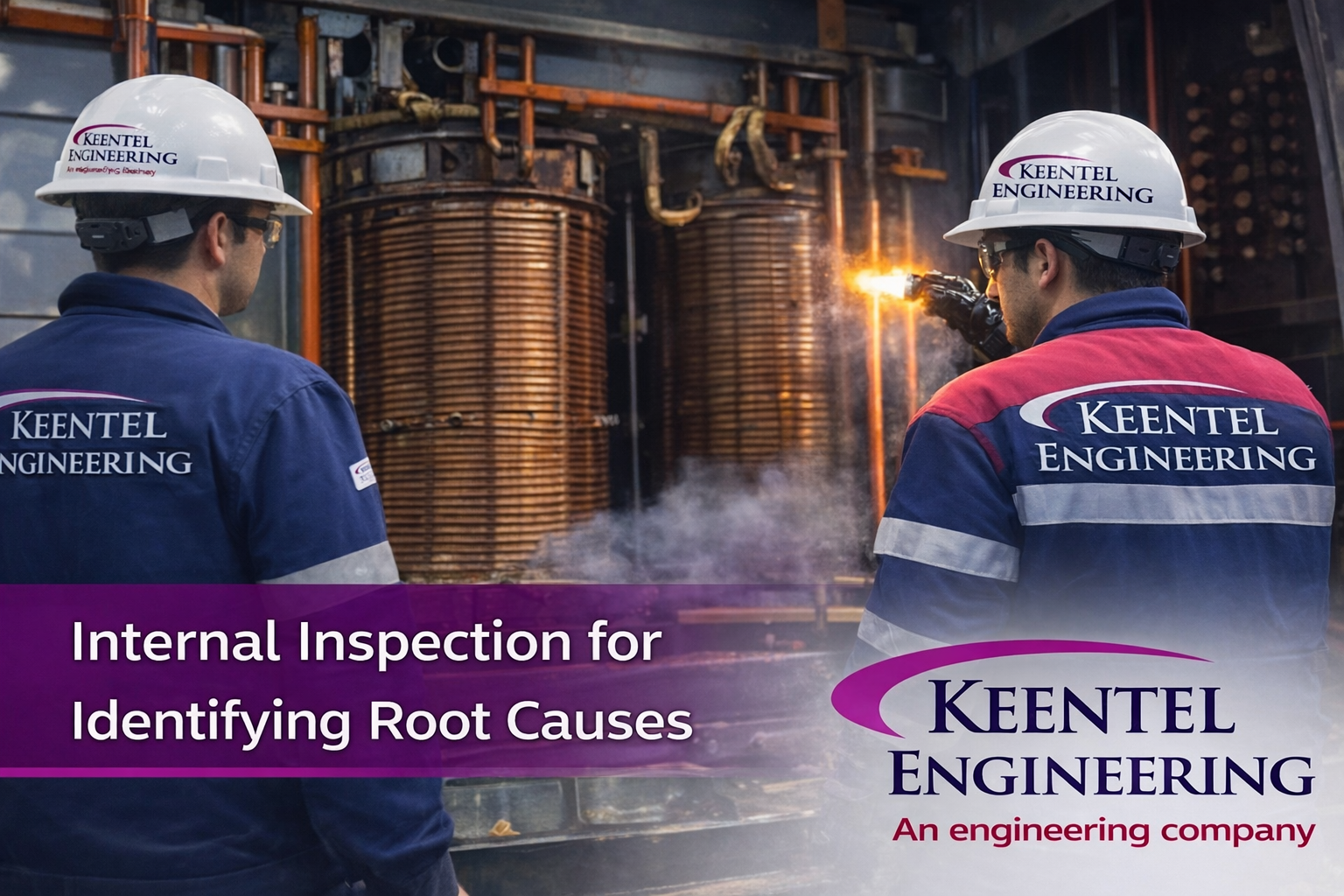
Step 5: Internal Inspection
When necessary, the transformer is opened for detailed inspection.
Engineers look for:
- Burnt insulation smell
- Carbon deposits
- Winding displacement
- Metallic debris
- Evidence of arcing
Internal inspection confirms the exact failure location and mechanism.
Critical Safety Considerations
Transformer failures can involve high-energy events:
- Arc flash inside oil can generate explosive gases
- Sudden pressure rise may rupture tanks
- Hot gases can ignite, causing fire
Proper safety protocols must always be followed during investigation.
Lessons from Real-World Failure Case Studies
The document highlights several practical cases:
Case 1: Neutral Connection Failure
- Cause: Loose mechanical connection
- Result: Unbalanced voltage
Case 2: Oil Loss and Winding Damage
- Cause: Insulation failure due to lack of oil
- Result: Complete phase failure
Case 3: Poor Workmanship
- Cause: Improper crimping
- Result: Broken conductor
Case 4: Insulation Contact with OLTC
- Cause: Low-quality insulation
- Result: Incorrect ratio measurement
Case 5: Internal Arcing
- Cause: Inter-turn insulation failure
- Result: High gas generation and deformation
Case 6: OLTC Failure
- Cause: Lack of maintenance
- Result: Carbonization and flashover
Case 7: High-Energy Internal Fault
- Cause: Winding insulation failure
- Result: Tank rupture and bushing damage
Best Practices for Preventing Transformer Failures
To minimize risk:
- Implement routine DGA monitoring
- Maintain oil quality and filtration
- Perform periodic SFRA testing
- Ensure proper loading conditions
- Conduct regular protection system audits
Preventive maintenance is far more cost-effective than failure recovery.
Conclusion
Transformer failure analysis is not just a diagnostic activity it is a strategic engineering process that ensures long-term system reliability.
A successful investigation requires:
- Structured methodology
- Accurate data interpretation
- Multidisciplinary expertise
At
Keentel Engineering our approach integrates advanced diagnostics, engineering judgment, and industry best practices to deliver reliable, compliant, and cost-effective solutions.
20 Frequently Asked Questions (FAQs)
1. What is the most common cause of transformer failure?
Thermal stress due to overloading and poor cooling is one of the leading causes, as it degrades insulation over time.
2. Why is transformer oil critical for operation?
Transformer oil provides insulation, cooling, and arc suppression. Its degradation directly impacts transformer reliability.
3. What is Dissolved Gas Analysis (DGA)?
DGA is a diagnostic technique that detects gases generated inside transformer oil to identify internal faults such as arcing or overheating.
4. How does moisture affect transformer performance?
Moisture reduces dielectric strength, accelerates insulation aging, and increases the likelihood of electrical breakdown.
5. What is SFRA testing used for?
Sweep Frequency Response Analysis detects mechanical deformation in windings and core structures.
6. What is an OLTC and why does it fail?
An On-Load Tap Changer regulates voltage. It fails due to contact wear, arcing, and lack of maintenance.
7. What are the signs of winding failure?
Unbalanced currents, abnormal resistance values, and insulation breakdown are key indicators.
8. Can transformer failures be predicted?
Yes, through condition monitoring techniques like DGA, thermal imaging, and electrical testing.
9. What role does protection play in transformer failures?
Protection systems isolate faults quickly, preventing catastrophic damage.
10. Why is internal inspection sometimes required?
When external and electrical tests are inconclusive, internal inspection confirms the exact fault location.
11. What causes transformer explosions?
Internal arcing generates gases and pressure, leading to tank rupture and potential explosion.
12. How does over-excitation damage transformers?
It increases flux density, leading to overheating and insulation breakdown.
13. What is the importance of Buchholz relay?
It detects internal faults by sensing gas accumulation and oil flow disturbances.
14. What is insulation resistance testing?
It measures the resistance of insulation to detect degradation or contamination.
15. How often should transformers be tested?
Critical transformers should undergo periodic testing annually or based on condition monitoring results.
16. What is the impact of poor workmanship?
Improper assembly can lead to loose connections, insulation failure, and premature faults.
17. What causes bushing failures?
Aging insulation, contamination, and electrical stress are primary causes.
18. Why is oil filtration important?
It removes moisture and contaminants, preserving insulation quality.
19. What is polarization index (PI)?
PI evaluates insulation condition by comparing insulation resistance over time.
20. How can Keentel Engineering help?
Keentel Engineering provides comprehensive transformer diagnostics, failure analysis, testing, and compliance solutions aligned with industry standards and NERC requirements

About the Author:
Sonny Patel P.E. EC
IEEE Senior Member
In 1995, Sandip (Sonny) R. Patel earned his Electrical Engineering degree from the University of Illinois, specializing in Electrical Engineering . But degrees don’t build legacies—action does. For three decades, he’s been shaping the future of engineering, not just as a licensed Professional Engineer across multiple states (Florida, California, New York, West Virginia, and Minnesota), but as a doer. A builder. A leader. Not just an engineer. A Licensed Electrical Contractor in Florida with an Unlimited EC license. Not just an executive. The founder and CEO of KEENTEL LLC—where expertise meets execution. Three decades. Multiple states. Endless impact.
Services

Let's Discuss Your Project
Let's book a call to discuss your electrical engineering project that we can help you with.

About the Author:
Sonny Patel P.E. EC
IEEE Senior Member
In 1995, Sandip (Sonny) R. Patel earned his Electrical Engineering degree from the University of Illinois, specializing in Electrical Engineering . But degrees don’t build legacies—action does. For three decades, he’s been shaping the future of engineering, not just as a licensed Professional Engineer across multiple states (Florida, California, New York, West Virginia, and Minnesota), but as a doer. A builder. A leader. Not just an engineer. A Licensed Electrical Contractor in Florida with an Unlimited EC license. Not just an executive. The founder and CEO of KEENTEL LLC—where expertise meets execution. Three decades. Multiple states. Endless impact.
Leave a Comment
We will get back to you as soon as possible.
Please try again later.