A Coordinated Electric System Interconnection Review—the utility’s deep-dive on technical and cost impacts of your project.
Challenge: Frequent false tripping using conventional electromechanical relays
Solution: SEL-487E integration with multi-terminal differential protection and dynamic inrush restraint
Result: 90% reduction in false trips, saving over $250,000 in downtime
| Category | Metric |
|---|---|
| VPP capacity (Lunar Energy) | 650 MW |
| Lunar funding raised | US$232 million |
| Data center BESS example | 31 MW / 62 MWh |
| ERCOT grid-scale batteries | 15+ GW |
| LDES tenders (H1 2026) | Up to 9.3 GW |
| Lithium-ion share of LDES by 2030 | 77% |
| FEOC initial threshold | 55% |
| BESS tariff rate (2026) | ~55% |
| Capacity gain from analytics | 5–15% |
Phasor Measurement Units (PMUs): A Comprehensive Guide to SEL-Based Synchrophasor Solutions
Mar 28, 2026 | blog
Introduction
Phasor Measurement Units (PMUs) have become a cornerstone of modern power system monitoring, enabling real-time visibility, improved grid stability, and enhanced situational awareness. With increasing penetration of inverter-based resources (IBRs), utilities and grid operators rely heavily on synchrophasor data for dynamic system analysis, protection, and control.
This article provides a detailed overview of SEL PMU-enabled devices, their compliance with IEEE standards, and their functional capabilities—including CT/PT inputs, analog/digital channels, and message rates.
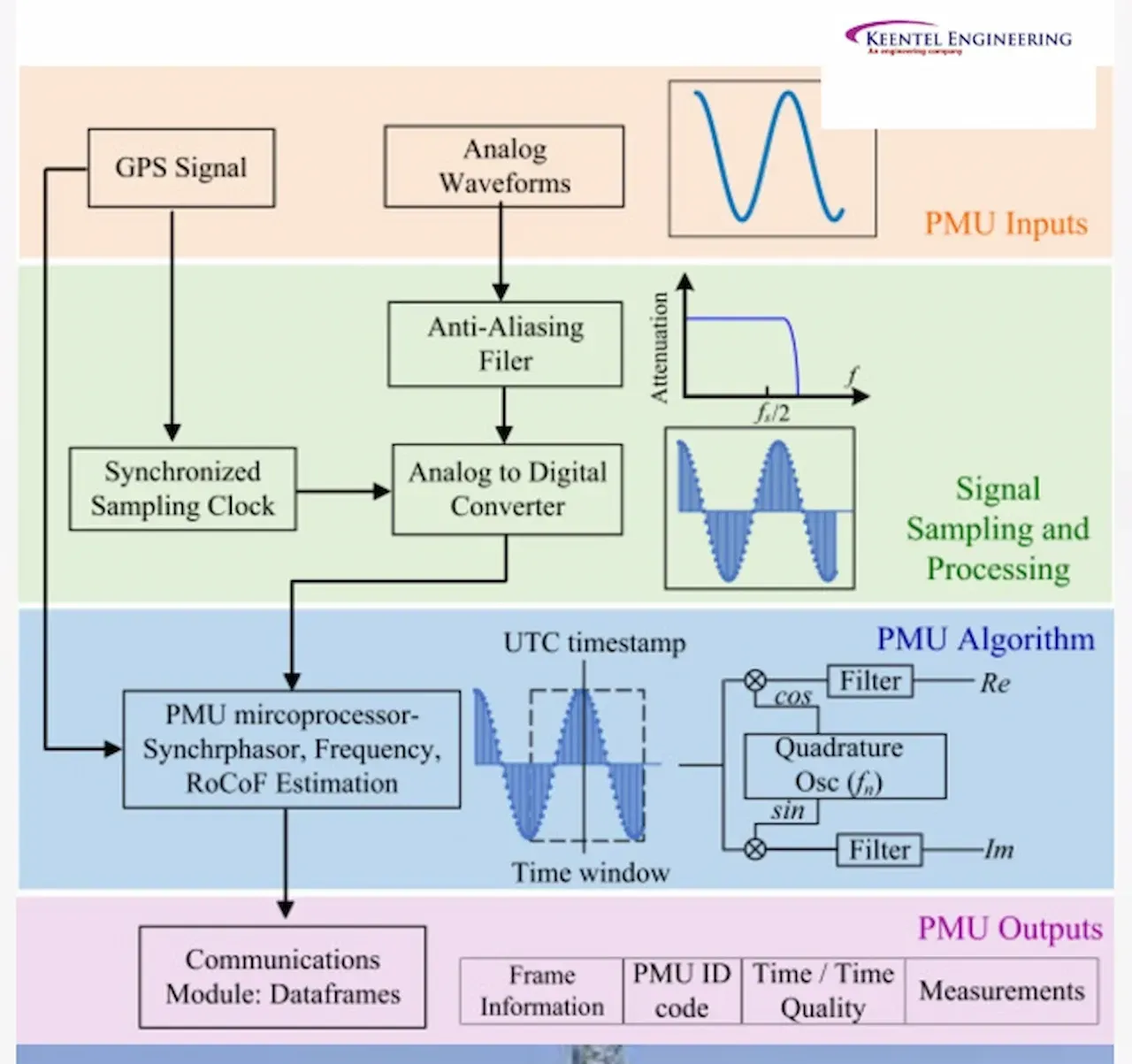
What is a PMU?
A Phasor
Measurement Unit (PMU) is a device that measures electrical waves (voltage and current phasors) using a common time source (typically GPS). These synchronized measurements called synchrophasors allow utilities to monitor grid conditions across wide geographic areas in real time.
Key Benefits of Large Load Development
Large load integration provides significant advantages:
1. Economic Growth
- Job creation
- Capital investment inflows
- Regional economic development
2. Technological Leadership
- Strengthens national competitiveness in AI and digital infrastructure
- Enables innovation ecosystems
3. Infrastructure Development
- Drives transmission upgrades
- Accelerates modernization of grid systems
4. National Security
- Supports critical infrastructure such as data and communications networks
PMU Performance Classes Explained
| Class | Purpose | Characteristics |
|---|---|---|
| P Class | Protection applications | Fast response, lower latency |
| M Class | Measurement applications | High accuracy, slower response |
| Level 0 / 1 | Legacy classification | Based on Total Vector Error (TVE) |
Overview of SEL PMU-Capable Devices
Schweitzer Engineering Laboratories (SEL) offers a wide range of devices with PMU functionality embedded in
protection relays, meters, and modular systems.
1. Revenue Meter and Power Quality PMU
SEL-735 Power Quality and Revenue Meter
- Compliance: IEEE C37.118-2011, 2014a, IEC 60255-118-1
- Class: P Class
- Message Rate: 1–60 messages per second (mps)
- Inputs:
- CT: 3
- PT: 3
- Analogs: 4
- Digitals: 16
Ideal for metering + synchrophasor monitoring in substations
2. High-Density Modular PMU
SEL-2240 Axion (Modular PMU)
- Compliance: IEEE C37.118-2011, 2014a
- Class: P and M Class
- Message Rate: 1–60 mps
- Inputs:
- Up to 64 CT, PT, and analog inputs
- Digitals: 30
Best suited for:
- Wide-area monitoring systems (WAMS)
- Large substations
- Data aggregation hubs
3. Generator Protection with PMU
SEL-400G Advanced Generator Protection System
- Compliance: IEEE C37.118 & IEC 60255-118-1
- Class: P Class
- Message Rate: 1–60 mps
- Inputs:
- CT: 18
- PT: 6
- Analogs: 16
- Digitals: 64
Critical for:
- Generator dynamic monitoring
- Oscillation detection
- Stability studies
4. Transmission Line Protection PMUs
SEL-411L Line Differential Protection System
- Supports both legacy and modern standards
- Class: P and M Class
- Message Rate: 1–60 mps
- Inputs:
- CT: 6
- PT: 6
- Analogs: 16
- Digitals: 64
Key application:
- Transmission line protection with synchrophasor visibility
5. Distribution and Feeder-Level PMUs
Devices such as:
- SEL-351 Series
- SEL-751 / 751A Feeder Relays
- SEL-651R Recloser Control
Typical capabilities:
- Compliance: IEEE C37.118-2005
- Message Rate: 1–60 mps (or 1–10 mps for some models)
- Inputs:
- CT/PT: 1–6 range
- Limited analogs
- Digitals: up to 64
Ideal for:
- Distribution automation
- Feeder monitoring
- Fault analysis
6. Transformer Protection PMUs
SEL-487E and SEL-787 Series
- Compliance: IEEE C37.118-2005
- Message Rate: 1–60 mps (some models 1–10 mps)
- Inputs:
- CT: up to 18
- PT: up to 6
- Analogs: 4–16
- Digitals: up to 64
Used for:
- Transformer condition monitoring
- Differential protection with synchrophasor output
Key Technical Parameters Explained
1. Message Rate (mps)
- Range: 1 to 60 messages per second
- Higher rates → better dynamic tracking
- Lower rates → reduced bandwidth
2. CT and PT Inputs
- Define the number of measurable current and voltage channels
- Critical for multi-bus and multi-element systems
3. Analog and Digital Channels
- Analog: temperature, vibration, auxiliary signals
- Digital: breaker status, alarms, control signals
Important Notes and Limitations
- Maximum of 64 CT, PT, or analog inputs in modular systems
- Transformer relay configurations cannot always use maximum CT and PT simultaneously
- Some devices operate under legacy IEEE C37.118-2005 standards only
- 1% Total Vector Error (TVE) is guaranteed for higher compliance levels
Why PMUs Matter in Modern Power Systems
PMUs play a vital role in:
1. Wide-Area Monitoring Systems (WAMS)
- Real-time grid visibility
- Oscillation detection
- Voltage stability monitoring
2. Renewable Integration
- Monitoring inverter-based resources (IBRs)
- Dynamic response validation
3. NERC Compliance
- Supports PRC and MOD standards
- Enables model validation and disturbance analysis
4. Event Analysis
- High-resolution data for fault reconstruction
- Root cause identification
How Keentel Engineering Supports PMU Integration
At Keentel Engineering, we provide:
- PMU placement studies
- Synchrophasor data analytics
- PDC (Phasor Data Concentrator) design
- NERC compliance support (PRC, MOD, TPL)
- Integration with SCADA, EMS, and DER systems
- Advanced modeling using PSSE, PSCAD, and TSAT
Frequently Asked Questions (FAQs) – PMUs & SEL Synchrophasor Solutions
What is a Phasor Measurement Unit (PMU) and why is it important?
A PMU is a high-speed measurement device that captures synchronized voltage and current phasors using a GPS time reference. This synchronization allows utilities to monitor grid conditions across wide geographic areas in real time, enabling faster decision-making, improved reliability, and enhanced situational awareness.
What are synchrophasors and how do they differ from SCADA data?
Synchrophasors are time-synchronized measurements of electrical quantities, typically reported 30–60 times per second. In contrast, SCADA systems typically provide data every 2–4 seconds. This makes synchrophasors significantly more effective for dynamic analysis, oscillation detection, and fast event response.
What IEEE standards govern PMU performance?
PMUs are primarily governed by:
- IEEE C37.118-2011 / 2014a – Synchrophasor measurements and communication
- IEC 60255-118-1 – International PMU performance standard
- IEEE C37.118-2005 – Legacy standard still used in some devices
What is the difference between P-Class and M-Class PMUs?
P-Class (Protection Class)
- Fast response
- Lower latency
- Used for protection and control applications
- Higher accuracy
- Slightly slower response
- Used for system analysis and planning
What is Total Vector Error (TVE)?
TVE is a measure of PMU accuracy that combines magnitude and phase errors. Typical requirement: ≤ 1% TVE for compliant PMUs. This ensures reliable measurements for protection, monitoring, and control applications.
What is message rate (mps) in PMUs?
Message rate refers to how frequently synchrophasor data is transmitted:
- Typical range: 1–60 messages per second (mps)
- Higher rates improve dynamic tracking
- Lower rates reduce communication bandwidth
What are CT and PT inputs in PMU-enabled devices?
- CT (Current Transformer) inputs: Measure current signals
- PT (Potential Transformer) inputs: Measure voltage signals
These inputs define how many electrical parameters a PMU can monitor simultaneously and are critical for multi-bus or complex systems.
What are analog and digital channels in PMUs?
- Analog channels: Capture non-electrical or auxiliary signals (temperature, vibration, etc.)
- Digital channels: Monitor status signals (breaker position, alarms, control signals)
These channels enhance situational awareness beyond electrical measurements.
What SEL devices support PMU functionality?
Key SEL PMU-enabled devices include:
- SEL-735 – Revenue metering with PMU capability
- SEL-2240 Axion – Modular, high-density PMU system
- SEL-400G – Generator protection with synchrophasor output
- SEL-411L – Transmission line protection PMU
- SEL-351 / 751 / 651R – Distribution-level PMUs
- SEL-487E / 787 – Transformer protection PMUs
Where are PMUs typically deployed in the power system?
PMUs are deployed across:
- Transmission substations
- Generator terminals
- Renewable energy plants
- Distribution feeders
- Large industrial loads and data centers
What role do PMUs play in renewable energy integration?
PMUs help:
- Monitor inverter-based resource (IBR) dynamics
- Validate models for grid interconnection
- Detect oscillations and instability
- Support compliance with grid codes and NERC standards
How do PMUs support data center and large load integration?
For large loads such as hyperscale data centers, PMUs:
- Provide real-time voltage and frequency monitoring
- Detect disturbances caused by rapid load changes
- Support system planning and interconnection studies
- Improve reliability and grid stability
What is a Phasor Data Concentrator (PDC)?
A PDC aggregates data from multiple PMUs and aligns them in time before sending them to control centers, EMS, or analytics platforms. It is a critical component of Wide-Area Monitoring Systems (WAMS).
What is Wide-Area Monitoring System (WAMS)?
WAMS uses PMU data to:
- Monitor grid stability in real time
- Detect oscillations
- Prevent cascading failures
- Provide system-wide situational awareness
How do PMUs help with NERC compliance?
PMUs support compliance with:
- PRC standards – Protection system performance
- MOD standards – Model validation
- TPL standards – System planning
What are the limitations of PMU systems?
- Communication bandwidth requirements
- Data storage and management challenges
- Legacy device compatibility (older IEEE standards)
- Configuration limitations (e.g., max 64 inputs in modular systems)
How are PMUs integrated with SCADA and EMS systems?
PMUs complement SCADA by providing high-speed data. Integration typically involves:
- PDC configuration
- Data mapping into EMS
- Visualization tools for operators
- Advanced analytics platforms
What industries benefit most from PMU deployment?
- Utilities and ISOs
- Renewable energy developers
- Data center operators
- Industrial manufacturing facilities
- Transmission developers
What engineering services are required for PMU implementation?
Typical services include:
- PMU placement and optimization studies
- Communication network design
- PDC architecture design
- Data analytics and visualization
- Integration with SCADA/EMS/DER systems
How does Keentel Engineering support PMU and synchrophasor solutions?
Keentel Engineering provides end-to-end support, including:
- PMU placement studies
- Synchrophasor analytics
- PDC design and implementation
- NERC compliance support
- Advanced modeling (PSSE, PSCAD, TSAT)
- Integration for substations, data centers, and large load projects
Conclusion
SEL PMU-enabled devices offer a powerful combination of protection, control, and synchrophasor measurement capabilities. From modular systems like the SEL-2240 Axion to feeder relays and generator protection systems, utilities can deploy PMUs at every level of the grid.
As the grid evolves with more renewables and dynamic behavior, PMUs are no longer optionalthey are essential for ensuring reliability, stability, and compliance

About the Author:
Sandip "Sonny" R. Patel, P.E.
IEEE Senior Member · Founder & CEO, Keentel Engineering
In 1995, Sonny Patel earned his Electrical Engineering degree from the University of Illinois. But degrees don't build legacies — action does.
For three decades, he has worked the power industry from every side of the table: 16 years as a utility engineer at Exelon/Commonwealth Edison; generation leadership across hydroelectric, industrial steam turbine, and a 9 GW renewable fleet; NERC Regional Entity Senior Compliance Engineer and Audit Team Lead, auditing some of the nation's largest utilities; and testing and commissioning lead on equipment up to 765 kV — the very top of the North American grid.Utility. Generator. Regulator. Consultant. Few engineers have seen all four seats. Fewer still have sat in them.
His experience spans nuclear, hydro, conventional generation, renewables, oil and gas, mining — and today's data centers, where he is authoring a three-book series on data center design. He is a Licensed Professional Engineer in six states and a Licensed Electrical Contractor in Florida (Unlimited EC) — he doesn't just design the work; he's qualified to stand behind its execution.Today, as Founder and CEO of Keentel Engineering, Sonny leads a nationwide team of engineers delivering substation design, power system studies, NERC compliance, and commissioning — done right, coast to coast.Three decades. Every side of the table. One standard: accountable engineering.
Services

Let's Discuss Your Project
Let's book a call to discuss your electrical engineering project that we can help you with.
About the Author:
Sandip "Sonny" R. Patel, P.E.
IEEE Senior Member · Founder & CEO, Keentel Engineering
In 1995, Sonny Patel earned his Electrical Engineering degree from the University of Illinois. But degrees don't build legacies — action does.
For three decades, he has worked the power industry from every side of the table: 16 years as a utility engineer at Exelon/Commonwealth Edison; generation leadership across hydroelectric, industrial steam turbine, and a 9 GW renewable fleet; NERC Regional Entity Senior Compliance Engineer and Audit Team Lead, auditing some of the nation's largest utilities; and testing and commissioning lead on equipment up to 765 kV — the very top of the North American grid.
Utility. Generator. Regulator. Consultant. Few engineers have seen all four seats. Fewer still have sat in them.
His experience spans nuclear, hydro, conventional generation, renewables, oil and gas, mining — and today's data centers, where he is authoring a three-book series on data center design. He is a Licensed Professional Engineer in six states and a Licensed Electrical Contractor in Florida (Unlimited EC) — he doesn't just design the work; he's qualified to stand behind its execution.
Today, as Founder and CEO of Keentel Engineering, Sonny leads a nationwide team of engineers delivering substation design, power system studies, NERC compliance, and commissioning — done right, coast to coast.Three decades. Every side of the table. One standard: accountable engineering.
Leave a Comment
Thank you for contacting us.
We will get back to you as soon as possible.
We will get back to you as soon as possible.
Oops, there was an error sending your message.
Please try again later.
Please try again later.
Related Posts
By SANDIP R PATEL
•
September 24, 2026
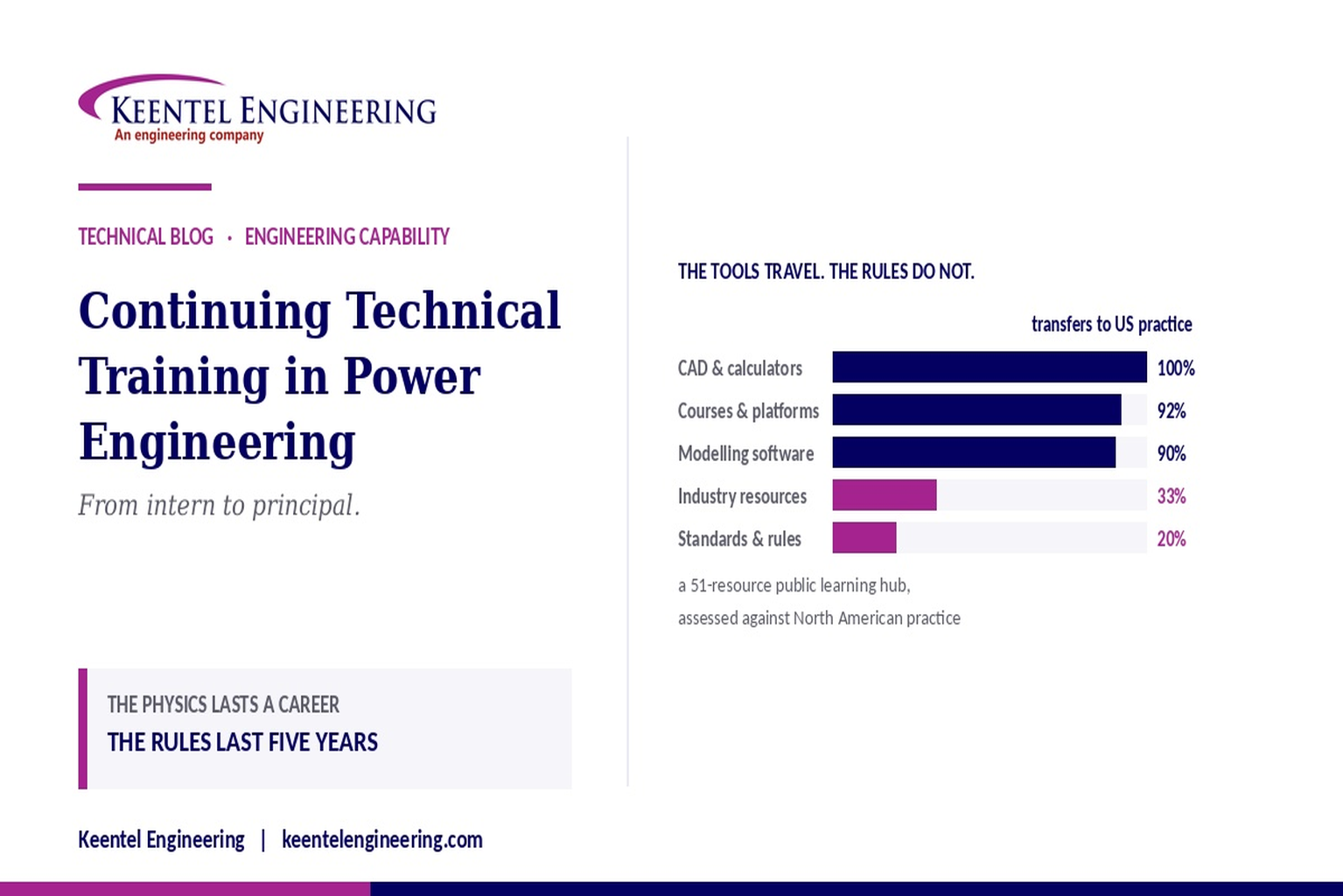
Learn why continuing technical training matters in power engineering, including standards, software skills, PDH requirements, and career growth.
By SANDIP R PATEL
•
September 22, 2026
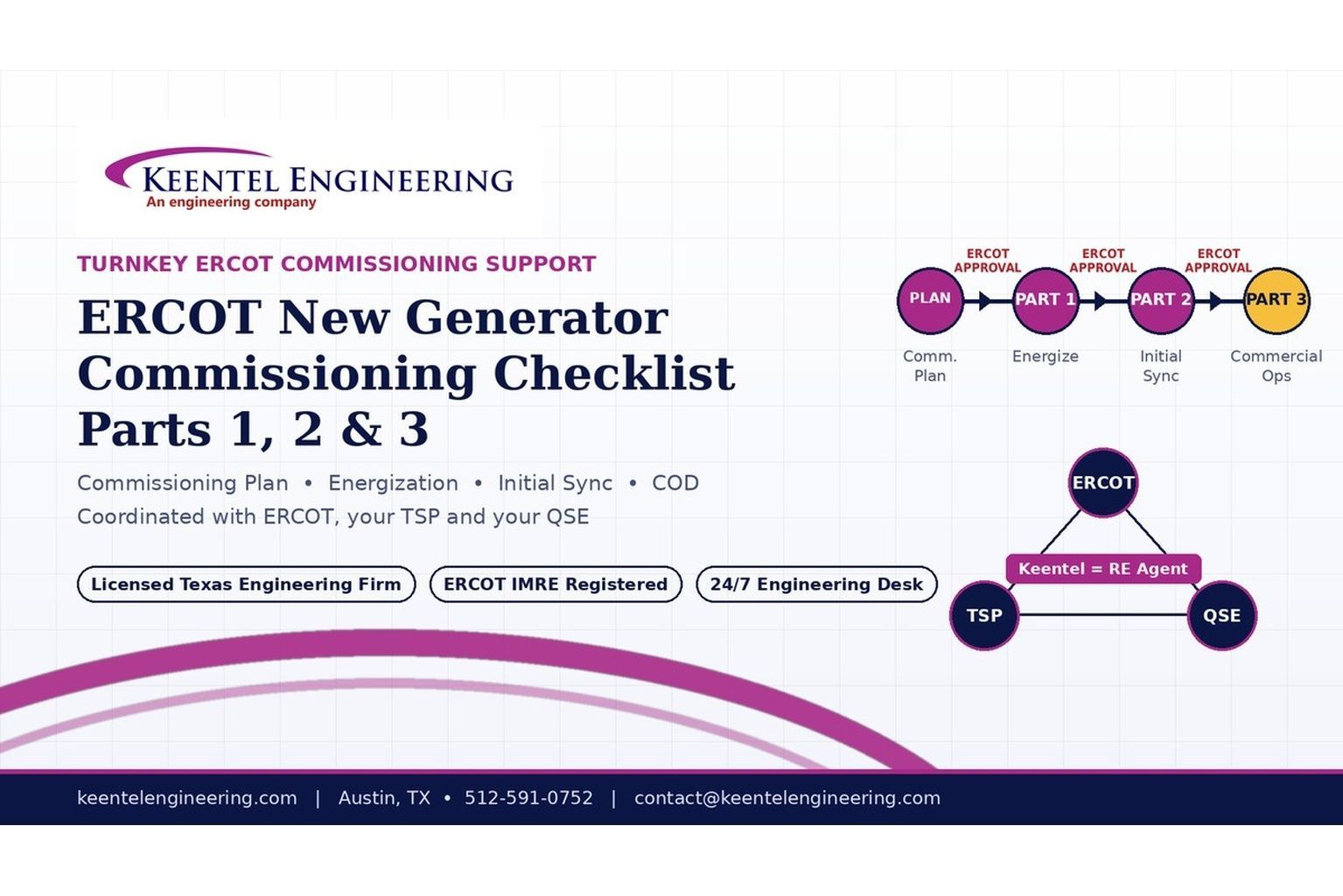
2026 ERCOT commissioning guide covering the Commissioning Plan, Checklist Parts 1–3, BESS requirements, TSP/QSE coordination, field testing and COD.
By SANDIP R PATEL
•
September 22, 2026
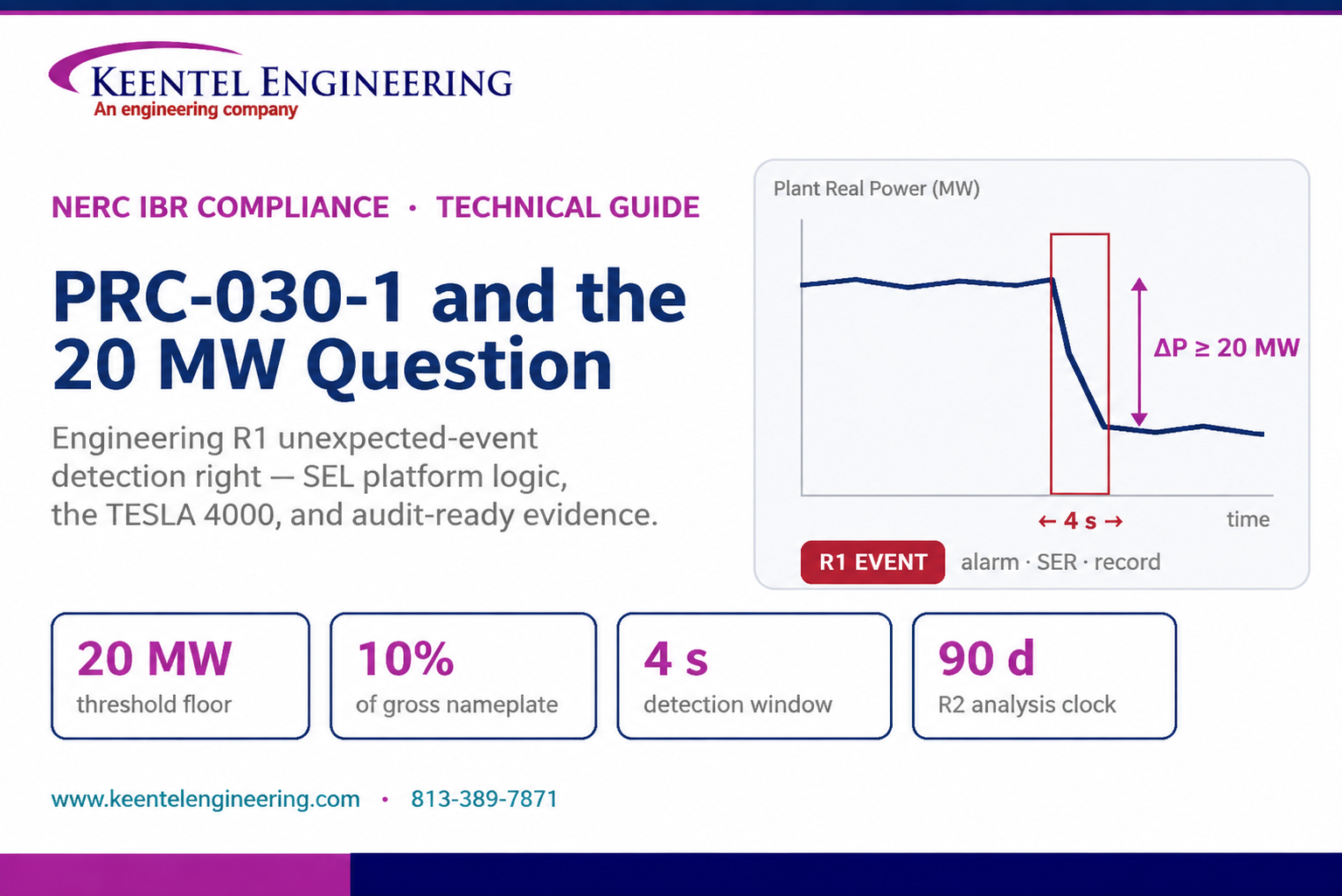
Learn PRC-030-1 R1 event detection requirements for inverter-based resources, SEL platforms, disturbance monitoring, and audit-ready compliance.
By SANDIP R PATEL
•
September 22, 2026
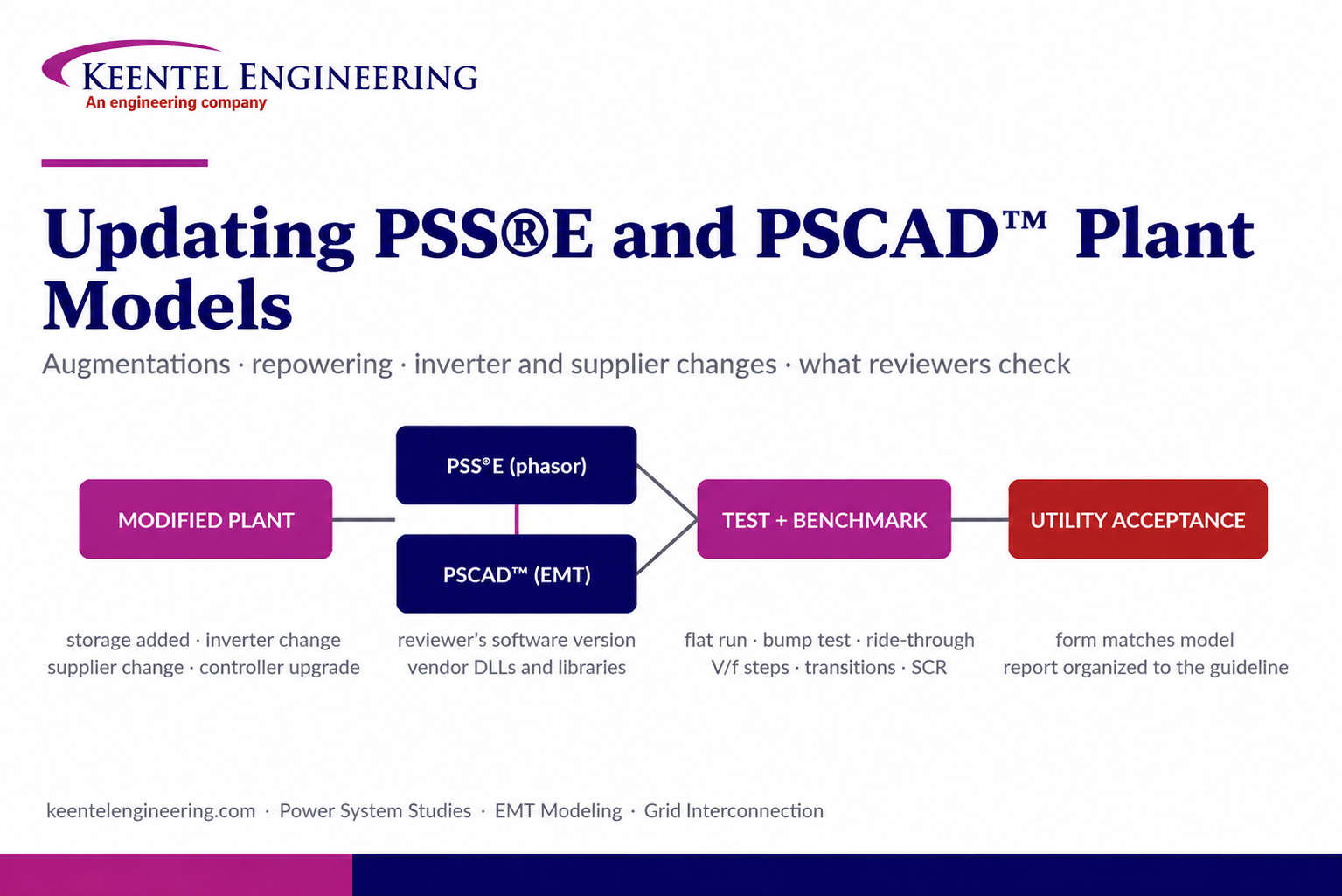
Learn how PSS®E and PSCAD™ model updates support plant augmentations, repowering, equipment changes, testing, benchmarking, and grid compliance.
By SANDIP R PATEL
•
September 20, 2026
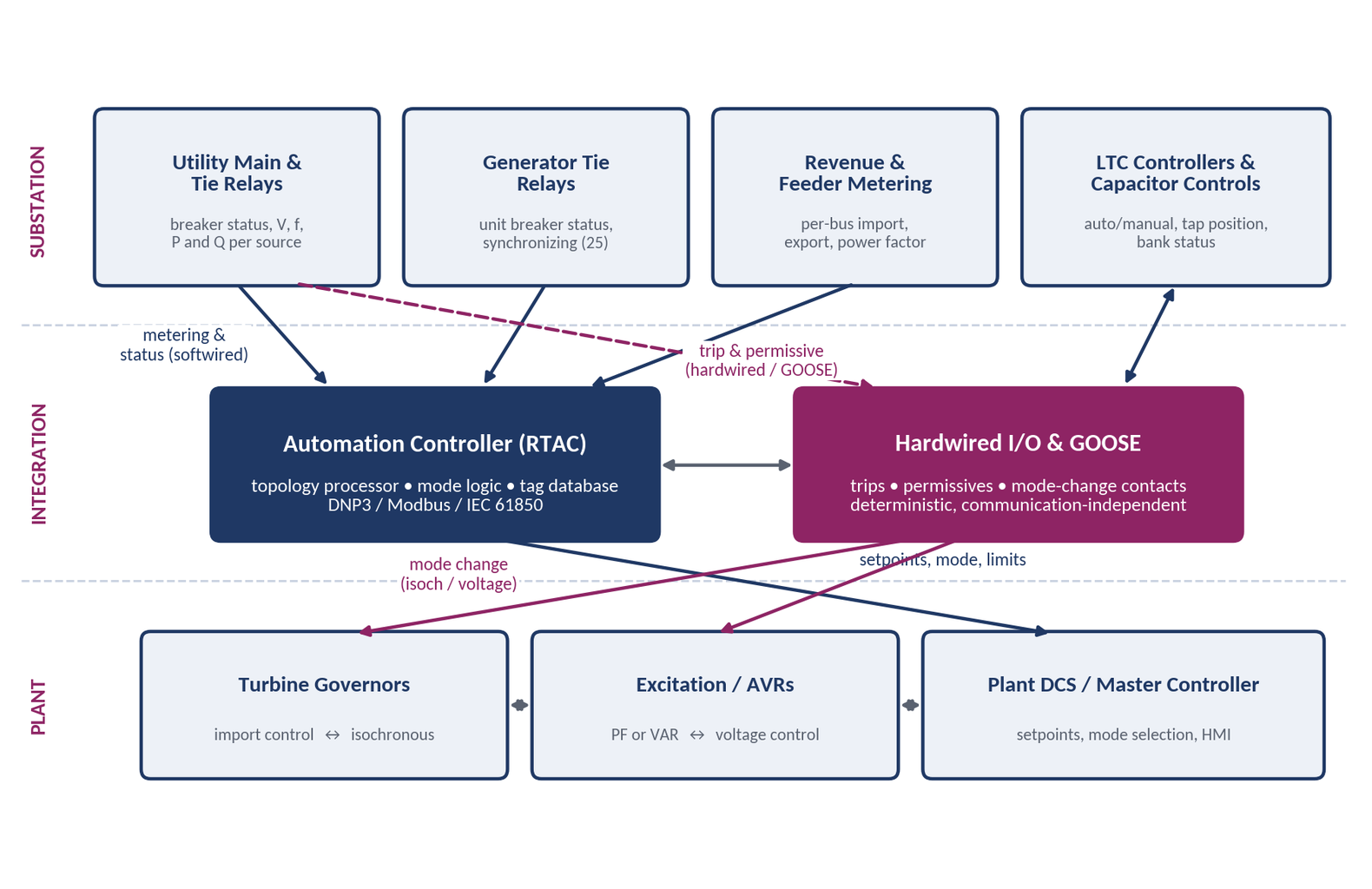
Learn CHP load following and island detection engineering for campus plants, including protection, controls, power studies, and grid transition design.
By SANDIP R PATEL
•
September 20, 2026
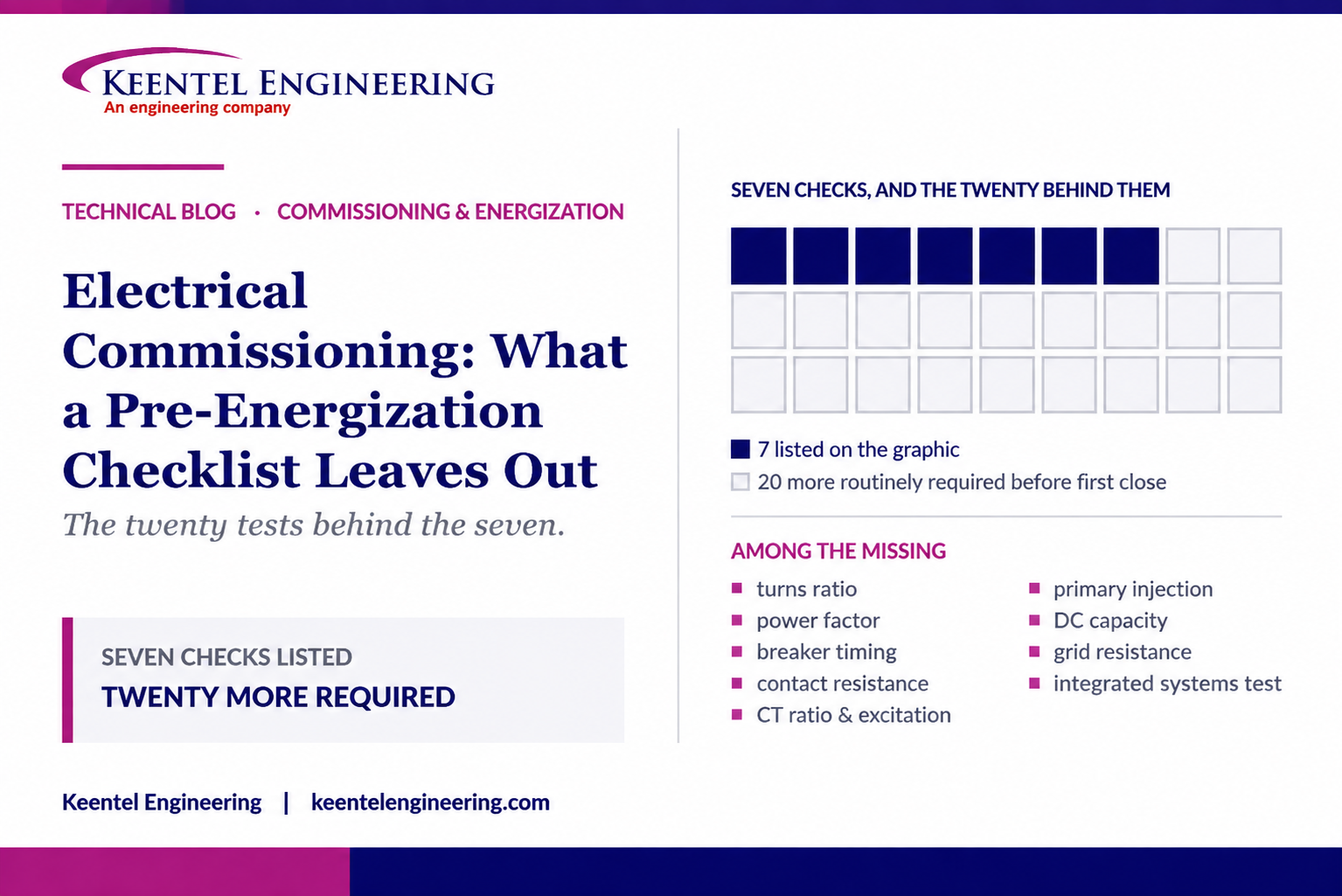
Learn what a pre-energization checklist misses, including electrical testing, protection checks, commissioning steps, and safe energization practices.
By SANDIP R PATEL
•
September 20, 2026
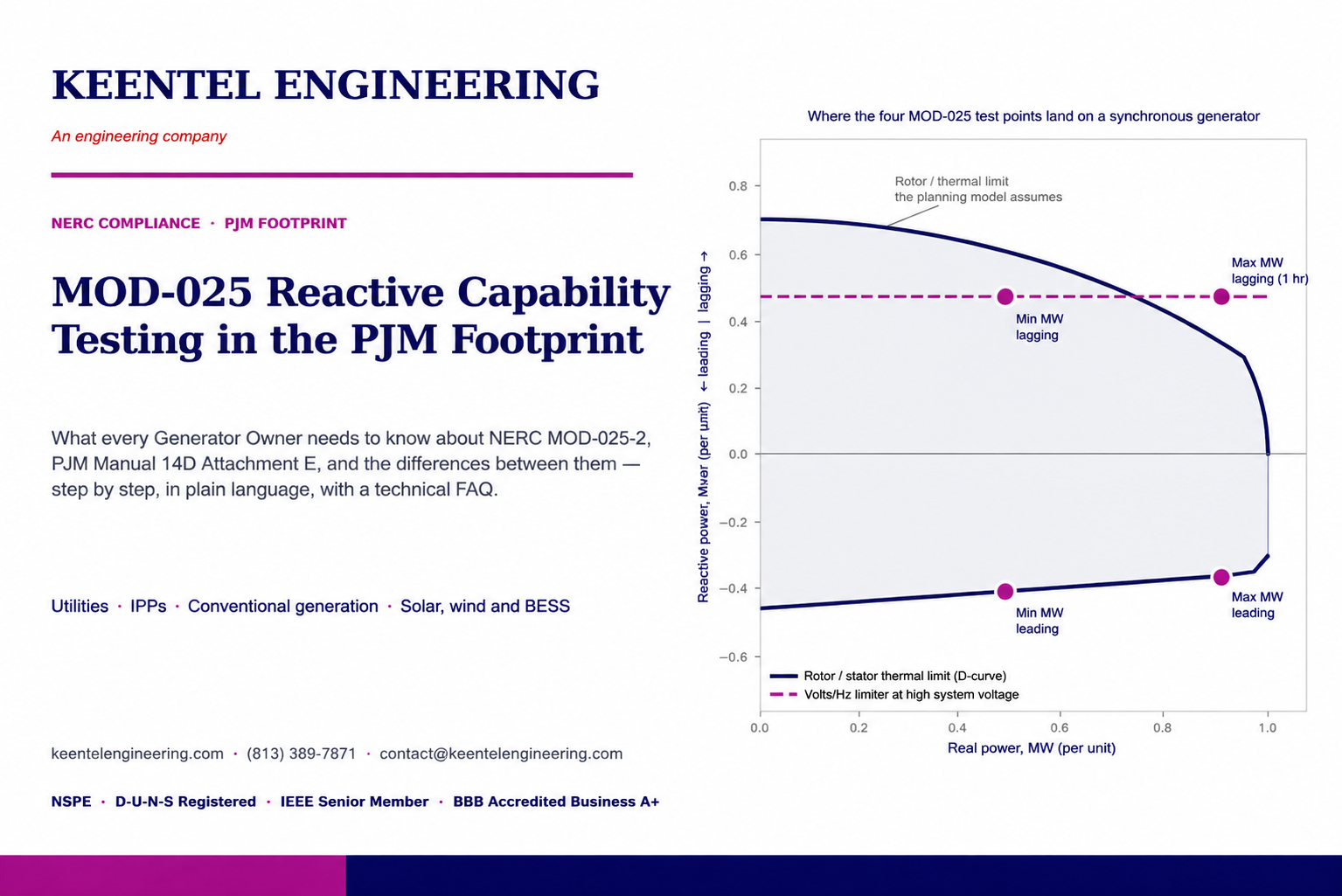
NERC MOD-025-2 Generator Owners, MOD-025-2 reactive power testing, generator capability verification, NERC Attachment 1, MOD-025 compliance testing
By SANDIP R PATEL
•
September 20, 2026
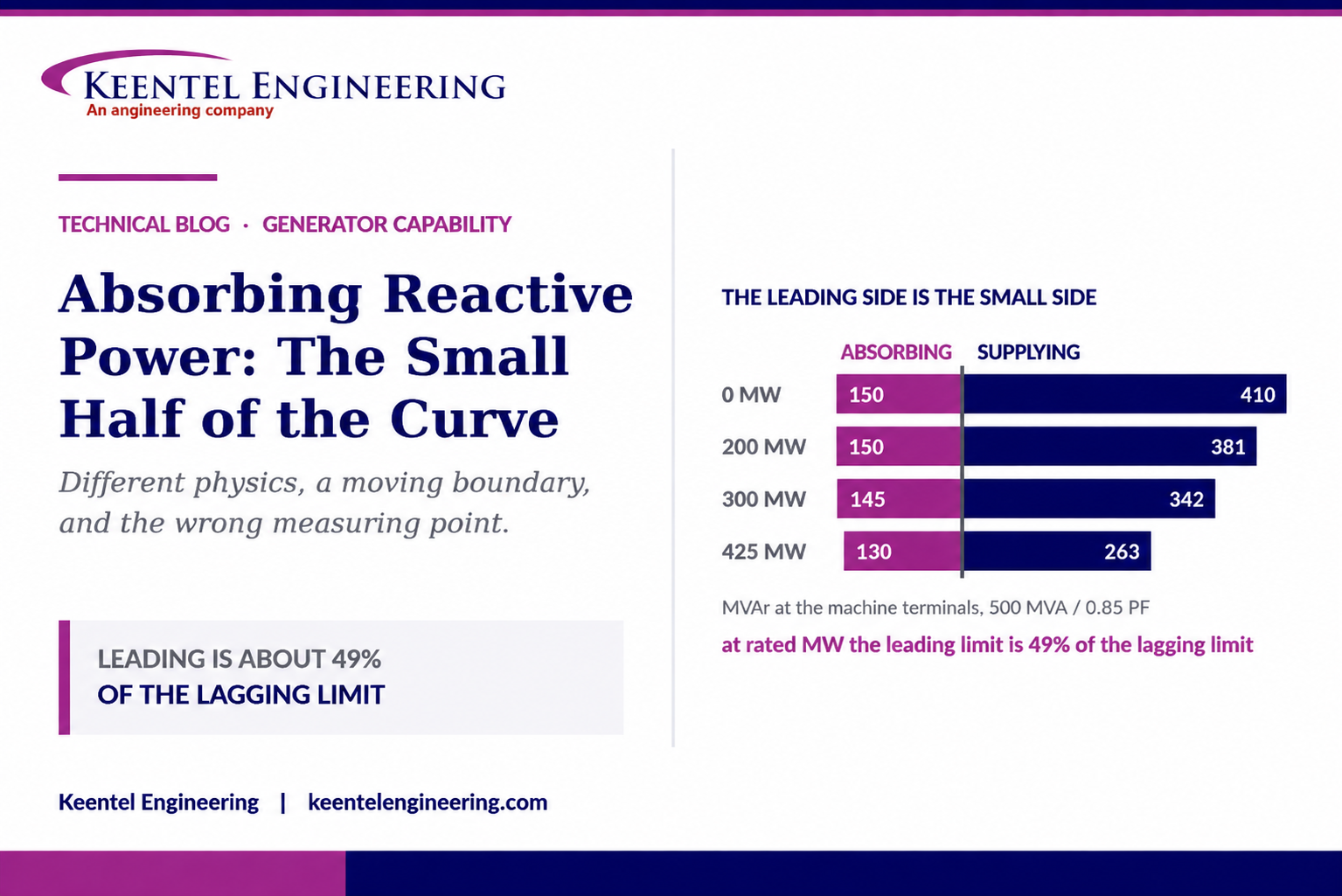
Understand generator capability curves, reactive power absorption, MVAr limits, MOD-025 verification, protection coordination, and grid requirements.
By SANDIP R PATEL
•
September 20, 2026
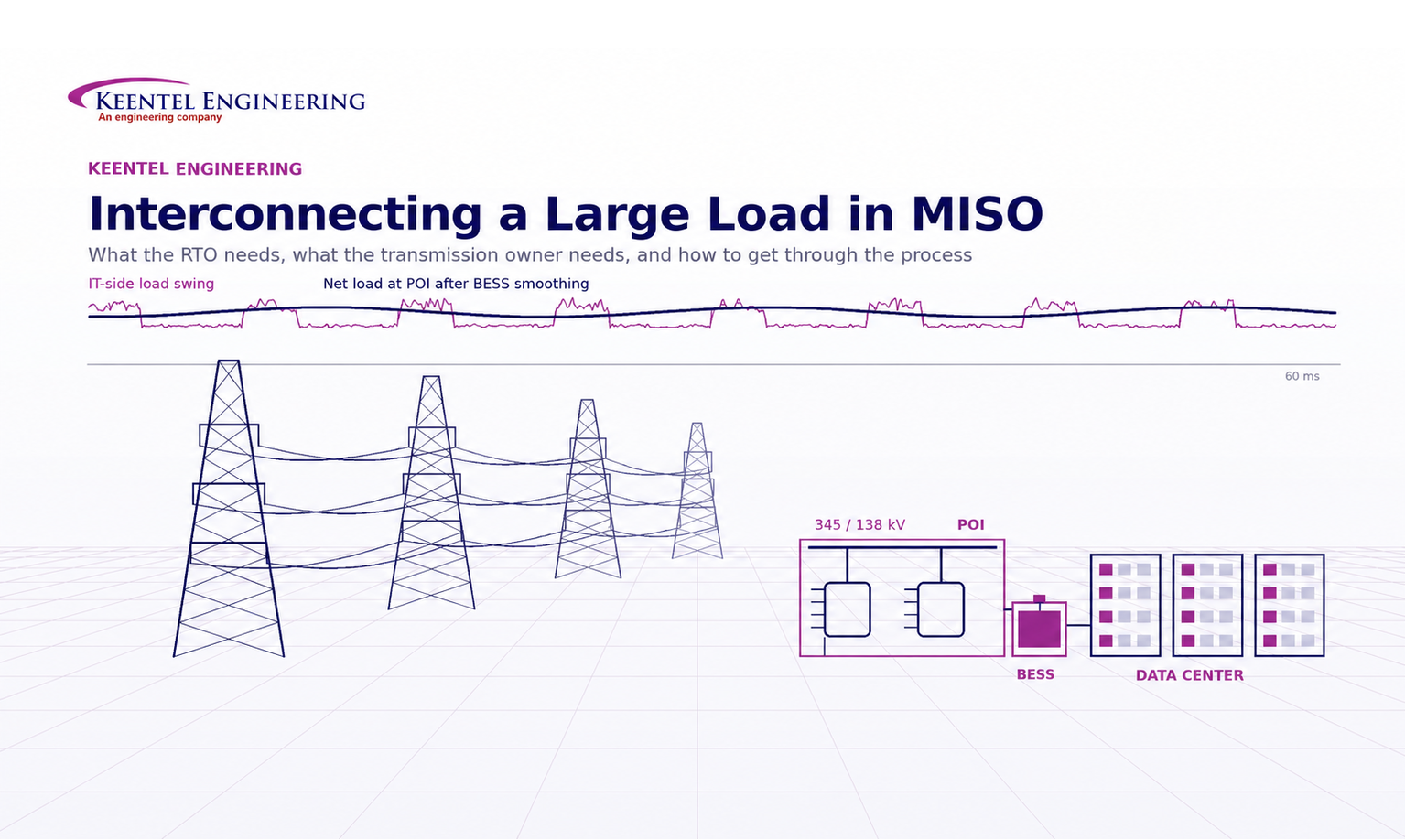
Understand MISO large load interconnection requirements for data centers, including TO data, PSS®E models, ride-through, harmonics, BESS and EPR.