


A Coordinated Electric System Interconnection Review—the utility’s deep-dive on technical and cost impacts of your project.

Challenge: Frequent false tripping using conventional electromechanical relays
Solution: SEL-487E integration with multi-terminal differential protection and dynamic inrush restraint
Result: 90% reduction in false trips, saving over $250,000 in downtime

Category Metric
VPP capacity (Lunar Energy) 650 MW
Lunar funding raised US$232 million
Data center BESS example 31 MW / 62 MWh
ERCOT grid-scale batteries 15+ GW
LDES tenders (H1 2026) Up to 9.3 GW
Lithium-ion share of LDES by 2030 77%
FEOC initial threshold 55%
BESS tariff rate (2026) ~55%
Capacity gain from analytics 5–15%

Data Centers, Large Loads, and the Utility Grid: Statistical Evidence of a Structural Shift in U.S. Power Systems

Keentel Engineering blog banner featuring a modern data center facility, electrical substation, and high-voltage transmission lines at sunset, titled ‘Data Centers, Large Loads, and the Utility Grid: Statistical Evidence of a Structural Shift in U.S. Power Systems.
Calendar icon. D

February 08, 2026 | Blog

Executive Summary

Across the United States, electric utilities are confronting a structural shift driven by hyperscale data centers, artificial intelligence workloads, and electrification. What was once incremental load growth is now measured in gigawatts, not megawatts, forcing utilities, regulators, and planners to rethink rate design, transmission planning, substation sizing, and system resilience.

Recent utility earnings calls, regulatory filings, industry conferences, and OEM announcements show that large-load integration is no longer speculative. It is being actively planned, contracted, regulated, and financed — with engineering execution emerging as the primary constraint.

This article synthesizes recent, publicly reported data to quantify how fast large-load demand is growing, how utilities are responding, and why statistically grounded planning and power system studies are now essential to protect reliability and ratepayer affordability.


1. Utility Load Growth Is Accelerating at the Gigawatt Scale

Xcel Energy: Multi-State Large-Load Expansion

Xcel Energy now expects to have 6 GW of contracted data center load in its queue by 2027, double what it anticipated only months earlier. The company reports:

  • 2+ GW already under contract
  • 1 GW expected to be signed in 2026
  • A 20 GW potential pipeline, with 4 GW considered “high probability”
  • Data center load growth contributing to a 2.2% increase in weather-adjusted electric sales in 2025


To accommodate this growth without shifting costs to existing customers, Xcel is pursuing large-load tariffs in:

  • Minnesota
  • Wisconsin
  • Colorado
  • Texas


The company has also identified $10 billion in additional infrastructure investment opportunities, on top of its existing $60 billion five-year capital plan, including a $1.5 billion, 765-kV transmission line awarded by the Southwest Power Pool.

Statistical signal: Large loads are now influencing regional transmission planning and capital allocation decisions.


2. Florida Enters the Large-Load Era

Florida Power & Light (FPL), the nation’s largest electric utility, expects to announce its first large-load data center deals in 2026.


Key indicators include:

  • 50+ large-load inquiries already received
  • A long-term goal to place 15 GW of new generation into service for data centers by 2035
  • Internal planning scenarios targeting 30 GW or more, including nuclear capacity
  • A “bring-your-own-generation” strategy combining:
  • Renewables
  • Battery storage
  • Gas generation
  • Potential small modular reactors (SMRs)


FPL’s leadership has emphasized alignment with consumer bill protection policies, signaling that large-load integration will be conditioned on cost causation and regulatory approval.

Statistical signal: Large-load demand is expanding into traditionally residential-heavy utility territories, not just established data center hubs.


3. Large-Load Tariffs Are Becoming a National Norm

Large-load tariffs — once niche instruments — are now a core regulatory tool.

Across the U.S.:

  • 66 large-load tariffs were approved or pending as of late 2025
  • Many require:
  • Upfront payment for transmission and distribution upgrades
  • Long-term capacity commitments
  • Demand flexibility or curtailment provisions
  • Approximately 20% explicitly require or incentivize load flexibility


California’s proposed SB 978 would apply to loads ≥75 MW, mandating:

  • Cost-causation-based rate structures
  • Prohibition of diesel backup generation
  • Clean backup requirements
  • Formal state studies on impacts to decarbonization, water, and pollution


Similar frameworks have emerged in:

  • Ohio
  • Oregon
  • Virginia
  • Wisconsin

Statistical signal: Regulators are converging on the principle that large loads must self-fund the infrastructure they require.


4. Grid Modernization Is Shifting from Hardware to Data

Insights from the DTECH utility leadership keynote underscore that utilities are not only expanding infrastructure — they are changing how the grid is operated.


SDG&E

  • Operates 225+ hyper-local weather stations
  • Uses AI-enabled models to forecast wildfire risk at the circuit level
  • Employs AI-driven drone inspections across millions of assets
  • Runs nightly wildfire spread simulations on supercomputers


PG&E

  • Nearly 50% of customers have ≤150-A service panels
  • Traditional electrification upgrades can cost:
  • $5,000–$10,000 per customer panel
  • Up to $30,000 for transformer upgrades
  • Grid-edge intelligence and AMI 2.0 enable:
  • Next-day electrification service
  • System-wide savings measured in billions of dollars


Duke Energy

  • Uses cloud computing to reduce system-wide modeling time from six weeks to six hours
  • Integrates data from millions of connected grid devices
  • Maintains service through record-breaking load events across multiple states


Statistical signal: Digital modeling, forecasting, and data integration now directly affect capital efficiency and reliability outcomes.


5. Generation Supply Is Being Optimized, Not Just Expanded

While new generation is being added, utilities and OEMs are also extracting more value from existing assets.


GE Vernova reported 1.1 GW of U.S. onshore wind repowering orders booked in 2025:

  • U.S.-manufactured nacelles and drivetrains
  • COD expected 2026–2027
  • Repowering increases:
  • Output
  • Asset life
  • Availability


This aligns with utility strategies to meet near-term load growth without waiting for entirely new greenfield projects.

Statistical signal: Repowering and asset optimization are becoming critical tools for near-term capacity adequacy.


6. Engineering Is the Gating Factor

Across all data points, one conclusion is consistent:

The limiting factor is no longer demand, capital, or policy — it is engineering execution.


Large-load integration requires:

  • Accurate load forecasting
  • Interconnection studies
  • Short-circuit and stability analysis
  • Transmission and substation design
  • Protection and control coordination
  • Compliance with evolving tariff and regulatory requirements


Utilities that can execute these studies quickly and defensibly are able to move projects forward. Those that cannot face delays, cost overruns, or regulatory pushback.


Key Statistics at a Glance

Metric Value
Xcel projected data center load 6 GW by 2027
Xcel potential pipeline 20 GW
FPL large-load inquiries 50+
NextEra data center generation goal 15–30 GW by 2035
Large-load tariffs nationwide 66 approved or pending
California SB 978 threshold ≥75 MW
GE Vernova wind repowering 1.1 GW
PG&E electrification savings Billions (system-wide)
Duke modeling speed improvement 6 weeks → 6 hours

Technical FAQs

  • 1. What qualifies as a “large load” in utility planning?

    Large loads are typically defined as customers with sustained demand exceeding 25–75 MW, often with high load factors. These include data centers, AI compute hubs, and industrial facilities.


  • 2. Why are utilities adopting large-load tariffs?

    Large-load tariffs ensure that customers driving new infrastructure needs pay for:


    • Interconnection studies
    • Transmission and distribution upgrades
    • Capacity reservation

    This prevents cost shifting to residential and small commercial customers.


  • 3. How do large loads impact transmission planning?

    Large loads can require:

    • New substations
    • Higher-voltage transmission lines
    • Regional planning coordination (e.g., SPP, PJM, ERCOT)

    Even a single data center can rival the load of an entire city.


  • 4. Why is demand flexibility important for data centers?

    Demand flexibility allows utilities to:

    • Reduce peak system stress
    • Defer costly upgrades
    • Improve reliability during extreme events

    Approximately 20% of large-load tariffs now include flexibility requirements.


  • 5. Can renewable energy reliably serve data centers?

    Yes — when combined with:

    • Storage
    • Repowering strategies
    • Firm clean resources (e.g., geothermal, nuclear)

    Utilities increasingly pair renewables with flexible generation to meet round-the-clock demand.


  • 6. Why is engineering speed becoming critical?

    Permitting and capital are often available, but:

    • Poorly scoped studies
    • Incomplete modeling
    • Misaligned assumptions

    can delay projects by years. Accurate, defensible engineering shortens timelines and reduces regulatory risk.


  • 7. How does repowering help meet near-term demand?

    Repowering increases output and availability from existing assets, delivering capacity faster than new greenfield projects.


  • 8. What role do power system studies play in ratepayer protection?

    Studies quantify:

    • Who causes infrastructure costs
    • How upgrades affect system reliability
    • Whether tariffs and cost allocation are justified

    They are foundational to regulatory approval.


Closing Insight

The data is unambiguous: large-load demand is reshaping the U.S. electric grid at a structural level. Utilities that pair statistical rigor, digital intelligence, and disciplined engineering will be able to scale reliably and affordably.

Those that do not will struggle — regardless of how much demand exists.


Man in a blazer and open shirt, looking at the camera, against a blurred background.

About the Author:

Sonny Patel P.E. EC

IEEE Senior Member

In 1995, Sandip (Sonny) R. Patel earned his Electrical Engineering degree from the University of Illinois, specializing in Electrical Engineering . But degrees don’t build legacies—action does. For three decades, he’s been shaping the future of engineering, not just as a licensed Professional Engineer across multiple states (Florida, California, New York, West Virginia, and Minnesota), but as a doer. A builder. A leader. Not just an engineer. A Licensed Electrical Contractor in Florida with an Unlimited EC license. Not just an executive. The founder and CEO of KEENTEL LLC—where expertise meets execution. Three decades. Multiple states. Endless impact.

Four workers in safety vests and helmets stand with arms crossed near wind turbines.

Let's Discuss Your Project

Let's book a call to discuss your electrical engineering project that we can help you with.

Man in a blazer and open shirt, looking at the camera, against a blurred background.

About the Author:

Sonny Patel P.E. EC

IEEE Senior Member

In 1995, Sandip (Sonny) R. Patel earned his Electrical Engineering degree from the University of Illinois, specializing in Electrical Engineering . But degrees don’t build legacies—action does. For three decades, he’s been shaping the future of engineering, not just as a licensed Professional Engineer across multiple states (Florida, California, New York, West Virginia, and Minnesota), but as a doer. A builder. A leader. Not just an engineer. A Licensed Electrical Contractor in Florida with an Unlimited EC license. Not just an executive. The founder and CEO of KEENTEL LLC—where expertise meets execution. Three decades. Multiple states. Endless impact.

Leave a Comment

Related Posts

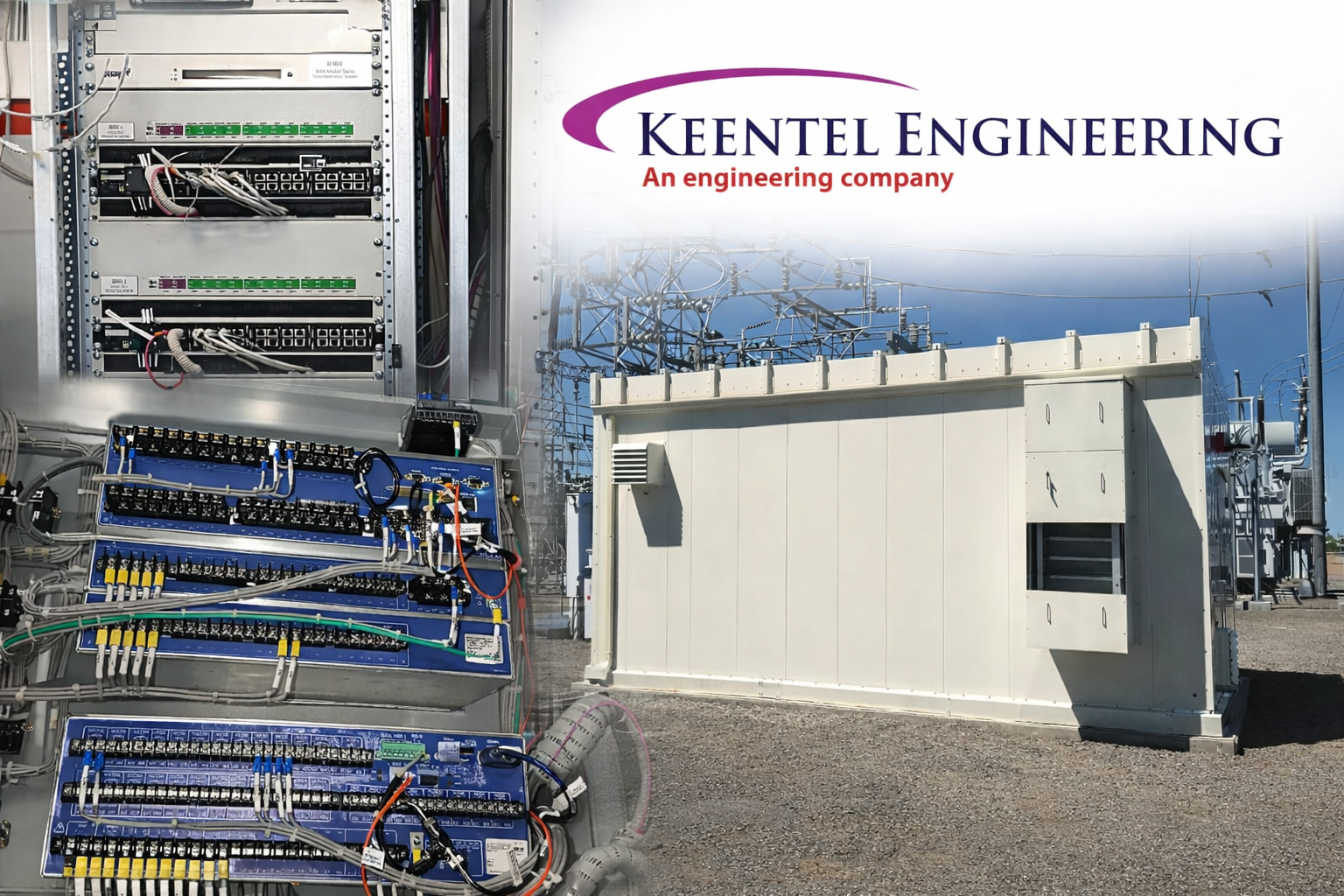
Keentel Engineering branded image showing electrical control panels with wiring and network equipmen
By SANDIP R PATEL February 8, 2026
Learn best practices for substation secondary systems design—covering protection and control, DC systems, relay panels, CT/VT circuits, redundancy, and compliant substation engineering.
Keentel Engineering blog banner showing renewable energy grid infrastructure with solar panels, wind
By SANDIP R PATEL February 8, 2026
Explore 2026 industry trends shaping the U.S. power grid—virtual power plants, energy storage growth, ERCOT battery performance, LDES adoption, and supply chain impacts on grid resilience.
Keentel Engineering featured image for NYISO Interconnection Modeling Guidelines Explained showing p
By SANDIP R PATEL February 7, 2026
A comprehensive engineering guide to NYISO interconnection modeling requirements, including steady-state, short-circuit, and dynamic studies.
Keentel Engineering featured image illustrating AI data centers, grid stress, and large-load regulat
By SANDIP R PATEL February 7, 2026
Data-driven analysis of AI data center load growth, large-load tariffs, transmission planning, and ratepayer protection shaping U.S. power systems.
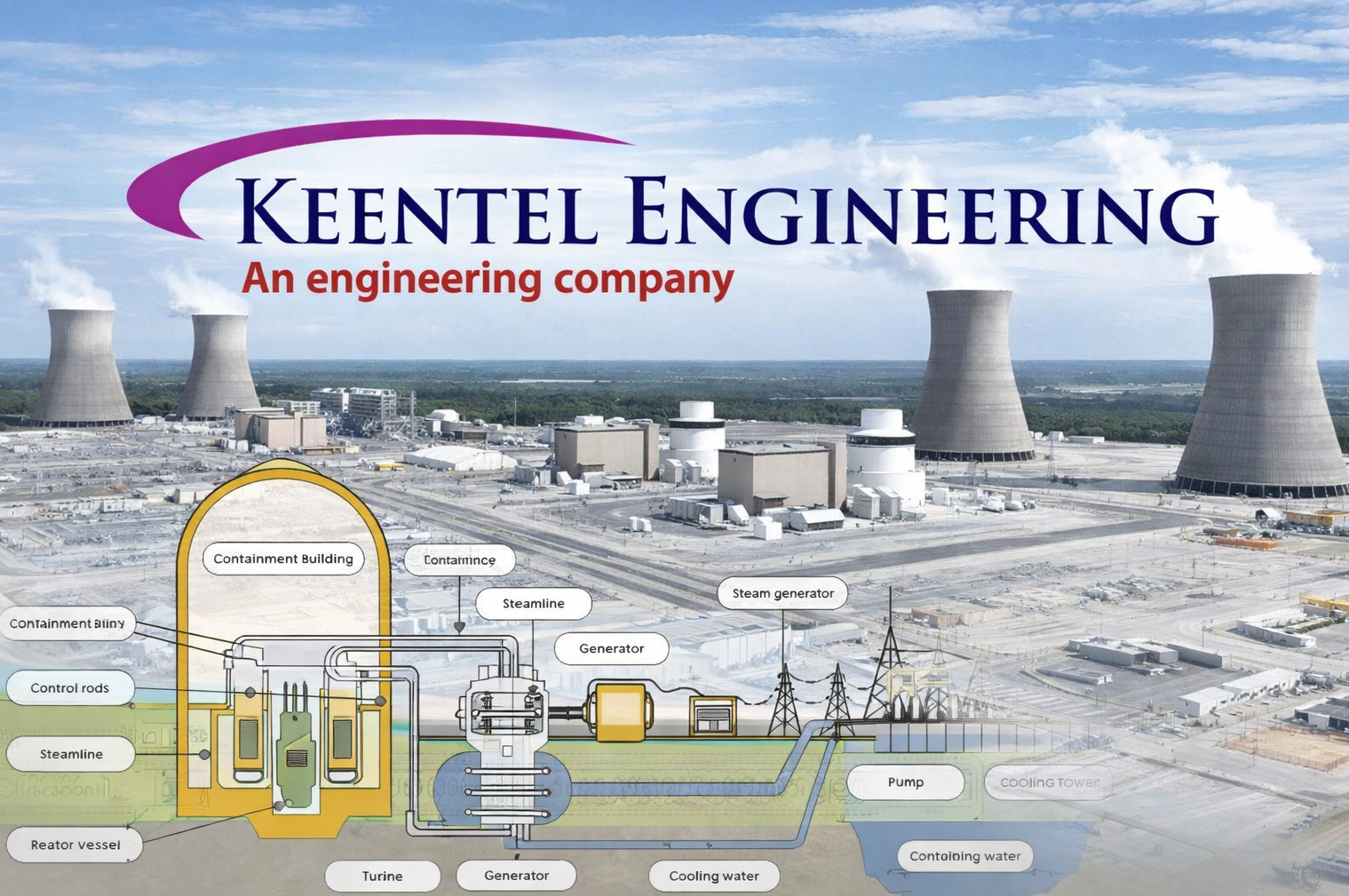
Keentel Engineering banner featuring a panoramic view of a nuclear power plant overlaid with a detai
By SANDIP R PATEL February 3, 2026
Explore the critical design of Class 1E electrical systems in nuclear plants. Learn about safety compliance, redundancy, emergency power, and grid interfaces.
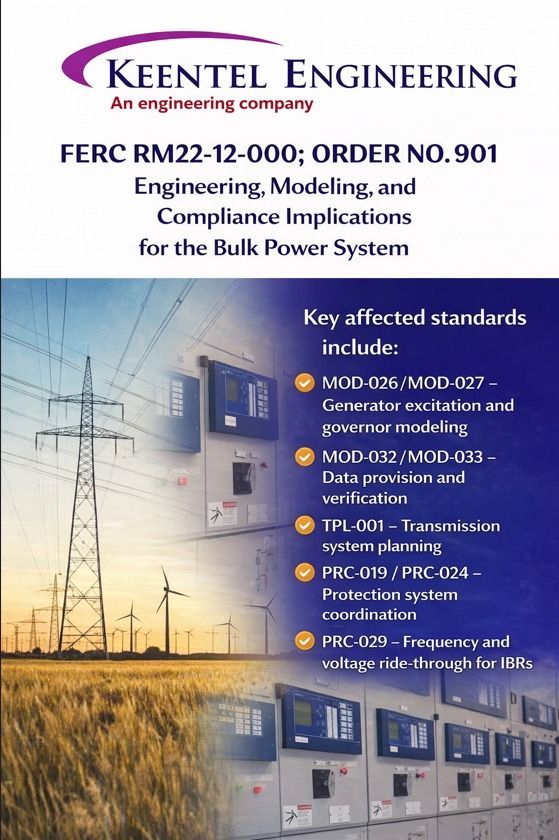
Keentel Engineering overview graphic explaining FERC RM22-12-000 Order No. 901 and its engineering,
By SANDIP R PATEL February 1, 2026
Understand FERC RM22-12-000 Order 901 and its impact on power system modeling, NERC compliance, generator data, and protection standards.
IBR Registration Initiative for Category 2 Generator Owners and Operators
By SANDIP R PATEL January 31, 2026
Learn what the IBR Registration Initiative means for Category 2 Generator Owners and Operators, key deadlines through May 2026, required documentation, and how Keentel Engineering supports NERC compliance readiness.
IBR Registration Initiative for Category 2 Generator Owners and Operators
By SANDIP R PATEL January 31, 2026
Understand NERC PRC-029-1 ride-through requirements for IBRs, key compliance dates through 2026, applicability to BES and non-BES assets, and what Generator Owners must do now.

Understanding Category 2 IBR Registration and Compliance white paper cover by Keentel Engineering fe
By SANDIP R PATEL January 31, 2026
Complete guide to Category 2 IBR registration and compliance, including NERC requirements, FERC Order 901, CMEP enforcement, applicable standards, and preparation steps.