A Coordinated Electric System Interconnection Review—the utility’s deep-dive on technical and cost impacts of your project.
Challenge: Frequent false tripping using conventional electromechanical relays
Solution: SEL-487E integration with multi-terminal differential protection and dynamic inrush restraint
Result: 90% reduction in false trips, saving over $250,000 in downtime
ERCOT enforces all of the above through simulation, which means your model is your compliance case. The bar is now high:
- Whole-facility scope. The model must represent everything the IT load, the UPS and power conversion, the cooling plant, the protection and control systems in formats compatible with ERCOT's study platforms (PSS/E, PSCAD, TSAT).
- Real control loops, not approximations. Generic textbook representations are unacceptable. The model must capture the actual inner control behavior of your power electronics.
- Hardware-validated converter models. For electronic loads, the PSCAD model must be benchmarked against actual hardware testing including voltage ride-through and subsynchronous response. A model assembled from standard PSCAD library blocks fails by definition, because a generic block has never been tested against your vendor's hardware. The good news: validation is a hardware-type test, so results for a given converter product are reusable across every facility that uses it.
- Format migration. Facilities that previously submitted the older composite load model (CMLD) format must transition to EPRI's PERC1 format.
- Three checkpoints. Models are reviewed before the stability study begins (no model, no study), before each quarterly stability assessment, and for electronic loads one final time before energization, when you must submit as-built models with a documented comparison against the previously studied data and a sworn attestation that the model matches actual field settings. ERCOT's review takes 10 business days, extendable by 20 put it on your critical path.
- A living obligation. Change your technology, controls, or relay settings in a way that affects ride-through including converting a crypto mining site to an AI data center — and you've triggered a new interconnection study, even if your megawatts don't change.
| Parameter | Detail |
|---|---|
| System | 230 kV / 138 kV transmission corridors, wind and wet-snow icing exposure |
| Data basis | 15 years of minute-resolution forced-outage records + regional weather observations |
| Core methods | Event grouping, MVA performance curves, time-to-95%-restore, area outage rate curves, fragility modeling, rerun-history benefits, exceedance and log-domain risk metrics |
| Headline result | ≈85% of maximum resilience benefit at 60% of original capital; worst-event restoration window cut from 11 days to 5 in rerun-history terms |
| Decision supported | Capital portfolio selection; resilience plan filing; post-investment verification framework |
| System / Topic | Governing Standard(s) | What It Controls |
|---|---|---|
| Overall plant electrical distribution | IEEE 141 (Red Book); IEEE 666 | Distribution architecture, voltage selection, design of generating station auxiliary service systems |
| Power system studies | IEEE 399 (Brown Book); IEEE 551 | Load flow, symmetrical/asymmetrical short circuit, motor starting methodologies down to the lowest LV panelboard |
| Protection & coordination | IEEE 242 (Buff Book); IEEE 3004.5; IEEE C37 series | Generator relaying (21, 59N, 87G), time-current coordination, selective clearing between LV and MV tiers |
| GSU / UAT / SST transformers | IEEE C57.12.00 and C57 family | Transformer ratings, impedance, testing, loading |
| HV switchyard breakers | IEEE C37.06 | AC high-voltage circuit breaker preferred ratings |
| MV switchgear (13.8 kV) | IEEE C37.20.2; IEEE C37.20.7 | Metal-clad construction, compartmentalization, vacuum breakers; arc-resistant design with plenum venting |
| MV cable | UL 1072; ICEA S-93-639 (NEMA WC 74) | Type MV-105 shielded cable, 133% insulation level for HRG systems |
| LV switchgear (480 V) | IEEE C37.13; UL 1558 | Metal-enclosed LV power circuit breaker switchgear to 635 V, draw-out ACBs with electronic trip units |
| Motor control centers | UL 845; NEMA ICS 18 | LV-MCC construction, MCCB/MCP protection for motors under ~200 HP |
| Motors | NEMA MG-1 | Motor performance, starting characteristics, service factors |
| DC & battery systems | IEEE 485; IEEE 946 | Lead-acid battery sizing (125/250 VDC), DC auxiliary system design |
| Grounding | IEEE 80; IEEE 142 (Green Book) | Ground grid step/touch potential limits; system grounding including high-resistance grounding |
| Lightning protection | IEEE 998 | Direct-stroke shielding of switchyard and outdoor generator structures |
| Arc flash & electrical safety | IEEE 1584; NFPA 70E | Incident energy calculation; worker safety boundaries and PPE |
| Fire protection | NFPA 850 | Fire protection and risk management for combustion turbine generating plants |
| Installation code | NEC (NFPA 70); NESC | Wiring methods inside the plant fence; overhead/outdoor clearances at the switchyard |
| Interconnection & compliance | FERC LGIP; NERC MOD-025/026/027, PRC-019/024/029, FAC-008 | Interconnection process, model validation, protection/ride-through coordination, facility ratings |
| IFC / Construction Deliverable | Purpose |
|---|---|
| Stamped IFC packages | Legal basis for construction; P.E. responsible charge |
| Final relay settings & TCCs | Protection as-installed matches the coordination study |
| Calculation archive | Owner records; NERC audit evidence trail |
| Commissioning procedures | Safe, sequenced energization; MOD field testing |
| Construction support | RFIs, field changes, FAT/SAT witness |
| As-builts & model handoff | Operating baseline; future study currency |
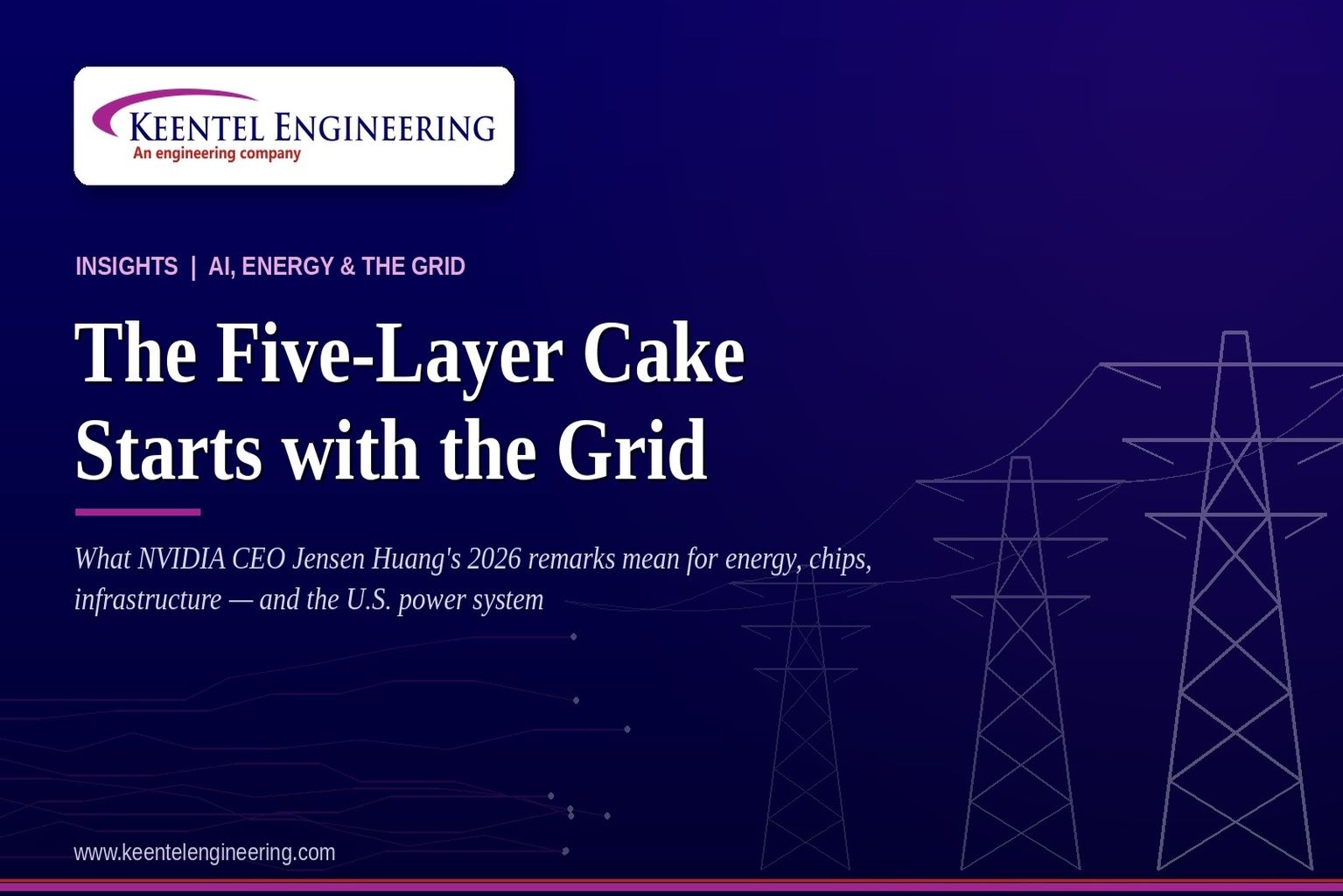
The Five-Layer Cake Starts with the Grid
Jul 08, 2026 | Blog
What NVIDIA CEO Jensen Huang's 2026 Global Conference Remarks Mean for Energy, Chips, Infrastructure — and the U.S. Power System
An Engineering Perspective for Utilities, Developers, and Large-Load Customers
1. Why a Power Engineer Should Read This Transcript
At the 2026 Global Conference, NVIDIA CEO Jensen Huang sat for a wide-ranging conversation about where artificial intelligence is heading. Most of the coverage focused on models, market caps, and the “boomer versus doomer” debate. But buried in that conversation was a message aimed squarely at our industry: the binding constraint on AI is no longer software or even silicon. It is energy, land, and grid infrastructure — the physical foundation that every megawatt of “intelligence production” sits on.
Huang described AI as a “five-layer cake”: energy at the base, then chips, then infrastructure (land, power, and shell — the data center buildings, cloud services, and neoclouds), then models, and finally applications. His point was blunt: without the underlying layers, no model is useful. For power systems engineers, utilities, transmission planners, and large-load developers, that means the AI build-out is now fundamentally an electrical infrastructure program — arguably the largest sustained load-growth event the U.S. grid has faced since post-war industrialization.
In this article, Keentel Engineering breaks down the four themes from Huang's remarks that matter most to the power sector — energy, chips, infrastructure, and U.S. re-industrialization — and translates each into concrete engineering and interconnection implications.
2. From Generative to Agentic AI: Why Compute Demand Jumped ~1,000×
Huang framed the last two years as a phase change. Generative AI the ChatGPT moment taught machines to generate text, images, and video. But the industry quickly realized that generation enables two deeper capabilities: reasoning (generating internal chains of thought) and tool use (generating commands to control browsers, spreadsheets, and software). The result is agentic AI: systems that understand intent, reason, plan, and act.
The electrical punchline is in the arithmetic. Huang estimated that the computation required for agentic reasoning is on the order of 1,000 times more than simple generative AI and that demand is then multiplied again by rapid growth in the number of users. Older GPUs sold four or five years ago are appreciating in price because there is not enough compute to go around. He also noted that the computing paradigm itself is shifting from retrieval (pre-recorded content fetched from the cloud) to generation (every response computed fresh, in context). Nothing can be pre-computed and cached; everything must be generated on demand.
For grid planners, this is why data center load forecasts keep being revised upward. Retrieval-era data centers were storage-heavy and comparatively power-light. Generation-era AI factories are computation-dense, thermally intense, and power-hungry and their duty cycle looks less like an office building and more like a continuous industrial process with fast, large power swings driven by synchronized GPU training steps.
Keentel Engineering Insight
Agentic AI workloads change the electrical character of the load, not just its magnitude. Training clusters can exhibit coordinated MW-scale power steps in milliseconds as thousands of GPUs synchronize. Interconnection studies for AI campuses should evaluate voltage flicker, ride-through behavior, harmonic injection from high-density power electronics, and dynamic load-shedding schemes not just peak MW and thermal limits.
3. The Five-Layer Cake and Why Energy Is the Foundation
Huang's five-layer framing is a useful mental model for anyone planning capital deployment in this cycle. Each layer is a distinct industry with its own bottlenecks, and he was explicit that the bottleneck migrates over time: two years ago the constraint was chips while energy was adequate; today, the constraint has shifted decisively toward the bottom of the stack land, power, and shell.
| Layer | What It Includes | Power-Sector Implication |
|---|---|---|
| 1. Energy | Generation, transmission, fuel supply, grid capacity | The pacing item. New gas, nuclear, renewables + BESS, and transmission must be financed and interconnected years ahead of load. |
| 2. Chips | GPUs, memory, silicon photonics, packaging (7+ chip types per system) | Chip fabs are themselves 100+ MW loads with extreme power-quality requirements (SEMI F47 ride-through, ultra-low harmonics). |
| 3. Infrastructure | Land, power, shell — data centers, cloud and neocloud operators | Site selection is now grid-driven: POI availability, queue position, and study timelines determine where capital lands. |
| 4. Models | Frontier and open-source AI models | Model economics turned profitable in 2025–2026, meaning capacity expansion is now self-funding — load growth accelerates. |
| 5. Applications | Healthcare, transportation, finance, retail, engineering | Every industry becomes a compute consumer — distributed inference load appears across the entire distribution system. |
One remark deserves special attention from the finance and utility community: Huang observed that in the last three to six months, the gross margins of leading AI companies turned strongly positive. When a product is profitable, the rational response is to make more of it which is why AI companies are now “racing for capacity.” In power-system terms: the load growth is no longer speculative venture-funded demand. It is margin-funded industrial expansion, which historically is the most durable kind.
4. The Validation Continuum: From Offline EMT to Megawatt-Scale Hardware
Huang gave the audience a physical picture of NVIDIA's current-generation systems: a single rack-scale computer roughly twice the width of a stage, weighing about three tons, containing on the order of 1.5 million parts, costing $4–5 million — with silicon photonics, advanced 3D-packaged memory, and liquid cooling throughout. A single AI factory contains a football field of these racks.
Translate that into electrical engineering terms and the design challenge becomes clear:
- Extreme power density. Rack densities of 100–600+ kW push facilities to medium-voltage distribution deep into the white space, direct-to-chip liquid cooling, and in emerging designs, +/-800 VDC or high-voltage DC distribution architectures.
- Transmission-level interconnection. Campuses of 300 MW to multi-GW connect at transmission voltage (115–500 kV) and require dedicated substations, often with on-site generation, BESS buffering, and NERC-jurisdictional facilities.
- Dynamic behavior. Synchronized training workloads create fast MW-scale load steps; combined with 100% power-electronic interfaces, these loads raise real questions for frequency response, voltage stability, and protection coordination on the bulk system.
- Compliance and study requirements. NERC's work on large-load reliability, ERCOT's large-load interconnection framework (including NOGRR282-era ride-through requirements), and evolving RTO/ISO study practices mean large loads are increasingly studied with the same rigor as generation including EMT-level modeling where dynamics matter.
Design Reality Check
An AI factory is best treated as a hybrid facility: part industrial load, part power plant (when co-located generation and BESS are included), and part power-electronics laboratory. The engineering disciplines that utility-scale solar and BESS developers learned over the past decade — EMT/PSCAD modeling, ride-through design, reactive capability planning, protection and control integration at the POI — now apply directly to the load side.
5. Chips and Re-Industrialization: Three Kinds of Plants, Trillions in Capital
Huang made a forceful economic argument: AI is the United States' best opportunity to re-industrialize. He identified three categories of manufacturing plants driving the build-out — chip plants, computer plants, and AI factories — and estimated the opportunity at several trillion dollars of domestic capital formation, creating hundreds of thousands of jobs over the next four to five years. He credited market forces (anchored by roughly half a trillion dollars of purchase orders steered to suppliers willing to build in the U.S.) with accomplishing what subsidy programs alone had struggled to do.
Every one of those three plant types is an electrical infrastructure project first:
- Chip plants. Semiconductor fabs draw 100–500 MW continuously with the tightest power-quality tolerances of any industrial customer. Voltage sags measured in cycles can scrap wafer lots worth millions. Fab interconnections demand redundant transmission supply, static transfer and ride-through design, and rigorous harmonic and flicker studies.
- Computer plants. Server and system assembly plants are more conventional industrial loads, but they cluster around fabs and AI factories, compounding regional load growth on distribution and sub-transmission systems that were never planned for it.
- AI factories. The AI factories themselves are the anchor loads the gigawatt-class campuses reshaping resource plans in ERCOT, PJM, MISO, the Southeast, and the Desert Southwest.
The strategic corollary Huang drew that America should export energy, chips, infrastructure, models, and applications at every layer reinforces the same conclusion: U.S. competitiveness in AI is now inseparable from U.S. competitiveness in building power infrastructure quickly, safely, and to standard.
6. “AI Is the World's Best Opportunity to Modernize the Power Grid”
Perhaps the most striking statement in the entire conversation, from a grid perspective, was Huang's direct assessment: the U.S. power grid is “a little antiquated,” and AI represents the first opportunity in decades to use market forces — rather than mandates — to fund grid modernization and new generation, including nuclear and other sustainable resources. His logic: for the first time, there are abundant creditworthy customers willing to pay for new power at scale.
He also disclosed where NVIDIA's own capital attention sits: closer to home and nearer on the horizon ensuring that “land, power, and shell” projects in the United States are sufficiently funded, potentially backstopping financings to get “power inserted.” When the world's most valuable chip company says its strategic investment focus is helping energize sites, the message to our industry could not be clearer.
Keentel Engineering sees this playing out across five fronts:
| Grid Modernization Front | What the AI Load Wave Is Driving | Engineering Work Required |
|---|---|---|
| Generation adequacy | Gas peakers/CCPPs returning, nuclear uprates and SMR interest, utility-scale solar + multi-hour BESS as fastest-to-power options | Interconnection studies, PSCAD/EMT models, PRC-029 ride-through assessments, plant electrical design 30/60/90/IFC |
| Transmission expansion | New 345/500 kV lines and substations to deliver GW-class loads; network upgrades identified in cluster studies | Transmission line and substation design, POI engineering, short-circuit and stability analysis |
| Large-load interconnection | RTO/ISO frameworks (ERCOT large loads, PJM/NYISO load interconnection processes) formalizing study requirements for loads | Load ride-through modeling, dynamic load models, FAC/MOD/PRC compliance support |
| Co-located & bridge power | On-site turbines, fuel cells, and BESS bridging multi-year queue timelines; grid-plus-island hybrid architectures | Islanding studies, protection coordination, grounding design (WinIGS), microgrid controls |
| Power quality & reliability | Power-electronic loads and IBR generation converging on the same buses; low short-circuit-strength operation | Harmonic and flicker studies, weak-grid EMT screening, arc-flash and protection settings |
7. The U.S. Outlook: Speed Is the New Reliability Metric
Huang closed with an observation about national posture: the United States won the last industrial revolution not because it invented the technology, but because it applied it. His stated fear is not foreign competition but domestic hesitation — that fear of AI slows adoption and forfeits the lead. Whatever one's view of the broader AI debate, the infrastructure version of that argument is already settled fact: the countries and regions that can interconnect large loads and new generation fastest will capture the investment.
That puts uncomfortable but useful pressure on our industry's timelines. Multi-year interconnection queues, serial study processes, and late-stage discovery of network upgrade costs are now national-competitiveness issues, not just developer frustrations. The practical response is the one Keentel has advocated across every market we work in: treat grid interconnection — FERC LGIP processes, NERC MOD/PRC/FAC compliance, RTO-specific large-load rules — as a first-order design input from day one, not a late-stage administrative step. Projects that enter the queue with credible EMT models realistic reactive and ride-through capability, and study-ready data packages move faster, re-study less, and reach commercial operation sooner.
Key Takeaways
(1) Agentic AI multiplied compute demand ~1,000× and shifted computing from retrieval to generation — load growth is structural, not cyclical. (2) The bottleneck has moved to the bottom of the five-layer cake: energy, land, and shell. (3) AI factories, chip fabs, and computer plants are electrical infrastructure projects with generation-grade study requirements. (4) Profitable AI economics mean margin-funded, durable load growth. (5) The U.S. grid modernization opportunity is real — but only for projects engineered for interconnection speed from day one.
9. Frequently Asked Questions
What is the “five-layer cake” of AI?
A framework Jensen Huang uses to describe the AI industry stack: (1) energy, (2) chips, (3) infrastructure (land, power, and shell — data centers, cloud and neocloud services), (4) models, and (5) applications. His central point is that the model and application layers are impossible without the energy and infrastructure layers beneath them.
Why does agentic AI need ~1,000× more compute than generative AI?
Agentic systems don't just produce one response — they generate internal reasoning chains, plans, and tool commands, iterating many times before delivering a result. Each reasoning step consumes tokens (and therefore GPU cycles and megawatt-hours), and demand is multiplied further by rapid growth in the number of users.
Are AI data centers really different from traditional data centers as grid loads?
Yes. Traditional retrieval-era data centers were relatively steady loads. AI training campuses are far denser (100–600+ kW per rack, liquid-cooled), connect at transmission voltage, and can exhibit fast, synchronized MW-scale power swings — which is why utilities and RTOs increasingly require dynamic load models, ride-through evaluation, and in some cases EMT-level studies before interconnection.
What did Huang say about the U.S. power grid specifically?
He called the U.S. grid “a little antiquated” and described AI demand as the best opportunity in decades to modernize it — because, for the first time, market forces provide abundant customers willing to pay for new generation, including nuclear and other sustainable resources. He also indicated NVIDIA's near-term investment focus includes helping ensure U.S. “land, power, and shell” projects are sufficiently funded.
What should a developer do differently because of all this?
Treat interconnection as a first-order design input. Enter the queue with credible EMT/PSCAD models, realistic ride-through and reactive capability, complete study data, and a compliance plan for applicable NERC standards. Projects engineered for study-readiness move through the queue faster and avoid costly re-studies — which, in this market, is the difference between capturing the AI load wave and watching it land somewhere else.
8. How Keentel Engineering Can Help
Keentel Engineering is a power systems and grid interconnection consulting firm serving utilities, developers, data center operators, and industrial customers nationwide. Our services span the exact intersection of the AI build-out and the grid:
- Grid interconnection engineering. Load and generation interconnection studies, POI engineering, feasibility through facilities studies, and queue strategy across ERCOT, PJM, MISO, CAISO, NYISO, and the Southeast.
- EMT modeling and studies. PSCAD/EMT model development and benchmarking for inverter-based resources, BESS, and dynamic large loads, including weak-grid screening and ride-through (PRC-029) assessments.
- Substation and T-line design. Substation and transmission line design from 30% through IFC, protection and control, grounding system analysis (WinIGS), and arc-flash studies for AI campuses, fabs, and co-located generation.
- NERC compliance. NERC O&P compliance support across the MOD, PRC, and FAC standard families for both generation and emerging large-load obligations.
- Owner's engineer. Independent owner's engineer services for utility-scale solar, BESS, gas, and data center power infrastructure — from due diligence through commissioning.
If your organization is planning an AI factory, a chip fab, co-located generation, or the transmission to serve them, our team can help you engineer the interconnection path before it becomes the critical path. Contact Keentel Engineering at www.keentelengineering.com.
Disclaimer
This article is published by Keentel Engineering for general informational and educational purposes only. Keentel Engineering is an independent engineering consulting firm and is not affiliated with, endorsed by, or sponsored by NVIDIA Corporation, the Global Conference or its organizers, or any other company, organization, or individual referenced herein. Quotations and paraphrases from the referenced conversation are provided for commentary and analysis. All trademarks, product names, and company names are the property of their respective owners. The content herein does not constitute engineering advice for any specific project; readers should consult a licensed professional engineer regarding their particular facts and circumstances.

About the Author:
Sandip "Sonny" R. Patel, P.E.
IEEE Senior Member · Founder & CEO, Keentel Engineering
In 1995, Sonny Patel earned his Electrical Engineering degree from the University of Illinois. But degrees don't build legacies — action does.
For three decades, he has worked the power industry from every side of the table: 16 years as a utility engineer at Exelon/Commonwealth Edison; generation leadership across hydroelectric, industrial steam turbine, and a 9 GW renewable fleet; NERC Regional Entity Senior Compliance Engineer and Audit Team Lead, auditing some of the nation's largest utilities; and testing and commissioning lead on equipment up to 765 kV — the very top of the North American grid.Utility. Generator. Regulator. Consultant. Few engineers have seen all four seats. Fewer still have sat in them.
His experience spans nuclear, hydro, conventional generation, renewables, oil and gas, mining — and today's data centers, where he is authoring a three-book series on data center design. He is a Licensed Professional Engineer in six states and a Licensed Electrical Contractor in Florida (Unlimited EC) — he doesn't just design the work; he's qualified to stand behind its execution.Today, as Founder and CEO of Keentel Engineering, Sonny leads a nationwide team of engineers delivering substation design, power system studies, NERC compliance, and commissioning — done right, coast to coast.Three decades. Every side of the table. One standard: accountable engineering.
Services

Let's Discuss Your Project
Let's book a call to discuss your electrical engineering project that we can help you with.
About the Author:
Sandip "Sonny" R. Patel, P.E.
IEEE Senior Member · Founder & CEO, Keentel Engineering
In 1995, Sonny Patel earned his Electrical Engineering degree from the University of Illinois. But degrees don't build legacies — action does.
For three decades, he has worked the power industry from every side of the table: 16 years as a utility engineer at Exelon/Commonwealth Edison; generation leadership across hydroelectric, industrial steam turbine, and a 9 GW renewable fleet; NERC Regional Entity Senior Compliance Engineer and Audit Team Lead, auditing some of the nation's largest utilities; and testing and commissioning lead on equipment up to 765 kV — the very top of the North American grid.
Utility. Generator. Regulator. Consultant. Few engineers have seen all four seats. Fewer still have sat in them.
His experience spans nuclear, hydro, conventional generation, renewables, oil and gas, mining — and today's data centers, where he is authoring a three-book series on data center design. He is a Licensed Professional Engineer in six states and a Licensed Electrical Contractor in Florida (Unlimited EC) — he doesn't just design the work; he's qualified to stand behind its execution.
Today, as Founder and CEO of Keentel Engineering, Sonny leads a nationwide team of engineers delivering substation design, power system studies, NERC compliance, and commissioning — done right, coast to coast.Three decades. Every side of the table. One standard: accountable engineering.
Leave a Comment
Thank you for contacting us.
We will get back to you as soon as possible.
We will get back to you as soon as possible.
Oops, there was an error sending your message.
Please try again later.
Please try again later.
Related Posts
By SANDIP R PATEL
•
October 3, 2026
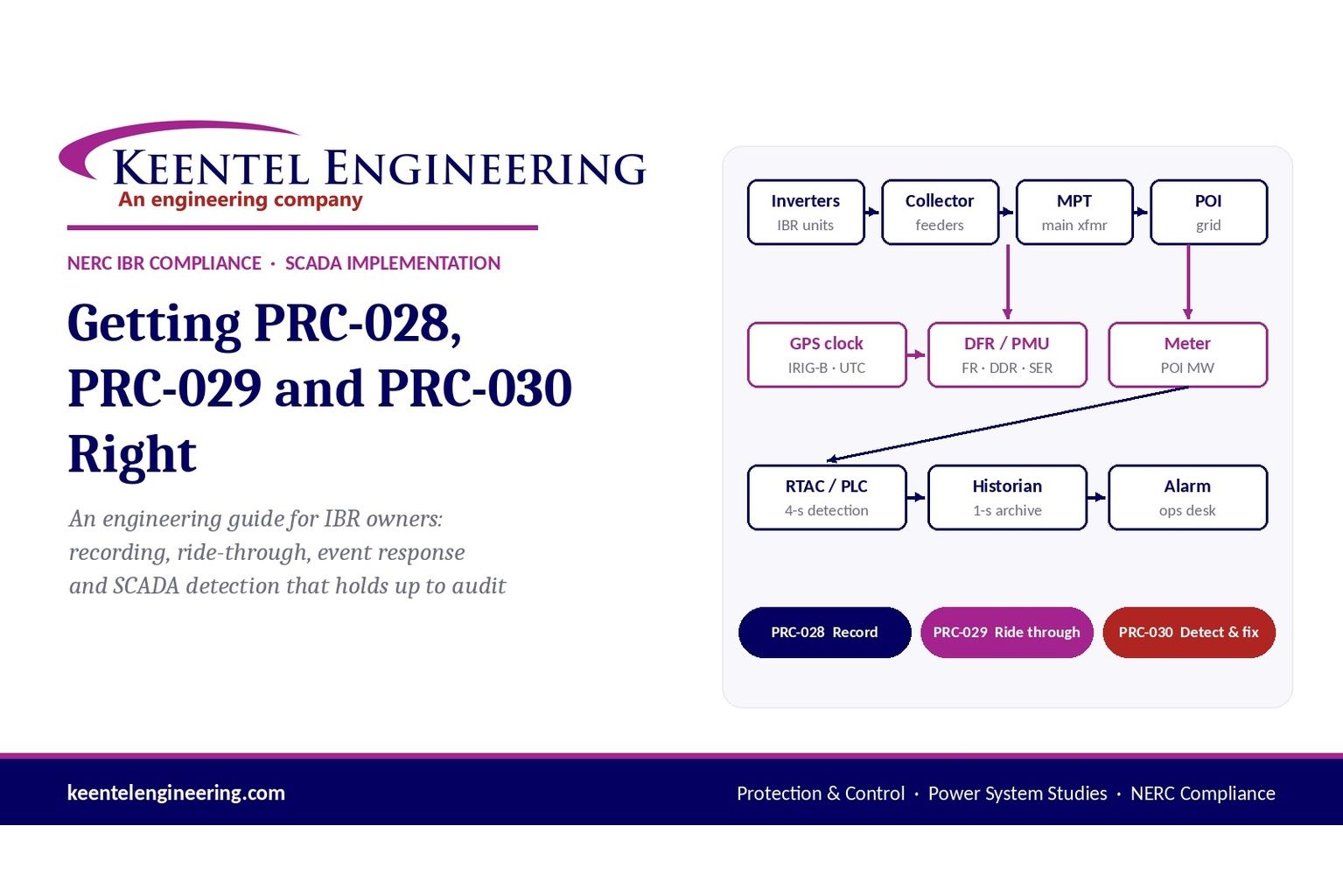
Engineering guide to PRC-028 disturbance recording, PRC-029 ride-through and PRC-030 event detection for inverter-based resources.
By SANDIP R PATEL
•
October 3, 2026
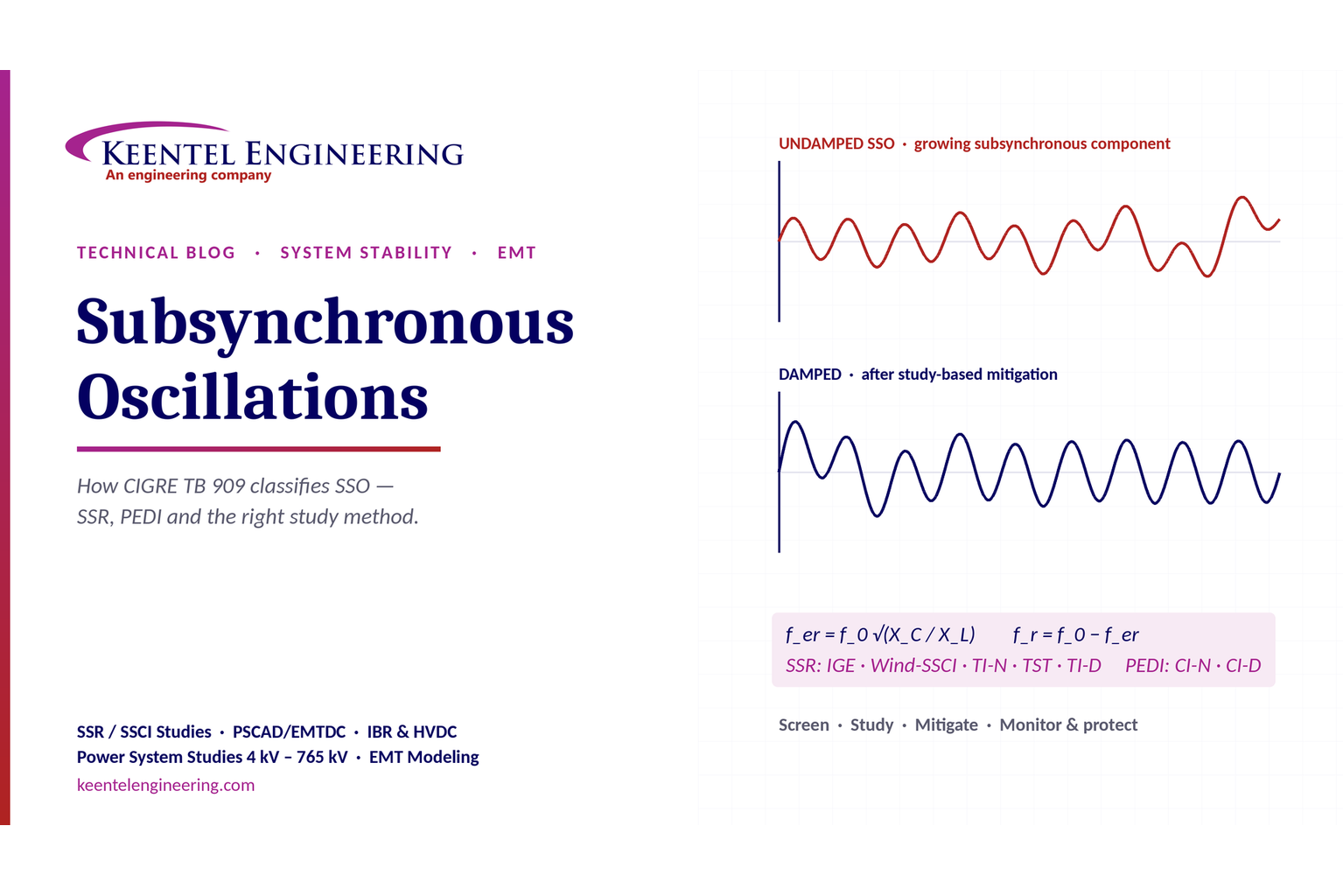
A practical guide to SSO classification, SSR, PEDI, Wind-SSCI, EMT analysis, mitigation and protection based on CIGRE TB 909.
By SANDIP R PATEL
•
October 3, 2026
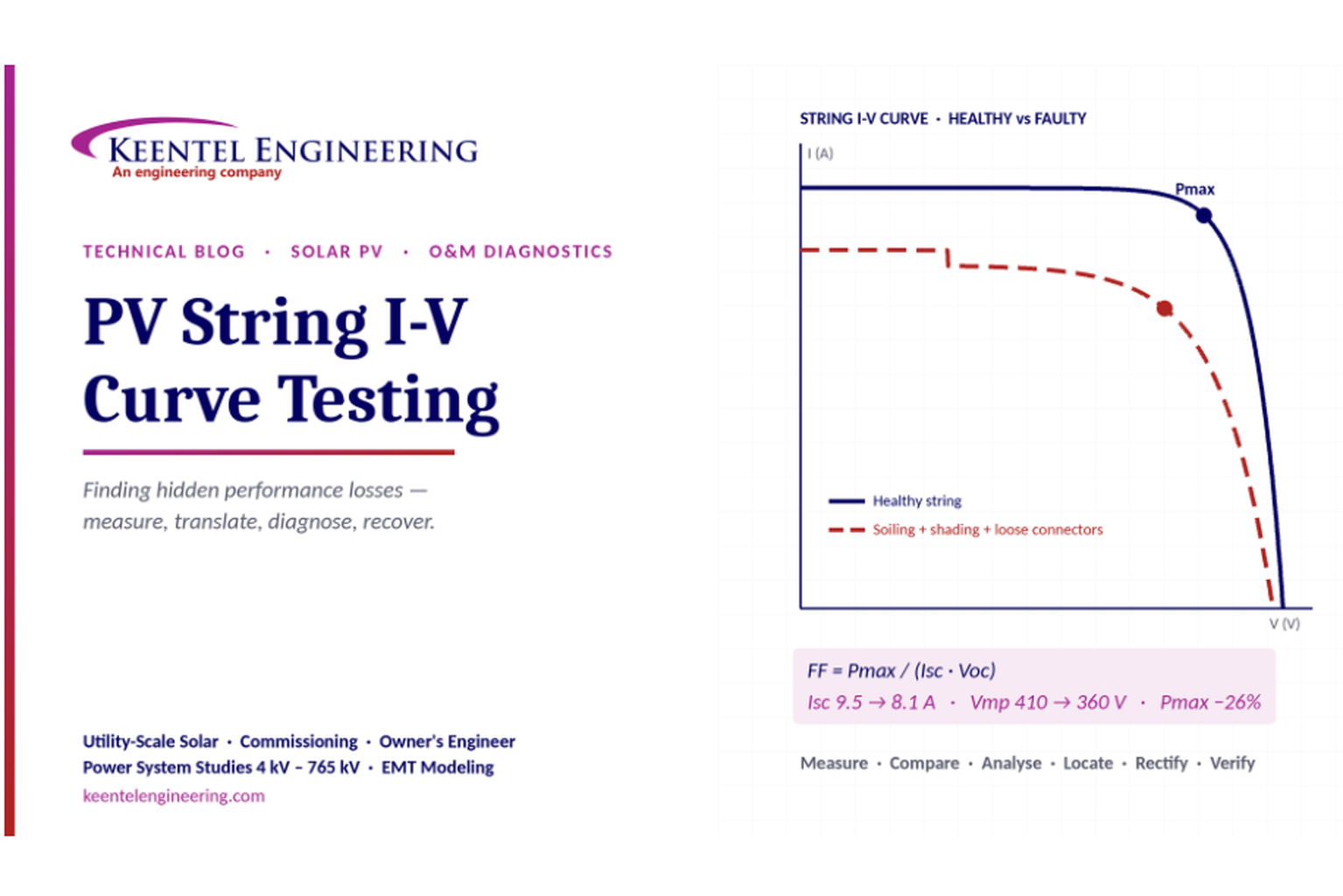
Learn how PV string I-V curve testing identifies hidden solar performance losses, including soiling, shading, mismatch, degradation, and wiring faults.
By SANDIP R PATEL
•
October 3, 2026
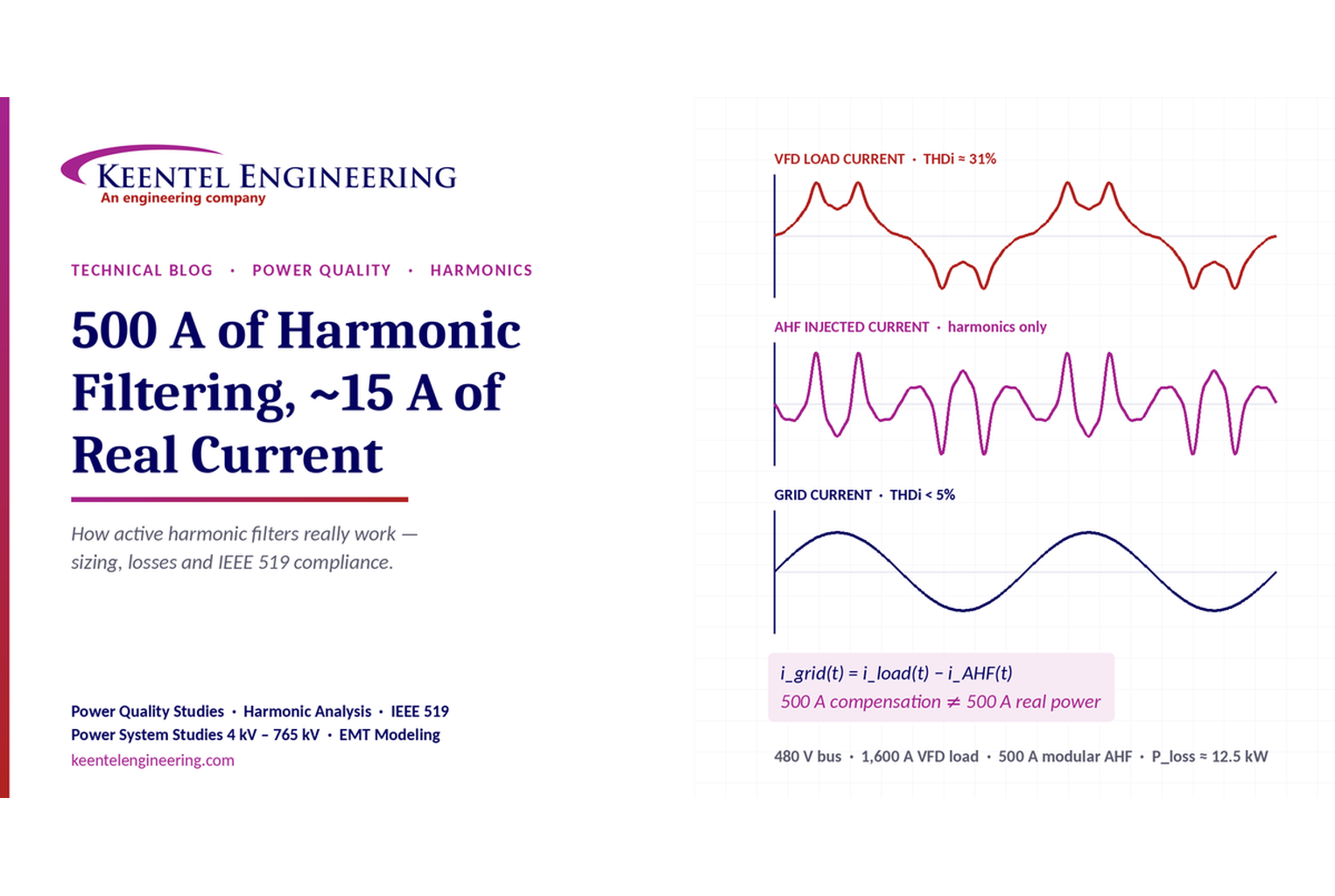
Learn how active harmonic filters work, how to size AHF systems, reduce VFD harmonics, calculate losses, and meet IEEE 519 TDD limits at the PCC.
By SANDIP R PATEL
•
October 3, 2026
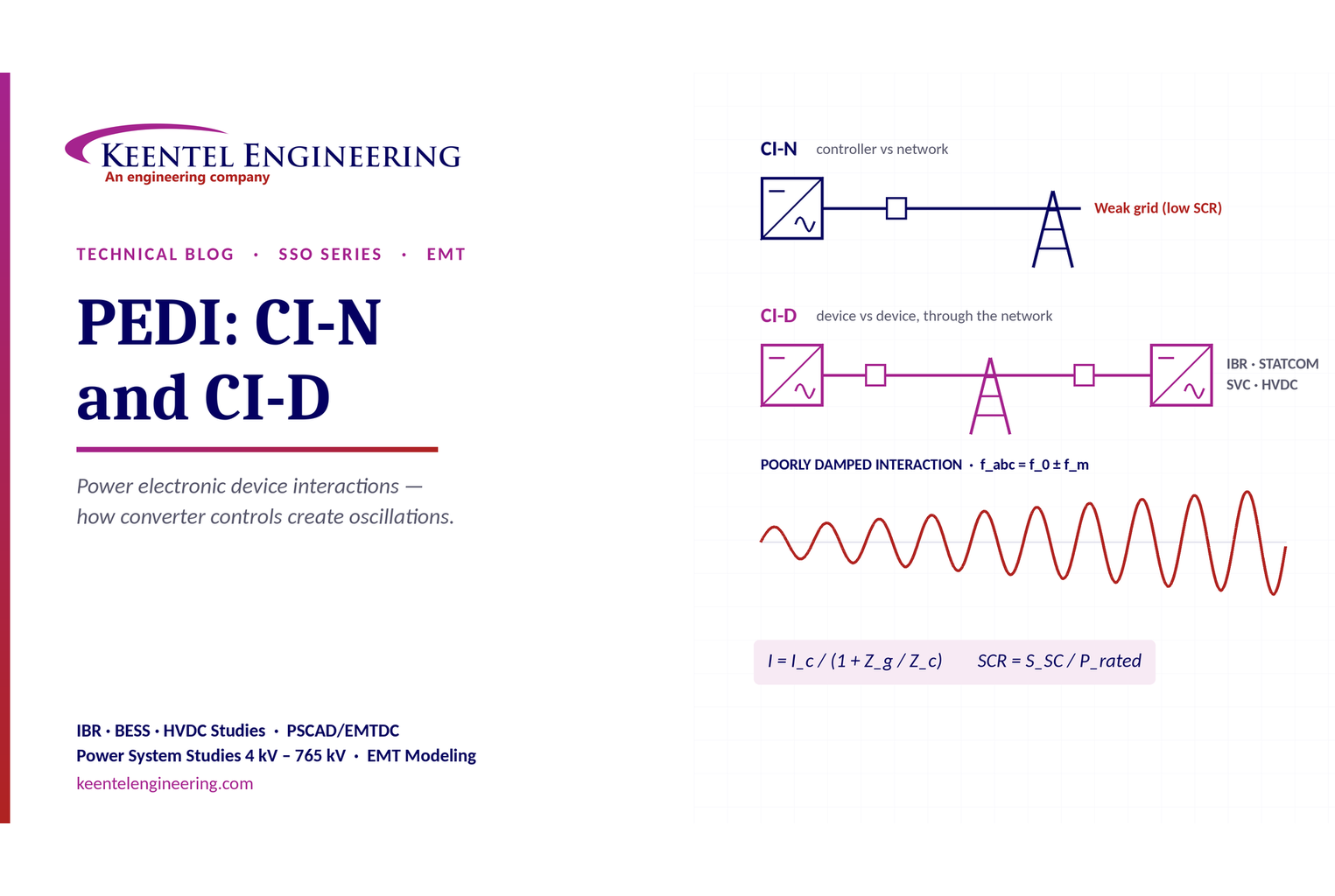
Learn power electronic device interactions (PEDI), including CI-N and CI-D, weak-grid stability, SCR, EMT studies, impedance analysis and mitigation for IBRs.
By SANDIP R PATEL
•
October 3, 2026
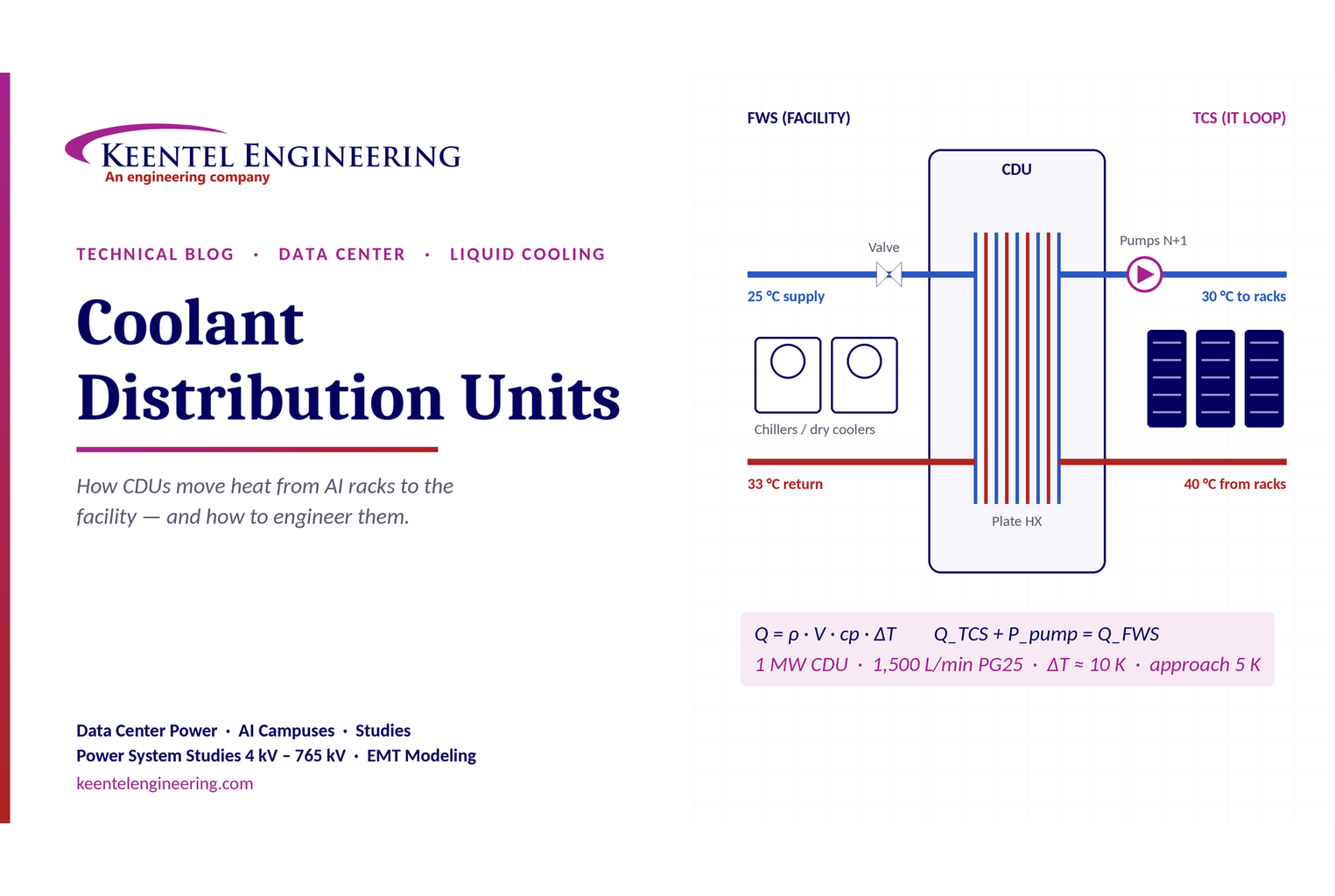
Learn how data center coolant distribution units (CDUs) work, including FWS and TCS loops, heat transfer, sizing, redundancy and liquid cooling for AI data centers.
By SANDIP R PATEL
•
October 3, 2026
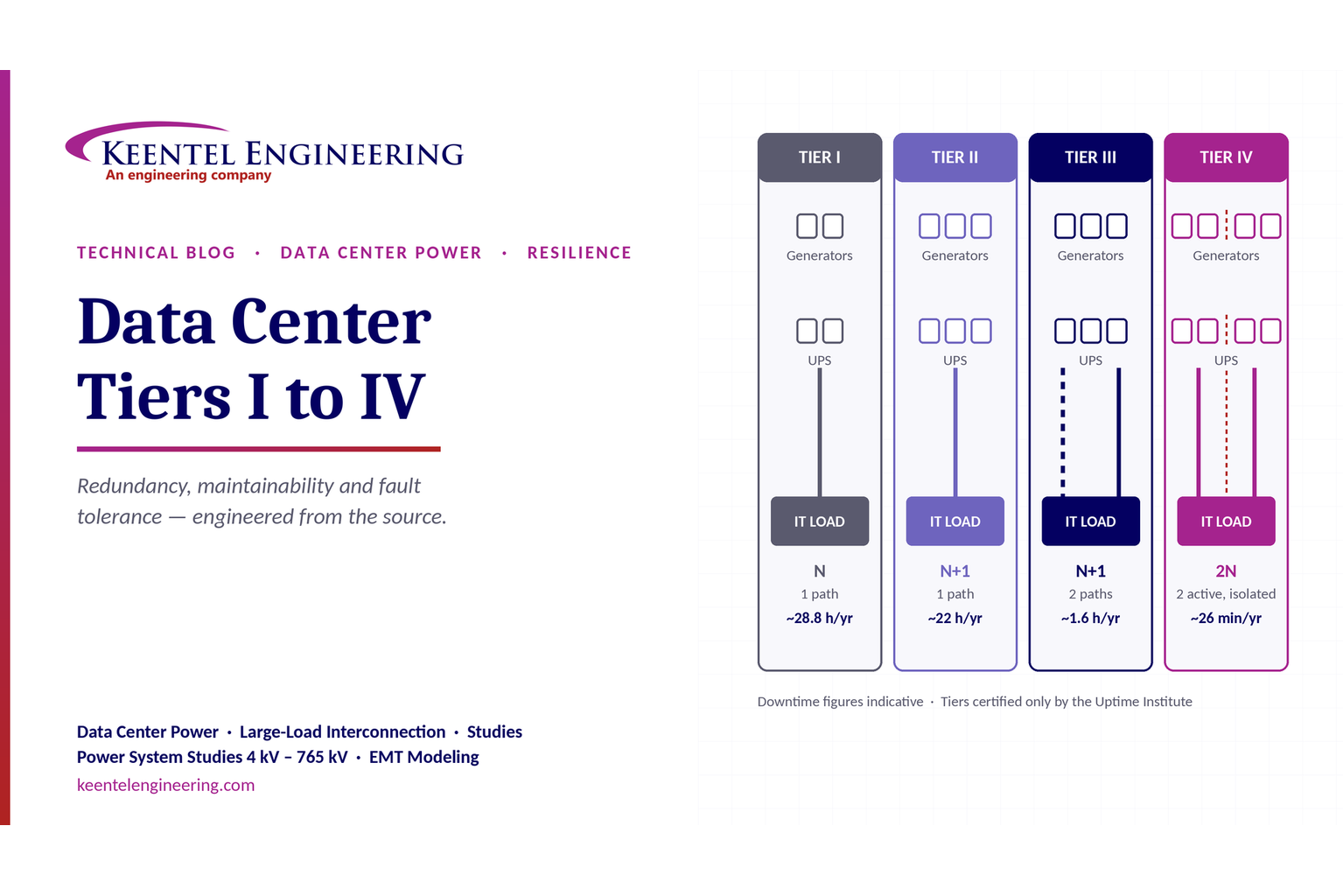
Compare Data Center Tiers I–IV, including redundancy, uptime, Tier III concurrent maintainability, Tier IV fault tolerance, UPS, generators and power design.
By SANDIP R PATEL
•
October 3, 2026
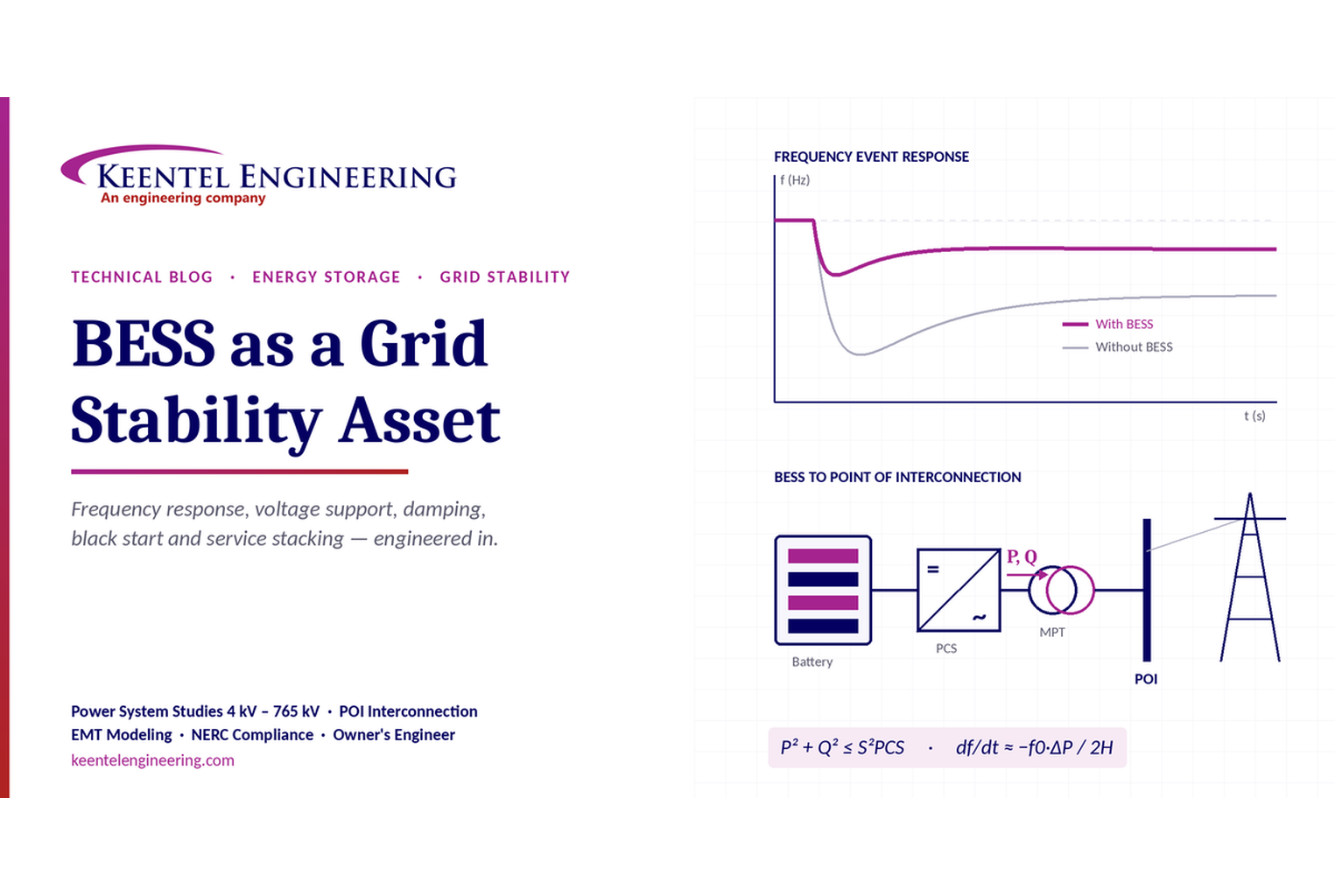
Learn how BESS supports grid stability through fast frequency response, voltage support, oscillation damping, black start, grid-forming controls and EMT studies.
By SANDIP R PATEL
•
October 3, 2026
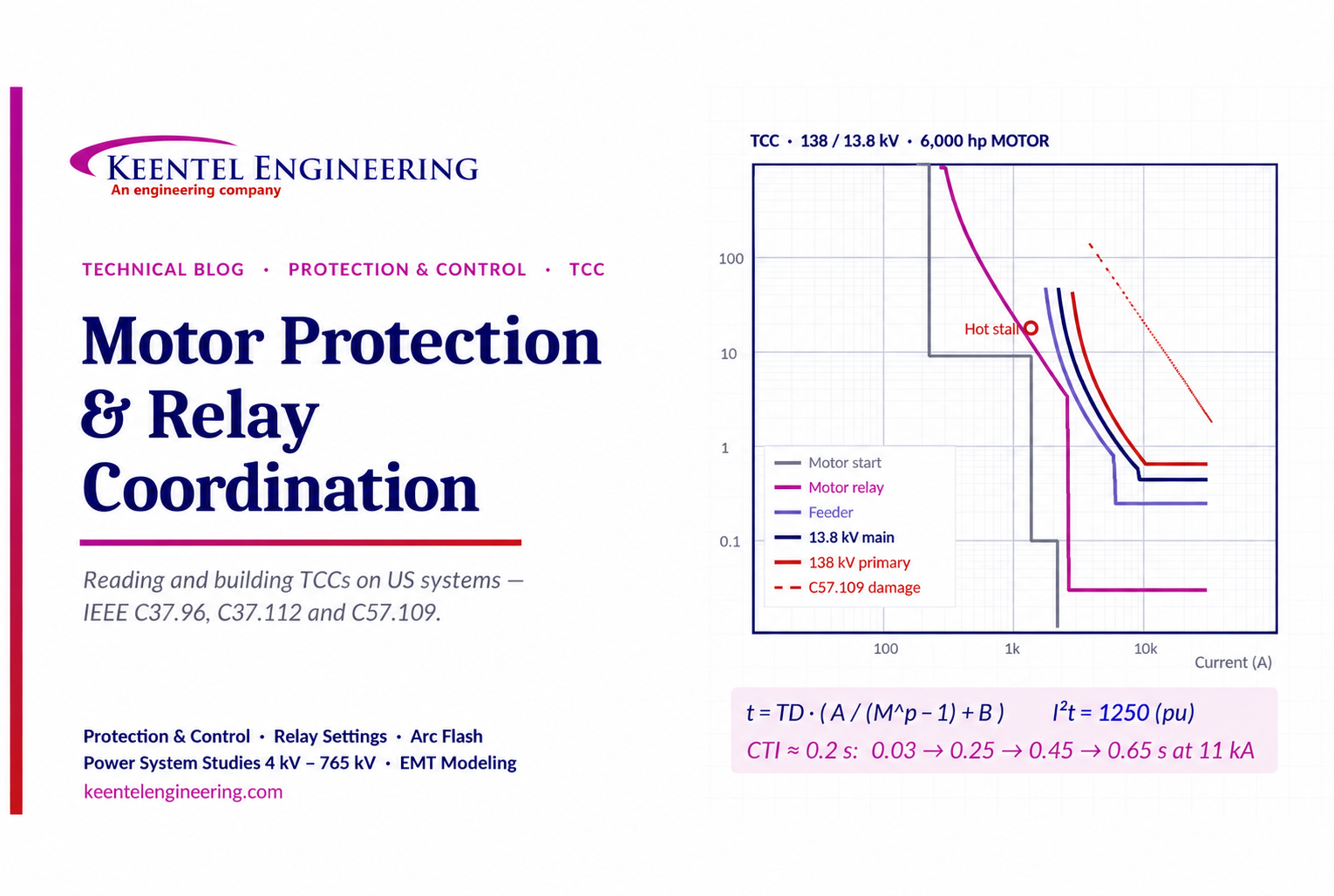
Learn motor protection and relay coordination using TCC curves, IEEE standards, transformer damage limits, CTI settings and a 138/13.8 kV example.