
A Coordinated Electric System Interconnection Review—the utility’s deep-dive on technical and cost impacts of your project.
Challenge: Frequent false tripping using conventional electromechanical relays
Solution: SEL-487E integration with multi-terminal differential protection and dynamic inrush restraint
Result: 90% reduction in false trips, saving over $250,000 in downtime
ERCOT enforces all of the above through simulation, which means your model is your compliance case. The bar is now high:
- Whole-facility scope. The model must represent everything the IT load, the UPS and power conversion, the cooling plant, the protection and control systems in formats compatible with ERCOT's study platforms (PSS/E, PSCAD, TSAT).
- Real control loops, not approximations. Generic textbook representations are unacceptable. The model must capture the actual inner control behavior of your power electronics.
- Hardware-validated converter models. For electronic loads, the PSCAD model must be benchmarked against actual hardware testing including voltage ride-through and subsynchronous response. A model assembled from standard PSCAD library blocks fails by definition, because a generic block has never been tested against your vendor's hardware. The good news: validation is a hardware-type test, so results for a given converter product are reusable across every facility that uses it.
- Format migration. Facilities that previously submitted the older composite load model (CMLD) format must transition to EPRI's PERC1 format.
- Three checkpoints. Models are reviewed before the stability study begins (no model, no study), before each quarterly stability assessment, and for electronic loads one final time before energization, when you must submit as-built models with a documented comparison against the previously studied data and a sworn attestation that the model matches actual field settings. ERCOT's review takes 10 business days, extendable by 20 put it on your critical path.
- A living obligation. Change your technology, controls, or relay settings in a way that affects ride-through including converting a crypto mining site to an AI data center — and you've triggered a new interconnection study, even if your megawatts don't change.
| Parameter | Detail |
|---|---|
| System | 230 kV / 138 kV transmission corridors, wind and wet-snow icing exposure |
| Data basis | 15 years of minute-resolution forced-outage records + regional weather observations |
| Core methods | Event grouping, MVA performance curves, time-to-95%-restore, area outage rate curves, fragility modeling, rerun-history benefits, exceedance and log-domain risk metrics |
| Headline result | ≈85% of maximum resilience benefit at 60% of original capital; worst-event restoration window cut from 11 days to 5 in rerun-history terms |
| Decision supported | Capital portfolio selection; resilience plan filing; post-investment verification framework |
| System / Topic | Governing Standard(s) | What It Controls |
|---|---|---|
| Overall plant electrical distribution | IEEE 141 (Red Book); IEEE 666 | Distribution architecture, voltage selection, design of generating station auxiliary service systems |
| Power system studies | IEEE 399 (Brown Book); IEEE 551 | Load flow, symmetrical/asymmetrical short circuit, motor starting methodologies down to the lowest LV panelboard |
| Protection & coordination | IEEE 242 (Buff Book); IEEE 3004.5; IEEE C37 series | Generator relaying (21, 59N, 87G), time-current coordination, selective clearing between LV and MV tiers |
| GSU / UAT / SST transformers | IEEE C57.12.00 and C57 family | Transformer ratings, impedance, testing, loading |
| HV switchyard breakers | IEEE C37.06 | AC high-voltage circuit breaker preferred ratings |
| MV switchgear (13.8 kV) | IEEE C37.20.2; IEEE C37.20.7 | Metal-clad construction, compartmentalization, vacuum breakers; arc-resistant design with plenum venting |
| MV cable | UL 1072; ICEA S-93-639 (NEMA WC 74) | Type MV-105 shielded cable, 133% insulation level for HRG systems |
| LV switchgear (480 V) | IEEE C37.13; UL 1558 | Metal-enclosed LV power circuit breaker switchgear to 635 V, draw-out ACBs with electronic trip units |
| Motor control centers | UL 845; NEMA ICS 18 | LV-MCC construction, MCCB/MCP protection for motors under ~200 HP |
| Motors | NEMA MG-1 | Motor performance, starting characteristics, service factors |
| DC & battery systems | IEEE 485; IEEE 946 | Lead-acid battery sizing (125/250 VDC), DC auxiliary system design |
| Grounding | IEEE 80; IEEE 142 (Green Book) | Ground grid step/touch potential limits; system grounding including high-resistance grounding |
| Lightning protection | IEEE 998 | Direct-stroke shielding of switchyard and outdoor generator structures |
| Arc flash & electrical safety | IEEE 1584; NFPA 70E | Incident energy calculation; worker safety boundaries and PPE |
| Fire protection | NFPA 850 | Fire protection and risk management for combustion turbine generating plants |
| Installation code | NEC (NFPA 70); NESC | Wiring methods inside the plant fence; overhead/outdoor clearances at the switchyard |
| Interconnection & compliance | FERC LGIP; NERC MOD-025/026/027, PRC-019/024/029, FAC-008 | Interconnection process, model validation, protection/ride-through coordination, facility ratings |
| IFC / Construction Deliverable | Purpose |
|---|---|
| Stamped IFC packages | Legal basis for construction; P.E. responsible charge |
| Final relay settings & TCCs | Protection as-installed matches the coordination study |
| Calculation archive | Owner records; NERC audit evidence trail |
| Commissioning procedures | Safe, sequenced energization; MOD field testing |
| Construction support | RFIs, field changes, FAT/SAT witness |
| As-builts & model handoff | Operating baseline; future study currency |
NERC's Large Loads Action Plan
Jul 08, 2026 | Blog
Integrating Gigawatt-Scale Data Centers and Computational Loads Reliably onto the Bulk Power System Q2 2026 Update, Compliance Deadlines, and What They Mean for Developers, Utilities, and Grid Operators
NERC's Large Loads Action Plan: The Compliance Clock Is Now Running for Gigawatt-Scale Data Centers
A single steel mill draws 100 to 200 megawatts. The computational load centers now requesting interconnection to the North American bulk power system (BPS) are asking for thousands of megawatts at a single point of interconnection — the equivalent of adding a city the size of San Francisco or Washington, D.C. to the grid, behind one substation fence. Some individual facilities now exceed 1 gigawatt of demand, roughly equal to 250,000 homes at peak consumption.
This is not a hypothetical planning scenario. It is happening now, it is concentrated in geographic pockets with favorable land and power availability, and it has already produced real reliability events. In response, the North American Electric Reliability Corporation (NERC) has moved from studying the problem to regulating it. The Large Loads Action Plan (LLAP) Q2 2026 Update, published in July 2026, confirms that NERC has issued a Level 3 Essential Action Alert with a mandatory response deadline of August 3, 2026, published a Reliability Guideline, opened the door to registering data centers as NERC entities, and put new Reliability Standards on track for Board adoption in December 2026.
For data center developers, utilities, transmission owners, and grid operators, the message is unambiguous: large-load interconnection is no longer just a transmission service and energy procurement exercise — it is now a reliability engineering and compliance discipline. This article breaks down what NERC has done, what is coming next, and how the engineering requirements translate into design, modeling, and commissioning obligations at the project level.
Why NERC Is Acting: The Reliability Problem in Plain Terms
Modern computational loads AI training campuses, hyperscale data centers, and cryptocurrency mining facilities behave differently from any load class the grid has served before. Three characteristics drive the risk:
- Unprecedented scale and concentration. Individual facilities exceeding 1 GW, clustered in a handful of regions, mean a single site can dominate the load profile of its transmission zone.
- Voltage-sensitive, self-protective behavior. The power electronics inside these facilities — server power supplies, UPS systems, and switchgear protection — are designed to protect the computational equipment, not the grid. When a routine transmission fault causes a voltage sag, these facilities can shed hundreds or thousands of megawatts in a fraction of a second, without any operator command.
- Behind-the-meter opacity. These dynamics occur inside the facility, beyond the visibility of the transmission operator. The result is a growing discrepancy between predicted and actual load response during disturbances.
NERC's incident reviews from January 2025 (simultaneous voltage-sensitive load reductions) and January 2026 (voltage-sensitive cryptocurrency load reductions) documented exactly this failure mode: grid disturbances triggering sudden, uncommanded large-load reductions that produced voltage and frequency excursions operators had to correct rapidly to preserve system stability. NERC has further observed customer-initiated load reductions and significant oscillations that develop within seconds — leaving little or no room for real-time operator response.
The core engineering issue:
when 1,500 MW of load disconnects in under a second, the grid experiences it much like the sudden loss of a large generator local voltage rises, frequency swings, and nearby generation and protection systems must absorb a transient that was never studied in the interconnection process. The fix is not operational heroics; it is accurate load modeling, disturbance ride-through design, and protection coordination engineered before energization.
From Task Force to Action Plan: How We Got Here
NERC established the Large Loads Task Force in August 2024 since evolved into the Large Loads Working Group (LLWG) and developed a structured work plan. Through 2025, NERC published its Characteristics and Risks of Emerging Loads report, issued a Level 2 Alert urging specific industry actions, hosted workshops and technical conferences, released a draft Reliability Guideline, and filed comments in FERC's Advance Notice of Proposed Rulemaking (ANOPR) on the reliable interconnection of large loads.
In Q1 2026, the tempo accelerated: NERC published its incident review on voltage-sensitive crypto load reductions, an assessment of gaps in existing practices and Reliability Standards, an aggregated report on the Level 2 Alert responses, appointed a Standards Drafting Team, and submitted a supplemental letter to FERC detailing an accelerated action plan. That acceleration culminated in the four major Q2 2026 actions below.
The Four Pillars of the Q2 2026 Update
1. Level 3 Essential Action Alert Responses Due August 3, 2026
On May 4, 2026, NERC issued a Level 3 Essential Action Alert: Computational Load Modeling, Studies, Instrumentation, Commissioning, Operations, Protection, and Control. Level 3 is NERC's highest alert tier — reserved for essential actions — and this is one of the rare instances NERC has invoked it. The alert outlines seven actions that registered entities must implement to address the immediate risks posed by computational loads interfacing with the BPS.
The scope embedded in the alert's title is effectively a checklist of the engineering lifecycle: dynamic load modeling, interconnection and system impact studies, disturbance instrumentation and monitoring, commissioning verification, operating procedures, and protection and control coordination. Registered entities — transmission operators, planners, and others serving these facilities — must submit their responses by August 3, 2026. An informational webinar on July 8 addresses frequently asked questions.
2. Reliability Guideline: Risk Mitigation for Emerging Large Loads
Published May 1, 2026, the Reliability Guideline recommends concrete actions not only for utilities and grid operators, but also for the companies behind emerging large loads — including equipment manufacturers. The intent is that industrial-scale consumers actively participate in practices that protect grid stability: sharing accurate load composition data, designing for voltage ride-through, coordinating protection settings, and supporting model validation.
Although the guideline is non-binding, NERC strongly urges adoption — and there is a commercial incentive to comply: NERC's own framing is that proactive planning and participation can enable more of these facilities to come online reliably and quickly. Developers who show up to the interconnection queue with validated dynamic models and ride-through-capable designs will move faster than those who treat these requirements as friction.
3. Registration Criteria: Data Centers as NERC-Registered Entities
This is the structural change with the longest-term consequences. NERC is revising its Rules of Procedure — specifically Appendix 5B, the Statement of Compliance Registry Criteria — to create a new registration category for Computational Load Entities. Entities meeting defined physical and electrical criteria would be required to register with NERC and comply with applicable Reliability Standards, just as generators, transmission owners, and balancing authorities do today.
The initial draft was posted for a 45-day stakeholder comment period on April 1, 2026. Initial comments produced meaningful insights that NERC will incorporate before the next comment period, anticipated in August 2026. A July 13 webinar will cover the registration process for entities likely to fall under the new criteria. For large data center owners and operators, this means an entirely new compliance program — registration, standards applicability, audits, and enforcement exposure — is on the horizon.
4. New Reliability Standards on a December 2026 Fast Track
In parallel, NERC is drafting Reliability Standards to define computational loads and establish measurable requirements for newly registered entities. The sequence so far: a Standard Authorization Request (SAR) with new computational-load definitions and a foundational standard was posted for comment in April 2026; the Standards Committee approved a final SAR and authorized drafting in May. The proposed standards will be posted for a 45-day comment period in August 2026, with an additional comment period in Q4, and the Reliability Standard is targeted for final Board approval and adoption in December 2026.
By NERC standards-development norms, this is extraordinarily fast — a reflection of how seriously NERC views the risk. Entities that wait for the final standard before adjusting their engineering practices will find themselves retrofitting compliance into projects already in the queue.
The Complete LLAP Timeline: 2024 Through 2027
The table below consolidates the full arc of NERC's actions, from task force formation through the standards filing targets.
| Period | Key Actions |
|---|---|
| 2024 | Large Loads Task Force established (August); work plan developed. Task force later evolves into the Large Loads Working Group (LLWG). |
| 2025 | Incident Review: Considering Simultaneous Voltage-Sensitive Load Reductions (Jan); two risk-mitigation workshops (Jun/Jul); Characteristics and Risks of Emerging Loads report (Jul); Large Loads panel at NERC Technical Session (Aug); Level 2 NERC Alert (Sep); Load Modeling Workshop (Oct); draft Reliability Guideline for comment (Nov); comments filed in FERC's large-load interconnection ANOPR (Nov). |
| Q1 2026 | Incident Review: Voltage-Sensitive Crypto Load Reductions (Jan); Emerging Large Loads Technical Conference (Feb); Assessment of Gaps in Existing Practices, Requirements, and Reliability Standards (Mar); Aggregated Report on Level 2 Alert responses (Mar); Standards Drafting Team appointed (Mar); LLAP webinar (Mar); supplemental letter to FERC detailing an accelerated action plan (Mar). |
| Q2 2026 | Draft registry criteria posted for comment (Apr); Standards Authorization Request posted (Apr); Reliability Guideline: Risk Mitigation for Emerging Large Loads published (May 1); Level 3 Essential Action Alert issued (May 4); standards drafting initiated (May). |
| Q3 2026 | Level 3 Alert webinar (Jul 8); Data Center Load Modeling Technical Reference published (Jul, subject to RSTC approval); Level 3 Alert responses due (Aug 3); ROP registry criteria posted for comment (Aug); glossary and standard(s) posted for comment (Aug); Data Center Load Modeling Workshop (Sep 15–16). |
| Q4 2026 | Registry criteria, glossary, and standard(s) posted for an additional comment period if needed (Oct 21); Board approval of registry criteria, glossary, and standard(s) requested (Dec 5); registry criteria, glossary, and standard(s) filed (Dec 31, subject to Board approval). |
| 2027 | Additional applicable Reliability Standards drafted and filed as needed. |
What This Means in Practice — By Stakeholder
| Date | Milestone | Who Should Care |
|---|---|---|
| Jul 8, 2026 | Level 3 Alert informational webinar | Registered entities preparing alert responses |
| Jul 13, 2026 | Registration criteria webinar | Data center owners/operators potentially meeting registration criteria |
| Jul 14, 2026 | LMWG meeting: Data Center Load Modeling Technical Reference approval; PERC2 model specification endorsement | Load modeling engineers, planning coordinators, OEMs |
| Jul 16, 2026 | Large Loads Working Group meeting | All large-load stakeholders |
| Aug 3, 2026 | Level 3 Essential Action Alert responses due | All registered entities in scope |
| Aug 2026 | Proposed Reliability Standards + registry criteria posted for 45-day comment | Developers, utilities, trade groups — comment window |
| Sep 15–16, 2026 | Data Center Load Modeling Workshop (two days) | Modeling and interconnection engineers |
| Oct 1, 2026 | LLWG meeting | All large-load stakeholders |
| Dec 5, 2026 | Board approval of registry criteria, glossary, standard(s) requested | Entities planning 2027 compliance programs |
| Dec 31, 2026 | Filing of registry criteria, glossary, standard(s) (subject to Board approval) | All future Computational Load Entities |
What This Means in Practice By Stakeholder
Data Center Developers and Owners
The era of showing up to a utility with only a load letter and an energization date is over. Expect interconnecting utilities and planning coordinators to require validated dynamic load models (increasingly aligned to the forthcoming Data Center Load Modeling Technical Reference and the PERC2 model specification), documented voltage ride-through behavior for the facility's power electronics and protection, disturbance monitoring instrumentation at the POI, and commissioning test plans that verify as-built behavior against the studied model. Developers should also track the registration criteria closely — facilities above the eventual physical/electrical thresholds will inherit direct NERC compliance obligations.
Utilities, Transmission Owners, and Planning Coordinators
The Level 3 Alert puts the immediate burden here: seven essential actions spanning modeling, studies, instrumentation, commissioning, operations, protection, and control, with responses due August 3, 2026. Practically, that means auditing which large loads are on your system and in your queue, assessing whether current interconnection study practices capture voltage-sensitive load loss as a contingency, verifying protection coordination at large-load POIs, and closing the gap between forecasted and actual load dynamic behavior through measurement and model validation.
Equipment Manufacturers
The Reliability Guideline explicitly reaches OEMs — server power supply, UPS, VFD, and switchgear vendors whose default protection and control settings determine how facilities respond to grid disturbances. Ride-through capability, configurable trip settings, and transparent equipment response characteristics are becoming procurement differentiators.
The Engineering Response: How Keentel Engineering Supports LLAP Readiness
Keentel Engineering has long advocated a principle that NERC's action plan now codifies: grid interconnection and reliability compliance are first-order design inputs, not late-stage administrative steps. Our power systems engineering practice maps directly onto the obligations the LLAP creates:
- Dynamic load modeling and EMT studies. Development and validation of dynamic and electromagnetic transient (EMT/PSCAD) models for large computational facilities, including composite load representation, power-electronic interface behavior, and alignment with emerging references such as the Data Center Load Modeling Technical Reference and PERC2 specification.
- Interconnection and system impact studies. POI selection, load flow, short circuit, stability, and voltage-sensitivity studies that treat sudden large-load loss as a studied contingency — for both the developer's application and the utility's system assessment.
- Voltage ride-through and protection coordination. Facility-level ride-through design reviews, protection setting coordination between the utility POI and facility switchgear, and mitigation of uncommanded load-shed behavior — the exact failure mode documented in NERC's 2025 and 2026 incident reviews.
- Substation and transmission design. 30%/60%/90%/IFC design of the substations, transmission interconnections, and metering/instrumentation infrastructure that gigawatt-scale campuses require — with disturbance monitoring designed in from the start.
- Commissioning and energization support. Commissioning test plans and field verification that as-built facility behavior matches the models submitted in the interconnection process — a core theme of the Level 3 Alert.
- NERC compliance program support. Level 3 Alert response preparation, gap assessments against the Reliability Guideline, comment-period technical support, and readiness planning for prospective Computational Load Entity registration and the December 2026 standards.
The bottom line: NERC's timeline is compressed by design. Level 3 Alert responses are due August 3, 2026; proposed standards post in August; Board adoption is targeted for December. Whether you are a developer with gigawatts in the queue or a utility serving them, the entities that engineer for these requirements now will interconnect faster, operate more reliably, and avoid retrofitting compliance later.
Keentel Engineering provides power system studies,
grid interconnection engineering, substation and transmission design, EMT/PSCAD modeling, and NERC compliance support from offices in Tampa, Austin, Sacramento, and Baltimore. Contact our team to discuss LLAP readiness for your facility or system.
Frequently Asked Questions: NERC's Large Loads Action Plan
Q1. What is NERC's Large Loads Action Plan (LLAP)?
The LLAP is NERC's coordinated program to integrate large computational loads — AI data centers, hyperscale campuses, and cryptocurrency mining facilities — reliably onto the bulk power system. It combines incident analysis, alerts, a Reliability Guideline, new registration criteria for Computational Load Entities, and new Reliability Standards, executed with industry collaboration through the Large Loads Working Group. The effort began with the Large Loads Task Force in August 2024 and has accelerated sharply through 2025 and 2026.
Q2. Why are data centers a grid reliability concern at all? They consume power — they don't generate it.
The risk is not consumption; it is dynamic behavior. These facilities are powered through voltage-sensitive electronics designed to protect servers, not the grid. During a routine transmission disturbance — a fault-induced voltage sag, for example — a facility can shed its entire load in a fraction of a second without operator command. When the facility is 500 MW to over 1,000 MW, that sudden load loss behaves like the sudden loss of a large generator in reverse: voltage rises, frequency swings locally, and operators must respond within seconds. NERC's January 2025 and January 2026 incident reviews documented exactly these events, including simultaneous reductions across multiple facilities and oscillations developing within seconds.
Q3. How big are these loads compared to traditional industrial customers?
A large steel mill — historically among the biggest single loads on the grid — draws roughly 100 to 200 MW. Individual computational facilities now request interconnections exceeding 1 GW (1,000 MW), equivalent to approximately 250,000 homes at peak. Aggregated campuses in a single load center can reach thousands of megawatts — comparable to the demand of a city like San Francisco or Washington, D.C., concentrated at one point on the transmission system.
Q4. What is the Level 3 Essential Action Alert, and why does the level matter?
NERC alerts come in escalating tiers. Level 1 is advisory, Level 2 recommends specific actions, and Level 3 — 'Essential Actions' — is the highest tier, rarely invoked, and signals that NERC considers the actions essential to reliability. On May 4, 2026, NERC issued a Level 3 alert titled 'Computational Load Modeling, Studies, Instrumentation, Commissioning, Operations, Protection, and Control,' directing seven actions that registered entities must implement. NERC escalated to Level 3 after observing customer-initiated large-load reductions and significant oscillations occurring in seconds — too fast for real-time operator response. The progression from the September 2025 Level 2 Alert to a Level 3 in eight months shows how quickly NERC's risk assessment hardened.
Q5. Who must respond to the Level 3 Alert, and when?
NERC-registered entities — the transmission operators, transmission planners, planning coordinators, and related functional entities whose systems serve or study these loads — must submit responses by August 3, 2026. NERC hosted an informational webinar on July 8, 2026 to address frequently asked questions. Data center owners are not (yet) registered entities, but they should expect the registered entities serving them to pass through data requests: load composition details, ride-through characteristics, protection settings, and model information.
Q6. What does the Reliability Guideline: Risk Mitigation for Emerging Large Loads require?
Published May 1, 2026, the guideline recommends actions for utilities, grid operators, large-load companies, and equipment manufacturers to ensure industrial-scale consumers actively participate in grid-stability practices. It is non-binding — but NERC strongly urges adoption, and its framing carries a practical incentive: proactive planning and participation can enable facilities to come online more reliably and more quickly. In a queue-constrained market, demonstrated conformance to the guideline is emerging as a de facto expectation in utility interconnection discussions.
Q7. Will data centers really have to register with NERC like utilities and generators do?
That is the direction of travel. NERC is revising its Rules of Procedure — Appendix 5B, the Statement of Compliance Registry Criteria — to create a Computational Load Entity registration category. Entities meeting specific physical and electrical criteria would be required to register and comply with applicable Reliability Standards, subjecting them to NERC's compliance monitoring and enforcement framework. The first draft was posted for a 45-day comment period on April 1, 2026; a revised draft incorporating stakeholder comments is anticipated in August 2026; Board approval is targeted for December 5, 2026, with filing by December 31, 2026, subject to Board approval. The specific MW/voltage thresholds will be defined through that process — which is precisely why prospective registrants should participate in the comment periods now.
Q8. What new Reliability Standards are coming, and on what schedule?
NERC posted a Standard Authorization Request (SAR) in April 2026 containing new definitions for computational loads and a foundational standard. The Standards Committee approved the final SAR and authorized drafting in May 2026. Proposed standards will post for a 45-day comment period in August 2026, with an additional comment period in Q4 2026 (October 21, if needed). Final Board approval and adoption is targeted for December 2026, with additional applicable standards drafted and filed through 2027 as needed. By NERC drafting norms, a roughly eight-month SAR-to-adoption timeline is exceptionally fast.
Q9. What are the PERC2 model and the Data Center Load Modeling Technical Reference?
These are the technical instruments for closing the modeling gap. The Data Center Load Modeling Technical Reference — scheduled for Load Modeling Working Group approval on July 14, 2026 and publication in July subject to RSTC approval — will give planners a common technical basis for representing data center behavior in studies. The PERC2 model specification, up for LMWG endorsement at the same meeting, provides a standardized dynamic model structure for these power-electronic-interfaced loads. Together they aim to replace generic static load assumptions with models that actually capture voltage-sensitive trip behavior. A two-day Data Center Load Modeling Workshop follows on September 15–16, 2026.
Q10. We're a data center developer with projects in the interconnection queue. What should we do right now?
Five actions: (1) inventory the dynamic behavior of your facility design — UPS ride-through settings, server power supply undervoltage trip points, protection philosophy — so you can answer utility data requests stemming from the Level 3 Alert; (2) commission or validate a dynamic load model consistent with the emerging technical reference and PERC2 direction; (3) review your single-line and protection design for voltage ride-through capability rather than instantaneous shed; (4) track and comment on the August 2026 registration criteria and standards postings — the thresholds set there will determine your compliance exposure; and (5) build commissioning test plans that verify as-built disturbance response against your submitted models. Facilities that arrive study-ready interconnect faster.
Q11. We're a utility/transmission owner. What does the Level 3 Alert practically require of us?
The alert's seven actions span the engineering lifecycle indicated in its title: computational load modeling, studies, instrumentation, commissioning, operations, protection, and control. In practice that means identifying and characterizing all existing and queued large computational loads on your system; incorporating sudden voltage-sensitive load loss as a studied contingency in planning and interconnection studies; deploying disturbance monitoring at large-load POIs; verifying facility behavior at commissioning; updating operating procedures for large-load loss events; and coordinating protection between the POI and the facility. Responses are due August 3, 2026.
Q12. Does this affect cryptocurrency mining loads or only AI data centers?
Both — and other large computational loads. NERC's definition of computational loads expressly includes cryptocurrency and artificial intelligence facilities. In fact, the January 2026 incident review specifically addressed voltage-sensitive cryptocurrency load reductions. Crypto loads add a further wrinkle: they routinely self-curtail in response to market prices or internal decisions, so demand can shift by hundreds of megawatts without any grid disturbance at all — another uncommanded change operators must manage.
Q13. Is any of this legally binding today?
It is layered. The Reliability Guideline is non-binding (though strongly urged). The Level 3 Alert requires registered entities to report on essential actions, and their responses are closely tracked. The registration criteria and Reliability Standards, once approved by the NERC Board and filed with FERC (targeted December 2026) and approved by regulators, become mandatory and enforceable, with the compliance and penalty framework that applies to all NERC standards. FERC is separately engaged through the large-loads ANOPR docket, to which NERC filed comments in November 2025 and a supplemental accelerated-action-plan letter in March 2026 — so parallel federal action on large-load interconnection rules remains a live possibility.
Q14. How does the LLAP interact with FERC interconnection processes and regional requirements?
They are complementary layers. FERC's LGIP framework and regional processes (PJM, ERCOT, MISO, CAISO, NYISO, and others) govern how loads and generators obtain interconnection service; NERC's LLAP governs the reliability behavior of the load once connected and the obligations of the entities that plan and operate around it. Several regions are also developing their own large-load interconnection requirements in parallel — ERCOT's large-load framework is a prominent example. Developers should expect requirements to arrive from three directions simultaneously: the interconnecting utility/RTO, NERC standards, and potentially FERC rulemaking. Designing once, to the most rigorous common denominator, is cheaper than iterating through three retrofits.
Q15. How can stakeholders participate in shaping these requirements?
Two working groups offer direct engagement: the Large Loads Working Group (LLWG), which meets July 16 and October 1, 2026 and focuses on reliability impacts and process gaps; and the Load Modeling Working Group (LMWG), which meets July 14, 2026 and hosts the September 15–16 modeling workshop. Formal comment periods are equally important: the registration criteria and proposed standards post for 45-day comment in August 2026, with a possible additional comment period opening October 21. Entities that will live under these rules should be commenting on them now — the thresholds, definitions, and measurable requirements are being written this year.
Q16. How can Keentel Engineering help our organization prepare?
Keentel Engineering supports both sides of the meter. For developers and owners: dynamic and EMT/PSCAD load model development and validation, voltage ride-through and protection design reviews, interconnection study support, substation and transmission design through IFC, commissioning test planning, and registration-readiness assessments. For utilities and planning entities: Level 3 Alert response engineering, large-load system impact and contingency studies, disturbance monitoring and instrumentation design, protection coordination at large-load POIs, and NERC compliance program support. Our consistent position — that interconnection and reliability compliance are first-order design inputs — is now, in effect, NERC policy. Contact our team through any of our offices in Tampa, Austin, Sacramento, or Baltimore.
Disclaimer
This document was prepared by Keentel Engineering for general informational and educational purposes only. Keentel Engineering is an independent engineering consulting firm and is not affiliated with, endorsed by, or sponsored by the North American Electric Reliability Corporation (NERC), the Federal Energy Regulatory Commission (FERC), or any regional transmission organization, independent system operator, or regulatory authority referenced herein. All trademarks, program names, and publication titles referenced — including the Large Loads Action Plan (LLAP) — are the property of their respective owners and are used solely for identification and commentary.
The regulatory milestones, deadlines, and requirements summarized in this document are based on publicly available NERC materials current as of July 2026, including the Large Loads Action Plan Q2 2026 Update. Regulatory schedules, comment periods, and standard content are subject to change; several milestones are expressly conditional (e.g., subject to RSTC or Board approval). Readers should consult NERC's official publications and their own legal and compliance advisors before making decisions based on this material. This document does not constitute legal, regulatory, or compliance advice.
For project-specific engineering support, contact Keentel Engineering — Tampa, FL (HQ) | Austin, TX | Sacramento, CA | Baltimore, MD.

About the Author:
Sandip "Sonny" R. Patel, P.E.
IEEE Senior Member · Founder & CEO, Keentel Engineering
In 1995, Sonny Patel earned his Electrical Engineering degree from the University of Illinois. But degrees don't build legacies — action does.
For three decades, he has worked the power industry from every side of the table: 16 years as a utility engineer at Exelon/Commonwealth Edison; generation leadership across hydroelectric, industrial steam turbine, and a 9 GW renewable fleet; NERC Regional Entity Senior Compliance Engineer and Audit Team Lead, auditing some of the nation's largest utilities; and testing and commissioning lead on equipment up to 765 kV — the very top of the North American grid.Utility. Generator. Regulator. Consultant. Few engineers have seen all four seats. Fewer still have sat in them.
His experience spans nuclear, hydro, conventional generation, renewables, oil and gas, mining — and today's data centers, where he is authoring a three-book series on data center design. He is a Licensed Professional Engineer in six states and a Licensed Electrical Contractor in Florida (Unlimited EC) — he doesn't just design the work; he's qualified to stand behind its execution.Today, as Founder and CEO of Keentel Engineering, Sonny leads a nationwide team of engineers delivering substation design, power system studies, NERC compliance, and commissioning — done right, coast to coast.Three decades. Every side of the table. One standard: accountable engineering.
Services

Let's Discuss Your Project
Let's book a call to discuss your electrical engineering project that we can help you with.
About the Author:
Sandip "Sonny" R. Patel, P.E.
IEEE Senior Member · Founder & CEO, Keentel Engineering
In 1995, Sonny Patel earned his Electrical Engineering degree from the University of Illinois. But degrees don't build legacies — action does.
For three decades, he has worked the power industry from every side of the table: 16 years as a utility engineer at Exelon/Commonwealth Edison; generation leadership across hydroelectric, industrial steam turbine, and a 9 GW renewable fleet; NERC Regional Entity Senior Compliance Engineer and Audit Team Lead, auditing some of the nation's largest utilities; and testing and commissioning lead on equipment up to 765 kV — the very top of the North American grid.
Utility. Generator. Regulator. Consultant. Few engineers have seen all four seats. Fewer still have sat in them.
His experience spans nuclear, hydro, conventional generation, renewables, oil and gas, mining — and today's data centers, where he is authoring a three-book series on data center design. He is a Licensed Professional Engineer in six states and a Licensed Electrical Contractor in Florida (Unlimited EC) — he doesn't just design the work; he's qualified to stand behind its execution.
Today, as Founder and CEO of Keentel Engineering, Sonny leads a nationwide team of engineers delivering substation design, power system studies, NERC compliance, and commissioning — done right, coast to coast.Three decades. Every side of the table. One standard: accountable engineering.
Leave a Comment
Thank you for contacting us.
We will get back to you as soon as possible.
We will get back to you as soon as possible.
Oops, there was an error sending your message.
Please try again later.
Please try again later.
Related Posts
By SANDIP R PATEL
•
October 6, 2026
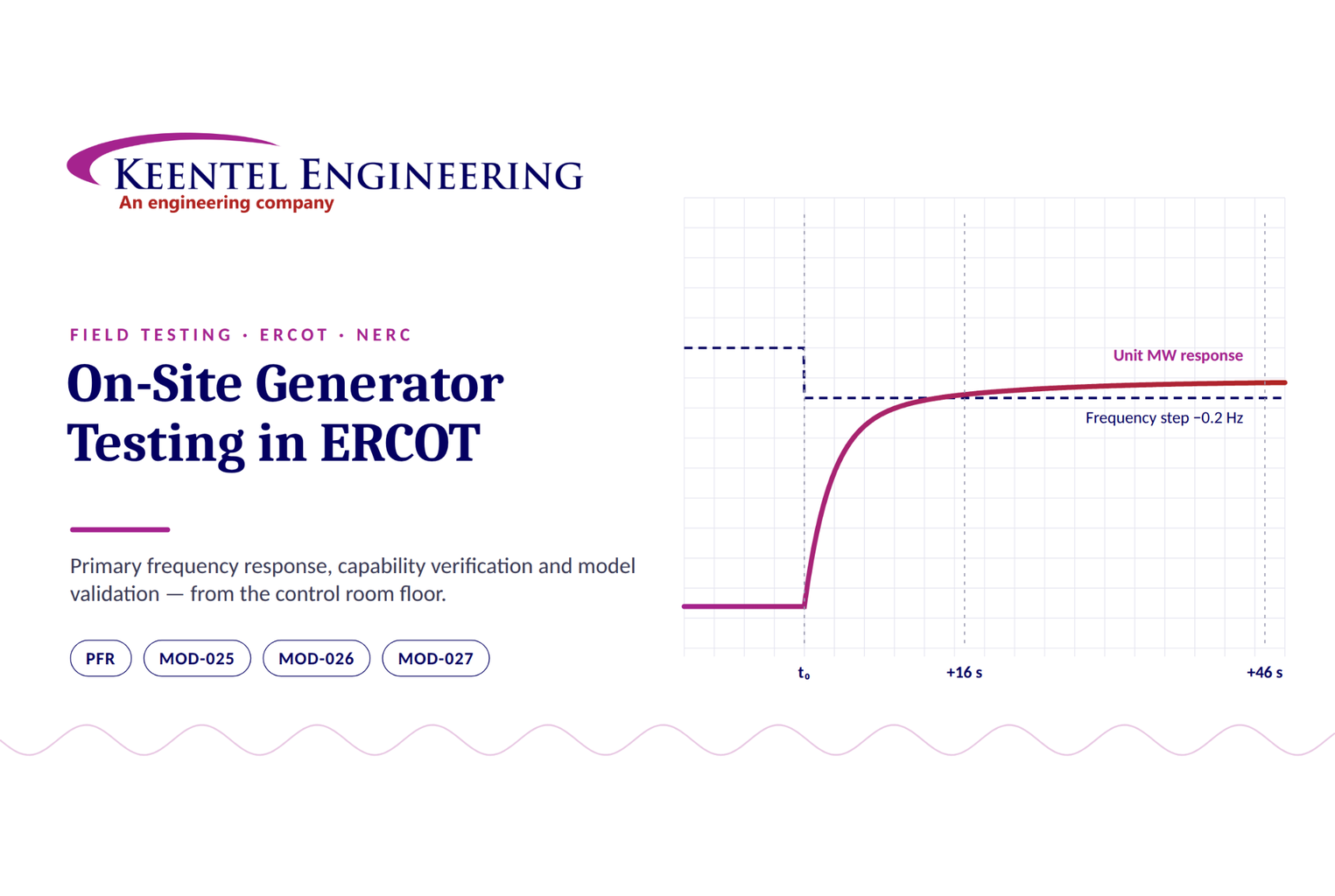
Learn ERCOT generator testing for PFR, MOD-025 and MOD-026/027, including staged tests, capability verification, dynamic models and field testing.
By SANDIP R PATEL
•
October 3, 2026
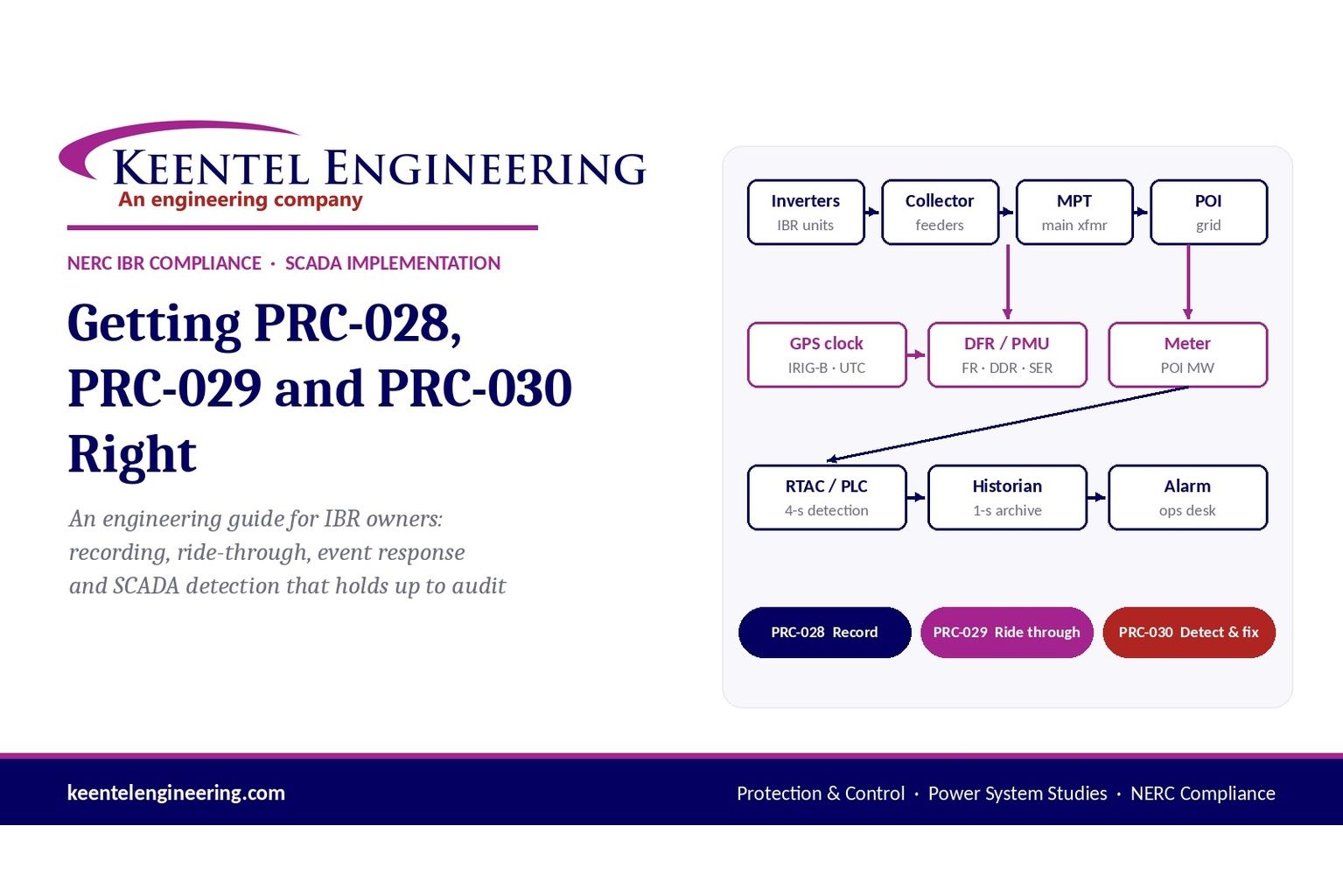
Engineering guide to PRC-028 disturbance recording, PRC-029 ride-through and PRC-030 event detection for inverter-based resources.
By SANDIP R PATEL
•
October 3, 2026
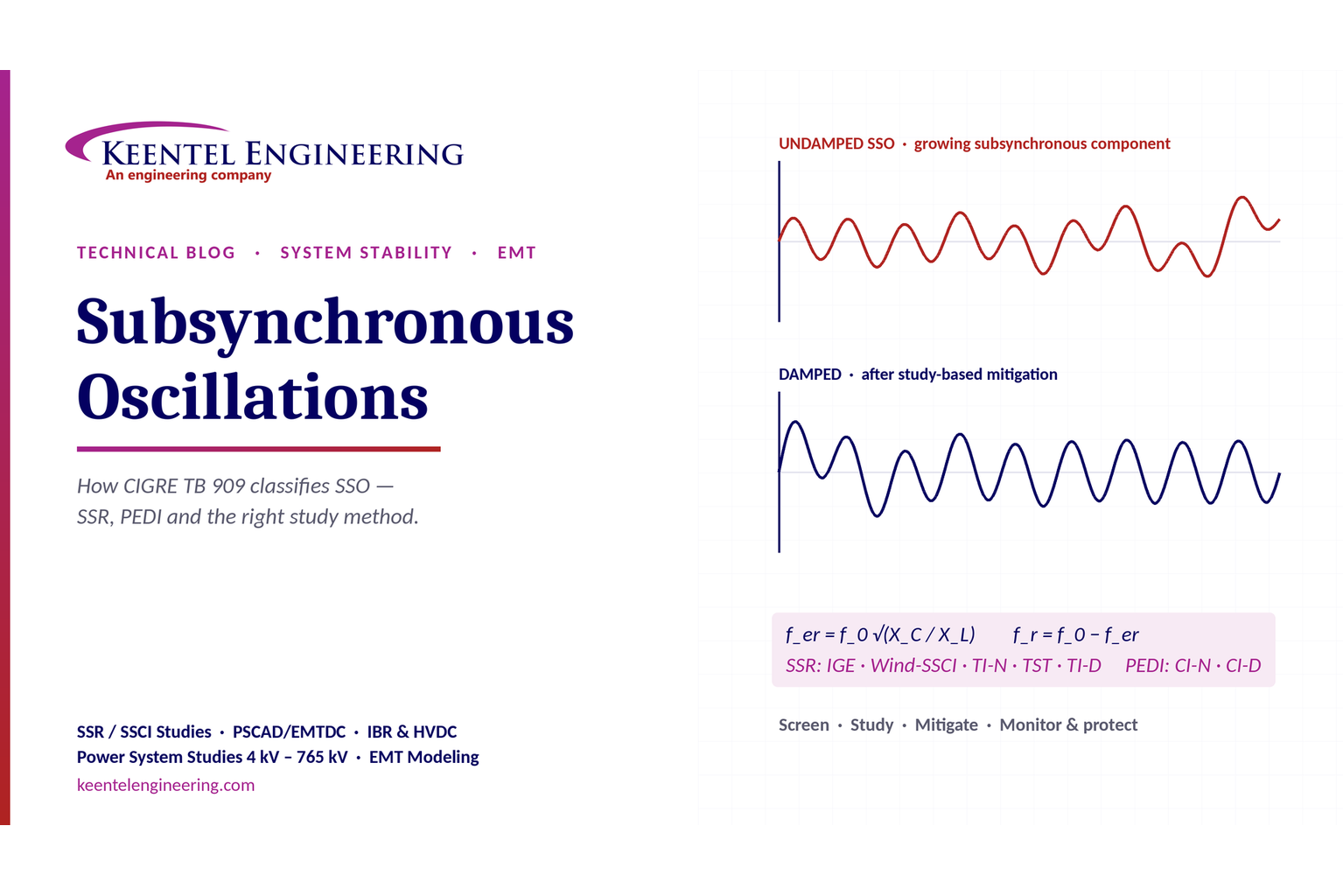
A practical guide to SSO classification, SSR, PEDI, Wind-SSCI, EMT analysis, mitigation and protection based on CIGRE TB 909.
By SANDIP R PATEL
•
October 3, 2026
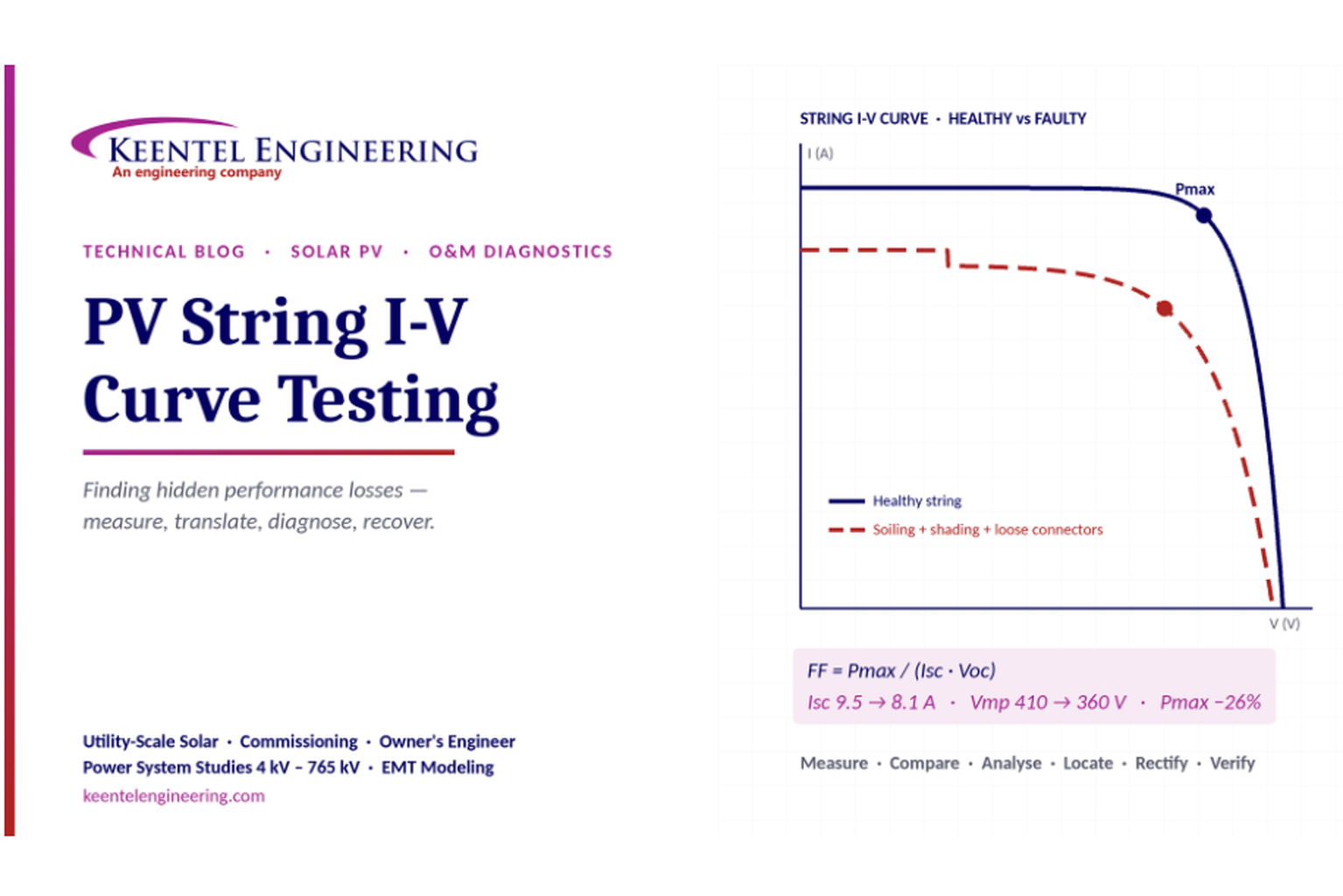
Learn how PV string I-V curve testing identifies hidden solar performance losses, including soiling, shading, mismatch, degradation, and wiring faults.
By SANDIP R PATEL
•
October 3, 2026
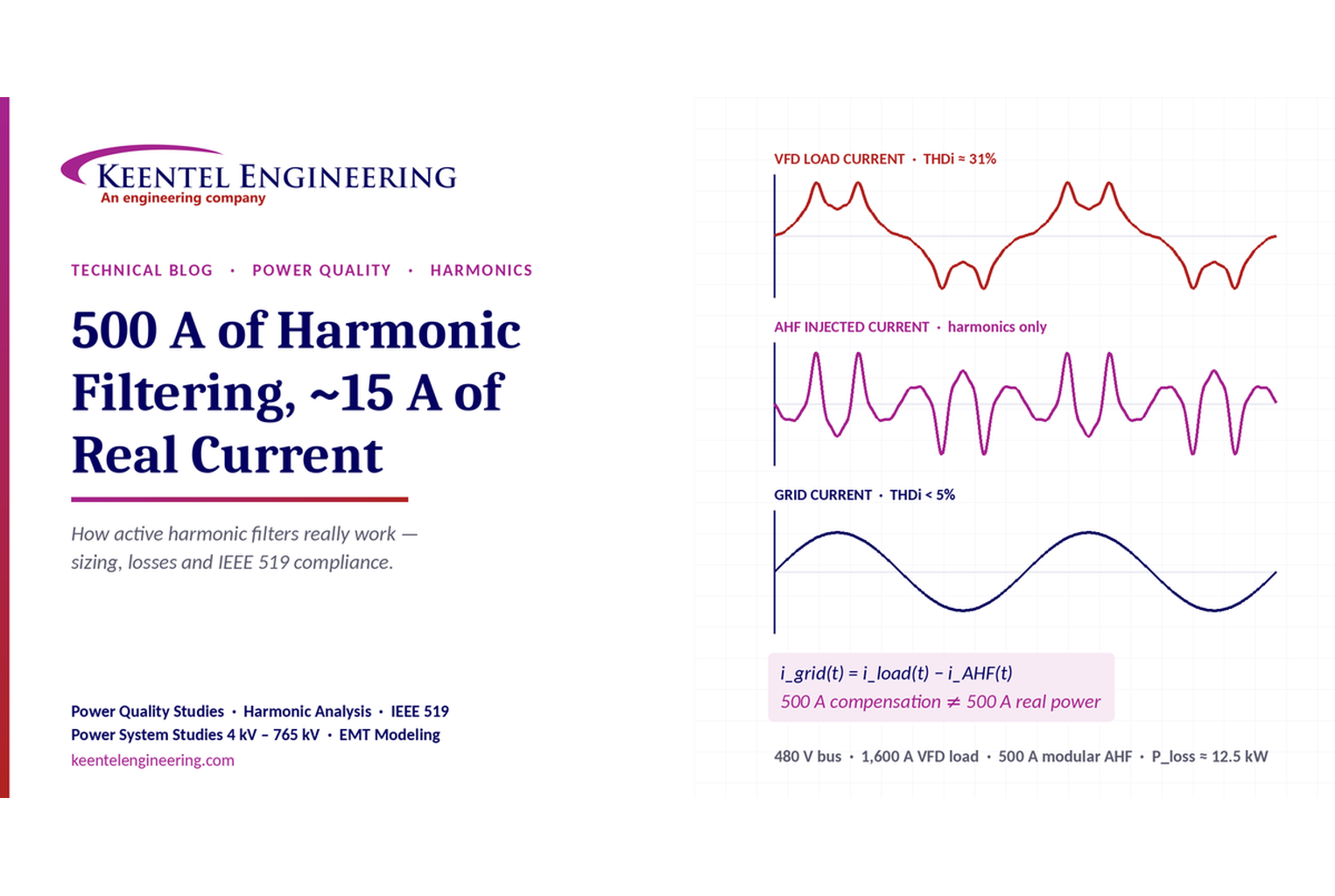
Learn how active harmonic filters work, how to size AHF systems, reduce VFD harmonics, calculate losses, and meet IEEE 519 TDD limits at the PCC.
By SANDIP R PATEL
•
October 3, 2026
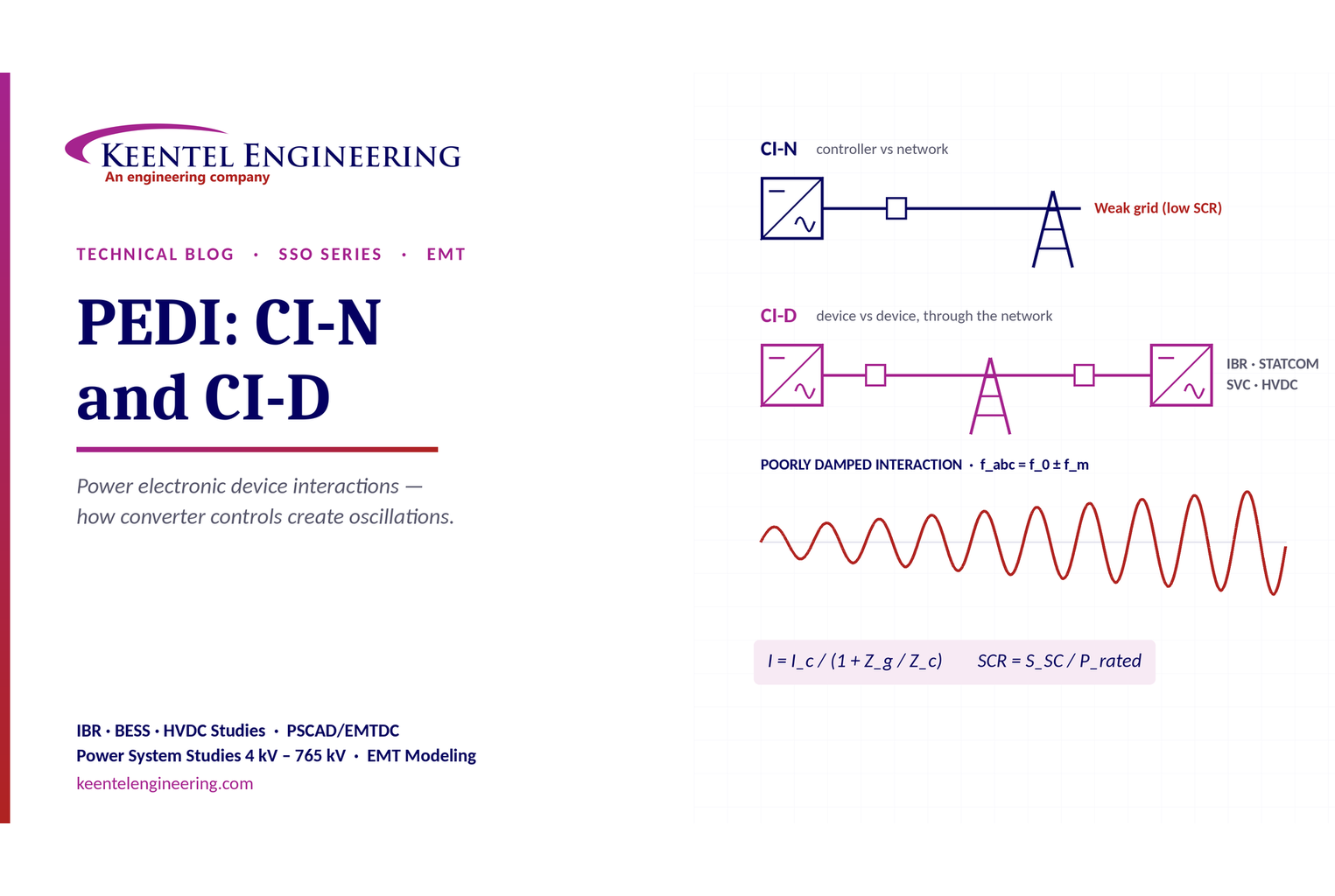
Learn power electronic device interactions (PEDI), including CI-N and CI-D, weak-grid stability, SCR, EMT studies, impedance analysis and mitigation for IBRs.
By SANDIP R PATEL
•
October 3, 2026
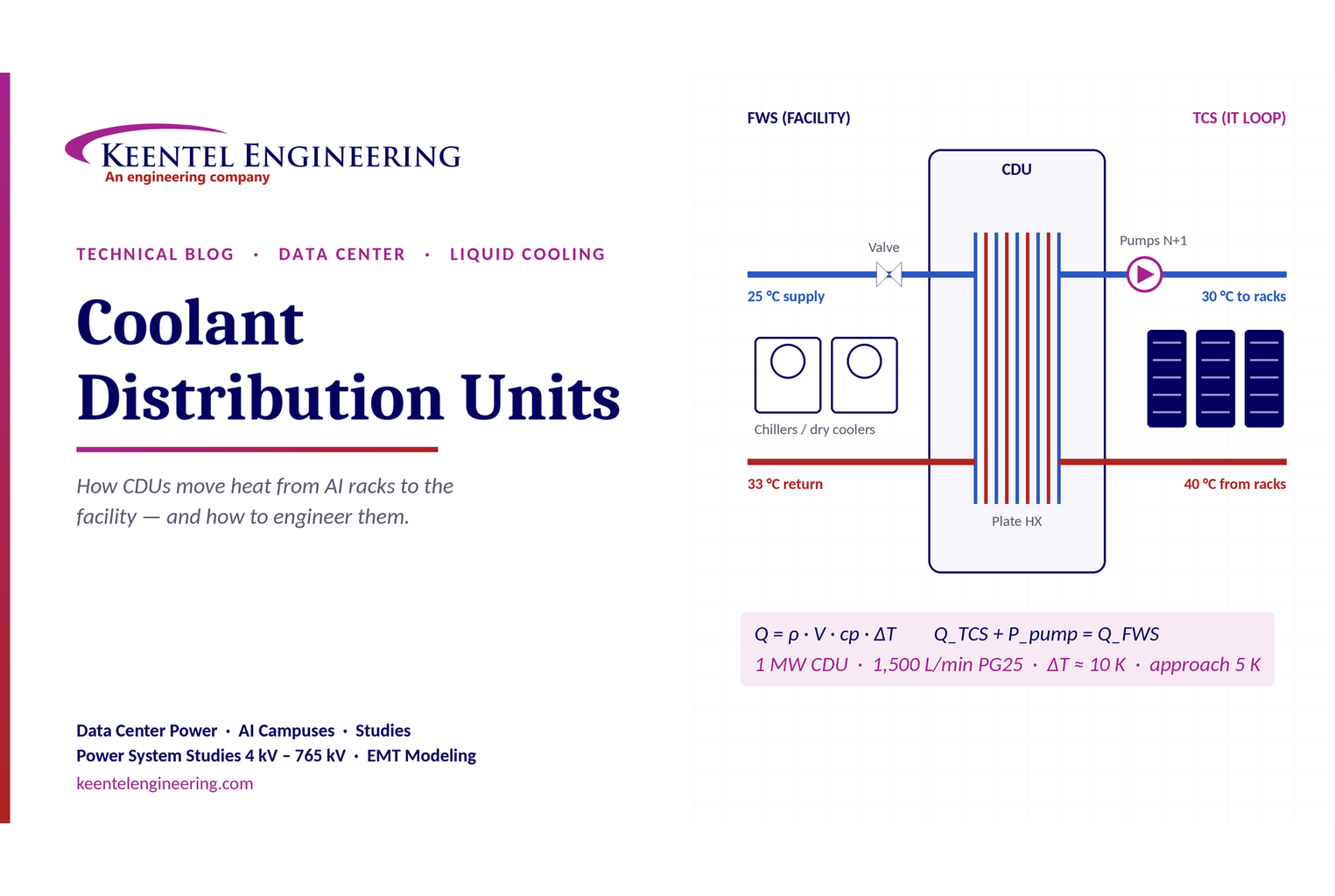
Learn how data center coolant distribution units (CDUs) work, including FWS and TCS loops, heat transfer, sizing, redundancy and liquid cooling for AI data centers.
By SANDIP R PATEL
•
October 3, 2026
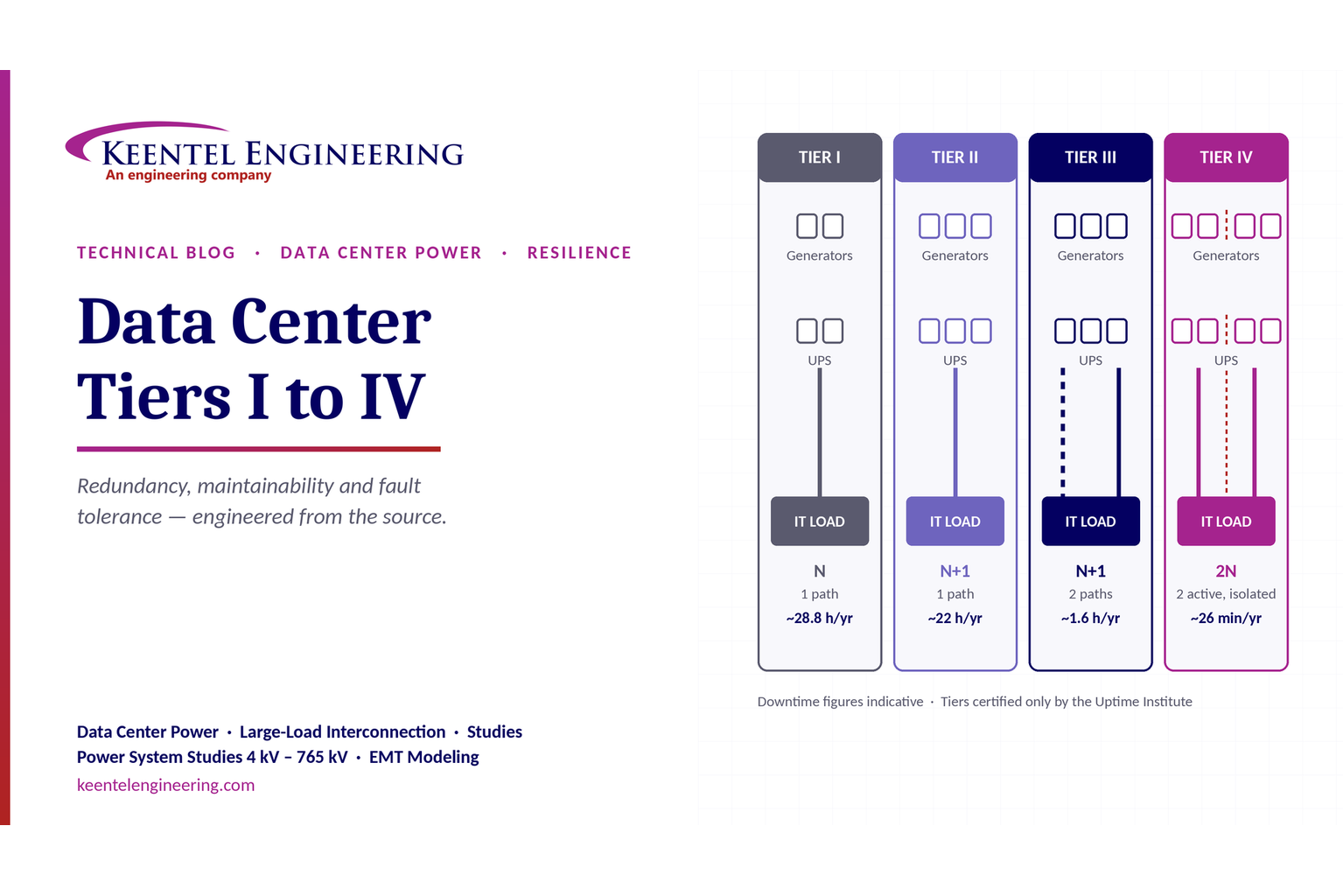
Compare Data Center Tiers I–IV, including redundancy, uptime, Tier III concurrent maintainability, Tier IV fault tolerance, UPS, generators and power design.
By SANDIP R PATEL
•
October 3, 2026
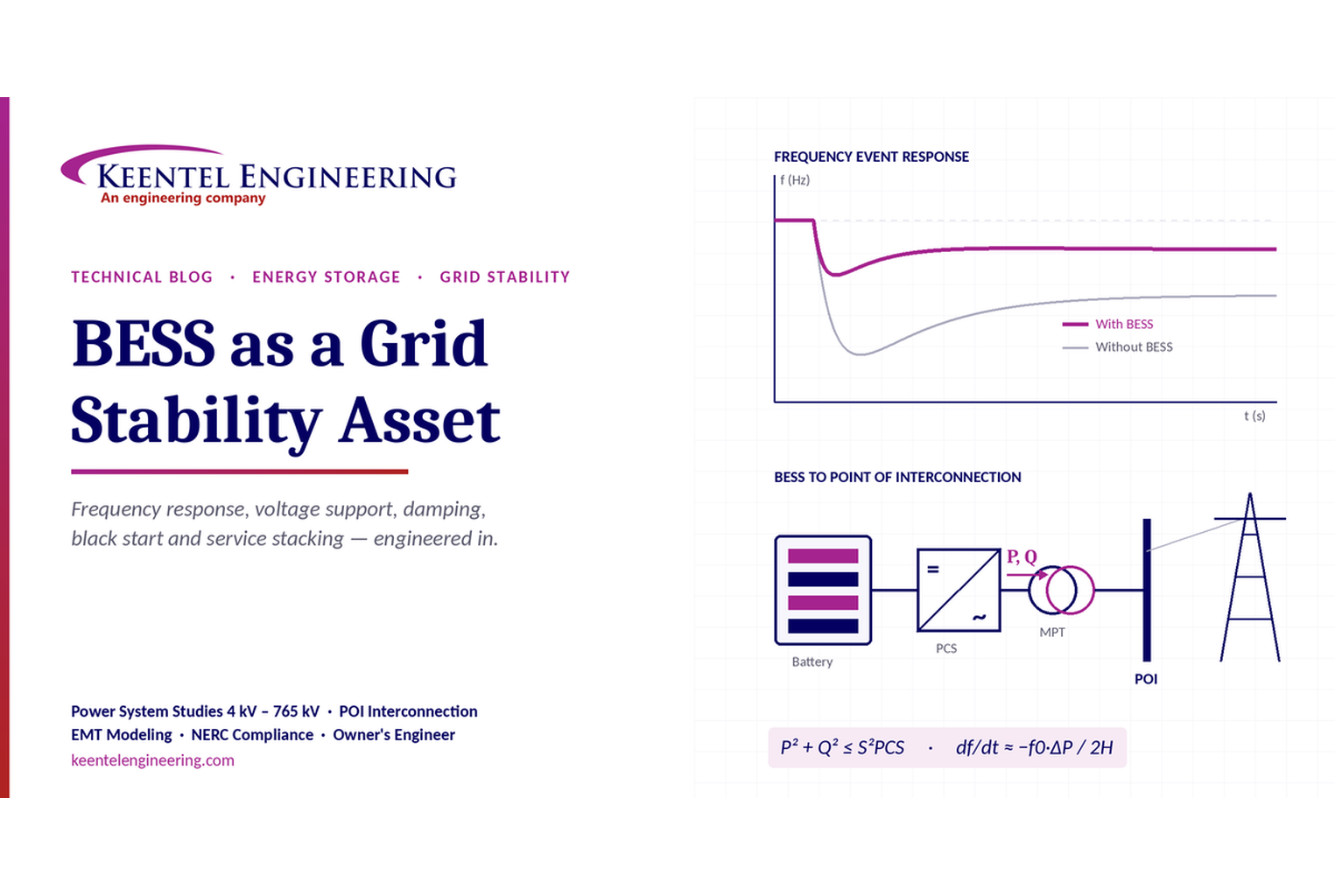
Learn how BESS supports grid stability through fast frequency response, voltage support, oscillation damping, black start, grid-forming controls and EMT studies.





