

A Coordinated Electric System Interconnection Review—the utility’s deep-dive on technical and cost impacts of your project.

How Can Synchrophasor Technology Be Utilized for Monitoring and Controlling Power System Stability?

Calendar icon. D

June 1, 2023 | Blog

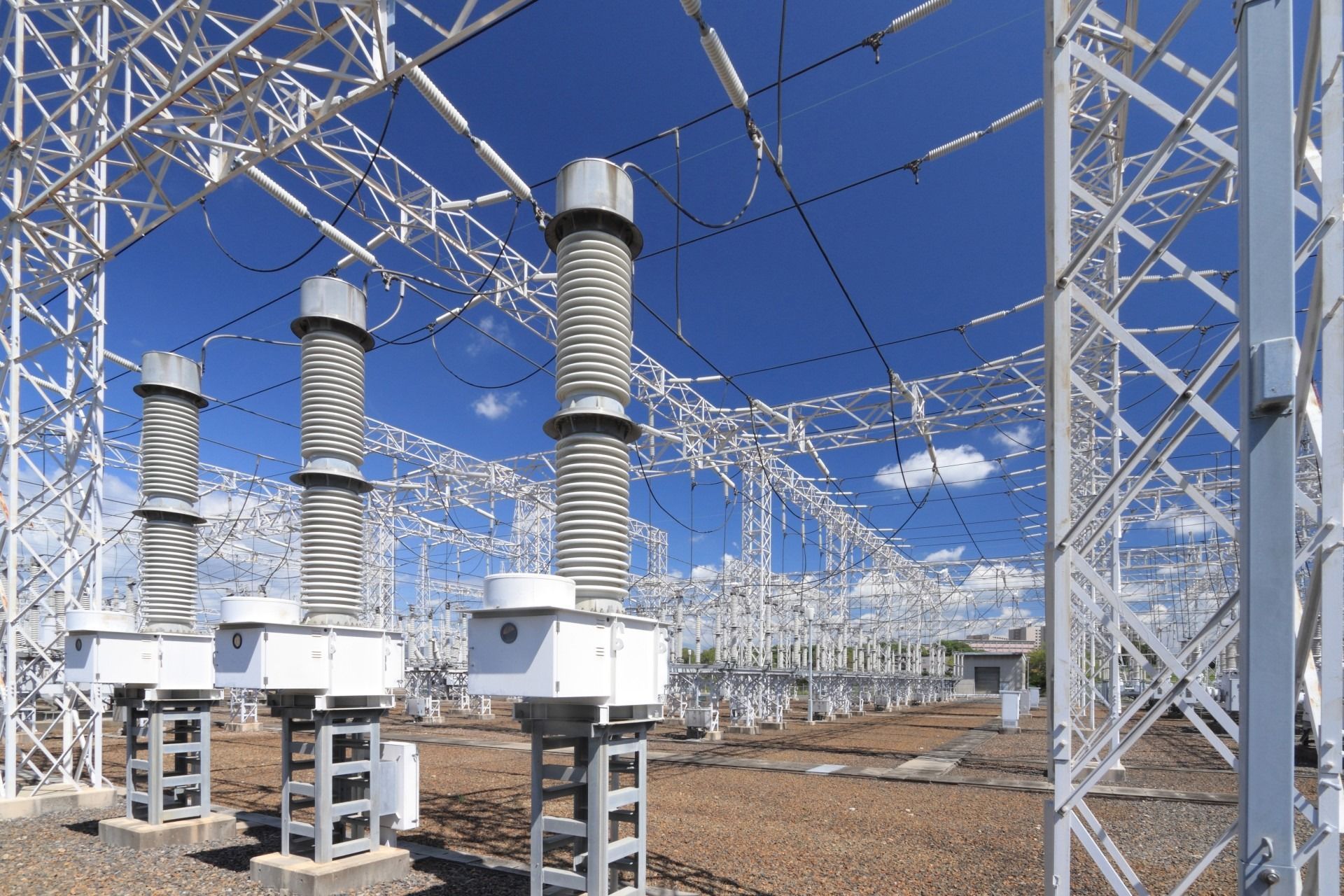
Electrical substation with tall insulators, metal framework, and a blue sky.

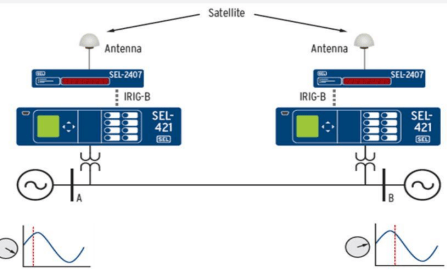
Synchrophasor technology is a powerful tool for monitoring and controlling power system stability. It involves the use of high-speed phasor measurement units (PMUs) to measure the voltage and current phasors at different locations in the power system in real-time. These PMUs are synchronized with a common time reference, allowing for the accurate measurement and comparison of power system behavior across the entire network. 

Using synchrophasor technology for power system stability allows operators to monitor grid conditions in real time and respond quickly to disturbances.

Diagram showing two antennas receiving signals from a satellite, connected to power grid equipment at points A and B.

To apply synchrophasor technology for power system stability monitoring and control, there are several steps that need to be followed: 

1. PMU placement

The first step is to determine the optimal placement of PMUs in the power system. This involves identifying critical points in the network where voltage and frequency stability are most at risk, and installing PMUs at these locations.

2. Data collection

Once the PMUs are installed, they collect high-speed phasor data at a rate of 30 to 60 times per second. This data is time-stamped and synchronized to a common time reference.

3. Data analysis

The collected data is analyzed to detect any anomalies or disturbances in the power system. This analysis can be done in real-time using advanced algorithms and machine learning techniques. 


Synchrophasor data also supports power quality analysis by identifying voltage fluctuations, frequency deviations, and system disturbances.


To implement advanced monitoring solutions, explore our power system studies services

4. Control actions

Based on the results of the data analysis, control actions can be taken to mitigate any stability issues. These actions may include adjusting the settings of power system devices such as generators, transformers, and capacitors, or issuing commands to control centers to change the operating parameters of the network.


Conclusion

Overall, synchrophasor technology provides a powerful tool for power system stability monitoring and control, allowing operators to quickly detect and respond to any stability issues, and helping to ensure the reliable and efficient operation of the power system. 


This makes synchrophasor technology essential for modern power system monitoring, control, and reliability improvement.


A smiling man with glasses and a beard wearing a blue blazer stands in front of server racks in a data center.

About the Author:

Sonny Patel P.E. EC

IEEE Senior Member

In 1995, Sandip (Sonny) R. Patel earned his Electrical Engineering degree from the University of Illinois, specializing in Electrical Engineering . But degrees don’t build legacies—action does. For three decades, he’s been shaping the future of engineering, not just as a licensed Professional Engineer across multiple states (Florida, California, New York, West Virginia, and Minnesota), but as a doer. A builder. A leader. Not just an engineer. A Licensed Electrical Contractor in Florida with an Unlimited EC license. Not just an executive. The founder and CEO of KEENTEL LLC—where expertise meets execution. Three decades. Multiple states. Endless impact.

Four workers in safety vests and helmets stand with arms crossed near wind turbines.

Let's Discuss Your Project

Let's book a call to discuss your electrical engineering project that we can help you with.

Man in a blazer and open shirt, looking at the camera, against a blurred background.

About the Author:

Sonny Patel P.E. EC

IEEE Senior Member

In 1995, Sandip (Sonny) R. Patel earned his Electrical Engineering degree from the University of Illinois, specializing in Electrical Engineering . But degrees don’t build legacies—action does. For three decades, he’s been shaping the future of engineering, not just as a licensed Professional Engineer across multiple states (Florida, California, New York, West Virginia, and Minnesota), but as a doer. A builder. A leader. Not just an engineer. A Licensed Electrical Contractor in Florida with an Unlimited EC license. Not just an executive. The founder and CEO of KEENTEL LLC—where expertise meets execution. Three decades. Multiple states. Endless impact.

Leave a Comment

Related Posts

Batch Zero ERCOT compliance guide illustrating large load, PCLR, and BYOG operational framework
By SANDIP R PATEL May 20, 2026
Discover Batch Zero ERCOT rules, PCLR & BYOG operations, and LPC/MPC load compliance. Learn how large loads integrate safely—Get started now!
IEEE 2800 ride-through requirements guide for inverter-based resource voltage and frequency complian
By team gusto May 19, 2026
Learn IEEE 2800 ride-through requirements for IBR compliance, voltage ride-through, frequency response, and EMT modeling. Get practical guidance.
CDEGS grounding analysis software used for substation grounding, electromagnetic studies, and power
By SANDIP R PATEL May 17, 2026
Learn CDEGS grounding analysis, electromagnetic studies, and substation grounding design. Discover how Keentel delivers safer power systems.
DER hosting capacity guide showing flexible interconnection, power flow control, and grid planning
By SANDIP R PATEL May 17, 2026
DER hosting capacity guide covering flexible interconnection, power flow control, and 8760 simulation. Learn how to plan safer grid upgrades.
Power system resource adequacy planning for renewable grids, energy storage, LOLE modeling
By SANDIP R PATEL May 17, 2026
Learn how power system resource adequacy supports grid reliability, LOLE planning, energy storage, and interconnection risk in renewable grids.
Grid-forming control and VSG-PSS for oscillation damping, PMU monitoring, and renewable grid
By SANDIP R PATEL May 17, 2026
Learn how grid-forming control, VSG-PSS design, and PMU monitoring improve oscillation damping in renewable power systems.
Large load interconnection diagram for AI data centers, grid modeling, EMT studies, and power
By SANDIP R PATEL May 17, 2026
earn how large load interconnection, EMT studies, and power system modeling help AI data centers meet grid reliability requirements.
Category 2 IBR compliance flyer for renewable energy, BESS storage, grid code registration.
By SANDIP R PATEL May 16, 2026
Category 2 IBR compliance services for solar, wind, and BESS projects. Learn NERC registration, EMT modeling, and PRC readiness today.
Advanced ERCOT dynamics modeling for inverter-based resources, data centers, BESS, and grid
By SANDIP R PATEL May 16, 2026
ERCOT dynamics modeling guide covering PSS/E v36, MQT, SSR studies, and Large Electronic Loads. Learn how to prepare compliant grid models today.