A Coordinated Electric System Interconnection Review—the utility’s deep-dive on technical and cost impacts of your project.
Challenge: Frequent false tripping using conventional electromechanical relays
Solution: SEL-487E integration with multi-terminal differential protection and dynamic inrush restraint
Result: 90% reduction in false trips, saving over $250,000 in downtime
| Category | Metric |
|---|---|
| VPP capacity (Lunar Energy) | 650 MW |
| Lunar funding raised | US$232 million |
| Data center BESS example | 31 MW / 62 MWh |
| ERCOT grid-scale batteries | 15+ GW |
| LDES tenders (H1 2026) | Up to 9.3 GW |
| Lithium-ion share of LDES by 2030 | 77% |
| FEOC initial threshold | 55% |
| BESS tariff rate (2026) | ~55% |
| Capacity gain from analytics | 5–15% |
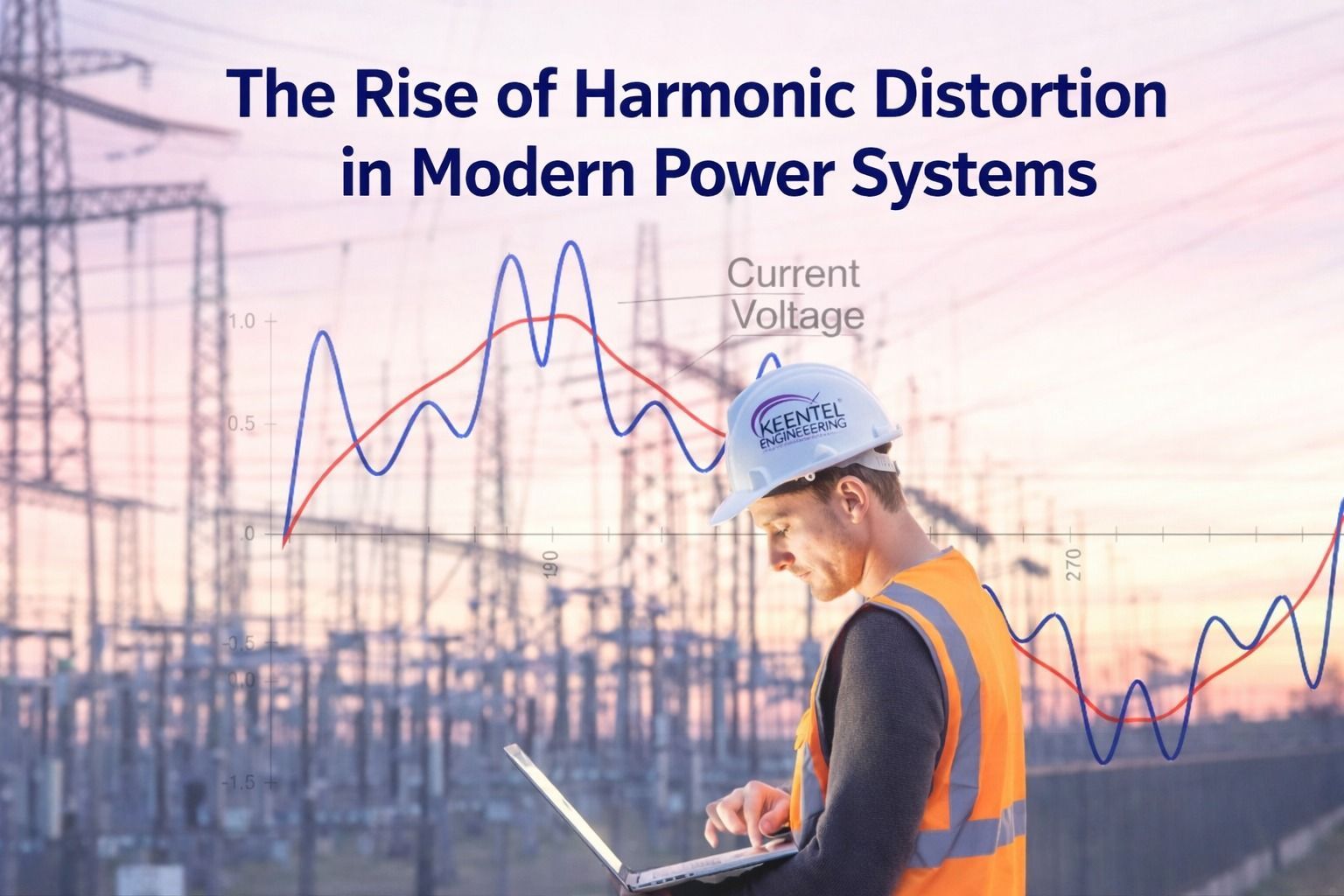
The Rise of Harmonic Distortion in Modern Power Systems
February 20, 2026 | Blog
Why Harmonic Studies Are Now Critical for Grid Stability, Compliance, and Asset Protection
Modern power systems are undergoing a profound transformation. Traditional grids once dominated by large synchronous generators and linear loads have evolved into complex, inverter-rich networks driven by:
- Renewable generation (solar, wind)
- Battery Energy Storage Systems (BESS)
- Electric vehicle charging infrastructure
- Variable Speed Drives (VSDs)
- HVDC systems
- Power-electronic-dominated industrial loads
- Cable-heavy distribution and transmission systems
While this transition has improved sustainability, flexibility, and efficiency, it has introduced a serious and growing technical challenge:
Harmonic distortion.
At Keentel Engineering, we provide advanced harmonic studies, resonance analysis, mitigation design, and full regulatory compliance support for HV, MV, and LV networks.
This article explains:
- What harmonics are
- Why harmonic distortion is increasing
- How harmonics affect equipment and protection systems
- UK harmonic compliance framework (ER G5/5 & IEC standards)
- The three-stage harmonic assessment process
- Why early harmonic analysis protects your investment
- How Keentel Engineering delivers turnkey harmonic compliance
1. The Ideal Power System: Pure Sinusoidal Operation
In an ideal electrical system, voltage and current waveforms are perfectly sinusoidal at a single fundamental frequency:
- 50 Hz in the UK and Europe
- 60 Hz in North America
A pure sinusoidal waveform:
- Contains only one frequency component
- Has zero distortion
- Is symmetrical
- Has no DC offset
- Completes one full cycle every 20 milliseconds (for 50 Hz systems)
Why does this matter?
Because distortion-free sinusoidal supply ensures:
- Minimal transformer heating
- Reduced copper and core losses
- Stable protection relay operation
- Lower electromagnetic interference
- Reliable inverter performance
However, modern grids are no longer purely sinusoidal.
2. What Are Harmonics?
Harmonics are frequency components that are integer multiples of the fundamental frequency.
In a 50 Hz system:
- 2nd harmonic = 100 Hz
- 3rd harmonic = 150 Hz
- 5th harmonic = 250 Hz
- 7th harmonic = 350 Hz
Mathematically, any distorted waveform can be represented as the sum of:
- The fundamental frequency
- Multiple harmonic frequency components
This concept is based on Fourier series decomposition.
In practice, distorted voltage and current waveforms are simply the combination of multiple sinusoidal signals at different frequencies.
3. Why Harmonic Distortion Is Increasing
The growth of harmonic distortion is directly linked to the widespread adoption of non-linear and inverter-based technologies.
Major Contributors:
1️⃣ Inverter-Based Renewable Generation
Solar PV, wind turbines, and BESS rely on power electronic conversion systems.
2️⃣ Variable Speed Drives (VSDs)
Widely used in industrial motor control.
3️⃣ EV Charging Infrastructure
Fast chargers inject high-frequency harmonic currents.
4️⃣ Cable-Dominated Networks
Underground cables increase system capacitance, raising resonance risk.
5️⃣ HVDC and Power Electronic Interfaces
These systems naturally generate harmonic frequency components.
As grid strength decreases (low Short Circuit Ratio environments), harmonic interaction becomes more severe.
4. Technical Impacts of Harmonics
Harmonics are not merely waveform imperfections. They have measurable technical and financial consequences.
4.1 Equipment Overheating
Harmonic currents increase RMS current levels.
Because heating is proportional to I²R:
- Cables overheat
- Switchgear insulation degrades
- Motors experience torque ripple
- Transformers suffer additional eddy current losses
Even small harmonic content increases thermal stress significantly.
Keentel Engineering performs:
- Harmonic thermal impact studies
- Cable ampacity adjustment
- Transformer harmonic loading assessments
- Equipment derating calculations
4.2 Transformer Derating
Transformers are particularly sensitive to harmonics.
Harmonics cause:
- Increased eddy current losses
- Higher stray losses
- Neutral overheating from triplen harmonics (3rd, 9th, 15th)
- Delta winding circulating currents
Keentel provides:
- IEEE-based transformer harmonic loading analysis
- K-factor evaluation
- Derating recommendations
- Thermal modeling
4.3 Protection System Maloperation
Modern protection relays rely on clean waveforms for:
- Differential protection
- Overcurrent detection
- Frequency elements
- Earth fault detection
- Synchronism check logic
Excessive harmonics can cause:
- False tripping
- Protection blinding
- Incorrect inrush detection
- Delayed operation
Keentel performs:
- Protection-harmonic interaction analysis
- Relay stability verification
- EMT-based modeling
- Harmonic restraint validation
4.4 Voltage Distortion and THDv
- Senior engineer oversight
- Constructability validation
- Owner standard compliance
- Review milestone enforcement
Our QA/QC system ensures drawings are:
- Precise
- Consistent
- Complete
- Buildable
This dramatically reduces RFIs and field markups.
4.5 Resonance – A Major Grid Risk
Resonance occurs when harmonic frequency coincides with the natural frequency of the network.
Two types:
- Parallel resonance → voltage amplification
- Series resonance → current amplification
Resonance risk increases in:
- 33 kV / 66 kV / 132 kV cable networks
- Capacitor bank installations
- Weak grid interconnections
- BESS-dominated systems
Keentel Engineering performs:
- Frequency scan analysis
- Impedance vs frequency studies
- Harmonic stability assessments
- Grid-forming inverter interaction analysis
5. UK Harmonic Compliance Framework
The UK enforces strict harmonic limits through:
- ER G5/5
- IEC 61000-3-6
- Utility-specific requirements
All Distribution Network Operators require harmonic compliance for new connections.
G5/5 introduced:
- Updated planning limits
- Stage 1, 2, and 3 harmonic assessment methodology
- Headroom allocation principles
- Detailed modeling requirements for inverter-based systems
Keentel Engineering prepares complete G5/5 compliance submissions for:
- Renewable projects
- BESS installations
- Industrial facilities
- Data centers
- Transmission-level projects
6. The Three-Stage Harmonic Assessment Process
Stage 1 Initial Screening
Used for small LV or low-impact connections.
Includes:
- Preliminary emission estimates
- Headroom comparison
- Simplified compliance checks
Stage 2 Detailed Harmonic Assessment
Required for:
- 1–20 MW PV plants
- BESS projects
- Industrial sites with VSDs
- Weak grid connections
Includes:
- Harmonic current injection modeling
- Frequency-dependent network modeling
- Individual harmonic compliance checks
- THDv calculations
- IEC summation methodology
Keentel performs Stage 2 studies using advanced simulation platforms.
Stage 3 – Advanced Harmonic & Stability Study
Required for:
- 20 MW generation
- Weak grids (low SCR)
- Resonance-prone networks
- Projects with failed Stage 2 results
Includes:
- Frequency scan analysis
- Inverter impedance modeling
- Harmonic stability assessment
- Sub-synchronous resonance evaluation
- Filter design and tuning
This is where advanced engineering expertise becomes critical.
Keentel Engineering specializes in full Stage 3 harmonic stability studies.
7. Why Harmonic Studies Go Beyond Compliance
Harmonic analysis is not just about meeting regulatory limits.
It protects against:
- Multimillion-dollar retrofit filter installations
- Equipment damage
- Project delays
- Operational penalties
- Performance guarantee failures
- Asset lifespan reduction
Early-stage harmonic modeling reduces project risk significantly.
Keentel integrates harmonic studies during:
- Concept design
- Grid connection application
- EPC design phase
- Pre-commissioning validation
8. Keentel Engineering Harmonic Study Services
We provide:
✔
Stage 1–3 ER G5/5 Studies
✔ IEC 61000-3-6 Compliance
✔ Frequency Scan & Resonance Detection
✔ Harmonic Stability for Grid-Forming & Grid-Following Inverters
✔ Passive & Active Filter Design
✔ Transformer Derating Assessment
✔ Protection Interaction Studies
✔ Power Quality Measurement & Validation
✔
BESS Harmonic Compliance Modeling
✔ Utility Submission & Technical Reports
We support:
- Renewable developers
- BESS investors
- Utilities
- EPC contractors
- Industrial operators
- Data center developers
20 In-Depth Harmonic FAQs
1. What is a harmonic in power systems?
A harmonic is a sinusoidal voltage or current component at a frequency that is an integer multiple of the fundamental frequency.
2. Why are harmonics increasing globally?
Because of increased inverter-based generation, EV chargers, VSDs, and cable-heavy networks.
3. What is THDv?
Total Harmonic Distortion of voltage measures cumulative harmonic voltage relative to the fundamental component.
4. What is THDi?
Total Harmonic Distortion of current measures cumulative harmonic current relative to the fundamental current.
5. Why are 3rd harmonics dangerous?
They accumulate in neutral conductors and delta windings, causing overheating.
6. What is harmonic headroom?
The allowable distortion margin before planning limits are exceeded.
7. What is harmonic resonance?
A condition where harmonic frequency matches network natural frequency, amplifying distortion.
8. Why do weak grids have higher harmonic risk?
Lower short-circuit strength increases impedance, amplifying distortion effects.
9. When is Stage 3 harmonic study required?
For large generation projects, weak grids, or resonance risk conditions.
10. Can harmonics cause transformer overheating?
Yes, due to increased eddy current and stray losses.
11. How do harmonics affect protection relays?
They can cause false tripping or incorrect harmonic restraint.
12. Do BESS systems require harmonic analysis?
Yes, especially under UK grid connection rules.
13. What is frequency scan analysis?
A study plotting system impedance vs frequency to identify resonance peaks.
14. Can harmonic problems appear years later?
Yes. Network evolution can change resonance conditions.
15. What mitigation solutions exist?
Passive filters, C-type filters, active filters, reactors, and network reinforcement.
16. What is SCR and why does it matter?
Short Circuit Ratio indicates grid strength. Low SCR increases instability risk.
17. Do harmonics increase energy losses?
Yes — copper, core, dielectric, and stray losses increase.
18. Can harmonics affect inverter PLL stability?
Yes, voltage distortion impacts synchronization performance.
19. Why is early harmonic modeling important?
It prevents costly redesigns and retrofit filter installations.
20. Why choose Keentel Engineering?
Because we combine:
- Advanced simulation expertise
- HV/MV/LV system design experience
- Protection engineering capability
- Utility compliance knowledge
- Practical mitigation design

About the Author:
Sandip "Sonny" R. Patel, P.E.
IEEE Senior Member · Founder & CEO, Keentel Engineering
In 1995, Sonny Patel earned his Electrical Engineering degree from the University of Illinois. But degrees don't build legacies — action does.
For three decades, he has worked the power industry from every side of the table: 16 years as a utility engineer at Exelon/Commonwealth Edison; generation leadership across hydroelectric, industrial steam turbine, and a 9 GW renewable fleet; NERC Regional Entity Senior Compliance Engineer and Audit Team Lead, auditing some of the nation's largest utilities; and testing and commissioning lead on equipment up to 765 kV — the very top of the North American grid.Utility. Generator. Regulator. Consultant. Few engineers have seen all four seats. Fewer still have sat in them.
His experience spans nuclear, hydro, conventional generation, renewables, oil and gas, mining — and today's data centers, where he is authoring a three-book series on data center design. He is a Licensed Professional Engineer in six states and a Licensed Electrical Contractor in Florida (Unlimited EC) — he doesn't just design the work; he's qualified to stand behind its execution.Today, as Founder and CEO of Keentel Engineering, Sonny leads a nationwide team of engineers delivering substation design, power system studies, NERC compliance, and commissioning — done right, coast to coast.Three decades. Every side of the table. One standard: accountable engineering.
Services

Let's Discuss Your Project
Let's book a call to discuss your electrical engineering project that we can help you with.
About the Author:
Sandip "Sonny" R. Patel, P.E.
IEEE Senior Member · Founder & CEO, Keentel Engineering
In 1995, Sonny Patel earned his Electrical Engineering degree from the University of Illinois. But degrees don't build legacies — action does.
For three decades, he has worked the power industry from every side of the table: 16 years as a utility engineer at Exelon/Commonwealth Edison; generation leadership across hydroelectric, industrial steam turbine, and a 9 GW renewable fleet; NERC Regional Entity Senior Compliance Engineer and Audit Team Lead, auditing some of the nation's largest utilities; and testing and commissioning lead on equipment up to 765 kV — the very top of the North American grid.
Utility. Generator. Regulator. Consultant. Few engineers have seen all four seats. Fewer still have sat in them.
His experience spans nuclear, hydro, conventional generation, renewables, oil and gas, mining — and today's data centers, where he is authoring a three-book series on data center design. He is a Licensed Professional Engineer in six states and a Licensed Electrical Contractor in Florida (Unlimited EC) — he doesn't just design the work; he's qualified to stand behind its execution.
Today, as Founder and CEO of Keentel Engineering, Sonny leads a nationwide team of engineers delivering substation design, power system studies, NERC compliance, and commissioning — done right, coast to coast.Three decades. Every side of the table. One standard: accountable engineering.
Leave a Comment
Thank you for contacting us.
We will get back to you as soon as possible.
We will get back to you as soon as possible.
Oops, there was an error sending your message.
Please try again later.
Please try again later.
Related Posts
By SANDIP R PATEL
•
September 30, 2026
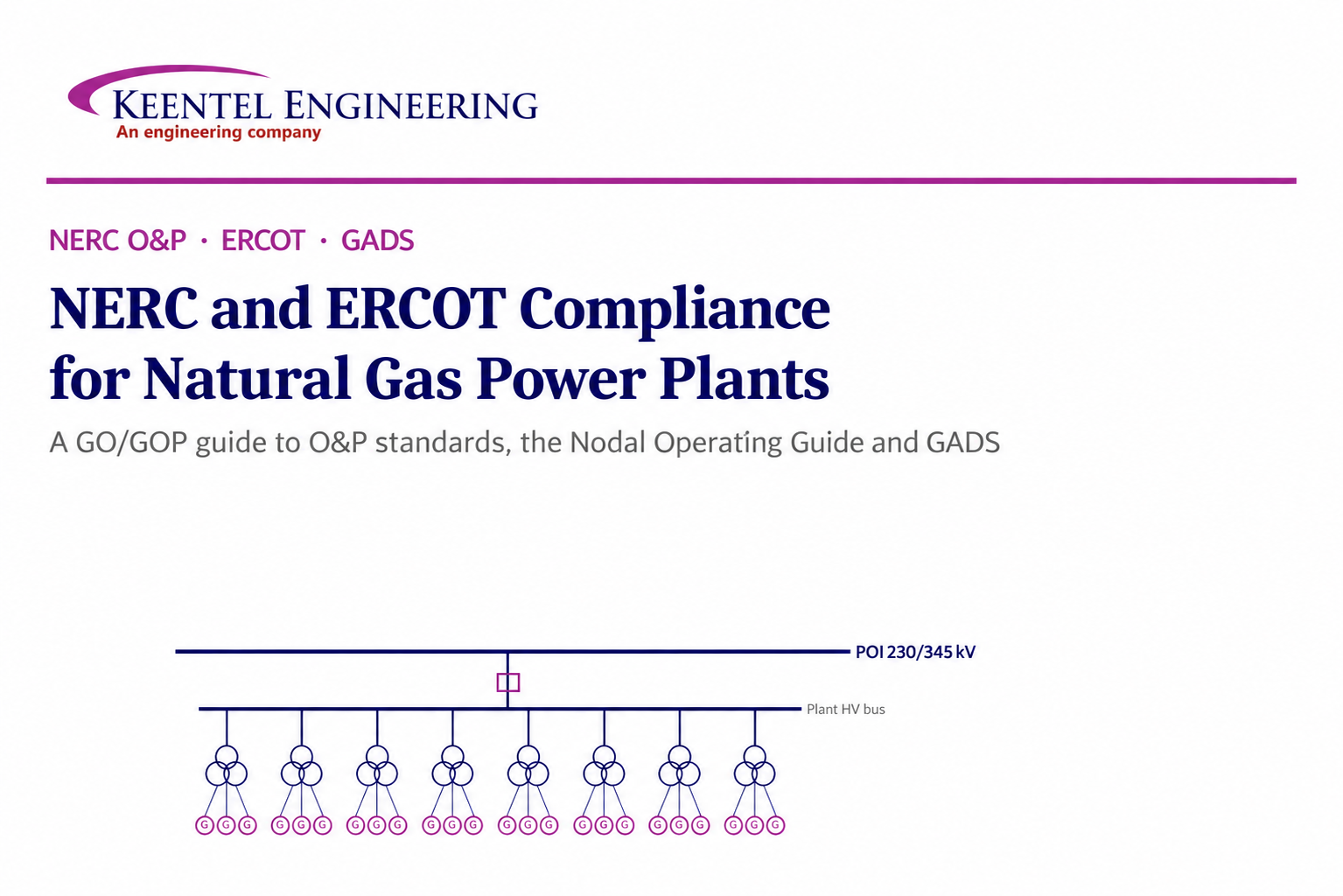
Learn NERC and ERCOT compliance requirements for natural gas power plants, including GO/GOP obligations, O&P standards, GADS reporting, and audits.
By SANDIP R PATEL
•
September 26, 2026
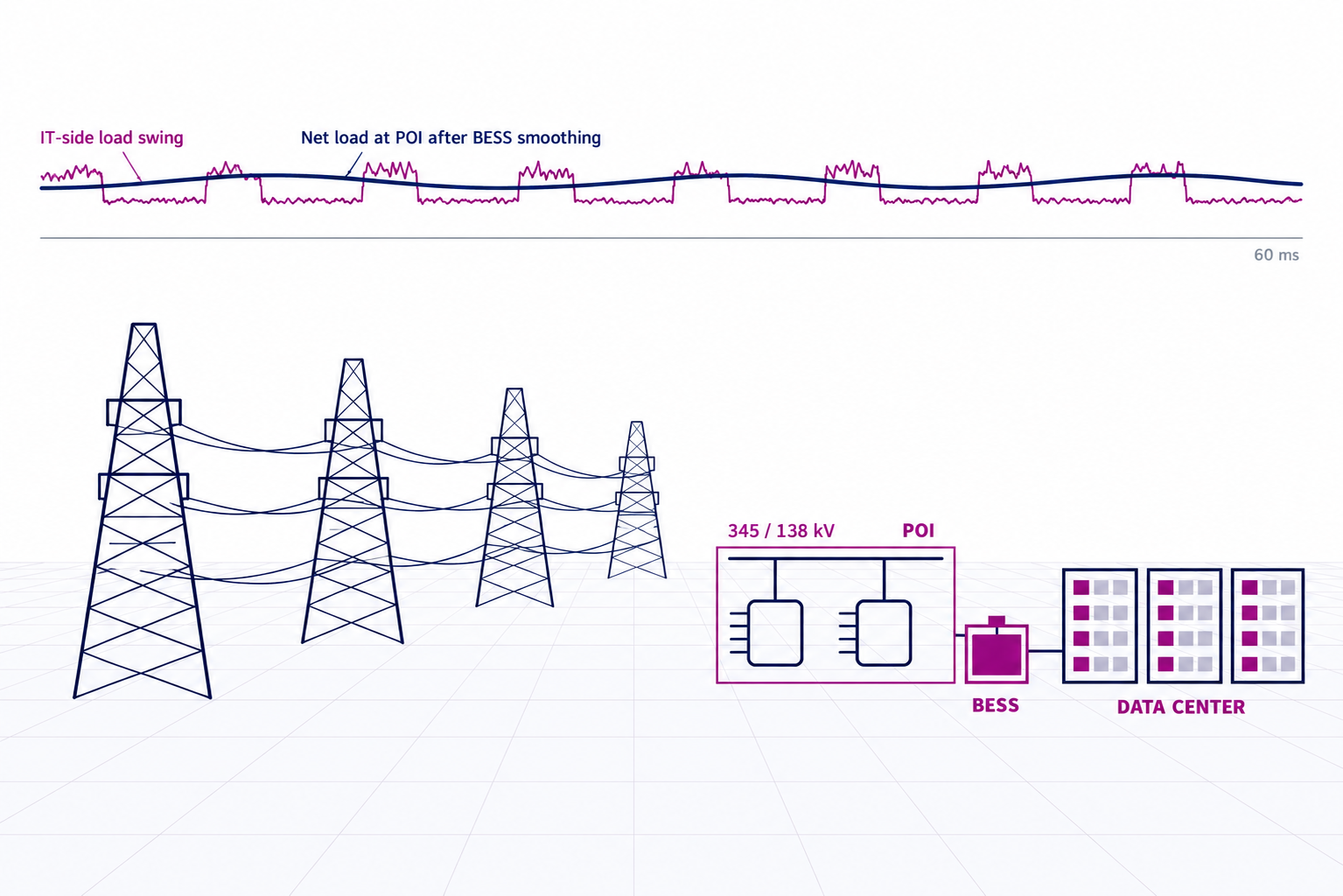
Learn how to prepare a MISO large-load interconnection package, including PSS®E models, BESS smoothing, harmonic data and transmission-owner requirements.
By SANDIP R PATEL
•
September 26, 2026
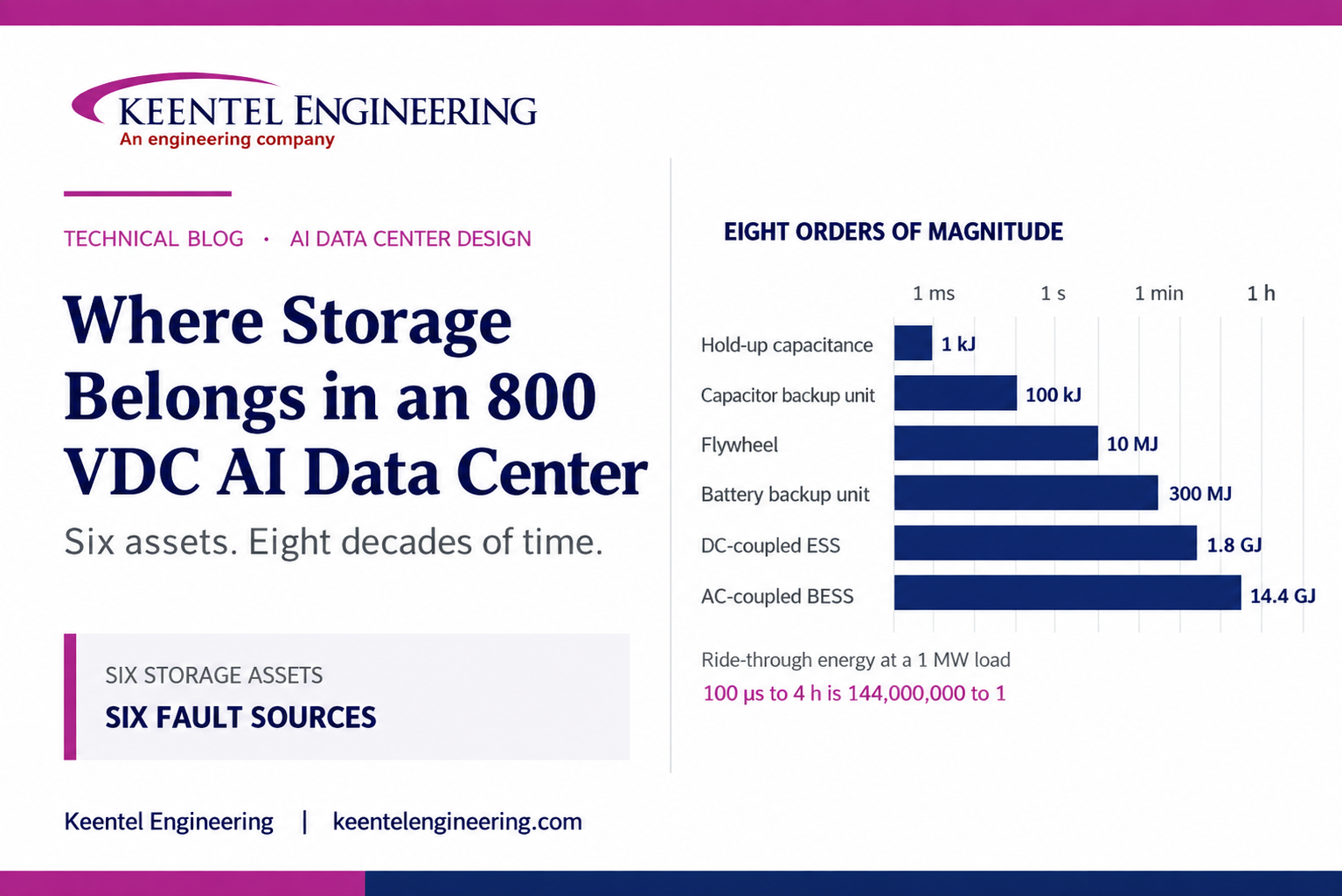
Learn where storage belongs in an 800 VDC AI data center, including capacitors, flywheels, BESS, fault current, protection, grounding, and EMT design.
By SANDIP R PATEL
•
September 26, 2026
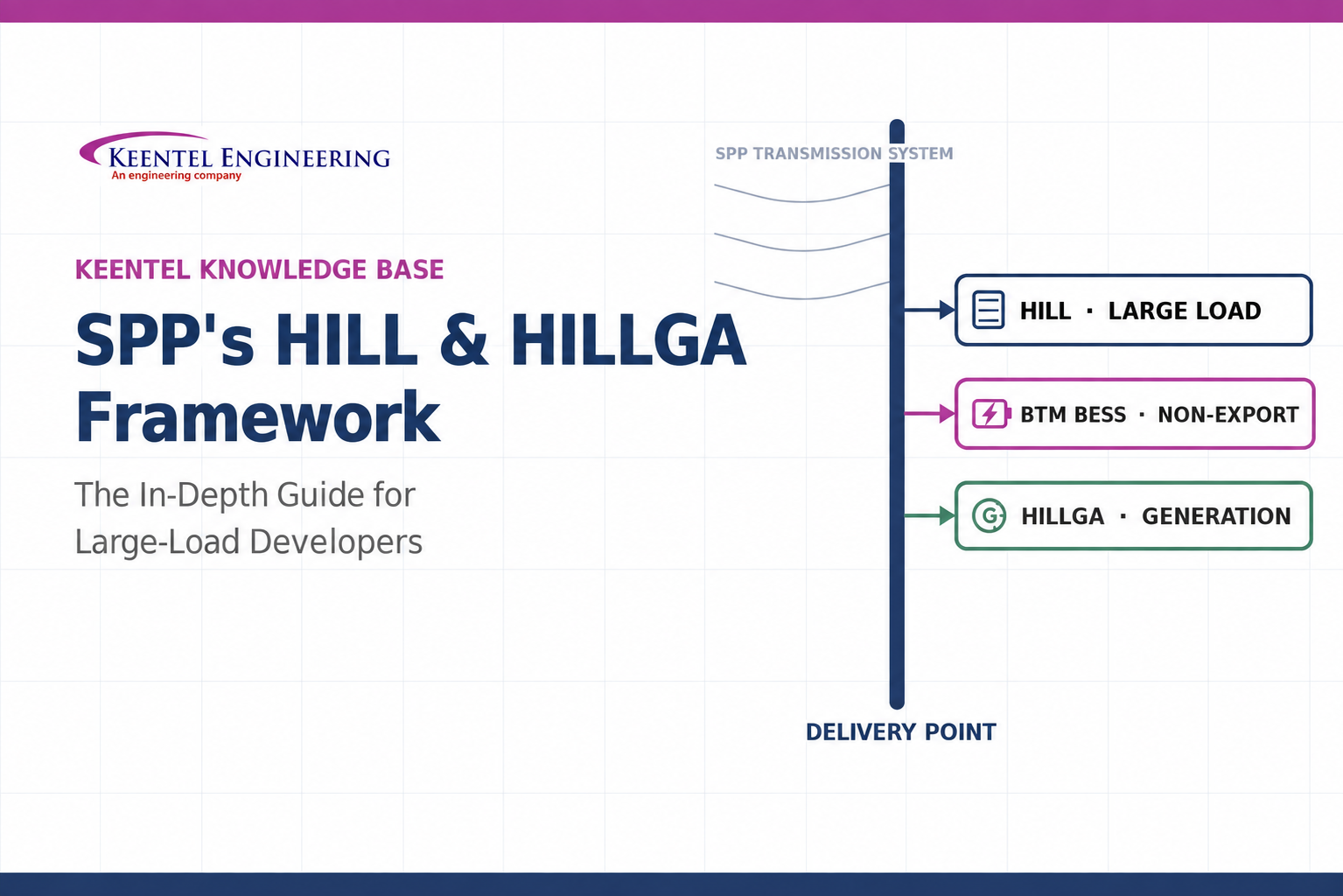
Learn how SPP’s HILL and HILLGA framework works for large-load projects, including studies, BTM generation, modeling, EMT requirements, and firm service.
By SANDIP R PATEL
•
September 25, 2026
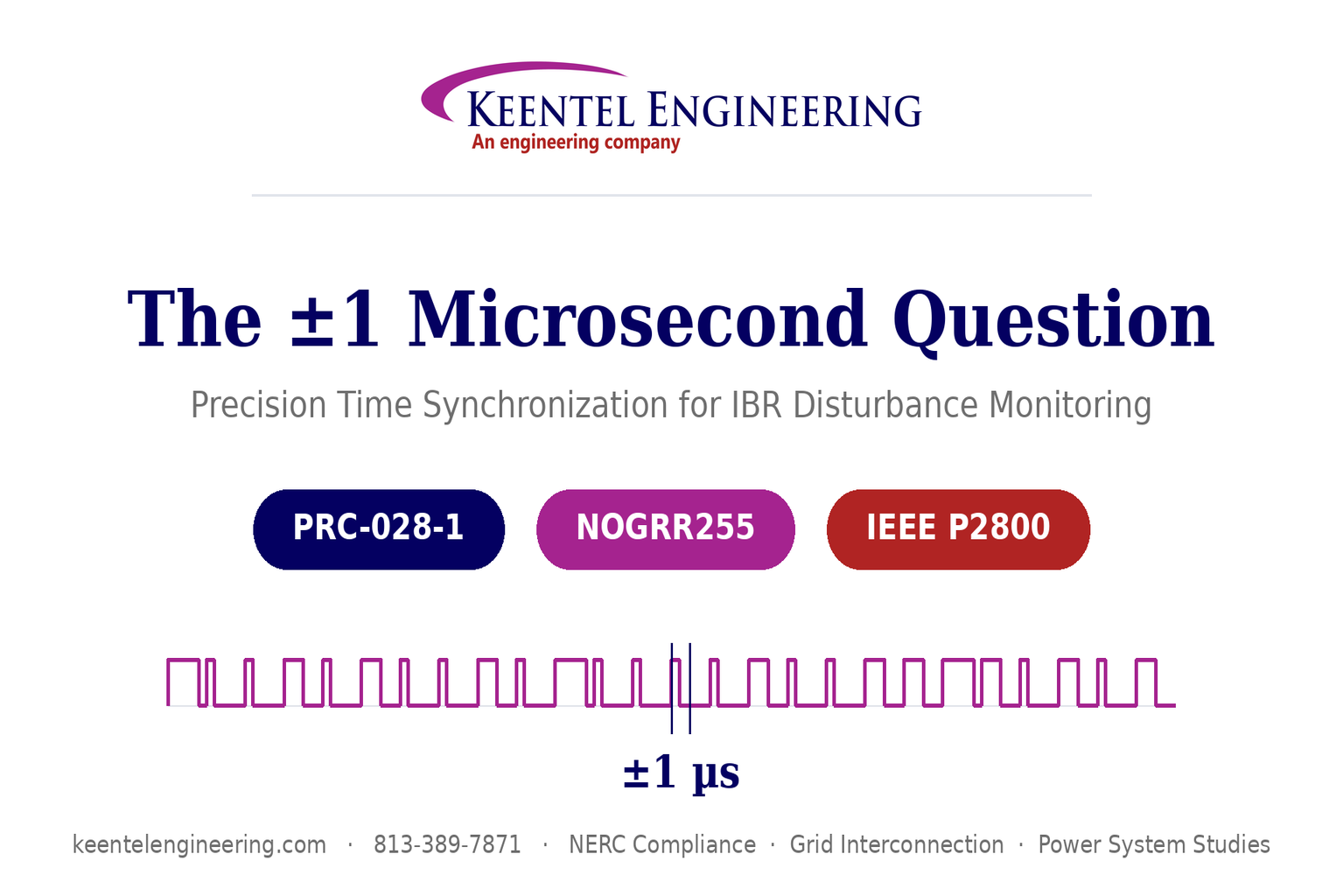
Learn how IBR time synchronization, IEEE 2800, IRIG-B verification, and PTP solutions help meet disturbance monitoring compliance requirements.
By SANDIP R PATEL
•
September 24, 2026
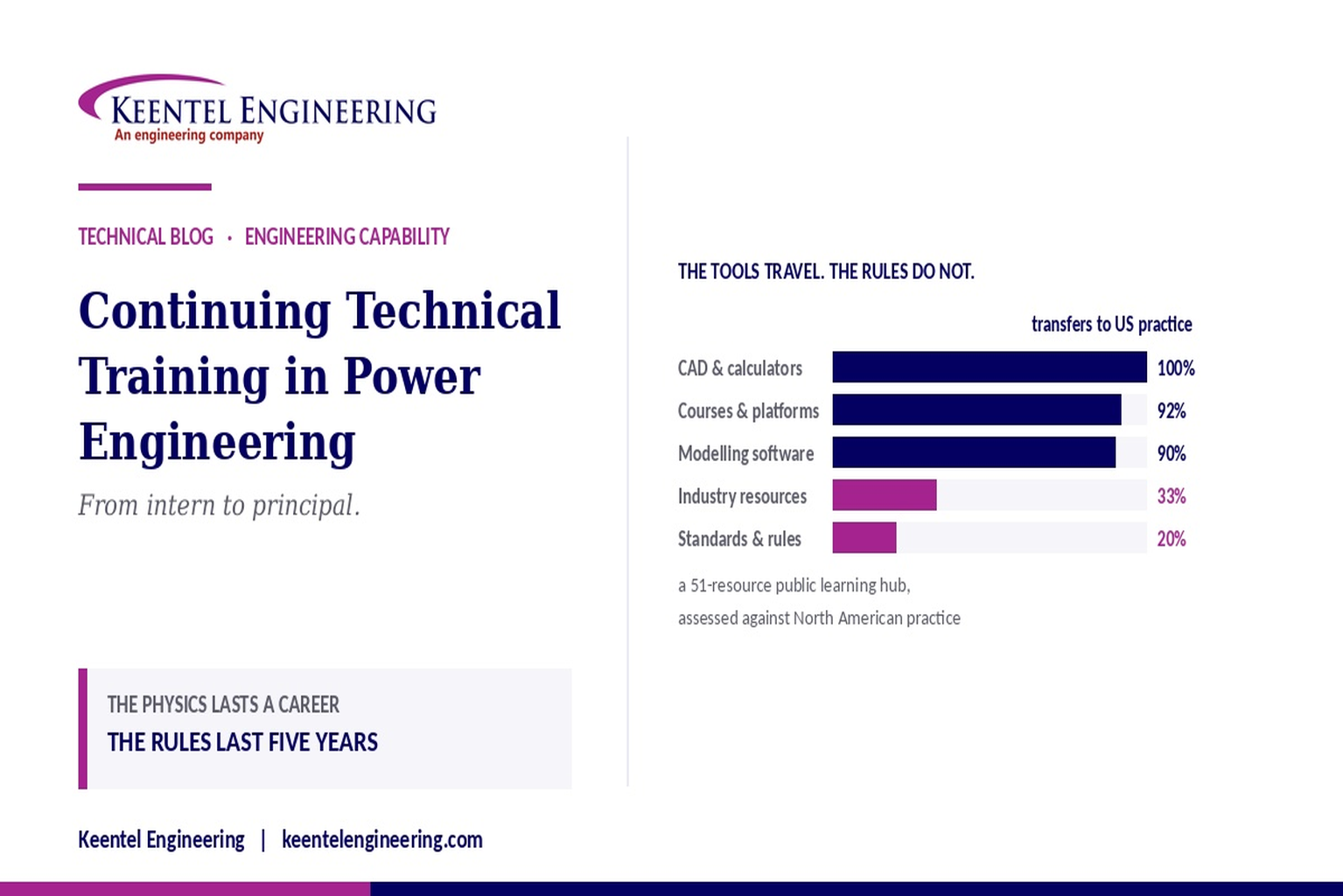
Learn why continuing technical training matters in power engineering, including standards, software skills, PDH requirements, and career growth.
By SANDIP R PATEL
•
September 22, 2026
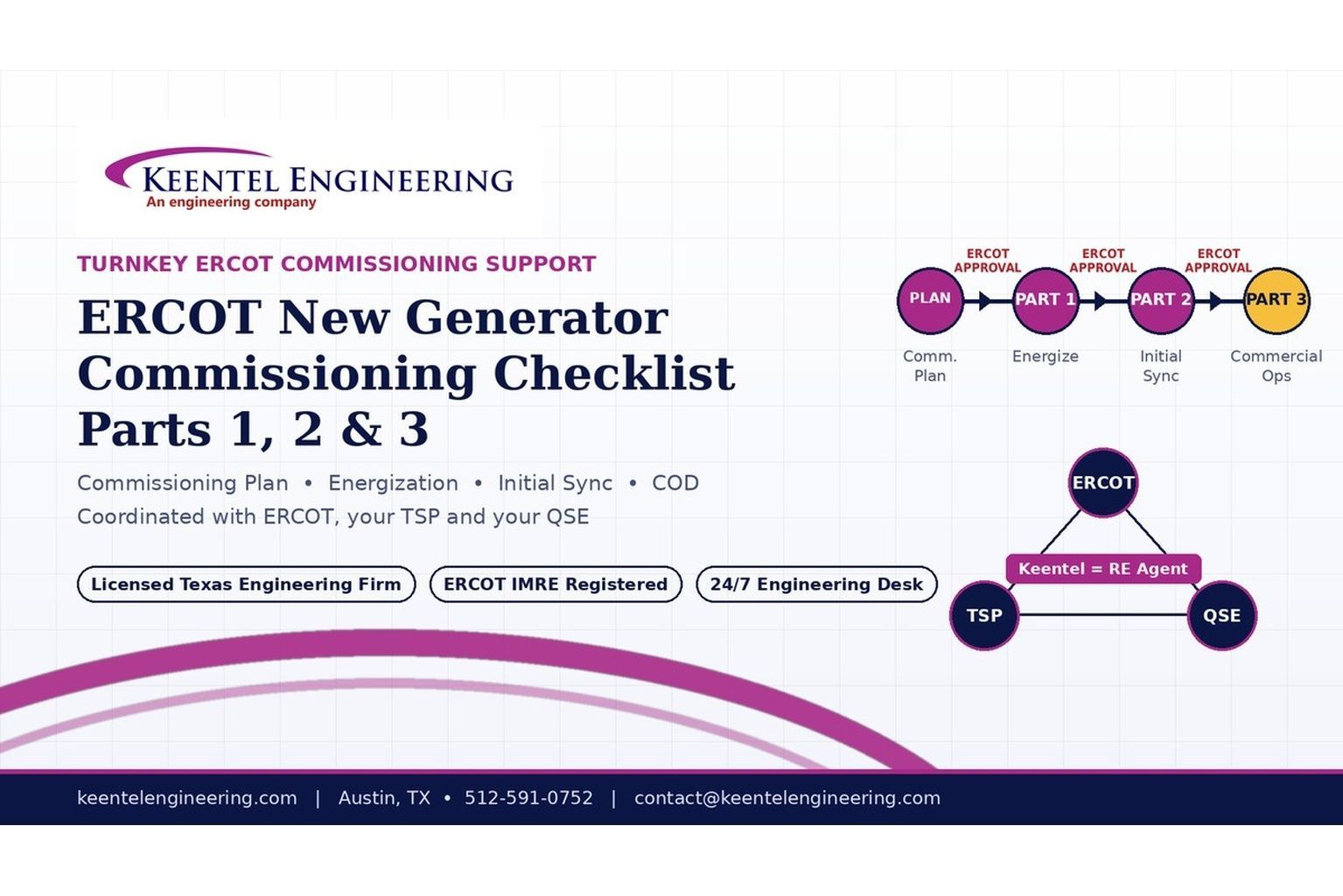
2026 ERCOT commissioning guide covering the Commissioning Plan, Checklist Parts 1–3, BESS requirements, TSP/QSE coordination, field testing and COD.
By SANDIP R PATEL
•
September 22, 2026
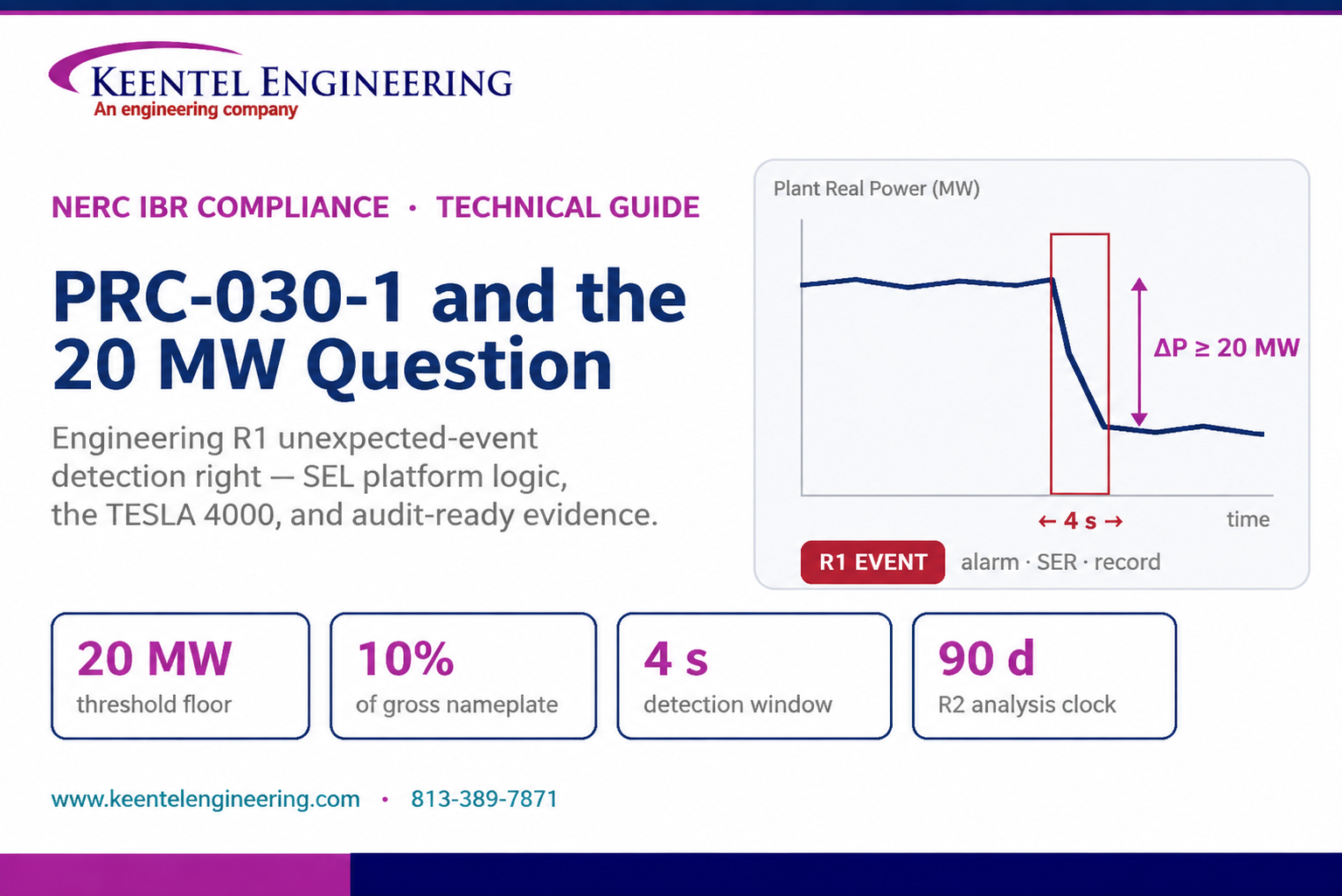
Learn PRC-030-1 R1 event detection requirements for inverter-based resources, SEL platforms, disturbance monitoring, and audit-ready compliance.
By SANDIP R PATEL
•
September 22, 2026
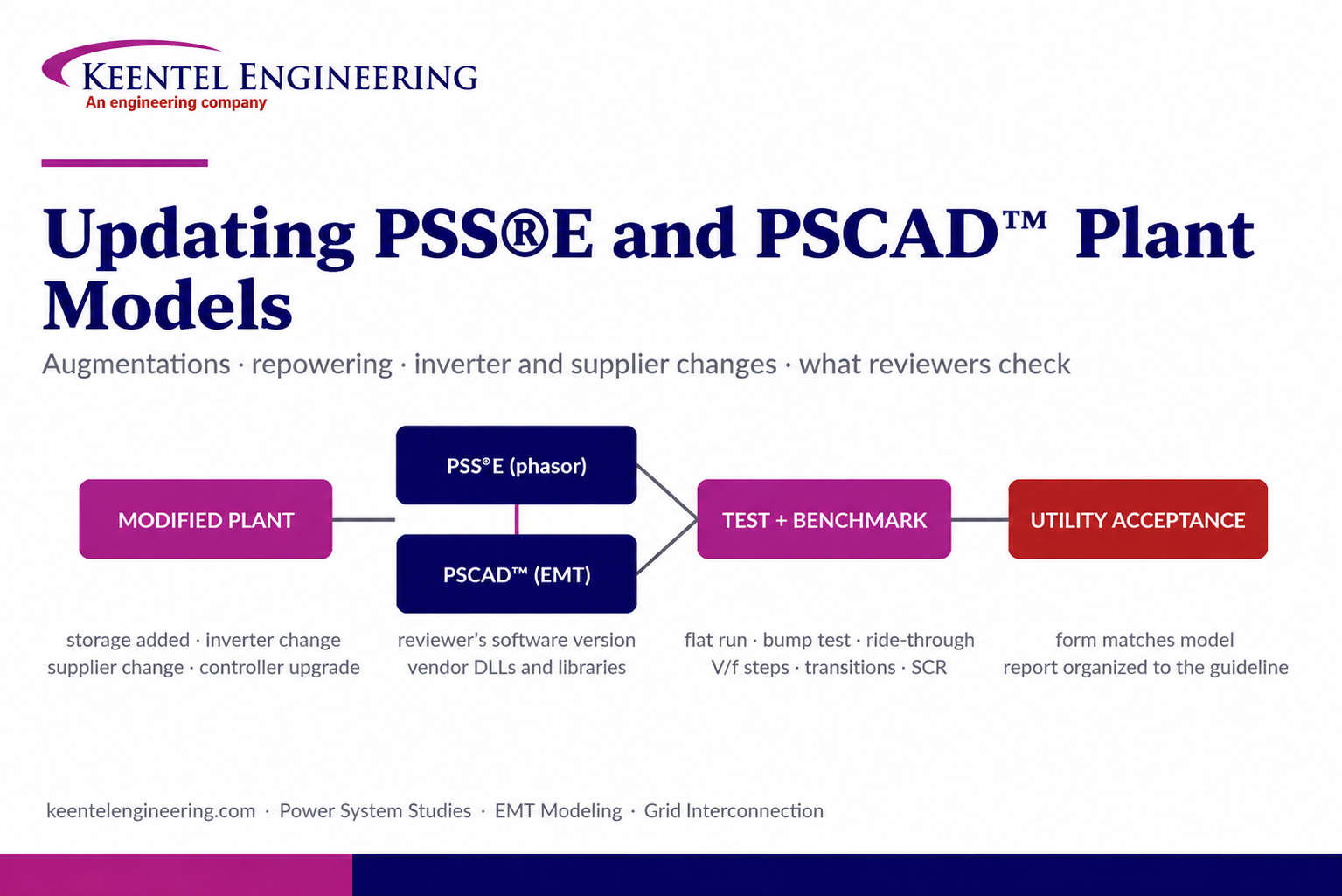
Learn how PSS®E and PSCAD™ model updates support plant augmentations, repowering, equipment changes, testing, benchmarking, and grid compliance.