A Coordinated Electric System Interconnection Review—the utility’s deep-dive on technical and cost impacts of your project.
Challenge: Frequent false tripping using conventional electromechanical relays
Solution: SEL-487E integration with multi-terminal differential protection and dynamic inrush restraint
Result: 90% reduction in false trips, saving over $250,000 in downtime
Guidelines for Using Real-Code in EMT Models for HVDC, FACTS, and Inverter-Based Resources
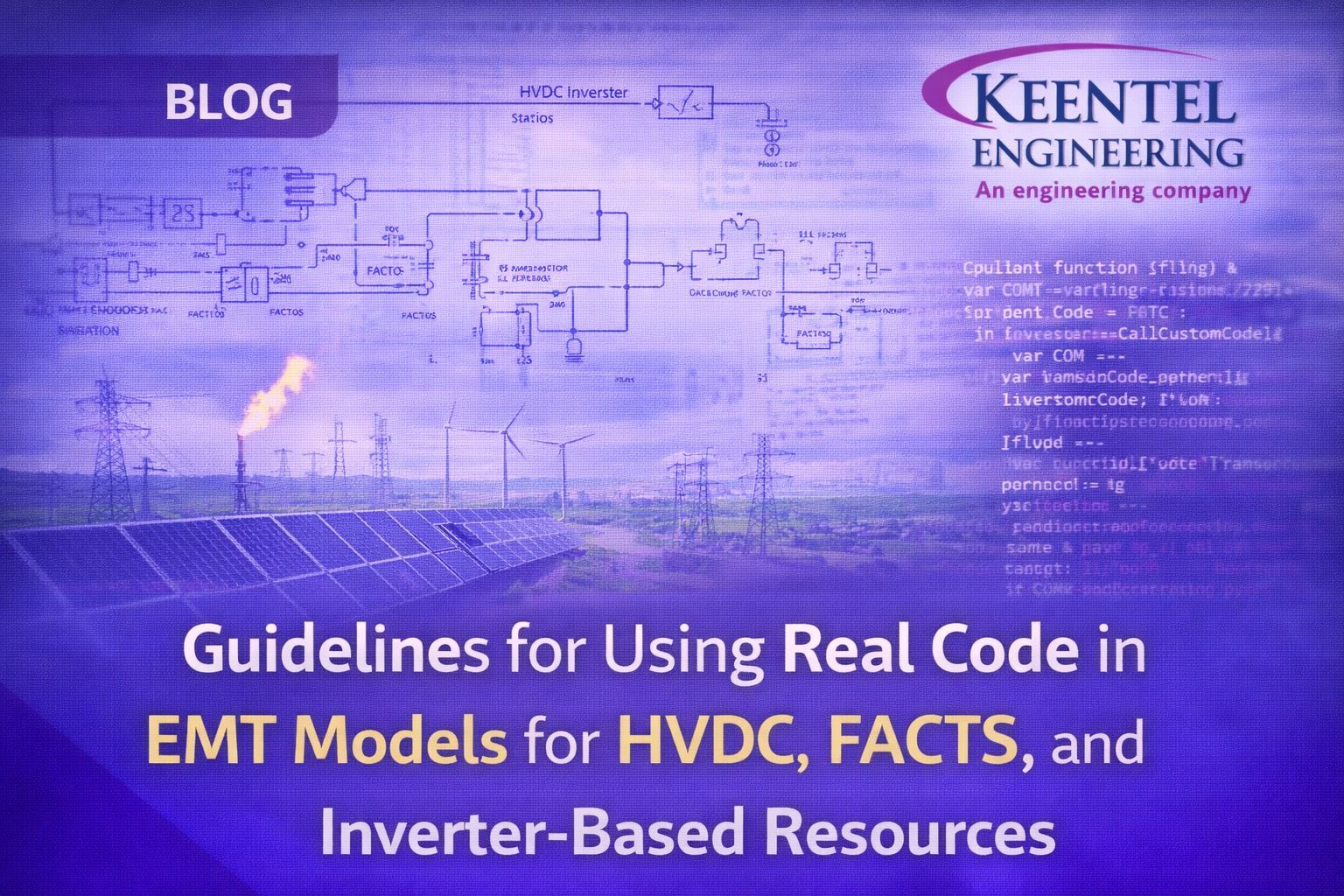
january 01, 2026 | Blog
Introduction
As power systems rapidly transition toward inverter-based resources (IBRs), high-fidelity modeling has become a regulatory, operational, and planning necessity rather than a luxury. Utilities, ISOs, and developers increasingly require Electro-Magnetic Transient (EMT) studies that accurately reflect the real behavior of HVDC systems, FACTS devices, and inverter-based generators under normal and abnormal grid conditions.
The IEEE/CIGRE real-code EMT modeling methodology (Technical Brochure 958, February 2025) represents a major step forward in this space. It establishes a standardized, tool-agnostic framework that allows actual controller firmware (“real-code”)—the same code running in field hardware—to be executed directly within EMT and RMS simulation environments.
At Keentel Engineering, we actively support utilities, generation owners, and developers in implementing IEEE/CIGRE-compliant EMT models for interconnection studies, NERC compliance, and advanced grid performance assessments.
These guidelines for use of real-code in EMT models for HVDC, FACTS, and inverter-based generators help ensure accurate and standardized power system analysis.
Why Real-Code EMT Modeling Matters
Traditional EMT and transient stability models often rely on:
- Simplified block diagrams
- Generic control representations
- Tool-specific implementations
While these approaches can be sufficient for high-level studies, they fall short when:
- Grid codes demand accurate fault-ride-through and control response
- Multiple vendors’ equipment must interact realistically
- Protection, PLLs, current limiters, and fast controls dominate system behavior
The IEEE/CIGRE approach solves these issues by enabling controller source code reuse without exposing intellectual property and without tying models to a single simulation platform.
An inverter-based resource EMT model provides high-fidelity representation of converter controls, protection logic, and grid interaction behavior.
Overview of the IEEE/CIGRE DLL Modeling Method
The IEEE/CIGRE methodology defines a standardized Dynamic Link Library (DLL) interface that acts as a bridge between:
- Manufacturer or model-writer controller code, and
- Any compliant EMT or RMS simulation tool
Key characteristics:
- Black-box implementation
- Self-documenting model structure
- Fixed-step, real-time controller execution
- Support for EMT and RMS tools
- Snapshot and multi-instance capability
Although commonly referred to as a “DLL” method, the same concept applies to Linux shared objects (.so), making it suitable for real-time simulators and Linux-based EMT platforms.
CIGRE inverter-based loads modeling and latest research in 2025 highlight the importance of accurate representation of modern grid dynamics.
Core Benefits of the IEEE/CIGRE Real-Code Approach
1. Highest Possible Model Fidelity
Sector integration enables renewable electricity to displace fossil fuels in transport, heating, and industry through electrification and power-to-X technologies. This is critical because electricity alone accounts for only ~20% of final energy consumption, while heat and transport together exceed 70% globally
2. Tool Independence
The same DLL model can run in multiple EMT or RMS tools without recompilation, ensuring consistent results across platforms.
3. Intellectual Property Protection
- Manufacturers retain full control of proprietary code while still delivering high-quality models to utilities and system operators.
4. Long-Term Compatibility
- Unlike static linking (.lib or .obj files), dynamically linked models avoid compiler and version dependency issues.
5. Regulatory and Compliance Alignment
Utilities increasingly require CAISO EMT modeling compliance to validate system performance under dynamic and transient conditions.
High-fidelity EMT models are increasingly expected for:
- Interconnection studies
- NERC MOD, PRC, and TPL analyses
- ISO-specific EMT requirements (ERCOT, WECC, CAISO, PJM, etc.)
Architecture of an IEEE/CIGRE DLL Model
Static Model Information
Each model contains a static data structure that defines:
- Model name, version, and description
- Input and output signals
- Parameters, units, limits, and defaults
- Fixed controller sampling rate
- Supported EMT/RMS modes
- Required state variable counts
This makes the model
self-describing, allowing simulation tools to automatically generate interfaces.
Dynamic Model Instance
During simulation, an instance structure is used to pass:
- Real-time inputs (voltages, currents, control signals)
- Outputs (firing pulses, current commands, trips)
- Parameters
- Time information
- State variables
- Each instance operates independently, enabling
multiple identical controllers within the same study.
State Variables, Snapshots, and Multi-Instance Support
State variables are central to real-code modeling:
- They store integrator states, internal memory, and output history
- They enable flat-start initialization for RMS studies
- They allow EMT simulations to restart from saved snapshots
Proper state management ensures:
- No cross-talk between identical model instances
- Accurate continuation from saved simulation states
- Repeatable and auditable study results
Keentel Engineering places special emphasis on validating correct state variable grouping when reviewing OEM-supplied DLL models.
Roles Defined by the Standard
Model Writers (OEMs or Developers)
- Wrap controller firmware with a standardized interface
- Define inputs, outputs, parameters, and state variables
- Compile the complete package into a DLL or shared object
Simulation Tool Developers
- Provide DLL import utilities
- Manage sample-and-hold execution
- Allocate state variable memory
- Handle EMT/RMS solver interaction
End Users (Utilities, ISOs, Consultants)
- Import DLL models into simulation tools
- Configure parameters
- Connect models to electrical networks
- Run EMT and RMS studies
Practical Applications for HVDC, FACTS, and IBRs
IEEE/CIGRE real-code modeling is particularly valuable for:
- VSC-HVDC converters
- LCC-HVDC control and protection
- STATCOMs and SVCs
- Grid-forming and grid-following inverters
- Wind, solar PV, and BESS plant controllers
These technologies are dominated by fast digital controls that cannot be accurately represented using simplified RMS models alone.
Read
model accuracy and verification for emt simulations
How Keentel Engineering Supports Real-Code EMT Modeling
Keentel Engineering provides end-to-end support for IEEE/CIGRE-compliant modeling, including:
- OEM DLL model review and validation
- EMT model integration into PSCAD, EMTP, RTDS, and other tools
- Snapshot and multi-instance testing
- Interconnection and NERC compliance studies
- Independent verification for utilities and ISOs
Our engineers understand both power electronics control theory and regulatory study expectations, ensuring models are technically sound and acceptable to stakeholders.
Keentel Engineering aligns its modeling practices with IEEE standards, including IEEE 2842-2022 for advanced power system performance evaluation.
Conclusion
The IEEE/CIGRE real-code EMT modeling methodology represents the future of high-fidelity power system analysis. By bridging real controller firmware with modern simulation tools, it enables unprecedented accuracy, repeatability, and confidence in grid studies involving HVDC, FACTS, and inverter-based resources.
Keentel Engineering is proud to support clients at the forefront of this transition—helping ensure reliable, compliant, and resilient power systems.
Recent advancements in inverter-based loads modeling continue to shape future
EMT simulation practices and grid compliance requirements.
Frequently Asked Questions (FAQ)
1. What is “real-code” in EMT modeling?
Real-code refers to the actual controller firmware used in field hardware, executed directly inside simulation tools.
2. How is this different from generic EMT models?
Generic models approximate behavior, while real-code models replicate exact control logic and timing.
3. Is the IEEE/CIGRE method limited to EMT tools?
No. It supports both EMT and RMS (transient stability) simulation environments.
4. Why are DLLs used instead of source code?
DLLs protect intellectual property and avoid compiler compatibility issues.
5. Can the same DLL be used in multiple simulation tools?
Yes, provided the tools support the IEEE/CIGRE interface.
6. Does this method expose OEM proprietary algorithms?
No. The implementation is black-box and IP-protected.
7. Are Linux-based simulators supported?
Yes. The same methodology applies using shared object (.so) files.
8. What types of equipment benefit most from real-code modeling?
HVDC converters, FACTS devices, and inverter-based generators.
9. How are controller sampling rates handled?
Sampling rates are defined inside the model and executed independently of solver time steps.
10. What is a snapshot in EMT simulation?
A snapshot saves all controller states, allowing simulations to restart without re-initialization.
11. Why are state variables critical?
They ensure accurate dynamics, multi-instance capability, and snapshot functionality.
12. Can multiple identical controllers be modeled simultaneously?
Yes, provided state variables are correctly implemented.
13. Is this method an official IEEE standard?
Not yet, but it is widely adopted and referenced by industry and TSOs.
14. Does this replace RMS models entirely?
No. EMT and RMS models are complementary and used for different study objectives.
15. Are utilities requiring real-code EMT models?
Increasingly yes, especially for IBR-heavy interconnections.
16. How does this support NERC compliance?
It enables accurate MOD, PRC, and TPL studies involving fast controls.
17. Can parameters be changed during simulation?
Yes, unless marked as fixed-value parameters.
18. How are errors and warnings handled?
Standardized return codes and message fields are provided in the interface.
19. Does this support grid-forming inverters?
Yes, including advanced PLL-less and virtual synchronous controls.
20. Is real-time simulation supported?
Yes, especially when compiled for real-time platforms like RTDS or HYPERSIM.
21. What simulation tools commonly support this method?
Most major EMT tools, including PSCAD, EMTP, and real-time simulators.
22. Can Keentel review OEM-supplied DLL models?
Yes. Independent validation is a core Keentel service.
23. Is encryption possible for sensitive state variables?
Yes. The standard allows encrypted or obfuscated state storage.
24. Does this method support future tool upgrades?
Yes. DLLs remain compatible even as simulation tools evolve.
23. Is encryption possible for sensitive state variables?
Yes. The standard allows encrypted or obfuscated state storage.
25. How can Keentel Engineering help with real-code EMT studies?
We provide model validation, integration, compliance studies, and expert consulting for utilities and developers

About the Author:
Sandip "Sonny" R. Patel, P.E.
IEEE Senior Member · Founder & CEO, Keentel Engineering
In 1995, Sonny Patel earned his Electrical Engineering degree from the University of Illinois. But degrees don't build legacies — action does.
For three decades, he has worked the power industry from every side of the table: 16 years as a utility engineer at Exelon/Commonwealth Edison; generation leadership across hydroelectric, industrial steam turbine, and a 9 GW renewable fleet; NERC Regional Entity Senior Compliance Engineer and Audit Team Lead, auditing some of the nation's largest utilities; and testing and commissioning lead on equipment up to 765 kV — the very top of the North American grid.Utility. Generator. Regulator. Consultant. Few engineers have seen all four seats. Fewer still have sat in them.
His experience spans nuclear, hydro, conventional generation, renewables, oil and gas, mining — and today's data centers, where he is authoring a three-book series on data center design. He is a Licensed Professional Engineer in six states and a Licensed Electrical Contractor in Florida (Unlimited EC) — he doesn't just design the work; he's qualified to stand behind its execution.Today, as Founder and CEO of Keentel Engineering, Sonny leads a nationwide team of engineers delivering substation design, power system studies, NERC compliance, and commissioning — done right, coast to coast.Three decades. Every side of the table. One standard: accountable engineering.
Services

Let's Discuss Your Project
Let's book a call to discuss your electrical engineering project that we can help you with.
About the Author:
Sandip "Sonny" R. Patel, P.E.
IEEE Senior Member · Founder & CEO, Keentel Engineering
In 1995, Sonny Patel earned his Electrical Engineering degree from the University of Illinois. But degrees don't build legacies — action does.
For three decades, he has worked the power industry from every side of the table: 16 years as a utility engineer at Exelon/Commonwealth Edison; generation leadership across hydroelectric, industrial steam turbine, and a 9 GW renewable fleet; NERC Regional Entity Senior Compliance Engineer and Audit Team Lead, auditing some of the nation's largest utilities; and testing and commissioning lead on equipment up to 765 kV — the very top of the North American grid.
Utility. Generator. Regulator. Consultant. Few engineers have seen all four seats. Fewer still have sat in them.
His experience spans nuclear, hydro, conventional generation, renewables, oil and gas, mining — and today's data centers, where he is authoring a three-book series on data center design. He is a Licensed Professional Engineer in six states and a Licensed Electrical Contractor in Florida (Unlimited EC) — he doesn't just design the work; he's qualified to stand behind its execution.
Today, as Founder and CEO of Keentel Engineering, Sonny leads a nationwide team of engineers delivering substation design, power system studies, NERC compliance, and commissioning — done right, coast to coast.Three decades. Every side of the table. One standard: accountable engineering.
Leave a Comment
Thank you for contacting us.
We will get back to you as soon as possible.
We will get back to you as soon as possible.
Oops, there was an error sending your message.
Please try again later.
Please try again later.
Related Posts
By SANDIP R PATEL
•
October 3, 2026
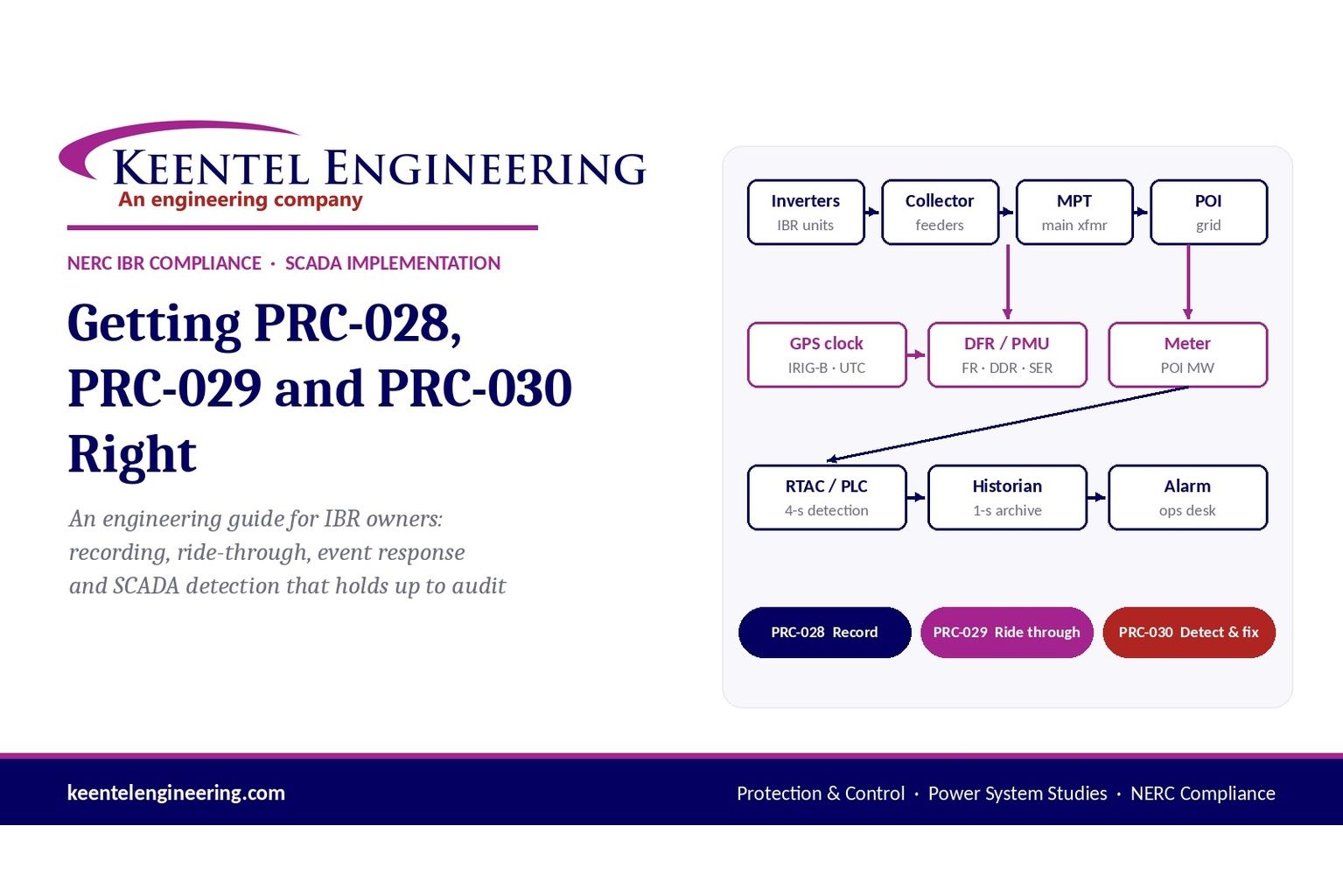
Engineering guide to PRC-028 disturbance recording, PRC-029 ride-through and PRC-030 event detection for inverter-based resources.
By SANDIP R PATEL
•
October 3, 2026
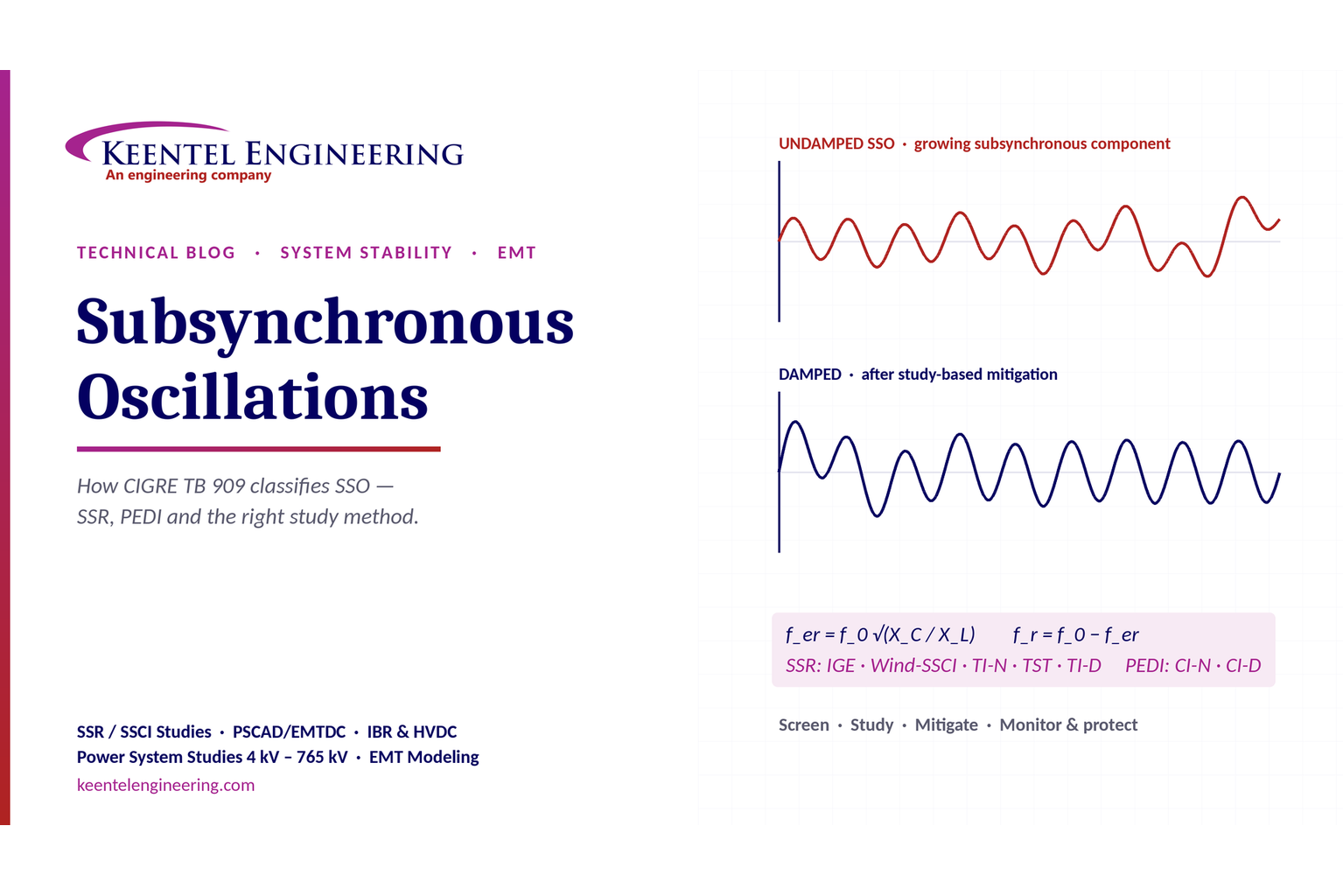
A practical guide to SSO classification, SSR, PEDI, Wind-SSCI, EMT analysis, mitigation and protection based on CIGRE TB 909.
By SANDIP R PATEL
•
October 3, 2026
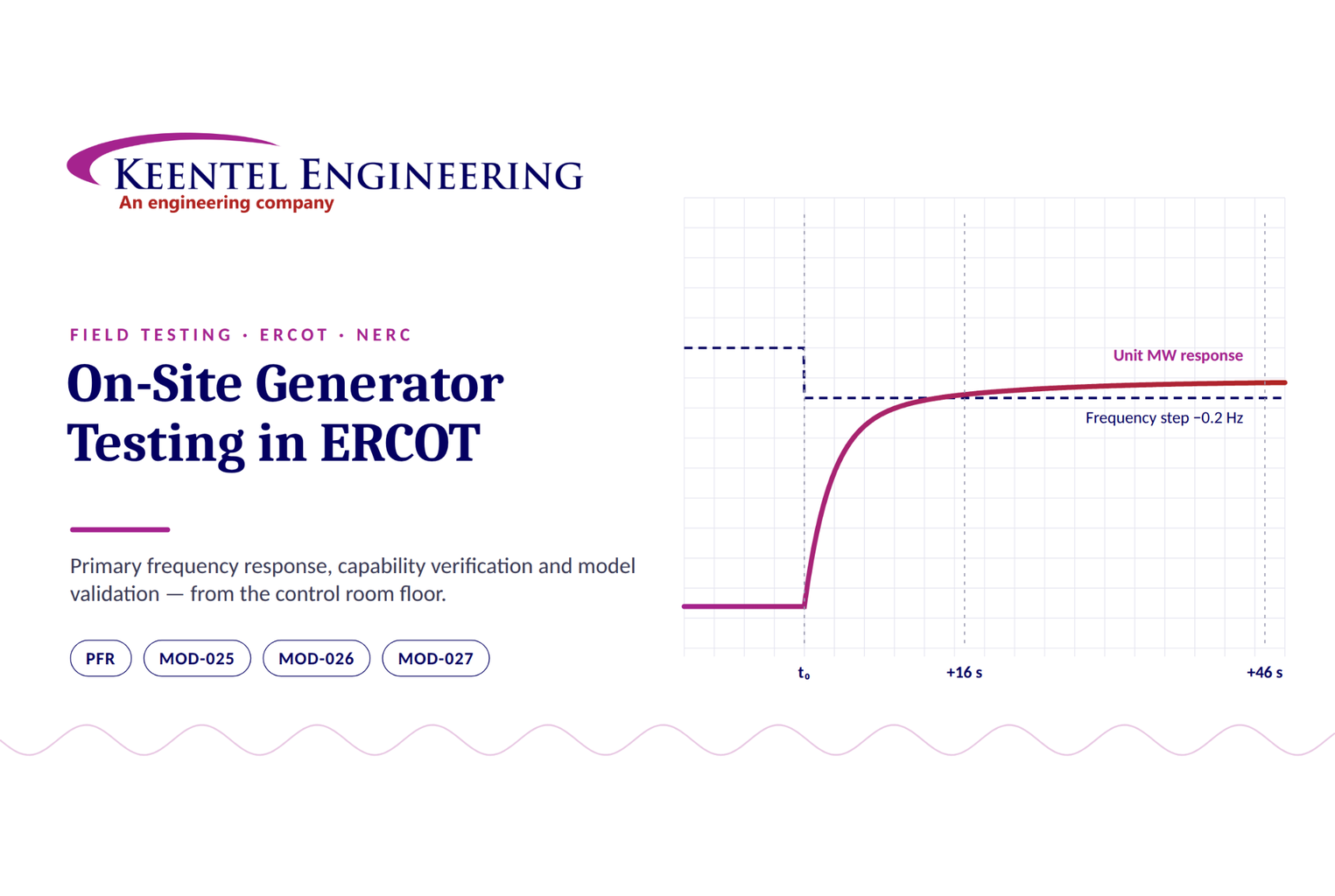
Learn ERCOT generator testing for PFR, MOD-025 and MOD-026/027, including staged tests, capability verification, dynamic models and field testing.
By SANDIP R PATEL
•
October 3, 2026
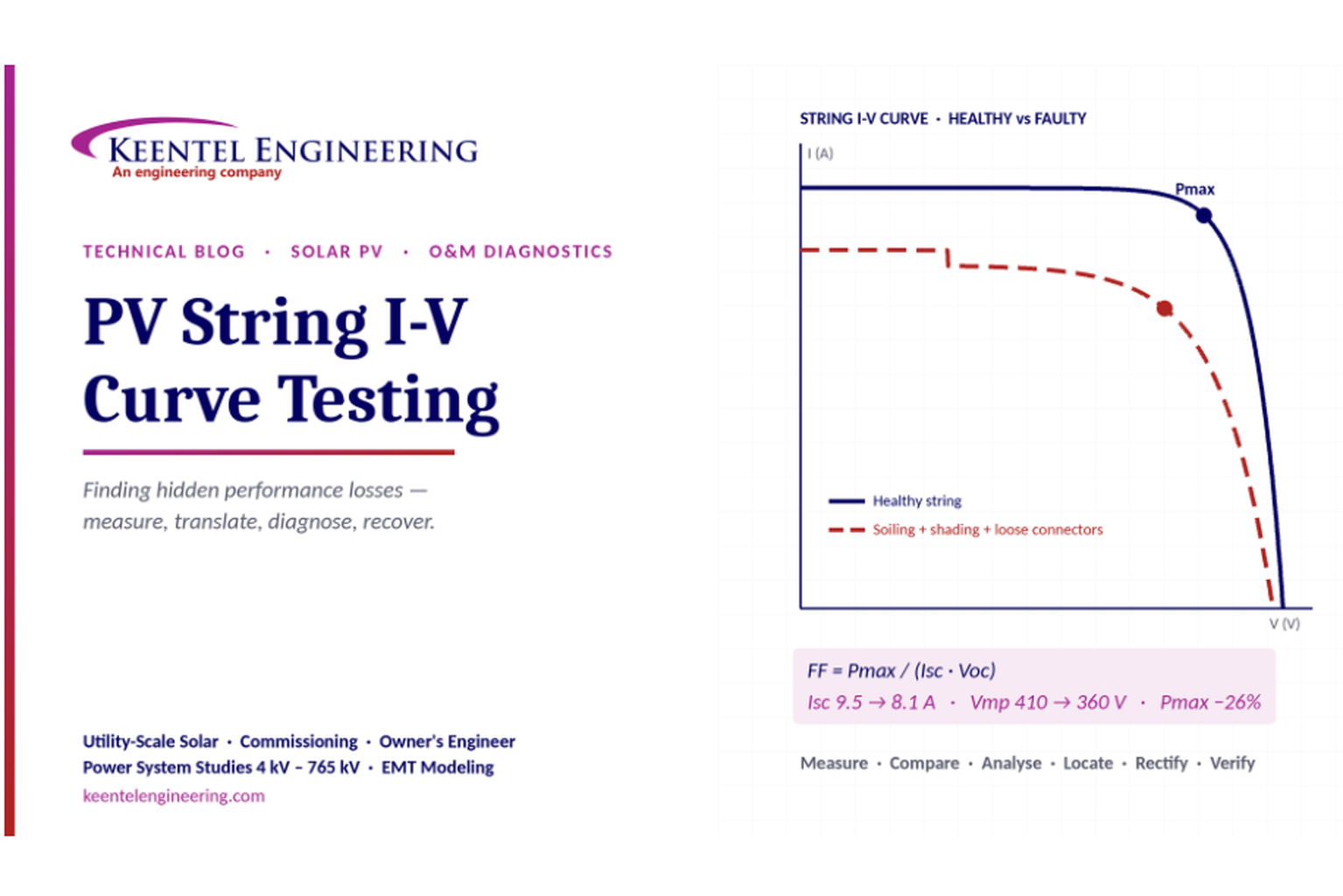
Learn how PV string I-V curve testing identifies hidden solar performance losses, including soiling, shading, mismatch, degradation, and wiring faults.
By SANDIP R PATEL
•
October 3, 2026
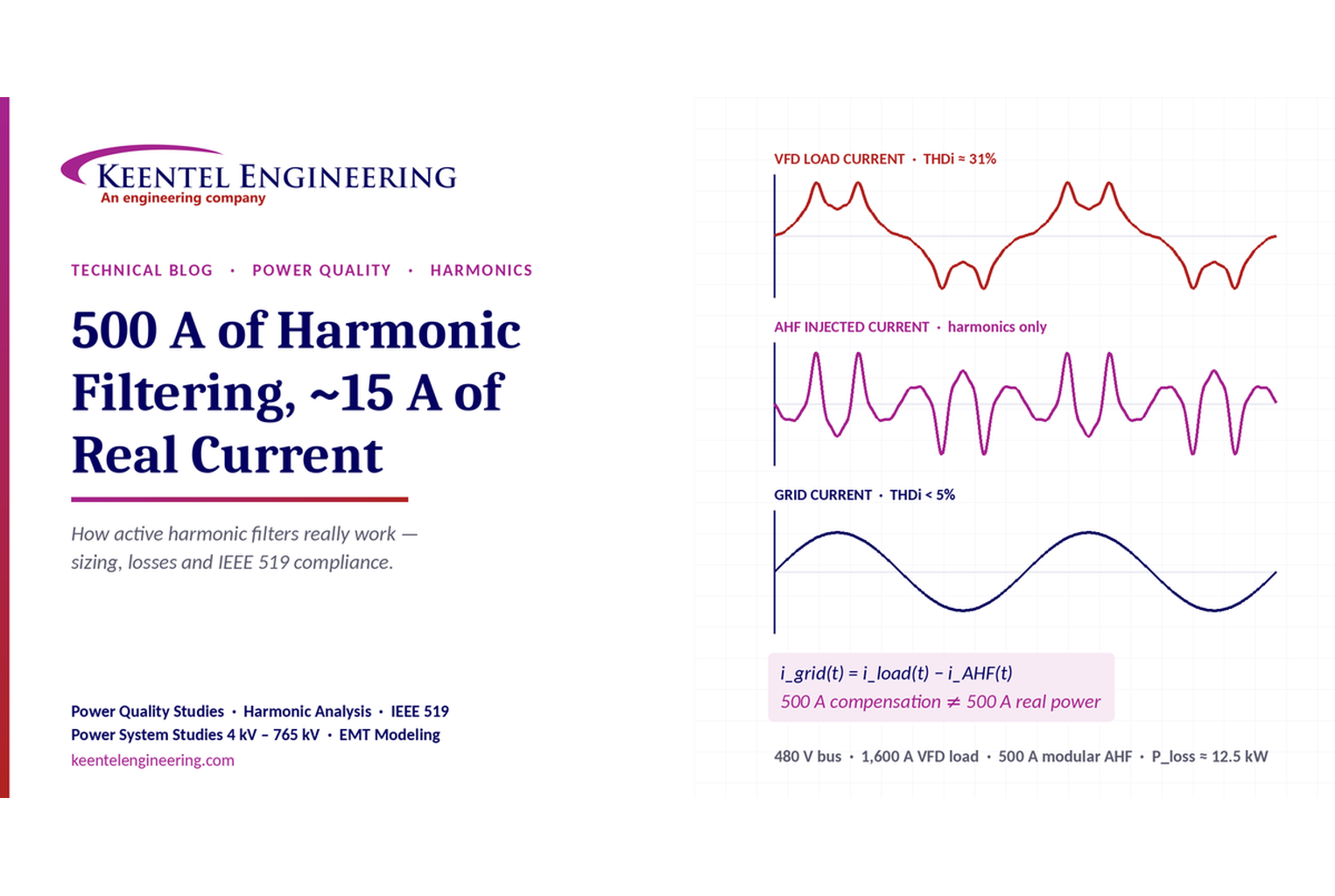
Learn how active harmonic filters work, how to size AHF systems, reduce VFD harmonics, calculate losses, and meet IEEE 519 TDD limits at the PCC.
By SANDIP R PATEL
•
October 3, 2026
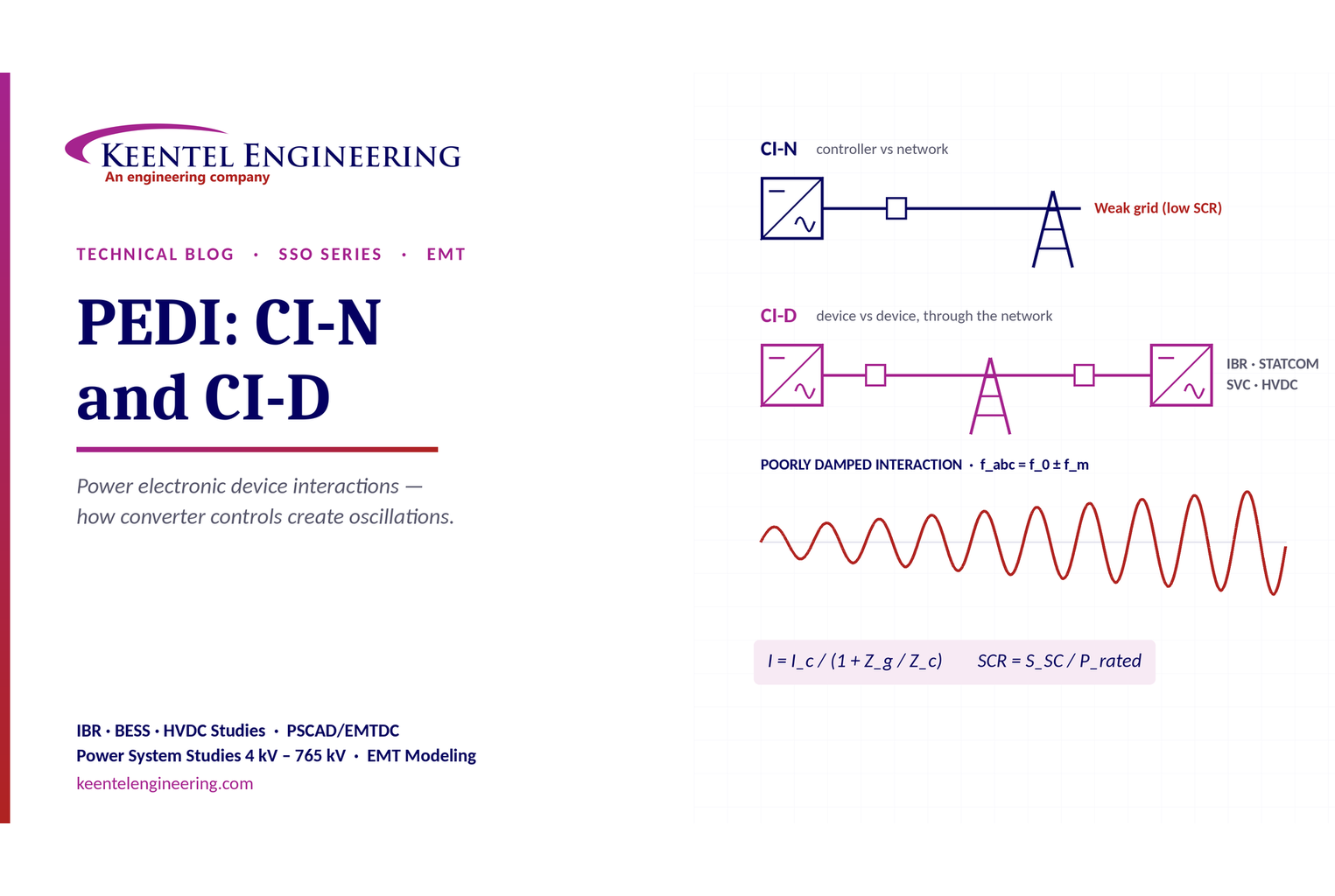
Learn power electronic device interactions (PEDI), including CI-N and CI-D, weak-grid stability, SCR, EMT studies, impedance analysis and mitigation for IBRs.
By SANDIP R PATEL
•
October 3, 2026
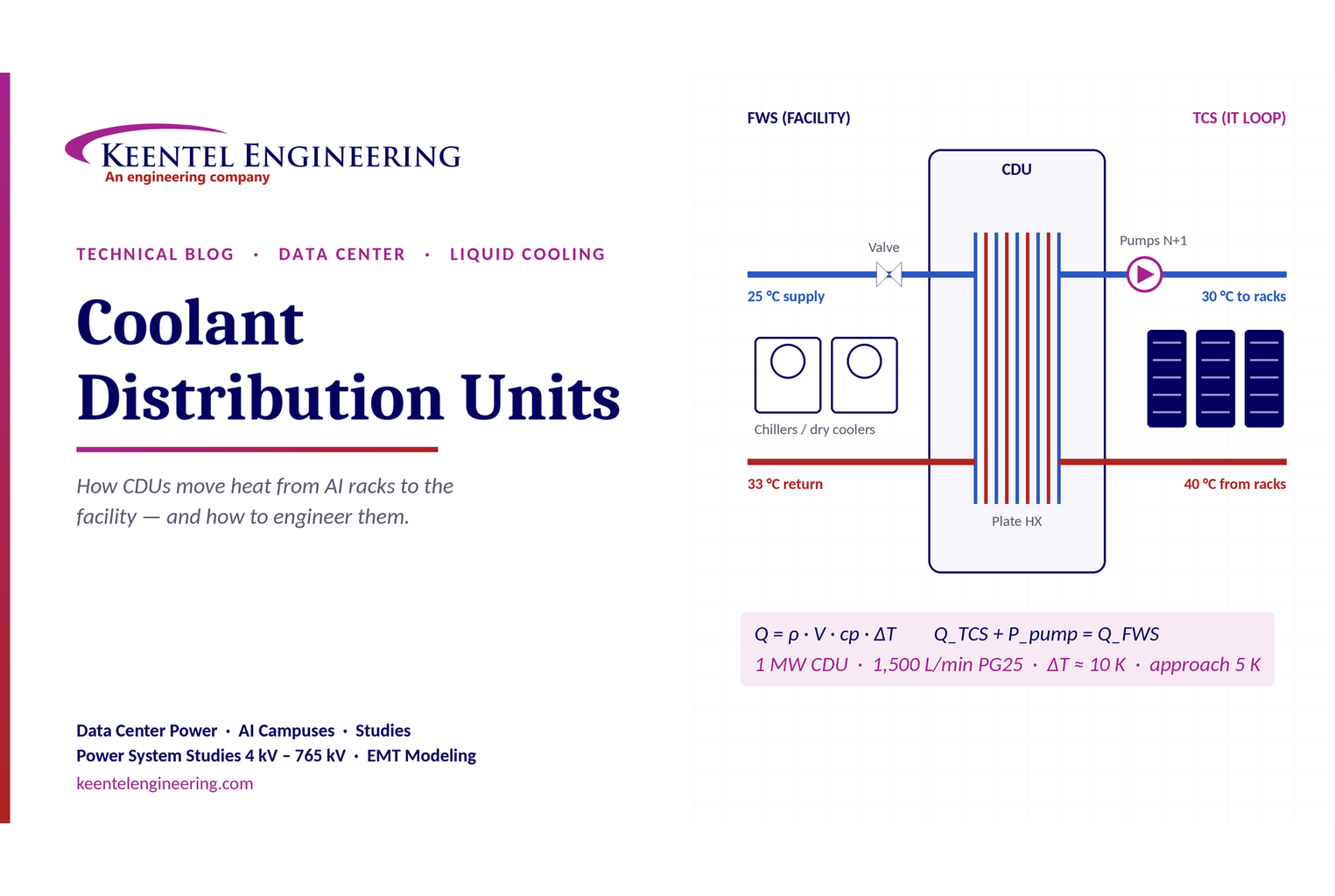
Learn how data center coolant distribution units (CDUs) work, including FWS and TCS loops, heat transfer, sizing, redundancy and liquid cooling for AI data centers.
By SANDIP R PATEL
•
October 3, 2026
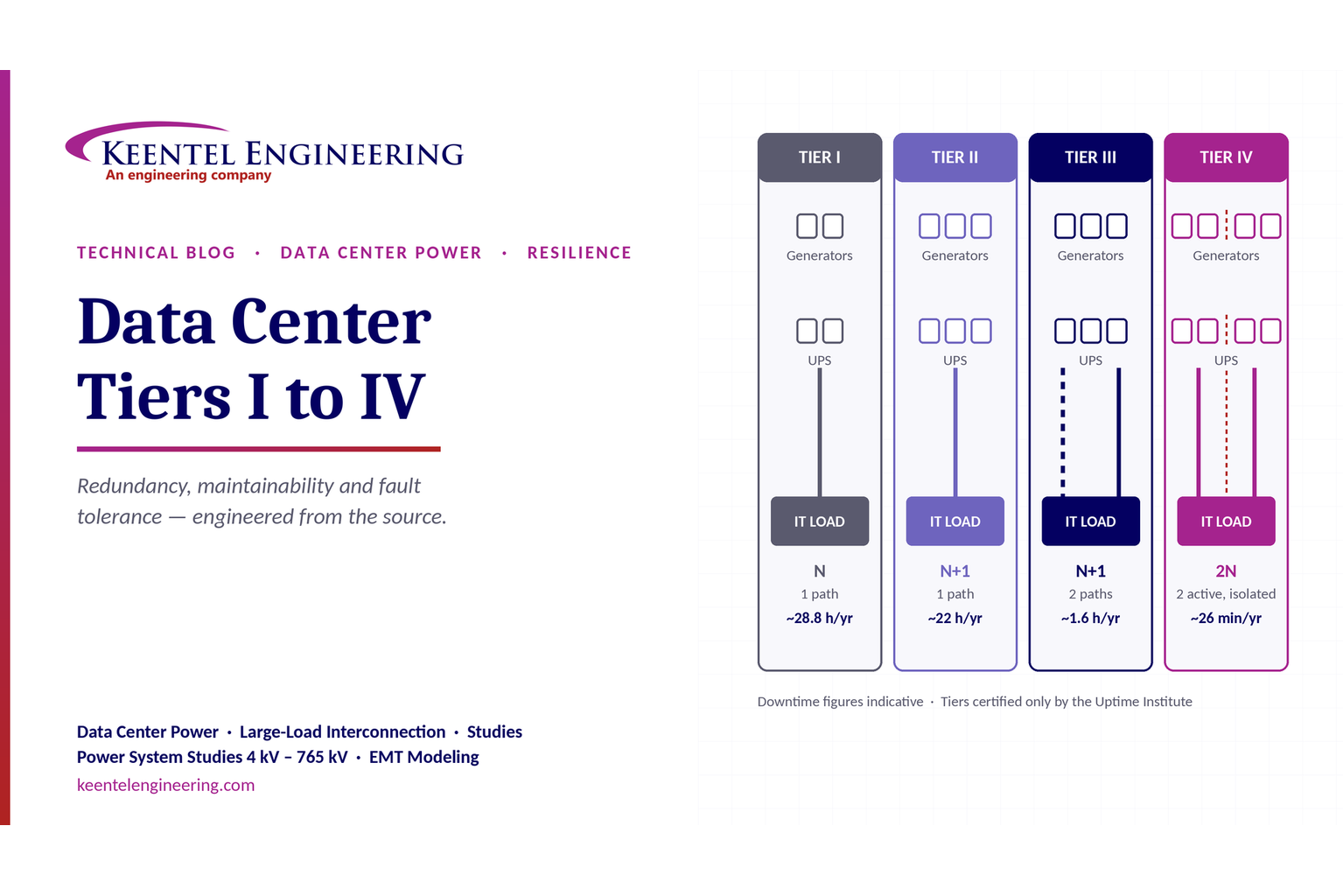
Compare Data Center Tiers I–IV, including redundancy, uptime, Tier III concurrent maintainability, Tier IV fault tolerance, UPS, generators and power design.
By SANDIP R PATEL
•
October 3, 2026
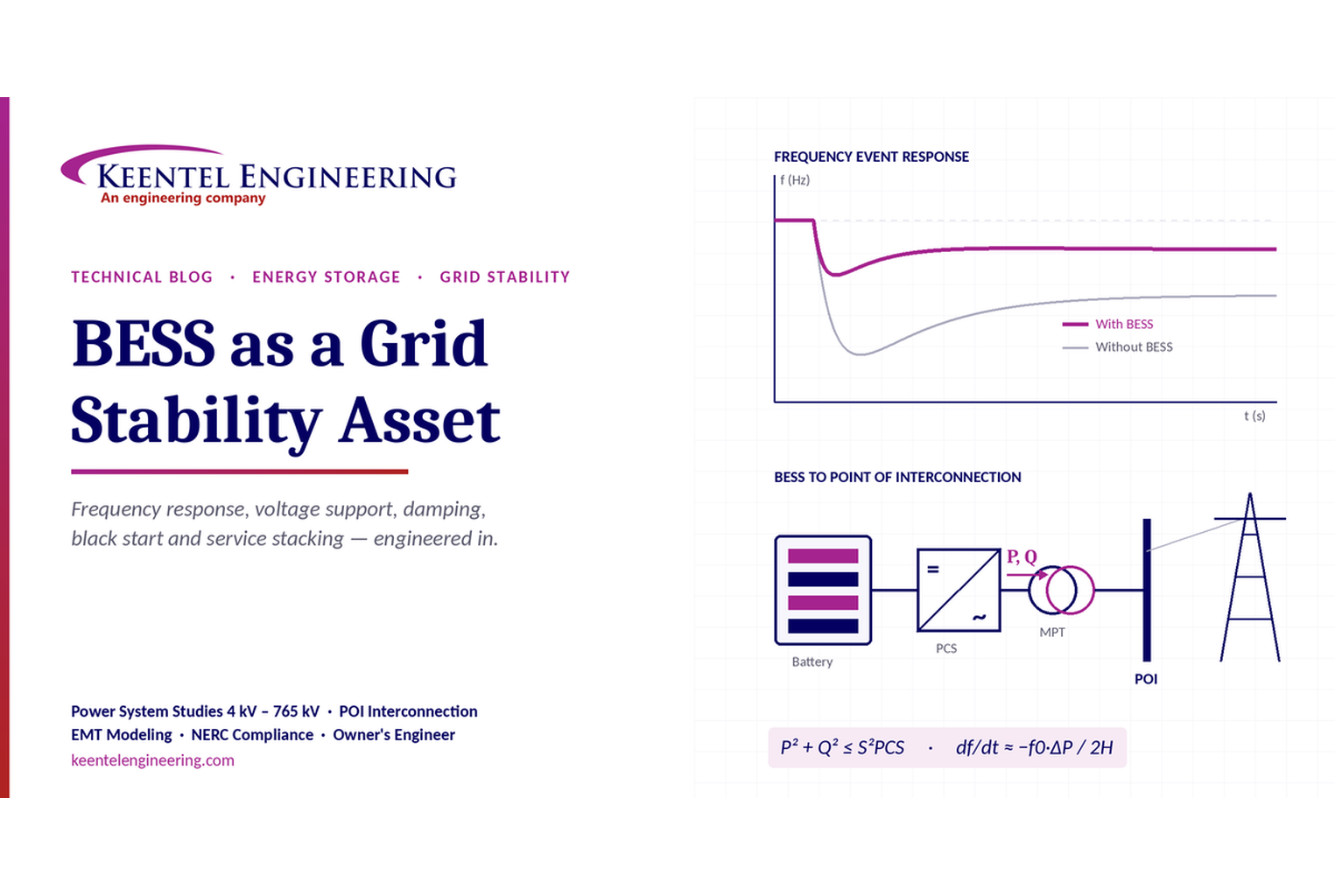
Learn how BESS supports grid stability through fast frequency response, voltage support, oscillation damping, black start, grid-forming controls and EMT studies.