
Add your custom HTML here
From Keentel Engineering
Power System Studies Process
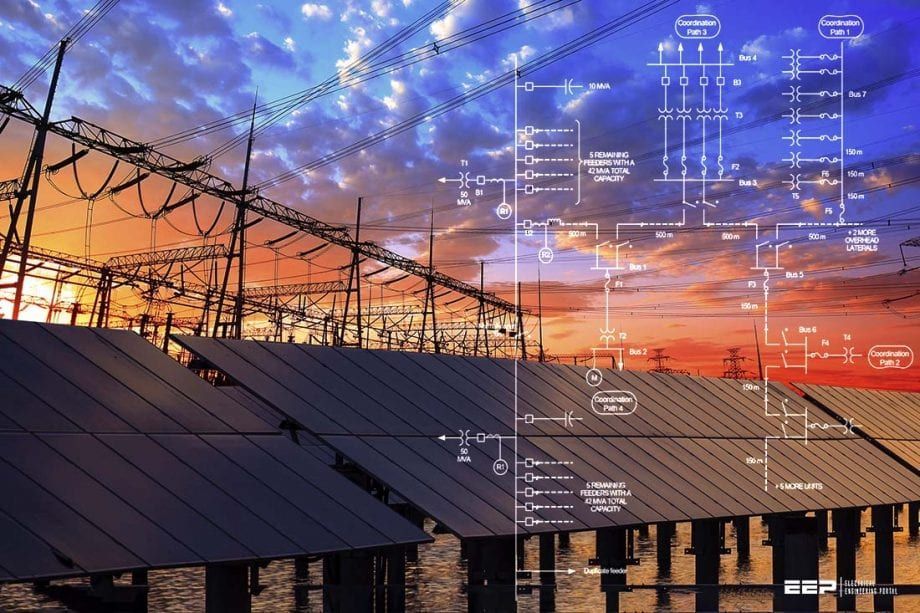
Transmission-Level HV & EHV Engineering Methodology
High-voltage and extra-high-voltage (HV/EHV) systems demand a disciplined, multi-platform engineering workflow. Keentel Engineering follows a structured study process using PSS®E, PSCAD, ETAP, and DIgSILENT PowerFactory to deliver ISO-ready, compliance-aligned, and technically defensible results.
Our methodology is built for utilities, renewable developers, EPC firms, and large industrial operators requiring transmission-grade validation.
Phase 01
Project Initiation & Study Matrix Development
Every engagement begins with clearly defined objectives and modeling boundaries.
Scope Definition
- Establish POI-to-grid modeling limits
- Define voltage levels and equipment ratings
- Identify N-0, N-1, and N-1-1 contingencies
- Include peak, light load, seasonal, and export scenarios
- Identify weak grid / minimum SCR cases (if applicable)
Software Allocation
Each study type is assigned to the appropriate platform:
| Study Type | Primary Platform |
|---|---|
| Power Flow & RMS Stability | PSS®E / DIgSILENT |
| EMT & Fast Transients | PSCAD / DIgSILENT EMT |
| Short Circuit (ANSI/IEC) | ETAP / DIgSILENT |
| Protection Coordination | ETAP / DIgSILENT |
| Arc Flash | ETAP |
| Harmonics / Frequency Scan | ETAP / DIgSILENT / PSCAD |
| Ground Grid | ETAP / CDEGS |
Compliance Alignment
- Utility / ISO interconnection standards
- IEEE C37, C57, 1584, 519, 2800
- NERC standards (if BES applicable)
- ANSI / IEC duty verification
- NFPA 70E arc flash requirements
Phase 02
Structured Data Collection & Model Integrity
Accurate modeling depends on validated technical inputs.
Transmission & Dynamic Data
- Utility base case files (.sav, .raw, .dyr, PowerFactory)
- Line R/X/B parameters and ratings
- Transformer MVA, impedance %, vector group, tap range
- Generator / inverter dynamic models
- Plant controller models
- Reactive devices (SVC, STATCOM, capacitor banks)
- POI short-circuit levels
Facility & Protection Data
- As-built one-line diagrams
- Breaker interrupting ratings
- CT/PT ratios
- Relay types and firmware
- Cable lengths and conductor data
- Ground grid layout and soil resistivity
All assumptions are logged in a controlled Model Assumption Register for audit traceability.
Phase 03
Transmission-Level RMS Modeling
(PSS®E / DIgSILENT)
Base Case Development
- Import and validate utility base model
- Add POI, GSU, collector systems, and station buses
- Verify transformer vector groups
- Confirm per-unit base consistency
- Set machine capability curves and reactive limits
Power Flow & Contingency Analysis
- Flat-start load flow validation
- Voltage profile verification (0.95–1.05 pu)
- MW/MVAR balance review
- Equipment loading checks
- N-1 and N-1-1 simulations
- Violation documentation and corrective recommendations
Short Circuit Screening
- 3-phase and SLG fault simulations
- POI duty validation
- Generator and remote system contribution review
Transient Stability (RMS)
- 3ϕ POI fault simulations (4–9 cycles)
- Line outages and generator trips
- Frequency and voltage recovery analysis
- Oscillation damping assessment
- Ride-through validation per IEEE 2800 / PRC standards
Phase 04
EMT & Fast Transient Validation
(PSCAD / DIgSILENT EMT)
For inverter-based resources and weak grid applications, detailed EMT modeling is performed.
- Inverter switching model development
- Control block validation
- Transformer saturation modeling
- Frequency-dependent cable representation
- Breaker switching logic
- Weak grid stability (low SCR conditions)
- Transformer energization and inrush
- Switching surge and TRV analysis
- SSR evaluation (if applicable)
Controller tuning from RMS studies is validated in EMT environment.
Phase 05
Detailed Facility & Protection Studies
(ETAP / DIgSILENT)
Detailed Short Circuit (ANSI / IEC)
- 3ϕ, SLG, LL, and DLG fault studies
- Breaker interrupting and momentary duty verification
- CT saturation risk analysis
- Equipment withstand validation
Protection Coordination
- Distance protection (Zones 1–3)
- Transformer differential
- Breaker failure schemes
- Overcurrent backup
- TCC curve development
- Selectivity and grading margin confirmation
Arc Flash (IEEE 1584)
- Incident energy calculation
- PPE category determination
- Arc flash boundary definition
- Equipment labeling
Harmonics & Grounding
- Voltage THD and current distortion
- Resonance and filter adequacy review
- Ground grid step and touch voltage validation
- GPR assessment
Phase 06
Cross-Platform Validation
Consistency across modeling platforms is critical.
- Reconcile transformer impedance values
- Validate fault current magnitudes and X/R ratios
- Confirm POI strength consistency
- Verify controller dynamic response alignment
- Investigate mismatches exceeding engineering tolerance thresholds
Phase 07
Mitigation & Optimization
For identified violations, mitigation strategies are engineered and validated:
- Capacitor banks / STATCOM / tap adjustments
- Reconductoring or parallel circuit solutions
- Reactor installation or breaker upgrades
- Protection setting refinement
- Controller tuning (AVR, PSS, plant controller)
- Harmonic filter redesign
All mitigations are re-simulated to confirm compliance.
Phase 08
QA/QC & Final Deliverables
Independent technical review ensures defensible results.
QA/QC Review
- Model topology validation
- Protection logic verification
- Stability plot review
- EMT waveform review
- Arc flash clearing time confirmation
- Version control and case tracking
Final Deliverables
- Executive technical report
- Assumption register
- Violation summary & mitigation plan
- PSS®E / PSCAD / ETAP / DIgSILENT model files
- Stability plots and contingency reports
- TCC curves and arc flash labels
- Ground grid contour plots
All documentation is formatted for utility, ISO, and regulatory submission.
Explore Our Core Service
For full details on Keentel Engineering’s study capabilities, visit:
Power System Studies Services.
Ready to Solve Your Power System Challenges?
The projects above demonstrate how Keentel Engineering delivers practical, compliance-driven solutions for complex electrical systems. Whether you are interconnecting a renewable plant, expanding an industrial facility, or managing grid reliability, our engineers provide accurate analysis and actionable recommendations through our core Power System Studies Services.
If you need support with harmonic analysis, load flow modeling, or protection coordination, we’re here to help.
Related Technical Articles & Resources
For deeper technical insights into power system studies, harmonic analysis, and grid compliance, explore these expert resources from Keentel Engineering:
- Load Flow Studies in Electrical Power System
- US Grid Code Compliance – Wind Farms Ride-Through & Reactive Power
- Importance of Power System Studies
- Substation Design Power System Case Studies
- Review of Large City Metropolitan Area Power System Development Trends
- Why Is Power System Analysis Important for BESS Owners
- Information Management for Inverter-Based Resources (IBRs)
- Transmission Engineering Solutions – ComEd and PJM Territories
- Power Trends 2025 – New York Electric Grid
- Advancing Power System Design Practices with IEEE PES TR-126
- Harmonic Studies Offshore Wind Power Systems
- Change Management Process in Power Systems
- Comprehensive Power System Analysis – Industrial Reliability & Safety
- Energy Sector Integration and Its Impact on Modern Power Grids
- Advanced Power System Modeling Guide
- Why Is Utility Interconnection Critical for Renewable Power Plants
- Keentel Power Pulse – Engineering the Future of the Grid
- Synchrophasor Technology for Power System Stability
- How Renewable Power Plants Prevent Electrical Grid Failures
- Ensuring Design Stability in Power System Projects
- FERC RM22-12-000 Order No. 901 Explained
- Electrical Systems in Nuclear Power Plants – Design & Compliance

About the Author:
Sandip "Sonny" R. Patel, P.E.
IEEE Senior Member · Founder & CEO, Keentel Engineering
In 1995, Sonny Patel earned his Electrical Engineering degree from the University of Illinois. But degrees don't build legacies — action does.For three decades, he has worked the power industry from every side of the table: 16 years as a utility engineer at Exelon/Commonwealth Edison; generation leadership across hydroelectric, industrial steam turbine, and a 9 GW renewable fleet; NERC Regional Entity Senior Compliance Engineer and Audit Team Lead, auditing some of the nation's largest utilities; and testing and commissioning lead on equipment up to 765 kV — the very top of the North American grid.Utility. Generator. Regulator. Consultant. Few engineers have seen all four seats. Fewer still have sat in them.
His experience spans nuclear, hydro, conventional generation, renewables, oil and gas, mining — and today's data centers, where he is authoring a three-book series on data center design. He is a Licensed Professional Engineer in six states and a Licensed Electrical Contractor in Florida (Unlimited EC) — he doesn't just design the work; he's qualified to stand behind its execution.Today, as Founder and CEO of Keentel Engineering, Sonny leads a nationwide team of engineers delivering substation design, power system studies, NERC compliance, and commissioning — done right, coast to coast.Three decades. Every side of the table. One standard: accountable engineering.
Services

Let's Discuss Your Project
Let's book a call to discuss your electrical engineering project that we can help you with.

About the Author:
Sandip "Sonny" R. Patel, P.E.
IEEE Senior Member · Founder & CEO, Keentel Engineering
In 1995, Sonny Patel earned his Electrical Engineering degree from the University of Illinois. But degrees don't build legacies — action does.For three decades, he has worked the power industry from every side of the table: 16 years as a utility engineer at Exelon/Commonwealth Edison; generation leadership across hydroelectric, industrial steam turbine, and a 9 GW renewable fleet; NERC Regional Entity Senior Compliance Engineer and Audit Team Lead, auditing some of the nation's largest utilities; and testing and commissioning lead on equipment up to 765 kV — the very top of the North American grid.Utility. Generator. Regulator. Consultant. Few engineers have seen all four seats. Fewer still have sat in them.
His experience spans nuclear, hydro, conventional generation, renewables, oil and gas, mining — and today's data centers, where he is authoring a three-book series on data center design. He is a Licensed Professional Engineer in six states and a Licensed Electrical Contractor in Florida (Unlimited EC) — he doesn't just design the work; he's qualified to stand behind its execution.
Today, as Founder and CEO of Keentel Engineering, Sonny leads a nationwide team of engineers delivering substation design, power system studies, NERC compliance, and commissioning — done right, coast to coast.Three decades. Every side of the table. One standard: accountable engineering.





